
Articles | Volume 11, issue 9
https://doi.org/10.5194/wes-11-3377-2026
© Author(s) 2026. This work is distributed under
the Creative Commons Attribution 4.0 License.
the Creative Commons Attribution 4.0 License.
https://doi.org/10.5194/wes-11-3377-2026
© Author(s) 2026. This work is distributed under
the Creative Commons Attribution 4.0 License.
the Creative Commons Attribution 4.0 License.
Research article
| 
10 Sep 2026
Research article |
| 10 Sep 2026
| 10 Sep 2026
Classification of leading-edge-erosion severity via machine learning surrogate models
Aidan Gettemy
CORRESPONDING AUTHOR

Department of Mathematical Sciences, University of Texas at Dallas, 800 W. Campbell Road, Richardson, TX 75080-3021, USA
Susan Minkoff
Department of Applied Mathematics, Computing and Data Sciences Directorate, Brookhaven National Laboratory, Upton, NY 11973, USA
John Zweck
Department of Mathematics, New York Institute of Technology, 1855 Broadway, New York, NY 10023, USA
Elaine Spiller
Mathematical and Statistical Sciences, Marquette University, 1250 W. Wisconsin Ave., Milwaukee, WI 53233, USA
Related authors
No articles found.
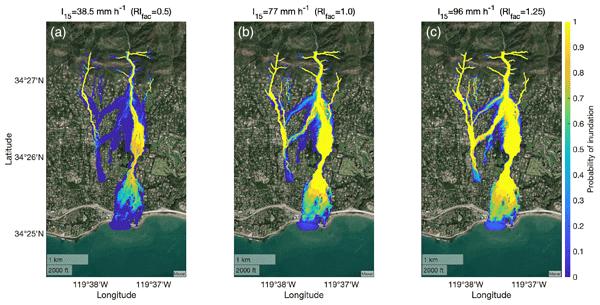
Elaine T. Spiller, Luke A. McGuire, Palak Patel, Abani Patra, and E. Bruce Pitman
Nat. Hazards Earth Syst. Sci., 26, 1705–1725, https://doi.org/10.5194/nhess-26-1705-2026, https://doi.org/10.5194/nhess-26-1705-2026, 2026
Short summary
Short summary
Fire in steep landscapes increases the potential for debris flows that can develop during intense rainstorms. To explore possible debris flow hazards, we utilize a computational model of the physical processes of debris flow initiation and runout. Such process-based models are computationally intensive and of limited use in rapid hazard assessments. Thus we build statistical surrogate of these physical models to examine how inundation footprints vary with rainfall intensity and time since fire.
Cited articles
Abbas, N. J., Zalkind, D. S., Pao, L., and Wright, A.: A reference open-source controller for fixed and floating offshore wind turbines, Wind Energ. Sci., 7, 53–73, https://doi.org/10.5194/wes-7-53-2022, 2022. a
Abdallah, I., Natarajan, A., and Sørensen, J. D.: Impact of uncertainty in airfoil characteristics on wind turbine extreme loads, Renew. Energ., 75, 283–300, https://doi.org/10.1016/j.renene.2014.10.009, 2015. a, b, c
Abdallah, I., Duthé, G., Barber, S., and Chatzi, E.: Identifying evolving leading edge erosion by tracking clusters of lift coefficients, J. Phys. Conf. Ser., 2265, 032089, https://doi.org/10.1088/1742-6596/2265/3/032089, 2022. a, b, c, d
Antoniou, A., Dyer, K., Finnegan, W., Herring, R., Holst, B., Bech, J. I., Katsivalis, I., Kutlualp, T., Teuwen, J. J., et al.: Multilayer leading edge protection systems of wind turbine blades: a review of material technology and damage modelling, in: 20th European Conference on Composite Materials: Composites Meet Sustainability, EPFL Lausanne, Composite Construction Laboratory, Lausanne, Switzerland, 97–104, https://doi.org/10.5075/epfl-298799_978-2-9701614-0-0, 2022. a
Avendano-Valencia, L. D., Chatzi, E. N., and Tcherniak, D.: Gaussian process models for mitigation of operational variability in the structural health monitoring of wind turbines, Mech. Syst. Signal Pr., 142, 106686, https://doi.org/10.1016/j.ymssp.2020.106686, 2020. a
Avendaño-Valencia, L. D., Abdallah, I., and Chatzi, E.: Virtual fatigue diagnostics of wake-affected wind turbine via Gaussian Process Regression, Renew. Energ., 170, 539–561, 2021. a
Barber, S., Deparday, J., Marykovskiy, Y., Chatzi, E., Abdallah, I., Duthé, G., Magno, M., Polonelli, T., Fischer, R., and Müller, H.: Development of a wireless, non-intrusive, MEMS-based pressure and acoustic measurement system for large-scale operating wind turbine blades, Wind Energ. Sci., 7, 1383–1398, https://doi.org/10.5194/wes-7-1383-2022, 2022. a
Barlas, T. K. and van Kuik, G. A.: Review of state of the art in smart rotor control research for wind turbines, Prog. Aerosp. Sci., 46, 1–27, https://doi.org/10.1016/j.paerosci.2009.08.002, 2010. a
Bayarri, M. J., Berger, J. O., Calder, E. S., Patra, A. K., Pitman, E. B., Spiller, E. T., and Wolpert, R. L.: A Methodology for Quantifying Volcanic Hazards, International Journal of Uncertainty Quantification, 5, 297–325, https://doi.org/10.1615/Int.J.UncertaintyQuantification.2015011451, 2015. a
Bech, J. I., Hasager, C. B., and Bak, C.: Extending the life of wind turbine blade leading edges by reducing the tip speed during extreme precipitation events, Wind Energ. Sci., 3, 729–748, https://doi.org/10.5194/wes-3-729-2018, 2018. a, b
Belgiu, M. and Drăguţ, L.: Random forest in remote sensing: A review of applications and future directions, ISPRS J. Photogramm., 114, 24–31, https://doi.org/10.1016/j.isprsjprs.2016.01.011, 2016. a
Berger, J. O. and Smith, L. A.: On the statistical formalism of uncertainty quantification, Annu. Rev. Stat. Appl., 6, 433–460, https://doi.org/10.1146/annurev-statistics-030718-105232, 2019. a
Bilgili, M. and Alphan, H.: Global growth in offshore wind turbine technology, Clean Technol. Envir., 24, 2215–2227, https://doi.org/10.1007/s10098-022-02314-0, 2022. a
Bošnjaković, M., Katinić, M., Santa, R., and Marić, D.: Wind turbine technology trends, Appl. Sci., 12, 8653, https://doi.org/10.3390/app12178653, 2022. a
Boulesteix, A.-L., Janitza, S., Kruppa, J., and König, I. R.: Overview of random forest methodology and practical guidance with emphasis on computational biology and bioinformatics, WIRES Data Min. Knowl., 2, 493–507, https://doi.org/10.1002/widm.1072, 2012. a
Breiman, L.: Random forests, Mach. Learn., 45, 5–32, https://doi.org/10.1023/A:1010933404324, 2001. a
Buschjäger, S. and Morik, K.: Decision tree and random forest implementations for fast filtering of sensor data, IEEE T. Circuits-I., 65, 209–222, https://doi.org/10.1109/TCSI.2017.2710627, 2017. a
Campobasso, M. S., Cavazzini, A., and Minisci, E.: Rapid estimate of wind turbine energy loss due to blade leading edge delamination using artificial neural networks, J. Turbomach., 142, 071002, https://doi.org/10.1115/1.4047186, 2020. a
Campobasso, M. S., Castorrini, A., Ortolani, A., and Minisci, E.: Probabilistic analysis of wind turbine performance degradation due to blade erosion accounting for uncertainty of damage geometry, Renew. Sust. Energ. Rev., 178, 113254, https://doi.org/10.1016/j.rser.2023.113254, 2023. a, b
Campolongo, F., Cariboni, J., and Saltelli, A.: An effective screening design for sensitivity analysis of large models, Environ. Modell. Softw., 22, 1509–1518, https://doi.org/10.1016/j.envsoft.2006.10.004, 2007. a
Carmona-Troyo, J. A., Trujillo, L., Enríquez-Zárate, J., Hernandez, D. E., and Cárdenas-Florido, L. A.: Classification of Damage on Wind Turbine Blades Using Automatic Machine Learning and Pressure Coefficient, Expert Syst., 42, e70024, https://doi.org/10.1111/exsy.70024, 2025. a, b
Carraro, M., De Vanna, F., Zweiri, F., Benini, E., Heidari, A., and Hadavinia, H.: CFD modeling of wind turbine blades with eroded leading edge, Fluids, 7, 302, https://doi.org/10.3390/fluids7090302, 2022. a, b
Chen, H., Liu, H., Chu, X., Liu, Q., and Xue, D.: Anomaly detection and critical SCADA parameters identification for wind turbines based on LSTM-AE neural network, Renew. Energ., 172, 829–840, https://doi.org/10.1016/j.renene.2021.03.078, 2021. a
Choe, D.-E., Kim, H.-C., and Kim, M.-H.: Sequence-based modeling of deep learning with LSTM and GRU networks for structural damage detection of floating offshore wind turbine blades, Renew. Energ., 174, 218–235, https://doi.org/10.1016/j.renene.2021.04.025, 2021. a
Civera, M. and Surace, C.: Non-destructive techniques for the condition and structural health monitoring of wind turbines: A literature review of the last 20 years, Sensors, 22, 1627, https://doi.org/10.3390/s22041627, 2022. a
Clark, A. C. and Clark, C. E.: Employing Bayesian Quadrature to Improve Fitting of Surrogate Models to Wind Turbine Loads, J. Phys. Conf. Ser., 2265, 042045, https://doi.org/10.1088/1742-6596/2265/4/042045, 2022. a, b, c, d
Cropp, R. A. and Braddock, R. D.: The new Morris method: an efficient second-order screening method, Reliab. Eng. Syst. Safe., 78, 77–83, https://doi.org/10.1016/S0951-8320(02)00109-6, 2002. a
Currin, C.: A Bayesian approach to the design and analysis of computer experiments, Tech. rep., Oak Ridge National Lab.(ORNL), Oak Ridge, TN, United States, https://doi.org/10.2172/814584, 1988. a
Díaz-Uriarte, R. and Alvarez de Andrés, S.: Gene selection and classification of microarray data using random forest, BMC Bioinformatics, 7, 1–13, https://doi.org/10.1186/1471-2105-7-3, 2006. a
Dolski, T., Spiller, E. T., and Minkoff, S. E.: Gaussian process emulation for high-dimensional coupled systems, Technometrics, 1–15, https://doi.org/10.1080/00401706.2024.2322651, 2024. a
Du, Y., Zhou, S., Jing, X., Peng, Y., Wu, H., and Kwok, N.: Damage detection techniques for wind turbine blades: a review, Mech. Syst. Signal Pr., 141, 106445, https://doi.org/10.1016/j.ymssp.2019.106445, 2020. a, b
Esmaily, H., Tayefi, M., Doosti, H., Ghayour-Mobarhan, M., Nezami, H., and Amirabadizadeh, A.: A comparison between decision tree and random forest in determining the risk factors associated with type 2 diabetes, Journal of Research in Health Sciences, 18, 412, https://pmc.ncbi.nlm.nih.gov/articles/PMC7204421/ (last access: 28 November 2025), 2018. a
Fezai, R., Dhibi, K., Mansouri, M., Trabelsi, M., Hajji, M., Bouzrara, K., Nounou, H., and Nounou, M.: Effective random forest-based fault detection and diagnosis for wind energy conversion systems, IEEE Sens. J., 21, 6914–6921, https://doi.org/10.1109/JSEN.2020.3037237, 2020. a, b
Gaudern, N.: A practical study of the aerodynamic impact of wind turbine blade leading edge erosion, J. Phys. Conf. Ser., 524, 012031, https://doi.org/10.1088/1742-6596/524/1/012031, 2014. a
Gettemy, A.: Classification of Leading Edge Erosion Severity Via Machine Learning Surrogate Models, Zenodo [data set] and [code], https://doi.org/10.5281/zenodo.21877368, 2026. a
Gori, F., Laizet, S., and Wynn, A.: Wind farm power maximisation via wake steering: a gaussian process-based yaw-dependent parameter tuning approach, Wind Energy, 27, 1545–1562, https://doi.org/10.1002/we.2953, 2024. a
Gu, M. and Berger, J. O.: Parallel partial Gaussian process emulation for computer models with massive output, Ann. Appl. Stat., 1317–1347, https://doi.org/10.1214/16-AOAS934, 2016. a, b, c, d
Gu, M., Wang, X., and Berger, J. O.: Robust Gaussian stochastic process emulation, Ann. Stat., 46, 3038–3066, https://doi.org/10.1214/17-AOS1648, 2018. a, b, c
Gu, M., Palomo, J., and Berger, J. O.: RobustGaSP: Robust Gaussian Stochastic Process Emulation in R, R J., 11, 112–136, https://doi.org/10.32614/RJ-2019-011, 2019. a
Haghi, R., Stagg, C., and Crawford, C.: Wind Turbine damage equivalent load assessment using Gaussian process regression combining measurement and synthetic data, Energies, 17, 346, https://doi.org/10.3390/en17020346, 2024. a
Han, W., Kim, J., and Kim, B.: Effects of contamination and erosion at the leading edge of blade tip airfoils on the annual energy production of wind turbines, Renew. Energ., 115, 817–823, https://doi.org/10.1016/j.renene.2017.09.002, 2018. a, b, c, d
Hassan, Q., Viktor, P., Al-Musawi, T. J., Ali, B. M., Algburi, S., Alzoubi, H. M., Al-Jiboory, A. K., Sameen, A. Z., Salman, H. M., and Jaszczur, M.: The renewable energy role in the global energy transformations, Renew. Energ. Focus, 48, 100545, https://doi.org/10.1016/j.ref.2024.100545, 2024. a
Haus, L. C.: New methods for digital twin modelling of wave and wind energy systems, Master's thesis, University of Texas at Dallas, https://hdl.handle.net/10735.1/9016 (last access: 12 September 2025), 2020. a
Helton, J. C. and Davis, F. J.: Latin hypercube sampling and the propagation of uncertainty in analyses of complex systems, Reliab. Eng. Syst. Safe., 81, 23–69, https://doi.org/10.1016/S0951-8320(03)00058-9, 2003. a
Herman, J. and Usher, W.: SALib: An open-source python library for sensitivity analysis, The Journal of Open Source Software, 2, 97, https://doi.org/10.21105/joss.00097, 2017. a
Herring, R., Dyer, K., Martin, F., and Ward, C.: The increasing importance of leading edge erosion and a review of existing protection solutions, Renew. Sust. Energ. Rev., 115, 109382, https://doi.org/10.1016/j.rser.2019.109382, 2019. a
Higdon, D., Gattiker, J., Williams, B., and Rightley, M.: Computer model calibration using high-dimensional output, J. Am. Stat. Assoc., 103, 570–583, https://doi.org/10.1198/016214507000000888, 2008. a
Hulsman, P., Sucameli, C., Petrović, V., Rott, A., Gerds, A., and Kühn, M.: Turbine power loss during yaw-misaligned free field tests at different atmospheric conditions, J. Phys. Conf. Ser., 2265, 032074, https://doi.org/10.1088/1742-6596/2265/3/032074, 2022. a
Iwanaga, T., Usher, W., and Herman, J.: Toward SALib 2.0: advancing the accessibility and interpretability of global sensitivity analyses, Socio-Environmental Systems Modelling, 4, 18155, https://doi.org/10.18174/sesmo.18155, 2022. a, b
Jiménez, A. A., Muñoz, C. Q. G., and Márquez, F. P. G.: Machine learning for wind turbine blades maintenance management, Energies, 11, 1–16, https://doi.org/10.3390/en11010013, 2017. a
Jonkman, B., Platt, A., Mudafort, R. M., Branlard, E., Sprague, M., Ross, H., jjonkman, HaymanConsulting, Slaughter, D., Hall, M., Vijayakumar, G., Buhl, M., Russell9798, Bortolotti, P., reos rcrozier, Ananthan, S., RyanDavies19, S., M., Rood, J., rdamiani, nrmendoza, sinolonghai, pschuenemann, ashesh2512, kshaler, Housner, S., psakievich, Wang, L., Bendl, K., and Carmo, L.: OpenFAST/openfast: v3.5.3, Zenodo [code], https://doi.org/10.5281/zenodo.6324287, 2024. a
Jonkman, J.: The new modularization framework for the FAST wind turbine CAE tool, in: 51st AIAA aerospace sciences meeting including the new horizons forum and aerospace exposition, Grapevine (Dallas/Ft. Worth Region), Texas, 7–10 January 2013, 202, https://doi.org/10.2514/6.2013-202, 2013. a
Jonkman, J., Butterfield, S., Musial, W., and Scott, G.: Definition of a 5-MW reference wind turbine for offshore system development, Tech. rep., National Renewable Energy Lab. (NREL), Golden, CO (United States), https://doi.org/10.2172/947422, 2009. a, b, c
Jonkman, J. M., Hayman, G. J., Jonkman, B. J., Damiani, R. R., and Murray, R. E.: AeroDyn v15 user’s guide and theory manual, NREL Draft Report, 46, https://www.nlr.gov/docs/libraries/wind-docs/aerodyn-manual.pdf?sfvrsn=51d961db_1 (last access: 16 June 2026), 2015. a
Kaewniam, P., Cao, M., Alkayem, N. F., Li, D., and Manoach, E.: Recent advances in damage detection of wind turbine blades: a state-of-the-art review, Renew. Sust. Energ. Rev., 167, 112723, https://doi.org/10.1016/j.rser.2022.112723, 2022. a
Kapteyn, M. G., Pretorius, J. V., and Willcox, K. E.: A probabilistic graphical model foundation for enabling predictive digital twins at scale, Nat. Computational Science, 1, 337–347, https://doi.org/10.1038/s43588-021-00069-0, 2021. a
Langel, C. M., Chow, R. C., Van Dam, C., and Maniaci, D. C.: RANS based methodology for predicting the influence of leading edge erosion on airfoil performance, Tech. rep., Sandia National Lab.(SNL-NM), Albuquerque, NM (United States), https://doi.org/10.2172/1404827, 2017. a
Law, H. and Koutsos, V.: Leading edge erosion of wind turbines: Effect of solid airborne particles and rain on operational wind farms, Wind Energy, 23, 1955–1965, https://doi.org/10.1002/we.2540, 2020. a
Leishman, G., Nash, D., Yang, L., and Dyer, K.: A novel approach for wind turbine blade erosion characterization: an investigation using surface gloss measurement, Coatings, 12, 928, https://doi.org/10.3390/coatings12070928, 2022. a
Liang, Y., Ji, X., Wu, C., He, J., and Qin, Z.: Estimation of the influences of air density on wind energy assessment: a case study from China, Energ. Convers. Manage., 224, 113371, https://doi.org/10.1016/j.enconman.2020.113371, 2020. a
Liu, H., Chen, G., Hua, Z., Zhang, J., and Wang, Q.: Wind shear model considering atmospheric stability to improve accuracy of wind resource assessment, Processes, 12, 954, https://doi.org/10.3390/pr12050954, 2024. a
López, J. C., Kolios, A., Wang, L., and Chiachio, M.: A wind turbine blade leading edge rain erosion computational framework, Renew. Energ., 203, 131–141, https://doi.org/10.1016/j.renene.2022.12.050, 2023. a, b
Macdonald, H., Infield, D., Nash, D. H., and Stack, M. M.: Mapping hail meteorological observations for prediction of erosion in wind turbines, Wind Energy, 19, 777–784, https://doi.org/10.1002/we.1854, 2016. a
Maldonado-Correa, J., Martín-Martínez, S., Artigao, E., and Gómez-Lázaro, E.: Using SCADA data for wind turbine condition monitoring: a systematic literature review, Energies, 13, 3132, https://doi.org/10.3390/en13123132, 2020. a, b
Mishnaevsky, L.: Root causes and mechanisms of failure of wind turbine blades: overview, Materials, 15, 2959, https://doi.org/10.3390/ma15092959, 2022. a
Morató, A., Sriramula, S., and Krishnan, N.: Kriging models for aero-elastic simulations and reliability analysis of offshore wind turbine support structures, Ships Offshore Struc., 14, 545–558, https://doi.org/10.1080/17445302.2018.1522738, 2019. a
Morris, M. D.: Factorial sampling plans for preliminary computational experiments, Technometrics, 33, 161–174, https://doi.org/10.1080/00401706.1991.10484804, 1991. a, b, c
Moynihan, B., Moaveni, B., Liberatore, S., and Hines, E.: Estimation of blade forces in wind turbines using blade root strain measurements with OpenFAST verification, Renew. Energ., 184, 662–676, https://doi.org/10.1016/j.renene.2021.11.094, 2022. a, b
Murcia, J. P., Réthoré, P.-E., Dimitrov, N., Natarajan, A., Sørensen, J. D., Graf, P., and Kim, T.: Uncertainty propagation through an aeroelastic wind turbine model using polynomial surrogates, Renew. Energ., 119, 910–922, https://doi.org/10.1016/j.renene.2017.07.070, 2018. a, b, c
Myhr, A., Bjerkseter, C., Ågotnes, A., and Nygaard, T. A.: Levelised cost of energy for offshore floating wind turbines in a life cycle perspective, Renew. Energ., 66, 714–728, https://doi.org/10.1016/j.renene.2014.01.017, 2014. a
Myren, S. and Lawrence, E.: A comparison of Gaussian processes and neural networks for computer model emulation and calibration, Stat. Anal. Data Min., 14, 606–623, https://doi.org/10.1002/sam.11507, 2021. a
Ning, S. A.: A simple solution method for the blade element momentum equations with guaranteed convergence, Wind Energy, 17, 1327–1345, https://doi.org/10.1002/we.1636, 2014. a
Pandit, R., Astolfi, D., Hong, J., Infield, D., and Santos, M.: SCADA data for wind turbine data-driven condition/performance monitoring: a review on state-of-art, challenges and future trends, Wind Engineering, 47, 422–441, https://doi.org/10.1177/0309524X221124031, 2023. a, b, c
Panthi, K. and Iungo, G. V.: Quantification of wind turbine energy loss due to leading-edge erosion through infrared-camera imaging, numerical simulations, and assessment against SCADA and meteorological data, Wind Energy, 26, 266–282, https://doi.org/10.1002/we.2798, 2023. a
Papi, F., Cappugi, L., Perez-Becker, S., and Bianchini, A.: Numerical modeling of the effects of leading-edge erosion and trailing-edge damage on wind turbine loads and performance, J. Eng. Gas Turb. Power, 142, 111005, https://doi.org/10.1115/1.4048451, 2020. a, b
Park, J., Kim, C., Dinh, M.-C., and Park, M.: Design of a condition monitoring system for wind turbines, Energies, 15, 464, https://doi.org/10.3390/en15020464, 2022. a
Platt, A., Jonkman, B., and Jonkman, J.: InflowWind user’s guide, Technical report, National Renewable Energy Laboratory, https://www.nlr.gov/docs/libraries/wind-docs/aerodyn-manual.pdf?sfvrsn=51d961db_1 (last access: 16 June 2026), 2016. a
Pryor, S. C., Barthelmie, R. J., Cadence, J., Dellwik, E., Hasager, C. B., Kral, S. T., Reuder, J., Rodgers, M., and Veraart, M.: Atmospheric drivers of wind turbine blade leading edge erosion: review and recommendations for future research, Energies, 15, 8553, https://doi.org/10.3390/en15228553, 2022. a, b, c
Pugh, K., Nash, J., Reaburn, G., and Stack, M.: On analytical tools for assessing the raindrop erosion of wind turbine blades, Renew. Sust. Energ. Rev., 137, 110 611, https://doi.org/10.1016/j.rser.2020.110611, 2021. a
Rasmussen, C. E.: Gaussian processes in machine learning, in: Summer school on machine learning, Springer, 63–71, https://doi.org/10.1007/978-3-540-28650-9_4, 2003. a, b
Ren, Z., Verma, A. S., Li, Y., Teuwen, J. J., and Jiang, Z.: Offshore wind turbine operations and maintenance: a state-of-the-art review, Renew. Sust. Energ. Rev., 144, 110886, https://doi.org/10.1016/j.rser.2021.110886, 2021. a
Rinker, J., Gaertner, E., Zahle, F., Skrzypiński, W., Abbas, N., Bredmose, H., Barter, G., and Dykes, K.: Comparison of loads from HAWC2 and OpenFAST for the IEA wind 15 mw reference wind turbine, J. Phys. Conf. Ser., 1618, 052052, https://doi.org/10.1088/1742-6596/1618/5/052052, 2020. a
Rinker, J. M.: Calculating the sensitivity of wind turbine loads to wind inputs using response surfaces, J. Phys. Conf. Ser., 753, 032057, https://doi.org/10.1088/1742-6596/753/3/032057, 2016. a
Rogers, T., Gardner, P., Dervilis, N., Worden, K., Maguire, A., Papatheou, E., and Cross, E.: Probabilistic modelling of wind turbine power curves with application of heteroscedastic Gaussian process regression, Renew. Energ., 148, 1124–1136, 2020. a
Sacks, J., Schiller, S. B., and Welch, W. J.: Designs for computer experiments, Technometrics, 31, 41–47, https://doi.org/10.1080/00401706.1989.10488474, 1989. a
Santner, T. J., Williams, B. J., Notz, W. I., and Williams, B. J.: The design and analysis of computer experiments, vol. 1 of Springer Series in Statistics, Springer, 2 edn., https://doi.org/10.1007/978-1-4939-8847-1, 2003. a, b
Sareen, A., Sapre, C. A., and Selig, M. S.: Effects of leading edge erosion on wind turbine blade performance, Wind Energy, 17, 1531–1542, https://doi.org/10.1002/we.1649, 2014. a, b
Schramm, M., Rahimi, H., Stoevesandt, B., and Tangager, K.: The influence of eroded blades on wind turbine performance using numerical simulations, Energies, 10, 1420, https://doi.org/10.3390/en10091420, 2017. a
Seidman, J.: SideofMan/zGP: zGP in R v1.0.0, Zenodo [code], https://doi.org/10.5281/zenodo.17956672, 2025. a
Shankar Verma, A., Jiang, Z., Ren, Z., Caboni, M., Verhoef, H., van der Mijle-Meijer, H., Castro, S. G., and Teuwen, J. J.: A probabilistic long-term framework for site-specific erosion analysis of wind turbine blades: A case study of 31 Dutch sites, Wind Energy, 24, 1315–1336, https://doi.org/10.1002/we.2634, 2021a. a
Shankar Verma, A., Jiang, Z., Ren, Z., Hu, W., and Teuwen, J. J.: Effects of onshore and offshore environmental parameters on the leading edge erosion of wind turbine blades: a comparative study, J. Offshore Mech. Arct., 143, 042001, https://doi.org/10.1115/1.4049248, 2021b. a
Sheibat-Othman, N., Othman, S., Tayari, R., Sakly, A., Odgaard, P. F., and Larsen, L. F.: Estimation of the wind turbine yaw error by support vector machines, IFAC-PapersOnLine, 48, 339–344, https://doi.org/10.1016/j.ifacol.2015.12.401, 2015. a
Shihavuddin, A., Chen, X., Fedorov, V., Nymark Christensen, A., Andre Brogaard Riis, N., Branner, K., Bjorholm Dahl, A., and Reinhold Paulsen, R.: Wind turbine surface damage detection by deep learning aided drone inspection analysis, Energies, 12, 676, https://doi.org/10.3390/en12040676, 2019. a
Singh, D., Dwight, R., and Viré, A.: Probabilistic surrogate modeling of damage equivalent loads on onshore and offshore wind turbines using mixture density networks, Wind Energ. Sci., 9, 1885–1904, https://doi.org/10.5194/wes-9-1885-2024, 2024. a, b
Smith, R. C.: Uncertainty quantification: theory, implementation, and applications, SIAM, https://doi.org/10.1137/1.9781611977844, 2024. a, b
Stein, M. L.: Interpolation of spatial data: some theory for kriging, Springer Science & Business Media, https://doi.org/10.1007/978-1-4612-1494-6, 1999. a
Stetco, A., Dinmohammadi, F., Zhao, X., Robu, V., Flynn, D., Barnes, M., Keane, J., and Nenadic, G.: Machine learning methods for wind turbine condition monitoring: a review, Renew. Energ., 133, 620–635, https://doi.org/10.1016/j.renene.2018.10.047, 2019. a
Tavares, A., Lopes, B., Di Lorenzo, E., Cornelis, B., Peeters, B., Desmet, W., and Gryllias, K.: Machine learning techniques for damage detection in wind turbine blades, in: European Workshop on Structural Health Monitoring, Springer, 176–189, https://doi.org/10.1007/978-3-031-07254-3_18, 2022. a
Tchakoua, P., Wamkeue, R., Ouhrouche, M., Slaoui-Hasnaoui, F., Tameghe, T. A., and Ekemb, G.: Wind turbine condition monitoring: State-of-the-art review, new trends, and future challenges, Energies, 7, 2595–2630, https://doi.org/10.3390/en7042595, 2014. a
The MathWorks Inc.: Statistics and machine learning toolbox, https://www.mathworks.com/help/stats/index.html (last access: 26 June 2026), 2024. a
Veers, P., Dykes, K., Lantz, E., Barth, S., Bottasso, C. L., Carlson, O., Clifton, A., Green, J., Green, P., Holttinen, H., et al.: Grand challenges in the science of wind energy, Science, 366, eaau2027, https://doi.org/10.1126/science.aau2027, 2019. a
Velarde, J., Kramhøft, C., and Sørensen, J. D.: Global sensitivity analysis of offshore wind turbine foundation fatigue loads, Renew. Energ., 140, 177–189, https://doi.org/10.1016/j.renene.2019.03.055, 2019. a
Verma, A. S., Castro, S. G., Jiang, Z., and Teuwen, J. J.: Numerical investigation of rain droplet impact on offshore wind turbine blades under different rainfall conditions: A parametric study, Compos. Struct., 241, 112096, https://doi.org/10.1016/j.compstruct.2020.112096, 2020. a
Visbech, J., Göçmen, T., Hasager, C. B., Shkalov, H., Handberg, M., and Nielsen, K. P.: Introducing a data-driven approach to predict site-specific leading-edge erosion from mesoscale weather simulations, Wind Energ. Sci., 8, 173–191, https://doi.org/10.5194/wes-8-173-2023, 2023. a, b
Ward, T., Jenab, K., Ortega-Moody, J., and Staub, S.: A comprehensive review of machine learning techniques for condition-based maintenance, International Journal of Prognostics and Health Management, 15, https://doi.org/10.36001/ijphm.2024.v15i2.3850, 2024. a
Welch, W. J., Buck, R. J., Sacks, J., Wynn, H. P., Mitchell, T. J., and Morris, M. D.: Screening, predicting, and computer experiments, Technometrics, 34, 15–25, https://doi.org/10.2307/1269548, 1992. a
Zaher, A., McArthur, S., Infield, D., and Patel, Y.: Online wind turbine fault detection through automated SCADA data analysis, Wind Energy, 12, 574–593, https://doi.org/10.1002/we.319, 2009. a
Zhang, D., Qian, L., Mao, B., Huang, C., Huang, B., and Si, Y.: A data-driven design for fault detection of wind turbines using random forests and XGboost, Ieee Access, 6, 21020–21031, https://doi.org/10.1109/ACCESS.2018.2818678, 2018. a, b
Zidane, I. F., Saqr, K. M., Swadener, G., Ma, X., and Shehadeh, M. F.: On the role of surface roughness in the aerodynamic performance and energy conversion of horizontal wind turbine blades: a review, Int. J. Energ. Res., 40, 2054–2077, https://doi.org/10.1002/er.3580, 2016. a
Short summary
This study introduces a method for detecting wind turbine blade erosion by approximating the outputs from aerodynamic simulations with a Gaussian process emulator. Once trained, querying the emulator is essentially free, which enables the efficient generation of datasets for training damage classification models. This framework could provide an essential building block for constructing a digital twin for wind turbine condition monitoring.
This study introduces a method for detecting wind turbine blade erosion by approximating the...


Altmetrics
Final-revised paper
Preprint