
Articles | Volume 10, issue 12
https://doi.org/10.5194/wes-10-2925-2025
© Author(s) 2025. This work is distributed under
the Creative Commons Attribution 4.0 License.
the Creative Commons Attribution 4.0 License.
https://doi.org/10.5194/wes-10-2925-2025
© Author(s) 2025. This work is distributed under
the Creative Commons Attribution 4.0 License.
the Creative Commons Attribution 4.0 License.
Research article
| 
08 Dec 2025
Research article |
| 08 Dec 2025
| 08 Dec 2025
Experimental study of transonic flow over a wind turbine airfoil

Faculty of Aerospace Engineering, Delft University of Technology, 2629HS Delft, the Netherlands
Maria Cristina Vitulano
Faculty of Aerospace Engineering, Delft University of Technology, 2629HS Delft, the Netherlands
Delphine De Tavernier
Faculty of Aerospace Engineering, Delft University of Technology, 2629HS Delft, the Netherlands
Ferdinand Schrijer
Faculty of Aerospace Engineering, Delft University of Technology, 2629HS Delft, the Netherlands
Bas van Oudheusden
Faculty of Aerospace Engineering, Delft University of Technology, 2629HS Delft, the Netherlands
Dominic von Terzi
Faculty of Aerospace Engineering, Delft University of Technology, 2629HS Delft, the Netherlands
Related authors
No articles found.

Ricardo Amaral, Felix Houtin-Mongrolle, Dominic von Terzi, Kasper Laugesen, Paul Deglaire, and Axelle Viré
Wind Energ. Sci., 11, 3401–3426, https://doi.org/10.5194/wes-11-3401-2026, https://doi.org/10.5194/wes-11-3401-2026, 2026
Short summary
Short summary
This work investigated the effect of a variety of floating-wind-turbine motions on the wake, the slower and more turbulent air left behind the rotor. This was done via computational simulations that reproduced a wind tunnel setup to test the tunnel's impact. While some motions barely disturbed the wake, other motions produced a remarkably different wake structure. The wind tunnel walls influenced the wake to some degree, but the general behavior was consistent with what is seen in the open air.
Simone Chellini, Delphine De Tavernier, and Dominic von Terzi
Wind Energ. Sci., 11, 753–769, https://doi.org/10.5194/wes-11-753-2026, https://doi.org/10.5194/wes-11-753-2026, 2026
Short summary
Short summary
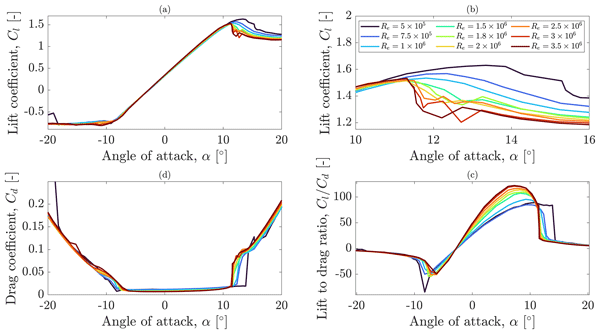
The growing interest in high-velocity physics justifies research into new experimental aerodynamics. Our work provides the knowledge foundations for the next generation of large wind turbine rotors, investigating the FFA-W3-211 airfoil. We highlight airfoil-dependent static and dynamic results from a large-scale wind tunnel experiment. The results delve into the force enhancement due to dynamic oscillations, broken down by Reynolds number and reduced frequency.
Daniel van den Berg, Daan van der Hoek, Delphine De Tavernier, Jonas Gutknecht, and Jan-Willem van Wingerden
Wind Energ. Sci., 11, 679–692, https://doi.org/10.5194/wes-11-679-2026, https://doi.org/10.5194/wes-11-679-2026, 2026
Short summary
Short summary
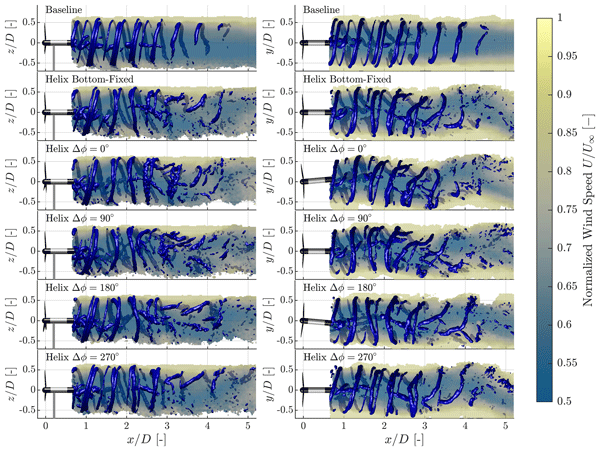
This paper demonstrates that floating wind turbines can utilise their natural yaw motion at sea to their advantage. By synchronising the yaw motion of the floating platform with a special control method called the helix, a turbine can mix the air in the wake more effectively, speeding up wind recovery and boosting the energy available to neighbouring turbines. This discovery opens up new possibilities for designing more efficient floating wind farms.
Maria Cristina Vitulano, Delphine De Tavernier, Giuliano De Stefano, and Dominic von Terzi
Wind Energ. Sci., 11, 643–660, https://doi.org/10.5194/wes-11-643-2026, https://doi.org/10.5194/wes-11-643-2026, 2026
Short summary
Short summary
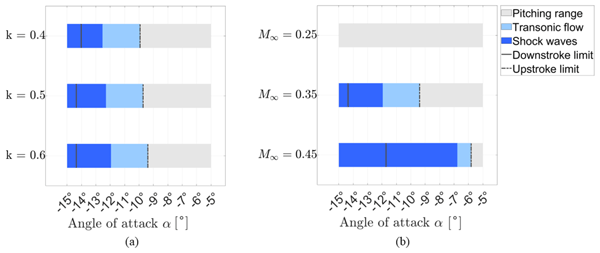
Wind turbines are increasing in size, pushing blade tips to operate at high speeds. This study employs numerical simulations to investigate the unsteady aerodynamic response of a wind turbine airfoil to angle-of-attack changes across the transonic flow threshold. By varying reduced frequency and inflow Mach number, the analysis reveals the impact of compressibility on aerodynamic performance, including a hysteresis effect, which highlights its importance in the design of next-generation rotors.
Evert Ivo Wiegant, Delphine de Tavernier, and Axelle Viré
Wind Energ. Sci. Discuss., https://doi.org/10.5194/wes-2025-276, https://doi.org/10.5194/wes-2025-276, 2025
Preprint under review for WES
Short summary
Short summary
As flow passes over a wing (or a wind turbine blade), a "bound vortex" forms around it. In this work, we describe this vortex as it appears in a type of computer simulation. We use this description to address two problems in literature; to find the correct velocity near the wing (as it is sampled) and to indicate when a simulation appropriately represents the relevant physical phenomena (related to convergence). This work provides understanding of such simulations and means to make them cheaper.
Adhyanth Giri Ajay, David Bensason, and Delphine De Tavernier
Wind Energ. Sci., 10, 1829–1847, https://doi.org/10.5194/wes-10-1829-2025, https://doi.org/10.5194/wes-10-1829-2025, 2025
Short summary
Short summary
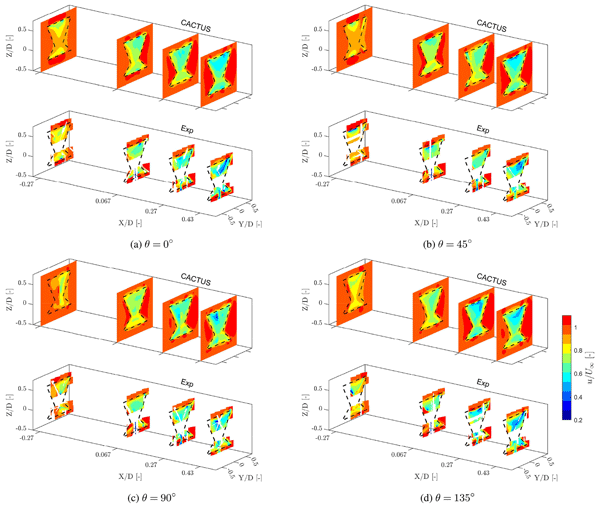
We studied the airflow around a new type of wind turbine called the X-Rotor, which could help to reduce the cost of offshore wind energy. Comparing a computer simulation model and wind tunnel experiments, we found that the model correlates well under normal conditions but becomes less accurate when the blades pitch. Our results show that future designs of this turbine category must consider complex 3D flow effects to better predict and improve wind turbine performance.
Guido Lazzerini, Jacob Deleuran Grunnet, Tobias Gybel Hovgaard, Fabio Caponetti, Vasu Datta Madireddi, Delphine De Tavernier, and Sebastiaan Paul Mulders
Wind Energ. Sci., 10, 1303–1327, https://doi.org/10.5194/wes-10-1303-2025, https://doi.org/10.5194/wes-10-1303-2025, 2025
Short summary
Short summary
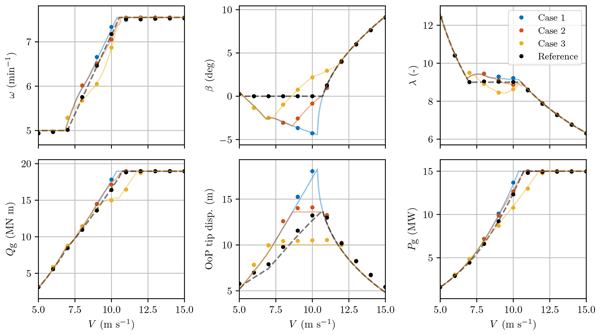
Large wind turbines face design challenges due to increased flexibility of blades. Conventional control strategies fail under large deformations, impacting performance. We present a feedforward–feedback control scheme, addressing flexibility and overcoming the limitations of conventional strategies. By testing it on a large-scale reference turbine with realistic wind conditions, we demonstrated improvements to power by up to 5 % while constraining blade deflections.
Rishikesh Joshi, Dominic von Terzi, and Roland Schmehl
Wind Energ. Sci., 10, 695–718, https://doi.org/10.5194/wes-10-695-2025, https://doi.org/10.5194/wes-10-695-2025, 2025
Short summary
Short summary
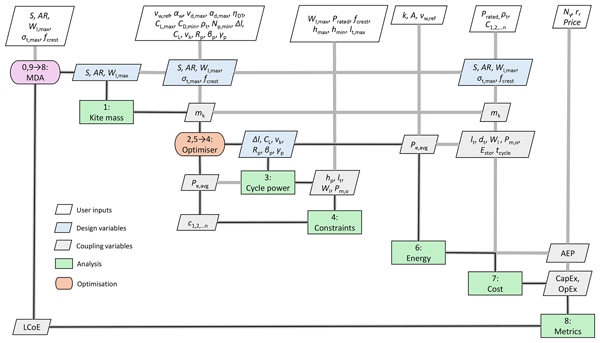
This paper presents a methodology for assessing the system design and scaling trends in airborne wind energy (AWE). A multi-disciplinary design, analysis, and optimisation (MDAO) framework was developed, integrating power, energy production, and cost models for the fixed-wing ground-generation (GG) AWE concept. Using the levelized cost of electricity (LCoE) as the design objective, we found that the optimal size of systems lies between the rated power of 100 and 1000 kW.
Ricardo Amaral, Felix Houtin-Mongrolle, Dominic von Terzi, Kasper Laugesen, Paul Deglaire, and Axelle Viré
Wind Energ. Sci. Discuss., https://doi.org/10.5194/wes-2025-34, https://doi.org/10.5194/wes-2025-34, 2025
Manuscript not accepted for further review
Short summary
Short summary
This work uses simulations to investigate floating offshore wind turbines which have the potential to supply the world's electricity demand many times by 2040. In particular, the effect of the rotor motion on the wake was investigated by forcing the turbine to move under different motions and the results highlight differences between motions. While some motions led to a wake behavior that was close to that of a fixed-bottom turbine, other motions produced a remarkably different wake structure.
Nils Barfknecht and Dominic von Terzi
Wind Energ. Sci., 10, 315–346, https://doi.org/10.5194/wes-10-315-2025, https://doi.org/10.5194/wes-10-315-2025, 2025
Short summary
Short summary
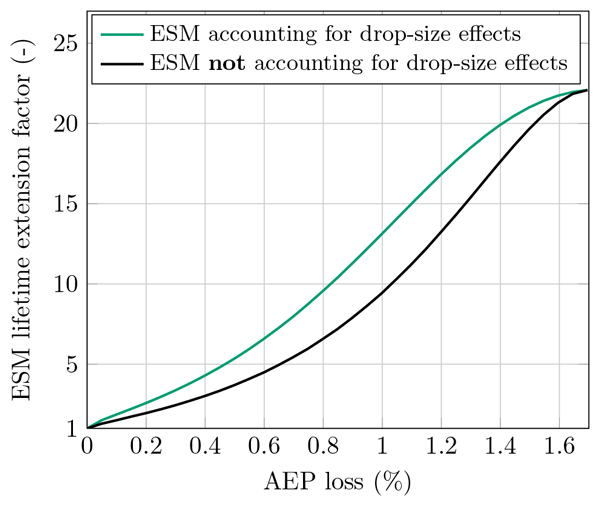
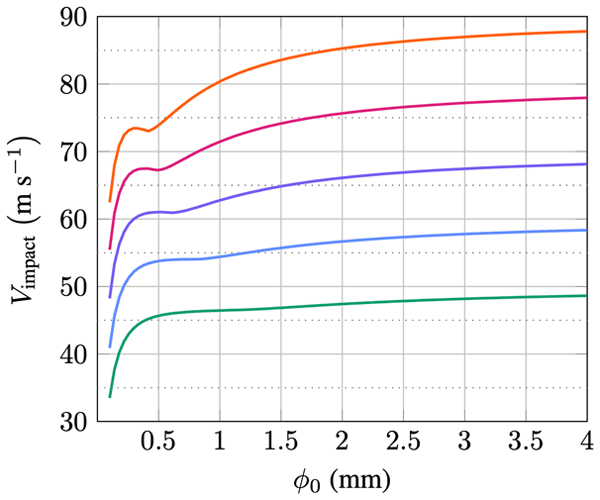
The paper investigates the influence of the rain drop diameter on the formation of erosion damage and its implications for erosion-safe mode (ESM). By building an erosion damage model that incorporates several drop-size effects, we found that large droplets are significantly more erosive than small droplets. It is shown that the performance of the ESM is significantly increased when drop-size effects are correctly accounted for. A method to derive optimal ESM strategies is given as well.
Maria Cristina Vitulano, Delphine De Tavernier, Giuliano De Stefano, and Dominic von Terzi
Wind Energ. Sci., 10, 103–116, https://doi.org/10.5194/wes-10-103-2025, https://doi.org/10.5194/wes-10-103-2025, 2025
Short summary
Short summary
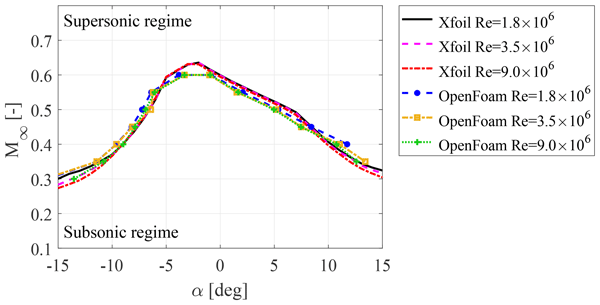
Next-generation wind turbines are the largest rotating machines ever built, experiencing local flow Mach where the incompressibility assumption is violated, and even transonic flow can occur. This study assesses the transonic features over the FFA-W3-211 wind turbine tip airfoil for selected industrial test cases, defines the subsonic–supersonic flow threshold and evaluates the Reynolds number effects on transonic flow occurrence. Shock wave occurrence is also depicted.
Nils Barfknecht and Dominic von Terzi
Wind Energ. Sci., 9, 2333–2357, https://doi.org/10.5194/wes-9-2333-2024, https://doi.org/10.5194/wes-9-2333-2024, 2024
Short summary
Short summary
Rain droplets damage wind turbine blades due to the high impact speed at the tip. In this study, it is found that rain droplets and wind turbine blades interact aerodynamically. The rain droplets slow down and deform close to the blade. A model from another field of study was adapted and validated to study this process in detail. This effect reduced the predicted erosion damage by up to 50 %, primarily affecting smaller drops. It is shown how the slowdown effect can influence erosion mitigation.

Mihir Kishore Mehta, Michiel Zaaijer, and Dominic von Terzi
Wind Energ. Sci., 9, 2283–2300, https://doi.org/10.5194/wes-9-2283-2024, https://doi.org/10.5194/wes-9-2283-2024, 2024
Short summary
Short summary
In a subsidy-free era, there is a need to optimize wind turbines for maximizing farm revenue instead of minimizing cost of energy. A wind-farm-level modeling framework with a simplified market model is used to optimize the turbine size for maximum profitability. The results show that the optimum size is driven mainly by the choice of the economic metric and the market price scenario, with a design optimized for the cost of energy already performing well w.r.t. most profitability-based metrics
Shyam VimalKumar, Delphine De Tavernier, Dominic von Terzi, Marco Belloli, and Axelle Viré
Wind Energ. Sci., 9, 1967–1983, https://doi.org/10.5194/wes-9-1967-2024, https://doi.org/10.5194/wes-9-1967-2024, 2024
Short summary
Short summary
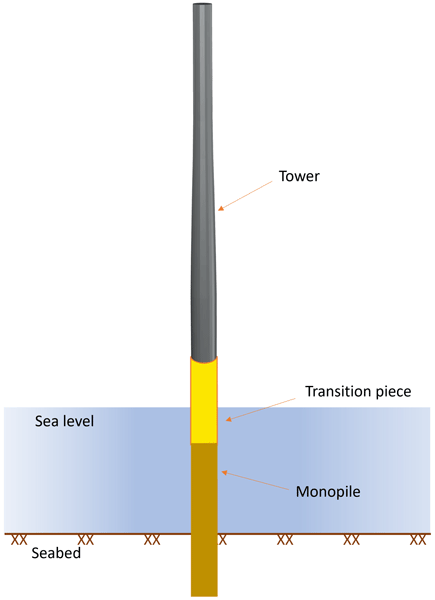
When standing still without a nacelle or blades, the vibrations on a wind turbine tower are of concern to its structural health. This study finds that the air which flows around the tower recirculates behind the tower, forming so-called wakes. These wakes initiate the vibration, and the movement itself causes the vibration to increase or decrease depending on the wind speed. The current study uses a methodology called force partitioning to analyse this in depth.
Mihir Mehta, Michiel Zaaijer, and Dominic von Terzi
Wind Energ. Sci., 9, 141–163, https://doi.org/10.5194/wes-9-141-2024, https://doi.org/10.5194/wes-9-141-2024, 2024
Short summary
Short summary
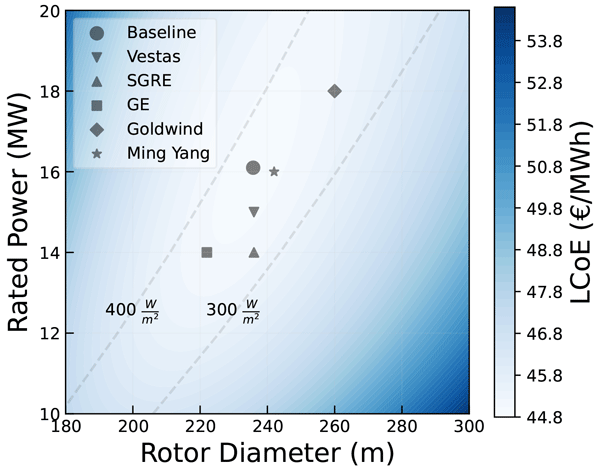
Turbines are becoming larger. However, it is important to understand the key drivers of turbine design and explore the possibility of a global optimum, beyond which further upscaling might not reduce the cost of energy. This study explores, for a typical farm, the entire turbine design space with respect to rated power and rotor diameter. The results show a global optimum that is subject to various modeling uncertainties, farm design conditions, and policies with respect to wind farm tendering.
Maarten J. van den Broek, Delphine De Tavernier, Paul Hulsman, Daan van der Hoek, Benjamin Sanderse, and Jan-Willem van Wingerden
Wind Energ. Sci., 8, 1909–1925, https://doi.org/10.5194/wes-8-1909-2023, https://doi.org/10.5194/wes-8-1909-2023, 2023
Short summary
Short summary
As wind turbines produce power, they leave behind wakes of slow-moving air. We analyse three different models to predict the effects of these wakes on downstream wind turbines. The models are validated with experimental data from wind tunnel studies for steady and time-varying conditions. We demonstrate that the models are suitable for optimally controlling wind turbines to improve power production in large wind farms.
Daniel van den Berg, Delphine de Tavernier, and Jan-Willem van Wingerden
Wind Energ. Sci., 8, 849–864, https://doi.org/10.5194/wes-8-849-2023, https://doi.org/10.5194/wes-8-849-2023, 2023
Short summary
Short summary
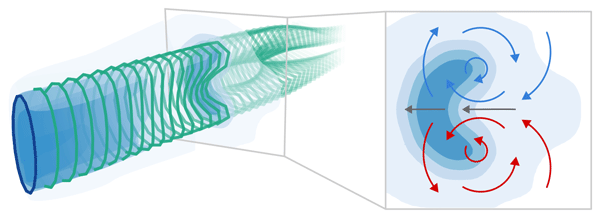
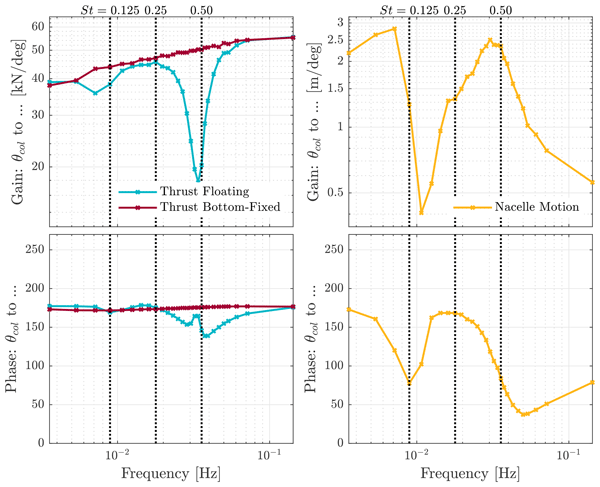
Wind turbines placed in farms interact with their wake, lowering the power production of the wind farm. This can be mitigated using so-called wake mixing techniques. This work investigates the coupling between the pulse wake mixing technique and the motion of floating wind turbines using the pulse. Frequency response experiments and time domain simulations show that extra movement is undesired and that the
optimalexcitation frequency is heavily platform dependent.
Cited articles
Aditya, A., Schrijer, F., van Oudheusden, B., De Tavernier, D., and von Terzi, D.: Supporting data belonging to publication: ”Experimental study of transonic flow over a wind turbine airfoil”, Version 1, 4TU.ResearchData [data set], https://doi.org/10.4121/fbf1c251-cbf9-49d7-9626-a9fe3498aed5.v1, 2025. a
Benedict, L. and Gould, R.: Towards better uncertainty estimates for turbulence statistics, Experiments in Fluids, 22, 129–136, https://doi.org/10.1007/s003480050030 1996. a
Bertagnolio, F., Sørensen, N. N., Johansen, J., and Fuglsang, P.: Wind turbine airfoil catalogue, ISBN 87-550-2910-8, 2001. a
D'Aguanno, A., Corduas, A., Schrijer, F., and van Oudheusden, B.: Non-intrusive estimation of the buffet loads on a supercritical airfoil with SCBs, Experiments in Fluids, 66, 80, https://doi.org/10.1007/s00348-025-04000-5, 2025. a
De Kat, R. and Van Oudheusden, B.: Instantaneous planar pressure determination from PIV in turbulent flow, Experiments in Fluids, 52, 1089–1106, https://doi.org/10.1007/s00348-011-1237-5, 2012. a
Dróżdż, A., Niegodajew, P., Romańczyk, M., and Elsner, W.: Effect of Reynolds number on turbulent boundary layer approaching separation, Experimental Thermal and Fluid Science, 125, 110377, https://doi.org/10.1016/j.expthermflusci.2021.110377, 2021. a
Gaertner, E., Rinker, J., Sethuraman, L., Zahle, F., Anderson, B., Barter, G., Abbas, N., Meng, F., Bortolotti, P., Skrzypinski, W., et al.: Definition of the IEA wind 15-megawatt offshore reference wind turbine, National Renewable Energy Laboratory, https://doi.org/10.2172/1603478, 2020. a
Giannelis, N. F., Vio, G. A., and Levinski, O.: A review of recent developments in the understanding of transonic shock buffet, Progress in Aerospace Sciences, 92, 39–84, https://doi.org/10.1016/j.paerosci.2017.05.004, 2017. a
Giannelis, N. F., Levinski, O., and Vio, G. A.: Influence of Mach number and angle of attack on the two-dimensional transonic buffet phenomenon, Aerospace Science and Technology, 78, 89–101, https://doi.org/10.1016/j.ast.2018.03.045, 2018. a
Herriot, J. G.: Blockage corrections for three-dimensional-flow closed-throat wind tunnels, with consideration of the effect of compressibility, Tech. rep., National Advisory Committee for Aeronautics, Washington, https://ntrs.nasa.gov/citations/19930093811 (last access: 3 December 2025), 1947. a
Hossain, M. A., Huque, Z., and Kammalapati, R. R.: Propagation of shock on NREL phase VI wind turbine airfoil under compressible flow, Journal of Renewable Energy, 2013, 653103, https://doi.org/10.1155/2013/653103, 2013. a
Humble, R.: Unsteady Flow Organization of A Shock Wave/Boundary Layer Interaction, Dissertation, Delft University of Technology, the Netherlands, ISBN 978-90-597-2295-8, 2009. a
Illi, S., Lutz, T., and Krämer, E.: On the capability of unsteady RANS to predict transonic buffet, in: Third Symposium Simulation of Wing and Nacelle Stall, 21–22, Braunschweig, Germany, https://www.tu-braunschweig.de/fileadmin/Redaktionsgruppen/Forschung/FOR1066/Veroeffentlichungen/SWNS_2012/5-Illi-2012.pdf (last access: 3 December 2025), 2012. a
Jacquin, L., Molton, P., Deck, S., Maury, B., and Soulevant, D.: Experimental study of shock oscillation over a transonic supercritical profile, AIAA journal, 47, 1985–1994, https://doi.org/10.2514/1.30190, 2009. a
Mehta, M., Zaaijer, M., and von Terzi, D.: Drivers for optimum sizing of wind turbines for offshore wind farms, Wind Energ. Sci., 9, 141–163, https://doi.org/10.5194/wes-9-141-2024, 2024a. a
Mehta, M. K., Zaaijer, M., and von Terzi, D.: Designing wind turbines for profitability in the day-ahead market, Wind Energ. Sci., 9, 2283–2300, https://doi.org/10.5194/wes-9-2283-2024, 2024b. a
Pearcey, H. H.: A Method for the Prediction of the Onset of Buffeting and Other Separation Effects from Wind Tunnel Tests on Rigid Models, TR 223, Advisory Group for Aerospace Research and Development, Neuilly-Sur-Seine, France, 1958. a
Schrijer, F. and Scarano, F.: Effect of predictor–corrector filtering on the stability and spatial resolution of iterative PIV interrogation, Experiments in Fluids, 45, 927–941, https://doi.org/10.1007/s00348-008-0511-7, 2008. a
Tijdeman, H. and Seebass, R.: Transonic flow past oscillating airfoils, Annual Review of Fluid Mechanics, 12, 181–222, 1980. a
Vitulano, M. C., De Tavernier, D., De Stefano, G., and von Terzi, D.: CFD analysis of dynamic wind turbine airfoil characteristics in transonic flow using URANS, Wind Energ. Sci. Discuss. [preprint], https://doi.org/10.5194/wes-2025-125, in review, 2025b. a
Wood, D.: Some effects of compressibility on small horizontal-axis wind turbines, Renewable Energy, 10, 11–17, https://doi.org/10.1016/0960-1481(96)00024-9, 1997. a
Zahle, F., Barlas, T., Lonbaek, K., Bortolotti, P., Zalkind, D., Wang, L., Labuschagne, C., Sethuraman, L., and Barter, G.: Definition of the IEA Wind 22-Megawatt Offshore Reference Wind Turbine, Tech. rep., National Renewable Energy Laboratory (NREL), Golden, CO (United States), 2024. a
Short summary
This study is the first to experimentally test how wind turbine blades behave at near-supersonic speeds, a condition expected in the largest turbines. In the experiments, we observed unstable and potentially detrimental shock waves that become stronger at higher speeds and angles. Basic prediction tools in wind turbine design miss these details, highlighting the need for better tools and experiments to understand the extreme conditions faced by modern wind turbines.
This study is the first to experimentally test how wind turbine blades behave at near-supersonic...


Altmetrics
Final-revised paper
Preprint