
the Creative Commons Attribution 4.0 License.
the Creative Commons Attribution 4.0 License.
 | 30 Mar 2026
Floating offshore wind in Japan: addressing the challenges, efforts, and research gaps for large-scale commercialization
Ryota Wada
Kazuhiro Iijima
Junji Shimazaki
Mihaela Ibrion
Shinnosuke Wanaka
Hideo Nomura
Yoshitaka Mizushima
Takuya Nakashima
Ken Takagi
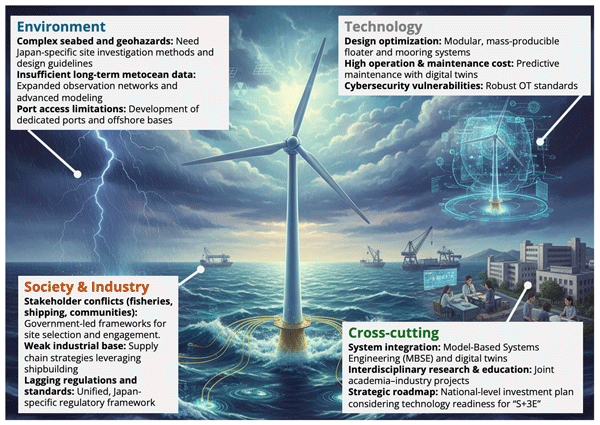
This paper aims to identify the gaps on the path to achieving sustainable development of floating offshore wind in Japan. Japan has a strong desire for floating offshore wind development, motivated by energy security, climate change, and industry promotion. The key challenges are described with an emphasis on the unique environmental conditions of Japan, such as earthquakes and tropical cyclones. In addition, the absence of oil and gas development in Japan has led to social challenges, such as a lack of supply chain, infrastructure, and human resources in offshore wind. A review of state-of-the-art technologies is provided in each technology domain for four research domains: site selection and characterization, technology and engineering, project execution and operation, and industry and economic enabling. The gaps identified in the paper suggest the need for specific research topics, such as the assessment of unique environmental conditions; the design of robust and cost-effective structures considering fabrication, transportation, installation, and operation; and the creation of a data sharing strategy for efficient and rapid learning. In addition, many challenges show technology gaps across domains, indicating the need for interdisciplinary research collaboration and system integration of complex systems with digital engineering approaches. Finally, the need for the development of an industry roadmap to address these challenges is discussed.
- Article
(5884 KB) - Full-text XML
- BibTeX
- EndNote


1.1 Motivation
Changes in climate indicators, such as temperature, precipitation, sea level rise, ocean acidification, and extreme weather conditions, have forced us to be aware of the severity of climate change impacts on natural and human systems. At the same time, the rapid growth of the world population raises concerns about the planet's ability to sustain life for humans and other species. Climate change and sustainability have become one of the biggest concerns of the international community.
The vast ocean, which covers 70 % of the Earth's surface, plays a crucial role in modulating our climate system by regulating the cycle of heat, water, carbon, and other elements. Humans have historically relied on ocean resources for fishing, transportation, and also oil and gas resources since the last century. Over the last few decades, ocean industries have shifted to interdisciplinary ocean industries or ocean-based industries, which cover energy production such as offshore wind, wave tidal, floating solar, food production at sea, deep sea mining, and transport in harsh environmental conditions of Arctic and Antarctic regions. All of these ocean-related industries, which contribute to the blue economy, are pushing borders deeper and further offshore (Nejad and Ibrion, 2021).
Under the strong tailwind of decarbonization, the offshore wind industry has evolved significantly, driven by the high interest in both the scientific the and industrial arena. The installed offshore wind capacity of the world increased from 3.1 GW in 2010 to 35 GW in 2020, and many upcoming projects are distributed globally. Many countries have set ambitious targets for offshore wind; e.g., the European Union aims for 110 GW by 2030 and 400 GW by 2050. The capacity of offshore wind turbines has become bigger and larger, such as a 16 MW rated turbine with a rotor diameter of 236 m (Mehta et al., 2024).
Current offshore wind projects are installed mainly as bottom-fixed structures, such as monopile, gravity-based, and jacket structures, which operate in shallow water up to 50–60 m in depth. Floating substructures allow wind turbines to operate in deeper waters, providing access to a broader ocean area and larger potential offshore wind energy resources. Compared to bottom-fixed structures, the industry is still in its infancy. However, global capacity of floating offshore wind turbines (FOWTs) is predicted to grow to more than 200 GW by 2030 (e.g., IRENA, 2019).
Japan also has a strong interest in offshore wind energy. The island nation faces numerous energy-related challenges, including a heavy dependence on imported fossil fuels, nuclear power concerns following the Fukushima disaster in 2011, and the need to reduce greenhouse gas emissions to fight climate change. Concerns about energy security, decarbonization, and supply stability have pushed Japan to explore offshore renewable energy, particularly offshore wind (Ibrion et al., 2020b).
The topography around Japan's coast has a steep slope, unlike the stretch of shallow water seen in Europe. In addition, the coastal area has various activities, including fishing and ship routes, which set a limitation to the introduction of bottom-fixed offshore wind energy in Japan. Floating offshore wind can access the world's sixth-largest exclusive economic zone (EEZ) of Japan. Considering the target of up to 45 GW of offshore wind power by 2040, massively deploying floating offshore wind turbines in deep-water areas, including EEZs, is inevitable. A report estimated the potential of offshore wind in Japan as 116 GW for bottom-fixed and 2940 GW for floating offshore wind, including the EEZ (Mitsubishi Research Institute, 2024).
The Public-Private Council on Enhancement of Industrial Competitiveness for Offshore Wind Power Generation set an ambitious target for Japan's offshore wind energy (Public-Private Council on Enhancement of Industrial Competitiveness for Offshore Wind Power Generation, 2020): 10 GW by 2030, 30–45 GW by 2040 (including floating offshore wind), a domestic procurement ratio of 60 % by 2040, and cost reduction of JPY 8–9 kWh1 by 2030–2035 (bottom-fixed). In addition, the council has announced Japan's targets for floating offshore wind as 15 GW and a domestic procurement ratio above 65 % by 2040. These targets were prepared jointly by industry and government as they play a critical role for both parties to build a sustainable ecosystem around offshore wind. The government needs to designate sites and introduce legislation accordingly. The predictability of future market opportunities is expected to attract investment that is critical for fostering a cost-competitive and scalable energy source.
1.2 Knowledge gap addressed in the paper
Japan's push for offshore wind energy reflects its broader goals of achieving energy security and sustainability. However, successful offshore wind projects must be attractive to investors. For floating offshore wind turbines to be accepted as one of the main power sources in Japan, the levelized cost of energy (LCOE) must be reduced to an order of JPY 10 kWh−1 (about USD 0.11 at the exchange rate of 2021) or lower to achieve grid parity. In the first offshore wind auction in Japan in 2021, the feed-in tariff (FIT) for a floating offshore wind project offshore of Goto was JPY 36 kWh−1. This is a much higher FIT compared to that of the other bottom-fixed projects in the same auction round, from JPY 11.99 kWh−1 (USD 0.13) to JPY 16.49 kWh−1 (USD 0.18). A bold cost reduction will be necessary (Ministry of Economy, Trade and Industry, 2025).
Another important factor for offshore wind projects to be economically feasible is for the project to be bankable. The large capital investments required for offshore wind projects are financed with either corporate finance or project finance. In either case, offshore wind projects often cover 70 %–80 % of the capital with debt (Aono, 2018). Many owners and financiers have gained experience in the European bottom-fixed offshore wind market. They are aware of potential market risks, competition needs among suppliers and developers, and economic feasibility (Azevedo and Grosse, 2019). In the case of Japan, it is critical to create a foreseeable market by showing profitability and stability. In addition, scalability is also necessary to contribute to energy security. These projects must be economically feasible, bankable, and scalable.
In general, floating offshore wind is still a nascent technology, and many concepts are under development. Some promising concepts have scaled up and entered the commercial phases. Here, we provide a general view of how technology development, business development, and policy can contribute to overcoming key barriers.
Technology development is a key driver of cost reduction. Innovative designs, such as larger turbines with higher capacity, floating offshore wind turbines, and improved materials, can lead to more efficient and less expensive energy generation. Developing technology to simplify and reduce the cost of installation and maintenance is crucial. This includes improvements in vessel design for installation and maintenance, as well as enhanced forecasting and monitoring systems. System integration cost and its management cost also contribute to a non-negligible portion of the cost.
Business development to demonstrate the long-term profitability and stability of offshore wind projects is important. Innovative financing mechanisms, such as green bonds or public–private partnerships, can be useful. Developing a robust supply chain and encouraging the growth of the local industry can reduce costs and support the feasibility of the project. This includes building local manufacturing facilities for components and creating jobs, which can also improve public support for offshore wind projects. Planning infrastructure, such as ports and grids, for large-scale deployment and standardization of project components and processes can help scale up nation-wide capacity. As larger floating offshore wind projects start to come online, economies of scale are expected to lower manufacturing and fabrication costs. In addition, as the size of each turbine grows in capacity, there will be fewer platforms in commercial-scale wind farms of the same capacity. The competitive nature of the bidding process, along with the industry's learning curve, is also expected to help drive down costs.
Finally, the role of policy, both regulatory and promotional, in supporting offshore wind is vital. Streamlined permitting processes, clear environmental guidelines, and consistent policies will provide long-term stability for investors. Ambitious but achievable long-term goals committed to by the government can drive aligned investments throughout the industry. In addition, incentives such as feed-in tariffs, tax credits, or subsidies can make projects financially more attractive by offsetting the high initial capital costs and improving overall economics.
Despite the many lessons learned from experience in bottom-fixed offshore wind projects, there are still many barriers we need to overcome for the sustainable development of floating offshore wind. In addition, the environmental, social, and technological conditions surrounding the offshore wind industry are unique to each country. Differences in system requirements, design rules, and cost-effectiveness can pose new risks and challenges to development. For example, tropical cyclones (called typhoons in this region) and major earthquakes are obvious risks for offshore activities in Japan.
At the same time, some unique aspects can provide opportunities. Although Japan has less experience in building large offshore platforms for the oil and gas industry, the country has a competitive shipbuilding industry with highly productive shipyards. The automotive industry in Japan is known for its efficient and lean supply chain.
Thus, the strategy and path for sustainable development need to be customized considering the circumstances, with regard to the problem space and the solution space for the floating offshore system. Effective investments in the R&D of floating offshore projects are necessary to adequately address challenges and realize opportunities.
1.3 Aim of the paper
A sustainable development pathway that mitigates risks and maximizes opportunities is desired. The first step will be to identify the environmental, social, and technological conditions surrounding the floating offshore wind industry in Japan. However, knowledge of floating offshore wind is dispersed in government, industry, and academia, creating a large knowledge gap with respect to understanding Japan's unique situation.
The purpose of this paper is to identify the technology gaps on the path to achieving sustainable floating offshore wind in Japan. Such findings are important for accelerating and prioritizing future research activities around floating offshore wind in Japan. Following the aim of the paper, the research questions in this paper are defined as follows.
Research questions
-
What are the unique challenges surrounding floating offshore wind in Japan, and which global challenges remain particularly critical for the nation?
-
What effort is currently being made to address these challenges?
-
What are the gaps and what should be prioritized?
1.4 Overview and structure of the paper
This paper provides a review of the challenges and efforts surrounding the development of floating offshore wind in Japan. This research is uniquely organized by industry and academia across disciplines in floating offshore wind, with collaborative efforts between Japan and Norway, covering the practice in other countries with an emphasis on Norway.
The paper is organized as follows. In Sects. 2–5, we review the unique situation in Japan to identify challenges to sustainable development and provide a review of state-of-the-art research in technology fields to identify research gaps. Given the many ways to structure the paper, we organize our discussion as follows. Section 2 covers all activities before a final investment, where challenges originate from the unique environmental and social conditions in Japan. Section 3 focuses on the design and development of critical hardware components around FOWTs. Section 4 discusses the challenges of the construction and long-term management of FOWT farms from a fabrication, transportation, and operation point of view. Section 5 addresses the broader ecosystem required for a successful FOWT industry. Finally, a recommendation for future studies, synthesizing the findings of each section, is provided in Sect. 6.
2.1 Overview
Site selection, planning, and project development (pre-development) are crucial stages in establishing an offshore wind project that is viable, compliant with regulations, highly effective in energy production, and minimally impactful to the environment. Site selection and characterization involve evaluating wind resources, environmental impacts, seabed conditions, proximity to shore, connection to the grid, and regulatory requirements to choose the optimal location. Planning includes designing the layout, conducting environmental assessments, obtaining permits, financial planning, and risk management. A thorough investigation of the site is conducted, including archeological, geological, morphological, and metocean studies.
2.2 Site assessment and characterization
2.2.1 Geophysical and geotechnical surveys and geohazards
The geological site investigation is covered by mainly two categories, the geophysical survey and the geotechnical survey. The geophysical survey consists of non-invasive seismic surveys to map the bathymetry and identify seabed surface features and shallow layers of sediment. The risk of encountering unexploded ordinances (UXOs) is also considered (Malhotra and O'Connell, 2024). Here, tools such as a multibeam echo sounder, side-scan sonar, sub-bottom profiler, high-resolution streamer, and magnetometer survey for unexploded ordinances are used. The geotechnical survey includes standard penetration tests, namely a cone penetration test and soil sampling through an offshore borehole and drilling (Randolph and Gourvenec, 2017). With the result obtained, the technical feasibility and the associated cost are evaluated. These investigations are often time-consuming and costly, but high-quality site surveys help reduce risk and ensure optimal design.
The features of seafloor topography differ greatly between passive margins, such as continental margins in Europe, and active margins, such as island and land arcs in Japan. In Europe, offshore wind farms are located mainly in areas of the North Sea, which is shallower than 200 m deep (light areas on the right side of Fig. 1). These areas have shallow water and little fluctuation in seabed topography. In contrast, the area in the waters around Japan where the depth of the water is less than 200 m (light-colored areas on the left side of Fig. 1), which is the target of offshore wind power development, is very limited compared to the North Sea. In addition, floating offshore wind farms that are expected to be developed in the EEZ of Japan will have to be developed in areas where the topography of the seafloor is complex and steep. In areas with complex topography, such as the Japan Sea off the Tohoku region, sedimentation rates are expected to have spatial variance (Katayama and Itaki, 2007).
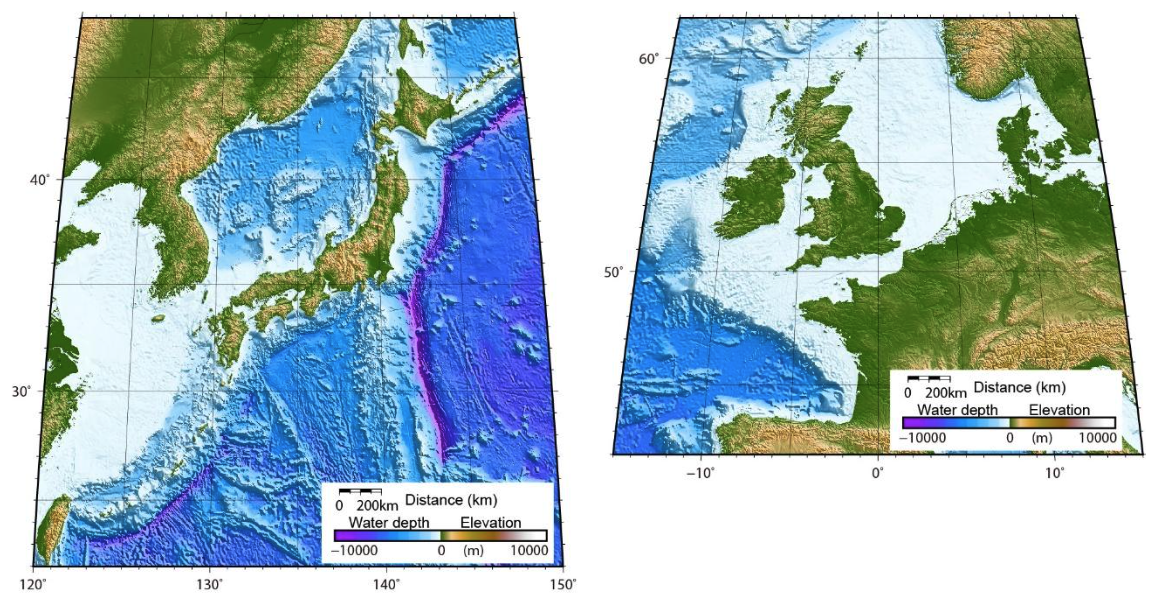
The legacy of oil and gas exploration in areas such as Norway and the UK provides an abundance of existing geophysical survey data. Conversely, in emerging offshore wind markets like Japan, these pre-existing data are insufficient, requiring more comprehensive initial site investigations.
Thus, the seafloor where anchors will be installed may consist of a variety of geological compositions, such as very soft sedimentary layers consisting mainly of clay, sedimentary layers consisting mainly of sand and gravel, soft bedrock, and hard bedrock. These differences in the geology comprising the seafloor will affect the selection of anchor type. If the seafloor consists of bedrock, drag anchors or suction anchors, which are used in many floating offshore wind turbines, cannot be employed. In this case, gravity anchors or pile anchors are required. If the bedrock is very hard, gravity anchors are necessary, as it is difficult to drive the piles. If the seafloor consists of very soft cohesive soil, suction anchors cannot be used as the required pull-out resistance cannot be ensured, and drag anchors and gravity anchors must be submerged to a very deep depth in the ground to obtain the necessary holding force. In the case of pile anchors, it is also necessary to drive very long piles into the ground to obtain the required friction force on the skin. The geological composition of the seafloor has a great influence on the selection and design of anchor types; therefore, it is necessary to conduct geological investigations at numerous locations in a subject area to understand seafloor conditions in detail.
Geotechnical surveys for offshore wind power development can be divided into two types: investigations conducted by drilling from a self-elevating platform (SEP), which is installed offshore, and investigations from a vessel or using equipment lowered from a vessel onto the seafloor. The former is called “SPT investigation” as a standard penetration test (SPT) is usually conducted, while the latter is called “CPT investigation” as a cone penetration test (CPT) is usually performed. During the SPT investigations, a sampler is driven into the ground by hammer blows, and the number of blows is measured, along with collecting the undisturbed soil samples for laboratory tests and various in situ tests using drill holes. The evaluation system for ground properties in Japan has a history of being built mainly on this SPT investigation and is considered to have some reliability as a ground evaluation method. In contrast, during the CPT investigation, a cone equipped with sensors is penetrated into the ground to estimate the ground properties. It is also possible to conduct soil tests on disturbed soil samples taken during the CPT investigation. Compared to SPT investigations, CPT investigations require less time and are thus suitable for investigation at a large number of locations in a short period of time. Since CPT investigations have rarely been conducted in Japan, their reliability as a ground evaluation method is considered unclear. Therefore, it is common to combine SPT and CPT investigations in order to improve the reliability of CPT investigations. In addition, it is difficult to conduct SPT investigations in deep water due to the difficulty of installing an SEP in deep water. However, CPT investigations are relatively easy to conduct even in deep water as they are conducted by a vessel. For this reason, CPT investigations are the main type of investigation for floating offshore wind turbines installed in deep water.
Several geohazards exist on the seafloor, as shown in Fig. 2. The effects of geohazards on floating offshore wind include, for example, displacement of anchors, breakage of mooring cables, and breakage of power cables in the event of a seabed landslide or turbidity current. In addition, if liquefaction of the seabed occurs due to an earthquake, the anchors will be affected. The liquefied ground behaves like a fluid, reducing bearing capacity, friction, and counterforces. Therefore, drag anchors, gravity anchors, and chains sink into the ground by their own weight, changing the formation of the mooring arrangement. In the case of suction anchors, the anchor body can tilt or collapse due to loss of counterforce caused by liquefaction of the surrounding ground. In addition, the suction force may decrease due to an increase in the pore water pressure of the soil inside the anchor, resulting in a loss of hold force. In the case of pile anchors, liquefaction of the soil around the pile may reduce the skin friction force around the pile, which may reduce the pull-out resistance, and consequently the pile anchors may be pulled out of the ground (i.e., displace vertically upward). It is important to evaluate the potential change in soil characteristics after liquefaction occurs and include it in design conditions. The risk of liquefaction on the anchor is mentioned in MLIT (Ministry of Land, Infrastructure, Transport and Tourism (MLIT), Maritime Bureau, 2023).
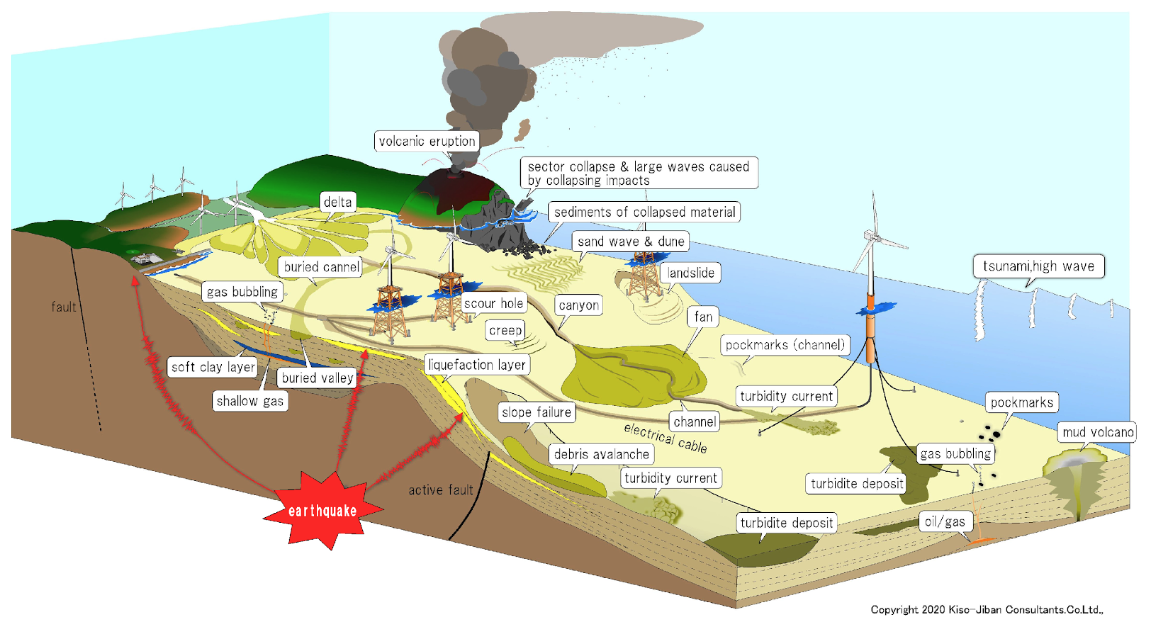
Figure 2Relationship between offshore wind power facilities and seafloor geohazards.
Geohazards on the seafloor are characterized by their extremely large scale. For example, the distance of the flow of turbidity currents, which are often described in contrast to debris flows on land, ranges from tens to thousands of kilometers for large geohazards. In addition, most submarine landslides are up to 10 km2 in size in the coastal areas of Japan and are usually 10 to 100 times larger than landslides on land. Geohazards on the seafloor are not easy to deal with, and the reason for this lies in their large scale and the difficulty of construction on the seafloor. Therefore, in order to install offshore wind power generation facilities, it is necessary to avoid geological risks by properly arranging wind turbines and risk mitigation measures. In some cases, depending on the type and size of the geohazard, development may have to be abandoned.
The National Institute of Advanced Industrial Science and Technology (AIST) has compiled and published a marine geological map of the results of its research on seafloor geohazards to date. This is a compilation of the interpreted results of seismic and acoustic surveys conducted by AIST, which provide a broad overview of faults, submarine landslides, underwater debris flow deposits, sediment waves, etc.
Although the marine geological map is a useful reference for offshore wind power development, it is the result of a wide-area survey, and therefore detailed surveys need to be conducted again for localized development. This means that the influence of seafloor geohazards on offshore wind power development has not been fully recognized. Furthermore, no studies have been conducted considering seafloor geohazards at each stage of the desk study: preliminary study and detailed study. In addition, there are no guidelines or manuals that show how to systematically survey and assess risks due to submarine geohazards specific to Japan, and research and human resource development for this purpose have not progressed. Therefore, understanding geological risks due to seafloor geohazards, establishing guidelines, promoting research, and developing human resources are all urgent issues. In addition, the applicable anchor concept must be carefully evaluated based on the evaluated geological conditions and geohazard risks.
Geotechnical and geophysical site investigations are critical for de-risking offshore wind projects, yet Japan faces distinct challenges compared to established European markets. Unlike the passive continental margins of the North Sea, Japan's active margin features a complex and steep seafloor topography with highly variable geological compositions and limited shallow areas suitable for development. This geological uncertainty directly influences the selection and design of anchoring systems for floating turbines, a critical cost and feasibility driver. This challenge is compounded by a significant lack of pre-existing survey data from legacy industries like oil and gas, as well as heightened risks from large-scale geohazards such as submarine landslides and seismic liquefaction, for which existing wide-area maps are insufficient for site-specific assessment (Katayama and Itaki, 2007). Furthermore, Japan's historical reliance on SPT investigations, which are difficult in deep water, creates a methodological gap, as the more suitable CPT is not yet fully established or trusted domestically (Randolph and Gourvenec, 2017).
To close this gap, a government-led survey program to systematically collect high-resolution geophysical and geotechnical data is necessary in prioritized offshore wind development zones. This initiative would create a centralized, publicly accessible digital data platform, significantly reducing upfront risk and cost for project developers. Concurrently, a focused research program should be established to validate and standardize CPT investigation methods for Japan's unique geological conditions. By conducting parallel SPT and CPT campaigns and developing robust correlation models, Japan can build confidence in CPT data, enabling more rapid and cost-effective site characterization in the deep-water environments required for floating wind.
Another crucial pathway involves establishing a robust regulatory and knowledge-sharing framework through public–private–academic collaboration. This includes developing guidelines and manuals for geohazard risk assessment, moving beyond existing broad-scale maps to create a systematic methodology for desk, preliminary, and detailed studies (Malhotra and O'Connell, 2024). Such a framework would guide developers on how to properly site turbines and engineer risk mitigation measures.
Finally, technology advances that can dramatically accelerate surveys are critical. New sensors, like ultra-high-resolution 3D seismic sensors for clearer subsurface imaging, along with widespread deployment of autonomous underwater vehicles (AUVs) and uncrewed surface vessels (USVs), can gather data faster and more cost-effectively, while artificial intelligence (AI) is critical for rapidly processing these vast datasets to automate feature detection and build predictive geological models, ultimately enabling more informed and efficient site characterization. The recent development of acoustic imaging and survey clouds for fast and automated multibeam echo sounder (MBES) data analysis (AIMs) is a good example of such an effort (Matsumoto, 2025).
2.2.2 Metocean conditions
Metocean is a term combining meteorological (“met”) and oceanographic (“ocean”), describing the comprehensive environment of the atmospheric and oceanic conditions of a particular location. For the development of offshore wind projects, typical metocean data requirements are wind speed, wind direction, air temperature, humidity, and atmospheric pressure for meteorological data and wave height, wave period, wave direction, sea surface temperature, currents, water depth, and tides for oceanographic data.
These metocean data are vital throughout the lifecycle of an offshore wind project. Wind data are used for site selection to ensure that the site has consistent and strong wind resources. Accurate metocean data are essential for predicting the potential energy yield of an offshore wind farm, providing key information for financial modeling and investment decisions. At the same time, it is used to understand the environmental forces, both normal and extreme conditions, required for the design and engineering of wind turbine structures, foundations, and support systems. Weather forecasts help plan safe and efficient offshore activities.
2.2.3 Wind data
Numerical simulations are often used for the initial stage of the wind resource assessment. In 2017, the NEDO Offshore Wind Information System (NeoWins) was published to provide offshore wind information necessary to plan offshore wind power generation. The database provides wind statistics with 500 m spatial resolution from the WRF simulation. Related information on water depth, submarine geology, and social environment, such as port areas and shipping routes, has been integrated into the same database to allow easy access. With the data NeoWins provides, the distribution of the average wind speed can be estimated by fitting the Weibull distribution for both the wind farm design and the estimation of annual energy production during the initial planning phase. Regarding the estimation of extreme wind speed, stochastic simulations such as MASCOT Offshore (Yamaguchi and Ishihara, 2010; Ishihara and Yamaguchi, 2015) are widely used in Japan to consider the effect of typhoons. In addition, various private companies provide wind condition analyses, utilizing publicly available meteorological reanalysis data, e.g., ERA5 (Setchell, 2020) from the ECMWF and JRA (Japan Meteorological Agency, 2013) from the Japan Metrological Agency.
In the later stages, field observations are conducted to (i) validate the simulation result, (ii) set the design and financial basis (bankability) for the wind farm, and (iii) prepare for the wind farm certificate and the construction permit. The Offshore Wind Measurement Guidebook provides guidance to scanning light detection and ranging (lidar) usage (NEDO, 2023; Ueda et al., 2022). These observations are often made with wind lidars placed on the coast for remote observation. For floating offshore wind projects, wind measurement by floating lidar systems (FLSs) is required. Here, a single-point observation can represent the wind conditions within 10 km of the observation point. Though the measurements of mean wind speed and direction with FLSs are accepted, those of turbulence intensity are still under investigation due to motion-induced measurement error (NEDO, 2023). As wind turbines increase in size, we need to consider the effects of spatio-temporal wind turbulence, which results in dynamic torque and non-torque loads on turbine blades.
2.2.4 Wave data
The initial stage assessment of wave conditions is also carried out through numerical simulations. Wave simulation is conducted with wave models, such as the third-generation wave model Wave Watch III and WAM (Suzuki et al., 2016), using wind data as input. These models have been developed to estimate the waves at deep-water locations and do not consider shallow-water effects (Mase et al., 2017). As the topography around Japan is complex and the seabed is steep, shallow-water transformation is needed at the offshore wind site. For project development feasibility studies, TodaiWW3 provides high-resolution wave simulations around Japan (Waseda et al., 2016). Regarding the shallow-water transformation, three models are mainly utilized, such as EG Wave (Mase et al., 2001), SWAN (Delft University of Technology, 1999), and NOWT-PARI (PARI, 2023; Hirayama, 2013). Although the shallow-water transformation requires water depth information, limited data of seabed topography are available around Japan. When water depth data are available from the site geophysical survey, the survey data can be used; otherwise, the existing available data, e.g., GEBCO and M7000, are preferred. During the Fukushima FORWARD project, wave hindcasting was performed using Wave Watch III, showing good agreement with in situ measurement data in both normal and extreme conditions (Yamaguchi and Ishihara, 2018).
Nationwide Ocean Wave information network for Ports and HarbourS (NOWPHAS; MLIT of Japan, 2025) data are used as the site data if they are available around the project site. If NOWPHAS data are not available near the project site, site measurements are required in order to estimate the hydrodynamic load on the FOWT structure (ClassNK, 2021b).
2.2.5 Current data
Ocean current data are also a critical input for the design and operational planning of FOWTs. A comprehensive understanding of both normal and extreme current conditions is a prerequisite for the robust design of mooring systems, which must withstand persistent hydrodynamic loading. Furthermore, the vertical velocity profile of the current through the water column is an essential parameter for the engineering of dynamic power cables to mitigate fatigue. From an operational perspective, the presence of strong currents can also impose limitations on vessel accessibility, particularly for crew transfer vessels (CTVs), thereby impacting maintenance schedules and overall project availability.
Ocean currents are generated by a combination of primary driving forces, namely wind stress, density gradients, and tidal forces, and are subsequently modified by the Coriolis effect and the physical boundaries of coastlines and bathymetry. The interaction of these forces across various temporal and spatial scales creates a highly complex and dynamic circulatory system. A unique feature of the oceanography surrounding Japan is the Kuroshio Current, one of the world's most powerful western boundary currents. As the northward-flowing arm of the North Pacific subtropical gyre, it is analogous to the Gulf Stream in the Atlantic, transporting immense quantities of heat, salt, and energy. The path of the Kuroshio Current is highly dynamic, characterized by complex interactions with the coastline and seafloor topography, which can lead to the formation of a large, persistent meander south of Japan that significantly alters coastal ocean conditions.
Focusing on the reproduction of Kuroshio currents, the JCOPE 2 model combines an eddy-resolving ocean model with 3D variational data assimilation for accurate prediction (Miyazawa et al., 2009). JCOPE-T (Varlamov et al., 2015) is a well-known tide-resolving high-resolution model for this region. Several other sophisticated models also provide detailed representations of Japan's coastal currents, such as FRA-ROMS (Kuroda et al., 2017) and the RIAM ocean model (Guo et al., 2003). These different models, each with distinct objectives and methodologies, provide a complementary suite of tools for understanding the complex oceanography of the Japanese coastal zone. However, simulation data need to be validated with local observation, which are often not available.
2.2.6 Unique challenges
The first challenge is moderate wind conditions. A study estimated realistic wind farm capacity factors by analyzing wind speeds for each grid location. In comparison with European countries, such as the Netherlands and Norway, which show capacity factors above 55 % in some regions, the highest value in Japan was around 47 % (Bosch et al., 2019). The capacity factor is proportional to the yield of a wind farm's power generation and has a direct impact on the LCOE.
The second challenge is the extreme sea states in the sea around Japan, which are mainly dominated by tropical cyclones and extratropical cyclones. These are relatively low-frequency events, and it is rare for the region to be hit directly. However, the high wind speed and high waves caused by these cyclones can cause critical damage to wind structures. The design of FOWTs needs to consider robustness against these extreme events. The IEC introduced Class T turbines designed for the high wind speed and turbulence caused by tropical cyclones (Sanchez Gomez et al., 2023). For example, the IEC 61400-3 international standard requires the consideration of several design load cases under 50-year extreme storm conditions. These load cases are defined from joint distributions of wind speed, significant wave height, and the wave period. However, only a small number of samples are available because of the rareness of these events. There is large uncertainty in estimating extreme conditions in tropical-cyclone-dominated regions (Wada and Waseda, 2020). Uncertainty quantification (Wada et al., 2016) and measures for uncertainty reduction (Wada et al., 2018; Sando et al., 2024) of extreme value analysis are essential for robust and efficient design.
The coast facing the Pacific Ocean is known for strong swells with long wave periods (Snodgrass et al., 1966; Kikuchi and Ishihara, 2016). Several cases of port facility damage have been reported for wave heights lower than the design wave height. This may be caused by negligence in load conditions caused by swells, as the design wave heights for extreme conditions are often dominated by wind waves with shorter wave periods (Matsufuji et al., 2017). The same can be said for offshore operations, where the swell condition exceeds the operational limit of the wave period (typically around 7 s), leading to an increase in weather downtime.
One of the major disadvantages of Japan's offshore wind industry is the lack of accumulation of metocean data. Regions such as the North Sea and Gulf of Mexico have a long record of metocean data due to the prosperity of the offshore oil and gas industry. Since there are only very limited offshore oil and gas activities near Japan, the amount of available metocean data is limited in quality and quantity. Together with enhanced observation networks, it is important to develop a shared platform for site evaluation data, such as DHI metocean data.
Metocean data are fundamental to the entire lifecycle of an offshore wind project, yet Japan faces distinct challenges in acquiring and applying this information. Unlike European regions with extensive historical data from the oil and gas industry, Japan has a significant data gap. While initial site assessments rely on numerical models like NeoWins and TodaiWW3, these require validation through in situ measurements, which are sparse. Key challenges include accurately characterizing extreme events like tropical cyclones, which dominate design loads but are too rare for robust statistical analysis, and accounting for long-period swells that impact both structural integrity and operational downtime. Furthermore, as turbines grow, accurately measuring spatio-temporal turbulence with motion-prone floating lidar systems (FLSs) remains an unresolved issue, creating uncertainty in predicting dynamic non-torque loads on blades.
To close this knowledge gap, a government-led initiative is required to establish a comprehensive, high-fidelity national metocean observation network and a centralized data-sharing platform. This would involve deploying long-term measurement campaigns in strategic offshore zones to create a bankable, public dataset. A primary goal should be to capture high-resolution data during extreme weather events to reduce the large uncertainty in 50-year return period estimates for wind and waves. Concurrently, Japan must develop region-specific design guidelines and standards that explicitly address the joint probability of conditions caused by tropical cyclones and long-period swells, moving beyond existing international standards that may not fully capture these unique risks.
Achieving this requires significant investment in advanced remote sensing and modeling technologies. Widespread deployment of floating lidar systems (FLSs) is critical but must be paired with research to correct motion-induced errors and accurately measure turbulence intensity. This should be augmented with satellite altimetry and high-frequency radar to enhance spatial coverage. Furthermore, leveraging high-performance computing (HPC) is essential for running sophisticated, high-resolution coupled atmosphere–wave models. Finally, applying artificial intelligence (AI) and advanced statistical methods for uncertainty quantification will be crucial for improving the reliability of extreme value analysis from limited datasets, leading to more robust and cost-effective turbine designs.
2.3 Licensing pathway and regulatory framework
2.3.1 The developer-led licensing framework
The development of floating offshore wind farms involves a series of processes conducted by the government and industry, following the Act on Promoting the Utilization of Sea Areas for the Development of Marine Renewable Energy Power Generation Facilities enacted in 2018. The guideline to designate the offshore field to the project zone was issued by the Ministry of Economy, Trade and Industry (METI) and the Ministry of Land, Infrastructure, Transport and Tourism (MLIT). In the guideline, three categories of such zones are set: the preparatory zone (initial step), the promising zone (second step), and the promotion zone (last step before the public auction) (METI and MLIT, 2021). Here, prefectural municipalities play a key role in determining the zone by providing information on field conditions and their willingness to promote offshore wind projects in their region. Nevertheless, various developers initiate their development work before zones are designated by the government in order to be the first and leading developer of the field. Examples of developers' effort during the early stages of the project, in addition to estimating the project's economic feasibility, are grid investigation, stakeholder identification, and project zoning support. A detailed description of each phase and their challenges can be found in the Appendix. The main challenges are the lack of efficiency in the streamline surveys, limited marine spatial planning (MSP) for effective management, and the need for data sharing and accurate marine spatial data. Following site selection, a bidding process is held to select an operator who will develop the project. These operators are granted permission to occupy the promotion area for a maximum of 30 years. Six criteria are set for designating the promotion zone, including (i) appropriate metocean conditions and power generation; (ii) no conflict with existing infrastructures such as port and shipping routes; (iii) available ports for the construction, operation, and maintenance of the offshore wind farm; (iv) grid connection; (v) no adverse effects projected on the fishing industry; and (vi) no overlap with areas of fishing ports, public ports, and preserved beaches.
2.3.2 Duplication of effort
Developers make various efforts to lead in offshore wind farm development. This competition causes repeated communication with local stakeholders, site investigation, grid examination, environmental impact assessment, negotiation with land owners, and consultation with port authorities. In some cases, more than five developers plan the site investigation in the same field. These duplications burden local stakeholders and municipalities as valuable resources are not utilized effectively among stakeholders and developers. A more centralized public auction system is important for the efficient development of FOWTs.
2.3.3 Fragmented environmental assessment
In accordance with the Environmental Impact Assessment Act (act no. 81 of 1997), environmental impact assessments are carried out before business activities, and the results of the assessments are open to the public to obtain opinions from the national government, local governments, and citizens. These opinions are taken into account from the point of view of environmental conservation. Special provisions of the Electricity Business Act are also applied to offshore wind projects.
In 2019, the renewable energy sea area utilization law, established by METI and MLIT, designated promotion areas within its territorial waters where offshore wind projects can be implemented, established the selection of companies through auctions, and allowed long-term occupancy (for a maximum of 30 years). The renewable energy sea area utilization law and the environmental impact assessment law are independent, and the existing environmental assessment system is applied in parallel. The selected companies are required to conduct an environmental assessment based on the law separately. However, in Denmark and the Netherlands for example, the national government takes the lead in conducting environmental assessments to a certain extent.
In 2021, the Ministry of Environment (MoE) established the Regional Decarbonization Roadmap (June 2021) and the Global Warming Prevention Plan (October 2021) for the promotion of wind power generation through the optimization of environmental assessments focused on offshore wind. Environmental assessment systems for offshore wind are to be optimized in cooperation with relevant ministries and agencies in the Japanese national government, local governments, and business operators. In addition, to promote offshore wind, the methodology of environmental protection is to be considered with reference to overseas experiences. The Regulatory Reform Implementation Plan (approved by the cabinet in June 2022) was established to optimize the environmental assessment system considering the characteristics of offshore wind power generation, such as location and environmental impact, in cooperation with relevant ministries, local governments, and developers. The MoE organized a committee to discuss the optimization of the environmental impact assessment system for offshore wind from May to July 2023 and defined the role of the government to collect a wide range of information and knowledge from local stakeholders in the early stages before selecting an offshore wind developer and to reflect the results of the surveys in the area selection process. Through continuous condition monitoring during the construction and operation phases, the overall environmental impact of offshore wind development on the entire country can be reduced. The government will promptly establish a new environmental assessment system, including the consideration of necessary legislation, based on the results of the committee.
2.3.4 Auction process
The first bidding round was held in three areas in 2021. It surprisingly faced criticism for placing too much emphasis on the tender price. Based on the claims, the government revised the evaluation standards during the second round to promote earlier operational commencement and to limit the operator's total capacity to 1 GW per auction. The future bidding process is expected to align with the government's target, including floating offshore wind. These licensing processes take a more cautious approach compared to those of other countries. The slow speed and limited scale of these projects can be a disadvantage, with greater risk and less cost control.
This model encourages intense competition before a project operator is even selected, leading to significant duplication of effort, where multiple developers conduct parallel site surveys and stakeholder outreach, burdening local communities. This is compounded by a fragmented, developer-led environmental impact assessment (EIA) process that lacks the efficiency of government-led systems seen in Europe and an auction process that has been criticized for its slow pace and initial overemphasis on price.
2.3.5 Shifting to a government-led central method
In response to these challenges, the Japanese government is shifting towards a “central method”, a government-led approach designed to streamline development. This new policy centralizes critical, high-risk activities to eliminate redundancy and inefficiency. Key pillars include tasking the Japan Organization for Metals and Energy Security (JOGMEC), a government body, with conducting unified site investigations, implementing proactive government interventions to secure and coordinate grid connections, and optimizing the EIA process to be more integrated and efficient. This marks a fundamental move away from parallel developer competition towards a more coordinated, state-guided model.
The outline of the central method was published in 2023 (METI and MLIT, 2024), and its operating policy was issued in 2024 (Ministry of Economy, Trade and Industry, 2024a) by METI and MLIT. The operating policy identifies five key areas:
- i.
designation of offshore wind project areas and public auctions for developers
- ii.
regional coordination for project initiation
- iii.
site investigations (wind, soil, topography, and metocean)
- iv.
security of grid connections
- v.
environmental considerations.
Regarding (i), the policy emphasizes that the government manages offshore wind auctions in accordance with the area designation guidelines and the public auction operating policy. Concerning (ii), the policy commits to supporting local municipalities in the formation of projects by calling for the application of feasibility studies and investigations. However, fishery-related matters are delegated to local municipalities and developers. For (iii), the Japanese public independent body JOGMEC has been assigned as the executor of site investigations. The Agency for Natural Resources and Energy (ANRE) published the basic specifications for site investigations (Ministry of Economy, Trade and Industry, 2024b), stating that the project-specific specifications are prepared individually by JOGMEC. With respect to (iv), the government explicitly intervenes in the grid security scheme to prevent duplicated grid applications and infrastructure construction. The discussion continues on the scheme design. Finally, for (v), the policy notes that the MoE conducts studies on the EIA act as it relates to offshore wind development. The MoE organizes review committees to discuss the appropriate application of the EIA act for offshore wind projects.
2.3.6 Learning from the Hywind Tampen case
Regarding learning from Norwegian experiences, Hywind Tampen is the first floating offshore wind farm on the Norwegian continental shelf (NCS). This farm will not provide electricity to the Norwegian grid, but it will cover approximately 35 % of the electricity needs of the five oil and gas platforms located in the Snorre and Gullfaks fields to decarbonize the oil and gas industry. Hywind Tampen benefited from authorization granted by the Ministry of Petroleum and Energy based on previous licenses for survey, exploratory drilling, and petroleum activities and obtained authorization from the Norwegian Petroleum Act as it was seen as a change to the plans for development and operation and as a modification of the power supply to the oil and gas platforms. They did not require authorization from the Norwegian Havenergylova or act on renewable energy production at sea, which would require much longer times and procedures to be in place. The Hywind Tampen project is considered to be among the key particularities of the Norwegian roadmap and its offshore wind market (Ibrion and Nejad, 2023; Herrera Anchustegui, 2020b; Herrera Anchustegui, 2020a).
The Norwegian Hywind Tampen project is a practical example of how to reduce lengthy regulatory authorization. By licensing the wind farm under existing petroleum laws to power offshore oil platforms, the project bypassed the lengthier, more complex renewable energy act. This highlights how leveraging existing industrial frameworks can, in specific circumstances, accelerate decarbonization projects. It serves as a useful counterpoint to Japan's highly structured, top-down reform, illustrating an alternative pathway for development driven by specific industrial needs rather than a broad national auction system.
2.4 Site selection and pre-development: summary and key takeaways
Site selection and pre-development for floating offshore wind in Japan are defined by a dual challenge of complex environmental conditions and a systemic lack of historical data. Geologically, Japan's active margin presents a steep, variable seafloor with large-scale geohazards like submarine landslides, which complicates anchor system design and requires a shift toward deep-water investigation methods like CPT. Metocean conditions are equally demanding, featuring a difficult combination of moderate-to-average winds, extreme tropical cyclones that create high uncertainty in design load calculations, and disruptive long-period swells. These physical challenges are critically compounded by the absence of legacy G&G and metocean data from the oil and gas industry, in stark contrast to European regions. This data deficit creates significant uncertainty in risk assessment and financial modeling and highlights the urgent need for comprehensive, government-led survey campaigns; the development of Japan-specific guidelines; and the adoption of advanced technologies to de-risk future projects.
For the pre-development process, Japan's initial “developer-led” licensing framework for offshore wind created significant inefficiencies, including the duplication of site surveys by competing developers and a fragmented environmental impact assessment (EIA) process. In response, the government is shifting to a state-guided “central method”, which aims to eliminate these redundancies by centralizing key activities, such as tasking the government body JOGMEC with conducting unified site investigations and streamlining EIAs. This structured, top-down reform contrasts with cases like Norway's Hywind Tampen project, which demonstrated regulatory flexibility by leveraging existing petroleum laws to accelerate its approval, highlighting an alternative pathway for development driven by specific industrial needs.
To close these gaps, the emphasis is on proactive government action and strategic technology adoption. The first priority is a government-led initiative to systematically conduct high-resolution G&G and metocean surveys in prioritized zones and consolidate the findings into a centralized, public data platform. Providing clear guidelines, accessible information, and opportunities for public input can help build trust and confidence in the framework. In addition, as there are many unknowns in this immature industry, shifting the principles of regulation from rule-based assessment to risk-based assessment will be beneficial for balancing accountability and cost drivers. Secondly, progress can be dramatically accelerated by investing in advanced technologies, including autonomous survey vehicles (AUVs/USVs), improved remote sensing systems, and the use of artificial intelligence (AI) and high-performance computing (HPC) to process data and quantify uncertainty more effectively.
3.1 Design of FOWTs
The design of FOWTs has many figures of merit, such as cost reduction (e.g., improvement of the capacity factor, reduction in operating costs), efficient mass production, and easier maintenance. To reduce project costs of floating offshore wind, the New Energy and Industrial Technology Development Organization (NEDO) has been conducting the Cost Reductions for Offshore Wind Power Generation project since 2021. The aim of this project is to establish technology that can achieve a power generation cost of JPY 8 to 9 kWh−1 with fixed-bottom wind turbines under certain conditions and technology to commercialize floating offshore wind turbines at internationally competitive cost levels.
When discussing offshore wind in Japan, it should be noted that there are meteorological, meto-oceanographic, and geographical issues specific to Japan and Asia. The Japanese archipelago is located at latitudes between 20 and 46° north and thus hardly benefits from westerlies. However, Japan is in the path of tropical cyclones, and maximum design wind speeds for bridges, for example, can reach 75 or even 100 m s−1. In addition, Japan is an island surrounded by the Pacific Ocean, which has an average depth of 4000 m. The continental slope is steep, and the shallow water and continental shelf area is small, easily reaching a depth of 1000 m. The average water depth on the edge of the Sea of Japan side is about 1600 m. The design of floaters will take such complex and unique conditions into account.
3.1.1 Design of wind turbines
The size of offshore wind turbines is increasing, and this requires attention to be paid to component flexibility and potential dynamic coupling effects during design modeling and analysis (Nejad et al., 2022).
Considering the low capacity factor around Japan, collaboration with wind turbine manufacturers to design wind turbines and floating foundations that are suitable for the Japanese and Asian climates is crucial.
A critical challenge for the design and operation of floating wind turbines in Japan stems from a dependency on a limited number of overseas suppliers for large-scale turbines. Because detailed design information for these critical, high-failure-rate components, such as the drivetrain – the system of gears and bearings that transfers the blade's rotation to the generator – is often proprietary and not disclosed by manufacturers, Japanese project developers and operators are left with limited insight into their internal mechanics. This lack of transparency becomes a severe issue when these systems are deployed in Japan's uniquely harsh marine environment, where the complex interplay of wind, waves, and floating platform motion induces unpredictable loads (torque, axial, and radial forces) that go far beyond what is typically experienced by fixed-bottom turbines.
When such critical components are in a “black box”, operating in an extreme and poorly understood load environment, there is a large engineering challenge in reducing the failure rate. Drivetrains are particularly vulnerable, with significant concerns around bearing damage (e.g., white etching cracks, micropitting) and gear fatigue (e.g., tooth surface fracture, pitting). These failures are driven by complex stresses that are not adequately captured by simple point measurements of wind on the nacelle. Without a clear understanding of the relationship between the external environmental forces and the internal drivetrain stresses, it is impossible to predict when or why a component will fail. This forces operators into an inefficient and costly cycle of frequent, calendar-based maintenance and reactive repairs, which severely threatens the economic viability of floating offshore wind by increasing both operational costs and downtime.
One solution to close this gap is the development and implementation of digital twins for health monitoring and predictive maintenance. A digital twin is a virtual replica of the physical turbine that integrates real-world data to simulate its operational state, which can be physics-based, data driven, or hybrid. A physics-based digital twin can be challenging given the fact that Japanese operators are often left with limited insight into the design of the drivetrain. However, the advances in AI and data-driven models open an opportunity for advanced predictive maintenance. By combining comprehensive environmental measurements – capturing the full spatial distribution of wind and waves acting on the turbine and floater – with operational data from the turbine itself, the digital twin can accurately simulate and predict the complex, otherwise unmeasurable loads within the “black box” of the drivetrain. This allows for real-time health monitoring, enabling operators to predict the remaining useful life of components and detect the early signs of failure. Consequently, maintenance can shift from a reactive or scheduled model to a predictive one, allowing for planned interventions during periods of low wind, which minimizes generation losses and dramatically reduces the cost and risk of emergency repairs. Ultimately, the data gathered through this process will provide invaluable feedback for future turbine designs, leading to more robust systems specifically engineered for Japan's unique and demanding offshore environment.
3.1.2 Design of floaters
Six ongoing projects to reduce basic manufacturing and installation costs for floating offshore wind turbines are listed in Table 1. NEDO provided JPY 10 billion for supporting these projects. By leveraging Japan's shipbuilding technologies and infrastructure, such as docks, technologies will be developed to optimize floating bases and mooring systems. Low-cost construction technologies are also being studied to realize the world's first mass production system for floating turbines.
Table 1List of potential projects with floater types and companies.

Table 1 indicates that the semi-submersible FOWT type is predominant in these projects. This is largely because the SPAR, with its large draft, requires a specialized assembly port or a calm-sea area with sufficient water depth (100 m or more) or special technologies for installation. For instance, the 2 MW SPAR in the GOTO project was installed using a SPAR-upending method in deep waters near the installation site after being towed out from the port in shallow waters (Utsunomiya et al., 2014a). In contrast, the semi-submersible FOWT type can be assembled in much shallower waters. Given Japan's port conditions, where water depths are typically around 20 m at maximum, the semi-submersible FOWT type appears to be more advantageous for installation and is likely to be introduced to market earlier. Further investigation on efficient installations is needed for larger SPARs with bigger wind turbines.
Optiflow aims to reduce the building cost of the float by utilizing a lightweight structure. The key concept consists of a guy-wire-supported and slanted tower at the center, connected to three columns via slender lower hulls and wires to reinforce the strength of the floating structure. A single-point mooring and turret allow the system to rotate and weathervane around the mooring point. The barge type aims to reduce the building cost by utilizing quay-side installation. Such new float designs may provide solutions, but more efforts are necessary to reduce the building cost. Furthermore, a collaboration with wind turbine manufacturers is inevitable for better solutions.
The development of vertical-axis wind turbines has been minimal, with the exception of the SKWID project by MODEC, where the substructure supporting the wind turbine unfortunately sank after water ingress during a severe storm in 2014 in the transit phase (Möllerström et al., 2019). A more recent innovation is found in the floating axis wind turbine (FAWT) concept developed by Albatross Technology. What sets this system apart is its unique power take-off mechanism, which differs greatly from the conventional gearbox and power generator setup. This design also has the advantage of using simple, straight-shaped blades, which could potentially reduce costs and allow for domestic manufacturing, if successful.
3.1.3 Mooring design
Floating offshore installations have been developed in the oil and gas industry, and over 200 FPSO units are already in service (Wang, 2020). Despite academic and industrial efforts, continuous failures of mooring lines have been reported in the oil and gas industry. The failure rate reported (Ma et al., 2013; Fontaine et al., 2014a; Spong et al., 2022) is 2.2 to 3.0 × 10⁻³ mooring lines per year, which is high considering the consequence of mooring line failure. The causes of the failures were also reviewed in 2022 (Spong et al., 2022), with fatigue, corrosion, and wear identified as the major causes of failures. In contrast, the number of overload failures is small, meaning the strength design is generally well executed in the industry. The challenges of mooring design and research work are described in the Appendix.
Several research studies are being conducted by Japanese organizations. Kyushu University and Nippon Steel Engineering have studied the wear prediction of mooring chains (Takeuchi et al., 2021; Gotoh et al., 2019; Ookubo et al., 2022). A Japanese contractor, JMU, is conducting an offshore demonstration with a scaled model to understand the design, constructibility, and robustness of the chain–fiber rope hybrid mooring under the scheme of NEDO's Green Innovation Fund (, ).
Japan faces a harsh natural environment with complex seabed topography, a complicated soil variety, and regular tropical cyclones and earthquakes. Because of the lack of the offshore industry in the past, the soil information around Japan is scarce. Offshore oil and gas platforms exist in offshore Australia and the Gulf of Mexico in the US, where tropical cyclones pass, and regional guidelines are available from those countries (ABS, 2011; Australian Petroleum Production and Exploration Association Limited, 2019). However, the overseas guidelines are not Japan-specific. Considerable efforts need to be made to resolve the technical challenges of the mooring design and to establish Japanese regional-specific design rules and guidance.
3.1.4 Electrical facilities
A floating offshore wind farm is planned for construction a considerable distance from the shore, which requires a substation to facilitate high-voltage transmission and minimize power transmission losses. Research by Jump et al. (2021) explores the cost-effectiveness of the floating solution, with case studies indicating that the transition water depth, at which floating substructures become the more economical choice, varies between 55 and 60 m for different sites. However, this transition water depth is site-specific and subject to change, influenced not only by environmental conditions but also by supply chain dynamics.
The world's first floating substation was implemented in the Fukushima Floating Offshore Wind Farm Demonstration (Fukushima FORWARD) project (Fukushima Offshore Wind Consortium, 2024). Given the relatively small size of the wind farm, the substation is correspondingly smaller, featuring a 32 MW transformer and a 66 kV GIS (Yoshimoto et al., 2013). In contrast, numerous bottom-fixed offshore substations have been constructed, with topside weights for recent HVAC substations ranging from 1140 to 4800 t and capacities varying from 210 to 400 MW (Offshore renewable energy CATAPULT, 2018). Since the topside weight of floating substations is relatively modest compared to floating oil rigs, the construction of floating substations is expected to pose no significant challenges. Various floating substation concepts have been proposed (DNV, 2024; BW Ideol and Hitachi Energy, 2024; Semco Maritime, 2024; Sevan SSP, 2024).
Conversely, the application of a floating solution for high-voltage direct-current (HVDC) substations presents unique challenges. The topside weight is substantial, and the valve tower is susceptible to motion-induced stresses from floater motion. For instance, the bottom-fixed HVDC substation DolWin Kappa (Siemens Energy and Dragados Offshore and Tennet, 2024), designed as the centerpiece of the DolWin 6 wind farm, features an 11 297 t topside with dimensions of 31.6 m height, 77.5 m length, and 36.5 m width, housing large valve towers for a transmission capacity of 900 MW. The topside, designed to endure harsh conditions, necessitates significant motion reduction, making the construction of floating HVDC substations particularly challenging. Several floating concepts for HVDC substations can be found (BW Ideol and Hitachi Energy, 2024; Nevesbu, 2024).
In the case of floating solutions, dynamic cables are essential due to the motion of floaters. Array cables in bottom-fixed offshore wind farms typically operate at 33 or 66 kV, while export cables from HVAC substations usually have a rating of 220 kV (Larsson, 2021). The Fukushima FORWARD project successfully employed 66 kV cables (Fukushima Offshore Wind Consortium, 2024), but the technical maturity of 220 kV three-phase dynamic cables for HVAC transmission remains a challenge. The lazy-wave configuration is a widely adopted approach for stress mitigation in dynamic cables. Yang et al. (2021) and Yan et al. (2022) have explored optimization methodologies for dynamic cable configurations. Additionally, Ahmad et al. (2023) studied an optimized configuration for suspended inter-array cables, which is suitable for a deep sea. In addition to optimizing the configuration, cable protections, such as dynamic bend stiffeners and touchdown protection sleeves, are employed to mitigate cable stress (Offshore renewable energy CATAPULT, 2021).
The configuration optimization is crucial for designing a reliable cable system, especially for the heavy and large-diameter 220 kV AC cables, which pose challenges due to bending radius requirements. In contrast, the design of HVDC export cables, typically rated at 320 kV, is comparatively less challenging, as DC cables are single core. However, cable arrangement becomes a challenge as the substation connects to many inter-array cables, requiring careful consideration to avoid contact with mooring lines in harsh environments.
3.2 Design analysis
The core challenge in the design analysis of a FOWT is accurately capturing the dynamic coupling of the entire system. Unlike fixed-bottom turbines, a FOWT is a highly dynamic body where aerodynamic loads from the wind, hydrodynamic loads from waves and currents, and the structural response of the floater and mooring system are all intricately interconnected. The motion of the floater, for instance, constantly changes the angle of attack of the wind on the blades, which in turn alters the aerodynamic forces and induces further platform motion. Therefore, designing the components in isolation is insufficient; a fully coupled analysis, which simulates these complex, simultaneous interactions as a single, integrated system, is essential for predicting loads, performance, and fatigue life accurately (Nejad et al., 2022).
To execute this complex coupled analysis, the industry relies on specialized simulation software that integrates these different physical domains. Advanced computational tools such as DNV Bladed, QBlade, HAWC2, and SIMPACK have been developed specifically for this purpose. These platforms allow engineers to model the complete FOWT system and simulate its dynamic response under a wide range of operational and extreme environmental conditions. For a market like Japan, which faces unique challenges from typhoons, seismic activity, and complex seabeds, the rigorous application of these coupled analysis tools is a critical step in developing safe, reliable, and economically viable floating offshore wind projects. Many research studies conducted in the demonstration projects in Japan have contributed to the development of dynamic analysis tool, such as Ishihara and Liu (2020), Yamaguchi et al. (2022), and Driscoll et al. (2016).
3.3 Technical standards
Offshore wind power generation (both bottom fixed and floating), facilities, and maintenance methods must comply with the technical regulations specified by the METI and MLIT ordinances. These technical regulations are clear but general and abstract. Industrial standards are used to complement these regulations. The Japanese Industrial Standards (JIS) have been established in accordance with the International Organization for Standardization (ISO) and International Electrotechnical Commission (IEC) standards for their application in Japan. However, due to translation into Japanese and the addition of supplementary explanations, new or updated JIS is not established or updated until several years after the ISO/IEC standards are changed. On the other hand, an almost-automatic procedure ensures rapid implementation in Europe, and a broad participation of different stakeholders ensures support. In addition, unique concepts and calculation methods for buildings and support structures (e.g., guidelines published by the Japan Society of Civil Engineers, JSCE) are conventionally used in Japan. The differences from international standards are mainly related to the differences in meteorological and geological conditions in Japan compared to Europe: earthquakes, seabed, and wind (tropical cyclones) (European External Action Service (EEAS), 2022). There are several differences between the design process of the offshore wind power generation facility in Japan and that in Europe due to the above challenges, and these differences result in Japan's specific design requirements.
3.4 Technology and engineering: summary and key takeaways
Japan's unique environment demands a bespoke approach to FOWT technology, but critical gaps exist in turbine design, supporting infrastructure, and the underlying technical standards. The primary engineering challenge originates from the wind turbine itself. A dependency on overseas suppliers creates a “black box” issue for critical components like the drivetrain, hindering the ability to predict failures in Japan's harsh environment. This forces costly, inefficient maintenance cycles and threatens project viability. Further down the system, significant gaps exist in supporting infrastructure. This includes the need to establish Japan-specific mooring design rules that account for its unique combination of typhoons and seismic risks and overcoming the technological immaturity of high-voltage dynamic cables and the engineering hurdles of floating HVDC substations.
The way forward requires a multi-pronged strategy focused on de-risking these technologies through targeted innovation and regulatory reform. To address the turbine “black box”, the most promising path is the development and adoption of digital twins. By integrating comprehensive environmental and operational data, these virtual models can simulate internal component stress, enabling a shift to predictive maintenance and informing future, more robust turbine designs. For the wider system, Japan must continue its focused R&D on cost-effective floaters, reliable mooring systems, and high-voltage electrical equipment. Various designs of floaters have been considered in Japan. The configuration optimization of electrical facilities connecting substations to many inter-array cables requires careful consideration to avoid contact with mooring lines in harsh environments.
Underpinning all of these efforts is the foundational need to modernize and harmonize Japan's technical standards. Bridging the gap between IEC standards and local JIS requirements is essential for leveraging global best practices while codifying solutions for Japan's specific seismic and weather risks. Success hinges on a concerted effort between government and industry to accelerate the development of these national standards, fostering a clear regulatory framework that enables the safe and cost-effective deployment of FOWT technology tailored to Japan.
4.1 Introduction
Developing industry is critical for the successful development and scaling of floating offshore wind. To meet the national target, 200–300 of 10 MW class floating offshore wind turbines will need to be built and installed annually. The technology, infrastructure, and workforce to achieve the mass construction and installation of such FOWTs should be developed in Japan. Here we discuss supply chain and human resources, which are integral to this growth.
This covers the construction and long-term management of the wind farm. The challenges are logistical, operational, and financial. The manufacturing and installation stage addresses the fabrication of large components and the complex marine logistics required for assembly and installation. Demonstration projects serve as crucial learning experiences here.
4.2 Supply chain
Offshore wind farms are comprised of tens of thousands of parts, including turbine components, floating platforms, mooring systems, and power cables. Japan has related industries all over the country, providing high compatibility and high potential for domestic industrial development for FOWTs. The construction industry is strong nationwide, and the shipbuilding industry is very active. In addition, there is a strong industrial base for industries that can provide materials for substructures, mooring lines, and anchors, such as steel, concrete, and chemical products. The public–private council set a target for the domestic procurement ratio to be 60 % by 2040 to promote private investment in the Japanese market to create a resilient supply chain for stable energy supply, foster industries, and establish cost competitiveness.
4.3 Fabrication
To realize the mass and rapid production of floating offshore wind turbines in Japan, one of the biggest challenges is where and how to build the floating body. Depending on the type of floating body and construction method, it is reported that the fabrication of floating bodies and structures accounts for about 19 % of LCOE and more than 50 % of the construction process (Stehly et al., 2020; Noguchi et al., 2023). To scale the production to an industry level, it is necessary to design an efficient fabrication flow and develop the infrastructure to support continuous long-term construction. As Díaz and Guedes Soares (2023) pointed out, optimizing the fabrication process and its logistics is important from the perspective of LCOE as well.
For the fabrication of floating offshore wind turbines, various facilities are required, such as vast yards, processing facilities, large cranes, and docks. Crowle and Thies (2022) stated that 15 functions are needed for fabrication, including substructure component fabrication and assembly, blade construction, storage space for the nacelle and tower, and loadout facilities, among others. They suggested that those functions could be achieved by one or a combination of multiple ports. At the stage of the pre-commercial demonstration in Europe, existing shipyards and fit-out quays have been utilized.
Japan has many shipyards, and using them for the manufacturing of floating bodies is a promising option for efficient fabrication. Because an additional investment is not necessary to build the floating body, manufacturing in shipyards is better for the project from the perspective of CAPEX. However, their location and dock size can be a constraint. For example, the size of the floating body is restricted by the size of the dock. Moreover, most of the shipyards are located in western Japan and far away from promising sea areas like the Hokkaido or Tohoku areas. This can lead to challenges in planning operations for towing the floater, as weather forecasts are generally considered to be accurate within 72 h (Noguchi et al., 2023). Because of this, the shipyard for substructure fabrication should be located within areas that can be reached in such a duration.
Instead of dividing the port into the fabrication and assembly of floaters, aggregating all functions into one port and developing a dedicated infrastructure for FOWTs can be another option. The fabrication flow can be optimized for the delivery of FOWTs and can lead to the most rapid and inexpensive process. However, huge investments and space are necessary to develop such integrated ports. For most projects, the initial investment is too large, especially when future market demand is uncertain, and it is also difficult to secure such a large space for the development of an integrated port.
As described so far, how to design the FOWT's fabrication process, including where to construct it, is not obvious, and it is an optimization problem relating to trade-offs of investment cost and performance, such as fabrication speed and cost. The optimal solution depends on the geographical condition and the stage of development. Because infrastructure development takes a long time and requires massive investment, it is important to make a strategic decision and have a long-term plan from a nationwide perspective.
Research exploring efficient fabrication flow for mass and rapid production has not been conducted as much in Japan. One of the reasons is the unique constraints in Japan, where there are many candidates for shipyards, but the land space of each yard is limited. The research can be separated into two topics, manufacturing processes in shipyards and flow optimization among wind farms, shipyards, and base ports. These topics have been studied separately or without the perspective of fabrication. In terms of improving the fabrication processes in shipyards, there are many papers in the field of shipbuilding. Mitsuyuki et al. (2014) proposed a simulation platform for shipbuilding named pDES, which provides functions to define a model of the construction workflow of a ship, simulate the workflow, and output the cost and duration of the workflow. Okubo and Mitsuyuki (2022) applied the simulation to a case manufacturing hull blocks of ships and demonstrated the usefulness of the simulation. Aoyama et al. (1999) proposed a shipyard simulator based on Petri nets. These studies consider resource restrictions on facilities and human resources to support production scheduling. To perform the simulation accurately, historical data about the construction process are essential. Aoyama et al. (2021) developed a shipyard monitoring and visualization platform based on sensors and video data. Shinoda and Tanaka (2016) proposed a method to observe workers' behavior using mobile devices for risk assessment of shipyards. As a study on not only the shipyard but also FOWTs, Laura Castro-Santos and Brage (2020) emphasized the production process in the shipyard and developed a cost estimation method that included activity costs. As for the construction of floating bodies, there are not so many achievements in Japan. When conducting demonstration projects, it is important to record data around the fabrication process precisely and make it possible to utilize the data when considering the fabrication process afterward. Research on the locations and logistics of floating offshore wind farm deployment focuses primarily on the site selection and installation process and does not deal with the logistics of the fabrication. Mytilinou and Kolios (2019) proposed a techno-economic optimization method for wind farms based on the lifecycle cost, including the fabrication. Although the paper mainly targeted fixed-bottom offshore wind farm site selection, it provides a general framework to evaluate and optimize wind farm projects. Díaz and Guedes Soares (2023) noted a recent increase in studies modeling offshore wind farm installation logistics. They emphasized the importance of these models in evaluating construction variables, as they allow developers to simulate the installation process in advance and prepare for specific cost and schedule outcomes. When designing supply chains in Japan, it is important to take into account the fabrication process. For this purpose, it might be useful to integrate simulations of the fabrication and data collected from prior demonstration projects, which are enabled by the study on shipbuilding, into existing methods of site selection or supply chain logistics. Here, limited disclosure of prior demonstration projects can constrain the learning curve of the industry, highlighting the importance of creating a platform for data sharing.
It is important to explore efficient fabrication flow to realize mass and rapid production in Japan. However, where and how to construct floating bodies have been less studied. One reason may be that Japan does not have much experience in fabrication, and the research topic will be more attractive after some demonstration projects. Simulation of the fabrication process in shipyards has been established in the context of shipbuilding and is a strong tool for studying the fabrication process of floating bodies. Some research has studied the flow optimization of the supply chain of floating offshore wind turbines from the perspective of transportation and installation. By including the fabrication process in the research scope, it is possible to examine the most efficient supply chain for mass and rapid production of FOWTs.
4.4 Transportation and installation (T&I)
The significant challenges in logistics, vessel availability, and port infrastructure create a substantial barrier to large-scale deployment. The port must have ample storage capacity to provide a buffer for the supply chain, a robust bearing capacity for the heavy components, and wide and deep berths to accommodate the installation vessels. However, the ports in Japan are relatively small in size. It is crucial to invest in the necessary infrastructures for transportation and installation (T&I) to address these constraints.
The phase of T&I takes a long time and incurs a large cost. Installation costs are projected to account for a large portion of the total lifecycle cost of floating offshore wind systems, with a range of approximately 12 % to 22 % (Díaz and Guedes Soares, 2023). This is also where significant cost reduction can be achieved through innovative installation concepts, efficient logistics, and learning curves.
The T&I phase of floating offshore wind systems is non-standard as it depends on the size of the rotor, the type of foundation, the development of technology, and the conditions of the site (Jiang, 2021). The T&I sequence for various floating structure designs, namely SPAR, semi-submersible, and TLPs, is reviewed in Chitteth Ramachandran et al. (2022). The installation of a superstructure is conducted in different phases depending on the substructure design, making the substructure design the dominating factor of T&I planning. The required infrastructure for T&I, such as port facilities and vessels, is also dependent on the FOWT design. A detailed description of the challenges of T&I design, especially regarding the interconnection of infrastructure and weather conditions, is provided in the Appendix.
The current port infrastructure in Japan is insufficient to meet the target of 30 GW in 2030 and 45 GW in 2040, and development plans are being explored. Ports in Japan are relatively small and dispersed compared to the ports in Europe. Considering pre-assembly and storage, bearing load for crawler cranes, and quay wall length for berthing, the area required for a port to handle 50 systems of 10 MW was estimated as 22.2 ha, with a large portion dedicated to temporary storage of imported parts (Noguchi et al., 2021). The monopiles tend to be larger and heavier in Japan to withstand the seismic force from earthquakes. In addition, the development of ports is currently considered based on the requirements set for bottom-fixed structures, and a development plan with a long-term perspective including FOWTs is necessary.
The metocean condition of Japan has two unique characteristics, tropical cyclones and harsh winter conditions. Tropical cyclones rarely hit the region of interest, but the swells caused by these cyclones can bring long-period waves in the Pacific Ocean, leading to longer weather downtime (Kikuchi and Ishihara, 2016). The northwestern wind in winter is associated with strong wind and waves in the northern area of Japan. Furthermore, weather limits for conducting offshore operation in Japan are less stringent than those in the North Sea, primarily due to a shortage of specialized vessel infrastructure and experienced personnel. Under these limitations, the harsh winter weather in the Japan Sea will sustain the installation process for a large period of time, leading to large-area requirements for the temporary storage of floating structures (Noguchi et al., 2023). If we need to travel more than 3 d, the low accuracy of weather prediction will require the allocation of safe harbors. Learning from offshore operations in Europe, in terms of both infrastructure and training of workers, is critical.
As can be seen, the performance of the T&I strategy is an emergent factor of a complex system that is dependent on design, weather conditions, and infrastructure. The problem needs to be addressed with an integrated approach.
Simulation tools for modeling T&I are useful during the planning stage of infrastructure design. These system-level simulations provide a prediction of the cost and schedule of the T&I phase with higher accuracy regarding the dependencies of tasks and the cost structure. Torres et al. (2023) applied a simulation-based approach with a high-level representation for the T&I phase of complex offshore wind projects to consider key activities, operations, and resources needed to complete the construction. Discrete-event simulations are often deployed to simulate these interdependencies. For example, Barlow et al. (2015) developed a hybrid framework that combines a discrete-event simulation and a robust optimization of the installation schedules against weather uncertainty. Díaz and Guedes Soares (2023) proposed a model that estimates the cost of different wind farm concepts by analyzing the time-unit costs of supplying resource capacities, such as technicians, vessels, and staff. Additionally, the model evaluates the time required for products and services to consume these resources, alongside other technological factors that account for real-world operational variables like weather conditions and process durations.
These simulation tools rely on weather forecast data or stochastic weather data to assess the effect of weather downtime. In practice, the approximation of operation ability has been conducted by a factor called “service coefficient”. Wada and Ozaki (2014) developed a stochastic model for significant wave models based on the Markov process, considering the monthly variability that can be used for a more accurate estimation with a time-domain simulation. The operation considering weather limitations was presented using an agent-based simulation (Honda et al., 2022).
Considering the lack of port infrastructure in Japan, we need to explore innovative and inexpensive methods of large-scale mass construction and installation, including assembly on barges. The idea of floating platforms for assembly and installation has also been proposed (Noguchi et al., 2023). The bearing loads required for some activities are smaller than for others. By assigning ports to conduct dedicated activities with lower bearing load requirements, the investment in port infrastructure can be reduced. Effective inventory management, such as the development of local supply chains, can help to limit the requirement of land areas for ports. Integration of a system to manage the supply chain can also contribute to the reduction in the required port space. For example, collaborations with automobile manufacturers for a lean supply chain can help.
To facilitate installation at higher wind speeds and with less human intervention, a trend has been observed in the use of specialized lifting, mating, and damping devices. Current offshore installations are heavily dependent on installation vessels and skilled technicians. Automation has been a major trend in the construction industry. Although automation of offshore processes is highly desired, robotics and AI are still in their development phase (Mitchell et al., 2022). Large and powerful autonomous systems must accurately transfer and install heavy components in challenging weather conditions (Jiang, 2021). As full autonomy is still a challenge, we need to train the operators to meet increasingly demanding needs. Real-time simulation models are utilized both to assess performance under realistic operational conditions for training the operators and to examine the operation, e.g., the SFI MOVE project (Hong et al., 2024).
4.5 Integrated view of fabrication, transportation, and installation
In the case of floating offshore wind, the supply chain for floaters faces some unique challenges. Large-scale floaters require specialized fabrication facilities. Due to the size and weight of the floater, transportation and installation (T&I) require careful planning of the infrastructures. Coordination between various suppliers, manufacturers, and logistics providers is crucial to ensure efficient operation. Compared with offshore oil and gas platforms, floating offshore wind is unique in the number of structures that needs to be installed. The projects must be executed so that they can supply sufficient numbers of structures and also achieve economies of scale. The supply chain must be discussed considering the dependency and connection between fabrication, transportation, assembly, and installation. Since the product being built is large, the capacity for intermediate stock is often limited and costly to expand. Weather conditions cause irregular suspension of the flow. These conditions require close coordination, and synchronization among the supply chain is inevitable for an efficient and robust execution. In the analysis of systems engineering of floating offshore wind systems, deployability and maintainability have been highlighted as criteria for a cost-competitive design (Barter et al., 2020). Moreover, a trade-off for substructure designs between the compatibility of a design with a port and a design with operational stability has been pointed out (Barter et al., 2020). As the performance of the supply chain is an emerging factor of the complex interaction of various phases of project design, an integrated performance assessment framework is inevitable.
In Europe, agent-based simulations are used to assess and predict the performance of project execution given the existing infrastructure (such as work vessels, construction infrastructure, work conditions, and weather data) in the project design phase (Torres et al., 2023). These simulations can also be utilized to develop work plans with fine granularity, such as staffing in the project execution phase.
Developing a simulation model that can evaluate the performance of the supply chain is critical, as Japan is in the phase of infrastructure design. A simulator that can handle manufacturing, transportation, and installation in a single model can be used to optimize the supply chain. A case study has been conducted for the supply chain, with weather limitations identified as the primary bottleneck for FOWTs (Sobashima et al., 2025). Here, knowledge obtained through individual projects can be stored for knowledge sharing. Knowledge of weather conditions around Japan can also be shared on this platform. The lack of existing infrastructure provides an opportunity to optimize the supply chain.
In addition, the opportunity for contractor to start earlier with a new project could be evaluated. Aligning such interests might result in a change in preference. Finally, considering CO2 emissions as a performance indicator of the considered strategies (in addition to installation time and costs) would enable a contractor to quantify their contribution to combat climate change, which may be a competitive advantage during the tendering processes, and to substantiate investments in CO2-reduction systems. No method for close coordination and synchronization among stakeholders has been developed.
4.6 Operation and maintenance
4.6.1 Challenges of O&M for FOWTs
Floating offshore farms introduce additional challenges and constraints to operation and maintenance (O&M), which potentially accounts for over 35 % of the levelized cost of energy (LCOE). An increased distance from the shore of FOWTs is associated not only with stronger and constant winds, but also with harsher weather conditions, which will impact the operations, reliability, and maintainability of FOWTs and limit accessibility to sites. The main costs associated with operational expenditure (OpEx) are represented by what is called the opportunity cost of downtime, which is simply defined as revenue that could have been generated if the wind turbine had been in operation (McMorland et al., 2022). A challenging situation is also linked to infrastructure, mainly ports and harbors, which are not prepared to deal with the scale of operations required for maintenance of FOWTs.
Offshore wind turbine components can experience complex failure modes (Paquette et al., 2024). A study by Li et al. (2022) stated that unavailability of data and difficulty in accessing failure and operational data on FOWTs can impact research studies about the failure, risk, reliability, and operation and maintenance of FOWTs. Insufficient data on the O&M of FOWTs are mainly due to confidentiality agreements between the owners of wind farms, operators, manufacturers, and other relevant stakeholders. The study by the National Renewable Energy Laboratory (NREL) (Paquette et al., 2024) emphasized that many lessons can be transferred from land-based wind energy to offshore wind energy. Nevertheless, the O&M of offshore wind presents particular challenges related to environmental conditions, accessibility, scale, and electrical infrastructure. Moreover, the O&M of FOWTs has introduced further challenges compared to bottom-fixed offshore wind turbines. Taking into account existing historical failure statistics, the review studies of Dao et al. (2019) and Paquette et al. (2024) brought to light that the most critical components in terms of failure rates for offshore wind turbines are the electrical, control, blade, hub, and pitch systems. With regard to downtime, the gearbox, generator, blades, hub, and drivetrain are the most critical subassemblies for offshore wind turbines.
Floating offshore wind will also face additional challenges linked to the design and integrity of mooring lines. The mooring system failure for the FOWT will lead to high economical loss (Xu, 2020). The FOWT is a young industry with few operating turbines, and thus there is currently no applicable failure data for FOWT mooring lines.
The number of mooring lines is generally kept as low as possible, for instance by a shared mooring design approach. Dinkla (2024) investigated the effectiveness of multi-line anchor systems to improve the cost efficiency associated with the operation and maintenance of floating offshore wind farms. The results from simulations and analyzed case studies (Morro Bay California and Gulf of Maine) have recommended a broader adoption of multi-line anchor systems for floating offshore wind farms. Multi-line anchor systems can contribute to improved reliability and cost-effectiveness and can lower the costs linked to operation and maintenance and the levelized cost of energy for floating offshore wind farms. Moreover, multi-line anchors can have environmental implications by reducing the footprint on the seabed (Dinkla, 2024).
Japan presents additional challenges of swell and lightning strikes, which decrease the availability of access for maintenance. According to a report from the Fukushima FORWARD project, accessibility for crew transfers between the wind turbine and a working vessel or crew transfer vehicle (CTV) was an issue. It has been reported that a wave height of about 1.5 m and a large swell on the Pacific Ocean contributed a lot to the difficulty of accessibility. The large number of lightning strikes is also seen as a serious matter, particularly on the Sea of Japan side.
4.6.2 Monitoring and inspection
Given the high costs and logistical complexities of maintaining floating offshore wind farms in remote and harsh marine environments, the industry's focus is shifting from reactive, failure-based repairs to a proactive, predictive maintenance strategy. This strategic pivot is fundamentally enabled by robust monitoring systems designed to continuously assess the health of all critical components in real time. While the entire asset, from the mooring lines to the turbine blades, requires surveillance, the turbine drivetrain demands particular attention as it is one of the most significant sources of failure and costly downtime.
For wind turbine drivetrains, several monitoring methods are employed, most commonly vibration-based, SCADA-based, and acoustic emission monitoring. Of these, vibration-based monitoring is the most widely adopted due to its reliable response and straightforward instrumentation (Nejad et al., 2022; Randal, 2011). While effective, this method requires dedicated sensor installation, which has driven intense research interest towards leveraging existing data streams.
Consequently, much of the current research focuses on SCADA-based monitoring, which is highly economical as it utilizes readily available operational data without requiring extra hardware. However, this approach presents significant challenges: the data quality is manufacturer dependent, its standard low resolution (10 min averaged) can miss short-lived events, and extracting valid insights from the vast datasets is complex. To overcome these hurdles, researchers are applying machine learning and AI techniques, such as normal behavior modeling (NBM), to analyze the data. The future of SCADA-based monitoring lies in utilizing higher-resolution data and making datasets public to develop industry-wide standards and improve failure prediction models (Chesterman et al., 2023).
While continuous condition monitoring provides real-time operational data, a formal and systematic inspection regime is essential for verifying the long-term structural integrity of floating offshore wind assets. These assessments are also mandated by technical regulations and classification societies to ensure safety and compliance throughout the project's lifecycle. The current implementation and best practices of standards, technical regulations, and conformity assessments in both the Japanese and the European offshore wind power markets bring to attention three periodic inspections for the operation and maintenance phase for floating structures: annual inspections (in principal, document checking), interim inspections (every 2 to 3 years), and periodic inspections (every 5 years). For both interim and periodic inspections, an inspection plan and inspection procedures are well prepared in advance. Moreover, interim and periodic inspections are conducted on the plans and procedures which obtained approval from classification societies. During interim inspection, the visible area is inspected, while during periodic inspection, underwater structures and inside floating structures are inspected (European Commission (Technical University of Denmark and Renewable Energy Institute), 2022). Development of drone-based inspection, underwater robot-based inspection, AI-based failure detection/identification technology, remote monitoring technology using digital twin technology, and preventive maintenance should also be seen as necessary and effective methods (Fukushima Offshore Wind Consortium, 2013).
Currently, maintenance has been shifting to reliability or predictive condition maintenance with the support of digital twins (Nejad et al., 2022). Digital twins are an essential emerging technology for managing the operational complexity and high costs of floating offshore wind. By creating a high-fidelity virtual replica of a physical turbine, a digital twin integrates real-time sensor data from SCADA and condition monitoring systems to simulate the asset's health (Nejad et al., 2022). This enables a crucial shift from reactive repairs to predictive, condition-based maintenance (Ibrion et al., 2019; Mehlan et al., 2023). Its primary application is to continuously monitor the accumulated fatigue and estimate the remaining useful life (RUL) of critical, high-failure-rate components like drivetrain bearings, allowing operators to anticipate failures and plan interventions to minimize costly downtime as per Mehlan et al. (2022) and Mehlan et al. (2023). The digital twin framework shown in Fig. 3 utilizes the measurements from SCADA and the drivetrain condition monitoring system and proposed virtual sensors. It is a digital twin employed for monitoring the accumulated fatigue damage and RUL in the drivetrain bearings and for virtual sensing of the wind turbine aerodynamic hub loads. The physics-based analytical models are used for the estimation of local bearing loads and damage, and the data-driven regression models are used for aerodynamic load estimations (Mehlan et al., 2023).
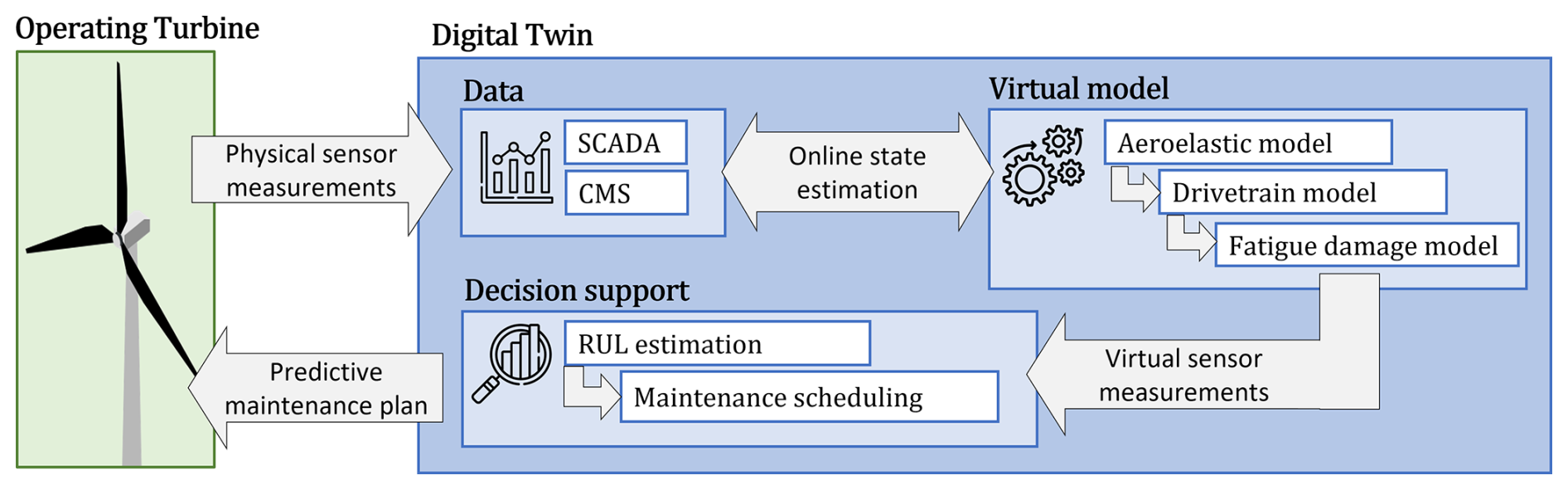
Figure 3Example of a digital twin framework for continuous RUL estimation in wind turbine drivetrain components (Mehlan et al., 2023).
Beyond predictive maintenance, the digital twin approach offers significant benefits for the design and validation of next-generation designs. It enables hybrid testing methods where a virtual model, which is validated with partial physical measurements, can predict the full-load responses beyond the capacity of expensive test benches, as studied for nacelles (Siddiqui et al., 2023b). This not only reduces the cost and uncertainty associated with physical testing but also provides a sustainable solution to the challenge of validating ever-larger turbines, for which building correspondingly larger test facilities is becoming unfeasible (Siddiqui et al., 2023a).
4.6.3 Maintenance and repair
While monitoring and inspection are designed to identify potential issues, the maintenance and repair phase involves the physical intervention required to resolve them. The chosen strategy for these interventions directly impacts project downtime, operational expenditure (OpEx), and the overall economic viability of a floating wind farm. This section examines the core logistical challenges and the competing strategic philosophies for conducting major repairs, such as the conventional tow-to-port model and emerging on-site solutions. In particular, Japan faces unique operational hurdles, including difficult vessel access due to persistent swells on its Pacific coast and frequent lightning strikes on the Sea of Japan side. These local challenges are compounded by a major strategic gap observed in early European projects. Here, we introduce the lessons learned from the Kincardine and Hywind Scotland offshore wind farms.
4.6.4 Tow to port
Tow-to-port maintenance has been employed for the heavy maintenance of two well-known floating offshore projects: Kincardine and Hywind Scotland. These experiences have shown that the default strategy for heavy maintenance – towing the entire turbine to port – is prohibitively expensive, with costs exceeding USD 4 million and downtime lasting over 3 months for a single turbine. For a nascent market like Japan with limited specialized port infrastructure, relying on this reactive and costly tow-to-port model presents a significant threat to project viability.
The Kincardine is the first commercial-scale floating offshore wind farm to be operational in 2021. It is situated about 15 km off the coast of Aberdeen, and consists of five WindFloat units with five 9.5 MW turbines and one 2 MW turbine, all installed on WindFloat semi-submersible platforms. During the summer of 2022, one of the Kincardine wind turbines suffered a technical failure, and a major component required replacement. Thus, the turbine was disconnected, towed to shore, and subject to heavy maintenance. In May 2023, a second Kincardine wind turbine, after a major component failure, encountered the same situation of heavy maintenance and was towed from Scotland to the port of Massvlakte, Rotterdam. These wind turbines were the first cases of floating offshore wind turbines in the world to encounter the complexities of heavy maintenance. The first Kincardine turbine encountered the following shutdown duration: 14 d in the port for maintenance, 52 d from disconnection to turbine reconnection, 94 d from turbine disconnection to the end of post-reconnection. Important lessons emerged from the situations linked with heavy maintenance of the Kincardine floating offshore wind farm: the duration of turbine shutdown, associated costs, identification of an appropriate port for operation and maintenance, and availability of a secure fleet. The distance from the wind farm to the port should be taken into account, and the port should have a deep-water quay and sufficient room. In addition, the port must be equipped with a heavy crane, and its use for other activities should also be taken into account. The total cost of the vessels contracted for maintenance of the first turbine of Kincardine exceeded the amount of USD 4 million. These high costs emphasized the necessity for floating offshore developers to take planning of maintenance contracts into account and to secure fleet contracts with anchor handling tug supply (AHTS) vessels through framework agreements in order not to be exposed to very high market rates and market tightening. Strategic maintenance planning and intense research about alternative maintenance strategies were also among the lessons learned from the Kincardine heavy maintenance (Pacific Northwest Center of Excellence for Clean Energy, 2023).
Important lessons have also been offered by the world's first floating offshore wind farm, Hywind Scotland, which opened in 2017 and is located off the coast of Peterhead, Scotland. It consists of five wind turbines of 6 MW each and a SPAR-type foundation. Equinor, the Norwegian operator, announced in 2024 that after more than 6 years in operation, all five wind turbines of the Hywind Scotland wind farm required heavy maintenance. Heavy maintenance was needed in a sheltered and controlled environment. Taking into account the absence of required infrastructure and skills in Scotland, all the Hywind Scotland wind turbines were towed to shore, to the west of Norway, by the Wergeland base in Gulen. Wergeland was seen to be the closest port with sufficient water depth and offshore wind experience that could service the Hywind Scotland turbines; it was the same place where the Hywind Tampen was mobilized – see Fig. 4. The heavy maintenance of the five wind turbines was carried out by the Wergeland Group together with the heavy-lifting and engineering company Sarens and the turbine supplier Siemens Gamesa (European Commission (Technical University of Denmark and Renewable Energy Institute), 2022; Equinor, 2024; Energy Voice, 2024). According to Equinor's statement offered to the AJOT (American Journal of Transportation, 2024), the heavy maintenance consisted mainly of replacement of the main bearings for all five wind turbines of Hywind Scotland. As a note, Hywind Scotland has delivered high-capacity factors (a capacity factor of 54 %) for many years and is seen by Equinor as a pilot project which can offer valuable lessons for future floating offshore wind farms around the world. The replacement of main bearings is also perceived by Equinor and its partners as an important source of learning in terms of improvement of operation and maintenance for commercial floating offshore wind projects. Moreover, Equinor aims to support initiatives in order to reduce heavy maintenance and to develop efficient on-site repair solutions for future floating offshore farms (American Journal of Transportation, 2024). As per the opinion of some experts in the offshore industry, the need for heavy maintenance of Hywind Scotland was “unsurprising”, but they regarded the heavy-maintenance requirement for all five wind turbines and the decision to tow all five units simultaneously to port as unusual and intriguing (Energy Voice, 2024). After a few months of heavy maintenance, in October 2024, Equinor announced that all five turbines of Hywind Scotland had returned to the offshore site and been reconnected (Equinor, 2024).
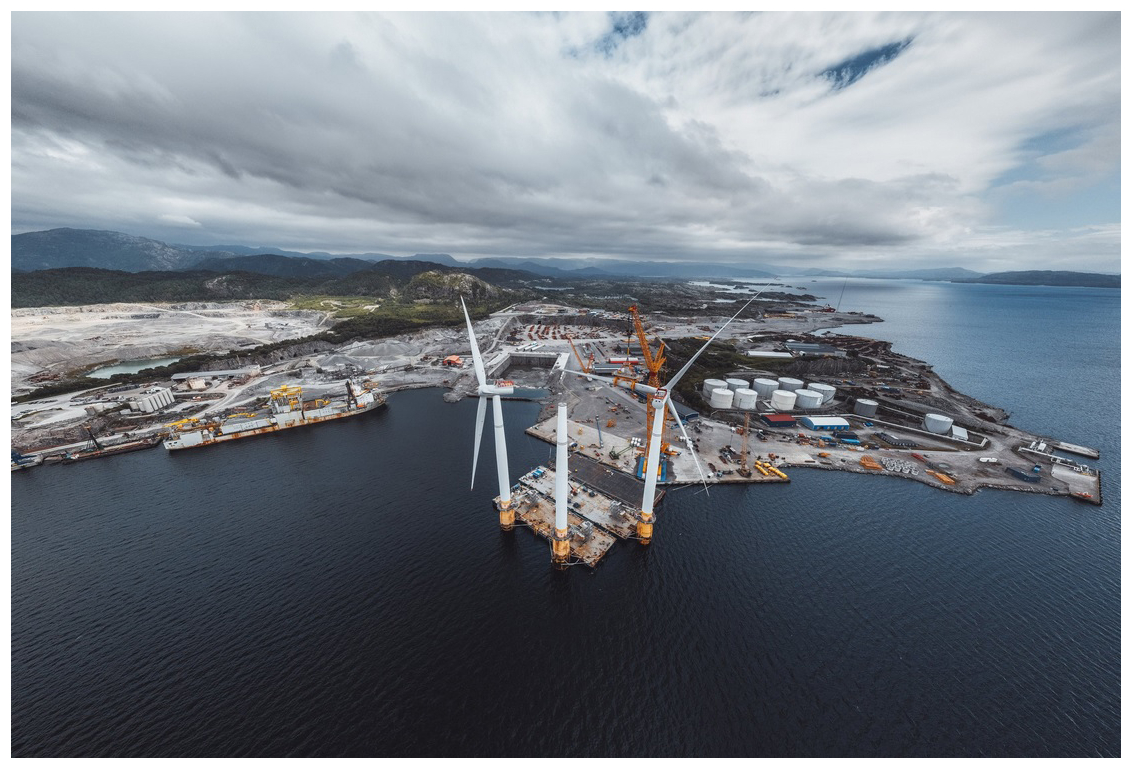
The tow-to-port strategy is viewed as a reactive and unscheduled response to failures. Therefore, future research initiatives and projects need to focus on proactive maintenance strategies, with predictive maintenance and remote monitoring technologies, for well-planned heavy maintenance and a spare part strategy (World Forum Offshore Wind, 2023; Dinkla, 2024). The tow-to-port strategy was analyzed by different studies, but key aspects, such as time to disconnect, towing speed, and weather limitations, remain to be standardized. Weather windows are seen as vital for cost saving and safe operations but are also associated with an increase in travel time. Furthermore, the tow-to-port heavy-maintenance approach is not seen to be a feasible solution for particular commercial-scale floating offshore wind farms (World Forum Offshore Wind, 2023).
The new solutions of on-site heavy maintenance can reduce downtime and repair time and avoid the necessity of disconnection of floating offshore wind turbines. In 2024, the Kincardine floating offshore wind farm encountered the first in situ major component exchange for a wind turbine without the need to tow the unit back to a port. The replacement operation of a generator for a 9.5 MW turbine was performed offshore, on site, by making use of a GenHook up-tower crane which was temporally installed on the top of the turbine; see Fig. 5. The operation was executed from an offshore support vessel (OSV), which was supported by crew transfer vessels (CTVs). The time frame for execution of this operation – including full mobilization and demobilization of equipment – spanned less than 1 month. This is the first time in the floating offshore industry that major-component exchanges could be done offshore, without the use of massive offshore cranes or the need to tow the wind turbine to port. The use of up-tower crane technology proved that tow-to-port operations are no longer required for several types of floating turbine repairs. The use of tower crane technology has opened a new chapter in the maintenance of floating offshore wind (Offshore Channel, 2024; Memija, 2024).
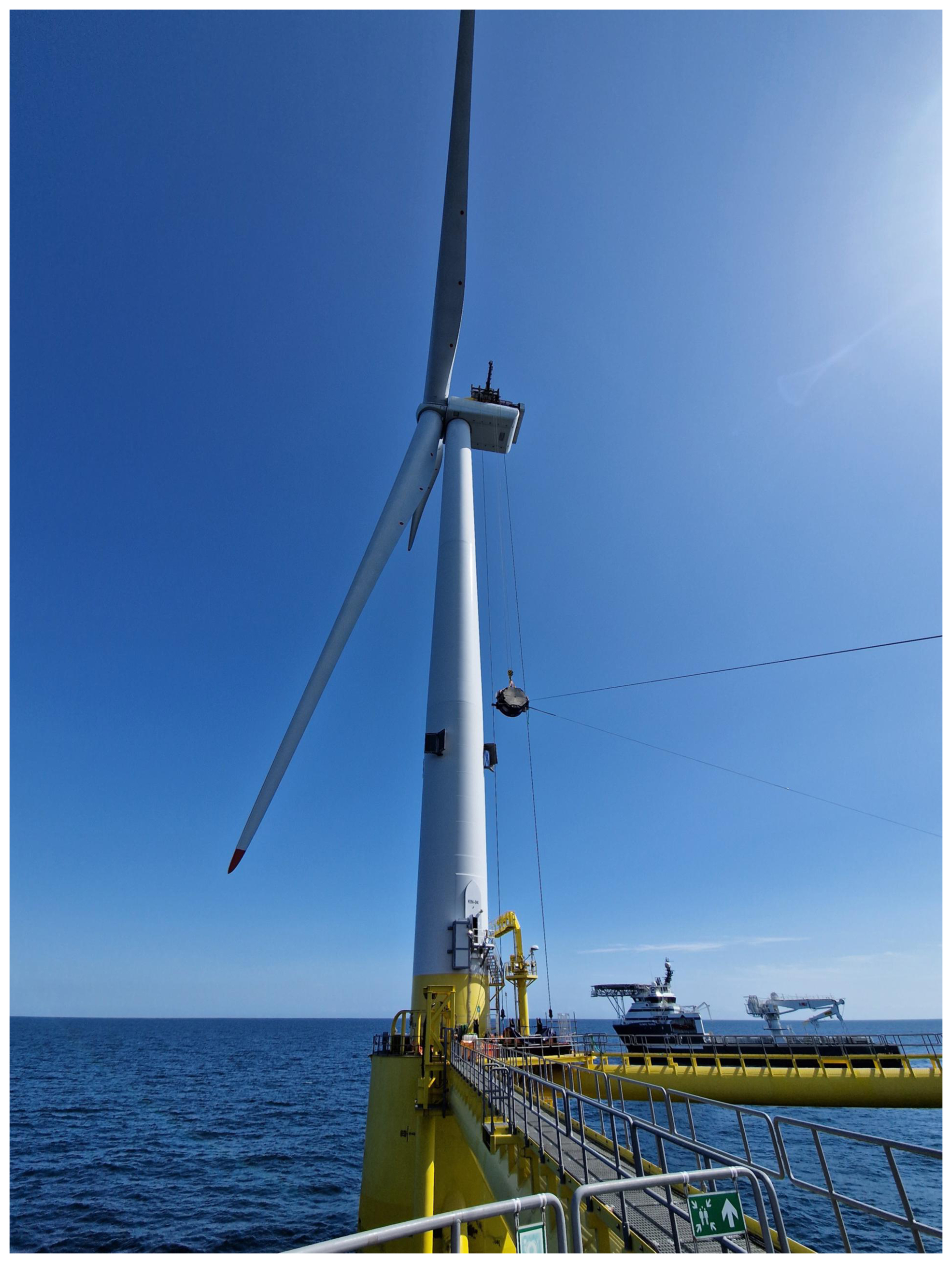
4.6.5 Logistics
The location of offshore wind farms far from maintenance ports and shorelines, dynamic motions in floating offshore wind turbines, narrow weather windows, and unfavorable weather conditions can seriously impact maintenance planning and optimization (Jacobsen, 2023). In addition to condition-based maintenance, effective planning and optimization of the O&M-related vessels can reduce the high costs. Various types of vessels are being used for O&M, such as crew transfer vessels (CTVs), service operation vessels (SOVs), vessels able to perform heavy lifting, vessels that tow to shore, mooring and cable-laying vessels, and anchor-handling tug supply vessels. Subsea components, such as mooring lines, anchors, and substructures, require underwater visual inspections and involvement of remotely operated underwater vehicles (ROVs). Moreover, the vessels related to O&M can vary between wind farms and can make a considerable contribution to increasing O&M-related costs (Jacobsen, 2023).
The UK has introduced two strategies for improving O&M practices, particularly to reduce transfers between onshore O&M base ports and floating offshore wind farms. One strategy utilizes SOVs for maintenance, and another strategy utilizes an offshore maintenance base (OMB) to accommodate CTVs (Avanessova et al., 2022). An SOV comprises many facilities, such as accommodation for staff, a walk-to-work gangway, a maintenance and spare part platform, and a launch and recovery system for a daughter craft. An OMB can have a foundation that is shared with a substation or a totally separate foundation and can be connected to a substation via a bridge. An OMB and a substation can also share a helicopter base and emergency recovery system (Avanessova et al., 2022). Taking costs and energy into consideration, using SOVs is seen as a preferred strategy, but carbon emissions are lower with the usage of an OMB. Taking weather data into account, the costs associated with vessels can increase further. The costs linked with an OBM can decrease in the case where the OMS shares a foundation with a substation (Avanessova et al., 2022). The study of Jacobsen (2023) also shows that OMBs can significantly lower the costs of operation and maintenance for Norwegian offshore wind in both bottom-fixed and floating development areas on the Norwegian continental shelf, especially by making use of its many offshore oil and gas platforms, installations, and floating substations that can be used as OMBs. The Norwegian company Fred. Olsen Windcarrier has also analyzed the high availability rate provided by OMBs. However, a major challenge for the implementation of OMBs with CTVs is represented by the harsh conditions of the North Sea as the CTVs have an operational limit of less than 2.0 m, which is available for only half of the year period as per Copernicus data (Jacobsen, 2023). In 2021, a partnership was signed between Fred. Olsen Ocean together with its subsidiaries, Global Wind Service and Fred. Olsen Windcarrier, and the Japanese Shimizu Corporation. This partnership brought together knowledge, experience, capabilities, the related supply chain, and in-depth knowledge of the Japanese market and was seen as beneficial for the development of Japanese and international offshore wind (, ).
4.7 Project execution and operations: summary and key takeaways
This section focuses on the execution phase of floating offshore wind systems. First and foremost, the key feature of this phase is to achieve economics of scale. The manufacturing of large structures has been a made-to-order business in many cases. The introduction of manufacturing methods to improve production efficiency and lean processes is critical. The large investment in vessel and port infrastructure to meet the T&I process defined by the OWF design is another critical decision. Automation technologies are desired to improve the efficiency and safety of the installation process.
In addition, a holistic view of the FOWT project is required. The dependency of the T&I process on the foundation design calls for optimization of engineering design and project design. A system engineering approach for an integrated view and close coordination of stakeholders is necessary.
A strategic approach is needed to identify the required size and capability of the workforce for offshore wind. The education program for students and engineers needs to be developed and updated to match upcoming needs, e.g., from shipbuilding to offshore wind.
The key takeaway of this section is that the high cost of operation and maintenance (O&M) for floating offshore wind, driven by harsh far-shore conditions and high-failure-rate components, is forcing a fundamental shift away from reactive, failure-based strategies. Learning from early projects has shown that the default heavy-maintenance model of towing a turbine to port is prohibitively expensive and results in months of lost revenue.
In response, the industry is moving towards a proactive, two-pronged approach: first, utilizing predictive health monitoring through digital twins to anticipate failures in critical systems like the drivetrain before they occur, and second, developing innovative heavy-maintenance strategies, such as in situ repair and OMBs. For a nascent market like Japan, which lacks legacy infrastructure to re-purpose, the way forward is to strategically adopt these advanced logistical models through international partnerships, thereby building an efficient and economically viable O&M ecosystem from the outset. Regarding learning from the Kincardine and Hywind Scotland offshore wind farms, it is important to note that these projects are the first cases of floating offshore wind turbines in the world to encounter the complexities of heavy maintenance and the evaluation of choices such as tow-to-shore or on-site repair. They offer unique opportunities of learning, which is very important for FOWT development in Japan considering the scarcity of FOWT maintenance experience around the world. As an example of the interpretation and contextualization of these lessons for Japan, tow-to-port maintenance has been employed for the heavy maintenance of Kincardine and Hywind Scotland. These experiences have shown that towing the entire turbine to port is prohibitively expensive, with downtime lasting over 3 months for a single turbine. For a nascent market like Japan with limited specialized port infrastructure, relying on this reactive and costly tow-to-port model may present a significant threat to project viability. Maximizing learning from projects such as the Kincardine and Hywind Scotland FOWTs is highly relevant for Japan, particularly in the context where recently in August 2025, Mitsubishi Corp. withdrew from the planned offshore wind power projects off the coasts of the Chiba and Akita prefectures, where operations were originally scheduled to begin as early as 2028. High costs and economic headwinds caused Mitsubishi Corp. to take such a dramatic decision – a significant blow to the development of offshore wind farms in Japan.
5.1 Introduction
Developing industry is critical for the successful development and scaling of floating offshore wind. To meet the national target, 200–300 floating offshore wind turbines belonging to the 10 MW class will need to be built and installed annually. The technology, infrastructure, and workforce to achieve the mass construction and installation of such FOWTs should be developed in Japan. Here we discuss supply chain and human resources, which are integral to such growth.
5.2 Supply chain
Offshore wind farms are comprised of tens of thousands of parts, including turbine components, floating platforms, mooring systems, and power cables. Japan has related industries all over the country, such as the construction industry and the shipbuilding industry. In addition, there is a strong industrial basis that can provide high compatibility with and high potential for domestic industrial development for FOWTs. The public–private council set a target for the domestic procurement ratio to be 60 % by 2040 to promote private investment in the Japanese market in order to create a resilient supply chain for stable energy supply, foster industries, and establish cost competitiveness. The target for floating offshore wind is 65 % or more.
However, the domestic supply chain has emerged as a primary bottleneck threatening the pace and economic viability of Japan's ambitious national targets. The challenge is not merely about manufacturing individual components, but rather about the immense difficulty of system integration. Floating wind power is a novel industry that demands seamless convergence of diverse traditionally separate sectors: Japan's maritime and heavy industries (for floaters, mooring, and installation) and the global wind energy sector (for turbines). Forging this new, integrated industrial ecosystem is the foundational challenge that underpins all other supply chain issues.
The most acute symptom of this integration gap is the heavy reliance on overseas procurement for the single largest and most technologically complex component: the wind turbine generator. With no domestic manufacturer of large-scale offshore turbines, Japanese projects are dependent on a few key suppliers. This creates a multi-faceted problem. Firstly, it results in a technical “black box”, where local developers and operators have limited insight into the design and performance of the most critical, high-failure-rate part of the asset. Secondly, it introduces significant logistical complexity and risk, as the trans-oceanic shipment places immense strain on Japan's port infrastructure and logistics scheduling.
To overcome these deeply intertwined challenges, the way forward is through a digitally enabled, coordinated approach. The current fragmented supply chain with its information silos is untenable for large-scale deployment. The industry must move towards implementing digital lifecycle and project management (DLPM) systems, underpinned by robust, centralized data-sharing platforms. Such a system would provide real-time, end-to-end visibility across all stakeholders – from the overseas turbine factory and international shipping lines to the local port authorities and Japanese floater fabricators. By creating a single source of truth for component status, shipping schedules, and port availability, it becomes possible to dynamically manage logistics, anticipate bottlenecks, and optimize assembly schedules. This digital backbone is no longer a luxury but a necessity to de-risk projects; mitigate logistical nightmares; and enable the efficient, large-scale deployment Japan envisions.
5.3 Marine-related workforce/human resources in offshore wind
The offshore wind sector offers substantial opportunities for industrial growth, job creation, and economic development. By 2027, over 574 000 technicians will require industry training, with 80 % of these technicians concentrated in 10 countries, including Japan (Global Wind Energy Council (GWEC), 2023). The wind energy workforce in Europe is growing rapidly, with projections estimating an increase in the workforce from 300 000 to over 500 000 by 2030 (Baltic Wind EU and Bulsky, 2025). For instance, the UK's offshore wind industry employed around 32 000 people in 2024, with expectations of more than 100 000 jobs by 2030 (The Crown Estate, 2024). Offshore wind jobs, in particular, hold significant potential for future employment. In Norway, the workforce is transitioning from oil and gas to offshore wind, supported by educational programs like those offered at NTNU (NTNU, 2024b). Norway's expertise in oil and gas could give a head start to the growing floating offshore wind industry. A detailed description of the workforce in wind energy is provided in the Appendix.
Japan holds strong capacities and capabilities in the shipping industry and shipbuilding industry. On the other hand, the capability for offshore development is limited due to the small number of offshore oil and gas fields in Japan's water. There is still a shortage of engineers, skilled employees, and experts who have the knowledge of ocean development, particularly related to floating offshore wind.
The development of human resources for the future of the offshore industry and renewable energy sources like wind power is seen as a fundamental strategy for Japan as an island nation and maritime country. On 20 July 2015, in Japan, at the grand opening ceremony for Marine (or Ocean) Day (a national holiday in Japan since 1996), the prime minister, Shinzo Abe, announced the aim of Japan to improve its marine resource development and to dramatically increase its number of marine engineers from 2000 to at least 10 000 by 2030. Through various efforts, Japan aims to secure the human resources required by the marine industry by building a human resource development system which will serve as the foundation for the ocean resource development in Japan (Nejad et al., 2019; The Nippon Foundation Ocean Innovation Consortium, 2024).
One important initiative was the establishment of the Nippon Foundation Ocean Innovation Consortium on 4 October 2016, which has supported capacity building for future generations of ocean engineers, both students and young professionals, through various national and international seminars and training tailored to draw attention to the attractions of offshore industries, facilitate learning about the technology of offshore development, and convey the latest technological trends in the offshore industry. Since 2016, it has supported many internships in Japanese and international companies, bespoke summer schools at overseas universities, and grant programs in cooperation with organizations in Norway, the USA, the UK, and the Netherlands.
The role of universities is critical, and development of and continuous updates on educational programs in order to match the needs of the workforce in offshore wind energy are required to be implemented towards an efficient workforce transition in Japan. The need for “industry-ready” leaders who can tackle complex and multi-faceted problems is also required. For example, IDCORE focuses on high-level doctoral training as a direct response to the needs of a new industry that requires more than just specialists; it needs integrated thinkers who can bridge the gap between pioneering research and commercial reality.
Regarding the training for the offshore wind workforce in Japan, in September 2022, ClassNK (the Japanese shipping classification society) signed a memorandum of understanding (MOU) with Maersk Training A/S (part of the A.P. Moller Maersk group, a Danish shipping giant) for the training of offshore wind farm operators and the education of alternative fuel ship crews. Moreover, Maersk Training and GiraffeWork (a subsidiary of the parent company Daikyo Kenki) have signed a collaboration agreement to open a training center in 2024 in Kawasaki for the wind industry in Japan. This center will offer courses in accordance with the GWO, basic technical training (BTT), an advanced rescue training course, and first aid training (ClassNK, 2024; Global Wind Energy Council (GWEC), 2023).
Japan's maritime cabotage rules, rooted in legislation like the ships act and mariners act, create a significant barrier for its nascent offshore wind industry. These laws traditionally restrict domestic maritime transport to Japanese-flagged vessels with Japanese crews. Because offshore wind farms are legally classified as “domestic ports”, all transport of personnel, turbines, and materials to these sites falls under these strict regulations. This framework severely limits the ability of the experienced international fleet of specialized installation and maintenance vessels to participate in Japanese projects, creating a critical bottleneck from the outset (European Commission (Aquilo Energy GmbH), 2025).
The current pathways for foreign vessels to operate are largely impractical for the scale and speed required by the offshore wind sector. Obtaining a special exemption is a complex, costly, and months-long bureaucratic process, while re-flagging a vessel in Japan is even more arduous, often taking over a year and requiring majority Japanese ownership and crew (Watson Farley & Williams, 2024; European Commission (Aquilo Energy GmbH), 2025). These significant hurdles result in project delays, increased capital expenditure, and negative impacts on project financing, ultimately hindering the acceleration of offshore wind development in Japan (Watson Farley & Williams, 2024).
Recognizing this barrier, external studies, such as the one commissioned by the EU, have recommended that Japan reform its cabotage framework by removing restrictions for offshore wind projects and clarifying the rules for exemptions while simultaneously increasing domestic training programs (European Commission (Aquilo Energy GmbH), 2025; Watson Farley & Williams, 2024). The Japanese government has started to respond, introducing a policy package in June 2024 that plans for special measures to better utilize foreign vessels and expert crews. However, this reform is being approached cautiously, as the need to accelerate renewable energy development must be balanced against national security concerns and the protection of the domestic maritime industry (Watson Farley & Williams, 2024).
5.4 Demonstration projects
As mentioned in the Introduction, the demonstration of profitability and stability is important for a bankable project. Technical uncertainty in floating offshore wind is another challenge for projects to be bankable. Several demonstration projects have been conducted in Japan, namely the Goto project, the Fukushima FORWARD project, and the demonstration project of next-generation floating offshore wind turbines at the Hibikinada Sea. Details of these projects are provided in the Appendix. Along with a technology demonstration, these projects have also led to the development of dynamic analysis tools to design optimum floaters, as mentioned in Sect. 3.2.
Starting in fiscal year 2022, the METI and NEDO started a project to develop and demonstrate elemental technologies for low-cost floating offshore wind turbines, funded by the Green Innovation Fund of the government, which amounts to JPY 2 trillion in total. The project aims to establish technologies that will enable power generation costs of JPY 8 to 9 kWh1 under certain conditions by 2030 and to commercialize floating offshore wind turbines at an internationally competitive cost level. In June 2024, two projects adopting semi-submersible FOWTs were awarded in the “cost reductions for offshore wind power generation” category under NEDO's Green Innovation Fund Phase 2 site-leasing program. One project, led by C-Tech, will demonstrate a hybrid semi-submersible FOWT of over 15 MW off the coast of the Aichi prefecture. The goal is to establish technology that can commercialize floating offshore wind power under specific conditions (e.g., strong wind under tropical cyclones) at internationally competitive prices by the fiscal year 2030. The other project, led by Marubeni Offshore Wind Development, will demonstrate two semi-submersible FOWTs of over 15 MW off the coast of the Akita prefecture in waters 400 m deep. These projects commenced in July 2024 and are set to conclude in March 2031, with commercial operations expected to begin in the autumn of 2029.
In September 2024, NEDO selected five “next-generation floating offshore wind power technology development” projects, including the FAWT project, one TLP FOWT project, one semi-submersible FOWT project, and two SPAR FOWT projects. Unlike the previously mentioned demonstration projects, these involve a variety of substructure types. The selection of the FAWT project, which utilizes less mature technologies, came as a surprise, as did the inclusion of the TLP project. Despite the SPAR type's apparent disadvantages due to port water depth, it was selected with the aim of advancing installation technology. NEDO's support of the offshore wind industry remains strong and continuous.
5.5 From projects to national infrastructure
In the wake of the 2011 Great East Japan Earthquake, Japan's energy policy was fundamentally reshaped around the principle of S + 3E: safety, energy security, economic efficiency, and environmental protection. This framework acknowledges that “absolute safety” is unattainable and that a resilient energy system must be built to manage risks and increase the national self-sufficiency ratio (Ministry of Economy, Trade and Industry (METI) in Japan ., 2022; Ibrion et al., 2020a). As floating offshore wind transitions from initial territorial projects to gigawatt-scale developments in the exclusive economic zone (EEZ), the definition of “the system” expands dramatically. The challenge is no longer just the operational safety of a single wind farm project, but also the comprehensive security of a critical national energy and industrial ecosystem. This expansion of the systemic boundary introduces new and complex challenges that require a holistic grand design.
The recent momentum to develop Japan's EEZ – an area nearly 10 times its landmass – unlocks a vast energy frontier, with potential estimates reaching approximately 1500 GW for floating offshore wind (Mitsubishi Research Institute, 2024). The target of floating offshore wind aims for 15 GW in 2040. Developing this resource transforms wind farms from simple power plants into strategic national assets in remote waters, raising significant national security considerations. This expansion necessitates new, large-scale offshore infrastructure. In Europe, artificial islands are planned as offshore bases for O&M in the North Sea, specifically near Denmark and Dogger Bank. These islands are intended to host a range of facilities, including base ports, heliports, accommodation units, energy storage systems, power-to-X (P2X) systems, and high-voltage direct-current (HVDC) transmission systems. The Danish artificial island is expected to be completed by 2030, with the Dogger Bank counterpart projected for completion by 2035. Given the deep waters of Japan's exclusive economic zone (EEZ), a similar artificial island would likely need to be a floating structure. Yamamoto et al. (2024) examined the feasibility of utilizing very large floating structures as offshore bases for wind farms in Japan's EEZ. They proposed a semi-submersible platform that could serve as a foundation for floating offshore wind turbine substructures, installation, O&M, and P2X activities. However, they highlighted several technological challenges, including the creation of calm-sea areas, the on-site construction of large semi-submersible structures, and mooring.
The safety of the workers is also paramount. An increased distance from shore, a harsher environment, and weather and environmental factors need to be taken into account for the health and safety parameters which are required to be in place for the FOWT and the workers at sea. For example, the dynamic floater motions in the offshore region are seen to make access and egress of workers challenging (McMorland et al., 2022). To enhance occupational safety in the offshore wind industry, G+ was established as the global health and safety organization bringing together the offshore wind industry to pursue shared goals and outcomes.
The next systemic boundary is the limited capacity of the onshore power grid, which cannot absorb the massive, intermittent power generated by gigawatt-scale offshore wind. Power-to-X (P2X) – the conversion of renewable electricity into other energy carriers like green hydrogen – is an essential strategy to overcome this limitation. P2X is not just an energy storage technology; it is a crucial enabler of energy security. It allows Japan to capture its vast offshore wind potential; mitigate intermittency; enhance self-sufficiency; and build a more resilient, disaster-proof energy system by decoupling power generation from immediate grid demand. Some promising energy storage technologies are lithium-ion batteries, pumped hydro, green hydrogen, thermal energy storage, redox flow systems, lead batteries, sodium-ion batteries, compressed air/gas, supercapacitors, flywheels, liquid air/gas cryogenic energy storage, solid mass gravitational energy storage, and superconducting magnetic energy storage. A list of Japan's policies for energy storage is provided in the Appendix.
As this new energy ecosystem scales, it becomes more digitally interconnected, managing vast wind farms, P2X facilities, and complex grid interactions. This increases its vulnerability to cyberattacks exponentially. The primary threat is not to traditional IT systems but to operational technology (OT), like SCADA systems, which controls the physical hardware. Unlike modern IT, many legacy OT systems were not designed with a “security by design” mindset like the IEC ISO 62443 standard. Physical security has often not been sufficiently covered in the design, resulting in poor quality of locks, e.g., used at wind farm cabinets. Vendors' remote access is not always managed properly (segregation of duties). Communication links to the wind farms can be realized by more than one provider without notice, and outdated communication protocols are used without security enhancements. Thus, a holistic approach to ensure cybersecurity robustness and resilience is inevitable.
5.6 Industry and economic enablement: summary and key takeaways
The key challenge for Japan's floating offshore wind ambitions is to build a new, integrated industrial ecosystem capable of mass production, which requires overcoming foundational gaps in its supply chain and workforce. The primary supply chain bottleneck is a critical dependency on overseas manufacturers for wind turbines, creating logistical hurdles and technical “black box” issues. The workforce faces a dual challenge: a domestic skills gap in specialized offshore expertise and restrictive maritime cabotage laws that hinder the use of essential foreign vessels and crews. The way forward involves a two-pronged strategy: implementing digital platforms to integrate the fragmented supply chain and pursuing a combination of accelerated domestic training programs and pragmatic cabotage reform to build and augment the necessary human capital.
The government's overarching strategy is to de-risk the industry through targeted support of demonstration projects. By funding a diverse portfolio of floater technologies through initiatives like the Green Innovation Fund, Japan aims to foster innovation, prove commercial viability, and build confidence for private investment. This focus on de-risking individual projects is the first step towards a much larger long-term vision. As the industry scales up and moves into the vast exclusive economic zone (EEZ), the challenge evolves from building projects to designing a secure national infrastructure. This requires a “grand design” that addresses systemic boundaries, such as using power to X (P2X) to overcome grid limitations and implementing robust cybersecurity for critical operational technology, ensuring that the industry's growth aligns with Japan's broader S + 3E energy security goals.
This paper first identifies the challenges in the problem space through a review of social needs. To clarify the research gaps in realizing floating offshore wind power in Japan, we analyzed the country's unique environmental and social characteristics. Next, we reviewed the challenges and current state of technological development across various phases, including site selection, design, operation, industry development, and the S + 3E framework. Finally, we examined state-of-the-art technologies in the solution space that address these challenges.
In this section, we conclude that the realization of floating offshore wind in Japan is contingent upon addressing a range of research gaps that arise from the country's unique environmental and social conditions, as discussed in Sects. 6.1 and 6.2, respectively. These gaps range from the need for improved data collection and modeling techniques to the development of new infrastructure and regulatory frameworks, with transformation of societal systems being essential. We organize the common directions for addressing these challenges from the perspectives of digital transformation in Sect. 6.4, education and research systems in Sect. 6.5, and roadmap development in Sect. 6.6.
6.1 Gaps caused by unique environmental conditions in Japan
Japan's unique environmental conditions create several challenges for the development of floating offshore wind, primarily due to its complex geological and metocean characteristics.
Japan's seabed is highly complex, characterized by steep slopes, deep waters, and a high risk of geohazards. This requires a thorough site selection process, where detailed geological surveys and precise design considerations are essential to ensure safety and stability. However, the existing research and data on seabed conditions are insufficient to meet these demands. A significant research gap emerges in developing comprehensive site investigation techniques that can effectively address these unique geological challenges. This gap also affects the ability to optimize foundation and mooring system designs, making it crucial to establish methodologies that are specifically tailored to Japan's unique seabed conditions.
Another major issue is the insufficiency of long-term metocean data. Offshore wind projects rely heavily on accurate meteorological and oceanographic data to optimize the design and operation of floating turbines. In Japan, the scarcity of long-term metocean data presents a challenge, particularly in dealing with extreme weather conditions like tropical cyclones and extratropical cyclones. Without sufficient data, it becomes difficult to design floating offshore wind turbines that can withstand these conditions. This creates a gap in design and operational planning, where more accurate and region-specific metocean data, combined with advanced modeling techniques, are required to ensure the reliability of the systems in extreme weather scenarios.
Japan's exposure to large swells from the Pacific Ocean and the influence of the Kuroshio Current further complicate the design and operation of offshore wind farms. These factors can affect not only the stability of the floating structures but also the transportation and installation (T&I) process. The research gap here lies in developing design rules and installation strategies that consider these dynamic ocean conditions, particularly in mitigating the risks posed by long-period swells. The ability to forecast these oceanic phenomena more accurately is also critical for ensuring both operational safety and efficiency.
Finally, Japan's unique geographical shape limits access from ports to offshore wind farms, especially in regions where the waters are deeper and farther from the shore. The combination of long distances and challenging sea conditions introduces logistical complexities during both the construction and the operational phases. This creates a gap in infrastructure planning, where there is a need to develop efficient transportation, installation, and maintenance strategies tailored to Japan's port infrastructure and its environmental limitations.
6.2 Gaps caused by unique social conditions in Japan
In addition to environmental challenges, Japan's unique social and industrial landscape presents several obstacles to the development of the offshore wind industry.
One key issue is the diversity of stakeholders involved in Japan's coastal areas. These include fisheries, shipping routes, and local communities, all of which have vested interests in the use of maritime resources. The process of site selection must therefore balance a range of competing demands, which complicates the planning and development process. There is currently a lack of government leadership in coordinating this stakeholder engagement, leading to inefficiencies and delays in project approvals. The research gap here involves developing more effective frameworks for stakeholder management and government-led site selection processes that can streamline approvals while balancing the interests of all parties involved.
Another significant challenge lies in Japan's underdeveloped industrial base for offshore wind. Unlike countries with a well-established oil and gas industry, Japan lacks the necessary infrastructure – such as large ports, heavy-lift cranes, and facilities designed for offshore operations – that is critical for the manufacturing, transportation, and installation of floating offshore wind systems. This gap in industrial capacity affects the entire lifecycle of offshore wind projects, from fabrication to installation and maintenance. Research is needed to develop supply chain strategies that leverage Japan's existing maritime industry, such as shipbuilding, while addressing the infrastructural deficiencies. This includes the development of dedicated ports, storage facilities, and transportation networks that can handle the unique demands of floating offshore wind turbines.
Furthermore, Japan has a history of lagging behind Europe in terms of regulatory and standard development for offshore wind projects. This is partly due to the absence of major domestic manufacturers that can push for the adoption of cutting-edge technologies and standards. This results in a lack of consistent rules and guidelines that can be applied across different projects. The research gap here lies in developing a unified regulatory framework that can drive innovation and ensure safety while adapting to Japan's specific environmental and industrial context. The framework should also include a more proactive approach to updating standards in line with global best practices, particularly in areas such as foundation design and operational safety.
6.3 Prioritization of action
To systematically address the numerous challenges facing Japan's floating offshore wind sector, a structured framework is proposed to prioritize the necessary research and technological development. This framework first classifies all identified gaps and their corresponding solutions into two primary categories. “Enabling technologies” are defined as technologies that are absolutely essential for a project's viability; without them, a floating offshore wind farm cannot be successfully built or operated under the required technical, economic, and regulatory performance levels. All other solutions are classified as “supporting technologies,” which, while valuable, are not strictly indispensable for a project to proceed, as alternatives may exist.
The framework then further evaluates supporting technologies against two critical metrics to determine their strategic importance: cost reduction and scalability. Cost reduction is the primary driver for achieving commercial viability, and activities are prioritized based on their potential to lower the levelized cost of energy (LCOE) by reducing capital expenditure (CAPEX) or operational expenditure (OPEX) or by increasing annual energy production (AEP). Scalability refers to technology's ability to support the mass deployment required to meet national energy targets, focusing on aspects like mass production, supply chain development, and logistical efficiency. This two-metric evaluation helps to distinguish between technologies that offer incremental improvements and those that are true game-changers for the industry. These classifications are synthesized into a prioritization matrix that guides strategic investment and R&D efforts.
Enabling technologies are categorized as non-negotiable “must-have” activities that require immediate attention. Government-led strategic site surveys and scaling up workforce development fall in this category. For supporting technologies, those with a high impact on both cost reduction and scalability are identified as the “holy grail” – the top priorities for long-term research. The development of advanced survey methods and digital twins are in this category. Activities with a high impact on one metric but not the other are considered “quick wins”, valuable for near-term projects or solving specific issues. This matrix, combined with an assessment of each technology category's current readiness level (TRL), provides a clear, strategic roadmap for stakeholders to focus resources on the most critical and impactful solutions. The results of our framework based analysis is summarized in Table 2.
Table 2Analysis of gaps and activities for offshore wind in Japan.
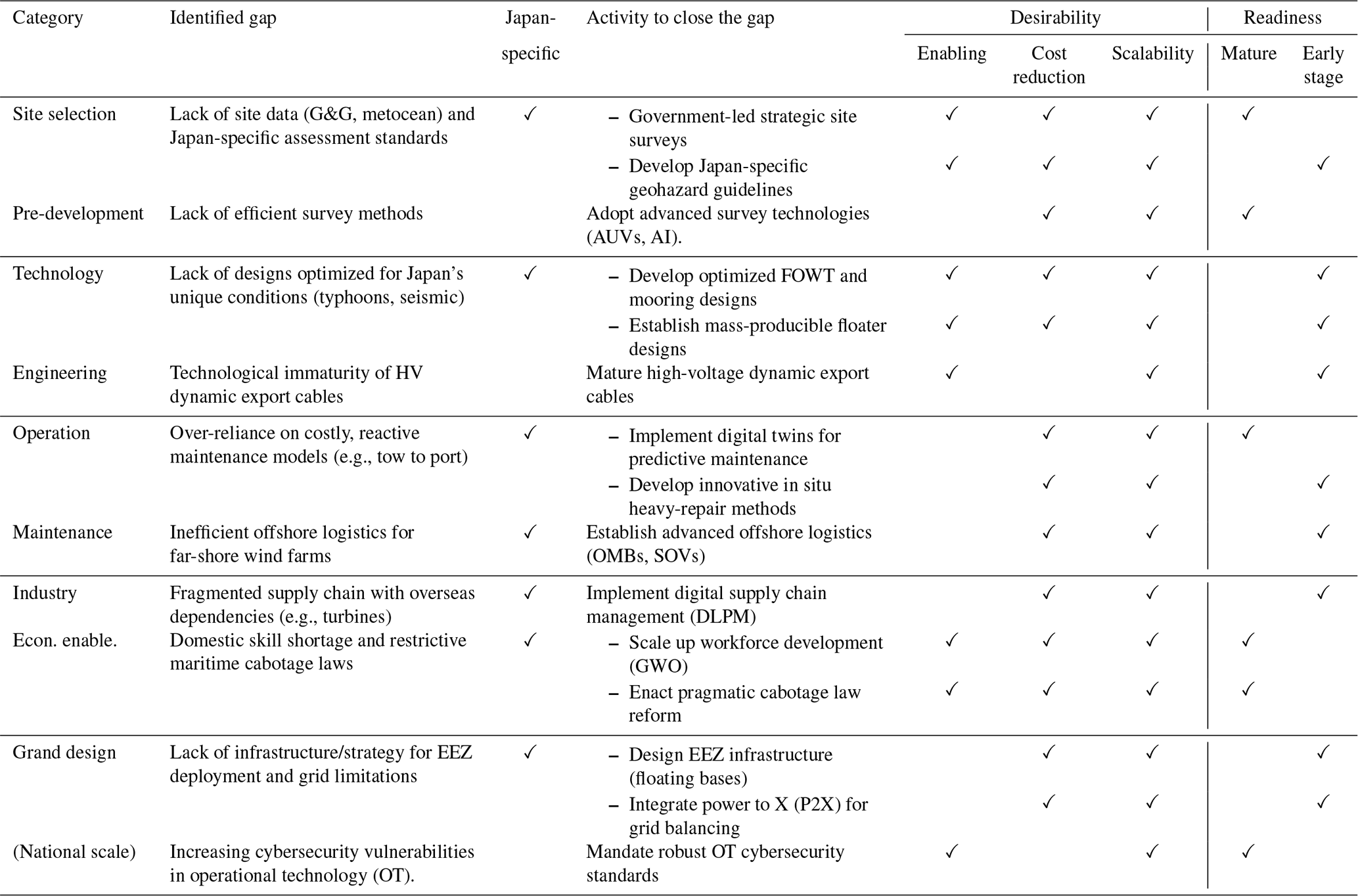
6.4 Integrated system view with digital transformation
Integration among phases is important, as technology components are likely to influence multiple phases of the project. One example is the design of floaters, as it not only characterizes the performance during operation, but also has an influence on the fabrication process and T&I process. Several social needs can be met by an improvement in one technology component. An improvement in another technology component to meet a social need may end up making a situation worse for a different social need. The floater with the best performance during power generation may not be the most cost-effective, as it may require more welding in fabrication or have a narrower weather window for transportation and installation.
This is caused by the complex dependency structure of the socio-technical system of offshore wind. The floating offshore wind system is complex, where components have a strong dependency, and system-level emergence has topological effects. Emergent behaviors of systems arise due to the interactions and dependencies between system components. Understanding these relationships is crucial for designing, analyzing, and managing complex systems. The importance of an integrated view of the system is elaborated on in the Discussion. A systemic view of the trade-off for optimizing the floating offshore wind system is necessary.
Model-based system engineering (MBSE) uses models as the central element of the engineering process, improving communication, traceability, and efficiency throughout the system lifecycle by managing the complexities of the systems of interest. The integrated system view can improve design quality by simulating and analyzing models, as engineers can identify and address potential issues early in the design phase. We also expect a reduction in defects as model-based engineering (MBE) tools can automatically generate documentation, test cases, and code, minimizing human error and improving product reliability.
Digitization is also a powerful tool in the operation phase. Maximizing power production, together with monitoring structural integrity, is important for efficient operation. This is achieved through a digital twin, which is a digital replica that integrates real-time data from sensors, dynamic numerical simulation models, and other sources to provide insights into the performance, behavior, and condition of the physical entity.
Digital transformation with model-based system engineering and digital twins can connect the full spectrum of design phases to operational management. In addition, MBE tools and digital twin tools have the potential for synergy and reuse. The modeling capabilities are shared in the design phase and operation phase. By carefully developing standards, modular design, and libraries, we can significantly improve efficiency, reduce costs, and accelerate innovation.
6.5 Interdisciplinary education and research
Many of the research gaps identified require interdisciplinary research. Offshore wind research has expanded and now requires a more interdisciplinary approach. However, existing educational programs are not designed to support and encourage interdisciplinary skills. The focus is very narrow for today's classical educational programs and mainly encourages an in-depth approach to a particular field. From one point of view, this can be perceived as a positive characteristic, as students and engineers need to master fundamental matters related to a particular field and become specialized in a particular discipline. However, most graduates lack a broader perspective and a holistic and interdisciplinary view. Moreover, interdisciplinary industrial collaborations are also very limited. A sustainable ocean industry, particularly offshore wind, requires the building and development of adaptive and innovative educational methods which need to address interdisciplinary aspects. Education for offshore wind needs to become a transformative and participatory process in order to incorporate societal needs and to support a viable industry and sustainable development of offshore wind (Nejad and Ibrion, 2021; Ibrion and Nejad, 2021).
Regarding the Japanese national approaches for the education and training of engineering students, and also young engineering professionals with interests in the field of marine resource development, the Nippon Foundation Ocean Innovation Consortium offers an illustrative example. The Nippon Foundation Ocean Innovation Consortium has successfully managed to bring together many Japanese universities, companies, public institutions, and organizations with well-known international universities and experienced companies under the platform of the Ocean Engineering Summer School. As an example, starting from 2017, the Department of Marine Technology (IMT) at the Norwegian University of Science and Technology (NTNU), Trondheim, Norway, has successfully hosted the Ocean Engineering Summer School and has greatly collaborated towards this excellent initiative (Nejad et al., 2019).
Among the recommended educational approaches at IMT, NTNU, Norway, the goal has been to implement a balance among the fundamentals of each discipline and to employ applied research results as part of teaching educational materials. Team-based learning and research-based learning have been proved to be among the recommended educational solutions for the development of multidisciplinary marine engineering and in particular interdisciplinary offshore wind. Furthermore, building human resources for offshore wind requires continuous collaborations not only among universities at national and international levels, but also among researchers and industry in order to develop educational and research projects which reflect the industry's needs and requirements (Nejad and Ibrion, 2021; Ibrion and Nejad, 2021; Nejad et al., 2019).
The Japanese students and young professionals who attended to the Ocean Engineering Summer School at the IMT, NTNU, Trondheim, had the opportunity to use the simulator facilities at NTNU, which are located at the Norwegian Maritime Competence Center (NMK) in Ålesund. The simulator facilities include a large variety of simulators that are used for both teaching and research; see Fig. 6. NTNU Ocean Training is owned by NTNU Ålesund and delivers maritime courses and training to officers and crew for offshore and merchant fleet (NTNU, 2024a).
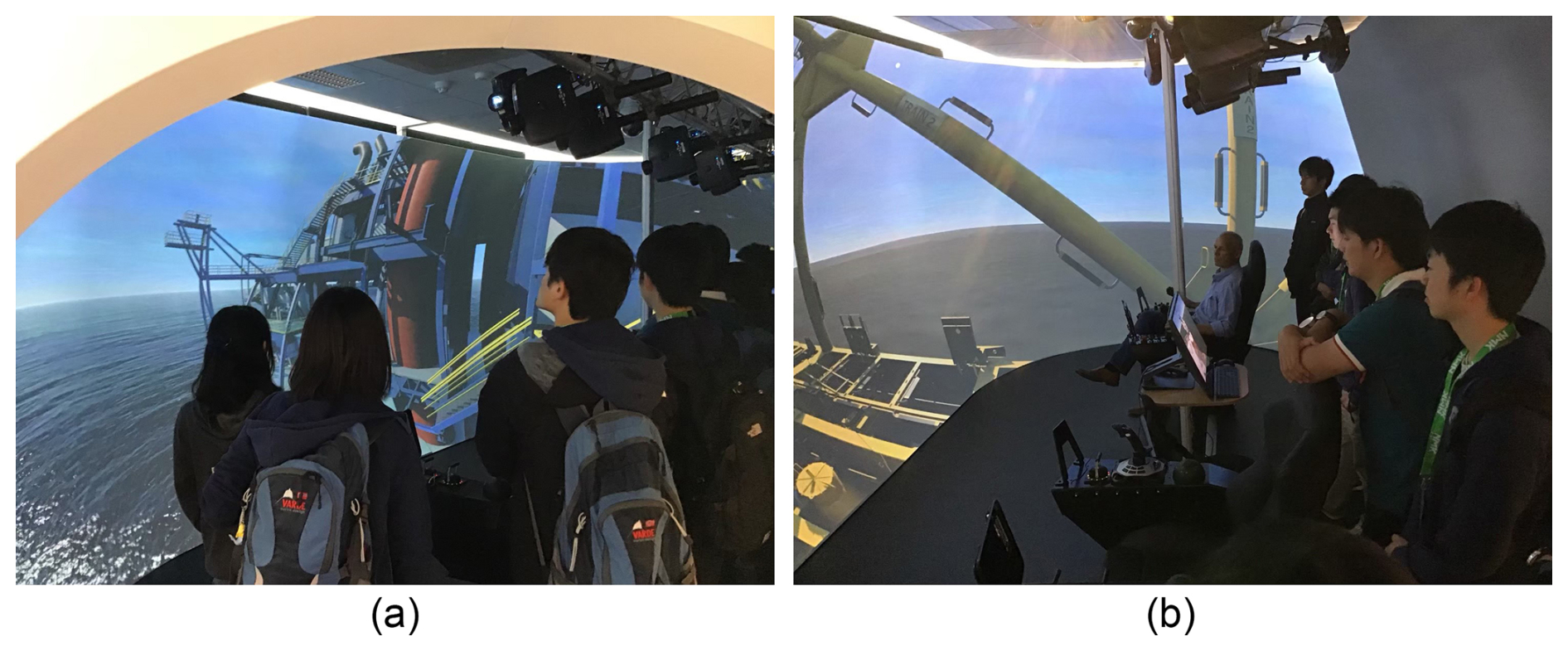
Figure 6Ocean Engineering Summer School at the NTNU simulator (photos by NTNU).
As emphasized by Nejad et al. (2022), in order to address various challenges related to the technologies linked to floating offshore wind, interdisciplinary research and collaboration are encouraged between academia and industry. When it comes to matters related to the ocean-based industry and particularly offshore wind, all science disciplines are connected; thus, an interdisciplinary approach in education, research, and industry is needed (Nejad and Ibrion, 2021; Ibrion and Nejad, 2021; Nejad et al., 2019).
6.6 Need for industry roadmap
This paper has identified various technology gaps to facilitate the sustainable development of floating offshore wind. Addressing these gaps is critical to achieving the most desirable future of floating offshore wind. However, the amount of available investment is usually limited. Thus, setting a target considering the trade-off between a desirable outcome and feasible investment is explored.
Exploring the tension between desirability and feasibility is critical in designing a project. An approach known as project design (Moser and Wood, 2015) considers the socio-technical aspect of systems to recognize the interplay between system architecture and project architecture and explore effective strategies for concurrency, phasing, and risk management. De Weck (2022) proposed a structured framework called the “ATRA framework” for organizations to strategically manage technology development and integration to achieve long-term success and sustain a competitive advantage. The framework includes the identification of needs and objectives, technology assessment, roadmap development, technology forecasting, risk management, stakeholder involvement, and review. Feasibility of investment considers the relation between investment in one technology component and its impact on the overall project performance. The model-based approach allows quantitative treatment of technology forecasts and their systemic emergence, providing measures for exploration of various roadmaps.
The strategy to address the technology gaps for floating offshore wind will be designed in the same way for two reasons. The first reason is the complexity of the socio-technical system, where site selection, system design, operation, supply chain, and the business model are strongly interconnected. The emerging system performance is dependent on other components, and the systemic effect is non-negligible. The second reason is the alignment of investment decisions of various stakeholders. The shared target of floating offshore wind backed up by a sound technology roadmap is critical for the stakeholders to take risks and encourage investments. The long investment lead time requires “concerted actions” that are implemented in a consistent and timely manner among the many stakeholders. A technological roadmap that can harmoniously combine industrial and governmental approaches and initiatives through the assessment of technology readiness, lessons from industry, challenges, opportunities, and possible technology innovations is critical.
Floating offshore wind is essential for Japan to tackle the challenges of climate change and energy security. However, continuous innovation is required to achieve its sustainable development. Reducing the levelized cost of energy (LCOE) is the primary goal, driven by higher performance through rational site selection, improved design, and efficient operation that takes advantage of economies of scale from a well-designed supply chain. While the potential for floating offshore wind in Japan is enormous, its success requires navigating a landscape defined by profound uncertainty across multiple domains.
This paper has identified these core challenges, which must be overcome. There is environmental uncertainty from Japan's unique exposure to typhoons and earthquakes, which demands extensive on-site data. There is a gap in industrial assets, as the lack of a legacy oil and gas industry means that Japan must build the necessary infrastructure and supply chains from the ground up, making the strategic use of its shipbuilding industry and digital technologies critical. Furthermore, there is human resource uncertainty, where a national skill shortage is compounded by the lack of an existing offshore talent pool. These challenges create broader strategic uncertainty regarding the long-term competitiveness of floating offshore wind against other low-carbon energy sources.
Overcoming these interconnected issues demands a phased, collaborative effort between industry, government, and academia. This review has identified the remaining gaps and emphasized the common needs for integration, digitization, and transdisciplinary research as a path forward. The findings of this paper are summarized in Fig. 7. Ultimately, a comprehensive and strategic technology roadmap is an essential tool for guiding this collaboration, ensuring sustainable investment through flexible and realistic planning, and securing floating offshore wind's vital role in Japan's future energy security.
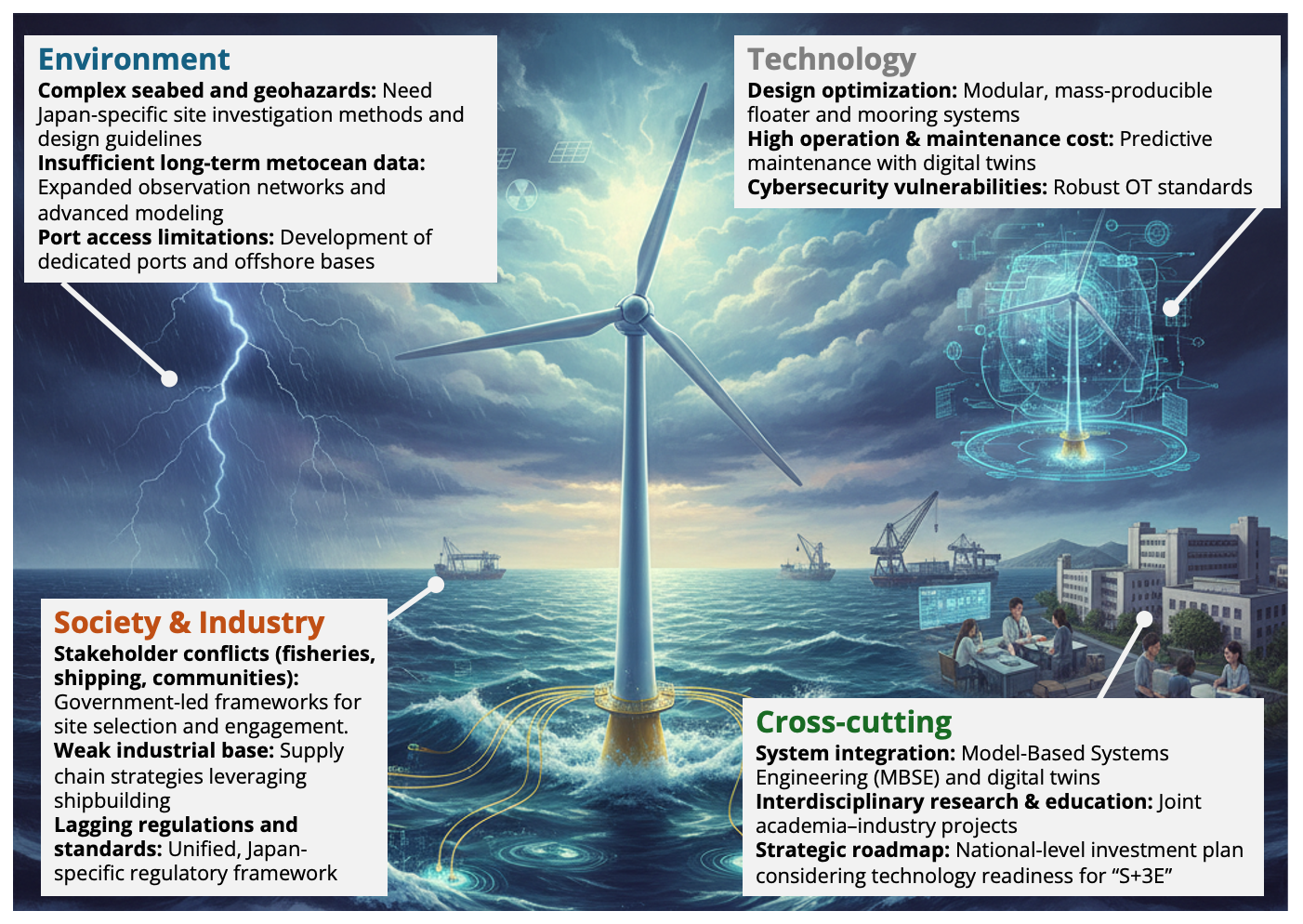
Figure 7Integrated view required for the sustainable development of floating offshore wind turbines in Japan.
Grid investigation. The availability of the grid is confirmed by the developers by checking the existing grid lines around the project field, the future grid development plan, and the existing power plants around the field. The information on the existing grid and future development plans is shared by the owner of the grid of each area and the Organization for Cross-Regional Coordination of Transmission Operators (OCCTO) according to the guidance from the ministry and the Agency for Natural Resources and Energy (ANRE; ANR, 2024). OCCTO set the long-term grid reinforcement master plan in 2023 to further promote the introduction of renewable energy and showed their scenario with investments of JPY 6 to 7000 billion to aim for carbon neutrality in 2050 (OCCTO, 2024). Developers also consider the projection of existing power plants in the project area, especially their decommissioning plans. There remains uncertainty in the future of nuclear power plants, especially after the tragic tsunami incident in 2011. Even if the grid is occupied by existing plants, OCCTO may accept a non-firm connection subject to curtailment when the grid is occupied by other sources. By conducting these consultations in advance, the initial developers know the point and location of the grid connection and can plan the onshore substation and cable routing for their development, which may provide them with a competitive advantage.
Stakeholder identification. A major challenge for ocean utilization is stakeholder engagement. Various stakeholders are present around the project site. Kimiaki Yasuda and Nagai (2015) showed the process of consensus building in the Niigata prefecture and failures in the Aomori and Ishikawa prefectures from 2010 to 2015 by introducing four main stakeholder categories: (i) fishery relations; (ii) prefecture and city halls; (iii) local citizens and chamber of commerce; and (iv) other official bodies, such as educational bodies, tourism agencies, environmental activists, and port authorities (Kimiaki Yasuda and Nagai, 2015). The developer meets with local stakeholders, especially fishery cooperatives, to receive recognition and acceptance of offshore wind development as their stakeholder management activities. Currently, it is the norm that each developer conducts separate and duplicated surveys in the same field. However, the central survey approach led by the governmental body is being discussed at the time of the writing of this paper to make the bidding process more cost-efficient and lower the risk for developers. Compared to the fixed-bottom project, the identification and control of stakeholders in the fishery industry are more complex for floating offshore wind projects due to the fishing rights and permission system in Japan. Coastal fishing rights are given by the prefectural governor, and offshore fishing permission is given by the minister of agriculture, forestry, and fisheries. In the current permission system, offshore fishing is not governed by the prefecture, while field zoning is under the prefecture's scope. Fishery groups outside of the prefecture may exist as stakeholders with the permission of the minister; therefore, the identification of stakeholders is difficult for both developers and public offices.
Project zoning support. Developers often start with project zoning with the associated departments in the prefecture and city halls. The initial project zone is identified considering the field restrictions of wind resources, water depth, soil, shipping routes, natural reserves, and visual impacts. These project zones are narrowed down through subsequent consultations with local stakeholders. Considering the buildable area, further study of the wind turbine layout and farm capacity is conducted. Those results are often shared with local stakeholders to promote the project's development, along with the developer's presentation about the offshore wind project's ripple effects and contribution to the local economy. An important concept and implementation framework for ocean utilization is the marine spatial plan (MSP). The MSP is being studied and introduced internationally, and the Intergovernmental Oceanographic Commission (IOC) of the United Nations Educational, Scientific and Cultural Organization (UNESCO) has published a manual with the aim of clarifying the procedure for introducing the plan. In the Basic Ocean Policy published in April 2023 and decided on by the cabinet, the MSP is included to promote the use of multiple marine areas appropriately and effectively, especially for offshore wind. In addition, to centralize marine data, “Umishiru” will be used to strengthen the functions. The University of Tokyo Ocean Alliance published a guideline for the consensus-building process for marine use to introduce MSP. Accurate and up-to-date spatial data on marine ecosystems, currents, seabed conditions, and other factors are essential for informed MSP. Ensuring data availability and sharing among stakeholders can be a logistical challenge.
B1 Demonstration projects at Goto Island
Japan is one of the pioneering countries in the demo installation of floating offshore wind turbines. In 2013, the first full-scale floating offshore wind turbine in Japan was constructed and installed off the coast of Goto islands, Nagasaki. The MoE undertook the Goto project in 2010–2015, outsourcing the work to Toda Corporation as one of the representative companies. The Goto project was the third offshore wind turbine project in the world, following the 2.3 MW SPAR demo by Statoil (now renamed as Equinor), off Stavanger, Norway (2009), and the 2 MW semi-submersible demo by WindFloat, off the coast of Portugal (2011). During the project, a 2 MW downwind turbine was mounted and operated on a hybrid-type SPAR structure with a concrete substructure and a steel superstructure. The project has since led to a commercial project, aiming for a wind farm with a capacity of 16.8 MW with eight SPAR units starting in 2026, which will be the first commercial wind farm project in Japan using floating offshore wind turbines.
B2 Fukushima FORWARD project
After the Great East Japan Earthquake in March 2011, the national and local governments of Japan worked together to realize the Fukushima Innovation Coast Concept for the reconstruction of Fukushima, and with this as the background, a 10-year (2011–2015, 2016–2021) floating offshore wind turbine project, the Fukushima FORWARD project, was undertaken. A total of JPY 60 billion was spent on the project. The project was expected to create new energy-related industries. The outcomes of the project are summarized in reports that are publicly available. In this project, 2 MW semi-submersible, 5 MW SPAR, and 7 MW submersible demo units, as well as a floating substation for offshore transformers, were deployed and demonstrated. After the project, these structures were removed and dismantled.
B3 Demonstration project of next-generation floating offshore wind turbine at the Hibikinada Sea
In 2014, the METI and New Energy and Industrial Technology Development Organization (NEDO) started a demonstration project for a floating offshore wind power generation system using a barge-type floating structure that enables quay-side installation with the aim of achieving lower costs. IDEOL is collaborating on this project as a consortium partner. A 3 MW wind turbine started its operation in 2019 in the demonstration area off the coast of Kitakyushu. The floating structure targets water depths of 50–100 m. After completion of the demonstration project in March 2024, a company took over the entire project from NEDO and started commercial operation.
Regarding the mooring design of floating offshore wind, various design guidelines and standards are published by classification societies (ABS, 2020b, a; ClassNK, 2021a; Bureau Veritas, 2024; DNV, 2021a, b) and standardization organizations such as API and ISO (International Organization for Standardization, 2013; American Petroleum Institute, 2018). Mooring analysis software is also available, such as Orcaflex by Orcina, DeepC/Sesam by DNV, and Ariane by BV (Ma et al., 2019). In order to estimate the mooring load, it is imperative to consider the floater motion; therefore, various simulation codes have been developed (Barooni et al., 2022), and a number of comparison studies among the codes have been conducted, with various articles published under IEA Wind Task 30. From Japan, UT-Wind was developed as a numerical simulation by Suzuki et al. (2013). In addition, to evaluate the hydrodynamic load on the SPAR structure, SparDyn was created and integrated with MSC Adams and AeroDyn from NREL (Utsunomiya et al., 2014b). The performance of the dynamic analysis was validated during the severe tropical cyclone event in the Nagasaki prefecture off the coast of Japan (Utsunomiya et al., 2013).
After receiving the failure report from the industry, various research studies were conducted on mooring line fatigue, corrosion, and wear. As a result, two phenomena were added as design considerations to the industrial standard API 2SK 4th edition in 2018 (Shu et al., 2018), namely vortex-induced motion and out-of-plane bending (OPB)/in-plane bending (IPB) fatigue. Regarding the vortex-induced motions of floating offshore wind, a state-of-the-art review paper was issued by Fujarra et al. (2012) and Yin et al. (2022). The latest review paper by Yin et al. (2022) describes the effectiveness and limitations of CFD for VIM analysis and the challenges of CFD application to semi-submersibles due to the structural complexity compared to the SPAR. In Japan, experimental research using a scaled OC4 semi-submersible model was conducted to study the VIM amplitude ratio with respect to the current reduced velocity (Gonçalves et al., 2021). Regarding OPB/IPB, a joint industry project was conducted from 2007 to 2015 (Rampi et al., 2015) after the Girassol incident offshore Angola (Jean et al., 2005), which reported on the multiple mooring line failures in 8 months after the operation started. Although the JIP provides certain implications of the OPB/IPB phenomena for fatigue design, and Bureau Veritas issued guidance after the JIP (Bureau Veritas, 2014), debates are still ongoing about the practical design method. Wear and corrosion are also studied as part of the Sea Water Corrosion of Ropes and CHain (SCORCH) JIP (Jayasinghe et al., 2018). During the course of the SCORCH JIP, microbiologically influenced corrosion was found to be a common issue on offshore mooring chains (Fontaine et al., 2014b), and DEEPSTAR CTR12402 JIP was formed (Witt et al., 2016). These JIPs emphasize the difficulty of precise wear prediction. Nonetheless, it is clear that severe wear occurs in the interlink area with relative chain motions between the links and in the contact area with hard soils such as the touchdown zone. As the result of these academic and joint industrial efforts, wear and corrosion margins are revised more conservatively in the API RP2SK 4th revision. Among Japanese organizations, Kyushu University and Nippon Steel Engineering have studied the wear prediction of mooring chains (Takeuchi et al., 2021; Gotoh et al., 2019; Ookubo et al., 2022).
The use of fiber rope is actively discussed due to the potential cost reduction measures of floating offshore wind as it is widely used in the oil and gas industry. In contrast to the water depth of over 1000 m in the oil and gas floating platform, floating offshore wind is generally installed at a shallow water depth of 100–300 m. Polyester fiber rope is commonly used in the oil and gas industry and is still a prospective material for floating offshore wind, as studied by Utsunomiya et al. (2016). Due to the number of mooring lines, maintenance difficulties, and shallower water depth in floating offshore wind farms, the use of other fiber rope materials is discussed, and a comprehensive review paper was issued in 2015 by Weller et al. (2015). In the paper, in order to avoid re-tensioning during the wind farm service life, fiber rope materials with better creep characteristics than polyester, i.e., HMPE and aramid, are considered. However, the long-term material properties with visco-plastic and visco-elastic behavior are not yet fully understood for these alternative materials. The Japanese contractor JMU is conducting an offshore demonstration with a scaled model to understand the design, constructibility, and robustness of chain–fiber rope hybrid mooring under the scheme of NEDO's Green Innovation Fund (, ).
Several port facilities are required for FOWTs. An integration port is usually located in the vicinity of the wind farm and used for installation of the wind turbine on the substructure prior to deployment offshore. The components of the subsystem, imported or manufactured domestically, are gathered at the port for assembly and integration. A steel substructure assembly port, which can be further away from the project sites, is an intermediate facility that is used to build steel substructures before being transported to an integration site. The port is utilized during all offshore wind project development stages, playing a central role in providing specialized vessels for site surveys, transportation, installation, operation and maintenance, and decommissions. The port's infrastructure and inventory space play a critical role in the system integration of the floating offshore wind supply chain as they function as an interface between land-based and offshore activities. The port needs to accommodate the large fleet of vessels and stock and must be able to handle large components for floating offshore wind, host new manufacturing centers, and facilitate assembly activities. A significant area of land is required, with reinforced quays, enhanced deep-sea harbors, and other civil works to deploy at scale. Heavy-lift vessels, jack-up vessels, barge vessels, and feeders are required for transportation, and heavy-lift cranes are necessary either at the port or offshore.
Various vessels are utilized during the T&I of FOWTs, such as crew transfer vessels (CTVs), tugs, anchor handling vessels (AHVs), anchor handling tug supply vessels (AHTSs), anchor handling tug vessels (AHTVs), cable-laying vessels (CLVs), offshore construction vessels (OCVs), heavy-lift cargo vessels, and service operation vessels (SOVs). The specific requirements for the vessels during each phase of T&I differ among substructure types. The specifications of these vessels are characterized by features such as deck area, bollard pull capacity, engine power, positioning system, and deck equipment. For example, most FOWTs are assumed to require a large bollard pull of 200–300 t for towing and hook-up. An increase in the future demand for various vessels required for the deployment of FOWTs in the Celtic Sea has been shown by estimating the projected FOWT capacity and the vessel time required per FOWT unit (Porteous, 2023). When vessels with the required specifications are not available, the operation needs to be conducted by combining vessels. Investment in vessels that meet the quality and quantity of future FOWT development is crucial.
The vessels and port infrastructure required for FOWT T&I will have high dependencies on the project design. Although many bottom-fixed projects have been conducted, the industry has limited experience in identifying good practice for FOWTs as projects move far offshore, are exposed to harsher environments, and operate at larger scale (Barlow et al., 2015). Jiang (2021) has provided a state-of-the-art review on various installation methods and concepts for bottom-fixed and floating offshore wind turbines for wind turbine foundations and components, with four visions for the future: (1) vessels that can handle larger blades and versatility for various support structures, (2) specialized equipment requiring less human intervention and having lower risk, (3) multiphysics simulation tools for installation methods and concepts, and (4) foundations that are installation friendly. At this point, the optimum solution for the installation of floating foundations is still under development. The LEANWIND project (2013–2017) examined logistical challenges related to the deployment, installation, and operation of various foundation solutions for both bottom-fixed and floating offshore wind turbines. The project explored supply chain optimization for cost reduction with improved port infrastructure, innovative approaches to vessel design, installation methods, and operational and maintenance strategies.
The performance of T&I is also dependent on the metocean conditions, which are site-specific. There are weather limitations for conducting offshore operations. For example, a SPAR-type floater, such as HyWind Tampen demonstrated in Norway, requires calm weather conditions (e.g., significant wave height below 0.5 m) (Barlow et al., 2015). As Japan has limited experience in offshore construction, the weather limitations are stricter compared to the weather limitations considered in the UK (Trust, 2015).
Uncertainty in technology development also poses a challenge for infrastructure investment. Larger blade sizes are being installed, and the trend is expected to continue (Shields et al., 2021). Shields et al. (2021) project a significant reduction in the number of turbines as the capacity of each turbine increases. Some studies indicate the possibility of increased costs from T&I, as the large blades will require larger infrastructure investment (Noguchi et al., 2021).
The landscape of the wind energy workforce is dynamic and can be seen as a beacon of hope for many European job seekers and graduates. According to estimations, by 2030, the current wind energy workforce in Europe will increase from 300 000 to more than 500 000 people. The jobs in the offshore wind field are attractive and have a future with great potential (Baltic Wind EU and Bulsky, 2025). As per the Global Wind Workforce outlook, from 2023 until 2027, the number of new wind technicians is expected to increase by 48 800 on average per year. Furthermore, the number of wind technicians who will require industry training will increase to more than 574 000 by 2027. In 2022, almost 145 000 technicians held at least one valid certificate from the Global Wind Organization (GWO) basic safety training (BST) standard. By 2027, almost 430 000 technicians will require wind industry training, and more than 80 % of these technicians will be required in 10 countries worldwide, with Japan being one of them. Moreover, in order to meet energy growth, by 2027, the number of technicians who will require training in operation and maintenance, commerce, and industry is expected to surpass more than 5100 people in Japan, and from this number more than 1750 will be for offshore wind (Global Wind Energy Council (GWEC), 2023).
The offshore wind industry has great potential to unveil industrial growth plans to generate employment, to create new jobs, to support the development of supply chains, and to boost regional and national economies. An illustrative example is offered by the case of the UK and its very ambitious offshore wind targets. As per the 2024 Offshore Wind Industrial Growth Plan in the UK, as of April 2024, the UK offshore industry employed around 32 000 people, and employment is expected to rise to more than 100 000 people by 2030 (The Crown Estate, 2024).
In Norway, the workforce is shifting from the oil and gas industry to the offshore wind industry, and special courses and training in offshore wind are offered within the framework of special educational programs; one such program is offered by NTNU, Trondheim, Norway. These kinds of programs are supported by the Norwegian Directorate for Higher Education and Skills. Employees who wish to transition from the oil and gas industry to the offshore wind industry have different opportunities in terms of training, education, and research in Norway (NTNU, 2024b; Nejad et al., 2019). The workforce and expertise in the oil and gas industry have the potential to give a head start to the floating offshore industry as the process of competence transfer is underway. The floating offshore industry can play a key role in restructuring the Norwegian offshore industry.
According to a report issued by Menon Economics, based on its gross figures, the Norwegian floating offshore wind industry can become one of the most important job creators by 2050. The floating offshore wind industry linked to the Norwegian-based industry can support up to 36 000 jobs by 2050, and this depends on the competitiveness and market development of the Norwegian industry. Furthermore, the Norwegian floating offshore wind industry could also provide GDP contributions that can reach up to NOK 78 billion by 2050. All regions of Norway will benefit from the employment and GDP contributions. The Menon report pointed out that in terms of the value chain, there will be large effects in the maritime industry, which has an important role in the development of specialized vessels and port infrastructure. In addition, the value chain will also involve contributions from specialized suppliers and sub-suppliers currently operating in the offshore industry and various industrial activities. The Menon economics scenario has suggested that the Norwegian offshore wind market (both floating and bottom fixed) could support more than 60 000 jobs in Norway by 2050. As per the analysis, the Norwegian offshore wind industry can achieve annual revenue which can reach up to NOK 115 billion by 2050. However, this assumes successful development of the value chain for the floating offshore wind industry in Norway and takes the successful transfer of offshore and maritime expertise into account. Without a doubt, the Norwegian offshore wind industry can become a critical part of the transition from an economy heavily dominated by oil and gas. In this regard, sustainable political choices, major commitments, and predictable policies will be imperative for supporting the large potential for employment in offshore wind and particularly floating offshore wind (Norwegian Offshore Wind, 2025; GCE Ocean Technology, 2025; Menon Economics, 2024).
The Japanese government established the below policies to promote energy storage in Japan.
-
Setting target prices (2020). To reduce prices and promote energy storage systems, target prices for commercial and industrial energy storage systems were defined. Subsidies implemented by the government are only applicable to products below the target price for cost reduction.
-
Green growth strategy (2021). Battery storage is defined as “new energy infrastructure” that is necessary for the development of green and digital technologies. To promote the wide use of battery storage systems, further cost reduction and the promotion of reuse and recycling are included.
-
Sixth basic energy plan (2021). Domestic and industrial power storage systems are promoted as technologies necessary for the increase in renewable energy. The government has clarified the definition of grid-scale energy storage systems under the Electricity Business Act and has improved the supply–demand adjustment market.
-
Energy storage industry strategy (2022). The Japanese government defines energy storage systems as technology that is key to achieving carbon neutrality by 2050 and infrastructure that is essential to supporting a digital society. The goal is to establish a manufacturing base for liquid-based LiB, secure competitiveness in a global market, and create the next-generation energy storage market.
-
GX basic policy (2022). Green transformation (GX) initiatives should be accelerated to ensure stable energy supply and decarbonization. The goal is to create new demand and markets in Japan, strengthen the competitiveness of the Japanese economy, and foster economic growth. Energy storage should be one of the important issues, with promoted investments to establish manufacturing capacity in Japan.
-
Subsidy projects. The introduction of domestic and industrial energy storage systems and grid-scale energy storage systems should be supported.
No data sets were used in this article.
This paper was initiated by RW, ARN, KI, JS, and MI. RW coordinated and led the article writing; created the structure; wrote the Abstract, Introduction, and Conclusions; and gathered and edited inputs from all listed co-authors. Site selection was led by JS with input from HN and YM. Design and operation were co-led by KI and ARN with input from YM and KT. Industry development was led by WS, MI, and RW. Contribution to S + 3E was led by JS. Discussion was co-led by TN and RW with input from ARN and MI. The final edit was carried out by RW and ARN together.
At least one of the (co-)authors is a member of the editorial board of Wind Energy Science. The peer-review process was guided by an independent editor, and the authors also have no other competing interests to declare.
Publisher's note: Copernicus Publications remains neutral with regard to jurisdictional claims made in the text, published maps, institutional affiliations, or any other geographical representation in this paper. The authors bear the ultimate responsibility for providing appropriate place names. Views expressed in the text are those of the authors and do not necessarily reflect the views of the publisher.
The second and fifth authors would like to acknowledge the INSPIRE project funded by the Sustainable Blue Economy Partnership, a partnership co-funded by Horizon Europe, in collaboration with the Norwegian Research Council (project no. 351718). The support of the Nippon Foundation Ocean Innovation Consortium is also greatly appreciated.
This paper was edited by Amy Robertson and reviewed by three anonymous referees.
ABS: Final report – Design Standards for Offshore Wind Farms, American Bureau of Shipping (ABS), https://www.bsee.gov/sites/bsee.gov/files/tap-technical-assessment-program/670aa.pdf (last access: 5 August 2025), 2011. a
ABS: Guide for Building and Classing Floating Offshore Wind Turbines 2020, American Bureau of Shipping (ABS), https://ww2.eagle.org/content/dam/eagle/rules-and-guides/current/offshore/fowt-guide-july20.pdf (last access: 5 August 2025), 2020a. a
ABS: Guidance Notes on Global Performance Analysis for Floating Offshore Wind Turbines 2020, American Bureau of Shipping (ABS), https://ww2.eagle.org/content/dam/eagle/rules-and-guides/archives/design_and_analysis/206_globalperanalyfowti1/fowt-gpa-gn-july20.pdf, (last access: 5 August 2025), 2020b. a
Ahmad, I. B., Schnepf, A., and Ong, M. C.: An optimisation methodology for suspended inter-array power cable configurations between two floating offshore wind turbines, Ocean Engineering, 278, 114406, 2023. a
American Journal of Transportation: Equinor says Scotland floating wind turbine flaw has been repaired, https://www.ajot.com/insights/full/ai-equinor-says-scotland-floating-wind-turbine-flaw-has-been-repaired/ (last access: 12 September 2024), 2024. a, b
American Petroleum Institute (API): API Recommended Practice 2SK Design and Analysis of Stationkeeping Systems for Floating Offshore Structures, 4th edition, American Petroleum Institute (API), https://www.api.org/, (last access: 5 August 2025), 2018. a
Agency for Natural Resources and Energy (ANR): Policy on disclosing grid information, https://www.enecho.meti.go.jp/category/electricity_and_gas/electric/summary/regulations/pdf/keitou_kangaekata_20240401.pdf, last access: 29 April 2024 (in Japanese). a
Aono, M.: Offshore wind and Finance, Journal of JWEA, 42, 158–161, 2018 (in Japanese). a
Aoyama, K., Nomoto, T., and Kentaro, W.: Development of a shipyard simulator based on Petri nets, Journal of Marine Science and Technology, 4, 35–43, 1999. a
Aoyama, K., Yotsuzuka, T., Tanaka, Y., and Tanabe, Y.: “Monitoring Platform” Monitoring and Visualizing System for Shipyard: Application to Cutting and Subassembly Processes, in: Practical Design of Ships and Other Floating Structures: Proceedings of the 14th International Symposium, PRADS 2019, 22–26 September 2019, Yokohama, Japan-Volume III 14, 321–337, Springer, 2021. a
Australian Petroleum Production and Exploration Association Limited: MODU Mooring in Australian Tropical Waters Guideline, Australian Petroleum Production and Exploration Association Limited (APPEA), https://www.appea.com.au/wp-content/uploads/2020/02/MMATW-Guideline-Rev-2.pdf (last access: 5 August 2025), 2019. a
Avanessova, N., Gray, A., Lazakis, I., Thomson, R. C., and Rinaldi, G.: Analysing the effectiveness of different offshore maintenance base options for floating wind farms, Wind Energ. Sci., 7, 887–901, https://doi.org/10.5194/wes-7-887-2022, 2022. a, b, c
Azevedo, P. and Grosse, S.: Overcoming the Challenges of Financing Offshore Wind Projects, in: Offshore Technology Conference, OTC, D031S033R006, https://doi.org/10.4043/29366-MS, 2019. a
Baltic Wind EU and Bulsky, K: Offshore wind power is driving job growth in Europe – the question is how to meet demand?, https://balticwind.eu/offshore-wind-power-is-driving-job-growth-in-europe-the-question-is-how-to-meet-demand/, last access: 5 August 2025. a, b
Barlow, E., Öztürk, D. T., Revie, M., Boulougouris, E., Day, A. H., and Akartunalı, K.: Exploring the impact of innovative developments to the installation process for an offshore wind farm, Ocean Engineering, 109, 623–634, 2015. a, b, c
Barooni, M., Ashuri, T., Velioglu Sogut, D., Wood, S., and Ghaderpour Taleghani, S.: Floating Offshore Wind Turbines: Current Status and Future Prospects, Energies, 16, 2, https://doi.org/10.3390/en16010002, 2022. a
Barter, G. E., Robertson, A., and Musial, W.: A systems engineering vision for floating offshore wind cost optimization, Renewable Energy Focus, 34, 1–16, 2020. a, b
Bosch, J., Staffell, I., and Hawkes, A. D.: Global levelised cost of electricity from offshore wind, Energy, 189, 116357, 2019. a
Bureau Veritas: Fatigue of Top Chain of Mooring Lines due to In-plane and Out-of-plane Bendings, Guidance Note NI 604 DT, https://rulesexplorer-docs.bureauveritas.com/documents/ni604/oct2014/604-NI_2014-10.pdf (last access: 5 August 2025), 2014. a
Bureau Veritas: Classificaiton and Certification of Floating Offshore Wind Turbines, Bureau Veritas, Paris, https://rulesexplorer-docs.bureauveritas.com/documents/nr572/oct2024/572-NR_2024-10.pdf (last access: 5 August 2025), 2024. a
BW Ideol and Hitachi Energy: Floating Substation, https://www.bw-ideol.com/en/floating-substation (last access: September 2024), 2024. a, b
Chesterman, X., Verstraeten, T., Daems, P.-J., Nowé, A., and Helsen, J.: Overview of normal behavior modeling approaches for SCADA-based wind turbine condition monitoring demonstrated on data from operational wind farms, Wind Energ. Sci., 8, 893–924, https://doi.org/10.5194/wes-8-893-2023, 2023. a
Chitteth Ramachandran, R., Desmond, C., Judge, F., Serraris, J.-J., and Murphy, J.: Floating wind turbines: marine operations challenges and opportunities, Wind Energ. Sci., 7, 903–924, https://doi.org/10.5194/wes-7-903-2022, 2022. a
ClassNK: Guideline for Floating Offshore Wind Turbines, General Incorporated Foundation, https://www.classnk.or.jp/hp/pdf/authentication/renewableenergy/en/classification/NKRE-GL-FOWT01_December2021_Eng_corrected_March2022.pdf (last access: 25 February 2025), 2021a. a
ClassNK: Guideline for Floating Offshore Wind Turbines, Section 3.3, https://www.classnk.or.jp/hp/pdf/authentication/renewableenergy/en/classification/NKRE-GL-FOWT01_December2021_Eng_corrected_March2022.pdf (last access: 29 April 2024), 2021b. a
ClassNK: MOU signed with Maersk Training on training for offshore wind personnel and alternative fuel seafarer education, https://www.classnk.or.jp/hp/en/hp_pressrelease. aspx?id=8582&layout=1 (last access: 28 September 2024), 2024. a
Crowle, A. and Thies, P.: Floating offshore wind turbines port requirements for construction, in: Proceedings of the Institution of Mechanical Engineers, Part M: Journal of Engineering for the Maritime Environment, 236, 1047–1056, 2022. a
Dao, C., Kazemtabriz, B., and Crabtree, C.: Wind Turbine Reliability Data Review and Impacts on Levelized Cost of Energy, Wind Energy, 22(12), 1848–1871, 2019. a
Delft University of Technology: SWAN, https://www.tudelft.nl/en/ceg/about-faculty/departments/hydraulic-engineering/sections/environmental-fluid-mechanics/research/swan (last access: 5 August 2025), 1999. a
De Weck, O. L.: Technology roadmapping and development: A quantitative approach to the management of technology, Springer Nature, ISBN 978-3-319-44938-3, 2022. a
Dinkla, M. E. C.: On modeling the operation and maintenance of a floating offshore wind farm with multiple anchors, Implementing multiline mooring modeling in NREL WOMBAT tool, graduate thesis in European Wind Energy Master, NTNU, Faculty of Engineering, Department of Marine Technology, https://nva.sikt.no/registration/0198e7f733cc-e0a9a0f9-1b1a-4b3b-ad85-0d9218be02a9 (last accessed: 5 August 2025), 2024. a, b, c
Díaz, H. and Guedes Soares, C.: Approach for Installation and Logistics of a Floating Offshore Wind Farm, Journal of Marine Science and Engineering, 11, https://doi.org/10.3390/jmse11010053, 2023. a, b, c, d
DNV: Standard Floating wind turbine structures, Det Norske Veritas, 2021a. a
DNV: Offshore Standard Position mooring, Det Norske Veritas, https://img.antpedia.com/standard/files/pdfs_ora/20230614/DNVGL/DNV-OS-E301-2021.pdf (last access: 20 January 2025), 2021b. a
DNV: Floating Substations: the next challenge on the path to commercial scale floating windfarms, https://www.dnv.com/article/floating-substations-the-next-challenge-on-the-path-to-commercial-scale-floating-windfarms-199213 (last access: September 2024), 2024. a
Driscoll, F., Jonkman, J., Robertson, A., Sirnivas, S., Skaare, B., and Nielsen, F. G.: Validation of a FAST model of the statoil-hywind demo floating wind turbine, Energy Procedia, 94, 3–19, 2016. a
Energy Voice: Equinor to return Hywind turbines to Norway for `heavy maintenance', https://www.energyvoice.com/renewables-energy-transition/wind/uk-wind/545550/equinor-to-return-hywind-turbines-to-norway-for-heavy-maintenance/ (last access: 3 June 2024), 2024. a, b
Equinor: Heavy maintenance campaign completed on Hywind Scotland floating offshore wind farm, https://www.equinor.com/news/uk/heavy-maintenance-campaign-completed-on-hywind-scotland-floating-offshore-wind-farm (last access: 9 October 2024), 2024. a, b
European Commission (Aquilo Energy GmbH): Sectoral Study: Analysis of the provisions of maritime cabotage services in Japan, October 2022, https://www.eeas.europa.eu/sites/default/files/documents/JapaneseOWPCabotage_AquiloEnergyGmbH_publication102022.pdf, last access: 5 August 2025. a, b, c
European Commission (Technical University of Denmark and Renewable Energy Institute): Sectoral Study: Standards, technical regulation and conformity assessment in the Japanese and European offshore wind power market: current implementation and best practices July 2022, https://www.eeas.europa.eu/sites/default/files/documents/OWPStudy-DTU-REI_publication_EN_0.pdf. (last access: 5 August 2025), 2022. a, b
European External Action Service (EEAS): OWP Study – DTU-REI publication (English), https://www.eeas.europa.eu/sites/default/files/documents/OWP Study - DTU-REI_publication_EN.pdf (last access: 12 November 2024), 2022. a
Fontaine, E., Kilner, A., Carra, C., Washington, D., Ma, K., Phadke, A., Laskowski, D., and Kusinski, G.: Industry Survey of Past Failures, Pre-emptive Replacements and Reported Degradations for Mooring Systems of Floating Production Units, in: Day 4 Thu, May 08, 2014, OTC, Houston, Texas, D041S047R002, https://doi.org/10.4043/25273-MS, 2014a. a
Fontaine, E., Rosen, J., Potts, A., Ma, K.-T., and Melchers, R.: SCORCH JIP – Feedback on MIC and Pitting Corrosion from Field Recovered Mooring Chain Links, in: Day 4 Thu, May 08, 2014, OTC, Houston, Texas, D041S047R004, https://doi.org/10.4043/25234-MS, 2014b. a
Fred. Olsen Windcarrier: Fred. Olsen Ocean partners with Shimizu to drive progress within the Japanese offshore wind sector, and worldwide, https://windcarrier.com/media/news/fred-olsen-ocean-partners-with-shimizu-to-drive-progress-within-the-japanese-offshore-wind-sector-and-worldwide/ (last access: 5 August 2025). a
Fujarra, A. L. C., Rosetti, G. F., De Wilde, J., and Gonçalves, R. T.: State-of-Art on Vortex-Induced Motion: A Comprehensive Survey After More Than One Decade of Experimental Investigation, in: Volume 4: Offshore Geotechnics; Ronald W. Yeung Honoring Symposium on Offshore and Ship Hydrodynamics, American Society of Mechanical Engineers, Rio de Janeiro, Brazil, 561–582, https://doi.org/10.1115/OMAE2012-83561, 2012. a
Fukushima Offshore Wind Consortium: Fukushima Floating Offshore Wind Farm Demonstration Project, https://www.fukushima-forward.jp/english/pdf/pamphlet3.pdf (last access: 5 August 2025), 2013. a
Fukushima Offshore Wind Consortium: Fukushima Offshore Wind Consortium, http://www.fukushima-forward.jp/english/index.html (last access: September 2024), 2024. a, b
GCE Ocean Technology: Floating offshore wind can create 52,000 new jobs in Norway, https://www.gceocean.no/news/posts/2022/may/floating-offshore-wind-can-create-52-000-new-jobs-in-norway/, last access: 5 August 2025. a
Global Wind Energy Council (GWEC): Global Wind Workforce Outlook 2023–2027 Report, https://www.globalwindsafety.org/statistics/global-wind-workforce-outlook-2023-2027, (last access: 5 August 2025), 2023. a, b, c
Gonçalves, R. T., Chame, M. E. F., Silva, L. S. P., Koop, A., Hirabayashi, S., and Suzuki, H.: Experimental Flow-Induced Motions of a FOWT Semi-Submersible Type (OC4 Phase II Floater), Journal of Offshore Mechanics and Arctic Engineering, 143, 012004, https://doi.org/10.1115/1.4048149, 2021. a
Gotoh, K., Ueda, T., Murakami, K., and Utsunomiya, T.: Wear Performance of Mooring Chain in Wet Environment With Substitute Ocean Water, in: Volume 4: Materials Technology, American Society of Mechanical Engineers, V004T03A045, https://doi.org/10.1115/OMAE2019-95822, 2019. a, b
Guo, X., Hukuda, H., Miyazawa, Y., and Yamagata, T.: A Triply Nested Ocean Model for Simulating the Kuroshio–Roles of Horizontal Resolution on JEBAR, Journal of Physical Oceanography, 33, 146–169, https://doi.org/10.1175/1520-0485(2003)033<0146:ATNOMF>2.0.CO;2, 2003. a
Herrera Anchustegui, I.: Is Hywind Tampen's State Aid Approval a Kickstart for the Norwegian Offshore Wind Industry?, European State Aid Law Quarterly, 19, 225–231, 2020a. a
Herrera Anchustegui, I.: Hywind Tampen: A Regulatory Gamechanger for (Norwegian) Offshore Wind?, https://www.uib.no/sites/w3.uib.no/files/attachments/hywind_tampen_smi_29.09_.pdf (last access: 10 September 2022), 2020b. a
Hirayama, K.: Harbor Tranquility Analysis Method for Using Boussinesq-type Nonlinear Wave Transformation Model, in: Proceedings of the Twenty-third International Offshore and Polar Engineering Conference, International Society of Offshore and Polar Engineers (ISOPE), Anchorage, Alaska, USA, 1054–1060, https://onepetro.org/ISOPEIOPEC/proceedings-pdf/ISOPE13/All-ISOPE13/ISOPE-I-13-385/1570561/isope-i-13-385.pdf (last access: 5 August 2025), 2013. a
Honda, A., Wada, R., Watabe, M., and Tamada, M.: Impact of Meteorogical Conditions on the Construction of Offshore Wind Farm, Journal of Wind Engineering, 27, 284–293, 2022. a
Hong, S., McMorland, J., Zhang, H., Collu, M., and Halse, K. H.: Floating offshore wind farm installation, challenges and opportunities: A comprehensive survey, Ocean Engineering, 304, 117793, https://doi.org/10.1016/j.oceaneng.2024.117793, 2024. a
Ibrion, M. and Nejad, A.: On a road map for technology qualification, innovation and cost reduction in floating offshore wind: learning from Hywind and Norwegian approach, Journal of Physics: Conference Series, 2507, 012008, https://doi.org/10.1088/1742-6596/2507/1/012008, 2023. a
Ibrion, M. and Nejad, A. R.: On building a safe ocean, the oceanscape and the necessity for developing an ocean culture, Environmental and Coastal Offshore (ECO), special issue in partnership with IOC-UNESCO – United Nations Decade of Ocean Science for Sustainable Development, Technology Systems Corporation, 148–149, 2021. a, b, c
Ibrion, M., Paltrinieri, N., and Nejad, A.: On Risk of Digital Twin Implementation in Marine Industry: Learning from Aviation Industry, Journal of Physics: Conference Series, 1357, 012009, https://doi.org/10.1088/1742-6596/1357/1/012009, 2019. a
Ibrion, M., Paltrinieri, N., and Nejad, A.: Learning from non-failure of Onagawa nuclear power station: an accident investigation over its life cycle, Results in Engineering, 8, 100185, https://doi.org/10.1016/j.rineng.2020.100185, 2020a. a
Ibrion, M., Paltrinieri, N., and Nejad, A. R.: Learning from non-failure of Onagawa nuclear power station: an accident investigation over its life cycle, Results in Engineering, 8, 100185, https://doi.org/10.1016/j.rineng.2020.100185, 2020b. a
International Organization for Standardization: Petroleum and natural gas industries Specific requirements for offshore structures Part 7: Stationkeeping systems for floating offshore structures and mobile offshore units (ISO 19901-7:2013), International Organization for Standardization, ISBN 978-0-580-73129-8, 2013. a
IRENA: Future of wind: Deployment, investment, technology, grid integration and socio-economic aspects (A Global Energy Transformation paper), https://www.irena.org/-/media/files/irena/agency/publication/2019/oct/irena_future_of_wind_2019.pdf (last access: 5 August 2025), 2019. a
Ishihara, T. and Liu, Y.: Dynamic response analysis of a semi-submersible floating wind turbine in combined wave and current conditions using advanced hydrodynamic models, Energies, 13, 5820, https://doi.org/10.3390/en13215820, 2020. a
Ishihara, T. and Yamaguchi, A.: Prediction of the extreme wind speed in the mixed climate region by using Monte Carlo simulation and measure-correlate-predict method, Wind Energy, 18, 171–186, 2015. a
Jacobsen, F. S.: Effectiveness of Offshore Maintenance Bases in Norwegian Offshore Wind, Norwegian University of Science and Technology, https://nva.sikt.no/registration/0198e7cb3706-9bfcc7b8-3cb8-4adb-b17f-9d32bba1d5e4 (last access: 20 January 2025), 2023. a, b, c, d
Japan Meteorological Agency: JRA-55: Japanese 55-year Reanalysis, https://www.data.jma.go.jp/suishin/cgi-bin/catalogue/make_product_page.cgi?id=JRA (last access: 11 December 2024), 2013. a
Jayasinghe, K., Potts, A., Kilner, A., and Melchers, R.: Mooring Chain Wear Experiments and Findings, in: Day 1 Mon, April 30, 2018, OTC, Houston, Texas, USA, D011S004R003, https://doi.org/10.4043/28737-MS, 2018. a
Jean, P., Goessens, K., and L'Hostis, D.: Failure of Chains by Bending on Deepwater Mooring Systems, in: Offshore Technology Conference, Offshore Technology Conference, Houston, Texas, https://doi.org/10.4043/17238-MS, 2005. a
Jiang, Z.: Installation of offshore wind turbines: A technical review, Renewable and Sustainable Energy Reviews, 139, 110576, https://doi.org/10.1016/j.rser.2020.110576, 2021. a, b, c
JMU: NEDO Green Innovation Fund Project (R&D for floating offshore wind farm and hybrid mooring systems): Demonstration project for hybrid mooring systems, https://www.jmuc.co.jp/en/news/assets/nedo_gi_hybrid_mooring_system_20220830_en.pdf (last access: 1 May 2024]. a, b
Jump, E., Gray, A., Thompson, D., Stevenson, L., and Strang-Moran, C.: Offshore substations: fixed or floating? Technoeconomic analysis, Tech. rep., Tech. rep., ORE Catapult, https://offshorewindinnovationhub.com (last access: 5 August 2025) 2021. a
Katayama, H. and Itaki, T.: Spatial distribution of sedimentation rates in the eastern Japan Sea off Akita, Journal of the Geological Society of Japan, 113, 505–518, 2007. a, b
Kawamura, K.: Assessing Seafloor Geologic Risks for Offshore Wind Development, Foundation Engineering & Equipment Monthly, 51, 30–33, 2023. a
Kikuchi, Y. and Ishihara, T.: Assessment of weather downtime for the construction of offshore wind farm by using wind and wave simulations, Journal of Physics: Conference Series, 753, 092016, https://doi.org/10.1088/1742-6596/753/9/092016, 2016. a, b
Kimiaki Yasuda, Memi Motosu, R. F. and Nagai, T.: A CASE STUDY AND PROPOSAL FOR CONSENSUS BUILDING ON AN OFFSHORE WIND PROJECT, Journal of JSCE (Ocean Engineering), 71, https://doi.org/10.2208/jscejoe.71.I_1, 2015. a, b
Kuroda, H., Setou, T., Kakehi, S., Ito, S.-i., Taneda, T., Azumaya, T., Inagake, D., Hiroe, Y., Morinaga, K., Okazaki, M., Yokota, T., Okunishi, T., Aoki, K., Shimizu, Y., Hasegawa, D., and Watanabe, T.: Recent Advances in Japanese Fisheries Science in the Kuroshio-Oyashio Region through Development of the FRA-ROMS Ocean Forecast System: Overview of the Reproducibility of Reanalysis Products, Open Journal of Marine Science, 7, 62–90, https://doi.org/10.4236/ojms.2017.71006, 2017. a
Larsson, J.: Transmission Systems for Grid Connection of Offshore Wind Farms, Master's thesis, Uppsala University, https://www.diva-portal.org/smash/get/diva2:1561060/FULLTEXT01.pdf (last access: 5 August 2025), 2021. a
Laura Castro-Santos, V. D.-C. and Brage, R. Y.: The importance of the activity costs in a shipyard: a case study for floating offshore wind platforms, Ships and Offshore Structures, 15, 53–60, https://doi.org/10.1080/17445302.2016.1172830, 2020. a
Li, H., Weiwen, P., Cheng-Geng, H., and Carlos, G. S.: Failure Rate Assessment for Onshore and Floating Offshore Wind Turbines, Journal of Marine Science and Engineering, 10, 2–26, 2022. a
Ma, K.-T., Shu, H., Smedley, P., L'Hostis, D., and Duggal, A.: A Historical Review on Integrity Issues of Permanent Mooring Systems, in: All Days, OTC, Houston, Texas, USA, OTC–24025–MS, https://doi.org/10.4043/24025-MS, 2013. a
Ma, K. T., Luo, Y., Kwan, T., and Kwan, T.: Mooring System Engineering for Offshore Structures, Gulf Professional Publishing, ISBN 978-0128185513, 2019. a
Malhotra, S. and O'Connell, D.: Geohazards to Offshore Wind Farms on the US Atlantic Coast, in: ISOPE International Ocean and Polar Engineering Conference, ISOPE, ISOPE–I, https://doi.org/10.17736/ijope.2025.jc956, 2024. a, b
Mase, H., Oki, K., Takayama, T., and Sakai, T.: Phase averaging model for multi-directional random wave transformation by high order upwind difference scheme, Journal of JSCE, 684, II56–II68, 2001. a
Mase, H., Tom, T. H. A., Ikemoto, A., and Kawasaki, K.: Verification of Accuracy for Wave Forecasting Using Wave Watch III Employed in Outer Region, Journal of Japan Society of Civil Engineers, Ser. B2 (Coastal Engineering), 73, I_139–I_144, 2017. a
Matsufuji, E., Takayama, T., Miyata, M., Hirayama, K., Kawai, H., Suzuki, Y., Utsunomiya, Y., and Fukunaga, Y.: Estimation of Design Wave Through Introduction of Swell Effect (in Japanese), Journal of JSCE (Coastal Engineering), 73, I_1153–I_1158, 2017. a
Matsumoto, S.: Development of Acoustic Imaging and Survey Cloud for Fast and Automated MBES Data Analysis, in: OCEANS 2025 – Great Lakes, https://doi.org/10.23919/OCEANS59106.2025.11245074, 2025. a
McMorland, J., Collu, M., McMillan, D., and Carroll, J.: Operation and maintenance for floating wind turbines: A review, Renewable and Sustainable Energy Reviews, 163, 112499, https://doi.org/10.1016/j.rser.2022.112499, 2022. a, b
Mehlan, C. F., Nejad, A. R., and Gao, Z.: Digital Twin Based Virtual Sensor for Online Fatigue Damage Monitoring in Offshore Wind Turbine Drivetrains, J. Offshore Mech. Arct. Eng, 144, 06090, https://doi.org/10.1115/1.4055551, 2022. a
Mehlan, C. F., Keller, J., and Nejad, A. R.: Virtual sensing of wind turbine hub loads and drivetrain fatigue damage, Forschung im Ingenieurwesen, 87, 207–218, 2023. a, b, c, d
Mehta, M., Zaaijer, M., and von Terzi, D.: Drivers for optimum sizing of wind turbines for offshore wind farms, Wind Energ. Sci., 9, 141–163, https://doi.org/10.5194/wes-9-141-2024, 2024. a
Memija, A.: World's First' In-Situ Generator Swap on Floating Wind Turbine Completed Offshore Scotland, https://www.offshorewind.biz/2024/09/20/worlds-first-in-situ-generator-swap-on-floating-wind-turbine-completed-offshore-scotland (last access: 15 December 2024), 2024. a, b
Menon Economics: Rapport markedutvikling for flytende og bunnfast havvind fremtidsutsikter for den norske havvindustrien, https://www.norwegianoffshorewind.no/news/new-report-offshore-wind-can-create-over-60-000-jobs-in-norway-by-2050/ (last access: 5 August 2025), 2024. a
METI and MLIT: Guidelines for Designating Promotion Zones for Offshore Renewable Energy Facilities, https://www.mlit.go.jp/kowan/content/001417221.pdf (last access: 28 April 2024), 2021. a
Ministry of Economy, Trade and Industry (METI): Operational Policy for the Central Method in Offshore Wind Power Generation, https://www.enecho.meti.go.jp/category/saving_and_new/saiene/yojo_furyoku/dl/legal/central_unyou.pdf (last access: 11 December 2024), 2024aa. a
Ministry of Economy, Trade and Industry (METI): Basic Specifications for Site Surveys Conducted by JOGMEC under the Central Method, https://www.enecho.meti.go.jp/category/saving_and_new/saiene/yojo_furyoku/dl/legal/central_JOGMEC.pdf (last access: 11 December 2024), 2024b. a
Ministry of Economy, Trade and Industry (METI): On Offshore Wind, https://www.meti.go.jp/shingikai/enecho/denryoku_gas/saisei_kano/pdf/075_s01_00.pdf (last access: 8 December 2025), 2025. a
Ministry of Economy, Trade and Industry (METI) and Ministry of Land, Infrastructure, Transport and Tourism (MLIT): Operational Policy [Draft] for the Central Method in Offshore Wind Power Generation, https://www.meti.go.jp/shingikai/enecho/denryoku_gas/saisei_kano/yojo_furyoku/pdf/018_05_00.pdf (last access: 11 December 2024), 2024. a
Ministry of Economy, Trade and Industry (METI) in Japan: Four ideals to pursue when considering energy policy, https://www.enecho.meti.go.jp/en/category/special/article/detail_180.html (last access: 12 October 2023), 2022. a
Ministry of Land, Infrastructure, Transport and Tourism (MLIT), Maritime Bureau: Technical Safety Guidelines for Floating Offshore Wind Power Generation Facilities (Fudashiki Yojo Furyoku Hatsuden Shisetsu Gijutsu Kijun Anzen Gaidorain), Tech. rep., Ministry of Land, Infrastructure, Transport and Tourism (MLIT), Tokyo, Japan, https://www.mlit.go.jp/common/001331376.pdf (last access: 11 December 2024), 2023 (in Japanese). a
Mitchell, D., Blanche, J., Harper, S., Lim, T., Gupta, R., Zaki, O., Tang, W., Robu, V., Watson, S., and Flynn, D.: A review: Challenges and opportunities for artificial intelligence and robotics in the offshore wind sector, Energy and AI, 8, 100146, https://doi.org/10.1016/j.egyai.2022.100146, 2022. a
Mitsubishi Research Institute: Potential Sea Areas for Offshore Wind in Japan (Toward the formation of a virtuous cycle that co-creates the future of offshore wind, and the fishing industry), https://www.mri.co.jp/news/press/i5inlu0000005zmn-att/ 20240425OW_EN.pdf (last access: 5 August 2025), 2024. a, b
Mitsuyuki, T., Hiekata, K., and Yamato, H.: Design of production strategy considering the cutting peak demand of electricity in the shipbuilding industry, Journal of Marine Science and Technology, 19, 425–437, 2014. a
Miyazawa, Y., Zhang, R., Guo, X., Tamura, H., Ambe, D., Lee, J.-S., Okuno, A., Yoshinari, H., Setou, T., and Komatsu, K.: Water mass variability in the western North Pacific detected in a 15-year eddy resolving ocean reanalysis, Journal of Oceanography, 65, 737–756, 2009. a
MLIT of Japan: Real-time NOWPHAS information, The Nationwide Ocean Wave information network for Ports and HArbourS, https://www.mlit.go.jp/kowan/nowphas/index_eng.html, last access: 5 August 2025. a
Möllerström, E., Gipe, P., Beurskens, J., and Ottermo, F.: A historical review of vertical axis wind turbines rated 100 kW and above, Renewable and Sustainable Energy Reviews, 105, 1–13, 2019. a
Moser, B. R. and Wood, R. T.: Design of complex programs as sociotechnical systems, in: Concurrent Engineering in the 21st Century: Foundations, Developments and Challenges, Springer International Publishing, 197–220, https://doi.org/10.1007/978-3-319-13776-6_8, 2015. a
Mytilinou, V. and Kolios, A. J.: Techno-economic optimisation of offshore wind farms based on life cycle cost analysis on the UK, Renewable Energy, 132, 439–454, 2019. a
NEDO: Offshore Wind Measurement Guidebook, New Energy and Industrial Technology Development Organization, https://www.nedo.go.jp/content/100962731.pdf (last access: 22 January 2025), 2023. a, b
Nejad, A. R. and Ibrion, M.: A Need for Interdisciplinary Education in Ocean Fields; an online series of stories connected to United Nations Decade, https://www.ecomagazine.com/in-depth/a-need-for-interdisciplinary-education-in-ocean-fields/ (last access: 1 November 2023), 2021. a, b, c, d
Nejad, A. R., Aoyanagi, Y., and Ibrion, M.: Team and Research Based Learning Methods Applied in Multidisciplinary Marine Engineering Education, Jornal of Physics: Conference Series, 1357, 012039, https://doi.org/10.1088/1742-6596/1357/1/012039, 2019. a, b, c, d, e
Nejad, A. R., Keller, J., Guo, Y., Sheng, S., Polinder, H., Watson, S., Dong, J., Qin, Z., Ebrahimi, A., Schelenz, R., Gutiérrez Guzmán, F., Cornel, D., Golafshan, R., Jacobs, G., Blockmans, B., Bosmans, J., Pluymers, B., Carroll, J., Koukoura, S., Hart, E., McDonald, A., Natarajan, A., Torsvik, J., Moghadam, F. K., Daems, P.-J., Verstraeten, T., Peeters, C., and Helsen, J.: Wind turbine drivetrains: state-of-the-art technologies and future development trends, Wind Energ. Sci., 7, 387–411, https://doi.org/10.5194/wes-7-387-2022, 2022. a, b, c, d, e, f
Nevesbu: Floating Offshore Substation Concept Design, https://www.nevesbu.com/projects/floating-offshore-substation-concept-design/ (last access: September 2024), 2024. a
Noguchi, T., Nagasaka, A., Ogura, K., Nakayama, H., and Oshima, E.: The Impact of Offshore Wind Turbine Scaling and the Role of Port Infrastructure, Journal of JWEA, 45, 237–242, 2021 (in Japanese). a, b
Noguchi, T., Nagasaka, A., Izumi, T., and Yokohata, T.: Considering mass rapid construction of floating offshore wind turbines, Journal of Wind Energy, 47, 34–40, https://doi.org/10.11333/jwea.47.1_34, 2023 (in Japanese). a, b, c, d
North American Clean Energy: Lessons Learned: The first case of heavy maintenance on floating wind, https://www.nacleanenergy.com/wind/lessons-learned-the-first-case-of-heavy-maintenance-on-floating-wind/ (last access: 5 August 2025). a
Norwegian Offshore Wind: Floating offshore wind can create 52,000 new jobs in Norway, https://www.norwegianoffshorewind.no/news/floating-offshore-wind-can-create-52000-new-jobs-in-norway/, last access: 5 August 2025. a
NTNU: NTNU Ocean Training AS, https://www.ocean-training.no/about/ (last access: 5 August 2025), 2024a. a
NTNU: Introduksjon til havvind, https://www.ntnu.no/videre/gen/-/courses/nv23144 (last access: 5 August 2025), 2024b. a, b
OCCTO: Long-term policy for large-area grid (master plan for wide-area interconnected grid), https://www.occto.or.jp/kouikikeitou/chokihoushin/230329_choukihoushin_sakutei.html, last access: 29 April 2024 (in Japanese). a
Offshore Channel: World's first in-situ major component exchange on floating wind turbine successfully completed, https://offshore-channel.com/worlds-first-in-situ-major-component-exchange-on-floating-wind-turbine-successfully-completed (last access: 15 December 2024), 2024. a
Offshore renewable energy CATAPULT: Lightweight Offshore Substation Designs Final Summary Report, Tech. rep., Offshore Renewable Energy Catapult, https://ore.catapult.org.uk/wp-content/uploads/2018/02/Lightweight-Offshore-Substation-Designs.pdf (last access: 5 August 2025), 2018. a
Offshore renewable energy CATAPULT: Dynamic Cables and Ancillary Systems – Market Projections, Tech. rep., Offshore Renewable Energy Catapult, https://ore.catapult.org.uk/wp-content/uploads/2021/12/PN000412-RPT-003-Rev-1-Dynamic-Cables-Market-Projections_Formatted.pdf (last access: 5 August 2025), 2021. a
Okubo, Y. and Mitsuyuki, T.: Ship Production Planning Using Shipbuilding System Modeling and Discrete Time Process Simulation, Journal of Marine Science and Engineering, 10, 176, https://doi.org/10.3390/jmse10020176, 2022. a
Ookubo, H., Koizumi, A., Ootake, A., Kannno, M., Hayashi, N., Suzuki, M., and Yagi, K.: Design of Mooring System of Fukushima Floating Offshore Wind Farm Demonstration Project Evaluation of Mooring Chain Durability and Mooring Design System , Nippon Steel & Sumikin Engineering Co., Ltd. Technical Review., 13, 20–38, 2022. a, b
Pacific Northwest Center of Excellence for Clean Energy: Heavy Maintenance on Kincardine Floating Wind Turbines, https://www.cleanenergyexcellence.org/heavy-maintenance-on-kincardine-floating-wind-turbines/ (last access: 5 August 2025), 2023. a
Paquette, J., Williams, M., Clarke, R., Devin, M., Sheng, S., Constant, C., Clark, C., Fields, J., Gevorgian, V., Hall, M., Jonkman, J., Keller, J., Robertson, A., Sethuraman, L., and van Dam, J.: An Operations and Maintenance Roadmap for U. S. Offshore Wind Enabling a Cost-Effective and Sustainable U. S. Offshore Wind Energy Industry Through Innovative Operations and Maintenance, https://www.osti.gov/servlets/purl/2361054/ (last access: 8 August 2025), 2024. a, b, c
PARI: NOWT-PARI Dowload, https://www.pari.go.jp/unit/haro/bsnsq/nowtpari/index.html (last access: 5 August 2025), 2023. a
Porteous, S.: Assessment of vessels required to serve floating offshore wind in the Celtic Sea, Offshore Renewable Energy Catapult, https://cms.ore.catapult.org.uk/wp-content/uploads/2023/08/Assessment-of-vessels-required-to-serve-FLOW-in-the-Celtic-Sea.pdf (last access: 5 August 2025), 2023. a
Public-Private Council on Enhancement of Industrial Competitiveness for Offshore Wind Power Generation: Vision for Offshore Wind Power Industry (1st edition), https://www.mlit.go.jp/kowan/content/001390489.pdf (last access: 5 August 2025), 2020. a
Rampi, L., Dewi, F., and Vargas, P.: Chain Out of Plane Bending (OPB) Joint Industry Project (JIP) Summary and Main Results, in: All Days, OTC, Houston, Texas, USA, OTC–25779–MS, https://doi.org/10.4043/25779-MS, 2015. a
Randal, R.: Vibration-based condition monitoring industrial, aerospace and automotive applications, John Willey & Sons, 2, 0470747854, https://doi.org/10.1002/9780470977668, 2011. a
Randolph, M. and Gourvenec, S.: Offshore Geotechnical Engineering, Section 3, CRC Press, London, https://doi.org/10.1201/9781315272474, 2017. a, b
Sanchez Gomez, M., Lundquist, J. K., Deskos, G., Arwade, S. R., Myers, A. T., and Hajjar, J. F.: Wind fields in Category 1–3 tropical cyclones are not fully represented in wind turbine design standards, J. Geophys. Res.-Atmos., 128, e2023JD039233, https://doi.org/10.1029/2023JD039233, 2023. a
Sando, K., Wada, R., Rohmer, J., and Jonathan, P.: Multivariate spatial and spatio-temporal models for extreme tropical cyclone seas, Ocean Engineering, 309, 118365, https://doi.org/10.1016/j.oceaneng.2024.118365, 2024. a
Semco Maritime: Funding for Development of Floating Offshore Substation, https://www.semcomaritime.com/news/foss-funding (last access: September 2024), 2024. a
Setchell, H.: ECMWF Reanalysis v5, https://www.ecmwf.int/en/forecasts/dataset/ecmwf-reanalysis-v5 (last access: 5 August 2025), 2020. a
Sevan SSP: Sevan Floating Substation, https://sevanssp.com/floating-substation/ (last access: September 2024), 2024. a
Shields, M., Beiter, P., Nunemaker, J., Cooperman, A., and Duffy, P.: Impacts of turbine and plant upsizing on the levelized cost of energy for offshore wind, Applied Energy, 298, 117189, https://doi.org/10.1016/j.apenergy.2021.117189, 2021. a, b
Shinoda, T. and Tanaka, T.: Development of risk assessment methodology for occupational safety by work observation technique, Journal of Ship Production and Design, 32, 139–153, 2016. a
Shu, H., Yao, A., Ma, K.-T., Ma, W., and Miller, J.: API RP 2SK 4th Edition – An Updated Stationkeeping Standard for the Global Offshore Environment, in: Day 1 Mon, April 30, 2018, OTC, Houston, Texas, USA, p. D011S004R001, https://doi.org/10.4043/29024-MS, 2018. a
Siddiqui, M. O., Feja, P. R., Borowski, P., Kyling, H., Nejad, A. R., and Wenske, J.: Wind turbine nacelle testing: State-of-the-art and development trends, Renewable and Sustainable Energy Reviews, 188, 113767, 2023a. a
Siddiqui, M. O., Nejad, A. R., and Wenske, J.: On a new methodology for testing full load responses of wind turbine drivetrains on a test bench, Forsch. Ingenieurwes., 87, 173–184, 2023b. a
Siemens Energy and Dragados Offshore and Tennet: DolWin kappa: The offshore converter station for DolWin6, https://netztransparenz.tennet.eu/fileadmin/user_upload/Company/News/German/Dampmann/2022/2022_TenneT_DolWin_kappa_Factsheets_E.pdf (last access: 5 August 2025), 2024. a
Snodgrass, F., Hasselmann, K., Miller, G., Munk, W. H., and Powers, W.: Propagation of ocean swell across the Pacific, Philosophical Transactions of the Royal Society of London. Series A, Mathematical and Physical Sciences, 259, 431–497, 1966. a
Sobashima, S., Wada, R., and Lance, M.: Efficient Project Planning for Floating Offshore Wind Farm Development, Journal of Offshore Mechanics and Arctic Engineering, 147, 062001, https://doi.org/10.1115/1.4068445, 2025. a
Spong, R., Garrity, R., Thompson, C., Yan, X., Gabrielsen, C., L'Hostis, D., Heyl, C., Minnebo, J., Naciri, M., Roberts, C., and Byatt, D.: Mooring Integrity Issues and Lessons Learned Database – DeepStar® Project 20401, in: Day 1 Mon, May 02, 2022, OTC, Houston, Texas, USA, D011S011R004, https://doi.org/10.4043/31823-MS, 2022. a, b
Stehly, T., Beiter, P., and Duffy, P.: 2019 Cost of Wind Energy Review, https://doi.org/10.2172/1756710, 2020. a
Suzuki, H., Shibata, H., Fujioka, H., Hirabayashi, S., Ishii, K., and Kikuchi, H.: Development of an analysis code of rotor-floater coupled response of a floating offshore wind turbine, in: International Conference on Offshore Mechanics and Arctic Engineering, American Society of Mechanical Engineers, 55423, V008T09A026, https://doi.org/10.1115/OMAE2013-10444, 2013. a
Suzuki, Y., Takayama, T., Yoshinaga, Y., Okada, K., Kazuhiko, K., Utsunomiya, Y., Matsufuji, E., and Kimizuka, M.: Wave prediction properties of WAM and WAVEWATCH III, Journal of JSCE (Ocean Engineering), 72, I265–I270, 2016 (in Japanese). a
Takeuchi, T., Utsunomiya, T., Gotoh, K., and Sato, I.: Proposal of Simplified Wear Estimation Method for Mooring Chain of Floating Structures by Considering Roll-Up Motion, Journal of the Japan Society of Naval Architects and Ocean Engineers, 32, 393–401, 2021. a, b
The Crown Estate: Offshore wind industry unveils Industrial Growth Plan to create jobs, triple supply chain manufacturing and boost UK economy by £ 25 billion, https://www.thecrownestate.co.uk/news/offshore-wind-industry-unveils-industrial-growth-plan-to-create-jobs/ (last access: 25 August 2024, 2024. a, b
The Nippon Foundation Ocean Innovation Consortium: Ocean Innovation Consortium (Human Resource Development for Offshore Industries), The Nippon Foundation Ocean Innovation Consortium, https://project-kaiyoukaihatsu.jp/english// (last access: 28 September 2024), 2024. a
Torres, E. S., Thies, P. R., and Lawless, M.: Offshore logistics: scenario planning and installation modeling of floating offshore wind projects, ASME Open Journal of Engineering, 2, https://doi.org/10.1115/1.4056882, 2023. a, b
Trust, T. C.: Floating Offshore Wind Market Technology Review, https://www.carbontrust.com/our-work-and-impact/guides-reports-and-tools/floating-offshore-wind-market-technology-review (last access: 12 November 2024), 2015. a
Ueda, Y., T.Iwashite, Hioki, F., and Imamura, H.: Introduction of NEDO offshroe wind meadurement guidebook, Proceedings of Japan Wind Energy Symposium, 44, 136–139, 2022. a
Utsunomiya, T., Sato, I., Yoshida, S., Ookubo, H., and Ishida, S.: Dynamic Response Analysis of a Floating Offshore Wind Turbine During Severe Typhoon Event, in: Volume 8: Ocean Renewable Energy, American Society of Mechanical Engineers, Nantes, France, V008T09A032, https://doi.org/10.1115/OMAE2013-10618, 2013. a
Utsunomiya, T., Shiraishi, T., Sato, I., Inui, E., and Ishida, S.: Floating offshore wind turbine demonstration project at Goto Islands, Japan, in: OCEANS 2014-TAIPEI, IEEE, 1–7, https://doi.org/10.1109/OCEANS-TAIPEI.2014.6964595, 2014a. a
Utsunomiya, T., Yoshida, S., Ookubo, H., Sato, I., and Ishida, S.: Dynamic Analysis of a Floating Offshore Wind Turbine Under Extreme Environmental Conditions, Journal of Offshore Mechanics and Arctic Engineering, 136, 020904, https://doi.org/10.1115/1.4025872, 2014b. a
Utsunomiya, T., Sato, I., and Tanaka, K.: Application and demonstration of polyester rope for floating offshore wind turbine – Fundamental design and installation, in: Conference proceedings, The Japan Society of Naval Architects and Ocean Engineers, Vol. 23, 593–598, 2016. a
Varlamov, S. M., Guo, X., Miyama, T., Ichikawa, K., Waseda, T., and Miyazawa, Y.: M2 baroclinic tide variability modulated by the ocean circulation south of Japan, Journal of Geophysical Research: Oceans, 120, 3681–3710, 2015. a
Wada, R. and Ozaki, M.: On the Duration of Calm and Harsh Wave States in the Sea around Japan, Journal of the Japan Society of Naval Architects and Ocean Engineers, 20, 85–97, 2014. a
Wada, R. and Waseda, T.: Assessment of data-inherited uncertainty in extreme wave analysis, Journal of Offshore Mechanics and Arctic Engineering, 142, 021204, https://doi.org/10.1115/1.4045621, 2020. a
Wada, R., Waseda, T., and Jonathan, P.: Extreme value estimation using the likelihood-weighted method, Ocean Engineering, 124, 241–251, 2016. a
Wada, R., Waseda, T., and Jonathan, P.: A simple spatial model for extreme tropical cyclone seas, Ocean Engineering, 169, 315–325, 2018. a
Wang, S. S.: Improving Mooring Reliability Through Risk Based Monitoring and Inspection, in: Day 2 Tue, May 05, 2020, OTC, Houston, Texas, USA, D021S028R002, https://doi.org/10.4043/30529-MS, 2020. a
Waseda, T., Webb, A., Kiyomatsu, K., Fujimoto, W., Miyazawa, Y., Varlamov, S., Horiuchi, K., Fujiwara, T., Taniguchi, T., Matsuda, K., and Yoshikawa, J.: Marine Energy Resource Assessment at Reconnaissance to Feasibility Stury Stages; Wave Power, Ocean and Tidal Current Power, and Ocean Temperature Power, in: Conference proceedings, The Japan Society of Naval Architects and Ocean Engineers, Vol. 23, 189–197, 2016. a
Watson Farley & Williams: Japan's development of the offshore wind industry and maritime cabotage rules, https://www.wfw.com/articles/japans-development-of-the-offshore-wind-industry-and-maritime-cabotage-rules (last access: 5 August 2025), 2024. a, b, c, d
Weller, S., Johanning, L., Davies, P., and Banfield, S.: Synthetic mooring ropes for marine renewable energy applications, Renewable Energy, 83, 1268–1278, 2015. a
Wilberg, L. D.: Wergeland, https://www.wergeland.com/nyheter/vellykket-vedlikehold-av-verdens-frste-flytende-vindpark (last access: 5 August 2025), 2024. a
Witt, D., Ma, K.-T., Lee, T., Gaylarde, C., Celikkol, S., Makama, Z., and Beech, I.: Field Studies of Microbiologically Influenced Corrosion of Mooring Chains, in: Day 3 Wed, May 04, 2016, OTC, Houston, Texas, USA, D031S037R004, https://doi.org/10.4043/27142-MS, 2016. a
World Forum Offshore Wind: Onsite Major Component Replacement Technologies for Floating Offshore Wind: the Status of the Industry, https://wfo-global.org/wp-content/uploads/2023/02/WFO-FOWC-OM-White-Paper-2-Final.pdf (last access: 5 August 2025), 2023. a, b
Xu, K.: Design and Analysis of Mooring Systems for Semi-submersible Floating Wind Turbines in Shallow Waterd, doctoral thesis, NTNU, Faculty of Engineering, Department of Marine Technology, ISBN 978-82-326-4823-8, 2020. a
Yamaguchi, A. and Ishihara, T.: An Assessment of the Design Wind Speed and Frequency Distribution of Wind Speed using Meteorological Simulation and Typhoon Simulation, in: 21st Wind Engineering Symposium, 215–220, https://doi.org/10.14887/kazekosymp.21.0.215.0, 2010. a
Yamaguchi, A. and Ishihara, T.: Numerical prediction of Normal and Extreme Waves at Fukushima Offshore Site, Journal of Physics: Conference Series, 1037, 042022, https://doi.org/10.3390/en15072313, 2018. a
Yamaguchi, A., Danupon, S., and Ishihara, T.: Numerical prediction of tower loading of floating offshore wind turbine considering effects of wind and wave, Energies, 15, 2313, https://doi.org/10.3390/en15072313, 2022. a
Yamamoto, M., Iwamatsu, S., Iijima, K., Shibata, M., and Tatsuhara, H.: A proposal of floating offshore base for wind farm deployed in EEZ, in: Proceedings of World Conference on Floating Solutions, https://doi.org/10.1007/978-981-96-4569-5_6, 2024. a
Yan, J., Su, Q., Li, R., Xu, J., Lu, Q., and Yang, Z.: Optimization Design Method of the Umbilical Cable Global Configuration Based on Representative Fatigue Conditions, IEEE Journal of Oceanic Engineering, 47, 756–765, https://ieeexplore.ieee.org/document/9933934 (last access: 5 August 2025), 2022. a
Yang, Z., Yan, J., Sævik, S., Lu, Q., Ye, N., Chen, J., and Yue, Q.: Integrated optimisation design of a dynamic umbilical based on an approximate model, Marine Structures, 78, 102995, https://www.sciencedirect.com/science/article/abs/pii/S0951833921000551 (last access: 5 August 2025), 2021. a
Yin, D., Passano, E., Jiang, F., Lie, H., Wu, J., Ye, N., Sævik, S., and Leira, B. J.: State-of-the-Art Review of Vortex-Induced Motions of Floating Offshore Wind Turbine Structures, Journal of Marine Science and Engineering, 10, 1021, https://doi.org/10.3390/jmse10081021, 2022. a, b
Yoshimoto, H., Awashima, Y., Kitakoji, Y., and Suzuki, H.: Development of floating offshore substation and wind turbine for Fukushima FORWARD, in: Proceedings of the International Symposium on Marine and Offshore Renewable Energy, https://fukushima-forward.jp/reference/pdf/study026.pdf (last access: 20 January 2025), 2013. a
- Abstract
- Introduction
- Site selection and pre-development
- Technology and engineering
- Project execution and operations
- Industry and economic enablement
- Discussion: recommendation for future research
- Conclusions
- Appendix A: Grid investigation, stakeholder identification, and project zoning support
- Appendix B: Demonstration projects in Japan
- Appendix C: Challenges of mooring design
- Appendix D: Design of T&I
- Appendix E: Wind energy workforce overseas
- Appendix F: Energy storage policies in Japan
- Data availability
- Author contributions
- Competing interests
- Disclaimer
- Acknowledgements
- Review statement
- References
- Abstract
- Introduction
- Site selection and pre-development
- Technology and engineering
- Project execution and operations
- Industry and economic enablement
- Discussion: recommendation for future research
- Conclusions
- Appendix A: Grid investigation, stakeholder identification, and project zoning support
- Appendix B: Demonstration projects in Japan
- Appendix C: Challenges of mooring design
- Appendix D: Design of T&I
- Appendix E: Wind energy workforce overseas
- Appendix F: Energy storage policies in Japan
- Data availability
- Author contributions
- Competing interests
- Disclaimer
- Acknowledgements
- Review statement
- References