Articles | Volume 11, issue 3
https://doi.org/10.5194/wes-11-1013-2026
© Author(s) 2026. This work is distributed under
the Creative Commons Attribution 4.0 License.
the Creative Commons Attribution 4.0 License.
https://doi.org/10.5194/wes-11-1013-2026
© Author(s) 2026. This work is distributed under
the Creative Commons Attribution 4.0 License.
the Creative Commons Attribution 4.0 License.
Review article
| 
30 Mar 2026
Review article |
| 30 Mar 2026
| 30 Mar 2026
Floating offshore wind in Japan: addressing the challenges, efforts, and research gaps for large-scale commercialization
Ryota Wada
Graduate School of Frontier Sciences, The University of Tokyo, Tokyo, Japan

Department of Marine Technology, Norwegian University of Science and Technology, Trondheim, Norway
Kazuhiro Iijima
Graduate School of Engineering, University of Osaka, Osaka, Japan
Junji Shimazaki
Equinor, Tokyo, Japan
Mihaela Ibrion
Department of Marine Technology, Norwegian University of Science and Technology, Trondheim, Norway
Shinnosuke Wanaka
National Maritime Research Institute, Tokyo, Japan
Hideo Nomura
Kiso-Jiban Consultants Co., Ltd., Tokyo, Japan
Yoshitaka Mizushima
Graduate School of Frontier Sciences, The University of Tokyo, Tokyo, Japan
Takuya Nakashima
Graduate School of Frontier Sciences, The University of Tokyo, Tokyo, Japan
Ken Takagi
Graduate School of Frontier Sciences, The University of Tokyo, Tokyo, Japan
Related authors
Min Chung, Ryota Wada, Jeremy Rohmer, and Philip Jonathan
EGUsphere, https://doi.org/10.5194/egusphere-2026-1899, https://doi.org/10.5194/egusphere-2026-1899, 2026
Short summary
Short summary
This study examines how tropical cyclones cause coastal flooding by combining waves and sea level changes over time. Using long-term storm data for Guadeloupe, we simulated realistic storm evolution rather than relying on single peak values. The results show that accounting for timing reduces errors in estimating extreme flood levels and reveals that wave-driven effects dominate the most severe events, improving reliability for coastal risk planning.
Ryota Wada, Jeremy Rohmer, Yann Krien, and Philip Jonathan
Nat. Hazards Earth Syst. Sci., 22, 431–444, https://doi.org/10.5194/nhess-22-431-2022, https://doi.org/10.5194/nhess-22-431-2022, 2022
Short summary
Short summary
Characterizing extreme wave environments caused by tropical cyclones in the Caribbean Sea near Guadeloupe is difficult because cyclones rarely pass near the location of interest. STM-E (space-time maxima and exposure) model utilizes wave data during cyclones on a spatial neighbourhood. Long-duration wave data generated from a database of synthetic tropical cyclones are used to evaluate the performance of STM-E. Results indicate STM-E provides estimates with small bias and realistic uncertainty.
Diederik van Binsbergen, Pieter-Jan Daems, Timothy Verstraeten, Konstantinos Vratsinis, Amir Nejad, and Jan Helsen
Wind Energ. Sci. Discuss., https://doi.org/10.5194/wes-2026-120, https://doi.org/10.5194/wes-2026-120, 2026
Revised manuscript has not been submitted
Short summary
Short summary
A key challenge for offshore wind farms is to quantify wakes reliably from turbine measurements. This study develops a statistical approach that learns from measured turbine data how these wakes vary between wind farms and transfers that knowledge to new sites with quantified uncertainty. It also assesses how atmospheric conditions affect wake recovery. The results show that stable conditions lead to slower recovery and larger predicted losses, while unstable conditions support faster recovery.
Vasudev Gupta and Amir R. Nejad
Wind Energ. Sci. Discuss., https://doi.org/10.5194/wes-2026-105, https://doi.org/10.5194/wes-2026-105, 2026
Preprint under review for WES
Short summary
Short summary
This study improves how wind turbine drivetrains are designed by linking structural behavior with long-term critical fatigue effects. By optimizing the main bearing-shaft assembly, for minimum mass, it is shown that design choices strongly affect efficiency and durability. Results reveal that some configurations are limited by ultimate, while others are limited by fatigue, highlighting the need to consider both in novel designs to build lighter and more reliable wind turbines.
Kayacan Kestel, Xavier Chesterman, Donatella Zappalá, Simon Watson, Mingxin Li, Edward Hart, James Carroll, Yolanda Vidal, Amir R. Nejad, Shawn Sheng, Yi Guo, Matthias Stammler, Florian Wirsing, Ahmed Saleh, Nico Gregarek, Thao Baszenski, Thomas Decker, Martin Knops, Georg Jacobs, Benjamin Lehmann, Florian König, Ines Pereira, Pieter-Jan Daems, Cédric Peeters, and Jan Helsen
Wind Energ. Sci., 11, 2103–2155, https://doi.org/10.5194/wes-11-2103-2026, https://doi.org/10.5194/wes-11-2103-2026, 2026
Short summary
Short summary
Wind energy use has been rapidly expanding worldwide in recent years. Driven by global decarbonization goals and energy security concerns, this growth is expected to continue. To achieve these targets, production costs must decrease, with operation and maintenance being major contributors. This paper reviews current and emerging technologies for monitoring wind turbine drivetrains, and highlights key academic and industrial challenges that may hinder progress.
Felix C. Mehlan and Amir R. Nejad
Wind Energ. Sci. Discuss., https://doi.org/10.5194/wes-2026-90, https://doi.org/10.5194/wes-2026-90, 2026
Revised manuscript accepted for WES
Short summary
Short summary
This study presents a new open-access framework for designing offshore wind turbine drivetrains. The method automatically explores different gearbox layouts and component sizes to find lighter and more efficient designs while satisfying engineering safety requirements. Applied to a 15 megawatt offshore wind turbine, the optimized drivetrain achieved a 31.5 % lower mass than a direct-drive reference design while maintaining similar efficiency.
Min Chung, Ryota Wada, Jeremy Rohmer, and Philip Jonathan
EGUsphere, https://doi.org/10.5194/egusphere-2026-1899, https://doi.org/10.5194/egusphere-2026-1899, 2026
Short summary
Short summary
This study examines how tropical cyclones cause coastal flooding by combining waves and sea level changes over time. Using long-term storm data for Guadeloupe, we simulated realistic storm evolution rather than relying on single peak values. The results show that accounting for timing reduces errors in estimating extreme flood levels and reveals that wave-driven effects dominate the most severe events, improving reliability for coastal risk planning.
Jakob Gebel, Pieter-Jan Daems, Diederik van Binsbergen, Veronica Liverud Krathe, Amir R. Nejad, and Jan Helsen
Wind Energ. Sci. Discuss., https://doi.org/10.5194/wes-2026-13, https://doi.org/10.5194/wes-2026-13, 2026
Revised manuscript under review for WES
Short summary
Short summary
The study examines two critical turbine components: the blades and the main bearings. Computer simulations are used to model how turbines respond to disturbed wind from nearby turbines. The analysis is carried out in two stages: first, different turbine spacings and alignments are tested, and second, the method is applied to a real offshore wind farm in the Belgian North Sea.
Ashkan Rezaei and Amir Rasekhi Nejad
Wind Energ. Sci., 10, 2947–2963, https://doi.org/10.5194/wes-10-2947-2025, https://doi.org/10.5194/wes-10-2947-2025, 2025
Short summary
Short summary
We analyzed the reliability of wind turbine blade bearings under extreme turbulence wind conditions to improve their safety and performance. Using simulations, we studied how factors like turbulence and design variations affect failure probability. Our findings show that current standards may underestimate these risks and highlight the need for stricter controls on critical design parameters.
Yuksel R. Alkarem, Ian Ammerman, Kimberly Huguenard, Richard W. Kimball, Babak Hejrati, Amrit Verma, Amir R. Nejad, Reza Hashemi, and Stephan Grilli
Wind Energ. Sci., 10, 2475–2488, https://doi.org/10.5194/wes-10-2475-2025, https://doi.org/10.5194/wes-10-2475-2025, 2025
Short summary
Short summary
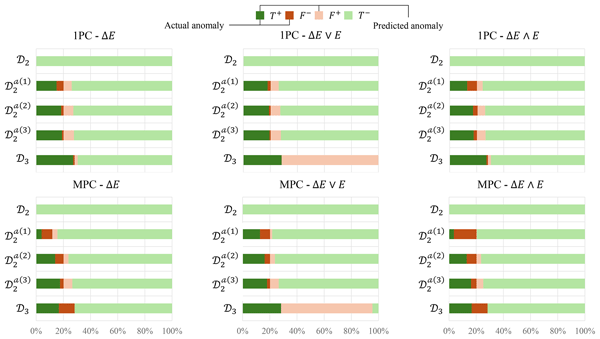
Laboratory testing campaigns for the wind energy industry play an essential role in testing innovative control strategies and digital twin applications. But incidents during testing can be detrimental and might cause project delays and damage to expensive equipment. We propose an anomaly detection scheme for laboratory experiments that are developed and tested to enhance reaction time and prediction quality, reducing the likelihood of damage to equipment due to human error or software malfunction.
Jakob Gebel, Ashkan Rezaei, Adithya Vemuri, Veronica Liverud Krathe, Pieter-Jan Daems, Jens Jo Matthys, Jonathan Sterckx, Konstantinos Vratsinis, Kayacan Kestel, Amir R. Nejad, and Jan Helsen
Wind Energ. Sci. Discuss., https://doi.org/10.5194/wes-2024-173, https://doi.org/10.5194/wes-2024-173, 2025
Preprint under review for WES
Short summary
Short summary
A simulation model of a deployed offshore wind turbine was developed using real-world measurement data. The method shows how to obtain, update and validate a simulation model and allows to improve the efficiency and longevity of offshore wind turbines and support operation and maintenance decisions. Simulations were conducted to analyze the effects of turbulence and wind patterns on turbine lifespan, providing insights to improve maintenance planning and reduce operational costs.
Felix C. Mehlan and Amir R. Nejad
Wind Energ. Sci., 10, 417–433, https://doi.org/10.5194/wes-10-417-2025, https://doi.org/10.5194/wes-10-417-2025, 2025
Short summary
Short summary
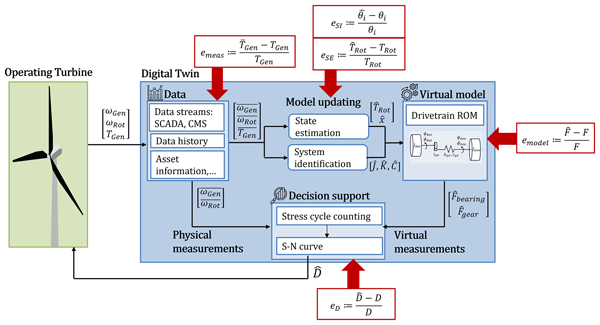
A digital twin is a virtual representation that mirrors the wind turbine's real behavior through simulation models and sensor measurements and can assist in making key decisions such as planning the replacement of parts. These models and measurements are, of course, not perfect and only give an incomplete picture of the real behavior. This study investigates how large the uncertainty of such models and measurements is and to what extent it affects the decision-making process.
Ali Dibaj, Mostafa Valavi, and Amir R. Nejad
Wind Energ. Sci., 9, 2063–2086, https://doi.org/10.5194/wes-9-2063-2024, https://doi.org/10.5194/wes-9-2063-2024, 2024
Short summary
Short summary
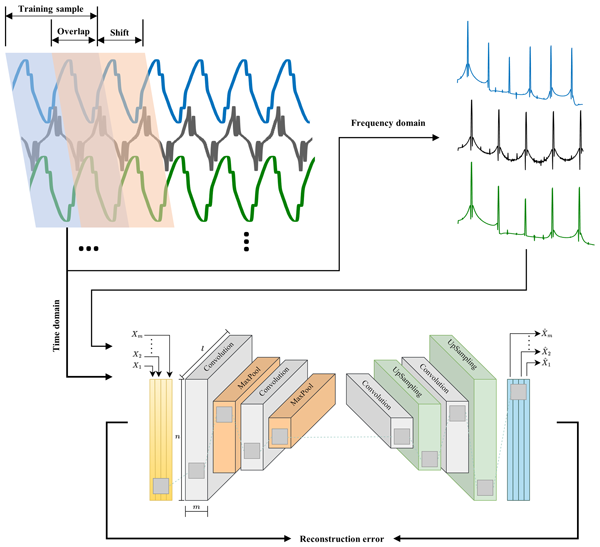
This study emphasizes the need for effective condition monitoring in permanent magnet offshore wind generators to tackle issues like demagnetization and eccentricity. Utilizing a machine learning model and high-resolution measurements, we explore methods of early fault detection. Our findings indicate that flux monitoring with affordable, easy-to-install stray flux sensors with frequency information offers a promising fault detection strategy for large megawatt-scale offshore wind generators.
Diederik van Binsbergen, Pieter-Jan Daems, Timothy Verstraeten, Amir R. Nejad, and Jan Helsen
Wind Energ. Sci., 9, 1507–1526, https://doi.org/10.5194/wes-9-1507-2024, https://doi.org/10.5194/wes-9-1507-2024, 2024
Short summary
Short summary
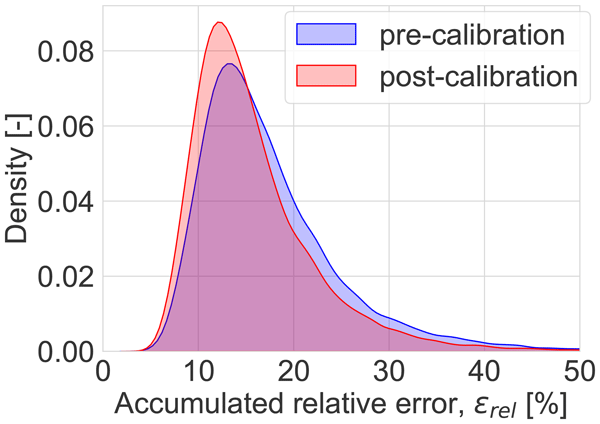
Wind farm yield assessment often relies on analytical wake models. Calibrating these models can be challenging due to the stochastic nature of wind. We developed a calibration framework that performs a multi-phase optimization on the tuning parameters using time series SCADA data. This yields a parameter distribution that more accurately reflects reality than a single value. Results revealed notable variation in resultant parameter values, influenced by nearby wind farms and coastal effects.
Yuksel Rudy Alkarem, Kimberly Huguenard, Richard Kimball, Spencer Hallowell, Amrit Verma, Erin Bachynski-Polić, and Amir Nejad
Wind Energ. Sci. Discuss., https://doi.org/10.5194/wes-2024-67, https://doi.org/10.5194/wes-2024-67, 2024
Preprint withdrawn
Short summary
Short summary
This research is a "less-is-more" demonstration of a novel concept that boost the efficiency of floating wind farms while maintaining fewer number of mooring line/anchors, reducing cost and the large footprint wind farms can have over the ocean bed and the water column. The novelty of this work lies in the passive wake steering method to enhance annual energy production and in integrating that with configurations that allow shared/multiline anchoring potential.
Amir R. Nejad, Jonathan Keller, Yi Guo, Shawn Sheng, Henk Polinder, Simon Watson, Jianning Dong, Zian Qin, Amir Ebrahimi, Ralf Schelenz, Francisco Gutiérrez Guzmán, Daniel Cornel, Reza Golafshan, Georg Jacobs, Bart Blockmans, Jelle Bosmans, Bert Pluymers, James Carroll, Sofia Koukoura, Edward Hart, Alasdair McDonald, Anand Natarajan, Jone Torsvik, Farid K. Moghadam, Pieter-Jan Daems, Timothy Verstraeten, Cédric Peeters, and Jan Helsen
Wind Energ. Sci., 7, 387–411, https://doi.org/10.5194/wes-7-387-2022, https://doi.org/10.5194/wes-7-387-2022, 2022
Short summary
Short summary
This paper presents the state-of-the-art technologies and development trends of wind turbine drivetrains – the energy conversion systems transferring the kinetic energy of the wind to electrical energy – in different stages of their life cycle: design, manufacturing, installation, operation, lifetime extension, decommissioning and recycling. The main aim of this article is to review the drivetrain technology development as well as to identify future challenges and research gaps.
Ryota Wada, Jeremy Rohmer, Yann Krien, and Philip Jonathan
Nat. Hazards Earth Syst. Sci., 22, 431–444, https://doi.org/10.5194/nhess-22-431-2022, https://doi.org/10.5194/nhess-22-431-2022, 2022
Short summary
Short summary
Characterizing extreme wave environments caused by tropical cyclones in the Caribbean Sea near Guadeloupe is difficult because cyclones rarely pass near the location of interest. STM-E (space-time maxima and exposure) model utilizes wave data during cyclones on a spatial neighbourhood. Long-duration wave data generated from a database of synthetic tropical cyclones are used to evaluate the performance of STM-E. Results indicate STM-E provides estimates with small bias and realistic uncertainty.
Cited articles
ABS: Final report – Design Standards for Offshore Wind Farms, American Bureau of Shipping (ABS), https://www.bsee.gov/sites/bsee.gov/files/tap-technical-assessment-program/670aa.pdf (last access: 5 August 2025), 2011. a
ABS: Guide for Building and Classing Floating Offshore Wind Turbines 2020, American Bureau of Shipping (ABS), https://ww2.eagle.org/content/dam/eagle/rules-and-guides/current/offshore/fowt-guide-july20.pdf (last access: 5 August 2025), 2020a. a
ABS: Guidance Notes on Global Performance Analysis for Floating Offshore Wind Turbines 2020, American Bureau of Shipping (ABS), https://ww2.eagle.org/content/dam/eagle/rules-and-guides/archives/design_and_analysis/206_globalperanalyfowti1/fowt-gpa-gn-july20.pdf, (last access: 5 August 2025), 2020b. a
Ahmad, I. B., Schnepf, A., and Ong, M. C.: An optimisation methodology for suspended inter-array power cable configurations between two floating offshore wind turbines, Ocean Engineering, 278, 114406, 2023. a
American Journal of Transportation: Equinor says Scotland floating wind turbine flaw has been repaired, https://www.ajot.com/insights/full/ai-equinor-says-scotland-floating-wind-turbine-flaw-has-been-repaired/ (last access: 12 September 2024), 2024. a, b
American Petroleum Institute (API): API Recommended Practice 2SK Design and Analysis of Stationkeeping Systems for Floating Offshore Structures, 4th edition, American Petroleum Institute (API), https://www.api.org/, (last access: 5 August 2025), 2018. a
Agency for Natural Resources and Energy (ANR): Policy on disclosing grid information, https://www.enecho.meti.go.jp/category/electricity_and_gas/electric/summary/regulations/pdf/keitou_kangaekata_20240401.pdf, last access: 29 April 2024 (in Japanese). a
Aono, M.: Offshore wind and Finance, Journal of JWEA, 42, 158–161, 2018 (in Japanese). a
Aoyama, K., Nomoto, T., and Kentaro, W.: Development of a shipyard simulator based on Petri nets, Journal of Marine Science and Technology, 4, 35–43, 1999. a
Aoyama, K., Yotsuzuka, T., Tanaka, Y., and Tanabe, Y.: “Monitoring Platform” Monitoring and Visualizing System for Shipyard: Application to Cutting and Subassembly Processes, in: Practical Design of Ships and Other Floating Structures: Proceedings of the 14th International Symposium, PRADS 2019, 22–26 September 2019, Yokohama, Japan-Volume III 14, 321–337, Springer, 2021. a
Australian Petroleum Production and Exploration Association Limited: MODU Mooring in Australian Tropical Waters Guideline, Australian Petroleum Production and Exploration Association Limited (APPEA), https://www.appea.com.au/wp-content/uploads/2020/02/MMATW-Guideline-Rev-2.pdf (last access: 5 August 2025), 2019. a
Avanessova, N., Gray, A., Lazakis, I., Thomson, R. C., and Rinaldi, G.: Analysing the effectiveness of different offshore maintenance base options for floating wind farms, Wind Energ. Sci., 7, 887–901, https://doi.org/10.5194/wes-7-887-2022, 2022. a, b, c
Azevedo, P. and Grosse, S.: Overcoming the Challenges of Financing Offshore Wind Projects, in: Offshore Technology Conference, OTC, D031S033R006, https://doi.org/10.4043/29366-MS, 2019. a
Baltic Wind EU and Bulsky, K: Offshore wind power is driving job growth in Europe – the question is how to meet demand?, https://balticwind.eu/offshore-wind-power-is-driving-job-growth-in-europe-the-question-is-how-to-meet-demand/, last access: 5 August 2025. a, b
Barooni, M., Ashuri, T., Velioglu Sogut, D., Wood, S., and Ghaderpour Taleghani, S.: Floating Offshore Wind Turbines: Current Status and Future Prospects, Energies, 16, 2, https://doi.org/10.3390/en16010002, 2022. a
Bosch, J., Staffell, I., and Hawkes, A. D.: Global levelised cost of electricity from offshore wind, Energy, 189, 116357, 2019. a
Bureau Veritas: Fatigue of Top Chain of Mooring Lines due to In-plane and Out-of-plane Bendings, Guidance Note NI 604 DT, https://rulesexplorer-docs.bureauveritas.com/documents/ni604/oct2014/604-NI_2014-10.pdf (last access: 5 August 2025), 2014. a
Bureau Veritas: Classificaiton and Certification of Floating Offshore Wind Turbines, Bureau Veritas, Paris, https://rulesexplorer-docs.bureauveritas.com/documents/nr572/oct2024/572-NR_2024-10.pdf (last access: 5 August 2025), 2024. a
Chesterman, X., Verstraeten, T., Daems, P.-J., Nowé, A., and Helsen, J.: Overview of normal behavior modeling approaches for SCADA-based wind turbine condition monitoring demonstrated on data from operational wind farms, Wind Energ. Sci., 8, 893–924, https://doi.org/10.5194/wes-8-893-2023, 2023. a
Chitteth Ramachandran, R., Desmond, C., Judge, F., Serraris, J.-J., and Murphy, J.: Floating wind turbines: marine operations challenges and opportunities, Wind Energ. Sci., 7, 903–924, https://doi.org/10.5194/wes-7-903-2022, 2022. a
ClassNK: Guideline for Floating Offshore Wind Turbines, General Incorporated Foundation, https://www.classnk.or.jp/hp/pdf/authentication/renewableenergy/en/classification/NKRE-GL-FOWT01_December2021_Eng_corrected_March2022.pdf (last access: 25 February 2025), 2021a. a
ClassNK: Guideline for Floating Offshore Wind Turbines, Section 3.3, https://www.classnk.or.jp/hp/pdf/authentication/renewableenergy/en/classification/NKRE-GL-FOWT01_December2021_Eng_corrected_March2022.pdf (last access: 29 April 2024), 2021b. a
ClassNK: MOU signed with Maersk Training on training for offshore wind personnel and alternative fuel seafarer education, https://www.classnk.or.jp/hp/en/hp_pressrelease.
aspx?id=8582&layout=1 (last access: 28 September 2024), 2024. a
Crowle, A. and Thies, P.: Floating offshore wind turbines port requirements for construction, in: Proceedings of the Institution of Mechanical Engineers, Part M: Journal of Engineering for the Maritime Environment, 236, 1047–1056, 2022. a
Dao, C., Kazemtabriz, B., and Crabtree, C.: Wind Turbine Reliability Data Review and Impacts on Levelized Cost of Energy, Wind Energy, 22(12), 1848–1871, 2019. a
Delft University of Technology: SWAN, https://www.tudelft.nl/en/ceg/about-faculty/departments/hydraulic-engineering/sections/environmental-fluid-mechanics/research/swan (last access: 5 August 2025), 1999. a
De Weck, O. L.: Technology roadmapping and development: A quantitative approach to the management of technology, Springer Nature, ISBN 978-3-319-44938-3, 2022. a
Dinkla, M. E. C.: On modeling the operation and maintenance of a floating offshore wind farm with multiple anchors, Implementing multiline mooring modeling in NREL WOMBAT tool, graduate thesis in European Wind Energy Master, NTNU, Faculty of Engineering, Department of Marine Technology, https://nva.sikt.no/registration/0198e7f733cc-e0a9a0f9-1b1a-4b3b-ad85-0d9218be02a9 (last accessed: 5 August 2025), 2024. a, b, c
Díaz, H. and Guedes Soares, C.: Approach for Installation and Logistics of a Floating Offshore Wind Farm, Journal of Marine Science and Engineering, 11, https://doi.org/10.3390/jmse11010053, 2023. a, b, c, d
DNV: Standard Floating wind turbine structures, Det Norske Veritas, 2021a. a
DNV: Offshore Standard Position mooring, Det Norske Veritas, https://img.antpedia.com/standard/files/pdfs_ora/20230614/DNVGL/DNV-OS-E301-2021.pdf (last access: 20 January 2025), 2021b. a
DNV: Floating Substations: the next challenge on the path to commercial scale floating windfarms, https://www.dnv.com/article/floating-substations-the-next-challenge-on-the-path-to-commercial-scale-floating-windfarms-199213 (last access: September 2024), 2024. a
Driscoll, F., Jonkman, J., Robertson, A., Sirnivas, S., Skaare, B., and Nielsen, F. G.: Validation of a FAST model of the statoil-hywind demo floating wind turbine, Energy Procedia, 94, 3–19, 2016. a
Energy Voice: Equinor to return Hywind turbines to Norway for `heavy maintenance', https://www.energyvoice.com/renewables-energy-transition/wind/uk-wind/545550/equinor-to-return-hywind-turbines-to-norway-for-heavy-maintenance/ (last access: 3 June 2024), 2024. a, b
Equinor: Heavy maintenance campaign completed on Hywind Scotland floating offshore wind farm, https://www.equinor.com/news/uk/heavy-maintenance-campaign-completed-on-hywind-scotland-floating-offshore-wind-farm (last access: 9 October 2024), 2024. a, b
European Commission (Technical University of Denmark and Renewable Energy Institute): Sectoral Study: Standards, technical regulation and conformity assessment in the Japanese and European offshore wind power market: current implementation and best practices July 2022, https://www.eeas.europa.eu/sites/default/files/documents/OWPStudy-DTU-REI_publication_EN_0.pdf. (last access: 5 August 2025), 2022. a, b
European External Action Service (EEAS): OWP Study – DTU-REI publication (English), https://www.eeas.europa.eu/sites/default/files/documents/OWP Study - DTU-REI_publication_EN.pdf (last access: 12 November 2024), 2022. a
Fontaine, E., Kilner, A., Carra, C., Washington, D., Ma, K., Phadke, A., Laskowski, D., and Kusinski, G.: Industry Survey of Past Failures, Pre-emptive Replacements and Reported Degradations for Mooring Systems of Floating Production Units, in: Day 4 Thu, May 08, 2014, OTC, Houston, Texas, D041S047R002, https://doi.org/10.4043/25273-MS, 2014a. a
Fontaine, E., Rosen, J., Potts, A., Ma, K.-T., and Melchers, R.: SCORCH JIP – Feedback on MIC and Pitting Corrosion from Field Recovered Mooring Chain Links, in: Day 4 Thu, May 08, 2014, OTC, Houston, Texas, D041S047R004, https://doi.org/10.4043/25234-MS, 2014b. a
Fred. Olsen Windcarrier: Fred. Olsen Ocean partners with Shimizu to drive progress within the Japanese offshore wind sector, and worldwide, https://windcarrier.com/media/news/fred-olsen-ocean-partners-with-shimizu-to-drive-progress-within-the-japanese-offshore-wind-sector-and-worldwide/ (last access: 5 August 2025). a
Fujarra, A. L. C., Rosetti, G. F., De Wilde, J., and Gonçalves, R. T.: State-of-Art on Vortex-Induced Motion: A Comprehensive Survey After More Than One Decade of Experimental Investigation, in: Volume 4: Offshore Geotechnics; Ronald W. Yeung Honoring Symposium on Offshore and Ship Hydrodynamics, American Society of Mechanical Engineers, Rio de Janeiro, Brazil, 561–582, https://doi.org/10.1115/OMAE2012-83561, 2012. a
Fukushima Offshore Wind Consortium: Fukushima Floating Offshore Wind Farm Demonstration Project, https://www.fukushima-forward.jp/english/pdf/pamphlet3.pdf (last access: 5 August 2025), 2013. a
GCE Ocean Technology: Floating offshore wind can create 52,000 new jobs in Norway, https://www.gceocean.no/news/posts/2022/may/floating-offshore-wind-can-create-52-000-new-jobs-in-norway/, last access: 5 August 2025. a
Gonçalves, R. T., Chame, M. E. F., Silva, L. S. P., Koop, A., Hirabayashi, S., and Suzuki, H.: Experimental Flow-Induced Motions of a FOWT Semi-Submersible Type (OC4 Phase II Floater), Journal of Offshore Mechanics and Arctic Engineering, 143, 012004, https://doi.org/10.1115/1.4048149, 2021. a
Gotoh, K., Ueda, T., Murakami, K., and Utsunomiya, T.: Wear Performance of Mooring Chain in Wet Environment With Substitute Ocean Water, in: Volume 4: Materials Technology, American Society of Mechanical Engineers, V004T03A045, https://doi.org/10.1115/OMAE2019-95822, 2019. a, b
Guo, X., Hukuda, H., Miyazawa, Y., and Yamagata, T.: A Triply Nested Ocean Model for Simulating the Kuroshio–Roles of Horizontal Resolution on JEBAR, Journal of Physical Oceanography, 33, 146–169, https://doi.org/10.1175/1520-0485(2003)033<0146:ATNOMF>2.0.CO;2, 2003. a
Herrera Anchustegui, I.: Is Hywind Tampen's State Aid Approval a Kickstart for the Norwegian Offshore Wind Industry?, European State Aid Law Quarterly, 19, 225–231, 2020a. a
Herrera Anchustegui, I.: Hywind Tampen: A Regulatory Gamechanger for (Norwegian) Offshore Wind?, https://www.uib.no/sites/w3.uib.no/files/attachments/hywind_tampen_smi_29.09_.pdf (last access: 10 September 2022), 2020b. a
Hirayama, K.: Harbor Tranquility Analysis Method for Using Boussinesq-type Nonlinear Wave Transformation Model, in: Proceedings of the Twenty-third International Offshore and Polar Engineering Conference, International Society of Offshore and Polar Engineers (ISOPE), Anchorage, Alaska, USA, 1054–1060, https://onepetro.org/ISOPEIOPEC/proceedings-pdf/ISOPE13/All-ISOPE13/ISOPE-I-13-385/1570561/isope-i-13-385.pdf (last access: 5 August 2025), 2013. a
Honda, A., Wada, R., Watabe, M., and Tamada, M.: Impact of Meteorogical Conditions on the Construction of Offshore Wind Farm, Journal of Wind Engineering, 27, 284–293, 2022. a
Hong, S., McMorland, J., Zhang, H., Collu, M., and Halse, K. H.: Floating offshore wind farm installation, challenges and opportunities: A comprehensive survey, Ocean Engineering, 304, 117793, https://doi.org/10.1016/j.oceaneng.2024.117793, 2024. a
Ibrion, M. and Nejad, A.: On a road map for technology qualification, innovation and cost reduction in floating offshore wind: learning from Hywind and Norwegian approach, Journal of Physics: Conference Series, 2507, 012008, https://doi.org/10.1088/1742-6596/2507/1/012008, 2023. a
Ibrion, M. and Nejad, A. R.: On building a safe ocean, the oceanscape and the necessity for developing an ocean culture, Environmental and Coastal Offshore (ECO), special issue in partnership with IOC-UNESCO – United Nations Decade of Ocean Science for Sustainable Development, Technology Systems Corporation, 148–149, 2021. a, b, c
Ibrion, M., Paltrinieri, N., and Nejad, A.: On Risk of Digital Twin Implementation in Marine Industry: Learning from Aviation Industry, Journal of Physics: Conference Series, 1357, 012009, https://doi.org/10.1088/1742-6596/1357/1/012009, 2019. a
Ibrion, M., Paltrinieri, N., and Nejad, A.: Learning from non-failure of Onagawa nuclear power station: an accident investigation over its life cycle, Results in Engineering, 8, 100185, https://doi.org/10.1016/j.rineng.2020.100185, 2020a. a
Ibrion, M., Paltrinieri, N., and Nejad, A. R.: Learning from non-failure of Onagawa nuclear power station: an accident investigation over its life cycle, Results in Engineering, 8, 100185, https://doi.org/10.1016/j.rineng.2020.100185, 2020b. a
International Organization for Standardization: Petroleum and natural gas industries Specific requirements for offshore structures Part 7: Stationkeeping systems for floating offshore structures and mobile offshore units (ISO 19901-7:2013), International Organization for Standardization, ISBN 978-0-580-73129-8, 2013. a
IRENA: Future of wind: Deployment, investment, technology, grid integration and socio-economic aspects (A Global Energy Transformation paper), https://www.irena.org/-/media/files/irena/agency/publication/2019/oct/irena_future_of_wind_2019.pdf (last access: 5 August 2025), 2019. a
Ishihara, T. and Liu, Y.: Dynamic response analysis of a semi-submersible floating wind turbine in combined wave and current conditions using advanced hydrodynamic models, Energies, 13, 5820, https://doi.org/10.3390/en13215820, 2020. a
Ishihara, T. and Yamaguchi, A.: Prediction of the extreme wind speed in the mixed climate region by using Monte Carlo simulation and measure-correlate-predict method, Wind Energy, 18, 171–186, 2015. a
Japan Meteorological Agency: JRA-55: Japanese 55-year Reanalysis, https://www.data.jma.go.jp/suishin/cgi-bin/catalogue/make_product_page.cgi?id=JRA (last access: 11 December 2024), 2013. a
Jayasinghe, K., Potts, A., Kilner, A., and Melchers, R.: Mooring Chain Wear Experiments and Findings, in: Day 1 Mon, April 30, 2018, OTC, Houston, Texas, USA, D011S004R003, https://doi.org/10.4043/28737-MS, 2018. a
Jean, P., Goessens, K., and L'Hostis, D.: Failure of Chains by Bending on Deepwater Mooring Systems, in: Offshore Technology Conference, Offshore Technology Conference, Houston, Texas, https://doi.org/10.4043/17238-MS, 2005. a
Jiang, Z.: Installation of offshore wind turbines: A technical review, Renewable and Sustainable Energy Reviews, 139, 110576, https://doi.org/10.1016/j.rser.2020.110576, 2021. a, b, c
Jump, E., Gray, A., Thompson, D., Stevenson, L., and Strang-Moran, C.: Offshore substations: fixed or floating? Technoeconomic analysis, Tech. rep., Tech. rep., ORE Catapult, https://offshorewindinnovationhub.com (last access: 5 August 2025) 2021. a
Kawamura, K.: Assessing Seafloor Geologic Risks for Offshore Wind Development, Foundation Engineering & Equipment Monthly, 51, 30–33, 2023. a
Kikuchi, Y. and Ishihara, T.: Assessment of weather downtime for the construction of offshore wind farm by using wind and wave simulations, Journal of Physics: Conference Series, 753, 092016, https://doi.org/10.1088/1742-6596/753/9/092016, 2016. a, b
Kimiaki Yasuda, Memi Motosu, R. F. and Nagai, T.: A CASE STUDY AND PROPOSAL FOR CONSENSUS BUILDING ON AN OFFSHORE WIND PROJECT, Journal of JSCE (Ocean Engineering), 71, https://doi.org/10.2208/jscejoe.71.I_1, 2015. a, b
Kuroda, H., Setou, T., Kakehi, S., Ito, S.-i., Taneda, T., Azumaya, T., Inagake, D., Hiroe, Y., Morinaga, K., Okazaki, M., Yokota, T., Okunishi, T., Aoki, K., Shimizu, Y., Hasegawa, D., and Watanabe, T.: Recent Advances in Japanese Fisheries Science in the Kuroshio-Oyashio Region through Development of the FRA-ROMS Ocean Forecast System: Overview of the Reproducibility of Reanalysis Products, Open Journal of Marine Science, 7, 62–90, https://doi.org/10.4236/ojms.2017.71006, 2017. a
Larsson, J.: Transmission Systems for Grid Connection of Offshore Wind Farms, Master's thesis, Uppsala University, https://www.diva-portal.org/smash/get/diva2:1561060/FULLTEXT01.pdf (last access: 5 August 2025), 2021. a
Laura Castro-Santos, V. D.-C. and Brage, R. Y.: The importance of the activity costs in a shipyard: a case study for floating offshore wind platforms, Ships and Offshore Structures, 15, 53–60, https://doi.org/10.1080/17445302.2016.1172830, 2020. a
Li, H., Weiwen, P., Cheng-Geng, H., and Carlos, G. S.: Failure Rate Assessment for Onshore and Floating Offshore Wind Turbines, Journal of Marine Science and Engineering, 10, 2–26, 2022. a
Ma, K.-T., Shu, H., Smedley, P., L'Hostis, D., and Duggal, A.: A Historical Review on Integrity Issues of Permanent Mooring Systems, in: All Days, OTC, Houston, Texas, USA, OTC–24025–MS, https://doi.org/10.4043/24025-MS, 2013. a
Ma, K. T., Luo, Y., Kwan, T., and Kwan, T.: Mooring System Engineering for Offshore Structures, Gulf Professional Publishing, ISBN 978-0128185513, 2019. a
Malhotra, S. and O'Connell, D.: Geohazards to Offshore Wind Farms on the US Atlantic Coast, in: ISOPE International Ocean and Polar Engineering Conference, ISOPE, ISOPE–I, https://doi.org/10.17736/ijope.2025.jc956, 2024. a, b
Mase, H., Oki, K., Takayama, T., and Sakai, T.: Phase averaging model for multi-directional random wave transformation by high order upwind difference scheme, Journal of JSCE, 684, II56–II68, 2001. a
Mase, H., Tom, T. H. A., Ikemoto, A., and Kawasaki, K.: Verification of Accuracy for Wave Forecasting Using Wave Watch III Employed in Outer Region, Journal of Japan Society of Civil Engineers, Ser. B2 (Coastal Engineering), 73, I_139–I_144, 2017. a
Matsufuji, E., Takayama, T., Miyata, M., Hirayama, K., Kawai, H., Suzuki, Y., Utsunomiya, Y., and Fukunaga, Y.: Estimation of Design Wave Through Introduction of Swell Effect (in Japanese), Journal of JSCE (Coastal Engineering), 73, I_1153–I_1158, 2017. a
Matsumoto, S.: Development of Acoustic Imaging and Survey Cloud for Fast and Automated MBES Data Analysis, in: OCEANS 2025 – Great Lakes, https://doi.org/10.23919/OCEANS59106.2025.11245074, 2025. a
McMorland, J., Collu, M., McMillan, D., and Carroll, J.: Operation and maintenance for floating wind turbines: A review, Renewable and Sustainable Energy Reviews, 163, 112499, https://doi.org/10.1016/j.rser.2022.112499, 2022. a, b
Mehlan, C. F., Nejad, A. R., and Gao, Z.: Digital Twin Based Virtual Sensor for Online Fatigue Damage Monitoring in Offshore Wind Turbine Drivetrains, J. Offshore Mech. Arct. Eng, 144, 06090, https://doi.org/10.1115/1.4055551, 2022. a
Mehta, M., Zaaijer, M., and von Terzi, D.: Drivers for optimum sizing of wind turbines for offshore wind farms, Wind Energ. Sci., 9, 141–163, https://doi.org/10.5194/wes-9-141-2024, 2024. a
Memija, A.: World's First' In-Situ Generator Swap on Floating Wind Turbine Completed Offshore Scotland, https://www.offshorewind.biz/2024/09/20/worlds-first-in-situ-generator-swap-on-floating-wind-turbine-completed-offshore-scotland (last access: 15 December 2024), 2024. a, b
Menon Economics: Rapport markedutvikling for flytende og bunnfast havvind fremtidsutsikter for den norske havvindustrien, https://www.norwegianoffshorewind.no/news/new-report-offshore-wind-can-create-over-60-000-jobs-in-norway-by-2050/ (last access: 5 August 2025), 2024. a
METI and MLIT: Guidelines for Designating Promotion Zones for Offshore Renewable Energy Facilities, https://www.mlit.go.jp/kowan/content/001417221.pdf (last access: 28 April 2024), 2021. a
Ministry of Economy, Trade and Industry (METI): Operational Policy for the Central Method in Offshore Wind Power Generation, https://www.enecho.meti.go.jp/category/saving_and_new/saiene/yojo_furyoku/dl/legal/central_unyou.pdf (last access: 11 December 2024), 2024aa. a
Ministry of Economy, Trade and Industry (METI): Basic Specifications for Site Surveys Conducted by JOGMEC under the Central Method, https://www.enecho.meti.go.jp/category/saving_and_new/saiene/yojo_furyoku/dl/legal/central_JOGMEC.pdf (last access: 11 December 2024), 2024b. a
Ministry of Economy, Trade and Industry (METI): On Offshore Wind, https://www.meti.go.jp/shingikai/enecho/denryoku_gas/saisei_kano/pdf/075_s01_00.pdf (last access: 8 December 2025), 2025. a
Ministry of Economy, Trade and Industry (METI) and Ministry of Land, Infrastructure, Transport and Tourism (MLIT): Operational Policy [Draft] for the Central Method in Offshore Wind Power Generation, https://www.meti.go.jp/shingikai/enecho/denryoku_gas/saisei_kano/yojo_furyoku/pdf/018_05_00.pdf (last access: 11 December 2024), 2024. a
Ministry of Economy, Trade and Industry (METI) in Japan: Four ideals to pursue when considering energy policy, https://www.enecho.meti.go.jp/en/category/special/article/detail_180.html (last access: 12 October 2023), 2022. a
Ministry of Land, Infrastructure, Transport and Tourism (MLIT), Maritime Bureau: Technical Safety Guidelines for Floating Offshore Wind Power Generation Facilities (Fudashiki Yojo Furyoku Hatsuden Shisetsu Gijutsu Kijun Anzen Gaidorain), Tech. rep., Ministry of Land, Infrastructure, Transport and Tourism (MLIT), Tokyo, Japan, https://www.mlit.go.jp/common/001331376.pdf (last access: 11 December 2024), 2023 (in Japanese). a
Mitchell, D., Blanche, J., Harper, S., Lim, T., Gupta, R., Zaki, O., Tang, W., Robu, V., Watson, S., and Flynn, D.: A review: Challenges and opportunities for artificial intelligence and robotics in the offshore wind sector, Energy and AI, 8, 100146, https://doi.org/10.1016/j.egyai.2022.100146, 2022. a
Mitsubishi Research Institute: Potential Sea Areas for Offshore Wind in Japan (Toward the formation of a virtuous cycle that co-creates the future of offshore wind, and the fishing industry), https://www.mri.co.jp/news/press/i5inlu0000005zmn-att/ 20240425OW_EN.pdf (last access: 5 August 2025), 2024. a, b
Mitsuyuki, T., Hiekata, K., and Yamato, H.: Design of production strategy considering the cutting peak demand of electricity in the shipbuilding industry, Journal of Marine Science and Technology, 19, 425–437, 2014. a
Miyazawa, Y., Zhang, R., Guo, X., Tamura, H., Ambe, D., Lee, J.-S., Okuno, A., Yoshinari, H., Setou, T., and Komatsu, K.: Water mass variability in the western North Pacific detected in a 15-year eddy resolving ocean reanalysis, Journal of Oceanography, 65, 737–756, 2009. a
MLIT of Japan: Real-time NOWPHAS information, The Nationwide Ocean Wave information network for Ports and HArbourS, https://www.mlit.go.jp/kowan/nowphas/index_eng.html, last access: 5 August 2025. a
Möllerström, E., Gipe, P., Beurskens, J., and Ottermo, F.: A historical review of vertical axis wind turbines rated 100 kW and above, Renewable and Sustainable Energy Reviews, 105, 1–13, 2019. a
Moser, B. R. and Wood, R. T.: Design of complex programs as sociotechnical systems, in: Concurrent Engineering in the 21st Century: Foundations, Developments and Challenges, Springer International Publishing, 197–220, https://doi.org/10.1007/978-3-319-13776-6_8, 2015. a
Mytilinou, V. and Kolios, A. J.: Techno-economic optimisation of offshore wind farms based on life cycle cost analysis on the UK, Renewable Energy, 132, 439–454, 2019. a
Nejad, A. R., Keller, J., Guo, Y., Sheng, S., Polinder, H., Watson, S., Dong, J., Qin, Z., Ebrahimi, A., Schelenz, R., Gutiérrez Guzmán, F., Cornel, D., Golafshan, R., Jacobs, G., Blockmans, B., Bosmans, J., Pluymers, B., Carroll, J., Koukoura, S., Hart, E., McDonald, A., Natarajan, A., Torsvik, J., Moghadam, F. K., Daems, P.-J., Verstraeten, T., Peeters, C., and Helsen, J.: Wind turbine drivetrains: state-of-the-art technologies and future development trends, Wind Energ. Sci., 7, 387–411, https://doi.org/10.5194/wes-7-387-2022, 2022. a, b, c, d, e, f
Nevesbu: Floating Offshore Substation Concept Design, https://www.nevesbu.com/projects/floating-offshore-substation-concept-design/ (last access: September 2024), 2024. a
Noguchi, T., Nagasaka, A., Izumi, T., and Yokohata, T.: Considering mass rapid construction of floating offshore wind turbines, Journal of Wind Energy, 47, 34–40, https://doi.org/10.11333/jwea.47.1_34, 2023 (in Japanese). a, b, c, d
North American Clean Energy: Lessons Learned: The first case of heavy maintenance on floating wind, https://www.nacleanenergy.com/wind/lessons-learned-the-first-case-of-heavy-maintenance-on-floating-wind/ (last access: 5 August 2025). a
Norwegian Offshore Wind: Floating offshore wind can create 52,000 new jobs in Norway, https://www.norwegianoffshorewind.no/news/floating-offshore-wind-can-create-52000-new-jobs-in-norway/, last access: 5 August 2025. a
NTNU: NTNU Ocean Training AS, https://www.ocean-training.no/about/ (last access: 5 August 2025), 2024a. a
OCCTO: Long-term policy for large-area grid (master plan for wide-area interconnected grid), https://www.occto.or.jp/kouikikeitou/chokihoushin/230329_choukihoushin_sakutei.html, last access: 29 April 2024 (in Japanese). a
Offshore Channel: World's first in-situ major component exchange on floating wind turbine successfully completed, https://offshore-channel.com/worlds-first-in-situ-major-component-exchange-on-floating-wind-turbine-successfully-completed (last access: 15 December 2024), 2024. a
Offshore renewable energy CATAPULT: Lightweight Offshore Substation Designs Final Summary Report, Tech. rep., Offshore Renewable Energy Catapult, https://ore.catapult.org.uk/wp-content/uploads/2018/02/Lightweight-Offshore-Substation-Designs.pdf (last access: 5 August 2025), 2018. a
Offshore renewable energy CATAPULT: Dynamic Cables and Ancillary Systems – Market Projections, Tech. rep., Offshore Renewable Energy Catapult, https://ore.catapult.org.uk/wp-content/uploads/2021/12/PN000412-RPT-003-Rev-1-Dynamic-Cables-Market-Projections_Formatted.pdf (last access: 5 August 2025), 2021. a
Okubo, Y. and Mitsuyuki, T.: Ship Production Planning Using Shipbuilding System Modeling and Discrete Time Process Simulation, Journal of Marine Science and Engineering, 10, 176, https://doi.org/10.3390/jmse10020176, 2022. a
Ookubo, H., Koizumi, A., Ootake, A., Kannno, M., Hayashi, N., Suzuki, M., and Yagi, K.: Design of Mooring System of Fukushima Floating Offshore Wind Farm Demonstration Project Evaluation of Mooring Chain Durability and Mooring Design System , Nippon Steel & Sumikin Engineering Co., Ltd. Technical Review., 13, 20–38, 2022. a, b
Pacific Northwest Center of Excellence for Clean Energy: Heavy Maintenance on Kincardine Floating Wind Turbines, https://www.cleanenergyexcellence.org/heavy-maintenance-on-kincardine-floating-wind-turbines/ (last access: 5 August 2025), 2023. a
Paquette, J., Williams, M., Clarke, R., Devin, M., Sheng, S., Constant, C., Clark, C., Fields, J., Gevorgian, V., Hall, M., Jonkman, J., Keller, J., Robertson, A., Sethuraman, L., and van Dam, J.: An Operations and Maintenance Roadmap for U. S. Offshore Wind Enabling a Cost-Effective and Sustainable U. S. Offshore Wind Energy Industry Through Innovative Operations and Maintenance, https://www.osti.gov/servlets/purl/2361054/ (last access: 8 August 2025), 2024. a, b, c
PARI: NOWT-PARI Dowload, https://www.pari.go.jp/unit/haro/bsnsq/nowtpari/index.html (last access: 5 August 2025), 2023. a
Porteous, S.: Assessment of vessels required to serve floating offshore wind in the Celtic Sea, Offshore Renewable Energy Catapult, https://cms.ore.catapult.org.uk/wp-content/uploads/2023/08/Assessment-of-vessels-required-to-serve-FLOW-in-the-Celtic-Sea.pdf (last access: 5 August 2025), 2023. a
Public-Private Council on Enhancement of Industrial Competitiveness for Offshore Wind Power Generation: Vision for Offshore Wind Power Industry (1st edition), https://www.mlit.go.jp/kowan/content/001390489.pdf (last access: 5 August 2025), 2020. a
Rampi, L., Dewi, F., and Vargas, P.: Chain Out of Plane Bending (OPB) Joint Industry Project (JIP) Summary and Main Results, in: All Days, OTC, Houston, Texas, USA, OTC–25779–MS, https://doi.org/10.4043/25779-MS, 2015. a
Randal, R.: Vibration-based condition monitoring industrial, aerospace and automotive applications, John Willey & Sons, 2, 0470747854, https://doi.org/10.1002/9780470977668, 2011. a
Randolph, M. and Gourvenec, S.: Offshore Geotechnical Engineering, Section 3, CRC Press, London, https://doi.org/10.1201/9781315272474, 2017. a, b
Sanchez Gomez, M., Lundquist, J. K., Deskos, G., Arwade, S. R., Myers, A. T., and Hajjar, J. F.: Wind fields in Category 1–3 tropical cyclones are not fully represented in wind turbine design standards, J. Geophys. Res.-Atmos., 128, e2023JD039233, https://doi.org/10.1029/2023JD039233, 2023. a
Sando, K., Wada, R., Rohmer, J., and Jonathan, P.: Multivariate spatial and spatio-temporal models for extreme tropical cyclone seas, Ocean Engineering, 309, 118365, https://doi.org/10.1016/j.oceaneng.2024.118365, 2024. a
Semco Maritime: Funding for Development of Floating Offshore Substation, https://www.semcomaritime.com/news/foss-funding (last access: September 2024), 2024. a
Setchell, H.: ECMWF Reanalysis v5, https://www.ecmwf.int/en/forecasts/dataset/ecmwf-reanalysis-v5 (last access: 5 August 2025), 2020. a
Sevan SSP: Sevan Floating Substation, https://sevanssp.com/floating-substation/ (last access: September 2024), 2024. a
Shields, M., Beiter, P., Nunemaker, J., Cooperman, A., and Duffy, P.: Impacts of turbine and plant upsizing on the levelized cost of energy for offshore wind, Applied Energy, 298, 117189, https://doi.org/10.1016/j.apenergy.2021.117189, 2021. a, b
Shinoda, T. and Tanaka, T.: Development of risk assessment methodology for occupational safety by work observation technique, Journal of Ship Production and Design, 32, 139–153, 2016. a
Shu, H., Yao, A., Ma, K.-T., Ma, W., and Miller, J.: API RP 2SK 4th Edition – An Updated Stationkeeping Standard for the Global Offshore Environment, in: Day 1 Mon, April 30, 2018, OTC, Houston, Texas, USA, p. D011S004R001, https://doi.org/10.4043/29024-MS, 2018. a
Siddiqui, M. O., Feja, P. R., Borowski, P., Kyling, H., Nejad, A. R., and Wenske, J.: Wind turbine nacelle testing: State-of-the-art and development trends, Renewable and Sustainable Energy Reviews, 188, 113767, 2023a. a
Siddiqui, M. O., Nejad, A. R., and Wenske, J.: On a new methodology for testing full load responses of wind turbine drivetrains on a test bench, Forsch. Ingenieurwes., 87, 173–184, 2023b. a
Siemens Energy and Dragados Offshore and Tennet: DolWin kappa: The offshore converter station for DolWin6, https://netztransparenz.tennet.eu/fileadmin/user_upload/Company/News/German/Dampmann/2022/2022_TenneT_DolWin_kappa_Factsheets_E.pdf (last access: 5 August 2025), 2024. a
Snodgrass, F., Hasselmann, K., Miller, G., Munk, W. H., and Powers, W.: Propagation of ocean swell across the Pacific, Philosophical Transactions of the Royal Society of London. Series A, Mathematical and Physical Sciences, 259, 431–497, 1966. a
Sobashima, S., Wada, R., and Lance, M.: Efficient Project Planning for Floating Offshore Wind Farm Development, Journal of Offshore Mechanics and Arctic Engineering, 147, 062001, https://doi.org/10.1115/1.4068445, 2025. a
Spong, R., Garrity, R., Thompson, C., Yan, X., Gabrielsen, C., L'Hostis, D., Heyl, C., Minnebo, J., Naciri, M., Roberts, C., and Byatt, D.: Mooring Integrity Issues and Lessons Learned Database – DeepStar® Project 20401, in: Day 1 Mon, May 02, 2022, OTC, Houston, Texas, USA, D011S011R004, https://doi.org/10.4043/31823-MS, 2022. a, b
Stehly, T., Beiter, P., and Duffy, P.: 2019 Cost of Wind Energy Review, https://doi.org/10.2172/1756710, 2020. a
Suzuki, H., Shibata, H., Fujioka, H., Hirabayashi, S., Ishii, K., and Kikuchi, H.: Development of an analysis code of rotor-floater coupled response of a floating offshore wind turbine, in: International Conference on Offshore Mechanics and Arctic Engineering, American Society of Mechanical Engineers, 55423, V008T09A026, https://doi.org/10.1115/OMAE2013-10444, 2013. a
Suzuki, Y., Takayama, T., Yoshinaga, Y., Okada, K., Kazuhiko, K., Utsunomiya, Y., Matsufuji, E., and Kimizuka, M.: Wave prediction properties of WAM and WAVEWATCH III, Journal of JSCE (Ocean Engineering), 72, I265–I270, 2016 (in Japanese). a
The Crown Estate: Offshore wind industry unveils Industrial Growth Plan to create jobs, triple supply chain manufacturing and boost UK economy by £ 25 billion, https://www.thecrownestate.co.uk/news/offshore-wind-industry-unveils-industrial-growth-plan-to-create-jobs/ (last access: 25 August 2024, 2024. a, b
The Nippon Foundation Ocean Innovation Consortium: Ocean Innovation Consortium (Human Resource Development for Offshore Industries), The Nippon Foundation Ocean Innovation Consortium, https://project-kaiyoukaihatsu.jp/english// (last access: 28 September 2024), 2024. a
Torres, E. S., Thies, P. R., and Lawless, M.: Offshore logistics: scenario planning and installation modeling of floating offshore wind projects, ASME Open Journal of Engineering, 2, https://doi.org/10.1115/1.4056882, 2023. a, b
Trust, T. C.: Floating Offshore Wind Market Technology Review, https://www.carbontrust.com/our-work-and-impact/guides-reports-and-tools/floating-offshore-wind-market-technology-review (last access: 12 November 2024), 2015. a
Ueda, Y., T.Iwashite, Hioki, F., and Imamura, H.: Introduction of NEDO offshroe wind meadurement guidebook, Proceedings of Japan Wind Energy Symposium, 44, 136–139, 2022. a
Utsunomiya, T., Sato, I., Yoshida, S., Ookubo, H., and Ishida, S.: Dynamic Response Analysis of a Floating Offshore Wind Turbine During Severe Typhoon Event, in: Volume 8: Ocean Renewable Energy, American Society of Mechanical Engineers, Nantes, France, V008T09A032, https://doi.org/10.1115/OMAE2013-10618, 2013. a
Utsunomiya, T., Shiraishi, T., Sato, I., Inui, E., and Ishida, S.: Floating offshore wind turbine demonstration project at Goto Islands, Japan, in: OCEANS 2014-TAIPEI, IEEE, 1–7, https://doi.org/10.1109/OCEANS-TAIPEI.2014.6964595, 2014a. a
Utsunomiya, T., Yoshida, S., Ookubo, H., Sato, I., and Ishida, S.: Dynamic Analysis of a Floating Offshore Wind Turbine Under Extreme Environmental Conditions, Journal of Offshore Mechanics and Arctic Engineering, 136, 020904, https://doi.org/10.1115/1.4025872, 2014b. a
Utsunomiya, T., Sato, I., and Tanaka, K.: Application and demonstration of polyester rope for floating offshore wind turbine – Fundamental design and installation, in: Conference proceedings, The Japan Society of Naval Architects and Ocean Engineers, Vol. 23, 593–598, 2016. a
Varlamov, S. M., Guo, X., Miyama, T., Ichikawa, K., Waseda, T., and Miyazawa, Y.: M2 baroclinic tide variability modulated by the ocean circulation south of Japan, Journal of Geophysical Research: Oceans, 120, 3681–3710, 2015. a
Wada, R. and Ozaki, M.: On the Duration of Calm and Harsh Wave States in the Sea around Japan, Journal of the Japan Society of Naval Architects and Ocean Engineers, 20, 85–97, 2014. a
Wada, R. and Waseda, T.: Assessment of data-inherited uncertainty in extreme wave analysis, Journal of Offshore Mechanics and Arctic Engineering, 142, 021204, https://doi.org/10.1115/1.4045621, 2020. a
Wada, R., Waseda, T., and Jonathan, P.: Extreme value estimation using the likelihood-weighted method, Ocean Engineering, 124, 241–251, 2016. a
Wada, R., Waseda, T., and Jonathan, P.: A simple spatial model for extreme tropical cyclone seas, Ocean Engineering, 169, 315–325, 2018. a
Wang, S. S.: Improving Mooring Reliability Through Risk Based Monitoring and Inspection, in: Day 2 Tue, May 05, 2020, OTC, Houston, Texas, USA, D021S028R002, https://doi.org/10.4043/30529-MS, 2020. a
Waseda, T., Webb, A., Kiyomatsu, K., Fujimoto, W., Miyazawa, Y., Varlamov, S., Horiuchi, K., Fujiwara, T., Taniguchi, T., Matsuda, K., and Yoshikawa, J.: Marine Energy Resource Assessment at Reconnaissance to Feasibility Stury Stages; Wave Power, Ocean and Tidal Current Power, and Ocean Temperature Power, in: Conference proceedings, The Japan Society of Naval Architects and Ocean Engineers, Vol. 23, 189–197, 2016. a
Watson Farley & Williams: Japan's development of the offshore wind industry and maritime cabotage rules, https://www.wfw.com/articles/japans-development-of-the-offshore-wind-industry-and-maritime-cabotage-rules (last access: 5 August 2025), 2024. a, b, c, d
Weller, S., Johanning, L., Davies, P., and Banfield, S.: Synthetic mooring ropes for marine renewable energy applications, Renewable Energy, 83, 1268–1278, 2015. a
Wilberg, L. D.: Wergeland, https://www.wergeland.com/nyheter/vellykket-vedlikehold-av-verdens-frste-flytende-vindpark (last access: 5 August 2025), 2024. a
Witt, D., Ma, K.-T., Lee, T., Gaylarde, C., Celikkol, S., Makama, Z., and Beech, I.: Field Studies of Microbiologically Influenced Corrosion of Mooring Chains, in: Day 3 Wed, May 04, 2016, OTC, Houston, Texas, USA, D031S037R004, https://doi.org/10.4043/27142-MS, 2016. a
Xu, K.: Design and Analysis of Mooring Systems for Semi-submersible Floating Wind Turbines in Shallow Waterd, doctoral thesis, NTNU, Faculty of Engineering, Department of Marine Technology, ISBN 978-82-326-4823-8, 2020. a
Yamaguchi, A. and Ishihara, T.: An Assessment of the Design Wind Speed and Frequency Distribution of Wind Speed using Meteorological Simulation and Typhoon Simulation, in: 21st Wind Engineering Symposium, 215–220, https://doi.org/10.14887/kazekosymp.21.0.215.0, 2010. a
Yamaguchi, A. and Ishihara, T.: Numerical prediction of Normal and Extreme Waves at Fukushima Offshore Site, Journal of Physics: Conference Series, 1037, 042022, https://doi.org/10.3390/en15072313, 2018. a
Yamaguchi, A., Danupon, S., and Ishihara, T.: Numerical prediction of tower loading of floating offshore wind turbine considering effects of wind and wave, Energies, 15, 2313, https://doi.org/10.3390/en15072313, 2022. a
Yamamoto, M., Iwamatsu, S., Iijima, K., Shibata, M., and Tatsuhara, H.: A proposal of floating offshore base for wind farm deployed in EEZ, in: Proceedings of World Conference on Floating Solutions, https://doi.org/10.1007/978-981-96-4569-5_6, 2024. a
Yan, J., Su, Q., Li, R., Xu, J., Lu, Q., and Yang, Z.: Optimization Design Method of the Umbilical Cable Global Configuration Based on Representative Fatigue Conditions, IEEE Journal of Oceanic Engineering, 47, 756–765, https://ieeexplore.ieee.org/document/9933934 (last access: 5 August 2025), 2022. a
Yang, Z., Yan, J., Sævik, S., Lu, Q., Ye, N., Chen, J., and Yue, Q.: Integrated optimisation design of a dynamic umbilical based on an approximate model, Marine Structures, 78, 102995, https://www.sciencedirect.com/science/article/abs/pii/S0951833921000551 (last access: 5 August 2025), 2021. a
Yin, D., Passano, E., Jiang, F., Lie, H., Wu, J., Ye, N., Sævik, S., and Leira, B. J.: State-of-the-Art Review of Vortex-Induced Motions of Floating Offshore Wind Turbine Structures, Journal of Marine Science and Engineering, 10, 1021, https://doi.org/10.3390/jmse10081021, 2022. a, b
Yoshimoto, H., Awashima, Y., Kitakoji, Y., and Suzuki, H.: Development of floating offshore substation and wind turbine for Fukushima FORWARD, in: Proceedings of the International Symposium on Marine and Offshore Renewable Energy, https://fukushima-forward.jp/reference/pdf/study026.pdf (last access: 20 January 2025), 2013. a
Short summary
This paper identifies technology gaps on the path to achieving sustainable development of floating offshore wind in Japan. The key challenges, with an emphasis on unique conditions such as earthquakes and tropical cyclones, are addressed. In Japan, the absence of oil and gas has led to social challenges, like a lack of supply chain, infrastructure, and human resources at offshore wind sites. Site selection, design and operation, industry development, and contribution to the national energy policy (S + 3E) are studied.
This paper identifies technology gaps on the path to achieving sustainable development of...


Altmetrics
Final-revised paper
Preprint