
Articles | Volume 11, issue 4
https://doi.org/10.5194/wes-11-1321-2026
© Author(s) 2026. This work is distributed under
the Creative Commons Attribution 4.0 License.
the Creative Commons Attribution 4.0 License.
https://doi.org/10.5194/wes-11-1321-2026
© Author(s) 2026. This work is distributed under
the Creative Commons Attribution 4.0 License.
the Creative Commons Attribution 4.0 License.
Research article
| 
22 Apr 2026
Research article |
| 22 Apr 2026
| 22 Apr 2026
Fully coupled, high-resolution atmosphere–ocean–wave simulations of the offshore wind energy environment during Hurricane Henri (2021)

Environmental Science Division, Argonne National Laboratory, Lemont, IL 60439, USA
Environmental Science Division, Argonne National Laboratory, Lemont, IL 60439, USA
Department of Civil and Environmental Engineering, Michigan Technological University, Houghton, MI 49931, USA
Great Lakes Research Center, Michigan Technological University, Houghton, MI 49931, USA
Chenfu Huang
Department of Civil and Environmental Engineering, Michigan Technological University, Houghton, MI 49931, USA
Great Lakes Research Center, Michigan Technological University, Houghton, MI 49931, USA
William Pringle
Environmental Science Division, Argonne National Laboratory, Lemont, IL 60439, USA
Mrinal Biswas
National Center for Atmospheric Research, Boulder, CO 80310, USA
Geeta Nain
Environmental Science Division, Argonne National Laboratory, Lemont, IL 60439, USA
Department of Civil and Environmental Engineering, Michigan Technological University, Houghton, MI 49931, USA
Jiali Wang
Environmental Science Division, Argonne National Laboratory, Lemont, IL 60439, USA
Related authors
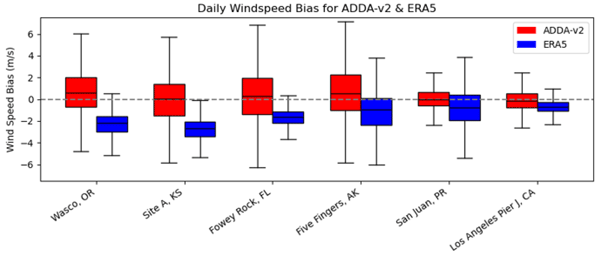
Kyle Peco, Jiali Wang, Chunyong Jung, Gökhan Sever, Lindsay Sheridan, Jeremy Feinstein, Rao Kotamarthi, Caroline Draxl, Ethan Young, Avi Purkayastha, and Andrew Kumler
Wind Energ. Sci., 11, 13–35, https://doi.org/10.5194/wes-11-13-2026, https://doi.org/10.5194/wes-11-13-2026, 2026
Short summary
Short summary
This study presents a new wind dataset, generated by a convection-permitting regional climate model across North America. By validating the dataset against wind observations, we have demonstrated that this dataset captures the wind patterns over complex terrains more realistically than the European Centre for
Medium-Range Weather Forecasts (ECMWF) reanalysis version 5 (ERA5). Additionally, this study quantifies model uncertainty in wind speed, comparing it against interannual variability, to better inform wind farm siting.
Medium-Range Weather Forecasts (ECMWF) reanalysis version 5 (ERA5). Additionally, this study quantifies model uncertainty in wind speed, comparing it against interannual variability, to better inform wind farm siting.
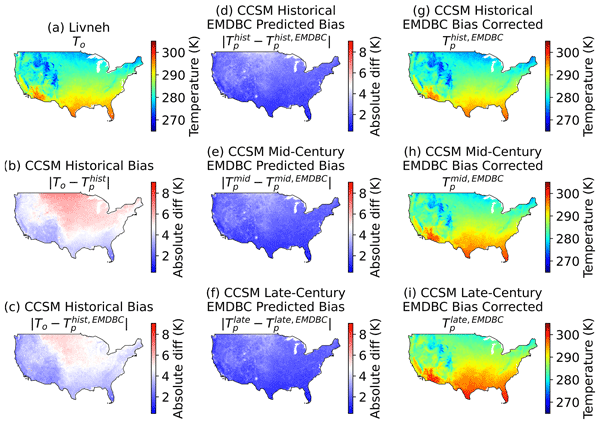
Arkaprabha Ganguli, Jeremy Feinstein, Ibraheem Raji, Akintomide Akinsanola, Connor Aghili, Chunyong Jung, Jordan Branham, Tom Wall, Whitney Huang, and Rao Kotamarthi
Geosci. Model Dev., 18, 8313–8332, https://doi.org/10.5194/gmd-18-8313-2025, https://doi.org/10.5194/gmd-18-8313-2025, 2025
Short summary
Short summary
This study introduces a timescale-aware bias-correction framework to enhance Earth system model assessments, vital for the geoscience community. By decomposing model outputs into oscillatory components, we preserve critical information across various timescales, ensuring more reliable projections. This improved reliability supports strategic decisions in sectors such as agriculture, water resources, and disaster preparedness.
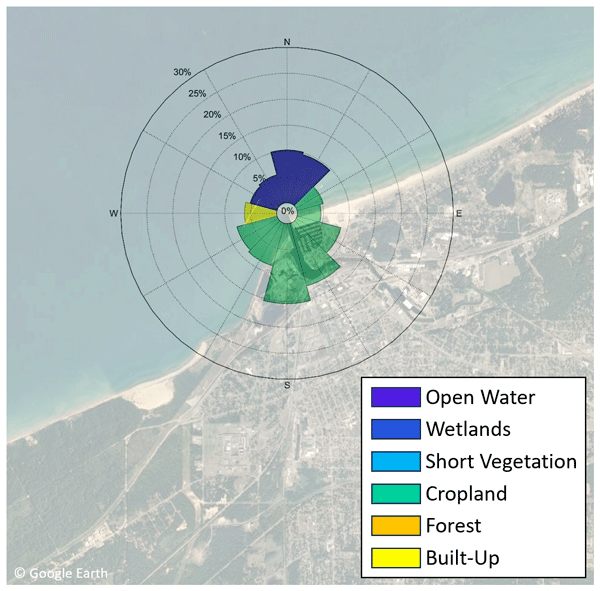
Lindsay M. Sheridan, Jiali Wang, Caroline Draxl, Nicola Bodini, Caleb Phillips, Dmitry Duplyakin, Heidi Tinnesand, Raj K. Rai, Julia E. Flaherty, Larry K. Berg, Chunyong Jung, Ethan Young, and Rao Kotamarthi
Wind Energ. Sci., 10, 1551–1574, https://doi.org/10.5194/wes-10-1551-2025, https://doi.org/10.5194/wes-10-1551-2025, 2025
Short summary
Short summary
Three recent wind resource datasets are assessed for their skills in representing annual average wind speeds and seasonal, diurnal, and interannual trends in the wind resource in coastal locations to support customers interested in small and midsize wind energy.
Lara Tobias-Tarsh, Chunyong Jung, Jiali Wang, Vishal Bobde, Akintomide A. Akinsanola, and V. Rao Kotamarthi
EGUsphere, https://doi.org/10.5194/egusphere-2025-1805, https://doi.org/10.5194/egusphere-2025-1805, 2025
Preprint archived
Short summary
Short summary
We use a high-resolution regional climate model to better understand hurricanes in the North Atlantic over the past 20 years. The model closely matches observed storm frequency and captures stronger storms more accurately than traditional datasets. It also shows better performance in areas with limited data, like the Caribbean. These results can help improve local storm preparedness and planning for critical infrastructure.
Fariborz Daneshvar, Soroosh Mani, William Pringle, Panagiotis Velissariou, Zizang Yang, Gregory Seroka, Edward Myers, and Saeed Moghimi
EGUsphere, https://doi.org/10.5194/egusphere-2026-4586, https://doi.org/10.5194/egusphere-2026-4586, 2026
This preprint is open for discussion and under review for Geoscientific Model Development (GMD).
Short summary
Short summary
Tropical cyclones threaten coastal communities, creating an urgent need for accurate flood forecasts. We developed a new software tool to predict storm-driven water levels. Previous methods required hundreds of computer simulations, which is slow. Our tool uses machine learning to provide high-resolution results using only 40 simulations. It effectively tracks water movement from local creeks to the open ocean, helping emergency responders provide faster, more reliable alerts.
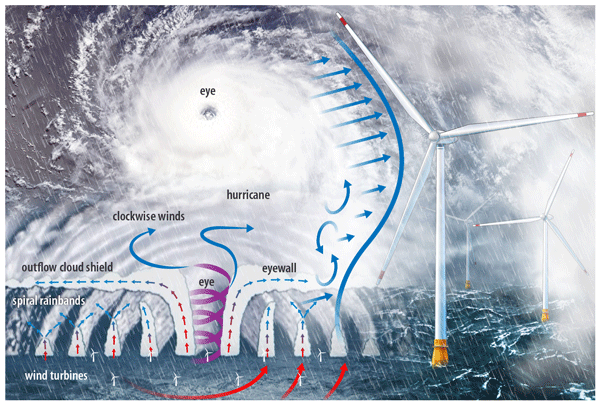
Georgios Deskos, Jiali Wang, Sanjay Arwade, Murray Fisher, Brian Hirth, Xiaoli Guo Larsén, Julie K. Lundquist, Andrew Myers, Weichiang Pang, William J. Pringle, Robert Rogers, Miguel Sanchez-Gomez, Chao Sun, Atsushi Yamaguchi, and Paul Veers
Wind Energ. Sci., 11, 2749–2782, https://doi.org/10.5194/wes-11-2749-2026, https://doi.org/10.5194/wes-11-2749-2026, 2026
Short summary
Short summary
Wind energy is expanding into regions exposed to tropical cyclones, where extreme winds and waves can damage turbines and disrupt energy production. We reviewed observations, simulations, engineering standards, and risk quantification frameworks to identify the most important gaps. Today's design rules, originally built for milder storms, do not capture cyclone hazards. Closing these gaps requires better offshore measurements, improved models, and risk-informed design standards.
Kyle Peco, Jiali Wang, Chunyong Jung, Gökhan Sever, Lindsay Sheridan, Jeremy Feinstein, Rao Kotamarthi, Caroline Draxl, Ethan Young, Avi Purkayastha, and Andrew Kumler
Wind Energ. Sci., 11, 13–35, https://doi.org/10.5194/wes-11-13-2026, https://doi.org/10.5194/wes-11-13-2026, 2026
Short summary
Short summary
This study presents a new wind dataset, generated by a convection-permitting regional climate model across North America. By validating the dataset against wind observations, we have demonstrated that this dataset captures the wind patterns over complex terrains more realistically than the European Centre for
Medium-Range Weather Forecasts (ECMWF) reanalysis version 5 (ERA5). Additionally, this study quantifies model uncertainty in wind speed, comparing it against interannual variability, to better inform wind farm siting.
Medium-Range Weather Forecasts (ECMWF) reanalysis version 5 (ERA5). Additionally, this study quantifies model uncertainty in wind speed, comparing it against interannual variability, to better inform wind farm siting.
Arkaprabha Ganguli, Jeremy Feinstein, Ibraheem Raji, Akintomide Akinsanola, Connor Aghili, Chunyong Jung, Jordan Branham, Tom Wall, Whitney Huang, and Rao Kotamarthi
Geosci. Model Dev., 18, 8313–8332, https://doi.org/10.5194/gmd-18-8313-2025, https://doi.org/10.5194/gmd-18-8313-2025, 2025
Short summary
Short summary
This study introduces a timescale-aware bias-correction framework to enhance Earth system model assessments, vital for the geoscience community. By decomposing model outputs into oscillatory components, we preserve critical information across various timescales, ensuring more reliable projections. This improved reliability supports strategic decisions in sectors such as agriculture, water resources, and disaster preparedness.
Lindsay M. Sheridan, Jiali Wang, Caroline Draxl, Nicola Bodini, Caleb Phillips, Dmitry Duplyakin, Heidi Tinnesand, Raj K. Rai, Julia E. Flaherty, Larry K. Berg, Chunyong Jung, Ethan Young, and Rao Kotamarthi
Wind Energ. Sci., 10, 1551–1574, https://doi.org/10.5194/wes-10-1551-2025, https://doi.org/10.5194/wes-10-1551-2025, 2025
Short summary
Short summary
Three recent wind resource datasets are assessed for their skills in representing annual average wind speeds and seasonal, diurnal, and interannual trends in the wind resource in coastal locations to support customers interested in small and midsize wind energy.
Pengfei Xue, Chenfu Huang, Yafang Zhong, Michael Notaro, Miraj B. Kayastha, Xing Zhou, Chuyan Zhao, Christa Peters-Lidard, Carlos Cruz, and Eric Kemp
Geosci. Model Dev., 18, 4293–4316, https://doi.org/10.5194/gmd-18-4293-2025, https://doi.org/10.5194/gmd-18-4293-2025, 2025
Short summary
Short summary
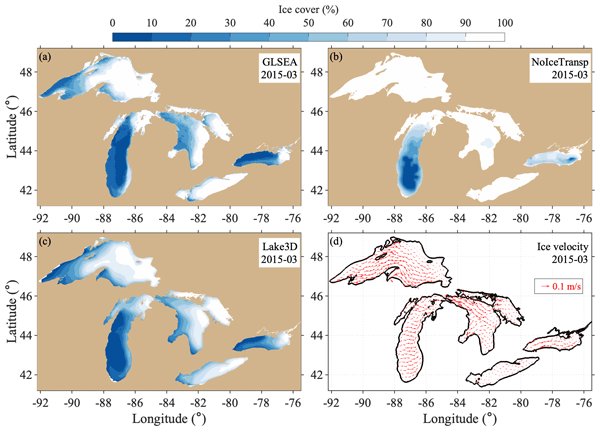
This study introduces a new 3D lake–ice–atmosphere coupled model that significantly improves winter climate simulations for the Great Lakes compared to traditional 1D lake model coupling. The key contribution is the identification of critical hydrodynamic processes – ice transport, heat advection, and shear-driven turbulence production – that influence lake thermal structure and ice cover and explain the superior performance of 3D lake models to their 1D counterparts.
Lara Tobias-Tarsh, Chunyong Jung, Jiali Wang, Vishal Bobde, Akintomide A. Akinsanola, and V. Rao Kotamarthi
EGUsphere, https://doi.org/10.5194/egusphere-2025-1805, https://doi.org/10.5194/egusphere-2025-1805, 2025
Preprint archived
Short summary
Short summary
We use a high-resolution regional climate model to better understand hurricanes in the North Atlantic over the past 20 years. The model closely matches observed storm frequency and captures stronger storms more accurately than traditional datasets. It also shows better performance in areas with limited data, like the Caribbean. These results can help improve local storm preparedness and planning for critical infrastructure.
Huilin Huang, Yun Qian, Gautam Bisht, Jiali Wang, Tirthankar Chakraborty, Dalei Hao, Jianfeng Li, Travis Thurber, Balwinder Singh, Zhao Yang, Ye Liu, Pengfei Xue, William J. Sacks, Ethan Coon, and Robert Hetland
Geosci. Model Dev., 18, 1427–1443, https://doi.org/10.5194/gmd-18-1427-2025, https://doi.org/10.5194/gmd-18-1427-2025, 2025
Short summary
Short summary
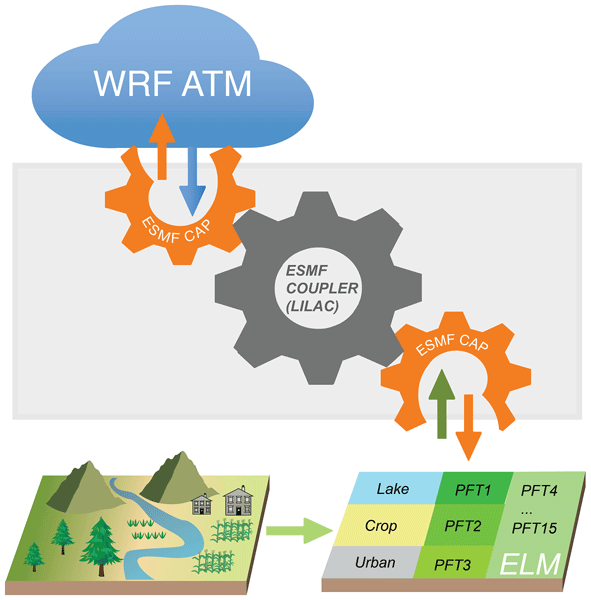
We integrate the E3SM Land Model (ELM) with the WRF model through the Lightweight Infrastructure for Land Atmosphere Coupling (LILAC) Earth System Modeling Framework (ESMF). This framework includes a top-level driver, LILAC, for variable communication between WRF and ELM and ESMF caps for ELM initialization, execution, and finalization. The LILAC–ESMF framework maintains the integrity of the ELM's source code structure and facilitates the transfer of future ELM model developments to WRF-ELM.
Y. Joseph Zhang, Tomas Fernandez-Montblanc, William Pringle, Hao-Cheng Yu, Linlin Cui, and Saeed Moghimi
Geosci. Model Dev., 16, 2565–2581, https://doi.org/10.5194/gmd-16-2565-2023, https://doi.org/10.5194/gmd-16-2565-2023, 2023
Short summary
Short summary
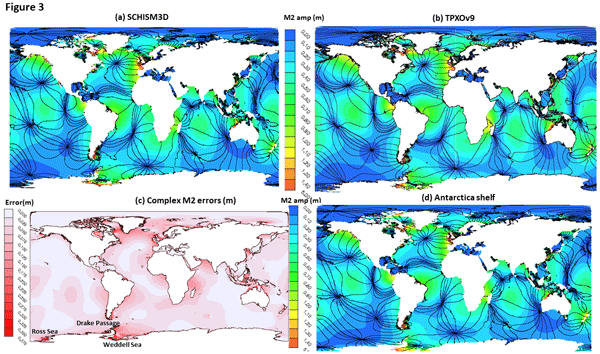
Simulating global ocean from deep basins to coastal areas is a daunting task but is important for disaster mitigation efforts. We present a new 3D global ocean model on flexible mesh to study both tidal and nontidal processes and total water prediction. We demonstrate the potential for
seamlesssimulation, on a single mesh, from the global ocean to a few estuaries along the US West Coast. The model can serve as the backbone of a global tide surge and compound flooding forecasting framework.
Qiuyi Wu, Julie Bessac, Whitney Huang, Jiali Wang, and Rao Kotamarthi
Adv. Stat. Clim. Meteorol. Oceanogr., 8, 205–224, https://doi.org/10.5194/ascmo-8-205-2022, https://doi.org/10.5194/ascmo-8-205-2022, 2022
Short summary
Short summary
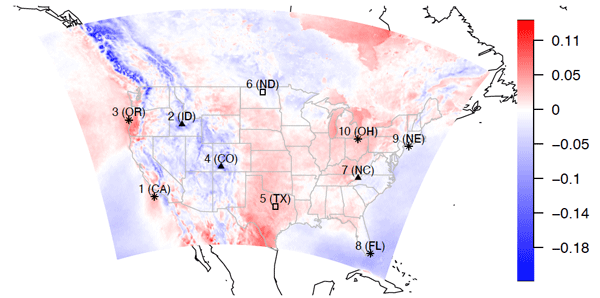
We study wind conditions and their potential future changes across the U.S. via a statistical conditional framework. We conclude that changes between historical and future wind directions are small, but wind speeds are generally weakened in the projected period, with some locations being intensified. Moreover, winter wind speeds are projected to decrease in the northwest, Colorado, and the northern Great Plains (GP), while summer wind speeds over the southern GP slightly increase in the future.
William J. Shaw, Larry K. Berg, Mithu Debnath, Georgios Deskos, Caroline Draxl, Virendra P. Ghate, Charlotte B. Hasager, Rao Kotamarthi, Jeffrey D. Mirocha, Paytsar Muradyan, William J. Pringle, David D. Turner, and James M. Wilczak
Wind Energ. Sci., 7, 2307–2334, https://doi.org/10.5194/wes-7-2307-2022, https://doi.org/10.5194/wes-7-2307-2022, 2022
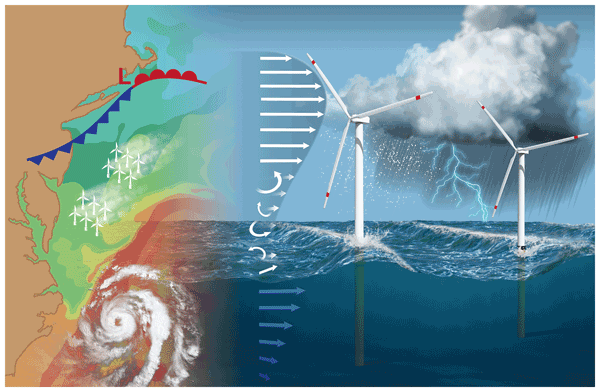
Short summary
Short summary
This paper provides a review of prominent scientific challenges to characterizing the offshore wind resource using as examples phenomena that occur in the rapidly developing wind energy areas off the United States. The paper also describes the current state of modeling and observations in the marine atmospheric boundary layer and provides specific recommendations for filling key current knowledge gaps.
Chuxuan Li, Alexander L. Handwerger, Jiali Wang, Wei Yu, Xiang Li, Noah J. Finnegan, Yingying Xie, Giuseppe Buscarnera, and Daniel E. Horton
Nat. Hazards Earth Syst. Sci., 22, 2317–2345, https://doi.org/10.5194/nhess-22-2317-2022, https://doi.org/10.5194/nhess-22-2317-2022, 2022
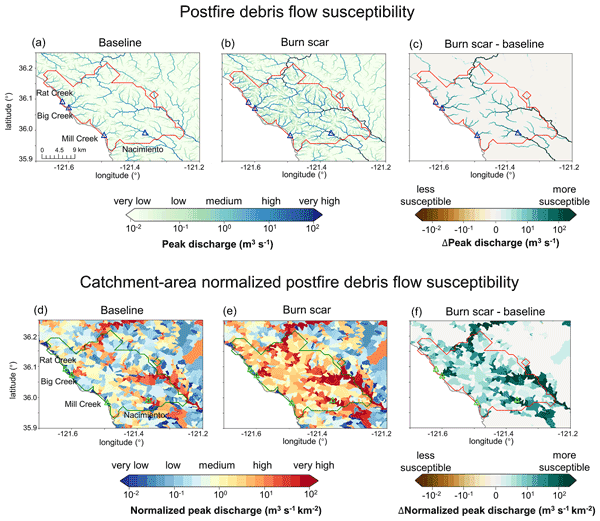
Short summary
Short summary
In January 2021 a storm triggered numerous debris flows in a wildfire burn scar in California. We use a hydrologic model to assess debris flow susceptibility in pre-fire and postfire scenarios. Compared to pre-fire conditions, postfire conditions yield dramatic increases in peak water discharge, substantially increasing debris flow susceptibility. Our work highlights the hydrologic model's utility in investigating and potentially forecasting postfire debris flows at regional scales.
Pengfei Xue, Xinyu Ye, Jeremy S. Pal, Philip Y. Chu, Miraj B. Kayastha, and Chenfu Huang
Geosci. Model Dev., 15, 4425–4446, https://doi.org/10.5194/gmd-15-4425-2022, https://doi.org/10.5194/gmd-15-4425-2022, 2022
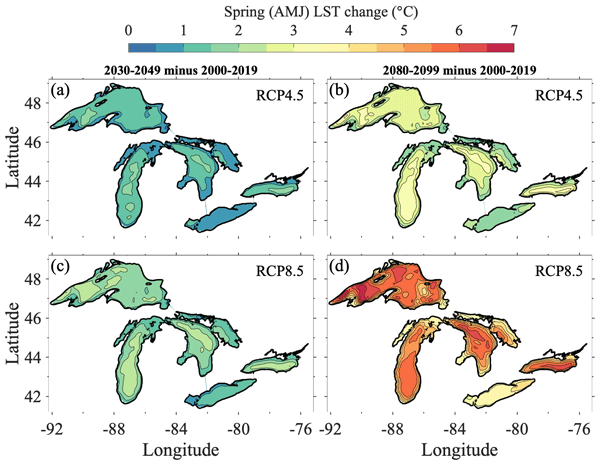
Short summary
Short summary
The Great Lakes are the world's largest freshwater system. They are a key element in regional climate influencing local weather patterns and climate processes. Many of these complex processes are regulated by interactions of the atmosphere, lake, ice, and surrounding land areas. This study presents a Great Lakes climate change projection that employed the two-way coupling of a regional climate model with a 3-D lake model (GLARM) to resolve 3-D hydrodynamics essential for large lakes.
Romit Maulik, Vishwas Rao, Jiali Wang, Gianmarco Mengaldo, Emil Constantinescu, Bethany Lusch, Prasanna Balaprakash, Ian Foster, and Rao Kotamarthi
Geosci. Model Dev., 15, 3433–3445, https://doi.org/10.5194/gmd-15-3433-2022, https://doi.org/10.5194/gmd-15-3433-2022, 2022
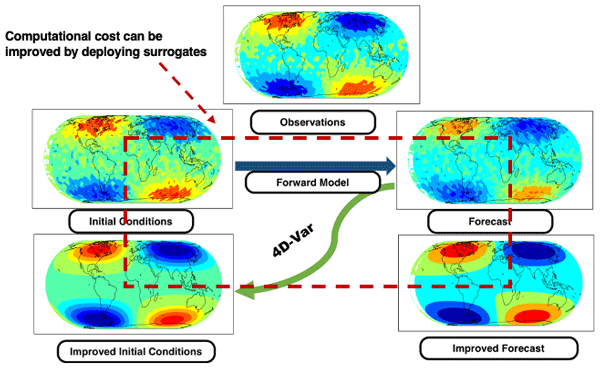
Short summary
Short summary
In numerical weather prediction, data assimilation is frequently utilized to enhance the accuracy of forecasts from equation-based models. In this work we use a machine learning framework that approximates a complex dynamical system given by the geopotential height. Instead of using an equation-based model, we utilize this machine-learned alternative to dramatically accelerate both the forecast and the assimilation of data, thereby reducing need for large computational resources.
Jiali Wang, Zhengchun Liu, Ian Foster, Won Chang, Rajkumar Kettimuthu, and V. Rao Kotamarthi
Geosci. Model Dev., 14, 6355–6372, https://doi.org/10.5194/gmd-14-6355-2021, https://doi.org/10.5194/gmd-14-6355-2021, 2021
Short summary
Short summary
Downscaling, the process of generating a higher spatial or time dataset from a coarser observational or model dataset, is a widely used technique. Two common methodologies for performing downscaling are to use either dynamic (physics-based) or statistical (empirical). Here we develop a novel methodology, using a conditional generative adversarial network (CGAN), to perform the downscaling of a model's precipitation forecasts and describe the advantages of this method compared to the others.
Cited articles
Aijaz, S., Ghantous, M., Babanin, A. V., Ginis, I., Thomas, B., and Wake, G.: Nonbreaking wave-induced mixing in upper ocean during tropical cyclones using coupled hurricane-ocean-wave modeling, J. Geophys. Res.-Oceans, 122, 3939–3963, https://doi.org/10.1002/2016JC012219, 2017.
Akinsanola, A. A., Jung, C., Wang, J., and Kotamarthi, V. R.: Evaluation of precipitation across the contiguous United States, Alaska, and Puerto Rico in multi-decadal convection-permitting simulations, Sci. Rep., 14, 1238, https://doi.org/10.1038/s41598-024-51714-3, 2024.
Arthur, W. C.: A statistical–parametric model of tropical cyclones for hazard assessment, Nat. Hazards Earth Syst. Sci., 21, 893–916, https://doi.org/10.5194/nhess-21-893-2021, 2021.
Barr, B. W. and Chen, S. S.: Impacts of seastate-dependent sea spray heat fluxes on tropical cyclone structure and intensity in fully coupled atmosphere-wave-ocean model simulations, J. Adv. Model. Earth Sy., 17, e2024MS004550, https://doi.org/10.1029/2024MS004550, 2024.
Booij, N., Ris, R. C., and Holthuijsen, L. H.: A third-generation wave model for coastal regions. Part I: Model description and validation, J. Geophys. Res., 104, 7649–7666, https://doi.org/10.1029/98JC02622, 1999.
Charnock, H.: Wind stress on a water surface, Q. J. Roy. Meteor. Soc., 81, 639–640, https://doi.org/10.1002/qj.49708135027, 1955.
Chen, C., Liu, H., and Beardsley, R. C.: An unstructured grid, finite-volume, three-dimensional, primitive equations ocean model: Application to coastal ocean and estuaries, J. Atmos. Ocean. Tech., 20, 159–186, https://doi.org/10.1175/1520-0426(2003)020<0159:AUGFVT>2.0.CO;2, 2003.
Chen, C., Beardsley, R. C., and Cowles, G.: An unstructured grid, finite-volume coastal ocean model: FVCOM user manual, Technical Report SMAST/UMASSD-13-0701, 416 pp., 2013.
Chen, P., Zhang, Z., Li, Y., Ye, R., Li, R., and Song, Z.: The two-parameter Holland pressure model for tropical cyclones, J. Marine Sci. Eng., 12, 92, https://doi.org/10.3390/jmse12010092, 2024.
Chen, S. S., Zhao, W., Donelan, M. A., and Tolman, H. L.: Directional wind–wave coupling in fully coupled atmosphere–wave–ocean models: Results from CBLAST-Hurricane, J. Atmos. Sci., 70, 3198–3215, 2013.
Craig, A., Valcke, S., and Coquart, L.: Development and performance of a new version of the OASIS coupler, OASIS3-MCT_3.0, Geosci. Model Dev., 10, 3297–3308, https://doi.org/10.5194/gmd-10-3297-2017, 2017.
Creasey, R. L. and Elsberry, R. L.: Tropical cyclone center positions from sequences of HDSS sondes deployed along high-altitude overpasses, Weather Forecast., 32, 317–325, https://doi.org/10.1175/WAF-D-16-0096.1, 2017.
Cummings, J. A. and Smedstad, O. M.: Ocean data impacts in global HYCOM, J. Atmos. Ocean. Tech., 31, 1771–1791, https://doi.org/10.1175/JTECH-D-14-00011.1, 2014.
DeMaria, M., Knaff, J. A., and Sampson, C.: Evaluation of long-term trends in tropical cyclone intensity forecasts, Meteorol. Atmos. Phys., 97, 19–28, 2007.
DeMaria, M., Sampson, C. R., Knaff, J. A., and Musgrave, K. D.: Is tropical cyclone intensity guidance improving?, B. Am. Meteorol. Soc., 95, 387–398, https://doi.org/10.1175/bams-d-12-00240.1, 2014.
Donelan, M. A., Haus, B. K., Reul, N., Plant, W. J., Stiassnie, M., Graber, H. C., Brown, O. B., and Saltzman, E. S.: On the limiting aerodynamic roughness of the ocean in very strong winds, Geophys. Res. Lett., 31, L18306, 10.1029/2004GL019460, 2004.
Drennan, W. M., Graber, H. C., Hauser, D., and Quentin, C.: On the wave age dependence of wind stress over pure wind seas, J. Geophys. Res.-Oceans, 108, 8062, https://doi.org/10.1029/2000JC000715, 2003.
Drennan, W. M., Taylor, P. K., and Yelland, M. J.: Parameterizing the sea surface roughness, J. Phys. Oceanogr., 35, 835–848, 2005.
Dyer, A. J. and Hicks, B. B.: Flux-gradient relationships in the constant flux layer, Q. J. Roy. Meteor. Soc., 96, 715–721, 1970.
Emanuel, K. A.: An air-sea interaction model of the tropical cyclones. Part I: Steady-State Maintenance, J. Atmos. Sci., 43, 585–605, https://doi.org/10.1175/1520-0469(1986)043<0585:AASITF>2.0.CO;2, 1986.
Fischer, M. S., Reasor, P. D., Rogers, R. F., and Gamache, J. F.: An analysis of tropical cyclone vortex and convective characteristics in relation to storm intensity using a novel airborne doppler radar database, Mon. Weather Rev., 150, 2255–2278, https://doi.org/10.1175/MWR-D-21-0223.1, 2022.
Gentry, M. A. and Lackmann, G. M.: Sensitivity of simulated tropical cyclone structure and intensity to horizontal resolution, Mon. Weather Rev., 138, 688–704, 2010.
Ghantous, M. and Babanin, A. V.: One-dimensional modelling of upper ocean mixing by turbulence due to wave orbital motion, Nonlin. Processes Geophys., 21, 325–338, https://doi.org/10.5194/npg-21-325-2014, 2014a.
Ghantous, M. and Babanin, A. V.: Ocean mixing by wave orbital motion, Acta Physica Slovaca, 64, 1–57, https://www.researchgate.net/publication/295560300_Ocean_mixing_by_wave_orbital_motion (last access: 14 April 2026), 2014b.
Good, S., Fiedler, E., Mao, C., Martin, M. J., Maycock, A., Reid, R., Roberts-Jones, J., Searle, T., Waters, J., While, J., and Worsfold, M.: The current configuration of the OSTIA system for operational production of foundation sea surface temperature and ice concentration analyses, Remote Sens., 12, 720, https://doi.org/10.3390/rs12040720, 2020.
Hong, S.-Y. and Lim, J.-O.: The WRF single-moment 6-class microphysics scheme (WSM6), J. Korean Meteor. Soc., 42, 129–151, 2006.
Hong, S.-Y., Noh, Y., and Dudhia, J.: A new vertical diffusion package with an explicit treatment of entrainment processes, Mon. Weather Rev., 134, 2318–2341, 2006.
Huang, C., Xue, P., Jung, C., Pringle, W., and Wang, J.: A regional, fully coupled atmosphere–ocean–wave model for the North Atlantic, v1, Zenodo [code], https://doi.org/10.5281/zenodo.19102645, 2026.
Iacono, M. J., Delamere, J. S., Mlawer, E. J., Shephard, M. W., Clough, S. A., and Collins, W. D.: Radiative forcing by long-lived greenhouse gases: Calculations with the AER radiative transfer models, J. Geophys. Res., 113, D13103, https://doi.org/10.1029/2007JD009277, 2008.
IEC: Wind turbines – part 1: Design requirements (No. IEC 61400-1:2019), 2019a.
IEC: Wind turbines – part 3: Design requirements for offshore wind turbines (No. IEC 61400-3-1:2019), 2019b.
Itiki, R., Manjrekar, M., Di Santo, S. G., and Itiki, C.: Method for spatiotemporal wind power generation profile under hurricanes: US-Caribbean super grid proposition, Renewable and Sustainable Energy Reviews, 173, 113082, https://doi.org/10.1016/j.rser.2022.113082, 2023.
Jimenez, P., Dudhia, J., Gonzalez-Ruoco, J. F., Navarro, J., Montavez, J. P., and Garcia-Bustamente, E.: A revised scheme for the WRF surface layer formulation, Mon. Weather Rev., 140, 898–918, 2012.
Knapp, K. R., Kruk, M. C., Levinson, D. H., Diamond, H. J., and Neumann, C. J.: The international best track archive for climate stewardship (IBTrACS) unifying tropical cyclone data, B. Am. Meteorol. Soc., 91, 363–376, 2010.
Komen, G. J., Hasselmann, K., and Hasselmann, S.: On the existence of a fully developed wind-sea spectrum, J. Phys. Oceanogr., 14, 1271–1285, https://doi.org/10.1175/1520-0485(1984)014<1271:OTEOAF>2.0.CO;2, 1984.
Kouadio, K., Bastin, S., Konare, A., and Ajayi, V. O.: Does convection-permitting simulate better rainfall distribution and extreme over Guinean coast and surroundings?, Clim. Dynam., 55, 153–174, https://doi.org/10.1007/s00382-018-4308-y, 2020.
Ma, T. and Sun, C.: Large Eddy Simulation of Combined Wind-wave Loading on Offshore Wind Turbines, arXiv [preprint], arXiv:2310.03407, 2023.
Madsen, O. S., Poon, Y. K., and Graber, H. C.: Spectral wave attenuation by bottom friction: Theory, in: Proceedings of the International Conference on Coastal Engineering, 21, 492–506, 1988.
Mellor, G. L. and Yamada, T.: Development of a turbulence closure model for geophysical fluid problems, Rev. Geophys., 20, 851–875, https://doi.org/10.1029/RG020i004p00851, 1982.
Nakanishi, M. and Niino, H.: Development of an improved turbulence closure model for the atmospheric boundary layer, J. Meteorol. Soc. Jpn., 87, 895–912, https://doi.org/10.2151/jmsj.87.895, 2009.
National Data Buoy Center (NDBC), NOAA: National Data Buoy Center (NDBC) Moored Buoy and C-MAN Station Data, UCAR/NCAR – Earth Observing Laboratory [data set], https://doi.org/10.26023/V640-H29S-MR0S, 2008.
National Centers for Environmental Prediction (NCEP): NCEP GFS 0.25 Degree Global Forecast Grids Historical Archive, Research Data Archive at the National Center for Atmospheric Research, Computational and Information Systems Laboratory [data set], https://doi.org/10.5065/D65D8PWK, 2015.
Olson, J. B., Kenyon, J. S., Angevine, W. M., Brown, J. M., Pagowski, M., and Sušelj, K.: A description of the MYNN-EDMF scheme and coupling to other components in WRF-ARW, NOAA Technical Memorandum OAR GSD No. 61, 37 pp., https://doi.org/10.25923/n9wm-be49, 2019.
Paulson, C. A.: The mathematical representation of wind speed and temperature profiles in the unstable atmospheric surface layer, J. Appl. Meteorol., 9, 857–861, 1970.
Powell, M. D., Vickery, P. J., and Reinhold, T. A.: Reduced drag coefficient for high wind speeds in tropical cyclones, Nature, 422, 279–283, 2003.
Prein, A. F., Langhans, W., Fosser, G., Ferrone, A., Ban, N., Goergen, K., Keller, M., Tölle, M., Gutjahr, O., Feser, F., Brisson, E., Kollet, S., Schmidli, J., van Lipzig, N. P. M., and Leung, R.: A review on regional convection-permitting climate modeling: Demonstrations, prospects, and challenges, Rev. Geophys., 53, 323–361, https://doi.org/10.1002/2014RG000475, 2015.
Pringle, W. J. and Kotamarthi, V. R.: Coupled ocean wave-atmosphere models for offshore wind energy, Argonne National Laboratory, https://doi.org/10.2172/1829093, 2021.
Qing, Y. and Wang, S.: Multi-decadal convection-permitting climate projections for China's Greater Bay Area and surroundings, Clim. Dynam., 57, 415–434, https://doi.org/10.1007/s00382-021-05716-w, 2021.
Rappaport, E. N., Franklin, J. L., Avila, L. A., Baig, S. R., Beven, J. L. II, Blake, E. S., Burr, C. A., Jiing, J.-G., Juckins, C. A., Knabb, R. D., Landsea, C. W., Mainelli, M., Mayfield, M., McAdie, C. J., Pasch, R. J., Sisko, C., Stewart, S. R., and Tribble, A. N.: Advances and challenges at the National Hurricane Center, Weather Forecast., 24, 395–419, 2009.
Roldán, M., Montoya, R. D., Rios, J. D., and Osorio, A. F.: Modified parametric hurricane wind model to improve the asymmetry in the region of maximum winds, Ocean Eng., 280, 114508, https://doi.org/10.1016/j.oceaneng.2023.114508, 2023.
Sanchez Gomez, M., Lundquist, J. K., Mirocha, J. D., and Arthur, R. S.: Investigating the physical mechanisms that modify wind plant blockage in stable boundary layers, Wind Energ. Sci., 8, 1049–1069, https://doi.org/10.5194/wes-8-1049-2023, 2023.
Schade, L. R. and Emanuel, K. A.: The ocean's effect on the intensity of tropical cyclones: Results from a simple coupled atmosphere–ocean model, J. Atmos. Sci., 56, 642–651, 1999.
Shanahan, T. and Fitzgerald, B.: Wind–Wave Misalignment in Irish Waters and Its Impact on Floating Offshore Wind Turbines, Energies, 18, 372, https://doi.org/10.3390/en18020372, 2025.
Shimura, T., Noh, Y., and Hara, T.: Long-term impacts of ocean wave-dependent roughness on global climate systems, J. Geophy. Res.-Oceans, 122, 1995–2011, https://doi.org/10.1002/2016JC012621, 2017.
Skamarock, W. C., Klemp, J. B., Dudhia, J., Gill, D. O., Liu, Z., Berner, J., Wang, W., Powers, J. G., Duda, M. G., and Barker, D. M.: A description of the advanced research WRF model version 4, 145 pp., National Center for Atmospheric Research, 2019.
Smagorinsky, J.: General circulation experiments with the primitive equations, part I: the basic experiment, Mon. Weather Rev., 91, 99–164, 1963.
Smith, A. B.: 2010–2019: A landmark decade of U.S. billion-dollar weather and climate disasters, NOAA, https://www.climate.gov/news-features/blogs/beyond-data (last access: 1 April 2026), 2020.
Sun, X., Xue, M., Brotzge, J., McPherson, R. A., Hu, X.-M., and Yang, X.-Q.: An evaluation of dynamical downscaling of Central Plains summer precipitation using a WRF-based regional climate model at a convection-permitting 4 km resolution, J. Geophys. Res.-Atmos., 121, 13801–13825, https://doi.org/10.1002/2016JD024796, 2016.
Taylor, P. K. and Yelland, M. J.: The dependence of sea surface roughness on the height and steepness of the waves, J. Phys. Oceanogr., 31, 572–590, 2001.
Wada, A. and Usui, N.: Impacts of oceanic preexisting conditions on predictions of Typhoon Hai-Tang in 2005, Adv. Meteorol., 2010, 756071, https://doi.org/10.1155/2010/756071, 2010.
Wang, J.: High-resolution regional atmosphere–ocean–wave coupled simulations of Hurricane Henri (2021), maintained by Wind Data Hub for U.S. Department of Energy, Office of Energy Efficiency and Renewable Energy [data set], https://doi.org/10.21947/3019326, 2026.
Warner, J. C., Armstrong, B., He, R., and Zambon, J. B.: Development of a coupled ocean–atmosphere–wave–sediment transport (COAWST) modeling system, Ocean Model., 35, 230–244, 2010.
Webb, E. K.: Profile relationships: The log-linear range, and extension to strong stability, Q. J. Roy. Meteor. Soc., 96, 67–90, 1970.
Wei, J., Jiang, G. Q., and Liu, X.: Parameterization of typhoon-induced ocean cooling using temperature equation and machine learning algorithms: An example of Typhoon Soulik (2013), Ocean Dynam., 67, 1179–1193, https://doi.org/10.1007/s10236-017-1082-z, 2017.
Wright, C. W., Walsh, E. J., Vandemark, D., Krabill, W. B., Garcia, A. W., Houston, S. H., Powell, M. D., Black, P. G., and Marks, F. D.: Hurricane directional wave spectrum spatial variation in the open ocean, J. Phys. Oceanogr., 31, 2472–2488, 2001.
Wu, L., Rutgersson, A., Sahlée, E., and Guo Larsén, X.: Swell impact on wind stress and atmospheric mixing in a regional coupled atmosphere-wave model, J. Geophys. Res.-Oceans, 121, 4633–4648, https://doi.org/10.1002/2015JC011576, 2016.
Xu, X., Voermans, J. J., Zhang, W., Zhao, B., Qiao, F., Liu, Q., Moon, I.-J., Janekovic, I., Waseda, T., and Babanin, A. V.: Tropical cyclone modeling with the inclusion of wave-coupled processes: sea spray and wave turbulence, Geophys. Res. Lett., 50, e2023GL106536, https://doi.org/10.1029/2023GL106536, 2023.
Yamaguchi, M., Ishida, J., Sato, H., and Nakagawa, M.: WGNE intercomparison of tropical cyclone forecasts by operational nwp models: A quarter century and beyond, B. Am. Meteorol. Soc., 98, 2337–2349, https://doi.org/10.1175/bams-d-16-0133.1, 2017.
Zambon, J. B., He, R., and Warner, J. C.: Investigation of Hurricane Ivan using the coupled ocean–atmosphere–wave–sediment transport (COAWST) model, Ocean Dynam., 64, 1535–1554, https://doi.org/10.1007/s10236-014-0777-7, 2014.
Zambon, J. B., He, R., Warner, J. C., and Hegermiller, C. A.: Impact of SST and surface waves on Hurricane Florence (2018): A coupled modeling investigation, Weather Forecast., 36, 1713–1734, https://doi.org/10.1175/WAF-D-20-0171.1, 2021.
Zhang, J. A. and Marks, F. D.: Effects of horizontal diffusion on tropical cyclone intensity change andXd structure in idealized three-dimensional numerical simulations, Mon. Weather Rev., 143, 3981–3995, https://doi.org/10.1175/mwr-d-14-00341.1, 2015.
Zhang, S., Xu, S., Fu, H., Wu, L., Liu, Z., Gao, Y., Zhao, C., Wan, W., Wan, L., Lu, H., Li, C., Liu, Y., Lv, X., Xie, J., Yu, Y., Gu, J., Wang, X., Zhang, Y., Ning, C., Fei, Y., Guo, X., Wang, Z., Wang, X., Wang, Z., Qu, B., Li, M., Zhao, H., Jiang, Y., Yang, G., Lu, L., Wang, H., An, H., Zhang, X., Zhang, Y., Ma, W., Yu, F., Xu, J., Lin, X., and Shen, X.: Toward earth system modeling with resolved clouds and ocean submesoscales on heterogeneous many-core HPCs, National Sci. Rev., 10, nwad069, https://doi.org/10.1093/nsr/nwad069, 2023.
Zhao, B., Qiao, F., Cavaleri, L., Wang, G., Bertotti, L., and Liu, L.: Sensitivity of typhoon modeling to surface waves and rainfall, J. Geophys. Res.-Oceans, 122, 1702–1723, https://doi.org/10.1002/2016JC012262, 2017.
Zhao, B., Wang, G., Zhang, J. A., Liu, L., Liu, J., Xu, J., Yu, H., Zhao, C., Yu, X., Sun, C., and Qiao, F.: The effects of ocean surface waves on tropical cyclone intensity: Numerical simulations using a regional atmosphere-ocean-wave coupled model, J. Geophys. Res.-Oceans, 127, e2022JC019015, https://doi.org/10.1029/2022JC019015, 2022.
Zhou, X., Hara, T., Ginis, I., D'Asaro, E., and Reichl, B. G.: Evidence of Langmuir mixing effects in the upper ocean layer during tropical cyclones using observations and a coupled wave-ocean model, J. Geophys. Res.-Oceans, 128, e2023JC020062, https://doi.org/10.1029/2023JC020062, 2023.
Short summary
We developed a new modeling system that combines air, ocean, and wave processes to better understand hurricanes. Using Hurricane Henri as a test case, we found that including ocean and wave interactions improves the accuracy of storm intensity and wind patterns. These results show that accounting for these interactions is important for assessing risks to offshore energy systems and coastal regions.
We developed a new modeling system that combines air, ocean, and wave processes to better...


Altmetrics
Final-revised paper
Preprint