Articles | Volume 11, issue 1
https://doi.org/10.5194/wes-11-217-2026
© Author(s) 2026. This work is distributed under
the Creative Commons Attribution 4.0 License.
https://doi.org/10.5194/wes-11-217-2026
© Author(s) 2026. This work is distributed under
the Creative Commons Attribution 4.0 License.
Determining the ideal length of wind speed series for wind speed distribution and resource assessment

Department of Physics and Technology, Faculty of Science and Technology, The Arctic University of Norway, Tromsø, 9010, Norway
Igor Esau
Department of Physics and Technology, Faculty of Science and Technology, The Arctic University of Norway, Tromsø, 9010, Norway
Related authors
Yi Liu, Lihong Zhou, Yingzuo Qin, Cesar Azorin-Molina, Cheng Shen, Rongrong Xu, and Zhenzhong Zeng
Atmos. Meas. Tech., 17, 1123–1131, https://doi.org/10.5194/amt-17-1123-2024, https://doi.org/10.5194/amt-17-1123-2024, 2024
Short summary
Short summary
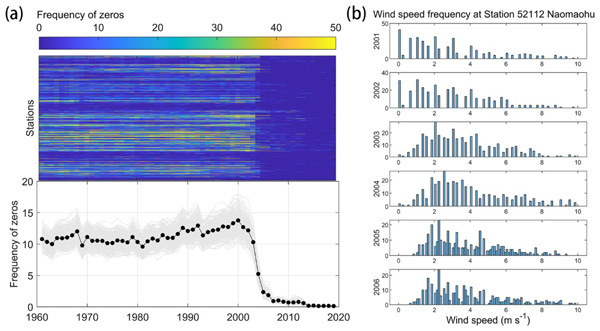
Our research analyzed China's wind speed data and addressed inconsistencies caused by factors like equipment changes and station relocations. After improving data quality, China's recent wind speed decrease reduced by 41 %, revealing an increasing trend. This emphasizes the importance of rigorous data processing for accurate trend assessments in various research fields.
Petra Bauerová, Josef Keder, Adriana Šindelářová, Ondřej Vlček, William Patiño, Pavel Krč, Jan Geletič, Hynek Řezníček, Martin Bureš, Kryštof Eben, Michal Belda, Jelena Radović, Vladimír Fuka, Radek Jareš, Igor Esau, and Jaroslav Resler
Atmos. Chem. Phys., 25, 4477–4504, https://doi.org/10.5194/acp-25-4477-2025, https://doi.org/10.5194/acp-25-4477-2025, 2025
Short summary
Short summary
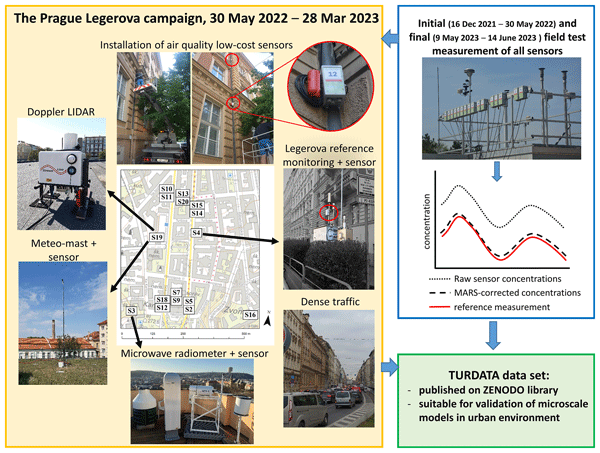
The study explored urban air quality in Prague using low-cost sensors and highlighted the multivariate adaptive regression splines (MARS) correction method's effectiveness in enhancing accuracy. Results showed traffic's impact on nitrogen dioxide levels and atmospheric dynamics on particulate matter. The research confirmed MARS-corrected sensors as cost-effective for monitoring, despite challenges like sensor ageing and data quality control.
Yi Liu, Lihong Zhou, Yingzuo Qin, Cesar Azorin-Molina, Cheng Shen, Rongrong Xu, and Zhenzhong Zeng
Atmos. Meas. Tech., 17, 1123–1131, https://doi.org/10.5194/amt-17-1123-2024, https://doi.org/10.5194/amt-17-1123-2024, 2024
Short summary
Short summary
Our research analyzed China's wind speed data and addressed inconsistencies caused by factors like equipment changes and station relocations. After improving data quality, China's recent wind speed decrease reduced by 41 %, revealing an increasing trend. This emphasizes the importance of rigorous data processing for accurate trend assessments in various research fields.
Hanna K. Lappalainen, Tuukka Petäjä, Timo Vihma, Jouni Räisänen, Alexander Baklanov, Sergey Chalov, Igor Esau, Ekaterina Ezhova, Matti Leppäranta, Dmitry Pozdnyakov, Jukka Pumpanen, Meinrat O. Andreae, Mikhail Arshinov, Eija Asmi, Jianhui Bai, Igor Bashmachnikov, Boris Belan, Federico Bianchi, Boris Biskaborn, Michael Boy, Jaana Bäck, Bin Cheng, Natalia Chubarova, Jonathan Duplissy, Egor Dyukarev, Konstantinos Eleftheriadis, Martin Forsius, Martin Heimann, Sirkku Juhola, Vladimir Konovalov, Igor Konovalov, Pavel Konstantinov, Kajar Köster, Elena Lapshina, Anna Lintunen, Alexander Mahura, Risto Makkonen, Svetlana Malkhazova, Ivan Mammarella, Stefano Mammola, Stephany Buenrostro Mazon, Outi Meinander, Eugene Mikhailov, Victoria Miles, Stanislav Myslenkov, Dmitry Orlov, Jean-Daniel Paris, Roberta Pirazzini, Olga Popovicheva, Jouni Pulliainen, Kimmo Rautiainen, Torsten Sachs, Vladimir Shevchenko, Andrey Skorokhod, Andreas Stohl, Elli Suhonen, Erik S. Thomson, Marina Tsidilina, Veli-Pekka Tynkkynen, Petteri Uotila, Aki Virkkula, Nadezhda Voropay, Tobias Wolf, Sayaka Yasunaka, Jiahua Zhang, Yubao Qiu, Aijun Ding, Huadong Guo, Valery Bondur, Nikolay Kasimov, Sergej Zilitinkevich, Veli-Matti Kerminen, and Markku Kulmala
Atmos. Chem. Phys., 22, 4413–4469, https://doi.org/10.5194/acp-22-4413-2022, https://doi.org/10.5194/acp-22-4413-2022, 2022
Short summary
Short summary
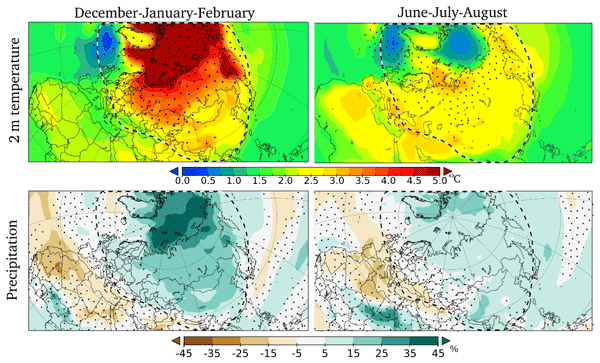
We summarize results during the last 5 years in the northern Eurasian region, especially from Russia, and introduce recent observations of the air quality in the urban environments in China. Although the scientific knowledge in these regions has increased, there are still gaps in our understanding of large-scale climate–Earth surface interactions and feedbacks. This arises from limitations in research infrastructures and integrative data analyses, hindering a comprehensive system analysis.
Tobias Wolf, Lasse H. Pettersson, and Igor Esau
Atmos. Chem. Phys., 21, 12463–12477, https://doi.org/10.5194/acp-21-12463-2021, https://doi.org/10.5194/acp-21-12463-2021, 2021
Short summary
Short summary
House heating by wood-burning stoves is cozy and needed in boreal cities, e.g., Bergen, Norway. But smoke (aerosols) from stoves may reduce urban air quality. It can be transported over long distance excessively polluting some neighborhoods. Who will suffer the most? Our modelling study looks at urban pollution in unprecedented meter-sized details tracing smoke pathways and turbulent dispersion in a typical city. We prototype effective policy scenarios to mitigate urban air quality problems.
Igor Esau, Victoria Miles, Andrey Soromotin, Oleg Sizov, Mikhail Varentsov, and Pavel Konstantinov
Adv. Sci. Res., 18, 51–57, https://doi.org/10.5194/asr-18-51-2021, https://doi.org/10.5194/asr-18-51-2021, 2021
Short summary
Short summary
Persistent warm urban temperature anomalies – urban heat islands – significantly enhance already amplified climate warming in the Arctic. This study presents the surface urban heat islands in all circum-Arctic settlements with more than 3000 inhabitants. It reveals strong and persistent urban temperature anomalies during both summer and winter seasons that vary in different cities from 0.5 °C to more than 6.0 °C.
Cited articles
Ashkenazy, Y. and Yizhaq, H.: The diurnal cycle and temporal trends of surface winds, Earth Planet. Sci. Lett., 601, https://doi.org/10.1016/j.epsl.2022.117907, 2023.
Badger, M., Peña, A., Hahmann, A. N., Mouche, A. A., and Hasager, C. B.: Extrapolating satellite winds to turbine operating heights, J. Appl. Meteorol. Climatol., 55, 975–991, https://doi.org/10.1175/JAMC-D-15-0197.1, 2016.
Barthelmie, R. J. and Pryor, S. C.: Can Satellite Sampling of Offshore Wind Speeds Realistically Represent Wind Speed Distributions?, J. Appl. Meteorol., 42, 83–94, https://doi.org/10.1175/1520-0450(2003)042<0083:CSSOOW>2.0.CO;2, 2003.
Barthelmie, R. J., Grisogono, B., and Pryor, S. C.: Observations and simulations of diurnal cycles of near-surface wind speeds over land and sea, J. Geophys. Res. Atmos., 101, 21327–21337, https://doi.org/10.1029/96jd01520, 1996.
Bolgiani, P., Calvo-Sancho, C., Díaz-Fernández, J., Quitián-Hernández, L., Sastre, M., Santos-Muñoz, D., Farrán, J. I., González-Alemán, J. J., Valero, F., and Martín, M. L.: Wind kinetic energy climatology and effective resolution for the ERA5 reanalysis, Clim. Dyn., 59, 737–752, https://doi.org/10.1007/s00382-022-06154-y, 2022.
Carta, J. A., Ramírez, P., and Velázquez, S.: A review of wind speed probability distributions used in wind energy analysis. Case studies in the Canary Islands, Renew. Sustain. Energy Rev., 13, 933–955, https://doi.org/10.1016/j.rser.2008.05.005, 2009.
Dixon, J. C. and Swift, R. H.: The dependence of wind speed and Weibull characteristics on height for offshore winds, Wind Eng., 87–98, 1984.
Dunn, R. J., Willett, K. M., Parker, D. E., and Mitchell, L.:. Expanding HadISD: Quality-controlled, sub-daily station data from 1931, Geoscientific Instrumentation, Methods and Data Systems, 5, 473–491, 2016.
Dörenkämper, M., Olsen, B. T., Witha, B., Hahmann, A. N., Davis, N. N., Barcons, J., Ezber, Y., García-Bustamante, E., González-Rouco, J. F., Navarro, J., Sastre-Marugán, M., Sīle, T., Trei, W., Žagar, M., Badger, J., Gottschall, J., Sanz Rodrigo, J., and Mann, J.: The Making of the New European Wind Atlas – Part 2: Production and evaluation, Geosci. Model Dev., 13, 5079–5102, https://doi.org/10.5194/gmd-13-5079-2020, 2020.
Effenberger, N., Ludwig, N., and White, R. H.: Mind the (spectral) gap: How the temporal resolution of wind data affects multi-decadal wind power forecasts, Environ. Res. Lett., 19, https://doi.org/10.1088/1748-9326/ad0bd6, 2024.
Gandoin, R. and Garza, J.: Underestimation of strong wind speeds offshore in ERA5: evidence, discussion and correction, Wind Energ. Sci., 9, 1727–1745, https://doi.org/10.5194/wes-9-1727-2024, 2024.
Gil Ruiz, S. A., Barriga, J. E. C., and Martínez, J. A.: Wind power assessment in the Caribbean region of Colombia, using ten-minute wind observations and ERA5 data, Renew. Energy, 172, 158–176, https://doi.org/10.1016/j.renene.2021.03.033, 2021.
Gruber, K., Regner, P., Wehrle, S., Zeyringer, M., and Schmidt, J.: Towards global validation of wind power simulations: A multi-country assessment of wind power simulation from MERRA-2 and ERA-5 reanalyses bias-corrected with the global wind atlas, Energy, 238, 121520, https://doi.org/10.1016/j.energy.2021.121520, 2022.
Hersbach, H., Bell, B., Berrisford, P., Biavati, G., Horányi, A., Muñoz Sabater, J., Nicolas, J., Peubey, C., Radu, R., Rozum, I., Schepers, D., Simmons, A., Soci, C., Dee, D., and Thépaut, J.-N.: ERA5 hourly data on single levels from 1940 to present, Copernicus Climate Change Service (C3S) Climate Data Store (CDS) [data set], https://doi.org/10.24381/cds.adbb2d47, 2018.
Hersbach, H., Bell, B., Berrisford, P., Hirahara, S., Horányi, A., Muñoz-Sabater, J., Nicolas, J., Peubey, C., Radu, R., Schepers, D., Simmons, A., Soci, C., Abdalla, S., Abellan, X., Balsamo, G., Bechtold, P., Biavati, G., Bidlot, J., Bonavita, M., De Chiara, G., Dahlgren, P., Dee, D., Diamantakis, M., Dragani, R., Flemming, J., Forbes, R., Fuentes, M., Geer, A., Haimberger, L., Healy, S., Hogan, R. J., Hólm, E., Janisková, M., Keeley, S., Laloyaux, P., Lopez, P., Lupu, C., Radnoti, G., de Rosnay, P., Rozum, I., Vamborg, F., Villaume, S., and Thépaut, J.-N.: The ERA5 global reanalysis, Q. J. R. Meteorol. Soc., 146, 730, https://doi.org/10.1002/qj.3803, 2020.
International Electrotechnical Commission: Wind energy generation systems – Part 12: Power performance measurements of electricity producing wind turbines – Overview (IEC 61400-12:2022), Int. Electrotech. Comm., https://webstore.iec.ch/en/publication/69211 (last access: 8 January 2026), 2022.
Jung, C. and Schindler, D.: On the inter-annual variability of wind energy generation – A case study from Germany, Appl. Energy, 230, https://doi.org/10.1016/j.apenergy.2018.09.019, 2018.
Jung, C. and Schindler, D.: Wind speed distribution selection – A review of recent development and progress, Renew. Sustain. Energy Rev., 114, 109290, https://doi.org/10.1016/j.rser.2019.109290, 2019.
Khachatrian, E., Asemann, P., Zhou, L., Birkelund, Y., Esau, I., and Ricaud, B.: Exploring the potential of Sentinel-1 Ocean Wind Field Product for near-surface offshore wind assessment in the Norwegian Arctic, Atmosphere, 15, https://doi.org/10.3390/atmos15020146, 2024.
Kotroni, V., Lagouvardos, K., and Lykoudis, S.: High-resolution model-based wind atlas for Greece, Renewable and Sustainable Energy Reviews, 30, 479–489, 2014.
Jaramillo, O. A. and Borja, M. A.: Wind speed analysis in La Ventosa, Mexico: a bimodal probability distribution case, Renewable Energy, 29, 1613–1630, 2004.
Liu, H., Zhang, X., Yan, Z., Yang, Y., Li, Q. A., and Cai, C.: Research on representative engineering applications of anemometer towers location in complex topography wind resource assessment, Energy Engineering: Journal of the Association of Energy Engineers, 120, 163, https://doi.org/10.32604/ee.2022.019927, 2023.
Liu, Y., Zhou, L., Qin, Y., Azorin-Molina, C., Shen, C., Xu, R., and Zeng, Z.: Impacts of anemometer changes, site relocations and processing methods on wind speed trends in China, Atmos. Meas. Tech., 17, 1123–1131, https://doi.org/10.5194/amt-17-1123-2024, 2024.
Mohammadi, K., Alavi, O., Mostafaeipour, A., Goudarzi, N., and Jalilvand, M.: Assessing different parameters estimation methods of Weibull distribution to compute wind power density, Energy Convers. Manag., 108, 322–335, https://doi.org/10.1016/j.enconman.2015.11.015, 2016.
Morgan, E. C., Lackner, M., Vogel, R. M., and Baise, L. G.: Probability distributions for offshore wind speeds, Energy Conversion and Management, 52, 15–26, 2011.
Murthy, K. S. R. and Rahi, O. P.: A comprehensive review of wind resource assessment, Renewable and Sustainable Energy Reviews, 72, 1320–1342, 2017.
Ouarda, T. B. M. J. and Charron, C.: On the mixture of wind speed distribution in a Nordic region, Energy Convers. Manag., 174, 33–44, https://doi.org/10.1016/j.enconman.2018.08.007, 2018.
Pryor, S. C., Barthelmie, R. J., Bukovsky, M. S., Leung, L. R., and Sakaguchi, K.: Climate change impacts on wind power generation, Nat. Rev. Earth Environ., 1, 627–643, https://doi.org/10.1038/s43017-020-0101-7, 2020.
Pryor, S. C., Nielsen, M., Barthelmie, R. J., and Mann, J.: Can Satellite Sampling of Offshore Wind Speeds Realistically Represent Wind Speed Distributions? Part II: Quantifying Uncertainties Associated with Distribution Fitting Methods, J. Appl. Meteorol. Climatol., 43, 739–750, 2004.
Ramon, J., Lledó, L., Torralba, V., Soret, A., and Doblas-Reyes, F. J.: What global reanalysis best represents near-surface winds?, Q. J. R. Meteorol. Soc., 145, 3236–3251, https://doi.org/10.1002/qj.3616, 2019.
Soares, P. M. M., Lima, D. C. A., and Nogueira, M.: Global offshore wind energy resources using the new ERA5 reanalysis, Environ. Res. Lett., 15, https://doi.org/10.1088/1748-9326/abb10d, 2020.
Tammelin, B., Vihma, T., Atlaskin, E., Badger, J., Fortelius, C., Gregow, H., Horttanainen, M., Hyvönen, R., Kilpinen, J., Latikka, J., Ljungberg, K., Mortensen, N. G., Niemelä, S., Ruosteenoja, K., Salonen, K., Suomi, I., and Venäläinen, A.: Production of the Finnish wind atlas, Wind Energy, 16, 19–35, 2013.
Torralba, V., Doblas-Reyes, F. J., and Gonzalez-Reviriego, N.: Uncertainty in recent near-surface wind speed trends: A global reanalysis intercomparison, Environ. Res. Lett., 12, https://doi.org/10.1088/1748-9326/aa8a58, 2017.
Wang, J. W. and Sardeshmukh, P. D.: Inconsistent global kinetic energy spectra in reanalyses and models, J. Atmos. Sci., 78, 2589–2603, 2021.
Wang, J., Hu, J., and Ma, K.: Wind speed probability distribution estimation and wind energy assessment, Renew. Sustain. Energy Rev., 60, 881–899, https://doi.org/10.1016/j.rser.2016.01.057, 2016.
Wang, W., Chen, K., Bai, Y., Chen, Y., and Wang, J.: New estimation method of wind power density with three-parameter Weibull distribution: A case on Central Inner Mongolia suburbs, Wind Energy, 25, 368–386, https://doi.org/10.1002/we.2677, 2022.
Yang, X., Tao, Y., Jin, Y., Ye, B., Ye, F., Duan, W., Xu, R., and Zeng, Z.: Time resolution of wind speed data introduces errors in wind power density assessment, Energy Convers. Manag. X, 24, https://doi.org/10.1016/j.ecmx.2024.100753, 2024.
Zhou, L.: Determining the ideal length of wind speed series for wind speed distribution and resource assessment, Zenodo [code], https://doi.org/10.5281/zenodo.17945145, 2025.
Zhou, L., Zeng, Z., Azorin-Molina, C., Liu, Y., Wu, J., Wang, D., Li, D., Ziegler, A. D., and Dong, L.: A continuous decline of global seasonal wind speed range over land since 1980, J. Clim., 34, https://doi.org/10.1175/JCLI-D-21-0112.1, 2021.
Short summary
How much hourly wind data are enough for reliable resource assessment? Using long-term station records and reconstructed datasets, we test sample sizes and sampling strategies. Means, variability, and Weibull scale converge within a sample size of 1 month of hours, but distribution shape needs far more. Random cross-year sampling reaches a given accuracy with far less data than continuous sampling.
How much hourly wind data are enough for reliable resource assessment? Using long-term station...
Altmetrics
Final-revised paper
Preprint