Articles | Volume 11, issue 8
https://doi.org/10.5194/wes-11-2895-2026
© Author(s) 2026. This work is distributed under
the Creative Commons Attribution 4.0 License.
https://doi.org/10.5194/wes-11-2895-2026
© Author(s) 2026. This work is distributed under
the Creative Commons Attribution 4.0 License.
Wind-tunnel analysis of wake-steering control strategies on a multi-column model wind farm

FLOW, Department of Engineering Mechanics, KTH Royal Institute of Technology, Stockholm, Sweden
Jens Henrik Mikael Fransson
FLOW, Department of Engineering Mechanics, KTH Royal Institute of Technology, Stockholm, Sweden
Antonio Segalini
Department of Earth Sciences, Uppsala University, Uppsala, Sweden
Related authors
No articles found.
Marinos Manolesos, Sandrine Aubrun, Christian Bak, Paolo Bettini, Filippo Campagnolo, Alessandro Croce, Arslan Salim Dar, Michael Hölling, Stefan Ivanell, Konstantinos Kellaris, Miguel Alfonso Mendez, Pierluigi Montinari, Franz Mühle, George Papadakis, Fernardo Porté-Agel, Daniele Ragni, Sebastiano Randino, Andrea Sciacchitano, Lorenzo Schena, Gerard Schepers, Antonio Segalini, Wei Yu, and Carlo Luigi Bottasso
Wind Energ. Sci. Discuss., https://doi.org/10.5194/wes-2026-51, https://doi.org/10.5194/wes-2026-51, 2026
Manuscript not accepted for further review
Short summary
Short summary
As wind turbines grow to unprecedented sizes, ensuring their reliability requires advanced testing. We reviewed the current state of wind tunnel experiments, examining how scaled physical models are evaluated for wind flow, flexibility, and noise. We conclude that while laboratory testing remains essential, it is most powerful when integrated with computer simulations and real-world data. This combined approach will ultimately drive the design of more efficient and sustainable wind energy.
Davide Medici, Arianna Tonna, and Antonio Segalini
Wind Energ. Sci., 11, 723–735, https://doi.org/10.5194/wes-11-723-2026, https://doi.org/10.5194/wes-11-723-2026, 2026
Short summary
Short summary
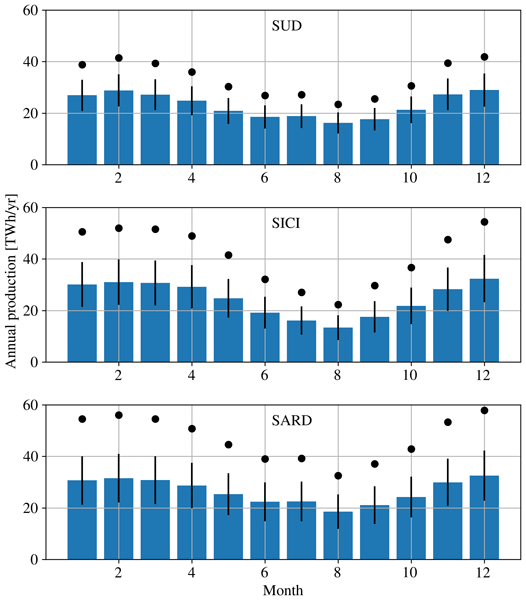
Starting from existing offshore projects in the Mediterranean Sea, we utilized the CERRA (Copernicus European Regional Reanalysis) dataset to analyze historical wind data and applied a genetic algorithm to propose a preliminary layout for a large number of farms. A significant part of our study involves the use of Monte Carlo simulations to project future energy scenarios. These simulations consider various factors, including technical challenges, wind patterns, turbine characteristics, and array efficiency affected by wake effects.
Gabriele Messori, Antonio Segalini, and Alexandre M. Ramos
Earth Syst. Dynam., 15, 1207–1225, https://doi.org/10.5194/esd-15-1207-2024, https://doi.org/10.5194/esd-15-1207-2024, 2024
Short summary
Short summary
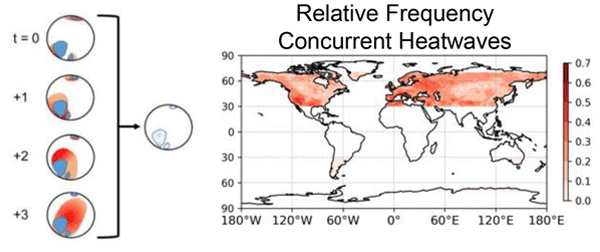
Simultaneous heatwaves or cold spells in remote geographical regions have potentially far-reaching impacts on society and the environment. Despite this, we have little knowledge of when and where these extreme events have occurred in the past decades. In this paper, we present a summary of past simultaneous heatwaves or cold spells and provide a computer program to enable other researchers to study them.
Antonio Segalini, Jacopo Riboldi, Volkmar Wirth, and Gabriele Messori
Weather Clim. Dynam., 5, 997–1012, https://doi.org/10.5194/wcd-5-997-2024, https://doi.org/10.5194/wcd-5-997-2024, 2024
Short summary
Short summary
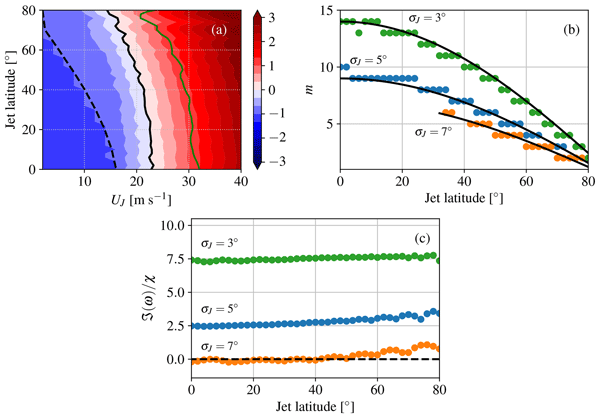
Planetary Rossby waves are created by topography and evolve in time. In this work, an analytical solution of this classical problem is proposed under the approximation of linear wave dynamics. The theory is able to describe reasonably well the evolution of the perturbation and compares well with full nonlinear simulations. Several relevant cases with single and double zonal jets are assessed with the theoretical framework
Cited articles
Bartl, J. and Sætran, L.: Experimental testing of axial induction based control strategies for wake control and wind farm optimization, J. Phys. Conf. Ser., 753, 032035, https://doi.org/10.1088/1742-6596/753/3/032035, 2016. a
Bastankhah, M. and Porté-Agel, F.: A new miniature wind turbine for wind tunnel experiments. Part I: Design and performance, Energies, 10, 908, https://doi.org/10.3390/en10070908, 2017. a, b, c
Bossanyi, E. and Ruisi, R.: Axial induction controller field test at Sedini wind farm, Wind Energ. Sci., 6, 389–408, https://doi.org/10.5194/wes-6-389-2021, 2021. a
Bossuyt, J., Scott, R., Ali, N., and Cal, R. B.: Quantification of wake shape modulation and deflection for tilt and yaw misaligned wind turbines, J. Fluid Mech., 917, https://doi.org/10.1017/jfm.2021.237, 2021. a
Bottema, M.: Urban roughness modelling in relation to pollutant dispersion, Atmos. Env., 31, 3059–3075, 1997. a
Bourhis, M., Pereira, M., Ravelet, F., and Dobrev, I.: Innovative design method and experimental investigation of a small-scale and very low tip-speed ratio wind turbine, Exp. Therm. Fluid Sci., 130, 110504, https://doi.org/10.1016/j.expthermflusci.2021.110504, 2022. a
Burton, T., Jenkins, N., Sharpe, D., and Bossanyi, E.: Wind energy handbook, John Wiley & Sons, https://doi.org/10.1002/9781119992714, 2011. a
Campagnolo, F., Petrović, V., Schreiber, J., Nanos, E. M., Croce, A., and Bottasso, C. L.: Wind tunnel testing of a closed-loop wake deflection controller for wind farm power maximization, J. Phys. Conf. Ser., 753, 032006, https://doi.org/10.1088/1742-6596/753/3/032006, 2016. a, b, c
Clayton, B. R. and Filby, P.: Measured effects of oblique flows and change in blade pitch angle on performance and wake development of model wind turbines, in: Proc. 4th BWEA Wind Energy Conf., BHRA Fluid Eng., Cranfield, Bedford, UK, 214–224, ISBN 0906085713, 1982. a
Counihan, J.: Adiabatic atmospheric boundary layers: A review and analysis of data from the period 1880–1972, J. Atmos. Env., 9, 871–905, https://doi.org/10.1016/0004-6981(75)90088-8, 1975. a, b
Hohman, T. C., Van Buren, T., Martinelli, L., and Smits, A.: Generating an artificially thickened boundary layer to simulate the neutral atmospheric boundary layer, J. Wind Eng. Ind. Aerodyn., 145, 1–16, https://doi.org/10.1016/j.jweia.2015.05.012, 2015. a
Howland, M. F., Bossuyt, J., Martínez-Tossas, L. A., Meyers, J., and Meneveau, C.: Wake structure in actuator disk models of wind turbines in yaw under uniform inflow conditions, J. Ren. Sust. Energy, 8, https://doi.org/10.1063/1.4955091, 2016. a
Howland, M. F., Lele, S. K., and Dabiri, J. O.: Wind farm power optimization through wake steering, P. Natl. Acad. Sci. USA, 116, 14495–14500, 2019. a
Howland, M. F., Quesada, J. B., Martínez, J. J. P., Larrañaga, F. P., Yadav, N., Chawla, J. S., Sivaram, V., and Dabiri, J. O.: Collective wind farm operation based on a predictive model increases utility-scale energy production, Nature Energy, 7, 818–827, 2022. a
International Energy Agency: World Energy Outlook 2024, https://www.iea.org/reports/world-energy-outlook-2024(last access: 24 April 2026), 2024. a
Jiménez, Á., Crespo, A., and Migoya, E.: Application of a LES technique to characterize the wake deflection of a wind turbine in yaw, Wind Energy, 13, 559–572, 2010. a
Lindgren, B. and Johansson, A. V.: Evaluation of the flow quality in the MTL wind-tunnel.Report TRITA-MEK, Dept. of Mechanics, KTH, https://www.mech.kth.se/~oso/papers/MTL_techrep.pdf (last access: 26 April 2026), 2002. a
Mazzeo, F., Micheletto, D., Talamelli, A., and Segalini, A.: An Experimental Study on a Wind Turbine Rotor Affected by Pitch Imbalance, Energies, https://doi.org/10.3390/en15228665, 2022. a
McKay, P., Carriveau, R., and Ting, D. S.-K.: Wake impacts on downstream wind turbine performance and yaw alignment, Wind Energy, 16, 221–234, https://doi.org/10.1002/we.544, 2013. a
Medici, D. and Alfredsson, P. H.: Measurements on a wind turbine wake: 3D effects and bluff body vortex shedding, Wind Energy, 9, 219–236, 2006. a
Meyers, J., Bottasso, C., Dykes, K., Fleming, P., Gebraad, P., Giebel, G., Göçmen, T., and van Wingerden, J.-W.: Wind farm flow control: prospects and challenges, Wind Energ. Sci., 7, 2271–2306, https://doi.org/10.5194/wes-7-2271-2022, 2022. a
Micheletto, D., Fransson, J. H. M., and Segalini, A.: Experimental Study of the Transient Behavior of a Wind Turbine Wake Following Yaw Actuation, Energies, 16, https://doi.org/10.3390/en16135147, 2023a. a
Micheletto, D., Segalini, A., and Fransson, J. H. M.: Experimental analysis of the wake behind a small wind-turbine model in yaw, J. Phys. Conf. Ser., 2505, 012030, https://doi.org/10.1088/1742-6596/2505/1/012030, 2023b. a, b
Micheletto, D., Segalini, A., and Fransson, J. H. M.: Wind tunnel data, Zenodo [data set], https://doi.org/10.5281/zenodo.18872456, 2026. a
Segalini, A. and Inghels, P.: Confinement effects in wind-turbine and propeller measurements, J. Fluid Mech., 756, 110–129, https://doi.org/10.1017/jfm.2014.440, 2014. a
van der Hoek, D., Kanev, S., Allin, J., Bieniek, D., and Mittelmeier, N.: Effects of axial induction control on wind farm energy production-a field test, Renewable Energy, 140, 994–1003, 2019. a
Veers, P., Dykes, K., Lantz, E., Barth, S., Bottasso, C. L., Carlson, O., Clifton, A., Green, J., Green, P., Holttinen, H., Laird, D., Lehtomäki, V., Lundquist, J. K., Manwell, J., Marquis, M., Meneveau, C., Moriarty, P., Munduate, X., Muskulus, M., Naughton, J., Pao, L., Paquette, J., Peinke, J., Robertson, A., Rodrigo, J. S., Sempreviva, A. M., Smith, J. C., Tuohy, A., and Wiser, R.: Grand challenges in the science of wind energy, Science, 366, eaau2027, https://doi.org/10.1126/science.aau2027, 2019. a
Wang, C., Wang, J., Campagnolo, F., Carraón, D. B., and Bottasso, C. L.: Validation of large-eddy simulation of scaled waked wind turbines in different yaw misalignment conditions, J. Phys. Conf. Ser., https://doi.org/10.1088/1742-6596/1037/6/062007, 2018. a, b
Zong, H. and Porté-Agel, F.: Apoint vortex transportation model for yawed wind turbine wakes, J. Fluid Mech., 890, https://doi.org/10.1017/jfm.2020.123, 2020. a
Österlund, J., Johansson, A., Nagib, H., and Hites, M.: A note on the overlap region in turbulent boundary layers, Phys. Fluids, 12, https://doi.org/10.1063/1.870250, 2000. a
Short summary
We conducted wind tunnel experiments on nine wind turbine models and measured their power while intentionally yawing them away from the wind direction. By testing a broad range of yaw-angle combinations, we found that this method can increase the total power output by up to 5.3%. We also observed how different columns of turbines respond uniquely to these changes and how wind speed affects the overall improvement. Our findings could be useful in developing more accurate wind farm control models.
We conducted wind tunnel experiments on nine wind turbine models and measured their power while...
Altmetrics
Final-revised paper
Preprint