Articles | Volume 11, issue 1
https://doi.org/10.5194/wes-11-299-2026
© Author(s) 2026. This work is distributed under
the Creative Commons Attribution 4.0 License.
https://doi.org/10.5194/wes-11-299-2026
© Author(s) 2026. This work is distributed under
the Creative Commons Attribution 4.0 License.
Turbulence distortion matters in predicting inflow turbulence noise of future wind turbines

Department of Flow Physics and Technology, Delft University of Technology, Kluyverweg 1, 2629HS Delft, the Netherlands
Andrea Piccolo
Department of Flow Physics and Technology, Delft University of Technology, Kluyverweg 1, 2629HS Delft, the Netherlands
Riccardo Zamponi
Department of Flow Physics and Technology, Delft University of Technology, Kluyverweg 1, 2629HS Delft, the Netherlands
Environmental and Applied Fluid Dynamics Department, von Karman Institute for Fluid Dynamics, Waterloosesteenweg 72, 1640 Sint-Genesius-Rode, Belgium
Daniele Ragni
Department of Flow Physics and Technology, Delft University of Technology, Kluyverweg 1, 2629HS Delft, the Netherlands
Roberto Merino-Martinez
Department of Control and Operations, Delft University of Technology, Kluyverweg 1, 2629HS Delft, the Netherlands
Related authors
No articles found.
Abhratej Sahoo, Wei Yu, and Daniele Ragni
Wind Energ. Sci. Discuss., https://doi.org/10.5194/wes-2026-7, https://doi.org/10.5194/wes-2026-7, 2026
Preprint under review for WES
Short summary
Short summary
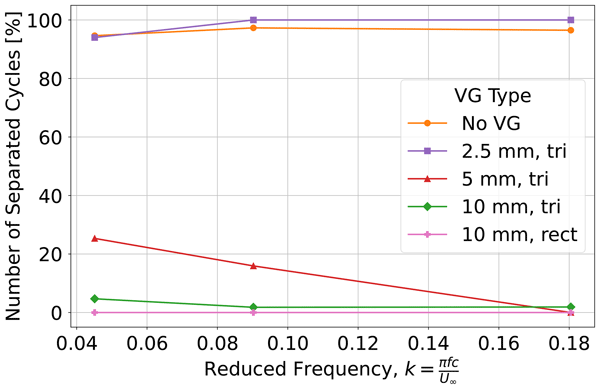
Vortex generators are being used to prevent flow separation and stall on wind turbine blades. Optimal VG designs are chosen from steady investigations, assuming similar separation control characteristics between steady and unsteady conditions. Surface pressure measurements on a thick pitching airfoil with VGs show that VGs larger than the optimal steady size and rectangular VGs instead of the common triangular VGs must be used to consistently prevent unsteady flow separation and dynamic stall.
Abhratej Sahoo, Akshay Koodly Ravishankara, Wei Yu, Daniele Ragni, and Carlos Simao Ferreira
Wind Energ. Sci., 11, 127–154, https://doi.org/10.5194/wes-11-127-2026, https://doi.org/10.5194/wes-11-127-2026, 2026
Short summary
Short summary
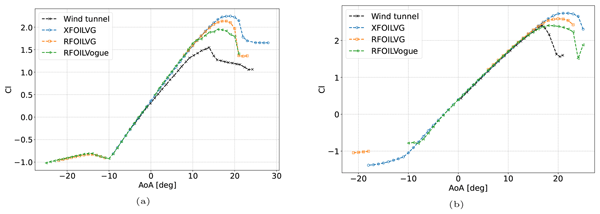
A new model incorporates vortex generator (VG) effects into fast aerodynamic tools like XFOIL and RFOIL. It modifies boundary layer equations and uses empirical functions scaled with VG geometry and Reynolds numbers to implement the modified integral boundary layer equations in RFOIL. The model improves accuracy across airfoils and predicts separation delay, stall delay, lift increase, and added drag, enabling VG effects to be included in wind turbine blade design.
Helena Schmidt, Renatto M. Yupa-Villanueva, Daniele Ragni, Roberto Merino-Martínez, Piet J. R. van Gool, and Roland Schmehl
Wind Energ. Sci., 10, 579–595, https://doi.org/10.5194/wes-10-579-2025, https://doi.org/10.5194/wes-10-579-2025, 2025
Short summary
Short summary
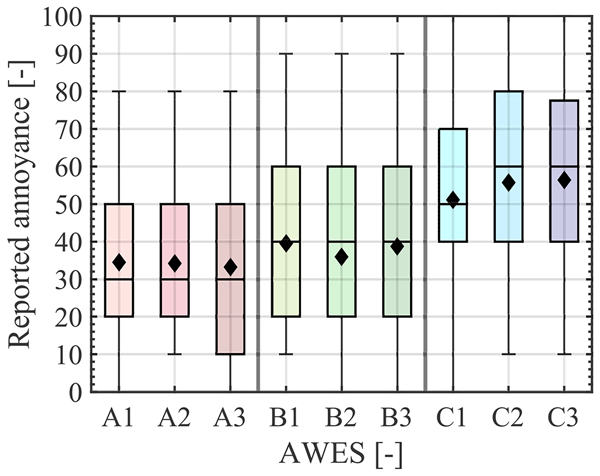
This study investigates noise annoyance caused by airborne wind energy systems (AWESs), a novel wind energy technology that uses kites to harness high-altitude winds. Through a listening experiment with 75 participants, sharpness was identified as the key factor predicting annoyance. Fixed-wing kites generated more annoyance than soft-wing kites, likely due to their sharper, more tonal sound. The findings can help improve AWESs’ designs, reducing noise-related disturbances for nearby residents.
Livia Brandetti, Sebastiaan Paul Mulders, Roberto Merino-Martinez, Simon Watson, and Jan-Willem van Wingerden
Wind Energ. Sci., 9, 471–493, https://doi.org/10.5194/wes-9-471-2024, https://doi.org/10.5194/wes-9-471-2024, 2024
Short summary
Short summary
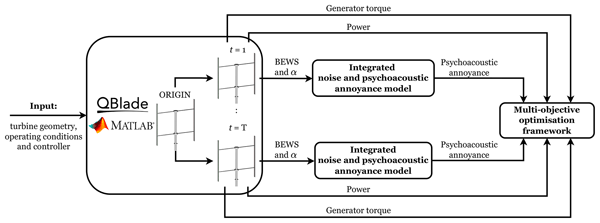
This research presents a multi-objective optimisation approach to balance vertical-axis wind turbine (VAWT) performance and noise, comparing the combined wind speed estimator and tip-speed ratio (WSE–TSR) tracking controller with a baseline. Psychoacoustic annoyance is used as a novel metric for human perception of wind turbine noise. Results showcase the WSE–TSR tracking controller’s potential in trading off the considered objectives, thereby fostering the deployment of VAWTs in urban areas.
Cited articles
Amiet, R.: Acoustic radiation from an airfoil in a turbulent stream, Journal of Sound and Vibration, 41, 407–420, https://doi.org/10.1016/s0022-460x(75)80105-2, 1975. a, b, c
Atassi, H., Subramaniam, S., and Scott, J.: Acoustic radiation from lifting airfoils in compressible subsonic flow, in: 13th Aeroacoustics Conference, American Institute of Aeronautics and Astronautics, https://doi.org/10.2514/6.1990-3911, 1990. a
Batchelor, G. K. and Proudman, I.: The effect of rapid distortion of a fluid in turbulent motion, The Quarterly Journal of Mechanics and Applied Mathematics, 7, 83–103, https://doi.org/10.1093/qjmam/7.1.83, 1954. a, b, c
Blumendeller, E., Kimmig, I., Huber, G., Rettler, P., and Cheng, P. W.: Investigations on low frequency noises of on-shore wind turbines, Acoustics, 2, 343–365, https://doi.org/10.3390/acoustics2020020, 2020. a
Bortolotti, P., Bottasso, C. L., and Croce, A.: Combined preliminary–detailed design of wind turbines, Wind Energ. Sci., 1, 71–88, https://doi.org/10.5194/wes-1-71-2016, 2016. a
Bortolotti, P., Tarrés, H., Dykes, K., Merz, K., Sethuraman, L., Verelst, D., and Zahle, F.: IEA Wind TCP Task 37: Systems engineering in wind energy-WP2.1 reference wind turbines, National Renewable Energy Laboratory (NREL), https://doi.org/10.2172/1529216, 2019. a
Botero-Bolívar, L.: Wind turbine noise prediction, Zenodo [data set], https://doi.org/10.5281/zenodo.8325973, 2023. a, b
Britter, R. E., Hunt, J. C. R., and Mumford, J. C.: The distortion of turbulence by a circular cylinder, J. Fluid Mech., 92, 269–301, https://doi.org/10.1017/s0022112079000628, 1979. a, b
Buck, S., Oerlemans, S., and Palo, S.: Experimental characterization of turbulent inflow noise on a full-scale wind turbine, Journal of Sound and Vibration, 385, 219–238, https://doi.org/10.1016/j.jsv.2016.09.010, 2016. a, b
Buck, S., Oerlemans, S., and Palo, S.: Experimental validation of a wind turbine turbulent inflow Noise prediction code, AIAA Journal, 56, 1495–1506, https://doi.org/10.2514/1.j056134, 2018. a, b, c
Caboni, M., Boorsma, K., and Kanev, S.: Development of thick airfoils for outboard sections and investigation into their application for large rotors, Wind Engineering, 42, 177–193, https://doi.org/10.1177/0309524x17736480, 2017. a
Canet, H., Bortolotti, P., and Bottasso, C. L.: On the scaling of wind turbine rotors, Wind Energ. Sci., 6, 601–626, https://doi.org/10.5194/wes-6-601-2021, 2021. a
Christophe, J.: Application of hybrid methods to high frequency aeroacoustics, Phd thesis, von Karman Institute for Fluid Dynamics, 2011. a
Christophe, J., Buckingham, S., Schram, C., and Oerlemans, S.: zEPHYR – Large on shore wind turbine benchmark, Zenodo [data set], https://doi.org/10.5281/zenodo.6380878, 2022. a, b
Darwin, C.: Note on hydrodynamics, in: Mathematical Proceedings of the Cambridge Philosophical Society, Cambridge University Press, 49, 342–354, 1953. a
Davy, J. L., Burgemeister, K., and Hillman, D.: Wind turbine sound limits: Current status and recommendations based on mitigating noise annoyance, Applied Acoustics, 140, 288–295, https://doi.org/10.1016/j.apacoust.2018.06.009, 2018. a
Delft High Performance Computing Centre (DHPC): DelftBlue Supercomputer (Phase 2), https://www.tudelft.nl/dhpc/ark:/44463/DelftBluePhase2 (last access: 26 January 2026), 2024. a
Devenport, W. J., Staubs, J. K., and Glegg, S. A.: Sound radiation from real airfoils in turbulence, Journal of Sound and Vibration, 329, 3470–3483, https://doi.org/10.1016/j.jsv.2010.02.022, 2010. a
dos Santos, F. L., Botero-Bolívar, L., Venner, C. H., and de Santana, L. D.: Inflow turbulence distortion for airfoil leading-edge noise prediction for large turbulence length scales for zero-mean loading, The Journal of the Acoustical Society of America, 153, 1811–1822, https://doi.org/10.1121/10.0017458, 2023. a
dos Santos, F. L., Botero-Bolívar, L., Vennner, K., and De Santana, L. D.: A new approach to account for turbulence distortion effect on Amiet’s leading-edge noise prediction, INTER-NOISE and NOISE-CON Congress and Conference Proceedings, 270, 4340–4351, https://doi.org/10.3397/in_2024_3447, 2024. a
Faria, A. M., Saab, J. Y., Rodriguez, S., and de Mattos Pimenta, M.: A rapid distortion theory-based airfoil turbulent inflow noise prediction method, Journal of the Brazilian Society of Mechanical Sciences and Engineering, 42, https://doi.org/10.1007/s40430-020-02468-2, 2020. a, b
Fleming, P., Gebraad, P., van Wingerden, J. W., Lee, S., Churchfield, M., Scholbrock, A., Michalakes, J., Johnson, K., and Moriarty, P.: SOWFA Super-Controller: A high-fidelity tool for evaluating wind plant control approaches, National Renewable Energy Lab. (NREL), Golden, CO (United States), https://doi.org/10.2172/1090162, 2013. a, b
Ghate, A. S., Ghaisas, N., Lele, S. K., and Towne, A.: Interaction of small scale Homogenenous Isotropic Turbulence with an Actuator Disk, in: 2018 Wind Energy Symposium, American Institute of Aeronautics and Astronautics, https://doi.org/10.2514/6.2018-0753, 2018. a, b, c
Gill, J., Zhang, X., and Joseph, P.: Symmetric airfoil geometry effects on leading edge noise, The Journal of the Acoustical Society of America, 134, 2669–2680, https://doi.org/10.1121/1.4818769, 2013. a
Glegg, S. and Devenport, W.: Aeroacoustics of low Mach number flows: fundamentals, analysis, and measurement, Academic Press, ISBN 978-0-12-809651-2, https://doi.org/10.1016/B978-0-12-809651-2.09991-4, 2017. a, b, c, d
Global, S.: SANY renewable energy successfully installs the 15-MW onshore wind turbine, https://www.sanyglobal.com/press_releases/3922/#:~:text=On October8%2C a 15,for long%2Ddistance land transportation (last access: 9 October 2025), 2024. a
Global Wind Energy Council: Global Wind Report 2024, https://www.gwec.net/reports/globalwindreport/2024 (last access: 9 October 2025), April 2024. a
Goldstein, M. E.: Unsteady vortical and entropic distortions of potential flows round arbitrary obstacles, J. Fluid Mech., 89, 433–468, https://doi.org/10.1017/s0022112078002682, 1978. a, b
Graham, J. M. R.: Similarity rules for thin aerofoils in non-stationary subsonic flows, J. Fluid Mech., 43, 753–766, https://doi.org/10.1017/s0022112070002719, 1970. a
Graham, J. M. R.: Rapid distortion of turbulence into an open turbine rotor, J. Fluid Mech., 825, 764–794, https://doi.org/10.1017/jfm.2017.400, 2017. a
Hunt, J. C. R.: A theory of turbulent flow round two-dimensional bluff bodies, J. Fluid Mech., 61, 625–706, https://doi.org/10.1017/s0022112073000893, 1973. a, b, c
Kale, B.: ABL simulations with uncertain weather parameters and impact on WT performance and near-field noise, Ph.D. thesis, Universidad Politécnica de Madrid – University Library, https://doi.org/10.20868/upm.thesis.80430, 2024. a
Kirkegaard, J. K., Cronin, T. H., Nyborg, S., and Frantzen, D. N.: The multiple understandings of wind turbine noise: reviewing scientific attempts at handling uncertainty, Wind Energ. Sci., 10, 907–924, https://doi.org/10.5194/wes-10-907-2025, 2025. a
Lahoz, M., Nabhani, A., Saemian, M., and Bergada, J. M.: Wind turbine enhancement via active flow control implementation, Appl. Sci., 14, 11404, https://doi.org/10.3390/app142311404, 2024. a
Leloudas, G.: Optimization of wind turbines with respect to noise, Master's thesis, Technical University of Denmark, MSc thesis, http://outer.space.dtu.dk/~giorgos/images/giorgosleloudas2006.pdf (last access: 26 January 2026), 2006. a
Lighthill, M. J.: Drift, J. Fluid Mech., 1, 31–53, https://doi.org/10.1017/s0022112056000032, 1956. a, b
Lowson, M. V.: Assessment and prediction of wind turbine noise, Tech. rep., Flow Solutions Ltd., Bristol (UK), 1993. a
Majumdar, S. J. and Peake, N.: Noise generation by the interaction between ingested turbulence and a rotating fan, J. Fluid Mech., 359, 181–216, https://doi.org/10.1017/s0022112097008318, 1998. a, b
Milne, I. A. and Graham, J. M. R.: Turbulence velocity spectra and intensities in the inflow of a turbine rotor, J. Fluid Mech., 870, https://doi.org/10.1017/jfm.2019.339, 2019. a, b, c, d
Mish, P. F. and Devenport, W. J.: An experimental investigation of unsteady surface pressure on an airfoil in turbulence – Part 1: Effects of mean loading, Journal of Sound and Vibration, 296, 417–446, https://doi.org/10.1016/j.jsv.2005.08.008, 2006. a, b
Moreau, S. and Roger, M.: Effect of angle of attack and airfoil shape on turbulence-interaction noise, in: 11th AIAA/CEAS Aeroacoustics Conference, American Institute of Aeronautics and Astronautics, https://doi.org/10.2514/6.2005-2973, 2005. a, b
Moriarty, P. and Migliore, P.: Semi-empirical aeroacoustic noise prediction code for wind turbines, Tech. rep., National Renewable Energy Laboratory, https://doi.org/10.2172/15006098, 2003. a
Moriarty, P., Guidati, G., and Migliore, P.: Prediction of turbulent inflow and trailing-edge noise for wind turbines, in: 11th AIAA/CEAS Aeroacoustics Conference, American Institute of Aeronautics and Astronautics, https://doi.org/10.2514/6.2005-2881, 2005. a
Møller, H. and Pedersen, C. S.: Low-frequency noise from large wind turbines, The Journal of the Acoustical Society of America, 129, 3727–3744, https://doi.org/10.1121/1.3543957, 2011. a
Oerlemans, S., Sijtsma, P., and Méndez López, B.: Location and quantification of noise sources on a wind turbine, Journal of Sound and Vibration, 299, 869–883, https://doi.org/10.1016/j.jsv.2006.07.032, 2007. a, b
Paterson, R. and Amiet, R.: Acoustic radiation and surface pressure characteristics of an airfoil due to incident turbulence, in: 3rd Aeroacoustics Conference, American Institute of Aeronautics and Astronautics, https://doi.org/10.2514/6.1976-571, 1976. a
Piccolo, A., Zamponi, R., Avallone, F., and Ragni, D.: Turbulence-distortion analysis for leading-edge noise-prediction enhancement, in: AIAA AVIATION 2023 Forum, American Institute of Aeronautics and Astronautics, https://doi.org/10.2514/6.2023-3628, 2023. a
Piccolo, A., Zamponi, R., Avallone, F., and Ragni, D.: Turbulence distortion and leading-edge noise, Phys. Fluids, 36, https://doi.org/10.1063/5.0244627, 2024. a
Piccolo, A., Zamponi, R., Avallone, F., and Ragni, D.: Modification of Amiet’s model for turbulence-ingestion noise prediction in rotors, The Journal of the Acoustical Society of America, 158, 461–475, https://doi.org/10.1121/10.0037185, 2025. a
Piccolo, A., Zamponi, R., Avallone, F., and Ragni, D.: Turbulence-distortion modelling for Amiet’s theory enhancement, Journal of Sound and Vibration, 624, 119503, https://doi.org/10.1016/j.jsv.2025.119503, 2026. a
Rogers, A. L. and Manwell, J. F.: Wind turbine noise issues, Tech. rep., Renewable Energy Research Laboratory, University of Massachusetts, Amherst, 2004. a
Saab, J. Y., de Mattos Pimenta, M., Faria, A. M., and Rodriguez, S.: Determination of local flow conditions and preliminary investigation on the validity of the PNoise code for large-size wind turbine, Journal of the Brazilian Society of Mechanical Sciences and Engineering, 40, https://doi.org/10.1007/s40430-018-1412-1, 2018. a
Santana, L. D., Christophe, J., Schram, C., and Desmet, W.: A rapid distortion theory modified turbulence spectra for semi-analytical airfoil noise prediction, Journal of Sound and Vibration, 383, 349–363, https://doi.org/10.1016/j.jsv.2016.07.026, 2016. a, b, c, d
Santos, F. L. d., Venner, C. H., and de Santana, L. D.: Comparability of inflow turbulence distortion for airfoil and cylinder, AIAA Journal, 62, 842–847, https://doi.org/10.2514/1.J063122, 2024. a
Schaffarczyk, A. P., Lobo, B. A., Balaresque, N., Kremer, V., Suhr, J., and Wang, Z.: Development and measurement of a very thick aerodynamic profile for wind turbine blades, Wind, 4, 190–207, https://doi.org/10.3390/wind4030010, 2024. a, b
Tian, Y., Cotté, B., and Chaigne, A.: Wind turbine noise modelling based on Amiet's theory, in: Proceedings of the 5th International Meeting on Wind Turbine Noise, pp. CD–ROM proceedings, Denver, CO, United States, https://ensta.hal.science/hal-00975237 (last access: 26 January 2026), 2013. a
Timmer, W. and Bak, C.: Aerodynamic characteristics of wind turbine blade airfoils, in: Advances in Wind Turbine Blade Design and Materials, Woodhead Publishing Series in Energy, 109–149, Woodhead Publishing, ISBN 978-0-85709-426-1, https://doi.org/10.1533/9780857097286.1.109, 2013. a, b, c
Veers, P., Dykes, K., Lantz, E., Barth, S., Bottasso, C. L., Carlson, O., Clifton, A., Green, J., Green, P., Holttinen, H., Laird, D., Lehtomäki, V., Lundquist, J. K., Manwell, J., Marquis, M., Meneveau, C., Moriarty, P., Munduate, X., Muskulus, M., Naughton, J., Pao, L., Paquette, J., Peinke, J., Robertson, A., Sanz Rodrigo, J., Sempreviva, A. M., Smith, J. C., Tuohy, A., and Wiser, R.: Grand challenges in the science of wind energy, Science, 366, eaau2027, https://doi.org/10.1126/science.aau2027, 2019. a, b
Wind Europe: Wind energy in Europe: 2024 Statistics and the outlook for 2025–2030, https://windeurope.org/data/products/wind-energy-in-europe-2024-statistics-and-the-outlook-for-2025-2030 (last access: 9 October 2025), February 2025. a
Yalçın, Ö. and Piccolo, A.: Amiet-RDT MATLAB Tool for Inflow Turbulence Noise Prediction in Wind Turbines (v1.0.0), Zenodo [code], https://doi.org/10.5281/zenodo.18198345, 2026. a
Zamponi, R., Satcunanathan, S., Moreau, S., Ragni, D., Meinke, M., Schröder, W., and Schram, C.: On the role of turbulence distortion on leading-edge noise reduction by means of porosity, Journal of Sound and Vibration, 485, 115561, https://doi.org/10.1016/j.jsv.2020.115561, 2020. a
Zamponi, R., Moreau, S., and Schram, C.: Rapid distortion theory of turbulent flow around a porous cylinder, J. Fluid Mech., 915, https://doi.org/10.1017/jfm.2021.8, 2021. a
Zhou, T., Cao, H., Zhang, M., and Liao, C.: Performance simulation of wind turbine with optimal designed trailing-edge serrations, Energy, 243, 122998, https://doi.org/10.1016/j.energy.2021.122998, 2022. a
Short summary
This study, a part of the Blade Extensions for Silent Turbines project, explores how turbulent airflows affect the noise generated by large onshore wind turbines. Using advanced simulations and an analytical model, we show that as turbine blades grow larger and thicker, turbulence behaves differently near the blade, changing how noise scales. These insights help to design quieter, more efficient next-generation wind turbines.
This study, a part of the Blade Extensions for Silent Turbines project, explores how turbulent...
Altmetrics
Final-revised paper
Preprint