
Articles | Volume 11, issue 9
https://doi.org/10.5194/wes-11-3401-2026
© Author(s) 2026. This work is distributed under
the Creative Commons Attribution 4.0 License.
the Creative Commons Attribution 4.0 License.
https://doi.org/10.5194/wes-11-3401-2026
© Author(s) 2026. This work is distributed under
the Creative Commons Attribution 4.0 License.
the Creative Commons Attribution 4.0 License.
Research article
| 
11 Sep 2026
Research article |
| 11 Sep 2026
| 11 Sep 2026
Dynamics of floating-wind-turbine wakes in a wind tunnel setup
Ricardo Amaral
CORRESPONDING AUTHOR

Delft University of Technology, Wind Energy Section, Kluyverweg 1, 2629 HS Delft, the Netherlands
Felix Houtin-Mongrolle
Siemens Gamesa Renewable Energy (SGRE), Prinses Beatrixlaan 800, 2595 BN The Hague, the Netherlands
Dominic von Terzi
Delft University of Technology, Wind Energy Section, Kluyverweg 1, 2629 HS Delft, the Netherlands
Kasper Laugesen
Siemens Gamesa Renewable Energy (SGRE), Borupvej 16, 7330 Brande, Denmark
Paul Deglaire
Siemens Gamesa Renewable Energy (SGRE), Avenue de l'Université C/O INSA Rouen – BP 08, 76800 Saint Étienne de Rouvray, France
Axelle Viré
Delft University of Technology, Wind Energy Section, Kluyverweg 1, 2629 HS Delft, the Netherlands
Related authors
Ricardo Amaral, Felix Houtin-Mongrolle, Dominic von Terzi, Kasper Laugesen, Paul Deglaire, and Axelle Viré
Wind Energ. Sci. Discuss., https://doi.org/10.5194/wes-2025-34, https://doi.org/10.5194/wes-2025-34, 2025
Manuscript not accepted for further review
Short summary
Short summary
This work uses simulations to investigate floating offshore wind turbines which have the potential to supply the world's electricity demand many times by 2040. In particular, the effect of the rotor motion on the wake was investigated by forcing the turbine to move under different motions and the results highlight differences between motions. While some motions led to a wake behavior that was close to that of a fixed-bottom turbine, other motions produced a remarkably different wake structure.
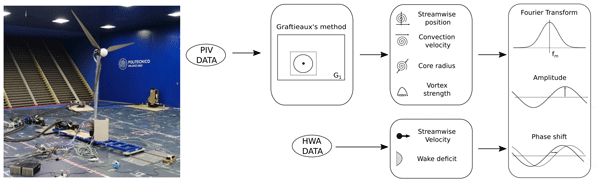
Stefano Cioni, Francesco Papi, Leonardo Pagamonci, Alessandro Bianchini, Néstor Ramos-García, Georg Pirrung, Rémi Corniglion, Anaïs Lovera, Josean Galván, Ronan Boisard, Alessandro Fontanella, Paolo Schito, Alberto Zasso, Marco Belloli, Andrea Sanvito, Giacomo Persico, Lijun Zhang, Ye Li, Yarong Zhou, Simone Mancini, Koen Boorsma, Ricardo Amaral, Axelle Viré, Christian W. Schulz, Stefan Netzband, Rodrigo Soto-Valle, David Marten, Raquel Martín-San-Román, Pau Trubat, Climent Molins, Roger Bergua, Emmanuel Branlard, Jason Jonkman, and Amy Robertson
Wind Energ. Sci., 8, 1659–1691, https://doi.org/10.5194/wes-8-1659-2023, https://doi.org/10.5194/wes-8-1659-2023, 2023
Short summary
Short summary
Simulations of different fidelities made by the participants of the OC6 project Phase III are compared to wind tunnel wake measurements on a floating wind turbine. Results in the near wake confirm that simulations and experiments tend to diverge from the expected linearized quasi-steady behavior when the reduced frequency exceeds 0.5. In the far wake, the impact of platform motion is overestimated by simulations and even seems to be oriented to the generation of a wake less prone to dissipation.
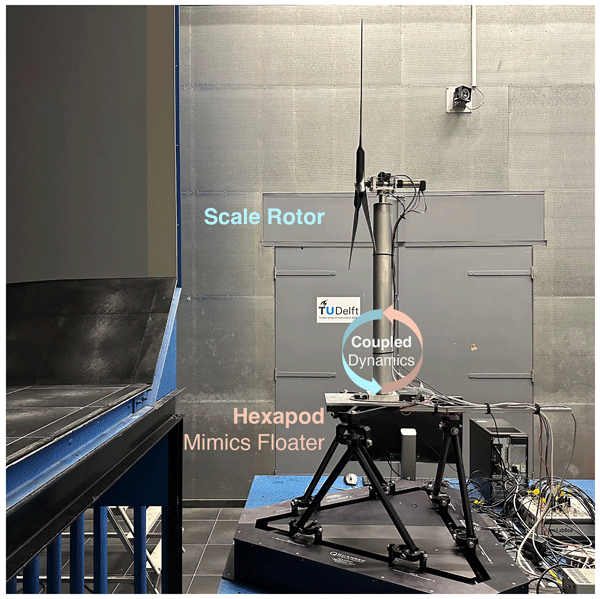
Federico Taruffi and Axelle Viré
Wind Energ. Sci., 11, 839–860, https://doi.org/10.5194/wes-11-839-2026, https://doi.org/10.5194/wes-11-839-2026, 2026
Short summary
Short summary
Floating wind turbines are subject to complex aerodynamics that are not yet fully understood. Lab-scale experiments are crucial for capturing these phenomena and validating numerical tools, but due to the different physics, this is difficult with traditional approaches. This paper presents a new, hybrid wind tunnel experimental setup capable of reproducing the coupled aerodynamic and motion response of floating wind turbines.
Simone Chellini, Delphine De Tavernier, and Dominic von Terzi
Wind Energ. Sci., 11, 753–769, https://doi.org/10.5194/wes-11-753-2026, https://doi.org/10.5194/wes-11-753-2026, 2026
Short summary
Short summary
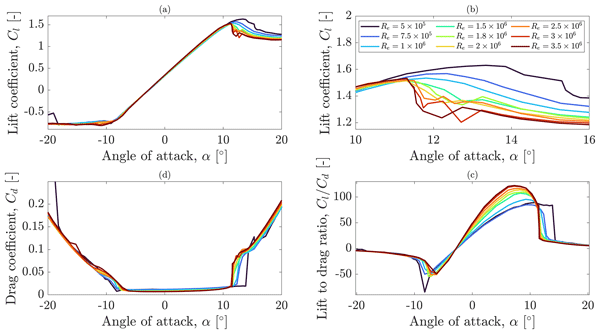
The growing interest in high-velocity physics justifies research into new experimental aerodynamics. Our work provides the knowledge foundations for the next generation of large wind turbine rotors, investigating the FFA-W3-211 airfoil. We highlight airfoil-dependent static and dynamic results from a large-scale wind tunnel experiment. The results delve into the force enhancement due to dynamic oscillations, broken down by Reynolds number and reduced frequency.
Maria Cristina Vitulano, Delphine De Tavernier, Giuliano De Stefano, and Dominic von Terzi
Wind Energ. Sci., 11, 643–660, https://doi.org/10.5194/wes-11-643-2026, https://doi.org/10.5194/wes-11-643-2026, 2026
Short summary
Short summary
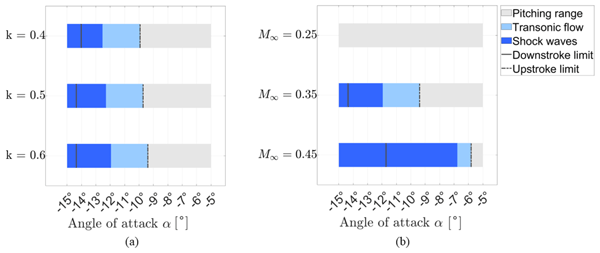
Wind turbines are increasing in size, pushing blade tips to operate at high speeds. This study employs numerical simulations to investigate the unsteady aerodynamic response of a wind turbine airfoil to angle-of-attack changes across the transonic flow threshold. By varying reduced frequency and inflow Mach number, the analysis reveals the impact of compressibility on aerodynamic performance, including a hysteresis effect, which highlights its importance in the design of next-generation rotors.
Evert Ivo Wiegant, Delphine de Tavernier, and Axelle Viré
Wind Energ. Sci. Discuss., https://doi.org/10.5194/wes-2025-276, https://doi.org/10.5194/wes-2025-276, 2025
Preprint under review for WES
Short summary
Short summary
As flow passes over a wing (or a wind turbine blade), a "bound vortex" forms around it. In this work, we describe this vortex as it appears in a type of computer simulation. We use this description to address two problems in literature; to find the correct velocity near the wing (as it is sampled) and to indicate when a simulation appropriately represents the relevant physical phenomena (related to convergence). This work provides understanding of such simulations and means to make them cheaper.
Abhyuday Aditya, Maria Cristina Vitulano, Delphine De Tavernier, Ferdinand Schrijer, Bas van Oudheusden, and Dominic von Terzi
Wind Energ. Sci., 10, 2925–2946, https://doi.org/10.5194/wes-10-2925-2025, https://doi.org/10.5194/wes-10-2925-2025, 2025
Short summary
Short summary
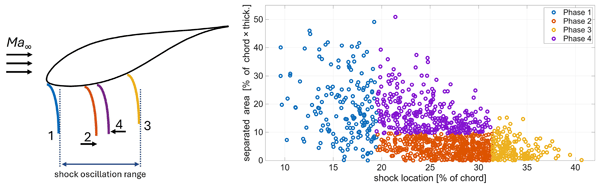
This study is the first to experimentally test how wind turbine blades behave at near-supersonic speeds, a condition expected in the largest turbines. In the experiments, we observed unstable and potentially detrimental shock waves that become stronger at higher speeds and angles. Basic prediction tools in wind turbine design miss these details, highlighting the need for better tools and experiments to understand the extreme conditions faced by modern wind turbines.
Deepali Singh, Erik Haugen, Kasper Laugesen, Richard P. Dwight, and Axelle Viré
Wind Energ. Sci., 10, 2865–2888, https://doi.org/10.5194/wes-10-2865-2025, https://doi.org/10.5194/wes-10-2865-2025, 2025
Short summary
Short summary
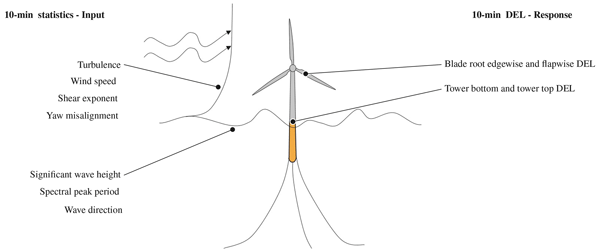
We developed a fast, probabilistic surrogate model to predict fatigue loads on floating wind turbines based on site conditions. Unlike traditional methods, our approach directly uses site data, avoiding complex binning or distribution fitting. A mixture density network is used to capture uncertainties and enables quick lifetime fatigue estimates.
Arjun Anantharaman, Jörge Schneemann, Frauke Theuer, Laurent Beaudet, Valentin Bernard, Paul Deglaire, and Martin Kühn
Wind Energ. Sci., 10, 1849–1867, https://doi.org/10.5194/wes-10-1849-2025, https://doi.org/10.5194/wes-10-1849-2025, 2025
Short summary
Short summary
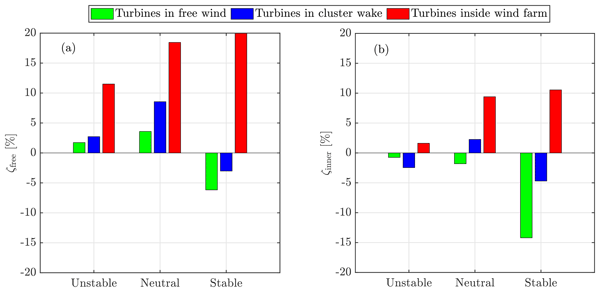
The offshore wind farm sector is expanding rapidly, and the interactions between wind farms are important to analyse for both existing and planned wind farms. We developed a new methodology to quantify how much the reductions in wind speed behind a farm can affect the loads on turbines which are tens of kilometres downstream. We find a 2.5 % increase in the turbine loads and discuss how further measurements could add to the design standards of future wind farms.
Rishikesh Joshi, Dominic von Terzi, and Roland Schmehl
Wind Energ. Sci., 10, 695–718, https://doi.org/10.5194/wes-10-695-2025, https://doi.org/10.5194/wes-10-695-2025, 2025
Short summary
Short summary
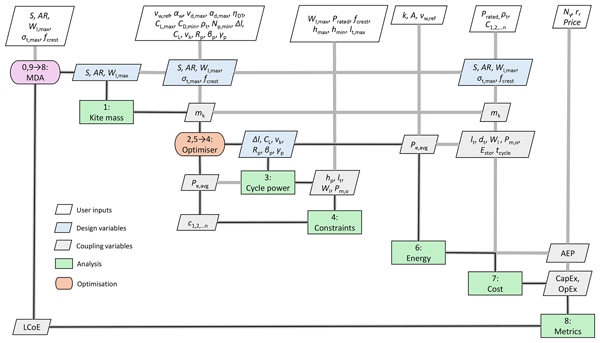
This paper presents a methodology for assessing the system design and scaling trends in airborne wind energy (AWE). A multi-disciplinary design, analysis, and optimisation (MDAO) framework was developed, integrating power, energy production, and cost models for the fixed-wing ground-generation (GG) AWE concept. Using the levelized cost of electricity (LCoE) as the design objective, we found that the optimal size of systems lies between the rated power of 100 and 1000 kW.
Ricardo Amaral, Felix Houtin-Mongrolle, Dominic von Terzi, Kasper Laugesen, Paul Deglaire, and Axelle Viré
Wind Energ. Sci. Discuss., https://doi.org/10.5194/wes-2025-34, https://doi.org/10.5194/wes-2025-34, 2025
Manuscript not accepted for further review
Short summary
Short summary
This work uses simulations to investigate floating offshore wind turbines which have the potential to supply the world's electricity demand many times by 2040. In particular, the effect of the rotor motion on the wake was investigated by forcing the turbine to move under different motions and the results highlight differences between motions. While some motions led to a wake behavior that was close to that of a fixed-bottom turbine, other motions produced a remarkably different wake structure.
Nils Barfknecht and Dominic von Terzi
Wind Energ. Sci., 10, 315–346, https://doi.org/10.5194/wes-10-315-2025, https://doi.org/10.5194/wes-10-315-2025, 2025
Short summary
Short summary
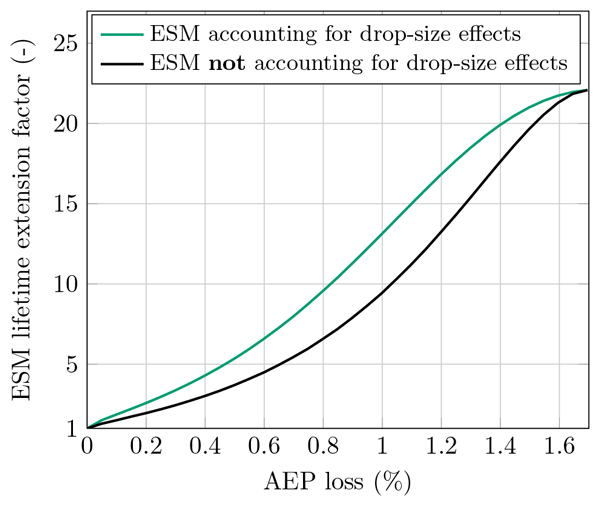
The paper investigates the influence of the rain drop diameter on the formation of erosion damage and its implications for erosion-safe mode (ESM). By building an erosion damage model that incorporates several drop-size effects, we found that large droplets are significantly more erosive than small droplets. It is shown that the performance of the ESM is significantly increased when drop-size effects are correctly accounted for. A method to derive optimal ESM strategies is given as well.
Maria Cristina Vitulano, Delphine De Tavernier, Giuliano De Stefano, and Dominic von Terzi
Wind Energ. Sci., 10, 103–116, https://doi.org/10.5194/wes-10-103-2025, https://doi.org/10.5194/wes-10-103-2025, 2025
Short summary
Short summary
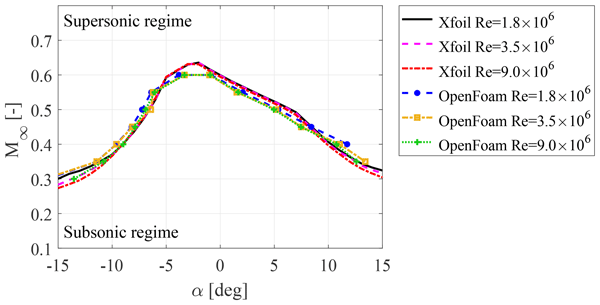
Next-generation wind turbines are the largest rotating machines ever built, experiencing local flow Mach where the incompressibility assumption is violated, and even transonic flow can occur. This study assesses the transonic features over the FFA-W3-211 wind turbine tip airfoil for selected industrial test cases, defines the subsonic–supersonic flow threshold and evaluates the Reynolds number effects on transonic flow occurrence. Shock wave occurrence is also depicted.
Claudia Muscari, Paolo Schito, Axelle Viré, Alberto Zasso, and Jan-Willem van Wingerden
Wind Energ. Sci. Discuss., https://doi.org/10.5194/wes-2024-149, https://doi.org/10.5194/wes-2024-149, 2025
Publication in WES not foreseen
Short summary
Short summary
This paper presents the findings of a study aimed at describing the flow system downstream of a wind turbine operated with a novel control technology. Results from heavy high-fidelity simulations are used to obtain a low-fidelity model that is quick enough to be used for the optimization of such technologies. Additionally, we were able to retrieve an improved understanding of the physics of such systems under different inflow conditions.
Nils Barfknecht and Dominic von Terzi
Wind Energ. Sci., 9, 2333–2357, https://doi.org/10.5194/wes-9-2333-2024, https://doi.org/10.5194/wes-9-2333-2024, 2024
Short summary
Short summary
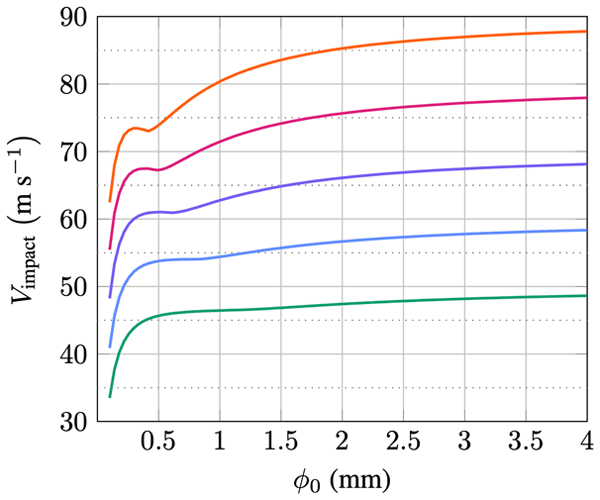
Rain droplets damage wind turbine blades due to the high impact speed at the tip. In this study, it is found that rain droplets and wind turbine blades interact aerodynamically. The rain droplets slow down and deform close to the blade. A model from another field of study was adapted and validated to study this process in detail. This effect reduced the predicted erosion damage by up to 50 %, primarily affecting smaller drops. It is shown how the slowdown effect can influence erosion mitigation.

Mihir Kishore Mehta, Michiel Zaaijer, and Dominic von Terzi
Wind Energ. Sci., 9, 2283–2300, https://doi.org/10.5194/wes-9-2283-2024, https://doi.org/10.5194/wes-9-2283-2024, 2024
Short summary
Short summary
In a subsidy-free era, there is a need to optimize wind turbines for maximizing farm revenue instead of minimizing cost of energy. A wind-farm-level modeling framework with a simplified market model is used to optimize the turbine size for maximum profitability. The results show that the optimum size is driven mainly by the choice of the economic metric and the market price scenario, with a design optimized for the cost of energy already performing well w.r.t. most profitability-based metrics
Shyam VimalKumar, Delphine De Tavernier, Dominic von Terzi, Marco Belloli, and Axelle Viré
Wind Energ. Sci., 9, 1967–1983, https://doi.org/10.5194/wes-9-1967-2024, https://doi.org/10.5194/wes-9-1967-2024, 2024
Short summary
Short summary
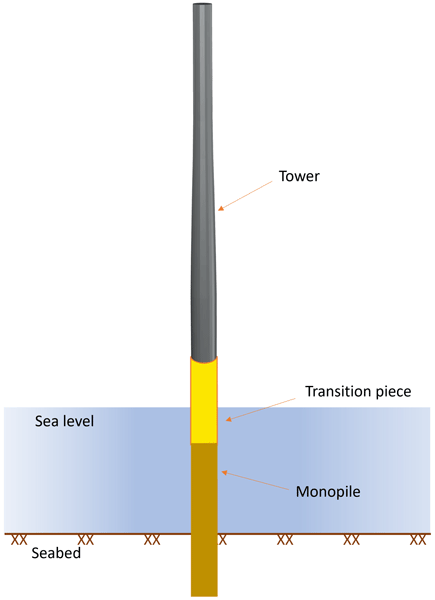
When standing still without a nacelle or blades, the vibrations on a wind turbine tower are of concern to its structural health. This study finds that the air which flows around the tower recirculates behind the tower, forming so-called wakes. These wakes initiate the vibration, and the movement itself causes the vibration to increase or decrease depending on the wind speed. The current study uses a methodology called force partitioning to analyse this in depth.
Deepali Singh, Richard Dwight, and Axelle Viré
Wind Energ. Sci., 9, 1885–1904, https://doi.org/10.5194/wes-9-1885-2024, https://doi.org/10.5194/wes-9-1885-2024, 2024
Short summary
Short summary
The selection of a suitable site for the installation of a wind turbine plays an important role in ensuring a safe operating lifetime of the structure. In this study, we show that mixture density networks can accelerate this process by inferring functions from data that can accurately map the environmental conditions to the loads but also propagate the uncertainty from the inflow to the response.
Federico Taruffi, Felipe Novais, and Axelle Viré
Wind Energ. Sci., 9, 343–358, https://doi.org/10.5194/wes-9-343-2024, https://doi.org/10.5194/wes-9-343-2024, 2024
Short summary
Short summary
Floating wind turbines are subject to complex aerodynamics that are not yet fully understood. Lab-scale experiments are crucial for capturing these phenomena and validate numerical tools. This paper presents a new wind tunnel experimental setup able to study the response of a wind turbine rotor when subjected to prescribed motions in 6 degrees of freedom. The observed unsteady effects underscore the importance of pursuing research on the impact of floater motions on wind turbine performance.
Mihir Mehta, Michiel Zaaijer, and Dominic von Terzi
Wind Energ. Sci., 9, 141–163, https://doi.org/10.5194/wes-9-141-2024, https://doi.org/10.5194/wes-9-141-2024, 2024
Short summary
Short summary
Turbines are becoming larger. However, it is important to understand the key drivers of turbine design and explore the possibility of a global optimum, beyond which further upscaling might not reduce the cost of energy. This study explores, for a typical farm, the entire turbine design space with respect to rated power and rotor diameter. The results show a global optimum that is subject to various modeling uncertainties, farm design conditions, and policies with respect to wind farm tendering.
Etienne Muller, Simone Gremmo, Félix Houtin-Mongrolle, Bastien Duboc, and Pierre Bénard
Wind Energ. Sci., 9, 25–48, https://doi.org/10.5194/wes-9-25-2024, https://doi.org/10.5194/wes-9-25-2024, 2024
Short summary
Short summary
This article presents an advanced tool designed for the high-fidelity and high-performance simulation of operating wind turbines, allowing for instance the computation of a blade deformation, as well as of the surrounding airflow. As this tool relies on coupling two existing codes, the coupling strategy is first described in depth. The article then compares the code results to field data for validation.
Stefano Cioni, Francesco Papi, Leonardo Pagamonci, Alessandro Bianchini, Néstor Ramos-García, Georg Pirrung, Rémi Corniglion, Anaïs Lovera, Josean Galván, Ronan Boisard, Alessandro Fontanella, Paolo Schito, Alberto Zasso, Marco Belloli, Andrea Sanvito, Giacomo Persico, Lijun Zhang, Ye Li, Yarong Zhou, Simone Mancini, Koen Boorsma, Ricardo Amaral, Axelle Viré, Christian W. Schulz, Stefan Netzband, Rodrigo Soto-Valle, David Marten, Raquel Martín-San-Román, Pau Trubat, Climent Molins, Roger Bergua, Emmanuel Branlard, Jason Jonkman, and Amy Robertson
Wind Energ. Sci., 8, 1659–1691, https://doi.org/10.5194/wes-8-1659-2023, https://doi.org/10.5194/wes-8-1659-2023, 2023
Short summary
Short summary
Simulations of different fidelities made by the participants of the OC6 project Phase III are compared to wind tunnel wake measurements on a floating wind turbine. Results in the near wake confirm that simulations and experiments tend to diverge from the expected linearized quasi-steady behavior when the reduced frequency exceeds 0.5. In the far wake, the impact of platform motion is overestimated by simulations and even seems to be oriented to the generation of a wake less prone to dissipation.
Christian Grinderslev, Felix Houtin-Mongrolle, Niels Nørmark Sørensen, Georg Raimund Pirrung, Pim Jacobs, Aqeel Ahmed, and Bastien Duboc
Wind Energ. Sci., 8, 1625–1638, https://doi.org/10.5194/wes-8-1625-2023, https://doi.org/10.5194/wes-8-1625-2023, 2023
Short summary
Short summary
In standstill conditions wind turbines are at risk of vortex-induced vibrations (VIVs). VIVs can become large and lead to significant fatigue of the wind turbine structure over time. Thus it is important to have tools that can accurately compute this complex phenomenon. This paper studies the sensitivities to the chosen models of computational fluid dynamics (CFD) simulations when modelling VIVs and finds that much care is needed when setting up simulations, especially for specific flow angles.

Axelle Viré, Bruce LeBlanc, Julia Steiner, and Nando Timmer
Wind Energ. Sci., 7, 573–584, https://doi.org/10.5194/wes-7-573-2022, https://doi.org/10.5194/wes-7-573-2022, 2022
Short summary
Short summary
There is continuous effort to try and improve the aerodynamic performance of wind turbine blades. This work shows that adding a leading-edge slat to wind turbine blades can significantly enhance the aerodynamic performance of wind turbines, even more than with vortex generators (which are commonly used on commercial turbines). The findings are obtained through wind tunnel tests on different airfoil–slat combinations.
Carlos Ferreira, Wei Yu, Arianna Sala, and Axelle Viré
Wind Energ. Sci., 7, 469–485, https://doi.org/10.5194/wes-7-469-2022, https://doi.org/10.5194/wes-7-469-2022, 2022
Short summary
Short summary
Floating offshore wind turbines may experience large surge motions that, when faster than the local wind speed, cause rotor–wake interaction.
We derive a model which is able to predict the wind speed at the wind turbine, even for large and fast motions and load variations in the wind turbine.
The proposed dynamic inflow model includes an adaptation for highly loaded flow, and it is accurate and simple enough to be easily implemented in most blade element momentum design models.
Cited articles
Ainslie, J. F.: Calculating the flowfield in the wake of wind turbines, J. Wind Eng. Ind. Aerod., 27, 213–224, https://doi.org/10.1016/0167-6105(88)90037-2, 1988. a
Amaral, R., Houtin-Mongrolle, F., von Terzi, D., and Viré, A.: Nacelle modeling considerations for wind turbines using large-eddy simulations, J. Phys. Conf. Ser., 2767, 052056, https://doi.org/10.1088/1742-6596/2767/5/052056, 2024. a, b
Bak, C., Zahle, F., Bitsche, R., Kim, T., Yde, A., Henriksen, L. C., Hansen, M. H., Blasques, J. P., Gaunaa, M., and Natarajan, A.: The DTU 10-MW reference wind turbine, Tech. rep., Danish Wind Power Research, http://orbit.dtu.dk/files/55645274/The_DTU_10MW_Reference_Turbine_Christian_Bak.pdf (last access: 29 July 2026), 2013. a
Barooni, M., Ashuri, T., Velioglu Sogut, D., Wood, S., and Ghaderpour Taleghani, S.: Floating Offshore Wind Turbines: Current Status and Future Prospects, Energies, 16, 2, https://doi.org/10.3390/en16010002, 2023. a
Bastankhah, M. and Porté-Agel, F.: A new analytical model for wind-turbine wakes, Renew. Energy, 70, 116–123, https://doi.org/10.1016/j.renene.2014.01.002, 2014. a
Bayati, I., Belloli, M., Bernini, L., and Zasso, A.: Aerodynamic design methodology for wind tunnel tests of wind turbine rotors, J. Wind Eng. Ind. Aerod., 167, 217–227, https://doi.org/10.1016/j.jweia.2017.05.004, 2017. a, b
Benard, P., Viré, A., Moureau, V., Lartigue, G., Beaudet, L., Deglaire, P., and Bricteux, L.: Large-Eddy Simulation of wind turbines wakes including geometrical effects, Comput. Fluids, 173, 133–139, https://doi.org/10.1016/j.compfluid.2018.03.015, 2018. a
Bergua, R., Robertson, A., Jonkman, J., Branlard, E., Fontanella, A., Belloli, M., Schito, P., Zasso, A., Persico, G., Sanvito, A., Amet, E., Brun, C., Campaña-Alonso, G., Martín-San-Román, R., Cai, R., Cai, J., Qian, Q., Maoshi, W., Beardsell, A., Pirrung, G., Ramos-García, N., Shi, W., Fu, J., Corniglion, R., Lovera, A., Galván, J., Nygaard, T. A., dos Santos, C. R., Gilbert, P., Joulin, P.-A., Blondel, F., Frickel, E., Chen, P., Hu, Z., Boisard, R., Yilmazlar, K., Croce, A., Harnois, V., Zhang, L., Li, Y., Aristondo, A., Mendikoa Alonso, I., Mancini, S., Boorsma, K., Savenije, F., Marten, D., Soto-Valle, R., Schulz, C. W., Netzband, S., Bianchini, A., Papi, F., Cioni, S., Trubat, P., Alarcon, D., Molins, C., Cormier, M., Brüker, K., Lutz, T., Xiao, Q., Deng, Z., Haudin, F., and Goveas, A.: OC6 project Phase III: validation of the aerodynamic loading on a wind turbine rotor undergoing large motion caused by a floating support structure, Wind Energ. Sci., 8, 465–485, https://doi.org/10.5194/wes-8-465-2023, 2023. a, b, c, d, e, f, g, h, i, j, k, l, m, n
Chamorro, L. P. and Porté-Agel, F.: Effects of thermal stability and incoming boundary‐layer flow characteristics on wind‐turbine wakes: a wind‐tunnel study, Bound.‐Lay. Meteorol., 136, 515–533, https://doi.org/10.1007/s10546-010-9512-1, 2010. a
Chamorro, L. P., Hill, C., Morton, S., Ellis, C., Arndt, R. E. A., and Sotiropoulos, F.: On the interaction between a turbulent open channel flow and an axial‐flow turbine, J. Fluid Mech., 716, 658–670, https://doi.org/10.1017/jfm.2012.571, 2013. a
Cioni, S., Papi, F., Pagamonci, L., Bianchini, A., Ramos-García, N., Pirrung, G., Corniglion, R., Lovera, A., Galván, J., Boisard, R., Fontanella, A., Schito, P., Zasso, A., Belloli, M., Sanvito, A., Persico, G., Zhang, L., Li, Y., Zhou, Y., Mancini, S., Boorsma, K., Amaral, R., Viré, A., Schulz, C. W., Netzband, S., Soto-Valle, R., Marten, D., Martín-San-Román, R., Trubat, P., Molins, C., Bergua, R., Branlard, E., Jonkman, J., and Robertson, A.: On the characteristics of the wake of a wind turbine undergoing large motions caused by a floating structure: an insight based on experiments and multi-fidelity simulations from the OC6 project Phase III, Wind Energ. Sci., 8, 1659–1691, https://doi.org/10.5194/wes-8-1659-2023, 2023. a, b, c, d, e
Cioni, S., Papi, F., Balduzzi, F., Fontanella, A., and Bianchini, A.: Blade-resolved CFD analysis of a floating wind turbine: new insights on unsteady aerodynamics, loads, and wake, Ocean Eng., 341, 122746, https://doi.org/10.1016/j.oceaneng.2025.122746, 2025. a
Corniglion, R., Harris, J. C., and Peyrard, C.: The aerodynamics of a blade pitch, rotor speed, and surge step for a wind turbine regarding dynamic inflow, Wind Energ., 25, 858–880, https://doi.org/10.1002/we.2702, 2022. a, b
Costanzo, G., Brindley, G., O'Sullivan, R., Van de Velde, L., and Bickley, J.: Latest wind energy data for Europe: Autumn 2024, Tech. rep., Wind Europe, https://windeurope.org/intelligence-platform/product/latest-wind-energy-data-for-europe-autumn-2024/#overview (last access: 29 July 2026), 2024. a
Cozzi, L., Wanner, B., Donovan, C., Toril, A., Yu, W., Arsalane, Y., D'Ambrosio, D., Liu, J., Papapanagiotou, S., Pavarini, C., Perugia, D., Staas, L., Waldron, M., Gould, T., Hosker, E., Justus, D., Coon, T., Dos Santos, M., and Tsoukala, E.: Offshore Wind Outlook 2019, World Energy Outlook Special Report, Tech. rep., International Energy Agency, https://www.iea.org/reports/offshore-wind-outlook-2019 (last access: 29 July 2026), 2019. a, b
De Cillis, G., Cherubini, S., Semeraro, O., Leonardi, S., and De Palma, P.: POD-based analysis of a wind turbine wake under the influence of tower and nacelle, Wind Energ., 24, 609–633, https://doi.org/10.1002/we.2592, 2021. a
Firpo, A., Sanvito, A. G., Dossena, V., and Persico, G.: Aerodynamic Study of a Horizontal Axis Wind Turbine in Surge Motion Under Angular Speed and Blade Pitch Controls, J. Eng. Gas Turbines Power, 147, 041026, https://doi.org/10.1115/1.4066708, 2025. a, b, c
Firpo, A., Sanvito, A. G., Persico, G., and Dossena, V.: Actuator line URANS-to-LES comparison of single and tandem floating offshore wind turbines, Wind Energ. Sci., 11, 557–584, https://doi.org/10.5194/wes-11-557-2026, 2026. a, b, c, d
Fontanella, A., Bayati, I., Mikkelsen, R., Belloli, M., and Zasso, A.: UNAFLOW: UNsteady Aerodynamics of FLOating Wind turbines, Zenodo [data set], https://doi.org/10.5281/zenodo.4740006, 2021a. a, b, c
Fontanella, A., Facchinetti, A., Di Carlo, S., and Belloli, M.: Wind tunnel investigation of the aerodynamic response of two 15 MW floating wind turbines, Wind Energ. Sci., 7, 1711–1729, https://doi.org/10.5194/wes-7-1711-2022, 2022. a
Fontanella, A., Fusetti, A., Cioni, S., Papi, F., Muggiasca, S., Persico, G., Dossena, V., Bianchini, A., and Belloli, M.: Wake development in floating wind turbines: new insights and an open dataset from wind tunnel experiments, Wind Energ. Sci., 10, 1369–1387, https://doi.org/10.5194/wes-10-1369-2025, 2025. a, b, c, d, e, f, g, h, i, j, k, l, m, n, o
Fontanella, A., Cioni, S., Papi, F., Muggiasca, S., Bianchini, A., and Belloli, M.: Experimental investigation of the effects of floating wind turbine motion on a downstream turbine performance and loads, Wind Energ. Sci., 11, 1821–1851, https://doi.org/10.5194/wes-11-1821-2026, 2026. a, b, c, d, e, f, g
Frederik, J. A., Doekemeijer, B. M., Mulders, S. P., and van Wingerden, J.-W.: The helix approach: Using dynamic individual pitch control to enhance wake mixing in wind farms, Wind Energ., 23, 1739–1751, https://doi.org/10.1002/we.2513, 2020. a, b
Germano, M., Piomelli, U., Moin, P., and Cabot, W. H.: A dynamic subgrid-scale eddy viscosity model, Phys. Fluids A, 3, 1760–1765, https://doi.org/10.1063/1.857955, 1991. a
Heisel, M., Hong, J., and Guala, M.: The spectral signature of wind turbine wake meandering: A wind tunnel and field‐scale study, Wind Energ., 21, 715–731, https://doi.org/10.1002/we.2189, 2018. a
Hodgson, E. L., Madsen, M. H. A., and Andersen, S. J.: Effects of turbulent inflow time scales on wind turbine wake behavior and recovery, Phys. Fluids, 35, 095125, https://doi.org/10.1063/5.0162311, 2023. a, b, c, d
Houtin-Mongrolle, F.: Investigations of yawed offshore wind turbine interactions through aero-servo-elastic Large Eddy Simulations, PhD thesis, INSA Rouen Normandie, Rouen, France, https://theses.hal.science/tel-03987411v1/document (last access: 29 July 2026), 2022. a
Howard, K. B., Singh, A., Sotiropoulos, F., and Guala, M.: On the statistics of wind turbine wake meandering: an experimental investigation, Phys. Fluids, 27, 075103, https://doi.org/10.1063/1.4923334, 2015. a
Jensen, N. O.: A note on wind generator interaction, no. 2411 in Risø-M, Risø National Laboratory, ISBN 87-550-0971-9, 1983. a
Kang, S., Yang, X., and Sotiropoulos, F.: On the onset of wake meandering for an axial flow turbine in a turbulent open channel flow, J. Fluid Mech., 744, 376–403, https://doi.org/10.1017/jfm.2014.82, 2014. a
Katic, I., Højstrup, J., and Jensen, N. O.: A simple model for cluster efficiency, in: Proceedings from the European Wind Energy Conference, Rome, Italy, 7–9 October 1986, 407–410, 1986. a
Kraushaar, M.: Application of the compressible and low-Mach number approaches to Large-Eddy Simulation of turbulent flows in aero-engines, PhD thesis, INPT, Toulouse, France, https://theses.hal.science/file/index/docid/711480/filename/Kraushaar_.pdf (last access: 29 July 2026), 2011. a
Larsen, G. C.: A simple stationary semi-analytical wake model, Risø-R-1713(EN), Risø National Laboratory for Sustainable Energy, Technical University of Denmark, Roskilde, Denmark, 22 pp., https://orbit.dtu.dk/en/publications/a-simple-stationary-semi-analytical-wake-model (last access: 29 July 2026), 2009. a
Larsen, G. C., Madsen, H. A., Bingöl, F., Mann, J., Ott, S., Sørensen, J. N., Okulov, V., Troldborg, N., Nielsen, N. M., Thomsen, K., Larsen, T. J., and Mikkelsen, R.: Dynamic wake meandering modeling, Risø-R-1607(EN), Risø National Laboratory, Roskilde, Denmark, ISBN 978-87-550-3602-4, 2007. a
Li, Y., Yu, W., and Sarlak, H.: Wake structures and performance of wind turbine rotor with harmonic surging motions under laminar and turbulent inflows, Wind Energ., 27, 1499–1525, https://doi.org/10.1002/we.2949, 2024. a, b
Lignarolo, L., Ragni, D., Scarano, F., Ferreira, C., and van Bussel, G. J. W.: Tip-vortex instability and turbulent mixing in wind-turbine wakes, J. Fluid Mech., 781, 467–493, https://doi.org/10.1017/jfm.2015.470, 2015. a
Mao, X. and Sørensen, J. N.: Far-wake meandering induced by atmospheric eddies in flow past a wind turbine, J. Fluid Mech., 846, 190–209, https://doi.org/10.1017/jfm.2018.275, 2018. a, b
Martínez-Tossas, L. A. and Meneveau, C.: Filtered lifting line theory and application to the actuator line model, J. Fluid Mech., 863, 269–292, https://doi.org/10.1017/jfm.2018.994, 2019. a
Martínez-Tossas, L. A., Churchfield, M., and Leonardi, S.: Large eddy simulations of the flow past wind turbines: actuator line and disk modeling, Wind Energ., 18, 1047–1060, https://doi.org/10.1002/we.1747, 2015. a
Martínez-Tossas, L. A., Churchfield, M., and Meneveau, C.: Optimal Smoothing Length Scale for Actuator Line Models of Wind Turbine Blades Based on Gaussian Body Force Distribution, Wind Energ., 20, 1083–1096, https://doi.org/10.1002/we.2081, 2017. a
Medici, D.: Experimental studies of wind turbine wakes: power optimisation and meandering, PhD thesis, KTH, Stockholm, Sweden, https://www.mech.kth.se/thesis/2006/phd/phd_2006_davide_medici.pdf (last access: 29 July 2026), 2005. a
Medici, D. and Alfredsson, P. H.: Measurements on a Wind Turbine Wake: 3D Effects and Bluff Body Vortex Shedding, Wind Energ., 9, 219–236, https://doi.org/10.1002/we.156, 2006. a
Messmer, T., Peinke, J., Croce, A., and Hölling, M.: The role of motion-excited coherent structures in improved wake recovery of a floating wind turbine, J. Fluid Mech., 1018, A23, https://doi.org/10.1017/jfm.2025.10509, 2025. a, b, c, d, e, f, g, h, i, j, k, l, m, n, o, p, q, r, s, t, u, v, w, x, y
Meyer Forsting, A. R., Pirrung, G. R., and Ramos-García, N.: A vortex-based tip/smearing correction for the actuator line, Wind Energ. Sci., 4, 369–383, https://doi.org/10.5194/wes-4-369-2019, 2019. a
Mikkelsen, R.: Actuator Disc Methods Applied to Wind Turbines, PhD thesis, Technical University of Denmark, Lyngby, Denmark, https://backend.orbit.dtu.dk/ws/portalfiles/portal/5452244/Robert.PDF (last access: 29 July 2026), 2003. a
Moureau, V., Domingo, P., and Vervisch, L.: Design of a massively parallel CFD code for complex geometries, C. R. Mécanique, 339, 1239–1250, https://doi.org/10.1016/j.crme.2010.12.001, 2011. a
Munters, W. and Meyers, J.: An optimal control framework for dynamic induction control of wind farms and their interaction with the atmospheric boundary layer, Philos. T. Roy. Soc. A, 375, 20160100, https://doi.org/10.1098/rsta.2016.0100, 2017. a, b
Okulov, V. L., Naumov, I. V., Mikkelsen, R. F., Kabardin, I. K., and Sørensen, J. N.: A regular Strouhal number for large‐scale instability in the far wake of a rotor, J. Fluid Mech., 747, 369–380, https://doi.org/10.1017/jfm.2014.174, 2014. a
Pagamonci, L., Papi, F., Cojocaru, G., Belloli, M., and Bianchini, A.: How does turbulence affect wake development in floating wind turbines? Some insights from comparative large-eddy simulations and wind tunnel experiments, Wind Energ. Sci., 10, 1707–1736, https://doi.org/10.5194/wes-10-1707-2025, 2025. a, b, c, d, e
Sørensen, J. N. and Shen, W. Z.: Numerical modeling of wind turbine wakes, J. Fluids Eng., 124, 393–399, https://doi.org/10.1115/1.1471361, 2002. a
WindEurope: Europe can expect to have 10 GW of floating wind by 2030, https://windeurope.org/newsroom/news/europe-can-expect-to-have-10-gw-of-floating-wind-by-2030/ (last access: 29 July 2026), 2022. a
Yılmaz, A. E. and Meyers, J.: Optimal dynamic induction control of a pair of inline wind turbines, Phys. Fluids, 30, 085106, https://doi.org/10.1063/1.5038600, 2018. a, b
Short summary
This work investigated the effect of a variety of floating-wind-turbine motions on the wake, the slower and more turbulent air left behind the rotor. This was done via computational simulations that reproduced a wind tunnel setup to test the tunnel's impact. While some motions barely disturbed the wake, other motions produced a remarkably different wake structure. The wind tunnel walls influenced the wake to some degree, but the general behavior was consistent with what is seen in the open air.
This work investigated the effect of a variety of floating-wind-turbine motions on the wake, the...


Altmetrics
Final-revised paper
Preprint