
Articles | Volume 11, issue 3
https://doi.org/10.5194/wes-11-1077-2026
© Author(s) 2026. This work is distributed under
the Creative Commons Attribution 4.0 License.
the Creative Commons Attribution 4.0 License.
https://doi.org/10.5194/wes-11-1077-2026
© Author(s) 2026. This work is distributed under
the Creative Commons Attribution 4.0 License.
the Creative Commons Attribution 4.0 License.
Research article
| 
01 Apr 2026
Research article |
| 01 Apr 2026
| 01 Apr 2026
Uncertainty in North Sea offshore wind power: contributions of reanalysis forcing, turbine type, and wake parameterization
Alberto Elizalde
CORRESPONDING AUTHOR

Institute of Coastal Systems – Analysis and Modeling, Helmholtz-Zentrum Hereon, Geesthacht, Germany
Naveed Akhtar
Institute of Coastal Systems – Analysis and Modeling, Helmholtz-Zentrum Hereon, Geesthacht, Germany
Beate Geyer
Institute of Coastal Systems – Analysis and Modeling, Helmholtz-Zentrum Hereon, Geesthacht, Germany
Corinna Schrum
Institute of Coastal Systems – Analysis and Modeling, Helmholtz-Zentrum Hereon, Geesthacht, Germany
Center for Earth System Research and Sustainability, Institute of Oceanography, University of Hamburg, Hamburg, Germany
Related authors
Alberto Elizalde, Gibran Romero-Mujalli, Tobias Stacke, and Stefan Hagemann
EGUsphere, https://doi.org/10.5194/egusphere-2024-3645, https://doi.org/10.5194/egusphere-2024-3645, 2025
Preprint archived
Short summary
Short summary
This study examines phosphorus land-to-sea transport in Europe, exploring changes over time and predicting future trends under various scenarios. It integrates human and environmental factors, offering a comprehensive analysis. Our findings show how global warming-induced rainfall patterns affect phosphorus levels. While pollution reduction policies are helpful, population growth, land-use changes, and increased rainfall could lead to higher phosphorus levels in the future.
Veronika Mohr, Corinna Schrum, and Wenyan Zhang
Biogeosciences, 23, 5715–5739, https://doi.org/10.5194/bg-23-5715-2026, https://doi.org/10.5194/bg-23-5715-2026, 2026
Short summary
Short summary
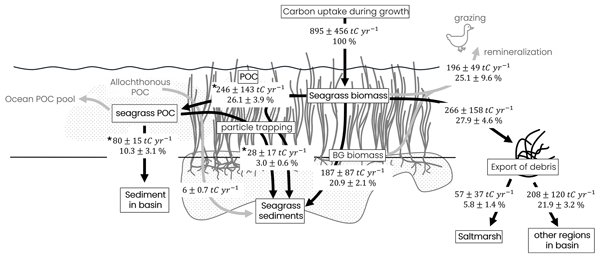
Intertidal seagrass meadows are often considered important blue carbon ecosystems, but their role in highly dynamic environments is uncertain. Using a coupled hydrodynamic–ecosystem model, we quantify carbon uptake, burial, and export in a Wadden Sea tidal basin. We show that sequestration rates are low, depend on meadow persistence, and that a substantial fraction of seagrass carbon is redistributed within the basin and to salt marshes.
Vijith Vijayakumaran, Rebecca Millington, Jorn Bruggeman, Josefine Hahn, Helen Powley, Gennadi Lessin, Anja Lindenthal, Corinna Schrum, and Ute Daewel
EGUsphere, https://doi.org/10.5194/egusphere-2026-3078, https://doi.org/10.5194/egusphere-2026-3078, 2026
This preprint is open for discussion and under review for Geoscientific Model Development (GMD).
Short summary
Short summary
We present ECOSMO End-to-End v2.0, a set of fish and macrobenthos functional-group modules that can be two-way coupled to lower-trophic-level marine ecosystem models. Using a one-dimensional setup, we tested these plug-and-play modules coupled to three models used in the Copernicus Marine Service framework. Simulations show that macrobenthos increase bottom-layer nutrients and are essential for realistic fish production, while fish and macrobenthos strengthen top-down control on plankton.
Beate Geyer, Angelo Campanale, Evgenii Churiulin, Hendrik Feldmann, Klaus Goergen, Stefan Hagemann, Ha Thi Minh Ho-Hagemann, Muhammed Muhshif Karadan, Klaus Keuler, Pavel Khain, Divyaja Lawand, Patrick Ludwig, Vera Maurer, Sergei Petrov, Stefan Poll, Christopher Purr, Emmanuele Russo, Martina Schubert-Frisius, Jan-Peter Schulz, Shweta Singh, Christian Steger, Heimo Truhetz, and Andreas Will
Geosci. Model Dev., 19, 5439–5490, https://doi.org/10.5194/gmd-19-5439-2026, https://doi.org/10.5194/gmd-19-5439-2026, 2026
Short summary
Short summary
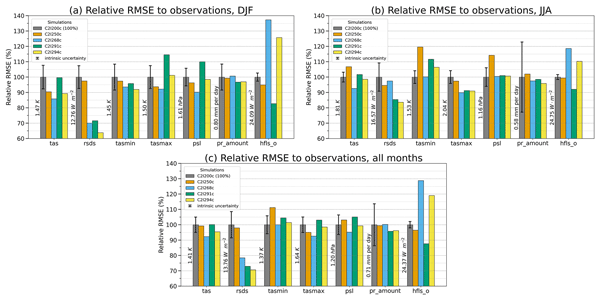
Complex models in environmental science typically have a lot of tuning parameters, which has to be set by the users depending on the application. This study presents a new method of objective tuning of a huge number of parameters, by combining expert judgement with automated tuning called Linear Meta-Model optimisation (LiMMo). The method is successfully applied to the regional climate model named ICON (Icosahedral Non-hydrostatic)-CLM (Climate Limited-area Modelling) over Europe.
David J. Amptmeijer, Ulrike Hanz, Corinna Schrum, and Johannes Bieser
Biogeosciences, 23, 4057–4081, https://doi.org/10.5194/bg-23-4057-2026, https://doi.org/10.5194/bg-23-4057-2026, 2026
Short summary
Short summary
Sponges have unusually low methylmercury (MeHg) and high inorganic mercury (iHg) bioaccumulation compared to other macrobenthos. This pattern has been attributed to MeHg demethylation by symbiotic bacteria. Our model demonstrates an alternative explanation that dissolved organic matter (DOM) consumption by sponges can increase iHg and decrease MeHg levels. Low MeHg in sponges at the food web base may further limit MeHg bioaccumulation in higher trophic levels.
Christoph Braun, Florian Ehmele, Christian Beier, Edgar Fabián Espitia-Sarmiento, Hendrik Feldmann, Thomas Frisius, Beate Geyer, Marie Hundhausen, Klaus Keuler, Jürg Luterbacher, Kevin Sieck, Katja Trachte, Elena Xoplaki, and Joaquim G. Pinto
EGUsphere, https://doi.org/10.5194/egusphere-2026-2517, https://doi.org/10.5194/egusphere-2026-2517, 2026
Short summary
Short summary
Adaptation to future climatic changes requires robust climate information. Here, a newly produced set of high-resolution climate simulations using multiple regional climate models over Germany is compared to observation-based datasets over the period 1961 to 1990. Overall, the simulations represent the observed climate well and, together with their future counterparts considering global warming, expand our knowledge about projected climatic changes to inform climate adaptation measures.
Kevin Sieck, Joaquim G. Pinto, Beate Geyer, Klaus Keuler, Christian Beier, Christoph Braun, Florian Ehmele, Hendrik Feldmann, Thomas Frisius, Philipp Heinrich, Marie Hundhausen, Ronny Petrik, and Katja Trachte
EGUsphere, https://doi.org/10.5194/egusphere-2026-1024, https://doi.org/10.5194/egusphere-2026-1024, 2026
Short summary
Short summary
In this study we present the evaluation of a new generation of user informed climate simulations at scales of typical weather forecasts. It provides detailed information that are vital for climate impact studies at municipal level. Besides typical short comings of climate models in terms of deviations compared to reference data, the simulations show good agreement with observed climate especially in terms of regional patterns.
David J. Amptmeijer, Elena Mikheeva, Ute Daewel, Johannes Bieser, and Corinna Schrum
Biogeosciences, 22, 7929–7960, https://doi.org/10.5194/bg-22-7929-2025, https://doi.org/10.5194/bg-22-7929-2025, 2025
Short summary
Short summary
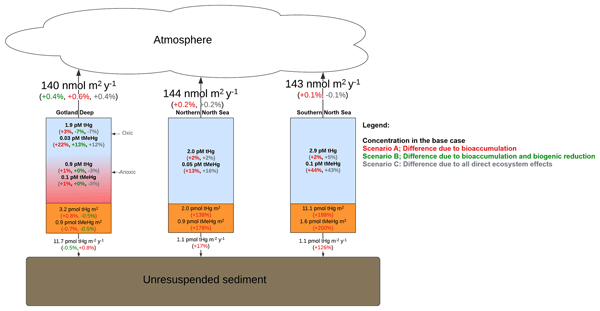
We integrate bioaccumulation and biotic Hg transformations into a coupled ecosystem–mercury model to assess their effect on marine Hg cycling. Bioaccumulation increases methylmercury levels, especially in productive coastal waters, and alters Hg exchange between the Baltic and North Seas. These results highlight strong ecosystem feedbacks on marine Hg dynamics.
David J. Amptmeijer, Andrea Padilla, Sofia Modesti, Corinna Schrum, and Johannes Bieser
Biogeosciences, 22, 7483–7503, https://doi.org/10.5194/bg-22-7483-2025, https://doi.org/10.5194/bg-22-7483-2025, 2025
Short summary
Short summary
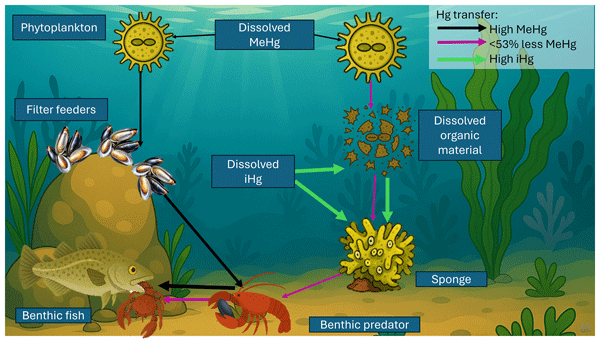
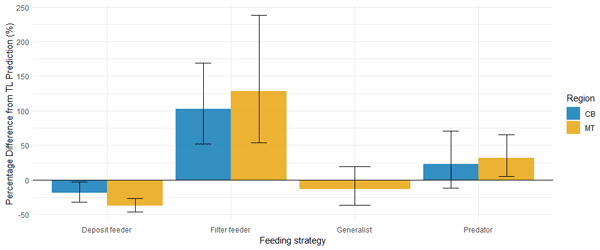
This paper combines a literature review with a 1D Hg speciation and bioaccumulation model to assess how feeding strategy affects inorganic and methylmercury at the base of marine food webs. We find filter feeders have higher MeHg, while suspension feeders have very low MeHg, highlighting feeding strategy as a key driver of MeHg variability.
Sergei Petrov, Andreas Will, and Beate Geyer
Geosci. Model Dev., 18, 6177–6194, https://doi.org/10.5194/gmd-18-6177-2025, https://doi.org/10.5194/gmd-18-6177-2025, 2025
Short summary
Short summary
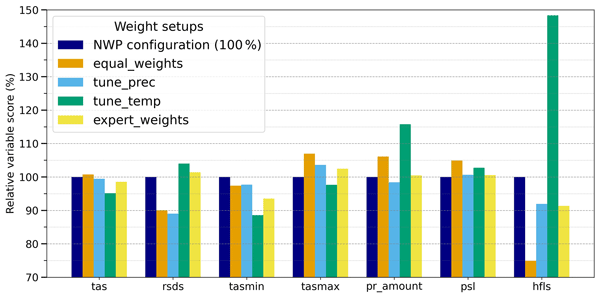
This study introduces a new method that helps improve the accuracy of climate models by automatically selecting the best parameters to match real-world observations. Instead of manually adjusting many parameters, the method uses a mathematical tool to find the most appropriate settings for the model. It can be especially helpful for researchers who introduce new physical parameters into climate models to assess their impact on model results and optimize them along with the old ones.
Feifei Liu, Ute Daewel, Jan Kossack, Kubilay Timur Demir, Helmuth Thomas, and Corinna Schrum
Biogeosciences, 22, 3699–3719, https://doi.org/10.5194/bg-22-3699-2025, https://doi.org/10.5194/bg-22-3699-2025, 2025
Short summary
Short summary
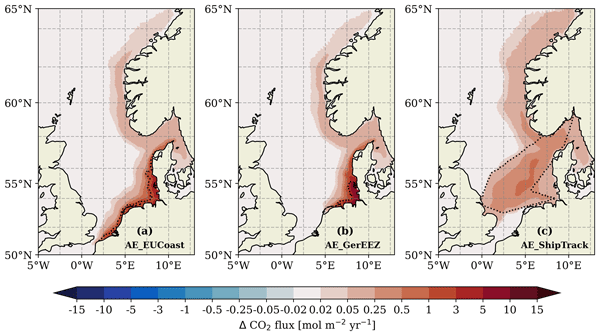
Ocean alkalinity enhancement (OAE) boosts oceanic CO₂ absorption, offering a climate solution. Using a regional model, we examined OAE in the North Sea, revealing that shallow coastal areas achieve higher CO₂ uptake than offshore where alkalinity is more susceptible to deep-ocean loss. Long-term carbon storage is limited, and pH shifts vary by location. Our findings guide OAE deployment to optimize carbon removal while minimizing ecological effects, supporting global climate mitigation efforts.
Kubilay Timur Demir, Moritz Mathis, Jan Kossack, Feifei Liu, Ute Daewel, Christoph Stegert, Helmuth Thomas, and Corinna Schrum
Biogeosciences, 22, 2569–2599, https://doi.org/10.5194/bg-22-2569-2025, https://doi.org/10.5194/bg-22-2569-2025, 2025
Short summary
Short summary
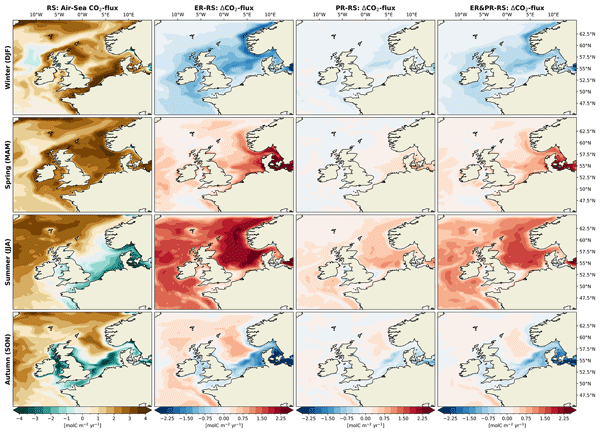
This study examines how variations in the ratios of carbon, nitrogen, and phosphorus in organic matter affect carbon cycling in the northwest European shelf seas. Traditional models with fixed ratios tend to underestimate biological carbon uptake. By integrating variable ratios into a regional model, we find that carbon dioxide uptake increases by 9 %–31 %. These results highlight the need to include variable ratios for accurate assessments of regional and global carbon cycles.
Hoa Nguyen, Ute Daewel, Neil Banas, and Corinna Schrum
Geosci. Model Dev., 18, 2961–2982, https://doi.org/10.5194/gmd-18-2961-2025, https://doi.org/10.5194/gmd-18-2961-2025, 2025
Short summary
Short summary
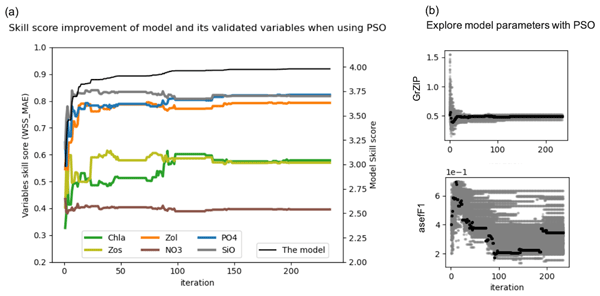
Parameterization is key in modeling to reproduce observations well but is often done manually. This study presents a particle-swarm-optimizer-based toolbox for marine ecosystem models, compatible with the Framework for Aquatic Biogeochemical Models, thus enhancing its reusability. Applied to the Sylt ecosystem, the toolbox effectively (1) identified multiple parameter sets that matched observations well, providing different insights into ecosystem dynamics, and (2) optimized model complexity.
Alberto Elizalde, Gibran Romero-Mujalli, Tobias Stacke, and Stefan Hagemann
EGUsphere, https://doi.org/10.5194/egusphere-2024-3645, https://doi.org/10.5194/egusphere-2024-3645, 2025
Preprint archived
Short summary
Short summary
This study examines phosphorus land-to-sea transport in Europe, exploring changes over time and predicting future trends under various scenarios. It integrates human and environmental factors, offering a comprehensive analysis. Our findings show how global warming-induced rainfall patterns affect phosphorus levels. While pollution reduction policies are helpful, population growth, land-use changes, and increased rainfall could lead to higher phosphorus levels in the future.
Lucas Porz, Wenyan Zhang, Nils Christiansen, Jan Kossack, Ute Daewel, and Corinna Schrum
Biogeosciences, 21, 2547–2570, https://doi.org/10.5194/bg-21-2547-2024, https://doi.org/10.5194/bg-21-2547-2024, 2024
Short summary
Short summary
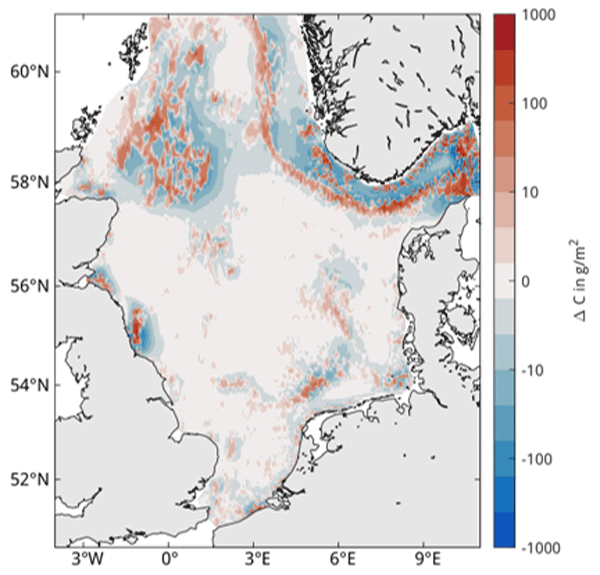
Seafloor sediments store a large amount of carbon, helping to naturally regulate Earth's climate. If disturbed, some sediment particles can turn into CO2, but this effect is not well understood. Using computer simulations, we found that bottom-contacting fishing gears release about 1 million tons of CO2 per year in the North Sea, one of the most heavily fished regions globally. We show how protecting certain areas could reduce these emissions while also benefitting seafloor-living animals.
Peter Arlinghaus, Corinna Schrum, Ingrid Kröncke, and Wenyan Zhang
Earth Surf. Dynam., 12, 537–558, https://doi.org/10.5194/esurf-12-537-2024, https://doi.org/10.5194/esurf-12-537-2024, 2024
Short summary
Short summary
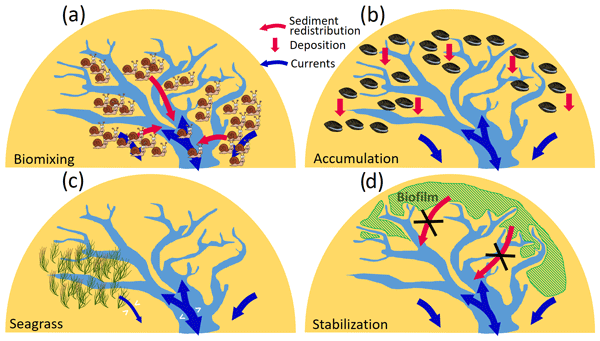
Benthos is recognized to strongly influence sediment stability, deposition, and erosion. This is well studied on small scales, but large-scale impact on morphological change is largely unknown. We quantify the large-scale impact of benthos by modeling the evolution of a tidal basin. Results indicate a profound impact of benthos by redistributing sediments on large scales. As confirmed by measurements, including benthos significantly improves model results compared to an abiotic scenario.
Ruben Borgers, Marieke Dirksen, Ine L. Wijnant, Andrew Stepek, Ad Stoffelen, Naveed Akhtar, Jérôme Neirynck, Jonas Van de Walle, Johan Meyers, and Nicole P. M. van Lipzig
Wind Energ. Sci., 9, 697–719, https://doi.org/10.5194/wes-9-697-2024, https://doi.org/10.5194/wes-9-697-2024, 2024
Short summary
Short summary
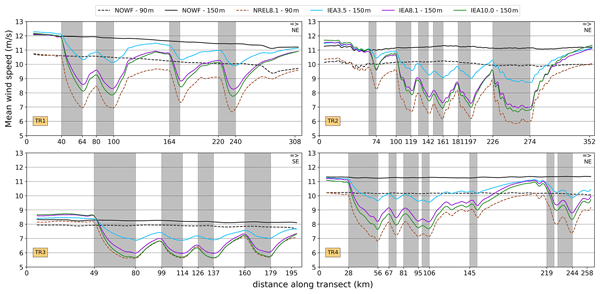
Wind farms at sea are becoming more densely clustered, which means that next to individual wind turbines interfering with each other in a single wind farm also interference between wind farms becomes important. Using a climate model, this study shows that the efficiency of wind farm clusters and the interference between the wind farms in the cluster depend strongly on the properties of the individual wind farms and are also highly sensitive to the spacing between the wind farms.
Philipp Heinrich, Stefan Hagemann, Ralf Weisse, Corinna Schrum, Ute Daewel, and Lidia Gaslikova
Nat. Hazards Earth Syst. Sci., 23, 1967–1985, https://doi.org/10.5194/nhess-23-1967-2023, https://doi.org/10.5194/nhess-23-1967-2023, 2023
Short summary
Short summary
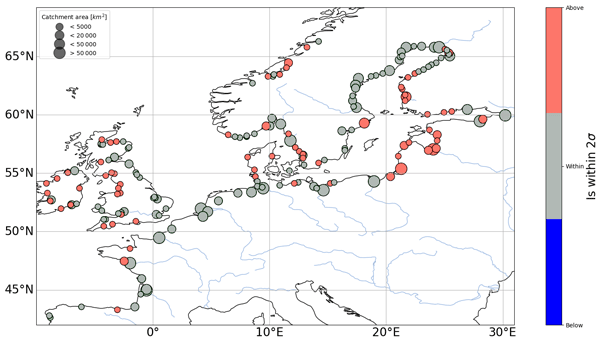
High seawater levels co-occurring with high river discharges have the potential to cause destructive flooding. For the past decades, the number of such compound events was larger than expected by pure chance for most of the west-facing coasts in Europe. Additionally rivers with smaller catchments showed higher numbers. In most cases, such events were associated with a large-scale weather pattern characterized by westerly winds and strong rainfall.

Johannes Bieser, David J. Amptmeijer, Ute Daewel, Joachim Kuss, Anne L. Soerensen, and Corinna Schrum
Geosci. Model Dev., 16, 2649–2688, https://doi.org/10.5194/gmd-16-2649-2023, https://doi.org/10.5194/gmd-16-2649-2023, 2023
Short summary
Short summary
MERCY is a 3D model to study mercury (Hg) cycling in the ocean. Hg is a highly harmful pollutant regulated by the UN Minamata Convention on Mercury due to widespread human emissions. These emissions eventually reach the oceans, where Hg transforms into the even more toxic and bioaccumulative pollutant methylmercury. MERCY predicts the fate of Hg in the ocean and its buildup in the food chain. It is the first model to consider Hg accumulation in fish, a major source of Hg exposure for humans.
Marcus Reckermann, Anders Omstedt, Tarmo Soomere, Juris Aigars, Naveed Akhtar, Magdalena Bełdowska, Jacek Bełdowski, Tom Cronin, Michał Czub, Margit Eero, Kari Petri Hyytiäinen, Jukka-Pekka Jalkanen, Anders Kiessling, Erik Kjellström, Karol Kuliński, Xiaoli Guo Larsén, Michelle McCrackin, H. E. Markus Meier, Sonja Oberbeckmann, Kevin Parnell, Cristian Pons-Seres de Brauwer, Anneli Poska, Jarkko Saarinen, Beata Szymczycha, Emma Undeman, Anders Wörman, and Eduardo Zorita
Earth Syst. Dynam., 13, 1–80, https://doi.org/10.5194/esd-13-1-2022, https://doi.org/10.5194/esd-13-1-2022, 2022
Short summary
Short summary
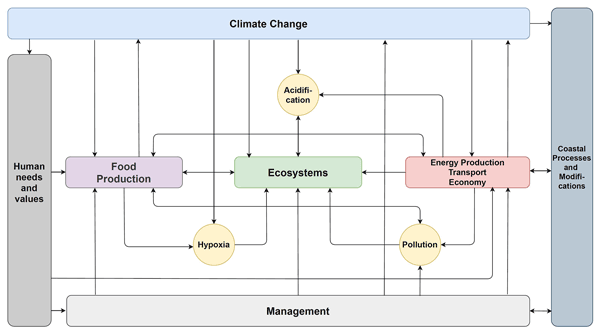
As part of the Baltic Earth Assessment Reports (BEAR), we present an inventory and discussion of different human-induced factors and processes affecting the environment of the Baltic Sea region and their interrelations. Some are naturally occurring and modified by human activities, others are completely human-induced, and they are all interrelated to different degrees. The findings from this study can largely be transferred to other comparable marginal and coastal seas in the world.
Cited articles
Abkar, M. and Porté-Agel, F.: A new wind-farm parameterization for large-scale atmospheric models, J. Renew. Sustain. Ener., 7, https://doi.org/10.1063/1.4907600, 2015. a, b
Akhtar, N., Geyer, B., Rockel, B., Sommer, P. S., and Schrum, C.: Accelerating deployment of offshore wind energy alter wind climate and reduce future power generation potentials, Sci. Rep.-UK, 11, https://doi.org/10.1038/s41598-021-91283-3, 2021. a, b, c
Akhtar, N., Geyer, B., and Schrum, C.: Impacts of accelerating deployment of offshore windfarms on near-surface climate, Sci. Rep.-UK, 12, https://doi.org/10.1038/s41598-022-22868-9, 2022. a
Akhtar, N., Chatterjee, F., and Borgers, R.: Wind farm parametrization in COSMO5.0-clm15, version 2.0, https://doi.org/10.35089/WDCC/WINDFARMPCOSMO5.0CLM 15_V2, 2023. a
Akhtar, N., Geyer, B., and Schrum, C.: Larger wind turbines as a solution to reduce environmental impacts, Sci. Rep.-UK, 14, https://doi.org/10.1038/s41598-024-56731-w, 2024. a, b, c
Arakawa, A. and Lamb, V. R.: Computational Design of the Basic Dynamical Processes of the UCLA General Circulation Model, in: Methods in Computational Physics: Advances in Research and Applications, Elsevier, 173–265, https://doi.org/10.1016/b978-0-12-460817-7.50009-4, 1977. a
Baerfuss, K., Hankers, R., Bitter, M., Feuerle, T., Schulz, H., Rausch, T., Platis, A., Bange, J., and Lampert, A.: In-situ airborne measurements of atmospheric and sea surface parameters related to offshore wind parks in the German Bight, Flight 20160910 flight07, PANGAEA [data set], https://doi.org/10.1594/PANGAEA.902914, 2019. a, b
Borgers, R., Dirksen, M., Wijnant, I. L., Stepek, A., Stoffelen, A., Akhtar, N., Neirynck, J., Van de Walle, J., Meyers, J., and van Lipzig, N. P. M.: Mesoscale modelling of North Sea wind resources with COSMO-CLM: model evaluation and impact assessment of future wind farm characteristics on cluster-scale wake losses, Wind Energ. Sci., 9, 697–719, https://doi.org/10.5194/wes-9-697-2024, 2024. a, b, c
Bundesregierung: Wind Energy at Sea Act, https://www.
bundesregierung.de/breg-en/issues/offshore-wind-energy-act-2024112 (last access: 23 May 2023), 2022. a
Cai, Y. and Bréon, F.-M.: Wind power potential and intermittency issues in the context of climate change, Energ. Convers. Manage., 240, 114276, https://doi.org/10.1016/j.enconman.2021.114276, 2021. a
Cantero, E., Sanz, J., Borbón, F., Paredes, D., and García, A.: On the measurement of stability parameter over complex mountainous terrain, Wind Energ. Sci., 7, 221–235, https://doi.org/10.5194/wes-7-221-2022, 2022. a
Chatterjee, F., Allaerts, D., Blahak, U., Meyers, J., and van Lipzig, N.: Evaluation of a wind-farm parametrization in a regional climate model using large eddy simulations, Q. J. Roy. Meteor. Soc., 142, 3152–3161, https://doi.org/10.1002/qj.2896, 2016. a
Christiansen, N., Carpenter, J. R., Daewel, U., Suzuki, N., and Schrum, C.: The large-scale impact of anthropogenic mixing by offshore wind turbine foundations in the shallow North Sea, Frontiers in Marine Science, 10, https://doi.org/10.3389/fmars.2023.1178330, 2023. a
Daewel, U., Akhtar, N., Christiansen, N., and Schrum, C.: Offshore wind farms are projected to impact primary production and bottom water deoxygenation in the North Sea, Communications Earth and Environment, 3, https://doi.org/10.1038/s43247-022-00625-0, 2022. a
Dee, D. P., Uppala, S. M., Simmons, A. J., Berrisford, P., Poli, P., Kobayashi, S., Andrae, U., Balmaseda, M. A., Balsamo, G., Bauer, P., Bechtold, P., Beljaars, A. C. M., van de Berg, L., Bidlot, J., Bormann, N., Delsol, C., Dragani, R., Fuentes, M., Geer, A. J., Haimberger, L., Healy, S. B., Hersbach, H., Hólm, E. V., Isaksen, L., Kållberg, P., Köhler, M., Matricardi, M., McNally, A. P., Monge-Sanz, B. M., Morcrette, J., Park, B., Peubey, C., de Rosnay, P., Tavolato, C., Thépaut, J., and Vitart, F.: The ERA-Interim reanalysis: configuration and performance of the data assimilation system, Q. J. Roy. Meteor. Soc., 137, 553–597, https://doi.org/10.1002/qj.828, 2011. a
Doms, G. and Förstner, J.: Development of a kilometer-scale NWP-System: LMK, COSMO Newsletter, Deutscher Wetterdienst, 4, 159–167, 2004. a
Doms, G., Förstner, J., Heise, E., Herzog, H.-J., Mironov, D., Raschendorfer, M., Reinhardt, T., Ritter, B., Schrodin, R., Schulz, J.-P., and Vogel, G.: COSMO-Model Version 5.00: A Description of the Nonhydrostatic Regional COSMO-Model – Part II: Physical Parameterizations, COSMO documentation, https://doi.org/10.5676/DWD_PUB/NWV/COSMO-DOC_5.00_II, 2013. a
Doms, G., Förstner, J., Heise, E., Herzog, H.-J., Mironov, D., Raschendorfer, M., Reinhardt, T., Ritter, B., Schrodin, R., Schulz, J.-P., and Vogel, G.: COSMO-Model Version 6.00: A Description of the Nonhydrostatic Regional COSMO-Model – Part II: Physical Parametrizations, Tech. Rep., Deutscher Wetterdienst, https://doi.org/10.5676/DWD_PUB/NWV/COSMO-DOC_6.00_II, 2021. a, b
Elizalde, A.: Wind farm parametrization for COSMO6.0-clm, Zenodo [code], https://doi.org/10.5281/zenodo.10069391, 2023. a, b, c, d
Elizalde, A., Geyer, B., and Akhtar, N.: Wind farm scenarios for the North Sea using COSMO6.0-clm, World Data Center for Climate (WDCC) at DKRZ, https://www.wdc-climate.de/ui/entry?acronym=cD4_wfns (last access: 3 May 2024), 2024. a
Emeis, S., Siedersleben, S., Lampert, A., Platis, A., Bange, J., Djath, B., Stellenfleth, J. S., and Neumann, T.: Exploring the wakes of large offshore wind farms, J. Phys. Conf. Ser., 753, 092014, https://doi.org/10.1088/1742-6596/753/9/092014, 2016. a
García-Santiago, O., Hahmann, A. N., Badger, J., and Peña, A.: Evaluation of wind farm parameterizations in the WRF model under different atmospheric stability conditions with high-resolution wake simulations, Wind Energ. Sci., 9, 963–979, https://doi.org/10.5194/wes-9-963-2024, 2024. a, b
Gelsthorpe, R., Schied, E., and Wilson, J.: ASCAT-Metop’s advanced scatterometer, ESA bulletin, 102, 19–27, 2000. a
Geyer, B.: High-resolution atmospheric reconstruction for Europe 1948–2012: coastDat2, Earth Syst. Sci. Data, 6, 147–164, https://doi.org/10.5194/essd-6-147-2014, 2014. a
Gușatu, L. F., Menegon, S., Depellegrin, D., Zuidema, C., Faaij, A., and Yamu, C.: Spatial and temporal analysis of cumulative environmental effects of offshore wind farms in the North Sea basin, Sci. Rep.-UK, 11, https://doi.org/10.1038/s41598-021-89537-1, 2021. a
Hahmann, A. N., García-Santiago, O., and Peña, A.: Current and future wind energy resources in the North Sea according to CMIP6, Wind Energ. Sci., 7, 2373–2391, https://doi.org/10.5194/wes-7-2373-2022, 2022. a
Hasager, C., Vincent, P., Badger, J., Badger, M., Di Bella, A., Peña, A., Husson, R., and Volker, P.: Using Satellite SAR to Characterize the Wind Flow around Offshore Wind Farms, Energies, 8, 5413–5439, https://doi.org/10.3390/en8065413, 2015. a
Hersbach, H., Bell, B., Berrisford, P., Hirahara, S., Horányi, A., Muñoz-Sabater, J., Nicolas, J., Peubey, C., Radu, R., Schepers, D., Simmons, A., Soci, C., Abdalla, S., Abellan, X., Balsamo, G., Bechtold, P., Biavati, G., Bidlot, J., Bonavita, M., De Chiara, G., Dahlgren, P., Dee, D., Diamantakis, M., Dragani, R., Flemming, J., Forbes, R., Fuentes, M., Geer, A., Haimberger, L., Healy, S., Hogan, R. J., Hólm, E., Janisková, M., Keeley, S., Laloyaux, P., Lopez, P., Lupu, C., Radnoti, G., de Rosnay, P., Rozum, I., Vamborg, F., Villaume, S., and Thépaut, J.: The ERA5 global reanalysis, Q. J. Roy. Meteor. Soc., 146, 1999–2049, https://doi.org/10.1002/qj.3803, 2020. a
Kelly, M.: Beyond the First Generation of Wind Modeling for Resource Assessment and Siting: From Meteorology to Uncertainty Quantification, Energies, 18, 1589, https://doi.org/10.3390/en18071589, 2025. a
Lee, J. C. Y. and Fields, M. J.: An overview of wind-energy-production prediction bias, losses, and uncertainties, Wind Energ. Sci., 6, 311–365, https://doi.org/10.5194/wes-6-311-2021, 2021. a
Leiding, T., Tinz, B., Gates, L., Rosenhagen, G., Herklotz, K., Senet, C., Outzen, O., Lindenthal, A., Neumann, T., Frühmann, R., Wilts, F., Bégué, F., Schwenk, P., Stein, D., Bastigkeit, I., hard Lange, B., Hagemann, S., Müller, S., and Schwabe., J.: Standardisierung und vergleichende Analyse der meteorologischen FINO-Messdaten (FINO123), Abschlussbericht, Deutscher Wetterdienst, 2016. a
Lott, F. and Miller, M.: A new subgrid-scale orographic drag parametrization: Its formulation and testing., Q. J. R. Meteor. Soc., 123, 101–127, https://doi.org/10.1002/qj.49712353704, 1997. a
Ludewig, E.: Influence of Offshore Wind Farms on Atmosphere and Ocean Dynamics, Dissertation, Institut für Meereskunde der Universität Hamburg, https://ediss.sub.uni-hamburg.de/handle/ediss/5270?mode=full (last access: 1 December 2024), 2013. a
Lundquist, J. K., DuVivier, K. K., Kaffine, D., and Tomaszewski, J. M.: Costs and consequences of wind turbine wake effects arising from uncoordinated wind energy development, Nature Energy, 4, 26–34, https://doi.org/10.1038/s41560-018-0281-2, 2018. a, b
Mellor, G. and Yamada, T.: Ahierarchy of turbulence closure models for planetaryboundary layers, J. Atmos. Sci., 31, 1791–1806, 1974. a
Menezes, R.: Potential to improve Load Factor of offshore windfarms in the UK to 2035, Tech. Rep., DNV GL, https://www.gov.uk/government/publications/potential-to-improve-load-factor-of-offshore-wind-farms-in-the-uk-to-2035 (last access: 1 December 2024), 2019. a
Mironov, D., Heise, E., Kourzeneva, E., Ritter, B., Schneider, N., and Terzhevik, A.: Implementation of the lake parameterisation scheme FLake into the numerical weather prediction model COSMO, Boreal Environ. Res., 15, 218–230, 2010. a
Mironov, D., Ritter, B., Schulz, J.-P., Buchhold, M., Lange, M., and Machulskaya, E.: Parameterisation of sea and lake ice in numerical weather prediction models of the German Weather Service, Tellus A, 64, 17330, https://doi.org/10.3402/tellusa.v64i0.17330, 2012. a
Mohan, M.: Analysis of various schemes for the estimation of atmospheric stability classification, Atmos. Environ., 32, 3775–3781, https://doi.org/10.1016/s1352-2310(98)00109-5, 1998. a, b
NSEC: Political Declaration on energy cooperation between the North Seas Countries and the European Commission on behalf of the Union (The North Seas Energy Cooperation), https://energy.ec.europa.eu/topics/infrastructure/high-level-groups/north-seas-energy-cooperation_en (last access: 1 December 2024), 2021. a, b
Nygaard, N. G.: Wakes in very large wind farms and the effect of neighbouring wind farms, J. Phys. Conf. Ser., 524, 012162, https://doi.org/10.1088/1742-6596/524/1/012162, 2014. a
Nygaard, N. G. and Hansen, S. D.: Wake effects between two neighbouring wind farms, J. Phys. Conf. Ser., 753, 032020, https://doi.org/10.1088/1742-6596/753/3/032020, 2016. a
Olczak, P. and Surma, T.: Energy Productivity Potential of Offshore Wind in Poland and Cooperation with Onshore Wind Farm, Appl. Sci.-Basel, 13, 4258, https://doi.org/10.3390/app13074258, 2023. a
Ortensi, M., Fruehmann, R., and Neumann, T.: Long-term effects of wakes from offshore wind farms on the wind conditions at FINO1, 12. Deutsche Klimatagung, online, 15–18 Mar 2021, DKT-12-57, https://doi.org/10.5194/dkt-12-57, 2020. a
Pan, Y. and Archer, C. L.: A Hybrid Wind-Farm Parametrization for Mesoscale and Climate Models, Bound.-Lay. Meteorol., 168, 469–495, https://doi.org/10.1007/s10546-018-0351-9, 2018. a, b
Pettas, V., Kretschmer, M., Clifton, A., and Cheng, P. W.: On the effects of inter-farm interactions at the offshore wind farm Alpha Ventus, Wind Energ. Sci., 6, 1455–1472, https://doi.org/10.5194/wes-6-1455-2021, 2021. a
Platis, A., Bange, J., Bärfuss, K., Cañadillas, B., Hundhausen, M., Djath, B., Lampert, A., Schulz-Stellenfleth, J., Siedersleben, S., Neumann, T., and Emeis, S.: Long-range modifications of the wind field by offshore wind parks – results of the project WIPAFF, Meteorol. Z., 29, 355–376, https://doi.org/10.1127/metz/2020/1023, 2020. a
Platis, A., Hundhausen, M., Lampert, A., Emeis, S., and Bange, J.: The Role of Atmospheric Stability and Turbulence in Offshore Wind-Farm Wakes in the German Bight, Bound.-Lay. Meteorol., https://doi.org/10.5445/IR/1000139386, 2022. a
Ricciardulli, L. and Wentz, F.: Remote Sensing Systems ASCAT C-2015 Daily Ocean Vector Winds on 0.25 deg grid, Version 02.1, [MetOp-A], https://www.remss.com/ (last access: 18 June 2024), downloaded in netCDF file format from the Integrated Climate Data Center (ICDC) University of Hamburg, Hamburg, Germany, 2016. a, b
Ritter, B. and Geleyn, J.-F.: A Comprehensive Radiation Scheme for Numerical Weather Prediction Models with Potential Applications in Climate Simulations, Mon. Weather Rev., 120, 303–325, https://doi.org/10.1175/1520-0493(1992)120<0303:acrsfn>2.0.co;2, 1992. a
Rockel, B., Will, A., and Hense, A.: The Regional Climate Model COSMO-CLM (CCLM), Meteorol. Z., 17, 347–348, https://doi.org/10.1127/0941-2948/2008/0309, 2008. a, b
Schneemann, J., Rott, A., Dörenkämper, M., Steinfeld, G., and Kühn, M.: Cluster wakes impact on a far-distant offshore wind farm's power, Wind Energ. Sci., 5, 29–49, https://doi.org/10.5194/wes-5-29-2020, 2020. a
Schulz, J.-P.: Introducing sub-grid scale orographic effects in the COSMO model, COSMO Newsletter, 9, 29–36, https://www.cosmo-model.org/content/model/documentation/newsLetters/newsLetter09/cnl9-06.pdf (last access: 1 December 2024), 2008. a
Schulz, J.-P. and Vogel, G.: Improving the Processes in the Land Surface Scheme TERRA: Bare Soil Evaporation and Skin Temperature, Atmosphere-Basel, 11, 513, https://doi.org/10.3390/atmos11050513, 2020. a
Schulz, J.-P., Vogel, G., Becker, C., Kothe, S., Rummel, U., and Ahrens, B.: Evaluation of the ground heat flux simulated by a multi-layer land surface scheme using high-quality observations at grass land and bare soil, Meteorol. Z., 25, 607–620, https://doi.org/10.1127/metz/2016/0537, 2016. a
Seifert, A. and Beheng, K.-D.: A double-moment parameterization for simulatingautoconversion, accretion and selfcollection, Atmos. Res., 59–60, 265–281, 2001. a
Siedersleben, S. K., Platis, A., Lundquist, J. K., Lampert, A., Bärfuss, K., Cañadillas, B., Djath, B., Schulz-Stellenfleth, J., Bange, J., Neumann, T., and Emeis, S.: Evaluation of a Wind Farm Parametrization for Mesoscale Atmospheric Flow Models with Aircraft Measurements, Meteorol. Z., 27, 401–415, https://doi.org/10.1127/metz/2018/0900, 2018. a, b
Siedersleben, S. K., Platis, A., Lundquist, J. K., Djath, B., Lampert, A., Bärfuss, K., Cañadillas, B., Schulz-Stellenfleth, J., Bange, J., Neumann, T., and Emeis, S.: Turbulent kinetic energy over large offshore wind farms observed and simulated by the mesoscale model WRF (3.8.1), Geosci. Model Dev., 13, 249–268, https://doi.org/10.5194/gmd-13-249-2020, 2020. a
Sørland, S. L., Brogli, R., Pothapakula, P. K., Russo, E., Van de Walle, J., Ahrens, B., Anders, I., Bucchignani, E., Davin, E. L., Demory, M.-E., Dosio, A., Feldmann, H., Früh, B., Geyer, B., Keuler, K., Lee, D., Li, D., van Lipzig, N. P. M., Min, S.-K., Panitz, H.-J., Rockel, B., Schär, C., Steger, C., and Thiery, W.: COSMO-CLM regional climate simulations in the Coordinated Regional Climate Downscaling Experiment (CORDEX) framework: a review, Geosci. Model Dev., 14, 5125–5154, https://doi.org/10.5194/gmd-14-5125-2021, 2021. a
Stehly, T., Beiter, P., Heimiller, D., and Scott, G.: 2017 Cost of Wind Energy Review, Tech. Rep., Golden, CO: National Renewable Energy Laboratory, nREL/TP-6A20-72167, https://docs.nlr.gov/docs/fy18osti/72167.pdf (last access: 1 December 2024), 2018. a
Steppeler, J., Doms, G., Schuettler, U., Bitzer, H. W., Gassmann, A., Damrath, U., and Gregoric, G.: Meso-gamma scale forecasts using the nonhydrostatic model LM, Meteorol. Atmos. Phys., 82, 75–96, https://doi.org/10.1007/s00703-001-0592-9, 2003. a
WEO, W. E. O.: Offshore Wind Outlook 2019, Tech. Rep., International Energy Agency, https://www.iea.org/reports/offshore-wind-outlook-2019 (last access: 1 December 2024), 2019. a
Westerhellweg, A., Neumann, T., and Riedel, V.: FINO1 Mast Correction, Tech. Rep. Magazin No. 40, 60–66, DEWI, 2012. a
Wicker, L. J. and Skamarock, W. C.: Time-Splitting Methods for Elastic Models Using Forward Time Schemes, Mon. Weather Rev., 130, 2088–2097, https://doi.org/10.1175/1520-0493(2002)130<2088:tsmfem>2.0.co;2, 2002. a
Wiser, R., Bolinger, M., Hoen, B., Millstein, D., Rand, J., Barbose, G., Darghouth, N., Gorman, W., Jeong, S., and Paulos., B.: Land-Based Wind Market Report 2022 Edition, Lawrence Berkeley National Lab., https://www.energy.gov/sites/default/files/2022-08/land_based_wind_market_report_2202.pdf (last access: 1 December 2024), 2022. a
Short summary
As green energy demand rises, offshore wind farms in the North Sea are expanding. This study examines the uncertainties in power output predictions, considering turbine arrangements and different atmospheric situations. Using an advanced climate model, we found that power output can vary by up to 10 % due to these reasons. The findings are vital for accurate economic and environmental planning. This research will contribute to a better understanding of the potential of offshore wind energy.
As green energy demand rises, offshore wind farms in the North Sea are expanding. This study...


Altmetrics
Final-revised paper
Preprint