
Articles | Volume 11, issue 4
https://doi.org/10.5194/wes-11-1163-2026
© Author(s) 2026. This work is distributed under
the Creative Commons Attribution 4.0 License.
the Creative Commons Attribution 4.0 License.
https://doi.org/10.5194/wes-11-1163-2026
© Author(s) 2026. This work is distributed under
the Creative Commons Attribution 4.0 License.
the Creative Commons Attribution 4.0 License.
Research article
| 
10 Apr 2026
Research article |
| 10 Apr 2026
| 10 Apr 2026
Sensor-error-robust normal-behavior modeling for wind turbine drive train failure prediction using a masked autoencoder
Xavier Chesterman
CORRESPONDING AUTHOR

Acoustics Vibration Research Group, Vrije Universiteit Brussel, Brussels, Belgium
AI lab, Vrije Universiteit Brussel, Brussels, Belgium
Flanders Make@VUB, Flanders Make, Lommel, Belgium
OWI, Vrije Universiteit Brussel, Brussels, Belgium
Ann Nowé
Acoustics Vibration Research Group, Vrije Universiteit Brussel, Brussels, Belgium
AI lab, Vrije Universiteit Brussel, Brussels, Belgium
Flanders Make@VUB, Flanders Make, Lommel, Belgium
Jan Helsen
Acoustics Vibration Research Group, Vrije Universiteit Brussel, Brussels, Belgium
Flanders Make@VUB, Flanders Make, Lommel, Belgium
OWI, Vrije Universiteit Brussel, Brussels, Belgium
Related authors
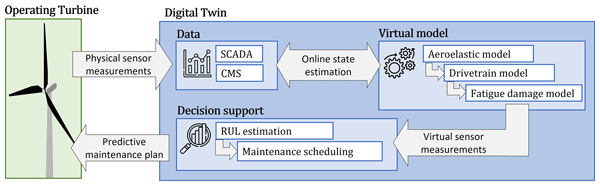
Kayacan Kestel, Xavier Chesterman, Donatella Zappalá, Simon Watson, Mingxin Li, Edward Hart, James Carroll, Yolanda Vidal, Amir R. Nejad, Shawn Sheng, Yi Guo, Matthias Stammler, Florian Wirsing, Ahmed Saleh, Nico Gregarek, Thao Baszenski, Thomas Decker, Martin Knops, Georg Jacobs, Benjamin Lehmann, Florian König, Ines Pereira, Pieter-Jan Daems, Cédric Peeters, and Jan Helsen
Wind Energ. Sci., 11, 2103–2155, https://doi.org/10.5194/wes-11-2103-2026, https://doi.org/10.5194/wes-11-2103-2026, 2026
Short summary
Short summary
Wind energy use has been rapidly expanding worldwide in recent years. Driven by global decarbonization goals and energy security concerns, this growth is expected to continue. To achieve these targets, production costs must decrease, with operation and maintenance being major contributors. This paper reviews current and emerging technologies for monitoring wind turbine drivetrains, and highlights key academic and industrial challenges that may hinder progress.
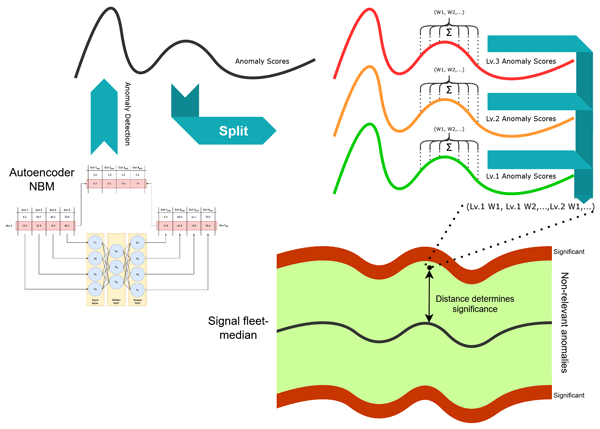
Ivo Vervlimmeren, Xavier Chesterman, Timothy Verstraeten, Ann Nowé, and Jan Helsen
Wind Energ. Sci., 10, 2615–2637, https://doi.org/10.5194/wes-10-2615-2025, https://doi.org/10.5194/wes-10-2615-2025, 2025
Short summary
Short summary
We introduce a new method to refine failure prediction for wind turbines, leading to better and more efficient alarming. We do this by filtering detected anomalies based on the anomalies from the whole fleet. We compare submethods and find one that removes up to 65 % of detected anomalies while leaving the failure-predicting ones. We also detail how we trained the model that generated these anomalies and discuss the construction of the scalable pipeline that was used to deploy such models.

Xavier Chesterman, Timothy Verstraeten, Pieter-Jan Daems, Ann Nowé, and Jan Helsen
Wind Energ. Sci., 8, 893–924, https://doi.org/10.5194/wes-8-893-2023, https://doi.org/10.5194/wes-8-893-2023, 2023
Short summary
Short summary
This paper reviews and implements several techniques that can be used for condition monitoring and failure prediction for wind turbines using SCADA data. The focus lies on techniques that respond to requirements of the industry, e.g., robustness, transparency, computational efficiency, and maintainability. The end result of this research is a pipeline that can accurately detect three types of failures, i.e., generator bearing failures, generator fan failures, and generator stator failures.
Diederik van Binsbergen, Pieter-Jan Daems, Timothy Verstraeten, Konstantinos Vratsinis, Amir Nejad, and Jan Helsen
Wind Energ. Sci. Discuss., https://doi.org/10.5194/wes-2026-120, https://doi.org/10.5194/wes-2026-120, 2026
Revised manuscript has not been submitted
Short summary
Short summary
A key challenge for offshore wind farms is to quantify wakes reliably from turbine measurements. This study develops a statistical approach that learns from measured turbine data how these wakes vary between wind farms and transfers that knowledge to new sites with quantified uncertainty. It also assesses how atmospheric conditions affect wake recovery. The results show that stable conditions lead to slower recovery and larger predicted losses, while unstable conditions support faster recovery.
Rebeca Marini, Konstantinos Vratsinis, Pieter-Jan Daems, Timothy Verstraeten, Etienne Cheynet, and Jan Helsen
Wind Energ. Sci. Discuss., https://doi.org/10.5194/wes-2026-117, https://doi.org/10.5194/wes-2026-117, 2026
Preprint under review for WES
Short summary
Short summary
We studied which environmental conditions affect the power produced by a single wind turbine without interference from nearby turbines. Using measured turbine and weather data together with machine learning, we found that the difference between air and sea temperature has a meaningful influence but is not included in commonly used power corrections. This could improve power predictions and wind resource assessments, and the method can be extended to larger groups of turbines.
Faras Jamil, Cedric Peeters, and Jan Helsen
Wind Energ. Sci. Discuss., https://doi.org/10.5194/wes-2026-83, https://doi.org/10.5194/wes-2026-83, 2026
Revised manuscript under review for WES
Short summary
Short summary
Maintenance costs are a major challenge for the wind energy industry. This research introduces an automated artificial intelligence method to monitor drivetrain health. A model trained on healthy data analyses vibration patterns to identify deviations signalling potential faults. It is validated on offshore farms and has detected all 19 confirmed fault cases. It provides a single health indicator to help operators plan efficient maintenance strategies, reducing the Levelised Cost of Energy.
Kayacan Kestel, Xavier Chesterman, Donatella Zappalá, Simon Watson, Mingxin Li, Edward Hart, James Carroll, Yolanda Vidal, Amir R. Nejad, Shawn Sheng, Yi Guo, Matthias Stammler, Florian Wirsing, Ahmed Saleh, Nico Gregarek, Thao Baszenski, Thomas Decker, Martin Knops, Georg Jacobs, Benjamin Lehmann, Florian König, Ines Pereira, Pieter-Jan Daems, Cédric Peeters, and Jan Helsen
Wind Energ. Sci., 11, 2103–2155, https://doi.org/10.5194/wes-11-2103-2026, https://doi.org/10.5194/wes-11-2103-2026, 2026
Short summary
Short summary
Wind energy use has been rapidly expanding worldwide in recent years. Driven by global decarbonization goals and energy security concerns, this growth is expected to continue. To achieve these targets, production costs must decrease, with operation and maintenance being major contributors. This paper reviews current and emerging technologies for monitoring wind turbine drivetrains, and highlights key academic and industrial challenges that may hinder progress.
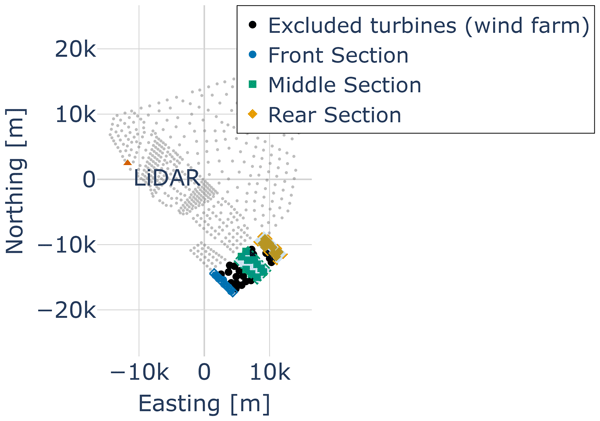
Konstantinos Vratsinis, Rebeca Marini, Pieter-Jan Daems, Lukas Pauscher, Jeroen van Beeck, and Jan Helsen
Wind Energ. Sci., 11, 1803–1820, https://doi.org/10.5194/wes-11-1803-2026, https://doi.org/10.5194/wes-11-1803-2026, 2026
Short summary
Short summary
Using data collected over 13 months at an offshore wind farm, our study shows that a wind turbine’s position within the farm influences its energy output at a given nacelle-measured wind speed. Front-row turbines respond differently to similar wind speeds and turbulence than those further back. This finding suggests that current methods for characterizing inflow conditions may not fully capture actual wind behavior, underscoring the need for improved performance analysis techniques.
Matthias Stammler, Faras Jamil, Xinrun Liu, Jens Jo Matthys, Nikhil Sudhakaran, Cédric Peeters, Asger Bech Abrahamsen, and Jan Helsen
Wind Energ. Sci. Discuss., https://doi.org/10.5194/wes-2026-81, https://doi.org/10.5194/wes-2026-81, 2026
Preprint under review for WES
Short summary
Short summary
This study compares traditional and artificial intelligence supported methods for detecting damage in rotating machine parts. Bearings were tested under controlled conditions to see how well each method identified developing problems. The artificial intelligence supported method detected damage as early as, or earlier than, established techniques while needing far less expert attention. This supports automated monitoring of wind turbines, enabling earlier maintenance and lower operating costs.
Jakob Gebel, Pieter-Jan Daems, Diederik van Binsbergen, Veronica Liverud Krathe, Amir R. Nejad, and Jan Helsen
Wind Energ. Sci. Discuss., https://doi.org/10.5194/wes-2026-13, https://doi.org/10.5194/wes-2026-13, 2026
Revised manuscript under review for WES
Short summary
Short summary
The study examines two critical turbine components: the blades and the main bearings. Computer simulations are used to model how turbines respond to disturbed wind from nearby turbines. The analysis is carried out in two stages: first, different turbine spacings and alignments are tested, and second, the method is applied to a real offshore wind farm in the Belgian North Sea.
Ivo Vervlimmeren, Xavier Chesterman, Timothy Verstraeten, Ann Nowé, and Jan Helsen
Wind Energ. Sci., 10, 2615–2637, https://doi.org/10.5194/wes-10-2615-2025, https://doi.org/10.5194/wes-10-2615-2025, 2025
Short summary
Short summary
We introduce a new method to refine failure prediction for wind turbines, leading to better and more efficient alarming. We do this by filtering detected anomalies based on the anomalies from the whole fleet. We compare submethods and find one that removes up to 65 % of detected anomalies while leaving the failure-predicting ones. We also detail how we trained the model that generated these anomalies and discuss the construction of the scalable pipeline that was used to deploy such models.
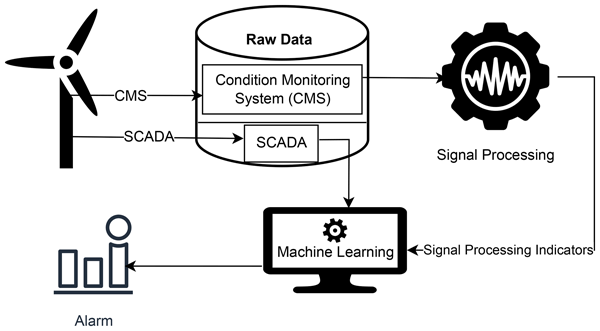
Faras Jamil, Cédric Peeters, Timothy Verstraeten, and Jan Helsen
Wind Energ. Sci., 10, 1963–1978, https://doi.org/10.5194/wes-10-1963-2025, https://doi.org/10.5194/wes-10-1963-2025, 2025
Short summary
Short summary
A hybrid fault detection method is proposed, which combines physical domain knowledge with machine learning models to automatically detect mechanical faults in wind turbine drivetrain components. It offers detailed insights for experts while giving operators a high-level overview of the machine's health to assist in planning effective maintenance strategies. It was validated on multiple years of wind farm data and the potential faults were accurately predicted, which was confirmed by experts.
Simon Daenens, Timothy Verstraeten, Pieter-Jan Daems, Ann Nowé, and Jan Helsen
Wind Energ. Sci., 10, 1137–1152, https://doi.org/10.5194/wes-10-1137-2025, https://doi.org/10.5194/wes-10-1137-2025, 2025
Short summary
Short summary
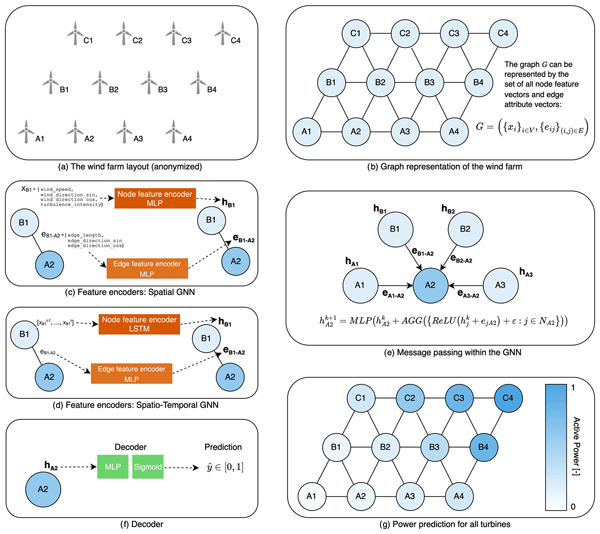
This study presents a novel model for predicting wind turbine power output at a high temporal resolution in wind farms using a hybrid graph neural network (GNN) and long short-term memory (LSTM) architecture. By modeling the wind farm as a graph, the model captures both spatial and temporal dynamics, outperforming traditional power curve methods. Integrated with a normal behavior model (NBM) framework, the model effectively identifies and analyzes power loss events.
Stijn Ally, Timothy Verstraeten, Pieter-Jan Daems, Ann Nowé, and Jan Helsen
Wind Energ. Sci., 10, 779–812, https://doi.org/10.5194/wes-10-779-2025, https://doi.org/10.5194/wes-10-779-2025, 2025
Short summary
Short summary
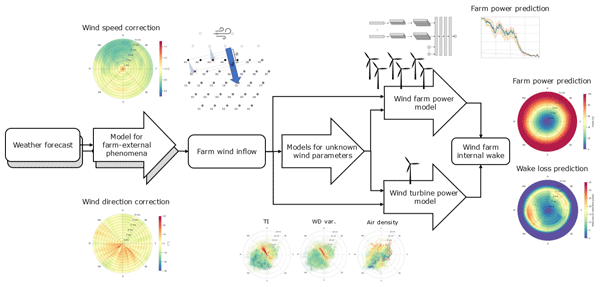
Wind farms are crucial for a sustainable energy future. However, their power can fluctuate significantly due to changing weather conditions, which complexly affect their power generation. This paper presents a novel machine-learning-based method to enhance wind farm power predictions, enabling improved power scheduling, trading and grid balancing. This makes wind power more valuable and easier to integrate into the energy system.
Jakob Gebel, Ashkan Rezaei, Adithya Vemuri, Veronica Liverud Krathe, Pieter-Jan Daems, Jens Jo Matthys, Jonathan Sterckx, Konstantinos Vratsinis, Kayacan Kestel, Amir R. Nejad, and Jan Helsen
Wind Energ. Sci. Discuss., https://doi.org/10.5194/wes-2024-173, https://doi.org/10.5194/wes-2024-173, 2025
Revised manuscript under review for WES
Short summary
Short summary
A simulation model of a deployed offshore wind turbine was developed using real-world measurement data. The method shows how to obtain, update and validate a simulation model and allows to improve the efficiency and longevity of offshore wind turbines and support operation and maintenance decisions. Simulations were conducted to analyze the effects of turbulence and wind patterns on turbine lifespan, providing insights to improve maintenance planning and reduce operational costs.
Rebeca Marini, Konstantinos Vratsinis, Kayacan Kestel, Jonathan Sterckx, Jens Matthys, Pieter-Jan Daems, Timothy Verstraeten, and Jan Helsen
Wind Energ. Sci. Discuss., https://doi.org/10.5194/wes-2025-9, https://doi.org/10.5194/wes-2025-9, 2025
Revised manuscript not accepted
Short summary
Short summary
This work evaluated the wind profile in a Belgian offshore zone. The estimated wind profile was made using measurements that allow for reconstruction at heights along the rotor area. The IEC standard defines these profiles as a 1/7th power law, which is proven not to occur 100 % of the time. It is also possible to infer that there will be differences when using different wind profiles for load assessment, as more realistic profiles can lead to a better assessment of the wind turbine's lifetime.
Diederik van Binsbergen, Pieter-Jan Daems, Timothy Verstraeten, Amir R. Nejad, and Jan Helsen
Wind Energ. Sci., 9, 1507–1526, https://doi.org/10.5194/wes-9-1507-2024, https://doi.org/10.5194/wes-9-1507-2024, 2024
Short summary
Short summary
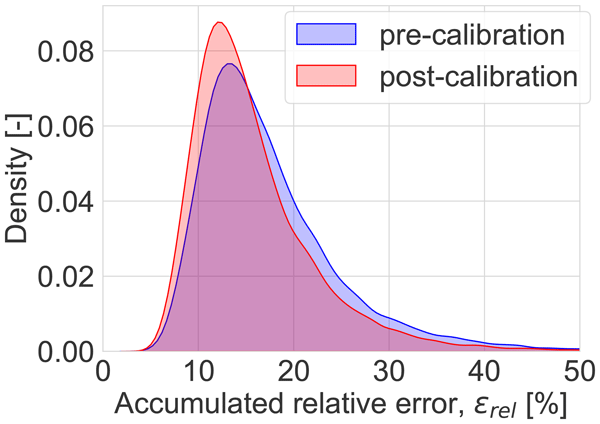
Wind farm yield assessment often relies on analytical wake models. Calibrating these models can be challenging due to the stochastic nature of wind. We developed a calibration framework that performs a multi-phase optimization on the tuning parameters using time series SCADA data. This yields a parameter distribution that more accurately reflects reality than a single value. Results revealed notable variation in resultant parameter values, influenced by nearby wind farms and coastal effects.
Xavier Chesterman, Timothy Verstraeten, Pieter-Jan Daems, Ann Nowé, and Jan Helsen
Wind Energ. Sci., 8, 893–924, https://doi.org/10.5194/wes-8-893-2023, https://doi.org/10.5194/wes-8-893-2023, 2023
Short summary
Short summary
This paper reviews and implements several techniques that can be used for condition monitoring and failure prediction for wind turbines using SCADA data. The focus lies on techniques that respond to requirements of the industry, e.g., robustness, transparency, computational efficiency, and maintainability. The end result of this research is a pipeline that can accurately detect three types of failures, i.e., generator bearing failures, generator fan failures, and generator stator failures.
Adithya Vemuri, Sophia Buckingham, Wim Munters, Jan Helsen, and Jeroen van Beeck
Wind Energ. Sci., 7, 1869–1888, https://doi.org/10.5194/wes-7-1869-2022, https://doi.org/10.5194/wes-7-1869-2022, 2022
Short summary
Short summary
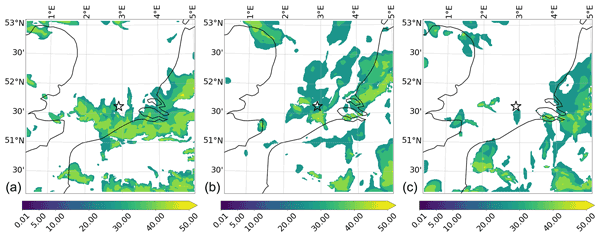
The sensitivity of the WRF mesoscale modeling framework in accurately representing and predicting wind-farm-level environmental variables for three extreme weather events over the Belgian North Sea is investigated in this study. The overall results indicate highly sensitive simulation results to the type and combination of physics parameterizations and the type of the weather phenomena, with indications that scale-aware physics parameterizations better reproduce wind-related variables.
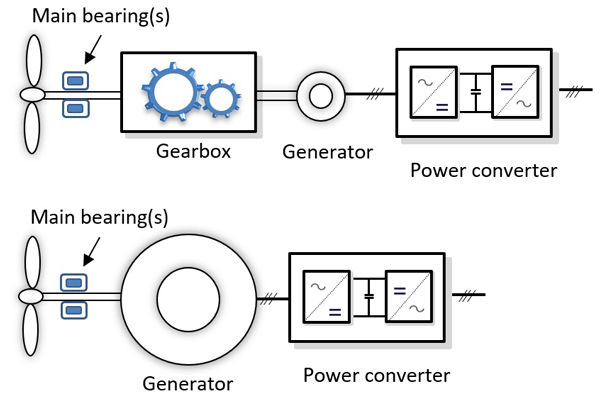
Amir R. Nejad, Jonathan Keller, Yi Guo, Shawn Sheng, Henk Polinder, Simon Watson, Jianning Dong, Zian Qin, Amir Ebrahimi, Ralf Schelenz, Francisco Gutiérrez Guzmán, Daniel Cornel, Reza Golafshan, Georg Jacobs, Bart Blockmans, Jelle Bosmans, Bert Pluymers, James Carroll, Sofia Koukoura, Edward Hart, Alasdair McDonald, Anand Natarajan, Jone Torsvik, Farid K. Moghadam, Pieter-Jan Daems, Timothy Verstraeten, Cédric Peeters, and Jan Helsen
Wind Energ. Sci., 7, 387–411, https://doi.org/10.5194/wes-7-387-2022, https://doi.org/10.5194/wes-7-387-2022, 2022
Short summary
Short summary
This paper presents the state-of-the-art technologies and development trends of wind turbine drivetrains – the energy conversion systems transferring the kinetic energy of the wind to electrical energy – in different stages of their life cycle: design, manufacturing, installation, operation, lifetime extension, decommissioning and recycling. The main aim of this article is to review the drivetrain technology development as well as to identify future challenges and research gaps.
Cited articles
Balaban, E., Saxena, A., Bansal, P., Goebel, K. F., and Curran, S.: Modeling, Detection, and Disambiguation of Sensor Faults for Aerospace Applications, IEEE Sens. J., 9, 1907–1917, https://doi.org/10.1109/JSEN.2009.2030284, 2009. a, b, c
Bermúdez, K., Ortiz-Holguin, E., Tutivén, C., Vidal, Y., and Benalcázar-Parra, C.: Wind Turbine Main Bearing Failure Prediction using a Hybrid Neural Network, J. Phys. Conf. Ser., 2265, 032090, https://doi.org/10.1088/1742-6596/2265/3/032090, 2022. a
BIPM, IEC, IFCC, ILAC, ISO, IUPAC, IUPAP, and OIML: Evaluation of measurement data — Guide to the expression of uncertainty in measurement, Joint Committee for Guides in Metrology, JCGM, 100, 2008, https://doi.org/10.59161/JCGM100-2008E, 2008. a
Black, I. M., Richmond, M., and Kolios, A.: Condition monitoring systems: a systematic literature review on machine-learning methods improving offshore-wind turbine operational management, Int. J. Sustain. Energy, 40, 923–946, https://doi.org/10.1080/14786451.2021.1890736, 2021. a
Campoverde, L., Tutivén, C., Vidal, Y., and Benaláazar-Parra, C.: SCADA Data-Driven Wind Turbine Main Bearing Fault Prognosis Based on Principal Component Analysis, J. Phys. Conf. Ser., 2265, 032107, https://doi.org/10.1088/1742-6596/2265/3/032107, 2022. a
Castellani, F., Astolfi, D., and Natili, F.: SCADA Data Analysis Methods for Diagnosis of Electrical Faults to Wind Turbine Generators, Appl. Sci., 11, 1–14, https://doi.org/10.3390/app11083307, 2021. a
Chatterjee, J. and Dethlefs, N.: Scientometric review of artificial intelligence for operations & maintenance of wind turbines: The past, present and future, Renew. Sustain. Energy Rev., 144, 111051, https://doi.org/10.1016/j.rser.2021.111051, 2021. a
Chen, H., Zhang, W., Wang, Y., and Yang, X.: Improving Masked Autoencoders by Learning Where to Mask, arXiv [preprint], https://doi.org/10.48550/arXiv.2303.06583, 2024. a
Chesterman, X., Verstraeten, T., Daems, P.-J., Sanjines, F. P., Nowé, A., and Helsen, J.: The detection of generator bearing failures on wind turbines using machine learning based anomaly detection, J. Phys. Conf. Ser., 2265, 032066, https://doi.org/10.1088/1742-6596/2265/3/032066, 2022. a
Chesterman, X., Verstraeten, T., Daems, P.-J., Nowé, A., and Helsen, J.: Overview of normal behavior modeling approaches for SCADA-based wind turbine condition monitoring demonstrated on data from operational wind farms, Wind Energ. Sci., 8, 893–924, https://doi.org/10.5194/wes-8-893-2023, 2023. a
Costanzo, G., Brindley, B., and Tardieu, P.: Wind energy in Europe: 2024 Statistics and the outlook for 2025-2030, Wind Europe, Brussels, Belgium, 2025. a
Dao, P. B.: On Cointegration Analysis for Condition Monitoring and Fault Detection of Wind Turbines Using SCADA Data, Energies, 16, 2352, https://doi.org/10.3390/en16052352, 2023. a
Devlin, J., Chang, M.-W., Lee, K., and Toutanova, K.: BERT: Pre-training of Deep Bidirectional Transformers for Language Understanding, NAACL-HLT, 1, https://doi.org/10.18653/v1/N19-1423, 2019. a
Du, T., Melis, L., and Wang, T.: ReMasker: Imputing Tabular Data with Masked Autoencoding, arXiv [preprint], https://doi.org/10.48550/arXiv.2309.13793, 2023. a
Efron, B.: Bootstrap Methods: Another Look at the Jackknife, Ann. Statist., 7, 1–26, https://doi.org/10.1214/aos/1176344552, 1979. a
Fu, Y. and Yan, W.: One Masked Model is All You Need for Sensor Fault Detection, Isolation and Accommodation, arXiv [preprint], https://doi.org/10.48550/arXiv.2403.16153, 2024. a, b
He, K., Chen, X., Xie, S., Li, Y., Dollár, P., and Girshick, R.: Masked Autoencoders Are Scalable Vision Learners, arXiv [preprint], https://doi.org/10.48550/arXiv.2111.06377, 2021. a
Kestel, K., Chesterman, X., Zappalá, D., Watson, S., Li, M., Hart, E., Carroll, J., Vidal, Y., Nejad, A. R., Sheng, S., Guo, Y., Stammler, M., Wirsing, F., Saleh, A., Gregarek, N., Baszenski, T., Decker, T., Knops, M., Jacobs, G., Lehmann, B., König, F., Pereira, I., Daems, P.-J., Peeters, C., and Helsen, J.: Condition monitoring of wind turbine drivetrains: State-of-the-art technologies, recent trends, and future outlook, Wind Energ. Sci. Discuss. [preprint], https://doi.org/10.5194/wes-2025-168, in review, 2025. a, b, c, d
Kim, J., Lee, K., and Park, T.: To predict or not to predict? proportionally masked autoencoders for tabular data imputation, in: Proceedings of the Thirty-Ninth AAAI Conference on Artificial Intelligence and Thirty-Seventh Conference on Innovative Applications of Artificial Intelligence and Fifteenth Symposium on Educational Advances in Artificial Intelligence, AAAI'25/IAAI'25/EAAI'25, AAAI Press, ISBN 978-1-57735-897-8, https://doi.org/10.1609/aaai.v39i17.33967, 2025. a
Lee, Y., Park, C., Kim, N., Ahn, J., and Jeong, J.: LSTM-Autoencoder Based Anomaly Detection Using Vibration Data of Wind Turbines, Sensors, 24, 2833, https://doi.org/10.3390/s24092833, 2024. a
Li, L., Jamieson, K., DeSalvo, G., Rostamizadeh, A., and Talwalkar, A.: Hyperband: A Novel Bandit-Based Approach to Hyperparameter Optimization, J. Mach. Learn. Res., 18, 1–52, https://doi.org/10.48550/arXiv.1603.06560, 2018. a
Li, Z., Rao, Z., Pan, L., Wang, P., and Xu, Z.: Ti-MAE: Self-Supervised Masked Time Series Autoencoders, arXiv [preprint], https://doi.org/10.48550/arXiv.2301.08871, 2023. a
Madan, N., Ristea, N.-C., Nasrollahi, K., Moeslund, T. B., and Ionescu, R. T.: CL-MAE: Curriculum-Learned Masked Autoencoders, arXiv [preprint], https://doi.org/10.48550/arXiv.2308.16572, 2024. a
Majmundar, K., Goyal, S., Netrapalli, P., and Jain, P.: MET: Masked Encoding for Tabular Data, arXiv [preprint], https://doi.org/10.48550/arXiv.2206.08564, 2022. a
Maron, J., Anagnostos, D., Brodbeck, B., and Meyer, A.: Artificial intelligence-based condition monitoring and predictive maintenance framework for wind turbines, J. Phys. Conf. Ser., 2151, 1–9, https://doi.org/10.1088/1742-6596/2151/1/012007, 2022. a
Shaffer, J.: Multiple hypothesis testing, Annu. Rev. Psychol., 64, 561–584, 1995. a
Stehly, T., Duffy, P., and Mulas Hernando, D.: Cost of Wind Energy Review: 2024 Edition, National Renewable Energy Laboratory, Denver, USA, 2024. a
Tautz-Weinert, J. and Watson, S. J.: Using SCADA data for wind turbine condition monitoring – a review, IET Renew. Power Gener., 11, 382–394, https://doi.org/10.1049/iet-rpg.2016.0248, 2017. a, b
Teh, H. Y., Kempa-Liehr, A. W., and Wang, K. I.-K.: Sensor data quality: a systematic review, J. Big Data, 7, https://doi.org/10.1186/s40537-020-0285-1, 2020. a, b
Trapani, N. and Longo, L.: Fault Detection and Diagnosis Methods for Sensors Systems: a Scientific Literature Review, 22nd IFAC World Congress, IFAC-PapersOnLine, 56, 1253–1263, https://doi.org/10.1016/j.ifacol.2023.10.1749, 2023. a
Trizoglou, P., Liu, X., and Lin, Z.: Fault detection by an ensemble framework of Extreme Gradient Boosting (XGBoost) in the operation of offshore wind turbines, Renew. Energy, 179, 945–962, https://doi.org/10.1016/j.renene.2021.07.085, 2021. a
Turnbull, A., Carroll, J., and McDonald, A.: Combining SCADA and vibration data into a single anomaly detection model to predict wind turbine component failure, Wind Energy, 24, 197–211, https://doi.org/10.1002/we.2567, 2021. a
Verma, A., Zappalá, D., Sheng, S., and Watson, S. J.: Wind turbine gearbox fault prognosis using high-frequency SCADA data, J. Phys. Conf. Ser., 2265, 032067, https://doi.org/10.1088/1742-6596/2265/3/032067, 2022. a
Wang, S., Vidal, Y., and Pozo, F.: Recent advances in wind turbine condition monitoring using SCADA data: A state-of-the-art review, Reliab. Eng. Syst. Safety., 267, 111838, https://doi.org/10.1016/j.ress.2025.111838, 2026. a, b, c
Short summary
This paper presents a sensor-error-robust methodology for failure prediction in wind turbines. Sensor malfunctions pose a significant challenge for data-driven prognostic approaches. The proposed method employs a masked autoencoder that enables selective deactivation of signals. Evaluation is done using data from several operational offshore wind farms. Results demonstrate that the model effectively mitigates the impact of sensor errors while maintaining high accuracy in failure prediction.
This paper presents a sensor-error-robust methodology for failure prediction in wind turbines....


Altmetrics
Final-revised paper
Preprint