
Articles | Volume 11, issue 4
https://doi.org/10.5194/wes-11-1305-2026
© Author(s) 2026. This work is distributed under
the Creative Commons Attribution 4.0 License.
the Creative Commons Attribution 4.0 License.
https://doi.org/10.5194/wes-11-1305-2026
© Author(s) 2026. This work is distributed under
the Creative Commons Attribution 4.0 License.
the Creative Commons Attribution 4.0 License.
Research article
| 
21 Apr 2026
Research article |
| 21 Apr 2026
| 21 Apr 2026
Enhanced approach to match damage-equivalent loads in rotor blade fatigue testing
David Melcher
Department of Rotor Blades, Fraunhofer IWES, Fraunhofer Institute for Wind Energy Systems, Am Seedeich 45, 27572 Bremerhaven, Germany
Department of Wind and Energy Systems, Technical University of Denmark, Risø Campus, 4000 Roskilde, Denmark
Peter Berring
Department of Wind and Energy Systems, Technical University of Denmark, Risø Campus, 4000 Roskilde, Denmark
Kim Branner
Department of Wind and Energy Systems, Technical University of Denmark, Risø Campus, 4000 Roskilde, Denmark
Enno Petersen
CORRESPONDING AUTHOR
Department of Rotor Blades, Fraunhofer IWES, Fraunhofer Institute for Wind Energy Systems, Am Seedeich 45, 27572 Bremerhaven, Germany
Related authors
Pablo Noever-Castelos, David Melcher, and Claudio Balzani
Wind Energ. Sci., 7, 623–645, https://doi.org/10.5194/wes-7-623-2022, https://doi.org/10.5194/wes-7-623-2022, 2022
Short summary
Short summary
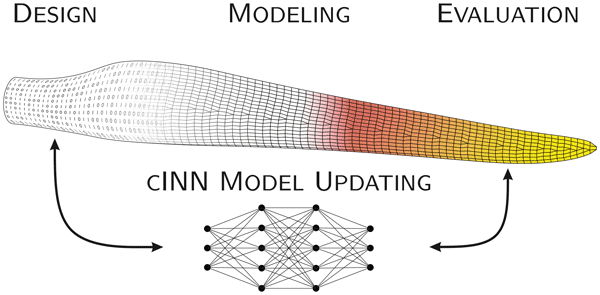
In the wind energy industry, a digital twin is fast becoming a key instrument for the monitoring of a wind turbine blade's life cycle. Here, our introduced model updating with invertible neural networks provides an efficient and powerful technique to represent the real blade as built. This method is applied to a full finite element Timoshenko beam model of a blade to successfully update material and layup parameters. The advantage over state-of-the-art methods is the established inverse model.
Malo Rosemeier, Matthias Saathoff, Johannes Kolsch, Pablo Buriticá, Enno Petersen, and Christopher Beer
Wind Energ. Sci., 11, 1–11, https://doi.org/10.5194/wes-11-1-2026, https://doi.org/10.5194/wes-11-1-2026, 2026
Short summary
Short summary
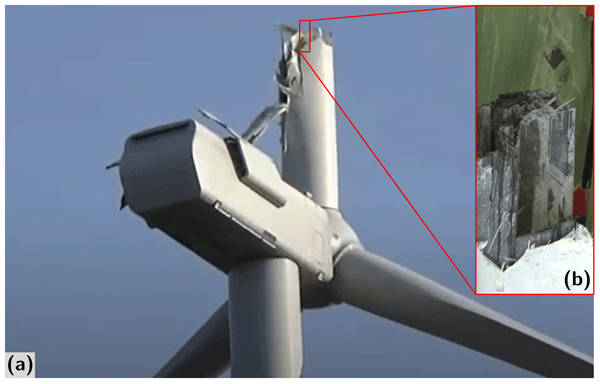
This research explores a method for repairing wind turbine blades made from carbon fiber while they remain installed, eliminating costly disassembly. It addresses the challenges of repairing damaged blades and proposes a practical solution to improve repair efficiency. Through structural analysis, we found that this approach can ensure safety during repairs, providing significant benefits to the wind energy industry.
Heloisa Guedes Mendonça, Lars Pilgaard Mikkelsen, Xiao Chen, Johannes Bode, Flemming Mortensen, Philipp Ulrich Haselbach, and Kim Branner
Wind Energ. Sci., 7, 2513–2525, https://doi.org/10.5194/wes-7-2513-2022, https://doi.org/10.5194/wes-7-2513-2022, 2022
Short summary
Short summary
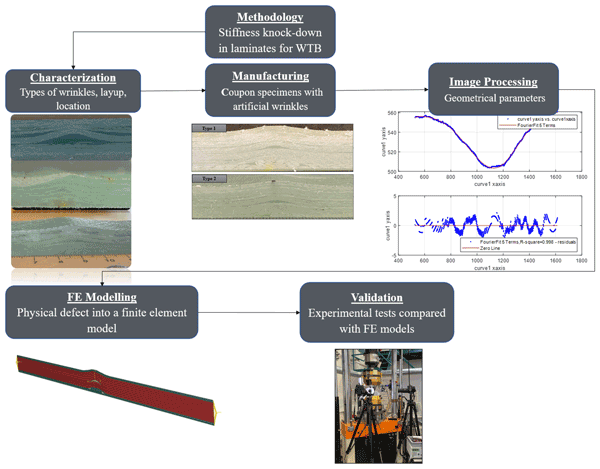
Wrinkles are production defects of wind turbine blades characterized by fibre waviness through the laminate thickness. Such defects are pointed to as one of the primary sources of premature failure of the blade, which impacts the structure's structural reliability. This work shows a methodology to evaluate the impact of wrinkles on wind turbine blades featuring preliminary results, which present the detrimental effect of small wrinkles on the structural response of the blade.
Pablo Noever-Castelos, David Melcher, and Claudio Balzani
Wind Energ. Sci., 7, 623–645, https://doi.org/10.5194/wes-7-623-2022, https://doi.org/10.5194/wes-7-623-2022, 2022
Short summary
Short summary
In the wind energy industry, a digital twin is fast becoming a key instrument for the monitoring of a wind turbine blade's life cycle. Here, our introduced model updating with invertible neural networks provides an efficient and powerful technique to represent the real blade as built. This method is applied to a full finite element Timoshenko beam model of a blade to successfully update material and layup parameters. The advantage over state-of-the-art methods is the established inverse model.
Cited articles
ASTM E1049-85: Standard Practices for Cycle Counting in Fatigue Analysis, Standard, American Society for Testing and Materials, West Conshohocken, Pennsylvania, USA, https://doi.org/10.1520/E1049-85R17, 2017. a
Barlas, A., Zahle, F., and Semenov, S.: IEC 22MW reference turbine DLC 1.2, Technical University of Denmark [data set], https://doi.org/10.11583/DTU.31634977, 2026. a
Blasques, J. P. and Stolpe, M.: Multi-material topology optimization of laminated composite beam cross sections, Composite Structures, 94, 3278–3289, https://doi.org/10.1016/j.compstruct.2012.05.002, 2012. a
Brazier, L. G.: On the flexure of thin cylindrical shells and other “thin” sections, Proceedings of the Royal Society of London. Series A, Containing Papers of a Mathematical and Physical Character, 116, 104–114, https://doi.org/10.1098/rspa.1927.0125, 1927. a
Bürkner, F.: Biaxial Dynamic Fatigue Tests of Wind Turbine Blades, PhD thesis, Leibniz University Hannover, https://doi.org/10.15488/10903, 2020. a
Bürkner, F. and van Wingerde, A.: Testing of Rotor Blades, in: Proceedings of the 8th International Conference on Structural Dynamics, EURODYN 2011, https://bwk.kuleuven.be/apps/bwm/eurodyn2011/papers/MS25-1473.pdf (last access: 20 February 2026), 2011. a
Camarena, E., Anderson, E., Paquette, J., Bortolotti, P., Feil, R., and Johnson, N.: Land-based wind turbines with flexible rail-transportable blades – Part 2: 3D finite element design optimization of the rotor blades, Wind Energ. Sci., 7, 19–35, https://doi.org/10.5194/wes-7-19-2022, 2022. a
Castro, O., Belloni, F., Stolpe, M., Yeniceli, S. C., Berring, P., and Branner, K.: Optimized method for multi-axial fatigue testing of wind turbine blades, Composite Structures, 257, 113358, https://doi.org/10.1016/j.compstruct.2020.113358, 2021a. a
Castro, O., Yeniceli, S. C., Berring, P., Semenov, S., and Branner, K.: Experimental demonstration of strain-based damage method for optimized fatigue testing of wind turbine blades, Composite Structures, 293, 115683, https://doi.org/10.1016/j.compstruct.2022.115683, 2022. a
DNV-ST-0437:2024: Loads and site conditions for wind turbines, Standard, Det Norske Veritas, Høvik, Norway, https://www.dnv.com/energy/standards-guidelines/dnv-st-0437-loads-and-site-conditions-for-wind-turbines/ (last access: 20 February 2026), 2024. a
Freebury, G. and Musial, W.: Determining equivalent damage loading for full-scale wind turbine blade fatigue tests, in: 2000 ASME Wind Energy Symposium, pp. 287–296, https://doi.org/10.2514/6.2000-50, 2000. a
Gao, F. and Han, L.: Implementing the Nelder–Mead simplex algorithm with adaptive parameters, Computational Optimization and Applications, 51, 259–277, https://doi.org/10.1007/s10589-010-9329-3, 2012. a
Gözcü, O. and Verelst, D. R.: The effects of blade structural model fidelity on wind turbine load analysis and computation time, Wind Energ. Sci., 5, 503–517, https://doi.org/10.5194/wes-5-503-2020, 2020. a
Greaves, P. R., Dominy, R. G., Ingram, G. L., Long, H., and Court, R.: Evaluation of dual-axis fatigue testing of large wind turbine blades, Proceedings of the Institution of Mechanical Engineers, Part C: Journal of Mechanical Engineering Science, 226, 1693–1704, https://doi.org/10.1177/0954406211428013, 2012. a, b
Hughes, S. D., Musial, W. D., and Stensland, T.: Implementation of a Two-Axis Servo-Hydraulic System for Full-Scale Fatigue Testing of Wind Turbine Blades, National Renewable Energy Lab. (NREL), Golden, CO (United States), https://www.osti.gov/biblio/12200 (last access: 20 February 2026), 1999. a
IEC 61400-23:2026(CD): Wind turbines – Part 23: Full-scale structural testing of rotor blades. Committee Draft, Standard draft, International Electrotechnical Commission, Geneva, Switzerland, https://www.iec.ch/dyn/www/f?p=103:38:414585481663836::::FSP_ORG_ID,FSP_APEX_PAGE,FSP_PROJECT_ID:1282,23,124692 (last access: 20 February 2026), 2024. a
Jones, R. M.: Machanics of Composite Materials, Second Edition, Taylor & Francis, https://doi.org/10.1201/9781498711067, 2018. a, b
Ma, Q., An, Z.-W., Gao, J.-X., Kou, H.-X., and Bai, X.-Z.: A method of determining test load for full-scale wind turbine blade fatigue tests, Journal of Mechanical Science and Technology, 32, 5097–5104, https://doi.org/10.1007/s12206-018-1006-y, 2018. a
Madsen, P., Frandsen, S., Holley, W., and Hansen, J.: Dynamics and Fatigue Damage of Wind Turbine Rotors during Steady Operation, no. 512 in Denmark, Forskningscenter Risoe, Risoe-R, Danmarks Tekniske Universitet, Risø Nationallaboratoriet for Bæredygtig Energi, 1984. a
Melcher, D., Bätge, M., and Neßlinger, S.: A novel rotor blade fatigue test setup with elliptical biaxial resonant excitation, Wind Energ. Sci., 5, 675–684, https://doi.org/10.5194/wes-5-675-2020, 2020a. a
Melcher, D., Petersen, E., and Neßlinger, S.: Off-axis loading in rotor blade fatigue tests with elliptical biaxial resonant excitation, Journal of Physics: Conference Series, 1618, 052010, https://doi.org/10.1088/1742-6596/1618/5/052010, 2020b. a, b
Melcher, D., Rosemann, H., Haller, B., Neßlinger, S., Petersen, E., and Rosemeier, M.: Proof of concept: elliptical biaxial rotor blade fatigue test with resonant excitation, IOP Conference Series: Materials Science and Engineering, 942, 012007, https://doi.org/10.1088/1757-899X/942/1/012007, 2020c. a
Post, N. and Bürkner, F.: Fatigue Test Design: Scenarios for Biaxial Fatigue Testing of a 60-Meter Wind Turbine Blade, Tech. rep., National Renewable Energy Laboratory, Golden, CO, (United States), https://doi.org/10.2172/1271941, 2016. a
Previtali, F. and Eyb, E.: An improved approach for the fatigue calculation of rotor blades based on sector loads, Wind Engineering, 45, 1479–1490, https://doi.org/10.1177/0309524X20985320, 2021. a
Reddy, J.: Mechanics of Laminated Composite Plates and Shells – Theory and Analysis, 2. edn., CRC Press, Boca Raton, https://doi.org/10.1201/b12409, 2003. a
Rosemeier, M. and Antoniou, A.: Probabilistic Approach for the Fatigue Strength Prediction of Polymers, AIAA Journal, 60, 951–961, https://doi.org/10.2514/1.J060444, 2022. a
Snowberg, D., Dana, S., Hughes, S., and Berling, P.: Implementation of a biaxial resonant fatigue test method on a large wind turbine blade, Tech. rep., National Renewable Energy Lab.(NREL), Golden, CO (United States), https://doi.org/10.2172/1155105, 2014. a
Stüssi, F.: Tragwerke aus Aluminium, Springer Berlin Heidelberg, Berlin, Heidelberg, https://doi.org/10.1007/978-3-642-92661-7, 1955. a
Sutherland, H. and Mandell, J.: Optimised Goodman diagram for the analysis of fiberglass composites used in wind turbine blades, in: A Collection of the 2005 ASME Wind Energy Symposium: Technical Papers Presented at the 43rd AIAA Aerospace Sciences Meeting and Exhibit, Reno, Nevada 10, pp. 18–27, https://doi.org/0.2514/6.2005-196, 2005. a
Timoshenko, S.: On the correction for shear of the differential equation for transverse vibrations of prismatic bars, The London, Edinburgh, and Dublin Philosophical Magazine and Journal of Science, 41, 744–746, https://doi.org/10.1080/14786442108636264, 1921. a
van Delft, D., van Leeuwen, J., Noordhoek, C., and Stolle, P.: Fatigue testing of a full scale steel rotor blade of the WPS-30 wind turbine, Journal of Wind Engineering and Industrial Aerodynamics, 27, 1–13, https://doi.org/10.1016/0167-6105(88)90019-0, 1988. a
Veers, P. S.: Blade Fatigue Life Assessment With Application to VAWTS, Journal of Solar Energy Engineering, 104, 106–111, https://doi.org/10.1115/1.3266281, 1982. a
White, D.: New Method for Dual-Axis Fatigue Testing of Large Wind Turbine Blades Using Resonance Excitation and Spectral Loading, Tech. rep., National Renewable Energy Lab., Golden, CO (United States), https://doi.org/10.2172/15007390, 2004. a
White, D., Musial, W., and Engberg, S.: Evaluation of the B-REX fatigue testing system for multi-megawatt wind turbine blades, in: 43rd AIAA Aerospace Sciences Meeting and Exhibit, p. 199, https://doi.org/10.2514/6.2005-199, 2005. a
White, D., Desmond, M., Gowharji, W., Beckwith, J. A., and Meierjurgen, K. J.: Development of a dual-axis phase-locked resonant excitation test method for fatigue testing of wind turbine blades, in: ASME 2011 International Mechanical Engineering Congress and Exposition, American Society of Mechanical Engineers Digital Collection, pp. 1163–1172, https://doi.org/10.1115/IMECE2011-63724, 2011. a
Zahle, F., Barlas, A., Lønbæk, K., Bortolotti, P., Zalkind, D., Wang, L., Labuschagne, C., Sethuraman, L., and Barter, G.: Definition of the IEA Wind 22-Megawatt Offshore Reference Wind Turbine, dTU Wind Energy Report E-0243 IEA Wind TCP Task 55, Technical University of Denmark, https://doi.org/10.11581/DTU.00000317, 2024. a, b, c
Short summary
This study shows that conventional methods in rotor blade fatigue testing can lead to substantial under-testing across major blade areas because material fatigue behavior is not well represented. An improved approach, based on strain-proportional loads with mean load correction, is proposed to define loads that produce sufficient fatigue damage across all blade areas. The results suggest that this can require up to 16 % higher uniaxial fatigue test loads than needed by conventional methods.
This study shows that conventional methods in rotor blade fatigue testing can lead to...


Altmetrics
Final-revised paper
Preprint