
Articles | Volume 11, issue 6
https://doi.org/10.5194/wes-11-2307-2026
© Author(s) 2026. This work is distributed under
the Creative Commons Attribution 4.0 License.
the Creative Commons Attribution 4.0 License.
https://doi.org/10.5194/wes-11-2307-2026
© Author(s) 2026. This work is distributed under
the Creative Commons Attribution 4.0 License.
the Creative Commons Attribution 4.0 License.
Research article
| 
01 Jul 2026
Research article |
| 01 Jul 2026
| 01 Jul 2026
Characterization and bias correction of low-level jets at FINO1 using lidar observations and reanalysis data

Geophysical Institute and Bergen Offshore Wind Centre, University of Bergen, Bergen, Norway
Bjerknes Centre for Climate Research, Bergen, Norway
Mostafa Bakhoday-Paskyabi
Geophysical Institute and Bergen Offshore Wind Centre, University of Bergen, Bergen, Norway
Bjerknes Centre for Climate Research, Bergen, Norway
Joachim Reuder
Geophysical Institute and Bergen Offshore Wind Centre, University of Bergen, Bergen, Norway
Bjerknes Centre for Climate Research, Bergen, Norway
Related authors
Hai Bui, Mostafa Bakhoday-Paskyabi, and Joachim Reuder
Wind Energ. Sci. Discuss., https://doi.org/10.5194/wes-2026-66, https://doi.org/10.5194/wes-2026-66, 2026
Revised manuscript under review for WES
Short summary
Short summary
Computer simulations for wind energy are often slow because they take a long time to reach a stable state, wasting time and resources. We developed a "smart control" technique to speed this up. By dynamically adjusting the forces driving the model, we reduced the setup time from twenty-four hours to just two hours. This method allows researchers to reach desired wind conditions quickly and accurately, making wind energy research and weather modeling much more efficient and cost-effective.
Hai Bui and Mostafa Bakhoday-Paskyabi
EGUsphere, https://doi.org/10.48550/arXiv.2306.16043, https://doi.org/10.48550/arXiv.2306.16043, 2025
Preprint archived
Short summary
Short summary
We developed a new way to improve the correction of data by using a probability-based method called kernel density estimation. Our approach adapts the size and shape of the core probability functions, leading to more accurate corrections while also allowing us to measure the uncertainty of the results. Tests on both simple and realistic datasets show that our method outperforms existing ones, offering a practical tool for more reliable data analysis.
Hai Bui, Mostafa Bakhoday-Paskyabi, and Mohammadreza Mohammadpour-Penchah
Geosci. Model Dev., 17, 4447–4465, https://doi.org/10.5194/gmd-17-4447-2024, https://doi.org/10.5194/gmd-17-4447-2024, 2024
Short summary
Short summary
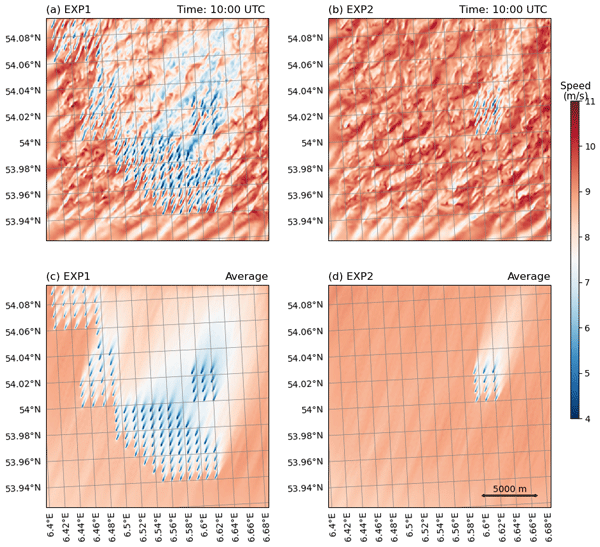
We developed a new wind turbine wake model, the Simple Actuator Disc for Large Eddy Simulation (SADLES), integrated with the widely used Weather Research and Forecasting (WRF) model. WRF-SADLES accurately simulates wind turbine wakes at resolutions of a few dozen meters, aligning well with idealized simulations and observational measurements. This makes WRF-SADLES a promising tool for wind energy research, offering a balance between accuracy, computational efficiency, and ease of implementation.
Shokoufeh Malekmohammadi, Etienne Cheynet, Joachim Reuder, Claus Linnemann, Mikael Sjöholm, Jakob Mann, and Gregor Giebel
Atmos. Meas. Tech., 19, 6267–6292, https://doi.org/10.5194/amt-19-6267-2026, https://doi.org/10.5194/amt-19-6267-2026, 2026
Short summary
Short summary
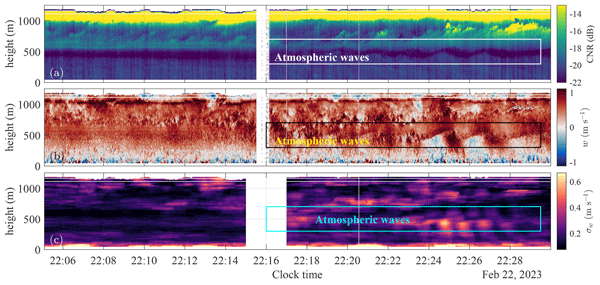
This study presents a lidar measurement strategy developed during a one-year offshore campaign. A ship-based scanning lidar provided high-resolution vertical wind measurements used to study turbulent mixing and atmospheric waves, complemented by wind speed profiles from a co-located wind profiler. A scanning lidar on a fixed platform observed turbine wakes, supported by the ship-based profiler. The results demonstrate the value of the strategy and dataset for wind energy and atmospheric science.
Hai Bui, Mostafa Bakhoday-Paskyabi, and Joachim Reuder
Wind Energ. Sci. Discuss., https://doi.org/10.5194/wes-2026-66, https://doi.org/10.5194/wes-2026-66, 2026
Revised manuscript under review for WES
Short summary
Short summary
Computer simulations for wind energy are often slow because they take a long time to reach a stable state, wasting time and resources. We developed a "smart control" technique to speed this up. By dynamically adjusting the forces driving the model, we reduced the setup time from twenty-four hours to just two hours. This method allows researchers to reach desired wind conditions quickly and accurately, making wind energy research and weather modeling much more efficient and cost-effective.
Louis Pauchet, Valentin Chabaud, and Mostafa Bakhoday Paskyabi
Wind Energ. Sci. Discuss., https://doi.org/10.5194/wes-2026-58, https://doi.org/10.5194/wes-2026-58, 2026
Revised manuscript under review for WES
Short summary
Short summary
This research aimed to create realistic long-term wind data for offshore wind farms by combining large-scale weather patterns with small-scale turbulence. Using high-resolution weather data and validated against real offshore measurements, the method accurately reproduces wind speed and turbulence levels over hours. The model performs best in stable conditions and offers a practical way to improve wind farm design, predict turbine fatigue, and enhance energy production forecasts.
Xu Ning and Mostafa Bakhoday-Paskyabi
Geosci. Model Dev., 19, 1769–1789, https://doi.org/10.5194/gmd-19-1769-2026, https://doi.org/10.5194/gmd-19-1769-2026, 2026
Short summary
Short summary
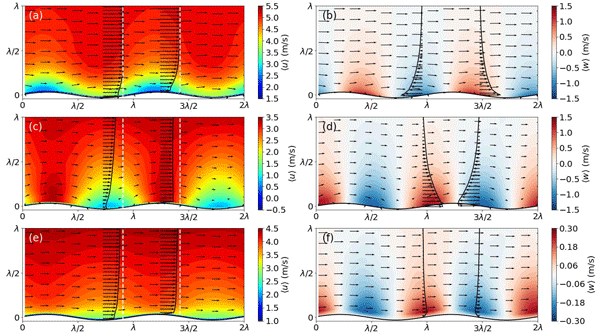
Ocean waves shape winds close to the surface and extend their impact throughout the atmospheric boundary layer. In this study, we built a new modeling tool that allows simulations to follow the moving wave surface itself. By testing different wave and wind conditions, we show how waves change air motion, turbulence, and energy exchange above the ocean. This approach improves our ability to represent air–sea interactions, with implications for weather studies and offshore wind energy.
Ida Haven, Hans Christian Steen-Larsen, Laura J. Dietrich, Sonja Wahl, Jason E. Box, Michiel R. van den Broeke, Alun Hubbard, Stephan T. Kral, Joachim Reuder, and Maurice van Tiggelen
The Cryosphere, 20, 573–593, https://doi.org/10.5194/tc-20-573-2026, https://doi.org/10.5194/tc-20-573-2026, 2026
Short summary
Short summary
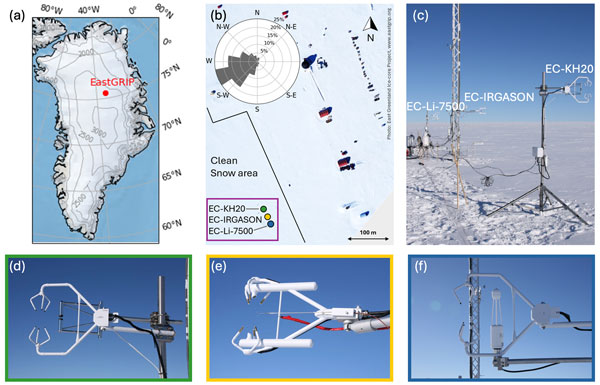
Three independent Eddy-Covariance measurement systems deployed on top of the Greenland Ice Sheet are compared. Using this dataset, we evaluate the reproducibility and quantify the differences between the systems. The fidelity of two regional climate models in capturing the seasonal variability in the latent and sensible heat flux between the snow surface and the atmosphere is assessed. We identify differences between observations and model simulations, especially during the winter period.
Hai Bui and Mostafa Bakhoday-Paskyabi
EGUsphere, https://doi.org/10.48550/arXiv.2306.16043, https://doi.org/10.48550/arXiv.2306.16043, 2025
Preprint archived
Short summary
Short summary
We developed a new way to improve the correction of data by using a probability-based method called kernel density estimation. Our approach adapts the size and shape of the core probability functions, leading to more accurate corrections while also allowing us to measure the uncertainty of the results. Tests on both simple and realistic datasets show that our method outperforms existing ones, offering a practical tool for more reliable data analysis.
Xu Ning and Mostafa Bakhoday-Paskyabi
Wind Energ. Sci., 10, 1101–1122, https://doi.org/10.5194/wes-10-1101-2025, https://doi.org/10.5194/wes-10-1101-2025, 2025
Short summary
Short summary
Waves interact with the overlying wind field by modifying the stresses at the atmosphere–ocean interface. We develop and employ a parameterization method of wave-induced stresses in the numerical simulation of an offshore wind farm in a stable atmospheric boundary layer. This work demonstrates how swells change the kinetic energy transport and induce wind veer and wake deflection, leading to significant variations in the power output of wind turbines at different positions of the wind farm.
Mauro Ghirardelli, Stephan T. Kral, Etienne Cheynet, and Joachim Reuder
Atmos. Meas. Tech., 18, 2103–2124, https://doi.org/10.5194/amt-18-2103-2025, https://doi.org/10.5194/amt-18-2103-2025, 2025
Short summary
Short summary
The SAMURAI-S system is an innovative measurement tool combining a high accuracy wind sensor with a multi-rotor drone to improve atmospheric turbulence observations. While traditional methods lack flexibility and accuracy in dynamic environments, SAMURAI-S provides high maneuverability and precise 3D wind measurements. The research demonstrated the system's ability to match the data quality of conventional methods, with a slight overestimation in vertical turbulence under higher wind conditions.
Etienne Cheynet, Jan Markus Diezel, Hilde Haakenstad, Øyvind Breivik, Alfredo Peña, and Joachim Reuder
Wind Energ. Sci., 10, 733–754, https://doi.org/10.5194/wes-10-733-2025, https://doi.org/10.5194/wes-10-733-2025, 2025
Short summary
Short summary
This study analyses wind speed data at heights up to 500 m to support the design of future large offshore wind turbines and airborne wind energy systems. We compared three wind models (ERA5, NORA3, and NEWA) with lidar measurements at five sites using four performance metrics. ERA5 and NORA3 performed equally well offshore, with NORA3 typically outperforming the other two models onshore. More generally, the optimal choice of model depends on site, altitude, and evaluation criteria.
Mostafa Bakhoday Paskyabi
Wind Energ. Sci., 9, 1631–1645, https://doi.org/10.5194/wes-9-1631-2024, https://doi.org/10.5194/wes-9-1631-2024, 2024
Short summary
Short summary
The exchange of momentum and energy between the atmosphere and ocean depends on air–sea processes, especially wave-related ones. Precision in representing these interactions is vital for offshore wind turbine and farm design and operation. The development of a reliable wave–turbulence decomposition method to remove wave-induced interference from single-height wind measurements is essential for these applications and enhances our grasp of wind coherence within the wave boundary layer.
Hai Bui, Mostafa Bakhoday-Paskyabi, and Mohammadreza Mohammadpour-Penchah
Geosci. Model Dev., 17, 4447–4465, https://doi.org/10.5194/gmd-17-4447-2024, https://doi.org/10.5194/gmd-17-4447-2024, 2024
Short summary
Short summary
We developed a new wind turbine wake model, the Simple Actuator Disc for Large Eddy Simulation (SADLES), integrated with the widely used Weather Research and Forecasting (WRF) model. WRF-SADLES accurately simulates wind turbine wakes at resolutions of a few dozen meters, aligning well with idealized simulations and observational measurements. This makes WRF-SADLES a promising tool for wind energy research, offering a balance between accuracy, computational efficiency, and ease of implementation.
Liqin Jin, Mauro Ghirardelli, Jakob Mann, Mikael Sjöholm, Stephan Thomas Kral, and Joachim Reuder
Atmos. Meas. Tech., 17, 2721–2737, https://doi.org/10.5194/amt-17-2721-2024, https://doi.org/10.5194/amt-17-2721-2024, 2024
Short summary
Short summary
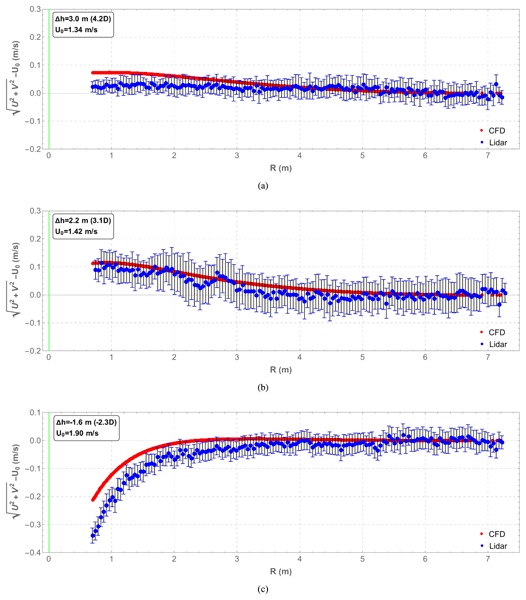
Three-dimensional wind fields can be accurately measured by sonic anemometers. However, the traditional mast-mounted sonic anemometers are not flexible in various applications, which can be potentially overcome by drones. Therefore, we conducted a proof-of-concept study by applying three continuous-wave Doppler lidars to characterize the complex flow around a drone to validate the results obtained by CFD simulations. Both methods show good agreement, with a velocity difference of 0.1 m s-1.
Alban Philibert, Marie Lothon, Julien Amestoy, Pierre-Yves Meslin, Solène Derrien, Yannick Bezombes, Bernard Campistron, Fabienne Lohou, Antoine Vial, Guylaine Canut-Rocafort, Joachim Reuder, and Jennifer K. Brooke
Atmos. Meas. Tech., 17, 1679–1701, https://doi.org/10.5194/amt-17-1679-2024, https://doi.org/10.5194/amt-17-1679-2024, 2024
Short summary
Short summary
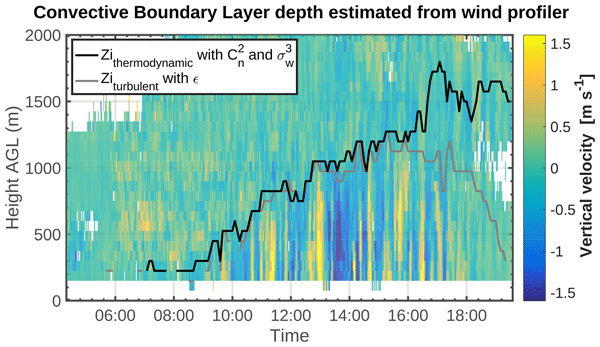
We present a new algorithm, CALOTRITON, for the retrieval of the convective boundary layer depth with ultra-high-frequency radar measurements. CALOTRITON is partly based on the principle that the top of the convective boundary layer is associated with an inversion and a decrease in turbulence. It is evaluated using ceilometer and radiosonde data. It is able to qualify the complexity of the vertical structure of the low troposphere and detect internal or residual layers.
Christiane Duscha, Juraj Pálenik, Thomas Spengler, and Joachim Reuder
Atmos. Meas. Tech., 16, 5103–5123, https://doi.org/10.5194/amt-16-5103-2023, https://doi.org/10.5194/amt-16-5103-2023, 2023
Short summary
Short summary
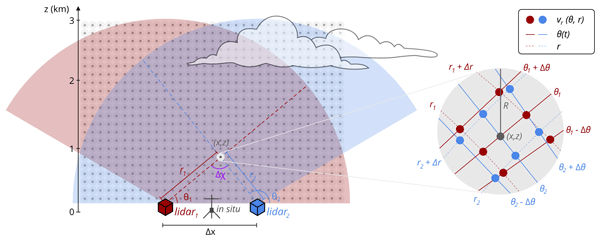
We combine observations from two scanning Doppler lidars to obtain new and unique insights into the dynamic processes inherent to atmospheric convection. The approach complements and enhances conventional methods to probe convection and has the potential to substantially deepen our understanding of this complex process, which is crucial to improving our weather and climate models.
Maria Krutova and Mostafa Bakhoday-Paskyabi
Wind Energ. Sci. Discuss., https://doi.org/10.5194/wes-2023-79, https://doi.org/10.5194/wes-2023-79, 2023
Revised manuscript not accepted
Short summary
Short summary
Wind turbine wake studies often rely on engineering models, which consist of simple analytical expressions. We review an atmospheric event resulting in a strong wind flow change within tens of minutes and apply several wake models to see how they respond to new conditions. We find that two models are consistent with their predictions, and one of them, the super-Gaussian model, predicts the wake shape particularly well; more attention should be paid to its development and implementation.
Maria Krutova, Mostafa Bakhoday-Paskyabi, Joachim Reuder, and Finn Gunnar Nielsen
Geosci. Model Dev., 16, 3553–3564, https://doi.org/10.5194/gmd-16-3553-2023, https://doi.org/10.5194/gmd-16-3553-2023, 2023
Short summary
Short summary
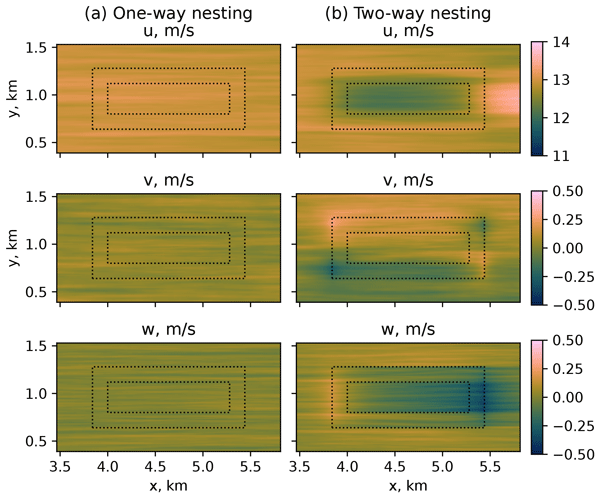
Local refinement of the grid is a powerful method allowing us to reduce the computational time while preserving the accuracy in the area of interest. Depending on the implementation, the local refinement may introduce unwanted numerical effects into the results. We study the wind speed common to the wind turbine operational speeds and confirm strong alteration of the result when the heat fluxes are present, except for the specific refinement scheme used.
Maria Krutova, Mostafa Bakhoday-Paskyabi, Joachim Reuder, and Finn Gunnar Nielsen
Wind Energ. Sci., 7, 849–873, https://doi.org/10.5194/wes-7-849-2022, https://doi.org/10.5194/wes-7-849-2022, 2022
Short summary
Short summary
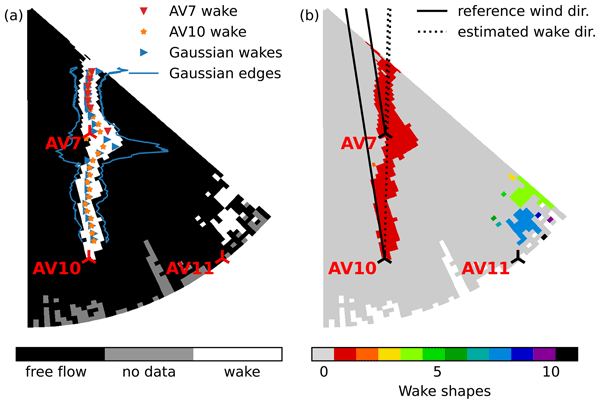
We described a new automated method to separate the wind turbine wake from the undisturbed flow. The method relies on the wind speed distribution in the measured wind field to select one specific threshold value and split the measurements into wake and background points. The purpose of the method is to reduce the amount of data required – the proposed algorithm does not need precise information on the wind speed or direction and can run on the image instead of the measured data.
Cited articles
Aird, J. A., Barthelmie, R. J., Shepherd, T. J., and Pryor, S. C.: WRF-simulated low-level jets over Iowa: characterization and sensitivity studies, Wind Energ. Sci., 6, 1015–1030, https://doi.org/10.5194/wes-6-1015-2021, 2021. a, b
Aird, J. A., Barthelmie, R. J., Shepherd, T. J., and Pryor, S. C.: Occurrence of low-level jets over the eastern US coastal zone at heights relevant to wind energy, Energies, 15, 445, https://doi.org/10.3390/en15020445, 2022. a
Bakhoday-Paskyabi, M. and Flügge, M.: Predictive capability of wrf cycling 3dvar: Lidar assimilation at fino1, J. Phys. Conf. Ser., 2018, 012006, https://doi.org/10.1088/1742-6596/2018/1/012006, 2021. a
Benetazzo, A., Davison, S., Barbariol, F., Mercogliano, P., Favaretto, C., and Sclavo, M.: Correction of ERA5 wind for regional climate projections of sea waves, Water, 14, 1590, https://doi.org/10.3390/w14101590, 2022. a
Bengtsson, L., Andrae, U., Aspelien, T., Batrak, Y., Calvo, J., de Rooy, W., Gleeson, E., Hansen-Sass, B., Homleid, M., Hortal, M., Ivarsson, K.-I., Lenderink, G., Niemelä, S., Nielsen, K. P., Onvlee, J., Rontu, L., Samuelsson, P., Santos Muñoz, D., Subias, A., Tijm, S., Toll, V., Yang, X., and Ødegaard Køltzow, M.: The HARMONIE–AROME model configuration in the ALADIN–HIRLAM NWP system, Mon. Weather Rev., 145, 1919–1935, 2017. a
Bui, H.: Supplementary Data and Code for “Characterization and Bias-Correction of Low-Level Jets at FINO1 Using LiDAR Observations and Reanalysis Data”, Zenodo [data set], https://doi.org/10.5281/zenodo.20020686, 2026. a
Bui, H., Bakhoday-Paskyabi, M., and Mohammadpour-Penchah, M.: Implementation of a Simple Actuator Disk for Large-Eddy Simulation in the Weather Research and Forecasting Model (WRF-SADLES v1.2) for wind turbine wake simulation, Geosci. Model Dev., 17, 4447–4465, https://doi.org/10.5194/gmd-17-4447-2024, 2024. a
Carroll, B. J., Demoz, B. B., and Delgado, R.: An overview of low-level jet winds and corresponding mixed layer depths during PECAN, J. Geophys. Res.-Atmos., 124, 9141–9160, 2019. a
Cherukuru, N. W., Calhoun, R., Krishnamurthy, R., Benny, S., Reuder, J., and Flügge, M.: 2D VAR single Doppler lidar vector retrieval and its application in offshore wind energy, Enrgy. Proced., 137, 497–504, 2017. a
Cheynet, E., Diezel, J. M., Haakenstad, H., Breivik, Ø., Peña, A., and Reuder, J.: Tall wind profile validation of ERA5, NORA3, and NEWA datasets using lidar observations, Wind Energ. Sci., 10, 733–754, https://doi.org/10.5194/wes-10-733-2025, 2025. a, b
Costoya, X., Rocha, A., and Carvalho, D.: Using bias-correction to improve future projections of offshore wind energy resource: A case study on the Iberian Peninsula, Appl. Energ., 262, 114562, https://doi.org/10.1016/j.apenergy.2020.114562, 2020. a
DeMaria, M.: Tropical cyclone track prediction with a barotropic spectral model, Mon. Weather Rev., 115, 2346–2357, 1987. a
European Marine Observation and Data Network: EMODnet Human Activities: Offshore Wind Farms, https://emodnet.ec.europa.eu/en/human-activities (last access: 27 January 2026), 2026. a
Gadde, S. N. and Stevens, R. J.: Effect of low-level jet height on wind farm performance, J. Renew. Sustain. Ener., 13, https://doi.org/10.1063/5.0026232, 2021. a
Gutierrez, W., Araya, G., Kiliyanpilakkil, P., Ruiz-Columbie, A., Tutkun, M., and Castillo, L.: Structural impact assessment of low level jets over wind turbines, J. Renew. Sustain. Ener., 8, https://doi.org/10.1063/1.4945359, 2016. a
Gutierrez, W., Ruiz-Columbie, A., Tutkun, M., and Castillo, L.: Impacts of the low-level jet's negative wind shear on the wind turbine, Wind Energ. Sci., 2, 533–545, https://doi.org/10.5194/wes-2-533-2017, 2017. a
Hallgren, C., Arnqvist, J., Ivanell, S., Körnich, H., Vakkari, V., and Sahlée, E.: Looking for an offshore low-level jet champion among recent reanalyses: a tight race over the Baltic Sea, Energies, 13, 3670, https://doi.org/10.3390/en13143670, 2020. a, b
Hallgren, C., Aird, J. A., Ivanell, S., Körnich, H., Barthelmie, R. J., Pryor, S. C., and Sahlée, E.: Brief communication: On the definition of the low-level jet, Wind Energ. Sci., 8, 1651–1658, https://doi.org/10.5194/wes-8-1651-2023, 2023. a
Hersbach, H., Bell, B., Berrisford, P., Hirahara, S., Horányi, A., Muñoz-Sabater, J., Nicolas, J., Peubey, C., Radu, R., Schepers, D., Simmons, A., Soci, C., Abdalla, S., Abellan, X., Balsamo, G., Bechtold, P., Biavati, G., Bidlot, J., Bonavita, M., De Chiara, G., Dahlgren, P., Dee, D., Diamantakis, M., Dragani, R., Flemming, J., Forbes, R., Fuentes, M., Geer, A., Haimberger, L., Healy, S., Hogan, R. J., Hólm, E., Janisková, M., Keeley, S., Laloyaux, P., Lopez, P., Lupu, C., Radnoti, G., de Rosnay, P., Rozum, I., Vamborg, F., Villaume, S., and Thépaut, J.-N.: The ERA5 global reanalysis, Q. J. Roy. Meteor. Soc., 146, 1999–2049, 2020. a, b, c, d
Krishnamurthy, R., Reuder, J., Svardal, B., Fernando, H. J. S., and Jakobsen, J. B.: Offshore wind turbine wake characteristics using scanning Doppler lidar, Enrgy. Proced., 137, 428–442, 2017. a
Luiz, E. W. and Fiedler, S.: Global climatology of low-level-jets: Occurrence, characteristics, and meteorological drivers, J. Geophys. Res.-Atmos., 129, e2023JD040262, https://doi.org/10.1029/2023JD040262, 2024. a
MacQueen, J.: Some methods for classification and analysis of multivariate observations, in: Proceedings of the Fifth Berkeley Symposium on Mathematical Statistics and Probability, Volume 1: Statistics, Vol. 5, University of California press, 281–298, https://projecteuclid.org/euclid.bsmsp/1200512992 (last access: 29 June 2026), 1967. a
Paskyabi, M. B., Bui, H., and Penchah, M. M.: Atmospheric-Wave Multi-Scale Flow Modelling, Tech. Rep. D2.1, European Union's Horizon 2020 Research and Innovation Program, deliverable under Grant Agreement No. 101006689, https://www.hiperwind.eu/-/media/e42aff00d92d4bf7bc4a34535601ab2a.pdf (last access: 29 June 2026), 2020. a
Pichugina, Y. L., Brewer, W. A., Banta, R. M., Choukulkar, A., Clack, C. T. M., Marquis, M. C., McCarty, B. J., Weickmann, A. M., Sandberg, S. P., Marchbanks, R. D., and Hardesty, R. M.: Properties of the offshore low level jet and rotor layer wind shear as measured by scanning Doppler Lidar, Wind Energ., 20, 987–1002, 2017. a
Rubio, H., Kühn, M., and Gottschall, J.: Evaluation of low-level jets in the southern Baltic Sea: a comparison between ship-based lidar observational data and numerical models, Wind Energ. Sci., 7, 2433–2455, https://doi.org/10.5194/wes-7-2433-2022, 2022. a
Smith, E. N., Gibbs, J. A., Fedorovich, E., and Klein, P. M.: WRF Model study of the Great Plains low-level jet: Effects of grid spacing and boundary layer parameterization, J. Appl. Meteorol. Clim., 57, 2375–2397, 2018. a
Solbrekke, I. M., Sorteberg, A., and Haakenstad, H.: The 3 km Norwegian reanalysis (NORA3) – a validation of offshore wind resources in the North Sea and the Norwegian Sea, Wind Energ. Sci., 6, 1501–1519, https://doi.org/10.5194/wes-6-1501-2021, 2021. a
Stensrud, D. J.: Importance of low-level jets to climate: A review, J. Climate, 9, 1698–1711, 1996. a
Storn, R. and Price, K.: Differential evolution–a simple and efficient heuristic for global optimization over continuous spaces, J. Global Optim., 11, 341–359, 1997. a
Thorndike, R. L.: Who belongs in the family?, Psychometrika, 18, 267–276, 1953. a
Short summary
Strong low-altitude winds, known as low-level jets (LLJs), significantly impact offshore wind turbines. We analyzed LLJs at the FINO1 site using lidar observations and reanalysis data. Our results show that models tend to underestimate LLJ intensity. To address this, we introduced a new method to characterize wind profiles and applied a correction to 50 years of reanalysis data, yielding a more accurate long-term representation of these wind features.
Strong low-altitude winds, known as low-level jets (LLJs), significantly impact offshore wind...


Altmetrics
Final-revised paper
Preprint