the Creative Commons Attribution 4.0 License.
the Creative Commons Attribution 4.0 License.
 | 04 Aug 2026
Fostering open science through a digital open innovation platform – structural health monitoring case study
Shun Wang
Francesc Pozo
Yolanda Vidal
Marcela Rodrigues Machado
Amanda Aryda Silva Rodrigues de Sousa
Jefferson da Silva Coelho
Xukai Zhang
Yao-Teng Hu
Arash Noshadravan
Theodoros Varouxis
Mahmoud Abdelhak
Ramin Ghiasi
Abdollah Malekjafarian
Open science and open innovation practices based on digital platforms can help address the lack of digital maturity and data sharing in the wind energy sector. Some previous efforts to introduce open science and open innovation practices in wind energy have been based around the WeDoWind project, which fosters data sharing through the organisation and documentation of open challenges. In this work, a two-phase design thinking approach is introduced to transform WeDoWind from a platform for documenting and managing challenges (phase 1) to an open innovation ecosystem for fostering open science and open innovation in wind energy (phase 2). The feasibility of the new open innovation ecosystem for fostering open science and open innovation in wind energy is then evaluated. The feasibility study involves first defining the scope and goals, then defining the TELOS aspects (technical, economic, legal, operational, and scheduling) for evaluation, carrying out the case study, and finally ending with an evaluation of the TELOS aspects. The case study itself involves defining case study evaluation metrics, choosing the case study topic, setting up and managing a WeDoWind challenge (the ASCE-EMI Structural Health Monitoring for Wind Energy Challenge), and then evaluating the case study metrics. The challenge goal is to detect three fault events with the highest possible accuracy. Five solutions submitted to the challenge include the PyMLDA open-code method, a health index monitoring with variational autoencoders method, an unsupervised event classification using k-means clustering method, and an unsupervised damage detection method using a feature selection framework. The results show that the case study could be successfully used for comparing and evaluating different fault detection methods. Overall, WeDoWind is found to have strong governance, clear regulation, and promising scalability potential. However, further progress is required to make it financially sustainable, to ensure adoption of the results in the sector, and to ensure community engagement to reach the critical mass necessary for self-sustaining growth.
- Article
(1488 KB) - Full-text XML
- BibTeX
- EndNote


1.1 Open science and open innovation
The hurdles currently facing the wind energy sector are often complex and transdisciplinary in nature (Veers et al., 2019; Kirkegaard et al., 2023). At the same time, it is known that a lack of data and knowledge sharing is an issue (Clifton et al., 2023; Barber et al., 2023c; Marykovskiy et al., 2024), and digitalisation has recently been named by ETIPWind as one of the five megatrends in wind energy technology (https://etipwind.eu/wp-content/uploads/files/publications/20241104-Etipwind-factsheet-five-megatrends.pdf, last access: 2 July 2026). The lack of data maturity in the sector results in inefficiencies in handling and creating insights from the large volume of data produced throughout the life cycle of a wind energy project. For example, operational data formats are not consistent across different software solutions used to monitor and operate wind farms, and key metadata are often lacking (Marykovskiy et al., 2024).
Open science and open innovation practices can help overcome these hurdles. Open science can be defined as “transparent and accessible knowledge that is shared and developed through collaborative networks” (Vicente-Saez and Martinez-Fuentes, 2018). In an attempt to foster open science, many journals and funding agencies now encourage, require, or reward some open science practices. Therefore, many resources have emerged to help researchers implement them. In Europe, the European Open Science Cloud supports the development of many resources, including tools developed by the EOSC Science Clusters such as the ENVRI Knowledge Hub (https://envri.eu/, last access: 2 July 2026).
Open innovation describes the opening of innovation processes in order to involve external stakeholders such as customers, experts, and partner organisations in the development of new products, services, or technologies (Som et al., 2014). It has been shown to be crucial for tackling the multifaceted challenges of the energy transition, which span technical, economic, and social domains (Dall-Orsoletta et al., 2022). Open innovation can be driven through digital platforms, which can overcome geographical and organisational boundaries, enabling the exchange of knowledge in global networks (Som et al., 2014). Digital open innovation platforms use digital technologies to promote collaborative processes. They make it easier for companies and universities to develop innovative ideas, collect data, and implement solutions. The effectiveness of such platforms has been demonstrated by various studies. For example, one study showed that 64 %–77 % of companies that use open innovation approaches profit from a combination of internal and external stimuli to successfully implement their innovative projects (Som et al., 2014). Companies that combine external and internal sources of knowledge increase the success rate of new products by up to 19 % compared to purely internal approaches. Another example of a digital open innovation platform is Kaggle, a platform that organises data science competitions. Studies show that a high level of engagement can be achieved through competition formats and targeted incentives (Mollick, 2014). Crowd-funding platforms such as Kickstarter are similarly successful, with projects that interact with their target group at an early stage achieving up to 65 % higher success rates. Despite these successes, however, digital platforms also face specific challenges. The protection of intellectual property, long-term user loyalty, and the continuous further development of technological standards are decisive factors, and statistics show that up to 50 % of newly founded platforms fail within the first 5 years, often due to a lack of user loyalty or ineffective monetisation strategies (Mollick, 2014).
In wind energy, efforts to introduce open science and open innovation practices include the development of semantic artefacts to represent wind energy knowledge (such as the IRP classification of activities, WEAVE; the IEA Wind Task 43 lidar ontology; and the IEA Wind Task 43 WRA Data Model, summarised in Sect. 6.2 in Marykovskiy et al., 2024); an analysis of the findability, accessibility, interoperability, and reusability (FAIRness) of wind energy data (Barber et al., 2024); and the introduction of the WeDoWind platform for running, managing, and documenting wind energy data science challenges by the lead author of this present paper (Barber et al., 2022, 2023a, b; Barber and Ding, 2024) in an attempt to improve data sharing. However, recent examinations of digital maturity in wind energy highlight the need for holistic, community-based solutions in order to bring together different open science and open innovation activities and aligning them within and beyond the wind energy sectors (Marykovskiy et al., 2024; Clifton et al., 2023; Barber et al., 2023c). Therefore, in this work, we aim to transform WeDoWind from a platform for documenting and managing challenges to an open innovation ecosystem for fostering open science and open innovation in wind energy.
1.2 This contribution
The goal of this paper is to apply a design thinking approach to transform WeDoWind from a platform for documenting and managing challenges to an open innovation ecosystem for fostering open science and open innovation in wind energy and then to test its feasibility via a case study. The case study involved planning and managing the ASCE-EMI Structural Health Monitoring for Wind Energy Challenge. After introducing the design thinking approach in Sect. 2, the feasibility study approach is described in Sect. 3, and then the results of the feasibility study are presented in Sect. 4. Finally, the conclusions are drawn in Sect. 5.
A design thinking approach (Pearce, 2020) with two phases was applied to transform WeDoWind from a platform for documenting and managing challenges to an open innovation ecosystem for fostering open science and open innovation in wind energy. Each phase consisted of the steps “empathise”, “define”, “ideate”, “prototype”, and “test”, as shown in Fig. 1.
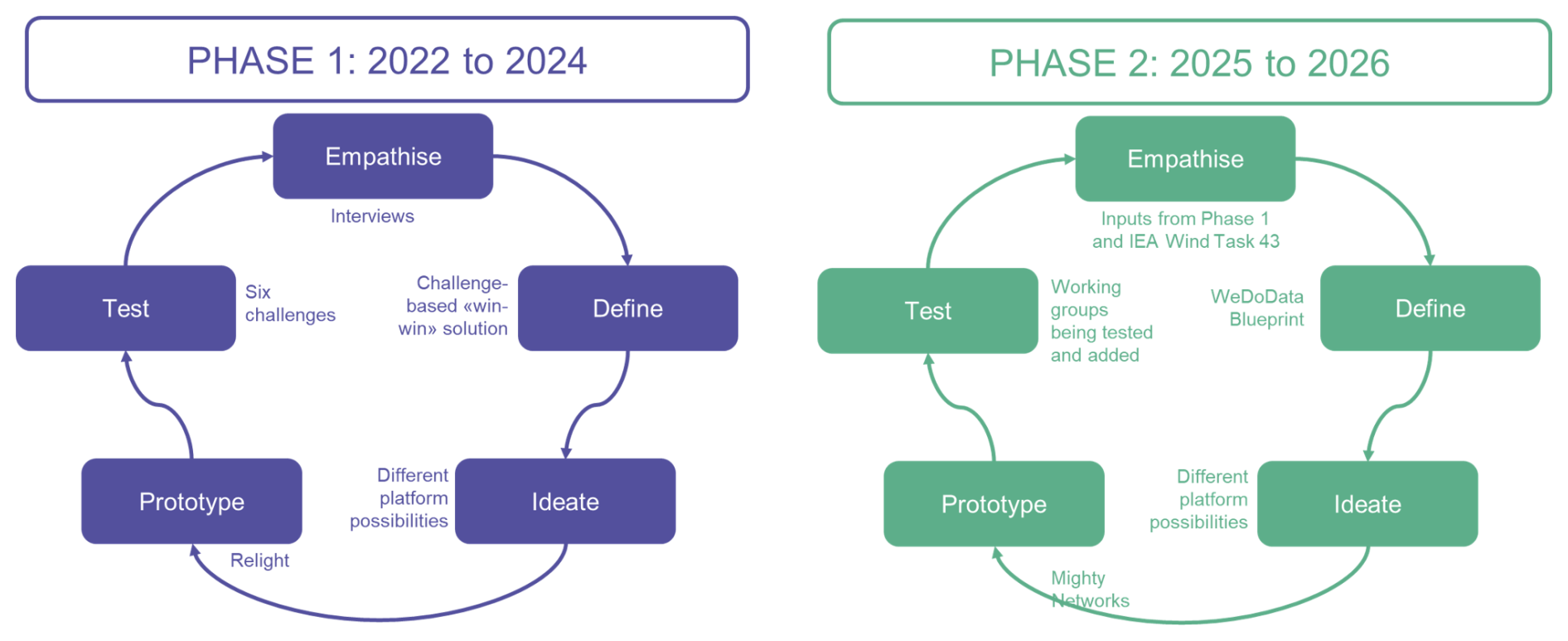
Phase 1 (January 2022–December 2024) involved first defining the problem of the lack of data sharing in the sector and then interviewing members of the community to understand their needs (“empathise”). These results allowed a solution to the problem to be defined (“define”), which was to develop a platform that enables asset owners (who own data and need state-of-the-art data analytic solutions) to publish data and a WeDoWind challenge (a specific problem statement). Each challenge is then solved by data scientists and researchers (who are looking for data to train their state-of-the-art data analytic solutions), providing both sides with a mutual benefit. Several ideas for implementations were developed and assessed (“ideate”), ending up with a prototype for a digital platform called Relight (“prototype”), together with the company Stacker Group. This was launched with an initial challenge in collaboration with the company EDP in March 2022. Since then, eight different challenges have been launched and run, with some still running and several already documented (Barber et al., 2022, 2023b, 2024; Barber and Ding, 2024). The prototype has been continuously improved, using participant surveys and inputs from advisory board meetings (“test”).
Phase 2 (January 2025 onwards) started by combining the inputs from participants and advisory board members from phase 1 with knowledge gained on the topics of data maturity and digitalisation in IEA Wind Task 43 (Clifton et al., 2023; Marykovskiy et al., 2024) (“empathise”). This allowed several improvements to the phase 1 prototype to be defined and made it clear that exploiting the full value of data requires a larger ecosystem and should include people developing information models, publishing data and code, and developing tools and guidelines for open data and code. This allowed a general concept for phase 2 to be defined, called the WeDoData Blueprint (Fig. 2) (“define”). The WeDoData Blueprint is focused on four communities of people, which have many synergies and overlaps that are exploited in the blueprint: (1) the Information Modelling Community, for developing information models such as data models, schemas, taxonomies, and ontologies; (2) the Open Data and Code Community, for working on guidelines and best practice documents for publishing open code and data; (3) the Collaborative Problem-Solving Community, for sharing data and knowledge via challenges; and (4) the Data Users' Community, for developing best practice documents and other resources for using data and code. The results of the work in these communities are fed into the WeDoData portals: the schema publishing portal, the ontology publishing portal, the open data portal, the open code portal, and the job portal. The challenges can be run on a separate dedicated data science platform, and the whole community can be managed on a communication platform. The blueprint provides a suggestion for a structure for any data-sharing community of any size and in any sector. Based on the WeDoData Blueprint, possible digital platforms for the “communication platform” were investigated by defining requirements and assessing the level of fulfilment of various commercial and in-house options (“ideate”).
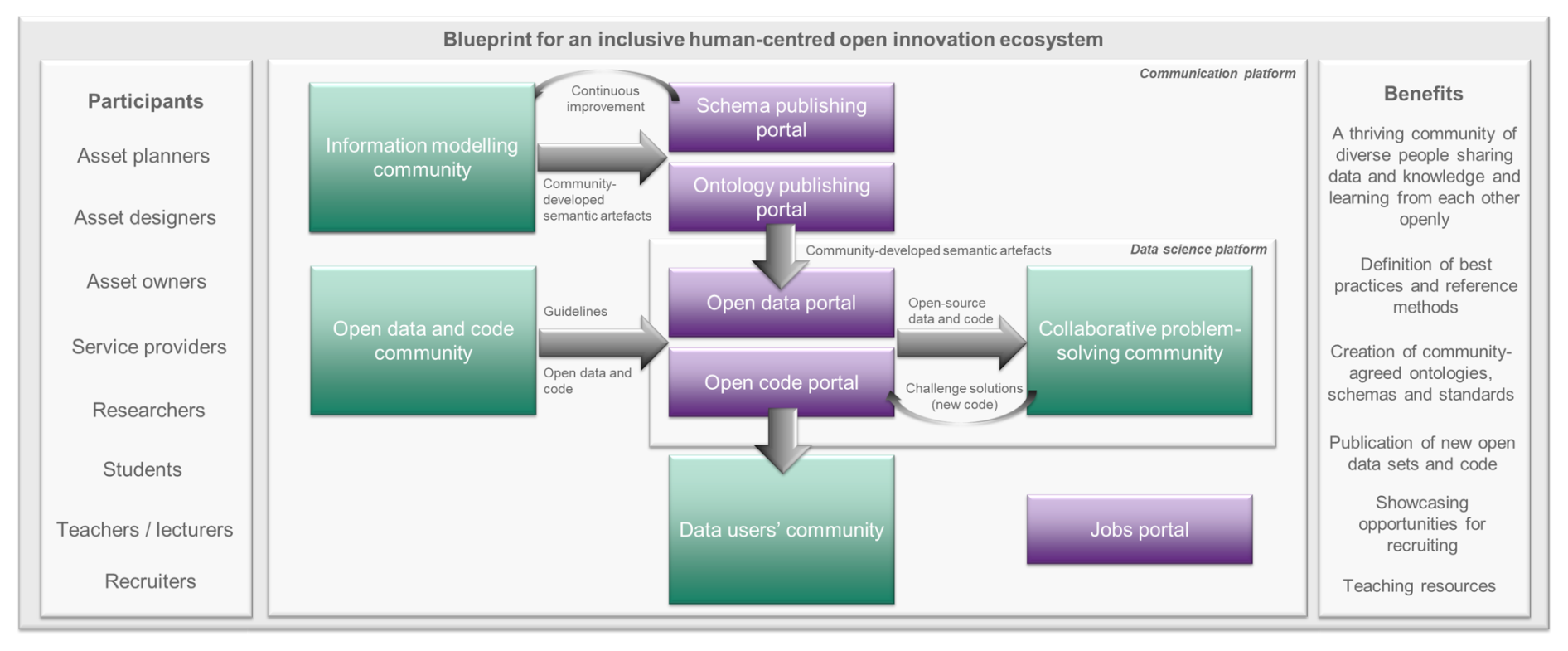
This led to the creation of a phase 2 prototype, which uses the commercial software Mighty Networks (“prototype”) (https://community.wedowind.ch/, last access: 2 July 2026). This prototype was built and launched for the wind energy sector as the new WeDoWind open innovation ecosystem in January 2025, together with a new website (https://www.wedowind.ch/, last access: 2 July 2026). The four running challenges were transferred from Relight to the Collaborative Problem-Solving Community on the WeDoWind platform and were continued seamlessly in the Open Data Exploration space, the Data Science for Wind Energy space, the RTDT space, and the EAWE Test Turbines Committee space. Additional spaces for completed challenges were created (the EDP Challenges space and the WinJi Challenges space). In the Information Modelling Community, working groups for the development of a wind energy domain ontology, an operations ontology, TIM-Wind, and the digital twins taxonomy were created. These initiatives are all connected to IEA Wind Task 43, which is led by the main author and acts as a digital transformation catalyst by driving open collaboration within and beyond the wind community to deliver insights, recommendations, standards, and tools. In the Open Data and Code Community, a space has been created for the RDA Wind Energy Community Standards Working Group, which is currently creating a recommendation for improving FAIR data maturity in wind energy. In the Data Users' Community, a space for Data Engineering in Wind Energy and a space for the IEA Wind Task 43 Data User Group have been created. For the portals, links were included to external platforms. For the schema publishing portal, a link to the tool Octue Strands is provided, which is a tool for curating and publishing JSONSchema (https://strands.octue.com/, last access: 2 July 2026). For the ontology publishing portal, a link to the TechnoPortal (https://technoportal.hevs.ch/, last access: 2 July 2026) is provided, which is an ontology repository for the engineering and technology domain and includes formalisations of many wind energy semantic artefacts. For the open data portal, a list of known open data sources is given. For the open code portal, a list of known open code sources is given. A concept for a combined open knowledge hub is currently underway. The job portal enables participants to post job adverts and searches. Furthermore, solutions for covering the running costs of the platform are being tested. Ideas include donations, sponsoring, paying for challenges, certificates, paying for extra features, paying for trending options, and monetisation through recruiting.
The feasibility study was carried out as illustrated in Fig. 3, based on the TELOS aspects: technical, economic, legal, operational, and scheduling (Bause et al., 2014). After defining the scope and goals of the feasibility study in step (1), the TELOS aspects for the evaluation were defined in step (2), and then a case study was carried out in step (3), ending with the feasibility study evaluation in step (4). The case study itself involved defining case study TELOS aspects in step 3(a), choosing the topic in step 3(b), setting up the case study in step 3(c), managing it in step 3(d), and then evaluating it in step 3(e). These steps are described in more detail in the next sections.
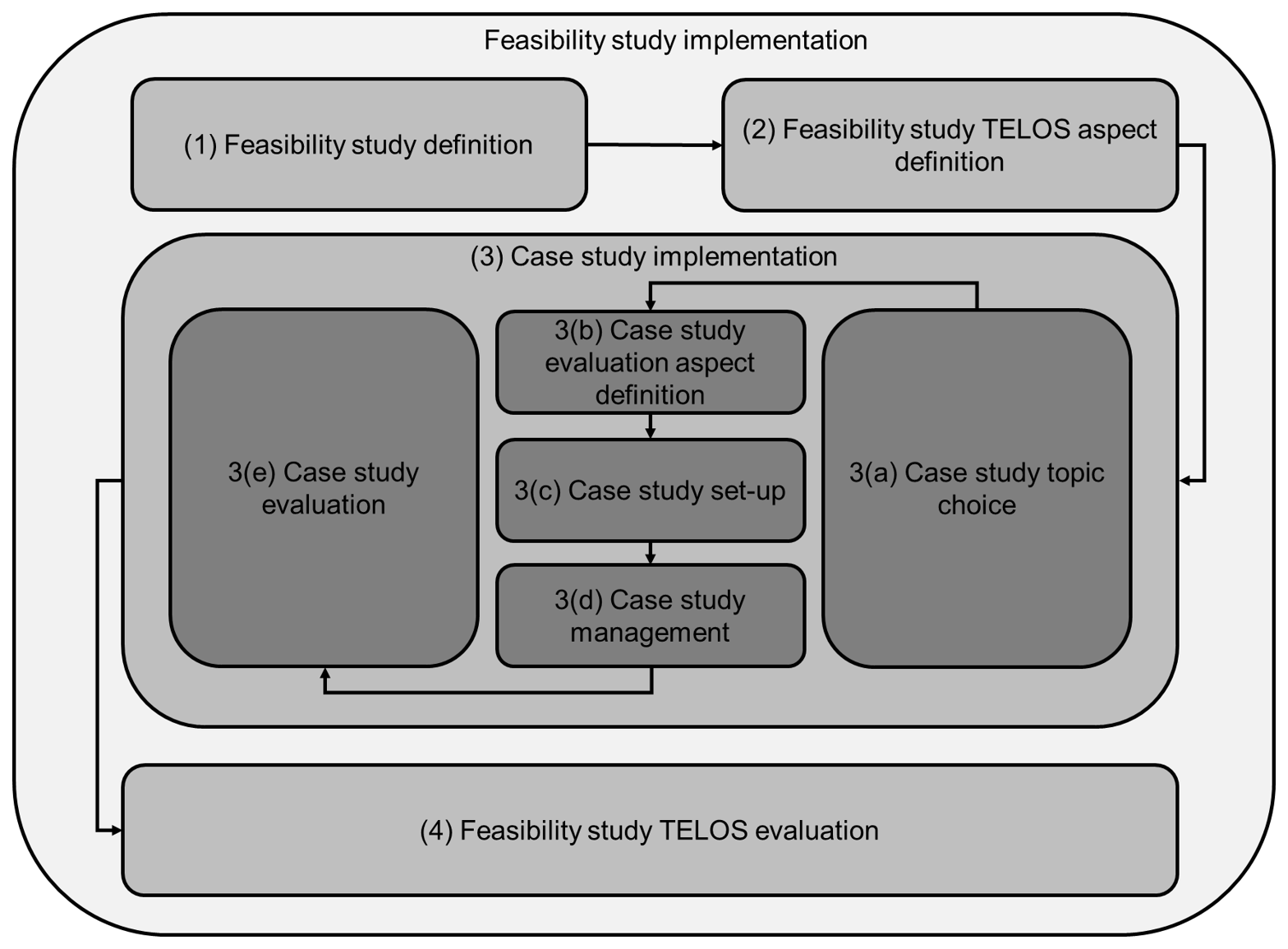
3.1 Step 1: feasibility study definition
The goal of the feasibility study was defined as testing the general feasibility of the WeDoWind open innovation ecosystem for fostering open science and open innovation in wind energy. It was decided to do this with the help of a case study inside the WeDoWind Collaborative Problem-Solving Community because this is currently the most active community. Future feasibility studies will focus on the other communities.
3.2 Step 2: feasibility study TELOS aspect definition
The key technical, economic, legal, operational, and scheduling (Bause et al., 2014) aspects for evaluating the feasibility of the WeDoWind open innovation ecosystem for fostering open science and open innovation in wind energy were chosen as detailed below:
-
T1, usability of results. This refers to how valuable and applicable the outputs are for users, measured by the number of usable codes, information models, and guidelines developed, as well as their adoption.
-
T2, technical maturity. This refers to how advanced, stable, and scalable the technical infrastructure is, measured by the platform's technical performance and capacity to grow.
-
E1, competitive landscape. This refers to how WeDoWind compares to other open innovation platforms or challenge providers, measured by the number of competitors and the distinctness of WeDoWind's offer.
-
E2, financial sustainability. This refers to how well operational costs can be covered in the long term, measured through the funding obtained so far.
-
E3, market demand. This refers to the level of interest, need, and willingness to engage, measured by the percentage of users who rate WeDoWind as unique, the number of organisations participating in challenges and working groups, and the number of stakeholders committing resources such as money and time.
-
L1, partnerships and governance. This refers to the quality of the partnerships and decision structures, measured by the breadth and balance of stakeholders and the formal structured supporting collaboration.
-
L2, regulatory/IP compliance. This refers to how well the ecosystem adheres to relevant laws and standards governing data protection and IP, measured through the clarity and fairness of data protection and IP rules.
-
O1, network maturity. This refers to how well developed, connected, and functional the ecosystem relationships are, measured through the number and type of interactions between participants.
-
O2, community traction. This refers to how engaged the community is, measured by the number of participants and partner organisations over time and the number of participants per activity.
-
O3, technology and implementation risks. This refers to the likelihood and impact of failures or delays in development, measured by considering which factors are relied upon for success.
-
S1, scalability and replication potential. This refers to the capacity to expand operations and be reproduced in other sectors, measured by how clearly the processes are defined and how transferable they are.
It was decided to evaluate each of these aspects qualitatively. To support the evaluation of these feasibility study TELOS aspects, a case study was used as described in the next section.
3.3 Step 3: case study implementation
Following the definition of the feasibility study and the key TELOS aspects for evaluation, the case study was implemented as described in this section.
3.3.1 Step 3(a): case study topic choice
A wind turbine structural health monitoring (SHM) challenge was chosen for the case study due to the attractiveness of the topic and availability of relevant data. Current SHM research for wind energy is centred around fault detection using vibration data. At the sensor level, fully unsupervised long short-term memory autoencoders trained only on healthy accelerometer streams have delivered sub-second anomaly scores for onshore wind turbines and have achieved 98 % recall on field data (Lee et al., 2024). Recently, a deep-boosted transfer learning strategy re-weighted source-domain samples during training, raising gearbox-fault recognition accuracy by about 10 % compared with conventional convolutional neural network baselines under variable loads (Jamil et al., 2022). Scaling from single machines to entire fleets, an unsupervised ensemble of isolation-forest and variational-autoencoder detectors performed fleet-based monitoring directly on vibration envelopes, flagging bearing damage up to 3 weeks earlier than existing supervisory control and data acquisition (SCADA) metrics (de Novaes Pires Leite et al., 2023). Other work coupled graph neural networks with sparse-filtering feature extraction to exploit the topological correlations of multi-sensor arrays, boosting gearbox-fault F1 scores above 95 % on high-frequency datasets (Wang and Loparo, 2023). For rotor blade health, a hybrid variational-autoencoder–neural ordinary differential equation model tracked subtle shifts in modal signatures and correctly classified leading-edge cracks in complex, turbulent inflow, demonstrating the promise of physics-aware deep generative models (Yang et al., 2024). The research on this topic is active, and a lack of comparison between methods and results can be observed. Therefore, there is not a high level of understanding in the community about the advantages and disadvantages of different methods. A WeDoWind challenge aimed at comparing different SHM fault detection methods therefore has a high potential to be useful to the community.
3.3.2 Step 3(b): case study evaluation aspect definition
In order to support the evaluation of the feasibility study's TELOS aspects, the purpose of the case study was decided to test how well the WeDoWind open innovation ecosystem allows the results of different methods (or challenge solutions) to be compared. For this, the following case study evaluation aspects were defined:
-
CS1, evaluation metrics. This refers to how well comparison metrics can be used to compare the performance of the different methods.
-
CS2, advantages and disadvantages. This refers to how well the solution templates provided in the challenge allow the advantages and disadvantages of different methods to be compared.
-
CS3, evaluation panel. This refers to how well the evaluation panel assessment can be used to compare different methods.
-
CS4, participant satisfaction. This refers to how satisfied the participants were with the challenge and how likely they are to take part in future challenges.
-
CS5, new activity. This refers to the amount of new activity generated, such as platform posts, discussions, webinar recordings, and events.
As for the feasibility study, it was decided to evaluate each of these aspects qualitatively.
3.3.3 Step 3(c): case study set-up
The ASCE-EMI Structural Health Monitoring for Wind Energy Challenge was created in collaboration with the American Society of Civil Engineers Structural Health Monitoring and Control Committee and RTDT Laboratories AG, who provided measurement data on an operating wind turbine. The available dataset (Chatzi et al., 2023) provides comprehensive operational and structural measurements from the Aventa AV-7 wind turbine located in Taggenberg, near Winterthur, Switzerland. The goal of the challenge was to detect three fault events (pitch drive failure, aerodynamic imbalance, and rotor icing) with the highest possible accuracy. A detailed description can be accessed on the WeDoWind platform (https://community.wedowind.ch/spaces/17204906/content, last access: 2 July 2026).
The participants were supplied with a report template and a repository on GitHub to upload their code (https://github.com/RTDT-LABORATORIES/wedowind-challenge-ASCE-EMI, last access: 2 July 2026), and they were required to fill out a feedback form. An evaluation panel consisting of five experts from the field1 evaluated the results according to the following criteria:
-
the reporting of the employed method and the novelty of the adopted approach
-
the ranking of the delivered accuracy, precision, recall, and F scores for the schemes that are tested.
The submissions were assigned overall scores, and first prize, second prize, and third prize were awarded, as well as participation certificates for all participants.
3.3.4 Step 3(d): case study management
The challenge was launched via a webinar on 21 June 2024 and finished on 3 February 2025. The challenge description was published on the WeDoWind platform, where registration and participation instructions were provided. The platform provided a discussion forum for questions, meeting invites for monthly webinars for asking questions and discussing solutions, access to webinar recordings, and links to the data and solution ideas. The results were regularly communicated on WeDoWind and LinkedIn. The results were submitted using a report template and presented at the final presentation.
3.3.5 Step 3(e): case study evaluation
In order to test how well comparison metrics could be used to compare the performance of the different methods (evaluation aspect CS1: evaluation metrics) and how well the challenge allowed the advantages and disadvantages of different methods to be compared (CS2: advantages and disadvantages), the final reports were used by the challenge organisers to create a table summarising the type of method; a short description of the method; and the accuracy, precision, recall, and F scores (where available) for each solution. In order to test how well the evaluation panel assessment could be used to compare the results (CS3: evaluation panel), a template for the evaluation panel was created, and the solutions were discussed and then ranked at an evaluation panel meeting. This was used to create a short WeDoWind post announcing the results and the reasons for the choices. In order to test how satisfied the participants were with the challenge and how likely they are to take part in future challenges (CS4: participant satisfaction), a participant survey was carried out. In order to test the amount of new activity generated, such as platform posts, discussions, webinar recordings, and events (CS5: new activity), the platform analytics were analysed using an in-built analytics tool.
3.4 Step 4: feasibility study TELOS evaluation
For the evaluation of the feasibility study TELOS aspects, a qualitative analysis of the status of the ecosystem was carried out. The evaluation of the case study evaluation aspects from step (3) helped with this assessment; however, the feasibility study was more generally applied to the entire ecosystem.
In this section, the results of the case study are first presented, followed by the results of the feasibility study.
4.1 Case study
The final reports of the five solutions that were submitted for the challenge can be found on the WeDoWind platform (https://community.wedowind.ch/spaces/17204906/content, last access: 2 July 2026). Assessments of the case study evaluation aspects are presented below.
4.1.1 CS1: comparison metrics
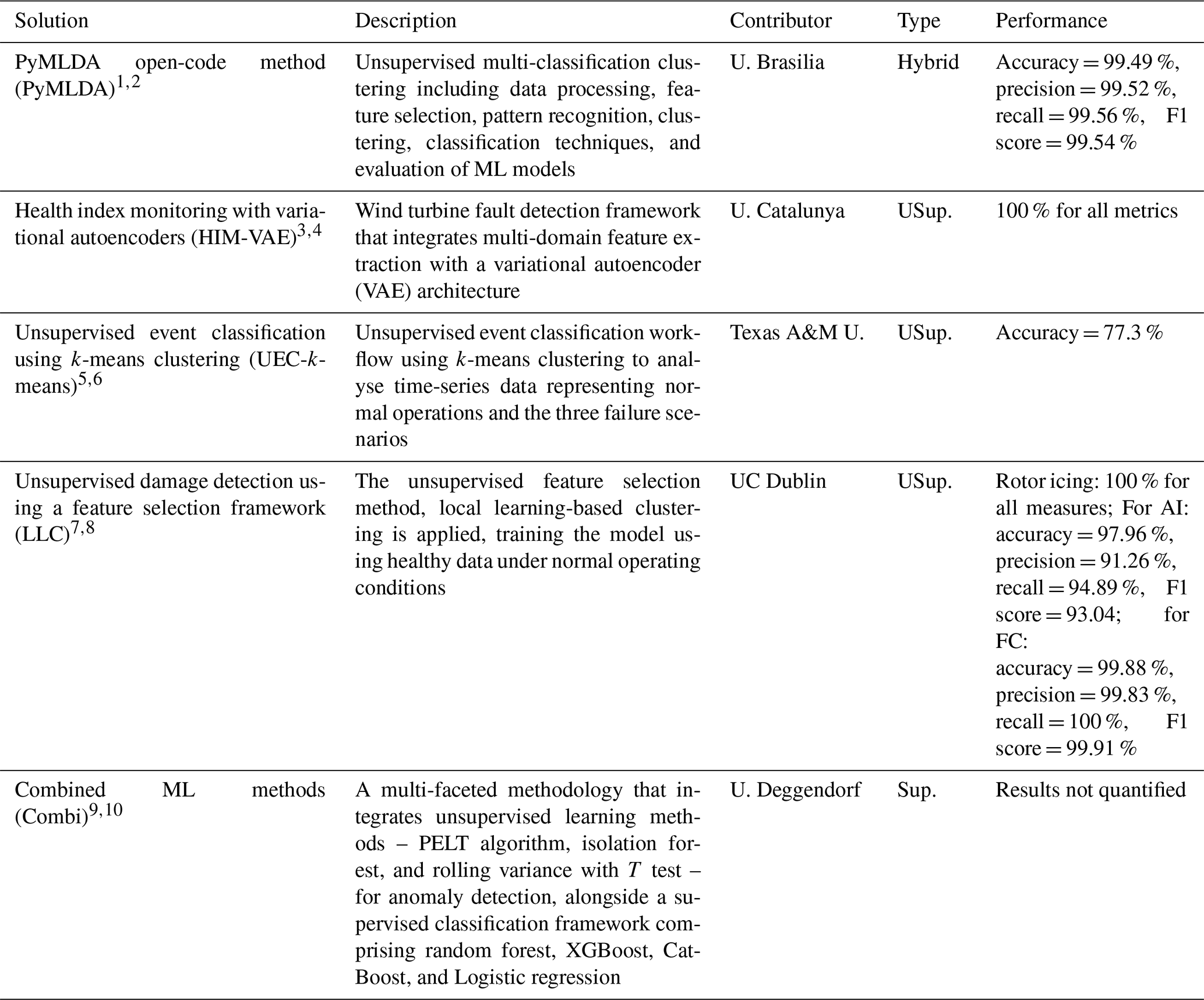
For each submitted solution, Table 1 shows a summary of the type of method; a short description of the method; and the accuracy, precision, recall, and F scores (where available) for each solution, including the direct link to the relevant report and the GitHub code.
Table 1Summary of the solutions examined in this work, where Sup. means supervised and USup. means unsupervised.
last access for all URL links: 2 July 2026: 1 https://github.com/mromarcela/wedowind-challenge-ASCE-EMI,
2 https://community.wedowind.ch/posts/the-rtdt-space-solution-failure-classification-in-the-aventa-wind-turbine-during-operation-using-pymlda-open-code-id4,
3 https://github.com/shun-wang1/wedowind-challenge-ASCE-EMI,
4 https://community.wedowind.ch/posts/the-rtdt-space-solution-fault-detection-in-wind-turbines-using-health-index-monitoring-with-variational-autoencoders-id8,
5 https://github.com/YaoTengHu/wedowind-challenge-ASCE-EMI.git,
6 https://community.wedowind.ch/posts/the-rtdt-space-solution-unsupervised-clustering-for-wind-turbine-fault-classification-aerodynamic-imbalance-icing-and-pitch-drive-failures_id-9,
7 https://community.wedowind.ch/posts/the-rtdt-space-interim-solution-id6_ver03_an-unsupervised-damage-detection-framework-for-an-operating-wind-turbine,
8 https://github.com/tteeoo26/An-unsupervised-damage-detection-framework-for-an-operating-wind-turbine-ID_6-/tree/main,
9 https://github.com/Anmolsharma95/wedowind-challenge-ASCE-EMI,
10 https://community.wedowind.ch/posts/the-rtdt-space-solution-failure-analysis-investigation-of-wind-turbine-components-using-machine-learning-and-deep-learning-id_01_02.
The PyMLDA open-code method (PyMLDA) is an unsupervised multi-classification clustering including data processing, feature selection, pattern recognition, clustering, classification techniques, and evaluation of ML models. The health index monitoring with variational autoencoders (HIM-VAE) method is a wind turbine fault detection framework that integrates multi-domain feature extraction with a variational autoencoder (VAE) architecture. The unsupervised event classification using k-means clustering (UEC-k-means) method is an unsupervised event classification workflow using k-means clustering to analyse time-series data representing normal operations and the three failure scenarios. The unsupervised damage detection using a feature selection framework (LLC) applies the unsupervised feature selection method local learning-based clustering, training the model using healthy data under normal operating conditions. The combined ML methods (Combi) is a multi-faceted methodology that integrates unsupervised learning methods – the PELT algorithm, isolation forest, and rolling variance with T test – for anomaly detection, alongside a supervised classification framework comprising random forest, XGBoost, CatBoost, and logistic regression.
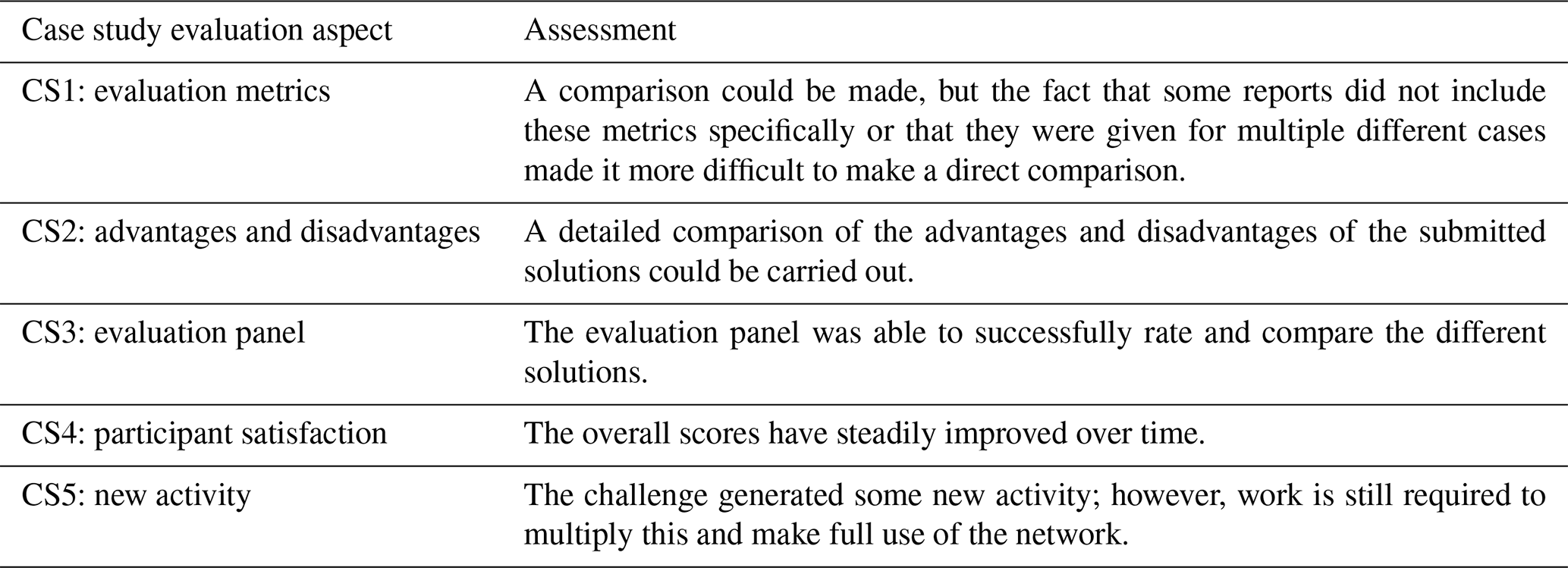
It can be seen in Table 1 that the comparison metrics (accuracy, precision, recall, and F scores) could be used to some extent to compare the performance of the different methods. The fact that some reports did not include these metrics specifically or that they were given for multiple different cases made it more difficult to make a direct comparison. It is therefore concluded that the comparison metrics provided in this case study can be used reasonably well to compare the performance of the different methods.
4.1.2 CS2: advantages and disadvantages
The next table (Table 2) shows that the solution templates allowed the advantages and disadvantages of different challenge solutions to be compared. The combined ML methods (Combi) is not included due to the lack of comparison metric results provided in the final report. It can be seen that the PyMLDA method successfully performed both binary and multiclass classification of operational failures, achieving accuracy rates of 99 %–100 %. By integrating a multiphysics dataset, combining signals from multiple sensors and SCADA data, the approach enables the incorporation of environmental conditions into the learning and fault classification process. However, the method still relies on feature extraction based on mathematical formulations and signal condensation, which may generalise the information and limit specificity. Therefore, supervised analysis remains essential to ensure accurate interpretation of the dataset. The HIM-VAE method achieved 100 % detection accuracy across all fault types, demonstrating its effectiveness for anomaly detection in SHM. However, this approach required careful outlier removal and high-quality training data, showing high sensitivity to data quality during pre-processing, which may limit its robustness in operational environments where data inconsistencies are common. The UEC-k-means method effectively classifies multiple fault types simultaneously, achieving an accuracy of 77.3 %. This capability supports faster and more efficient decision-making. However, when trained on smaller datasets, the accuracy tends to decrease due to increased overlap among fault patterns, which makes them more difficult to distinguish. The LLC method achieved satisfactory damage detection accuracy (more than 97 %) across all fault types, utilising the most damage sensitive of the employed statistical and time-domain features. This was performed in an unsupervised manner. However, the proposed approach requires a complex feature extraction and selection process in acquiring the most damage-sensitive features.
Table 2Comparison of the strengths and weaknesses of the four methods with quantified results analysed in this work.

This type of comparison can not only help researchers understand how different fault detection methods work and behave in relation to each other, but also help wind farm owner/operators with decision-making. Such a comparison reveals which methods are most accurate, which can run without labelled data, and which demand heavy feature engineering, enabling engineers to select the right tool without exhaustive trial and error. Trade-offs that might otherwise stay hidden, such as a model's sensitivity to noisy SCADA data or its computational overhead, emerge early, reducing costly surprises during deployment. This may feed directly into an optimised maintenance strategies. For example, if engineers know that PyMLDA already accounts for environmental effects or that UEC-k-means is less accurate with sparse data, they can design monitoring schedules, data quality checks, and sensor investments more efficiently and accurately. In addition to this, such a comparison fosters a benchmark culture: as new data arrive, teams can revisit and upgrade their analytics continuously.
It is therefore concluded that the solution templates provided in the challenge allow the advantages and disadvantages of different methods to be effectively compared.
4.1.3 CS3: evaluation panel assessment
The WeDoWind challenge evaluation panel members evaluated the results as follows:
-
The HIM-VAE method was judged to have the highest impact for this application due to the novel and relevant hybrid methodology, the resulting accuracy scores, and the high quality of the paper and presentation.
-
The PyMLDA method was judged to have the second-highest impact for this application due to the novel and relevant hybrid methodology, the resulting accuracy scores, and the high quality of the paper and presentation. However, the lack of feature selection using SCADA data means that its transferability and applicability to unseen cases may be lower than those of the other methods.
-
The UEC-k-means method was judged to have the third-highest impact for this application, and the evaluation panel appreciated the attempt to use a multiclass unsupervised approach, which could be very relevant for this application. However, the resulting scores were lower than some of the other semi-supervised methods submitted.
-
The LLC method was judged to have a lower impact for this application than the others. While the accuracy scores were high, events cannot be predicted unless the event type is known in advance.
-
The Combi method was judged to have a lower impact for this application than the others. The presentation of the methods and results made it difficult to assess its quality.
The evaluation panel was able to successfully rate and compare the different solutions. It is therefore concluded that the evaluation panel assessment could be used to compare different methods very effectively.
4.1.4 CS4: participant satisfaction
Following the completion of the challenge, the five participating teams filled out a survey designed to test how satisfied the participants were with the challenge and how likely they are to take part in future challenges. In order to compare the results with previous challenges (Barber et al., 2022, 2023b, 2024; Barber and Ding, 2024), the same questions were asked. The results of the quantitative questions are shown in Fig. 4, which were answered on a scale of 1–5, where 1 meant “strongly disagree” and 5 meant “strongly agree”. In the figure, the questions are shown on the left, and the answers are grouped into percentage of answers in the “agree”, “neutral” and “disagree” categories, whereby “agree” includes scores of 4 and 5, and “disagree” contains scores of 1 and 2.
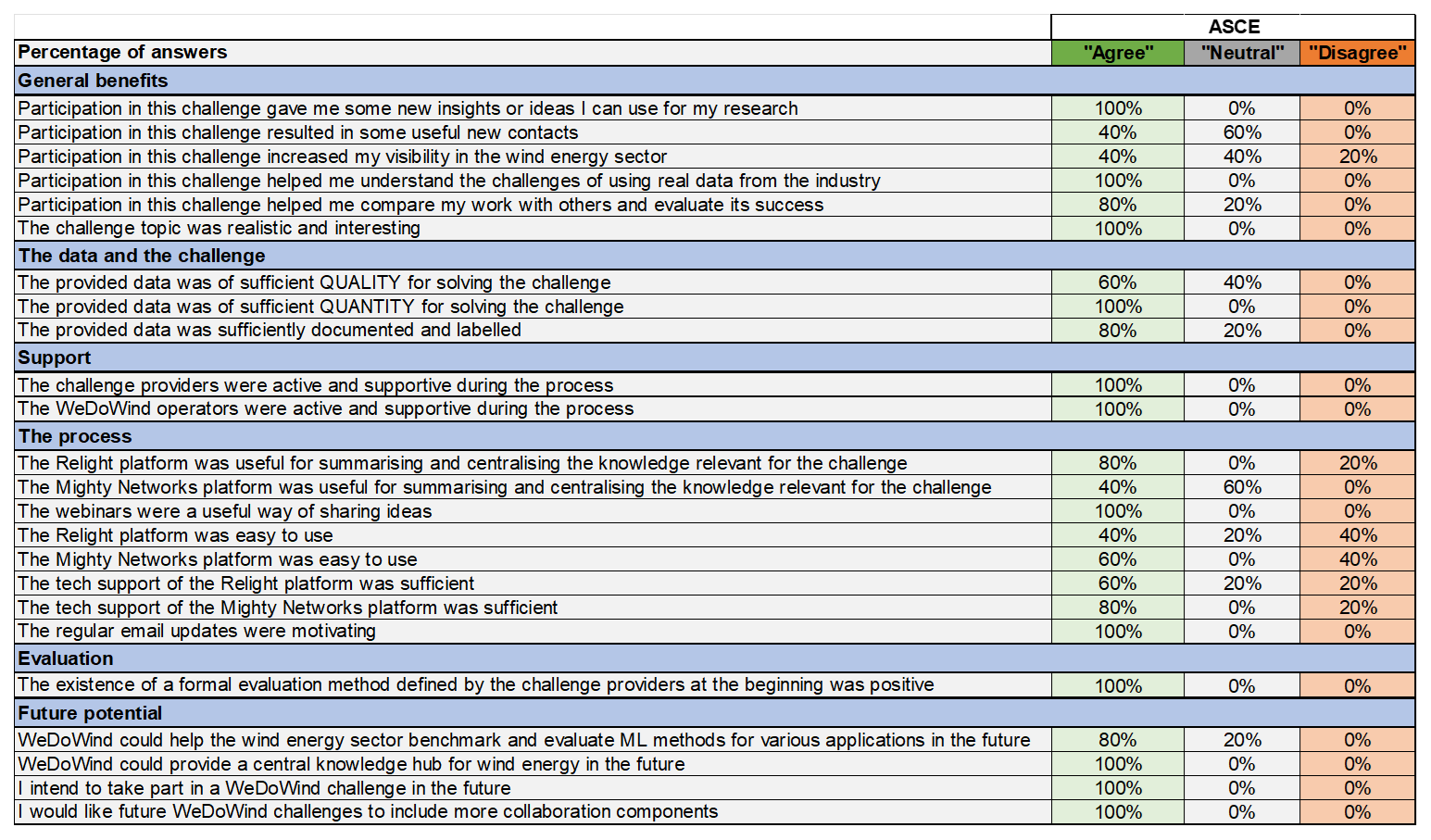
Although there were only five respondents in this survey, some general conclusions can be drawn. For example, it can be seen that the general benefits are rated highly, in particular the creation of new insights and ideas, understanding the challenges of using real data, and the opportunity to compare work with others. The creation of new contacts and increased visibility scored slightly lower than the other benefits, aligning with the results of previous surveys. These benefits probably require a critical number of users to be built up, which is currently the main focus of activities within the WeDoWind open innovation ecosystem.
The data quantity and documentation were also rated highly, with its quality rated slightly lower. Additional questions (not shown here) focused on data preparation revealed that four out of five participants used the structured metadata that were provided along with data in this challenge, and they all found that the metadata saved time in the data preparation process. The same four participants also used the wind turbine metadata in .JSON format, with three of them finding it easy to use and understand. Only three of them used the sensor metadata in .JSON format, with all of them finding it easy to use and understand. The same four participants found the provided Python code snipped for reading hdf5 files useful, and only three of them used the code inside the notebook to query the SCADA system codes. Suggested improvements for describing the data included providing clear guidelines on how the data were collected and correcting an error in the SCADA data time frequency (which needs to be looked into more to understand exactly what is meant).
The participants were very satisfied by the support provided by the challenge providers and platform operators and fairly satisfied with the usefulness and ease of use of the new platform. Two users gave rather negative feedback and should be further interviewed on the specifics. As for the previous challenges, the participants found the regular email reminders and updates motivating and supported the formal evaluation method defined by the challenge providers at the beginning.
Finally, the potential of WeDoWind to help the wind energy sector benchmark and evaluate ML methods for various applications, and to provide a central knowledge hub for wind energy in the future, was rated very highly, with all of the participants intending to take part in a WeDoWind challenge in the future.
In comparison to the previous challenges, Fig. 5 shows that the overall scores have steadily improved over time. These scores were calculated by averaging the total score for each question over all the questions, assuming each question has equal importance, for each challenge.
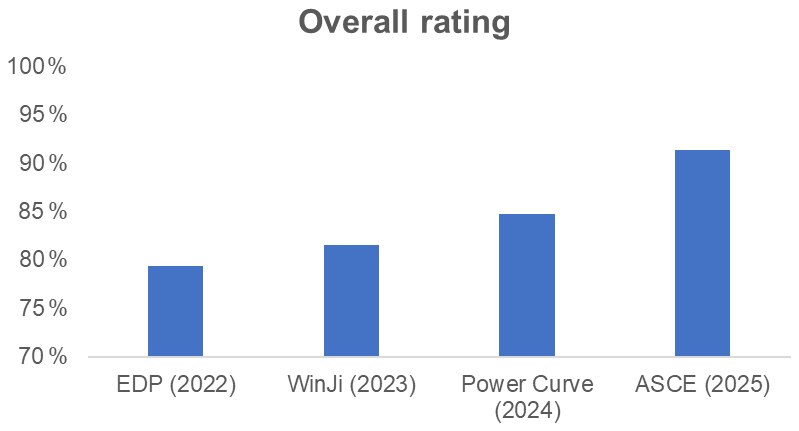
Figure 5Comparison of the overall scores from the participants' survey between this challenge and previous challenges.
It is therefore concluded that the participants were very satisfied with the challenge and were likely to take part in future challenges.
4.1.5 CS5: new activity
The new activity related to the case study was analysed using an in-built analytics tool. The challenge generated the following new activity:
-
one new dataset made available to the community;
-
14 new technical and administrative discussions on the platform;
-
five webinar recordings;
-
three public events (launch webinar, interim presentation, final presentation);
-
since November 2024, four new LinkedIn posts, three comments, 14 reposts, and typically 1000 impressions per post;
-
ca. 200 new WeDoWind members during the challenge duration.
It can be seen that the challenge generated some new activity; however, work is still required to multiply this and make full use of the network. It is therefore concluded that a reasonable amount of new activity could be generated in this case study.
4.1.6 Overall case study evaluation
A summary of the case study evaluation aspects assigned in the previous sections is shown in Table 3. The ability of the WeDoWind open innovation ecosystem in allowing the results of different methods (or challenge solutions) to be compared for this case study was therefore assessed as “medium” overall.
4.2 Feasibility study
The feasibility of the WeDoWind open innovation ecosystem for fostering open science and open innovation in wind energy for the different TELOS aspects are discussed below and summarised in terms of strengths, weaknesses, and further developments in Table 4.
Table 4Summary of the TELOS feasibility study of the WeDoWind open innovation ecosystem.
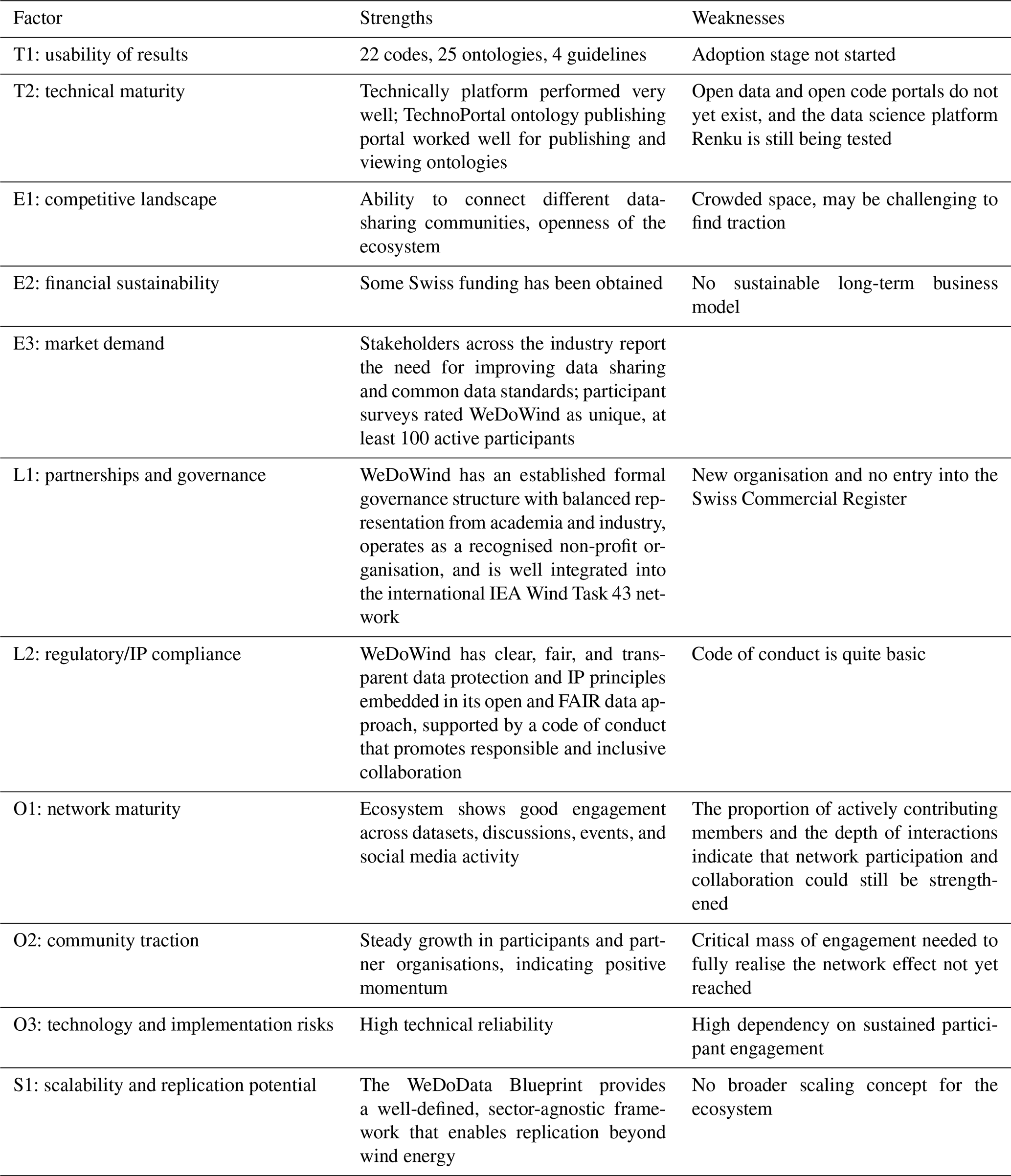
TELOS aspect T1 (usability of results) was measured by the number of usable codes, information models, and guidelines developed, as well as their adoption. For the case study, five new codes were uploaded to the GitHub repository. In the overall ecosystem, a total of 22 codes have been uploaded to GitHub (five from this case study; six from the EDP wind turbine failure detection challenge, Barber et al., 2022; six from the WinJi gearbox failure detection challenge, Barber et al., 2023b; five from the power curve modelling benchmarking challenge, Barber and Ding, 2024), and 22 codes have been made available on Kaggle (12 from the predict the wind speed challenge, https://www.kaggle.com/competitions/predict-the-wind-speed-at-a-wind-turbine/code, last access: 2 July 2026, and 10 from the running Hill of Towie wind turbine power prediction challenge, https://www.kaggle.com/competitions/hill-of-towie-wind-turbine-power-prediction/code, last access: 2 July 2026). In addition to this, 25 new ontologies have been uploaded to the TechnoPortal (https://technoportal.hevs.ch/, last access: 2 July 2026), and four guidelines are under development in the Information Modelling Community and the Open Data and Code Community. This is a very encouraging result; however, the adoption stage has not started (or cannot be measured). For this reason, we are currently testing the use of a data science platform such as Renku to make the submitted codes more interoperable and reusable.
TELOS aspect T2 (technical maturity) was measured by the platform's technical performance and capacity to grow. For the case study, the phase 1 platform proved difficult for users to use, which was one of the reasons for switching to the new phase 2 platform. The new platform worked well for running the case study challenge, with positive feedback from the participants. In the overall ecosystem, the platform has performed very well technically so far due to the high maturity of the underlying Mighty Networks platform. In addition to this, the TechnoPortal ontology publishing portal has so far worked well for publishing and viewing ontologies in the Information Modelling Community. However, the open data and open code portals do not yet exist, and the data science platform Renku is still being tested, so further development is required.
TELOS aspect E1 (competitive landscape) was measured by the number of competitors and the distinctness of WeDoWind's offer. For the case study, the participants rated the potential of WeDoWind to help the wind energy sector benchmark and evaluate ML methods for various applications, and to provide a central knowledge hub for wind energy in the future, very highly. In the overall ecosystem, the distinctiveness lies in the connection of the different communities related to data sharing and in its openness. However, the space is very crowded, and it may be challenging to find traction.
TELOS aspect E2 (financial sustainability) was measured through the funding obtained so far. For the case study, no direct funding was available. In the overall ecosystem, funding has been received for developing the TechnoPortal (Swiss Open Research Data Grants (CHORD): Track A 3rd Call), for developing and testing a dedicated data science platform and an open knowledge hub (SDSC National Call for Projects 2025), for improving open science practices within IEA Wind Tasks using WeDoWind (Swiss Open Research Data Grants (CHORD)), and for running WeDoWind challenges (the TWEED Horizon Europe MSCA Doctoral Network, https://www.tweedproject.eu/, last access: 2 July 2026). However, no sustainable long-term business model for operating WeDoWind has been implemented so far, so the financial sustainability is limited.
The TELOS aspect E3 (market demand) was measured by the percentage of users who rate WeDoWind as unique, the number of organisations participating in challenges and working groups, and the number of stakeholders committing resources such as money and time. For the case study, the five participants all rated WeDoWind as unique. Five different organisations (all from academia) submitted solutions, one organisation provided the data and the challenge topics, and a further 50 organisations (from industry and academia) joined the space as observers. In the overall ecosystem, we observe a general strong overall market demand, with stakeholders across the industry reporting the need for improving data sharing and common data standards (Clifton et al., 2023; Barber et al., 2023c). All the participant surveys run so far (run with a total of 23 people) rated WeDoWind as unique. Over all the challenges, we estimate contributions of a total of 50 people and organisations (the challenges related to the participant surveys plus five additional challenges without a participant survey). In the rest of the community, there are approximately five people working actively inside 10 different working groups, making a total of 50 more active participants. This is about one-fifth of the total ecosystem members. In order to increase the proportion of active members, a user survey is currently being carried out.
TELOS aspect L1 (partnership and governance) was measured by the breadth and balance of stakeholders and the formal structure, supporting collaboration. For the case study, this aspect is not relevant. In the overall ecosystem, a formal structure has already been developed for the organisation. WeDoWind operates as a Swiss non-profit organisation, led by the Eastern Switzerland University of Applied Sciences, with an elected board of directors (consisting of eight members from academia and industry) and advisory board (seven members from academia and industry). It is also strongly integrated into IEA Wind Task 43. An entry into the Swiss Commercial Register is currently being pursued.
TELOS aspect L2 (regulatory/IP compliance) was measured through the clarity and fairness of data protection and IP rules. For the case study, a “freedom to publish statement” (“I agree that the source code of my approach may be made publicly available and published in an open research journal”) was included in the final report template. In the overall ecosystem, the whole focus is centred on open and FAIR data and code, sharing liability and easing adoption in regulated environments. In addition to this, a code of conduct guides users to fulfil the three ideas of respect, empowerment, and inclusion (https://community.wedowind.ch/posts/about-wedowind-code-of-conduct, last access: 2 July 2026). This code of conduct is being continually developed as the ecosystem grows and evolves.
TELOS aspect O1 (network maturity) was measured through the number and type of interactions between participants. For the case study, one new dataset was made available; five solutions were submitted; and the platform was used for discussions (14 new technical and administrative discussions were generated), webinars, and events (five webinar recordings were uploaded, and three public events were held). Since November 2024, four new LinkedIn posts, three comments, 14 reposts, and typically 1000 impressions per post were reached. The participants responded positively to the challenge. In the overall ecosystem, there are currently 616 members (as of 8 May 2026), with 20 %–60 % of these members actively contributing to discussions or working groups (varying with month, directly relating to challenge events or deadlines). Since January 2025, 36 new LinkedIn posts were created related to WeDoWind, generating over 25 000 new impressions, almost 500 reactions, eight comments, and 51 reposts. While this interaction is positive, the number and type of active contributions can be improved upon through community building, via dissemination, and by attracting more challenge providers, working group leaders, and challenge and working group participants.
TELOS aspect O2 (community traction) was measured by the number of participants and partner organisations over time and the number of participants per activity. For the case study, the development of the number of participants and partner organisations over time could not be measured. However, in the overall ecosystem, a steady increase in participants over time can be seen. The number of new members per month varied from 77 in January to 157 in May, with a general upward trend. In addition, the number of partner organisations running challenges or working groups has steadily increased over time. In January, the ecosystem included challenges run by EDP (the EDP Challenges space), WinJi (the WinJi Challenges space), Nuveen Infrastructure Clean Energy (the Open Data Exploration space), Georgia University of Technology (the Data Science for Wind Energy space), RTDT Laboratories AG (the RTDT space), and Chalmers Institute of Technology (the EAWE Test Turbines Committee space). As of October 2025, we have additionally partnered with RES (in the Hill of Towie Data space), Fraunhofer IEE (in the EnergyFaultDetector space), IEA Wind Task 43 (the wind energy domain ontology, operations ontology, digital twins taxonomy and data user groups), TIM-Wind, the Research Data Alliance (RDA Wind Energy Community Standards Working Group), Alisios Corporation (Data Engineering in Wind Energy space), Octue (for the schema publishing portal), HES-SO (for the ontology publishing portal), and the Swiss Data Science Center (for the open data portal). While this community traction is encouraging, further interaction is required in order to reach the critical number required to benefit from the networking effect.
TELOS aspect O3 (technology and implementation risks) was measured by considering which factors are relied upon for success. For both the case study and the overall ecosystem, success is extremely dependent upon the number of participants and their engagement (implementation risk), as well as on the correct functioning of the platform (technology risk). The risk of not being able to attract enough participants is quite high, and the risk of the digital platform not working correctly is quite low. This means that the focus of further developments should be on attracting more participants.
TELOS aspect S1 (scalability and replication potential) was measured by how clearly the processes are defined and how transferable they are. For the case study, this aspect is not applicable. In the overall ecosystem, replication is possible through the sector-agnostic WeDoData Blueprint, which is explicitly positioned for extension to other sectors. However, the concept for scaling the ecosystem is not yet entirely clear. Therefore, a scaling concept should be worked on in the future.
In summary, the ecosystem demonstrates strong governance, regulatory compliance, and scalability potential, supported by a growing and engaged community. However, its long-term success will depend on improving financial sustainability and increasing active participation to fully leverage the network and ensure continued growth.
A two-phase design thinking approach was applied to transform WeDoWind from a platform for documenting and managing challenges to an open innovation ecosystem for fostering open science and open innovation in wind energy. The feasibility of WeDoWind was evaluated across 11 technical, economic, legal, operational, and scheduling aspects from the TELOS framework with the support of a structural health monitoring case study. The results of the case study, the ASCE-EMI Structural Health Monitoring for Wind Energy Challenge, demonstrated that WeDoWind enables the comparison and benchmarking of different machine learning methods for fault detection while providing a structured and transparent framework for collaboration and data sharing. It was found that a comparison between submitted solutions could be made, but the fact that some reports did not include these metrics specifically or that they were given for multiple different cases made it more difficult to make a direct comparison. Moreover, a detailed comparison of the advantages and disadvantages of the submitted solutions could be carried out. Furthermore, the evaluation panel was able to successfully rate and compare the different solutions, and the overall participant satisfaction has steadily improved over time. Finally, the challenge generated some new activity; however, work is still required to multiply this and make full use of the network effect.
The overall TELOS feasibility study showed strong governance, clear regulation, and promising scalability potential. However, further progress is required to make it financially sustainable, to ensure adoption of the results in the sector, and to ensure community engagement to reach the critical mass necessary for self-sustaining growth. Until now, 22 new codes, 25 new ontologies, and four new guidelines have been developed, but the adoption stage has not yet started. The platform performed very well from a technical perspective, and the TechnoPortal ontology publishing portal worked well for publishing and viewing ontologies, but the planned open data and open code portals do not yet exist, and the data science platform Renku is still being tested. One of the main unique aspects of WeDoWind was found to be its ability to connect different data-sharing communities, as well as the openness of the ecosystem. However, the competitive space is crowded, and it may be challenging to find traction. For financial stability, some Swiss funding has been obtained, but no sustainable long-term business model exists yet. A market demand could be identified: stakeholders across the industry report the need for improving data sharing and common data standards. Participant surveys rated WeDoWind as unique, and there are at least 100 active participants so far. WeDoWind has an established formal governance structure with balanced representation from academia and industry, operates as a recognised non-profit organisation, and is well integrated into the international IEA Wind Task 43 network. However, the organisation is not yet mature and is not yet entered into the Swiss Commercial Register. WeDoWind has clear, fair, and transparent data protection and IP principles embedded in its open and FAIR data approach, supported by a code of conduct that promotes responsible and inclusive collaboration, although this code of conduct is quite basic so far. The ecosystem shows good engagement across datasets, discussions, events, and social media activity; however, the proportion of actively contributing members and the depth of interactions indicate that network participation and collaboration could still be strengthened. There is steady growth in participants and partner organisations, indicating positive momentum, but the critical mass of engagement needed to fully realise the network effect has not yet been reached. High technical reliability of the platform is combined with a high dependency on sustained participant engagement. Finally, in terms of scalability and replication potential, the WeDoData Blueprint provides a well-defined, sector-agnostic framework that enables replication beyond wind energy, although no broader scaling concept for the ecosystem exists yet.
The main lessons learned during this process are the importance of (a) an understandable, user-centric communication and platform structure; (b) simple communication; (c) clear use cases and challenge or working group topics and goals; and (d) motivated challenge providers and working group leaders who act as community champions. Future work will focus on extending the WeDoData Blueprint to other energy sectors, developing the open data and open code portals, and establishing a long-term business model to ensure the continued operation and expansion of WeDoWind. These steps will be essential to strengthen its role as an open, FAIR, and collaborative ecosystem that accelerates innovation and digitalisation in wind energy.
The scripts developed in this work are all available on GitHub (https://github.com/RTDT-LABORATORIES/wedowind-challenge-ASCE-EMI, last access: 2 July 2026, Machado et al., 2026).
The data used for the case study in this work are available in Chatzi et al. (2023).
SB: project lead, challenge coordination, paper writing, construction of summary table, definition of conclusions. SW, FP, YV, MRM, ARSRdS, JdSC, XZ, YTH, AN, TV, MA, RG, AM: challenge solution providers, paper editing. ChatGPT o-3 was used to help create the summary of the results and conclusions.
At least one of the (co-)authors is a member of the editorial board of Wind Energy Science. The peer-review process was guided by an independent editor, and the authors also have no other competing interests to declare.
Publisher's note: Copernicus Publications remains neutral with regard to jurisdictional claims made in the text, published maps, institutional affiliations, or any other geographical representation in this paper. The authors bear the ultimate responsibility for providing appropriate place names. Views expressed in the text are those of the authors and do not necessarily reflect the views of the publisher.
The authors thank the ASCE and the evaluation panel for their contributions to this work: Prof. Eleni Chatzi, ETH Zurich, Switzerland; Dr Imad Abdallah, RTDT Laboratories, Switzerland; Prof. Jian Li, University of Kansas; Prof. Fernando Moreu, University of New Mexico, USA; and Prof. Susu Xu, Johns Hopkins University, USA.
This paper was edited by Nikolay Dimitrov and reviewed by two anonymous referees.
Barber, S. and Ding, Y.: Improving data sharing in practice – power curve benchmarking case study, J. Phys. Conf. Ser., 2745, 012002, https://doi.org/10.1088/1742-6596/2745/1/012002, 2024. a, b, c, d
Barber, S., Lima, L. A. M., Sakagami, Y., Quick, J., Latiffianti, E., Liu, Y., Ferrari, R., Letzgus, S., Zhang, X., and Hammer, F.: Enabling co-innovation for a successful digital transformation in wind energy using a new digital ecosystem and a fault detection case study, Energies, 15, https://doi.org/10.3390/en15155638, 2022. a, b, c, d
Barber, S., Hammer, F., and Henderson, C.: Can data sharing really provide added value? Practical data sharing recommendations for the wind energy sector, J. Phys. Conf. Ser., 2507, 012003, https://doi.org/10.1088/1742-6596/2507/1/012003, 2023a. a
Barber, S., Izagirre, U., Serradilla, O., Olaizola, J., Zugasti, E., Aizpurua, J. I., Milani, A. E., Sehnke, F., Sakagami, Y., and Henderson, C.: Best practice data sharing guidelines for wind turbine fault detection model evaluation, Energies, 16, https://doi.org/10.3390/en16083567, 2023b. a, b, c, d
Barber, S., Sempreviva, A. M., Sheng, S., Farren, D., and Zappalá, D.: A use-case-driven approach for demonstrating the added value of digitalisation in wind energy, J. Phys. Conf. Ser., 2507, 012002, https://doi.org/10.1088/1742-6596/2507/1/012002, 2023c. a, b, c
Barber, S., Marykovskiy, Y., and Abdallah, I.: Improving data sharing in wind energy – structural health monitoring case study, J. Phys. Conf. Ser., 2767, 032007, https://doi.org/10.1088/1742-6596/2767/3/032007, 2024. a, b, c
Bause, K., Radimersky, A., Iwanicki, M., and Albers, A.: Feasibility studies in the product development process, Procedia CIRP, 21, 473–478, https://doi.org/10.1016/j.procir.2014.03.128, 2014. a, b
Chatzi, E., Abdallah, I., Hofsäß, M., Bischoff, O., Barber, S., and Marykovskiy, Y.: Aventa AV-7 ETH Zurich Research Wind Turbine SCADA and high frequency Structural Health Monitoring (SHM) data, Zenodo [code], https://doi.org/10.5281/zenodo.8229750, 2023. a, b
Clifton, A., Barber, S., Bray, A., Enevoldsen, P., Fields, J., Sempreviva, A. M., Williams, L., Quick, J., Purdue, M., Totaro, P., and Ding, Y.: Grand challenges in the digitalisation of wind energy, Wind Energ. Sci., 8, 947–974, https://doi.org/10.5194/wes-8-947-2023, 2023. a, b, c, d
Dall-Orsoletta, A., Romero, F., and Ferreira, P.: Open and collaborative innovation for the energy transition: an exploratory study, Technol. Soc., 69, 101955, https://doi.org/10.1016/j.techsoc.2022.101955, 2022. a
de Novaes Pires Leite, G., Farias, F. C., de Sá, T. G., da Costa, A. C. A., Brennand, L. J. P., de Souza, M. G. G., Villa, A. A. O., and Droguett, E. L.: A robust fleet–based anomaly detection framework applied to wind turbine vibration data, Eng. Appl. Artif. Intel., 126, 106859, https://doi.org/10.1016/j.engappai.2023.106859, 2023. a
Jamil, F., Verstraeten, T., Nowé, A., Peeters, C., and Helsen, J.: A deep boosted transfer learning method for wind turbine gearbox fault detection, Renew. Energ., 197, 331–341, https://doi.org/10.1016/j.renene.2022.07.117, 2022. a
Kirkegaard, J. K., Rudolph, D. P., Nyborg, S., Solman, H., Gill, E., Cronin, T., and Hallisey, M.: Tackling grand challenges in wind energy through a socio-technical perspective, Nature Energy, 8, 655–664, https://doi.org/10.1038/s41560-023-01266-z, 2023. a
Lee, Y., Park, C., Kim, N., Ahn, J., and Jeong, J.: LSTM– autoencoder based anomaly detection using vibration data of wind turbines, Sensors, 24, 2833, https://doi.org/10.3390/s24092833, 2024. a
Machado, M. et al.: WeDoWind/The ASCE EMI Structural Health Monitoring for Wind Energy Challenge: Final results of the WeDoWind ASCE EMI Structural Health Monitoring for Wind Energy Challenge (Version v1.0.0), Zenodo [Computer software], https://doi.org/10.5281/zenodo.21770885, 2026. a
Marykovskiy, Y., Clark, T., Day, J., Wiens, M., Henderson, C., Quick, J., Abdallah, I., Sempreviva, A. M., Calbimonte, J.-P., Chatzi, E., and Barber, S.: Knowledge engineering for wind energy, Wind Energ. Sci., 9, 883–917, https://doi.org/10.5194/wes-9-883-2024, 2024. a, b, c, d, e
Mollick, E.: The dynamics of crowdfunding: an exploratory study, J. Bus. Venturing, 29, 1–16, https://doi.org/10.1016/j.jbusvent.2013.06.005, 2014. a, b
Pearce, B.: Design Thinking, Zenodo [code], https://doi.org/10.5281/zenodo.3717021, 2020. a
Som, O., Maloca, S., and Jäger, A.: Open Innovation – ein universelles Erfolgsrezept, https://doi.org/10.24406/publica-fhg-296992, 2014. a, b, c
Veers, P., Dykes, K., Lantz, E., Barth, S., Bottasso, C. L., Carlson, O., Clifton, A., Green, J., Green, P., Holttinen, H., Laird, D., Lehtomäki, V., Lundquist, J. K., Manwell, J., Marquis, M., Meneveau, C., Moriarty, P., Munduate, X., Muskulus, M., Naughton, J., Pao, L., Paquette, J., Peinke, J., Robertson, A., Rodrigo, J. S., Sempreviva, A. M., Smith, J. C., Tuohy, A., and Wiser, R.: Grand challenges in the science of wind energy, Science, 366, eaau2027, https://doi.org/10.1126/science.aau2027, 2019. a
Vicente-Saez, R. and Martinez-Fuentes, C.: Open Science now: a systematic literature review for an integrated definition, J. Bus. Res., 88, 428–436, https://doi.org/10.1016/j.jbusres.2017.12.043, 2018. a
Wang, J. and Loparo, K. A.: Wind Turbine Gearbox Fault Detection Based on Sparse Filtering and Graph Neural Networks, arXiv [preprint], arXiv, https://doi.org/10.48550/arXiv.2303.03496, 2023. a
Yang, Z., Xu, M., Wang, S., Li, J., Peng, Z., Jin, F., and Yang, Y.: Detection of wind turbine blade abnormalities through a deep learning model integrating VAE and neural ODE, Ocean Eng., 302, 117689, https://doi.org/10.1016/j.oceaneng.2024.117689, 2024. a
Prof. Eleni Chatzi, ETH Zurich, Switzerland; Dr Imad Abdallah, RTDT Laboratories, Switzerland; Prof. Jian Li, University of Kansas; Prof. Fernando Moreu, University of New Mexico, USA; Prof. Susu Xu, Johns Hopkins University, USA.
WeDoWind is an open innovation ecosystem for enabling data sharing and alignment in the wind energy sector. In this work, a feasibility study of WeDoWind is presented, considering different technical, economic, legal, operational and scheduling aspects. The results showed strong governance, clear regulation, and promising scalability potential, but further progress is required to make it financially sustainable and to ensure adoption of the results in the sector.
WeDoWind is an open innovation ecosystem for enabling data sharing and...