
Articles | Volume 11, issue 8
https://doi.org/10.5194/wes-11-2801-2026
© Author(s) 2026. This work is distributed under
the Creative Commons Attribution 4.0 License.
the Creative Commons Attribution 4.0 License.
https://doi.org/10.5194/wes-11-2801-2026
© Author(s) 2026. This work is distributed under
the Creative Commons Attribution 4.0 License.
the Creative Commons Attribution 4.0 License.
Research article
| 
04 Aug 2026
Research article |
| 04 Aug 2026
| 04 Aug 2026
Fostering open science through a digital open innovation platform – structural health monitoring case study

Eastern Switzerland University of Applied Sciences, Oberseestrasse 10, 8640 Rapperswil, Switzerland
Shun Wang
Control, Data, and Artificial Intelligence (CoDAlab), Department of Mathematics, Escola d'Enginyeria de Barcelona Est (EEBE), Universitat Politècnica de Catalunya (UPC), Campus Diagonal-Besós (CDB), Eduard Maristany, 16, 08019 Barcelona, Spain
Francesc Pozo
Control, Data, and Artificial Intelligence (CoDAlab), Department of Mathematics, Escola d'Enginyeria de Barcelona Est (EEBE), Universitat Politècnica de Catalunya (UPC), Campus Diagonal-Besós (CDB), Eduard Maristany, 16, 08019 Barcelona, Spain
Institute of Mathematics (IMTech), Universitat Politècnica de Catalunya (UPC), Pau Gargallo 14, 08028 Barcelona, Spain
Yolanda Vidal
Control, Data, and Artificial Intelligence (CoDAlab), Department of Mathematics, Escola d'Enginyeria de Barcelona Est (EEBE), Universitat Politècnica de Catalunya (UPC), Campus Diagonal-Besós (CDB), Eduard Maristany, 16, 08019 Barcelona, Spain
Institute of Mathematics (IMTech), Universitat Politècnica de Catalunya (UPC), Pau Gargallo 14, 08028 Barcelona, Spain
Marcela Rodrigues Machado
Department of Mechanical Engineering, University of Brasília, Campus Universitário Darcy Ribeiro, Brasília, 70910-900, Brazil
Amanda Aryda Silva Rodrigues de Sousa
Department of Mechanical Engineering, University of Brasília, Campus Universitário Darcy Ribeiro, Brasília, 70910-900, Brazil
Jefferson da Silva Coelho
Department of Mechanical Engineering, University of Brasília, Campus Universitário Darcy Ribeiro, Brasília, 70910-900, Brazil
Xukai Zhang
Zachry Department of Civil and Environmental Engineering, Texas A&M University, College Station, 77843, TX, USA
Yao-Teng Hu
Zachry Department of Civil and Environmental Engineering, Texas A&M University, College Station, 77843, TX, USA
Arash Noshadravan
Zachry Department of Civil and Environmental Engineering, Texas A&M University, College Station, 77843, TX, USA
Theodoros Varouxis
Structural Dynamics and Assessment Laboratory, School of Civil Engineering, University College Dublin, Newstead Block B, D04 V1W8 Dublin, Ireland
Mahmoud Abdelhak
Structural Dynamics and Assessment Laboratory, School of Civil Engineering, University College Dublin, Newstead Block B, D04 V1W8 Dublin, Ireland
Ramin Ghiasi
Research Engineer, Roughan and O'Donovan(ROD), Unit 2.1, Block 2, Woodford Business Park Turnapin Little, D17 E925, Dublin, Ireland
Abdollah Malekjafarian
Structural Dynamics and Assessment Laboratory, School of Civil Engineering, University College Dublin, Newstead Block B, D04 V1W8 Dublin, Ireland
Related authors
Nora Helbig, Florian Hammer, Gert-Jan Duine, Leila M. V. Carvalho, Charles Jones, Hugo Merzisen, Isabelle Gouttevin, and Sarah Barber
EGUsphere, https://doi.org/10.5194/egusphere-2026-5871, https://doi.org/10.5194/egusphere-2026-5871, 2026
This preprint is open for discussion and under review for Nonlinear Processes in Geophysics (NPG).
Short summary
Short summary
We enhanced DEVINE, a deep-learning wind downscaling model trained on atmospheric model simulations over synthetic topographies. Introducing wind direction-dependent input features enabled rotational data augmentation. We assess performance across unseen terrain, wind regimes and driving model data with station observations and atmospheric model simulations. DEVINE generalizes well when flow is primarily terrain-forced, but performance degrades under complex atmosphere-terrain interactions.
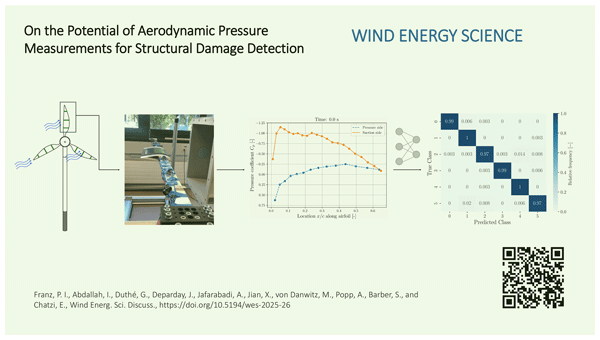
Philip Franz, Imad Abdallah, Gregory Duthé, Julien Deparday, Ali Jafarabadi, Xudong Jian, Max von Danwitz, Alexander Popp, Sarah Barber, and Eleni Chatzi
Wind Energ. Sci., 10, 3001–3026, https://doi.org/10.5194/wes-10-3001-2025, https://doi.org/10.5194/wes-10-3001-2025, 2025
Short summary
Short summary
New designs of large wind turbine blades have become increasingly flexible and thus need cost-efficient monitoring solutions. Hence, we investigate if aerodynamic pressure measurements from a low-cost sensing system can be used to detect structural damage. Our research is based on a wind tunnel study, emulating a simplified wind turbine blade under various conditions. We show that, when using a convolutional-neural-network-based method, structural damage can indeed be detected and its severity can be rated.
Sarah Barber, Anna Maria Sempreviva, Jeffrey Clerc, and Anne Hegemann
Wind Energ. Sci. Discuss., https://doi.org/10.5194/wes-2025-159, https://doi.org/10.5194/wes-2025-159, 2025
Revised manuscript under review for WES
Short summary
Short summary
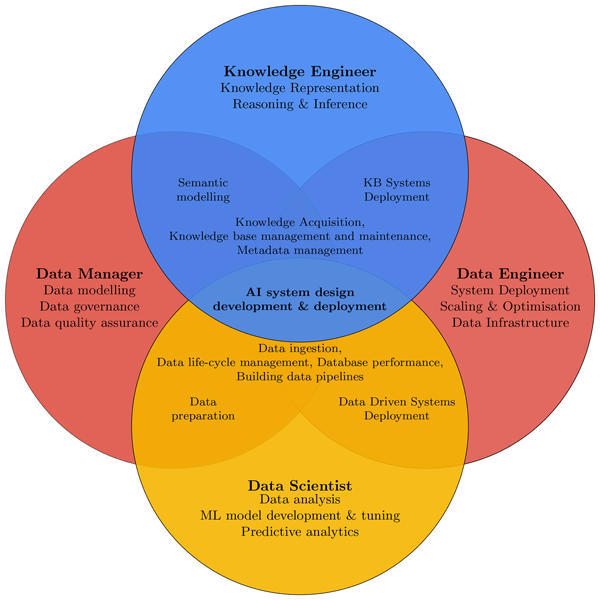
This paper explores how organisational culture shapes digitalisation in the wind energy sector. Based on a global survey and literature review, it finds that teams drive digital adoption more effectively than entire organisations, with companies ahead of universities. Size has little impact, but barriers such as limited budgets, vague strategies, and risk-averse leadership slow progress. The study offers practical recommendations to foster collaboration, innovation, and clear digital strategies.
Yuriy Marykovskiy, Thomas Clark, Justin Day, Marcus Wiens, Charles Henderson, Julian Quick, Imad Abdallah, Anna Maria Sempreviva, Jean-Paul Calbimonte, Eleni Chatzi, and Sarah Barber
Wind Energ. Sci., 9, 883–917, https://doi.org/10.5194/wes-9-883-2024, https://doi.org/10.5194/wes-9-883-2024, 2024
Short summary
Short summary
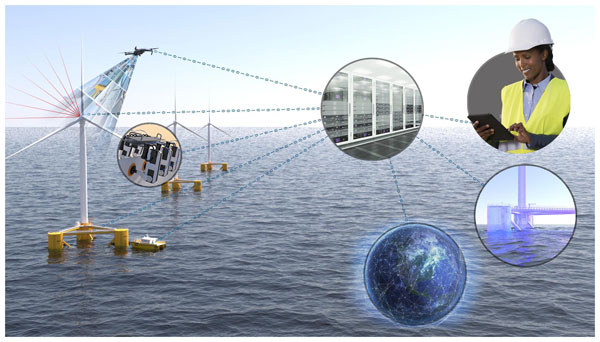
This paper delves into the crucial task of transforming raw data into actionable knowledge which can be used by advanced artificial intelligence systems – a challenge that spans various domains, industries, and scientific fields amid their digital transformation journey. This article underscores the significance of cross-industry collaboration and learning, drawing insights from sectors leading in digitalisation, and provides strategic guidance for further development in this area.
Andrew Clifton, Sarah Barber, Andrew Bray, Peter Enevoldsen, Jason Fields, Anna Maria Sempreviva, Lindy Williams, Julian Quick, Mike Purdue, Philip Totaro, and Yu Ding
Wind Energ. Sci., 8, 947–974, https://doi.org/10.5194/wes-8-947-2023, https://doi.org/10.5194/wes-8-947-2023, 2023
Short summary
Short summary
Wind energy creates huge amounts of data, which can be used to improve plant design, raise efficiency, reduce operating costs, and ease integration. These all contribute to cheaper and more predictable energy from wind. But realising the value of data requires a digital transformation that brings
grand challengesaround data, culture, and coopetition. This paper describes how the wind energy industry could work with R&D organisations, funding agencies, and others to overcome them.
Florian Hammer, Sarah Barber, Sebastian Remmler, Federico Bernardoni, Kartik Venkatraman, Gustavo A. Díez Sánchez, Alain Schubiger, Trond-Ola Hågbo, Sophia Buckingham, and Knut Erik Giljarhus
Wind Energ. Sci. Discuss., https://doi.org/10.5194/wes-2022-114, https://doi.org/10.5194/wes-2022-114, 2023
Preprint withdrawn
Short summary
Short summary
We further enhanced a knowledge base for choosing the most optimal wind resource assessment tool. For this, we compared different simulation tools for the Perdigão site in Portugal, in terms of accuracy and costs. In total five different simulation tools were compared. We found that with a high degree of automatisation and a high experience level of the modeller a cost effective and accurate prediction based on RANS could be achieved. LES simulations are still mainly reserved for academia.
Andrew Clifton, Sarah Barber, Alexander Stökl, Helmut Frank, and Timo Karlsson
Wind Energ. Sci., 7, 2231–2254, https://doi.org/10.5194/wes-7-2231-2022, https://doi.org/10.5194/wes-7-2231-2022, 2022
Short summary
Short summary
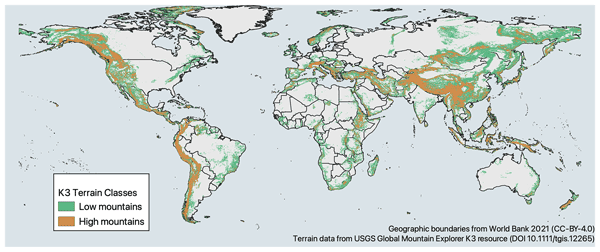
The transition to low-carbon sources of energy means that wind turbines will need to be built in hilly or mountainous regions or in places affected by icing. These locations are called
complexand are hard to develop. This paper sets out the research and development (R&D) needed to make it easier and cheaper to harness wind energy there. This includes collaborative R&D facilities, improved wind and weather models, frameworks for sharing data, and a clear definition of site complexity.
Gianluca De Fezza and Sarah Barber
Wind Energ. Sci., 7, 1627–1640, https://doi.org/10.5194/wes-7-1627-2022, https://doi.org/10.5194/wes-7-1627-2022, 2022
Short summary
Short summary
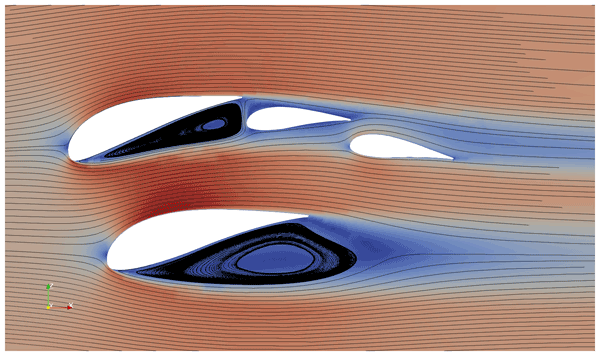
As part of a master's thesis, this study analysed the aerodynamic performance of a multi-element airfoil using numerical flow simulations. The results show that these types of airfoil are very suitable for an upcoming wind energy generation concept. The parametric study of the wing led to a significant improvement of up to 46.6 % compared to the baseline design. The increased power output of the energy generation concept contributes substantially to today's energy transition.

Sarah Barber, Alain Schubiger, Sara Koller, Dominik Eggli, Alexander Radi, Andreas Rumpf, and Hermann Knaus
Wind Energ. Sci., 7, 1503–1525, https://doi.org/10.5194/wes-7-1503-2022, https://doi.org/10.5194/wes-7-1503-2022, 2022
Short summary
Short summary
In this work, a range of simulations are carried out with seven different wind modelling tools at five different complex terrain sites and the results compared to wind speed measurements at validation locations. This is then extended to annual energy production (AEP) estimations (without wake effects), showing that wind profile prediction accuracy does not translate directly or linearly to AEP accuracy. It is therefore vital to consider overall AEP when evaluating simulation accuracies.
Sarah Barber, Julien Deparday, Yuriy Marykovskiy, Eleni Chatzi, Imad Abdallah, Gregory Duthé, Michele Magno, Tommaso Polonelli, Raphael Fischer, and Hanna Müller
Wind Energ. Sci., 7, 1383–1398, https://doi.org/10.5194/wes-7-1383-2022, https://doi.org/10.5194/wes-7-1383-2022, 2022
Short summary
Short summary
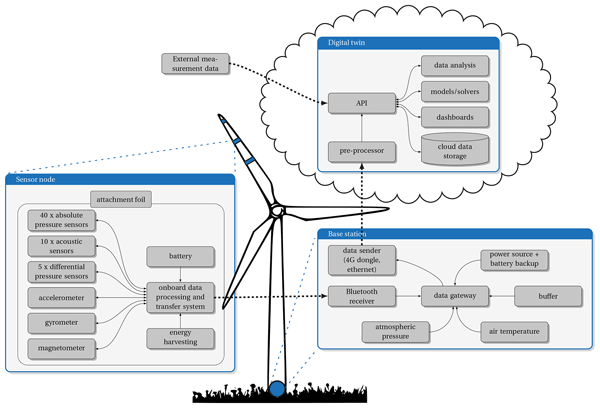
Aerodynamic and acoustic field measurements on operating large-scale wind turbines are key for the further reduction in the costs of wind energy. In this work, a novel cost-effective MEMS (micro-electromechanical systems)-based aerodynamic and acoustic wireless measurement system that is thin, non-intrusive, easy to install, low power and self-sustaining is designed and tested.
Nora Helbig, Florian Hammer, Gert-Jan Duine, Leila M. V. Carvalho, Charles Jones, Hugo Merzisen, Isabelle Gouttevin, and Sarah Barber
EGUsphere, https://doi.org/10.5194/egusphere-2026-5871, https://doi.org/10.5194/egusphere-2026-5871, 2026
This preprint is open for discussion and under review for Nonlinear Processes in Geophysics (NPG).
Short summary
Short summary
We enhanced DEVINE, a deep-learning wind downscaling model trained on atmospheric model simulations over synthetic topographies. Introducing wind direction-dependent input features enabled rotational data augmentation. We assess performance across unseen terrain, wind regimes and driving model data with station observations and atmospheric model simulations. DEVINE generalizes well when flow is primarily terrain-forced, but performance degrades under complex atmosphere-terrain interactions.
Kayacan Kestel, Xavier Chesterman, Donatella Zappalá, Simon Watson, Mingxin Li, Edward Hart, James Carroll, Yolanda Vidal, Amir R. Nejad, Shawn Sheng, Yi Guo, Matthias Stammler, Florian Wirsing, Ahmed Saleh, Nico Gregarek, Thao Baszenski, Thomas Decker, Martin Knops, Georg Jacobs, Benjamin Lehmann, Florian König, Ines Pereira, Pieter-Jan Daems, Cédric Peeters, and Jan Helsen
Wind Energ. Sci., 11, 2103–2155, https://doi.org/10.5194/wes-11-2103-2026, https://doi.org/10.5194/wes-11-2103-2026, 2026
Short summary
Short summary
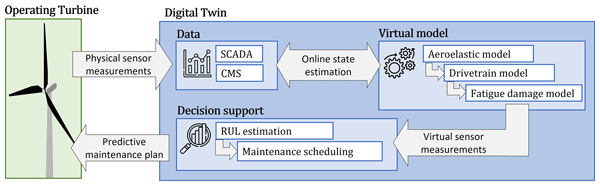
Wind energy use has been rapidly expanding worldwide in recent years. Driven by global decarbonization goals and energy security concerns, this growth is expected to continue. To achieve these targets, production costs must decrease, with operation and maintenance being major contributors. This paper reviews current and emerging technologies for monitoring wind turbine drivetrains, and highlights key academic and industrial challenges that may hinder progress.
Mahmoud Abdelhak, Luke J. Prendergast, Jacques Tott-Buswell, Ramin Ghiasi, and Abdollah Malekjafarian
Wind Energ. Sci. Discuss., https://doi.org/10.5194/wes-2026-70, https://doi.org/10.5194/wes-2026-70, 2026
Revised manuscript accepted for WES
Short summary
Short summary
This study proposes a method to detect seabed erosion around offshore wind turbines at inter farm level using acceleration data from a single tower sensor. Tested with simulations across different turbines and sites, it reliably identifies erosion even for unseen turbines, helping reduce inspection costs and improve maintenance.
Marcela Rodrigues Machado, Amanda Aryda Silva Rodrigues de Sousa, Jefferson da Silva Coelho, and Rafael de Oliveira Teloli
Wind Energ. Sci., 11, 1057–1076, https://doi.org/10.5194/wes-11-1057-2026, https://doi.org/10.5194/wes-11-1057-2026, 2026
Short summary
Short summary
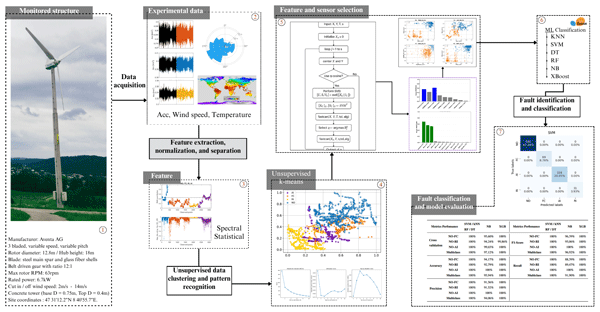
We have developed a method using artificial intelligence to detect and classify faults in wind turbines before major damage occurs. By analyzing data from multiple sensors, we can identify issues even under changing weather conditions, such as temperature and wind. This improves reliability, reduces downtime, and lowers maintenance costs, supporting cleaner and more affordable energy through stable production.
Philip Franz, Imad Abdallah, Gregory Duthé, Julien Deparday, Ali Jafarabadi, Xudong Jian, Max von Danwitz, Alexander Popp, Sarah Barber, and Eleni Chatzi
Wind Energ. Sci., 10, 3001–3026, https://doi.org/10.5194/wes-10-3001-2025, https://doi.org/10.5194/wes-10-3001-2025, 2025
Short summary
Short summary
New designs of large wind turbine blades have become increasingly flexible and thus need cost-efficient monitoring solutions. Hence, we investigate if aerodynamic pressure measurements from a low-cost sensing system can be used to detect structural damage. Our research is based on a wind tunnel study, emulating a simplified wind turbine blade under various conditions. We show that, when using a convolutional-neural-network-based method, structural damage can indeed be detected and its severity can be rated.
Shun Wang, Yolanda Vidal, and Francesc Pozo
Wind Energ. Sci., 10, 2841–2863, https://doi.org/10.5194/wes-10-2841-2025, https://doi.org/10.5194/wes-10-2841-2025, 2025
Short summary
Short summary
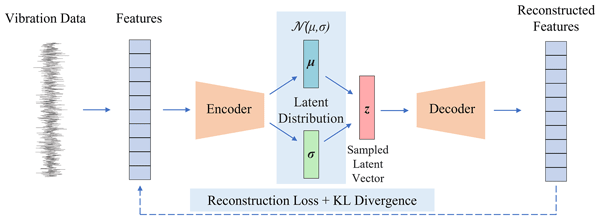
This research aims to improve wind turbine maintenance by detecting faults early using only data from normal operation. The method analyzes vibration signals in both time and frequency domains and uses a variational autoencoder, a type of deep learning model, to learn normal behavior. It then detects anomalies by measuring how much new data deviate from this learned model. Tests on real turbine data show early and accurate detection of faults such as pitch issues and icing.
Sarah Barber, Anna Maria Sempreviva, Jeffrey Clerc, and Anne Hegemann
Wind Energ. Sci. Discuss., https://doi.org/10.5194/wes-2025-159, https://doi.org/10.5194/wes-2025-159, 2025
Revised manuscript under review for WES
Short summary
Short summary
This paper explores how organisational culture shapes digitalisation in the wind energy sector. Based on a global survey and literature review, it finds that teams drive digital adoption more effectively than entire organisations, with companies ahead of universities. Size has little impact, but barriers such as limited budgets, vague strategies, and risk-averse leadership slow progress. The study offers practical recommendations to foster collaboration, innovation, and clear digital strategies.
Yuriy Marykovskiy, Thomas Clark, Justin Day, Marcus Wiens, Charles Henderson, Julian Quick, Imad Abdallah, Anna Maria Sempreviva, Jean-Paul Calbimonte, Eleni Chatzi, and Sarah Barber
Wind Energ. Sci., 9, 883–917, https://doi.org/10.5194/wes-9-883-2024, https://doi.org/10.5194/wes-9-883-2024, 2024
Short summary
Short summary
This paper delves into the crucial task of transforming raw data into actionable knowledge which can be used by advanced artificial intelligence systems – a challenge that spans various domains, industries, and scientific fields amid their digital transformation journey. This article underscores the significance of cross-industry collaboration and learning, drawing insights from sectors leading in digitalisation, and provides strategic guidance for further development in this area.
Andrew Clifton, Sarah Barber, Andrew Bray, Peter Enevoldsen, Jason Fields, Anna Maria Sempreviva, Lindy Williams, Julian Quick, Mike Purdue, Philip Totaro, and Yu Ding
Wind Energ. Sci., 8, 947–974, https://doi.org/10.5194/wes-8-947-2023, https://doi.org/10.5194/wes-8-947-2023, 2023
Short summary
Short summary
Wind energy creates huge amounts of data, which can be used to improve plant design, raise efficiency, reduce operating costs, and ease integration. These all contribute to cheaper and more predictable energy from wind. But realising the value of data requires a digital transformation that brings
grand challengesaround data, culture, and coopetition. This paper describes how the wind energy industry could work with R&D organisations, funding agencies, and others to overcome them.
Lorena Campoverde-Vilela, María del Cisne Feijóo, Yolanda Vidal, José Sampietro, and Christian Tutivén
Wind Energ. Sci., 8, 557–574, https://doi.org/10.5194/wes-8-557-2023, https://doi.org/10.5194/wes-8-557-2023, 2023
Short summary
Short summary
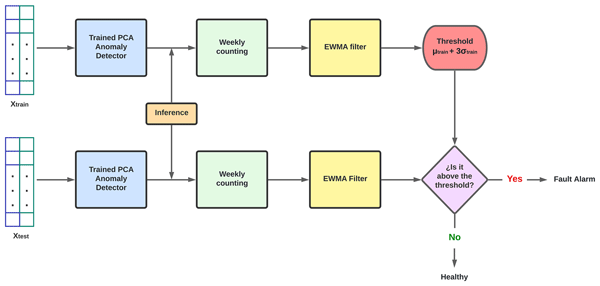
In order to provide early warnings of faults in the main bearing, a fault detection system is developed by applying an anomaly detector based on principal component analysis. Without the need to obtain the fault history or install additional equipment or sensors that would require a larger investment, this model is constructed using only healthy supervisory control and data acquisition (SCADA) data. The results obtained enable failure detection even months before the fatal breakdown takes place.
Florian Hammer, Sarah Barber, Sebastian Remmler, Federico Bernardoni, Kartik Venkatraman, Gustavo A. Díez Sánchez, Alain Schubiger, Trond-Ola Hågbo, Sophia Buckingham, and Knut Erik Giljarhus
Wind Energ. Sci. Discuss., https://doi.org/10.5194/wes-2022-114, https://doi.org/10.5194/wes-2022-114, 2023
Preprint withdrawn
Short summary
Short summary
We further enhanced a knowledge base for choosing the most optimal wind resource assessment tool. For this, we compared different simulation tools for the Perdigão site in Portugal, in terms of accuracy and costs. In total five different simulation tools were compared. We found that with a high degree of automatisation and a high experience level of the modeller a cost effective and accurate prediction based on RANS could be achieved. LES simulations are still mainly reserved for academia.
Andrew Clifton, Sarah Barber, Alexander Stökl, Helmut Frank, and Timo Karlsson
Wind Energ. Sci., 7, 2231–2254, https://doi.org/10.5194/wes-7-2231-2022, https://doi.org/10.5194/wes-7-2231-2022, 2022
Short summary
Short summary
The transition to low-carbon sources of energy means that wind turbines will need to be built in hilly or mountainous regions or in places affected by icing. These locations are called
complexand are hard to develop. This paper sets out the research and development (R&D) needed to make it easier and cheaper to harness wind energy there. This includes collaborative R&D facilities, improved wind and weather models, frameworks for sharing data, and a clear definition of site complexity.
Gianluca De Fezza and Sarah Barber
Wind Energ. Sci., 7, 1627–1640, https://doi.org/10.5194/wes-7-1627-2022, https://doi.org/10.5194/wes-7-1627-2022, 2022
Short summary
Short summary
As part of a master's thesis, this study analysed the aerodynamic performance of a multi-element airfoil using numerical flow simulations. The results show that these types of airfoil are very suitable for an upcoming wind energy generation concept. The parametric study of the wing led to a significant improvement of up to 46.6 % compared to the baseline design. The increased power output of the energy generation concept contributes substantially to today's energy transition.
Sarah Barber, Alain Schubiger, Sara Koller, Dominik Eggli, Alexander Radi, Andreas Rumpf, and Hermann Knaus
Wind Energ. Sci., 7, 1503–1525, https://doi.org/10.5194/wes-7-1503-2022, https://doi.org/10.5194/wes-7-1503-2022, 2022
Short summary
Short summary
In this work, a range of simulations are carried out with seven different wind modelling tools at five different complex terrain sites and the results compared to wind speed measurements at validation locations. This is then extended to annual energy production (AEP) estimations (without wake effects), showing that wind profile prediction accuracy does not translate directly or linearly to AEP accuracy. It is therefore vital to consider overall AEP when evaluating simulation accuracies.
Sarah Barber, Julien Deparday, Yuriy Marykovskiy, Eleni Chatzi, Imad Abdallah, Gregory Duthé, Michele Magno, Tommaso Polonelli, Raphael Fischer, and Hanna Müller
Wind Energ. Sci., 7, 1383–1398, https://doi.org/10.5194/wes-7-1383-2022, https://doi.org/10.5194/wes-7-1383-2022, 2022
Short summary
Short summary
Aerodynamic and acoustic field measurements on operating large-scale wind turbines are key for the further reduction in the costs of wind energy. In this work, a novel cost-effective MEMS (micro-electromechanical systems)-based aerodynamic and acoustic wireless measurement system that is thin, non-intrusive, easy to install, low power and self-sustaining is designed and tested.
Cited articles
Barber, S. and Ding, Y.: Improving data sharing in practice – power curve benchmarking case study, J. Phys. Conf. Ser., 2745, 012002, https://doi.org/10.1088/1742-6596/2745/1/012002, 2024. a, b, c, d
Barber, S., Lima, L. A. M., Sakagami, Y., Quick, J., Latiffianti, E., Liu, Y., Ferrari, R., Letzgus, S., Zhang, X., and Hammer, F.: Enabling co-innovation for a successful digital transformation in wind energy using a new digital ecosystem and a fault detection case study, Energies, 15, https://doi.org/10.3390/en15155638, 2022. a, b, c, d
Barber, S., Hammer, F., and Henderson, C.: Can data sharing really provide added value? Practical data sharing recommendations for the wind energy sector, J. Phys. Conf. Ser., 2507, 012003, https://doi.org/10.1088/1742-6596/2507/1/012003, 2023a. a
Barber, S., Izagirre, U., Serradilla, O., Olaizola, J., Zugasti, E., Aizpurua, J. I., Milani, A. E., Sehnke, F., Sakagami, Y., and Henderson, C.: Best practice data sharing guidelines for wind turbine fault detection model evaluation, Energies, 16, https://doi.org/10.3390/en16083567, 2023b. a, b, c, d
Barber, S., Sempreviva, A. M., Sheng, S., Farren, D., and Zappalá, D.: A use-case-driven approach for demonstrating the added value of digitalisation in wind energy, J. Phys. Conf. Ser., 2507, 012002, https://doi.org/10.1088/1742-6596/2507/1/012002, 2023c. a, b, c
Barber, S., Marykovskiy, Y., and Abdallah, I.: Improving data sharing in wind energy – structural health monitoring case study, J. Phys. Conf. Ser., 2767, 032007, https://doi.org/10.1088/1742-6596/2767/3/032007, 2024. a, b, c
Bause, K., Radimersky, A., Iwanicki, M., and Albers, A.: Feasibility studies in the product development process, Procedia CIRP, 21, 473–478, https://doi.org/10.1016/j.procir.2014.03.128, 2014. a, b
Chatzi, E., Abdallah, I., Hofsäß, M., Bischoff, O., Barber, S., and Marykovskiy, Y.: Aventa AV-7 ETH Zurich Research Wind Turbine SCADA and high frequency Structural Health Monitoring (SHM) data, Zenodo [code], https://doi.org/10.5281/zenodo.8229750, 2023. a, b
Clifton, A., Barber, S., Bray, A., Enevoldsen, P., Fields, J., Sempreviva, A. M., Williams, L., Quick, J., Purdue, M., Totaro, P., and Ding, Y.: Grand challenges in the digitalisation of wind energy, Wind Energ. Sci., 8, 947–974, https://doi.org/10.5194/wes-8-947-2023, 2023. a, b, c, d
Dall-Orsoletta, A., Romero, F., and Ferreira, P.: Open and collaborative innovation for the energy transition: an exploratory study, Technol. Soc., 69, 101955, https://doi.org/10.1016/j.techsoc.2022.101955, 2022. a
de Novaes Pires Leite, G., Farias, F. C., de Sá, T. G., da Costa, A. C. A., Brennand, L. J. P., de Souza, M. G. G., Villa, A. A. O., and Droguett, E. L.: A robust fleet–based anomaly detection framework applied to wind turbine vibration data, Eng. Appl. Artif. Intel., 126, 106859, https://doi.org/10.1016/j.engappai.2023.106859, 2023. a
Jamil, F., Verstraeten, T., Nowé, A., Peeters, C., and Helsen, J.: A deep boosted transfer learning method for wind turbine gearbox fault detection, Renew. Energ., 197, 331–341, https://doi.org/10.1016/j.renene.2022.07.117, 2022. a
Kirkegaard, J. K., Rudolph, D. P., Nyborg, S., Solman, H., Gill, E., Cronin, T., and Hallisey, M.: Tackling grand challenges in wind energy through a socio-technical perspective, Nature Energy, 8, 655–664, https://doi.org/10.1038/s41560-023-01266-z, 2023. a
Lee, Y., Park, C., Kim, N., Ahn, J., and Jeong, J.: LSTM– autoencoder based anomaly detection using vibration data of wind turbines, Sensors, 24, 2833, https://doi.org/10.3390/s24092833, 2024. a
Machado, M. et al.: WeDoWind/The ASCE EMI Structural Health Monitoring for Wind Energy Challenge: Final results of the WeDoWind ASCE EMI Structural Health Monitoring for Wind Energy Challenge (Version v1.0.0), Zenodo [Computer software], https://doi.org/10.5281/zenodo.21770885, 2026. a
Mollick, E.: The dynamics of crowdfunding: an exploratory study, J. Bus. Venturing, 29, 1–16, https://doi.org/10.1016/j.jbusvent.2013.06.005, 2014. a, b
Pearce, B.: Design Thinking, Zenodo [code], https://doi.org/10.5281/zenodo.3717021, 2020. a
Som, O., Maloca, S., and Jäger, A.: Open Innovation – ein universelles Erfolgsrezept, https://doi.org/10.24406/publica-fhg-296992, 2014. a, b, c
Veers, P., Dykes, K., Lantz, E., Barth, S., Bottasso, C. L., Carlson, O., Clifton, A., Green, J., Green, P., Holttinen, H., Laird, D., Lehtomäki, V., Lundquist, J. K., Manwell, J., Marquis, M., Meneveau, C., Moriarty, P., Munduate, X., Muskulus, M., Naughton, J., Pao, L., Paquette, J., Peinke, J., Robertson, A., Rodrigo, J. S., Sempreviva, A. M., Smith, J. C., Tuohy, A., and Wiser, R.: Grand challenges in the science of wind energy, Science, 366, eaau2027, https://doi.org/10.1126/science.aau2027, 2019. a
Vicente-Saez, R. and Martinez-Fuentes, C.: Open Science now: a systematic literature review for an integrated definition, J. Bus. Res., 88, 428–436, https://doi.org/10.1016/j.jbusres.2017.12.043, 2018. a
Wang, J. and Loparo, K. A.: Wind Turbine Gearbox Fault Detection Based on Sparse Filtering and Graph Neural Networks, arXiv [preprint], arXiv, https://doi.org/10.48550/arXiv.2303.03496, 2023. a
Yang, Z., Xu, M., Wang, S., Li, J., Peng, Z., Jin, F., and Yang, Y.: Detection of wind turbine blade abnormalities through a deep learning model integrating VAE and neural ODE, Ocean Eng., 302, 117689, https://doi.org/10.1016/j.oceaneng.2024.117689, 2024. a
Short summary
WeDoWind is an open innovation ecosystem for enabling data sharing and alignment in the wind energy sector. In this work, a feasibility study of WeDoWind is presented, considering different technical, economic, legal, operational and scheduling aspects. The results showed strong governance, clear regulation, and promising scalability potential, but further progress is required to make it financially sustainable and to ensure adoption of the results in the sector.
WeDoWind is an open innovation ecosystem for enabling data sharing and...


Altmetrics
Final-revised paper
Preprint