
Articles | Volume 11, issue 8
https://doi.org/10.5194/wes-11-2915-2026
© Author(s) 2026. This work is distributed under
the Creative Commons Attribution 4.0 License.
the Creative Commons Attribution 4.0 License.
https://doi.org/10.5194/wes-11-2915-2026
© Author(s) 2026. This work is distributed under
the Creative Commons Attribution 4.0 License.
the Creative Commons Attribution 4.0 License.
Research article
| 
12 Aug 2026
Research article |
| 12 Aug 2026
| 12 Aug 2026
Power output of turbines mounted on tension-leg platforms subjected to fully developed ocean gravity waves

Oak Ridge National Laboratory, Oak Ridge TN 37831, USA
Department of Mathematics, University of Tennessee Knoxville, Knoxville TN 37920, USA
Matthew Norman
Oak Ridge National Laboratory, Oak Ridge TN 37831, USA
Stuart Slattery
Oak Ridge National Laboratory, Oak Ridge TN 37831, USA
Lawrence Cheung
Sandia National Laboratory, Livermore, CA 94550, USA
Yihan Liu
Virginia Tech, Blacksburg, VA 24061, USA
Related authors
Juan M. Restrepo, Matthew Norman, Stuart Slattery, Lawrence Cheung, and Yihan Liu
Wind Energ. Sci. Discuss., https://doi.org/10.5194/wes-2025-208, https://doi.org/10.5194/wes-2025-208, 2025
Manuscript not accepted for further review
Short summary
Short summary
We examine the average power output of a single and a collection of 5 MW wind turbines, mounted on a Tension-Leg Platform (TLP) under the action of fully developed ocean waves. We find that wave motions have a negligible effect on power output.
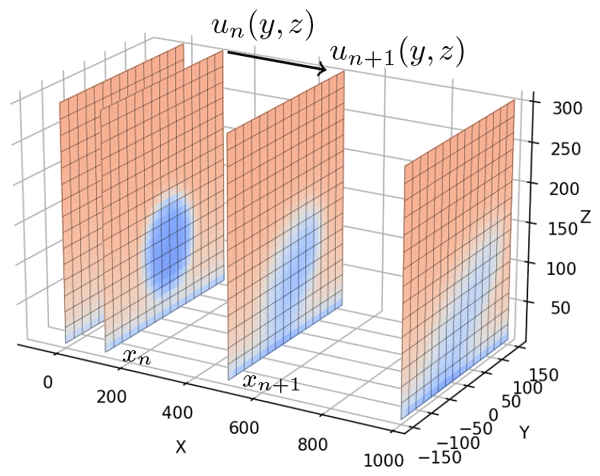
Lawrence Cheung, Prakash Mohan, Marc T. Henry de Frahan, Gopal R. Yalla, Alan Hsieh, Kenneth Brown, Nathaniel deVelder, Sam Kaufman-Martin, Marc Day, and Michael Sprague
Wind Energ. Sci., 11, 3719–3743, https://doi.org/10.5194/wes-11-3719-2026, https://doi.org/10.5194/wes-11-3719-2026, 2026
Short summary
Short summary
Modeling turbine wakes is critical to maximizing wind farm energy production but is also challenging due to the complicated phenomena that must be accounted for, including wind shear, veer, atmospheric stratification, and overlapping wakes. Our work introduces a new, efficient method of modeling wakes which naturally captures these complex wake behaviors. We show that our wake modeling approach is as accurate as higher-fidelity methods, but with much less computational cost.
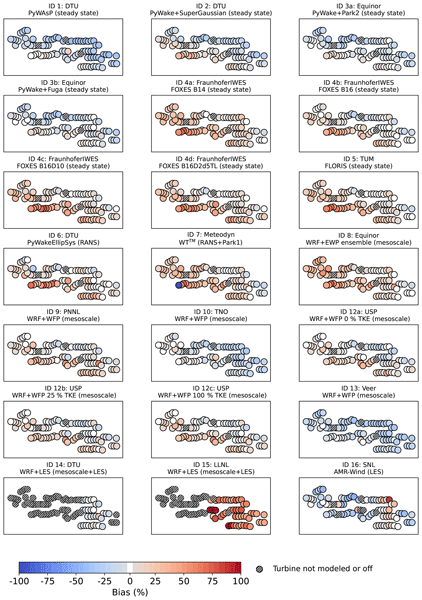
Nicola Bodini, Patrick Moriarty, Regis Thedin, Paula Doubrawa, Cristina Archer, Myra Blaylock, Carlo Bottasso, Bruno Carmo, Lawrence Cheung, Camille Dubreuil, Rogier Floors, Thomas Herges, Daniel Houck, Ali Kanjari, Colleen M. Kaul, Christopher Kelley, Ru Li, Julie K. Lundquist, Desirae Major, Anh Kiet Nguyen, Mike Optis, Luan R. C. Parada, Alfredo Peña, Julian Quick, David Ricarte, William C. Radünz, Raj K. Rai, Oscar García-Santiago, Jonas Schulte, Knut S. Seim, M. Paul van der Laan, Kisorthman Vimalakanthan, and Adam Wise
Wind Energ. Sci., 11, 3107–3135, https://doi.org/10.5194/wes-11-3107-2026, https://doi.org/10.5194/wes-11-3107-2026, 2026
Short summary
Short summary
Predicting wind farm energy production is challenging because wind patterns are complex. We tested 16 different models against real data from a major field experiment to see which worked best. Surprisingly, the most expensive and detailed models were not always more accurate than simpler ones. We found that feeding models better weather data was the most effective way to improve accuracy. These results help the industry choose the right tools for designing more-efficient wind farms.
Neil Matula, Gopal Yalla, Bumseok Lee, Ganesh Vijayakumar, Nathaniel deVelder, Lawrence Cheung, Michael Sprague, and Paul Crozier
Wind Energ. Sci. Discuss., https://doi.org/10.5194/wes-2025-263, https://doi.org/10.5194/wes-2025-263, 2026
Revised manuscript under review for WES
Short summary
Short summary
This paper presents the results of a validation campaign of the fluid-structure interaction capability of the ExaWind software suite using the Pazy wing case, an aeroelastic benchmark featuring large nonlinear deformations of a very flexible wing under low-speed conditions. The results show good agreement with the published experimental and simulation results for tip deflection and flutter onset speed, and provide credibility evidence for the predictive capability of the ExaWind suite.
Matthew Norman, Muralikrishnan Gopalakrishnan Meena, Kalyan Gottiparthi, Nicholson Koukpaizan, and Stephen Nichols
Geosci. Model Dev., 18, 9605–9631, https://doi.org/10.5194/gmd-18-9605-2025, https://doi.org/10.5194/gmd-18-9605-2025, 2025
Short summary
Short summary
A new code, portUrb, is described and validated. portUrb is an atmospheric simulation code for turbulent boundary layers including flow through urban areas. The model is coded with an emphasis on robustness, simplicity, readability, portable performance on Graphics Processing Units (GPUs), and rapid prototyping of surrogate models through an ensemble capability where many different configurations can be run simultaneously to explore parameter choices.
Gopal R. Yalla, Kenneth Brown, Lawrence Cheung, Dan Houck, Nathaniel deVelder, and Balaji Jayaraman
Wind Energ. Sci. Discuss., https://doi.org/10.5194/wes-2025-250, https://doi.org/10.5194/wes-2025-250, 2025
Revised manuscript under review for WES
Short summary
Short summary
This study examines the increase in annual energy production of a wind farm when using a new control technology designed to re-energize the wind between turbines by enhancing the mixing in the flow behind a turbine. High-fidelity computer simulations are used to create training data for a lower-fidelity model that efficiently predicts wind farm performance. Additionally, the power performance gains are compared to a standard control approach that steers wakes away from downstream turbines.
Gopal R. Yalla, Kenneth Brown, Lawrence Cheung, Dan Houck, Nathaniel deVelder, and Nicholas Hamilton
Wind Energ. Sci., 10, 2449–2474, https://doi.org/10.5194/wes-10-2449-2025, https://doi.org/10.5194/wes-10-2449-2025, 2025
Short summary
Short summary
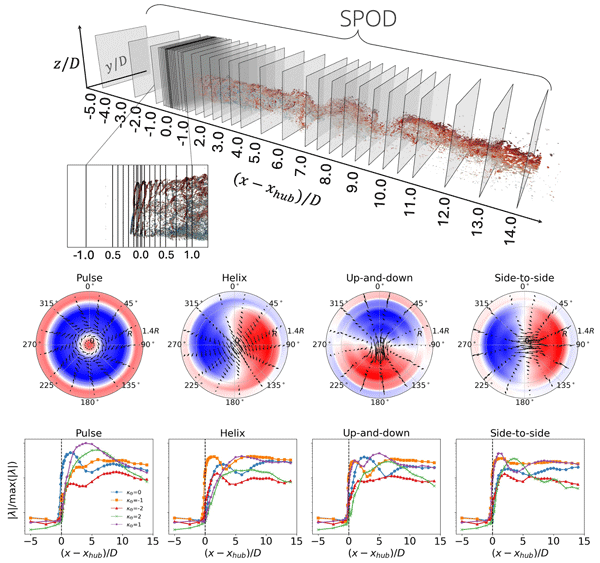
When wind reaches the first set of turbines in a wind farm, energy is extracted, reducing the energy available for downstream turbines. This study examines emerging technologies aimed at re-energizing the wind between turbines in a wind farm to improve overall power production. Optimizing these technologies depends on understanding the complex flow features of the atmosphere and the wakes behind turbines, which is accomplished using high-fidelity computer simulations and data analysis techniques.
Juan M. Restrepo, Matthew Norman, Stuart Slattery, Lawrence Cheung, and Yihan Liu
Wind Energ. Sci. Discuss., https://doi.org/10.5194/wes-2025-208, https://doi.org/10.5194/wes-2025-208, 2025
Manuscript not accepted for further review
Short summary
Short summary
We examine the average power output of a single and a collection of 5 MW wind turbines, mounted on a Tension-Leg Platform (TLP) under the action of fully developed ocean waves. We find that wave motions have a negligible effect on power output.
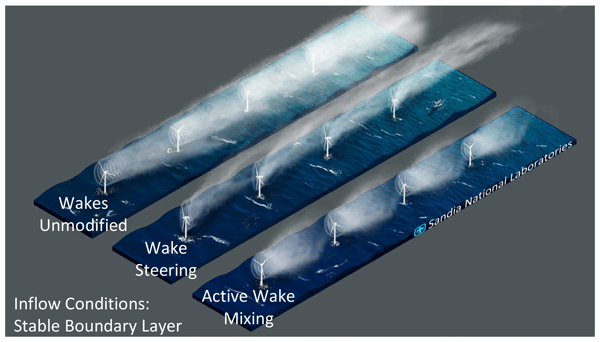
Kenneth Brown, Gopal Yalla, Lawrence Cheung, Joeri Frederik, Dan Houck, Nathaniel deVelder, Eric Simley, and Paul Fleming
Wind Energ. Sci., 10, 1737–1762, https://doi.org/10.5194/wes-10-1737-2025, https://doi.org/10.5194/wes-10-1737-2025, 2025
Short summary
Short summary
This paper presents one half of a companion paper series that studies strategies to reduce negative aerodynamic interference (i.e., wake effects) between nearby wind turbines in a wind farm. The approach leverages high-fidelity flow simulations of an open-source design for a wind turbine. Complimenting the companion paper’s analysis of the power and loading effects of the wake-control strategies, this article uncovers the underlying fluid-dynamic causes for these effects.
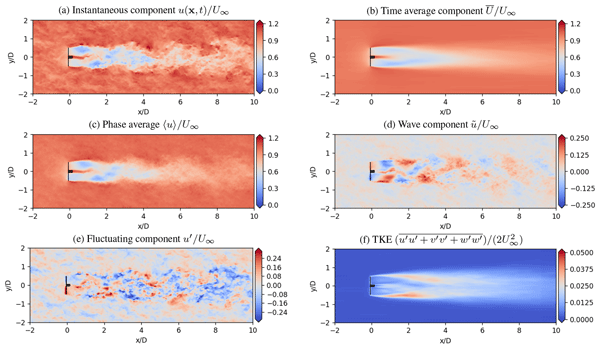
Lawrence Cheung, Gopal Yalla, Prakash Mohan, Alan Hsieh, Kenneth Brown, Nathaniel deVelder, Daniel Houck, Marc T. Henry de Frahan, Marc Day, and Michael Sprague
Wind Energ. Sci., 10, 1403–1420, https://doi.org/10.5194/wes-10-1403-2025, https://doi.org/10.5194/wes-10-1403-2025, 2025
Short summary
Short summary
Mitigating turbine wakes is an important aspect to maximizing wind farm energy production but is a challenge to model. We demonstrate a new approach to modeling active wake mixing, which re-energizes turbine wake through periodic blade pitching. The new model divides the wake into separate steady, unsteady, and turbulent components and solves for each in a computationally efficient manner. Our results show that the model can reasonably predict the faster wake recovery due to mixing.
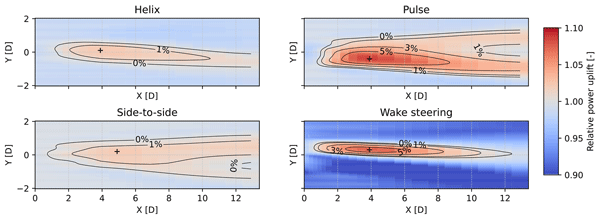
Joeri A. Frederik, Eric Simley, Kenneth A. Brown, Gopal R. Yalla, Lawrence C. Cheung, and Paul A. Fleming
Wind Energ. Sci., 10, 755–777, https://doi.org/10.5194/wes-10-755-2025, https://doi.org/10.5194/wes-10-755-2025, 2025
Short summary
Short summary
In this paper, we present results from advanced computer simulations to determine the effects of applying different control strategies to a small wind farm. We show that when there is variability in wind direction over height, steering the wake of a turbine away from other turbines is the most effective strategy. When this variability is not present, actively changing the pitch angle of the blades to increase turbulence in the wake could be more effective.
Yihan Liu and Michael Chertkov
Wind Energ. Sci. Discuss., https://doi.org/10.5194/wes-2024-14, https://doi.org/10.5194/wes-2024-14, 2024
Revised manuscript not accepted
Short summary
Short summary
This study offers new insights into anomalous dynamics of Floating Offshore Wind Turbines under varying wind and waves, using Monte Carlo simulations. Key findings reveal that while waves may play a role, wind largely dictates long-term anomalies, crucial for future FOWT design and control.
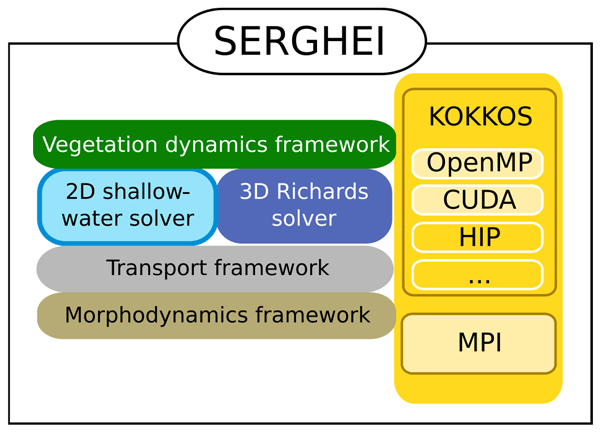
Daniel Caviedes-Voullième, Mario Morales-Hernández, Matthew R. Norman, and Ilhan Özgen-Xian
Geosci. Model Dev., 16, 977–1008, https://doi.org/10.5194/gmd-16-977-2023, https://doi.org/10.5194/gmd-16-977-2023, 2023
Short summary
Short summary
This paper introduces the SERGHEI framework and a solver for shallow-water problems. Such models, often used for surface flow and flood modelling, are computationally intense. In recent years the trends to increase computational power have changed, requiring models to adapt to new hardware and new software paradigms. SERGHEI addresses these challenges, allowing surface flow simulation to be enabled on the newest and upcoming consumer hardware and supercomputers very efficiently.
Marco A. Giorgetta, William Sawyer, Xavier Lapillonne, Panagiotis Adamidis, Dmitry Alexeev, Valentin Clément, Remo Dietlicher, Jan Frederik Engels, Monika Esch, Henning Franke, Claudia Frauen, Walter M. Hannah, Benjamin R. Hillman, Luis Kornblueh, Philippe Marti, Matthew R. Norman, Robert Pincus, Sebastian Rast, Daniel Reinert, Reiner Schnur, Uwe Schulzweida, and Bjorn Stevens
Geosci. Model Dev., 15, 6985–7016, https://doi.org/10.5194/gmd-15-6985-2022, https://doi.org/10.5194/gmd-15-6985-2022, 2022
Short summary
Short summary
This work presents a first version of the ICON atmosphere model that works not only on CPUs, but also on GPUs. This GPU-enabled ICON version is benchmarked on two GPU machines and a CPU machine. While the weak scaling is very good on CPUs and GPUs, the strong scaling is poor on GPUs. But the high performance of GPU machines allowed for first simulations of a short period of the quasi-biennial oscillation at very high resolution with explicit convection and gravity wave forcing.
Cited articles
Abraham, A. and Leweke, T.: Experimental investigation of blade tip vortex behavior in the wake of asymmetric rotors, Exp. Fluids, 64, 109, https://doi.org/10.1007/s00348-023-03646-3, 2023. a
Aranake, A. C., Lakshminarayan, V. K., and Duraisamy, K.: Computational analysis of shrouded wind turbine configurations using a 3-dimensional RANS solver, Renew. Energ., 75, 818–832, https://doi.org/10.1016/j.renene.2014.10.049, 2015. a
Archer, C. L., Wu, S., Ma, Y., and Jiménez, P. A.: Two corrections for turbulent kinetic energy generated by wind farms in the WRF model, Mon. Weather Rev., 148, 4823–4835, https://doi.org/10.1175/mwr-d-20-0097.1, 2020. a
Bergua, R., Robertson, A., Jonkman, J., Branlard, E., Fontanella, A., Belloli, M., Schito, P., Zasso, A., Persico, G., Sanvito, A., Amet, E., Brun, C., Campaña-Alonso, G., Martín-San-Román, R., Cai, R., Cai, J., Qian, Q., Maoshi, W., Beardsell, A., Pirrung, G., Ramos-García, N., Shi, W., Fu, J., Corniglion, R., Lovera, A., Galván, J., Nygaard, T. A., dos Santos, C. R., Gilbert, P., Joulin, P.-A., Blondel, F., Frickel, E., Chen, P., Hu, Z., Boisard, R., Yilmazlar, K., Croce, A., Harnois, V., Zhang, L., Li, Y., Aristondo, A., Mendikoa Alonso, I., Mancini, S., Boorsma, K., Savenije, F., Marten, D., Soto-Valle, R., Schulz, C. W., Netzband, S., Bianchini, A., Papi, F., Cioni, S., Trubat, P., Alarcon, D., Molins, C., Cormier, M., Brüker, K., Lutz, T., Xiao, Q., Deng, Z., Haudin, F., and Goveas, A.: OC6 project Phase III: validation of the aerodynamic loading on a wind turbine rotor undergoing large motion caused by a floating support structure, Wind Energ. Sci., 8, 465–485, https://doi.org/10.5194/wes-8-465-2023, 2023. a
Bergua, R., Wiley, W., Robertson, A., Jonkman, J., Brun, C., Pineau, J.-P., Qian, Q., Maoshi, W., Beardsell, A., Cutler, J., Pierella, F., Hansen, C. A., Shi, W., Fu, J., Hu, L., Vlachogiannis, P., Peyrard, C., Wright, C. S., Friel, D., Hanssen-Bauer, Ø. W., dos Santos, C. R., Frickel, E., Islam, H., Koop, A., Hu, Z., Yang, J., Quideau, T., Harnois, V., Shaler, K., Netzband, S., Alarcón, D., Trubat, P., Connolly, A., Leen, S. B., and Conway, O.: OC6 project Phase IV: validation of numerical models for novel floating offshore wind support structures, Wind Energ. Sci., 9, 1025–1051, https://doi.org/10.5194/wes-9-1025-2024, 2024. a
Blaylock, M. L., Martinez-Tossas, L., Sakievich, P., Houchens, B. C., Cheung, L., Brown, K., Hsieh, A., Maniaci, D. C., and Churchfield, M. J.: Validation of Actuator Line and Actuator Disk Models with Filtered Lifting Line Corrections Implemented in Nalu-Wind Large Eddy Simulations of the Atmospheric Boundary Layer, in: AIAA SCITECH 2022 Forum, 1921, https://doi.org/10.2514/6.2022-1921, 2022. a
Brazell, M., Ananthan, S., Vijayakumar, G., Cheung, L., Sprague, M., Team, E. E. C. P., and Team, H. F. M. P.: Amr-wind: adaptive mesh-refinement for atmospheric-boundary-layer wind energy simulations, in: APS Division of Fluid Dynamics Meeting Abstracts, T29–007, 2021. a
Brown, K., Yalla, G., Cheung, L., Frederik, J., Houck, D., deVelder, N., Simley, E., and Fleming, P.: Comparison of wind-farm control strategies under realistic offshore wind conditions: wake quantities of interest, Wind Energ. Sci., 10, 1737–1762, https://doi.org/10.5194/wes-10-1737-2025, 2025. a
Bui, H., Bakhoday-Paskyabi, M., and Mohammadpour-Penchah, M.: Implementation of a Simple Actuator Disk for Large-Eddy Simulation in the Weather Research and Forecasting Model (WRF-SADLES v1.2) for wind turbine wake simulation, Geosci. Model Dev., 17, 4447–4465, https://doi.org/10.5194/gmd-17-4447-2024, 2024. a
Cheung, L., Blaylock, M. L., Brown, K., deVelder, N., Herges, T. G., Hsieh, A., Maniaci, D. C., and Cutler, J.: Comparison of simulated and measured wake behavior in stable and neutral atmospheric conditions, in: AIAA SCITECH 2022 Forum, 1923, https://doi.org/10.2514/6.2022-1923, 2022. a
Cheung, L. C., Brown, K. A., Houck, D. R., and deVelder, N. B.: Fluid-Dynamic Mechanisms Underlying Wind Turbine Wake Control with Strouhal-Timed Actuation, Energies, 17, https://doi.org/10.3390/en17040865, 2024. a
Cioni, S., Papi, F., Pagamonci, L., Bianchini, A., Ramos-García, N., Pirrung, G., Corniglion, R., Lovera, A., Galván, J., Boisard, R., Fontanella, A., Schito, P., Zasso, A., Belloli, M., Sanvito, A., Persico, G., Zhang, L., Li, Y., Zhou, Y., Mancini, S., Boorsma, K., Amaral, R., Viré, A., Schulz, C. W., Netzband, S., Soto-Valle, R., Marten, D., Martín-San-Román, R., Trubat, P., Molins, C., Bergua, R., Branlard, E., Jonkman, J., and Robertson, A.: On the characteristics of the wake of a wind turbine undergoing large motions caused by a floating structure: an insight based on experiments and multi-fidelity simulations from the OC6 project Phase III, Wind Energ. Sci., 8, 1659–1691, https://doi.org/10.5194/wes-8-1659-2023, 2023. a
Darling, H., Schmidt, D. P., Xie, S., Sadique, J., Koop, A., Wang, L., Wiley, W., Bergua Archeli, R., Robertson, A., and Tran, T. T.: OC6 Phase IV: Validation of CFD Models for Stiesdal TetraSpar Floating Offshore Wind Platform, Wind Energy, 28, e2966, https://doi.org/10.1002/we.2966, e2966 we.2966, 2025. a
Dong, G., Li, Z., Qin, J., and Yang, X.: Predictive capability of actuator disk models for wakes of different wind turbine designs, Renew. Energ., 188, 269–281, https://doi.org/10.1016/j.renene.2022.02.034, 2022. a
Fitch, A. C., Olson, J. B., Lundquist, J. K., Dudhia, J., Gupta, A. K., Michalakes, J., and Barstad, I.: Local and mesoscale impacts of wind farms as parameterized in a mesoscale NWP model, Mon. Weather Rev., 140, 3017–3038, https://doi.org/10.1175/mwr-d-11-00352.1, 2012. a
Fontanella, A., Fusetti, A., Cioni, S., Papi, F., Muggiasca, S., Persico, G., Dossena, V., Bianchini, A., and Belloli, M.: Wake development in floating wind turbines: new insights and an open dataset from wind tunnel experiments, Wind Energ. Sci., 10, 1369–1387, https://doi.org/10.5194/wes-10-1369-2025, 2025. a
Frederik, J. A., Simley, E., Brown, K. A., Yalla, G. R., Cheung, L. C., and Fleming, P. A.: Comparison of wind farm control strategies under realistic offshore wind conditions: turbine quantities of interest, Wind Energ. Sci., 10, 755–777, https://doi.org/10.5194/wes-10-755-2025, 2025. a
Gottlieb, S.: On high order strong stability preserving Runge-Kutta and multi step time discretizations, J. Sci. Comput., 25, 105–128, https://doi.org/10.1007/s10915-004-4635-5, 2005. a
Hasselmann, K., Barnett, T., Bouws, E., Carlson, H., Cartwright, D., Enke, K., Ewing, J., Gienapp, H., Hasselmann, D., Kruseman, P., Meerburg, A., Muller, P., Olbers, D., Richter, K., Sell, W., and Walden, H.: Measurements of wind-wave growth and swell decay during the Joint North Sea Wave Project (JONSWAP), Tech. rep., Deutsches Hydrographisches Institut, 1973. a
Henrick, A. K., Aslam, T. D., and Powers, J. M.: Mapped weighted essentially non-oscillatory schemes: achieving optimal order near critical points, J. Comput. Phys., 207, 542–567, https://doi.org/10.1016/j.jcp.2005.01.023, 2005. a
Hsieh, A. S., Brown, K. A., deVelder, N. B., Herges, T. G., Knaus, R. C., Sakievich, P. J., Cheung, L. C., Houchens, B. C., Blaylock, M. L., and Maniaci, D. C.: High-fidelity wind farm simulation methodology with experimental validation, J. Wind Eng. Ind. Aerod., 218, 104754, https://doi.org/10.1016/j.jweia.2021.104754, 2021. a
Hsieh, A. S., Cheung, L. C., Blaylock, M. L., Brown, K. A., Houck, D. R., Herges, T. G., deVelder, N. B., Maniaci, D. C., Yalla, G. R., Sakievich, P. J., Radunz, W. C., and Carmo, B. S.: Model intercomparison of the ABL, turbines, and wakes within the AWAKEN wind farms under neutral stability conditions, J. Renew. Sustain. Ener., 17, 023301, https://doi.org/10.1063/5.0211729, 2025. a
Jeong, J.-H. and Ha, K.: Numerical investigation of three-dimensional and vortical flow phenomena to enhance the power performance of a wind turbine blade, Appl. Sci., 11, 72, https://doi.org/10.3390/app11010072, 2020. a
Johlas, H. M., Martinez-Tossas, L., Schmidt, D. P., Lackner, M., and Churchfield, M.: Large eddy simulations of floating offshore wind turbine wakes with coupled platform motion, IOP Conference Series, J. Phys., 1256, 012018, https://doi.org/10.1088/1742-6596/1256/1/012018, 2019. a
Johlas, H. M., Martinez-Tossas, L., Schmidt, D. P., Lackner, M., and Churchfield, M.: Large eddy simulations of offshore wind turbine wakes for two floating platform types, IOP Conference Series, J. Phys., 1452, 012034, https://doi.org/10.1088/1742-6596/1452/1/012034, 2020. a, b
Jonkman, J., Butterfield, S., Musial, W., and Scott, G.: Definition of a 5-MW reference wind turbine for offshore system development, Tech. rep., National Renewable Energy Lab.(NREL), Golden, CO (United States), https://doi.org/10.2172/947422, 2009. a
Karimi, M., Hall, M., Buckham, B., and Crawford, C.: A multi-objective design optimization approach for floating offshore wind turbine support structures, Journal of Ocean Engineering and Marine Energy, 3, 69–87, https://doi.org/10.1007/s40722-016-0072-4, 2017. a
Kuhn, M. B., Henry de Frahan, M. T., Mohan, P., Deskos, G., Churchfield, M., Cheung, L., Sharma, A., Almgren, A., Ananthan, S., Brazell, M. J., Martínez-Tossas, L., Thedin, R., Rood, J., Sakievich, P., Vijayakumar, G., Zhang, W., and Sprague, M.: AMR-Wind: A Performance-Portable, High-Fidelity Flow Solver for Wind Farm Simulations, Wind Energy, 28, e70010, https://doi.org/10.1002/we.70010, 2025. a
Kumer, V.-M., Reuder, J., Dorninger, M., Zauner, R., and Grubišić, V.: Turbulent kinetic energy estimates from profiling wind LiDAR measurements and their potential for wind energy applications, Renew. Energ., 99, 898–910, https://doi.org/10.1016/j.renene.2016.07.014, 2016. a
Kyle, R., Lee, Y. C., and Früh, W.-G.: Propeller and vortex ring state for floating offshore wind turbines during surge, Renew. Energ., 155, 645–657, https://doi.org/10.1016/j.renene.2020.03.105, 2020. a
Lemmer, F., Yu, W., and Cheng, P. W.: Iterative Frequency-Domain Response of Floating Offshore Wind Turbines with Parametric Drag, Journal of Marine Science and Engineering, 6, https://doi.org/10.3390/jmse6040118, 2018. a
Li, Y., Yu, W., and Sarlak, H.: Wake structures and performance of wind turbine rotor with harmonic surging motions under laminar and turbulent inflows, Wind Energy, 27, e2949, https://doi.org/10.1002/we.2949, 2024. a
Li, Z., Dong, G., and Yang, X.: Onset of wake meandering for a floating offshore wind turbine under side-to-side motion, J. Fluid Mech., 934, A29, https://doi.org/10.1017/jfm.2021.1147, 2022. a
Lilly, D. K.: On the application of the eddy viscosity concept in the inertial sub-range of turbulence, NCAR manuscript, 123, https://doi.org/10.5065/d67h1ggq, 1966. a
Lilly, D. K.: The representation of small-scale turbulence in numerical simulation experiments, in: Proc. IBM Sci. Comput. Symp. on Environmental Science, 195–210, https://doi.org/10.5065/d62r3pmm, 1967. a
Liu, X.-D., Osher, S., and Chan, T.: Weighted essentially non-oscillatory schemes, J. Comput. Phys., 115, 200–212, https://doi.org/10.1006/jcph.1994.1187, 1994. a
Liu, Y. and Chertkov, M.: Deciphering the Dance of the Winds and Waves: Unraveling Anomalous Dynamics in Floating Offshore Wind Turbines, arXiv [preprint], arXiv:2402.00018, https://doi.org/10.48550/arxiv.2402.00018, 2023. a
Madsen, H. A.: A CFD analysis of the actuator disc flow compared with momentum theory results, in: Proceedings of the 10th Symposium on Aerodynamics of Wind Turbines, 109–124, IEA Joint Action, 1996. a
Mahrt, L., Vickers, D., Frederickson, P., Davidson, K., and Smedman, A.-S.: Sea-surface aerodynamic roughness, J. Geophys. Res.-Oceans, 108, https://doi.org/10.1029/2002jc001383, 2003. a
Malecha, Z. and Dsouza, G.: Modeling of wind turbine interactions and wind farm losses using the velocity-dependent actuator disc model, Computation, 11, 213, https://doi.org/10.3390/computation11110213, 2023. a
Martinez, L., Leonardi, S., Churchfield, M., and Moriarty, P.: A comparison of actuator disk and actuator line wind turbine models and best practices for their use, in: 50th AIAA Aerospace Sciences Meeting including the New Horizons Forum and Aerospace Exposition, 900, https://doi.org/10.2514/6.2012-900, 2012. a
Martínez-Tossas, L. A., Churchfield, M. J., and Meneveau, C.: Optimal smoothing length scale for actuator line models of wind turbine blades based on Gaussian body force distribution, Wind Energy, 20, 1083–1096, https://doi.org/10.1002/we.2081, 2017. a
McWilliams, J. C. and Restrepo, J. M.: The wave-driven ocean circulation, J. Phys. Oceanogr., 29, 2523–2540, https://doi.org/10.1175/1520-0485(1999)029<2523:twdoc>2.0.co;2, 1999. a
McWilliams, J. C., Restrepo, J. M., and Lane, E. M.: An asymptotic theory for the interaction of waves and currents in coastal waters, J. Fluid Mech., 511, 135–178, https://doi.org/10.1017/s0022112004009358, 2004. a
Messmer, T., Peinke, J., Croce, A., and Hölling, M.: The role of motion-excited coherent structures in improved wake recovery of a floating wind turbine, J. Fluid Mech., 1018, A23, https://doi.org/10.1017/jfm.2025.10509, 2025. a
Miller, A., Chang, B., Issa, R., and Chen, G.: Review of computer-aided numerical simulation in wind energy, Renew. Sustain. Energ. Rev., 25, 122–134, https://doi.org/10.1016/j.rser.2013.03.059, 2013. a
Mirocha, J., Kosovic, B., Aitken, M., and Lundquist, J.: Implementation of a generalized actuator disk wind turbine model into the weather research and forecasting model for large-eddy simulation applications, J. Renew. Sustain. Ener., 6, https://doi.org/10.1063/1.4861061, 2014. a
Monin, A. S. and Obukhov, A. M.: Basic Laws of Turbulent Mixing in the Surface Layer of the Atmosphere, Contributions of the Geophysical Institute of the Slovak Academy of Sciences, 24, 163–187, 1954. a
Norman, M.: portUrb code for floating TLP turbines paper, Zenodo [software], https://doi.org/10.5281/zenodo.16780228, 2025. a
Norman, M., Lyngaas, I., Bagusetty, A., and Berrill, M.: Portable C++ code that can look and feel like Fortran code with Yet Another Kernel Launcher (YAKL), Int. J. Parallel Prog., 51, 209–230, https://doi.org/10.1007/s10766-022-00739-0, 2023a. a
Norman, M., Gopalakrishnan Meena, M., Gottiparthi, K., Koukpaizan, N., and Nichols, S.: PortUrb: a performance portable, high-order, moist atmospheric large eddy simulation model with variable-friction immersed boundaries, Geosci. Model Dev., 18, 9605–9631, https://doi.org/10.5194/gmd-18-9605-2025, 2025. a
Norman, M. R.: A high-order WENO-limited finite-volume algorithm for atmospheric flow using the ADER-differential transform time discretization, Q. J. Roy. Meteor. Soc., 147, 1661–1690, https://doi.org/10.1002/qj.3989, 2021. a, b
Norman, M. R., Eldred, C., and Gopalakrishnan Meena, M.: Investigating Inherent Numerical Stabilization for the Moist, Compressible, Non-Hydrostatic Euler Equations on Collocated Grids, J. Adv. Model. Earth Sy., 15, e2023MS003732, https://doi.org/10.1029/2023ms003732, 2023b. a
Papi, F. and Bianchini, A.: Technical challenges in floating offshore wind turbine upscaling: A critical analysis based on the NREL 5 MW and IEA 15 MW Reference Turbines, Renew. Sustain. Energ. Rev., 162, 112489, https://doi.org/10.1016/j.rser.2022.112489, 2022. a
Pierson, W. and Moskowitz, L.: A proposed spectral form for fully developed wind seas based on the similarity theory of S. A. Kitaigorodskii, J. Geophys. Res., 69, 5181–5190, https://doi.org/10.1029/jz069i024p05181, 1964. a, b
Pimont, F., Dupuy, J.-L., Linn, R. R., Sauer, J. A., and Muñoz-Esparza, D.: Pressure-Gradient Forcing Methods for Large-Eddy Simulations of Flows in the Lower Atmospheric Boundary Layer, Atmosphere, 11, https://doi.org/10.3390/atmos11121343, 2020. a
Restrepo, J. M.: Wave Breaking Dissipation in the wave-driven ocean circulation, J. Phys. Oceanogr., 37, 1749–1763, https://doi.org/10.1175/jpo3099.1, 2007. a
Ribeiro, A. F. P., Casalino, D., and Ferreira, C. S.: Nonlinear inviscid aerodynamics of a wind turbine rotor in surge, sway, and yaw motions using a free-wake panel method, Wind Energ. Sci., 8, 661–675, https://doi.org/10.5194/wes-8-661-2023, 2023. a, b
Sebastian, T. and Lackner, M.: Offshore floating wind turbines-an aerodynamic perspective, in: 49th AIAA aerospace sciences meeting including the new horizons forum and aerospace exposition, 720, https://doi.org/10.2514/6.2011-720, 2011. a
Smagorinsky, J.: General circulation experiments with the primitive equations: I. The basic experiment, Mon. Weather Rev., 91, 99–164, https://doi.org/10.1175/1520-0493(1963)091<0099:gcewtp>2.3.co;2, 1963. a
Sørensen, J. N., Mikkelsen, R. F., Henningson, D. S., Ivanell, S., Sarmast, S., and Andersen, S. J.: Simulation of wind turbine wakes using the actuator line technique, Philos. T. R. Soc. A, 373, 20140071, https://doi.org/10.1098/rsta.2014.0071, 2015. a
Trott, C. R., Lebrun-Grandié, D., Arndt, D., Ciesko, J., Dang, V., Ellingwood, N., Gayatri, R., Harvey, E., Hollman, D. S., Ibanez, D., Liber, N., Madsen, J., Miles, J., Poliakoff, D., Powell, A., Rajamanickam, S., Simberg, M., Sunderland, D., Turcksin, B., and Wilke, J.: Kokkos 3: Programming Model Extensions for the Exascale Era, IEEE T. Parall. Distr., 33, 805–817, https://doi.org/10.1109/TPDS.2021.3097283, 2022. a
Wang, H., Barthelmie, R., Pryor, S., and Kim, H.: A new turbulence model for offshore wind turbine standards, Wind Energy, 17, 1587–1604, https://doi.org/10.1002/we.1654, 2014. a
Wang, L., Robertson, A., Jonkman, J., and Yu, Y.: OC6 phase I: Improvements to the OpenFAST predictions of nonlinear, low-frequency responses of a oating offshore wind turbine platform, Renew. Energ., 187, 282–301, https://doi.org/10.1016/j.renene.2022.01.053, 2022. a
Wei, N. J. and Dabiri, J. O.: Phase-averaged dynamics of a periodically surging wind turbine, J. Renew. Sustain. Ener., 14, 013305, https://doi.org/10.1063/5.0076029, 2022. a
Wena, B., Donga, X., Tian, X., Penga, Z., Zhanga, W., and Wei, K.: The power performance of an offshore floating wind turbine in platform pitching motion, Energy, 154, 508–521, https://doi.org/10.1016/j.energy.2018.04.140, 2018. a
Wu, Y.-T. and Porté-Agel, F.: Modeling turbine wakes and power losses within a wind farm using LES: An application to the Horns Rev offshore wind farm, Renew. Energ., 75, 945–955, https://doi.org/10.1016/j.renene.2014.06.019, 2015. a
Xu, Z., Chang, M., Bai, J., and Wang, B.: Computational Investigation of Blade–Vortex Interaction of Coaxial Rotors for eVTOL Vehicles, Energies, 15, 7761, https://doi.org/10.3390/en15207761, 2022. a
Yang, H., Gea, M., Abkar, M., and Yang, X.: Large-eddy simulation study of wind turbine array above swell sea, Energy, 256, 124674, https://doi.org/10.1016/j.energy.2022.124674, 2022. a
Short summary
A comparison between the power generated by a 5 MW turbine mounted on a tension-leg platform and subjected to fully developed ocean wave movements, and the same platform/turbine not subjected to ocean motions shows that these wave motions have little effect on time-average power output over a large wind speed range.
A comparison between the power generated by a 5 MW turbine mounted on a tension-leg platform and...


Altmetrics
Final-revised paper
Preprint