Articles | Volume 11, issue 3
https://doi.org/10.5194/wes-11-737-2026
© Author(s) 2026. This work is distributed under
the Creative Commons Attribution 4.0 License.
https://doi.org/10.5194/wes-11-737-2026
© Author(s) 2026. This work is distributed under
the Creative Commons Attribution 4.0 License.
Gearbox bearing crack growth prognostics and uncertainty quantification with physics-informed machine learning

National Renewable Energy Laboratory, Golden, CO, 80401, USA
Gabriel Appleby
National Renewable Energy Laboratory, Golden, CO, 80401, USA
Jonathan Keller
National Renewable Energy Laboratory, Golden, CO, 80401, USA
Ali Eftekhari Milani
TU Delft, Kluyverweg 1, Delft, 2629 HS, the Netherlands
Donatella Zappalá
TU Delft, Kluyverweg 1, Delft, 2629 HS, the Netherlands
Shawn Sheng
CORRESPONDING AUTHOR
National Renewable Energy Laboratory, Golden, CO, 80401, USA
Related authors
No articles found.
Julian Quick, Edward Hart, Marcus Binder Nilsen, Rasmus Sode Lund, Jaime Liew, Piinshin Huang, Pierre-Elouan Rethore, Jonathan Keller, Wooyong Song, and Yi Guo
Wind Energ. Sci., 11, 493–507, https://doi.org/10.5194/wes-11-493-2026, https://doi.org/10.5194/wes-11-493-2026, 2026
Short summary
Short summary
Wind turbine main bearings often fail prematurely, creating costly maintenance challenges. This study examined how wake effects – where upstream turbines create disturbed airflow that impacts downstream turbines – affect bearing lifespans. Using computer simulations, we found that wake effects reduce bearing life by 16 % on average. The direction of wake impact matters significantly due to interactions between wind forces and gravity, informing better wind turbine and farm design strategies.
Ali Eftekhari Milani, Donatella Zappalá, Francesco Castellani, and Simon Watson
Wind Energ. Sci., 10, 2563–2576, https://doi.org/10.5194/wes-10-2563-2025, https://doi.org/10.5194/wes-10-2563-2025, 2025
Short summary
Short summary
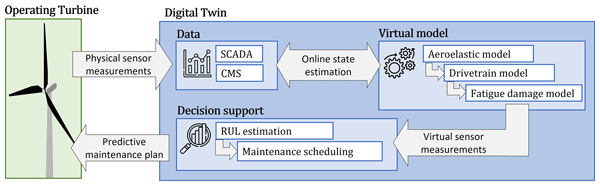
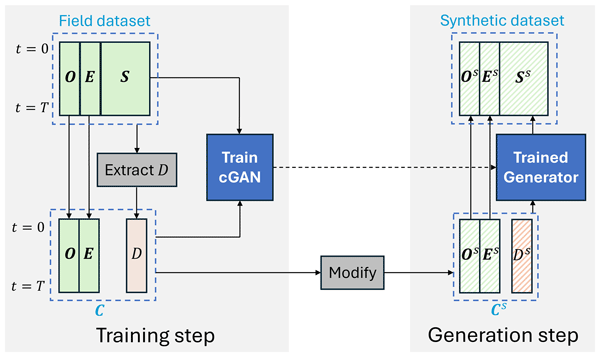
This paper proposes a data-driven approach to simulate wind turbine sensor time series, such as temperature and pressure signals, describing the behaviour of a wind turbine component as it degrades through time up to the failure point. It allows for the simulation of new failure events or the replication of a given failure under different conditions. The results show that the synthetic signals generated using this approach improve the performance of fault detection and prognosis methods.
Kayacan Kestel, Xavier Chesterman, Donatella Zappalá, Simon Watson, Mingxin Li, Edward Hart, James Carroll, Yolanda Vidal, Amir R. Nejad, Shawn Sheng, Yi Guo, Matthias Stammler, Florian Wirsing, Ahmed Saleh, Nico Gregarek, Thao Baszenski, Thomas Decker, Martin Knops, Georg Jacobs, Benjamin Lehmann, Florian König, Ines Pereira, Pieter-Jan Daems, Cédric Peeters, and Jan Helsen
Wind Energ. Sci. Discuss., https://doi.org/10.5194/wes-2025-168, https://doi.org/10.5194/wes-2025-168, 2025
Preprint under review for WES
Short summary
Short summary
Wind energy use has been rapidly expanding worldwide in recent years. Driven by global decarbonization goals and energy security concerns, this growth is expected to continue. To achieve these targets, production costs must decrease, with operation and maintenance being major contributors. This paper reviews current and emerging technologies for monitoring wind turbine drivetrains and highlights key academic and industrial challenges that may hinder progress.
Pietro Bortolotti, Lee Jay Fingersh, Nicholas Hamilton, Arlinda Huskey, Chris Ivanov, Mark Iverson, Jonathan Keller, Scott Lambert, Jason Roadman, Derek Slaughter, Syhoune Thao, and Consuelo Wells
Wind Energ. Sci., 10, 2025–2050, https://doi.org/10.5194/wes-10-2025-2025, https://doi.org/10.5194/wes-10-2025-2025, 2025
Short summary
Short summary
This study compares a wind turbine with blades behind the tower (downwind) to the traditional upwind design. Testing a 1.5 MW turbine at the National Renewable Energy Laboratory's Flatirons Campus, we measured performance, loads, and noise. Numerical models matched well with observations. The downwind setup showed higher fatigue loads and sound variations but also an unexpected power improvement. Downwind rotors might be a valid alternative for future floating offshore wind applications.
Paul Veers, Carlo L. Bottasso, Lance Manuel, Jonathan Naughton, Lucy Pao, Joshua Paquette, Amy Robertson, Michael Robinson, Shreyas Ananthan, Thanasis Barlas, Alessandro Bianchini, Henrik Bredmose, Sergio González Horcas, Jonathan Keller, Helge Aagaard Madsen, James Manwell, Patrick Moriarty, Stephen Nolet, and Jennifer Rinker
Wind Energ. Sci., 8, 1071–1131, https://doi.org/10.5194/wes-8-1071-2023, https://doi.org/10.5194/wes-8-1071-2023, 2023
Short summary
Short summary
Critical unknowns in the design, manufacturing, and operation of future wind turbine and wind plant systems are articulated, and key research activities are recommended.
Edward Hart, Adam Stock, George Elderfield, Robin Elliott, James Brasseur, Jonathan Keller, Yi Guo, and Wooyong Song
Wind Energ. Sci., 7, 1209–1226, https://doi.org/10.5194/wes-7-1209-2022, https://doi.org/10.5194/wes-7-1209-2022, 2022
Short summary
Short summary
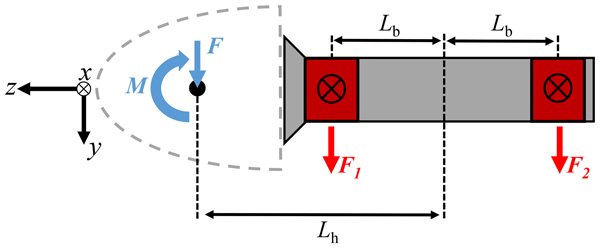
We consider characteristics and drivers of loads experienced by wind turbine main bearings using simplified models of hub and main-bearing configurations. Influences of deterministic wind characteristics are investigated for 5, 7.5, and 10 MW turbine models. Load response to gusts and wind direction changes are also considered. Cubic load scaling is observed, veer is identified as an important driver of load fluctuations, and strong links between control and main-bearing load response are shown.
Amir R. Nejad, Jonathan Keller, Yi Guo, Shawn Sheng, Henk Polinder, Simon Watson, Jianning Dong, Zian Qin, Amir Ebrahimi, Ralf Schelenz, Francisco Gutiérrez Guzmán, Daniel Cornel, Reza Golafshan, Georg Jacobs, Bart Blockmans, Jelle Bosmans, Bert Pluymers, James Carroll, Sofia Koukoura, Edward Hart, Alasdair McDonald, Anand Natarajan, Jone Torsvik, Farid K. Moghadam, Pieter-Jan Daems, Timothy Verstraeten, Cédric Peeters, and Jan Helsen
Wind Energ. Sci., 7, 387–411, https://doi.org/10.5194/wes-7-387-2022, https://doi.org/10.5194/wes-7-387-2022, 2022
Short summary
Short summary
This paper presents the state-of-the-art technologies and development trends of wind turbine drivetrains – the energy conversion systems transferring the kinetic energy of the wind to electrical energy – in different stages of their life cycle: design, manufacturing, installation, operation, lifetime extension, decommissioning and recycling. The main aim of this article is to review the drivetrain technology development as well as to identify future challenges and research gaps.
Cited articles
Ahmadi Daryakenari, N., De Florio, M., Shukla, K., and Karniadakis, G. E.: AI-Aristotle: A physics-informed framework for systems biology gray-box identification, PLOS Computational Biology, 20, e1011916, https://doi.org/10.1371/journal.pcbi.1011916, 2024. a, b
Bechhoefer, E., Xiao, L., and Zhang, X.: Remaining Useful Life Calculation of a Component using Hybrid Fatigue Crack Model, in: Annual Conference of the PHM Society, vol. 13, https://doi.org/10.36001/phmconf.2021.v13i1.3062, 2021. a
Cai, S., Mao, Z., Wang, Z., Yin, M., and Karniadakis, G. E.: Physics-informed neural networks (PINNs) for fluid mechanics: A review, Acta Mechanica Sinica, 37, 1727–1738, https://doi.org/10.1007/s10409-021-01148-1, 2021. a
Clark, C., Guo, Y., Sheng, S., and Keller, J.: Effects of Bearing Clearance, Oil Viscosity, and Temperature on Bearing White-Etching Cracks, NREL/TP-5000-85917, Golden, CO, National Renewable Energy Laboratory, 2023. a
De Florio, M., Schiassi, E., Ganapol, B. D., and Furfaro, R.: Physics-informed neural networks for rarefied-gas dynamics: Thermal creep flow in the Bhatnagar–Gross–Krook approximation, Physics of Fluids, 33, https://doi.org/10.1063/5.0046181, 2021. a
De Florio, M., Schiassi, E., and Furfaro, R.: Physics-informed neural networks and functional interpolation for stiff chemical kinetics, Chaos: An Interdisciplinary Journal of Nonlinear Science, 32, https://doi.org/10.1063/5.0086649, 2022a. a
De Florio, M., Schiassi, E., Ganapol, B. D., and Furfaro, R.: Physics-informed neural networks for rarefied-gas dynamics: Poiseuille flow in the BGK approximation, Zeitschrift für angewandte Mathematik und Physik, 73, 126, https://doi.org/10.1007/s00033-022-01767-z, 2022b. a
De Florio, M., Kevrekidis, I. G., and Karniadakis, G. E.: AI-Lorenz: A physics-data-driven framework for black-box and gray-box identification of chaotic systems with symbolic regression, Chaos, Solitons & Fractals, 188, 115538, https://doi.org/10.1016/j.chaos.2024.115538, 2024. a, b
De Florio, M., Zou, Z., Schiavazzi, D. E., and Karniadakis, G. E.: Quantification of total uncertainty in the physics-informed reconstruction of CVSim-6 physiology, Philosophical Transactions A, 383, 20240221, https://doi.org/10.1098/rsta.2024.0221, 2025. a, b, c, d
Demas, N. G., Lorenzo-Martin, C., Luna, R., Erck, R. A., and Greco, A. C.: The Effect of Current and Lambda on White-etch-crack Failures, Tribology International, 189, 108951, https://doi.org/10.1016/j.triboint.2023.108951, 2023. a
Desai, A., Guo, Y., Sheng, S., Phillips, C., and Williams, L.: Prognosis of wind turbine gearbox bearing failures using SCADA and modeled data, in: Annual conference of the PHM society, vol. 12, 1–10, https://doi.org/10.36001/phmconf.2020.v12i1.1292, 2020. a, b
Dong, S. and Li, Z.: Local extreme learning machines and domain decomposition for solving linear and nonlinear partial differential equations, Computer Methods in Applied Mechanics and Engineering, 387, 114129, https://doi.org/10.1016/j.cma.2021.114129, 2021. a
Dwivedi, V. and Srinivasan, B.: Physics informed extreme learning machine (PIELM) – a rapid method for the numerical solution of partial differential equations, Neurocomputing, 391, 96–118, https://doi.org/10.1016/j.neucom.2019.12.099, 2020. a
Fabiani, G.: Random projection neural networks of best approximation: Convergence theory and practical applications, SIAM Journal on Mathematics of Data Science, 7, 385–409, https://doi.org/10.1137/24M1639890, 2025. a, b
Fabiani, G., Calabrò, F., Russo, L., and Siettos, C.: Numerical solution and bifurcation analysis of nonlinear partial differential equations with extreme learning machines, Journal of Scientific Computing, 89, 44, https://doi.org/10.1007/s10915-021-01650-5, 2021. a
Fabiani, G., Bollt, E., Siettos, C., and Yannacopoulos, A. N.: Stability Analysis of Physics-Informed Neural Networks for Stiff Linear Differential Equations, arXiv [preprint], https://doi.org/10.48550/arXiv.2408.15393, 2024. a
Galaris, E., Calabrò, F., di Serafino, D., and Siettos, C.: Numerical solution of stiff ordinary differential equations with random projection neural networks, arXiv [preprint], https://doi.org/10.48550/arXiv.2108.01584, 2021. a
Ganaie, M. A., Hu, M., Malik, A. K., Tanveer, M., and Suganthan, P. N.: Ensemble deep learning: A review, Engineering Applications of Artificial Intelligence, 115, 105151, https://doi.org/10.1016/j.engappai.2022.105151, 2022. a
Gawlikowski, J., Rovile, C., Tassi, N., Ali, M., Lee, J., Humt., M., Feng. J., Kruspe, A., Triebel, R., Jung, P., Roscher, R., Shahzad, M., Yang, W., Bamler, R., and Zhu, X.: A survey of uncertainty in deep neural networks, Artificial Intelligence Review, 56, 1513–1589, https://doi.org/10.1007/s10462-023-10562-9, 2023. a
Greco, A., Sheng, S., Keller, J., and Erdemir, A.: Material Wear and Fatigue in Wind Turbine Systems, Wear, 302, 1583–1591, https://doi.org/10.1016/j.wear.2013.01.060, 2013. a
Greco, A., Demas, N., Erck, R., Gould, B., Keller, J., Sheng, S., and Guo, Y.: Wind Turbine Drivetrain Reliability, NREL/PR‐5000‐84029, Golden, CO, National Renewable Energy Laboratory, https://doi.org/10.2172/1896902, 2022. a, b, c, d
Guo, Y., Sheng, S., Phillips, C., Keller, J., Veers, P., and Williams, L.: A Methodology for Reliability Assessment and Prognosis of Bearing Axial Cracking in Wind Turbine Gearboxes, Renewable and Sustainable Energy Reviews, 127, 109888, https://doi.org/10.1016/j.rser.2020.109888, 2020. a
Han, S., Stelz, L., Stoecker, H., Wang, L., and Zhou, K.: Approaching epidemiological dynamics of COVID-19 with physics-informed neural networks, Journal of the Franklin Institute, 361, 106671, https://doi.org/10.1016/j.jfranklin.2024.106671, 2024. a
Haus, L., Sheng, S., and Pulikollu, R.: Wind Turbine Major Systems Reliability Trends and Mitigation Strategies, in: Drivetrain Reliability Collaborative Meeting, 2024. a
Haus, L., Sheng, S., and Pulikollu, R.: Newer/Larger Wind Turbine Reliability Analysis & Applications, in: Drivetrain Reliability Collaborative Meeting, 2025. a
Huang, G.-B., Zhu, Q.-Y., and Siew, C.-K.: Extreme learning machine: theory and applications, Neurocomputing, 70, 489–501, https://doi.org/10.1016/j.neucom.2005.12.126, 2006. a
Hüllermeier, E. and Waegeman, W.: Aleatoric and epistemic uncertainty in machine learning: An introduction to concepts and methods, Machine learning, 110, 457–506, https://doi.org/10.1007/s10994-021-05946-3, 2021. a, b
Jensen, O. L., Heuser, L., and Petersen, K. E.: Prevention of ‘White Etching Cracks’ in Rolling Bearings in Vestas Wind Turbines, in: Conference for Wind Power Drives, 2021. a
Karniadakis, G. E., Kevrekidis, I. G., Lu, L., Perdikaris, P., Wang, S., and Yang, L.: Physics-informed machine learning, Nature Reviews Physics, 3, 422–440, https://doi.org/10.1038/s42254-021-00314-5, 2021. a
Kharazmi, E., Cai, M., Zheng, X., Zhang, Z., Lin, G., and Karniadakis, G. E.: Identifiability and predictability of integer- and fractional-order epidemiological models using physics-informed neural networks, Nature Computational Science, 1, 744–753, https://doi.org/10.1038/s43588-021-00158-0, 2021. a
Lakshminarayanan, B., Pritzel, A., and Blundell, C.: Simple and scalable predictive uncertainty estimation using deep ensembles, Advances in Neural Information Processing Systems, 30, 6405–6416, 2017. a
Millevoi, C., Pasetto, D., and Ferronato, M.: A Physics-Informed Neural Network approach for compartmental epidemiological models, PLOS Computational Biology, 20, e1012 387, https://doi.org/10.1371/journal.pcbi.1012387, 2024. a
Mortari, D.: Least-squares solution of linear differential equations, Mathematics, 5, 48, https://doi.org/10.3390/math5040048, 2017a. a, b
Mortari, D.: The theory of connections: Connecting points, Mathematics, 5, 57, https://doi.org/10.3390/math5040057, 2017b. a, b
Mortari, D., Johnston, H., and Smith, L.: High accuracy least-squares solutions of nonlinear differential equations, Journal of computational and Applied Mathematics, 352, 293–307, https://doi.org/10.1016/j.cam.2018.12.007, 2019. a
Osorio, J. D., De Florio, M., Hovsapian, R., Chryssostomidis, C., and Karniadakis, G. E.: Physics-Informed machine learning for solar-thermal power systems, Energy Conversion and Management, 327, 119542, https://doi.org/10.1016/j.enconman.2025.119542, 2025. a
Pickering, E., Guth, S., Karniadakis, G. E., and Sapsis, T. P.: Discovering and forecasting extreme events via active learning in neural operators, Nature Computational Science, 2, 823–833, https://doi.org/10.1038/s43588-022-00376-0, 2022. a
Psaros, A. F., Meng, X., Zou, Z., Guo, L., and Karniadakis, G. E.: Uncertainty quantification in scientific machine learning: Methods, metrics, and comparisons, Journal of Computational Physics, 477, 111902, https://doi.org/10.1016/j.jcp.2022.111902, 2023. a
Pugno, N., Ciavarella, M., Cornetti, P., and Carpinteri, A.: A generalized Paris’ law for fatigue crack growth, Journal of the Mechanics and Physics of Solids, 54, 1333–1349, https://doi.org/10.1016/j.jmps.2006.01.007, 2006. a
Rahaman, R. and Theiry, A. H.: Uncertainty quantification and deep ensembles, Advances in Neural Information Processing Systems, 34, 20063–20075, 2021. a
Raissi, M., Perdikaris, P., and Karniadakis, G. E.: Physics-informed neural networks: A deep learning framework for solving forward and inverse problems involving nonlinear partial differential equations, Journal of Computational Physics, 378, 686–707, https://doi.org/10.1016/j.jcp.2018.10.045, 2019. a
Raissi, M., Yazdani, A., and Karniadakis, G. E.: Hidden fluid mechanics: Learning velocity and pressure fields from flow visualizations, Science, 367, 1026–1030, https://doi.org/10.1126/science.aaw4741, 2020. a
Sahli Costabal, F., Yang, Y., Perdikaris, P., Hurtado, D. E., and Kuhl, E.: Physics-informed neural networks for cardiac activation mapping, Frontiers in Physics, 8, 42, https://doi.org/10.3389/fphy.2020.00042, 2020. a
Schiassi, E., De Florio, M., D’Ambrosio, A., Mortari, D., and Furfaro, R.: Physics-informed neural networks and functional interpolation for data-driven parameters discovery of epidemiological compartmental models, Mathematics, 9, 2069, https://doi.org/10.3390/math9172069, 2021a. a
Schiassi, E., Furfaro, R., Leake, C., De Florio, M., Johnston, H., and Mortari, D.: Extreme theory of functional connections: A fast physics-informed neural network method for solving ordinary and partial differential equations, Neurocomputing, 457, 334–356, https://doi.org/10.1016/j.neucom.2021.06.015, 2021b. a, b
Schiassi, E., De Florio, M., Ganapol, B. D., Picca, P., and Furfaro, R.: Physics-informed neural networks for the point kinetics equations for nuclear reactor dynamics, Annals of Nuclear Energy, 167, 108833, https://doi.org/10.1016/j.anucene.2021.108833, 2022. a
Schleich, F.: Investigation of Cracked Blade Bearing Rings, in: Drivetrain Reliability Collaborative Meeting, 2025. a
Stehly, T., Duffy, P., and Hernando, D. M.: Cost of Wind Energy Review: 2024 Edition, NREL/PR-5000-91775, Golden, CO, National Renewable Energy Laboratory, https://doi.org/10.2172/2479271, 2024. a
Wang, Y. and Dong, S.: An extreme learning machine-based method for computational PDEs in higher dimensions, Computer Methods in Applied Mechanics and Engineering, 418, 116578, https://doi.org/10.1016/j.cma.2023.116578, 2024. a
Wenzel, F., Snoek, J., Tran, D., and Jenatton, R.: Hyperparameter ensembles for robustness and uncertainty quantification, Advances in Neural Information Processing Systems, 33, 6514–6527, 2020. a
Wiser, R., Bolinger, M., and Lantz, E.: Assessing Wind Power Operating Costs in the United States: Results from a Survey of Wind Industry Experts, Renewable Energy Focus, 30, 46–57, https://doi.org/10.1016/j.ref.2019.05.003, 2019. a
Wiser, R., Millstein, D., Hoen, B., Bolinger, M., Gorman, W., Rand, J., Barbose, G., Cheyette, A., Darghouth, N., Jeong, S., Kemp, J. M., O'Shaughnessy, E., Paulos, B., and Seel, J.: Land-Based Wind Market Report: 2024 Edition, Tech. rep., Berkeley, CA, Lawrence Berkeley National Laboratory, https://doi.org/10.2172/2434282, 2024. a
Yin, M., Zheng, X., Humphrey, J. D., and Karniadakis, G. E.: Non-invasive inference of thrombus material properties with physics-informed neural networks, Computer Methods in Applied Mechanics and Engineering, 375, 113603, https://doi.org/10.1016/j.cma.2020.113603, 2021. a
Zhang, Z., Zou, Z., Kuhl, E., and Karniadakis, G. E.: Discovering a reaction–diffusion model for Alzheimer’s disease by combining PINNs with symbolic regression, Computer Methods in Applied Mechanics and Engineering, 419, 116647, https://doi.org/10.1016/j.cma.2023.116647, 2024. a
Zou, Z. and Karniadakis, G. E.: Multi-head physics-informed neural networks for learning functional priors and uncertainty quantification, Journal of Computational Physics, 531, 113947, https://doi.org/10.1016/j.jcp.2025.113947, 2025. a
Zou, Z., Meng, X., and Karniadakis, G. E.: Correcting model misspecification in physics-informed neural networks (PINNs), Journal of Computational Physics, 505, 112918, https://doi.org/10.1016/j.jcp.2024.112918, 2024a. a
Zou, Z., Meng, X., Psaros, A. F., and Karniadakis, G. E.: NeuralUQ: A comprehensive library for uncertainty quantification in neural differential equations and operators, SIAM Review, 66, 161–190, https://doi.org/10.1137/22M1518189, 2024b. a
Short summary
We developed a new method to predict when wind turbine parts are likely to fail, allowing maintenance to be planned before costly breakdowns occur. By combining real measurements from turbines with knowledge of how cracks grow in metal, our approach gives more reliable forecasts even when only limited data are available. We also measure how confident the predictions are, helping operators make better decisions. This can reduce downtime and lower the cost of wind energy.
We developed a new method to predict when wind turbine parts are likely to fail, allowing...
Altmetrics
Final-revised paper
Preprint