Articles | Volume 11, issue 4
https://doi.org/10.5194/wes-11-1251-2026
© Author(s) 2026. This work is distributed under
the Creative Commons Attribution 4.0 License.
https://doi.org/10.5194/wes-11-1251-2026
© Author(s) 2026. This work is distributed under
the Creative Commons Attribution 4.0 License.
Biases in preconstruction estimates of wind plant annual energy production
National Wind Technology Center, National Laboratory of the Rockies, Golden, CO 80401, USA
Eric Simley
National Wind Technology Center, National Laboratory of the Rockies, Golden, CO 80401, USA
Related authors
Lu-Jan Huang, Simone Mancini, Daniel Mulas Hernando, and Rob Hammond
Wind Energ. Sci. Discuss., https://doi.org/10.5194/wes-2025-279, https://doi.org/10.5194/wes-2025-279, 2026
Preprint under review for WES
Short summary
Short summary
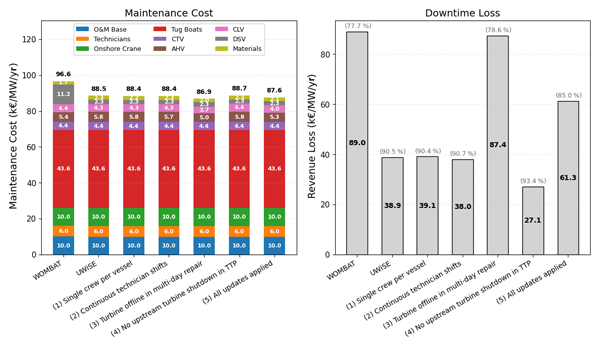
This study shows how different modelling assumptions made in discrete-event simulation models can change predictions of maintenance costs and power losses for floating offshore wind farms. By testing two models under the same conditions, we identify which assumptions matter most and how they shape results. The findings help improve the reliability of future models and support better planning of maintenance strategies for floating wind projects.
Lu-Jan Huang, Simone Mancini, Daniel Mulas Hernando, and Rob Hammond
Wind Energ. Sci. Discuss., https://doi.org/10.5194/wes-2025-279, https://doi.org/10.5194/wes-2025-279, 2026
Preprint under review for WES
Short summary
Short summary
This study shows how different modelling assumptions made in discrete-event simulation models can change predictions of maintenance costs and power losses for floating offshore wind farms. By testing two models under the same conditions, we identify which assumptions matter most and how they shape results. The findings help improve the reliability of future models and support better planning of maintenance strategies for floating wind projects.
Kenneth Brown, Gopal Yalla, Lawrence Cheung, Joeri Frederik, Dan Houck, Nathaniel deVelder, Eric Simley, and Paul Fleming
Wind Energ. Sci., 10, 1737–1762, https://doi.org/10.5194/wes-10-1737-2025, https://doi.org/10.5194/wes-10-1737-2025, 2025
Short summary
Short summary
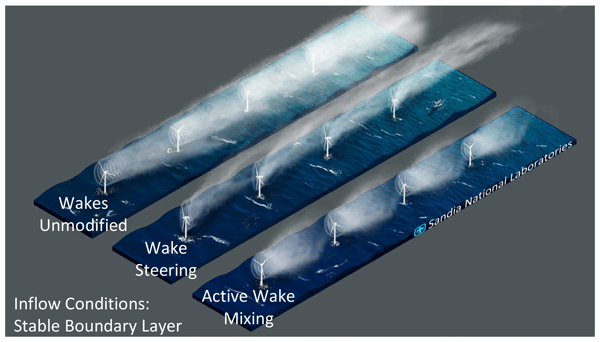
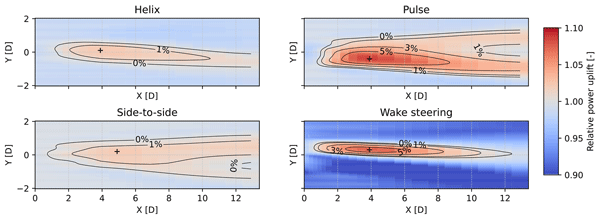
This paper presents one half of a companion paper series that studies strategies to reduce negative aerodynamic interference (i.e., wake effects) between nearby wind turbines in a wind farm. The approach leverages high-fidelity flow simulations of an open-source design for a wind turbine. Complimenting the companion paper’s analysis of the power and loading effects of the wake-control strategies, this article uncovers the underlying fluid-dynamic causes for these effects.
Joeri A. Frederik, Eric Simley, Kenneth A. Brown, Gopal R. Yalla, Lawrence C. Cheung, and Paul A. Fleming
Wind Energ. Sci., 10, 755–777, https://doi.org/10.5194/wes-10-755-2025, https://doi.org/10.5194/wes-10-755-2025, 2025
Short summary
Short summary
In this paper, we present results from advanced computer simulations to determine the effects of applying different control strategies to a small wind farm. We show that when there is variability in wind direction over height, steering the wake of a turbine away from other turbines is the most effective strategy. When this variability is not present, actively changing the pitch angle of the blades to increase turbulence in the wake could be more effective.
Eric Simley, Dev Millstein, Seongeun Jeong, and Paul Fleming
Wind Energ. Sci., 9, 219–234, https://doi.org/10.5194/wes-9-219-2024, https://doi.org/10.5194/wes-9-219-2024, 2024
Short summary
Short summary
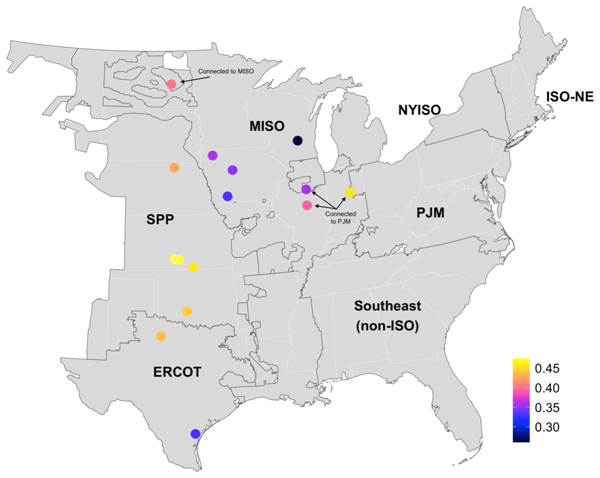
Wake steering is a wind farm control technology in which turbines are misaligned with the wind to deflect their wakes away from downstream turbines, increasing total power production. In this paper, we use a wind farm control model and historical electricity prices to assess the potential increase in market value from wake steering for 15 US wind plants. For most plants, we find that the relative increase in revenue from wake steering exceeds the relative increase in energy production.
Balthazar Arnoldus Maria Sengers, Andreas Rott, Eric Simley, Michael Sinner, Gerald Steinfeld, and Martin Kühn
Wind Energ. Sci., 8, 1693–1710, https://doi.org/10.5194/wes-8-1693-2023, https://doi.org/10.5194/wes-8-1693-2023, 2023
Short summary
Short summary
Unexpected wind direction changes are undesirable, especially when performing wake steering. This study explores whether the yaw controller can benefit from accessing wind direction information before a change reaches the turbine. Results from two models with different fidelities demonstrate that wake steering can indeed benefit from preview information.
Paul Fleming, Michael Sinner, Tom Young, Marine Lannic, Jennifer King, Eric Simley, and Bart Doekemeijer
Wind Energ. Sci., 6, 1521–1531, https://doi.org/10.5194/wes-6-1521-2021, https://doi.org/10.5194/wes-6-1521-2021, 2021
Short summary
Short summary
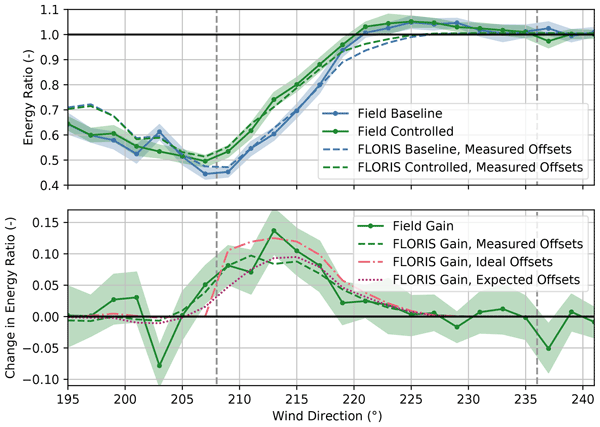
The paper presents a new validation campaign of wake steering at a commercial wind farm. The campaign uses fixed yaw offset positions, rather than a table of optimal yaw offsets dependent on wind direction, to enable comparison with engineering models of wake steering. Additionally, by applying the same offset in beneficial and detrimental conditions, we are able to collect important data for assessing second-order wake model predictions.
Liang Dong, Wai Hou Lio, and Eric Simley
Wind Energ. Sci., 6, 1491–1500, https://doi.org/10.5194/wes-6-1491-2021, https://doi.org/10.5194/wes-6-1491-2021, 2021
Short summary
Short summary
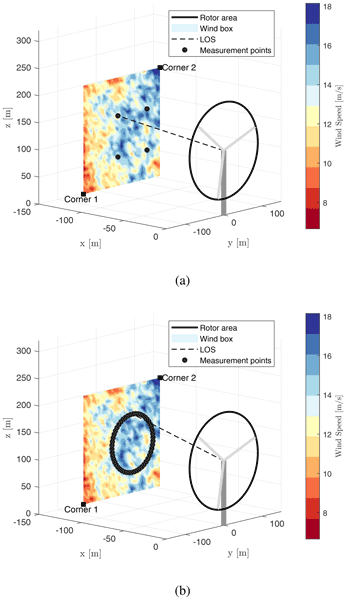
This paper suggests that the impacts of different turbulence models should be considered as uncertainties while evaluating the benefits of lidar-assisted control (LAC) in wind turbine design. The value creation of LAC, evaluated using the Kaimal turbulence model, will be diminished if the Mann turbulence model is used instead. In particular, the difference in coherence is more significant for larger rotors.
Eric Simley, Paul Fleming, Nicolas Girard, Lucas Alloin, Emma Godefroy, and Thomas Duc
Wind Energ. Sci., 6, 1427–1453, https://doi.org/10.5194/wes-6-1427-2021, https://doi.org/10.5194/wes-6-1427-2021, 2021
Short summary
Short summary
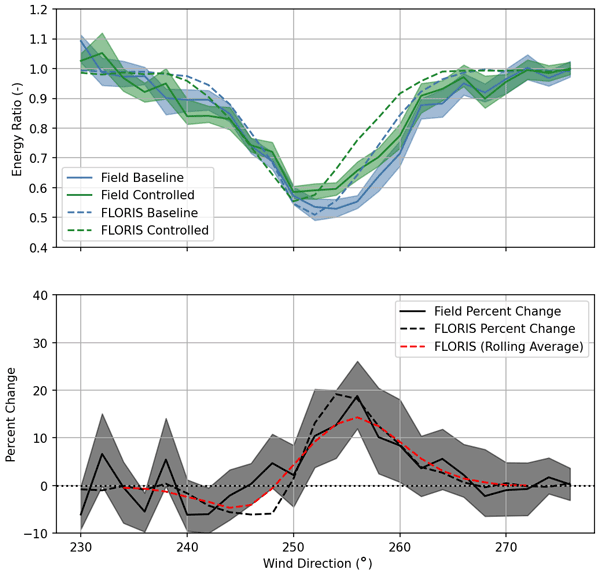
Wake steering is a wind farm control strategy in which upstream wind turbines are misaligned with the wind to deflect their low-velocity wakes away from downstream turbines, increasing overall power production. Here, we present results from a two-turbine wake-steering experiment at a commercial wind plant. By analyzing the wind speed dependence of wake steering, we find that the energy gained tends to increase for higher wind speeds because of both the wind conditions and turbine operation.
Alayna Farrell, Jennifer King, Caroline Draxl, Rafael Mudafort, Nicholas Hamilton, Christopher J. Bay, Paul Fleming, and Eric Simley
Wind Energ. Sci., 6, 737–758, https://doi.org/10.5194/wes-6-737-2021, https://doi.org/10.5194/wes-6-737-2021, 2021
Short summary
Short summary
Most current wind turbine wake models struggle to accurately simulate spatially variant wind conditions at a low computational cost. In this paper, we present an adaptation of NREL's FLOw Redirection and Induction in Steady State (FLORIS) wake model, which calculates wake losses in a heterogeneous flow field using local weather measurement inputs. Two validation studies are presented where the adapted model consistently outperforms previous versions of FLORIS that simulated uniform flow only.
Jennifer King, Paul Fleming, Ryan King, Luis A. Martínez-Tossas, Christopher J. Bay, Rafael Mudafort, and Eric Simley
Wind Energ. Sci., 6, 701–714, https://doi.org/10.5194/wes-6-701-2021, https://doi.org/10.5194/wes-6-701-2021, 2021
Short summary
Short summary
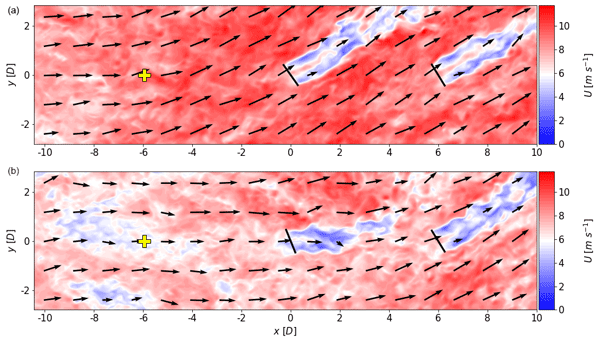
This paper highlights the secondary effects of wake steering, including yaw-added wake recovery and secondary steering. These effects enhance the value of wake steering especially when applied to a large wind farm. This paper models these secondary effects using an analytical model proposed in the paper. The results of this model are compared with large-eddy simulations for several cases including 2-turbine, 3-turbine, 5-turbine, and 38-turbine cases.
Cited articles
Bodini, N. and Optis, M.: Operational-based annual energy production uncertainty: are its components actually uncorrelated?, Wind Energ. Sci., 5, 1435–1448, https://doi.org/10.5194/wes-5-1435-2020, 2020. a
Dickinson, K., Monache, L. D., McCormack, K., and Magontier, P.: Wind Energy Resource Assessment: Information Production, Uses, and Value – Survey Report, https://sciencepolicy.colorado.edu/admin/publication_files/2014.60.pdf (last access: 8 January 2026), 2014. a
Global Modeling and Assimilation Office (GMAO): MERRA-2 tavg1_2d_slv_Nx: 2d,1-Hourly,Time-Averaged,Single-Level,Assimilation,Single-Level Diagnostics V5.12.4, Goddard Earth Sciences Data and Information Services Center (GES DISC) [data set]https://doi.org/10.5067/VJAFPLI1CSIV, 2015. a
Hersbach, H., Bell, B., Berrisford, P., Biavati, G., Horányi, A., Muñoz Sabater, J., Nicolas, J., Peubey, C., Radu, R., Rozum, I., Schepers, D., Simmons, A., Soci, C., Dee, D., and Thépaut, J.-N.: ERA5 hourly data on single levels from 1940 to present, Copernicus Climate Change Service (C3S) Climate Data Store (CDS) [data set], https://doi.org/10.24381/cds.adbb2d47, 2018. a, b
Huber, P. J.: Robust Estimation of a Location Parameter, Ann. Math. Stat., 35, 73–101, https://doi.org/10.1214/aoms/1177703732, 1964. a
Lee, J. C. Y. and Fields, M. J.: An overview of wind-energy-production prediction bias, losses, and uncertainties, Wind Energ. Sci., 6, 311–365, https://doi.org/10.5194/wes-6-311-2021, 2021. a, b
Lunacek, M., Jason Fields, M., Craig, A., Lee, J., Meissner, J., Philips, C., Sheng, S., and King, R.: Understanding Biases in Pre-Construction Estimates, J. Phys. Conf. Ser., 1037, https://doi.org/10.1088/1742-6596/1037/6/062009, 2018. a, b, c, d, e, f, g, h, i, j, k, l, m, n, o, p, q, r, s, t, u, v, w, x, y, z, aa
Perr-Sauer, J., Optis, M., Fields, J. M., Bodini, N., Lee, J. C., Todd, A., Simley, E., Hammond, R., Phillips, C., Lunacek, M., Kemper, T., Williams, L., Craig, A., Agarwal, N., Sheng, S., and Meissner, J.: OpenOA: An Open-Source Codebase For Operational Analysis of Wind Farms, Journal of Open Source Software, 6, 2171, https://doi.org/10.21105/joss.02171, 2021. a, b
Tukey, J. W.: Comparing Individual Means in the Analysis of Variance, Biometrics, 5, 99–114, https://doi.org/10.2307/3001913, 1949. a
Welch, B. L.: THE GENERALIZATION OF `STUDENT'S' PROBLEM WHEN SEVERAL DIFFERENT POPULATION VARLANCES ARE INVOLVED, Biometrika, 34, 28–35, https://doi.org/10.1093/biomet/34.1-2.28, 1947. a
Short summary
Estimating the energy production of a wind plant before construction is a historically difficult task. We build on prior research comparing the actual energy production of wind plants and their estimated energy production using owner-provided energy data. Similar to prior studies, we found an increasing bias of overestimating annual energy production. In general, estimates before construction are not conservative enough, suggesting room for improvements in the energy yield assessment process.
Estimating the energy production of a wind plant before construction is a historically difficult...
Altmetrics
Final-revised paper
Preprint