Articles | Volume 11, issue 5
https://doi.org/10.5194/wes-11-1853-2026
© Author(s) 2026. This work is distributed under
the Creative Commons Attribution 4.0 License.
https://doi.org/10.5194/wes-11-1853-2026
© Author(s) 2026. This work is distributed under
the Creative Commons Attribution 4.0 License.
Modelling global offshore turbulence intensity including large-scale turbulence, stability and sea state

Wind and Energy Systems Department, Technical University of Denmark, Frederiksborgvej 399, Roskilde, 4000, Denmark
Marc Imberger
Wind and Energy Systems Department, Technical University of Denmark, Frederiksborgvej 399, Roskilde, 4000, Denmark
Rogier Floors
Wind and Energy Systems Department, Technical University of Denmark, Frederiksborgvej 399, Roskilde, 4000, Denmark
Related authors
Sara Müller, Xiaoli Guo Larsén, and Fei Hu
Wind Energ. Sci., 11, 961–981, https://doi.org/10.5194/wes-11-961-2026, https://doi.org/10.5194/wes-11-961-2026, 2026
Short summary
Short summary
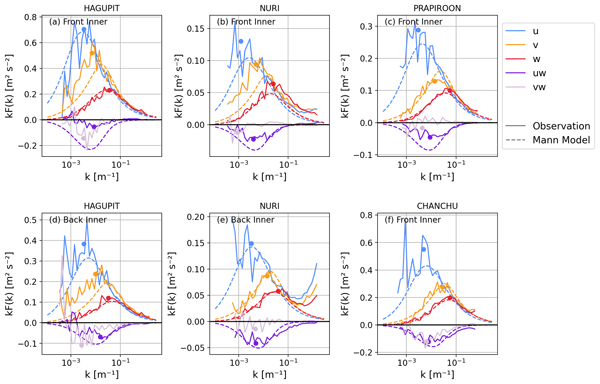
Wind farms are being developed in areas prone to tropical cyclones. However, it remains unclear whether turbulence models in current design standards, such as the Mann uniform shear model, are suitable for these conditions. For the first time, the Mann model is assessed in depth using high-frequency measurements from four typhoons. Larger-than-predicted spectral energy is found at small wavenumbers in the outer cyclone and, in some cases, in the crosswind component in the inner cyclone.
Branko Kosović, Sukanta Basu, Jacob Berg, Larry K. Berg, Sue E. Haupt, Xiaoli G. Larsén, Joachim Peinke, Richard J. A. M. Stevens, Paul Veers, and Simon Watson
Wind Energ. Sci., 11, 509–555, https://doi.org/10.5194/wes-11-509-2026, https://doi.org/10.5194/wes-11-509-2026, 2026
Short summary
Short summary
Most human activity happens in the layer of the atmosphere which extends a few hundred meters to a couple of kilometers above the surface of the Earth. The flow in this layer is turbulent. Turbulence impacts wind power production and turbine lifespan. Optimizing wind turbine performance requires understanding how turbulence affects both wind turbine efficiency and reliability. This paper points to gaps in our knowledge that need to be addressed to effectively utilize wind resources.
Georgios Deskos, Jiali Wang, Sanjay Arwade, Murray Fisher, Brian Hirth, Xiaoli Guo Larsén, Julie K. Lundquist, Andrew Myers, Weichiang Pang, William J. Pringle, Robert Rogers, Miguel Sanchez-Gomez, Chao Sun, Atsushi Yamaguchi, and Paul Veers
Wind Energ. Sci. Discuss., https://doi.org/10.5194/wes-2026-32, https://doi.org/10.5194/wes-2026-32, 2026
Revised manuscript under review for WES
Short summary
Short summary
Wind energy is increasingly built in coastal and offshore areas exposed to powerful tropical storms. This paper explains why current wind turbine design approaches are often insufficient for these conditions and identifies what must change to improve resilience. By combining insights from weather modeling, engineering, and risk analysis, we highlight key gaps in data and standards, and show how addressing them can enable safer more reliable wind energy in storm-prone regions.
Sima Hamzeloo, Xiaoli Guo Larsén, Alfredo Peña, Jana Fischereit, and Oscar García-Santiago
Wind Energ. Sci. Discuss., https://doi.org/10.5194/wes-2025-267, https://doi.org/10.5194/wes-2025-267, 2026
Revised manuscript under review for WES
Short summary
Short summary
We studied how winds and ocean waves affect each other during a North Sea storm. Using a multiscale approach that captures processes from kilometers down to meters, we linked wind and wave models and compared the results with real measurements. Our aim was to improve current simulation methods, and the findings show that this detailed approach provides more accurate storm predictions up to 100 m height.
Keeta Chapman-Smith, Xiaoli Guo Larsén, and Mark Laier Brodersen
Wind Energ. Sci. Discuss., https://doi.org/10.5194/wes-2025-269, https://doi.org/10.5194/wes-2025-269, 2026
Revised manuscript accepted for WES
Short summary
Short summary
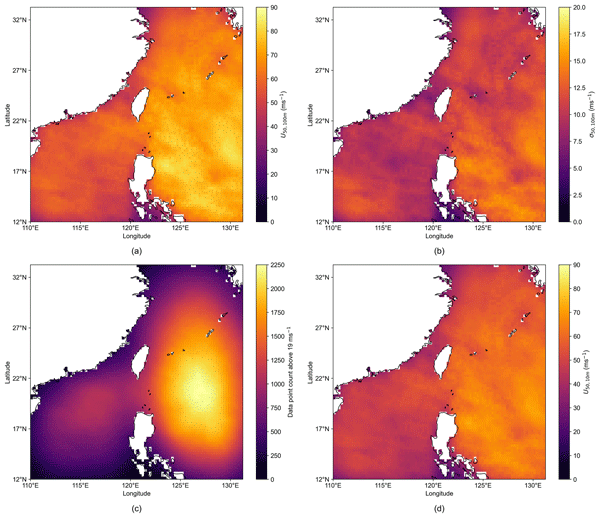
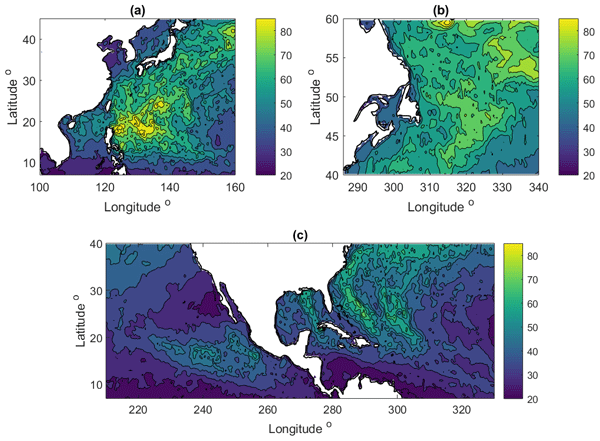
This study presents a method to estimate wind speeds which could occur in a 50-year period. The 50-year wind speed is calculated for three regions: Taiwan, Japan, and the east coast of the United States of America. The method performs well in Taiwan and Japan which can be attributed to the large dataset size located within a limited spatial area. The east coast of the United States performs less well due to the smaller dataset size and wider spatial region of which they cover.
Jana Fischereit, Bjarke T. E. Olsen, Marc Imberger, Henrik Vedel, Kristian H. Møller, Andrea N. Hahmann, and Xiaoli Guo Larsén
EGUsphere, https://doi.org/10.5194/egusphere-2025-5407, https://doi.org/10.5194/egusphere-2025-5407, 2025
Short summary
Short summary
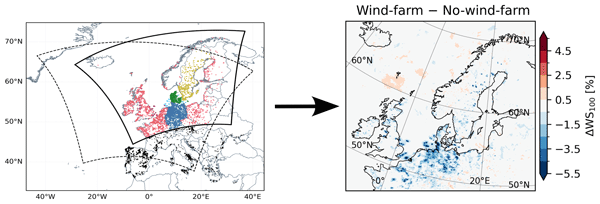
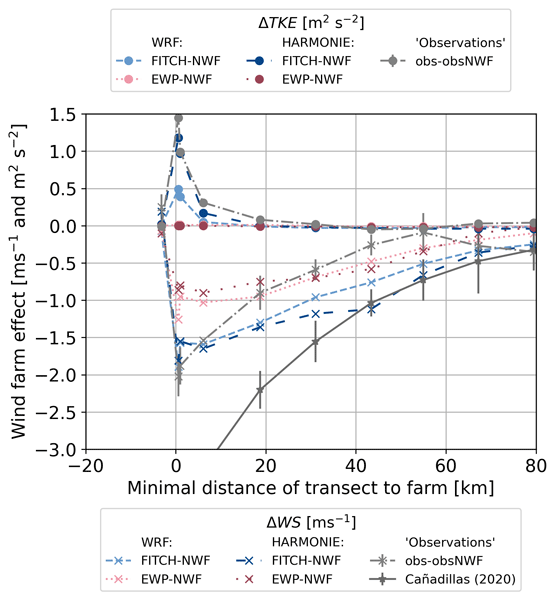
We evaluated how operating wind farms influence the atmosphere in numerical weather prediction using two wind farm parameterizations in the HARMONIE-AROME model, applied by over 10 European weather services. Accurate yield forecasts require including both onshore and offshore turbines. Wind turbines slightly alter near-surface temperature (<1 K on average). We also present an open-access European wind turbine dataset combining multiple data sources.
Nathalia Correa-Sánchez, Xiaoli Guo Larsén, Giorgia Fosser, Eleonora Dallan, Marco Borga, and Francesco Marra
Wind Energ. Sci., 10, 2551–2561, https://doi.org/10.5194/wes-10-2551-2025, https://doi.org/10.5194/wes-10-2551-2025, 2025
Short summary
Short summary
We examined the power spectra of wind speed in three convection-permitting models in central Europe and found that these models have a better representation of wind variability characteristics than standard wind datasets like the New European Wind Atlas, due to different simulation approaches, providing more reliable extreme wind predictions.
Nathalia Correa-Sánchez, Xiaoli Guo Larsén, Eleonora Dallan, Marco Borga, and Fracesco Marra
Wind Energ. Sci. Discuss., https://doi.org/10.5194/wes-2025-172, https://doi.org/10.5194/wes-2025-172, 2025
Revised manuscript under review for WES
Short summary
Short summary
This research presents the first use of SMEV for wind extremes, extending it to wind energy applications. We use a categories framework combining climate, roughness, and topography for CPM evaluation. We find that model formulation drives inter-model uncertainties, rather than surface conditions. Also, there is a higher model agreement in winter (synoptic) and lower in summer (convective). CPM uncertainty analysis improves the reliability of extreme winds for design parameters.
Sara Müller, Xiaoli Guo Larsén, and David Robert Verelst
Wind Energ. Sci., 9, 1153–1171, https://doi.org/10.5194/wes-9-1153-2024, https://doi.org/10.5194/wes-9-1153-2024, 2024
Short summary
Short summary
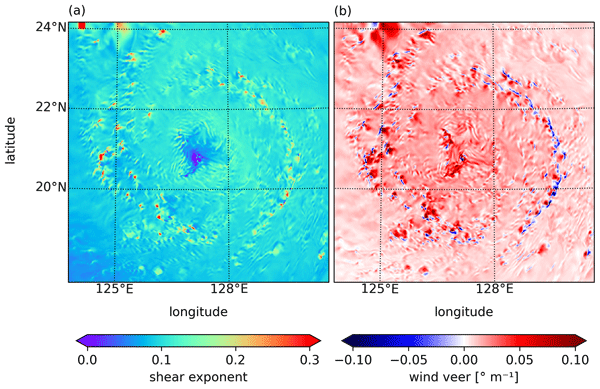
Tropical cyclone winds are challenging for wind turbines. We analyze a tropical cyclone before landfall in a mesoscale model. The simulated wind speeds and storm structure are sensitive to the boundary parametrization. However, independent of the boundary layer parametrization, the median change in wind speed and wind direction with height is small relative to wind turbine design standards. Strong spatial organization of wind shear and veer along the rainbands may increase wind turbine loads.
Jana Fischereit, Henrik Vedel, Xiaoli Guo Larsén, Natalie E. Theeuwes, Gregor Giebel, and Eigil Kaas
Geosci. Model Dev., 17, 2855–2875, https://doi.org/10.5194/gmd-17-2855-2024, https://doi.org/10.5194/gmd-17-2855-2024, 2024
Short summary
Short summary
Wind farms impact local wind and turbulence. To incorporate these effects in weather forecasting, the explicit wake parameterization (EWP) is added to the forecasting model HARMONIE–AROME. We evaluate EWP using flight data above and downstream of wind farms, comparing it with an alternative wind farm parameterization and another weather model. Results affirm the correct implementation of EWP, emphasizing the necessity of accounting for wind farm effects in accurate weather forecasting.
Xiaoli Guo Larsén, Marc Imberger, Ásta Hannesdóttir, and Andrea N. Hahmann
Wind Energ. Sci. Discuss., https://doi.org/10.5194/wes-2022-102, https://doi.org/10.5194/wes-2022-102, 2023
Revised manuscript not accepted
Short summary
Short summary
We study how climate change will impact extreme winds and choice of turbine class. We use data from 18 CMIP6 members from a historic and a future period to access the change in the extreme winds. The analysis shows an overall increase in the extreme winds in the North Sea and the southern Baltic Sea, but a decrease over the Scandinavian Peninsula and most of the Baltic Sea. The analysis is inconclusive to whether higher or lower classes of turbines will be installed in the future.
Xiaoli Guo Larsén and Søren Ott
Wind Energ. Sci., 7, 2457–2468, https://doi.org/10.5194/wes-7-2457-2022, https://doi.org/10.5194/wes-7-2457-2022, 2022
Short summary
Short summary
A method is developed for calculating the extreme wind in tropical-cyclone-affected water areas. The method is based on the spectral correction method that fills in the missing wind variability to the modeled time series, guided by best track data. The paper provides a detailed recipe for applying the method and the 50-year winds of equivalent 10 min temporal resolution from 10 to 150 m in several tropical-cyclone-affected regions.
Jana Fischereit, Kurt Schaldemose Hansen, Xiaoli Guo Larsén, Maarten Paul van der Laan, Pierre-Elouan Réthoré, and Juan Pablo Murcia Leon
Wind Energ. Sci., 7, 1069–1091, https://doi.org/10.5194/wes-7-1069-2022, https://doi.org/10.5194/wes-7-1069-2022, 2022
Short summary
Short summary
Wind turbines extract kinetic energy from the flow to create electricity. This induces a wake of reduced wind speed downstream of a turbine and consequently downstream of a wind farm. Different types of numerical models have been developed to calculate this effect. In this study, we compared models of different complexity, together with measurements over two wind farms. We found that higher-fidelity models perform better and the considered rapid models cannot fully capture the wake effect.
Anna Rutgersson, Erik Kjellström, Jari Haapala, Martin Stendel, Irina Danilovich, Martin Drews, Kirsti Jylhä, Pentti Kujala, Xiaoli Guo Larsén, Kirsten Halsnæs, Ilari Lehtonen, Anna Luomaranta, Erik Nilsson, Taru Olsson, Jani Särkkä, Laura Tuomi, and Norbert Wasmund
Earth Syst. Dynam., 13, 251–301, https://doi.org/10.5194/esd-13-251-2022, https://doi.org/10.5194/esd-13-251-2022, 2022
Short summary
Short summary
A natural hazard is a naturally occurring extreme event with a negative effect on people, society, or the environment; major events in the study area include wind storms, extreme waves, high and low sea level, ice ridging, heavy precipitation, sea-effect snowfall, river floods, heat waves, ice seasons, and drought. In the future, an increase in sea level, extreme precipitation, heat waves, and phytoplankton blooms is expected, and a decrease in cold spells and severe ice winters is anticipated.
Marcus Reckermann, Anders Omstedt, Tarmo Soomere, Juris Aigars, Naveed Akhtar, Magdalena Bełdowska, Jacek Bełdowski, Tom Cronin, Michał Czub, Margit Eero, Kari Petri Hyytiäinen, Jukka-Pekka Jalkanen, Anders Kiessling, Erik Kjellström, Karol Kuliński, Xiaoli Guo Larsén, Michelle McCrackin, H. E. Markus Meier, Sonja Oberbeckmann, Kevin Parnell, Cristian Pons-Seres de Brauwer, Anneli Poska, Jarkko Saarinen, Beata Szymczycha, Emma Undeman, Anders Wörman, and Eduardo Zorita
Earth Syst. Dynam., 13, 1–80, https://doi.org/10.5194/esd-13-1-2022, https://doi.org/10.5194/esd-13-1-2022, 2022
Short summary
Short summary
As part of the Baltic Earth Assessment Reports (BEAR), we present an inventory and discussion of different human-induced factors and processes affecting the environment of the Baltic Sea region and their interrelations. Some are naturally occurring and modified by human activities, others are completely human-induced, and they are all interrelated to different degrees. The findings from this study can largely be transferred to other comparable marginal and coastal seas in the world.
Marc Imberger, Xiaoli Guo Larsén, and Neil Davis
Adv. Geosci., 56, 77–87, https://doi.org/10.5194/adgeo-56-77-2021, https://doi.org/10.5194/adgeo-56-77-2021, 2021
Short summary
Short summary
Events like mid-latitude storms with their high winds have an impact on wind energy production and forecasting of such events is crucial. This study investigates the capabilities of a global weather prediction model MPAS and looks at how key parameters like storm intensity, arrival time and duration are represented compared to measurements and traditional methods. It is found that storm intensity is represented well while model drifts negatively influence estimation of arrival time and duration.
Xiaoli G. Larsén and Jana Fischereit
Geosci. Model Dev., 14, 3141–3158, https://doi.org/10.5194/gmd-14-3141-2021, https://doi.org/10.5194/gmd-14-3141-2021, 2021
Short summary
Short summary
For the first time, turbulent kinetic energy (TKE) calculated from the explicit wake parameterization (EWP) in WRF is examined using high-frequency measurements over a wind farm and compared with that calculated using the Fitch et al. (2012) scheme. We examined the effect of farm-induced TKE advection in connection with the Fitch scheme. Through a case study with a low-level jet (LLJ), we analyzed the key features of LLJs and raised the issue of interaction between wind farms and LLJs.
Sara Müller, Xiaoli Guo Larsén, and Fei Hu
Wind Energ. Sci., 11, 961–981, https://doi.org/10.5194/wes-11-961-2026, https://doi.org/10.5194/wes-11-961-2026, 2026
Short summary
Short summary
Wind farms are being developed in areas prone to tropical cyclones. However, it remains unclear whether turbulence models in current design standards, such as the Mann uniform shear model, are suitable for these conditions. For the first time, the Mann model is assessed in depth using high-frequency measurements from four typhoons. Larger-than-predicted spectral energy is found at small wavenumbers in the outer cyclone and, in some cases, in the crosswind component in the inner cyclone.
Nicola Bodini, Patrick Moriarty, Regis Thedin, Paula Doubrawa, Cristina Archer, Myra Blaylock, Carlo Bottasso, Bruno Carmo, Lawrence Cheung, Camille Dubreuil, Rogier Floors, Thomas Herges, Daniel Houck, Ali Kanjari, Colleen M. Kaul, Christopher Kelley, Ru LI, Julie K. Lundquist, Desirae Major, Anh Kiet Nguyen, Mike Optis, Luan R. C. Parada, Alfredo Peña, Julian Quick, David Ricarte, William C. Radünz, Raj K. Rai, Oscar Garcia Santiago, Jonas Schulte, Knut S. Seim, M. Paul van der Laan, Kisorthman Vimalakanthan, and Adam Wise
Wind Energ. Sci. Discuss., https://doi.org/10.5194/wes-2026-34, https://doi.org/10.5194/wes-2026-34, 2026
Preprint under review for WES
Short summary
Short summary
Predicting wind farm energy production is challenging because wind patterns are complex. We tested 16 different models against real data from a major field experiment to see which worked best. Surprisingly, the most expensive and detailed models were not always more accurate than simpler ones. We found that feeding models better weather data was the most effective way to improve accuracy. These results help the industry choose the right tools for designing more efficient wind farms.
Branko Kosović, Sukanta Basu, Jacob Berg, Larry K. Berg, Sue E. Haupt, Xiaoli G. Larsén, Joachim Peinke, Richard J. A. M. Stevens, Paul Veers, and Simon Watson
Wind Energ. Sci., 11, 509–555, https://doi.org/10.5194/wes-11-509-2026, https://doi.org/10.5194/wes-11-509-2026, 2026
Short summary
Short summary
Most human activity happens in the layer of the atmosphere which extends a few hundred meters to a couple of kilometers above the surface of the Earth. The flow in this layer is turbulent. Turbulence impacts wind power production and turbine lifespan. Optimizing wind turbine performance requires understanding how turbulence affects both wind turbine efficiency and reliability. This paper points to gaps in our knowledge that need to be addressed to effectively utilize wind resources.
Georgios Deskos, Jiali Wang, Sanjay Arwade, Murray Fisher, Brian Hirth, Xiaoli Guo Larsén, Julie K. Lundquist, Andrew Myers, Weichiang Pang, William J. Pringle, Robert Rogers, Miguel Sanchez-Gomez, Chao Sun, Atsushi Yamaguchi, and Paul Veers
Wind Energ. Sci. Discuss., https://doi.org/10.5194/wes-2026-32, https://doi.org/10.5194/wes-2026-32, 2026
Revised manuscript under review for WES
Short summary
Short summary
Wind energy is increasingly built in coastal and offshore areas exposed to powerful tropical storms. This paper explains why current wind turbine design approaches are often insufficient for these conditions and identifies what must change to improve resilience. By combining insights from weather modeling, engineering, and risk analysis, we highlight key gaps in data and standards, and show how addressing them can enable safer more reliable wind energy in storm-prone regions.
Sima Hamzeloo, Xiaoli Guo Larsén, Alfredo Peña, Jana Fischereit, and Oscar García-Santiago
Wind Energ. Sci. Discuss., https://doi.org/10.5194/wes-2025-267, https://doi.org/10.5194/wes-2025-267, 2026
Revised manuscript under review for WES
Short summary
Short summary
We studied how winds and ocean waves affect each other during a North Sea storm. Using a multiscale approach that captures processes from kilometers down to meters, we linked wind and wave models and compared the results with real measurements. Our aim was to improve current simulation methods, and the findings show that this detailed approach provides more accurate storm predictions up to 100 m height.
Keeta Chapman-Smith, Xiaoli Guo Larsén, and Mark Laier Brodersen
Wind Energ. Sci. Discuss., https://doi.org/10.5194/wes-2025-269, https://doi.org/10.5194/wes-2025-269, 2026
Revised manuscript accepted for WES
Short summary
Short summary
This study presents a method to estimate wind speeds which could occur in a 50-year period. The 50-year wind speed is calculated for three regions: Taiwan, Japan, and the east coast of the United States of America. The method performs well in Taiwan and Japan which can be attributed to the large dataset size located within a limited spatial area. The east coast of the United States performs less well due to the smaller dataset size and wider spatial region of which they cover.
Jana Fischereit, Bjarke T. E. Olsen, Marc Imberger, Henrik Vedel, Kristian H. Møller, Andrea N. Hahmann, and Xiaoli Guo Larsén
EGUsphere, https://doi.org/10.5194/egusphere-2025-5407, https://doi.org/10.5194/egusphere-2025-5407, 2025
Short summary
Short summary
We evaluated how operating wind farms influence the atmosphere in numerical weather prediction using two wind farm parameterizations in the HARMONIE-AROME model, applied by over 10 European weather services. Accurate yield forecasts require including both onshore and offshore turbines. Wind turbines slightly alter near-surface temperature (<1 K on average). We also present an open-access European wind turbine dataset combining multiple data sources.
Nathalia Correa-Sánchez, Xiaoli Guo Larsén, Giorgia Fosser, Eleonora Dallan, Marco Borga, and Francesco Marra
Wind Energ. Sci., 10, 2551–2561, https://doi.org/10.5194/wes-10-2551-2025, https://doi.org/10.5194/wes-10-2551-2025, 2025
Short summary
Short summary
We examined the power spectra of wind speed in three convection-permitting models in central Europe and found that these models have a better representation of wind variability characteristics than standard wind datasets like the New European Wind Atlas, due to different simulation approaches, providing more reliable extreme wind predictions.
Nathalia Correa-Sánchez, Xiaoli Guo Larsén, Eleonora Dallan, Marco Borga, and Fracesco Marra
Wind Energ. Sci. Discuss., https://doi.org/10.5194/wes-2025-172, https://doi.org/10.5194/wes-2025-172, 2025
Revised manuscript under review for WES
Short summary
Short summary
This research presents the first use of SMEV for wind extremes, extending it to wind energy applications. We use a categories framework combining climate, roughness, and topography for CPM evaluation. We find that model formulation drives inter-model uncertainties, rather than surface conditions. Also, there is a higher model agreement in winter (synoptic) and lower in summer (convective). CPM uncertainty analysis improves the reliability of extreme winds for design parameters.
Sara Müller, Xiaoli Guo Larsén, and David Robert Verelst
Wind Energ. Sci., 9, 1153–1171, https://doi.org/10.5194/wes-9-1153-2024, https://doi.org/10.5194/wes-9-1153-2024, 2024
Short summary
Short summary
Tropical cyclone winds are challenging for wind turbines. We analyze a tropical cyclone before landfall in a mesoscale model. The simulated wind speeds and storm structure are sensitive to the boundary parametrization. However, independent of the boundary layer parametrization, the median change in wind speed and wind direction with height is small relative to wind turbine design standards. Strong spatial organization of wind shear and veer along the rainbands may increase wind turbine loads.
Jana Fischereit, Henrik Vedel, Xiaoli Guo Larsén, Natalie E. Theeuwes, Gregor Giebel, and Eigil Kaas
Geosci. Model Dev., 17, 2855–2875, https://doi.org/10.5194/gmd-17-2855-2024, https://doi.org/10.5194/gmd-17-2855-2024, 2024
Short summary
Short summary
Wind farms impact local wind and turbulence. To incorporate these effects in weather forecasting, the explicit wake parameterization (EWP) is added to the forecasting model HARMONIE–AROME. We evaluate EWP using flight data above and downstream of wind farms, comparing it with an alternative wind farm parameterization and another weather model. Results affirm the correct implementation of EWP, emphasizing the necessity of accounting for wind farm effects in accurate weather forecasting.
Maarten Paul van der Laan, Oscar García-Santiago, Mark Kelly, Alexander Meyer Forsting, Camille Dubreuil-Boisclair, Knut Sponheim Seim, Marc Imberger, Alfredo Peña, Niels Nørmark Sørensen, and Pierre-Elouan Réthoré
Wind Energ. Sci., 8, 819–848, https://doi.org/10.5194/wes-8-819-2023, https://doi.org/10.5194/wes-8-819-2023, 2023
Short summary
Short summary
Offshore wind farms are more commonly installed in wind farm clusters, where wind farm interaction can lead to energy losses. In this work, an efficient numerical method is presented that can be used to estimate these energy losses. The novel method is verified with higher-fidelity numerical models and validated with measurements of an existing wind farm cluster.
Xiaoli Guo Larsén, Marc Imberger, Ásta Hannesdóttir, and Andrea N. Hahmann
Wind Energ. Sci. Discuss., https://doi.org/10.5194/wes-2022-102, https://doi.org/10.5194/wes-2022-102, 2023
Revised manuscript not accepted
Short summary
Short summary
We study how climate change will impact extreme winds and choice of turbine class. We use data from 18 CMIP6 members from a historic and a future period to access the change in the extreme winds. The analysis shows an overall increase in the extreme winds in the North Sea and the southern Baltic Sea, but a decrease over the Scandinavian Peninsula and most of the Baltic Sea. The analysis is inconclusive to whether higher or lower classes of turbines will be installed in the future.
Xiaoli Guo Larsén and Søren Ott
Wind Energ. Sci., 7, 2457–2468, https://doi.org/10.5194/wes-7-2457-2022, https://doi.org/10.5194/wes-7-2457-2022, 2022
Short summary
Short summary
A method is developed for calculating the extreme wind in tropical-cyclone-affected water areas. The method is based on the spectral correction method that fills in the missing wind variability to the modeled time series, guided by best track data. The paper provides a detailed recipe for applying the method and the 50-year winds of equivalent 10 min temporal resolution from 10 to 150 m in several tropical-cyclone-affected regions.
Jana Fischereit, Kurt Schaldemose Hansen, Xiaoli Guo Larsén, Maarten Paul van der Laan, Pierre-Elouan Réthoré, and Juan Pablo Murcia Leon
Wind Energ. Sci., 7, 1069–1091, https://doi.org/10.5194/wes-7-1069-2022, https://doi.org/10.5194/wes-7-1069-2022, 2022
Short summary
Short summary
Wind turbines extract kinetic energy from the flow to create electricity. This induces a wake of reduced wind speed downstream of a turbine and consequently downstream of a wind farm. Different types of numerical models have been developed to calculate this effect. In this study, we compared models of different complexity, together with measurements over two wind farms. We found that higher-fidelity models perform better and the considered rapid models cannot fully capture the wake effect.
Anna Rutgersson, Erik Kjellström, Jari Haapala, Martin Stendel, Irina Danilovich, Martin Drews, Kirsti Jylhä, Pentti Kujala, Xiaoli Guo Larsén, Kirsten Halsnæs, Ilari Lehtonen, Anna Luomaranta, Erik Nilsson, Taru Olsson, Jani Särkkä, Laura Tuomi, and Norbert Wasmund
Earth Syst. Dynam., 13, 251–301, https://doi.org/10.5194/esd-13-251-2022, https://doi.org/10.5194/esd-13-251-2022, 2022
Short summary
Short summary
A natural hazard is a naturally occurring extreme event with a negative effect on people, society, or the environment; major events in the study area include wind storms, extreme waves, high and low sea level, ice ridging, heavy precipitation, sea-effect snowfall, river floods, heat waves, ice seasons, and drought. In the future, an increase in sea level, extreme precipitation, heat waves, and phytoplankton blooms is expected, and a decrease in cold spells and severe ice winters is anticipated.
Marcus Reckermann, Anders Omstedt, Tarmo Soomere, Juris Aigars, Naveed Akhtar, Magdalena Bełdowska, Jacek Bełdowski, Tom Cronin, Michał Czub, Margit Eero, Kari Petri Hyytiäinen, Jukka-Pekka Jalkanen, Anders Kiessling, Erik Kjellström, Karol Kuliński, Xiaoli Guo Larsén, Michelle McCrackin, H. E. Markus Meier, Sonja Oberbeckmann, Kevin Parnell, Cristian Pons-Seres de Brauwer, Anneli Poska, Jarkko Saarinen, Beata Szymczycha, Emma Undeman, Anders Wörman, and Eduardo Zorita
Earth Syst. Dynam., 13, 1–80, https://doi.org/10.5194/esd-13-1-2022, https://doi.org/10.5194/esd-13-1-2022, 2022
Short summary
Short summary
As part of the Baltic Earth Assessment Reports (BEAR), we present an inventory and discussion of different human-induced factors and processes affecting the environment of the Baltic Sea region and their interrelations. Some are naturally occurring and modified by human activities, others are completely human-induced, and they are all interrelated to different degrees. The findings from this study can largely be transferred to other comparable marginal and coastal seas in the world.
Rogier Floors, Merete Badger, Ib Troen, Kenneth Grogan, and Finn-Hendrik Permien
Wind Energ. Sci., 6, 1379–1400, https://doi.org/10.5194/wes-6-1379-2021, https://doi.org/10.5194/wes-6-1379-2021, 2021
Short summary
Short summary
Wind turbines are frequently placed in forests. We investigate the potential of using satellites to characterize the land surface for wind flow modelling. Maps of forest properties are generated from satellite data and converted to flow modelling maps. Validation is carried out at 10 sites. Using the novel satellite-based maps leads to lower errors of the power density than land cover databases, which demonstrates the value of using satellite-based land cover maps for flow modelling.
Marc Imberger, Xiaoli Guo Larsén, and Neil Davis
Adv. Geosci., 56, 77–87, https://doi.org/10.5194/adgeo-56-77-2021, https://doi.org/10.5194/adgeo-56-77-2021, 2021
Short summary
Short summary
Events like mid-latitude storms with their high winds have an impact on wind energy production and forecasting of such events is crucial. This study investigates the capabilities of a global weather prediction model MPAS and looks at how key parameters like storm intensity, arrival time and duration are represented compared to measurements and traditional methods. It is found that storm intensity is represented well while model drifts negatively influence estimation of arrival time and duration.
Xiaoli G. Larsén and Jana Fischereit
Geosci. Model Dev., 14, 3141–3158, https://doi.org/10.5194/gmd-14-3141-2021, https://doi.org/10.5194/gmd-14-3141-2021, 2021
Short summary
Short summary
For the first time, turbulent kinetic energy (TKE) calculated from the explicit wake parameterization (EWP) in WRF is examined using high-frequency measurements over a wind farm and compared with that calculated using the Fitch et al. (2012) scheme. We examined the effect of farm-induced TKE advection in connection with the Fitch scheme. Through a case study with a low-level jet (LLJ), we analyzed the key features of LLJs and raised the issue of interaction between wind farms and LLJs.
Cited articles
Andreas, E. L., Mahrt, L., and Vickers, D.: An improved bulk air-sea surface flux algorithm, including spray-mediated transfer, Q. J. Roy. Meteor. Soc., 141, 642–654, https://doi.org/10.1002/qj.2424, 2014. a
Arya, P. S.: Introduction to Micrometeorology, Academic Press, ISBN 0-12-064490-8, 2001. a
C3S: ERA5 hourly data on single levels from 1940 to present, Copernicus Climate Change Service (C3S) Climate Data Store, https://doi.org/10.24381/CDS.ADBB2D47, 2018. a
Cheynet, E., Jakobsen, Jasna, B., and Reuder, J.: Velocity spectra and coherence estimates in the marine atmospheric boundary layer, Bound.-Lay. Meteorol., 169, 429–460, https://doi.org/10.1007/s10546-018-0382-2, 2018. a
Cheynet, E., Li, L., and Jiang, Z.: Metocean conditions at two Norwegian sites for development of offshore wind farms, Renewable Energy, 224, 120184, https://doi.org/10.1016/j.renene.2024.120184, 2024. a
Davis, N. N., Badger, J., Hahmann, A. N., Hansen, B. O., Mortensen, N. G., Kelly, M., Larsén, X. G., Olsen, B. T., Floors, R., Lizcano, G., Casso, P., Lacave, O., Bosch, A., Bauwens, I., Knight, O. J., van Loon, A. P., Fox, R., Parvanyan, T., Hansen, S. B. K., Heathfield, D., Onninen, M., and Drummond, R.: The Global Wind Atlas: A High-Resolution Dataset of Climatologies and Associated Web-Based Application, B. Am. Meteorol. Soc., 104, E1507–E1525, https://doi.org/10.1175/BAMS-D-21-0075.1, 2023. a, b
Dörenkämper, M., Olsen, B. T., Witha, B., Hahmann, A. N., Davis, N. N., Barcons, J., Ezber, Y., García-Bustamante, E., González-Rouco, J. F., Navarro, J., Sastre-Marugán, M., Sīle, T., Trei, W., Žagar, M., Badger, J., Gottschall, J., Sanz Rodrigo, J., and Mann, J.: The Making of the New European Wind Atlas – Part 2: Production and evaluation, Geosci. Model Dev., 13, 5079–5102, https://doi.org/10.5194/gmd-13-5079-2020, 2020. a
Grant, A.: Observations of boundary layer structure made during the 1981 KONTUR experiment, Q. J. Roy. Meteor. Soc., 112, https://doi.org/10.1002/qj.49711247314, 1986. a
Hersbach, H., Bell, B., Berrisford, P., Hirahara, S., Horányi, A., Muñoz-Sabater, J., Nicolas, J., Peubey, C., Radu, R., Schepers, D., Simmons, A., Soci, C., Abdalla, S., Abellan, X., Balsamo, G., Bechtold, P., Biavati, G., Bidlot, J., Bonavita, M., De Chiara, G., Dahlgren, P., Dee, D., Diamantakis, M., Dragani, R., Flemming, J., Forbes, R., Fuentes, M., Geer, A., Haimberger, L., Healy, S., Hogan, R. J., Hólm, E., Janisková, M., Keeley, S., Laloyaux, P., Lopez, P., Lupu, C., Radnoti, G., de Rosnay, P., Rozum, I., Vamborg, F., Villaume, S., and Thépaut, J.-N.: The ERA5 global reanalysis, Q. J. Roy. Meteor. Soc., 146, 1999–2049, https://doi.org/10.1002/qj.3803, 2020. a, b
Högström, U.: Review of some basic characteristics of the atmospheric surface layer, Bound.-Lay. Meteorol., 78, 215–246, 1996. a
Højstrup, J.: Velocity spectra in the unstable boundary layer, J. Atmos. Sci., 39, 2239–2248, 1982. a
ISO: Petroleum and natural gas industries – Specific requirements for offshore structures – Part 1: Metocean design and operating considerations, ISO 19901-1:2015, https://www.iso.org/standard/60183.html (last access: 11 May 2025), 2015. a
Kim, K. and Adrian, R.: Very large-scale motion in the outer layer, Phys. Fluids, 11, 417–422, 1999. a
Kosović, B., Basu, S., Berg, J., Berg, L. K., Haupt, S. E., Larsén, X. G., Peinke, J., Stevens, R. J. A. M., Veers, P., and Watson, S.: Impact of atmospheric turbulence on performance and loads of wind turbines: knowledge gaps and research challenges, Wind Energ. Sci., 11, 509–555, https://doi.org/10.5194/wes-11-509-2026, 2026. a
Larsén, X. G., Vincent, C. L., and Larsen, S.: Spectral structure of the mesoscale winds over the water, Q. J. Roy. Meteor. Soc., 139, 685–700, https://doi.org/10.1002/qj.2003, 2013. a, b
Larsén, X. G., Du, J., Bolanos, R., Imberger, M., Kelly, M., Badger, M., and Larsen, S. E.: Estimation of offshore extreme wind from wind-wave coupled modeling, Wind Energy, 22, 1043–1057, https://doi.org/10.1002/we.2339, 2019. a, b
Larsén, X. G., Larsen, S. E., Petersen, E. L., and Mikkelsen, T. K.: A model for the spectrum of the lateral velocity component from mesoscale to microscale and its application to wind-direction variation, Bound.-Lay. Meteorol., 178, 415–434, https://doi.org/10.1007/s10546-020-00575-0, 2021. a
Larsén, X., Davis, N., Hannesdóttir, Á., Kelly, M., Svenningsen, L., Slot, L., Imberger, M., Olsen, B., and Floors, R.: The Global Atlas for Siting Parameters project: Extreme wind, turbulence, and turbine classes, Wind Energy, https://doi.org/10.1002/we.2771, 2022. a, b
Larsén, X. G., Imberger, M., and Floors, R. R.: Global Offshore Turbulence Intensity, Technical University of Denmark [data set], https://doi.org/10.11583/DTU.30575555.v1, 2026. a
Mann, J.: The spatial structure of neutral atmospheric surface-layer turbulence, J. Fluid Mech., 273, 141–168, https://doi.org/10.1017/S0022112094001886, 1994. a
Muñoz-Esparza, D., Kosovic, B., Mirocha, J., and van Beeck, J.: Bridging the transition from mesoscale to microscale turbulence in numerical waether prediction models, Bound.-Lay. Meteorol., 153, 409–440, 2014. a
Nastrom, G. and Gage, K.: A climatology of atmospheric wavenumber spectra of wind and temperature observed by commercial aircraft, J. Atmos. Sci, 42, 950–960, 1985. a
Nastrom, G., Gage, K., and Jasperson, W.: Kinetic energy spectrum of large- and mesoscale atmospheric processes, Nature, 310, 36–38, 1984. a
Panofsky, H. and der Hoven, I. V.: Spectra and cross-spectra of velocity components in the mesometeorological range, Q. J. Roy. Meteor. Soc., 81, 603–606, 1955. a
Tai, S.-L., Berg, L. K., Krishnamurthy, R., Newsom, R., and Kirincich, A.: Validation of turbulence intensity as simulated by the Weather Research and Forecasting model off the US northeast coast, Wind Energ. Sci., 8, 433–448, https://doi.org/10.5194/wes-8-433-2023, 2023. a
Veers, P.: Three-Dimensional Wind Simulation, SANDIA REPORT, OSTI ID: 7102613, 1988. a
Zijlema, M., Van Vledder, G., and Holthuijsen, L.: Bottom friction and wind drag for wave models, Coast Eng., 65, 19–26, 2012. a
Short summary
This study delivers a method and datasets for a global offshore atlas for turbulence intensity from a height of 10 m to 200 m. The method innovatively includes both two-dimensional and three-dimensional turbulence, along with stability, wave age and height. Results show satisfactory agreement with measurements and data from the literature.
This study delivers a method and datasets for a global offshore atlas for turbulence intensity...
Altmetrics
Final-revised paper
Preprint