
Articles | Volume 11, issue 5
https://doi.org/10.5194/wes-11-1889-2026
© Author(s) 2026. This work is distributed under
the Creative Commons Attribution 4.0 License.
the Creative Commons Attribution 4.0 License.
https://doi.org/10.5194/wes-11-1889-2026
© Author(s) 2026. This work is distributed under
the Creative Commons Attribution 4.0 License.
the Creative Commons Attribution 4.0 License.
Research article
| 
26 May 2026
Research article |
| 26 May 2026
| 26 May 2026
50-year wind speed maps for tropical-cyclone-affected regions using best track data

Department of Wind and Energy Systems, Technical University of Denmark, Risø Campus, Roskilde, Denmark
Xiaoli Guo Larsén
Department of Wind and Energy Systems, Technical University of Denmark, Risø Campus, Roskilde, Denmark
Mark Laier Brodersen
Ørsted Wind Power, Gentofte, Denmark
Related authors
No articles found.
Jana Fischereit, Bjarke T. E. Olsen, Marc Imberger, Henrik Vedel, Kristian H. Møller, Andrea N. Hahmann, and Xiaoli Guo Larsén
Geosci. Model Dev., 19, 8115–8147, https://doi.org/10.5194/gmd-19-8115-2026, https://doi.org/10.5194/gmd-19-8115-2026, 2026
Short summary
Short summary
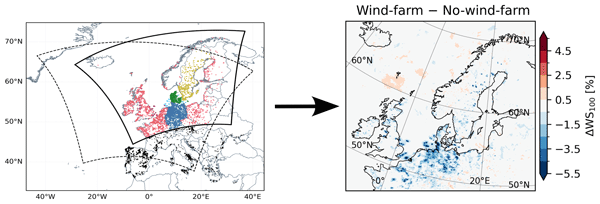
We evaluated how operating wind farms influence the atmosphere in numerical weather prediction using two wind farm parameterizations in the HARMONIE-AROME model, applied by over 10 European weather services. Accurate yield forecasts require including both onshore and offshore turbines. Wind turbines slightly alter near-surface temperature (<1 K on average). We also present an open-access European wind turbine dataset combining multiple data sources.
Nathalia Correa-Sánchez, Xiaoli Guo Larsén, Eleonora Dallan, Marco Borga, and Francesco Marra
Wind Energ. Sci., 11, 2961–2985, https://doi.org/10.5194/wes-11-2961-2026, https://doi.org/10.5194/wes-11-2961-2026, 2026
Short summary
Short summary
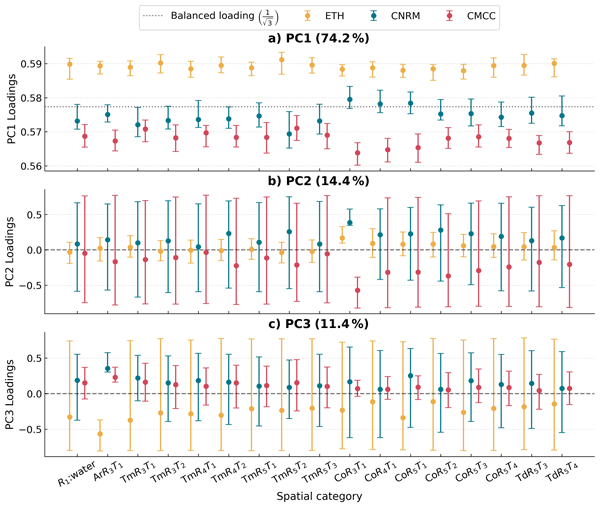
This research presents the first use of the simplified metastatistical extreme value approach for wind extremes, extending it to wind energy applications. We use a categorical framework that combines climate, roughness, and topography to evaluate convection-permitted models. We find that model formulation drives inter-model uncertainties, rather than surface conditions. Convection-permitted models' uncertainty analysis improves the reliability of extreme wind estimates for design parameters.
Georgios Deskos, Jiali Wang, Sanjay Arwade, Murray Fisher, Brian Hirth, Xiaoli Guo Larsén, Julie K. Lundquist, Andrew Myers, Weichiang Pang, William J. Pringle, Robert Rogers, Miguel Sanchez-Gomez, Chao Sun, Atsushi Yamaguchi, and Paul Veers
Wind Energ. Sci., 11, 2749–2782, https://doi.org/10.5194/wes-11-2749-2026, https://doi.org/10.5194/wes-11-2749-2026, 2026
Short summary
Short summary
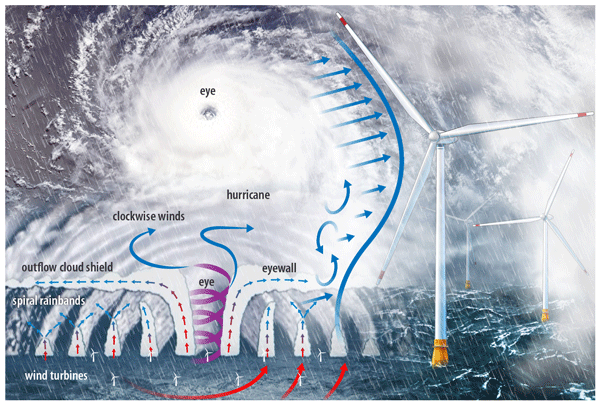
Wind energy is expanding into regions exposed to tropical cyclones, where extreme winds and waves can damage turbines and disrupt energy production. We reviewed observations, simulations, engineering standards, and risk quantification frameworks to identify the most important gaps. Today's design rules, originally built for milder storms, do not capture cyclone hazards. Closing these gaps requires better offshore measurements, improved models, and risk-informed design standards.
Xiaoli Guo Larsén, Marc Imberger, and Rogier Floors
Wind Energ. Sci., 11, 1853–1869, https://doi.org/10.5194/wes-11-1853-2026, https://doi.org/10.5194/wes-11-1853-2026, 2026
Short summary
Short summary
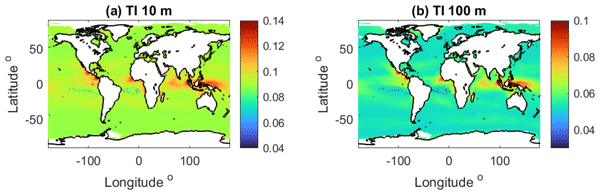
This study delivers a method and datasets for a global offshore atlas for turbulence intensity from a height of 10 m to 200 m. The method innovatively includes both two-dimensional and three-dimensional turbulence, along with stability, wave age and height. Results show satisfactory agreement with measurements and data from the literature.
Sara Müller, Xiaoli Guo Larsén, and Fei Hu
Wind Energ. Sci., 11, 961–981, https://doi.org/10.5194/wes-11-961-2026, https://doi.org/10.5194/wes-11-961-2026, 2026
Short summary
Short summary
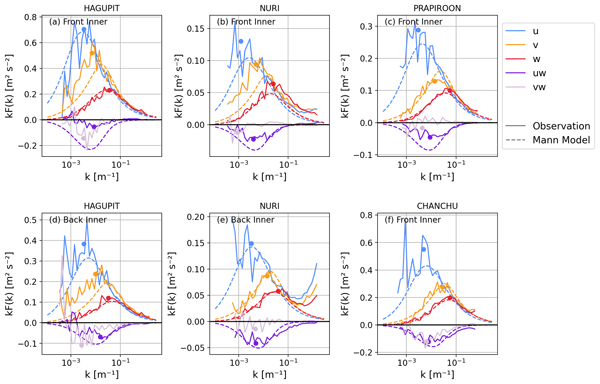
Wind farms are being developed in areas prone to tropical cyclones. However, it remains unclear whether turbulence models in current design standards, such as the Mann uniform shear model, are suitable for these conditions. For the first time, the Mann model is assessed in depth using high-frequency measurements from four typhoons. Larger-than-predicted spectral energy is found at small wavenumbers in the outer cyclone and, in some cases, in the crosswind component in the inner cyclone.

Branko Kosović, Sukanta Basu, Jacob Berg, Larry K. Berg, Sue E. Haupt, Xiaoli G. Larsén, Joachim Peinke, Richard J. A. M. Stevens, Paul Veers, and Simon Watson
Wind Energ. Sci., 11, 509–555, https://doi.org/10.5194/wes-11-509-2026, https://doi.org/10.5194/wes-11-509-2026, 2026
Short summary
Short summary
Most human activity happens in the layer of the atmosphere which extends a few hundred meters to a couple of kilometers above the surface of the Earth. The flow in this layer is turbulent. Turbulence impacts wind power production and turbine lifespan. Optimizing wind turbine performance requires understanding how turbulence affects both wind turbine efficiency and reliability. This paper points to gaps in our knowledge that need to be addressed to effectively utilize wind resources.
Sima Hamzeloo, Xiaoli Guo Larsén, Alfredo Peña, Jana Fischereit, and Oscar García-Santiago
Wind Energ. Sci. Discuss., https://doi.org/10.5194/wes-2025-267, https://doi.org/10.5194/wes-2025-267, 2026
Revised manuscript accepted for WES
Short summary
Short summary
We studied how winds and ocean waves affect each other during a North Sea storm. Using a multiscale approach that captures processes from kilometers down to meters, we linked wind and wave models and compared the results with real measurements. Our aim was to improve current simulation methods, and the findings show that this detailed approach provides more accurate storm predictions up to 100 m height.
Nathalia Correa-Sánchez, Xiaoli Guo Larsén, Giorgia Fosser, Eleonora Dallan, Marco Borga, and Francesco Marra
Wind Energ. Sci., 10, 2551–2561, https://doi.org/10.5194/wes-10-2551-2025, https://doi.org/10.5194/wes-10-2551-2025, 2025
Short summary
Short summary
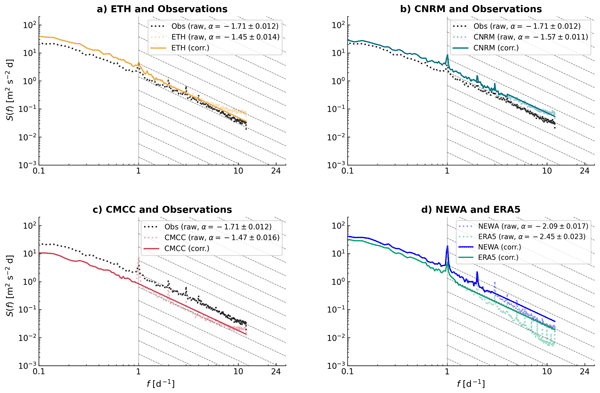
We examined the power spectra of wind speed in three convection-permitting models in central Europe and found that these models have a better representation of wind variability characteristics than standard wind datasets like the New European Wind Atlas, due to different simulation approaches, providing more reliable extreme wind predictions.
Sara Müller, Xiaoli Guo Larsén, and David Robert Verelst
Wind Energ. Sci., 9, 1153–1171, https://doi.org/10.5194/wes-9-1153-2024, https://doi.org/10.5194/wes-9-1153-2024, 2024
Short summary
Short summary
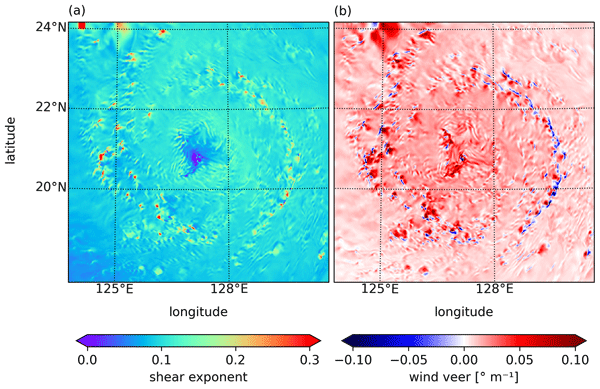
Tropical cyclone winds are challenging for wind turbines. We analyze a tropical cyclone before landfall in a mesoscale model. The simulated wind speeds and storm structure are sensitive to the boundary parametrization. However, independent of the boundary layer parametrization, the median change in wind speed and wind direction with height is small relative to wind turbine design standards. Strong spatial organization of wind shear and veer along the rainbands may increase wind turbine loads.
Jana Fischereit, Henrik Vedel, Xiaoli Guo Larsén, Natalie E. Theeuwes, Gregor Giebel, and Eigil Kaas
Geosci. Model Dev., 17, 2855–2875, https://doi.org/10.5194/gmd-17-2855-2024, https://doi.org/10.5194/gmd-17-2855-2024, 2024
Short summary
Short summary
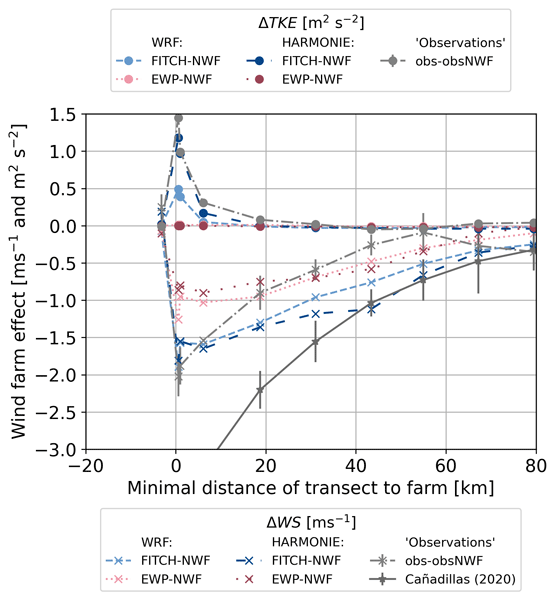
Wind farms impact local wind and turbulence. To incorporate these effects in weather forecasting, the explicit wake parameterization (EWP) is added to the forecasting model HARMONIE–AROME. We evaluate EWP using flight data above and downstream of wind farms, comparing it with an alternative wind farm parameterization and another weather model. Results affirm the correct implementation of EWP, emphasizing the necessity of accounting for wind farm effects in accurate weather forecasting.
Xiaoli Guo Larsén, Marc Imberger, Ásta Hannesdóttir, and Andrea N. Hahmann
Wind Energ. Sci. Discuss., https://doi.org/10.5194/wes-2022-102, https://doi.org/10.5194/wes-2022-102, 2023
Revised manuscript not accepted
Short summary
Short summary
We study how climate change will impact extreme winds and choice of turbine class. We use data from 18 CMIP6 members from a historic and a future period to access the change in the extreme winds. The analysis shows an overall increase in the extreme winds in the North Sea and the southern Baltic Sea, but a decrease over the Scandinavian Peninsula and most of the Baltic Sea. The analysis is inconclusive to whether higher or lower classes of turbines will be installed in the future.
Xiaoli Guo Larsén and Søren Ott
Wind Energ. Sci., 7, 2457–2468, https://doi.org/10.5194/wes-7-2457-2022, https://doi.org/10.5194/wes-7-2457-2022, 2022
Short summary
Short summary
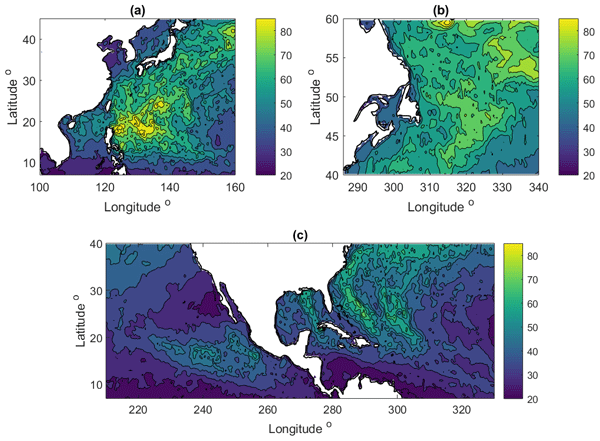
A method is developed for calculating the extreme wind in tropical-cyclone-affected water areas. The method is based on the spectral correction method that fills in the missing wind variability to the modeled time series, guided by best track data. The paper provides a detailed recipe for applying the method and the 50-year winds of equivalent 10 min temporal resolution from 10 to 150 m in several tropical-cyclone-affected regions.
Jana Fischereit, Kurt Schaldemose Hansen, Xiaoli Guo Larsén, Maarten Paul van der Laan, Pierre-Elouan Réthoré, and Juan Pablo Murcia Leon
Wind Energ. Sci., 7, 1069–1091, https://doi.org/10.5194/wes-7-1069-2022, https://doi.org/10.5194/wes-7-1069-2022, 2022
Short summary
Short summary
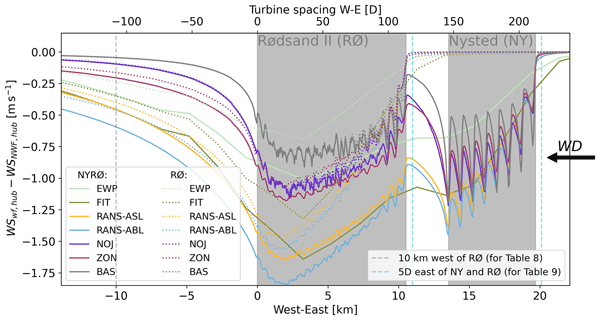
Wind turbines extract kinetic energy from the flow to create electricity. This induces a wake of reduced wind speed downstream of a turbine and consequently downstream of a wind farm. Different types of numerical models have been developed to calculate this effect. In this study, we compared models of different complexity, together with measurements over two wind farms. We found that higher-fidelity models perform better and the considered rapid models cannot fully capture the wake effect.
Anna Rutgersson, Erik Kjellström, Jari Haapala, Martin Stendel, Irina Danilovich, Martin Drews, Kirsti Jylhä, Pentti Kujala, Xiaoli Guo Larsén, Kirsten Halsnæs, Ilari Lehtonen, Anna Luomaranta, Erik Nilsson, Taru Olsson, Jani Särkkä, Laura Tuomi, and Norbert Wasmund
Earth Syst. Dynam., 13, 251–301, https://doi.org/10.5194/esd-13-251-2022, https://doi.org/10.5194/esd-13-251-2022, 2022
Short summary
Short summary
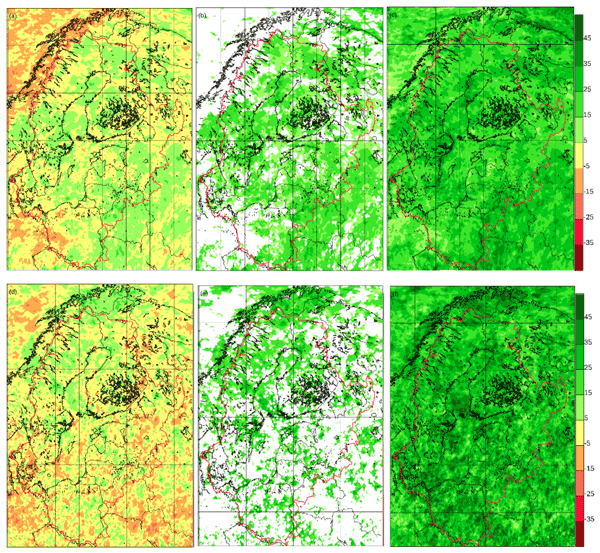
A natural hazard is a naturally occurring extreme event with a negative effect on people, society, or the environment; major events in the study area include wind storms, extreme waves, high and low sea level, ice ridging, heavy precipitation, sea-effect snowfall, river floods, heat waves, ice seasons, and drought. In the future, an increase in sea level, extreme precipitation, heat waves, and phytoplankton blooms is expected, and a decrease in cold spells and severe ice winters is anticipated.
Marcus Reckermann, Anders Omstedt, Tarmo Soomere, Juris Aigars, Naveed Akhtar, Magdalena Bełdowska, Jacek Bełdowski, Tom Cronin, Michał Czub, Margit Eero, Kari Petri Hyytiäinen, Jukka-Pekka Jalkanen, Anders Kiessling, Erik Kjellström, Karol Kuliński, Xiaoli Guo Larsén, Michelle McCrackin, H. E. Markus Meier, Sonja Oberbeckmann, Kevin Parnell, Cristian Pons-Seres de Brauwer, Anneli Poska, Jarkko Saarinen, Beata Szymczycha, Emma Undeman, Anders Wörman, and Eduardo Zorita
Earth Syst. Dynam., 13, 1–80, https://doi.org/10.5194/esd-13-1-2022, https://doi.org/10.5194/esd-13-1-2022, 2022
Short summary
Short summary
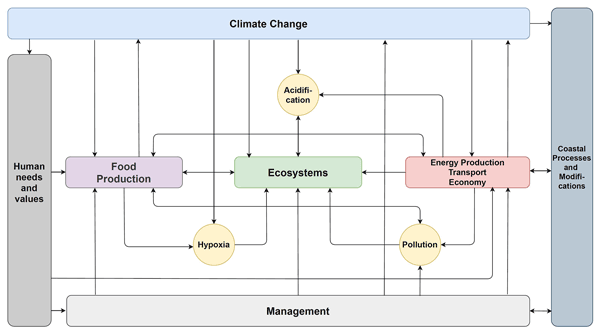
As part of the Baltic Earth Assessment Reports (BEAR), we present an inventory and discussion of different human-induced factors and processes affecting the environment of the Baltic Sea region and their interrelations. Some are naturally occurring and modified by human activities, others are completely human-induced, and they are all interrelated to different degrees. The findings from this study can largely be transferred to other comparable marginal and coastal seas in the world.
Marc Imberger, Xiaoli Guo Larsén, and Neil Davis
Adv. Geosci., 56, 77–87, https://doi.org/10.5194/adgeo-56-77-2021, https://doi.org/10.5194/adgeo-56-77-2021, 2021
Short summary
Short summary
Events like mid-latitude storms with their high winds have an impact on wind energy production and forecasting of such events is crucial. This study investigates the capabilities of a global weather prediction model MPAS and looks at how key parameters like storm intensity, arrival time and duration are represented compared to measurements and traditional methods. It is found that storm intensity is represented well while model drifts negatively influence estimation of arrival time and duration.
Cited articles
Anastasiades, G. and McSharry, P. E.: Extreme Value Analysis for Estimating 50 Year Return Wind Speeds from Reanalysis Data, Wind Energy, 17, 1231–1245, https://doi.org/10.1002/we.1630, 2014. a
Arthur, W. C.: A statistical–parametric model of tropical cyclones for hazard assessment, Nat. Hazards Earth Syst. Sci., 21, 893–916, https://doi.org/10.5194/nhess-21-893-2021, 2021. a
BIPM and IEC and IFCC and ILAC and ISO and IUPAC and IUPAP and OIML: Evaluation of Measurement Data – Guide to the Expression of Uncertainty in Measurement, Tech. Rep. JCGM 100:2008, Joint Committee for Guides in Metrology, https://doi.org/10.59161/JCGM100-2008E, 2008. a, b
Blackadar, A. K. and Tennekes, H.: Asymptotic Similarity in Neutral Barotropic Planetary Boundary Layers, J. Atmos. Sci., 25, 1015–1020, https://doi.org/10.1175/1520-0469(1968)025<1015:ASINBP>2.0.CO;2, 1968. a
Bloemendaal, N., de Moel, H., Muis, S., Haigh, I. D., and Aerts, J. C. J. H.: Estimation of Global Tropical Cyclone Wind Speed Probabilities Using the STORM Dataset, Scientific Data, 7, 377, https://doi.org/10.1038/s41597-020-00720-x, 2020a. a, b
Bloemendaal, N., Haigh, I. D., de Moel, H., Muis, S., Haarsma, R. J., and Aerts, J. C. J. H.: Generation of a Global Synthetic Tropical Cyclone Hazard Dataset Using STORM, Scientific Data, 7, 40, https://doi.org/10.1038/s41597-020-0381-2, 2020b. a, b
Cao, X., Wu, R., Jiang, X., Dai, Y., Wang, P., Lin, C., Deng, D., Sun, Y., Wu, L., Chen, S., Wang, Y., and Xiao, X.: Future Changes in Tropical Cyclone Tracks over the Western North Pacific under Climate Change, npj Climate and Atmospheric Science, 8, 148, https://doi.org/10.1038/s41612-025-01036-6, 2025. a
Chan, K. T. F. and Chan, J. C. L.: Size and Strength of Tropical Cyclones as Inferred from QuikSCAT Data, Mon. Weather Rev., 140, 811–824, https://doi.org/10.1175/MWR-D-10-05062.1, 2012. a
Chavas, D. R. and Knaff, J. A.: A Simple Model for Predicting the Tropical Cyclone Radius of Maximum Wind from Outer Size, Weather Forecast., 37, 563–579, https://doi.org/10.1175/WAF-D-21-0103.1, 2022. a, b, c
Chavas, D. R., Lin, N., and Emanuel, K.: A Model for the Complete Radial Structure of the Tropical Cyclone Wind Field. Part I: Comparison with Observed Structure, J. Atmos. Sci., 72, 3647–3662, https://doi.org/10.1175/JAS-D-15-0014.1, 2015. a
Chen, C.-H. and Su, N.-J.: Global Trends and Characteristics of Offshore Wind Farm Research over the Past Three Decades: A Bibliometric Analysis, Journal of Marine Science and Engineering, 10, 1339, https://doi.org/10.3390/jmse10101339, 2022. a
Díaz, H. and Guedes Soares, C.: Review of the Current Status, Technology and Future Trends of Offshore Wind Farms, Ocean Eng., 209, 107381, https://doi.org/10.1016/j.oceaneng.2020.107381, 2020. a
Dykes, K., Ning, A., King, R., Graf, P., Scott, G., and Veers, P. S.: Sensitivity Analysis of Wind Plant Performance to Key Turbine Design Parameters: A Systems Engineering Approach, in: 32nd ASME Wind Energy Symposium, American Institute of Aeronautics and Astronautics, National Harbor, Maryland, ISBN 978-1-62410-313-1, https://doi.org/10.2514/6.2014-1087, 2014. a
Fang, P., Ye, G., and Yu, H.: A Parametric Wind Field Model and Its Application in Simulating Historical Typhoons in the Western North Pacific Ocean, J. Wind Eng. Ind. Aerod., 199, 104131, https://doi.org/10.1016/j.jweia.2020.104131, 2020. a
Fei, R., Xu, J., Wang, Y., and Yang, C.: Factors Affecting the Weakening Rate of Tropical Cyclones over the Western North Pacific, Mon. Weather Rev., 148, 3693–3712, https://doi.org/10.1175/MWR-D-19-0356.1, 2020. a
Figa-Saldaña, J., Wilson, J. J. W., Attema, E., Gelsthorpe, R., Drinkwater, M. R., and Stoffelen, A.: The advanced scatterometer (ASCAT) on the meteorological operational (MetOp) platform: A follow on for European wind scatterometers, Can. J. Remote Sens., 28, 404–412, https://doi.org/10.5589/m02-035, 2002. a
Franklin, J. L., Black, M. L., and Valde, K.: GPS Dropwindsonde Wind Profiles in Hurricanes and Their Operational Implications, Weather Forecast., 18, 32–44, https://doi.org/10.1175/1520-0434(2003)018<0032:GDWPIH>2.0.CO;2, 2003. a
Gahtan, J., Knapp, K. R., Schreck, C. J. I., Diamond, H. J., Kossin, J. P., and Kruk, M. C.: International Best Track Archive for Climate Stewardship (IBTrACS) Project, Version 4.01, NOAA National Centers for Environmental Information [data set], https://doi.org/10.25921/82ty-9e16, 2024. a, b
Gandoin, R. and Garza, J.: Underestimation of strong wind speeds offshore in ERA5: evidence, discussion and correction, Wind Energ. Sci., 9, 1727–1745, https://doi.org/10.5194/wes-9-1727-2024, 2024. a
Guo, J., Wang, S., He, X., Song, J., Fu, Y., and Cai, Y.: Interannual Characteristics of Tropical Cyclones in Northwestern Pacific Region in Context of Warm Pool and Monsoon Troughs, Journal of Marine Science and Engineering, 13, 334, https://doi.org/10.3390/jmse13020334, 2025. a
He, Y., Fu, J., Chan, P. W., Li, Q., Shu, Z., and Zhou, K.: Reduced Sea-Surface Roughness Length at a Coastal Site, Atmosphere, 12, 991, https://doi.org/10.3390/atmos12080991, 2021. a
Hoffman, R. N. and Leidner, S. M.: An Introduction to the Near–Real–Time QuikSCAT Data, Weather Forecast., 20, 476–493, https://doi.org/10.1175/WAF841.1, 2005. a
Holland, G. J.: An Analytic Model of the Wind and Pressure Profiles in Hurricanes, Mon. Weather Rev., 108, 1212–1218, https://doi.org/10.1175/1520-0493(1980)108<1212:AAMOTW>2.0.CO;2, 1980. a, b, c
Hu, X., Fang, G., Yang, J., Zhao, L., and Ge, Y.: Simplified Models for Uncertainty Quantification of Extreme Events Using Monte Carlo Technique, Reliab. Eng. Syst. Safe., 230, 108935, https://doi.org/10.1016/j.ress.2022.108935, 2023. a
IBTrACS Science Team: International Best Track Archive for Climate Stewardship (IBTrACS): Technical Documentation (Version 04r01), Tech. rep., NOAA National Centers for Environmental Information, https://www.ncei.noaa.gov/sites/default/files/2025-04/IBTrACS_version4r01_Technical_Details.pdf (last access: 1 September 2025), 2025. a, b
Ishihara, T. and Yamaguchi, A.: Prediction of the Extreme Wind Speed in the Mixed Climate Region by Using Monte Carlo Simulation and Measure–Correlate–Predict Method, Wind Energy, 18, 171–186, https://doi.org/10.1002/we.1693, 2015. a
Kishtawal, C. M.: Use of Satellite Observations in Tropical Cyclone Studies, in: Advanced Numerical Modeling and Data Assimilation Techniques for Tropical Cyclone Prediction, edited by Mohanty, U. C. and Gopalakrishnan, S. G., 35–47, Springer Netherlands, Dordrecht, ISBN 978-94-024-0896-6, https://doi.org/10.5822/978-94-024-0896-6_2, 2016. a
Knaff, J. A., Sampson, C. R., Kucas, M. E., Slocum, C. J., Brennan, M. J., Meissner, T., Ricciardulli, L., Mouche, A., Reul, N., Morris, M., Chirokova, G., and Caroff, P.: Estimating Tropical Cyclone Surface Winds: Current Status, Emerging Technologies, Historical Evolution, and a Look to the Future, Tropical Cyclone Research and Review, 10, 125–150, https://doi.org/10.1016/j.tcrr.2021.09.002, 2021. a
Knapp, K. R., Kruk, M. C., Levinson, D. H., Diamond, H. J., and Neumann, C. J.: The International Best Track Archive for Climate Stewardship (IBTrACS): Unifying Tropical Cyclone Data, B. Am. Meteorol. Soc., 91, 363–376, https://doi.org/10.1175/2009BAMS2755.1, 2010. a, b, c
Kossin, J. P.: Validating Atmospheric Reanalysis Data Using Tropical Cyclones as Thermometers, B. Am. Meteorol. Soc., 96, 1089–1096, https://doi.org/10.1175/BAMS-D-14-00180.1, 2015. a
Kossin, J. P.: A Global Slowdown of Tropical-Cyclone Translation Speed, Nature, 558, 104–107, https://doi.org/10.1038/s41586-018-0158-3, 2018. a
Landsea, C. W. and Franklin, J. L.: Atlantic Hurricane Database Uncertainty and Presentation of a New Database Format, Mon. Weather Rev., 141, 3576–3592, https://doi.org/10.1175/MWR-D-12-00254.1, 2013. a, b
Larsén, X. G., Mann, J., Rathmann, O., and Jørgensen, H. E.: Uncertainties of the 50-year wind from short time series using generalized extreme value distribution and generalized Pareto distribution, Wind Energy, 18, 59–74, https://doi.org/10.1002/we.1683, 2015. a, b
Li, J., Tian, Q., Shen, Z., Xu, Y., Yan, Z., Li, M., Zhu, C., Xue, J., Lin, Z., Yang, Y., and Zeng, L.: Fidelity of Global Tropical Cyclone Activity in a New Reanalysis Dataset (CRA40), Meteorol. Appl., 31, e70009, https://doi.org/10.1002/met.70009, 2024. a
Liu, G., Jiang, S., Zheng, M., Lin, S., Kong, Y., and Zhan, P.: A Global ERA5-based Tropical Cyclone Wind Field Dataset Enhanced by Integrated Parametric Correction Methods, Scientific Data, 12, 1429, https://doi.org/10.1038/s41597-025-05789-w, 2025. a
Locatelli, T., Tarantola, S., Gardiner, B., and Patenaude, G.: Variance-Based Sensitivity Analysis of a Wind Risk Model – Model Behaviour and Lessons for Forest Modelling, Environ. Modell. Softw., 87, 84–109, https://doi.org/10.1016/j.envsoft.2016.10.010, 2017. a
Mavromatis, T.: Evaluation of Reanalysis Data in Meteorological and Climatological Applications: Spatial and Temporal Considerations, Water, 14, 2769, https://doi.org/10.3390/w14172769, 2022. a
Metropolis, N. and Ulam, S.: The Monte Carlo Method, J. Am. Stat. Assoc., 44, 335–341, https://doi.org/10.2307/2280232, 1949. a
Morin, G., Boudreault, M., and García-Franco, J. L.: A Global Multi-Source Tropical Cyclone Precipitation (MSTCP) Dataset, Sci. Data, 11, 609, https://doi.org/10.1038/s41597-024-03395-w, 2024. a
Mortlock, T. R., Metters, D., Soderholm, J., Maher, J., Lee, S. B., Boughton, G., Stewart, N., Zavadil, E., and Goodwin, I. D.: Extreme water levels, waves and coastal impacts during a severe tropical cyclone in northeastern Australia: a case study for cross-sector data sharing, Nat. Hazards Earth Syst. Sci., 18, 2603–2623, https://doi.org/10.5194/nhess-18-2603-2018, 2018. a
Park, D.-S. R., Ho, C.-H., Kim, J.-H., and Kim, H.-S.: Spatially Inhomogeneous Trends of Tropical Cyclone Intensity over the Western North Pacific for 1977–2010, J. Climate, 26, 5088–5101, https://doi.org/10.1175/JCLI-D-12-00386.1, 2013. a
Powell, M. D. and Reinhold, T. A.: Tropical Cyclone Destructive Potential by Integrated Kinetic Energy, B. Am. Meteorol. Soc., 88, 513–526, https://doi.org/10.1175/BAMS-88-4-513, 2007. a
Pérez-Alarcón, A., Sorí, R., Fernández-Alvarez, J. C., Nieto, R., and Gimeno, L.: Comparative climatology of outer tropical cyclone size using radial wind profiles, Weather and Climate Extremes, 33, https://doi.org/10.1016/j.wace.2021.100366, 2021. a, b
Rossby, C.-G. and Montgomery, R. B.: The Layer of Frictional Influence in Wind and Ocean Currents, Physics of Fluids, https://hdl.handle.net/1912/1157 (last access: 29 July 2025), 1935. a
Schreck, C. J., Knapp, K. R., and Kossin, J. P.: The Impact of Best Track Discrepancies on Global Tropical Cyclone Climatologies Using IBTrACS, Mon. Weather Rev., 142, 3881–3899, https://doi.org/10.1175/MWR-D-14-00021.1, 2014. a
Sobol, I. M.: Global Sensitivity Indices for Nonlinear Mathematical Models and Their Monte Carlo Estimates, Math. Comput. Simulat., 55, 271–280, https://doi.org/10.1016/S0378-4754(00)00270-6, 2001. a
Taylor, J. R.: An introduction to error analysis: the study of uncertainties in physical measurements, second edn., University Science Books, Sausalito, California, ISBN 0-935702-42-3, 1997. a
Thapa, M. and Missoum, S.: Uncertainty Quantification and Global Sensitivity Analysis of Composite Wind Turbine Blades, Reliab. Eng. Syst. Safe., 222, 108354, https://doi.org/10.1016/j.ress.2022.108354, 2022. a
Troen, I. and Petersen, E. L.: European Wind Atlas, Risø National Laboratory, Roskilde, ISBN 978-87-550-1482-4, 1989. a
Tsvetkova, O. and Ouarda, T. B. M. J.: Quasi-Monte Carlo Technique in Global Sensitivity Analysis of Wind Resource Assessment with a Study on UAE, J. Renew. Sustain. Ener., 11, 053303, https://doi.org/10.1063/1.5120035, 2019. a
Vickery, P. J. and Wadhera, D.: Statistical Models of Holland Pressure Profile Parameter and Radius to Maximum Winds of Hurricanes from Flight-Level Pressure and H*Wind Data, J. Appl. Meteorol. Clim., 47, 2497–2517, https://doi.org/10.1175/2008JAMC1837.1, 2008. a, b, c
Vickery, P. J., Wadhera, D., Twisdale, L. A., and Lavelle, F. M.: U.S. Hurricane Wind Speed Risk and Uncertainty, J. Struct. Eng., 135, 301–320, https://doi.org/10.1061/(ASCE)0733-9445(2009)135:3(301), 2009. a, b
Wagner, W., Hahn, S., Kidd, R., Melzer, T., Bartalis, Z., Hasenauer, S., Figa-Saldaña, J., de Rosnay, P., Jann, A., Schneider, S., Komma, J., Kubu, G., Brugger, K., Aubrecht, C., Züger, J., Gangkofner, U., Kienberger, S., Brocca, L., Wang, Y., Blöschl, G., Eitzinger, J., and Steinnocher, K.: The ASCAT Soil Moisture Product: A Review of its Specifications, Validation Results, and Emerging Applications, Meteorol. Z., 22, 5–33, https://doi.org/10.1127/0941-2948/2013/0399, 2013. a, b
Wang, Y., Wu, X., Jiang, L., Zheng, F., and Brune, S.: Editorial: Recent Advances in Climate Reanalysis, Frontiers in Climate, 5, https://doi.org/10.3389/fclim.2023.1158244, 2023. a
Weatherford, C. L. and Gray, W. M.: Typhoon Structure as Revealed by Aircraft Reconnaissance. Part II: Structural Variability, Mon. Weather Rev., 116, 1044–1056, https://doi.org/10.1175/1520-0493(1988)116<1044:TSARBA>2.0.CO;2, 1988. a
Wei, M., Fang, G., Zhao, L., Wang, Z., Wang, J., Cao, S., and Ge, Y.: Comparative Study of Typhoon Wind Hazard Estimation in Coastal Region of China Using Different Wind Field Parameter Models, J. Wind Eng. Ind. Aerod., 236, 105398, https://doi.org/10.1016/j.jweia.2023.105398, 2023. a
Willoughby, H. E. and Rahn, M. E.: Parametric Representation of the Primary Hurricane Vortex. Part I: Observations and Evaluation of the Holland (1980) Model, Mon. Weather Rev., 132, 3033–3048, https://doi.org/10.1175/MWR2831.1, 2004. a
Xu, Z., Guo, J., Zhang, G., Ye, Y., Zhao, H., and Chen, H.: Global tropical cyclone size and intensity reconstruction dataset for 1959–2022 based on IBTrACS and ERA5 data, Earth Syst. Sci. Data, 16, 5753–5766, https://doi.org/10.5194/essd-16-5753-2024, 2024. a
Yasui, H., Ohkuma, T., Marukawa, H., and Katagiri, J.: Study on Evaluation Time in Typhoon Simulation Based on Monte Carlo Method, J. Wind Eng. Ind. Aerod., 90, 1529–1540, https://doi.org/10.1016/S0167-6105(02)00268-4, 2002. a
Short summary
This study presents a method to estimate wind speeds that could occur in a 50-year period. The 50-year wind speed is calculated for three regions: Taiwan, Japan, and the east coast of the US. The method performs well in Taiwan and Japan, which can be attributed to the large dataset size located in a limited spatial area. The east coast of the US performs less well due to the smaller dataset size and wider spatial region that they cover.
This study presents a method to estimate wind speeds that could occur in a 50-year period. The...


Altmetrics
Final-revised paper
Preprint