
Articles | Volume 11, issue 7
https://doi.org/10.5194/wes-11-2521-2026
© Author(s) 2026. This work is distributed under
the Creative Commons Attribution 4.0 License.
the Creative Commons Attribution 4.0 License.
https://doi.org/10.5194/wes-11-2521-2026
© Author(s) 2026. This work is distributed under
the Creative Commons Attribution 4.0 License.
the Creative Commons Attribution 4.0 License.
Research article
| 
21 Jul 2026
Research article |
| 21 Jul 2026
| 21 Jul 2026
Extreme wind speeds in tropical cyclones using parametric models
Paul Renaud
CORRESPONDING AUTHOR
France Energies Marines, 29280 Plouzané, France
Léo Vinour
France Energies Marines, 29280 Plouzané, France
Univ Brest, Ifremer, CNRS, IRD, LOPS, 29280 Plouzané, France
Faculty of Environmental Earth Science, Hokkaido University, Sapporo, Japan
Fabien Leckler
France Energies Marines, 29280 Plouzané, France
Shogo Uchiyama
RWE Renewables Japan, Tokyo, Japan
Jean-François Filipot
France Energies Marines, 29280 Plouzané, France
Related authors
Anindita Patra, Boutheina Oueslati, Tessa Chevallier, Paul Renaud, Youen Kervella, and Laurent Dubus
Adv. Sci. Res., 22, 69–85, https://doi.org/10.5194/asr-22-69-2025, https://doi.org/10.5194/asr-22-69-2025, 2025
Short summary
Short summary
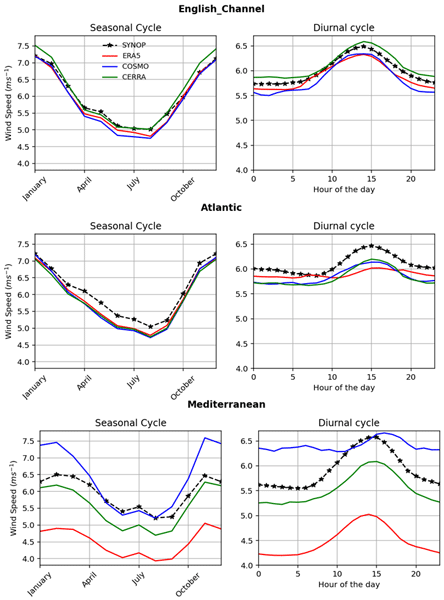
In this study, the quality of 10 and 100 m wind speeds from three different reanalyses (global and regional) are evaluated along the different coasts of France. The evaluation show that Copernicus Regional Reanalysis for Europe (CERRA) has a high skill for surface wind speed on the three French seafronts, as well as for offshore wind speed at 100 m. Thus, CERRA appears to be the optimal reanalysis to use as a reference for offshore wind studies over the French maritime zone.
Anindita Patra, Boutheina Oueslati, Tessa Chevallier, Paul Renaud, Youen Kervella, and Laurent Dubus
Adv. Sci. Res., 22, 69–85, https://doi.org/10.5194/asr-22-69-2025, https://doi.org/10.5194/asr-22-69-2025, 2025
Short summary
Short summary
In this study, the quality of 10 and 100 m wind speeds from three different reanalyses (global and regional) are evaluated along the different coasts of France. The evaluation show that Copernicus Regional Reanalysis for Europe (CERRA) has a high skill for surface wind speed on the three French seafronts, as well as for offshore wind speed at 100 m. Thus, CERRA appears to be the optimal reanalysis to use as a reference for offshore wind studies over the French maritime zone.
Léo Seyfried, Laurie Biscara, Héloïse Michaud, Fabien Leckler, Audrey Pasquet, Marc Pezerat, and Clément Gicquel
Earth Syst. Sci. Data, 16, 3345–3367, https://doi.org/10.5194/essd-16-3345-2024, https://doi.org/10.5194/essd-16-3345-2024, 2024
Short summary
Short summary
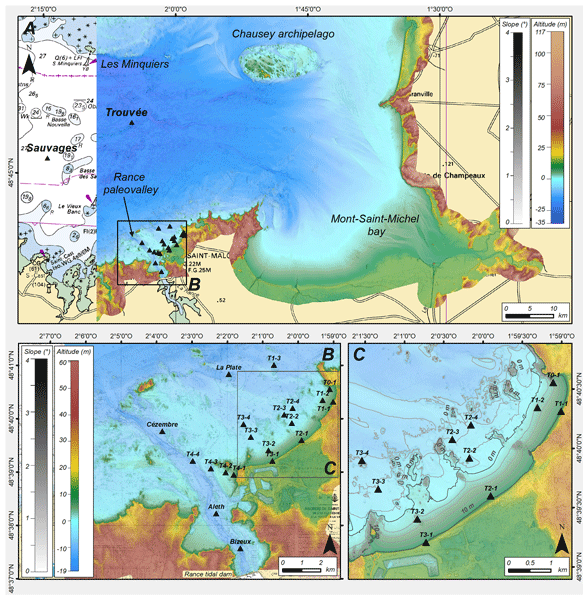
In Saint-Malo, France, an initiative to enhance marine submersion prevention began in 2018. Shom conducted an extensive sea campaign, mapping the bay's topography and exploring coastal processes. High-resolution data improve knowledge of the interactions between waves, tide and surge and determine processes responsible for submersion. Beyond science, these findings contribute crucially to a local warning system, providing a tangible solution to protect the community from coastal threats.
Léo Seyfried, Laurie Biscara, Fabien Leckler, Audrey Pasquet, and Héloise Michaud
Earth Syst. Sci. Data Discuss., https://doi.org/10.5194/essd-2021-316, https://doi.org/10.5194/essd-2021-316, 2021
Manuscript not accepted for further review
Short summary
Short summary
The French Flooding Prevention Action Program of Saint-Malo focuses on improving the knowledge of coastal flooding risks. The proposed approach is to use in-situ data collection. Bathymetric and oceanographic measurement campaigns were conducted during the winter of 2018–2019. Topo-bathymetric and oceanographic datasets have been built from these measurement campaigns. These data allow the development and validation of numerical models to improve the prediction of coastal flooding risks.
Cited articles
Avenas, A., Mouche, A., Tandeo, P., Piolle, J.-F., Chavas, D., Fablet, R., Knaff, J., and Chapron, B.: Reexamining the estimation of tropical cyclone radius of maximum wind from outer size with an extensive synthetic aperture radar dataset, Mon. Weather Rev., 151, 3169–3189, https://doi.org/10.1175/MWR-D-23-0119.1, 2023. a, b, c
Bell, M. M., Montgomery, M. T., and Emanuel, K. A.: Air–sea enthalpy and momentum exchange at major hurricane wind speeds observed during CBLAST, J. Atmos. Sci., 69, 3197–3222, https://doi.org/10.1175/JAS-D-11-0276.1, 2012. a
Biswas, M.: Hurricane Weather Research and Forecasting (HWRF) Model: 2018 Scientific Documentation, https://dtcenter.org/sites/default/files/community-code/hwrf/docs/scientific_documents/HWRFv4.0a_ScientificDoc.pdf (last access: 9 July 2026), 2018. a
Bloemendaal, N., Haigh, I., Moel, H., Muis, S., Haarsma, R., and Aerts, J.: Generation of a global synthetic tropical cyclone hazard dataset using STORM, Scientific Data, 7, 40, https://doi.org/10.1038/s41597-020-0381-2, 2020. a, b
Bouin, M.-N., Lebeaupin Brossier, C., Malardel, S., Voldoire, A., and Sauvage, C.: The wave-age-dependent stress parameterisation (WASP) for momentum and heat turbulent fluxes at sea in SURFEX v8.1, Geosci. Model Dev., 17, 117–141, https://doi.org/10.5194/gmd-17-117-2024, 2024. a, b, c
British Standards Institution: Eurocode 1: Actions on Structures – General Actions – Part 1–4: Wind Actions, European Committee for Standardization, Brussels, Belgium, https://www.phd.eng.br/wp-content/uploads/2015/12/en.1991.1.4.2005.pdf (last access: 9 July 2026), 2005. a
Bryant, M. and Akbar, M.: An exploration of wind stress calculation techniques in hurricane storm surge modeling, Journal of Marine Science and Engineering, 4, https://doi.org/10.3390/jmse4030058, 2016. a
Buchhorn, M., Smets, B., Bertels, L., Roo, B. D., Lesiv, M., Tsendbazar, N.-E., Herold, M., and Fritz, S.: Copernicus Global Land Service: Land Cover 100m: collection 3: epoch 2019: Globe, Zenodo [code], https://doi.org/10.5281/zenodo.3939050, 2020. a
Chavas, D. and Knaff, J. A.: A simple model for predicting the tropical cyclone radius of maximum wind from outer size, Weather Forecast., 37, 563–579, https://doi.org/10.1175/WAF-D-21-0103.1, 2022. a, b, c, d
Copernicus Climate Change Service, Climate Data Store: ERA5 hourly data on single levels from 1940 to present, Copernicus Climate Change Service (C3S) Climate Data Store (CDS) [data set], https://doi.org/10.24381/cds.adbb2d47, 2023. a
Emanuel, K.: Response of global tropical cyclone activity to increasing CO2: results from downscaling CMIP6 models, J. Climate, 34, 57–70, https://doi.org/10.1175/JCLI-D-20-0367.1, 2021. a
Emanuel, K., Ravela, S., Vivant, E., and Risi, C.: A statistical deterministic approach to hurricane risk assessment, B. Am. Meteorol. Soc., 87, 299–314, https://doi.org/10.1175/BAMS-87-3-299, 2006. a
Escalera, M., Griffith, D., Qin, C., Loth, E., and Johnson, N.: Rapid approach for structural design of the tower and monopile for a series of 25 MW offshore turbines, J. Phys. Conf. Ser., 2265, 10, https://doi.org/10.1088/1742-6596/2265/3/032030, 2022. a, b
Fairall, C. W., Bradley, E. F., Hare, J. E., Grachev, A. A., and Edson, J. B.: Bulk parameterization of air–sea fluxes: updates and verification for the COARE algorithm, J. Climate, 16, 571–591, https://doi.org/10.1175/1520-0442(2003)016<0571:BPOASF>2.0.CO;2, 2003. a
Gahtan, J., Knapp, K. R., Schreck, C. J., Diamond, H. J., Kossin, J. P., and Kruk, M. C.: International Best Track Archive for Climate Stewardship (IBTrACS) Project, Version 4r01. Subset: ALL, NOAA National Centers for Environmental Information, [data set], https://doi.org/10.25921/82ty-9e16, 2024. a, b
Giammanco, I., Schroeder, J., and Powell, M.: Observed characteristics of tropical cyclone vertical wind profiles, Wind and Structures An International Journal, 15, 65–86, https://doi.org/10.12989/was.2012.15.1.065, 2012. a
Grossmann-Matheson, G., Young, I., Alves, J.-H., and Meucci, A.: Development and validation of a parametric tropical cyclone wave height prediction model, Ocean Eng., 283, 115353, https://doi.org/10.1016/j.oceaneng.2023.115353, 2023. a
Harper, B., Kepert, J., and Ginger, J.: Guidelines for Converting Between Various Wind Averaging Periods in Tropical Cyclone Conditions, WMO/TD-No. 1555, World Meteorological Organization, https://www.systemsengineeringaustralia.com.au/download/WMO_TC_Wind_Averaging_27_Aug_2010.pdf (last access: 9 July 2026), 2010. a, b
Hersbach, H., Bell, B., Berrisford, P., Biavati, G., Horányi, A., Muñoz Sabater, J., Nicolas, J., Peubey, C., Radu, R., Rozum, I., Schepers, D., Simmons, A., Soci, C., Dee, D., and Thépaut, J.-N.: ERA5 hourly data on single levels from 1940 to present, Copernicus Climate Change Service (C3S) Climate Data Store (CDS) [data set], https://doi.org/10.24381/cds.adbb2d47, 2023. a
Holthuijsen, L., Powell, M., and Pietrzak, J.: Wind and waves in extreme hurricanes, J. Geophys. Res., 117, https://doi.org/10.1029/2012JC007983, 2012. a
Hsu, J.-H., Lien, R.-C.and D'Asaro, E., and Sanford, T.: Estimates of surface wind stress and drag coefficients in typhoon Megi, J. Phys. Oceanogr., 47, https://doi.org/10.1175/JPO-D-16-0069.1, 2017. a
Hsu, L.-H., Su, S.-H., Fovell, R. G., and Kuo, H.-C.: On typhoon track deflections near the east coast of Taiwan, Mon. Weather Rev., 146, 1495–1510, https://doi.org/10.1175/MWR-D-17-0208.1, 2018. a
Hsu, S. A., Meindl, E. A., and Gilhousen, D. B.: Determining the power-law wind-profile exponent under near-neutral stability conditions at sea, J. Appl. Meteorol., 33, 757–765, 1994. a
Ishihara, T. and Hibi, K.: Numerical study of turbulent wake flow behind a three-dimensional steep hill, Wind Struct., 5, 317–328, 2002. a
Ishihara, T., Siang, K., Leong, C., and Fujino, Y.: Wind field model and mixed probability distribution function for typhoon simulation, in: The Sixth Asia-Pacific Conference on Wind Engineering (APCWE-VI), Seoul, Korea, 412–426, https://windeng.t.u-tokyo.ac.jp/ishihara/paper/2005-6.pdf (last access: 9 July 2026), 2005. a, b
Kapoor, A., Ouakka, S., Arwade, S. R., Lundquist, J. K., Lackner, M. A., Myers, A. T., Worsnop, R. P., and Bryan, G. H.: Hurricane eyewall winds and structural response of wind turbines, Wind Energ. Sci., 5, 89–104, https://doi.org/10.5194/wes-5-89-2020, 2020. a
Kim, G. Y. and Lee, S.: Prediction of extreme wind by stochastic typhoon model considering climate change, J. Wind Eng. Ind. Aerod., 192, 17–30, https://doi.org/10.1016/j.jweia.2019.05.003, 2019. a
Knapp, K. R., Kruk, M. C., Levinson, D. H., Diamond, H. J., and Neumann, C. J.: The International Best Track Archive for Climate Stewardship (IBTrACS): unifying tropical cyclone data, B. Am. Meteorol. Soc., 91, 363–376, https://doi.org/10.1175/2009BAMS2755.1, 2010. a, b
Knutson, T., Camargo, S. J., Chan, J. C. L., Emanuel, K., Ho, C.-H., Kossin, J., Mohapatra, M., Satoh, M., Sugi, M., Walsh, K., and Wu, L.: Tropical cyclones and climate change assessment: Part II: Projected response to anthropogenic warming, B. Am. Meteorol. Soc., 101, E303–E322, https://doi.org/10.1175/BAMS-D-18-0194.1, 2020. a
Larsén, X. G. and Ott, S.: Adjusted spectral correction method for calculating extreme winds in tropical-cyclone-affected water areas, Wind Energ. Sci., 7, 2457–2468, https://doi.org/10.5194/wes-7-2457-2022, 2022. a, b, c
Liu, G., Jiang, S., Zheng, M., Lin, S., Kong, Y., and Zhan, P.: A Global ERA5-based tropical cyclone wind field dataset enhanced by integrated parametric correction methods, Sci. Data, 12, https://doi.org/10.1038/s41597-025-05789-w, 2025. a
Ma, X., Chen, Y., Yi, W., and Wang, Z.: Prediction of extreme wind speed for offshore wind farms considering parametrization of surface roughness, Energies, 14, https://doi.org/10.3390/en14041033, 2021. a, b
Meissner, T., Ricciardulli, L., and Wentz, F. J.: Capability of the SMAP mission to measure ocean surface winds in storms, B. Am. Meteorol. Soc., 98, 1660–1677, https://doi.org/10.1175/BAMS-D-16-0052.1, 2017. a
Meng, Y., Matsui, M., and Hibi, K.: An analytical model for simulation of the wind field in a typhoon boundary layer, J. Wind Eng. Ind. Aerod., 56, 291–310, https://doi.org/10.1016/0167-6105(94)00014-5, 1995. a
Meng, Y., Matsui, M., and Hibi, K.: A numerical study of the wind field in a typhoon boundary layer, J. Wind Eng. Ind. Aerod., 67–68, 437–448, https://doi.org/10.1016/S0167-6105(97)00092-5, 1997. a, b
Mouche, A., Chapron, B., Knaff, J., Zhao, Y., Zhang, B., and Combot, C.: Copolarized and cross-polarized SAR measurements for high-resolution description of major hurricane wind structures: application to irma category 5 hurricane, J. Geophys. Res.-Oceans, 124, 3905–3922, https://doi.org/10.1029/2019JC015056, 2019. a
Mudd, L. A. and Vickery, P. J.: Gulf of Mexico hurricane hazard assessment for offshore wind energy sites, Wind Energ. Sci., 10, 2685–2703, https://doi.org/10.5194/wes-10-2685-2025, 2025. a
Müller, S., Larsén, X. G., and Verelst, D. R.: Tropical cyclone low-level wind speed, shear, and veer: sensitivity to the boundary layer parametrization in the Weather Research and Forecasting model, Wind Energ. Sci., 9, 1153–1171, https://doi.org/10.5194/wes-9-1153-2024, 2024a. a, b, c, d
Müller, S., Larsén, X., and Verelst, D.: Enhanced shear and veer in the Taiwan Strait during typhoon passage, J. Phys. Conf. Ser., 2767, 092030, https://doi.org/10.1088/1742-6596/2767/9/092030, 2024b. a, b
Olfateh, M., Callaghan, D. P., Nielsen, P., and Baldock, T. E.: Tropical cyclone wind field asymmetry – development and evaluation of a new parametric model, J. Geophys. Res.-Oceans, 122, 458–469, https://doi.org/10.1002/2016JC012237, 2017. a, b, c
Ott, S.: Extreme winds in the western North Pacific, Tech. Rep. Risoe-R-1544(EN), Risø National Laboratory, Roskilde, Denmark, ISBN 87-550-3500-0, https://orbit.dtu.dk/en/publications/extreme-winds-in-the-western-north-pacific (last access: 9 July 2026), 2005. a
Powell, M. D., Uhlhorn, E. W., and Kepert, J. D.: Estimating maximum surface winds from hurricane reconnaissance measurements, Weather Forecast., 24, 868–883, https://doi.org/10.1175/2008WAF2007087.1, 2009. a
Reul, N., Chapron, B., Zabolotskikh, E., Donlon, C., Mouche, A., Tenerelli, J., Collard, F., Piolle, J. F., Fore, A., Yueh, S., Cotton, J., Francis, P., Quilfen, Y., and Kudryavtsev, V.: A new generation of tropical cyclone size measurements from space, B. Am. Meteorol. Soc., 98, 2367–2385, https://doi.org/10.1175/BAMS-D-15-00291.1, 2017. a
Schloemer, R.: Analysis and synthesis of hurricane wind patterns over, Lake Okeechobee, Florida, Tech. rep., Hydrometeorogical Report, No. 31, NTIS Accession Number PB95-230827, National Oceanic and Atmospheric Administration, https://ntrl.ntis.gov/NTRL/dashboard/searchResults/titleDetail/PB95230827.xhtml (last access: 9 July 2026), 1954. a, b, c
Simpson, R. H. and Saffir, H.: The hurricane disaster-potential scale, Weatherwise, 27, 169–186, https://doi.org/10.1080/00431672.1974.9931702, 1974. a
Skamarock, W. C., Klemp, J. B., Dudhia, J., Gill, D. O., Barker, D. M., Duda, M. G., Huang, X.-Y., Wang, W., and Powers, J. G.: A Description of the Advanced Research WRF Model Version 4, Tech. Rep. NCAR/TN-556+STR, National Center for Atmospheric Research, nCAR Technical Note, https://doi.org/10.5065/1DFH-6P97, 2019. a
Tamizi, A., Young, I. R., Ribal, A., and Alves, J.-H.: Global scatterometer observations of the structure of tropical cyclone wind fields, Mon. Weather Rev., 148, 4673–4692, https://doi.org/10.1175/MWR-D-20-0196.1, 2020. a
Tan, C. and Fang, W.: Mapping the wind hazard of global tropical cyclones with parametric wind field models by considering the effects of local factors, Int. J. Disast. Risk. Sc., 9, https://doi.org/10.1007/s13753-018-0161-1, 2018. a
Tang, C. K. and Chan, J. C. L.: Idealized simulations of the effect of Taiwan topography on the tracks of tropical cyclones with different steering flow strengths, Q. J. Roy. Meteor. Soc., 142, 3211–3221, https://doi.org/10.1002/qj.2902, 2016. a
Türk, M., Grigutsch, K., and Emeis, S.: The wind profile above the sea-investigations basing on four years of FINO 1 data, DEWI Magazine, 33, 12–16, 2008. a
Vickery, P. J. and Twisdale, L. A.: Prediction of hurricane wind speeds in the United States, J. Struct. Eng., 121, 1691–1699, https://doi.org/10.1061/(ASCE)0733-9445(1995)121:11(1691), 1995. a, b
Vickery, P. J., Skerlj, P. F., and Twisdale, L. A.: Simulation of hurricane risk in the U.S. using empirical track model, J. Struct. Eng., 126, 1222–1237, https://doi.org/10.1061/(ASCE)0733-9445(2000)126:10(1222), 2000. a
Vickery, P. J., Wadhera, D., Powell, M. D., and Chen, Y.: A hurricane boundary layer and wind field model for use in engineering applications, J. Appl. Meteorol., 48, 381–405, https://doi.org/10.1175/2008JAMC1841.1, 2009. a, b
Wang, J., Tse, K., Li, S., and Fung, J.: Prediction of the typhoon wind field in Hong Kong: integrating the effects of climate change using the shared socioeconomic pathways, Clim. Dynam., 59, https://doi.org/10.1007/s00382-022-06211-6, 2022. a
Willoughby, H. E. and Rahn, M. E.: Parametric representation of the primary hurricane vortex. Part I: Observations and evaluation of the Holland (1980) model, Mon. Weather Rev., 132, 3033–3048, https://doi.org/10.1175/MWR2831.1, 2004. a
Wu, C.-C., Li, T.-H., and Huang, Y.-H.: Influence of mesoscale topography on tropical cyclone tracks: further examination of the channeling effect, J. Atmos. Sci., 72, 3032–3050, https://doi.org/10.1175/JAS-D-14-0168.1, 2015. a
Xu, Z., Guo, J., Zhang, G., Ye, Y., Zhao, H., and Chen, H.: Global tropical cyclone size and intensity reconstruction dataset for 1959–2022 based on IBTrACS and ERA5 data, Earth Syst. Sci. Data, 16, 5753–5766, https://doi.org/10.5194/essd-16-5753-2024, 2024. a
Yamaguchi, A., Solomon, M., and Ishihara, T.: An effect of the averaging time on maximum mean wind speeds during tropical cyclone, in: The European Wind Energy Conference and Exhibition 2012, https://windeng.t.u-tokyo.ac.jp/ishihara/proceedings/2012-3_paper.pdf (last access: 9 July 2026), 2012. a
Yan, B., Li, Q., Chan, P., He, Y., and Shu, Z.: Characterising wind shear exponents in the offshore area using lidar measurements, Appl. Ocean Res., 127, 103293, https://doi.org/10.1016/j.apor.2022.103293, 2022. a
Yan, D. and Zhang, T.: Research progress on tropical cyclone parametric wind field models and their application, Regional Studies in Marine Science, 51, 102207, https://doi.org/10.1016/j.rsma.2022.102207, 2022. a
Yasui, H., Ohkuma, T., Marukawa, H., and Katagiri, J.: Study on evaluation time in typhoon simulation based on Monte Carlo method, J. Wind Eng. Ind. Aerod., 90, 1529–1540, https://doi.org/10.1016/S0167-6105(02)00268-4, 2002. a, b
Zhang, J. A. and Uhlhorn, E. W.: Hurricane sea surface inflow angle and an observation-based parametric model, Mon. Weather Rev., 140, 3587–3605, https://doi.org/10.1175/MWR-D-11-00339.1, 2012. a
Zijlema, M. and van der Westhuysen, A. J.: On convergence behaviour and numerical accuracy in stationary SWAN simulations of nearshore wind wave spectra, Coast. Eng., 52, 237–256, https://doi.org/10.1016/j.coastaleng.2004.12.006, 2005. a, b
Short summary
Tropical cyclones generate extreme winds that can threaten offshore wind turbines. This study presents a parametric surface wind model based on satellite data, combined with a vertical extrapolation method to estimate wind speeds at hub height. The model is validated against measurements and other datasets, showing good performance, particularly in reproducing maximum winds. Accuracy decreases in complex terrains such as Taiwan, where cyclone structure is strongly affected by topography.
Tropical cyclones generate extreme winds that can threaten offshore wind turbines. This study...


Altmetrics
Final-revised paper
Preprint