
Articles | Volume 11, issue 7
https://doi.org/10.5194/wes-11-2567-2026
© Author(s) 2026. This work is distributed under
the Creative Commons Attribution 4.0 License.
the Creative Commons Attribution 4.0 License.
https://doi.org/10.5194/wes-11-2567-2026
© Author(s) 2026. This work is distributed under
the Creative Commons Attribution 4.0 License.
the Creative Commons Attribution 4.0 License.
Research article
| 
21 Jul 2026
Research article |
| 21 Jul 2026
| 21 Jul 2026
Large-eddy simulation of thermally stratified atmospheric boundary layers with a lattice Boltzmann method

Wind Energy Division, Department of Earth Sciences, Uppsala University, Visby, Sweden
Henrik Asmuth
Wind Energy Division, Department of Earth Sciences, Uppsala University, Visby, Sweden
Martin Schönherr
Institute for Computational Modeling in Civil Engineering, TU Braunschweig, Braunschweig, Germany
Martin Geier
Institute for Computational Modeling in Civil Engineering, TU Braunschweig, Braunschweig, Germany
Stefan Ivanell
Wind Energy Division, Department of Earth Sciences, Uppsala University, Visby, Sweden
Related authors
Henry Korb, Jean Bastin, Henrik Asmuth, and Stefan Ivanell
Wind Energ. Sci., 11, 983–1012, https://doi.org/10.5194/wes-11-983-2026, https://doi.org/10.5194/wes-11-983-2026, 2026
Short summary
Short summary
The lattice Boltzmann method (LBM) is a new method for very fast and accurate wind farm flow simulations. However, information on this method is scattered, and recent developments are unknown among the wind energy community. This review structures the different aspects of the method and answers common questions about it for wind energy researchers. We find that many of the building blocks for a wind farm simulation tool are present and that the LBM is accurate and efficient.
Øyvind Waage Hanssen-Bauer, Paula Doubrawa, Helge A. Madsen, Henrik Asmuth, Jason Jonkman, Gunner C. Larsen, Stefan Ivanell, and Roy Stenbro
Wind Energ. Sci., 11, 1913–1948, https://doi.org/10.5194/wes-11-1913-2026, https://doi.org/10.5194/wes-11-1913-2026, 2026
Short summary
Short summary
We studied how different industry-oriented computer models predict the behavior of winds behind turbines in a wind farm. These
wakesreduce energy output and can affect turbines further down the row. By comparing these three models with more detailed simulations, we found they agree well on overall power but differ in how they capture turbulence and wear on machines. Our results show where the models need improvement to make wind farm computer models more accurate and reliable in the future.
Marinos Manolesos, Sandrine Aubrun, Christian Bak, Paolo Bettini, Filippo Campagnolo, Alessandro Croce, Arslan Salim Dar, Michael Hölling, Stefan Ivanell, Konstantinos Kellaris, Miguel Alfonso Mendez, Pierluigi Montinari, Franz Mühle, George Papadakis, Fernardo Porté-Agel, Daniele Ragni, Sebastiano Randino, Andrea Sciacchitano, Lorenzo Schena, Gerard Schepers, Antonio Segalini, Wei Yu, and Carlo Luigi Bottasso
Wind Energ. Sci. Discuss., https://doi.org/10.5194/wes-2026-51, https://doi.org/10.5194/wes-2026-51, 2026
Manuscript not accepted for further review
Short summary
Short summary
As wind turbines grow to unprecedented sizes, ensuring their reliability requires advanced testing. We reviewed the current state of wind tunnel experiments, examining how scaled physical models are evaluated for wind flow, flexibility, and noise. We conclude that while laboratory testing remains essential, it is most powerful when integrated with computer simulations and real-world data. This combined approach will ultimately drive the design of more efficient and sustainable wind energy.
Henry Korb, Jean Bastin, Henrik Asmuth, and Stefan Ivanell
Wind Energ. Sci., 11, 983–1012, https://doi.org/10.5194/wes-11-983-2026, https://doi.org/10.5194/wes-11-983-2026, 2026
Short summary
Short summary
The lattice Boltzmann method (LBM) is a new method for very fast and accurate wind farm flow simulations. However, information on this method is scattered, and recent developments are unknown among the wind energy community. This review structures the different aspects of the method and answers common questions about it for wind energy researchers. We find that many of the building blocks for a wind farm simulation tool are present and that the LBM is accurate and efficient.
Stefan Ivanell, Warit Chanprasert, Luca Lanzilao, James Bleeg, Johan Meyers, Antoine Mathieu, Søren Juhl Andersen, Rem-Sophia Mouradi, Eric Dupont, Hugo Olivares-Espinosa, and Niels Troldborg
Wind Energ. Sci., 11, 937–960, https://doi.org/10.5194/wes-11-937-2026, https://doi.org/10.5194/wes-11-937-2026, 2026
Short summary
Short summary
This study explores how the height of the atmosphere's boundary layer impacts wind farm performance, focusing on how this factor influences energy output. By simulating different boundary layer heights and conditions, this research reveals that deeper layers promote better energy recovery. The findings highlight the importance of considering atmospheric conditions when simulating wind farms to maximize energy efficiency, offering valuable insights for the wind energy industry.
Stefan Ivanell, Bjarke T. Olsen, Antoine Mathieu, Cristina Mulet-Benzo, Abdul Haseeb Syed, Warit Chanprasert, Mikael Sjöholm, Jakob Mann, and Julia Gottschall
Wind Energ. Sci. Discuss., https://doi.org/10.5194/wes-2025-286, https://doi.org/10.5194/wes-2025-286, 2026
Preprint under review for WES
Short summary
Short summary
Modern GW-scale offshore wind farms face challenges from atmospheric dynamics. This study examines how boundary layer height (BLH) and large-scale turbulence affect efficiency and loads. Using WRF simulations, lidar data, and CFD modeling for a 100-turbine, 15 MW wind farm at three representative sites, we show that low BLH reduces performance. Turbulence-induced low-frequency fluctuations increase fatigue loads, underscoring the need to include BLH and turbulence in design models.
Mohammad Mehdi Mohammadi, Hugo Olivares-Espinosa, Gonzalo Pablo Navarro Diaz, and Stefan Ivanell
Wind Energ. Sci., 9, 1305–1321, https://doi.org/10.5194/wes-9-1305-2024, https://doi.org/10.5194/wes-9-1305-2024, 2024
Short summary
Short summary
This paper has put forward a set of recommendations regarding the actuator sector model implementation details to improve the capability of the model to reproduce similar results compared to those obtained by an actuator line model, which is one of the most common ways used for numerical simulations of wind farms, while providing significant computational savings. This includes among others the velocity sampling method and a correction of the sampled velocities to calculate the blade forces.
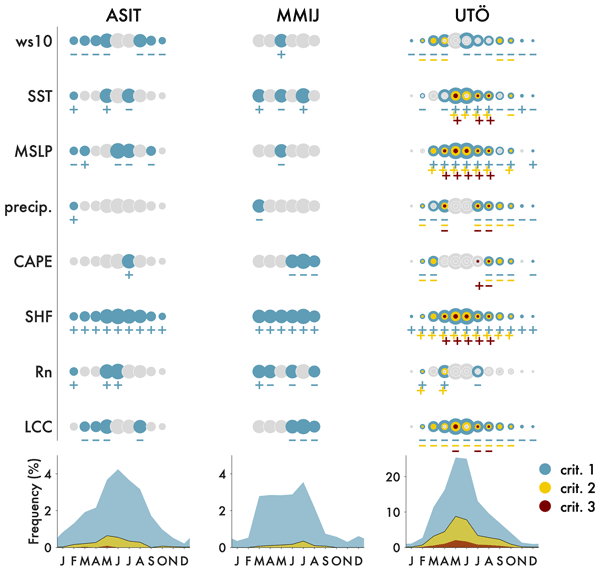
Christoffer Hallgren, Jeanie A. Aird, Stefan Ivanell, Heiner Körnich, Ville Vakkari, Rebecca J. Barthelmie, Sara C. Pryor, and Erik Sahlée
Wind Energ. Sci., 9, 821–840, https://doi.org/10.5194/wes-9-821-2024, https://doi.org/10.5194/wes-9-821-2024, 2024
Short summary
Short summary
Knowing the wind speed across the rotor of a wind turbine is key in making good predictions of the power production. However, models struggle to capture both the speed and the shape of the wind profile. Using machine learning methods based on the model data, we show that the predictions can be improved drastically. The work focuses on three coastal sites, spread over the Northern Hemisphere (the Baltic Sea, the North Sea, and the US Atlantic coast) with similar results for all sites.
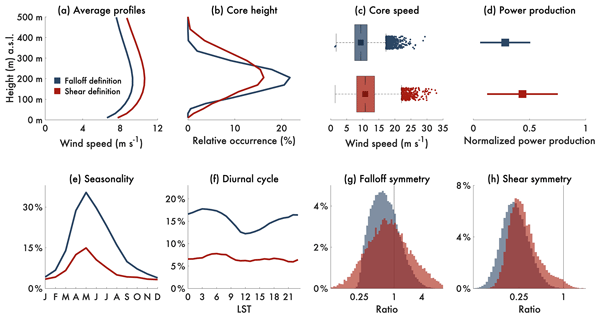
Christoffer Hallgren, Jeanie A. Aird, Stefan Ivanell, Heiner Körnich, Rebecca J. Barthelmie, Sara C. Pryor, and Erik Sahlée
Wind Energ. Sci., 8, 1651–1658, https://doi.org/10.5194/wes-8-1651-2023, https://doi.org/10.5194/wes-8-1651-2023, 2023
Short summary
Short summary
Low-level jets (LLJs) are special types of non-ideal wind profiles affecting both wind energy production and loads on a wind turbine. However, among LLJ researchers, there is no consensus regarding which definition to use to identify these profiles. In this work, we compare two different ways of identifying the LLJ – the falloff definition and the shear definition – and argue why the shear definition is better suited to wind energy applications.
Christoffer Hallgren, Heiner Körnich, Stefan Ivanell, Ville Vakkari, and Erik Sahlée
Wind Energ. Sci. Discuss., https://doi.org/10.5194/wes-2023-129, https://doi.org/10.5194/wes-2023-129, 2023
Preprint withdrawn
Short summary
Short summary
Sometimes, the wind changes direction between the bottom and top part of a wind turbine. This affects both the power production and the loads on the turbine. In this study, a climatology of pronounced changes in wind direction across the rotor is created, focusing on Scandinavia. The weather conditions responsible for these changes in wind direction are investigated and the climatology is compared to measurements from two coastal sites, indicating an underestimation by the climatology.
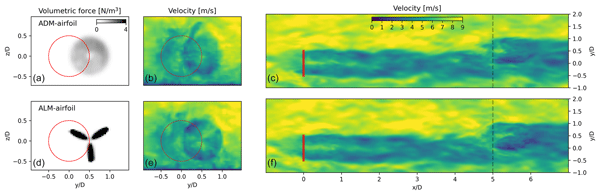
Gonzalo Pablo Navarro Diaz, Alejandro Daniel Otero, Henrik Asmuth, Jens Nørkær Sørensen, and Stefan Ivanell
Wind Energ. Sci., 8, 363–382, https://doi.org/10.5194/wes-8-363-2023, https://doi.org/10.5194/wes-8-363-2023, 2023
Short summary
Short summary
In this paper, the capacity to simulate transient wind turbine wake interaction problems using limited wind turbine data has been extended. The key novelty is the creation of two new variants of the actuator line technique in which the rotor blade forces are computed locally using generic load data. The analysis covers a partial wake interaction case between two wind turbines for a uniform laminar inflow and for a turbulent neutral atmospheric boundary layer inflow.
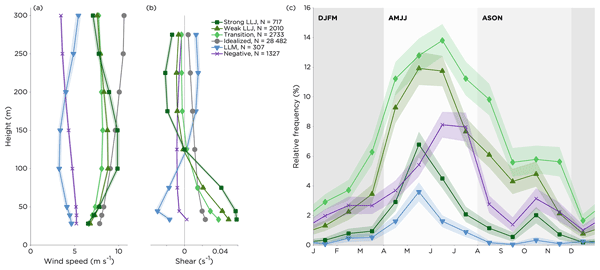
Christoffer Hallgren, Johan Arnqvist, Erik Nilsson, Stefan Ivanell, Metodija Shapkalijevski, August Thomasson, Heidi Pettersson, and Erik Sahlée
Wind Energ. Sci., 7, 1183–1207, https://doi.org/10.5194/wes-7-1183-2022, https://doi.org/10.5194/wes-7-1183-2022, 2022
Short summary
Short summary
Non-idealized wind profiles with negative shear in part of the profile (e.g., low-level jets) frequently occur in coastal environments and are important to take into consideration for offshore wind power. Using observations from a coastal site in the Baltic Sea, we analyze in which meteorological and sea state conditions these profiles occur and study how they alter the turbulence structure of the boundary layer compared to idealized profiles.
Cited articles
Abkar, M. and Porté-Agel, F.: Influence of Atmospheric Stability on Wind-Turbine Wakes: A Large-Eddy Simulation Study, Phys. Fluids, 27, 035104, https://doi.org/10.1063/1.4913695, 2015. a
Abkar, M., Bae, H. J., and Moin, P.: Minimum-Dissipation Scalar Transport Model for Large-Eddy Simulation of Turbulent Flows, Phys. Rev. Fluids, 1, 041701, https://doi.org/10.1103/PhysRevFluids.1.041701, 2016. a
Alihussein, H., Geier, M., and Krafczyk, M.: A Parallel Coupled Lattice Boltzmann-Volume of Fluid Framework for Modeling Porous Media Evolution, Materials, 14, 2510, https://doi.org/10.3390/ma14102510, 2021. a
Allaerts, D. and Meyers, J.: Boundary-Layer Development and Gravity Waves in Conventionally Neutral Wind Farms, J. Fluid Mech., 814, 95–130, https://doi.org/10.1017/jfm.2017.11, 2017. a
Asmuth, H., Janßen, C. F., Olivares-Espinosa, H., and Ivanell, S.: Wall-Modeled Lattice Boltzmann Large-Eddy Simulation of Neutral Atmospheric Boundary Layers, Phys. Fluids, 33, 105111, https://doi.org/10.1063/5.0065701, 2021. a, b, c, d
Basu, S., Holtslag, A. A. M., Van De Wiel, B. J. H., Moene, A. F., and Steeneveld, G.-J.: An Inconvenient “Truth” about Using Sensible Heat Flux as a Surface Boundary Condition in Models under Stably Stratified Regimes, Acta Geophys., 56, 88–99, https://doi.org/10.2478/s11600-007-0038-y, 2008. a
Beare, R. J., Macvean, M. K., Holtslag, A. A. M., Cuxart, J., Esau, I., Golaz, J.-C., Jimenez, M. A., Khairoutdinov, M., Kosovic, B., Lewellen, D., Lund, T. S., Lundquist, J. K., Mccabe, A., Moene, A. F., Noh, Y., Raasch, S., and Sullivan, P.: An Intercomparison of Large-Eddy Simulations of the Stable Boundary Layer, Bound.-Lay. Meteorol., 118, 247–272, https://doi.org/10.1007/s10546-004-2820-6, 2006. a, b, c, d, e, f, g, h
Bou-Zeid, E., Meneveau, C., and Parlange, M.: A Scale-Dependent Lagrangian Dynamic Model for Large Eddy Simulation of Complex Turbulent Flows, Phys. Fluids, 17, 025105, https://doi.org/10.1063/1.1839152, 2005. a
Businger, J. A., Wyngaard, J. C., Izumi, Y., and Bradley, E. F.: Flux-Profile Relationships in the Atmospheric Surface Layer, J. Atmos. Sci., 28, 181–189, https://doi.org/10.1175/1520-0469(1971)028<0181:FPRITA>2.0.CO;2, 1971. a
Deardorff, J.: A Three-dimensional Numerical Investigation of the Idealized Planetary Boundary Layer, Geophysical Fluid Dynamics, 1, 377–410, https://doi.org/10.1080/03091927009365780, 1970. a
d'Humières, D.: Generalized Lattice-Boltzmann Equations, in: Rarefied Gas Dynamics: Theory and Simulations, Progress in Astronautics and Aeronautics, American Institute of Aeronautics and Astronautics, 450–458, https://arc.aiaa.org/doi/10.2514/5.9781600866319.0450.0458 (last access: 15 July 2026), 1994. a
Feng, Y., Miranda-Fuentes, J., Guo, S., Jacob, J., and Sagaut, P.: ProLB: A Lattice Boltzmann Solver of Large-Eddy Simulation for Atmospheric Boundary Layer Flows, J. Adv. Model. Earth Sy., 13, e2020MS002107, https://doi.org/10.1029/2020MS002107, 2021. a, b, c
Gehrke, M. and Rung, T.: Periodic Hill Flow Simulations with a Parameterized Cumulant Lattice Boltzmann Method, Int. J. Numer. Meth. Fl., 94, 1111–1154, https://doi.org/10.1002/fld.5085, 2022. a
Geier, M., Pasquali, A., and Schönherr, M.: Parametrization of the Cumulant Lattice Boltzmann Method for Fourth Order Accurate Diffusion Part II: Application to Flow around a Sphere at Drag Crisis, J. Comput. Phys., 348, 889–898, https://doi.org/10.1016/j.jcp.2017.07.004, 2017. a, b, c
Geier, M., Lenz, S., Schönherr, M., and Krafczyk, M.: Under-Resolved and Large Eddy Simulations of a Decaying Taylor–Green Vortex with the Cumulant Lattice Boltzmann Method, Theor. Comp. Fluid Dyn., https://doi.org/10.1007/s00162-020-00555-7, 2020. a, b
Geier, M., Kutscher, K., Schönherr, M., Wellmann, A., Peters, S., Alihussein, H., Linxweiler, J., and Krafczyk, M.: VirtualFluids – Open Source Parallel LBM Solver, Comput. Phys. Commun., 109810, https://doi.org/10.1016/j.cpc.2025.109810, 2025. a, b
Gruszczyński, G. and Łaniewski-Wołłk, Ł.: A Comparative Study of 3D Cumulant and Central Moments Lattice Boltzmann Schemes with Interpolated Boundary Conditions for the Simulation of Thermal Flows in High Prandtl Number Regime, I. J. Heat Mass Tran., 197, 123259, https://doi.org/10.1016/j.ijheatmasstransfer.2022.123259, 2022. a, b
Jacob, J., Malaspinas, O., and Sagaut, P.: A New Hybrid Recursive Regularised Bhatnagar–Gross–Krook Collision Model for Lattice Boltzmann Method-Based Large Eddy Simulation, J. Turbul., 19, 1051–1076, https://doi.org/10.1080/14685248.2018.1540879, 2018. a, b
Kahan, W.: Pracniques: Further Remarks on Reducing Truncation Errors, Commun. ACM, 8, 40, https://doi.org/10.1145/363707.363723, 1965. a
Khan, M. A., Allaerts, D., Watson, S. J., and Churchfield, M. J.: Investigating the relationship between simulation parameters and flow variables in simulating atmospheric gravity waves for wind energy applications, Wind Energ. Sci., 10, 1167–1185, https://doi.org/10.5194/wes-10-1167-2025, 2025. a
King, M.-F., Khan, A., Delbosc, N., Gough, H. L., Halios, C., Barlow, J. F., and Noakes, C. J.: Modelling Urban Airflow and Natural Ventilation Using a GPU-based Lattice-Boltzmann Method, Build. Environ., 125, 273–284, https://doi.org/10.1016/j.buildenv.2017.08.048, 2017. a
Korb, H.: Plot data for “Large Eddy Simulation of Thermally Stratified Atmospheric Boundary Layers with a Lattice Boltzmann Method”, Zenodo [data set], https://doi.org/10.5281/zenodo.20512678, 2026. a
Korb, H., Bastin, J., Asmuth, H., and Ivanell, S.: The lattice Boltzmann method for wind farm simulations: a review, Wind Energ. Sci., 11, 983–1012, https://doi.org/10.5194/wes-11-983-2026, 2026. a
Krüger, T., Kusumaatmaja, H., Kuzmin, A., Shardt, O., Silva, G., and Viggen, E. M.: The Lattice Boltzmann Method: Principles and Practice, Graduate Texts in Physics, 1 edn., Springer International Publishing, http://link.springer.com/10.1007/978-3-319-44649-3 (last access: 15 July 2026), 2017. a, b, c, d
Kuhn, M. B., Cheung, L., Yalla, G., Henry de Frahan, M. T., and Mohan, P.: Exawind Benchmarks, GitHub, https://github.com/Exawind/exawind-benchmarks/tree/main/amr-wind/atmospheric_boundary_layer/neutral (last access: 15 July 2026), 2025a. a
Kuhn, M. B., Henry de Frahan, M. T., Mohan, P., Deskos, G., Churchfield, M., Cheung, L., Sharma, A., Almgren, A., Ananthan, S., Brazell, M. J., Martínez-Tossas, L. A., Thedin, R., Rood, J., Sakievich, P., Vijayakumar, G., Zhang, W., and Sprague, M.: AMR-Wind: A Performance-Portable, High-Fidelity Flow Solver for Wind Farm Simulations, Wind Energy, 28, e70010, https://doi.org/10.1002/we.70010, 2025b. a, b
Kutscher, K., Schönherr, M., Geier, M., Alihussein, H., Wellmann, A., Korb, H., Sukhman, D., Horneff, N., Yescas Frangos, P., Bastin, J., Lopez Hermida, D., Mohammadi, M. M., and Qin, Z.: VirtualFluids, Zenodo [code], https://doi.org/10.5281/zenodo.20681486, 2026. a
Lanzilao, L. and Meyers, J.: A Parametric Large-Eddy Simulation Study of Wind-Farm Blockage and Gravity Waves in Conventionally Neutral Boundary Layers, J. Fluid Mech., 979, A54, https://doi.org/10.1017/jfm.2023.1088, 2024. a
Lenz, S., Schönherr, M., Geier, M., Krafczyk, M., Pasquali, A., Christen, A., and Giometto, M.: Towards Real-Time Simulation of Turbulent Air Flow over a Resolved Urban Canopy Using the Cumulant Lattice Boltzmann Method on a GPGPU, J. Wind Eng. Ind. Aerod., 189, 151–162, https://doi.org/10.1016/j.jweia.2019.03.012, 2019. a
Leonard, B. P.: A Stable and Accurate Convective Modelling Procedure Based on Quadratic Upstream Interpolation, Comput. Method. Appl. M., 19, 59–98, https://doi.org/10.1016/0045-7825(79)90034-3, 1979. a
Lilly, D.: The Representation of Small-Scale Turbulence in Numerical Simulation Experiments, University Corporation for Atmospheric Research, https://doi.org/10.5065/D62R3PMM, 1966. a
Malaspinas, O. and Sagaut, P.: Wall Model for Large-Eddy Simulation Based on the Lattice Boltzmann Method, J. Comput. Phys., 275, 25–40, https://doi.org/10.1016/j.jcp.2014.06.020, 2014. a
Min, M., Brazell, M., Tomboulides, A., Churchfield, M., Fischer, P., and Sprague, M.: Towards Exascale for Wind Energy Simulations, Int. J. High Perform. C., 38, 337–355, https://doi.org/10.1177/10943420241252511, 2024. a
Moeng, C.-H.: A Large-Eddy-Simulation Model for the Study of Planetary Boundary-Layer Turbulence, J. Atmos. Sci., 41, 2052–2062, https://doi.org/10.1175/1520-0469(1984)041<2052:ALESMF>2.0.CO;2, 1984. a
Obrecht, C., Kuznik, F., Tourancheau, B., and Roux, J.-J.: The TheLMA Project: A Thermal Lattice Boltzmann Solver for the GPU, Comput. Fluids, 54, 118–126, https://doi.org/10.1016/j.compfluid.2011.10.011, 2012. a
Obrecht, C., Kuznik, F., Tourancheau, B., and Roux, J.-J.: Multi-GPU Implementation of the Lattice Boltzmann Method, Comput. Math. Appl., 65, 252–261, https://doi.org/10.1016/j.camwa.2011.02.020, 2013. a
Obrecht, C., Kuznik, F., Merlier, L., Roux, J.-J., and Tourancheau, B.: Towards Aeraulic Simulations at Urban Scale Using the Lattice Boltzmann Method, Environ. Fluid Mech., 15, 753–770, https://doi.org/10.1007/s10652-014-9381-0, 2015. a
Onodera, N., Aoki, T., Shimokawabe, T., and Kobayashi, H.: Large-Scale LES Wind Simulation Using Lattice Boltzmann Method for a 10 Km × 10 Km Area in Metropolitan Tokyo, TSUBAME ESJ, 9, 2–8, 2013. a
Onodera, N., Idomura, Y., Hasegawa, Y., Nakayama, H., Shimokawabe, T., and Aoki, T.: Real-Time Tracer Dispersion Simulations in Oklahoma City Using the Locally Mesh-Refined Lattice Boltzmann Method, Bound.-Lay. Meteorol., https://doi.org/10.1007/s10546-020-00594-x, 2021. a
Platis, A., Hundhausen, M., Lampert, A., Emeis, S., and Bange, J.: The Role of Atmospheric Stability and Turbulence in Offshore Wind-Farm Wakes in the German Bight, Bound.-Lay. Meteorol., 182, 441–469, https://doi.org/10.1007/s10546-021-00668-4, 2022. a
Rozema, W., Bae, H. J., Moin, P., and Verstappen, R.: Minimum-Dissipation Models for Large-Eddy Simulation, Phys. Fluids, 27, 085107, https://doi.org/10.1063/1.4928700, 2015. a
Sauer, J. A. and Muñoz-Esparza, D.: The FastEddy® Resident-GPU Accelerated Large-Eddy Simulation Framework: Model Formulation, Dynamical-Core Validation and Performance Benchmarks, J. Adv. Model. Earth Sy., 12, e2020MS002100, https://doi.org/10.1029/2020MS002100, 2020. a, b, c, d
Smagorinsky, J.: GENERAL CIRCULATION EXPERIMENTS WITH THE PRIMITIVE EQUATIONS: I. THE BASIC EXPERIMENT, Mon. Weather Rev., 91, 99–164, https://doi.org/10.1175/1520-0493(1963)091<0099:GCEWTP>2.3.CO;2, 1963. a
Stoll, R., Gibbs, J. A., Salesky, S. T., Anderson, W., and Calaf, M.: Large-Eddy Simulation of the Atmospheric Boundary Layer, Bound.-Lay. Meteorol., 177, 541–581, https://doi.org/10.1007/s10546-020-00556-3, 2020. a
van Heerwaarden, C. C., van Stratum, B. J. H., Heus, T., Gibbs, J. A., Fedorovich, E., and Mellado, J. P.: MicroHH 1.0: a computational fluid dynamics code for direct numerical simulation and large-eddy simulation of atmospheric boundary layer flows, Geosci. Model Dev., 10, 3145–3165, https://doi.org/10.5194/gmd-10-3145-2017, 2017. a, b, c, d
Van Leer, B.: Towards the Ultimate Conservative Difference Scheme. IV. A New Approach to Numerical Convection, J. Comput. Phys., 23, 276–299, https://doi.org/10.1016/0021-9991(77)90095-X, 1977. a
Verstappen, R.: When Does Eddy Viscosity Damp Subfilter Scales Sufficiently?, J. Sci. Comput., 49, 94, https://doi.org/10.1007/s10915-011-9504-4, 2011. a
Wang, Y., MacCall, B. T., Hocut, C. M., Zeng, X., and Fernando, H. J. S.: Simulation of Stratified Flows over a Ridge Using a Lattice Boltzmann Model, Environ. Fluid Mech., 20, 1333–1355, https://doi.org/10.1007/s10652-018-9599-3, 2020. a
Yang, X., Mehmani, Y., Perkins, W. A., Pasquali, A., Schönherr, M., Kim, K., Perego, M., Parks, M. L., Trask, N., Balhoff, M. T., Richmond, M. C., Geier, M., Krafczyk, M., Luo, L.-S., Tartakovsky, A. M., and Scheibe, T. D.: Intercomparison of 3D Pore-Scale Flow and Solute Transport Simulation Methods, Adv. Water Resour., 95, 176–189, https://doi.org/10.1016/j.advwatres.2015.09.015, 2016. a
Yang, X. I. A., Park, G. I., and Moin, P.: Log-Layer Mismatch and Modeling of the Fluctuating Wall Stress in Wall-Modeled Large-Eddy Simulations, Phys. Rev. Fluids, 2, 104601, https://doi.org/10.1103/PhysRevFluids.2.104601, 2017. a
Short summary
This study presents a new way to simulate the wind in the lower atmosphere while taking into account the changes in temperature. The model is much faster than previous models while having the same level of accuracy. This study is a step toward making highly accurate software to predict the output of wind farms fast enough for use in the wind industry, ultimately making electricity from wind energy cheaper and more reliable.
This study presents a new way to simulate the wind in the lower atmosphere while taking into...


Altmetrics
Final-revised paper
Preprint