
Articles | Volume 11, issue 9
https://doi.org/10.5194/wes-11-3671-2026
© Author(s) 2026. This work is distributed under
the Creative Commons Attribution 4.0 License.
the Creative Commons Attribution 4.0 License.
https://doi.org/10.5194/wes-11-3671-2026
© Author(s) 2026. This work is distributed under
the Creative Commons Attribution 4.0 License.
the Creative Commons Attribution 4.0 License.
Research article
| 
23 Sep 2026
Research article |
| 23 Sep 2026
| 23 Sep 2026
Wind tunnel study of yawed porous discs subjected to veered inflow

Faculty of Aerospace Engineering, Delft University of Technology, Delft, the Netherlands
Haoyuan Sun
Faculty of Aerospace Engineering, Delft University of Technology, Delft, the Netherlands
Andrea Sciacchitano
Faculty of Aerospace Engineering, Delft University of Technology, Delft, the Netherlands
Faculty of Aerospace Engineering, Delft University of Technology, Delft, the Netherlands
Related authors
No articles found.
YuanTso Li, Andrea Sciacchitano, and Wei Yu
Wind Energ. Sci. Discuss., https://doi.org/10.5194/wes-2026-116, https://doi.org/10.5194/wes-2026-116, 2026
Revised manuscript under review for WES
Short summary
Short summary
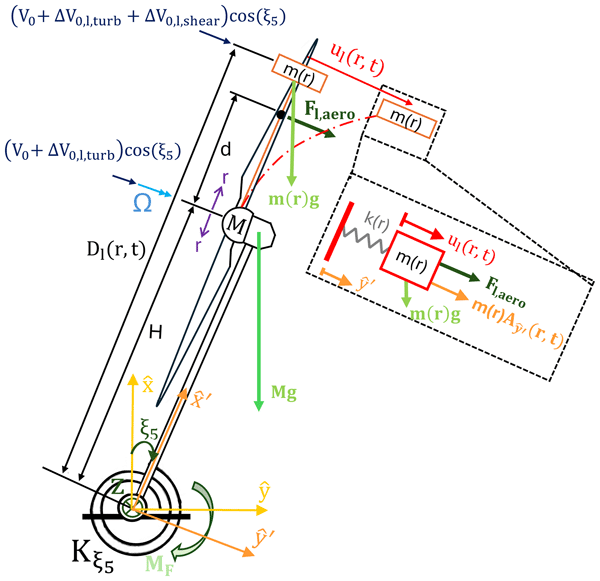
We investigate the regenerative wind farming (RGWF) concept under realistic atmospheric conditions using large-eddy simulations. The effects of convective, neutral, and stable atmospheric boundary layers on the wake of a multi-rotor system with lifting devices (MRSL, the unit of RGWF) are examined. The results show that RGWF concept remains effective across all stability regimes, demonstrating its robustness and providing guidance for its future design and deployment.
Bogdan Pamfil, Henrik Bredmose, Taeseong Kim, and Wei Yu
Wind Energ. Sci., 11, 2191–2227, https://doi.org/10.5194/wes-11-2191-2026, https://doi.org/10.5194/wes-11-2191-2026, 2026
Short summary
Short summary
We introduce fast response methods to predict how floating wind turbines behave in early design stages. By transforming the equations of motion into a form that is easier to compute, our approach avoids longer simulations while preserving accuracy. We developed both single and double perturbation methods, which run far faster than standard models with errors under 3.5 %. The single perturbation method at second order offers the strongest balance of speed and accuracy.
Abhratej Sahoo, Wei Yu, and Daniele Ragni
Wind Energ. Sci., 11, 1971–1988, https://doi.org/10.5194/wes-11-1971-2026, https://doi.org/10.5194/wes-11-1971-2026, 2026
Short summary
Short summary
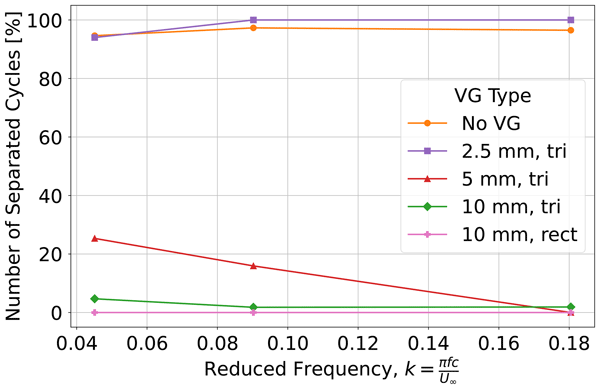
Vortex generators (VGs) are being used to prevent flow separation and stall on wind turbine blades. Optimal VG designs are chosen from steady investigations, assuming similar separation control characteristics between steady and unsteady conditions. Surface pressure measurements on a thick pitching airfoil with VGs show that VGs larger than the optimal steady size and rectangular VGs instead of the common triangular VGs must be used to consistently prevent unsteady flow separation and dynamic stall.
Marinos Manolesos, Sandrine Aubrun, Christian Bak, Paolo Bettini, Filippo Campagnolo, Alessandro Croce, Arslan Salim Dar, Michael Hölling, Stefan Ivanell, Konstantinos Kellaris, Miguel Alfonso Mendez, Pierluigi Montinari, Franz Mühle, George Papadakis, Fernardo Porté-Agel, Daniele Ragni, Sebastiano Randino, Andrea Sciacchitano, Lorenzo Schena, Gerard Schepers, Antonio Segalini, Wei Yu, and Carlo Luigi Bottasso
Wind Energ. Sci. Discuss., https://doi.org/10.5194/wes-2026-51, https://doi.org/10.5194/wes-2026-51, 2026
Manuscript not accepted for further review
Short summary
Short summary
As wind turbines grow to unprecedented sizes, ensuring their reliability requires advanced testing. We reviewed the current state of wind tunnel experiments, examining how scaled physical models are evaluated for wind flow, flexibility, and noise. We conclude that while laboratory testing remains essential, it is most powerful when integrated with computer simulations and real-world data. This combined approach will ultimately drive the design of more efficient and sustainable wind energy.
Abhratej Sahoo, Akshay Koodly Ravishankara, Wei Yu, Daniele Ragni, and Carlos Simao Ferreira
Wind Energ. Sci., 11, 127–154, https://doi.org/10.5194/wes-11-127-2026, https://doi.org/10.5194/wes-11-127-2026, 2026
Short summary
Short summary
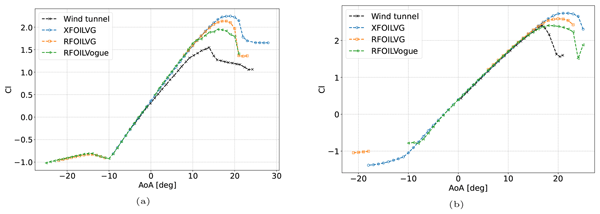
A new model incorporates vortex generator (VG) effects into fast aerodynamic tools like XFOIL and RFOIL. It modifies boundary layer equations and uses empirical functions scaled with VG geometry and Reynolds numbers to implement the modified integral boundary layer equations in RFOIL. The model improves accuracy across airfoils and predicts separation delay, stall delay, lift increase, and added drag, enabling VG effects to be included in wind turbine blade design.
YuanTso Li, Marnix Fijen, Brian Dsouza, Wei Yu, Andrea Sciacchitano, and Carlos Ferreira
Wind Energ. Sci., 10, 3091–3124, https://doi.org/10.5194/wes-10-3091-2025, https://doi.org/10.5194/wes-10-3091-2025, 2025
Short summary
Short summary
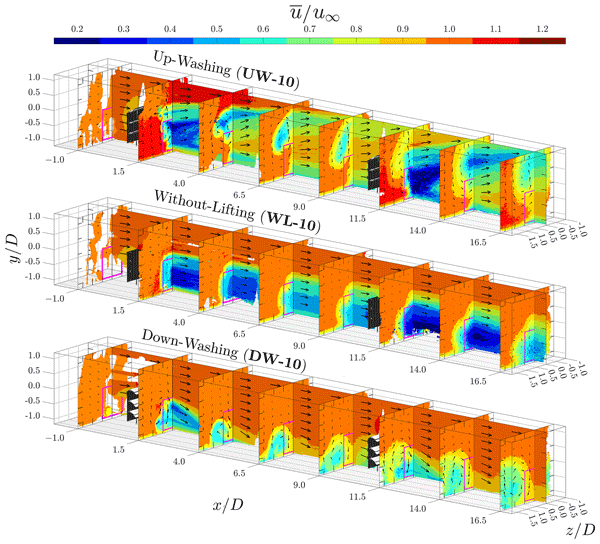
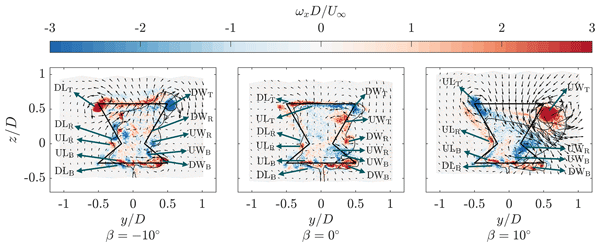
We tested an innovative wind farm concept using novelly engineered wind turbine systems that can guide airflow more efficiently within the farm. Our experiments showed that wind farms deploying this concept can harvest more than twice the wind power per unit area compared to their traditional counterparts. Furthermore, these findings support earlier simulations and point to a more efficient space-saving future for wind energy.
David Bensason, Andrea Sciacchitano, and Carlos Ferreira
Wind Energ. Sci., 10, 2137–2159, https://doi.org/10.5194/wes-10-2137-2025, https://doi.org/10.5194/wes-10-2137-2025, 2025
Short summary
Short summary
This study is an experimental exploration of the wake of the novel X-Rotor vertical-axis wind turbine. Passive blade pitch is used to favorably modify the wake topology and subsequent energy replenishment process. The results demonstrate significant increases in available power for downstream rotors and the underlying mechanisms, highlighting the potential of vertical-axis wind turbines and passive blade pitch control for high-energy-density wind farm applications.
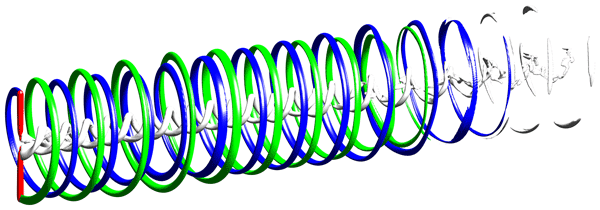
Pin Chun Yen, YuanTso Li, Fulvio Scarano, and Wei Yu
Wind Energ. Sci., 10, 1775–1805, https://doi.org/10.5194/wes-10-1775-2025, https://doi.org/10.5194/wes-10-1775-2025, 2025
Short summary
Short summary
This study explores how changing wind turbine blade length affects the aerodynamics behind the turbine. Using high-fidelity simulations, we found that varying blade lengths accelerates the leapfrogging event but does not improve wake recovery directly. In contrast, turbulence plays a bigger role, as the wake breakdown process is more influenced by it over the studied rotor asymmetries. These findings provide insights for designing more efficient wind turbine rotors.
David Bensason, Jayant Mulay, Andrea Sciacchitano, and Carlos Ferreira
Wind Energ. Sci., 10, 1499–1528, https://doi.org/10.5194/wes-10-1499-2025, https://doi.org/10.5194/wes-10-1499-2025, 2025
Short summary
Short summary
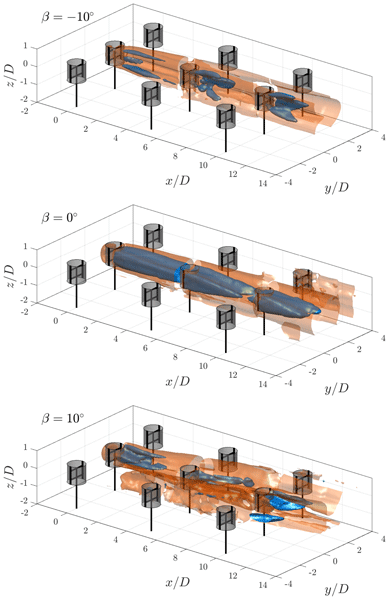
The wake of a scaled vertical-axis wind turbine farm was measured, resulting in the first experimental database of 3D-resolved flow-field measurements. In addition to the baseline operating conditions, two modes of wake control were tested, which involve the passive adjustment of the rotor blade pitch. The results highlight the impacts of these mode adjustments on the trailing vorticity system, wake topology, and affinity towards increasing the rate of wake recovery throughout the farm.
YuanTso Li, Wei Yu, Andrea Sciacchitano, and Carlos Ferreira
Wind Energ. Sci., 10, 631–659, https://doi.org/10.5194/wes-10-631-2025, https://doi.org/10.5194/wes-10-631-2025, 2025
Short summary
Short summary
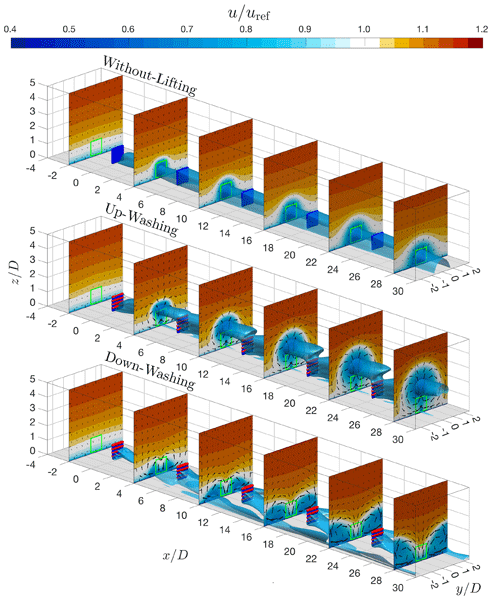
A novel wind farm concept, called a regenerative wind farm, is investigated numerically. This concept tackles the significant wake interaction losses among traditional wind farms. Our results show that regenerative wind farms can greatly reduce these losses, boosting power output per unit surface. Unlike traditional farms with three-bladed wind turbines, regenerative farms use multi-rotor systems with lifting devices (MRSLs). This unconventional design effectively reduces wake losses.
Nirav Dangi, Koen Boorsma, Edwin Bot, Wim Bierbooms, and Wei Yu
Wind Energ. Sci. Discuss., https://doi.org/10.5194/wes-2023-90, https://doi.org/10.5194/wes-2023-90, 2023
Preprint withdrawn
Short summary
Short summary
The wind turbine wake is a downstream region of velocity deficit, resulting in a power loss for downstream wind turbines. A turbulator is proposed to minimize this velocity deficit. In this work, a very successful field test campaign was executed which demonstrated the use of segmented Gurney Flaps as a promising add-on to promote enhanced wind turbine wake recovery for improved overall wind farm farm performance.
Carlos Ferreira, Wei Yu, Arianna Sala, and Axelle Viré
Wind Energ. Sci., 7, 469–485, https://doi.org/10.5194/wes-7-469-2022, https://doi.org/10.5194/wes-7-469-2022, 2022
Short summary
Short summary
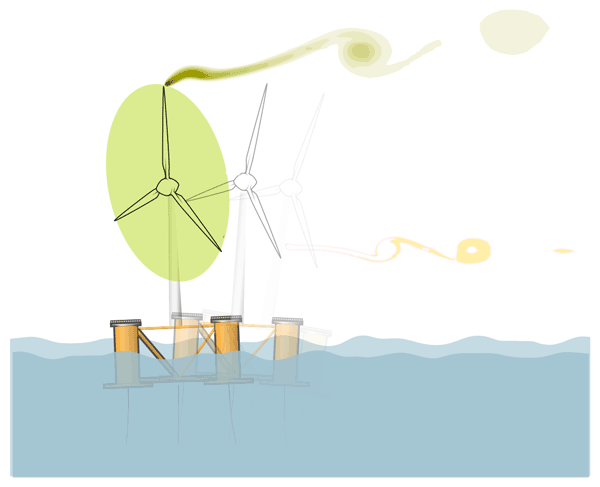
Floating offshore wind turbines may experience large surge motions that, when faster than the local wind speed, cause rotor–wake interaction.
We derive a model which is able to predict the wind speed at the wind turbine, even for large and fast motions and load variations in the wind turbine.
The proposed dynamic inflow model includes an adaptation for highly loaded flow, and it is accurate and simple enough to be easily implemented in most blade element momentum design models.
Cited articles
Abkar, M. and Porté-Agel, F.: Influence of the Coriolis force on the structure and evolution of wind turbine wakes, Physical Review Fluids, 1, 063701, https://doi.org/10.1103/physrevfluids.1.063701, 2016. a, b, c, d
Abraham, A., Dasari, T., and Hong, J.: Effect of turbine nacelle and tower on the near wake of a utility-scale wind turbine, J. Wind Eng. Ind. Aerod., 193, 103981, https://doi.org/10.1016/j.jweia.2019.103981, 2019. a
Adaramola, M. and Krogstad, P.-Å.: Experimental investigation of wake effects on wind turbine performance, Renew. Energ., 36, 2078–2086, https://doi.org/10.1016/j.renene.2011.01.024, 2011. a
Archer, C. L. and Vasel-Be-Hagh, A.: Wake steering via yaw control in multi-turbine wind farms: Recommendations based on large-eddy simulation, Sustainable Energy Technologies and Assessments, 33, 34–43, https://doi.org/10.1016/j.seta.2019.03.002, 2019. a, b
Aubrun, S., Loyer, S., Hancock, P. E., and Hayden, P.: Wind turbine wake properties: Comparison between a non-rotating simplified wind turbine model and a rotating model, J. Wind Eng. Ind. Aerod., 120, 1–8, https://doi.org/10.1016/j.jweia.2013.06.007, 2013. a, b
Aubrun, S., Bastankhah, M., Cal, R. B., Conan, B., Hearst, R. J., Hoek, D., Hölling, M., Huang, M., Hur, C., Karlsen, B., Neunaber, I., Obligado, M., Peinke, J., Percin, M., Saetran, L., Schito, P., Schliffke, B., Sims-Williams, D., Uzol, O., Vinnes, M., and Zasso, A.: Round-robin tests of porous disc models, J. Phys. Conf. Ser., 1256, 012004, https://doi.org/10.1088/1742-6596/1256/1/012004, 2019. a
Barthelmie, R. J., Hansen, K., Frandsen, S. T., Rathmann, O., Schepers, J., Schlez, W., Phillips, J., Rados, K., Zervos, A., Politis, E., and Chaviaropoulos, P.: Modelling and measuring flow and wind turbine wakes in large wind farms offshore, Wind Energy, 12, 431–444, https://doi.org/10.1002/we.348, 2009. a
Bartl, J., Mühle, F., Schottler, J., Sætran, L., Peinke, J., Adaramola, M., and Hölling, M.: Wind tunnel experiments on wind turbine wakes in yaw: effects of inflow turbulence and shear, Wind Energ. Sci., 3, 329–343, https://doi.org/10.5194/wes-3-329-2018, 2018. a, b
Bastankhah, M. and Porté-Agel, F.: A wind-tunnel investigation of wind-turbine wakes in yawed conditions, J. Phys. Conf. Ser., 625, 012014, https://doi.org/10.1088/1742-6596/625/1/012014, 2015. a
Bastankhah, M., Shapiro, C. R., Shamsoddin, S., Gayme, D. F., and Meneveau, C.: A vortex sheet based analytical model of the curled wake behind yawed wind turbines, J. Fluid Mech., 933, A2, https://doi.org/10.1017/jfm.2021.1010, 2022. a
Bensason, D., Sciacchitano, A., Giri Ajay, A., and Simao Ferreira, C.: A Study of the Near Wake Deformation of the X-Rotor Vertical-Axis Wind Turbine With Pitched Blades, Wind Energy, 27, 1388–1411, https://doi.org/10.1002/we.2944, 2024. a
Bensason, D., Sciacchitano, A., and Ferreira, C.: On the wake re-energization of the X-Rotor vertical-axis wind turbine via the vortex-generator strategy, Wind Energ. Sci., 10, 2137–2159, https://doi.org/10.5194/wes-10-2137-2025, 2025. a
Bodini, N., Zardi, D., and Lundquist, J. K.: Three-dimensional structure of wind turbine wakes as measured by scanning lidar, Atmos. Meas. Tech., 10, 2881–2896, https://doi.org/10.5194/amt-10-2881-2017, 2017. a
Bodini, N., Lundquist, J. K., and Kirincich, A.: US East Coast lidar measurements show offshore wind turbines will encounter very low atmospheric turbulence, Geophys. Res. Lett., 46, 5582–5591, https://doi.org/10.1029/2019gl082636, 2019. a
Bourhis, M. and Buxton, O.: Influence of freestream turbulence and porosity on porous disk-generated wakes, Physical Review Fluids, 9, 124501, https://doi.org/10.1103/physrevfluids.9.124501, 2024. a, b
Bromm, M., Vollmer, L., and Kühn, M.: Numerical investigation of wind turbine wake development in directionally sheared inflow, Wind Energy, 20, 381–395, https://doi.org/10.1002/we.2010, 2017. a
Camp, E. H. and Cal, R. B.: Mean kinetic energy transport and event classification in a model wind turbine array versus an array of porous disks: Energy budget and octant analysis, Physical Review Fluids, 1, 044404, https://doi.org/10.1103/physrevfluids.1.044404, 2016. a
Camp, E. H. and Cal, R. B.: Low-dimensional representations and anisotropy of model rotor versus porous disk wind turbine arrays, Physical Review Fluids, 4, 024610, https://doi.org/10.1103/physrevfluids.4.024610, 2019. a
Castro, I.: Wake characteristics of two-dimensional perforated plates normal to an air-stream, J. Fluid Mech., 46, 599–609, https://doi.org/10.1017/s0022112071000727, 1971. a
Cicolin, M., Chellini, S., Usherwood, B., Ganapathisubramani, B., and Castro, I. P.: Vortex shedding behind porous flat plates normal to the flow, J. Fluid Mech., 985, A40, https://doi.org/10.1017/jfm.2024.300, 2024. a
Clayton, B. and Filby, P.: Measured effects of oblique flows and change in blade pitch angle on performance and wake development of model wind turbines, in: Proceedings of the fourth BWEA Wind Energy Conference, BHRA Fluid Engineering, Cranfield, Bedford, UK, 214–224, ISBN 0906085713, 1982. a
Debnath, M., Moriarty, P., Krishnamurthy, R., Bodini, N., Newsom, R., Quon, E., Lundquist, J. K., Letizia, S., Iungo, G. V., and Klein, P.: Characterization of wind speed and directional shear at the AWAKEN field campaign site, J. Renew. Sustain. Ener., 15, https://doi.org/10.1063/5.0139737, 2023. a
de Jong Helvig, S., Vinnes, M. K., Segalini, A., Worth, N. A., and Hearst, R. J.: A comparison of lab-scale free rotating wind turbines and actuator disks, J. Wind Eng. Ind. Aerod., 209, 104485, https://doi.org/10.1016/j.jweia.2020.104485, 2021. a
Englberger, A., Dörnbrack, A., and Lundquist, J. K.: Does the rotational direction of a wind turbine impact the wake in a stably stratified atmospheric boundary layer?, Wind Energ. Sci., 5, 1359–1374, https://doi.org/10.5194/wes-5-1359-2020, 2020a. a
Englberger, A., Lundquist, J. K., and Dörnbrack, A.: Changing the rotational direction of a wind turbine under veering inflow: a parameter study, Wind Energ. Sci., 5, 1623–1644, https://doi.org/10.5194/wes-5-1623-2020, 2020b. a
Fleming, P., Annoni, J., Shah, J. J., Wang, L., Ananthan, S., Zhang, Z., Hutchings, K., Wang, P., Chen, W., and Chen, L.: Field test of wake steering at an offshore wind farm, Wind Energ. Sci., 2, 229–239, https://doi.org/10.5194/wes-2-229-2017, 2017. a
Fleming, P., Annoni, J., Churchfield, M., Martinez-Tossas, L. A., Gruchalla, K., Lawson, M., and Moriarty, P.: A simulation study demonstrating the importance of large-scale trailing vortices in wake steering, Wind Energ. Sci., 3, 243–255, https://doi.org/10.5194/wes-3-243-2018, 2018. a
Fleming, P., King, J., Dykes, K., Simley, E., Roadman, J., Scholbrock, A., Murphy, P., Lundquist, J. K., Moriarty, P., Fleming, K., van Dam, J., Bay, C., Mudafort, R., Lopez, H., Skopek, J., Scott, M., Ryan, B., Guernsey, C., and Brake, D.: Initial results from a field campaign of wake steering applied at a commercial wind farm – Part 1, Wind Energ. Sci., 4, 273–285, https://doi.org/10.5194/wes-4-273-2019, 2019. a, b
Fleming, P., King, J., Simley, E., Roadman, J., Scholbrock, A., Murphy, P., Lundquist, J. K., Moriarty, P., Fleming, K., van Dam, J., Bay, C., Mudafort, R., Jager, D., Skopek, J., Scott, M., Ryan, B., Guernsey, C., and Brake, D.: Continued results from a field campaign of wake steering applied at a commercial wind farm – Part 2, Wind Energ. Sci., 5, 945–958, https://doi.org/10.5194/wes-5-945-2020, 2020. a
Fleming, P. A., Gebraad, P. M., Lee, S., van Wingerden, J.-W., Johnson, K., Churchfield, M., Michalakes, J., Spalart, P., and Moriarty, P.: Evaluating techniques for redirecting turbine wakes using SOWFA, Renew. Energ., 70, 211–218, https://doi.org/10.1016/j.renene.2014.02.015, 2014. a
Gao, L., Li, B., and Hong, J.: Effect of wind veer on wind turbine power generation, Phys. Fluids, 33, https://doi.org/10.1063/5.0033826, 2021. a
Gebraad, P. M., Teeuwisse, F. W., Van Wingerden, J., Fleming, P. A., Ruben, S. D., Marden, J. R., and Pao, L. Y.: Wind plant power optimization through yaw control using a parametric model for wake effects – a CFD simulation study, Wind Energy, 19, 95–114, https://doi.org/10.1002/we.1822, 2016. a
Grant, I. and Parkin, P.: A DPIV study of the trailing vortex elements from the blades of a horizontal axis wind turbine in yaw, Exp. Fluids, 28, 368–376, https://doi.org/10.1007/s003480050396, 2000. a
Grant, I., Parkin, P., and Wang, X.: Optical vortex tracking studies of a horizontal axis wind turbine in yaw using laser-sheet, flow visualisation, Exp. Fluids, 23, 513–519, https://doi.org/10.1007/s003480050142, 1997. a
Haans, W., Sant, T., Van Kuik, G., and van Bussel, G.: Measurement of tip vortex paths in the wake of a HAWT under yawed flow conditions, J. Sol. Energ., https://doi.org/10.1115/1.2037092, 2005. a
Heck, K. S., Johlas, H. M., and Howland, M. F.: Modelling the induction, thrust and power of a yaw-misaligned actuator disk, J. Fluid Mech., 959, A9, https://doi.org/10.1017/jfm.2023.129, 2023. a
Howland, M. F., Bossuyt, J., Martínez-Tossas, L. A., Meyers, J., and Meneveau, C.: Wake structure in actuator disk models of wind turbines in yaw under uniform inflow conditions, J. Renew. Sustain. Ener., 8, https://doi.org/10.1063/1.4955091, 2016. a, b, c, d
Howland, M. F., Lele, S. K., and Dabiri, J. O.: Wind farm power optimization through wake steering, P. Natl. Acad. Sci. USA, 116, 14495–14500, https://doi.org/10.1073/pnas.1903680116, 2019. a
Howland, M. F., Quesada, J. B., Martínez, J. J. P., Larrañaga, F. P., Yadav, N., Chawla, J. S., Sivaram, V., and Dabiri, J. O.: Collective wind farm operation based on a predictive model increases utility-scale energy production, Nature Energy, 7, 818–827, https://doi.org/10.1038/s41560-022-01085-8, 2022. a
Huang, M., Ferreira, C., Sciacchitano, A., and Scarano, F.: Wake scaling of actuator discs in different aspect ratios, Renewable Energy, 183, 866–876, https://doi.org/10.1016/j.renene.2021.11.045, 2022. a
Hulsman, P., Wosnik, M., Petrović, V., Hölling, M., and Kühn, M.: Development of a curled wake of a yawed wind turbine under turbulent and sheared inflow, Wind Energ. Sci., 7, 237–257, https://doi.org/10.5194/wes-7-237-2022, 2022. a, b, c
Jiménez, Á., Crespo, A., and Migoya, E.: Application of a LES technique to characterize the wake deflection of a wind turbine in yaw, Wind Energy, 13, 559–572, https://doi.org/10.1002/we.380, 2010. a
King, J., Fleming, P., King, R., Martínez-Tossas, L. A., Bay, C. J., Mudafort, R., and Simley, E.: Control-oriented model for secondary effects of wake steering, Wind Energ. Sci., 6, 701–714, https://doi.org/10.5194/wes-6-701-2021, 2021. a
Klemmer, K. S. and Howland, M. F.: Momentum deficit and wake-added turbulence kinetic energy budgets in the stratified atmospheric boundary layer, Physical Review Fluids, 9, 114607, https://doi.org/10.1103/physrevfluids.9.114607, 2024. a, b, c
Liew, J., Urbán, A. M., and Andersen, S. J.: Analytical model for the power–yaw sensitivity of wind turbines operating in full wake, Wind Energ. Sci., 5, 427–437, https://doi.org/10.5194/wes-5-427-2020, 2020. a
Lignarolo, L. E., Ragni, D., Ferreira, C. J., and van Bussel, G. J.: Experimental comparison of a wind-turbine and of an actuator-disc near wake, J. Renew. Sustain. Ener., 8, https://doi.org/10.1063/1.4941926, 2016. a, b, c
Lu, H. and Porté-Agel, F.: Large-eddy simulation of a very large wind farm in a stable atmospheric boundary layer, Phys. Fluids, 23, https://doi.org/10.1063/1.3589857, 2011. a
Medici, D. and Alfredsson, P.: Measurements on a wind turbine wake: 3D effects and bluff body vortex shedding, Wind Energy, 9, 219–236, https://doi.org/10.1002/we.156, 2006. a
Mehta, R. D. and Bradshaw, P.: Design rules for small low speed wind tunnels, Aeronaut. J., 83, 443–453, https://doi.org/10.1017/s0001924000031985, 1979. a
Mohammadi, M., Bastankhah, M., Fleming, P., Churchfield, M., Bossanyi, E., Landberg, L., and Ruisi, R.: Curled-skewed wakes behind yawed wind turbines subject to veered inflow, Energies, 15, 9135, https://doi.org/10.3390/en15239135, 2022. a
Narasimhan, G., Gayme, D. F., and Meneveau, C.: Effects of wind veer on a yawed wind turbine wake in atmospheric boundary layer flow, Physical Review Fluids, 7, 114609, https://doi.org/10.1103/physrevfluids.7.114609, 2022. a, b, c
Narasimhan, G., Gayme, D. F., and Meneveau, C.: An extended analytical wake model and applications to yawed wind turbines in atmospheric boundary layers with different levels of stratification and veer, J. Renew. Sustain. Ener., 17, https://doi.org/10.1063/5.0251305, 2025. a, b, c, d
Neuhaus, L., Berger, F., Peinke, J., and Hölling, M.: Exploring the capabilities of active grids, Exp. Fluids, 62, 130, https://doi.org/10.1007/s00348-021-03224-5, 2021. a
Neunaber, I., Hölling, M., Whale, J., and Peinke, J.: Comparison of the turbulence in the wakes of an actuator disc and a model wind turbine by higher order statistics: A wind tunnel study, Renew. Energ., 179, 1650–1662, https://doi.org/10.1016/j.renene.2021.08.002, 2021. a, b
Öztürk, B., Hassanein, A., Akpolat, M. T., Abdulrahim, A., Perçin, M., and Uzol, O.: On the wake characteristics of a model wind turbine and a porous disc: Effects of freestream turbulence intensity, Renew. Energ., 212, 238–250, https://doi.org/10.1016/j.renene.2023.05.002, 2023. a
Pierella, F. and Sætran, L.: Wind tunnel investigation on the effect of the turbine tower on wind turbines wake symmetry, Wind Energy, 20, 1753–1769, https://doi.org/10.1002/we.2120, 2017. a
Pope, S. B.: Turbulent flows, vol. 20, Cambridge University Press Cambridge, https://doi.org/10.1017/cbo9780511840531, 2000. a
Prasad, A. K.: Stereoscopic particle image velocimetry, Exp. Fluids, 29, 103–116, https://doi.org/10.1007/s003480000143, 2000. a
Purohit, S., Sun, H., Sciacchitano, A., and Yu, W.: Supporting data belonging to publication “Wind tunnel study of porous discs subjected to veered inflow”, 4TU Research Data [data set] and [code], https://doi.org/10.4121/e38ae0af-860a-46f0-85af-f384f3cd7d34, 2025. a
Rajasekara Babu, K., Hu, G., Noack, B. R., and Kwok, K.: From active grids to fan-array wind generators: A review of turbulence generation, control, and artificial intelligence integration in wind tunnels, Phys. Fluids, 37, https://doi.org/10.1063/5.0279910, 2025. a
Rolin, V. F. and Porté-Agel, F.: Experimental investigation of vertical-axis wind-turbine wakes in boundary layer flow, Renew. Energ., 118, 1–13, https://doi.org/10.1016/j.renene.2017.10.105, 2018. a
Sanchez Gomez, M. and Lundquist, J. K.: The effect of wind direction shear on turbine performance in a wind farm in central Iowa, Wind Energ. Sci., 5, 125–139, https://doi.org/10.5194/wes-5-125-2020, 2020. a
Santoni, C., Carrasquillo, K., Arenas-Navarro, I., and Leonardi, S.: Effect of tower and nacelle on the flow past a wind turbine, Wind Energy, 20, 1927–1939, https://doi.org/10.1002/we.2130, 2017. a
Sathe, A., Mann, J., Barlas, T., Bierbooms, W., and Van Bussel, G.: Influence of atmospheric stability on wind turbine loads, Wind Energy, 16, 1013–1032, https://doi.org/10.1002/we.1528, 2013. a
Schottler, J., Bartl, J., Mühle, F., Sætran, L., Peinke, J., and Hölling, M.: Wind tunnel experiments on wind turbine wakes in yaw: redefining the wake width, Wind Energ. Sci., 3, 257–273, https://doi.org/10.5194/wes-3-257-2018, 2018. a, b, c
Schulz, C., Letzgus, P., Lutz, T., and Krämer, E.: CFD study on the impact of yawed inflow on loads, power and near wake of a generic wind turbine, Wind Energy, 20, 253–268, https://doi.org/10.1002/we.2004, 2017. a
Sciacchitano, A. and Wieneke, B.: PIV uncertainty propagation, Meas. Sci. Technol., 27, 084006, https://doi.org/10.1088/0957-0233/27/8/084006, 2016. a, b, c
Sforza, P., Stasi, W., Smorto, M., and Sheerin, P.: Wind turbine generator wakes, in: 17th Aerospace Sciences Meeting, AIAA, 1979–113, https://doi.org/10.2514/6.1979-113, 1979. a
Shapiro, C. R., Gayme, D. F., and Meneveau, C.: Generation and decay of counter-rotating vortices downstream of yawed wind turbines in the atmospheric boundary layer, J. Fluid Mech., 903, R2, https://doi.org/10.1017/jfm.2020.717, 2020. a
Siemens Gamesa: First Siemens-Gamesa 14.7 MW turbine stands at Moray West offshore wind farm, OffshoreWind.biz, https://www.offshorewind.biz/2024/04/22/first-siemens-gamesa-14-7-mw-turbine-stands-at-moray-west-offshore-wind-farm/ (last access: 6 August 2025), 2024. a
Simley, E., Fleming, P., and King, J.: Design and analysis of a wake steering controller with wind direction variability, Wind Energ. Sci., 5, 451–468, https://doi.org/10.5194/wes-5-451-2020, 2020. a
Steiros, K. and Hultmark, M.: Drag on flat plates of arbitrary porosity, J. Fluid Mech., 853, R3, https://doi.org/10.1017/jfm.2018.621, 2018. a
Theunissen, R. and Worboys, R.: Near-wake observations behind azimuthally perforated disks with varying hole layout and porosity in smooth airstreams at high Reynolds numbers, J. Fluid. Eng., 141, 051108, https://doi.org/10.1115/1.4041614, 2019. a
Van Ulden, A. P. and Holtslag, A. A.: Estimation of atmospheric boundary layer parameters for diffusion applications, J. Appl. Meteorol. Clim., 24, 1196–1207, https://doi.org/10.1175/1520-0450(1985)024<1196:eoablp>2.0.co;2, 1985. a
Vinnes, M. K., Gambuzza, S., Ganapathisubramani, B., and Hearst, R. J.: The far wake of porous disks and a model wind turbine: Similarities and differences assessed by hot-wire anemometry, J. Renew. Sustain. Ener., 14, https://doi.org/10.1063/5.0074218, 2022. a, b
Vinnes, M. K., Neunaber, I., Lykke, H.-M. H., and Hearst, R. J.: Characterizing porous disk wakes in different turbulent inflow conditions with higher-order statistics, Exp. Fluids, 64, 25, https://doi.org/10.1007/s00348-022-03565-9, 2023. a
Walter, K., Weiss, C. C., Swift, A. H., Chapman, J., and Kelley, N. D.: Speed and direction shear in the stable nocturnal boundary layer, J. Sol. Energ., 131, https://doi.org/10.1115/1.3035818, 2009. a
Wu, S., Archer, C. L., and Mirocha, J. D.: New insights on wind turbine wakes from large-eddy simulation: Wake contraction, dual nature, and temperature effects, Wind Energy, 27, 1130–1151, https://doi.org/10.1002/we.2827, 2024. a
Wurps, H., Steinfeld, G., and Heinz, S.: Grid-resolution requirements for large-eddy simulations of the atmospheric boundary layer, Bound.-Lay. Meteorol., 175, 179–201, https://doi.org/10.1007/s10546-020-00504-1, 2020. a
Xie, S. and Archer, C. L.: A numerical study of wind-turbine wakes for three atmospheric stability conditions, Bound.-Lay. Meteorol., 165, 87–112, https://doi.org/10.1007/s10546-017-0259-9, 2017. a, b
Xu, G., Sciacchitano, A., Ferreira, C., and Yu, W.: On the unsteady aerodynamics of a surging airfoil at 90° incidence, Exp. Fluids, 66, 1–22, https://doi.org/10.1007/s00348-025-04011-2, 2025. a
Zong, H. and Porté-Agel, F.: A point vortex transportation model for yawed wind turbine wakes, J. Fluid Mech., 890, A8, https://doi.org/10.1017/jfm.2020.123, 2020. a
Short summary
We experimentally investigated how changes in wind direction with height, known as wind veer, affect the wakes of wind turbines. The results demonstrate that wind veer leads to faster wake recovery and higher available power for downwind turbines. The impact of wind veer on yawed turbines is also studied, and it was observed that under strong veer conditions, yawing does not provide a significantly larger benefit for the available power of downwind turbines.
We experimentally investigated how changes in wind direction with height, known as wind veer,...


Altmetrics
Final-revised paper
Preprint