
Articles | Volume 11, issue 3
https://doi.org/10.5194/wes-11-983-2026
© Author(s) 2026. This work is distributed under
the Creative Commons Attribution 4.0 License.
the Creative Commons Attribution 4.0 License.
https://doi.org/10.5194/wes-11-983-2026
© Author(s) 2026. This work is distributed under
the Creative Commons Attribution 4.0 License.
the Creative Commons Attribution 4.0 License.
Review article
| 
26 Mar 2026
Review article |
| 26 Mar 2026
| 26 Mar 2026
The lattice Boltzmann method for wind farm simulations: a review

Wind Energy Division, Department of Earth Sciences, Uppsala University – Campus Gotland, Cramérgatan 3, 62167 Visby, Sweden
Jean Bastin
Wind Energy Division, Department of Earth Sciences, Uppsala University – Campus Gotland, Cramérgatan 3, 62167 Visby, Sweden
Henrik Asmuth
Wind Energy Division, Department of Earth Sciences, Uppsala University – Campus Gotland, Cramérgatan 3, 62167 Visby, Sweden
Stefan Ivanell
Wind Energy Division, Department of Earth Sciences, Uppsala University – Campus Gotland, Cramérgatan 3, 62167 Visby, Sweden
Related authors
Henry Korb, Henrik Asmuth, Martin Schönherr, Martin Geier, and Stefan Ivanell
Wind Energ. Sci., 11, 2567–2583, https://doi.org/10.5194/wes-11-2567-2026, https://doi.org/10.5194/wes-11-2567-2026, 2026
Short summary
Short summary
This study presents a new way to simulate the wind in the lower atmosphere while taking into account the changes in temperature. The model is much faster than previous models while having the same level of accuracy. This study is a step toward making highly accurate software to predict the output of wind farms fast enough for use in the wind industry, ultimately making electricity from wind energy cheaper and more reliable.
Henry Korb, Henrik Asmuth, Martin Schönherr, Martin Geier, and Stefan Ivanell
Wind Energ. Sci., 11, 2567–2583, https://doi.org/10.5194/wes-11-2567-2026, https://doi.org/10.5194/wes-11-2567-2026, 2026
Short summary
Short summary
This study presents a new way to simulate the wind in the lower atmosphere while taking into account the changes in temperature. The model is much faster than previous models while having the same level of accuracy. This study is a step toward making highly accurate software to predict the output of wind farms fast enough for use in the wind industry, ultimately making electricity from wind energy cheaper and more reliable.
Øyvind Waage Hanssen-Bauer, Paula Doubrawa, Helge A. Madsen, Henrik Asmuth, Jason Jonkman, Gunner C. Larsen, Stefan Ivanell, and Roy Stenbro
Wind Energ. Sci., 11, 1913–1948, https://doi.org/10.5194/wes-11-1913-2026, https://doi.org/10.5194/wes-11-1913-2026, 2026
Short summary
Short summary
We studied how different industry-oriented computer models predict the behavior of winds behind turbines in a wind farm. These
wakesreduce energy output and can affect turbines further down the row. By comparing these three models with more detailed simulations, we found they agree well on overall power but differ in how they capture turbulence and wear on machines. Our results show where the models need improvement to make wind farm computer models more accurate and reliable in the future.
Marinos Manolesos, Sandrine Aubrun, Christian Bak, Paolo Bettini, Filippo Campagnolo, Alessandro Croce, Arslan Salim Dar, Michael Hölling, Stefan Ivanell, Konstantinos Kellaris, Miguel Alfonso Mendez, Pierluigi Montinari, Franz Mühle, George Papadakis, Fernardo Porté-Agel, Daniele Ragni, Sebastiano Randino, Andrea Sciacchitano, Lorenzo Schena, Gerard Schepers, Antonio Segalini, Wei Yu, and Carlo Luigi Bottasso
Wind Energ. Sci. Discuss., https://doi.org/10.5194/wes-2026-51, https://doi.org/10.5194/wes-2026-51, 2026
Manuscript not accepted for further review
Short summary
Short summary
As wind turbines grow to unprecedented sizes, ensuring their reliability requires advanced testing. We reviewed the current state of wind tunnel experiments, examining how scaled physical models are evaluated for wind flow, flexibility, and noise. We conclude that while laboratory testing remains essential, it is most powerful when integrated with computer simulations and real-world data. This combined approach will ultimately drive the design of more efficient and sustainable wind energy.
Stefan Ivanell, Warit Chanprasert, Luca Lanzilao, James Bleeg, Johan Meyers, Antoine Mathieu, Søren Juhl Andersen, Rem-Sophia Mouradi, Eric Dupont, Hugo Olivares-Espinosa, and Niels Troldborg
Wind Energ. Sci., 11, 937–960, https://doi.org/10.5194/wes-11-937-2026, https://doi.org/10.5194/wes-11-937-2026, 2026
Short summary
Short summary
This study explores how the height of the atmosphere's boundary layer impacts wind farm performance, focusing on how this factor influences energy output. By simulating different boundary layer heights and conditions, this research reveals that deeper layers promote better energy recovery. The findings highlight the importance of considering atmospheric conditions when simulating wind farms to maximize energy efficiency, offering valuable insights for the wind energy industry.
Stefan Ivanell, Bjarke T. Olsen, Antoine Mathieu, Cristina Mulet-Benzo, Abdul Haseeb Syed, Warit Chanprasert, Mikael Sjöholm, Jakob Mann, and Julia Gottschall
Wind Energ. Sci. Discuss., https://doi.org/10.5194/wes-2025-286, https://doi.org/10.5194/wes-2025-286, 2026
Preprint under review for WES
Short summary
Short summary
Modern GW-scale offshore wind farms face challenges from atmospheric dynamics. This study examines how boundary layer height (BLH) and large-scale turbulence affect efficiency and loads. Using WRF simulations, lidar data, and CFD modeling for a 100-turbine, 15 MW wind farm at three representative sites, we show that low BLH reduces performance. Turbulence-induced low-frequency fluctuations increase fatigue loads, underscoring the need to include BLH and turbulence in design models.
Mohammad Mehdi Mohammadi, Hugo Olivares-Espinosa, Gonzalo Pablo Navarro Diaz, and Stefan Ivanell
Wind Energ. Sci., 9, 1305–1321, https://doi.org/10.5194/wes-9-1305-2024, https://doi.org/10.5194/wes-9-1305-2024, 2024
Short summary
Short summary
This paper has put forward a set of recommendations regarding the actuator sector model implementation details to improve the capability of the model to reproduce similar results compared to those obtained by an actuator line model, which is one of the most common ways used for numerical simulations of wind farms, while providing significant computational savings. This includes among others the velocity sampling method and a correction of the sampled velocities to calculate the blade forces.
Christoffer Hallgren, Jeanie A. Aird, Stefan Ivanell, Heiner Körnich, Ville Vakkari, Rebecca J. Barthelmie, Sara C. Pryor, and Erik Sahlée
Wind Energ. Sci., 9, 821–840, https://doi.org/10.5194/wes-9-821-2024, https://doi.org/10.5194/wes-9-821-2024, 2024
Short summary
Short summary
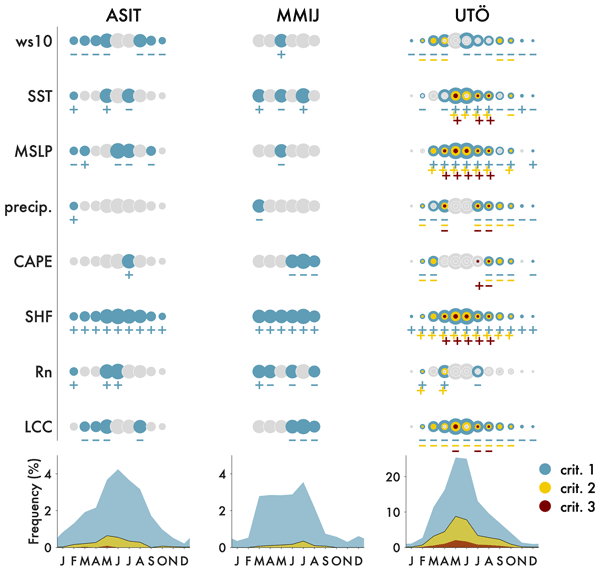
Knowing the wind speed across the rotor of a wind turbine is key in making good predictions of the power production. However, models struggle to capture both the speed and the shape of the wind profile. Using machine learning methods based on the model data, we show that the predictions can be improved drastically. The work focuses on three coastal sites, spread over the Northern Hemisphere (the Baltic Sea, the North Sea, and the US Atlantic coast) with similar results for all sites.
Christoffer Hallgren, Jeanie A. Aird, Stefan Ivanell, Heiner Körnich, Rebecca J. Barthelmie, Sara C. Pryor, and Erik Sahlée
Wind Energ. Sci., 8, 1651–1658, https://doi.org/10.5194/wes-8-1651-2023, https://doi.org/10.5194/wes-8-1651-2023, 2023
Short summary
Short summary
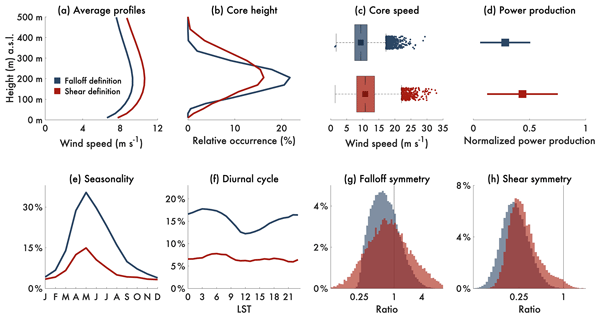
Low-level jets (LLJs) are special types of non-ideal wind profiles affecting both wind energy production and loads on a wind turbine. However, among LLJ researchers, there is no consensus regarding which definition to use to identify these profiles. In this work, we compare two different ways of identifying the LLJ – the falloff definition and the shear definition – and argue why the shear definition is better suited to wind energy applications.
Christoffer Hallgren, Heiner Körnich, Stefan Ivanell, Ville Vakkari, and Erik Sahlée
Wind Energ. Sci. Discuss., https://doi.org/10.5194/wes-2023-129, https://doi.org/10.5194/wes-2023-129, 2023
Preprint withdrawn
Short summary
Short summary
Sometimes, the wind changes direction between the bottom and top part of a wind turbine. This affects both the power production and the loads on the turbine. In this study, a climatology of pronounced changes in wind direction across the rotor is created, focusing on Scandinavia. The weather conditions responsible for these changes in wind direction are investigated and the climatology is compared to measurements from two coastal sites, indicating an underestimation by the climatology.
Gonzalo Pablo Navarro Diaz, Alejandro Daniel Otero, Henrik Asmuth, Jens Nørkær Sørensen, and Stefan Ivanell
Wind Energ. Sci., 8, 363–382, https://doi.org/10.5194/wes-8-363-2023, https://doi.org/10.5194/wes-8-363-2023, 2023
Short summary
Short summary
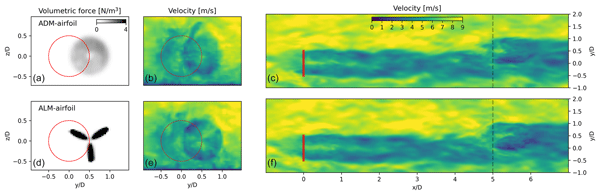
In this paper, the capacity to simulate transient wind turbine wake interaction problems using limited wind turbine data has been extended. The key novelty is the creation of two new variants of the actuator line technique in which the rotor blade forces are computed locally using generic load data. The analysis covers a partial wake interaction case between two wind turbines for a uniform laminar inflow and for a turbulent neutral atmospheric boundary layer inflow.
Christoffer Hallgren, Johan Arnqvist, Erik Nilsson, Stefan Ivanell, Metodija Shapkalijevski, August Thomasson, Heidi Pettersson, and Erik Sahlée
Wind Energ. Sci., 7, 1183–1207, https://doi.org/10.5194/wes-7-1183-2022, https://doi.org/10.5194/wes-7-1183-2022, 2022
Short summary
Short summary
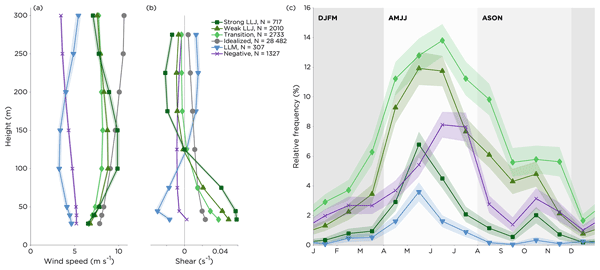
Non-idealized wind profiles with negative shear in part of the profile (e.g., low-level jets) frequently occur in coastal environments and are important to take into consideration for offshore wind power. Using observations from a coastal site in the Baltic Sea, we analyze in which meteorological and sea state conditions these profiles occur and study how they alter the turbulence structure of the boundary layer compared to idealized profiles.
Cited articles
Adekanye, D., Khan, A., Burns, A., McCaffrey, W., Geier, M., Schönherr, M., and Dorrell, R.: Graphics Processing Unit Accelerated Lattice Boltzmann Method Simulations of Dilute Gravity Currents, Phys. Fluids, 34, 046602, https://doi.org/10.1063/5.0082959, 2022. a
Ahmad, N. H., Inagaki, A., Kanda, M., Onodera, N., and Aoki, T.: Large-Eddy Simulation of the Gust Index in an Urban Area Using the Lattice Boltzmann Method, Bound.-Lay. Meteorol., 163, 447–467, https://doi.org/10.1007/s10546-017-0233-6, 2017. a
Arnqvist, J.: Mean Wind and Turbulence Conditions in the Boundary Layer above Forests, Ph.D. thesis, Uppsala University, 2015. a
Asmuth, H. and Korb, H.: WakeNet 0.1 – A Simple Three-dimensional Wake Model Based on Convolutional Neural Networks, J. Phys. Conf. Ser., 2265, 022066, https://doi.org/10.1088/1742-6596/2265/2/022066, 2022. a, b
Asmuth, H., Olivares-Espinosa, H., Nilsson, K., and Ivanell, S.: The Actuator Line Model in Lattice Boltzmann Frameworks: Numerical Sensitivity and Computational Performance, J. Phys. Conf. Ser., 1256, 012022, https://doi.org/10.1088/1742-6596/1256/1/012022, 2019. a, b
Asmuth, H., Janßen, C. F., Olivares-Espinosa, H., Nilsson, K., and Ivanell, S.: Assessment of Weak Compressibility in Actuator Line Simulations of Wind Turbine Wakes, J. Phys. Conf. Ser., 1618, 062057, https://doi.org/10.1088/1742-6596/1618/6/062057, 2020a. a, b, c
Asmuth, H., Navarro Diaz, G. P., Madsen, H. A., Branlard, E., Meyer Forsting, A. R., Nilsson, K., Jonkman, J., and Ivanell, S.: Wind Turbine Response in Waked Inflow: A Modelling Benchmark against Full-Scale Measurements, Renewable Energy, 191, 868–887, https://doi.org/10.1016/j.renene.2022.04.047, 2022. a, b
Bailey, P., Myre, J., Walsh, S. D., Lilja, D. J., and Saar, M. O.: Accelerating Lattice Boltzmann Fluid Flow Simulations Using Graphics Processors, in: 2009 International Conference on Parallel Processing, 550–557, https://doi.org/10.1109/ICPP.2009.38, 2009. a
Bak, C., Bitsche, R., Yde, A., Kim, T., Hansen, M. H., Zahle, F., Gaunaa, M., Blasques, J. P. A. A., Døssing, M., and Heinen, J.-J. W.: Light Rotor: The 10-MW Reference Wind Turbine, in: EWEA 2012-European Wind Energy Conference & Exhibition, European Wind Energy Association (EWEA), 16–19 April 2012, Copenhagen, Denmark, 2012. a
Benzi, R. and Succi, S.: Two-Dimensional Turbulence with the Lattice Boltzmann Equation, J. Phys. A, 23, L1, https://doi.org/10.1088/0305-4470/23/1/001, 1990. a
Bernaschi, M., Fatica, M., Melchionna, S., Succi, S., and Kaxiras, E.: A Flexible High-Performance Lattice Boltzmann GPU Code for the Simulations of Fluid Flows in Complex Geometries, Concurrency and Computation: Practice and Experience, 22, 1–14, https://doi.org/10.1002/cpe.1466, 2010. a, b
Bhatnagar, P. L., Gross, E. P., and Krook, M.: A Model for Collision Processes in Gases. I. Small Amplitude Processes in Charged and Neutral One-Component Systems, Phys. Rev., 94, 511–525, https://doi.org/10.1103/PhysRev.94.511, 1954. a
Boltzmann, L.: Weitere Studien über das Wärmegleichgewicht unter Gasmolekülen, Sitzungsberiche der Kaiserlichen Akademie der Wissenschaften Wien, II, 275–370, 1872. a
Bou-Zeid, E., Meneveau, C., and Parlange, M.: A Scale-Dependent Lagrangian Dynamic Model for Large Eddy Simulation of Complex Turbulent Flows, Phys. Fluids, 17, 025105, https://doi.org/10.1063/1.1839152, 2005. a
Bouzidi, M., Firdaouss, M., and Lallemand, P.: Momentum Transfer of a Boltzmann-lattice Fluid with Boundaries, Phys. Fluids, 13, 3452–3459, https://doi.org/10.1063/1.1399290, 2001. a
Buffa, E., Jacob, J., and Sagaut, P.: Lattice-Boltzmann-based Large-Eddy Simulation of High-Rise Building Aerodynamics with Inlet Turbulence Reconstruction, Journal of Wind Engineering and Industrial Aerodynamics, 212, 104560, https://doi.org/10.1016/j.jweia.2021.104560, 2021. a
Chen, Z., Shu, C., and Tan, D.: Three-Dimensional Simplified and Unconditionally Stable Lattice Boltzmann Method for Incompressible Isothermal and Thermal Flows, Phys. Fluids, 29, 053601, https://doi.org/10.1063/1.4983339, 2017. a
Chester, S., Meneveau, C., and Parlange, M. B.: Modeling Turbulent Flow over Fractal Trees with Renormalized Numerical Simulation, J. Comput. Phys., 225, 427–448, https://doi.org/10.1016/j.jcp.2006.12.009, 2007. a
Colonius, T.: Modeling Artificial Boundary Conditions for Compressible Flow, Annu. Rev. Fluid Mech., 36, 315–345, https://doi.org/10.1146/annurev.fluid.36.050802.121930, 2004. a
Coreixas, C., Wissocq, G., Puigt, G., Boussuge, J.-F., and Sagaut, P.: Recursive Regularization Step for High-Order Lattice Boltzmann Methods, Phys. Rev. E, 96, 033306, https://doi.org/10.1103/PhysRevE.96.033306, 2017. a
Coreixas, C., Chopard, B., and Latt, J.: Comprehensive Comparison of Collision Models in the Lattice Boltzmann Framework: Theoretical Investigations, Phys. Rev. E, 100, 033305, https://doi.org/10.1103/PhysRevE.100.033305, 2019. a, b
Coreixas, C., Wissocq, G., Chopard, B., and Latt, J.: Impact of Collision Models on the Physical Properties and the Stability of Lattice Boltzmann Methods, Philos. T. Roy. Soc. A, 378, 20190397, https://doi.org/10.1098/rsta.2019.0397, 2020. a
Cui, X., Mao, H., Wang, Z., Yang, H., Qian, Y., Wei, Y., and Zhang, Y.: Effect of the Tip Speed Ratio on the Wake Characteristics of Wind Turbines Using LBM-LES, Energy Science & Engineering, 12, 1638–1661, https://doi.org/10.1002/ese3.1693, 2024. a
Deardorff, J. W.: Stratocumulus-Capped Mixed Layers Derived from a Three-Dimensional Model, Bound.-Lay. Meteorol., 18, 495–527, https://doi.org/10.1007/BF00119502, 1980. a, b
Degrigny, J., Cai, S.-G., Boussuge, J.-F., and Sagaut, P.: Improved Wall Model Treatment for Aerodynamic Flows in LBM, Comput. Fluids, 227, 105041, https://doi.org/10.1016/j.compfluid.2021.105041, 2021. a, b
Deiterding, R. and Wood, S. L.: An Adaptive Lattice Boltzmann Method for Predicting Wake Fields Behind Wind Turbines, in: New Results in Numerical and Experimental Fluid Mechanics X, edited by: Dillmann, A., Heller, G., Krämer, E., Wagner, C., and Breitsamter, C., Notes on Numerical Fluid Mechanics and Multidisciplinary Design, 845–857, Springer International Publishing, Cham, ISBN 978-3-319-27279-5, https://doi.org/10.1007/978-3-319-27279-5_74, 2016a. a, b
Deiterding, R. and Wood, S. L.: Predictive Wind Turbine Simulation with an Adaptive Lattice Boltzmann Method for Moving Boundaries, J. Phys. Conf. Ser., 753, 082005, https://doi.org/10.1088/1742-6596/753/8/082005, 2016b. a, b
Dellar, P. J.: An Interpretation and Derivation of the Lattice Boltzmann Method Using Strang Splitting, Computers & Mathematics with Applications, 65, 129–141, https://doi.org/10.1016/j.camwa.2011.08.047, 2013. a
d'Humières, D.: Generalized Lattice-Boltzmann Equations, in: Rarefied Gas Dynamics: Theory and Simulations, Progress in Astronautics and Aeronautics, 450–458, American Institute of Aeronautics and Astronautics, ISBN 978-1-56347-080-6, 1994. a
Dighe, V. V., Avallone, F., and van Bussel, G.: Effects of Yawed Inflow on the Aerodynamic and Aeroacoustic Performance of Ducted Wind Turbines, Journal of Wind Engineering and Industrial Aerodynamics, 201, 104174, https://doi.org/10.1016/j.jweia.2020.104174, 2020. a
Doubrawa, P., Quon, E. W., Martinez-Tossas, L. A., Shaler, K., Debnath, M., Hamilton, N., Herges, T. G., Maniaci, D., Kelley, C. L., Hsieh, A. S., Blaylock, M. L., van der Laan, P., Andersen, S. J., Krueger, S., Cathelain, M., Schlez, W., Jonkman, J., Branlard, E., Steinfeld, G., Schmidt, S., Blondel, F., Lukassen, L. J., and Moriarty, P.: Multimodel Validation of Single Wakes in Neutral and Stratified Atmospheric Conditions, Wind Energy, 23, 2027–2055, https://doi.org/10.1002/we.2543, 2020. a, b
Dubois, F., Fevrier, T., and Graille, B.: Lattice Boltzmann Schemes with Relative Velocities, Communications in Computational Physics, 17, 1088–1112, https://doi.org/10.4208/cicp.2014.m394, 2015. a
Elgendi, M., AlMallahi, M., Abdelkhalig, A., and Selim, M. Y. E.: A Review of Wind Turbines in Complex Terrain, Int. J. Thermofluids, 17, 100289, https://doi.org/10.1016/j.ijft.2023.100289, 2023. a
Fan, Z., Qiu, F., Kaufman, A., and Yoakum-Stover, S.: GPU Cluster for High Performance Computing, in: SC '04: Proceedings of the 2004 ACM/IEEE Conference on Supercomputing, 47–47, https://doi.org/10.1109/SC.2004.26, 2004. a, b, c
Feng, Y., Boivin, P., Jacob, J., and Sagaut, P.: Hybrid Recursive Regularized Lattice Boltzmann Simulation of Humid Air with Application to Meteorological Flows, Phys. Rev. E, 100, 023304, https://doi.org/10.1103/PhysRevE.100.023304, 2019a. a, b, c, d
Feng, Y., Guo, S., Jacob, J., and Sagaut, P.: Solid Wall and Open Boundary Conditions in Hybrid Recursive Regularized Lattice Boltzmann Method for Compressible Flows, Phys. Fluids, 31, 126103, https://doi.org/10.1063/1.5129138, 2019b. a
Feng, Y., Guo, S., Jacob, J., and Sagaut, P.: Grid Refinement in the Three-Dimensional Hybrid Recursive Regularized Lattice Boltzmann Method for Compressible Aerodynamics, Phys. Rev. E, 101, 063302, https://doi.org/10.1103/PhysRevE.101.063302, 2020. a
Feng, Y., Miranda-Fuentes, J., Jacob, J., and Sagaut, P.: Hybrid Lattice Boltzmann Model for Atmospheric Flows under Anelastic Approximation, Phys. Fluids, 33, 036607, https://doi.org/10.1063/5.0039516, 2021b. a, b
Feng, Z.-G. and Michaelides, E. E.: Proteus: A Direct Forcing Method in the Simulations of Particulate Flows, J. Comput. Phys., 202, 20–51, https://doi.org/10.1016/j.jcp.2004.06.020, 2005. a
Filippova, O. and Hänel, D.: Grid Refinement for Lattice-BGK Models, J. Comput. Phys., 147, 219–228, https://doi.org/10.1006/jcph.1998.6089, 1998a. a
Filippova, O. and Hänel, D.: Lattice-BGK Model for Low Mach Number Combustion, Int. J. Modern Phys. C, 09, 1439–1445, https://doi.org/10.1142/S0129183198001308, 1998b. a
Filippova, O. and Hänel, D.: A Novel Lattice BGK Approach for Low Mach Number Combustion, J. Comput. Phys., 158, 139–160, https://doi.org/10.1006/jcph.1999.6405, 2000. a
Frapolli, N., Chikatamarla, S. S., and Karlin, I. V.: Entropic Lattice Boltzmann Model for Gas Dynamics: Theory, Boundary Conditions, and Implementation, Phys. Rev. E, 93, 063302, https://doi.org/10.1103/PhysRevE.93.063302, 2016. a
Freitas, R. K., Henze, A., Meinke, M., and Schröder, W.: Analysis of Lattice-Boltzmann Methods for Internal Flows, Comput. Fluids, 47, 115–121, https://doi.org/10.1016/j.compfluid.2011.02.019, 2011. a
Gadde, S. N., Stieren, A., and Stevens, R. J. A. M.: Large-Eddy Simulations of Stratified Atmospheric Boundary Layers: Comparison of Different Subgrid Models, Bound.-Lay. Meteorol., 178, 363–382, https://doi.org/10.1007/s10546-020-00570-5, 2021. a, b
Gehrke, M. and Rung, T.: Periodic Hill Flow Simulations with a Parameterized Cumulant Lattice Boltzmann Method, International Journal for Numerical Methods in Fluids, 94, 1111–1154, https://doi.org/10.1002/fld.5085, 2022a. a, b, c
Gehrke, M. and Rung, T.: Scale-Resolving Turbulent Channel Flow Simulations Using a Dynamic Cumulant Lattice Boltzmann Method, Phys. Fluids, 34, 5.0098032, https://doi.org/10.1063/5.0098032, 2022b. a, b, c
Gehrke, M., Janßen, C. F., and Rung, T.: Scrutinizing Lattice Boltzmann Methods for Direct Numerical Simulations of Turbulent Channel Flows, Comput. Fluids, 156, 247–263, https://doi.org/10.1016/j.compfluid.2017.07.005, 2017. a, b
Geier, M. and Pasquali, A.: Fourth Order Galilean Invariance for the Lattice Boltzmann Method, Comput. Fluids, 166, 139–151, https://doi.org/10.1016/j.compfluid.2018.01.015, 2018. a, b
Geier, M. and Schönherr, M.: Esoteric Twist: An Efficient in-Place Streaming Algorithmus for the Lattice Boltzmann Method on Massively Parallel Hardware, Computation, 5, 19, https://doi.org/10.3390/computation5020019, 2017. a
Geier, M., Greiner, A., and Korvink, J. G.: Cascaded Digital Lattice Boltzmann Automata for High Reynolds Number Flow, Phys. Rev. E, 73, 066705, https://doi.org/10.1103/PhysRevE.73.066705, 2006. a
Geier, M., Greiner, A., and Korvink, J. G.: Bubble Functions for the Lattice Boltzmann Method and Their Application to Grid Refinement, The European Physical Journal Special Topics, 171, 173–179, https://doi.org/10.1140/epjst/e2009-01026-6, 2009. a
Geier, M., Fakhari, A., and Lee, T.: Conservative Phase-Field Lattice Boltzmann Model for Interface Tracking Equation, Phys. Rev. E, 91, 063 309, https://doi.org/10.1103/PhysRevE.91.063309, 2015a. a
Geier, M., Schönherr, M., Pasquali, A., and Krafczyk, M.: The Cumulant Lattice Boltzmann Equation in Three Dimensions: Theory and Validation, Computers & Mathematics with Applications, 70, 507–547, https://doi.org/10.1016/j.camwa.2015.05.001, 2015b. a, b, c, d
Geier, M., Pasquali, A., and Schönherr, M.: Parametrization of the Cumulant Lattice Boltzmann Method for Fourth Order Accurate Diffusion Part I: Derivation and Validation, J. Comput. Phys., 348, 862–888, https://doi.org/10.1016/j.jcp.2017.05.040, 2017a. a
Geier, M., Pasquali, A., and Schönherr, M.: Parametrization of the Cumulant Lattice Boltzmann Method for Fourth Order Accurate Diffusion Part II: Application to Flow around a Sphere at Drag Crisis, J. Comput. Phys., 348, 889–898, https://doi.org/10.1016/j.jcp.2017.07.004, 2017b. a
Geier, M., Lenz, S., Schönherr, M., and Krafczyk, M.: Under-Resolved and Large Eddy Simulations of a Decaying Taylor–Green Vortex with the Cumulant Lattice Boltzmann Method, Theoretical and Computational Fluid Dynamics, https://doi.org/10.1007/s00162-020-00555-7, 2020. a, b, c
Gruszczyński, G. and Łaniewski-Wołłk, Ł.: A Comparative Study of 3D Cumulant and Central Moments Lattice Boltzmann Schemes with Interpolated Boundary Conditions for the Simulation of Thermal Flows in High Prandtl Number Regime, Int. J. Heat Mass T., 197, 123259, https://doi.org/10.1016/j.ijheatmasstransfer.2022.123259, 2022. a
Guo, J., Zhou, Q., and Wong, R. C.-K.: Direct Simulation of Stably Stratified Wall-Bounded Turbulence Using the Lattice Boltzmann Method, Phys. Fluids, 35, 045151, https://doi.org/10.1063/5.0147475, 2023. a
Guo, Z., Zheng, C., and Shi, B.: Discrete Lattice Effects on the Forcing Term in the Lattice Boltzmann Method, Phys. Rev. E, 65, 046308, https://doi.org/10.1103/PhysRevE.65.046308, 2002. a
Hajabdollahi, F. and Premnath, K. N.: Central Moments-Based Cascaded Lattice Boltzmann Method for Thermal Convective Flows in Three-Dimensions, Int. J. Heat Mass T., 120, 838–850, https://doi.org/10.1016/j.ijheatmasstransfer.2017.12.085, 2018. a
Han, M., Ooka, R., and Kikumoto, H.: Validation of Lattice Boltzmann Method-Based Large-Eddy Simulation Applied to Wind Flow around Single 1:1:2 Building Model, Journal of Wind Engineering and Industrial Aerodynamics, 206, 104277, https://doi.org/10.1016/j.jweia.2020.104277, 2020. a
Han, M., Ooka, R., and Kikumoto, H.: Effects of Wall Function Model in Lattice Boltzmann Method-Based Large-Eddy Simulation on Built Environment Flows, Build. Environ., 195, 107764, https://doi.org/10.1016/j.buildenv.2021.107764, 2021a. a, b
Han, M., Ooka, R., and Kikumoto, H.: A Wall Function Approach in Lattice Boltzmann Method: Algorithm and Validation Using Turbulent Channel Flow, Fluid Dynam. Res., 53, 045506, https://doi.org/10.1088/1873-7005/ac1782, 2021b. a, b
Harris, M.: Mapping Computational Concepts to GPUs, in: ACM SIGGRAPH 2005 Courses, SIGGRAPH '05, pp. 50–es, Association for Computing Machinery, New York, NY, USA, ISBN 978-1-4503-7833-8, https://doi.org/10.1145/1198555.1198768, 2005. a
Haupt, S. E., Kosovic, B., Shaw, W., Berg, L. K., Churchfield, M., Cline, J., Draxl, C., Ennis, B., Koo, E., Kotamarthi, R., Mazzaro, L., Mirocha, J., Moriarty, P., Muñoz-Esparza, D., Quon, E., Rai, R. K., Robinson, M., and Sever, G.: On Bridging A Modeling Scale Gap: Mesoscale to Microscale Coupling for Wind Energy, B. Am. Meteorol. Soc., 100, 2533–2550, https://doi.org/10.1175/BAMS-D-18-0033.1, 2019. a
Haussmann, M., Barreto, A. C., Kouyi, G. L., Rivière, N., Nirschl, H., and Krause, M. J.: Large-Eddy Simulation Coupled with Wall Models for Turbulent Channel Flows at High Reynolds Numbers with a Lattice Boltzmann Method — Application to Coriolis Mass Flowmeter, Computers & Mathematics with Applications, 78, 3285–3302, https://doi.org/10.1016/j.camwa.2019.04.033, 2019. a, b, c
Haussmann, M., Ries, F., Jeppener-Haltenhoff, J. B., Li, Y., Schmidt, M., Welch, C., Illmann, L., Böhm, B., Nirschl, H., Krause, M. J., and Sadiki, A.: Evaluation of a Near-Wall-Modeled Large Eddy Lattice Boltzmann Method for the Analysis of Complex Flows Relevant to IC Engines, Computation, 8, 43, https://doi.org/10.3390/computation8020043, 2020. a
Inagaki, A., Kanda, M., Ahmad, N. H., Yagi, A., Onodera, N., and Aoki, T.: A Numerical Study of Turbulence Statistics and the Structure of a Spatially-Developing Boundary Layer Over a Realistic Urban Geometry, Bound.-Lay. Meteorol., 164, 161–181, https://doi.org/10.1007/s10546-017-0249-y, 2017. a
Jacob, J. and Sagaut, P.: Wind Comfort Assessment by Means of Large Eddy Simulation with Lattice Boltzmann Method in Full Scale City Area, Build. Environ., 139, 110–124, https://doi.org/10.1016/j.buildenv.2018.05.015, 2018. a
Jacob, J., Malaspinas, O., and Sagaut, P.: A New Hybrid Recursive Regularised Bhatnagar–Gross–Krook Collision Model for Lattice Boltzmann Method-Based Large Eddy Simulation, Journal of Turbulence, 19, 1051–1076, https://doi.org/10.1080/14685248.2018.1540879, 2018. a
Jacob, J., Merlier, L., Marlow, F., and Sagaut, P.: Lattice Boltzmann Method-Based Simulations of Pollutant Dispersion and Urban Physics, Atmosphere, 12, 833, https://doi.org/10.3390/atmos12070833, 2021. a, b
Jahanshaloo, L., Pouryazdanpanah, E., and Che Sidik, N. A.: A Review on the Application of the Lattice Boltzmann Method for Turbulent Flow Simulation, Numerical Heat Transfer, Part A: Applications, 64, 938–953, https://doi.org/10.1080/10407782.2013.807690, 2013. a, b
Jin, Y., Uth, M. F., and Herwig, H.: Structure of a Turbulent Flow through Plane Channels with Smooth and Rough Walls: An Analysis Based on High Resolution DNS Results, Comput. Fluids, 107, 77–88, https://doi.org/10.1016/j.compfluid.2014.10.012, 2015. a
Kang, S. K. and Hassan, Y. A.: The Effect of Lattice Models within the Lattice Boltzmann Method in the Simulation of Wall-Bounded Turbulent Flows, J. Comput. Phys., 232, 100–117, https://doi.org/10.1016/j.jcp.2012.07.023, 2013. a, b
Kawai, S. and Larsson, J.: Wall-Modeling in Large Eddy Simulation: Length Scales, Grid Resolution, and Accuracy, Phys. Fluids, 24, 015105, https://doi.org/10.1063/1.3678331, 2012. a
Khan, A.: Finite Element Analysis of Aerodynamic Coefficients of a HAWT Blade Using LBM Method, in: DISRUPTIVE INNOVATION IN MECHANICAL ENGINEERING FOR INDUSTRY COMPETITIVENESS: Proceedings of the 3rd International Conference on Mechanical Engineering (ICOME 2017), Surabaya, Indonesia, 040007, https://doi.org/10.1063/1.5044317, 2018. a
King, M.-F., Khan, A., Delbosc, N., Gough, H. L., Halios, C., Barlow, J. F., and Noakes, C. J.: Modelling Urban Airflow and Natural Ventilation Using a GPU-based Lattice-Boltzmann Method, Build. Environ., 125, 273–284, https://doi.org/10.1016/j.buildenv.2017.08.048, 2017. a
Kobayashi, H.: The Subgrid-Scale Models Based on Coherent Structures for Rotating Homogeneous Turbulence and Turbulent Channel Flow, Phys. Fluids, 17, 045104, https://doi.org/10.1063/1.1874212, 2005. a
Korb, H., Asmuth, H., Stender, M., and Ivanell, S.: Exploring the Application of Reinforcement Learning to Wind Farm Control, J. Phys. Conf. Ser., 1934, 012022, https://doi.org/10.1088/1742-6596/1934/1/012022, 2021. a, b
Korb, H., Asmuth, H., and Ivanell, S.: The Characteristics of Helically Deflected Wind Turbine Wakes, J. Fluid Mech., 965, A2, https://doi.org/10.1017/jfm.2023.390, 2023a. a
Korb, H., Asmuth, H., and Ivanell, S.: Validation of a Lattice Boltzmann Solver Against Wind Turbine Response and Wake Measurements, J. Phys. Conf. Ser., 2505, 012008, https://doi.org/10.1088/1742-6596/2505/1/012008, 2023b. a, b, c, d
Krogstad, P.-Å. and Eriksen, P. E.: “Blind Test” Calculations of the Performance and Wake Development for a Model Wind Turbine, Renewable Energy, 50, 325–333, https://doi.org/10.1016/j.renene.2012.06.044, 2013. a
Kutscher, K., Geier, M., and Krafczyk, M.: Multiscale Simulation of Turbulent Flow Interacting with Porous Media Based on a Massively Parallel Implementation of the Cumulant Lattice Boltzmann Method, Comput. Fluids, 193, 103733, https://doi.org/10.1016/j.compfluid.2018.02.009, 2019. a
Lallemand, P. and Luo, L.-S.: Theory of the Lattice Boltzmann Method: Acoustic and Thermal Properties in Two and Three Dimensions, Phys. Rev. E, 68, 036706, https://doi.org/10.1103/PhysRevE.68.036706, 2003. a, b, c
Laloglu, C. and Alpman, E.: Mesh-Free Analysis of a Vertical Axis Wind Turbine Using Lattice Boltzmann Method and Various Turbulence Models, Appl. Sci., 13, 8800, https://doi.org/10.3390/app13158800, 2023. a
Lammers, P., Beronov, K., Volkert, R., Brenner, G., and Durst, F.: Lattice BGK Direct Numerical Simulation of Fully Developed Turbulence in Incompressible Plane Channel Flow, Comput. Fluids, 35, 1137–1153, https://doi.org/10.1016/j.compfluid.2005.10.002, 2006. a
Latt, J. and Chopard, B.: Lattice Boltzmann Method with Regularized Pre-Collision Distribution Functions, Mathematics and Computers in Simulation, 72, 165–168, https://doi.org/10.1016/j.matcom.2006.05.017, 2006. a, b
Latt, J., Chopard, B., Malaspinas, O., Deville, M., and Michler, A.: Straight Velocity Boundaries in the Lattice Boltzmann Method, Phys. Rev. E, 77, 056703, https://doi.org/10.1103/PhysRevE.77.056703, 2008. a
Lehmann, M.: Esoteric Pull and Esoteric Push: Two Simple In-Place Streaming Schemes for the Lattice Boltzmann Method on GPUs, Computation, 10, 92, https://doi.org/10.3390/computation10060092, 2022. a
Lehmann, M., Krause, M. J., Amati, G., Sega, M., Harting, J., and Gekle, S.: On the Accuracy and Performance of the Lattice Boltzmann Method with 64-Bit, 32-Bit and Novel 16-Bit Number Formats, Phys. Rev. E, 106, 015308, https://doi.org/10.1103/PhysRevE.106.015308, 2022. a, b
Lenz, S., Schönherr, M., Geier, M., Krafczyk, M., Pasquali, A., Christen, A., and Giometto, M.: Towards Real-Time Simulation of Turbulent Air Flow over a Resolved Urban Canopy Using the Cumulant Lattice Boltzmann Method on a GPGPU, Journal of Wind Engineering and Industrial Aerodynamics, 189, 151–162, https://doi.org/10.1016/j.jweia.2019.03.012, 2019. a, b, c
Lévêque, E., Toschi, F., Shao, L., and Bertoglio, J.-P.: Shear-Improved Smagorinsky Model for Large-Eddy Simulation of Wall-Bounded Turbulent Flows, J. Fluid Mech., 570, 491–502, https://doi.org/10.1017/S0022112006003429, 2007. a
Li, L., Xu, C., Shi, C., Han, X., and Shen, W.: Investigation of Wake Characteristics of the MEXICO Wind Turbine Using Lattice Boltzmann Method, Wind Energy, 24, 116–132, https://doi.org/10.1002/we.2560, 2021. a
Löhner, R.: Towards Overcoming the LES Crisis, International Journal of Computational Fluid Dynamics, 33, 87–97, https://doi.org/10.1080/10618562.2019.1612052, 2019. a
Malaspinas, O.: Increasing Stability and Accuracy of the Lattice Boltzmann Scheme: Recursivity and Regularization, arXiv:1505.06900 [physics], http://arxiv.org/abs/1505.06900 (last access: 6 March 2026), 2015. a
Malaspinas, O. and Sagaut, P.: Consistent Subgrid Scale Modelling for Lattice Boltzmann Methods, J. Fluid Mech., 700, 514–542, https://doi.org/10.1017/jfm.2012.155, 2012. a
Malaspinas, O. and Sagaut, P.: Wall Model for Large-Eddy Simulation Based on the Lattice Boltzmann Method, J. Comput. Phys., 275, 25–40, https://doi.org/10.1016/j.jcp.2014.06.020, 2014. a, b, c, d
Maronga, B., Knigge, C., and Raasch, S.: An Improved Surface Boundary Condition for Large-Eddy Simulations Based on Monin–Obukhov Similarity Theory: Evaluation and Consequences for Grid Convergence in Neutral and Stable Conditions, Bound.-Lay. Meteorol., 174, 297–325, https://doi.org/10.1007/s10546-019-00485-w, 2020. a
Martínez-Tossas, L. A., Churchfield, M. J., and Leonardi, S.: Large Eddy Simulations of the Flow Past Wind Turbines: Actuator Line and Disk Modeling, Wind Energy, 18, 1047–1060, https://doi.org/10.1002/we.1747, 2015. a
McNamara, G. R. and Zanetti, G.: Use of the Boltzmann Equation to Simulate Lattice-Gas Automata, Phys. Rev. Lett., 61, 2332–2335, https://doi.org/10.1103/PhysRevLett.61.2332, 1988. a
McNamara, G. R., Garcia, A. L., and Alder, B. J.: Stabilization of Thermal Lattice Boltzmann Models, J. Stat. Phys., 81, 395–408, https://doi.org/10.1007/BF02179986, 1995. a
Meyer Forsting, A. R., Pirrung, G. R., and Ramos-García, N.: A vortex-based tip/smearing correction for the actuator line, Wind Energ. Sci., 4, 369–383, https://doi.org/10.5194/wes-4-369-2019, 2019. a
Mezrhab, A., Bouzidi, M., and Lallemand, P.: Hybrid Lattice-Boltzmann Finite-Difference Simulation of Convective Flows, Comput. Fluids, 33, 623–641, https://doi.org/10.1016/j.compfluid.2003.05.001, 2004. a
Mikkelsen, R. F.: Actuator Disc Methods Applied to Wind Turbines, Ph.D. thesis, Technical University Denmark, 2003. a
Mohammadi, M. M., Olivares-Espinosa, H., Navarro Diaz, G. P., and Ivanell, S.: An actuator sector model for wind power applications: a parametric study, Wind Energ. Sci., 9, 1305–1321, https://doi.org/10.5194/wes-9-1305-2024, 2024. a
Musker, A. J.: Explicit Expression for the Smooth Wall Velocity Distribution in a Turbulent Boundary Layer, AIAA Journal, 17, 655–657, https://doi.org/10.2514/3.61193, 1979. a
Nathen, P., Gaudlitz, D., Krause, M. J., and Adams, N. A.: On the Stability and Accuracy of the BGK, MRT and RLB Boltzmann Schemes for the Simulation of Turbulent Flows, Communications in Computational Physics, 23, 846–876, https://doi.org/10.4208/cicp.OA-2016-0229, 2018. a
Nicoud, F. and Ducros, F.: Subgrid-Scale Stress Modelling Based on the Square of the Velocity Gradient Tensor, Flow, Turbulence and Combustion, 62, 183–200, https://doi.org/10.1023/A:1009995426001, 1999. a
Obrecht, C., Kuznik, F., Tourancheau, B., and Roux, J.-J.: The TheLMA Project: A Thermal Lattice Boltzmann Solver for the GPU, Comput. Fluids, 54, 118–126, https://doi.org/10.1016/j.compfluid.2011.10.011, 2012. a
Obrecht, C., Kuznik, F., Tourancheau, B., and Roux, J.-J.: Multi-GPU Implementation of the Lattice Boltzmann Method, Computers & Mathematics with Applications, 65, 252–261, https://doi.org/10.1016/j.camwa.2011.02.020, 2013. a, b
Obrecht, C., Kuznik, F., Merlier, L., Roux, J.-J., and Tourancheau, B.: Towards Aeraulic Simulations at Urban Scale Using the Lattice Boltzmann Method, Environ. Fluid Mech., 15, 753–770, https://doi.org/10.1007/s10652-014-9381-0, 2015. a
Onodera, N. and Idomura, Y.: Acceleration of Wind Simulation Using Locally Mesh-Refined Lattice Boltzmann Method on GPU-Rich Supercomputers, in: Supercomputing Frontiers, edited by: Yokota, R. and Wu, W., Lecture Notes in Computer Science, 128–145, Springer International Publishing, Cham, ISBN 978-3-319-69953-0, https://doi.org/10.1007/978-3-319-69953-0_8, 2018. a, b
Onodera, N., Idomura, Y., Ali, Y., and Shimokawabe, T.: Communication Reduced Multi-time-step Algorithm for Real-Time Wind Simulation on GPU-based Supercomputers, in: 2018 IEEE/ACM 9th Workshop on Latest Advances in Scalable Algorithms for Large-Scale Systems (scalA), 9–16, https://doi.org/10.1109/ScalA.2018.00005, 2018. a, b, c
Onodera, N., Idomura, Y., Hasegawa, Y., Nakayama, H., Shimokawabe, T., and Aoki, T.: Real-Time Tracer Dispersion Simulations in Oklahoma City Using the Locally Mesh-Refined Lattice Boltzmann Method, Bound.-Lay. Meteorol., 179, 187–208, https://doi.org/10.1007/s10546-020-00594-x, 2021. a, b, c
Pasquali, A., Geier, M., and Krafczyk, M.: Near-Wall Treatment for the Simulation of Turbulent Flow by the Cumulant Lattice Boltzmann Method, Computers & Mathematics with Applications, 79, 195–212, https://doi.org/10.1016/j.camwa.2017.11.022, 2020. a, b
Perot, F., Kim, M.-S., and Meskine, M.: NREL Wind Turbine Aerodynamics Validation and Noise Predictions Using a Lattice Boltzmann Method, in: 18th AIAA/CEAS Aeroacoustics Conference (33rd AIAA Aeroacoustics Conference), American Institute of Aeronautics and Astronautics, https://doi.org/10.2514/6.2012-2290, 2012. a, b
Peskin, C. S.: The Immersed Boundary Method, Acta Numerica, 11, 479–517, https://doi.org/10.1017/S0962492902000077, 2002. a
Qian, Y. H.: Simulating Thermohydrodynamics with Lattice BGK Models, J. Sci. Comput., 8, 231–242, https://doi.org/10.1007/BF01060932, 1993. a
Qiu, L., Zhang, P., and Galindo-Torres, S. A.: A Multi-Rigid Body Approach for Actuator Line Model with Controls in a Lattice Boltzmann Framework for Wind Turbine Modeling, Phys. Fluids, 37, 045113, https://doi.org/10.1063/5.0259977, 2025. a, b
Reichardt, H.: Vollständige Darstellung der turbulenten Geschwindigkeitsverteilung in glatten Leitungen, ZAMM – Journal of Applied Mathematics and Mechanics/Zeitschrift für Angewandte Mathematik und Mechanik, 31, 208–219, https://doi.org/10.1002/zamm.19510310704, 1951. a
Ren, F., Song, B., and Hu, H.: Lattice Boltzmann Simulations of Turbulent Channel Flow and Heat Transport by Incorporating the Vreman Model, Applied Thermal Engineering, 129, 463–471, https://doi.org/10.1016/j.applthermaleng.2017.10.059, 2018. a
Reyes Barraza, J. A. and Deiterding, R.: Towards a Generalised Lattice Boltzmann Method for Aerodynamic Simulations, J. Comput. Sci., 45, 101182, https://doi.org/10.1016/j.jocs.2020.101182, 2020. a
Ribeiro, A. F. P. and Muscari, C.: Sliding Mesh Simulations of a Wind Turbine Rotor with Actuator Line Lattice-Boltzmann Method, Wind Energy, 27, 1115–1129, https://doi.org/10.1002/we.2821, 2023. a, b
Ribeiro, A. F. P., Leweke, T., Abraham, A., Sørensen, J. N., and Mikkelsen, R. F.: Blade-Resolved and Actuator Line Simulations of Rotor Wakes, Comput. Fluids, 287, 106477, https://doi.org/10.1016/j.compfluid.2024.106477, 2025. a, b
Rozema, W., Bae, H. J., Moin, P., and Verstappen, R.: Minimum-Dissipation Models for Large-Eddy Simulation, Phys. Fluids, 27, 085107, https://doi.org/10.1063/1.4928700, 2015. a
Rullaud, S., Blondel, F., and Cathelain, M.: Actuator-Line Model in a Lattice Boltzmann Framework for Wind Turbine Simulations, J. Phys. Conf. Ser., 1037, 022023, https://doi.org/10.1088/1742-6596/1037/2/022023, 2018. a
Saadat, M. H., Bösch, F., and Karlin, I. V.: Semi-Lagrangian Lattice Boltzmann Model for Compressible Flows on Unstructured Meshes, Phys. Rev. E, 101, 023311, https://doi.org/10.1103/PhysRevE.101.023311, 2020. a
Sagaut, P.: Toward Advanced Subgrid Models for Lattice-Boltzmann-based Large-eddy Simulation: Theoretical Formulations, Computers & Mathematics with Applications, 59, 2194–2199, https://doi.org/10.1016/j.camwa.2009.08.051, 2010. a
Sathe, A., Mann, J., Barlas, T., Bierbooms, W., and van Bussel, G.: Influence of Atmospheric Stability on Wind Turbine Loads, Wind Energy, 16, 1013–1032, https://doi.org/10.1002/we.1528, 2013. a
Sauer, J. A. and Muñoz-Esparza, D.: The FastEddy® Resident-GPU Accelerated Large-Eddy Simulation Framework: Model Formulation, Dynamical-Core Validation and Performance Benchmarks, J. Adv. Model. Earth Sy., 12, e2020MS002100, https://doi.org/10.1029/2020MS002100, 2020. a, b, c, d
Schalkwijk, J., Griffith, E. J., Post, F. H., and Jonker, H. J. J.: High-Performance Simulations of Turbulent Clouds on a Desktop PC: Exploiting the GPU, B. Am. Meteorol. Soc., 93, 307–314, 2012. a
Schönherr, M., Kucher, K., Geier, M., Stiebler, M., Freudiger, S., and Krafczyk, M.: Multi-Thread Implementations of the Lattice Boltzmann Method on Non-Uniform Grids for CPUs and GPUs, Computers & Mathematics with Applications, 61, 3730–3743, https://doi.org/10.1016/j.camwa.2011.04.012, 2011. a
Schottenhamml, H., Anciaux-Sedrakian, A., Blondel, F., Borras-Nadal, A., Joulin, P.-A., and Rüde, U.: Evaluation of a Lattice Boltzmann-based Wind-Turbine Actuator Line Model against a Navier-Stokes Approach, J. Phys. Conf. Ser., 2265, 022027, https://doi.org/10.1088/1742-6596/2265/2/022027, 2022. a, b, c, d, e
Schottenhamml, H., Anciaux Sedrakian, A., Blondel, F., Köstler, H., and Rüde, U.: waLBerla-wind: A Lattice-Boltzmann-based High-Performance Flow Solver for Wind Energy Applications, Concurrency and Computation: Practice and Experience, 36, e8117, https://doi.org/10.1002/cpe.8117, 2024. a, b, c
Schubiger, A., Barber, S., and Nordborg, H.: Evaluation of the lattice Boltzmann method for wind modelling in complex terrain, Wind Energ. Sci., 5, 1507–1519, https://doi.org/10.5194/wes-5-1507-2020, 2020. a, b
Shan, X. and Chen, H.: Lattice Boltzmann Model for Simulating Flows with Multiple Phases and Components, Phys. Rev. E, 47, 1815–1819, https://doi.org/10.1103/PhysRevE.47.1815, 1993. a
Shan, X., Yuan, X.-F., and Chen, H.: Kinetic Theory Representation of Hydrodynamics: A Way beyond the Navier–Stokes Equation, J. Fluid Mech., 550, 413–441, https://doi.org/10.1017/S0022112005008153, 2006. a
Shao, X., Santasmasas, M. C., Xue, X., Niu, J., Davidson, L., Revell, A. J., and Yao, H.-D.: Near-Wall Modeling of Forests for Atmosphere Boundary Layers Using Lattice Boltzmann Method on GPU, Engineering Applications of Computational Fluid Mechanics, 16, 2143–2156, https://doi.org/10.1080/19942060.2022.2132420, 2022. a, b, c
Sharma, K. V., Straka, R., and Tavares, F. W.: Current Status of Lattice Boltzmann Methods Applied to Aerodynamic, Aeroacoustic, and Thermal Flows, Prog. Aerospace Sci., 115, 100616, https://doi.org/10.1016/j.paerosci.2020.100616, 2020. a, b
Smagorinsky, J.: GENERAL CIRCULATION EXPERIMENTS WITH THE PRIMITIVE EQUATIONS: I. THE BASIC EXPERIMENT, Mon. Weather Rev., 91, 99–164, https://doi.org/10.1175/1520-0493(1963)091<0099:GCEWTP>2.3.CO;2, 1963. a
Sørensen, J. N. and Myken, A.: Unsteady Actuator Disc Model for Horizontal Axis Wind Turbines, Journal of Wind Engineering and Industrial Aerodynamics, 39, 139–149, https://doi.org/10.1016/0167-6105(92)90540-Q, 1992. a, b
Sørensen, J. N. and Shen, W. Z.: Numerical Modeling of Wind Turbine Wakes, J. Fluids Eng., 124, 393–399, https://doi.org/10.1115/1.1471361, 2002. a, b
Spalding, D. B.: A Single Formula for the “Law of the Wall”, J. Appl. Mech., 28, 455–458, https://doi.org/10.1115/1.3641728, 1961. a
Spinelli, G. G., Horstmann, T., Masilamani, K., Soni, M. M., Klimach, H., Stück, A., and Roller, S.: HPC Performance Study of Different Collision Models Using the Lattice Boltzmann Solver Musubi, Comput. Fluids, 255, 105833, https://doi.org/10.1016/j.compfluid.2023.105833, 2023. a, b
Spinelli, G. G., Gericke, J., Masilamani, K., and Klimach, H. G.: Key Ingredients for Wall-Modeled LES with the Lattice Boltzmann Method: Systematic Comparison of Collision Schemes, SGS Models, and Wall Functions on Simulation Accuracy and Efficiency for Turbulent Channel Flow, Discrete and Continuous Dynamical Systems – S, 17, 3224–3251, https://doi.org/10.3934/dcdss.2023212, 2024. a
Sprague, M. A., Ananthan, S., Vijayakumar, G., and Robinson, M.: ExaWind: A Multifidelity Modeling and Simulation Environment for Wind Energy, J. Phys. Conf. Ser., 1452, 012071, https://doi.org/10.1088/1742-6596/1452/1/012071, 2020. a
St. Martin, C. M., Lundquist, J. K., Clifton, A., Poulos, G. S., and Schreck, S. J.: Wind turbine power production and annual energy production depend on atmospheric stability and turbulence, Wind Energ. Sci., 1, 221–236, https://doi.org/10.5194/wes-1-221-2016, 2016. a
Stoll, R., Gibbs, J. A., Salesky, S. T., Anderson, W., and Calaf, M.: Large-Eddy Simulation of the Atmospheric Boundary Layer, Bound.-Lay. Meteorol., 177, 541–581, https://doi.org/10.1007/s10546-020-00556-3, 2020. a
Swift, M. R., Osborn, W. R., and Yeomans, J. M.: Lattice Boltzmann Simulation of Nonideal Fluids, Phys. Rev. Lett., 75, 830–833, https://doi.org/10.1103/PhysRevLett.75.830, 1995. a
van den Berg, G. P.: Wind Turbine Power and Sound in Relation to Atmospheric Stability, Wind Energy, 11, 151–169, https://doi.org/10.1002/we.240, 2008. a
Van Leer, B.: Towards the Ultimate Conservative Difference Scheme. IV. A New Approach to Numerical Convection, J. Comput. Phys., 23, 276–299, https://doi.org/10.1016/0021-9991(77)90095-X, 1977. a
Venkatraman, K., Moreau, S., Christophe, J., and Schram, C.: H-Darrieus Vertical Axis Wind Turbine Power Prediction Using the Lattice Boltzmann Approach, 2022. a
Venkatraman, K., Moreau, S., Christophe, J., and Schram, C.: Numerical Investigation of H-Darrieus Wind Turbine Aerodynamics at Different Tip Speed Ratios, International Journal of Numerical Methods for Heat & Fluid Flow, 33, 1489–1512, https://doi.org/10.1108/HFF-09-2022-0562, 2023a. a
Venkatraman, K., Moreau, S., Christophe, J., and Schram, C. F.: Numerical Investigation of Aerodynamics and Aeroacoustics of Helical Darrieus Wind Turbines, in: AIAA AVIATION 2023 Forum, American Institute of Aeronautics and Astronautics, https://doi.org/10.2514/6.2023-3641, 2023b. a
Verstappen, R.: When Does Eddy Viscosity Damp Subfilter Scales Sufficiently?, J. Sci. Comput., 49, 94, https://doi.org/10.1007/s10915-011-9504-4, 2011. a
Vollmer, L., Steinfeld, G., and Kühn, M.: Transient LES of an offshore wind turbine, Wind Energ. Sci., 2, 603–614, https://doi.org/10.5194/wes-2-603-2017, 2017. a
Vreman, A. W.: An Eddy-Viscosity Subgrid-Scale Model for Turbulent Shear Flow: Algebraic Theory and Applications, Phys. Fluids, 16, 3670–3681, https://doi.org/10.1063/1.1785131, 2004. a
Wang, X., Shangguan, Y., Onodera, N., Kobayashi, H., and Aoki, T.: Direct Numerical Simulation and Large Eddy Simulation on a Turbulent Wall-Bounded Flow Using Lattice Boltzmann Method and Multiple GPUs, Mathematical Problems in Engineering, 2014, e742432, https://doi.org/10.1155/2014/742432, 2014. a
Wang, Y., Decker, J., and Pardyjak, E. R.: Large-Eddy Simulations of Turbulent Flows around Buildings Using the Atmospheric Boundary Layer Environment–Lattice Boltzmann Model (ABLE-LBM), J. Appl. Meteorol. Climatol., 59, 885–899, https://doi.org/10.1175/JAMC-D-19-0161.1, 2020a. a
Wang, Y., MacCall, B. T., Hocut, C. M., Zeng, X., and Fernando, H. J. S.: Simulation of Stratified Flows over a Ridge Using a Lattice Boltzmann Model, Environ. Fluid Mech., 20, 1333–1355, https://doi.org/10.1007/s10652-018-9599-3, 2020b. a
Wang, Y., Zeng, X., Decker, J., and Dawson, L.: A GPU-Implemented Lattice Boltzmann Model for Large Eddy Simulation of Turbulent Flows in and around Forest Shelterbelts, Atmosphere, 15, 735, https://doi.org/10.3390/atmos15060735, 2024. a
Wang, Z., Jacob, J., Marlow, F., and Sagaut, P.: Lattice Boltzmann Method-Based Large Eddy Simulation of the Influence of Atmospheric Stability on Wind Farm Wake, Phys. Fluids, 37, 065131, https://doi.org/10.1063/5.0270368, 2025. a, b
Watanabe, S. and Hu, C.: Lattice Boltzmann Simulation for Wake Interactions of Aligned Wind Turbines Using Actuator Line Model with Turbine Control, J. Phys. Conf. Ser., 2767, 052020, https://doi.org/10.1088/1742-6596/2767/5/052020, 2024. a, b, c, d
Watanabe, S. and Hu, C.: Large Eddy Simulations for Offshore Wind Farm Using Lattice Boltzmann Method and Actuator Line Model, Ocean Eng., 339, 122125, https://doi.org/10.1016/j.oceaneng.2025.122125, 2025. a, b, c
Watanabe, S., Yoshikawa, M., and Hu, C.: CFD Simulation of a Multi-Rotor System Using Diffuser Augmented Wind Turbines by Lattice Boltzmann Method, J. Phys. Conf. Ser., 2767, 072002, https://doi.org/10.1088/1742-6596/2767/7/072002, 2024. a
Watanabe, S., Kuranaga, H., and Hu, C.: Actuator Line–Interpolated Bounce Back Approach in Lattice Boltzmann Method for Wind Turbine Wake Simulation, Comput. Fluids, 305, 106901, https://doi.org/10.1016/j.compfluid.2025.106901, 2025. a
Watanabe, S., Kuranaga, H., and Hu, C.: Actuator Line – Interpolated Bounce Back Approach in Lattice Boltzmann Method for Wind Turbine Wake Simulation, Comput. Fluids, 305, 106901, https://doi.org/10.1016/j.compfluid.2025.106901, 2026. a
Watanabe, T., Shimoyama, K., Kawashima, M., Mizoguchi, Y., and Inagaki, A.: Large-Eddy Simulation of Neutrally-Stratified Turbulent Flow Within and Above Plant Canopy Using the Central-Moments-Based Lattice Boltzmann Method, Bound.-Lay. Meteorol., 176, 35–60, https://doi.org/10.1007/s10546-020-00519-8, 2020. a, b, c
Watanabe, T., Takagi, M., Shimoyama, K., Kawashima, M., Onodera, N., and Inagaki, A.: Coherent Eddies Transporting Passive Scalars Through the Plant Canopy Revealed by Large-Eddy Simulations Using the Lattice Boltzmann Method, Bound.-Lay. Meteorol., 181, 39–71, https://doi.org/10.1007/s10546-021-00633-1, 2021. a
Wharton, S. and Lundquist, J. K.: Assessing Atmospheric Stability and Its Impacts on Rotor-Disk Wind Characteristics at an Onshore Wind Farm, Wind Energy, 15, 525–546, https://doi.org/10.1002/we.483, 2012. a
Wichmann, K.-R., Kronbichler, M., Löhner, R., and Wall, W. A.: A Runtime Based Comparison of Highly Tuned Lattice Boltzmann and Finite Difference Solvers, The International Journal of High Performance Computing Applications, 35, 370–390, https://doi.org/10.1177/10943420211006169, 2021. a
Wilhelm, S., Jacob, J., and Sagaut, P.: An Explicit Power-Law-Based Wall Model for Lattice Boltzmann Method–Reynolds-averaged Numerical Simulations of the Flow around Airfoils, Phys. Fluids, 30, 065111, https://doi.org/10.1063/1.5031764, 2018. a, b
Wissocq, G., Coreixas, C., and Boussuge, J.-F.: Linear Stability and Isotropy Properties of Athermal Regularized Lattice Boltzmann Methods, Phys. Rev. E, 102, 053305, https://doi.org/10.1103/PhysRevE.102.053305, 2020. a
Wolf-Gladrow, D.: A Lattice Boltzmann Equation for Diffusion, J. Stat. Phys., 79, 1023–1032, https://doi.org/10.1007/BF02181215, 1995. a
Wood, S. L. and Deiterding, R.: A Lattice Boltzmann Method for Horizontal Axis Wind Turbine Simulation, ISBN 978-85-66094-07-7, 2015. a
Wu, H., Wang, J., and Tao, Z.: Passive Heat Transfer in a Turbulent Channel Flow Simulation Using Large Eddy Simulation Based on the Lattice Boltzmann Method Framework, International Journal of Heat and Fluid Flow, 32, 1111–1119, https://doi.org/10.1016/j.ijheatfluidflow.2011.09.001, 2011. a, b
Wu, J. and Shu, C.: Implicit Velocity Correction-Based Immersed Boundary-Lattice Boltzmann Method and Its Applications, J. Comput. Phys., 228, 1963–1979, https://doi.org/10.1016/j.jcp.2008.11.019, 2009. a
Wu, W., Liu, X., Dai, Y., and Li, Q.: An In-Depth Quantitative Analysis of Wind Turbine Blade Tip Wake Flow Based on the Lattice Boltzmann Method, Environ. Sci. Pollut. Res., 28, 40103–40115, https://doi.org/10.1007/s11356-020-09511-8, 2021a. a
Wu, W., Liu, X., Liu, J., Zeng, S., Zhou, C., and Wang, X.: Investigation into Yaw Motion Influence of Horizontal-Axis Wind Turbine on Wake Flow Using LBM-LES, Energies, 14, 5248, https://doi.org/10.3390/en14175248, 2021b. a
Xu, H. and Sagaut, P.: Analysis of the Absorbing Layers for the Weakly-Compressible Lattice Boltzmann Methods, J. Comput. Phys., 245, 14–42, https://doi.org/10.1016/j.jcp.2013.02.051, 2013. a
Xu, J.: Wake Interaction of NREL Wind Turbines Using a Lattice Boltzmann Method, Sustainable Energy, 4, 1–6, https://doi.org/10.12691/rse-4-1-1, 2016. a, b
Xu, Q., Yang, H., Qian, Y., and Wei, Y.: Spatiotemporal Evolution of Wind Turbine Wake Characteristics at Different Inflow Velocities, Energies, 17, 357, https://doi.org/10.3390/en17020357, 2024. a
Xue, F., Xu, C., Jiao, Z., Wang, K., Wang, J., and Liu, Y.: Research on Wake Characteristics of NREL 5MW Wind Turbine with LBM-LES Method, IET Conference Proceedings, 2021, 922–931, https://doi.org/10.1049/icp.2021.2399, 2021. a
Xue, X., Yao, H.-D., and Davidson, L.: Wall-Modeled Large-Eddy Simulation Integrated with Synthetic Turbulence Generator for Multiple-Relaxation-Time Lattice Boltzmann Method, Phys. Fluids, 35, 065115, https://doi.org/10.1063/5.0153526, 2023. a
Yang, X., Mehmani, Y., Perkins, W. A., Pasquali, A., Schönherr, M., Kim, K., Perego, M., Parks, M. L., Trask, N., Balhoff, M. T., Richmond, M. C., Geier, M., Krafczyk, M., Luo, L.-S., Tartakovsky, A. M., and Scheibe, T. D.: Intercomparison of 3D Pore-Scale Flow and Solute Transport Simulation Methods, Adv. Water Resour., 95, 176–189, https://doi.org/10.1016/j.advwatres.2015.09.015, 2016. a
Ye, Q., Avallone, F., van der Velden, W., and Casalino, D.: Effect of Vortex Generators on NREL Wind Turbine: Aerodynamic Performance and Far-Field Noise, J. Phys. Conf. Ser., 1618, 052077, https://doi.org/10.1088/1742-6596/1618/5/052077, 2020. a
Yuan, C., Wang, J., Pan, Y., Chen, H., and Zhang, X.: Numerical Simulation of Wind Turbine Aerodynamic Characteristics under Wind Shear Based on Lattice-Boltzmann Method, E3S Web of Conferences, 248, 01070, https://doi.org/10.1051/e3sconf/202124801070, 2021. a
Zhiqiang, L., Yunke, W., Jie, H., Zhihong, Z., and Wenqi, C.: The Study on Performance and Aerodynamics of Micro Counter-Rotating HAWT, Energy, 161, 939–954, https://doi.org/10.1016/j.energy.2018.07.049, 2018. a
Short summary
The lattice Boltzmann method (LBM) is a new method for very fast and accurate wind farm flow simulations. However, information on this method is scattered, and recent developments are unknown among the wind energy community. This review structures the different aspects of the method and answers common questions about it for wind energy researchers. We find that many of the building blocks for a wind farm simulation tool are present and that the LBM is accurate and efficient.
The lattice Boltzmann method (LBM) is a new method for very fast and accurate wind farm flow...


Altmetrics
Final-revised paper
Preprint