
Articles | Volume 10, issue 12
https://doi.org/10.5194/wes-10-3001-2025
© Author(s) 2025. This work is distributed under
the Creative Commons Attribution 4.0 License.
the Creative Commons Attribution 4.0 License.
https://doi.org/10.5194/wes-10-3001-2025
© Author(s) 2025. This work is distributed under
the Creative Commons Attribution 4.0 License.
the Creative Commons Attribution 4.0 License.
Research article
| 
19 Dec 2025
Research article |
| 19 Dec 2025
| 19 Dec 2025
On the potential of aerodynamic pressure measurements for structural damage detection
Philip Franz
German Aerospace Center (DLR), Institute for the Protection of Terrestrial Infrastructures, Rathausallee 12, 53757 Sankt Augustin, Germany
Imad Abdallah
Institute of Structural Engineering, ETH Zürich, Stefano-Franscini-Platz 5, 8093 Zürich, Switzerland
Gregory Duthé
Institute of Structural Engineering, ETH Zürich, Stefano-Franscini-Platz 5, 8093 Zürich, Switzerland
Julien Deparday
Institute of Energy Technology, Eastern Switzerland University of Applied Sciences, Oberseestrasse 10, 8640 Rapperswil, Switzerland
Ali Jafarabadi
Institute of Structural Engineering, ETH Zürich, Stefano-Franscini-Platz 5, 8093 Zürich, Switzerland
Empa, Swiss Federal Laboratories for Materials Science and Technology, Überlandstrasse 129, 8600 Dübendorf, Switzerland
Xudong Jian
Future Resilient Systems, Singapore-ETH Centre, Singapore, 138602 Singapore
Max von Danwitz
German Aerospace Center (DLR), Institute for the Protection of Terrestrial Infrastructures, Rathausallee 12, 53757 Sankt Augustin, Germany
Alexander Popp
German Aerospace Center (DLR), Institute for the Protection of Terrestrial Infrastructures, Rathausallee 12, 53757 Sankt Augustin, Germany
Institute for Mathematics and Computer-Based Simulation (IMCS), University of the Bundeswehr Munich, Werner-Heisenberg-Weg 39, 85577 Neubiberg, Germany
Sarah Barber
Institute of Energy Technology, Eastern Switzerland University of Applied Sciences, Oberseestrasse 10, 8640 Rapperswil, Switzerland
Eleni Chatzi
CORRESPONDING AUTHOR

Institute of Structural Engineering, ETH Zürich, Stefano-Franscini-Platz 5, 8093 Zürich, Switzerland
Related authors
No articles found.
Nora Helbig, Florian Hammer, Gert-Jan Duine, Leila M. V. Carvalho, Charles Jones, Hugo Merzisen, Isabelle Gouttevin, and Sarah Barber
EGUsphere, https://doi.org/10.5194/egusphere-2026-5871, https://doi.org/10.5194/egusphere-2026-5871, 2026
This preprint is open for discussion and under review for Nonlinear Processes in Geophysics (NPG).
Short summary
Short summary
We enhanced DEVINE, a deep-learning wind downscaling model trained on atmospheric model simulations over synthetic topographies. Introducing wind direction-dependent input features enabled rotational data augmentation. We assess performance across unseen terrain, wind regimes and driving model data with station observations and atmospheric model simulations. DEVINE generalizes well when flow is primarily terrain-forced, but performance degrades under complex atmosphere-terrain interactions.

Sarah Barber, Shun Wang, Francesc Pozo, Yolanda Vidal, Marcela Rodrigues Machado, Amanda Aryda Silva Rodrigues de Sousa, Jefferson da Silva Coelho, Xukai Zhang, Yao-Teng Hu, Arash Noshadravan, Theodoros Varouxis, Mahmoud Abdelhak, Ramin Ghiasi, and Abdollah Malekjafarian
Wind Energ. Sci., 11, 2801–2816, https://doi.org/10.5194/wes-11-2801-2026, https://doi.org/10.5194/wes-11-2801-2026, 2026
Short summary
Short summary
WeDoWind is an open innovation ecosystem for enabling data sharing and alignment in the wind energy sector. In this work, a feasibility study of WeDoWind is presented, considering different technical, economic, legal, operational and scheduling aspects. The results showed strong governance, clear regulation, and promising scalability potential, but further progress is required to make it financially sustainable and to ensure adoption of the results in the sector.
Sarah Barber, Anna Maria Sempreviva, Jeffrey Clerc, and Anne Hegemann
Wind Energ. Sci. Discuss., https://doi.org/10.5194/wes-2025-159, https://doi.org/10.5194/wes-2025-159, 2025
Revised manuscript under review for WES
Short summary
Short summary
This paper explores how organisational culture shapes digitalisation in the wind energy sector. Based on a global survey and literature review, it finds that teams drive digital adoption more effectively than entire organisations, with companies ahead of universities. Size has little impact, but barriers such as limited budgets, vague strategies, and risk-averse leadership slow progress. The study offers practical recommendations to foster collaboration, innovation, and clear digital strategies.
Ana Fernandez-Navamuel, Nicolas Gorostidi, David Pardo, Vincenzo Nava, and Eleni Chatzi
Wind Energ. Sci., 10, 857–885, https://doi.org/10.5194/wes-10-857-2025, https://doi.org/10.5194/wes-10-857-2025, 2025
Short summary
Short summary
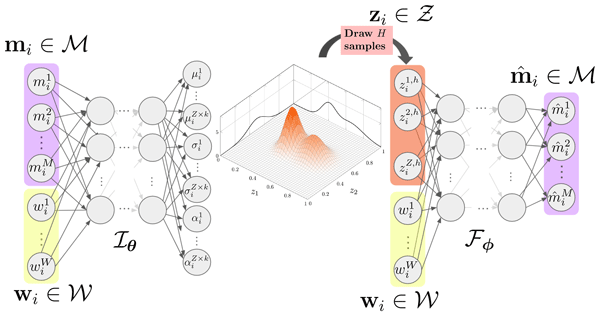
This work employs deep neural networks to identify damage in the mooring system of a floating offshore wind turbine using measurements from the platform response. We account for the effect of uncertainty caused by the existence of multiple solutions using a Gaussian mixture model to describe the damage condition estimates. The results reveal the capability of the methodology to discover the uncertainty in the assessment, which increases as the instrumentation system becomes more limited.
Yuriy Marykovskiy, Thomas Clark, Justin Day, Marcus Wiens, Charles Henderson, Julian Quick, Imad Abdallah, Anna Maria Sempreviva, Jean-Paul Calbimonte, Eleni Chatzi, and Sarah Barber
Wind Energ. Sci., 9, 883–917, https://doi.org/10.5194/wes-9-883-2024, https://doi.org/10.5194/wes-9-883-2024, 2024
Short summary
Short summary
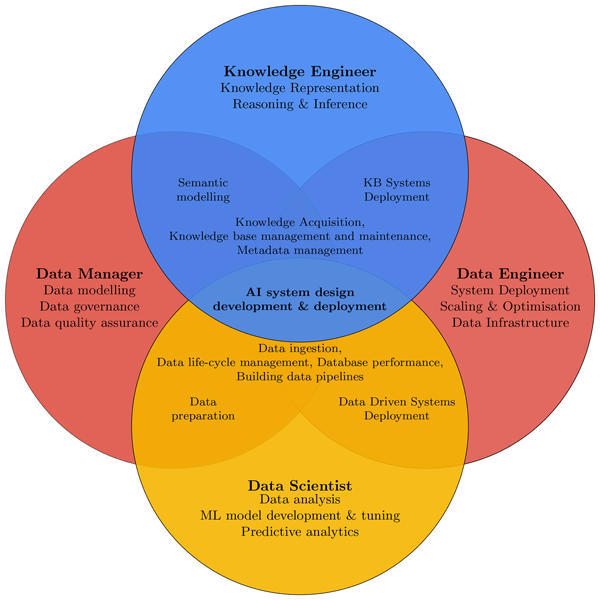
This paper delves into the crucial task of transforming raw data into actionable knowledge which can be used by advanced artificial intelligence systems – a challenge that spans various domains, industries, and scientific fields amid their digital transformation journey. This article underscores the significance of cross-industry collaboration and learning, drawing insights from sectors leading in digitalisation, and provides strategic guidance for further development in this area.
Maren Böse, Laurentiu Danciu, Athanasios Papadopoulos, John Clinton, Carlo Cauzzi, Irina Dallo, Leila Mizrahi, Tobias Diehl, Paolo Bergamo, Yves Reuland, Andreas Fichtner, Philippe Roth, Florian Haslinger, Frédérick Massin, Nadja Valenzuela, Nikola Blagojević, Lukas Bodenmann, Eleni Chatzi, Donat Fäh, Franziska Glueer, Marta Han, Lukas Heiniger, Paulina Janusz, Dario Jozinović, Philipp Kästli, Federica Lanza, Timothy Lee, Panagiotis Martakis, Michèle Marti, Men-Andrin Meier, Banu Mena Cabrera, Maria Mesimeri, Anne Obermann, Pilar Sanchez-Pastor, Luca Scarabello, Nicolas Schmid, Anastasiia Shynkarenko, Bozidar Stojadinović, Domenico Giardini, and Stefan Wiemer
Nat. Hazards Earth Syst. Sci., 24, 583–607, https://doi.org/10.5194/nhess-24-583-2024, https://doi.org/10.5194/nhess-24-583-2024, 2024
Short summary
Short summary
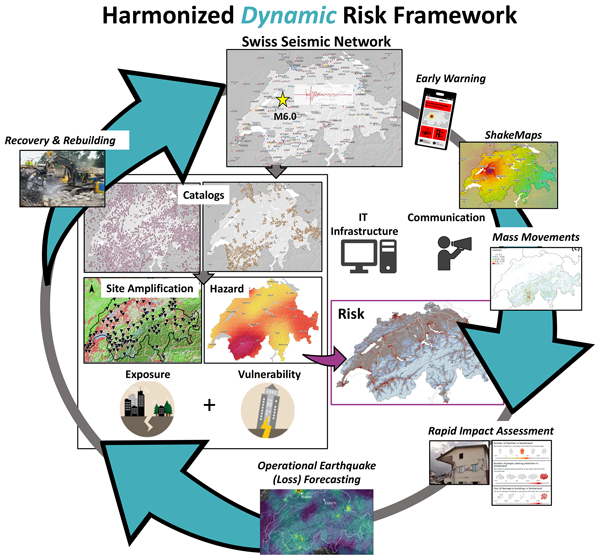
Seismic hazard and risk are time dependent as seismicity is clustered and exposure can change rapidly. We are developing an interdisciplinary dynamic earthquake risk framework for advancing earthquake risk mitigation in Switzerland. This includes various earthquake risk products and services, such as operational earthquake forecasting and early warning. Standardisation and harmonisation into seamless solutions that access the same databases, workflows, and software are a crucial component.
Andrea Gamberini and Imad Abdallah
Wind Energ. Sci., 9, 181–201, https://doi.org/10.5194/wes-9-181-2024, https://doi.org/10.5194/wes-9-181-2024, 2024
Short summary
Short summary
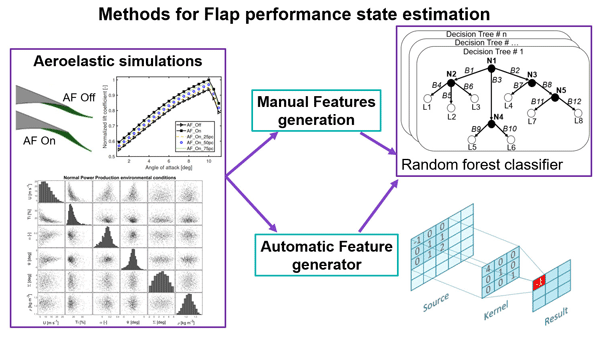
Active trailing edge flaps can potentially reduce wind turbine (WT) loads. To monitor their performance, we present two methods based on machine learning that identify flap health states, including degraded performance, in normal power production and idling condition. Both methods rely only on sensors commonly available on WTs. One approach properly detects all the flap states if a fault occurs on only one blade. The other approach can identify two specific flap states in all fault scenarios.
Andrew Clifton, Sarah Barber, Andrew Bray, Peter Enevoldsen, Jason Fields, Anna Maria Sempreviva, Lindy Williams, Julian Quick, Mike Purdue, Philip Totaro, and Yu Ding
Wind Energ. Sci., 8, 947–974, https://doi.org/10.5194/wes-8-947-2023, https://doi.org/10.5194/wes-8-947-2023, 2023
Short summary
Short summary
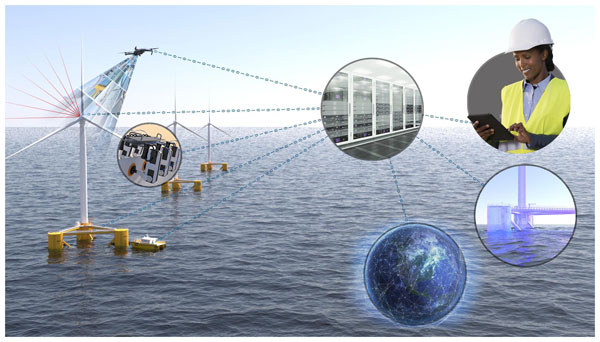
Wind energy creates huge amounts of data, which can be used to improve plant design, raise efficiency, reduce operating costs, and ease integration. These all contribute to cheaper and more predictable energy from wind. But realising the value of data requires a digital transformation that brings
grand challengesaround data, culture, and coopetition. This paper describes how the wind energy industry could work with R&D organisations, funding agencies, and others to overcome them.
Florian Hammer, Sarah Barber, Sebastian Remmler, Federico Bernardoni, Kartik Venkatraman, Gustavo A. Díez Sánchez, Alain Schubiger, Trond-Ola Hågbo, Sophia Buckingham, and Knut Erik Giljarhus
Wind Energ. Sci. Discuss., https://doi.org/10.5194/wes-2022-114, https://doi.org/10.5194/wes-2022-114, 2023
Preprint withdrawn
Short summary
Short summary
We further enhanced a knowledge base for choosing the most optimal wind resource assessment tool. For this, we compared different simulation tools for the Perdigão site in Portugal, in terms of accuracy and costs. In total five different simulation tools were compared. We found that with a high degree of automatisation and a high experience level of the modeller a cost effective and accurate prediction based on RANS could be achieved. LES simulations are still mainly reserved for academia.
Andrew Clifton, Sarah Barber, Alexander Stökl, Helmut Frank, and Timo Karlsson
Wind Energ. Sci., 7, 2231–2254, https://doi.org/10.5194/wes-7-2231-2022, https://doi.org/10.5194/wes-7-2231-2022, 2022
Short summary
Short summary
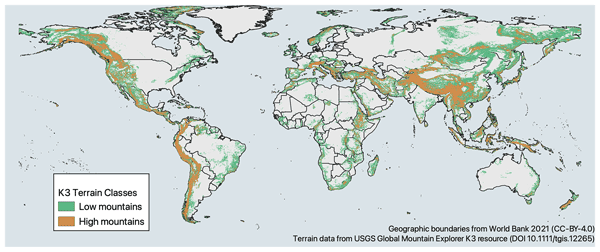
The transition to low-carbon sources of energy means that wind turbines will need to be built in hilly or mountainous regions or in places affected by icing. These locations are called
complexand are hard to develop. This paper sets out the research and development (R&D) needed to make it easier and cheaper to harness wind energy there. This includes collaborative R&D facilities, improved wind and weather models, frameworks for sharing data, and a clear definition of site complexity.
Gianluca De Fezza and Sarah Barber
Wind Energ. Sci., 7, 1627–1640, https://doi.org/10.5194/wes-7-1627-2022, https://doi.org/10.5194/wes-7-1627-2022, 2022
Short summary
Short summary
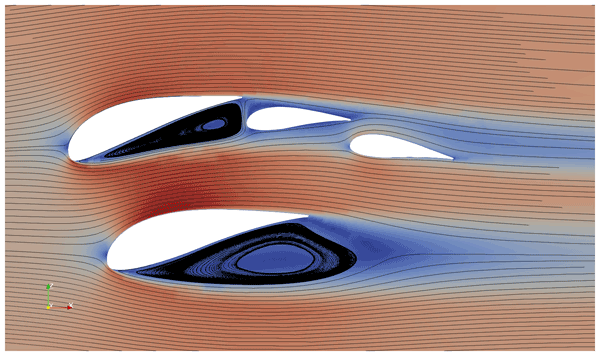
As part of a master's thesis, this study analysed the aerodynamic performance of a multi-element airfoil using numerical flow simulations. The results show that these types of airfoil are very suitable for an upcoming wind energy generation concept. The parametric study of the wing led to a significant improvement of up to 46.6 % compared to the baseline design. The increased power output of the energy generation concept contributes substantially to today's energy transition.

Sarah Barber, Alain Schubiger, Sara Koller, Dominik Eggli, Alexander Radi, Andreas Rumpf, and Hermann Knaus
Wind Energ. Sci., 7, 1503–1525, https://doi.org/10.5194/wes-7-1503-2022, https://doi.org/10.5194/wes-7-1503-2022, 2022
Short summary
Short summary
In this work, a range of simulations are carried out with seven different wind modelling tools at five different complex terrain sites and the results compared to wind speed measurements at validation locations. This is then extended to annual energy production (AEP) estimations (without wake effects), showing that wind profile prediction accuracy does not translate directly or linearly to AEP accuracy. It is therefore vital to consider overall AEP when evaluating simulation accuracies.
Sarah Barber, Julien Deparday, Yuriy Marykovskiy, Eleni Chatzi, Imad Abdallah, Gregory Duthé, Michele Magno, Tommaso Polonelli, Raphael Fischer, and Hanna Müller
Wind Energ. Sci., 7, 1383–1398, https://doi.org/10.5194/wes-7-1383-2022, https://doi.org/10.5194/wes-7-1383-2022, 2022
Short summary
Short summary
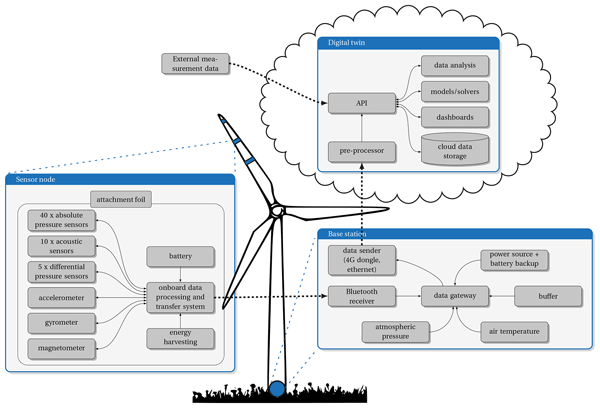
Aerodynamic and acoustic field measurements on operating large-scale wind turbines are key for the further reduction in the costs of wind energy. In this work, a novel cost-effective MEMS (micro-electromechanical systems)-based aerodynamic and acoustic wireless measurement system that is thin, non-intrusive, easy to install, low power and self-sustaining is designed and tested.
Cited articles
Abdallah, I., Deparday, J., Marykovskiy, Y., and Barber, S.: AeroSense Measurements: Wind Tunnel EPFL (1–), Gdańsk University of Technology [data set], https://doi.org/10.34808/gq12-wx33, 2023. a
Abadi, M., Agarwal, A., Barham, P., Brevdo, E., Chen, Z., Citro, C., Corrado, G. S., Davis, A., Dean, J., Devin, M., Ghemawat, S., Goodfellow, I., Harp, A., Irving, G., Isard, M., Jia, Y., Jozefowicz, R., Kaiser, L., Kudlur, M., Levenberg, J., Mané, D., Monga, R., Moore, S., Murray, D., Olah, C., Schuster, M., Shlens, J., Steiner, B., Sutskever, I., Talwar, K., Tucker, P., Vanhoucke, V., Vasudevan, V., Viégas, F., Vinyals, O., Warden, P., Wattenberg, M., Wicke, M., Yu, Y., and Zheng, X.: TensorFlow: Large-Scale Machine Learning on Heterogeneous Systems, https://www.tensorflow.org/ (last access: 12 December 2025), 2015. a
Abdi, S., Mani, M., Ajalli, F., and Soltani, M. R.: Unsteady surface pressure measurement on a pitching air foil, 6th International Conference on Heat Transfer, Fluid Mechanics and Thermodynamics, Pretoria, South Africa, 30 June–2 July 2008, http://hdl.handle.net/2263/40005 (last access: 31 October 2024), 2008. a, b
Ajalli, F., Mani, M., and Soltani, M. R.: An experimental investigation of pressure distribution around a heaving airfoil [conference paper], 5th International Conference on Heat Transfer, Fluid Mechanics and Thermodynamics, Sun City, South Africa, 1–4 July 2007, http://hdl.handle.net/2263/40993 (last access: 31 October 2024), 2007. a, b
Allemang, R. J. and Brown, D. L.: A correlation coefficient for modal vector analysis, in: 1st International Modal Analysis Conference, Society for Experimental Mechanics, Orlando, FLorida, USA, 110–116, 1982. a
Anderson, J. D.: Fundamentals of aerodynamics, McGraw-Hill series in aeronautical and aerospace engineering, McGraw-Hill Education, New York, NY, 6yh edn., ISBN 1259129918, 2017. a
Avendaño-Valencia, L. D., Chatzi, E. N., and Tcherniak, D.: Gaussian process models for mitigation of operational variability in the structural health monitoring of wind turbines, Mechanical Systems and Signal Processing, 142, 106686, https://doi.org/10.1016/j.ymssp.2020.106686, 2020. a
Barber, S., Deparday, J., Marykovskiy, Y., Chatzi, E., Abdallah, I., Duthé, G., Magno, M., Polonelli, T., Fischer, R., and Müller, H.: Development of a wireless, non-intrusive, MEMS-based pressure and acoustic measurement system for large-scale operating wind turbine blades, Wind Energ. Sci., 7, 1383–1398, https://doi.org/10.5194/wes-7-1383-2022, 2022. a, b, c, d, e
Brincker, R. and Ventura, C. E. H.: Introduction to operational modal analysis, John Wiley and Sons Inc, Chichester, West Sussex, ISBN 978-1-119-96315-8, https://doi.org/10.1002/9781118535141, 2015. a
Brincker, R., Zhang, L., and Andersen, P.: Modal Identification from Ambient Responses using Frequency Domain Decomposition, in: IMAC 18 : Proceedings of the International Modal Analysis Conference (IMAC), San Antonio, Texas, USA, 7–10 February 2000, 625–630, the International Modal Analysis Conference, 2000. a
Brincker, R., Ventura, C., and Andersen, P.: Damping Estimation by Frequency Domain Decomposition, in: Proceedings of IMAC 19, 698–703, Society for Experimental Mechanics, United States, the International Modal Analysis Conference, 5–8 February 2001, 2001a. a
Brincker, R., Zhang, L., and Andersen, P.: Modal identification of output-only systems using frequency domain decomposition, Smart Materials and Structures, 10, 441, https://doi.org/10.1088/0964-1726/10/3/303, 2001b. a
Brondsted, P., Nijssen, Rogier P. L., and Goutianos, S. (Eds.): Advances in Wind Turbine Blade Design and Materials, Elsevier Science & Technology, San Diego, ISBN 9780081030080, 2023. a
Chandrasekhar, K., Stevanovic, N., Cross, E. J., Dervilis, N., and Worden, K.: Damage detection in operational wind turbine blades using a new approach based on machine learning, Renewable Energy, 168, 1249–1264, https://doi.org/10.1016/j.renene.2020.12.119, 2021. a
Cheynet, E., Jakobsen, J. B., and Snæbjörnsson, J.: Damping estimation of large wind-sensitive structures, Procedia Engineering, 199, 2047–2053, https://doi.org/10.1016/j.proeng.2017.09.471, 2017. a
Chollet, F. and others: Keras, https://keras.io (last access: 12 December 2025), 2015. a
Ciang, C. C., Lee, J.-R., and Bang, H.-J.: Structural health monitoring for a wind turbine system: a review of damage detection methods, Measurement Science and Technology, 19, 122001, https://doi.org/10.1088/0957-0233/19/12/122001, 2008. a
Civera, M., Rosso, M. M., Marano, G. C., and Chiaia, E.: Validation and Comparison of Two AOMA Approaches for the Ambient Vibration Testing of Long Suspension Bridges Under Strong Wind Loads, in: Proceedings of the 10th International Operational Modal Analysis Conference (IOMAC 2024), edited by: Rainieri, C., Gentile, C., and Aenlle López, M., 475–484, Springer Nature Switzerland, Cham, ISBN 978-3-031-61425-5, 2024. a
Deparday, J., Müller, H., Polonelli, T., and Barber, S.: An experimental system to acquire aeroacoustic properties on wind turbine blades, Journal of Physics: Conference Series, 2265, 022089, https://doi.org/10.1088/1742-6596/2265/2/022089, 2022. a
Deparday, J., Marikovskiy, Y., Abdallah, I., and Barber, S.: An aerodynamic measurement system to improve the efficiency of wind turbine rotor blades, arxiv [preprint], https://arxiv.org/abs/2503.08860 (last access: 12 December 2025), 2025. a
Diken, H. and Asiri, S.: Parametric study of flapwise and edgewise vibration of horizontal axis wind turbine blades, Advances in Mechanical Engineering, 13, 168781402110508, https://doi.org/10.1177/16878140211050801, 2021. a
Di Lorenzo, E., Petrone, G., Manzato, S., Peeters, B., Desmet, W., and Marulo, F.: Damage detection in wind turbine blades by using operational modal analysis, Structural Health Monitoring, 15, 289–301, https://doi.org/10.1177/1475921716642748, 2016. a
Duthé, G., Abdallah, I., Barber, S., and Chatzi, E.: Modeling and monitoring erosion of the leading edge of wind turbine blades, Energies, 14, 7262, https://doi.org/10.1088/1742-6596/2265/2/022074, 2021. a
Fenerci, A. and Øiseth, O.: The Hardanger Bridge monitoring project: Long-term monitoring results and implications on bridge design, Procedia Engineering, 199, 3115–3120, https://doi.org/10.1016/j.proeng.2017.09.576, 2017. a
Franz, P., Abdallah, I., Duthé, G., Deparday, J., Jafarabadi, A., Jian, X., von Danwitz, M., Popp, A., Barber, S., and Chatzi, E.: Code for `On the Potential of Aerodynamic Pressure Measurements for Structural Damage Detection' (v1.0.0), Zenodo [code], https://doi.org/10.5281/zenodo.17911886, 2025. a
García, D. and Tcherniak, D.: An experimental study on the data-driven structural health monitoring of large wind turbine blades using a single accelerometer and actuator, Mechanical Systems and Signal Processing, 127, 102–119, https://doi.org/10.1016/j.ymssp.2019.02.062, 2019. a
Global Wind Energy Council: Global Wind Report 2023, Tech. rep., https://gwec.net/globalwindreport2023/, last access: 17 January 2024, 2023. a
Glorot, X. and Bengio, Y.: Understanding the difficulty of training deep feedforward neural networks, in: Proceedings of the Thirteenth International Conference on Artificial Intelligence and Statistics, vol. 9, 249–256, PMLR, Chia Laguna Resort, Sardinia, Italy, 2010. a
Hodges, D. H. and Pierce, G. A.: Introduction to structural dynamics and aeroelasticity, vol. 15, Cambridge University Press, Cambridge, 2nd edn., 2011. a
Hu, H. and Yang, Z.: An Experimental Study of the Laminar Flow Separation on a Low-Reynolds-Number Airfoil, Journal of Fluids Engineering, 130, https://doi.org/10.1115/1.2907416, 2008. a
Kaewniam, P., Cao, M., Alkayem, N. F., Li, D., and Manoach, E.: Recent advances in damage detection of wind turbine blades: A state-of-the-art review, Renewable and Sustainable Energy Reviews, 167, 112723, https://doi.org/10.1016/j.rser.2022.112723, 2022. a
Kingma, D. P. and Ba, J.: Adam: A Method for Stochastic Optimization, in: Proceedings of the 3rd International Conference on Learning Representations, ICLR, San Diego, USA, 7–9 May 2015, https://doi.org/10.48550/arXiv.1412.6980, 2015. a
Kong, K., Dyer, K., Payne, C., Hamerton, I., and Weaver, P. M.: Progress and Trends in Damage Detection Methods, Maintenance, and Data-driven Monitoring of Wind Turbine Blades – A Review, Renewable Energy Focus, 44, 390–412, https://doi.org/10.1016/j.ref.2022.08.005, 2023. a
Kvåle, K. A., Fenerci, A., Øyvind Wiig Petersen, Rønnquist, A., and Øiseth, O.: Data Set from Long-Term Wave, Wind, and Response Monitoring of the Bergsøysund Bridge, Journal of Structural Engineering, 149, 04723002, https://doi.org/10.1061/JSENDH.STENG-12095, 2023. a
Laflamme, S., Cao, L., Chatzi, E., and Ubertini, F.: Damage Detection and Localization from Dense Network of Strain Sensors, Shock and Vibration, 2016, 1–13, https://doi.org/10.1155/2016/2562949, 2016. a, b
LeCun, Y., Bengio, Y., and Hinton, G.: Deep learning, Nature, 521, 436–444, https://doi.org/10.1038/nature14539, 2015. a, b, c
Lloyd, S.: Least squares quantization in PCM, IEEE Transactions on Information Theory, 28, 129–137, https://doi.org/10.1109/TIT.1982.1056489, 1982. a
Madsen, H. A., Barlas, T., Fischer, A., Olsen, A. S., and Gomez Gonzalez, A.: Inflow and pressure measurements on a full scale turbine with a pressure belt and a five hole pitot tube, Journal of Physics: Conference Series, 2265, 022096, https://doi.org/10.1088/1742-6596/2265/2/022096, 2022. a
Marykovskiy, Y., Deparday, J., Abdallah, I., Duthé, G., Barber, S., and Chatzi, E.: Hybrid Model for Inflow Conditions Inference on Airfoils Under Uncertainty, AIAA Journal, 61, 4913–4925, https://doi.org/10.2514/1.J063108, 2023. a
MATLAB: version '9.11.0.2358333 (R2021b) Update 7', The MathWorks Inc., Natick, Massachusetts, 2021. a
Mishnaevsky, L.: Root Causes and Mechanisms of Failure of Wind Turbine Blades: Overview, Materials, 15, https://doi.org/10.3390/ma15092959, 2022. a
Modarres-Sadeghi, Y., ed.: Introduction to Fluid-Structure Interactions, Springer International Publishing and Imprint Springer, Cham, 1st edn. 2021, ISBN 978-3-030-85882-7, https://doi.org/10.1007/978-3-030-85884-1, 2021. a, b
Mohammadi Foumani, N., Miller, L., Tan, C. W., Webb, G. I., Forestier, G., and Salehi, M.: Deep Learning for Time Series Classification and Extrinsic Regression: A Current Survey, ACM Computing Surveys, 56, 1–45, https://doi.org/10.1145/3649448, 2024. a
Musial, W., Spitsen, P., Beiter, P., Duffy, P., Mulas Hernando, D., Hammond, R., Shields, M., and Marquis, M.: Offshore Wind Market Report: 2023 Edition [Slides], United States, 2023, https://doi.org/10.2172/1997466, 2023. a
Ou, Y., Tatsis, K. E., Dertimanis, V. K., Spiridonakos, M. D., and Chatzi, E. N.: Vibration-based monitoring of a small-scale wind turbine blade under varying climate conditions. Part I: An experimental benchmark, Structural control & health monitoring, 28, e2660, https://doi.org/10.1002/stc.2660, 2021. a
Pacheco-Chérrez, J. and Probst, O.: Vibration-based damage detection in a wind turbine blade through operational modal analysis under wind excitation, Materials Today: Proceedings, 56, 291–297, https://doi.org/10.1016/j.matpr.2022.01.159, 2022. a
Pacheco-Chérrez, J., Cárdenas, D., Delgado-Gutiérrez, A., and Probst, O.: Operational modal analysis for damage detection in a rotating wind turbine blade in the presence of measurement noise, Composite Structures, 321, 117298, https://doi.org/10.1016/j.compstruct.2023.117298, 2023. a
Polonelli, T., Deparday, J., Müller, H., Fischer, R., Benini, L., Barber, S., and Magno, M.: Aerosense: Long-Range Bluetooth Wireless Sensor Node for Aerodynamic Monitoring on Wind Turbine Blades, Journal of Physics: Conference Series, 2265, 022074, https://doi.org/10.1088/1742-6596/2265/2/022074, 2022. a, b
Polonelli, T., Müller, H., Kong, W., Fischer, R., Benini, L., and Magno, M.: Aerosense: A Self-Sustainable and Long-Range Bluetooth Wireless Sensor Node for Aerodynamic and Aeroacoustic Monitoring on Wind Turbines, IEEE Sensors Journal, 23, 715–723, https://doi.org/10.1109/JSEN.2022.3224307, 2023. a
Ruangwiset, A. and Suwantragul, B.: Wind tunnel test of UAV fault detection using principal component based aerodynamic model, in: 2008 International Conference on Mechatronics and Automation, 150–154, IEEE, Piscataway, NJ, ISBN 978-1-4244-2631-7, https://doi.org/10.1109/ICMA.2008.4798742, 2008. a
Stehly, T., Beiter, P., and Duffy, P.: 2019 Cost of Wind Energy Review, https://doi.org/10.2172/1756710 (last access: 19 January 2024), 2020. a
Traub, L. W. and Cooper, E.: Experimental Investigation of Pressure Measurement and Airfoil Characteristics at Low Reynolds Numbers, Journal of Aircraft, 45, 1322–1333, https://doi.org/10.2514/1.34769, 2008. a
Veers, P., Bottasso, C. L., Manuel, L., Naughton, J., Pao, L., Paquette, J., Robertson, A., Robinson, M., Ananthan, S., Barlas, T., Bianchini, A., Bredmose, H., Horcas, S. G., Keller, J., Madsen, H. A., Manwell, J., Moriarty, P., Nolet, S., and Rinker, J.: Grand challenges in the design, manufacture, and operation of future wind turbine systems, Wind Energ. Sci., 8, 1071–1131, https://doi.org/10.5194/wes-8-1071-2023, 2023. a, b
Veilleux, J.-C.: Optimization of a Fully-Passive Flapping-Airfoil Turbine, [master thesis], Université Lavale, https://doi.org/10.13140/RG.2.2.36533.58085, 2014. a
Virtanen, P., Gommers, R., Oliphant, T. E., Haberland, M., Reddy, T., Cournapeau, D., Burovski, E., Peterson, P., Weckesser, W., Bright, J., van der Walt, S. J., Brett, M., Wilson, J., Millman, K. J., Mayorov, N., Nelson, A. R. J., Jones, E., Kern, R., Larson, E., Carey, C. J., Polat, İ., Feng, Y., Moore, E. W., VanderPlas, J., Laxalde, D., Perktold, J., Cimrman, R., Henriksen, I., Quintero, E. A., Harris, C. R., Archibald, A. M., Ribeiro, A. H., Pedregosa, F., van Mulbregt, P., and SciPy 1.0 Contributors: SciPy 1.0: Fundamental Algorithms for Scientific Computing in Python, Nature Methods, 17, 261–272, https://doi.org/10.1038/s41592-019-0686-2, 2020. a, b, c, d, e, f, g, h
Weijtjens, W., Verbelen, T., Capello, E., and Devriendt, C.: Vibration based structural health monitoring of the substructures of five offshore wind turbines, Procedia Engineering, 199, 2294–2299, https://doi.org/10.1016/j.proeng.2017.09.187, 2017. a
Wiser, R., Bolinger, M., Hoen, B., Millstein, D., Rand, J., Barbose, G., Darghouth, N., Gorman, W., Jeong, S., O'Shaughnessy, E., and Paulos, B.: Land-Based Wind Market Report: 2023 Edition, United States, 2023, https://doi.org/10.2172/1996790, 2023. a
Zhang, Y., de Visser, C. C., Chu, Q. P., and van Kampen, E. J.: Aircraft Damage Pattern Recognition Using Aerodynamic Coefficients and Fuzzy Logic, in: Advances in aerospace guidance, navigation and control, edited by: Dołęga, B., Głębocki, R., Kordos, D., and Żugaj, M., 335–348, Springer, Cham, ISBN 978-3-319-65282-5, https://doi.org/10.1007/978-3-319-65283-2_18, 2018. a
Short summary
New designs of large wind turbine blades have become increasingly flexible and thus need cost-efficient monitoring solutions. Hence, we investigate if aerodynamic pressure measurements from a low-cost sensing system can be used to detect structural damage. Our research is based on a wind tunnel study, emulating a simplified wind turbine blade under various conditions. We show that, when using a convolutional-neural-network-based method, structural damage can indeed be detected and its severity can be rated.
New designs of large wind turbine blades have become increasingly flexible and thus need...


Altmetrics
Final-revised paper
Preprint