
Articles | Volume 11, issue 4
https://doi.org/10.5194/wes-11-1123-2026
© Author(s) 2026. This work is distributed under
the Creative Commons Attribution 4.0 License.
the Creative Commons Attribution 4.0 License.
https://doi.org/10.5194/wes-11-1123-2026
© Author(s) 2026. This work is distributed under
the Creative Commons Attribution 4.0 License.
the Creative Commons Attribution 4.0 License.
Data description article
| 
08 Apr 2026
Data description article |
| 08 Apr 2026
| 08 Apr 2026
An open database of high-fidelity, multi-Reynolds airfoil polars for wind turbine blade design
Department of Industrial Engineering, Università degli Studi di Firenze, Florence, 50139, Italy
Pier Francesco Melani
Department of Industrial Engineering, Università degli Studi di Firenze, Florence, 50139, Italy
Alessandro Bianchini
Department of Industrial Engineering, Università degli Studi di Firenze, Florence, 50139, Italy
Related authors
Alessandro Fontanella, Stefano Cioni, Francesco Papi, Sara Muggiasca, Alessandro Bianchini, and Marco Belloli
Wind Energ. Sci., 11, 1821–1851, https://doi.org/10.5194/wes-11-1821-2026, https://doi.org/10.5194/wes-11-1821-2026, 2026
Short summary
Short summary
This study explores how the movement of floating wind turbines affects nearby turbines through wakes. Using wind tunnel experiments, we found that certain motions of an upstream turbine can improve the energy produced by a downstream one and change the forces it experiences. These effects depend on how the turbines are spaced and aligned. Our results show that the motion of floating turbines plays a key role in how future offshore wind farms should be designed and operated.
Stefano Cioni, Francesco Papi, Pier Francesco Melani, Alessandro Fontanella, Agnese Firpo, Andrea Giuseppe Sanvito, Giacomo Persico, Vincenzo Dossena, Sara Muggiasca, Marco Belloli, and Alessandro Bianchini
Wind Energ. Sci., 11, 795–824, https://doi.org/10.5194/wes-11-795-2026, https://doi.org/10.5194/wes-11-795-2026, 2026
Short summary
Short summary
A multi-fidelity approach is leveraged to investigate the capabilities of engineering models to capture the wake dynamics of a wind turbine model under imposed motion. In contrast to previous studies, many more different operating conditions have been investigated, including surge, pitch, yaw, and wind–wave misalignment cases; moreover, numerical methods are here consistently applied to the same test cases, which are part of the first experimental round of the NETTUNO project.
Robert Behrens de Luna, Francesco Papi, David Marten, and Christian Oliver Paschereit
Wind Energ. Sci., 10, 3045–3068, https://doi.org/10.5194/wes-10-3045-2025, https://doi.org/10.5194/wes-10-3045-2025, 2025
Short summary
Short summary
Floating offshore wind turbines make wind resources in deeper waters accessible. However, these systems are more complex and costly than fixed-bottom wind turbines and require further optimization to reduce cost. This study analyzed the effect of aeroelastic modeling fidelity on the design of the floater and the wind turbine controller. The results showed that an increase in fidelity resulted in lighter platforms, influenced controller parameters and led to lower costs overall.
Leonardo Pagamonci, Francesco Papi, Gabriel Cojocaru, Marco Belloli, and Alessandro Bianchini
Wind Energ. Sci., 10, 1707–1736, https://doi.org/10.5194/wes-10-1707-2025, https://doi.org/10.5194/wes-10-1707-2025, 2025
Short summary
Short summary
The study presents a critical analysis using wind tunnel experiments and large-eddy simulations aimed at quantifying to what extent turbulence affects the wake structures of a floating turbine undergoing large motions. Analyses show that, whenever realistic turbulence comes into play, only small gains in terms of wake recovery are noticed in comparison to bottom-fixed turbines, suggesting the absence of hypothesized superposition effects between inflow and platform motion.
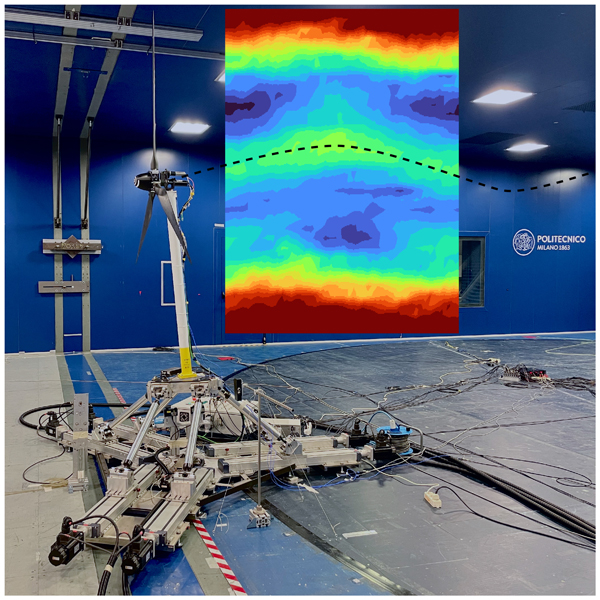
Alessandro Fontanella, Alberto Fusetti, Stefano Cioni, Francesco Papi, Sara Muggiasca, Giacomo Persico, Vincenzo Dossena, Alessandro Bianchini, and Marco Belloli
Wind Energ. Sci., 10, 1369–1387, https://doi.org/10.5194/wes-10-1369-2025, https://doi.org/10.5194/wes-10-1369-2025, 2025
Short summary
Short summary
This paper investigates the impact of large movements allowed by floating wind turbine foundations on their aerodynamics and wake behavior. Wind tunnel tests with a model turbine reveal that platform motions affect wake patterns and turbulence levels. Insights from these experiments are crucial for optimizing large-scale floating wind farms. The dataset obtained from the experiment is published and can aid in developing simulation tools for floating wind turbines.
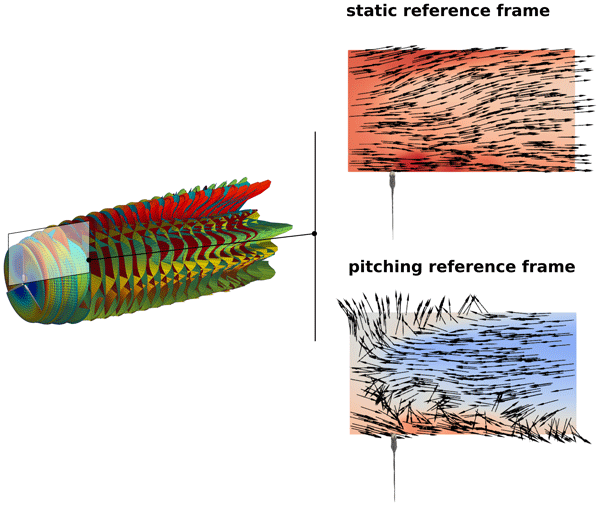
Francesco Papi, Jason Jonkman, Amy Robertson, and Alessandro Bianchini
Wind Energ. Sci., 9, 1069–1088, https://doi.org/10.5194/wes-9-1069-2024, https://doi.org/10.5194/wes-9-1069-2024, 2024
Short summary
Short summary
Blade element momentum (BEM) theory is the backbone of many industry-standard aerodynamic models. However, the analysis of floating offshore wind turbines (FOWTs) introduces new challenges, which could put BEM models to the test. This study systematically compares four aerodynamic models, ranging from BEM to computational fluid dynamics, in an attempt to shed light on the unsteady aerodynamic phenomena that are at stake in FOWTs and whether BEM is able to model them appropriately.
Francesco Papi, Giancarlo Troise, Robert Behrens de Luna, Joseph Saverin, Sebastian Perez-Becker, David Marten, Marie-Laure Ducasse, and Alessandro Bianchini
Wind Energ. Sci., 9, 981–1004, https://doi.org/10.5194/wes-9-981-2024, https://doi.org/10.5194/wes-9-981-2024, 2024
Short summary
Short summary
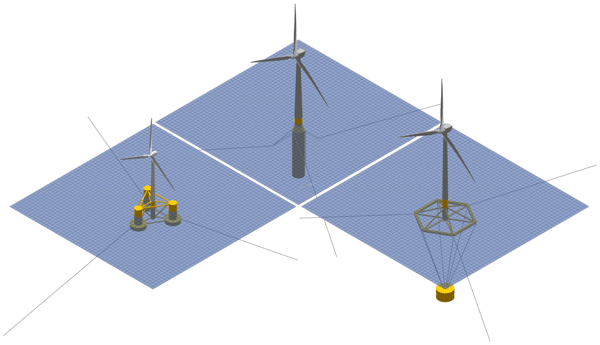
Wind turbines need to be simulated for thousands of hours to estimate design loads. Mid-fidelity numerical models are typically used for this task to strike a balance between computational cost and accuracy. The considerable displacements of floating wind turbines may be a challenge for some of these models. This paper enhances comprehension of how modeling theories affect floating wind turbine loads by comparing three codes across three turbines, simulated in a real environment.
Robert Behrens de Luna, Sebastian Perez-Becker, Joseph Saverin, David Marten, Francesco Papi, Marie-Laure Ducasse, Félicien Bonnefoy, Alessandro Bianchini, and Christian-Oliver Paschereit
Wind Energ. Sci., 9, 623–649, https://doi.org/10.5194/wes-9-623-2024, https://doi.org/10.5194/wes-9-623-2024, 2024
Short summary
Short summary
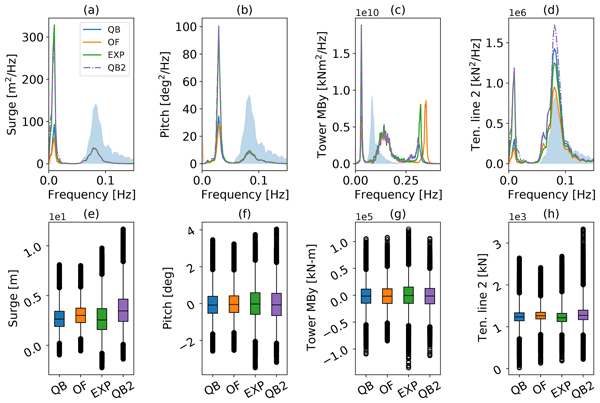
A novel hydrodynamic module of QBlade is validated on three floating offshore wind turbine concepts with experiments and two widely used simulation tools. Further, a recently proposed method to enhance the prediction of slowly varying drift forces is adopted and tested in varying met-ocean conditions. The hydrodynamic capability of QBlade matches the current state of the art and demonstrates significant improvement regarding the prediction of slowly varying drift forces with the enhanced model.
Stefano Cioni, Francesco Papi, Leonardo Pagamonci, Alessandro Bianchini, Néstor Ramos-García, Georg Pirrung, Rémi Corniglion, Anaïs Lovera, Josean Galván, Ronan Boisard, Alessandro Fontanella, Paolo Schito, Alberto Zasso, Marco Belloli, Andrea Sanvito, Giacomo Persico, Lijun Zhang, Ye Li, Yarong Zhou, Simone Mancini, Koen Boorsma, Ricardo Amaral, Axelle Viré, Christian W. Schulz, Stefan Netzband, Rodrigo Soto-Valle, David Marten, Raquel Martín-San-Román, Pau Trubat, Climent Molins, Roger Bergua, Emmanuel Branlard, Jason Jonkman, and Amy Robertson
Wind Energ. Sci., 8, 1659–1691, https://doi.org/10.5194/wes-8-1659-2023, https://doi.org/10.5194/wes-8-1659-2023, 2023
Short summary
Short summary
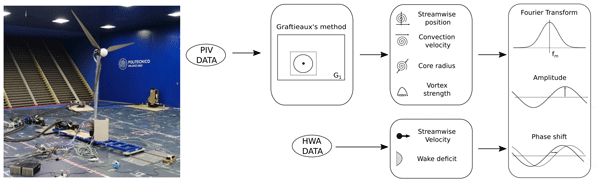
Simulations of different fidelities made by the participants of the OC6 project Phase III are compared to wind tunnel wake measurements on a floating wind turbine. Results in the near wake confirm that simulations and experiments tend to diverge from the expected linearized quasi-steady behavior when the reduced frequency exceeds 0.5. In the far wake, the impact of platform motion is overestimated by simulations and even seems to be oriented to the generation of a wake less prone to dissipation.

Roger Bergua, Amy Robertson, Jason Jonkman, Emmanuel Branlard, Alessandro Fontanella, Marco Belloli, Paolo Schito, Alberto Zasso, Giacomo Persico, Andrea Sanvito, Ervin Amet, Cédric Brun, Guillén Campaña-Alonso, Raquel Martín-San-Román, Ruolin Cai, Jifeng Cai, Quan Qian, Wen Maoshi, Alec Beardsell, Georg Pirrung, Néstor Ramos-García, Wei Shi, Jie Fu, Rémi Corniglion, Anaïs Lovera, Josean Galván, Tor Anders Nygaard, Carlos Renan dos Santos, Philippe Gilbert, Pierre-Antoine Joulin, Frédéric Blondel, Eelco Frickel, Peng Chen, Zhiqiang Hu, Ronan Boisard, Kutay Yilmazlar, Alessandro Croce, Violette Harnois, Lijun Zhang, Ye Li, Ander Aristondo, Iñigo Mendikoa Alonso, Simone Mancini, Koen Boorsma, Feike Savenije, David Marten, Rodrigo Soto-Valle, Christian W. Schulz, Stefan Netzband, Alessandro Bianchini, Francesco Papi, Stefano Cioni, Pau Trubat, Daniel Alarcon, Climent Molins, Marion Cormier, Konstantin Brüker, Thorsten Lutz, Qing Xiao, Zhongsheng Deng, Florence Haudin, and Akhilesh Goveas
Wind Energ. Sci., 8, 465–485, https://doi.org/10.5194/wes-8-465-2023, https://doi.org/10.5194/wes-8-465-2023, 2023
Short summary
Short summary
This work examines if the motion experienced by an offshore floating wind turbine can significantly affect the rotor performance. It was observed that the system motion results in variations in the load, but these variations are not critical, and the current simulation tools capture the physics properly. Interestingly, variations in the rotor speed or the blade pitch angle can have a larger impact than the system motion itself.
Alessandro Fontanella, Stefano Cioni, Francesco Papi, Sara Muggiasca, Alessandro Bianchini, and Marco Belloli
Wind Energ. Sci., 11, 1821–1851, https://doi.org/10.5194/wes-11-1821-2026, https://doi.org/10.5194/wes-11-1821-2026, 2026
Short summary
Short summary
This study explores how the movement of floating wind turbines affects nearby turbines through wakes. Using wind tunnel experiments, we found that certain motions of an upstream turbine can improve the energy produced by a downstream one and change the forces it experiences. These effects depend on how the turbines are spaced and aligned. Our results show that the motion of floating turbines plays a key role in how future offshore wind farms should be designed and operated.
Stefano Cioni, Francesco Papi, Pier Francesco Melani, Alessandro Fontanella, Agnese Firpo, Andrea Giuseppe Sanvito, Giacomo Persico, Vincenzo Dossena, Sara Muggiasca, Marco Belloli, and Alessandro Bianchini
Wind Energ. Sci., 11, 795–824, https://doi.org/10.5194/wes-11-795-2026, https://doi.org/10.5194/wes-11-795-2026, 2026
Short summary
Short summary
A multi-fidelity approach is leveraged to investigate the capabilities of engineering models to capture the wake dynamics of a wind turbine model under imposed motion. In contrast to previous studies, many more different operating conditions have been investigated, including surge, pitch, yaw, and wind–wave misalignment cases; moreover, numerical methods are here consistently applied to the same test cases, which are part of the first experimental round of the NETTUNO project.
Robert Behrens de Luna, Francesco Papi, David Marten, and Christian Oliver Paschereit
Wind Energ. Sci., 10, 3045–3068, https://doi.org/10.5194/wes-10-3045-2025, https://doi.org/10.5194/wes-10-3045-2025, 2025
Short summary
Short summary
Floating offshore wind turbines make wind resources in deeper waters accessible. However, these systems are more complex and costly than fixed-bottom wind turbines and require further optimization to reduce cost. This study analyzed the effect of aeroelastic modeling fidelity on the design of the floater and the wind turbine controller. The results showed that an increase in fidelity resulted in lighter platforms, influenced controller parameters and led to lower costs overall.
Leonardo Pagamonci, Francesco Papi, Gabriel Cojocaru, Marco Belloli, and Alessandro Bianchini
Wind Energ. Sci., 10, 1707–1736, https://doi.org/10.5194/wes-10-1707-2025, https://doi.org/10.5194/wes-10-1707-2025, 2025
Short summary
Short summary
The study presents a critical analysis using wind tunnel experiments and large-eddy simulations aimed at quantifying to what extent turbulence affects the wake structures of a floating turbine undergoing large motions. Analyses show that, whenever realistic turbulence comes into play, only small gains in terms of wake recovery are noticed in comparison to bottom-fixed turbines, suggesting the absence of hypothesized superposition effects between inflow and platform motion.
Alessandro Fontanella, Alberto Fusetti, Stefano Cioni, Francesco Papi, Sara Muggiasca, Giacomo Persico, Vincenzo Dossena, Alessandro Bianchini, and Marco Belloli
Wind Energ. Sci., 10, 1369–1387, https://doi.org/10.5194/wes-10-1369-2025, https://doi.org/10.5194/wes-10-1369-2025, 2025
Short summary
Short summary
This paper investigates the impact of large movements allowed by floating wind turbine foundations on their aerodynamics and wake behavior. Wind tunnel tests with a model turbine reveal that platform motions affect wake patterns and turbulence levels. Insights from these experiments are crucial for optimizing large-scale floating wind farms. The dataset obtained from the experiment is published and can aid in developing simulation tools for floating wind turbines.
Francesco Papi, Jason Jonkman, Amy Robertson, and Alessandro Bianchini
Wind Energ. Sci., 9, 1069–1088, https://doi.org/10.5194/wes-9-1069-2024, https://doi.org/10.5194/wes-9-1069-2024, 2024
Short summary
Short summary
Blade element momentum (BEM) theory is the backbone of many industry-standard aerodynamic models. However, the analysis of floating offshore wind turbines (FOWTs) introduces new challenges, which could put BEM models to the test. This study systematically compares four aerodynamic models, ranging from BEM to computational fluid dynamics, in an attempt to shed light on the unsteady aerodynamic phenomena that are at stake in FOWTs and whether BEM is able to model them appropriately.
Francesco Papi, Giancarlo Troise, Robert Behrens de Luna, Joseph Saverin, Sebastian Perez-Becker, David Marten, Marie-Laure Ducasse, and Alessandro Bianchini
Wind Energ. Sci., 9, 981–1004, https://doi.org/10.5194/wes-9-981-2024, https://doi.org/10.5194/wes-9-981-2024, 2024
Short summary
Short summary
Wind turbines need to be simulated for thousands of hours to estimate design loads. Mid-fidelity numerical models are typically used for this task to strike a balance between computational cost and accuracy. The considerable displacements of floating wind turbines may be a challenge for some of these models. This paper enhances comprehension of how modeling theories affect floating wind turbine loads by comparing three codes across three turbines, simulated in a real environment.
Pier Francesco Melani, Omar Sherif Mohamed, Stefano Cioni, Francesco Balduzzi, and Alessandro Bianchini
Wind Energ. Sci., 9, 601–622, https://doi.org/10.5194/wes-9-601-2024, https://doi.org/10.5194/wes-9-601-2024, 2024
Short summary
Short summary
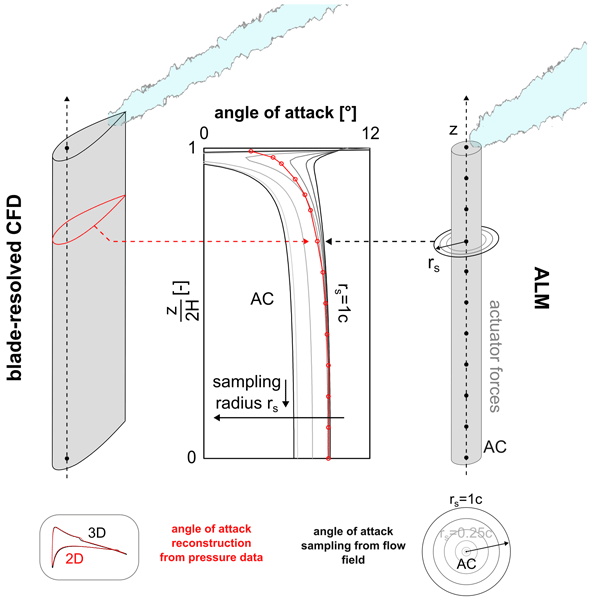
The actuator line method (ALM) is a powerful tool for wind turbine simulation but struggles to resolve tip effects. The reason is still unclear. To investigate this, we use advanced angle of attack sampling and vortex tracking techniques to analyze the flow around a NACA0018 finite wing, simulated with ALM and blade-resolved computational fluid dynamics. Results show that the ALM can account for tip effects if the correct angle of attack sampling and force projection strategies are adopted.
Robert Behrens de Luna, Sebastian Perez-Becker, Joseph Saverin, David Marten, Francesco Papi, Marie-Laure Ducasse, Félicien Bonnefoy, Alessandro Bianchini, and Christian-Oliver Paschereit
Wind Energ. Sci., 9, 623–649, https://doi.org/10.5194/wes-9-623-2024, https://doi.org/10.5194/wes-9-623-2024, 2024
Short summary
Short summary
A novel hydrodynamic module of QBlade is validated on three floating offshore wind turbine concepts with experiments and two widely used simulation tools. Further, a recently proposed method to enhance the prediction of slowly varying drift forces is adopted and tested in varying met-ocean conditions. The hydrodynamic capability of QBlade matches the current state of the art and demonstrates significant improvement regarding the prediction of slowly varying drift forces with the enhanced model.
Stefano Cioni, Francesco Papi, Leonardo Pagamonci, Alessandro Bianchini, Néstor Ramos-García, Georg Pirrung, Rémi Corniglion, Anaïs Lovera, Josean Galván, Ronan Boisard, Alessandro Fontanella, Paolo Schito, Alberto Zasso, Marco Belloli, Andrea Sanvito, Giacomo Persico, Lijun Zhang, Ye Li, Yarong Zhou, Simone Mancini, Koen Boorsma, Ricardo Amaral, Axelle Viré, Christian W. Schulz, Stefan Netzband, Rodrigo Soto-Valle, David Marten, Raquel Martín-San-Román, Pau Trubat, Climent Molins, Roger Bergua, Emmanuel Branlard, Jason Jonkman, and Amy Robertson
Wind Energ. Sci., 8, 1659–1691, https://doi.org/10.5194/wes-8-1659-2023, https://doi.org/10.5194/wes-8-1659-2023, 2023
Short summary
Short summary
Simulations of different fidelities made by the participants of the OC6 project Phase III are compared to wind tunnel wake measurements on a floating wind turbine. Results in the near wake confirm that simulations and experiments tend to diverge from the expected linearized quasi-steady behavior when the reduced frequency exceeds 0.5. In the far wake, the impact of platform motion is overestimated by simulations and even seems to be oriented to the generation of a wake less prone to dissipation.
Paul Veers, Carlo L. Bottasso, Lance Manuel, Jonathan Naughton, Lucy Pao, Joshua Paquette, Amy Robertson, Michael Robinson, Shreyas Ananthan, Thanasis Barlas, Alessandro Bianchini, Henrik Bredmose, Sergio González Horcas, Jonathan Keller, Helge Aagaard Madsen, James Manwell, Patrick Moriarty, Stephen Nolet, and Jennifer Rinker
Wind Energ. Sci., 8, 1071–1131, https://doi.org/10.5194/wes-8-1071-2023, https://doi.org/10.5194/wes-8-1071-2023, 2023
Short summary
Short summary
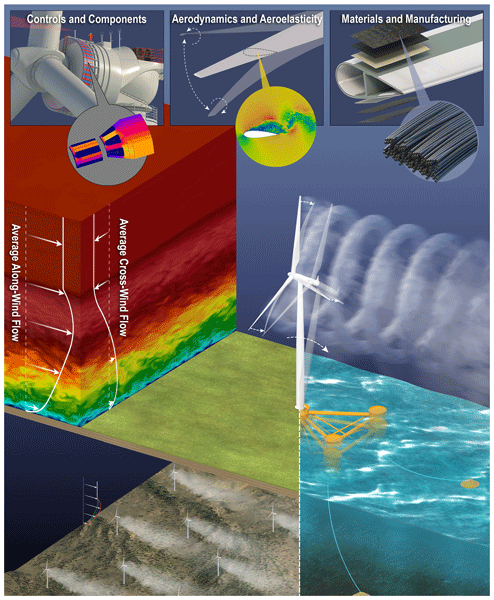
Critical unknowns in the design, manufacturing, and operation of future wind turbine and wind plant systems are articulated, and key research activities are recommended.
Roger Bergua, Amy Robertson, Jason Jonkman, Emmanuel Branlard, Alessandro Fontanella, Marco Belloli, Paolo Schito, Alberto Zasso, Giacomo Persico, Andrea Sanvito, Ervin Amet, Cédric Brun, Guillén Campaña-Alonso, Raquel Martín-San-Román, Ruolin Cai, Jifeng Cai, Quan Qian, Wen Maoshi, Alec Beardsell, Georg Pirrung, Néstor Ramos-García, Wei Shi, Jie Fu, Rémi Corniglion, Anaïs Lovera, Josean Galván, Tor Anders Nygaard, Carlos Renan dos Santos, Philippe Gilbert, Pierre-Antoine Joulin, Frédéric Blondel, Eelco Frickel, Peng Chen, Zhiqiang Hu, Ronan Boisard, Kutay Yilmazlar, Alessandro Croce, Violette Harnois, Lijun Zhang, Ye Li, Ander Aristondo, Iñigo Mendikoa Alonso, Simone Mancini, Koen Boorsma, Feike Savenije, David Marten, Rodrigo Soto-Valle, Christian W. Schulz, Stefan Netzband, Alessandro Bianchini, Francesco Papi, Stefano Cioni, Pau Trubat, Daniel Alarcon, Climent Molins, Marion Cormier, Konstantin Brüker, Thorsten Lutz, Qing Xiao, Zhongsheng Deng, Florence Haudin, and Akhilesh Goveas
Wind Energ. Sci., 8, 465–485, https://doi.org/10.5194/wes-8-465-2023, https://doi.org/10.5194/wes-8-465-2023, 2023
Short summary
Short summary
This work examines if the motion experienced by an offshore floating wind turbine can significantly affect the rotor performance. It was observed that the system motion results in variations in the load, but these variations are not critical, and the current simulation tools capture the physics properly. Interestingly, variations in the rotor speed or the blade pitch angle can have a larger impact than the system motion itself.
Paul Veers, Katherine Dykes, Sukanta Basu, Alessandro Bianchini, Andrew Clifton, Peter Green, Hannele Holttinen, Lena Kitzing, Branko Kosovic, Julie K. Lundquist, Johan Meyers, Mark O'Malley, William J. Shaw, and Bethany Straw
Wind Energ. Sci., 7, 2491–2496, https://doi.org/10.5194/wes-7-2491-2022, https://doi.org/10.5194/wes-7-2491-2022, 2022
Short summary
Short summary
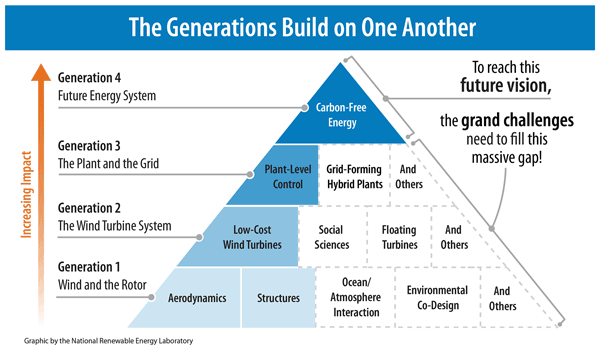
Wind energy will play a central role in the transition of our energy system to a carbon-free future. However, many underlying scientific issues remain to be resolved before wind can be deployed in the locations and applications needed for such large-scale ambitions. The Grand Challenges are the gaps in the science left behind during the rapid growth of wind energy. This article explains the breadth of the unfinished business and introduces 10 articles that detail the research needs.
Alessandro Bianchini, Galih Bangga, Ian Baring-Gould, Alessandro Croce, José Ignacio Cruz, Rick Damiani, Gareth Erfort, Carlos Simao Ferreira, David Infield, Christian Navid Nayeri, George Pechlivanoglou, Mark Runacres, Gerard Schepers, Brent Summerville, David Wood, and Alice Orrell
Wind Energ. Sci., 7, 2003–2037, https://doi.org/10.5194/wes-7-2003-2022, https://doi.org/10.5194/wes-7-2003-2022, 2022
Short summary
Short summary
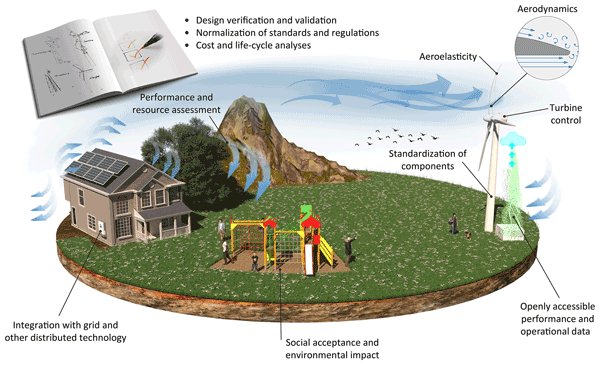
The paper is part of the Grand Challenges Papers for Wind Energy. It provides a status of small wind turbine technology in terms of technical maturity, diffusion, and cost. Then, five grand challenges that are thought to be key to fostering the development of the technology are proposed. To tackle these challenges, a series of unknowns and gaps are first identified and discussed. Improvement areas are highlighted, within which 10 key enabling actions are finally proposed to the wind community.
Jörg Alber, Marinos Manolesos, Guido Weinzierl-Dlugosch, Johannes Fischer, Alexander Schönmeier, Christian Navid Nayeri, Christian Oliver Paschereit, Joachim Twele, Jens Fortmann, Pier Francesco Melani, and Alessandro Bianchini
Wind Energ. Sci., 7, 943–965, https://doi.org/10.5194/wes-7-943-2022, https://doi.org/10.5194/wes-7-943-2022, 2022
Short summary
Short summary
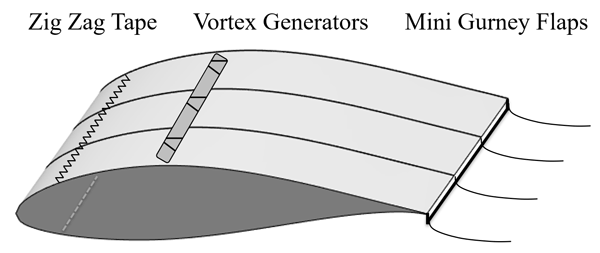
This paper investigates the potentials and the limitations of mini Gurney flaps and their combination with vortex generators for improved rotor blade performance of wind turbines. These small passive add-ons are installed in order to increase the annual energy production by mitigating the effects of both early separation toward the root region and surface erosion toward the tip region of the blade. As such, this study contributes to the reliable and long-term generation of renewable energy.
Rodrigo Soto-Valle, Stefano Cioni, Sirko Bartholomay, Marinos Manolesos, Christian Navid Nayeri, Alessandro Bianchini, and Christian Oliver Paschereit
Wind Energ. Sci., 7, 585–602, https://doi.org/10.5194/wes-7-585-2022, https://doi.org/10.5194/wes-7-585-2022, 2022
Short summary
Short summary
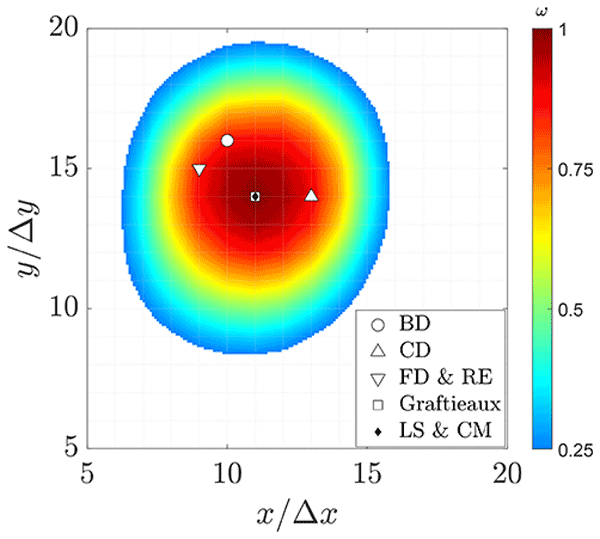
This paper compares different vortex identification methods to evaluate their suitability to study the tip vortices of a wind turbine. The assessment is done through experimental data from the wake of a wind turbine model. Results show comparability in some aspects as well as significant differences, providing evidence to justify further comparisons. Therefore, this study proves that the selection of the most suitable postprocessing methods of tip vortex data is pivotal to ensure robust results.
Cited articles
Abbott, I. H., Von Doenhoff, A. E., and Stivers, L.: Summary of Airfoil Data, National Advisory Committee for Aeronautics, https://ntrs.nasa.gov/citations/19930090976 (last access: 12 September 2025), 1945.
U.S. Department of Energy: Airfoils, Where the Turbine Meets the Wind: https://www.energy.gov/eere/wind/articles/airfoils-where-turbine-meets-wind, last access: 23 October 2025.
Andres, B.: COORDINATES AND CALCULATIONS FOR THE FFA-Wl-xxx, FFA-W2-xxx AND FFA-W3-xxx SERIES OF AIRFOILS FOR HORIZONTAL AXIS WIND TURBINES, Aeronautical Research Institute of Sweden, https://wind.nrel.gov/airfoils/Documents/FFA TN 1990-15 v.1-2 c.1.pdf (last access: 8 June 2020), 1990.
Ansys Inc.: Ansys Fluent R24.2 User Guide – Section 36.13, Performing Time-Dependent Calculations, https://ansyshelp.ansys.com/public//Views/Secured/corp/v242/en/flu_ug/flu_ug_sec_solve_calc_time.html?utm_source (last access: 18 February 2026), 2024.
Bak, C., Andersen, P. B., Madsen, H. A., Gaunaa, M., Fuglsang, P., and Bove, S.: Design and verification of airfoils resistant to surface contamination and turbulence intensity, in: Collect. Tech. Pap. AIAA Appl. Aerodyn. Conf., 26th Applied Aerodynamics Conference, Collect. Tech. Pap. AIAA Appl. Aerodyn. Conf., https://doi.org/10.2514/6.2008-7050, 2008.
Bak, C., Zahle, F., Bitsche, R., Taeseong, K., Anders, Y., Henriksen, L. C., Natarajan, A., and Hansen, M. H.: Description of the DTU 10MW Reference Wind Turbine, DTU Wind Energy, Roskilde, Denmark, https://rwt.windenergy.dtu.dk/dtu10mw/dtu-10mw-rwt/-/blob/master/docs/DTU_Wind_Energy_Report-I-0092.pdf (last access: 10 December 2021), 2013.
Bak, C., Gaudern, N., Zahle, F., and Vronsky, T.: Airfoil design: Finding the balance between design lift and structural stiffness, J. Phys. Conf. Ser., 524, 012017, https://doi.org/10.1088/1742-6596/524/1/012017, 2014.
Balduzzi, F., Holst, D., Melani, P. F., Wegner, F., Nayeri, C. N., Ferrara, G., Paschereit, C. O., and Bianchini, A.: Combined Numerical and Experimental Study on the Use of Gurney Flaps for the Performance Enhancement of NACA0021 Airfoil in Static and Dynamic Conditions, J. Eng. Gas Turb. Power, 143, 021004, https://doi.org/10.1115/1.4048908, 2021.
Battisti, L., Zanne, L., Castelli, M. R., Bianchini, A., and Brighenti, A.: A generalized method to extend airfoil polars over the full range of angles of attack, Renew. Energ., 155, 862–875, https://doi.org/10.1016/j.renene.2020.03.150, 2020.
Beans, E. W. and Jakubowski, G. S.: Method for Estimating the Aerodynamic Coefficients of Wind Turbine Blades at High Angles of Attack, J. Energy, 7, 747–749, https://doi.org/10.2514/3.62730, 1983.
Bertagnolio, F., Sørensen, N., Johansen, J., and Fuglsang, P.: Wind Turbine Airfoil Catalogue, Risø, Roskilde, Denmark, https://backend.orbit.dtu.dk/ws/files/7728949/ris_r_1280.pdf (last access: 2 April 2026), 2001.
Boorsma, K., Muñoz, A., Méndez, B., Gómez, S., Isarri, A., Muduate, X., Voutsinas, S., Prospathopoulos, J., Manolesos, M., Shen, W. Z., Zhu, W. J., and Madsen, H. A.: New airfoils for high rotational speed wind turbines, https://www.innwind.eu/-/media/sites/innwind/publications/deliverables/deliverable-2-12_hama_10-09-2015_final.pdf (last access: 22 October 2025), 2015.
Bortolotti, P., Tarres, H. C., Dykes, K. L., Merz, K., Sethuraman, L., Verelst, D., and Zahle, F.: IEA Wind TCP Task 37: Systems Engineering in Wind Energy – WP2.1 Reference Wind Turbines, National Renewable Energy Laboratory (NREL), Golden, CO (United States), Technical Report, https://doi.org/10.2172/1529216, 2019.
Bot, E. T. G.: Aerodynamic table generator. A manual; Aerodynamische tabel generator, https://www.osti.gov/etdeweb/biblio/20201145 (last access: 6 February 2026), Handleiding, 2001.
Braud, C., Keravec, P., Neunaber, I., Aubrun, S., Attié, J.-L., Durand, P., Ricaud, P., Georgis, J.-F., Leclerc, E., Mourre, L., and Taymans, C.: A 3-year database of atmospheric measurements combined with associated operating parameters from a wind farm of 2 MW turbines including rotor geometry, Wind Energ. Sci., 10, 1929–1942, https://doi.org/10.5194/wes-10-1929-2025, 2025.
Burton, T., Jenkins, N., Sharpe, D., and Bossanyi, E.: Wind Energy Handbook, John Wiley & Sons, Ltd, Chichester, United Kingdom, https://doi.org/10.1002/9781119992714, 2011.
Cheng, J., Zhu, W. J., Fischer, A., Ramos García, N., Madsen, J., Chen, J., and Shen, W. Z.: Design and validation of the high performance and low noise CQU-DTU-LN1 airfoils, Wind Energy, 17, 1817–1833, https://doi.org/10.1002/we.1668, 2014.
Sørensen, N. N. and Timmer, W. A.: CFD prediction of airfoil deep stall performance using Improved Delayed Detached Eddy Simulations, https://backend.orbit.dtu.dk/ws/portalfiles/portal/141969070/280617_14.20_S08.pdf (last access: 17 September 2025), 2017.
Colonia, S., Leble, V., Steijl, R., and Barakos, G.: Calibration of the 7 – Equation Transition Model for High Reynolds Flows at Low Mach, J. Phys. Conf. Ser., 753, 082027, https://doi.org/10.1088/1742-6596/753/8/082027, 2016.
Colonia, S., Leble, V., Steijl, R., and Barakos, G.: Assessment and Calibration of the γ-Equation Transition Model at Low Mach, AIAA J., 55, 1126–1139, https://doi.org/10.2514/1.J055403, 2017.
Courant, R., Friedrichs, K., and Lewyt, H.: On the Partial Difference Equations of Mathematical Physics, IBM J. Res. Dev., 11, 215–234, 1967.
Dahl, K. S. and Fuglsang, P.: Design of the wind turbine airfoil family RISØ-A-XX, Risø National Laboratory, Roskilde, 28 pp., ISBN 978-87-550-2356-7, 1998.
De Tavernier, D. and Terzi, D. von: The emergence of supersonic flow on wind turbines, J. Phys. Conf. Ser., 2265, 042068, https://doi.org/10.1088/1742-6596/2265/4/042068, 2022.
Diakakis, K., Papadakis, G., and Voutsinas, S. G.: Assessment of transition modeling for high Reynolds flows, Aerosp. Sci. Technol., 85, 416–428, https://doi.org/10.1016/j.ast.2018.12.031, 2019.
Drela, M.: XFOIL: An Analysis and Design System for Low Reynolds Number Airfoils, in: Low Reynolds Number Aerodynamics, vol. 54, edited by: Mueller, T. J., Springer Berlin Heidelberg, Berlin, Heidelberg, 1–12, https://doi.org/10.1007/978-3-642-84010-4_1, 1989.
Drela, M.: MISES Implementation of Modified Abu-Ghannam/Shaw Transition Criterion, MIT Aero-Astro, https://web.mit.edu/drela/Public/web/mises/ags2.pdf (last access: 28 January 2025), 1998.
Drela, M. and Giles, M. B.: Viscous-inviscid analysis of transonic and low Reynolds number airfoils, AIAA J., 25, 1347–1355, https://doi.org/10.2514/3.9789, 1987.
Erickson, L. L.: Panel methods: An introduction, NASA Technical Publication (TP), Moffett Field, CA, USA, https://ntrs.nasa.gov/citations/19910009745 (last access: 12 September 2025), 1990.
Fuglsang, P., Antoniou, I., Madsen, Aagaard, H., and Dahl, K. S.: Wind tunnel tests of the FFA-W3-241, FFA-W3-301 and NACA 63-430 airfoils, Risø National Laboratory, Roskilde, ISBN 978-87-550-2377-2, 1998.
Fuglsang, P., Dahl, K. S., and Antoniou, I.: Wind tunnel tests of the Risø-A1-18, Risø-A1-21 and Risø-A1-24 airfoils, Risø National Laboratory, Roskilde, ISBN 978-87-550-2538-7, 1999.
Fuglsang, P., Bak, C., and Gaunaa, M.: Wind Tunnel Tests of Risø-B1-18 and Risø-B1-24, Risø National Laboratory, ISBN 87-550-3140-4, 2003.
Fuglsang, P., Bak, C., Gaunaa, M., and Antoniou, I.: Design and Verification of the Riso-B1 Airfoil Family for Wind Turbines, American Institute of Aeronautics and Astronautics, https://doi.org/10.2514/6.2004-668, 2004.
Golmirzaee, N. and Wood, D. H.: Some effects of domain size and boundary conditions on the accuracy of airfoil simulations, Advances in Aerodynamics, 6, 7, https://doi.org/10.1186/s42774-023-00163-z, 2024.
Grasso, F.: Design of a Family of Advanced Airfoils for Low Wind Class Turbines, EWEA 2014 Annual Event, https://doi.org/10.1088/1742-6596/555/1/012044, 2014.
Gudmundsson, S.: Chapter 8 – The Anatomy of the Airfoil, in: General Aviation Aircraft Design, edited by: Gudmundsson, S., Butterworth-Heinemann, Boston, 235–297, https://doi.org/10.1016/B978-0-12-397308-5.00008-8, 2014.
Guntur, S. and Sørensen, N. N.: A study on rotational augmentation using CFD analysis of flow in the inboard region of the MEXICO rotor blades, Wind Energy, 18, 745–756, https://doi.org/10.1002/we.1726, 2015.
Gupta, A., Bortolotti, P., and Summerville, B.: NREL 15-kW: An Advanced Horizontal-Axis Reference Turbine for Distributed Wind, J. Phys. Conf. Ser., 072024, https://doi.org/10.1088/1742-6596/2767/7/072024 2024.
Hand, M. M., Simms, D. A., Fingersh, L. J., Jager, D. W., Cotrell, J. R., Schreck, S., and Larwood, S. M.: Unsteady Aerodynamics Experiment Phase VI: Wind Tunnel Test Configurations and Available Data Campaigns, National Renewable Energy Laboratory, https://doi.org/10.2172/15000240, 2001.
Hansen, T. H.: Airfoil optimization for wind turbine application, Wind Energy, 21, 502–514, https://doi.org/10.1002/we.2174, 2018.
IEA Wind: IEA Wind TCP Task 37, Definition of the IEA Wind 15-Megawatt Offshore Reference Wind Turbine, National Renewable Energy Laboratory, Golden, CO (United States), https://doi.org/10.2172/1603478, 2020.
Jonkman, B., Platt, A., Mudafort, R. M., Branlard, E., Wang, L., Slaughter, D., Sprague, M., Ross, H., HaymanConsulting, jjonkman, cortadocodes, Chetan, M., Davies, R., Hall, M., Vijayakumar, G., Buhl, M., reos-rcrozier, Russell9798, Bortolotti, P., Bergua, R., Ananthan, S., Rood, J., rdamiani, nrmendoza, sinolonghai, Gupta, A., psakievich, Bhuiyan, F. H., pschuenemann, and Sharma, A.: OpenFAST/openfast, Zenodo [software], https://doi.org/10.5281/zenodo.6324287, 2025.
Karcher, C. J., Maniaci, D. C., Kelley, C., Hsieh, A., deVelder, N., and Gupta, A.: Design of a Preliminary Family of Airfoils for High Reynolds Number Wind Turbine Applications, in: AIAA SCITECH 2025 Forum, AIAA SCITECH 2025 Forum, https://doi.org/10.2514/6.2025-0840, 2025.
Kirke, B.: Evaluation of Self-Starting Vertical Axis Wind Turbines for Stand-Alone Applications, PhD Thesis, Griffith University, Gold Coast, AUS, https://doi.org/10.25904/1912/1503, 1998.
Koodly Ravishankara, A., Sahoo, A., and Caboni, M.: RFOIL. RFOIL.v.3.0 user's manual, TNO, https://repository.tno.nl/SingleDoc?docId=68350 (last access: 6 February 2026), 2025.
Laino, D. J. and Hansen, A. C.: User's Guide to the Wind Turbine Aerodynamics Computer Software AeroDyn, National Renewable Energy Laboratory, https://www.nrel.gov/docs/libraries/wind-docs/aerodyn.pdf?sfvrsn=86abc14f_1 (last access: 17 June 2025), 2002.
Langtry, R. B. and Menter, F. R.: Correlation-Based Transition Modeling for Unstructured Parallelized Computational Fluid Dynamics Codes, AIAA J., 47, 2894–2906, https://doi.org/10.2514/1.42362, 2009.
Leishman, J. G.: Principles of Helicopter Aerodynamics, Cambridge University Press, 866 pp., ISBN 978-1-107-01335-3, 2016.
Lobo, B. A., Özçakmak, Ö. S., Madsen, H. A., Schaffarczyk, A. P., Breuer, M., and Sørensen, N. N.: On the laminar–turbulent transition mechanism on megawatt wind turbine blades operating in atmospheric flow, Wind Energ. Sci., 8, 303–326, https://doi.org/10.5194/wes-8-303-2023, 2023.
Maniaci, D. C., Karcher, C. J., Kelley, C., Botolotti, P., and deVelder, N.: oso-airfoils, Sandia National Laboratories [software], https://github.com/sandialabs/oso-airfoils/tree/main/released_designs/OSO_2025_WT2/rfoil_data/ReNumSweep (last access: 6 February 2026), 2025.
Manolesos, M. and Papadakis, G.: Investigation of the three-dimensional flow past a flatback wind turbine airfoil at high angles of attack, Phys. Fluids, 33, 085106, https://doi.org/10.1063/5.0055822, 2021.
Melani, P. F., Aryan, N., Greco, L., and Bianchini, A.: The Beddoes-Leishman dynamic stall model: Critical aspects in implementation and calibration, Renew. Sust. Energ. Rev., 202, 114677, https://doi.org/10.1016/j.rser.2024.114677, 2024.
Méndez, B., Munduate, X., and Miguel, U. S.: Airfoil family design for large offshore wind turbine blades, J. Phys. Conf. Ser., 524, 012022, https://doi.org/10.1088/1742-6596/524/1/012022, 2014.
Menter, F. R.: Two-equation eddy-viscosity turbulence models for engineering applications, AIAA J., 32, 1598–1605, https://doi.org/10.2514/3.12149, 1994.
Menter, F. R.: Best Practice: Scale-Resolving Simulations in Ansys CFD – Version 2.00, Ansys, https://www.ansys.com/resource-center/technical-paper/best-practice-scale-resolving-simulations-in-ansys-cfd (last access: 29 September 2025), 2021.
Menter, F. R., Langtry, R. B., Likki, S. R., Suzen, Y. B., Huang, P. G., and Völker, S.: A Correlation-Based Transition Model Using Local Variables – Part I: Model Formulation, J. Turbomach., 413–422, https://doi.org/10.1115/1.2184352, 2004.
Menter, F. R., Lechner, R., and Matyushenko, A.: Best Practice: RANS Turbulence Modeling in Ansys CFD, Ansys, https://www.ansys.com/resource-center/technical-paper/best-practice-rans-turbulence-modeling-in-ansys-cfd (last access: 22 October 2025), 2021.
Mittal, R. and Balachandar, S.: Effect of three-dimensionality on the lift and drag of nominally two-dimensional cylinders, Phys. Fluids, 7, 1841–1865, https://doi.org/10.1063/1.868500, 1995.
Montgomerie, B.: Methods for Root Effects, Tip Effects and Extending the Angle of Attack Range to
Ohio State University Wind Tunnel Tests | Wind Research: National Laboratory of the Rockies, https://www.nlr.gov/wind/nwtc/airfoils-osu-data, last access: 6 February 2026.
Ozlem, C., Oscar, P., and Xabier, M.: AVATAR HIGH REYNOLDS NUMBER TESTS ON AIRFOIL DU00-W-212, Zenodo [data set], https://doi.org/10.5281/zenodo.439827, 2017.
Papi, F., Balduzzi, F., Ferrara, G., and Bianchini, A.: Uncertainty quantification on the effects of rain-induced erosion on annual energy production and performance of a Multi-MW wind turbine, Renew. Energ., 165, 701–715, https://doi.org/10.1016/j.renene.2020.11.071, 2021.
Papi, F., Melani, P. F., and Bianchini, A.: High-Reynolds Wind Turbine Airfoil Database, Zenodo [data set], https://doi.org/10.5281/zenodo.17639964, 2025.
Pires, O., Munduate, X., Ceyhan, O., Jacobs, M., and Snel, H.: Analysis of high Reynolds numbers effects on a wind turbine airfoil using 2D wind tunnel test data, J. Phys. Conf. Ser., 753, 022047, https://doi.org/10.1088/1742-6596/753/2/022047, 2016.
Ramanujam, G., Özdemir, H., and Hoeijmakers, H. W. M.: Improving Airfoil Drag Prediction, J. Aircraft, 53, 1844–1852, https://doi.org/10.2514/1.C033788, 2016.
Ramsay, R. R., Hoffmann, M. J., and Gregorek, G. M.: Effects of Grit Roughness and Pitch Oscillations on the S801 Airfoil, National Renewable Energy Laboratory, Golden, Colorado, USA, https://www.nlr.gov/docs/libraries/wind-docs/s8015056e3fcf6d8472daf87b25b0defe4e2.pdf?sfvrsn=7c11c908_5 (last access: 2 April 2026), 1996.
Schepers, J. G., Boorsma, K., Sørensen, N., Voutsinas, Sieros, G., Rahimi, H., Heisselmann, H., Jost, E., Lutz, T., Maeder, T., Gonzalez, A., Ferreira, C., Stoevesandt, B., Barakos, G., Lampropoulos, N., Croce, A., and Madsen, J.: Final results from the EU project AVATAR: Aerodynamic modelling of 10 MW wind turbines, J. Phys. Conf. Ser., 1037, 022013, https://doi.org/10.1088/1742-6596/1037/2/022013, 2018.
Snel, H., Houwink, R., and Piers, W. J.: Sectional Prediction of 3D Effects for Separated Flow on Rotating Blades, National Aerospace Lab., Amsterdam (Netherlands), 31 pp., https://ntrl.ntis.gov/NTRL/dashboard/searchResults/titleDetail/PB94201696.xhtml (last access: 9 May 2025), 1992.
Sørensen, N. N., Mondez, B., Munoz, A., Sieros, G., Jost, E., Lutz, T., Papadakis, G., Voutsinas, S., Barakos, G. N., Colonia, S., Baldacchino, D., Baptista, C., and Ferreira, C.: CFD code comparison for 2D airfoil flows, J. Phys. Conf. Ser., 753, 082019, https://doi.org/10.1088/1742-6596/753/8/082019, 2016.
Spalart, P. R. and Rumsey, C. L.: Effective Inflow Conditions for Turbulence Models in Aerodynamic Calculations, AIAA J., 45, 2544–2553, https://doi.org/10.2514/1.29373, 2007.
Spera, D. A.: Models of Lift and Drag Coefficients of Stalled and Unstalled Airfoils in Wind Turbines and Wind Tunnels, NTRS – NASA, Cleveland, Ohio, https://ntrs.nasa.gov/citations/20090001311 (last access: 29 September 2025), 2008.
Tangler, J. L. and Somers, D. M.: NREL airfoil families for HAWTs, National Renewable Energy Laboratory, https://doi.org/10.2172/10106095, 1995.
Thresher, R. W., Hock, S. M., Loose, R. R., and Goldman, P.: Wind Technology Development: Large and Small Turbines, National Renewable Energy Laboratory, Golden, CO, USA, https://docs.nlr.gov/docs/legosti/old/7224.pdf (last access: 2 April 2026), 1994.
Thwaites, B.: Approximate Calculation of the Laminar Boundary Layer, Aeronaut. Quart., 1, 245–280, https://doi.org/10.1017/S0001925900000184, 1949.
Timmer, W. A.: Aerodynamic characteristics of wind turbine blade airfoils at high angles-of-attack, in: Proceedings of Torque 2010, TORQUE 2010, Crete, Greece, 2010.
Timmer, W. A.: A simple method to estimate the airfoil maximum drag coefficient, J. Phys. Conf. Ser., 1618, 052068, https://doi.org/10.1088/1742-6596/1618/5/052068, 2020.
Timmer, W. A. and Rooij, R. P. J. O. M.: Summary of the Delft University Wind Turbine Dedicated Airfoils, 41st Aerospace Sciences Meeting and Exhibit, https://doi.org/10.2514/6.2003-352, 2003.
van Bussel, G. J. W.: History of Aerodynamic Modelling, in: Handbook of Wind Energy Aerodynamics, Springer, Cham, 205–252, https://doi.org/10.1007/978-3-030-31307-4_9, 2022.
Veers, P., Bottasso, C. L., Manuel, L., Naughton, J., Pao, L., Paquette, J., Robertson, A., Robinson, M., Ananthan, S., Barlas, T., Bianchini, A., Bredmose, H., Horcas, S. G., Keller, J., Madsen, H. A., Manwell, J., Moriarty, P., Nolet, S., and Rinker, J.: Grand challenges in the design, manufacture, and operation of future wind turbine systems, Wind Energ. Sci., 8, 1071–1131, https://doi.org/10.5194/wes-8-1071-2023, 2023.
Venturi, A., Melani, P. F., Papi, F., and Bianchini, A.: An insight on the calculation of aerodynamic polars for stall-controlled wind turbines using CFD: the case of S8XX airfoils, J. Phys. Conf. Ser., 2893, 012006, https://doi.org/10.1088/1742-6596/2893/1/012006, 2024.
Viterna, L. A. and Corrigan, R. D.: Fixed pitch rotor performance of large horizontal axis wind turbines, NASA, Cleveland, Ohio, https://ntrs.nasa.gov/citations/19830010962 (last access: 3 February 2026), 1982.
Viterna, L. A. and Janetzke, D. C.: Theoretical and experimental power from large horizontal-axis wind turbines, NASA, https://doi.org/10.2172/6763041, 1982.
Vitulano, M. C., De Tavernier, D., De Stefano, G., and von Terzi, D.: Numerical analysis of transonic flow over the FFA-W3-211 wind turbine tip airfoil, Wind Energ. Sci., 10, 103–116, https://doi.org/10.5194/wes-10-103-2025, 2025.
Wang, W., Cao, Y., and Okaze, T.: Comparison of hexahedral, tetrahedral and polyhedral cells for reproducing the wind field around an isolated building by LES, Build. Environ., 195, 107717, https://doi.org/10.1016/j.buildenv.2021.107717, 2021.
White, F. and Madani, J.: Viscous Fluid Flow, fourth edition, McGraw Hill, New York, United States of America, ISBN 978-0-07-352931-8, 2022.
Wortmann, F. X.: Airfoil Profiles for Wind Turbines, Institut fur Aerodynamik un Gasdynamik, University of Stuttgart, Stuttgart, https://www.iag.uni-stuttgart.de/dateien/pdf/arbeitsgruppe-laminarwindkanal/Airfoil_Profiles_for_Wind_turbines_Wortmann_1978_LQ.pdf (last access: 2 April 2026), 1978.
Zahle, F., Barlas, A., Loenbaek, K., Bortolotti, P., Zalkind, D., Wang, L., Labuschagne, C., Sethuraman, L., and Barter, G.: Definition of the IEA Wind 22-Megawatt Offshore Reference Wind Turbine, Technical University of Denmark, https://doi.org/10.11581/DTU.00000317, 2024.
Short summary
This paper presents an open-access database of aerodynamic polars for a wide range of airfoils, relevant for wind turbine design and simulation. It includes lift, drag, and moment coefficients for multiple Reynolds and Mach numbers. Coefficients are computed with computational fluid dynamics for fully turbulent and free transition boundary layers, as well as a blend of the two. Beyond-stall extrapolation models are calibrated via a number of high-fidelity calculations at various angles of attack in separated flow.
This paper presents an open-access database of aerodynamic polars for a wide range of airfoils,...


Altmetrics
Final-revised paper
Preprint