Articles | Volume 11, issue 4
https://doi.org/10.5194/wes-11-1227-2026
© Author(s) 2026. This work is distributed under
the Creative Commons Attribution 4.0 License.
https://doi.org/10.5194/wes-11-1227-2026
© Author(s) 2026. This work is distributed under
the Creative Commons Attribution 4.0 License.
Damage identification on a large-scale wind turbine rotor blade using sample-based deterministic model updating

Marlene Wolniak
CORRESPONDING AUTHOR
Leibniz University Hannover/ForWind, Institute of Structural Analysis, Appelstr. 9A, 30167 Hannover, Germany
Jasper Ragnitz
Leibniz University Hannover/ForWind, Institute of Structural Analysis, Appelstr. 9A, 30167 Hannover, Germany
Clemens Jonscher
Leibniz University Hannover/ForWind, Institute of Structural Analysis, Appelstr. 9A, 30167 Hannover, Germany
Benedikt Hofmeister
Ruhr-University Bochum, Photonics and Terahertz Technology, Universitätsstr. 150, 44801 Bochum, Germany
Helge Jauken
Leibniz University Hannover/ForWind, Institute of Structural Analysis, Appelstr. 9A, 30167 Hannover, Germany
Clemens Hübler
Technical University of Darmstadt, Institute of Structural Mechanics and Design, Franziska-Braun-Str. 3, 64287 Darmstadt, Germany
Raimund Rolfes
Leibniz University Hannover/ForWind, Institute of Structural Analysis, Appelstr. 9A, 30167 Hannover, Germany
Related authors
No articles found.
Susanne Könecke, Clemens Jonscher, Tobias Bohne, and Raimund Rolfes
Wind Energ. Sci. Discuss., https://doi.org/10.5194/wes-2026-44, https://doi.org/10.5194/wes-2026-44, 2026
Preprint under review for WES
Short summary
Short summary
This paper presents a framework to identify wind turbine noise in long-term field measurements. By combining statistical criteria, turbine operating data, and physics-based signal analysis, periods dominated by wind turbine noise and its key components are detected. The framework is validated using a structured listening test and applied to a one month dataset. The framework, listening-test platform, and anonymized audio data are publicly available to support further research.
Franziska Schmidt, Clemens Hübler, and Raimund Rolfes
Wind Energ. Sci. Discuss., https://doi.org/10.5194/wes-2026-38, https://doi.org/10.5194/wes-2026-38, 2026
Preprint under review for WES
Short summary
Short summary
A lifetime reassessment of an offshore wind turbine using Kriging meta-models is performed. This method is compared to a full lifetime reassessment using aeroelastic simulations considering all actually occurred combinations of environmental parameters and to the approach according to IEC 61400-3. By using the meta-models, the computing time can be significantly reduced compared to the other two methods, while ensuring a high approximation quality in the prediction of the lifetime fatigue loads.
Jonathan Thurn, Clemens Jonscher, Benedikt Hofmeister, Gianluca Zorzi, and Raimund Rolfes
Wind Energ. Sci. Discuss., https://doi.org/10.5194/wes-2026-5, https://doi.org/10.5194/wes-2026-5, 2026
Revised manuscript under review for WES
Short summary
Short summary
Load monitoring for wind turbine support structures is essential as turbines approach the end of their design life. Typically, load monitoring involves estimating strain from vibrational measurements. This paper introduces an approach that uses a single acceleration sensor to estimate strains across all fatigue-relevant excitation frequencies on the entire support structure, enabled by compensating for gravity-induced biases in acceleration measurements.
Franziska Schmidt, Clemens Hübler, and Raimund Rolfes
Wind Energ. Sci., 10, 3069–3089, https://doi.org/10.5194/wes-10-3069-2025, https://doi.org/10.5194/wes-10-3069-2025, 2025
Short summary
Short summary
In this work, a Kriging meta-model of an idling offshore wind turbine is analysed in detail for the first time. It becomes clear that the findings regarding meta-modelling of the idling wind turbine are generally similar to the findings regarding meta-modelling of the same wind turbine in normal operation. However, for the approximation of the rotor blade root bending moments, two additional input parameters have to be included compared to the same wind turbine in operation.
Clemens Jonscher, Paula Helming, David Märtins, Andreas Fischer, David Bonilla, Benedikt Hofmeister, Tanja Grießmann, and Raimund Rolfes
Wind Energ. Sci., 10, 193–205, https://doi.org/10.5194/wes-10-193-2025, https://doi.org/10.5194/wes-10-193-2025, 2025
Short summary
Short summary
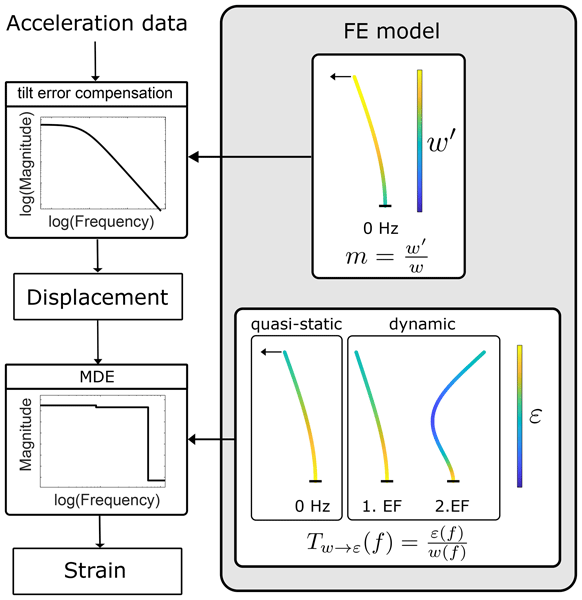
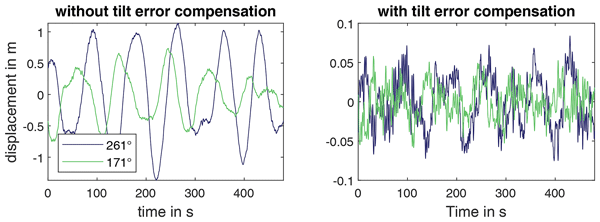
This study investigates dynamic displacement estimation using double-time-integrated acceleration signals for future application in load monitoring based on accelerometers. To estimate displacements without amplitude distortion, a tilt error compensation method for low-frequency vibrations of tower structures using the static bending line without the need for additional sensors is presented. The method is validated using a full-scale onshore wind turbine tower and a terrestrial laser scanner.
Susanne Könecke, Jasmin Hörmeyer, Tobias Bohne, and Raimund Rolfes
Wind Energ. Sci., 8, 639–659, https://doi.org/10.5194/wes-8-639-2023, https://doi.org/10.5194/wes-8-639-2023, 2023
Short summary
Short summary
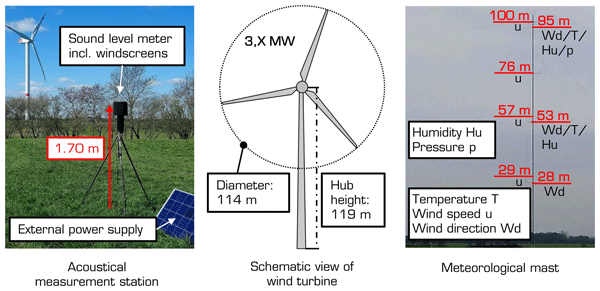
Extensive measurements in the area of wind turbines were performed in order to validate a sound propagation model. The measurements were carried out under various environmental conditions and included the acquisition of acoustical, meteorological and wind turbine performance data. By processing and analysing the measurement data, validation cases and input parameters for the propagation model were derived. Comparing measured and modelled propagation losses, generally good agreement is observed.
Clemens Hübler and Raimund Rolfes
Wind Energ. Sci., 7, 1919–1940, https://doi.org/10.5194/wes-7-1919-2022, https://doi.org/10.5194/wes-7-1919-2022, 2022
Short summary
Short summary
Offshore wind turbines are beginning to reach their design lifetimes. Hence, lifetime extensions are becoming relevant. To make well-founded decisions on possible lifetime extensions, fatigue damage predictions are required. Measurement-based assessments instead of simulation-based analyses have rarely been conducted so far, since data are limited. Therefore, this work focuses on the temporal extrapolation of measurement data. It is shown that fatigue damage can be extrapolated accurately.
Clemens Jonscher, Benedikt Hofmeister, Tanja Grießmann, and Raimund Rolfes
Wind Energ. Sci., 7, 1053–1067, https://doi.org/10.5194/wes-7-1053-2022, https://doi.org/10.5194/wes-7-1053-2022, 2022
Short summary
Short summary
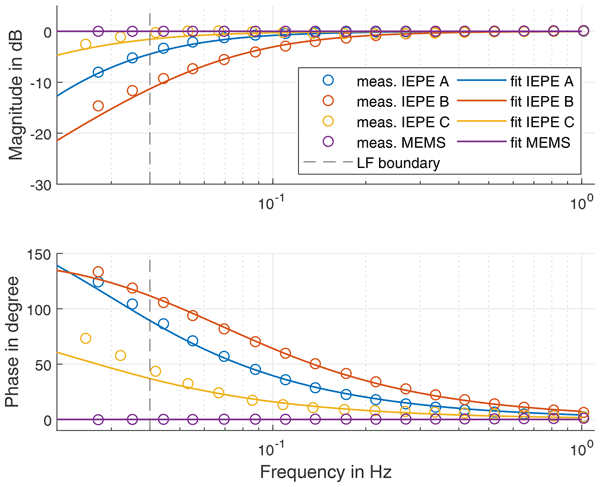
This work presents a method to use low-noise IEPE sensors in the low-frequency range down to 0.05 Hz. In order to achieve phase and amplitude accuracy with this type of sensor in the low-frequency range, a new calibration procedure for this frequency range was developed. The calibration enables the use of the low-noise IEPE sensors for large structures, such as wind turbines. The calibrated sensors can be used for wind turbine monitoring, such as fatigue monitoring.
Cited articles
Algolfat, A., Wang, W., and Albarbar, A.: Damage Identification of Wind Turbine Blades – A Brief Review, Journal of Dynamics, Monitoring and Diagnostics, 2, https://doi.org/10.37965/jdmd.2023.422, 2023. a, b
Au, S.-K.: Operational Modal Analysis: Modeling, Bayesian Inference, Uncertainty Laws, Springer Singapore, Singapore, 1 edn., ISBN 978-981-10-4117-4, https://doi.org/10.1007/978-981-10-4118-1, 2017. a, b, c
Au, S.-K., Zhang, F.-L., and Ni, Y.-C.: Bayesian operational modal analysis: Theory, computation, practice, Comput. Struct., 126, 3–14, https://doi.org/10.1016/j.compstruc.2012.12.015, 2013. a, b, c
Avci, O., Abdeljaber, O., Kiranyaz, S., Hussein, M., Gabbouj, M., and Inman, D. J.: A review of vibration-based damage detection in civil structures: From traditional methods to Machine Learning and Deep Learning applications, Mech. Syst. Signal Pr., 147, 107077, https://doi.org/10.1016/j.ymssp.2020.107077, 2021. a
Berger, R., Bruns, M., Ehrmann, A., Haldar, A., Häfele, J., Hofmeister, B., Hübler, C., and Rolfes, R.: EngiO – Object-oriented framework for engineering optimization, Adv. Eng. Softw., 153, 102959, https://doi.org/10.1016/j.advengsoft.2020.102959, 2021. a
Bi, S., Beer, M., Zhang, J., Yang, L., and He, K.: Optimization or Bayesian Strategy? Performance of the Bhattacharyya Distance in Different Algorithms of Stochastic Model Updating, ASCE-ASME Journal of Risk and Uncertainty in Engineering Systems, Part B: Mechanical Engineering, 7, https://doi.org/10.1115/1.4050168, 2021. a
Brownjohn, J.: Structural health monitoring of civil infrastructure, Philos. T. Royal Soc. A, 365, 589–622, https://doi.org/10.1098/rsta.2006.1925, 2007. a
Bruns, M., Hofmeister, B., Grießmann, T., and Rolfes, R.: Comparative Study of Parameterizations for Damage Localization with Finite Element Model Updating, in: Proceedings of the 29th European Safety and Reliability Conference, 1125–1132, https://doi.org/10.3850/978-981-11-2724-3_0713-cd, 2019a. a
Bruns, M., Hofmeister, B., Hübler, C., and Rolfes, R.: Damage Localization Via Model Updating Using a Damage Distribution Function, in: Structural Health Monitoring 2019, 909–917, https://doi.org/10.12783/shm2019/32202, 2019b. a
Chetan, M., Yao, S., and Griffith, D. T.: Multi–fidelity digital twin structural model for a sub–scale downwind wind turbine rotor blade, Wind Energy, 24, 1368–1387, https://doi.org/10.1002/we.2636, 2021. a
Christodoulou, K., Ntotsios, E., Papadimitriou, C., and Panetsos, P.: Structural model updating and prediction variability using Pareto optimal models, Comput. Method. Appl. M., 198, 138–149, https://doi.org/10.1016/j.cma.2008.04.010, 2008. a, b
Civera, M. and Surace, C.: Non-Destructive Techniques for the Condition and Structural Health Monitoring of Wind Turbines: A Literature Review of the Last 20 Years, Sensors (Basel, Switzerland), 22, https://doi.org/10.3390/s22041627, 2022. a, b
Das, S., Saha, P., and Patro, S. K.: Vibration-based damage detection techniques used for health monitoring of structures: a review, Journal of Civil Structural Health Monitoring, 6, 477–507, https://doi.org/10.1007/s13349-016-0168-5, 2016. a
de Almeida, I. T., Lapa, G. V. P., Gay Neto, A., and de Almeida, S. F. M.: Design and extreme structural analysis of wind turbine blades: Beam and shell model comparison and discussion for a 10-MW reference turbine, Eng. Struct., 334, 120155, https://doi.org/10.1016/j.engstruct.2025.120155, 2025. a
Ereiz, S., Duvnjak, I., and Jiménez-Alonso, J. F.: Review of finite element model updating methods for structural applications, Structures, 41, 684–723, https://doi.org/10.1016/j.istruc.2022.05.041, 2022. a, b
Faes, M. and Moens, D.: Recent Trends in the Modeling and Quantification of Non-probabilistic Uncertainty, Arch. Comput. Meth. E., 27, 633–671, https://doi.org/10.1007/s11831-019-09327-x, 2020. a
Fan, W. and Qiao, P.: Vibration-based Damage Identification Methods: A Review and Comparative Study, Struct. Health Monit., 10, 83–111, https://doi.org/10.1177/1475921710365419, 2011. a, b
Friswell, M. I.: Damage identification using inverse methods, Philos. T R. Soc. A, 365, 393–410, https://doi.org/10.1098/rsta.2006.1930, 2007. a
Friswell, M. I. and Mottershead, J. E.: Finite Element Model Updating in Structural Dynamics, vol. 38 of Solid Mechanics and its Applications, Springer Netherlands, ISBN 978-90-481-4535-5 978-94-015-8508-8, https://doi.org/10.1007/978-94-015-8508-8, 1995. a, b, c
Günther, C., Hofmeister, B., Hübler, C., Jonscher, C., Ragnitz, J., Schubert, J., and Steinbach, M. C.: Damage location in mechanical structures by multi-objective pattern search, Optim. Eng., https://doi.org/10.1007/s11081-024-09940-1, 2025. a
Haseeb, S. A. and Krawczuk, M.: A State-of-the-Art Review of Structural Health Monitoring Techniques for Wind Turbine Blades, J. Nondestruct. Eval., 45, https://doi.org/10.1007/s10921-025-01296-5, 2026. a
Hau, E.: Wind Turbines, Springer Berlin Heidelberg, Berlin, Heidelberg, ISBN 978-3-642-27150-2, https://doi.org/10.1007/978-3-642-27151-9, 2013. a
Hofmeister, B., Bruns, M., and Rolfes, R.: Finite element model updating using deterministic optimisation: A global pattern search approach, Eng. Struct., 195, 373–381, https://doi.org/10.1016/j.engstruct.2019.05.047, 2019. a, b
Jonscher, C., Liesecke, L., Penner, N., Hofmeister, B., Grießmann, T., and Rolfes, R.: Influence of system changes on closely spaced modes of a large-scale concrete tower for the application to structural health monitoring, Journal of Civil Structural Health Monitoring, 13, 1043–1060, https://doi.org/10.1007/s13349-023-00693-6, 2023. a
Kaewniam, P., Cao, M., Alkayem, N. F., Li, D., and Manoach, E.: Recent advances in damage detection of wind turbine blades: A state-of-the-art review, Renew. Sust. Energ. Rev., 167, 112723, https://doi.org/10.1016/j.rser.2022.112723, 2022. a
Knebusch, J., Gundlach, J., and Govers, Y.: A SYSTEMATIC INVESTIGATION OF COMMON GRADIENT BASED MODEL UPDATING APPROACHES APPLIED TO HIGH-FIDELITY TEST-DATA OF A WIND TURBINE ROTOR BLADE, in: XI International Conference on Structural Dynamics, Proceedings of the XI International Conference on Structural Dynamics, 2159–2174, EASDAthens, https://doi.org/10.47964/1120.9175.19508, 2020. a
Kong, K., Dyer, K., Payne, C., Hamerton, I., and Weaver, P. M.: Progress and Trends in Damage Detection Methods, Maintenance, and Data-driven Monitoring of Wind Turbine Blades – A Review, Renewable Energy Focus, 44, 390–412, https://doi.org/10.1016/j.ref.2022.08.005, 2023. a
Lake, R. C. and Nixon, M. W.: A preliminary investigation of finite-element modeling for composite rotor blades, in: Technical Memorandum, National Aeronautics and Space Administration (NASA), https://ntrs.nasa.gov/api/citations/19880011272/downloads/19880011272.pdf (last access: 8 April 2026), 1988. a
Levin, R. I. and Lieven, N. A. J.: Dynamic Finite Element Model Updating Using Neural Networks, J. Sound Vib., 2010, https://doi.org/10.1006/jsvi.1997.1364, 1998. a
Link, M.: Updating of analytical models – review of numerical procedures and application aspects, in: Proc., Structural Dynamics Forum SD2000, 193–223, Research Studies Press, Baldock, UK, https://www.researchgate.net/profile/Michael-Link-12/ (last access: 8 April 2026), 1999. a
Marler, R. T. and Arora, J. S.: Survey of multi-objective optimization methods for engineering, Struct. Multidiscip. O., 26, 369–395, https://doi.org/10.1007/s00158-003-0368-6, 2004. a
Mottershead, J. E. and Friswell, M. I.: Model updating in structural dynamics: a survey, J. Sound Vib., 167, 347–375, https://doi.org/10.1006/jsvi.1993.1340, 1993. a
Mottershead, J. E., Link, M., and Friswell, M. I.: The sensitivity method in finite element model updating: A tutorial, Mech. Syst. Signal Pr., 25, 2275–2296, https://doi.org/10.1016/j.ymssp.2010.10.012, 2011. a, b
Noever-Castelos, P., Melcher, D., and Balzani, C.: Model updating of a wind turbine blade finite element Timoshenko beam model with invertible neural networks, Wind Energ. Sci., 7, 623–645, https://doi.org/10.5194/wes-7-623-2022, 2022. a
Pastor, M., Binda, M., and Harčarik, T.: Modal Assurance Criterion, Proced. Eng., 48, 543–548, https://doi.org/10.1016/j.proeng.2012.09.551, 2012. a
Peeters, M., Santo, G., Degroote, J., and van Paepegem, W.: Comparison of Shell and Solid Finite Element Models for the Static Certification Tests of a 43 m Wind Turbine Blade, Energies, 11, 1346, https://doi.org/10.3390/en11061346, 2018. a
Ragnitz, J., Hofmeister, B., Jonscher, C., Hübler, C., and Rolfes, R.: A stochastic multi-objective optimisation approach for damage localisation via model updating with uncertain input parameters, Eng. Struct., 330, 119860, https://doi.org/10.1016/j.engstruct.2025.119860, 2025. a, b
Simoen, E., De Roeck, G., and Lombaert, G.: Dealing with uncertainty in model updating for damage assessment: A review, Mech. Syst. Signal Pr., 56–57, 123–149, https://doi.org/10.1016/j.ymssp.2014.11.001, 2015. a, b
Timoshenko, S. P. and Gere, J. M.: Theory of elastic stability, Courier Corporation, ISBN: 0-486-47207-8, 2012. a
Turnbull, H. and Omenzetter, P.: Fuzzy finite element model updating for damage severity assessment, J. Phys. Conf. Ser., 2647, 182046, https://doi.org/10.1088/1742-6596/2647/18/182046, 2024. a
Volovoi, V. V., Hodges, D. H., Cesnik, C. E. S., and Popescu, B.: Assessment of Beam Modeling Methods for Rotor Blade Applications, Math. Comput. Model., 33, 1099–1112, 2001. a
Wernitz, S., Hofmeister, B., Jonscher, C., Grießmann, T., and Rolfes, R.: A new open–database benchmark structure for vibration–based Structural Health Monitoring, Struct. Control Hlth., 29, https://doi.org/10.1002/stc.3077, 2022. a
Wolniak, M., Hofmeister, B., Jonscher, C., Fankhänel, M., Loose, A., Hübler, C., and Rolfes, R.: Validation of an FE model updating procedure for damage assessment using a modular laboratory experiment with a reversible damage mechanism, Journal of Civil Structural Health Monitoring, 13, 1185–1206, https://doi.org/10.1007/s13349-023-00701-9, 2023. a, b, c
Wolniak, M., Jauken, H., Jonscher, C., Hofmeister, B., Ragnitz, J., and Rolfes, R.: Measurement data and BayOMA identification results of a 31 m wind turbine rotor blade, Leibniz Universität IT Services (LUIS), https://doi.org/10.25835/UWRCESYR, 2025b. a, b, c
Worden, K., Farrar, C. R., Manson, G., and Park, G.: The fundamental axioms of structural health monitoring, P. R. Soc. A, 463, 1639–1664, https://doi.org/10.1098/rspa.2007.1834, 2007. a
Yang, W., Peng, Z., Wei, K., and Tian, W.: Structural health monitoring of composite wind turbine blades: challenges, issues and potential solutions, IET Renew. Power Gen., 11, 411–416, https://doi.org/10.1049/iet-rpg.2016.0087, 2017. a
Short summary
This study investigates how finite-element (FE) models of different fidelity affect the damage identification in a 31 m wind turbine rotor blade tested under edgewise fatigue loading. Different design variable configurations are compared, whereby the FE model updating is based on modal parameters identified from measured vibration data.
This study investigates how finite-element (FE) models of different fidelity affect the damage...
Altmetrics
Final-revised paper
Preprint