Articles | Volume 11, issue 4
https://doi.org/10.5194/wes-11-1287-2026
© Author(s) 2026. This work is distributed under
the Creative Commons Attribution 4.0 License.
https://doi.org/10.5194/wes-11-1287-2026
© Author(s) 2026. This work is distributed under
the Creative Commons Attribution 4.0 License.
Optimal flight pattern debate for airborne wind energy systems: circular or figure of eight?

Faculty of Aerospace Engineering, Delft University of Technology, 2629 HS Delft, the Netherlands
Nicola Rossi
Faculty of Aerospace Engineering, Delft University of Technology, 2629 HS Delft, the Netherlands
Università degli Studi di Trento, Via Sommarive, 9, 38123 Trento, Italy
Roland Schmehl
Faculty of Aerospace Engineering, Delft University of Technology, 2629 HS Delft, the Netherlands
Related authors
No articles found.
Oriol Cayon, Vince van Deursen, and Roland Schmehl
Wind Energ. Sci., 11, 1097–1121, https://doi.org/10.5194/wes-11-1097-2026, https://doi.org/10.5194/wes-11-1097-2026, 2026
Short summary
Short summary
Kites can generate renewable energy by flying crosswind, but their motion is difficult to describe accurately and efficiently. This study develops a simplified model that captures how kites move through the air using a reduced number of parameters. The model was validated with flight data and provides a clearer understanding of kite motion, supporting the design of improved control strategies and energy generation.
Jelle Agatho Wilhelm Poland, Johannes Marinus van Spronsen, Mac Gaunaa, and Roland Schmehl
Wind Energ. Sci., 11, 911–936, https://doi.org/10.5194/wes-11-911-2026, https://doi.org/10.5194/wes-11-911-2026, 2026
Short summary
Short summary
We tested a small model of an energy-generating kite in a wind tunnel to study its aerodynamic behaviour. By comparing measurements to computer simulations, we validated the models and identified where they match the real performance and where they fall short. These insights will guide more accurate aerodynamic modelling and inform design choices for kites used in airborne wind energy systems.
Jelle Agatho Wilhelm Poland, Kasper Raphaël G. Masure, Oriol Cayon, and Roland Schmehl
Wind Energ. Sci. Discuss., https://doi.org/10.5194/wes-2026-46, https://doi.org/10.5194/wes-2026-46, 2026
Preprint under review for WES
Short summary
Short summary
Soft inflatable kites are promising tools for renewable applications, but their unusual shape makes them difficult to analyse with conventional aerodynamic methods. A fast, accurate computer model is presented based on detailed airflow simulations and wind-tunnel measurements. Aerodynamic forces are predicted within about 10 % of experimental values while requiring far less computing time. It also helps designers balance efficiency and stability, enabling faster, more reliable kite development.
Jelle Agatho Wilhelm Poland, Erik Fritz, and Roland Schmehl
Wind Energ. Sci. Discuss., https://doi.org/10.5194/wes-2025-217, https://doi.org/10.5194/wes-2025-217, 2025
Revised manuscript accepted for WES
Short summary
Short summary
We studied how air flows around a rigid scale model of a soft kite wing used for harvesting airborne wind energy and wind-assisted ship propulsion. Using a wind tunnel and a laser-based imaging method, we measured the airflow at different angles to compare with computer simulations. Results confirm key aerodynamic trends such as stall onset and spanwise lift variation, and highlight the influence of struts and recirculation zones on kite aerodynamics.
Oriol Cayon, Simon Watson, and Roland Schmehl
Wind Energ. Sci., 10, 2161–2188, https://doi.org/10.5194/wes-10-2161-2025, https://doi.org/10.5194/wes-10-2161-2025, 2025
Short summary
Short summary
This study demonstrates how kites used to generate wind energy can act as sensors to measure wind conditions and system behaviour. By combining data from existing sensors, such as those measuring position, speed, and forces on the tether, a sensor fusion technique accurately estimates wind conditions and kite performance. This approach can be integrated into control systems to help optimize energy generation and enhance the reliability of these systems under changing wind conditions.
Rishikesh Joshi, Dominic von Terzi, and Roland Schmehl
Wind Energ. Sci., 10, 695–718, https://doi.org/10.5194/wes-10-695-2025, https://doi.org/10.5194/wes-10-695-2025, 2025
Short summary
Short summary
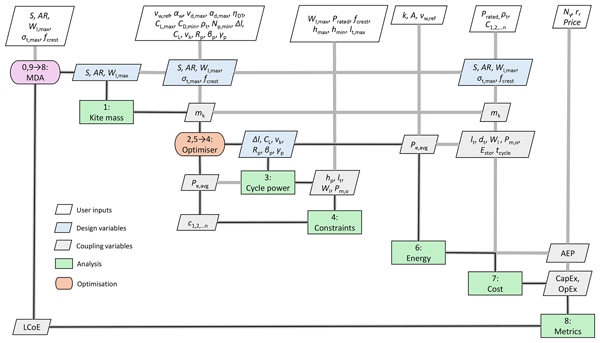
This paper presents a methodology for assessing the system design and scaling trends in airborne wind energy (AWE). A multi-disciplinary design, analysis, and optimisation (MDAO) framework was developed, integrating power, energy production, and cost models for the fixed-wing ground-generation (GG) AWE concept. Using the levelized cost of electricity (LCoE) as the design objective, we found that the optimal size of systems lies between the rated power of 100 and 1000 kW.
Helena Schmidt, Renatto M. Yupa-Villanueva, Daniele Ragni, Roberto Merino-Martínez, Piet J. R. van Gool, and Roland Schmehl
Wind Energ. Sci., 10, 579–595, https://doi.org/10.5194/wes-10-579-2025, https://doi.org/10.5194/wes-10-579-2025, 2025
Short summary
Short summary
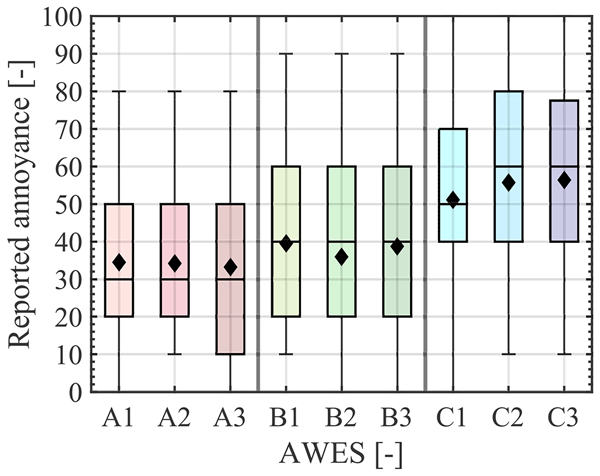
This study investigates noise annoyance caused by airborne wind energy systems (AWESs), a novel wind energy technology that uses kites to harness high-altitude winds. Through a listening experiment with 75 participants, sharpness was identified as the key factor predicting annoyance. Fixed-wing kites generated more annoyance than soft-wing kites, likely due to their sharper, more tonal sound. The findings can help improve AWESs’ designs, reducing noise-related disturbances for nearby residents.
Christoph Elfert, Dietmar Göhlich, and Roland Schmehl
Wind Energ. Sci., 9, 2261–2282, https://doi.org/10.5194/wes-9-2261-2024, https://doi.org/10.5194/wes-9-2261-2024, 2024
Short summary
Short summary
This article presents a tow test procedure for measuring the steering behaviour of tethered membrane wings. The experimental set-up includes a novel onboard sensor system for measuring the position and orientation of the towed wing, complemented by an attached low-cost multi-hole probe for measuring the relative flow velocity vector at the wing. The measured data (steering gain and dead time) can be used to improve kite models and simulate the operation of airborne wind energy systems.
Rishikesh Joshi, Roland Schmehl, and Michiel Kruijff
Wind Energ. Sci., 9, 2195–2215, https://doi.org/10.5194/wes-9-2195-2024, https://doi.org/10.5194/wes-9-2195-2024, 2024
Short summary
Short summary
This paper presents a fast cycle–power computation model for fixed-wing ground-generation airborne wind energy systems. It is suitable for sensitivity and scalability studies, which makes it a valuable tool for design and innovation trade-offs. It is also suitable for integration with cost models and systems engineering tools, enhancing its applicability in assessing the potential of airborne wind energy in the broader energy system.
Mark Schelbergen and Roland Schmehl
Wind Energ. Sci., 9, 1323–1344, https://doi.org/10.5194/wes-9-1323-2024, https://doi.org/10.5194/wes-9-1323-2024, 2024
Short summary
Short summary
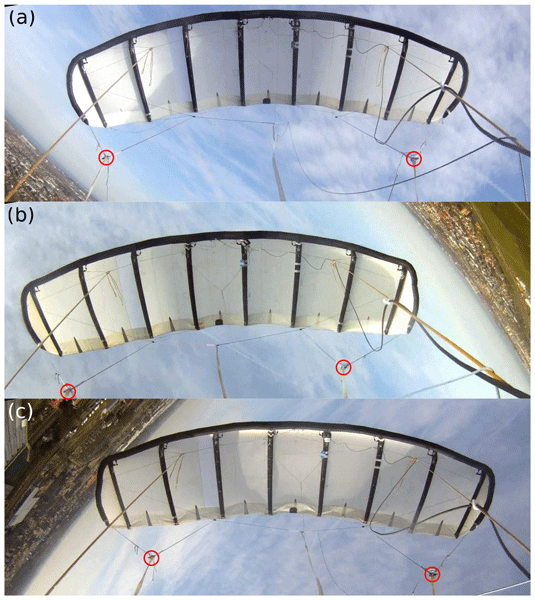
We present a novel two-point model of a kite with a suspended control unit to describe the characteristic swinging motion of this assembly during turning manoeuvres. Quasi-steady and dynamic model variants are combined with a discretised tether model, and simulation results are compared with measurement data of an instrumented kite system. By resolving the pitch of the kite, the model allows for computing the angle of attack, which is essential for estimating the generated aerodynamic forces.
Maaike Sickler, Bart Ummels, Michiel Zaaijer, Roland Schmehl, and Katherine Dykes
Wind Energ. Sci., 8, 1225–1233, https://doi.org/10.5194/wes-8-1225-2023, https://doi.org/10.5194/wes-8-1225-2023, 2023
Short summary
Short summary
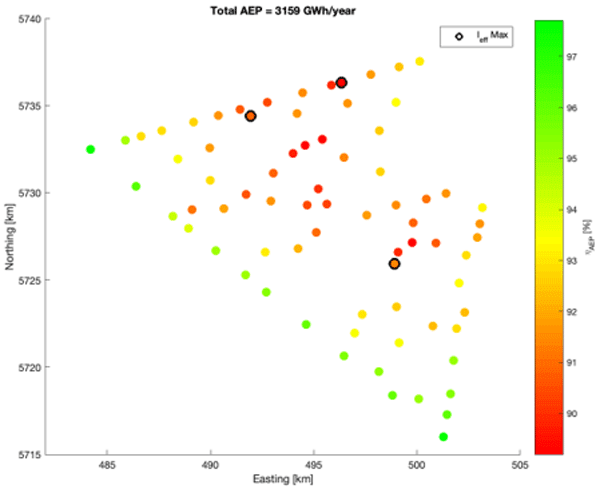
This paper investigates the effect of wind farm layout on the performance of offshore wind farms. A regular farm layout is compared to optimised irregular layouts. The irregular layouts have higher annual energy production, and the power production is less sensitive to wind direction. However, turbine towers require thicker walls to counteract increased fatigue due to increased turbulence levels in the farm. The study shows that layout optimisation can be used to maintain high-yield performance.
Cited articles
Diehl, M., Magni, L., and De Nicolao, G.: Efficient NMPC of unstable periodic systems using approximate infinite horizon closed loop costing, Annu. Rev. Control, 28, 37–45, https://doi.org/10.1016/j.arcontrol.2004.01.011, 2004. a
Eijkelhof, D.: Design and Optimisation Framework of a Multi-MW Airborne Wind Energy Reference System, Master's thesis, Delft University of Technology & Technical University of Denmark, http://resolver.tudelft.nl/uuid:e759f9ad-ab67-43b3-97e0-75558ecf222d (last access: 20 February 2026), 2019. a
Eijkelhof, D.: MegAWES (Version 3), Six-Degrees-of-Freedom Simulation Model for Future Multi-Megawatt Airborne Wind Energy Systems, Delft University of Technology, https://doi.org/10.4121/70679dc6-30ba-4f75-a6ba-94144f456da7, 2025. a
Erhard, M. and Strauch, H.: Theory and Experimental Validation of a Simple Comprehensible Model of Tethered Kite Dynamics Used for Controller Design, in: Airborne Wind Energy, edited by: Ahrens, U., Diehl, M., and Schmehl, R., Green Energy and Technology, chap. 8, Springer, Berlin Heidelberg, 141–165, https://doi.org/10.1007/978-3-642-39965-7_8, 2013. a, b
Fagiano, L., Zgraggen, A. U., Morari, M., and Khammash, M.: Automatic Crosswind Flight of Tethered Wings for Airborne Wind Energy: Modeling, Control Design, and Experimental Results, IEEE T. Contr. Syst. T., 22, 1433–1447, https://doi.org/10.1109/TCST.2013.2279592, 2014. a
Fechner, U. and Schmehl, R.: Flight path control of kite power systems in a turbulent wind environment, in: 2016 American Control Conference (ACC), 4083–4088, https://doi.org/10.1109/ACC.2016.7525563, 2016. a
Fernandes, M. C. R. M., Vinha, S., Paiva, L. T., and Fontes, F. A. C. C.: L0 and L1 Guidance and Path-Following Control for Airborne Wind Energy Systems, Energies, 15, https://doi.org/10.3390/en15041390, 2022. a, b, c, d
Gray, M.: Modern Differential Geometry of Curves and Surfaces with Mathematica, Second Edition, Textbooks in Mathematics, Taylor & Francis, ISBN 9780849371646, 1997. a
Gros, S., Zanon, M., and Diehl, M.: Control of Airborne Wind Energy systems based on Nonlinear Model Predictive Control & Moving Horizon Estimation, in: 2013 European Control Conference (ECC), 1017–1022, https://doi.org/10.23919/ECC.2013.6669713, 2013. a
Hansen, N.: The CMA Evolution Strategy: A Comparing Review, in: Towards a New Evolutionary Computation: Advances in the Estimation of Distribution Algorithms, edited by: Lozano, J. A., Larrañaga, P., Inza, I., and Bengoetxea, E., Springer Berlin Heidelberg, Berlin, Heidelberg, 75–102, https://doi.org/10.1007/3-540-32494-1_4, 2006. a
Houska, B. and Diehl, M.: Optimal Control of Towing Kites, in: Proceedings of the 45th IEEE Conference on Decision and Control, 2693–2697, https://doi.org/10.1109/CDC.2006.377210, 2006. a
Hummel, J., Pollack, T., Eijkelhof, D., Van Kampen, E., and Schmehl, R.: Power smoothing by kite tether force control for megawatt-scale airborne wind energy systems, J. Phys. Conf. Ser., 2767, 072019, https://doi.org/10.1088/1742-6596/2767/7/072019, 2024a. a
Hummel, J., Pollack, T. S., Eijkelhof, D., van Kampen, E.-J., and Schmehl, R.: Winch Sizing for Ground-Generation Airborne Wind Energy Systems, in: 2024 European Control Conference (ECC), 675–680, https://doi.org/10.5281/zenodo.13384380, 2024b. a, b, c, d
Ilzhöfer, A., Houska, B., and Diehl, M.: Nonlinear MPC of kites under varying wind conditions for a new class of large-scale wind power generators, Int. J. Robust Nonlin., 17, 1590–1599, https://doi.org/10.1002/rnc.1210, 2007. a
Jehle, C. and Schmehl, R.: Applied Tracking Control for Kite Power Systems, J. Guid. Control Dynam., 37, https://doi.org/10.2514/1.62380, 2014. a
Li, H., Olinger, D. J., and Demetriou, M. A.: Control of an airborne wind energy system using an aircraft dynamics model, in: 2015 American Control Conference (ACC), 2389–2394, https://doi.org/10.1109/ACC.2015.7171090, 2015. a
Licitra, G., Koenemann, J., Bürger, A., Williams, P., Ruiterkamp, R., and Diehl, M.: Performance assessment of a rigid wing Airborne Wind Energy pumping system, Energy, 173, 569–585, https://doi.org/10.1016/j.energy.2019.02.064, 2019. a, b
Loyd, M. L.: Crosswind kite power (for large-scale wind power production), J. Energy, 4, 106–111, https://doi.org/10.2514/3.48021, 1980. a, b
Park, S., Deyst, J., and How, J.: A new nonlinear guidance logic for trajectory tracking, in: AIAA Guidance, Navigation, and Control Conference and Exhibit, https://doi.org/10.2514/6.2004-4900, 2004. a, b
Rapp, S., Schmehl, R., Oland, E., and Haas, T.: Cascaded Pumping Cycle Control for Rigid Wing Airborne Wind Energy Systems, J. Guid. Control Dynam., 42, 1–18, https://doi.org/10.2514/1.G004246, 2019. a, b
Rossi, N.: Performance comparison and flight controller of circular and figure-of-eight paths for fixed-wing airborne wind energy systems, Master's thesis, University of Trento, Zenodo [thesis], https://doi.org/10.5281/zenodo.10160420, 2023. a
Ruiterkamp, R. and Sieberling, S.: Description and Preliminary Test Results of a Six Degrees of Freedom Rigid Wing Pumping System, in: Airborne Wind Energy, edited by Ahrens, U., Diehl, M., and Schmehl, R., Green Energy and Technology, chap. 26, Springer, Berlin Heidelberg, 443–458, https://doi.org/10.1007/978-3-642-39965-7_26, 2013. a
Schelbergen, M., Kalverla, P. C., Schmehl, R., and Watson, S. J.: Clustering wind profile shapes to estimate airborne wind energy production, Wind Energ. Sci., 5, 1097–1120, https://doi.org/10.5194/wes-5-1097-2020, 2020. a
Schmehl, R., Noom, M., and van der Vlugt, R.: Traction Power Generation with Tethered Wings, in: Airborne Wind Energy, edited by Ahrens, U., Diehl, M., and Schmehl, R., Green Energy and Technology, chap. 2, Springer, Berlin Heidelberg, 23–45, ISBN 978-3-642-39964-0, https://doi.org/10.1007/978-3-642-39965-7_2, 2013. a
Tucker, N.: Airborne Wind Turbine Performance, in: The Energy Kite: Selected Results From the Design, Development and Testing of Makani’s Airborne Wind Turbines, Part I, Makani Technologies, Alameda, CA, USA, 101–224, https://x.company/projects/makani/ (last access: 20 February 2026), 2020. a
van der Vlugt, R., Peschel, J., and Schmehl, R.: Design and Experimental Characterization of a Pumping Kite Power System, in: Airborne Wind Energy, edited by Ahrens, U., Diehl, M., and Schmehl, R., Green Energy and Technology, chap. 23, Springer, Berlin Heidelberg, 403–425, ISBN 978-3-642-39964-0, https://doi.org/10.1007/978-3-642-39965-7_23, 2013. a, b
Vermillion, C., Cobb, M., Fagiano, L., Leuthold, R., Diehl, M., Smith, R. S., Wood, T. A., Rapp, S., Schmehl, R., Olinger, D., and Demetriou, M.: Electricity in the air: Insights from two decades of advanced control research and experimental flight testing of airborne wind energy systems, Annu. Rev. Control, 52, 330–357, https://doi.org/10.1016/j.arcontrol.2021.03.002, 2021. a
Short summary
This study compares circular and figure-of-eight flight patterns for airborne wind energy systems, evaluating power output, stability, and system lifespan. Findings indicate that circular paths maximise energy generation in confined spaces, while figure-of-eight trajectories, particularly those ascending through the centre, provide smoother, more consistent power and extend kite longevity. These insights contribute to the improved design and performance of kite energy systems.
This study compares circular and figure-of-eight flight patterns for airborne wind energy...
Altmetrics
Final-revised paper
Preprint