
Articles | Volume 11, issue 9
https://doi.org/10.5194/wes-11-3475-2026
© Author(s) 2026. This work is distributed under
the Creative Commons Attribution 4.0 License.
the Creative Commons Attribution 4.0 License.
https://doi.org/10.5194/wes-11-3475-2026
© Author(s) 2026. This work is distributed under
the Creative Commons Attribution 4.0 License.
the Creative Commons Attribution 4.0 License.
Review article
| 
15 Sep 2026
Review article |
| 15 Sep 2026
| 15 Sep 2026
Review and quantification of major risks in wind farm development and operation

DTU Wind and Energy Systems, Technical University of Denmark, Frederiksborgvej 399, Roskilde 4000, Denmark
Azélice Ludot
DTU Wind and Energy Systems, Technical University of Denmark, Frederiksborgvej 399, Roskilde 4000, Denmark
Matt Shields
DTU Wind and Energy Systems, Technical University of Denmark, Frederiksborgvej 399, Roskilde 4000, Denmark
Athanasios Kolios
DTU Wind and Energy Systems, Technical University of Denmark, Frederiksborgvej 399, Roskilde 4000, Denmark
Rajasekhar Pulikollu
EPRI, Charlotte, North Carolina, USA
Nikolay Dimitrov
DTU Wind and Energy Systems, Technical University of Denmark, Frederiksborgvej 399, Roskilde 4000, Denmark
Related authors
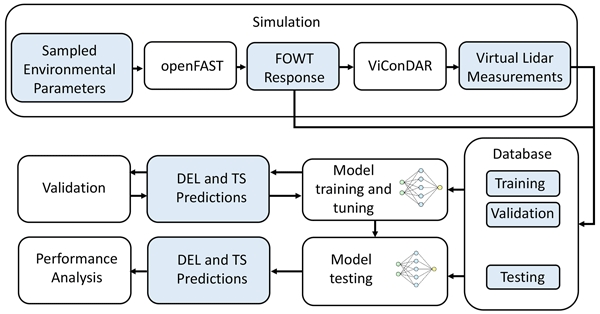
Moritz Gräfe, Vasilis Pettas, Nikolay Dimitrov, and Po Wen Cheng
Wind Energ. Sci., 9, 2175–2193, https://doi.org/10.5194/wes-9-2175-2024, https://doi.org/10.5194/wes-9-2175-2024, 2024
Short summary
Short summary
This study explores a methodology using floater motion and nacelle-based lidar wind speed measurements to estimate the tension and damage equivalent loads (DELs) on floating offshore wind turbines' mooring lines. Results indicate that fairlead tension time series and DELs can be accurately estimated from floater motion time series. Using lidar measurements as model inputs for DEL predictions leads to similar accuracies as using displacement measurements of the floater.
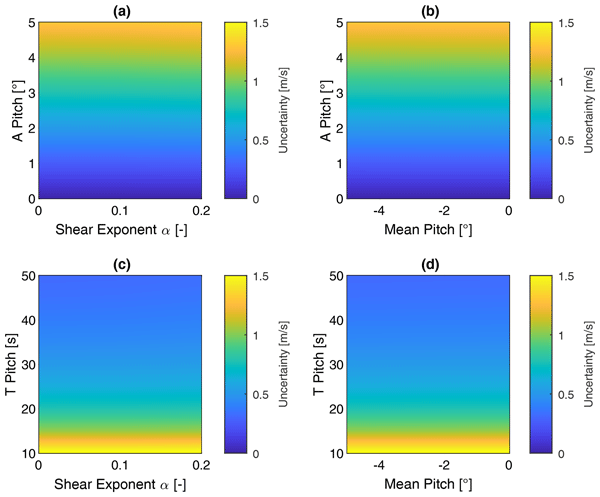
Moritz Gräfe, Vasilis Pettas, Julia Gottschall, and Po Wen Cheng
Wind Energ. Sci., 8, 925–946, https://doi.org/10.5194/wes-8-925-2023, https://doi.org/10.5194/wes-8-925-2023, 2023
Short summary
Short summary
Inflow wind field measurements from nacelle-based lidar systems offer great potential for different applications including turbine control, load validation and power performance measurements. On floating wind turbines nacelle-based lidar measurements are affected by the dynamic behavior of the floating foundations. Therefore, the effects on lidar wind speed measurements induced by floater dynamics must be well understood. A new model for quantification of these effects is introduced in our work.
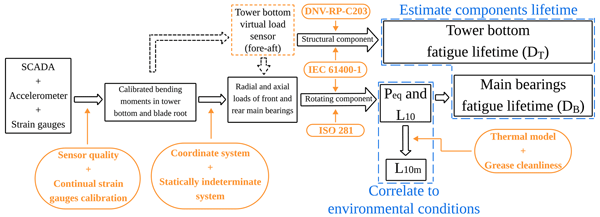
Bruno Rodrigues Faria, Nikolay Dimitrov, Nikhil Sudhakaran, Matthias Stammler, Athanasios Kolios, W. Dheelibun Remigius, Xiaodong Zhang, and Asger Bech Abrahamsen
Wind Energ. Sci., 11, 1583–1606, https://doi.org/10.5194/wes-11-1583-2026, https://doi.org/10.5194/wes-11-1583-2026, 2026
Short summary
Short summary
This study presents continuous lifetime assessments of wind turbine structural (tower) and rotating components (main bearings) over nearly a decade, combining controller data, calibrated load measurements, and a virtual load sensor at the tower bottom. The components' estimated lifetimes exceeded the design lifetime. Contrary to expectations, lower turbulence intensity at rated wind speed increased fatigue loads of the locating main bearing due to turbulence averaging.
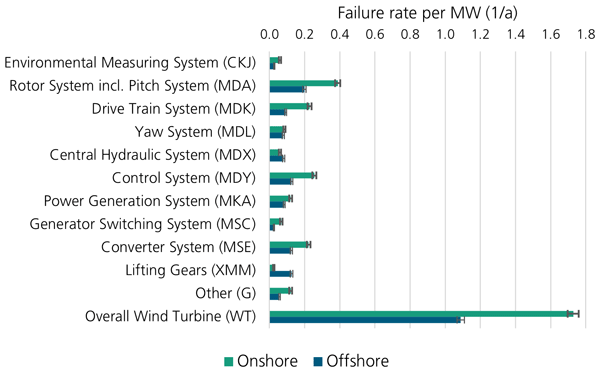
Julia Walgern, Nils Stratmann, Martin Horn, Nathalene W. Y. Then, Moritz Menzel, Fraser Anderson, Athanasios Kolios, and Katharina Fischer
Wind Energ. Sci., 11, 1553–1568, https://doi.org/10.5194/wes-11-1553-2026, https://doi.org/10.5194/wes-11-1553-2026, 2026
Short summary
Short summary
This study analyses maintenance data from over 1000 onshore and offshore wind turbines, covering 4200 operating years, to assess failure rates, repair times, and maintenance needs. It compares failure rates per turbine and per megawatt, examines time-dependent failure behaviour, and evaluates maintenance interventions. Results show higher onshore failure rates and identify the pitch, control, and converter systems as most critical.
Andreas Vad, Adrien Guilloré, Abhinav Anand, Vasilis Pettas, Anik H. Shah, Ion Lizarraga-Saenz, Maria Aparicio-Sanchez, Irene Eguinoa, Nicolau Conti Gost, Iasonas Tsaklis, Ariane Frère, Koen W. Hermans, Joseph K. Kamau, Nikolay Dimitrov, Tuhfe Göçmen, and Carlo L. Bottasso
Wind Energ. Sci. Discuss., https://doi.org/10.5194/wes-2026-45, https://doi.org/10.5194/wes-2026-45, 2026
Revised manuscript under review for WES
Short summary
Short summary
A modular, computationally efficient framework for wind‑farm response modeling is presented. It combines an engineering wake model with surrogate models trained on extensive aeroelastic simulations generated using a novel method for synthetic waked and clean inflows. The wind‑farm‑agnostic framework supports multiple turbine types and layouts, enabling accurate, low‑cost predictions for design, operation, and control.
Carlo L. Bottasso, Sandrine Aubrun, Nicolaos A. Cutululis, Julia Gottschall, Athanasios Kolios, Jakob Mann, and Paul Veers
Wind Energ. Sci., 11, 347–348, https://doi.org/10.5194/wes-11-347-2026, https://doi.org/10.5194/wes-11-347-2026, 2026
Short summary
Short summary
This editorial celebrates the 10th anniversary of Wind Energy Science, reflecting on a decade of rapid scientific progress and the journal’s role in advancing fundamental, interdisciplinary research. It highlights key developments in wind energy, the importance of open science and academia–industry collaboration, and emerging challenges such as data sharing and artificial intelligence. Above all, it honors the research community that has shaped the journal and looks ahead to the next decade.
Innes Murdo Black, Moritz Werther Häckell, and Athanasios Kolios
Wind Energ. Sci., 10, 2889–2901, https://doi.org/10.5194/wes-10-2889-2025, https://doi.org/10.5194/wes-10-2889-2025, 2025
Short summary
Short summary
Population-based structural health monitoring minimises costs by efficiently sharing information within a wind farm, reducing the need for many sensors and model updates.
Büsra Yildirim, Nikolay Dimitrov, Athanasios Kolios, and Asger Bech Abrahamsen
Wind Energ. Sci. Discuss., https://doi.org/10.5194/wes-2025-115, https://doi.org/10.5194/wes-2025-115, 2025
Revised manuscript not accepted
Short summary
Short summary
A surrogate-based design optimization framework has been implemented for a floating wind turbine. By integrating surrogate modeling and analytical design constraints, computationally efficient exploration of design spaces is ensured. This integration provides a connection between conceptual and detailed design. The proposed methodology achieved a reduction of 3.7 % in the Levelized Cost of Energy, considering ultimate, fatigue, and serviceability limit states.
Azélice Ludot, Thor Heine Snedker, Athanasios Kolios, and Ilmas Bayati
Wind Energ. Sci. Discuss., https://doi.org/10.5194/wes-2024-162, https://doi.org/10.5194/wes-2024-162, 2025
Preprint withdrawn
Short summary
Short summary
This paper presents a methodology to develop machine learning models designed to predict, in real-time, hourly fatigue damage accumulation in the mooring lines of floating wind turbines, from measurements of five environmental variables: wind speed, wind direction, wave height, wave period, and wind-wave misalignment. The proposed tool is intended for predictive maintenance applications, which has been identified as a key area for cost reduction in floating wind.
Moritz Gräfe, Vasilis Pettas, Nikolay Dimitrov, and Po Wen Cheng
Wind Energ. Sci., 9, 2175–2193, https://doi.org/10.5194/wes-9-2175-2024, https://doi.org/10.5194/wes-9-2175-2024, 2024
Short summary
Short summary
This study explores a methodology using floater motion and nacelle-based lidar wind speed measurements to estimate the tension and damage equivalent loads (DELs) on floating offshore wind turbines' mooring lines. Results indicate that fairlead tension time series and DELs can be accurately estimated from floater motion time series. Using lidar measurements as model inputs for DEL predictions leads to similar accuracies as using displacement measurements of the floater.
Xiaodong Zhang and Nikolay Dimitrov
Wind Energ. Sci., 8, 1613–1623, https://doi.org/10.5194/wes-8-1613-2023, https://doi.org/10.5194/wes-8-1613-2023, 2023
Short summary
Short summary
Wind turbine extreme response estimation based on statistical extrapolation necessitates using a small number of simulations to calculate a low exceedance probability. This is a challenging task especially if we require small prediction error. We propose the use of a Gaussian mixture model as it is capable of estimating a low exceedance probability with minor bias error, even with limited simulation data, having flexibility in modeling the distributions of varying response variables.
Moritz Gräfe, Vasilis Pettas, Julia Gottschall, and Po Wen Cheng
Wind Energ. Sci., 8, 925–946, https://doi.org/10.5194/wes-8-925-2023, https://doi.org/10.5194/wes-8-925-2023, 2023
Short summary
Short summary
Inflow wind field measurements from nacelle-based lidar systems offer great potential for different applications including turbine control, load validation and power performance measurements. On floating wind turbines nacelle-based lidar measurements are affected by the dynamic behavior of the floating foundations. Therefore, the effects on lidar wind speed measurements induced by floater dynamics must be well understood. A new model for quantification of these effects is introduced in our work.
Mareike Leimeister, Maurizio Collu, and Athanasios Kolios
Wind Energ. Sci., 7, 259–281, https://doi.org/10.5194/wes-7-259-2022, https://doi.org/10.5194/wes-7-259-2022, 2022
Short summary
Short summary
Floating offshore wind technology has high potential but still faces challenges for gaining economic competitiveness to allow commercial market uptake. Hence, design optimization plays a key role; however, the final optimum floater obtained highly depends on the specified optimization problem. Thus, by considering alternative structural realization approaches, not very stringent limitations on the structure and dimensions are required. This way, more innovative floater designs can be captured.
Cited articles
Abba, Z., Balta-Ozkan, N., and Hart, P.: A holistic risk management framework for renewable energy investments, Renew. Sust. Energ. Rev., 160, 112305, https://doi.org/10.1016/j.rser.2022.112305, 2022. a
Agbonaye, O., Keatley, P., Huang, Y., Odiase, F. O., and Hewitt, N.: Value of demand flexibility for managing wind energy constraint and curtailment, Renew. Energ., 190, 487–500, https://doi.org/10.1016/j.renene.2022.03.131, 2022. a
Artigao, E., Martín-Martínez, S., Honrubia-Escribano, A., and Gómez-Lázaro, E.: Wind turbine reliability: A comprehensive review towards effective condition monitoring development, Appl. Energ., 228, 1569–1583, https://doi.org/10.1016/j.apenergy.2018.07.037, 2018. a
Baranowski, R., Cooperman, A., Gilman, P., and Lantz, E.: Wind Energy Supply Chain Deep Dive Assessment, Tech. Rep. DOE/OP-0013, US Department of Energy, Office of Energy Efficiency and Renewable Energy, https://doi.org/10.2172/1866032, 2022. a
Behr, O., Brinkmann, R., Hochradel, K., Mages, J., Korner-Nievergelt, F., Niermann, I., Reich, M., Simon, R., Weber, N., and Nagy, M.: Mitigating bat mortality with turbine-specific curtailment algorithms: a model based approach, in: Wind Energy and Wildlife Interactions: Presentations from the CWW2015 Conference, edited by Köppel, J., 135–160, Springer International Publishing, Cham, https://doi.org/10.1007/978-3-319-51272-3_8, 2017. a
Biber, A., Felder, M., Wieland, C., and Spliethoff, H.: Negative price spiral caused by renewables? Electricity price prediction on the German market for 2030, The Electricity Journal, 35, 107188, https://doi.org/10.1016/j.tej.2022.107188, 2022. a
Bird, L., Lew, D., Milligan, M., Carlini, E. M., Estanqueiro, A., Flynn, D., Gómez-Lázaro, E., Holttinen, H., Menemenlis, N., Orths, A., Eriksen, P. B., Smith, J. C., Söder, L., Sørensen, P., Altiparmakis, A., Yasuda, Y., and Miller, J.: Wind and solar energy curtailment: A review of international experience, Renew. Sust. Energ. Rev., 65, 577–586, https://doi.org/10.1016/j.rser.2016.06.082, 2016. a
Board of Governors of the Federal Reserve System (US): Market Yield on US Treasury Securities at 10-Year Constant Maturity, Quoted on an Investment Basis [DGS10], FRED, Federal Reserve Economic Data, https://fred.stlouisfed.org/series/DGS10 (last access: 27 August 2026), 2026. a
Borgers, R., Meyers, J., and van Lipzig, N. P. M.: Energy production and inter-farm wake losses in future North Sea wind farms, Environ. Res. Lett., 20, 074036, https://doi.org/10.1088/1748-9326/add8a2, 2025. a
Borsotti, M., Negenborn, R., and Jiang, X.: A review of multi-horizon decision-making for operation and maintenance of fixed-bottom offshore wind farms, Renew. Sust. Energ. Rev., 226, 116450, https://doi.org/10.1016/j.rser.2025.116450, 2026. a, b
Carrara, S., Bobba, S., Blagoeva, D., Alves Dias, P., Cavalli, A., Georgitzikis, K., Grohol, M., Itul, A., Kuzov, T., Latunussa, C., Lyons, L., Malano, G., Maury, T., Prior Arce, Á., Somers, J., Telsnig, T., Veeh, C., Wittmer, D., Black, C., Pennington, D., and Christou, M.: Supply Chain Analysis and Material Demand Forecast in Strategic Technologies and Sectors in the EU – A Foresight Study, Tech. Rep. JRC132889, Joint Research Centre, Publications Office of the European Union, Luxembourg, https://doi.org/10.2760/386650, 2023. a
Carroll, J., McDonald, A., and McMillan, D.: Failure rate, repair time and unscheduled O&M cost analysis of offshore wind turbines, Wind Energy, 19, 1107–1119, https://doi.org/10.1002/we.1887, 2016. a, b, c
Cevasco, D., Koukoura, S., and Kolios, A.: Reliability, availability, maintainability data review for the identification of trends in offshore wind energy applications, Renew. Sust. Energ. Rev., 136, 110414, https://doi.org/10.1016/j.rser.2020.110414, 2021. a
Chesterman, X., Verstraeten, T., Daems, P.-J., Nowé, A., and Helsen, J.: Overview of normal behavior modeling approaches for SCADA-based wind turbine condition monitoring demonstrated on data from operational wind farms, Wind Energ. Sci., 8, 893–924, https://doi.org/10.5194/wes-8-893-2023, 2023. a
Costanzo, G., Brindley, G., and Tardieu, P.: Wind energy in Europe: 2024 Statistics and the outlook for 2025–2030, Tech. rep., Wind Europe, https://windeurope.org/data/products/wind-energy-in-europe-2024-statistics-and-the-outlook-for-2025-2030/ (last access: 14 September 2026), 2025. a
Cryan, P. M. and Barclay, R. M. R.: Causes of Bat Fatalities at Wind Turbines: Hypotheses and Predictions, J. Mammal., 90, 1330–1340, https://doi.org/10.1644/09-MAMM-S-076R1.1, 2009. a
Dao, C., Kazemtabrizi, B., and Crabtree, C.: Wind turbine reliability data review and impacts on levelised cost of energy, Wind Energy, 22, 1848–1871, https://doi.org/10.1002/we.2404, 2019. a, b, c
Dao, C. D., Kazemtabrizi, B., and Crabtree, C. J.: Offshore wind turbine reliability and operational simulation under uncertainties, Wind Energy, 23, 1919–1938, https://doi.org/10.1002/we.2526, 2020. a
Deutsche Finanzagentur: FactSheet: 2.60 % Federal bond 2025 (2035), ISIN DE000BU2Z056, https://www.deutsche-finanzagentur.de/en/federal-securities/factsheet/isin/DE000BU2Z056 (last access: 24 August 2026), 2026. a
Dinwoodie, I., McMillan, D., Revie, M., Lazakis, I., and Dalgic, Y.: Development of a Combined Operational and Strategic Decision Support Model for Offshore Wind, Energy Procedia, deepWind'2013 – Selected papers from 10th Deep Sea Offshore Wind R&D Conference, Trondheim, Norway, 24–25 January 2013, 35, 157–166, https://doi.org/10.1016/j.egypro.2013.07.169, 2013. a
Donnelly, O., Carroll, J., and Howland, M.: Analysing the cost impact of failure rates for the next generation of offshore wind turbines, Wind Energy, 27, 695–710, https://doi.org/10.1002/we.2907, 2024. a, b, c, d
Eberle, A., Cooperman, A., Walzberg, J., Hettinger, D., Tusing, R. F., Berry, D., Inman, D., Sirnivas, S., Marquis, M., Ennis, B., Sproul, E., Clarke, R., Paquette, J., Hendrickson, T., Morrow, W., Das, S., Korey, M., Paranthaman, P., Norris, R., Ghobrial, L., Seetharaman, S., and Korobeinikov, Y.: Materials Used in US Wind Energy Technologies: Quantities and Availability for Two Future Scenarios, Tech. Rep. NREL/TP-6A20-81483, National Renewable Energy Laboratory, Golden, CO, https://docs.nlr.gov/docs/fy23osti/81483.pdf (last access: 24 August 2026), 2023. a
EirGrid TSO and SONI TSO: Article 13 Clean Energy Package Redispatching Annual Report - 2023, Tech. Rep. SEM-24-059a, EirGrid and SONI, Dublin and Belfast, https://www.semcommittee.com/files/semcommittee/2024-08/SEM-24-059a_%20Proposed%20report%20under%20Article%2013%284%29.pdf (last access: 14 September 2026), 2024. a, b, c
Electric Power Research Institute (EPRI): Wind Network for Enhanced Reliability (WinNER) Database [data set], https://www.epri.com/research/products/000000003002027612 (last access: 14 September 2026), 2024. a
European Commission, Directorate-General for Environment: EU Guidance on Wind Energy Development in Accordance with the EU Nature Legislation, Tech. rep., European Commission, https://eolien-biodiversite.com/IMG/pdf/wind_farms_guide_final_draft_march_2010.pdf (last access: 24 August 2026), 2010. a
Faulstich, S., Hahn, B., and Tavner, P. J.: Wind turbine downtime and its importance for offshore deployment, Wind Energy, 14, 327–337, https://doi.org/10.1002/we.421, 2011. a, b, c
Fischer, K., Pelka, K., Bartschat, A., Tegtmeier, B., Coronado, D., Broer, C., and Wenske, J.: Reliability of Power Converters in Wind Turbines: Exploratory Analysis of Failure and Operating Data from a Worldwide Turbine Fleet, IEEE T. Power Electr., 34, 6332–6344, https://doi.org/10.1109/TPEL.2018.2875005, 2019. a
Friedenberg, N. A. and Frick, W. F.: Assessing fatality minimization for hoary bats amid continued wind energy development, Biol. Conserv., 262, 109309, https://doi.org/10.1016/j.biocon.2021.109309, 2021. a
Fuchs, R., Zuckerman, G., Duffy, P., Shields, M., Musial, W., Beiter, P., Cooperman, A., and Bredenkamp, S.: The Cost of Offshore Wind Energy in the United States From 2025 to 2050, Tech. Rep. NREL/TP-5000-88988, National Renewable Energy Laboratory, https://doi.org/10.2172/2433785, 2024. a
Global Wind Energy Council (GWEC): Global Wind Report 2025, Tech. rep., Global Wind Energy Council, Lisbon, Portugal, https://26973329.fs1.hubspotusercontent-eu1.net/hubfs/26973329/2.%20Reports/Global%20Wind%20Report/GWEC%20Global%20Wind%20Report%202025.pdf (last access: 14 September 2026), 2025. a, b
Gonzalez-Aparicio, I., Vitulli, A., Krishna-Swamy, S., Hernandez-Serna, R., Jansen, N., and Verstraten, P.: Offshore wind business feasibility in a flexible and electrified Dutch energy market by 2030, Whitepaper, TNO, https://publications.tno.nl/publication/34640203/tMlTI0/TNO-2022-offshorewind.pdf (last access: 24 August 2026), 2022. a
Gottlieb, I., Allison, T. D., Donovan, C., Whitby, M., and New, L.: Developing and Evaluating a Smart Curtailment Strategy Integrated with a Wind Turbine Manufacturer Platform, Tech. rep., Renewable Energy Wildlife Institute (REWI), Washington, DC (United States), https://doi.org/10.2172/2378000, 2024. a
Gräfe, M., Dimitrov, N., El Amri, M. R., and Guiton, M.: Validation of the Newly Developed FLS and ULS Distribution Predictions and Quantification of the Resulting Uncertainty Reduction, Public Deliverable Deliverable D4.5, Technical University of Denmark (DTU) and IFP Energies nouvelles (IFPEN), hIPERWIND project, Horizon 2020 Research and Innovation Programme, Grant Agreement No. 101006689, https://ifp.hal.science/hal-04836565v1 (last access: 14 September 2026), 2024. a
Gräfe, M., Pettas, V., and Dimitrov, N.: WINPACT (v1.0.0), Zenodo [code], https://doi.org/10.5281/zenodo.17641606, 2025a. a, b
GräfGräfe, M., Kainz, S., Ludot, A., Pettas, V., Anand, A., and Bottasso, C. L.: Impact of reliability parameters on O&M cost and greenhouse gas emissions of offshore wind farms, J. Phys. Conf. Ser., 3131, 012034, https://doi.org/10.1088/1742-6596/3131/1/012034, 2025b. a
Gräfe, M., Pettas, V., Ioannou, A., Kolios, A., and Dimitrov, N.: Wind farm project valuation under revenue-driven farm control considering life time extension, J. Phys. Conf. Ser., 3224, 062063, https://doi.org/10.1088/1742-6596/3224/6/062063, 2026. a
Guillet, J.: Financing Offshore Wind, Tech. rep., World Forum Offshore Wind (WFO), Hamburg, Germany, https://wfo-global.org/wp-content/uploads/2022/09/WFO_FinancingOffshoreWind_2022.pdf (last access: 24 August 2026), 2022. a
Hadjoudj, Y. and Pandit, R.: A review on data-centric decision tools for offshore wind operation and maintenance activities: Challenges and opportunities, Energy Sci. Eng., 11, 1501–1515, https://doi.org/10.1002/ese3.1376, 2023. a
Hahmann, A. N., García-Santiago, O., and Peña, A.: Current and future wind energy resources in the North Sea according to CMIP6, Wind Energ. Sci., 7, 2373–2391, https://doi.org/10.5194/wes-7-2373-2022, 2022. a
Hahn, B., Welte, T., Faulstich, S., Bangalore, P., Boussion, C., Harrison, K., Miguelanez-Martin, E., O'Connor, F., Pettersson, L., Soraghan, C., Stock-Williams, C., Sørensen, J. D., van Bussel, G., and Vatn, J.: Recommended practices for wind farm data collection and reliability assessment for O&M optimization, in: Energy Procedia, 14th Deep Sea Offshore Wind R&D Conference, EERA DeepWind'2017, Elsevier, vol. 137, 358–365,https://doi.org/10.1016/j.egypro.2017.10.360, 2017. a, b
Hammond, R. and Cooperman, A.: Windfarm Operations and Maintenance cost-Benefit Analysis Tool (WOMBAT), Tech. Rep. NREL/TP-5000-83712, National Renewable Energy Laboratory, https://doi.org/10.2172/1894867, 2022. a
Haseeb, S. A. and Krawczuk, M.: A State-of-the-Art Review of Structural Health Monitoring Techniques for Wind Turbine Blades, J. Nondestruct. Eval., 45, 4, https://doi.org/10.1007/s10921-025-01296-5, 2025. a, b
Hawker, G. S. and McMillan, D. A.: The impact of maintenance contract arrangements on the yield of offshore wind power plants, Proceedings of the Institution of Mechanical Engineers, Part O: Journal of Risk and Reliability, 229, 394–402, https://doi.org/10.1177/1748006X15594693, 2015. a
Hayes, M. A., Lindsay, S. R., Solick, D. I., and Newman, C. M.: Simulating the influences of bat curtailment on power production at wind energy facilities, Wildlife Soc. B., 47, e1399, https://doi.org/10.1002/wsb.1399, 2023. a, b
International Electrotechnical Commission: IEC 61400-1:2019 RVL, Wind energy generation systems – Part 1: Design requirements, International standard, International Electrotechnical Commission, https://webstore.iec.ch/publication/64648 (last access: 14 September 2026), 2019a. a
International Electrotechnical Commission: IEC 61400-3-1:2019, Wind energy generation systems – Part 3-1: Design requirements for fixed offshore wind turbines, International standard, International Electrotechnical Commission, https://webstore.iec.ch/publication/29360 (last access: 14 September 2026), 2019b. a
International Electrotechnical Commission: Wind energy generation systems – Part 28: Through-life management and life extension of wind power assets, Technical Specification IEC TS 61400-28:2025, IEC, Geneva, Switzerland, ISBN 9782832702956, https://webstore.iec.ch/en/publication/62236 (last access: 14 September 2026), 2025. a
International Energy Agency: The Netherlands 2024: Energy Policy Review, Energy policy review, International Energy Agency, Paris, France, https://iea.blob.core.windows.net/assets/2b729152-456e-43ed-bd9b-ecff5ed86c13/TheNetherlands2024.pdf (last access: 24 August 2026), 2025. a
Ioannou, A., Angus, A., and Brennan, F.: Informing parametric risk control policies for operational uncertainties of offshore wind energy assets, Ocean Eng., 177, 1–11, https://doi.org/10.1016/j.oceaneng.2019.02.058, 2019. a
IRENA: Renewable capacity statistics 2025, Tech. rep., https://www.irena.org/Publications/2025/Mar/Renewable-capacity-statistics-2025 (last access: 24 August 2026), 2025. a
Jardine, A. K. S., Lin, D., and Banjevic, D.: A review on machinery diagnostics and prognostics implementing condition-based maintenance, Mech. Syst. Signal Pr., 20, 1483–1510, https://doi.org/10.1016/j.ymssp.2005.09.012, 2006. a
Kapur, K. C. and Pecht, M.: Reliability Engineering, John Wiley & Sons, Hoboken, NJ, USA, ISBN 9781118841716, https://doi.org/10.1002/9781118841716, 2014. a
Kerr, S.: Scottish wind farms paid not to generate nearly 40 % of potential electricity, Financial Times, online, https://www.ft.com/content/e7481629-4e6b-460c-830c-d97324115aca (last access: 24 August 2026), 2025. a
Kestel, K., Chesterman, X., Zappalá, D., Watson, S., Li, M., Hart, E., Carroll, J., Vidal, Y., Nejad, A. R., Sheng, S., Guo, Y., Stammler, M., Wirsing, F., Saleh, A., Gregarek, N., Baszenski, T., Decker, T., Knops, M., Jacobs, G., Lehmann, B., König, F., Pereira, I., Daems, P.-J., Peeters, C., and Helsen, J.: Condition monitoring of wind turbine drivetrains: state-of-the-art technologies, recent trends, and future outlook, Wind Energ. Sci., 11, 2103–2155, https://doi.org/10.5194/wes-11-2103-2026, 2026. a, b
Kolios, A., Richmond, M., Koukoura, S., and Yeter, B.: Effect of weather forecast uncertainty on offshore wind farm availability assessment, Ocean Eng., 285, https://doi.org/10.1016/j.oceaneng.2023.115265, 2023. a
Kong, K., Dyer, K., Payne, C., Hamerton, I., and Weaver, P. M.: Progress and Trends in Damage Detection Methods, Maintenance, and Data-driven Monitoring of Wind Turbine Blades – A Review, Renewable Energy Focus, 44, 390–412, https://doi.org/10.1016/j.ref.2022.08.005, 2023. a
Larsén, X. G., Imberger, M., and Hannesdóttir, Á.: The impact of Climate Change on extreme winds over northern Europe according to CMIP6, Frontiers in Energy Research, 12, 1404791, https://doi.org/10.3389/fenrg.2024.1404791, 2024. a
Lopez, J. C. and Kolios, A.: Risk-based maintenance strategy selection for wind turbine composite blades, Energy Reports, 8, 5541–5561, https://doi.org/10.1016/j.egyr.2022.04.027, 2022. a
Ma, Z., An, G., Sun, X., and Chai, J.: A study of fault statistical analysis and maintenance policy of wind turbine system, in: International Conference on Renewable Power Generation (RPG 2015), 1–4, https://doi.org/10.1049/cp.2015.0443, 2015. a
Malik, T. H. and Bak, C.: Challenges in detecting wind turbine power loss: the effects of blade erosion, turbulence, and time averaging, Wind Energ. Sci., 10, 227–243, https://doi.org/10.5194/wes-10-227-2025, 2025. a
Mehta, M., Zaaijer, M., and von Terzi, D.: Drivers for optimum sizing of wind turbines for offshore wind farms, Wind Energ. Sci., 9, 141–163, https://doi.org/10.5194/wes-9-141-2024, 2024. a
Merton, R. C.: Option pricing when underlying stock returns are discontinuous, J. Financ. Econ., 3, 125–144, https://doi.org/10.1016/0304-405X(76)90022-2, 1976. a
Mikindani, D., O'Brien, J., Leahy, P., and Deeney, P.: The financial risks from wind turbine failures: a value at risk approach, Appl. Econ., 57, 6105–6120, https://doi.org/10.1080/00036846.2024.2380542, 2025. a
Mirletz, B., Vimmerstedt, L., Stehly, T., Stright, D., Cohen, S., Cole, W., Duffy, P., Feldman, D., Kurup, P., Ramasamy, V., Zuboy, J., Oladosu, G., Hoffmann, J., Eberle, A., Roberts, O., Mulas Hernando, D., Avery, G., Rosenlieb, E., Schleifer, A., Akindipe, D., and Sekar, A.: 2024 Annual Technology Baseline (ATB) Cost and Performance Data for Electricity Generation Technologies, National Renewable Energy Laboratory/US Department of Energy Office of Scientific and Technical Information [data set], https://doi.org/10.25984/2377191, 2024. a
Mishnaevsky, L.: Root Causes and Mechanisms of Failure of Wind Turbine Blades: Overview, Materials, 15, 2959, https://doi.org/10.3390/ma15092959, 2022. a
Moverley Smith, B., Clayton, R., van der Weijde, A. H., and Thies, P. R.: Evaluating technical and financial factors for commercialising floating offshore wind: A stakeholder analysis, Wind Energy, 25, 1959–1972, https://doi.org/10.1002/we.2777, 2022. a
National Renewable Energy Laboratory: WISDEM® (Wind-Plant Integrated System Design and Engineering Model), GitHub [code], https://github.com/WISDEM/WISDEM (last access: 14 September 2026), 2021. a
Nielsen, J. and Sørensen, J.: Risk‐based derivation of target reliability levels for life extension of wind turbine structural components, Wind Energy, 24, 939–956, https://doi.org/10.1002/we.2610, 2021. a
Nielsen, J., Dimitrov, N., and Sørensen, J.: Optimal Decision Making for Life Extension for Wind Turbines, in: Proceedings of the 13th International Conference on Applications of Statistics and Probability in Civil Engineering, ICASP 2019, Seoul National University, https://doi.org/10.22725/ICASP13.083, 2019. a, b
Nielsen, J. J. and Sørensen, J. D.: On risk-based operation and maintenance of offshore wind turbine components, Reliab. Eng. Syst. Safe., 96, 218–229, https://doi.org/10.1016/j.ress.2010.07.007, 2011. a
Nunemaker, J., Shields, M., Hammond, R., and Duffy, P.: ORBIT: Offshore Renewables Balance-of-System and Installation Tool, Tech. Rep. NREL/TP-5000-77081, National Renewable Energy Laboratory, https://doi.org/10.2172/1660132, 2020. a
Paquette, J., Williams, M., Clarke, R., Devin, M., Sheng, S., Constant, C., Clark, C., Fields, J., Gevorgian, V., Hall, M., Jonkman, J., Keller, J., Robertson, A., Sethuraman, L., and van Dam, J.: An Operations and Maintenance Roadmap for US Offshore Wind: Enabling a Cost-Effective and Sustainable US Offshore Wind Energy Industry through Innovative Operations and Maintenance, Tech. rep., US Department of Energy, Office of Energy Efficiency and Renewable Energy, https://www.energy.gov/sites/default/files/2024-05/operations-maintenance-roadmap-us-offshore-wind.pdf (last access: 20 January 2026), 2024. a, b
Pelka, K. and Fischer, K.: Field-data-based reliability analysis of power converters in wind turbines: Assessing the effect of explanatory variables, Wind Energy, 26, 310–324, https://doi.org/10.1002/we.2800, 2023. a
Pettas, V., Gräfe, M., Dirik, D. G., Ramaswamy, H. R., Riva, R., Quick, J., and Réthoré, P.-E.: A framework to evaluate structural fatigue accumulation and health metrics of wind farms under different operational strategies, J. Phys. Conf. Ser., 3224, 032079, https://doi.org/10.1088/1742-6596/3224/3/032079, 2026. a
Pfaffel, S., Faulstich, S., and Röhrig, K.: Performance and Reliability of Wind Turbines: A Review, Energies, 10, 1904, https://doi.org/10.3390/en10111904, 2017. a
Pulikollu, R., Haus, L., McLaughlin, J., and Sheng, S.: Wind Turbine Main Bearing Reliability Analysis, Operations, and Maintenance Considerations, Tech. Rep. NREL/TP–5000-90476, National Renewable Energy Laboratory (NREL), Golden, CO, USA, https://research-hub.nlr.gov/en/publications/wind-turbine-main-bearing-reliability-analysis-operations-and-mai/ (last access: 24 August 2026), 2024. a
Pulikollu, R. V., Sheng, S., McLaughlin, J., Fitchett, B., and Han, A.: Wind Turbine Gearbox Reliability Assessment - Value of Increased Reliability and Reduced Operations and Maintenance Costs, Tech. rep., Electric Power Research Institute (EPRI), National Renewable Energy Laboratory (NREL), Machine Building Specialists, https://www.epri.com/research/products/000000003002021422 (last access: 24 August 2026), 2021. a
Pulikollu, R. V., Erdman, W., McLaughlin, J., Alewine, K., Sheng, S., and Bezner, J.: Wind Turbine Generator Reliability Analysis to Reduce Operations and Maintenance (O&M) Costs, Tech. Rep. NREL/TP–5000-86721, National Renewable Energy Laboratory (NREL), Golden, CO, USA, https://doi.org/10.2172/1992825, 2023. a
Reder, M., Gonzalez, E., and Melero, J. J.: Wind Turbine Failures – Tackling current Problems in Failure Data Analysis, Journal of Physics: Conference Series, 753, 072027, https://doi.org/10.1088/1742-6596/753/7/072027, 2016. a, b, c
Reder, M. D.: Reliability Models and Failure Detection Algorithms for Wind Turbines, Ph.D. thesis, Universidad de Zaragoza, Zaragoza, Spain, https://zaguan.unizar.es/record/75399/files/TESIS-2018-066.pdf (last access: 24 August 2026), 2018. a
Requate, N., Meyer, T., and Hofmann, R.: From wind conditions to operational strategy: optimal planning of wind turbine damage progression over its lifetime, Wind Energ. Sci., 8, 1727–1753, https://doi.org/10.5194/wes-8-1727-2023, 2023. a
Scheu, M. N., Kolios, A., Fischer, T., and Brennan, F.: Influence of statistical uncertainty of component reliability estimations on offshore wind farm availability, Reliab. Eng. Syst. Safe, 168, 28–39, https://doi.org/10.1016/j.ress.2017.05.021, 2017. a
Scheu, M. N., Tremps, L., Smolka, U., Kolios, A., and Brennan, F.: A systematic Failure Mode Effects and Criticality Analysis for offshore wind turbine systems towards integrated condition based maintenance strategies, Ocean Eng., 176, 118–133, https://doi.org/10.1016/j.oceaneng.2019.02.048, 2019. a
Shafiee, M. and Sørensen, J. D.: Maintenance optimization and inspection planning of wind energy assets: Models, methods and strategies, Reliab. Eng Syst Safe., 192, 105993, https://doi.org/10.1016/j.ress.2017.10.025, 2019. a
Shields, M., Beiter, P., Nunemaker, J., Cooperman, A., and Duffy, P.: Impacts of turbine and plant upsizing on the levelized cost of energy for offshore wind, Appl. Energ., 298, 117189, https://doi.org/10.1016/j.apenergy.2021.117189, 2021. a
Shields, M., Stefek, J., Oteri, F., Kreider, M., Gill, E., Maniak, S., Gould, R., Malvik, C., Tirone, S., and Hines, E.: A Supply Chain Road Map for Offshore Wind Energy in the United States, Tech. Rep. NREL/TP-5000-84710, National Renewable Energy Laboratory, https://doi.org/10.2172/1922189, 2023. a, b, c, d, e
Siddiqui, M. O., Feja, P. R., Borowski, P., Kyling, H., Nejad, A. R., and Wenske, J.: Wind turbine nacelle testing: State-of-the-art and development trends, Renew. Sust. Energ. Rev., 188, 113767, https://doi.org/10.1016/j.rser.2023.113767, 2023. a
SMARD – German Electricity Market Data: Congestion Management in the Second Quarter of 2024, https://www.smard.de/page/en/topic-article/5892/215186/congestion-management-in-the-second-quarter-of-2024 (last access: 23 December 2025), 2024. a
Strang-Moran, C.: Subsea cable management: Failure trending for offshore wind, Wind Energ. Sci. Discuss. [preprint], https://doi.org/10.5194/wes-2020-56, 2020. a
Stålhane, M., Halvorsen-Weare, E. E., Nonås, L. M., and Pantuso, G.: Optimizing vessel fleet size and mix to support maintenance operations at offshore wind farms, Eur. J. Oper. Res., 276, 495–509, https://doi.org/10.1016/j.ejor.2019.01.023, 2019. a
Tautz-Weinert, J. and Watson, S. J.: Using SCADA data for wind turbine condition monitoring – a review, IET Renew. Power Gen., 11, 382–394, https://doi.org/10.1049/iet-rpg.2016.0248, 2017. a
Tavner, P., Greenwood, D., Whittle, M., Gindele, R., Faulstich, S., and Hahn, B.: Study of weather and location effects on wind turbine failure rates, Wind Energy, 16, 175–187, https://doi.org/10.1002/we.538, 2013. a, b
Thomaßen, G. K., Fuhrmanek, A., Cadenović, R., Pozo Cámara, D., and Vitiello, S.: Redispatch and Congestion Management: Future-Proofing the European Power Market, Tech. Rep. JRC137685, Joint Research Centre, Publications Office of the European Union, Luxembourg, https://doi.org/10.2760/853898, 2024. a
Tselika, K.: The impact of variable renewables on the distribution of hourly electricity prices and their variability: A panel approach, Energy Economics, 113, 106194, https://doi.org/10.1016/j.eneco.2022.106194, 2022. a
Ury, J., Anders, B., Beiter, P., Brown-Saracino, J., and Gilman, P.: Pathways to Commercial Liftoff: Offshore Wind, Tech. rep., US Department of Energy, https://luciatian.com/publications/April-2024-LIFTOFF_DOE_Offshore-Wind-Liftoff-2.pdf (last access: 24 August 2026), 2024. a
US Bureau of Labor Statistics: Producer Price Index by Industry: Other Pressed and Blown Glass and Glassware: Glass Fiber Mat, Textile-Type, Made by Glass Producers, Retrieved from FRED, Federal Reserve Bank of St. Louis, https://fred.stlouisfed.org/series/PCU327212327212B1 (last access: 20 January 2026), 2026a. a
van der Laan, M. P., García-Santiago, O., Sørensen, N. N., Troldborg, N., Criado Risco, J., and Badger, J.: Simulating wake losses of the Danish Energy Island wind farm cluster, J. Phys. Conf. Ser., 2505, 012015, https://doi.org/10.1088/1742-6596/2505/1/012015, 2023. a
van Kuik, G. A. M., Peinke, J., Nijssen, R., Lekou, D., Mann, J., Sørensen, J. N., Ferreira, C., van Wingerden, J. W., Schlipf, D., Gebraad, P., Polinder, H., Abrahamsen, A., van Bussel, G. J. W., Sørensen, J. D., Tavner, P., Bottasso, C. L., Muskulus, M., Matha, D., Lindeboom, H. J., Degraer, S., Kramer, O., Lehnhoff, S., Sonnenschein, M., Sørensen, P. E., Künneke, R. W., Morthorst, P. E., and Skytte, K.: Long-term research challenges in wind energy – a research agenda by the European Academy of Wind Energy, Wind Energ. Sci., 1, 1–39, https://doi.org/10.5194/wes-1-1-2016, 2016. a
Veers, P., Bottasso, C. L., Manuel, L., Naughton, J., Pao, L., Paquette, J., Robertson, A., Robinson, M., Ananthan, S., Barlas, T., Bianchini, A., Bredmose, H., Horcas, S. G., Keller, J., Madsen, H. A., Manwell, J., Moriarty, P., Nolet, S., and Rinker, J.: Grand challenges in the design, manufacture, and operation of future wind turbine systems, Wind Energ. Sci., 8, 1071–1131, https://doi.org/10.5194/wes-8-1071-2023, 2023. a
Vestas Wind Systems A/S: Interim Financial Report – Second Quarter 2024: Company Announcement No. 14/2024, Interim Financial Report Company Announcement No. 14/2024, Vestas Wind Systems A/S, Aarhus, Denmark, https://www.vestas.com/content/dam/vestas-com/global/en/investor/reports-and-presentations/financial/2024/q2-2024/240814_14_Company_Announcement.pdf (last access: 24 August 2026), 2024. a
Walgern, J., Stratmann, N., Horn, M., Then, N. W. Y., Menzel, M., Anderson, F., Kolios, A., and Fischer, K.: Reliability and O&M key performance indicators of onshore and offshore wind turbines based on field-data analysis, Wind Energ. Sci., 11, 1553–1568, https://doi.org/10.5194/wes-11-1553-2026, 2026. a, b, c, d
Wang, S., Vidal, Y., and Pozo, F.: Recent advances in wind turbine condition monitoring using SCADA data: A state-of-the-art review, Reliab. Eng. Syst. Safe., 267, 111838, https://doi.org/10.1016/j.ress.2025.111838, 2026. a, b
Whitby, M. D., Schirmacher, M. R., and Frick, W. F.: The State of the Science on Operational Minimization to Reduce Bat Fatality at Wind Energy Facilities, Tech. rep., Bat Conservation International, Austin, Texas, prepared for the National Renewable Energy Laboratory, https://tethys.pnnl.gov/publications/state-science-operational (last access: 14 September 2026), 2021 a
WindEurope: Where do wind turbine blades go when they are decommissioned?, https://windeurope.org/news/where-do-wind-turbine-blades-go (last access: 9 January 2026), 2025a. a
WindEurope: Offshore wind in Europe in peril, https://windeurope.org/news/offshore-wind-in-europe-in-peril/ (last access: 22 January 2026), 2025b. a
WindEurope: Recommendations for Harmonising Wind Energy Decommissioning Requirements, Position paper, WindEurope, https://windeurope.org/data/products/recommendations-for-harmonising-wind-energy-decommissioning-requirements/ (last access: 21 January 2026), 2025c. a
Wiser, R., Millstein, D., Hoen, B., Bolinger, M., Gorman, W., Rand, J., Barbose, G., Cheyette, A., Darghouth, N., Jeong, S., Kemp, J. M., O'Shaughnessy, E., Paulos, B., and Seel, J.: Land-Based Wind Market Report: 2024 Edition, Technical report, Lawrence Berkeley National Laboratory, https://doi.org/10.2172/2434282, 2024. a
Wiser, R. H., Bolinger, M., Hoen, B., Millstein, D., Rand, J., Barbose, G. L., Darghouth, N. R., Gorman, W., Jeong, S., Mills, A. D., and Paulos, B.: Land-Based Wind Market Report: 2021 Edition, Technical Report OSTI-1818277, Lawrence Berkeley National Laboratory (LBNL), https://doi.org/10.2172/1818277, 2021. a
Yeter, B., Garbatov, Y., and Guedes Soares, C.: Life-extension classification of offshore wind assets using unsupervised machine learning, Reliab. Eng. Syst. Safe., 219, 108229, https://doi.org/10.1016/j.ress.2021.108229, 2022. a
Ziegler, L., Gonzalez, E., Rubert, T., Smolka, U., and Melero, J. J.: Lifetime extension of onshore wind turbines: A review covering Germany, Spain, Denmark, and the UK, Renew. Sust. Energ. Rev., 82, 1261–1271, https://doi.org/10.1016/j.rser.2017.09.100, 2018. a, b
Short summary
This study examines the risk drivers of the economic success of wind energy projects and how interacting risks threaten that success. We combined expert opinions, survey results, and literature findings to identify key challenges in planning and operation. The results show that risks interact and can cause uneven financial losses, highlighting the need for integrated decision support tools.
This study examines the risk drivers of the economic success of wind energy projects and how...


Altmetrics
Final-revised paper
Preprint