
Articles | Volume 11, issue 10
https://doi.org/10.5194/wes-11-3775-2026
© Author(s) 2026. This work is distributed under
the Creative Commons Attribution 4.0 License.
the Creative Commons Attribution 4.0 License.
https://doi.org/10.5194/wes-11-3775-2026
© Author(s) 2026. This work is distributed under
the Creative Commons Attribution 4.0 License.
the Creative Commons Attribution 4.0 License.
Brief communication
| 
02 Oct 2026
Brief communication |
| 02 Oct 2026
| 02 Oct 2026
Brief communication: A novel wake mixing phenomenon and key parameters for wake recovery of floating wind turbines subjected to surge motions
Christian W. Schulz
CORRESPONDING AUTHOR

Hamburg University of Technology, Institute for Fluid Dynamics and Ship Theory, Hamburg, Germany
Michael Hölling
Carl von Ossietzky Universität Oldenburg, School of Mathematics and Science, Institute of Physics, Oldenburg, Germany
ForWind – Center for Wind Energy Research, Küpkersweg 70, Oldenburg 26129, Germany
Joachim Peinke
Carl von Ossietzky Universität Oldenburg, School of Mathematics and Science, Institute of Physics, Oldenburg, Germany
ForWind – Center for Wind Energy Research, Küpkersweg 70, Oldenburg 26129, Germany
Thomas Messmer
CORRESPONDING AUTHOR
Carl von Ossietzky Universität Oldenburg, School of Mathematics and Science, Institute of Physics, Oldenburg, Germany
ForWind – Center for Wind Energy Research, Küpkersweg 70, Oldenburg 26129, Germany
École Polytechnique Fédérale de Lausanne (EPFL), Wind Engineering and Renewable Energy Laboratory (WIRE), EPFL-ENAC-IIE-WIRE, 1015 Lausanne, Switzerland
Related authors
Christian W. Schulz, Stefan Netzband, Philip D. Knipper, and Moustafa Abdel-Maksoud
Wind Energ. Sci., 9, 1941–1965, https://doi.org/10.5194/wes-9-1941-2024, https://doi.org/10.5194/wes-9-1941-2024, 2024
Short summary
Short summary
The ability to perform reliable simulations of the motion behaviour of floating offshore wind turbines (FOWTs) is a key requirement for developing resource- and cost-effective designs. To support the development of suitable simulation methods, multiple improvements to the validation process of such methods are presented. These improvements allow, for the first time, the transient aerodynamic loads acting on a FOWT in a wave tank experiment to be directly compared with simulations.
Christian W. Schulz, Stefan Netzband, Umut Özinan, Po Wen Cheng, and Moustafa Abdel-Maksoud
Wind Energ. Sci., 9, 665–695, https://doi.org/10.5194/wes-9-665-2024, https://doi.org/10.5194/wes-9-665-2024, 2024
Short summary
Short summary
Understanding the underlying physical phenomena of the aerodynamics of floating offshore wind turbines (FOWTs) is crucial for successful simulations. No consensus has been reached in the research community on which unsteady aerodynamic phenomena are relevant and how much they can influence the loads acting on a FOWT. This work contributes to the understanding and characterisation of such unsteady phenomena using a novel experimental approach and comprehensive numerical investigations.
Stefano Cioni, Francesco Papi, Leonardo Pagamonci, Alessandro Bianchini, Néstor Ramos-García, Georg Pirrung, Rémi Corniglion, Anaïs Lovera, Josean Galván, Ronan Boisard, Alessandro Fontanella, Paolo Schito, Alberto Zasso, Marco Belloli, Andrea Sanvito, Giacomo Persico, Lijun Zhang, Ye Li, Yarong Zhou, Simone Mancini, Koen Boorsma, Ricardo Amaral, Axelle Viré, Christian W. Schulz, Stefan Netzband, Rodrigo Soto-Valle, David Marten, Raquel Martín-San-Román, Pau Trubat, Climent Molins, Roger Bergua, Emmanuel Branlard, Jason Jonkman, and Amy Robertson
Wind Energ. Sci., 8, 1659–1691, https://doi.org/10.5194/wes-8-1659-2023, https://doi.org/10.5194/wes-8-1659-2023, 2023
Short summary
Short summary
Simulations of different fidelities made by the participants of the OC6 project Phase III are compared to wind tunnel wake measurements on a floating wind turbine. Results in the near wake confirm that simulations and experiments tend to diverge from the expected linearized quasi-steady behavior when the reduced frequency exceeds 0.5. In the far wake, the impact of platform motion is overestimated by simulations and even seems to be oriented to the generation of a wake less prone to dissipation.

Roger Bergua, Amy Robertson, Jason Jonkman, Emmanuel Branlard, Alessandro Fontanella, Marco Belloli, Paolo Schito, Alberto Zasso, Giacomo Persico, Andrea Sanvito, Ervin Amet, Cédric Brun, Guillén Campaña-Alonso, Raquel Martín-San-Román, Ruolin Cai, Jifeng Cai, Quan Qian, Wen Maoshi, Alec Beardsell, Georg Pirrung, Néstor Ramos-García, Wei Shi, Jie Fu, Rémi Corniglion, Anaïs Lovera, Josean Galván, Tor Anders Nygaard, Carlos Renan dos Santos, Philippe Gilbert, Pierre-Antoine Joulin, Frédéric Blondel, Eelco Frickel, Peng Chen, Zhiqiang Hu, Ronan Boisard, Kutay Yilmazlar, Alessandro Croce, Violette Harnois, Lijun Zhang, Ye Li, Ander Aristondo, Iñigo Mendikoa Alonso, Simone Mancini, Koen Boorsma, Feike Savenije, David Marten, Rodrigo Soto-Valle, Christian W. Schulz, Stefan Netzband, Alessandro Bianchini, Francesco Papi, Stefano Cioni, Pau Trubat, Daniel Alarcon, Climent Molins, Marion Cormier, Konstantin Brüker, Thorsten Lutz, Qing Xiao, Zhongsheng Deng, Florence Haudin, and Akhilesh Goveas
Wind Energ. Sci., 8, 465–485, https://doi.org/10.5194/wes-8-465-2023, https://doi.org/10.5194/wes-8-465-2023, 2023
Short summary
Short summary
This work examines if the motion experienced by an offshore floating wind turbine can significantly affect the rotor performance. It was observed that the system motion results in variations in the load, but these variations are not critical, and the current simulation tools capture the physics properly. Interestingly, variations in the rotor speed or the blade pitch angle can have a larger impact than the system motion itself.
Astrid Lampert, Beatriz Cañadillas, Thomas Rausch, Lea Schmitt, Bughsin' Djath, Johannes Schulz-Stellenfleth, Andreas Platis, Kjell zum Berge, Ines Schäfer, Jens Bange, Lukas Gruchot, Thomas Neumann, Martin Dörenkämper, Bernhard Stoevesandt, Julia Gottschall, Lukas Vollmer, Stefan Emeis, Mares Barekzai, Simon Siedersleben, Martin Kühn, Gerald Steinfeld, Detlev Heinemann, Joachim Peinke, Hendrik Heißelmann, Jörge Schneemann, Gabriele Centurelli, Philipp Waldmann, and Konrad Bärfuss
Wind Energ. Sci., 11, 3057–3075, https://doi.org/10.5194/wes-11-3057-2026, https://doi.org/10.5194/wes-11-3057-2026, 2026
Short summary
Short summary
Two major aircraft measurement campaigns above the North Sea provide insights into modifications of the wind field and sea surface induced by wind farms. The aircraft performed transects at hub height upstream and downstream of wind farm clusters and identified different effects, e.g. how long it takes for the wind speed to recover after the wind farm, how changes across the coastline interact with wind energy, and if wind farms are well represented in numerical simulations.
Marcel Bock and Joachim Peinke
Wind Energ. Sci. Discuss., https://doi.org/10.5194/wes-2026-71, https://doi.org/10.5194/wes-2026-71, 2026
Revised manuscript under review for WES
Short summary
Short summary
This work describes the wake using higher-order statistics derived from numerical simulations (by using one- and two-point statistics, including velocity increments). This demonstrates the existence of the intermittent ring outside the averaged velocity deficit. Furthermore, a novel method is presented that enables the efficient simulation of turbulent wakes.
Leo Höning, Iván Herráez, Bernhard Stoevesandt, and Joachim Peinke
Wind Energ. Sci., 11, 1531–1552, https://doi.org/10.5194/wes-11-1531-2026, https://doi.org/10.5194/wes-11-1531-2026, 2026
Short summary
Short summary
High-fidelity fluid–structure-coupled simulations of the IEA 15 MW rotor under storm and yaw misalignment shows that certain misalignments trigger strong edgewise vibrations. Growth surges when effective power turns positive near −35° and fades near −43° yaw. Single-blade analysis finds lock-in at −37° with large tip motion and stability at −60° due to off-resonant Strouhal shedding. It is concluded that aeroelastic response is inflow specific, and operational mitigation strategies are needed.
Carsten Schubert, Daniela Moreno, Jörg Schwarte, Jan Friedrich, Matthias Wächter, Gritt Pokriefke, Günter Radons, and Joachim Peinke
Wind Energ. Sci., 11, 1267–1285, https://doi.org/10.5194/wes-11-1267-2026, https://doi.org/10.5194/wes-11-1267-2026, 2026
Short summary
Short summary
For modern wind turbines, the effects of inflow wind fluctuations on loads are becoming increasingly critical. Based on field measurements and simulations, we identify “bump” events responsible for high damage equivalent loads. In this article, we introduce a new characteristic of a wind field: the virtual center of wind pressure, which highly correlates to the identified load events observed in the operational measured data.
Marinos Manolesos, Sandrine Aubrun, Christian Bak, Paolo Bettini, Filippo Campagnolo, Alessandro Croce, Arslan Salim Dar, Michael Hölling, Stefan Ivanell, Konstantinos Kellaris, Miguel Alfonso Mendez, Pierluigi Montinari, Franz Mühle, George Papadakis, Fernardo Porté-Agel, Daniele Ragni, Sebastiano Randino, Andrea Sciacchitano, Lorenzo Schena, Gerard Schepers, Antonio Segalini, Wei Yu, and Carlo Luigi Bottasso
Wind Energ. Sci. Discuss., https://doi.org/10.5194/wes-2026-51, https://doi.org/10.5194/wes-2026-51, 2026
Manuscript not accepted for further review
Short summary
Short summary
As wind turbines grow to unprecedented sizes, ensuring their reliability requires advanced testing. We reviewed the current state of wind tunnel experiments, examining how scaled physical models are evaluated for wind flow, flexibility, and noise. We conclude that while laboratory testing remains essential, it is most powerful when integrated with computer simulations and real-world data. This combined approach will ultimately drive the design of more efficient and sustainable wind energy.
Jannis Maus, Joachim Peinke, and Michael Hölling
Wind Energ. Sci. Discuss., https://doi.org/10.5194/wes-2026-48, https://doi.org/10.5194/wes-2026-48, 2026
Revised manuscript accepted for WES
Short summary
Short summary
Among wind energy research, wind turbines with more than one rotor have recently gained a lot of attraction. Apart from promised lower maintenance- or construction costs, an increase in power generation per area, a better control over their wake (wind shadow/turbulence from turbines) makes these turbines highly attractive for large scale usage. This study shows experimentally, how the wake in a dual rotor can be steered and why this is highly promising for increasing windfarm efficiencies.

Branko Kosović, Sukanta Basu, Jacob Berg, Larry K. Berg, Sue E. Haupt, Xiaoli G. Larsén, Joachim Peinke, Richard J. A. M. Stevens, Paul Veers, and Simon Watson
Wind Energ. Sci., 11, 509–555, https://doi.org/10.5194/wes-11-509-2026, https://doi.org/10.5194/wes-11-509-2026, 2026
Short summary
Short summary
Most human activity happens in the layer of the atmosphere which extends a few hundred meters to a couple of kilometers above the surface of the Earth. The flow in this layer is turbulent. Turbulence impacts wind power production and turbine lifespan. Optimizing wind turbine performance requires understanding how turbulence affects both wind turbine efficiency and reliability. This paper points to gaps in our knowledge that need to be addressed to effectively utilize wind resources.
Marcel Bock, Daniela Moreno, and Joachim Peinke
Wind Energ. Sci., 11, 103–126, https://doi.org/10.5194/wes-11-103-2026, https://doi.org/10.5194/wes-11-103-2026, 2026
Short summary
Short summary
Various simulation tools exist to provide load forecasts in the wind energy field (engineering models and numerical simulations). A newly introduced concept is the center of wind pressure, a quantity extracted from a wind field. In previous works, similar behaviour, then the main shaft bending moments, was shown. However, a clear relationship is missing. In this work, this gap is filled through the introduction of a calibration parameter.
Daniela Moreno, Jan Friedrich, Carsten Schubert, Matthias Wächter, Jörg Schwarte, Gritt Pokriefke, Günter Radons, and Joachim Peinke
Wind Energ. Sci., 10, 2729–2754, https://doi.org/10.5194/wes-10-2729-2025, https://doi.org/10.5194/wes-10-2729-2025, 2025
Short summary
Short summary
Increased sizes of modern turbines require extended descriptions of the atmospheric wind and its correlation to loads. Here, a surrogate stochastic method for estimating the bending moments at the main shaft is proposed. Based on the center of wind pressure dynamics, an advantage is the possibility of stochastically reconstructing large amounts of load data. Atmospheric measurements and modeled data demonstrate the validity of this method.
Christian Wiedemann, Henrik Bette, Matthias Wächter, Jan A. Freund, Thomas Guhr, and Joachim Peinke
Wind Energ. Sci., 10, 2489–2497, https://doi.org/10.5194/wes-10-2489-2025, https://doi.org/10.5194/wes-10-2489-2025, 2025
Short summary
Short summary
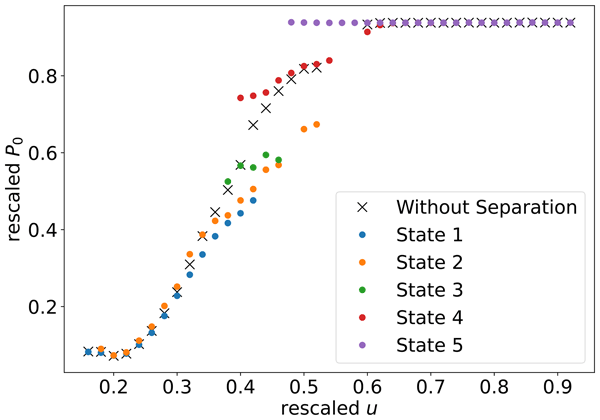
This study utilizes a method to analyze power conversion dynamics across different operational states, addressing non-stationarity with a correlation matrix algorithm. Findings reveal distinct dynamics for each state, emphasizing their impact on system behavior and offering a solution for hysteresis effects in power conversion dynamics.
Daniela Moreno, Jan Friedrich, Matthias Wächter, Jörg Schwarte, and Joachim Peinke
Wind Energ. Sci., 10, 347–360, https://doi.org/10.5194/wes-10-347-2025, https://doi.org/10.5194/wes-10-347-2025, 2025
Short summary
Short summary
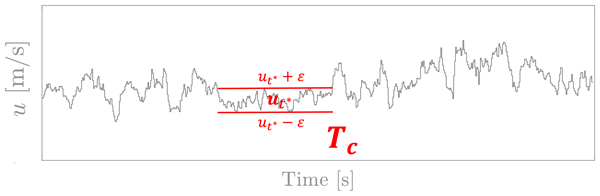
Unexpected load events measured on operating wind turbines are not accurately predicted by numerical simulations. We introduce the periods of constant wind speed as a possible cause of such events. We measure and characterize their statistics from atmospheric data. Further comparisons to standard modelled data and experimental turbulence data suggest that such events are not intrinsic to small-scale turbulence and are not accurately described by current standard wind models.
Christian W. Schulz, Stefan Netzband, Philip D. Knipper, and Moustafa Abdel-Maksoud
Wind Energ. Sci., 9, 1941–1965, https://doi.org/10.5194/wes-9-1941-2024, https://doi.org/10.5194/wes-9-1941-2024, 2024
Short summary
Short summary
The ability to perform reliable simulations of the motion behaviour of floating offshore wind turbines (FOWTs) is a key requirement for developing resource- and cost-effective designs. To support the development of suitable simulation methods, multiple improvements to the validation process of such methods are presented. These improvements allow, for the first time, the transient aerodynamic loads acting on a FOWT in a wave tank experiment to be directly compared with simulations.
Christian W. Schulz, Stefan Netzband, Umut Özinan, Po Wen Cheng, and Moustafa Abdel-Maksoud
Wind Energ. Sci., 9, 665–695, https://doi.org/10.5194/wes-9-665-2024, https://doi.org/10.5194/wes-9-665-2024, 2024
Short summary
Short summary
Understanding the underlying physical phenomena of the aerodynamics of floating offshore wind turbines (FOWTs) is crucial for successful simulations. No consensus has been reached in the research community on which unsteady aerodynamic phenomena are relevant and how much they can influence the loads acting on a FOWT. This work contributes to the understanding and characterisation of such unsteady phenomena using a novel experimental approach and comprehensive numerical investigations.
Stefano Cioni, Francesco Papi, Leonardo Pagamonci, Alessandro Bianchini, Néstor Ramos-García, Georg Pirrung, Rémi Corniglion, Anaïs Lovera, Josean Galván, Ronan Boisard, Alessandro Fontanella, Paolo Schito, Alberto Zasso, Marco Belloli, Andrea Sanvito, Giacomo Persico, Lijun Zhang, Ye Li, Yarong Zhou, Simone Mancini, Koen Boorsma, Ricardo Amaral, Axelle Viré, Christian W. Schulz, Stefan Netzband, Rodrigo Soto-Valle, David Marten, Raquel Martín-San-Román, Pau Trubat, Climent Molins, Roger Bergua, Emmanuel Branlard, Jason Jonkman, and Amy Robertson
Wind Energ. Sci., 8, 1659–1691, https://doi.org/10.5194/wes-8-1659-2023, https://doi.org/10.5194/wes-8-1659-2023, 2023
Short summary
Short summary
Simulations of different fidelities made by the participants of the OC6 project Phase III are compared to wind tunnel wake measurements on a floating wind turbine. Results in the near wake confirm that simulations and experiments tend to diverge from the expected linearized quasi-steady behavior when the reduced frequency exceeds 0.5. In the far wake, the impact of platform motion is overestimated by simulations and even seems to be oriented to the generation of a wake less prone to dissipation.
Roger Bergua, Amy Robertson, Jason Jonkman, Emmanuel Branlard, Alessandro Fontanella, Marco Belloli, Paolo Schito, Alberto Zasso, Giacomo Persico, Andrea Sanvito, Ervin Amet, Cédric Brun, Guillén Campaña-Alonso, Raquel Martín-San-Román, Ruolin Cai, Jifeng Cai, Quan Qian, Wen Maoshi, Alec Beardsell, Georg Pirrung, Néstor Ramos-García, Wei Shi, Jie Fu, Rémi Corniglion, Anaïs Lovera, Josean Galván, Tor Anders Nygaard, Carlos Renan dos Santos, Philippe Gilbert, Pierre-Antoine Joulin, Frédéric Blondel, Eelco Frickel, Peng Chen, Zhiqiang Hu, Ronan Boisard, Kutay Yilmazlar, Alessandro Croce, Violette Harnois, Lijun Zhang, Ye Li, Ander Aristondo, Iñigo Mendikoa Alonso, Simone Mancini, Koen Boorsma, Feike Savenije, David Marten, Rodrigo Soto-Valle, Christian W. Schulz, Stefan Netzband, Alessandro Bianchini, Francesco Papi, Stefano Cioni, Pau Trubat, Daniel Alarcon, Climent Molins, Marion Cormier, Konstantin Brüker, Thorsten Lutz, Qing Xiao, Zhongsheng Deng, Florence Haudin, and Akhilesh Goveas
Wind Energ. Sci., 8, 465–485, https://doi.org/10.5194/wes-8-465-2023, https://doi.org/10.5194/wes-8-465-2023, 2023
Short summary
Short summary
This work examines if the motion experienced by an offshore floating wind turbine can significantly affect the rotor performance. It was observed that the system motion results in variations in the load, but these variations are not critical, and the current simulation tools capture the physics properly. Interestingly, variations in the rotor speed or the blade pitch angle can have a larger impact than the system motion itself.
Frederik Berger, Lars Neuhaus, David Onnen, Michael Hölling, Gerard Schepers, and Martin Kühn
Wind Energ. Sci., 7, 1827–1846, https://doi.org/10.5194/wes-7-1827-2022, https://doi.org/10.5194/wes-7-1827-2022, 2022
Short summary
Short summary
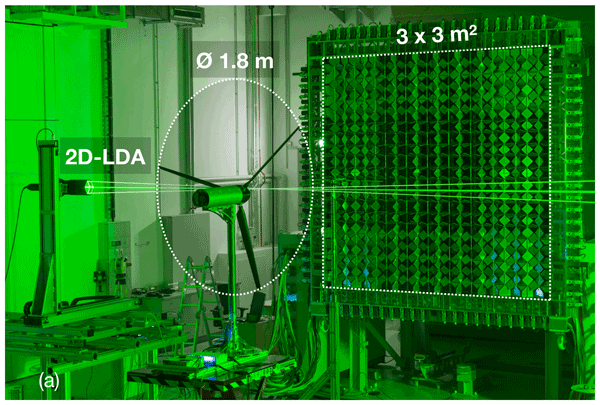
We proof the dynamic inflow effect due to gusts in wind tunnel experiments with MoWiTO 1.8 in the large wind tunnel of ForWind – University of Oldenburg, where we created coherent gusts with an active grid. The effect is isolated in loads and rotor flow by comparison of a quasi-steady and a dynamic case. The observed effect is not caught by common dynamic inflow engineering models. An improvement to the Øye dynamic inflow model is proposed, matching experiment and corresponding FVWM simulations.
Marijn Floris van Dooren, Anantha Padmanabhan Kidambi Sekar, Lars Neuhaus, Torben Mikkelsen, Michael Hölling, and Martin Kühn
Atmos. Meas. Tech., 15, 1355–1372, https://doi.org/10.5194/amt-15-1355-2022, https://doi.org/10.5194/amt-15-1355-2022, 2022
Short summary
Short summary
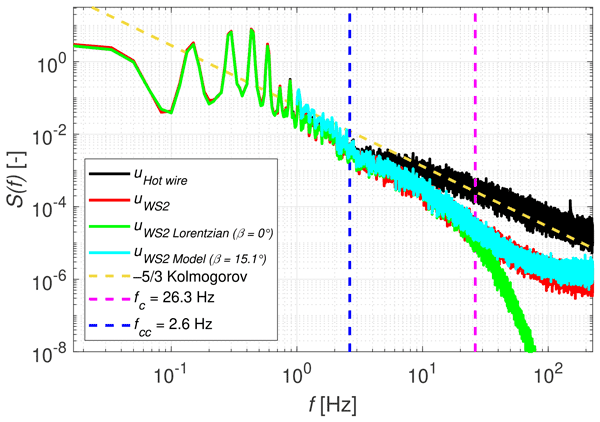
The remote sensing technique lidar is widely used for wind speed measurements for both industrial and academic applications. Lidars can measure wind statistics accurately but cannot fully capture turbulent fluctuations in the high-frequency range, since they are partly filtered out. This paper therefore investigates the turbulence spectrum measured by a continuous-wave lidar and analytically models the lidar's measured spectrum with a Lorentzian filter function and a white noise term.
Paul Hulsman, Martin Wosnik, Vlaho Petrović, Michael Hölling, and Martin Kühn
Wind Energ. Sci., 7, 237–257, https://doi.org/10.5194/wes-7-237-2022, https://doi.org/10.5194/wes-7-237-2022, 2022
Short summary
Short summary
Due to the possibility of mapping the wake fast at multiple locations with the WindScanner, a thorough understanding of the development of the wake is acquired at different inflow conditions and operational conditions. The lidar velocity data and the energy dissipation rate compared favourably with hot-wire data from previous experiments, lending credibility to the measurement technique and methodology used here. This will aid the process to further improve existing wake models.

Ingrid Neunaber, Joachim Peinke, and Martin Obligado
Wind Energ. Sci., 7, 201–219, https://doi.org/10.5194/wes-7-201-2022, https://doi.org/10.5194/wes-7-201-2022, 2022
Short summary
Short summary
Wind turbines are often clustered within wind farms. A consequence is that some wind turbines may be exposed to the wakes of other turbines, which reduces their lifetime due to the wake turbulence. Knowledge of the wake is thus important, and we carried out wind tunnel experiments to investigate the wakes. We show how models that describe wakes of bluff bodies can help to improve the understanding of wind turbine wakes and wind turbine wake models, particularly by including a virtual origin.
Cited articles
Bayati, I., Belloli, M., Bernini, L., and Zasso, A.: Wind tunnel wake measurements of floating offshore wind turbines, Energ. Proced., 137, 214–222, https://doi.org/10.1016/j.egypro.2017.10.375, 2017. a
Bayati, I., Belloli, M., Bernini, L., Boldrin, D. M., Boorsma, K., Caboni, M., Cormier, M., Mikkelsen, R., Lutz, T., and Zasso, A.: UNAFLOW project: UNsteady aerodynamics of FLOating wind turbines, J. Phys. Conf. Ser., 1037, 072037, https://doi.org/10.1088/1742-6596/1037/7/072037, 2018. a
Cannon, S., Champagne, F., and Glezer, A.: Observations of large-scale structures in wakes behind axisymmetric bodies, Exp. Fluids, 14, 447–450, https://doi.org/10.1007/BF00190199, 1993. a
Chen, G., Liang, X.-F., and Li, X.-B.: Modelling of wake dynamics and instabilities of a floating horizontal-axis wind turbine under surge motion, Energy, 239, 122110, https://doi.org/10.1016/j.energy.2021.122110, 2022. a, b, c
Dong, J. and Viré, A.: The aerodynamics of floating offshore wind turbines in different working states during surge motion, Renew. Energ., 195, 1125–1136, https://doi.org/10.1016/j.renene.2022.06.016, 2022. a
Fontanella, A., Bayati, I., Mikkelsen, R., Belloli, M., and Zasso, A.: UNAFLOW: a holistic wind tunnel experiment about the aerodynamic response of floating wind turbines under imposed surge motion, Wind Energ. Sci., 6, 1169–1190, https://doi.org/10.5194/wes-6-1169-2021, 2021. a
Fontanella, A., Fusetti, A., Cioni, S., Papi, F., Muggiasca, S., Persico, G., Dossena, V., Bianchini, A., and Belloli, M.: Wake development in floating wind turbines: new insights and an open dataset from wind tunnel experiments, Wind Energ. Sci., 10, 1369–1387, https://doi.org/10.5194/wes-10-1369-2025, 2025. a, b
Frederik, J. A., Doekemeijer, B. M., Mulders, S. P., and van Wingerden, J.-W.: The helix approach: Using dynamic individual pitch control to enhance wake mixing in wind farms, Wind Energy, 23, 1739–1751, https://doi.org/10.1002/we.2513, 2020. a
Goupee, A. J., Koo, B., Lambrakos, K., and Kimball, R.: Model Tests for Three Floating Wind Turbine Concepts, Offshore Technology Conference, OTC–23470–MS, https://doi.org/10.4043/23470-MS, 2012. a
Jonkman, J. M. and Matha, D.: Dynamics of offshore floating wind turbines – analysis of three concepts, Wind Energy, 14, 557–569, https://doi.org/10.1002/we.442, 2011. a
Li, Y., Yu, W., and Sarlak, H.: Wake structures and performance of wind turbine rotor with harmonic surging motions under laminar and turbulent inflows, Wind Energy, 27, 1499–1525, https://doi.org/10.1002/we.2949, 2024. a, b
Li, Z., Dong, G., and Yang, X.: Onset of wake meandering for a floating offshore wind turbine under side-to-side motion, J. Fluid Mech., 934, A29, https://doi.org/10.1017/jfm.2021.1147, 2022. a, b, c
Messmer, T., Peinke, J., Croce, A., and Hölling, M.: The role of motion-excited coherent structures in improved wake recovery of a floating wind turbine, J. Fluid Mech., 1018, A23, https://doi.org/10.1017/jfm.2025.10509, 2025. a, b, c, d
Neuhaus, L., Berger, F., Peinke, J., and Hölling, M.: Exploring the capabilities of active grids, Exp. Fluids, 62, 130, https://doi.org/10.1007/s00348-021-03224-5, 2021. a
Porté-Agel, F., Bastankhah, M., and Shamsoddin, S.: Wind-turbine and wind-farm flows: a review, Bound.-Lay. Meteorol., 174, 1–59, https://doi.org/10.1007/s10546-019-00473-0, 2020. a, b, c
Ramos-García, N., Kontos, S., Pegalajar-Jurado, A., González Horcas, S., and Bredmose, H.: Investigation of the floating IEA Wind 15 MW RWT using vortex methods Part I: Flow regimes and wake recovery, Wind Energy, 25, 468–504, https://doi.org/10.1002/we.2682, 2022. a
Rockel, S., Camp, E., Schmidt, J., Peinke, J., Cal, R. B., and Hölling, M.: Experimental study on influence of pitch motion on the wake of a floating wind turbine model, Energies, 7, 1954–1985, https://doi.org/10.3390/en7041954, 2014. a
Sarlak, H., Nishino, T., Martínez-Tossas, L. A., Meneveau, C., and Sørensen, J. N.: Assessment of blockage effects on the wake characteristics and power of wind turbines, Renew. Energ., 93, 340–352, https://doi.org/10.1016/j.renene.2016.01.101, 2016. a
Schliffke, B., Aubrun, S., and Conan, B.: Wind tunnel study of a “floating” wind turbine’s wake in an atmospheric boundary layer with imposed characteristic surge motion, J. Phys. Conf. Ser., 1618, 062015, https://doi.org/10.1088/1742-6596/1618/6/062015, 2020. a
Schulz, C. W., Netzband, S., Özinan, U., Cheng, P. W., and Abdel-Maksoud, M.: Wind turbine rotors in surge motion: new insights into unsteady aerodynamics of floating offshore wind turbines (FOWTs) from experiments and simulations, Wind Energ. Sci., 9, 665–695, https://doi.org/10.5194/wes-9-665-2024, 2024. a, b, c, d, e
Schulz, C. W., Bergua, R., Branlard, E., Netzband, S., Jonkman, J., and Roberston, A.: Unsteady aerodynamics of large-scale floating offshore wind turbines in surge motion, Renew. Energ., 260, 124977, https://doi.org/10.1016/j.renene.2025.124977, 2025. a, b, c
Sebastian, T. and Lackner, M. A.: Characterization of the unsteady aerodynamics of offshore floating wind turbines, Wind Energy, 16, 339–352, https://doi.org/10.1002/we.545, 2013. a
Zilic de Arcos, F., Tampier, G., and Vogel, C. R.: Numerical analysis of blockage correction methods for tidal turbines, Journal of Ocean Engineering and Marine Energy, 6, 183–197, https://doi.org/10.1007/s40722-020-00168-6, 2020. a
Short summary
Floating wind turbines move with waves and wind, surging back and forth. Using wind tunnel experiments, we show that this motion can help the wake (the disturbed air trailing the turbine) recover faster, so downwind turbines receive more wind. This effect is strong when the turbine pulls hard on the wind, known as high thrust. We also discovered a new effect: recovery improves when the surging is just slightly slower than the blades' spin. This could make floating wind farms more efficient.
Floating wind turbines move with waves and wind, surging back and forth. Using wind tunnel...


Altmetrics
Final-revised paper
Preprint