
Articles | Volume 10, issue 9
https://doi.org/10.5194/wes-10-2025-2025
© Author(s) 2025. This work is distributed under
the Creative Commons Attribution 4.0 License.
the Creative Commons Attribution 4.0 License.
https://doi.org/10.5194/wes-10-2025-2025
© Author(s) 2025. This work is distributed under
the Creative Commons Attribution 4.0 License.
the Creative Commons Attribution 4.0 License.
Research article
| 
15 Sep 2025
Research article |
| 15 Sep 2025
| 15 Sep 2025
Upwind vs. downwind: loads and acoustics of a 1.5 MW wind turbine
Pietro Bortolotti
CORRESPONDING AUTHOR
National Renewable Energy Laboratory, 15013 Denver West Parkway, Golden, CO 80401, USA
Lee Jay Fingersh
National Renewable Energy Laboratory, 15013 Denver West Parkway, Golden, CO 80401, USA
Nicholas Hamilton
National Renewable Energy Laboratory, 15013 Denver West Parkway, Golden, CO 80401, USA
Arlinda Huskey
National Renewable Energy Laboratory, 15013 Denver West Parkway, Golden, CO 80401, USA
Chris Ivanov
National Renewable Energy Laboratory, 15013 Denver West Parkway, Golden, CO 80401, USA
Mark Iverson
National Renewable Energy Laboratory, 15013 Denver West Parkway, Golden, CO 80401, USA
Jonathan Keller
National Renewable Energy Laboratory, 15013 Denver West Parkway, Golden, CO 80401, USA
Scott Lambert
National Renewable Energy Laboratory, 15013 Denver West Parkway, Golden, CO 80401, USA
Jason Roadman
National Renewable Energy Laboratory, 15013 Denver West Parkway, Golden, CO 80401, USA
Derek Slaughter
National Renewable Energy Laboratory, 15013 Denver West Parkway, Golden, CO 80401, USA
Syhoune Thao
National Renewable Energy Laboratory, 15013 Denver West Parkway, Golden, CO 80401, USA
Consuelo Wells
National Renewable Energy Laboratory, 15013 Denver West Parkway, Golden, CO 80401, USA
Related authors
Helge Aagaard Madsen, Pietro Bortolotti, Athanasios Barlas, Pourya Nikoueeyan, Christopher Kelley, Claus Brian Munk Pedersen, Per Hansen, Andreas Fischer, Chris Ivanov, Jason Roadman, Jonathan W. Naughton, Kenneth Brown, Mark Iverson, and Simon Thao
Wind Energ. Sci. Discuss., https://doi.org/10.5194/wes-2025-204, https://doi.org/10.5194/wes-2025-204, 2025
Preprint under review for WES
Short summary
Short summary
We present a detailed experimental investigation of the flow details of the blade/tower interaction (BTI) on a 1.5 MW wind turbine operated in a downwind configuration. The objective is to clarify some of the most important barriers for the downwind turbine concept linked to the impulsive loading from the blade/tower interaction generating low frequency noise and increased loading. A unique instrumentation was used comprising two extruded pressure belts on one of the blades and on the tower.
Cory Frontin, Jeff Allen, Christopher J. Bay, Jared Thomas, Ethan Young, and Pietro Bortolotti
Wind Energ. Sci. Discuss., https://doi.org/10.5194/wes-2025-103, https://doi.org/10.5194/wes-2025-103, 2025
Preprint under review for WES
Short summary
Short summary
Wind farms produce energy and to do so have to occupy a non-trivial amount of space. Understanding how much energy a proposed wind farm will make (and at what cost) is technically challenging, especially when turbines are packed closely together. Plus, there's a key tradeoff in how much space a farm occupies and how cheap the energy it can produce might be: less space means more costly energy. This work shows an novel way to run computational simulations efficiently to understand that tradeoff.
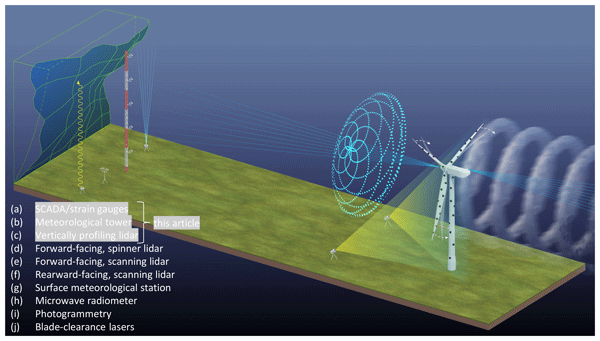
Kenneth Brown, Pietro Bortolotti, Emmanuel Branlard, Mayank Chetan, Scott Dana, Nathaniel deVelder, Paula Doubrawa, Nicholas Hamilton, Hristo Ivanov, Jason Jonkman, Christopher Kelley, and Daniel Zalkind
Wind Energ. Sci., 9, 1791–1810, https://doi.org/10.5194/wes-9-1791-2024, https://doi.org/10.5194/wes-9-1791-2024, 2024
Short summary
Short summary
This paper presents a study of the popular wind turbine design tool OpenFAST. We compare simulation results to measurements obtained from a 2.8 MW land-based wind turbine. Measured wind conditions were used to generate turbulent flow fields through several techniques. We show that successful validation of the tool is not strongly dependent on the inflow generation technique used for mean quantities of interest. The type of inflow assimilation method has a larger effect on fatigue quantities.
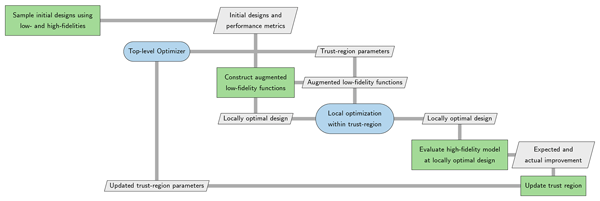
John Jasa, Pietro Bortolotti, Daniel Zalkind, and Garrett Barter
Wind Energ. Sci., 7, 991–1006, https://doi.org/10.5194/wes-7-991-2022, https://doi.org/10.5194/wes-7-991-2022, 2022
Short summary
Short summary
Using highly accurate simulations within a design cycle is prohibitively computationally expensive. We implement and present a multifidelity optimization method and showcase its efficacy using three different case studies. We examine aerodynamic blade design, turbine controls tuning, and a wind plant layout problem. In each case, the multifidelity method finds an optimal design that performs better than those obtained using simplified models but at a lower cost than high-fidelity optimization.

Ernesto Camarena, Evan Anderson, Josh Paquette, Pietro Bortolotti, Roland Feil, and Nick Johnson
Wind Energ. Sci., 7, 19–35, https://doi.org/10.5194/wes-7-19-2022, https://doi.org/10.5194/wes-7-19-2022, 2022
Short summary
Short summary
The length of rotor blades of land-based wind turbines is currently constrained by logistics. Turbine manufacturers currently propose segmented solutions to overcome these limits, but blade joints come with extra masses and costs. This work investigates an alternative solution, namely the design of ultra-flexible blades that can be transported on rail via controlled bending. The results show that this is a promising pathway to further increasing the size of land-based wind turbines.
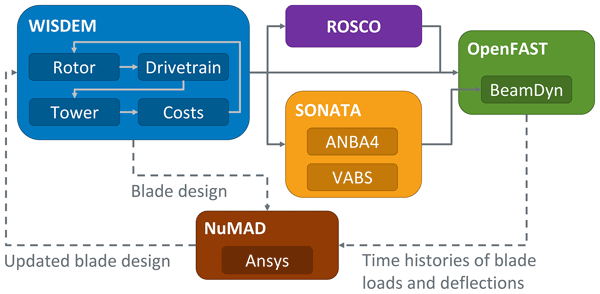
Pietro Bortolotti, Nick Johnson, Nikhar J. Abbas, Evan Anderson, Ernesto Camarena, and Joshua Paquette
Wind Energ. Sci., 6, 1277–1290, https://doi.org/10.5194/wes-6-1277-2021, https://doi.org/10.5194/wes-6-1277-2021, 2021
Short summary
Short summary
The length of rotor blades of land-based wind turbines is currently constrained by logistics. Turbine manufacturers currently propose segmented solutions to overcome these limits, but blade joints come with extra masses and costs. This work investigates an alternative solution, namely the design of ultra-flexible blades that can be transported on rail via controlled bending. The results show that this is a promising pathway for further increasing the size of land-based wind turbines.
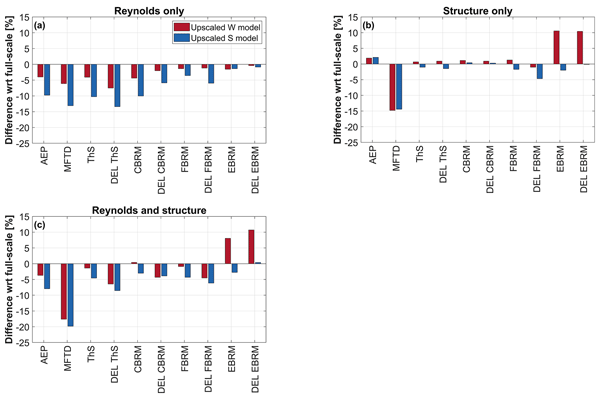
Helena Canet, Pietro Bortolotti, and Carlo L. Bottasso
Wind Energ. Sci., 6, 601–626, https://doi.org/10.5194/wes-6-601-2021, https://doi.org/10.5194/wes-6-601-2021, 2021
Short summary
Short summary
The paper analyzes in detail the problem of scaling, considering both the steady-state and transient response cases, including the effects of aerodynamics, elasticity, inertia, gravity, and actuation. After a general theoretical analysis of the problem, the article considers two alternative ways of designing a scaled rotor. The two methods are then applied to the scaling of a 10 MW turbine of 180 m in diameter down to three different sizes (54, 27, and 2.8 m).
Mario De Florio, Gabriel Appleby, Jonathan Keller, Ali Eftekhari Milani, Donatella Zappalá, and Shawn Sheng
Wind Energ. Sci., 11, 737–752, https://doi.org/10.5194/wes-11-737-2026, https://doi.org/10.5194/wes-11-737-2026, 2026
Short summary
Short summary
We developed a new method to predict when wind turbine parts are likely to fail, allowing maintenance to be planned before costly breakdowns occur. By combining real measurements from turbines with knowledge of how cracks grow in metal, our approach gives more reliable forecasts even when only limited data are available. We also measure how confident the predictions are, helping operators make better decisions. This can reduce downtime and lower the cost of wind energy.
Julian Quick, Edward Hart, Marcus Binder Nilsen, Rasmus Sode Lund, Jaime Liew, Piinshin Huang, Pierre-Elouan Rethore, Jonathan Keller, Wooyong Song, and Yi Guo
Wind Energ. Sci., 11, 493–507, https://doi.org/10.5194/wes-11-493-2026, https://doi.org/10.5194/wes-11-493-2026, 2026
Short summary
Short summary
Wind turbine main bearings often fail prematurely, creating costly maintenance challenges. This study examined how wake effects – where upstream turbines create disturbed airflow that impacts downstream turbines – affect bearing lifespans. Using computer simulations, we found that wake effects reduce bearing life by 16 % on average. The direction of wake impact matters significantly due to interactions between wind forces and gravity, informing better wind turbine and farm design strategies.
Gopal R. Yalla, Kenneth Brown, Lawrence Cheung, Dan Houck, Nathaniel deVelder, and Nicholas Hamilton
Wind Energ. Sci., 10, 2449–2474, https://doi.org/10.5194/wes-10-2449-2025, https://doi.org/10.5194/wes-10-2449-2025, 2025
Short summary
Short summary
When wind reaches the first set of turbines in a wind farm, energy is extracted, reducing the energy available for downstream turbines. This study examines emerging technologies aimed at re-energizing the wind between turbines in a wind farm to improve overall power production. Optimizing these technologies depends on understanding the complex flow features of the atmosphere and the wakes behind turbines, which is accomplished using high-fidelity computer simulations and data analysis techniques.
William C. Radünz, Bruno Carmo, Julie K. Lundquist, Stefano Letizia, Aliza Abraham, Adam S. Wise, Miguel Sanchez Gomez, Nicholas Hamilton, Raj K. Rai, and Pedro S. Peixoto
Wind Energ. Sci., 10, 2365–2393, https://doi.org/10.5194/wes-10-2365-2025, https://doi.org/10.5194/wes-10-2365-2025, 2025
Short summary
Short summary
We explore how simple terrain influences spatial variations in wind speed and wind farm performance during a low-level jet. Using simulations, field observations, and turbine production data, we find that downstream turbines produce more power than upstream ones, despite being subjected to wake effects. This counterintuitive result arises because the low-level jet and winds near turbine rotors are highly sensitive to topographic features, leading to stronger winds at the downstream turbines.
Helge Aagaard Madsen, Pietro Bortolotti, Athanasios Barlas, Pourya Nikoueeyan, Christopher Kelley, Claus Brian Munk Pedersen, Per Hansen, Andreas Fischer, Chris Ivanov, Jason Roadman, Jonathan W. Naughton, Kenneth Brown, Mark Iverson, and Simon Thao
Wind Energ. Sci. Discuss., https://doi.org/10.5194/wes-2025-204, https://doi.org/10.5194/wes-2025-204, 2025
Preprint under review for WES
Short summary
Short summary
We present a detailed experimental investigation of the flow details of the blade/tower interaction (BTI) on a 1.5 MW wind turbine operated in a downwind configuration. The objective is to clarify some of the most important barriers for the downwind turbine concept linked to the impulsive loading from the blade/tower interaction generating low frequency noise and increased loading. A unique instrumentation was used comprising two extruded pressure belts on one of the blades and on the tower.
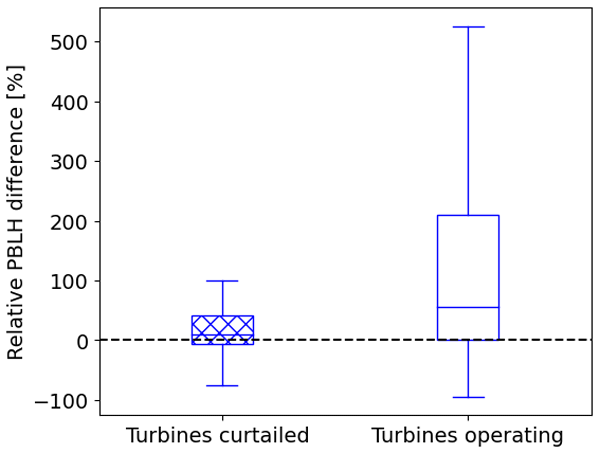
Aliza Abraham, Matteo Puccioni, Arianna Jordan, Emina Maric, Nicola Bodini, Nicholas Hamilton, Stefano Letizia, Petra M. Klein, Elizabeth N. Smith, Sonia Wharton, Jonathan Gero, Jamey D. Jacob, Raghavendra Krishnamurthy, Rob K. Newsom, Mikhail Pekour, William Radünz, and Patrick Moriarty
Wind Energ. Sci., 10, 1681–1705, https://doi.org/10.5194/wes-10-1681-2025, https://doi.org/10.5194/wes-10-1681-2025, 2025
Short summary
Short summary
This study is the first to use real-world atmospheric measurements to show that large wind plants can increase the height of the planetary boundary layer, the part of the atmosphere near the surface where life takes place. The planetary boundary layer height governs processes like pollutant transport and cloud formation and is a key parameter for modeling the atmosphere. The results of this study provide important insights into interactions between wind plants and their local environment.
Nicholas Hamilton and Shreyas Bidadi
Wind Energ. Sci. Discuss., https://doi.org/10.5194/wes-2025-137, https://doi.org/10.5194/wes-2025-137, 2025
Revised manuscript under review for WES
Short summary
Short summary
This study explores improvements to an atmospheric measurement method called acoustic tomography, which uses sound travel times to estimate wind and temperature. We compare several ways of estimating how air conditions vary and show that models based on realistic wind turbine simulations yield more accurate results than traditional simplified methods. These findings support better observations of complex air flows around wind turbines, helping advance renewable energy research.
Cory Frontin, Jeff Allen, Christopher J. Bay, Jared Thomas, Ethan Young, and Pietro Bortolotti
Wind Energ. Sci. Discuss., https://doi.org/10.5194/wes-2025-103, https://doi.org/10.5194/wes-2025-103, 2025
Preprint under review for WES
Short summary
Short summary
Wind farms produce energy and to do so have to occupy a non-trivial amount of space. Understanding how much energy a proposed wind farm will make (and at what cost) is technically challenging, especially when turbines are packed closely together. Plus, there's a key tradeoff in how much space a farm occupies and how cheap the energy it can produce might be: less space means more costly energy. This work shows an novel way to run computational simulations efficiently to understand that tradeoff.
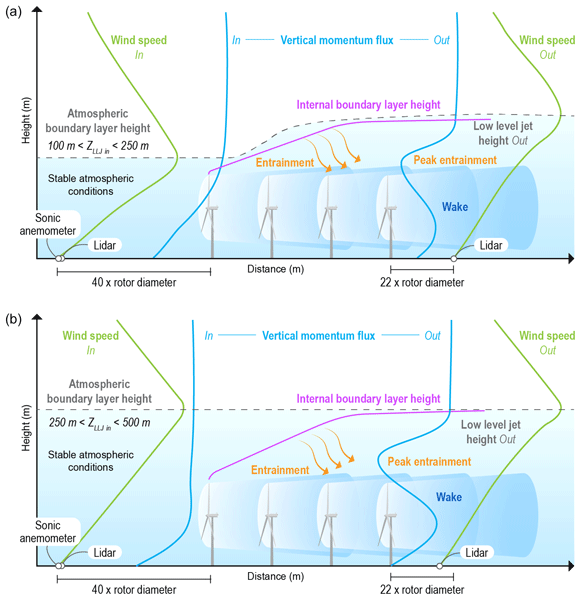
Raghavendra Krishnamurthy, Rob K. Newsom, Colleen M. Kaul, Stefano Letizia, Mikhail Pekour, Nicholas Hamilton, Duli Chand, Donna Flynn, Nicola Bodini, and Patrick Moriarty
Wind Energ. Sci., 10, 361–380, https://doi.org/10.5194/wes-10-361-2025, https://doi.org/10.5194/wes-10-361-2025, 2025
Short summary
Short summary
This study examines how atmospheric phenomena affect the recovery of wind farm wake – the disturbed air behind turbines. In regions like Oklahoma, where wind farms are often clustered, understanding wake recovery is crucial. We found that wind farms can alter phenomena like low-level jets, which are common in Oklahoma, by deflecting them above the wind farm. As a result, the impact of wakes can be observed up to 1–2 km above ground level.
Kenneth Brown, Pietro Bortolotti, Emmanuel Branlard, Mayank Chetan, Scott Dana, Nathaniel deVelder, Paula Doubrawa, Nicholas Hamilton, Hristo Ivanov, Jason Jonkman, Christopher Kelley, and Daniel Zalkind
Wind Energ. Sci., 9, 1791–1810, https://doi.org/10.5194/wes-9-1791-2024, https://doi.org/10.5194/wes-9-1791-2024, 2024
Short summary
Short summary
This paper presents a study of the popular wind turbine design tool OpenFAST. We compare simulation results to measurements obtained from a 2.8 MW land-based wind turbine. Measured wind conditions were used to generate turbulent flow fields through several techniques. We show that successful validation of the tool is not strongly dependent on the inflow generation technique used for mean quantities of interest. The type of inflow assimilation method has a larger effect on fatigue quantities.
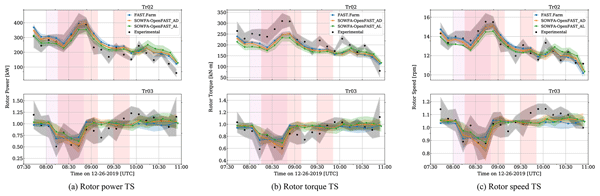
Kelsey Shaler, Eliot Quon, Hristo Ivanov, and Jason Jonkman
Wind Energ. Sci., 9, 1451–1463, https://doi.org/10.5194/wes-9-1451-2024, https://doi.org/10.5194/wes-9-1451-2024, 2024
Short summary
Short summary
This paper presents a three-way verification and validation between an engineering-fidelity model, a high-fidelity model, and measured data for the wind farm structural response and wake dynamics during an evolving stable boundary layer of a small wind farm, generally with good agreement.
Paul Hulsman, Luis A. Martínez-Tossas, Nicholas Hamilton, and Martin Kühn
Wind Energ. Sci. Discuss., https://doi.org/10.5194/wes-2023-112, https://doi.org/10.5194/wes-2023-112, 2023
Manuscript not accepted for further review
Short summary
Short summary
This paper presents an approach to analytically estimate the wake deficit within the near-wake region by modifying the curled wake model. This is done by incorporating a new initial condition at the rotor using an azimuth-dependent Gaussian profile, an adjusted turbulence model in the near-wake region and the far-wake region and an iterative process to determine the velocity field, while considering the relation of the pressure gradient and accounting the conservation of mass.
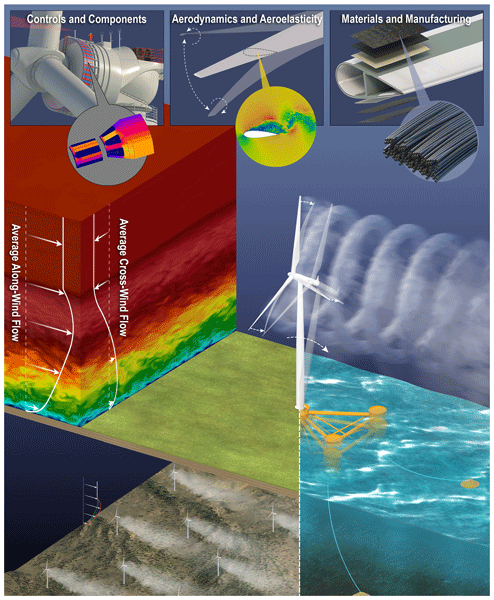
Paul Veers, Carlo L. Bottasso, Lance Manuel, Jonathan Naughton, Lucy Pao, Joshua Paquette, Amy Robertson, Michael Robinson, Shreyas Ananthan, Thanasis Barlas, Alessandro Bianchini, Henrik Bredmose, Sergio González Horcas, Jonathan Keller, Helge Aagaard Madsen, James Manwell, Patrick Moriarty, Stephen Nolet, and Jennifer Rinker
Wind Energ. Sci., 8, 1071–1131, https://doi.org/10.5194/wes-8-1071-2023, https://doi.org/10.5194/wes-8-1071-2023, 2023
Short summary
Short summary
Critical unknowns in the design, manufacturing, and operation of future wind turbine and wind plant systems are articulated, and key research activities are recommended.
Ryan Scott, Luis Martínez-Tossas, Juliaan Bossuyt, Nicholas Hamilton, and Raúl B. Cal
Wind Energ. Sci., 8, 449–463, https://doi.org/10.5194/wes-8-449-2023, https://doi.org/10.5194/wes-8-449-2023, 2023
Short summary
Short summary
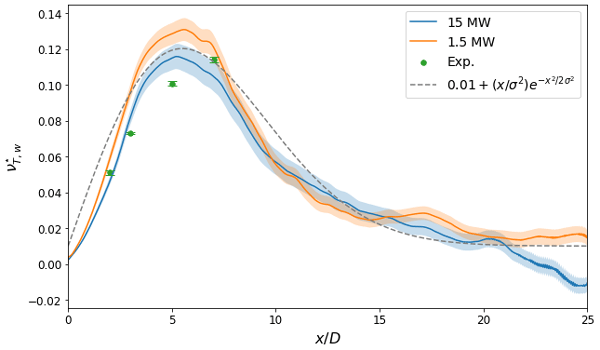
In this work we examine the relationship between wind speed and turbulent stresses within a wind turbine wake. This relationship changes further from the turbine as the driving physical phenomena vary throughout the wake. We propose a model for this process and test the effectiveness of our model against existing formulations. Our approach increases the accuracy of wind speed predictions, which will lead to better estimates of wind plant performance and promote more efficient wind plant design.
Edward Hart, Adam Stock, George Elderfield, Robin Elliott, James Brasseur, Jonathan Keller, Yi Guo, and Wooyong Song
Wind Energ. Sci., 7, 1209–1226, https://doi.org/10.5194/wes-7-1209-2022, https://doi.org/10.5194/wes-7-1209-2022, 2022
Short summary
Short summary
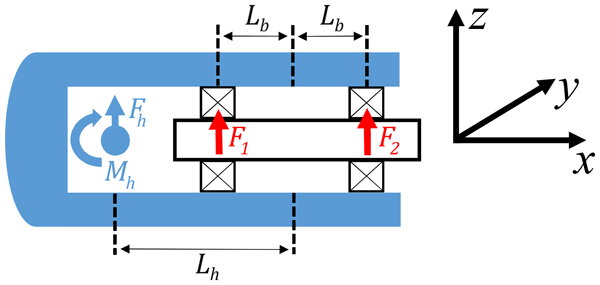
We consider characteristics and drivers of loads experienced by wind turbine main bearings using simplified models of hub and main-bearing configurations. Influences of deterministic wind characteristics are investigated for 5, 7.5, and 10 MW turbine models. Load response to gusts and wind direction changes are also considered. Cubic load scaling is observed, veer is identified as an important driver of load fluctuations, and strong links between control and main-bearing load response are shown.
John Jasa, Pietro Bortolotti, Daniel Zalkind, and Garrett Barter
Wind Energ. Sci., 7, 991–1006, https://doi.org/10.5194/wes-7-991-2022, https://doi.org/10.5194/wes-7-991-2022, 2022
Short summary
Short summary
Using highly accurate simulations within a design cycle is prohibitively computationally expensive. We implement and present a multifidelity optimization method and showcase its efficacy using three different case studies. We examine aerodynamic blade design, turbine controls tuning, and a wind plant layout problem. In each case, the multifidelity method finds an optimal design that performs better than those obtained using simplified models but at a lower cost than high-fidelity optimization.
Amir R. Nejad, Jonathan Keller, Yi Guo, Shawn Sheng, Henk Polinder, Simon Watson, Jianning Dong, Zian Qin, Amir Ebrahimi, Ralf Schelenz, Francisco Gutiérrez Guzmán, Daniel Cornel, Reza Golafshan, Georg Jacobs, Bart Blockmans, Jelle Bosmans, Bert Pluymers, James Carroll, Sofia Koukoura, Edward Hart, Alasdair McDonald, Anand Natarajan, Jone Torsvik, Farid K. Moghadam, Pieter-Jan Daems, Timothy Verstraeten, Cédric Peeters, and Jan Helsen
Wind Energ. Sci., 7, 387–411, https://doi.org/10.5194/wes-7-387-2022, https://doi.org/10.5194/wes-7-387-2022, 2022
Short summary
Short summary
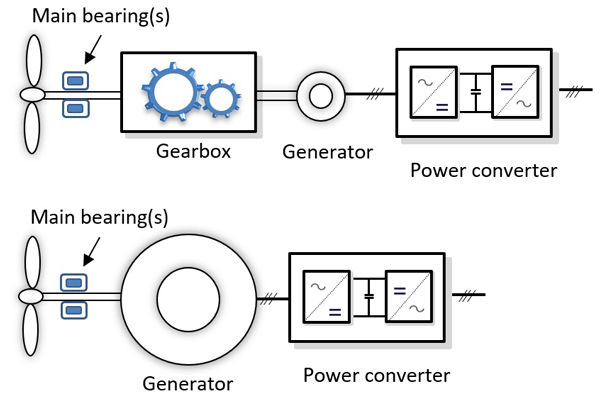
This paper presents the state-of-the-art technologies and development trends of wind turbine drivetrains – the energy conversion systems transferring the kinetic energy of the wind to electrical energy – in different stages of their life cycle: design, manufacturing, installation, operation, lifetime extension, decommissioning and recycling. The main aim of this article is to review the drivetrain technology development as well as to identify future challenges and research gaps.
Ernesto Camarena, Evan Anderson, Josh Paquette, Pietro Bortolotti, Roland Feil, and Nick Johnson
Wind Energ. Sci., 7, 19–35, https://doi.org/10.5194/wes-7-19-2022, https://doi.org/10.5194/wes-7-19-2022, 2022
Short summary
Short summary
The length of rotor blades of land-based wind turbines is currently constrained by logistics. Turbine manufacturers currently propose segmented solutions to overcome these limits, but blade joints come with extra masses and costs. This work investigates an alternative solution, namely the design of ultra-flexible blades that can be transported on rail via controlled bending. The results show that this is a promising pathway to further increasing the size of land-based wind turbines.
Pietro Bortolotti, Nick Johnson, Nikhar J. Abbas, Evan Anderson, Ernesto Camarena, and Joshua Paquette
Wind Energ. Sci., 6, 1277–1290, https://doi.org/10.5194/wes-6-1277-2021, https://doi.org/10.5194/wes-6-1277-2021, 2021
Short summary
Short summary
The length of rotor blades of land-based wind turbines is currently constrained by logistics. Turbine manufacturers currently propose segmented solutions to overcome these limits, but blade joints come with extra masses and costs. This work investigates an alternative solution, namely the design of ultra-flexible blades that can be transported on rail via controlled bending. The results show that this is a promising pathway for further increasing the size of land-based wind turbines.
Alayna Farrell, Jennifer King, Caroline Draxl, Rafael Mudafort, Nicholas Hamilton, Christopher J. Bay, Paul Fleming, and Eric Simley
Wind Energ. Sci., 6, 737–758, https://doi.org/10.5194/wes-6-737-2021, https://doi.org/10.5194/wes-6-737-2021, 2021
Short summary
Short summary
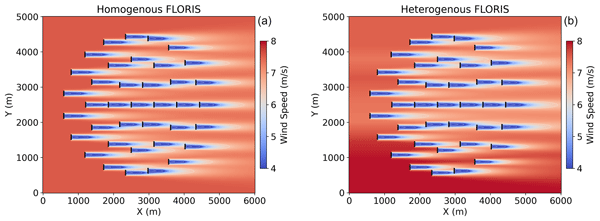
Most current wind turbine wake models struggle to accurately simulate spatially variant wind conditions at a low computational cost. In this paper, we present an adaptation of NREL's FLOw Redirection and Induction in Steady State (FLORIS) wake model, which calculates wake losses in a heterogeneous flow field using local weather measurement inputs. Two validation studies are presented where the adapted model consistently outperforms previous versions of FLORIS that simulated uniform flow only.
Helena Canet, Pietro Bortolotti, and Carlo L. Bottasso
Wind Energ. Sci., 6, 601–626, https://doi.org/10.5194/wes-6-601-2021, https://doi.org/10.5194/wes-6-601-2021, 2021
Short summary
Short summary
The paper analyzes in detail the problem of scaling, considering both the steady-state and transient response cases, including the effects of aerodynamics, elasticity, inertia, gravity, and actuation. After a general theoretical analysis of the problem, the article considers two alternative ways of designing a scaled rotor. The two methods are then applied to the scaling of a 10 MW turbine of 180 m in diameter down to three different sizes (54, 27, and 2.8 m).
Luis A. Martínez-Tossas, Jennifer King, Eliot Quon, Christopher J. Bay, Rafael Mudafort, Nicholas Hamilton, Michael F. Howland, and Paul A. Fleming
Wind Energ. Sci., 6, 555–570, https://doi.org/10.5194/wes-6-555-2021, https://doi.org/10.5194/wes-6-555-2021, 2021
Short summary
Short summary
In this paper a three-dimensional steady-state solver for flow through a wind farm is developed and validated. The computational cost of the solver is on the order of seconds for large wind farms. The model is validated using high-fidelity simulations and SCADA.
Cited articles
Amzallag, C., Gerey, J., Robert, J., and Bahuaud, J.: Standardization of the rainflow counting method for fatigue analysis, Int. J. Fatigue, 16, 287–293, https://doi.org/10.1016/0142-1123(94)90343-3, 1994. a
Anderson, B., Branlard, E., Vijayakumar, G., and Johnson, N.: Investigation of the nacelle blockage effect for a downwind turbine, J. Phys. Conf. Ser., 1618, 062062, https://doi.org/10.1088/1742-6596/1618/6/062062, 2020. a
Annoni, J., Scholbrock, A., Churchfield, M., and Fleming, P.: Evaluating tilt for wind plants, in: 2017 American Control Conference (ACC), 717–722, https://doi.org/10.23919/ACC.2017.7963037, 2017. a
Bass, J., Cand, M., Coles, D., Davis, R., Irvine, G., Leventhall, G., Levet, T., Miller, S., Sexton, D., and Shelton, J.: A Method for Rating Amplitude Modulation in Wind Turbine Noise, Tech. rep., Institute of Acoustics (IOA), United Kingdom, https://www.ioa.org.uk/sites/default/files/AMWG%20Final%20Report-09-08-2016_1.pdf (last access: 4 September 2025), 2016. a
Bay, C., Annoni, J., Martínez-Tossas, L. A., Pao, L. Y., and Johnson, K. E.: Flow Control Leveraging Downwind Rotors for Improved Wind Power Plant Operation, in: IEEE American Control Conference, Philadelphia, PA, https://www.nrel.gov/docs/fy19osti/73125.pdf (last access: 4 September 2025), 2019. a, b
Blumendeller, E., Kimmig, I., Huber, G., Rettler, P., and Cheng, P. W.: Investigations on Low Frequency Noises of On-Shore Wind Turbines, Acoustics, 2, 343–365, https://doi.org/10.3390/acoustics2020020, 2020. a
Bolinger, M., Lantz, E., Wiser, R., Hoen, B., Rand, J., and Hammond, R.: Opportunities for and challenges to further reductions in the “specific power” rating of wind turbines installed in the United States, Wind Engineering, 45, 0309524X19901012, https://doi.org/10.1177/0309524X19901012, 2020. a
Bortolotti, P., Kapila, A., and Bottasso, C. L.: Comparison between upwind and downwind designs of a 10 MW wind turbine rotor, Wind Energ. Sci., 4, 115–125, https://doi.org/10.5194/wes-4-115-2019, 2019. a, b
Bortolotti, P., Johnson, N., Abbas, N. J., Anderson, E., Camarena, E., and Paquette, J.: Land-based wind turbines with flexible rail-transportable blades – Part 1: Conceptual design and aeroservoelastic performance, Wind Energ. Sci., 6, 1277–1290, https://doi.org/10.5194/wes-6-1277-2021, 2021. a
Bortolotti, P., Ivanov, H., Johnson, N., Barter, G. E., Veers, P., and Namura, N.: Challenges, opportunities, and a research roadmap for downwind wind turbines, Wind Energ., 25, 354–367, https://doi.org/10.1002/we.2676, 2022. a, b, c
Brown, K., Bortolotti, P., Branlard, E., Chetan, M., Dana, S., deVelder, N., Doubrawa, P., Hamilton, N., Ivanov, H., Jonkman, J., Kelley, C., and Zalkind, D.: One-to-one aeroservoelastic validation of operational loads and performance of a 2.8 MW wind turbine model in OpenFAST, Wind Energ. Sci., 9, 1791–1810, https://doi.org/10.5194/wes-9-1791-2024, 2024. a, b, c, d
Cossu, C.: Replacing wakes with streaks in wind turbine arrays, Wind Energ., 24, 345–356, https://doi.org/10.1002/we.2577, 2021a. a
Cossu, C.: Evaluation of tilt control for wind-turbine arrays in the atmospheric boundary layer, Wind Energ. Sci., 6, 663–675, https://doi.org/10.5194/wes-6-663-2021, 2021b. a, b
Frontin, C., Vijayakumar, G., and Bortolotti, P.: Aerodynamic and production comparison of wind farms with downwind versus conventional upwind turbines, J. Phys. Conf. Ser., 2767, 092008, https://doi.org/10.1088/1742-6596/2767/9/092008, 2024. a, b
Hamilton, N. and Debnath, M. C.: National Wind Technology Center-Characterization of Atmospheric Conditions, National Renewable Energy Laboratory, Technical Report NREL/TP-5000-72091, https://doi.org/10.2172/1558599, 2019. a, b, c
Hamilton, N., Bortolotti, P. E., Jager, D., Guo, Y., Roadman, J. M., and Simley, E.: Aeroacoustic Assessment of Wind Plant Controls, National Renewable Energy Laboratory, Technical Report NREL/TP-5000-79664, https://doi.org/10.2172/1785330, 2021. a, b
International Electrotechnical Commission: IEC 60812 Ed. 2.0 B – Analysis Techniques For System Reliability – Procedure For Failure Mode And Effects Analysis (FMEA), IEC 60812-2, 2006. a
Jonkman, B.: TurbSim user's guide v2. 00.00, Natl. Renew. Energy Lab, https://docs.nrel.gov/docs/fy06osti/39797.pdf, 2014. a
Kaminski, M., Loth, E., Fingersh, L. J., Scholbrock, A., and Selig, M.: Parked aeroelastic field rotor response for a 20 % scaled demonstrator of a 13-MW downwind turbine, Wind Energ., 26, 182–200, https://doi.org/10.1002/we.2794, 2023a. a
Kaminski, M., Simpson, J., Loth, E., Fingersh, L. J., Scholbrock, A., Johnson, N., Johnson, K., Pao, L., and Griffith, T.: Gravo-aeroelastically-scaled demonstrator field tests to represent blade response of a flexible extreme-scale downwind turbine, Renew. Energ., 218, 119217, https://doi.org/10.1016/j.renene.2023.119217, 2023b. a
Kelley, N. D., McKenna, H. E., Hemphill, R. R., Etter, C. L., Garrelts, R. L., and Linn, N. C.: Acoustic noise associated with the MOD-1 wind turbine: its source, impact, and control, Solar Energy Research Institute, https://doi.org/10.2172/5875386, 1985. a
Loth, E., Steele, A., Qin, C., Ichter, B., Selig, M. S., and Moriarty, P.: Downwind pre-aligned rotors for extreme-scale wind turbines, Wind Energ., 20, 1241–1259, https://doi.org/10.1002/we.2092, 2017. a
Madsen, H. A., Bortolotti, P., Barlas, A., Naughton, J., Kelley, C., Brown, K. A., Nikoueeyan, P., Roadman, J., Ivanov, C., Iverson, M., and Thao, S.: Detailed experimental investigation of the aerodynamics and blade/tower interaction of a 1.5 MW wind turbine in a downwind configuration, in preparation, 2025. a, b
Manwell, J., McGowan, J., and Rogers, A.: Wind Energy Explained: Theory, Design and Application, Wiley, ISBN 9780470686287, https://books.google.com/books?id=roaTx_Of0vAC (last access: 4 September 2025), 2010. a
Moriarty, P. J. and Hansen, A. C.: AeroDyn Theory Manual, National Renewable Energy Laboratory, https://doi.org/10.2172/15014831, 2005. a
Nanos, E. M., Letizia, S., Clemente, D. J. B., Wang, C., Rotea, M., Iungo, V. I., and Bottasso, C. L.: Vertical wake deflection for offshore floating wind turbines by differential ballast control, J. Phys. Conf. Ser., 1618, 022047, https://doi.org/10.1088/1742-6596/1618/2/022047, 2020. a
Pao, L. Y., Zalkind, D. S., Griffith, D. T., Chetan, M., Selig, M. S., Ananda, G. K., Bay, C. J., Stehly, T., and Loth, E.: Control co-design of 13 MW downwind two-bladed rotors to achieve 25 % reduction in levelized cost of wind energy, Annu. Rev. Control, 51, 331–343, https://doi.org/10.1016/j.arcontrol.2021.02.001, 2021. a
Powles, S.: The Effects of Tower Shadow on the Dynamics of a Horizontal-Axis Wind Turbine, Wind Eng., 7, 26–42, http://www.jstor.org/stable/43749009 (last access: 4 September 2025), 1983. a
Roadman, J. and Huskey, A.: Acoustic Noise Test Report for the U.S. Department of Energy 1.5-Megawatt Wind Turbine, National Renewable Energy Laboratory, Technical Report NREL/TP-5000-63681, https://doi.org/10.2172/1225903, 2015. a
Santos, R. and van Dam, J.: Mechanical Loads Test Report for the U.S. Department of Energy 1.5-Megawatt Wind Turbine, National Renewable Energy Laboratory, Technical Report NREL/TP-5000-63679, https://doi.org/10.2172/1215119, 2015. a, b
Scott, R., Bossuyt, J., and Cal, R. B.: Characterizing tilt effects on wind plants, J. Renew. Sustain. Ener., 12, 043302, https://doi.org/10.1063/5.0009853, 2020. a
Simley, E., Fleming, P., Girard, N., Alloin, L., Godefroy, E., and Duc, T.: Results from a wake-steering experiment at a commercial wind plant: investigating the wind speed dependence of wake-steering performance, Wind Energ. Sci., 6, 1427–1453, https://doi.org/10.5194/wes-6-1427-2021, 2021. a
UK Institute of Acoustics Amplitude Modulation Working Group: IOA AM code, https://sourceforge.net/projects/ioa-am-code/ (last access: 21 September 2024), 2017. a
Wiser, R., Bolinger, M., Hoen, B., Millstein, D., Rand, J., Barbose, G., Darghouth, N., Gorman, W., Jeong, S., and Paulos, B.: Land-Based Wind Market Report: 2022 Edition, Lawrence Berkeley National Laboratory, https://doi.org/10.2172/1882594, 2022. a
Short summary
This study compares a wind turbine with blades behind the tower (downwind) to the traditional upwind design. Testing a 1.5 MW turbine at the National Renewable Energy Laboratory's Flatirons Campus, we measured performance, loads, and noise. Numerical models matched well with observations. The downwind setup showed higher fatigue loads and sound variations but also an unexpected power improvement. Downwind rotors might be a valid alternative for future floating offshore wind applications.
This study compares a wind turbine with blades behind the tower (downwind) to the traditional...


Altmetrics
Final-revised paper
Preprint