
Articles | Volume 11, issue 1
https://doi.org/10.5194/wes-11-127-2026
© Author(s) 2026. This work is distributed under
the Creative Commons Attribution 4.0 License.
the Creative Commons Attribution 4.0 License.
https://doi.org/10.5194/wes-11-127-2026
© Author(s) 2026. This work is distributed under
the Creative Commons Attribution 4.0 License.
the Creative Commons Attribution 4.0 License.
Research article
| 
15 Jan 2026
Research article |
| 15 Jan 2026
| 15 Jan 2026
Modelling vortex generator effects on turbulent boundary layers with integral boundary layer equations

Wind Energy, Unit Energy and Materials Transition, TNO, Westerduinweg 3, 1755 LE Petten, the Netherlands
Wind Energy, Faculty of Aerospace Engineering, Delft University of Technology, Kluyverweg 1, 2629 HS Delft, the Netherlands
Akshay Koodly Ravishankara
Wind Energy, Unit Energy and Materials Transition, TNO, Westerduinweg 3, 1755 LE Petten, the Netherlands
Wind Energy, Faculty of Aerospace Engineering, Delft University of Technology, Kluyverweg 1, 2629 HS Delft, the Netherlands
Daniele Ragni
Wind Energy, Faculty of Aerospace Engineering, Delft University of Technology, Kluyverweg 1, 2629 HS Delft, the Netherlands
Carlos Simao Ferreira
Wind Energy, Faculty of Aerospace Engineering, Delft University of Technology, Kluyverweg 1, 2629 HS Delft, the Netherlands
Related authors
Abhratej Sahoo, Wei Yu, and Daniele Ragni
Wind Energ. Sci., 11, 1971–1988, https://doi.org/10.5194/wes-11-1971-2026, https://doi.org/10.5194/wes-11-1971-2026, 2026
Short summary
Short summary
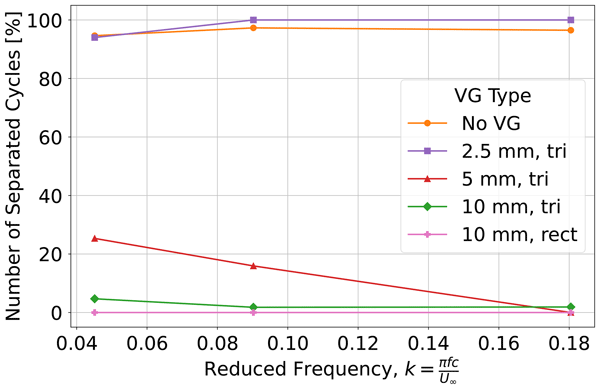
Vortex generators (VGs) are being used to prevent flow separation and stall on wind turbine blades. Optimal VG designs are chosen from steady investigations, assuming similar separation control characteristics between steady and unsteady conditions. Surface pressure measurements on a thick pitching airfoil with VGs show that VGs larger than the optimal steady size and rectangular VGs instead of the common triangular VGs must be used to consistently prevent unsteady flow separation and dynamic stall.
Shantanu Purohit, Haoyuan Sun, Andrea Sciacchitano, and Wei Yu
Wind Energ. Sci., 11, 3671–3701, https://doi.org/10.5194/wes-11-3671-2026, https://doi.org/10.5194/wes-11-3671-2026, 2026
Short summary
Short summary
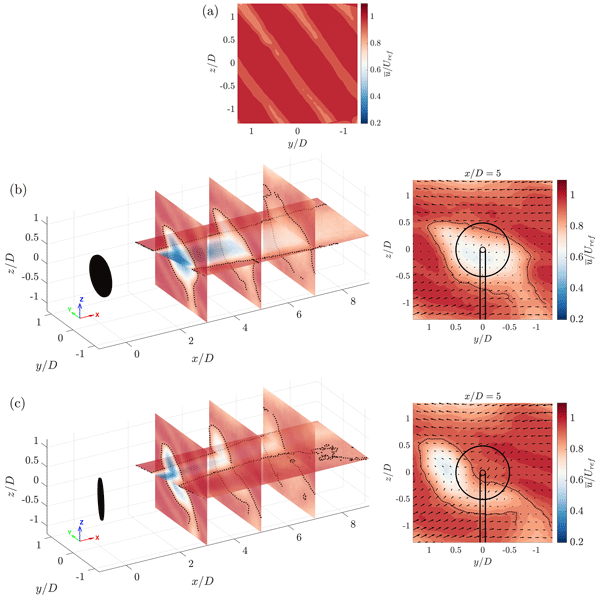
We experimentally investigated how changes in wind direction with height, known as wind veer, affect the wakes of wind turbines. The results demonstrate that wind veer leads to faster wake recovery and higher available power for downwind turbines. The impact of wind veer on yawed turbines is also studied, and it was observed that under strong veer conditions, yawing does not provide a significantly larger benefit for the available power of downwind turbines.
YuanTso Li, Andrea Sciacchitano, and Wei Yu
Wind Energ. Sci. Discuss., https://doi.org/10.5194/wes-2026-116, https://doi.org/10.5194/wes-2026-116, 2026
Revised manuscript under review for WES
Short summary
Short summary
We investigate the regenerative wind farming (RGWF) concept under realistic atmospheric conditions using large-eddy simulations. The effects of convective, neutral, and stable atmospheric boundary layers on the wake of a multi-rotor system with lifting devices (MRSL, the unit of RGWF) are examined. The results show that RGWF concept remains effective across all stability regimes, demonstrating its robustness and providing guidance for its future design and deployment.
Bogdan Pamfil, Henrik Bredmose, Taeseong Kim, and Wei Yu
Wind Energ. Sci., 11, 2191–2227, https://doi.org/10.5194/wes-11-2191-2026, https://doi.org/10.5194/wes-11-2191-2026, 2026
Short summary
Short summary
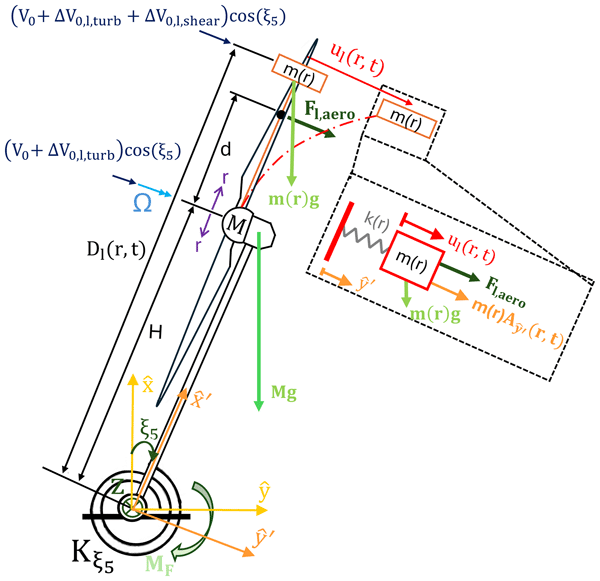
We introduce fast response methods to predict how floating wind turbines behave in early design stages. By transforming the equations of motion into a form that is easier to compute, our approach avoids longer simulations while preserving accuracy. We developed both single and double perturbation methods, which run far faster than standard models with errors under 3.5 %. The single perturbation method at second order offers the strongest balance of speed and accuracy.
Abhratej Sahoo, Wei Yu, and Daniele Ragni
Wind Energ. Sci., 11, 1971–1988, https://doi.org/10.5194/wes-11-1971-2026, https://doi.org/10.5194/wes-11-1971-2026, 2026
Short summary
Short summary
Vortex generators (VGs) are being used to prevent flow separation and stall on wind turbine blades. Optimal VG designs are chosen from steady investigations, assuming similar separation control characteristics between steady and unsteady conditions. Surface pressure measurements on a thick pitching airfoil with VGs show that VGs larger than the optimal steady size and rectangular VGs instead of the common triangular VGs must be used to consistently prevent unsteady flow separation and dynamic stall.
Marinos Manolesos, Sandrine Aubrun, Christian Bak, Paolo Bettini, Filippo Campagnolo, Alessandro Croce, Arslan Salim Dar, Michael Hölling, Stefan Ivanell, Konstantinos Kellaris, Miguel Alfonso Mendez, Pierluigi Montinari, Franz Mühle, George Papadakis, Fernardo Porté-Agel, Daniele Ragni, Sebastiano Randino, Andrea Sciacchitano, Lorenzo Schena, Gerard Schepers, Antonio Segalini, Wei Yu, and Carlo Luigi Bottasso
Wind Energ. Sci. Discuss., https://doi.org/10.5194/wes-2026-51, https://doi.org/10.5194/wes-2026-51, 2026
Manuscript not accepted for further review
Short summary
Short summary
As wind turbines grow to unprecedented sizes, ensuring their reliability requires advanced testing. We reviewed the current state of wind tunnel experiments, examining how scaled physical models are evaluated for wind flow, flexibility, and noise. We conclude that while laboratory testing remains essential, it is most powerful when integrated with computer simulations and real-world data. This combined approach will ultimately drive the design of more efficient and sustainable wind energy.
Özgür Yalçın, Andrea Piccolo, Riccardo Zamponi, Daniele Ragni, and Roberto Merino-Martinez
Wind Energ. Sci., 11, 299–319, https://doi.org/10.5194/wes-11-299-2026, https://doi.org/10.5194/wes-11-299-2026, 2026
Short summary
Short summary
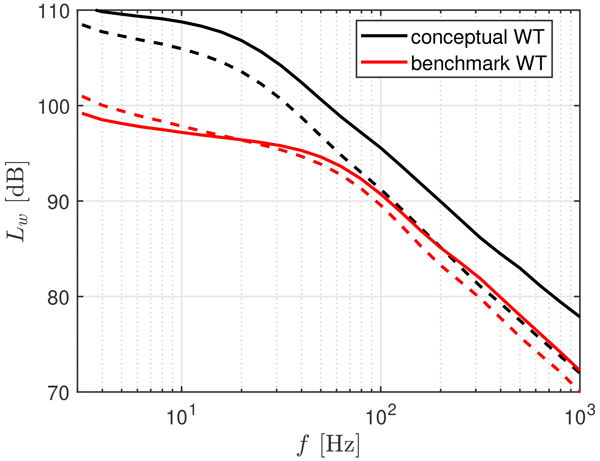
This study, a part of the Blade Extensions for Silent Turbines project, explores how turbulent airflows affect the noise generated by large onshore wind turbines. Using advanced simulations and an analytical model, we show that as turbine blades grow larger and thicker, turbulence behaves differently near the blade, changing how noise scales. These insights help to design quieter, more efficient next-generation wind turbines.
YuanTso Li, Marnix Fijen, Brian Dsouza, Wei Yu, Andrea Sciacchitano, and Carlos Ferreira
Wind Energ. Sci., 10, 3091–3124, https://doi.org/10.5194/wes-10-3091-2025, https://doi.org/10.5194/wes-10-3091-2025, 2025
Short summary
Short summary
We tested an innovative wind farm concept using novelly engineered wind turbine systems that can guide airflow more efficiently within the farm. Our experiments showed that wind farms deploying this concept can harvest more than twice the wind power per unit area compared to their traditional counterparts. Furthermore, these findings support earlier simulations and point to a more efficient space-saving future for wind energy.
David Bensason, Andrea Sciacchitano, and Carlos Ferreira
Wind Energ. Sci., 10, 2137–2159, https://doi.org/10.5194/wes-10-2137-2025, https://doi.org/10.5194/wes-10-2137-2025, 2025
Short summary
Short summary
This study is an experimental exploration of the wake of the novel X-Rotor vertical-axis wind turbine. Passive blade pitch is used to favorably modify the wake topology and subsequent energy replenishment process. The results demonstrate significant increases in available power for downstream rotors and the underlying mechanisms, highlighting the potential of vertical-axis wind turbines and passive blade pitch control for high-energy-density wind farm applications.
Pin Chun Yen, YuanTso Li, Fulvio Scarano, and Wei Yu
Wind Energ. Sci., 10, 1775–1805, https://doi.org/10.5194/wes-10-1775-2025, https://doi.org/10.5194/wes-10-1775-2025, 2025
Short summary
Short summary
This study explores how changing wind turbine blade length affects the aerodynamics behind the turbine. Using high-fidelity simulations, we found that varying blade lengths accelerates the leapfrogging event but does not improve wake recovery directly. In contrast, turbulence plays a bigger role, as the wake breakdown process is more influenced by it over the studied rotor asymmetries. These findings provide insights for designing more efficient wind turbine rotors.
David Bensason, Jayant Mulay, Andrea Sciacchitano, and Carlos Ferreira
Wind Energ. Sci., 10, 1499–1528, https://doi.org/10.5194/wes-10-1499-2025, https://doi.org/10.5194/wes-10-1499-2025, 2025
Short summary
Short summary
The wake of a scaled vertical-axis wind turbine farm was measured, resulting in the first experimental database of 3D-resolved flow-field measurements. In addition to the baseline operating conditions, two modes of wake control were tested, which involve the passive adjustment of the rotor blade pitch. The results highlight the impacts of these mode adjustments on the trailing vorticity system, wake topology, and affinity towards increasing the rate of wake recovery throughout the farm.
YuanTso Li, Wei Yu, Andrea Sciacchitano, and Carlos Ferreira
Wind Energ. Sci., 10, 631–659, https://doi.org/10.5194/wes-10-631-2025, https://doi.org/10.5194/wes-10-631-2025, 2025
Short summary
Short summary
A novel wind farm concept, called a regenerative wind farm, is investigated numerically. This concept tackles the significant wake interaction losses among traditional wind farms. Our results show that regenerative wind farms can greatly reduce these losses, boosting power output per unit surface. Unlike traditional farms with three-bladed wind turbines, regenerative farms use multi-rotor systems with lifting devices (MRSLs). This unconventional design effectively reduces wake losses.
Helena Schmidt, Renatto M. Yupa-Villanueva, Daniele Ragni, Roberto Merino-Martínez, Piet J. R. van Gool, and Roland Schmehl
Wind Energ. Sci., 10, 579–595, https://doi.org/10.5194/wes-10-579-2025, https://doi.org/10.5194/wes-10-579-2025, 2025
Short summary
Short summary
This study investigates noise annoyance caused by airborne wind energy systems (AWESs), a novel wind energy technology that uses kites to harness high-altitude winds. Through a listening experiment with 75 participants, sharpness was identified as the key factor predicting annoyance. Fixed-wing kites generated more annoyance than soft-wing kites, likely due to their sharper, more tonal sound. The findings can help improve AWESs’ designs, reducing noise-related disturbances for nearby residents.
Flavio Avila Correia Martins, Alexander van Zuijlen, and Carlos Simão Ferreira
Wind Energ. Sci., 10, 41–58, https://doi.org/10.5194/wes-10-41-2025, https://doi.org/10.5194/wes-10-41-2025, 2025
Short summary
Short summary
This study examines regenerative wind farming with multirotor systems fitted with atmospheric boundary layer control (ABL-control) wings near the rotor's wake. These wings create vortices that boost vertical momentum transfer and speed up wake recovery. Results show that ABL-control wings can restore 95 % of wind power within six rotor diameters downstream, achieving a recovery rate nearly 10 times faster than that without ABL control.
Erik Fritz, Koen Boorsma, and Carlos Ferreira
Wind Energ. Sci., 9, 1617–1629, https://doi.org/10.5194/wes-9-1617-2024, https://doi.org/10.5194/wes-9-1617-2024, 2024
Short summary
Short summary
This study presents results from a wind tunnel experiment on a model wind turbine with swept blades, thus blades curved in the rotor plane. Using a non-intrusive measurement technique, the flow around the turbine blades was measured from which blade-level aerodynamics are derived in post-processing. The detailed experimental database gives insight into swept-blade aerodynamics and has great value in validating numerical tools, which aim at simulating swept wind turbine blades.

Erik Fritz, André Ribeiro, Koen Boorsma, and Carlos Ferreira
Wind Energ. Sci., 9, 1173–1187, https://doi.org/10.5194/wes-9-1173-2024, https://doi.org/10.5194/wes-9-1173-2024, 2024
Short summary
Short summary
This study presents results from a wind tunnel experiment on a model wind turbine. Using a non-intrusive measurement technique, the flow around the turbine blades was measured. In post-processing, the blade-level aerodynamics are derived from the measured flow fields. The detailed experimental database has great value in validating numerical tools of varying complexity, which aim at simulating wind turbine aerodynamics as accurately as possible.
Adhyanth Giri Ajay, Laurence Morgan, Yan Wu, David Bretos, Aurelio Cascales, Oscar Pires, and Carlos Ferreira
Wind Energ. Sci., 9, 453–470, https://doi.org/10.5194/wes-9-453-2024, https://doi.org/10.5194/wes-9-453-2024, 2024
Short summary
Short summary
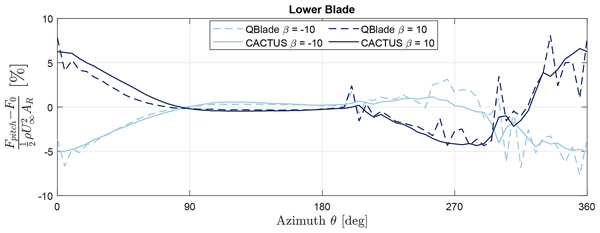
This paper compares six different numerical models to predict the performance of an X-shaped vertical-axis wind turbine, offering insights into how it works in 3D when its blades are fixed at specific angles. The results showed the 3D models here reliably predict the performance while still taking this turbine's complex aerodynamics into account compared to 2D models. Further, these blade angles caused more complexity in predicting the turbine's behaviour, which is highlighted in this paper.
Nirav Dangi, Koen Boorsma, Edwin Bot, Wim Bierbooms, and Wei Yu
Wind Energ. Sci. Discuss., https://doi.org/10.5194/wes-2023-90, https://doi.org/10.5194/wes-2023-90, 2023
Preprint withdrawn
Short summary
Short summary
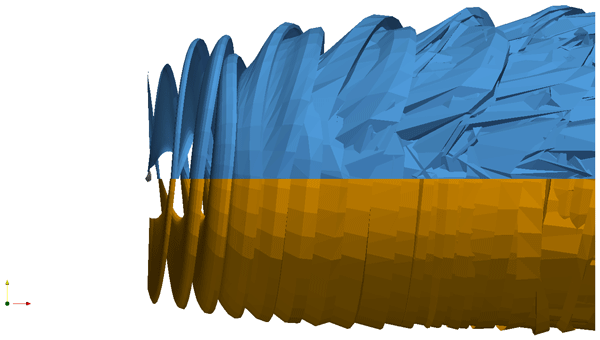
The wind turbine wake is a downstream region of velocity deficit, resulting in a power loss for downstream wind turbines. A turbulator is proposed to minimize this velocity deficit. In this work, a very successful field test campaign was executed which demonstrated the use of segmented Gurney Flaps as a promising add-on to promote enhanced wind turbine wake recovery for improved overall wind farm farm performance.
André F. P. Ribeiro, Damiano Casalino, and Carlos S. Ferreira
Wind Energ. Sci., 8, 661–675, https://doi.org/10.5194/wes-8-661-2023, https://doi.org/10.5194/wes-8-661-2023, 2023
Short summary
Short summary
Floating offshore wind turbines move due to not having a rigid foundation. Hence, as the blades rotate they experience more complex aerodynamics than standard onshore wind turbines. In this paper, we show computational simulations of a wind turbine rotor moving in various ways and quantify the effects of the motion in the forces acting on the blades. We show that these forces behave in nonlinear ways in some cases.
Alessandro Bianchini, Galih Bangga, Ian Baring-Gould, Alessandro Croce, José Ignacio Cruz, Rick Damiani, Gareth Erfort, Carlos Simao Ferreira, David Infield, Christian Navid Nayeri, George Pechlivanoglou, Mark Runacres, Gerard Schepers, Brent Summerville, David Wood, and Alice Orrell
Wind Energ. Sci., 7, 2003–2037, https://doi.org/10.5194/wes-7-2003-2022, https://doi.org/10.5194/wes-7-2003-2022, 2022
Short summary
Short summary
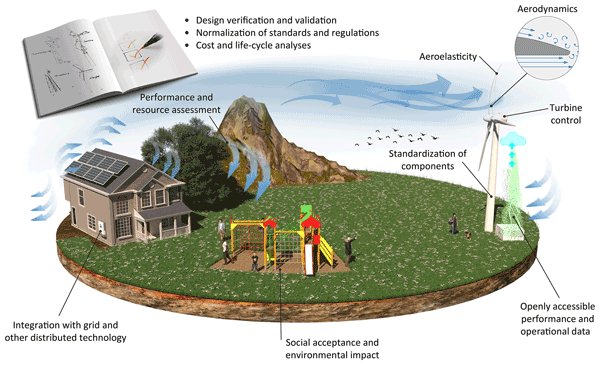
The paper is part of the Grand Challenges Papers for Wind Energy. It provides a status of small wind turbine technology in terms of technical maturity, diffusion, and cost. Then, five grand challenges that are thought to be key to fostering the development of the technology are proposed. To tackle these challenges, a series of unknowns and gaps are first identified and discussed. Improvement areas are highlighted, within which 10 key enabling actions are finally proposed to the wind community.

Daan van der Hoek, Joeri Frederik, Ming Huang, Fulvio Scarano, Carlos Simao Ferreira, and Jan-Willem van Wingerden
Wind Energ. Sci., 7, 1305–1320, https://doi.org/10.5194/wes-7-1305-2022, https://doi.org/10.5194/wes-7-1305-2022, 2022
Short summary
Short summary
The paper presents a wind tunnel experiment where dynamic induction control was implemented on a small-scale turbine. By periodically changing the pitch angle of the blades, the low-velocity turbine wake is perturbed, and hence it recovers at a faster rate. Small particles were released in the flow and subsequently recorded with a set of high-speed cameras. This allowed us to reconstruct the flow behind the turbine and investigate the effect of dynamic induction control on the wake.
Carlos Ferreira, Wei Yu, Arianna Sala, and Axelle Viré
Wind Energ. Sci., 7, 469–485, https://doi.org/10.5194/wes-7-469-2022, https://doi.org/10.5194/wes-7-469-2022, 2022
Short summary
Short summary
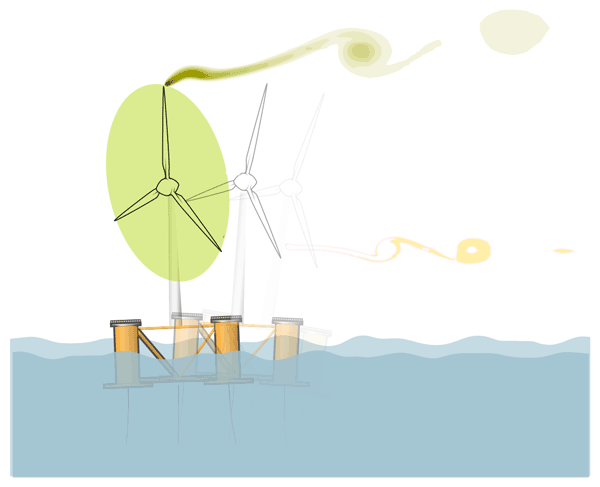
Floating offshore wind turbines may experience large surge motions that, when faster than the local wind speed, cause rotor–wake interaction.
We derive a model which is able to predict the wind speed at the wind turbine, even for large and fast motions and load variations in the wind turbine.
The proposed dynamic inflow model includes an adaptation for highly loaded flow, and it is accurate and simple enough to be easily implemented in most blade element momentum design models.
Cited articles
Aparicio, M., Martín, R., Muñoz, A., and González, A.: Results of a parametric study of flow devices, guidelines for design, AVATAR project: WP3, 2015. a
Bak, C., Skrzypiński, W., Gaunaa, M., Villanueva, H., Brønnum, N. F., and Kruse, E. K.: Full scale wind turbine test of vortex generators mounted on the entire blade, Journal of Physics: Conference Series, 753, 022001, https://doi.org/10.1088/1742-6596/753/2/022001, 2016. a
Baldacchino, D., Ragni, D., Simao Ferreira, C., and van Bussel, G.: Towards integral boundary layer modelling of vane-type vortex generators, in: 45th AIAA Fluid Dynamics Conference, American Institute of Aeronautics and Astronautics, Reston, Virginia, p. 3345, ISBN 978-1-62410-362-9, https://doi.org/10.2514/6.2015-3345, 2015. a, b
Bardina, J., Huang, P., Coakley, T., Bardina, J., Huang, P., and Coakley, T.: Turbulence modeling validation, in: 28th Fluid Dynamics Conference, p. 2121, American Institute of Aeronautics and Astronautics, Reston, Virigina, https://doi.org/10.2514/6.1997-2121, 1997. a
Bender, E. E., Anderson, B. H., and Yagle, P. J.: Vortex generator modeling for Navier-Stokes codes, in: 3rd ASME/JSME Joint Fluids Engineering Conference, p. 1, ISBN 0791819612, 1999. a
Björck, A.: Coordinates and Caluclations for the FFA-W1-xxx, FFA-W2-xxx and FFA-W3-xxx Series of Airfoils for Horizontal Axis Wind Turbines, Flygtekniska Försöksanstalten, the Aeronautical Research Institute of Sweden, 1990. a
Clauser, F. H.: Turbulent Boundary Layers in Adverse Pressure Gradients, Journal of the Aeronautical Sciences, 21, 91–108, https://doi.org/10.2514/8.2938, 1954. a
Drela, M.: Two-Dimensional Transonic Aerodynamic Design and Analysis Using the Euler Equations, Tech. rep., Gas Turbine Laboratory, Massachusetts Institute of Technology, ISBN 9788578110796, ISSN 1098-6596, 1986. a
Drela, M.: XFOIL: An Analysis and Design System for Low Reynolds Number Airfoils, in: Low Reynolds Number Aerodynamics, edited by: Mueller, T. J., Berlin, Germany, Springer-Verlag, 1989, Springer Berlin Heidelberg, Berlin, Heidelberg, 1–12, ISBN 0387518843, https://doi.org/10.1007/978-3-642-84010-4_1, 1989. a, b, c
Drela, M., Giles, M., and Thompkins, W. T.: Newton Solution of Coupled Euler and Boundary-Layer Equations, in: Numerical and Physical Aspects of Aerodynamic Flows III, Springer New York, New York, NY, 143–154, https://doi.org/10.1007/978-1-4612-4926-9_8, 1986. a
Economon, T. D.: SU2 Tutorials – Incompressible Turbulent Flat Plate, https://su2code.github.io/tutorials/Inc_Turbulent_Flat_Plate/ (last access: 13 January 2026), 2018. a
Economon, T. D.: Simulation and Adjoint-Based Design for Variable Density Incompressible Flows with Heat Transfer, AIAA Journal, 58, 757–769, https://doi.org/10.2514/1.J058222, 2020. a
Economon, T. D., Palacios, F., Copeland, S. R., Lukaczyk, T. W., and Alonso, J. J.: SU2: An Open-Source Suite for Multiphysics Simulation and Design, AIAA Journal, 54, 828–846, https://doi.org/10.2514/1.J053813, 2016. a
Gaertner, E., Rinker, J., Sethuraman, L., Zahle, F., Anderson, B., Barter, G., Abbas, N., Meng, F., Bortolotti, P., Skrzypinski, W., Scott, G., Feil, R., Bredmose, H., Dykes, K., Shields, M., Allen, C., and Viselli, A.: IEA Wind TCP Task 37: Definition of the IEA 15-Megawatt Offshore Reference Wind Turbine, Tech. rep., National Renewable Energy Laboratory (NREL), Golden, CO, USA, https://doi.org/10.2172/1603478, 2020. a
Gonzalez, A., Baldacchino, D., Caboni, M. A. K., Kidambi, A., Manolesos, M., and Troldborg, N.: Aerodynamic flow control: Final report, Tech. rep., AVATAR Project, 2016. a
Gonzalez-Salcedo, A., Croce, A., Arce Leon, C., Nayeri, C. N., Baldacchino, D., Vimalakanthan, K., and Barlas, T.: Blade Design with Passive Flow Control Technologies, in: Handbook of Wind Energy Aerodynamics, Springer International Publishing, Cham, 1–57, https://doi.org/10.1007/978-3-030-05455-7_6-1, 2020. a
Gould, D. G.: The use of vortex generators to delay boundary layer separation: theoretical discussion supported by tests on a CF-100 aircraft, Tech. Rep., National Research Council of Canada. Division of Mechanical Engineering, National Aeronautical Establishment, https://doi.org/10.4224/23001523, 1956. a, b
Green, J., Weeks, D., and Brooman, J.: Prediction of Turbulent Boundary Layers and Wakes in Compressible Flow by a Lag-Entrainment Method, Tech. Rep. 3791, Aeronautical Research Council London (England), 1977. a
Gutiérrez, R., Llórente, E., Echeverría, F., and Ragni, D.: Wind tunnel tests for vortex generators mitigating leading-edge roughness on a 30 % thick airfoil, Journal of Physics: Conference Series, 1618, 52058, https://doi.org/10.1088/1742-6596/1618/5/052058, 2020. a
Gutierrez-Amo, R., Fernandez-Gamiz, U., Errasti, I., and Zulueta, E.: Computational modelling of three different sub-boundary layer vortex generators on a flat plate, Energies, 11, 3107, https://doi.org/10.3390/en11113107, 2018. a
Harris, C. D.: NASA Supercritical Airfoils. A Matrix of Family-Related Airfoils, Tech. rep., NASA Langley Research Centre, 1990. a
Jensen, P. H., Chaviaropolos, T., and Natarajan, A.: LCOE reduction for the next generation offshore wind turbines: Outcomes from the INNWIND.EU project, Innwind.eu, 325, https://www.innwind.eu/news/nyhed?id=a25217df-6f85-46ca-9d9d-cb8b78eb99fa (last access: 14 January 2026), 2017. a
Jirásek, A.: Vortex-generator model and its application to flow control, Journal of Aircraft, 42, 1486–1491, https://doi.org/10.2514/1.12220, 2005. a
Kerho, M. F. and Kramer, B. R.: Enhanced airfoil design incorporating boundary layer mixing devices, in: 41st Aerospace Sciences Meeting and Exhibit, p. 211, ISBN 9781624100994, https://doi.org/10.2514/6.2003-211, 2003. a
Lin, J. C.: Review of research on low-profile vortex generators to control boundary-layer separation, Progress in Aerospace Sciences, 38, 389–420, https://doi.org/10.1016/S0376-0421(02)00010-6, 2002. a
Lögdberg, O., Fransson, J. H. M., and Alfredsson, P. H.: Streamwise evolution of longitudinal vortices in a turbulent boundary layer, Journal of Fluid Mechanics, 623, 27–58, https://doi.org/10.1017/S0022112008004825, 2009. a
Manolesos, M., Papadakis, G., and Voutsinas, S. G.: Revisiting the assumptions and implementation details of the BAY model for vortex generator flows, Renewable Energy, 146, 1249–1261, https://doi.org/10.1016/j.renene.2019.07.063, 2020. a
McKenna, R., Ostman, P., and Fichtner, W.: Key challenges and prospects for large wind turbines, Renewable and Sustainable Energy Reviews, 53, 1212–1221, https://doi.org/10.1016/j.rser.2015.09.080, 2016. a
Özdemir, H.: Interacting Boundary Layer Methods and Applications, Handbook of Wind Energy Aerodynamics, 1–53, https://doi.org/10.1007/978-3-030-31307-4_11, 2020. a
Ramanujam, G., Özdemir, H., and Hoeijmakers, H. W. M.: Improving airfoil drag prediction, Journal of aircraft, 53, 1844–1852, 2016. a
Ravishankara, A. K., Bakhmet, I., and Özdemir, H.: Estimation of roughness effects on wind turbine blades with vortex generators, Journal of Physics: Conference Series, 1618, 52031, https://doi.org/10.1088/1742-6596/1618/5/052031, 2020. a
Rumsey, C., Smith, B., and Huang, G.: Description of a Website Resource for Turbulence Modeling Verification and Validation, in: 40th Fluid Dynamics Conference and Exhibit, American Institute of Aeronautics and Astronautics, Reston, Virigina, p. 4742, ISBN 978-1-60086-956-3, https://doi.org/10.2514/6.2010-4742, 2010. a
Sahoo, A., Ferreira, C. S., Ravishankara, A. K., Schepers, G., and Yu, W.: Validation of an engineering model for vortex generators in a viscous-inviscid interaction method for airfoil analysis, Journal of Physics: Conference Series, 2647, 112012, https://doi.org/10.1088/1742-6596/2647/11/112012, 2024. a, b
Schepers, J. G., Ceyhan, O., Savenije, F. J., Stettner, M., Kooijman, H. J., Chaviarapoulos, P., Sieros, G., Simao Ferreira, C. S., Sørensen, N., Wächter, M., Stoevesandt, B., Lutz, T., Gonzalez, A., Barakos, G., Voutsinas, A., Croce, A., and Madsen, J.: AVATAR: Advanced aerodynamic tools for large rotors, in: 33rd Wind Energy Symposium, American Institute of Aeronautics and Astronautics Inc. (AIAA), 291–310, https://doi.org/10.2514/6.2015-0497, 2015. a, b
Schubauer, G. B. and Spangenberg, W. G.: Forced mixing in boundary layers, Journal of Fluid Mechanics, 8, 10–32, https://doi.org/10.1017/S0022112060000372, 1960. a
Snel, H., Houwink, R., and Bosschers, J.: Sectional prediction of 3-D effects for stalled flow on rotating blades and comparison with measurements, Netherlands Energy Research Foundation ECN, 93, 395–399, 1993. a
Snel, H., Houwink, R., and Bosschers, J.: Sectional prediction of lift coefficients on rotating wind turbine blades in stall, Ecn-C–93-052, 1994. a
Spalart, P. and Allmaras, S.: A one-equation turbulence model for aerodynamic flows, in: 30th Aerospace Sciences Meeting and Exhibit, 1, American Institute of Aeronautics and Astronautics, Reston, Virigina, 5–21, ISSN 00341223, https://doi.org/10.2514/6.1992-439, 1992. a
Spalart, P. R. and Garbaruk, A. V.: Correction to the Spalart–Allmaras Turbulence Model, Providing More Accurate Skin Friction, AIAA Journal, 58, 1903–1905, https://doi.org/10.2514/1.J059489, 2020. a
Squire, H. B.: The Growth of a Vortex in Turbulent Flow, Aeronautical Quarterly, 16, 302–306, https://doi.org/10.1017/s0001925900003516, 1965. a
Swafford, T. W.: Analytical approximation of two-dimensional separated turbulent boundary-layer velocity profiles, AIAA journal, 21, 923–926, 1983. a
Timmer, W. A. and van Rooij, R. P. J. O. M.: Summary of the Delft University Wind Turbine Dedicated Airfoils, Journal of Solar Energy Engineering, 125, 488–496, https://doi.org/10.1115/1.1626129, 2003. a, b, c
Van Ingen, J. L.: The eN method for transition prediction. Historical review of work at TU Delft, 38th AIAA Fluid Dynamics Conference and Exhibit, https://doi.org/10.2514/6.2008-3830, 2008. a
Velte, C. M., Braud, C., Coudert, S., and Foucaut, J.-M.: Vortex Generator Induced Flow in a High Re Boundary Layer, Journal of Physics: Conference Series, 555, 012102, https://doi.org/10.1088/1742-6596/555/1/012102, 2014. a
Von Stillfried, F., Lögdberg, O., Wallin, S., and Johansson, A. V.: Statistical modeling of the influence of turbulent flow separation control devices, 47th AIAA Aerospace Sciences Meeting including the New Horizons Forum and Aerospace Exposition, https://doi.org/10.2514/6.2009-1501, 2009. a
von Stillfried, F., Wallin, S., and Johansson, A. V.: Evaluation of a Vortex Generator Model in Adverse Pressure Gradient Boundary Layers, AIAA Journal, 49, 982–993, https://doi.org/10.2514/1.J050680, 2011. a
White, F. M.: Viscous fluid flow, McGraw-Hill Higher Education, ISBN 9780071244930, 2006. a
Whitfield, D. L.: Integral Solution of Compressible Turbulent Boundary Layers Using Improved Velocity Profiles, Tech. rep., Arnold Engineering Development Center, AEDC-TR-78-42, 1978. a
Yu, W., Bajarūnas, L. K., Zanon, A., and Ferreira, C. J. S.: Modeling dynamic stall of an airfoil with vortex generators using a double‐wake panel model with viscous–inviscid interaction, Wind Energy, 27, 277–297, https://doi.org/10.1002/we.2889, 2024. a, b
Zahle, F., Barlas, T., Lønbæk, K., Bortolotti, P., Zalkind, D., Wang, L., Labuschagne, C., Sethuraman, L., and Barter, G.: Definition of the IEA Wind 22-Megawatt Offshore Reference Wind Turbine, Tech. rep., ISBN 978-87-87335-71-3, https://doi.org/10.11581/DTU.00000317, 2024. a, b
Short summary
A new model incorporates vortex generator (VG) effects into fast aerodynamic tools like XFOIL and RFOIL. It modifies boundary layer equations and uses empirical functions scaled with VG geometry and Reynolds numbers to implement the modified integral boundary layer equations in RFOIL. The model improves accuracy across airfoils and predicts separation delay, stall delay, lift increase, and added drag, enabling VG effects to be included in wind turbine blade design.
A new model incorporates vortex generator (VG) effects into fast aerodynamic tools like XFOIL...


Altmetrics
Final-revised paper
Preprint