
Articles | Volume 11, issue 1
https://doi.org/10.5194/wes-11-13-2026
© Author(s) 2026. This work is distributed under
the Creative Commons Attribution 4.0 License.
the Creative Commons Attribution 4.0 License.
https://doi.org/10.5194/wes-11-13-2026
© Author(s) 2026. This work is distributed under
the Creative Commons Attribution 4.0 License.
the Creative Commons Attribution 4.0 License.
Research article
| 
07 Jan 2026
Research article |
| 07 Jan 2026
| 07 Jan 2026
Evaluation of a high-resolution regional climate simulation for surface and hub-height wind climatology over North America

Environmental Science Division, Argonne National Laboratory, Lemont, Illinois, 60439, United States
Jiali Wang
CORRESPONDING AUTHOR
Environmental Science Division, Argonne National Laboratory, Lemont, Illinois, 60439, United States
Chunyong Jung
Environmental Science Division, Argonne National Laboratory, Lemont, Illinois, 60439, United States
Gökhan Sever
Environmental Science Division, Argonne National Laboratory, Lemont, Illinois, 60439, United States
Lindsay Sheridan
Pacific Northwest National Laboratory, Richland, Washington, 99354, United States
Jeremy Feinstein
Environmental Science Division, Argonne National Laboratory, Lemont, Illinois, 60439, United States
Rao Kotamarthi
Environmental Science Division, Argonne National Laboratory, Lemont, Illinois, 60439, United States
Caroline Draxl
National Renewable Energy Laboratory, Golden, Colorado, 80401, United States
now at: Electric Power Research Institute, Palo Alto, California, 94304, United States
Ethan Young
National Renewable Energy Laboratory, Golden, Colorado, 80401, United States
Avi Purkayastha
National Renewable Energy Laboratory, Golden, Colorado, 80401, United States
Andrew Kumler
National Renewable Energy Laboratory, Golden, Colorado, 80401, United States
Related authors
No articles found.
Robert Jackson, Paytsar Muradyan, Raghavendra Krishnamurthy, Rob Newsom, Sonia Wharton, Matteo Puccioni, Bhupendra Raut, Seongha Park, Rajesh Sankaran, Scott Collis, Joseph O'Brien, and V. Rao Kotamarthi
EGUsphere, https://doi.org/10.5194/egusphere-2026-2568, https://doi.org/10.5194/egusphere-2026-2568, 2026
This preprint is open for discussion and under review for Atmospheric Measurement Techniques (AMT).
Short summary
Short summary
The winds in the lowest layer of our atmosphere are commonly sensed using Doppler LiDARs. These LiDARs are commonly set to scan the atmosphere in a single way, which can sometimes miss the most interesting events in our lower atmosphere such as high wind events and mountain valley flow reversals. Here, we present an infrastructure for intelligent sensing, using Argonne National Laboratory's state of the art cloud-based edge computing system Waggle.
Georgios Deskos, Jiali Wang, Sanjay Arwade, Murray Fisher, Brian Hirth, Xiaoli Guo Larsén, Julie K. Lundquist, Andrew Myers, Weichiang Pang, William J. Pringle, Robert Rogers, Miguel Sanchez-Gomez, Chao Sun, Atsushi Yamaguchi, and Paul Veers
Wind Energ. Sci., 11, 2749–2782, https://doi.org/10.5194/wes-11-2749-2026, https://doi.org/10.5194/wes-11-2749-2026, 2026
Short summary
Short summary
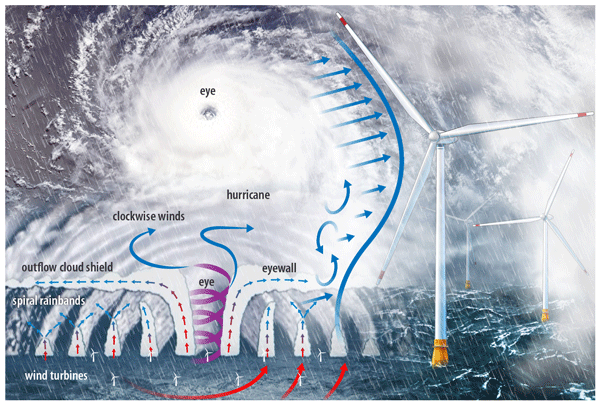
Wind energy is expanding into regions exposed to tropical cyclones, where extreme winds and waves can damage turbines and disrupt energy production. We reviewed observations, simulations, engineering standards, and risk quantification frameworks to identify the most important gaps. Today's design rules, originally built for milder storms, do not capture cyclone hazards. Closing these gaps requires better offshore measurements, improved models, and risk-informed design standards.
Lindsay M. Sheridan, Raghavendra Krishnamurthy, Tien Manh Nguyen, Yi-Leng Chen, William I. Gustafson Jr., Ye Liu, Feng Hsiao, Rob K. Newsom, Preston Spicer, Evgueni Kassianov, Mikhail Pekour, Nicola Bodini, and Mark Severy
Wind Energ. Sci., 11, 2257–2285, https://doi.org/10.5194/wes-11-2257-2026, https://doi.org/10.5194/wes-11-2257-2026, 2026
Short summary
Short summary
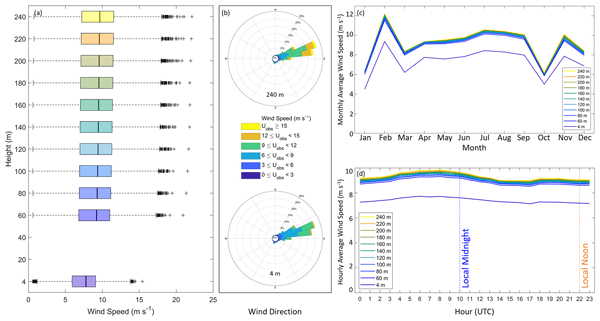
Wind simulations can contain significant errors, which can lead to inaccurate estimates of wind energy generation. Using observations from a floating lidar off Hawai'i, we hypothesize and establish that distinct simulation datasets will exhibit diverse ranges of errors in this offshore environment. The most commonly used simulation dataset produces the largest wind speed biases due to underestimation of fast wind speeds and misrepresentation of how wind speed varies throughout the day and night.
Kevin Menear, Sameer Shaik, Lindsay Sheridan, Dmitry Duplyakin, and Caleb Phillips
Wind Energ. Sci. Discuss., https://doi.org/10.5194/wes-2026-75, https://doi.org/10.5194/wes-2026-75, 2026
Revised manuscript under review for WES
Short summary
Short summary
Wind energy projects use public wind maps to estimate power potential, but these maps have errors that vary by location. We compared major maps against real measurements across the United States and found that each has distinct weaknesses. We built a machine learning model that combines multiple maps into more accurate estimates, cutting typical errors by a third. These results are freely available online to help communities make better decisions when planning small-scale wind energy projects.
Chunyong Jung, Pengfei Xue, Chenfu Huang, William Pringle, Mrinal Biswas, Geeta Nain, and Jiali Wang
Wind Energ. Sci., 11, 1321–1341, https://doi.org/10.5194/wes-11-1321-2026, https://doi.org/10.5194/wes-11-1321-2026, 2026
Short summary
Short summary
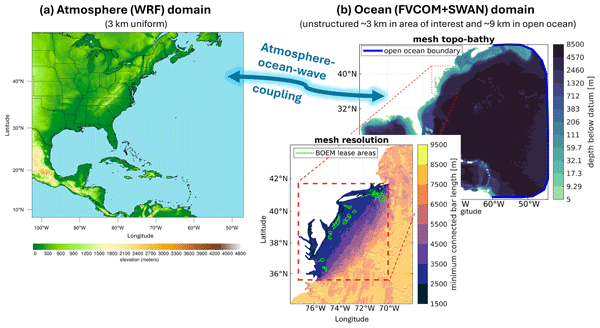
We developed a new modeling system that combines air, ocean, and wave processes to better understand hurricanes. Using Hurricane Henri as a test case, we found that including ocean and wave interactions improves the accuracy of storm intensity and wind patterns. These results show that accounting for these interactions is important for assessing risks to offshore energy systems and coastal regions.
Arkaprabha Ganguli, Jeremy Feinstein, Ibraheem Raji, Akintomide Akinsanola, Connor Aghili, Chunyong Jung, Jordan Branham, Tom Wall, Whitney Huang, and Rao Kotamarthi
Geosci. Model Dev., 18, 8313–8332, https://doi.org/10.5194/gmd-18-8313-2025, https://doi.org/10.5194/gmd-18-8313-2025, 2025
Short summary
Short summary
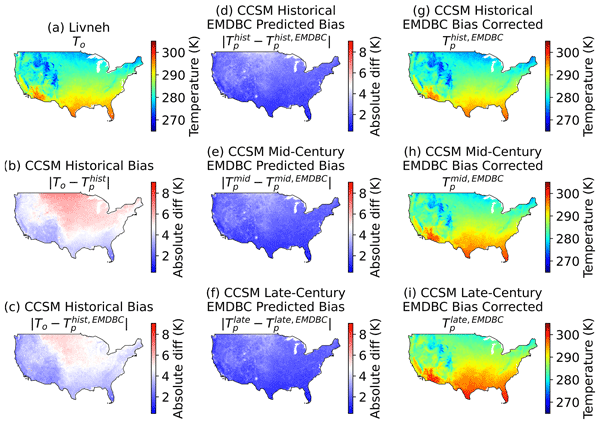
This study introduces a timescale-aware bias-correction framework to enhance Earth system model assessments, vital for the geoscience community. By decomposing model outputs into oscillatory components, we preserve critical information across various timescales, ensuring more reliable projections. This improved reliability supports strategic decisions in sectors such as agriculture, water resources, and disaster preparedness.
Geng Xia, Mike Optis, Georgios Deskos, Michael Sinner, Daniel Mulas Hernando, Julie Kay Lundquist, Andrew Kumler, Miguel Sanchez Gomez, Paul Fleming, and Walter Musial
Wind Energ. Sci. Discuss., https://doi.org/10.5194/wes-2025-154, https://doi.org/10.5194/wes-2025-154, 2025
Revised manuscript not accepted
Short summary
Short summary
This study examines energy losses from cluster wakes in offshore wind farms along the U.S. East Coast. Simulations based on real lease projects show that large wind speed deficits do not always cause equally large energy losses. The energy loss method revealed wake areas up to 30 % larger than traditional estimates, underscoring the need to consider both wind speed deficit and energy loss in planning offshore wind development.
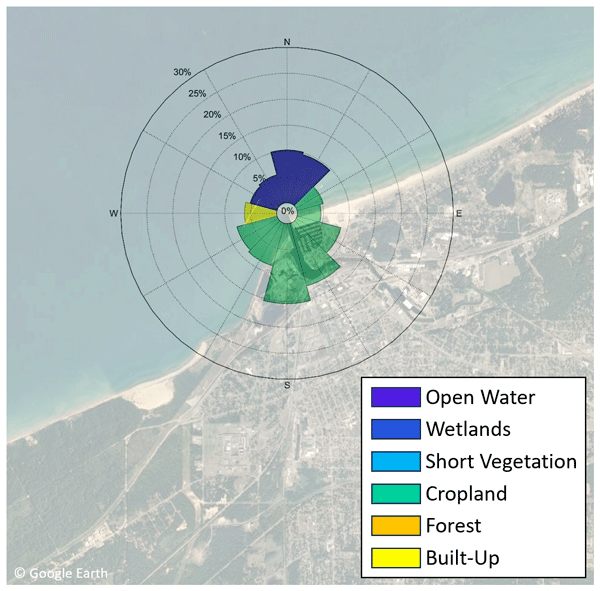
Lindsay M. Sheridan, Jiali Wang, Caroline Draxl, Nicola Bodini, Caleb Phillips, Dmitry Duplyakin, Heidi Tinnesand, Raj K. Rai, Julia E. Flaherty, Larry K. Berg, Chunyong Jung, Ethan Young, and Rao Kotamarthi
Wind Energ. Sci., 10, 1551–1574, https://doi.org/10.5194/wes-10-1551-2025, https://doi.org/10.5194/wes-10-1551-2025, 2025
Short summary
Short summary
Three recent wind resource datasets are assessed for their skills in representing annual average wind speeds and seasonal, diurnal, and interannual trends in the wind resource in coastal locations to support customers interested in small and midsize wind energy.
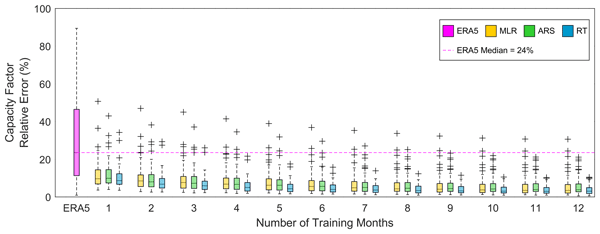
Lindsay M. Sheridan, Dmitry Duplyakin, Caleb Phillips, Heidi Tinnesand, Raj K. Rai, Julia E. Flaherty, and Larry K. Berg
Wind Energ. Sci., 10, 1451–1470, https://doi.org/10.5194/wes-10-1451-2025, https://doi.org/10.5194/wes-10-1451-2025, 2025
Short summary
Short summary
A total of 12 months of onsite wind measurement is standard for correcting model-based long-term wind speed estimates for utility-scale wind farms; however, the time and capital investment involved in gathering onsite measurements must be reconciled with the energy needs and funding opportunities for distributed wind projects. This study aims to answer the question of how short you can go in terms of the observational time period needed to make impactful improvements to long-term wind speed estimates.
Cory Frontin, Jeff Allen, Christopher J. Bay, Jared Thomas, Ethan Young, and Pietro Bortolotti
Wind Energ. Sci. Discuss., https://doi.org/10.5194/wes-2025-103, https://doi.org/10.5194/wes-2025-103, 2025
Revised manuscript has not been submitted
Short summary
Short summary
Wind farms produce energy and to do so have to occupy a non-trivial amount of space. Understanding how much energy a proposed wind farm will make (and at what cost) is technically challenging, especially when turbines are packed closely together. Plus, there's a key tradeoff in how much space a farm occupies and how cheap the energy it can produce might be: less space means more costly energy. This work shows an novel way to run computational simulations efficiently to understand that tradeoff.
Lara Tobias-Tarsh, Chunyong Jung, Jiali Wang, Vishal Bobde, Akintomide A. Akinsanola, and V. Rao Kotamarthi
EGUsphere, https://doi.org/10.5194/egusphere-2025-1805, https://doi.org/10.5194/egusphere-2025-1805, 2025
Preprint archived
Short summary
Short summary
We use a high-resolution regional climate model to better understand hurricanes in the North Atlantic over the past 20 years. The model closely matches observed storm frequency and captures stronger storms more accurately than traditional datasets. It also shows better performance in areas with limited data, like the Caribbean. These results can help improve local storm preparedness and planning for critical infrastructure.
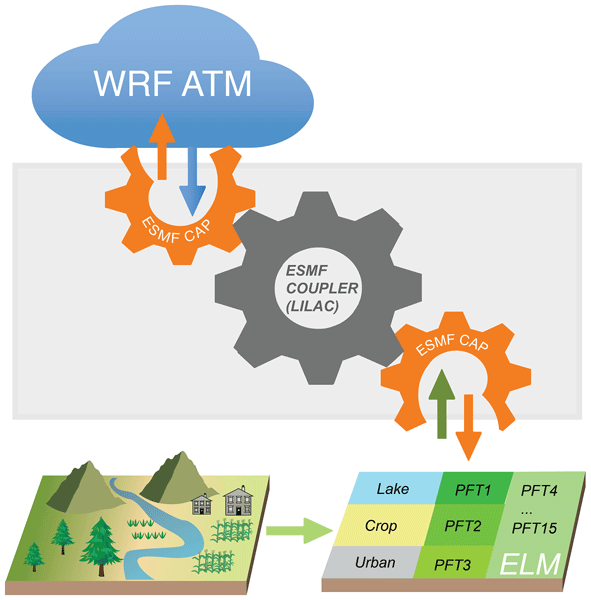
Huilin Huang, Yun Qian, Gautam Bisht, Jiali Wang, Tirthankar Chakraborty, Dalei Hao, Jianfeng Li, Travis Thurber, Balwinder Singh, Zhao Yang, Ye Liu, Pengfei Xue, William J. Sacks, Ethan Coon, and Robert Hetland
Geosci. Model Dev., 18, 1427–1443, https://doi.org/10.5194/gmd-18-1427-2025, https://doi.org/10.5194/gmd-18-1427-2025, 2025
Short summary
Short summary
We integrate the E3SM Land Model (ELM) with the WRF model through the Lightweight Infrastructure for Land Atmosphere Coupling (LILAC) Earth System Modeling Framework (ESMF). This framework includes a top-level driver, LILAC, for variable communication between WRF and ELM and ESMF caps for ELM initialization, execution, and finalization. The LILAC–ESMF framework maintains the integrity of the ELM's source code structure and facilitates the transfer of future ELM model developments to WRF-ELM.

Majid Bastankhah, Marcus Becker, Matthew Churchfield, Caroline Draxl, Jay Prakash Goit, Mehtab Khan, Luis A. Martinez Tossas, Johan Meyers, Patrick Moriarty, Wim Munters, Asim Önder, Sara Porchetta, Eliot Quon, Ishaan Sood, Nicole van Lipzig, Jan-Willem van Wingerden, Paul Veers, and Simon Watson
Wind Energ. Sci., 9, 2171–2174, https://doi.org/10.5194/wes-9-2171-2024, https://doi.org/10.5194/wes-9-2171-2024, 2024
Short summary
Short summary
Dries Allaerts was born on 19 May 1989 and passed away at his home in Wezemaal, Belgium, on 10 October 2024 after battling cancer. Dries started his wind energy career in 2012 and had a profound impact afterward on the community, in terms of both his scientific realizations and his many friendships and collaborations in the field. His scientific acumen, open spirit of collaboration, positive attitude towards life, and playful and often cheeky sense of humor will be deeply missed by many.
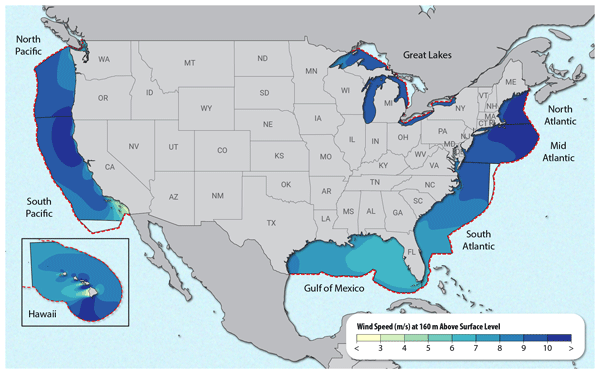
Nicola Bodini, Mike Optis, Stephanie Redfern, David Rosencrans, Alex Rybchuk, Julie K. Lundquist, Vincent Pronk, Simon Castagneri, Avi Purkayastha, Caroline Draxl, Raghavendra Krishnamurthy, Ethan Young, Billy Roberts, Evan Rosenlieb, and Walter Musial
Earth Syst. Sci. Data, 16, 1965–2006, https://doi.org/10.5194/essd-16-1965-2024, https://doi.org/10.5194/essd-16-1965-2024, 2024
Short summary
Short summary
This article presents the 2023 National Offshore Wind data set (NOW-23), an updated resource for offshore wind information in the US. It replaces the Wind Integration National Dataset (WIND) Toolkit, offering improved accuracy through advanced weather prediction models. The data underwent regional tuning and validation and can be accessed at no cost.
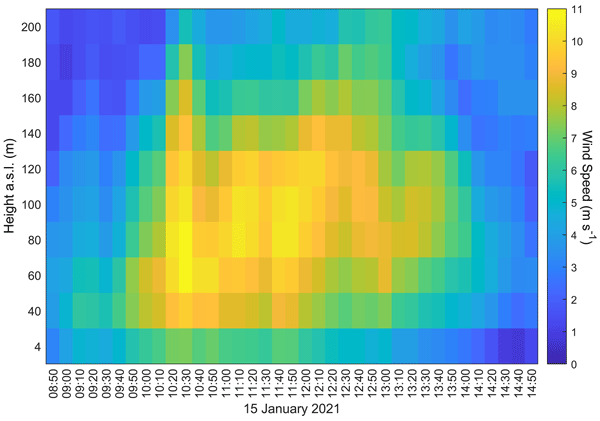
Lindsay M. Sheridan, Raghavendra Krishnamurthy, William I. Gustafson Jr., Ye Liu, Brian J. Gaudet, Nicola Bodini, Rob K. Newsom, and Mikhail Pekour
Wind Energ. Sci., 9, 741–758, https://doi.org/10.5194/wes-9-741-2024, https://doi.org/10.5194/wes-9-741-2024, 2024
Short summary
Short summary
In 2020, lidar-mounted buoys owned by the US Department of Energy (DOE) were deployed off the California coast in two wind energy lease areas and provided valuable year-long analyses of offshore low-level jet (LLJ) characteristics at heights relevant to wind turbines. In addition to the LLJ climatology, this work provides validation of LLJ representation in atmospheric models that are essential for assessing the potential energy yield of offshore wind farms.
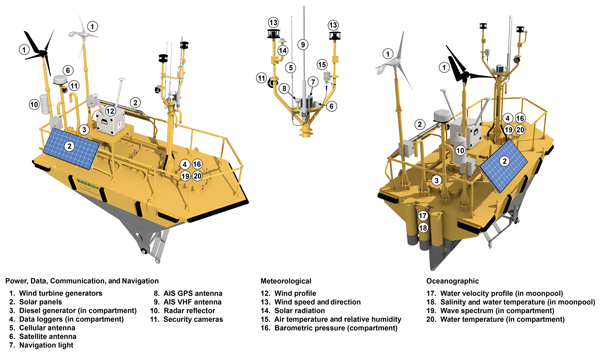
Raghavendra Krishnamurthy, Gabriel García Medina, Brian Gaudet, William I. Gustafson Jr., Evgueni I. Kassianov, Jinliang Liu, Rob K. Newsom, Lindsay M. Sheridan, and Alicia M. Mahon
Earth Syst. Sci. Data, 15, 5667–5699, https://doi.org/10.5194/essd-15-5667-2023, https://doi.org/10.5194/essd-15-5667-2023, 2023
Short summary
Short summary
Our understanding and ability to observe and model air–sea processes has been identified as a principal limitation to our ability to predict future weather. Few observations exist offshore along the coast of California. To improve our understanding of the air–sea transition zone and support the wind energy industry, two buoys with state-of-the-art equipment were deployed for 1 year. In this article, we present details of the post-processing, algorithms, and analyses.
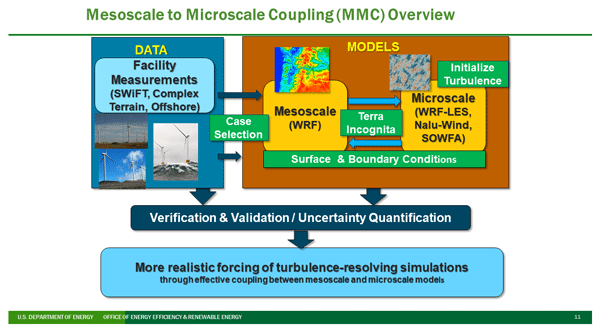
Sue Ellen Haupt, Branko Kosović, Larry K. Berg, Colleen M. Kaul, Matthew Churchfield, Jeffrey Mirocha, Dries Allaerts, Thomas Brummet, Shannon Davis, Amy DeCastro, Susan Dettling, Caroline Draxl, David John Gagne, Patrick Hawbecker, Pankaj Jha, Timothy Juliano, William Lassman, Eliot Quon, Raj K. Rai, Michael Robinson, William Shaw, and Regis Thedin
Wind Energ. Sci., 8, 1251–1275, https://doi.org/10.5194/wes-8-1251-2023, https://doi.org/10.5194/wes-8-1251-2023, 2023
Short summary
Short summary
The Mesoscale to Microscale Coupling team, part of the U.S. Department of Energy Atmosphere to Electrons (A2e) initiative, has studied various important challenges related to coupling mesoscale models to microscale models. Lessons learned and discerned best practices are described in the context of the cases studied for the purpose of enabling further deployment of wind energy. It also points to code, assessment tools, and data for testing the methods.
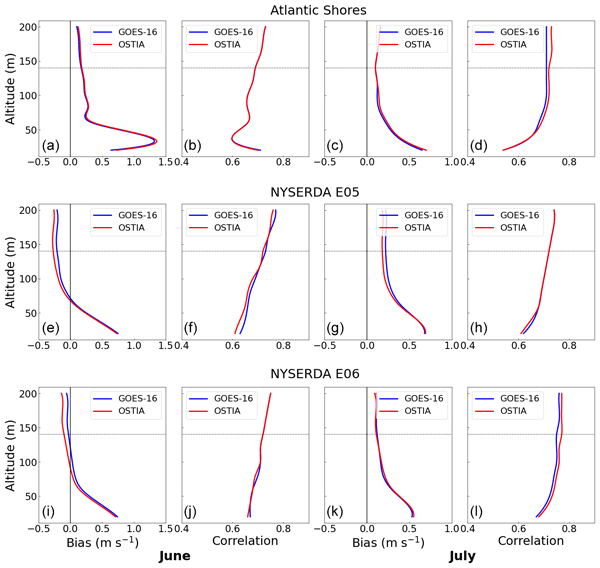
Stephanie Redfern, Mike Optis, Geng Xia, and Caroline Draxl
Wind Energ. Sci., 8, 1–23, https://doi.org/10.5194/wes-8-1-2023, https://doi.org/10.5194/wes-8-1-2023, 2023
Short summary
Short summary
As wind farm developments expand offshore, accurate forecasting of winds above coastal waters is rising in importance. Weather models rely on various inputs to generate their forecasts, one of which is sea surface temperature (SST). In this study, we evaluate how the SST data set used in the Weather Research and Forecasting model may influence wind characterization and find meaningful differences between model output when different SST products are used.
Qiuyi Wu, Julie Bessac, Whitney Huang, Jiali Wang, and Rao Kotamarthi
Adv. Stat. Clim. Meteorol. Oceanogr., 8, 205–224, https://doi.org/10.5194/ascmo-8-205-2022, https://doi.org/10.5194/ascmo-8-205-2022, 2022
Short summary
Short summary
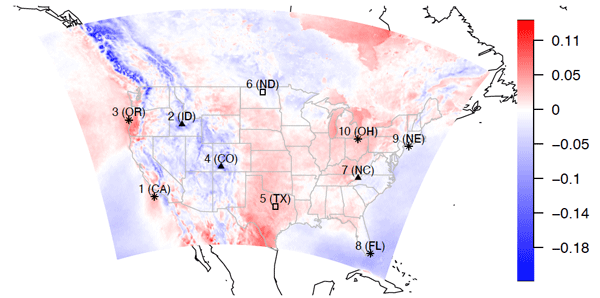
We study wind conditions and their potential future changes across the U.S. via a statistical conditional framework. We conclude that changes between historical and future wind directions are small, but wind speeds are generally weakened in the projected period, with some locations being intensified. Moreover, winter wind speeds are projected to decrease in the northwest, Colorado, and the northern Great Plains (GP), while summer wind speeds over the southern GP slightly increase in the future.
William J. Shaw, Larry K. Berg, Mithu Debnath, Georgios Deskos, Caroline Draxl, Virendra P. Ghate, Charlotte B. Hasager, Rao Kotamarthi, Jeffrey D. Mirocha, Paytsar Muradyan, William J. Pringle, David D. Turner, and James M. Wilczak
Wind Energ. Sci., 7, 2307–2334, https://doi.org/10.5194/wes-7-2307-2022, https://doi.org/10.5194/wes-7-2307-2022, 2022
Short summary
Short summary
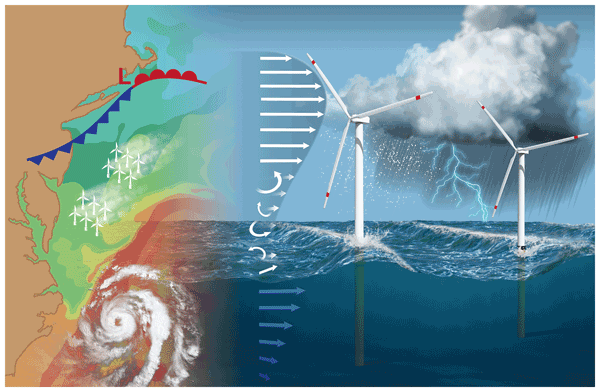
This paper provides a review of prominent scientific challenges to characterizing the offshore wind resource using as examples phenomena that occur in the rapidly developing wind energy areas off the United States. The paper also describes the current state of modeling and observations in the marine atmospheric boundary layer and provides specific recommendations for filling key current knowledge gaps.
Lindsay M. Sheridan, Raghu Krishnamurthy, Gabriel García Medina, Brian J. Gaudet, William I. Gustafson Jr., Alicia M. Mahon, William J. Shaw, Rob K. Newsom, Mikhail Pekour, and Zhaoqing Yang
Wind Energ. Sci., 7, 2059–2084, https://doi.org/10.5194/wes-7-2059-2022, https://doi.org/10.5194/wes-7-2059-2022, 2022
Short summary
Short summary
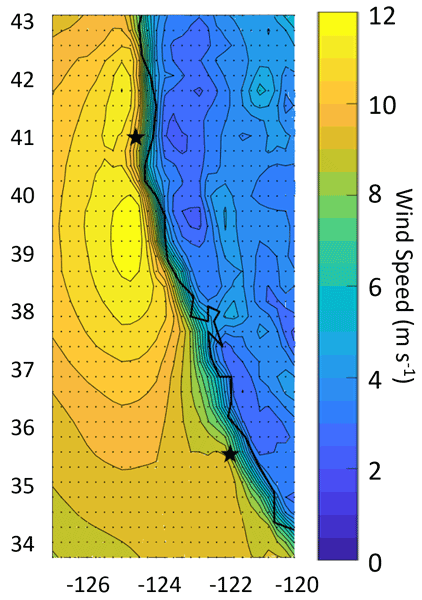
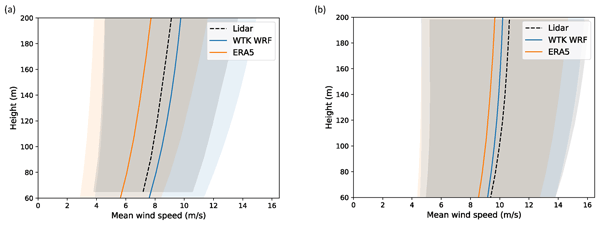
Using observations from lidar buoys, five reanalysis and analysis models that support the wind energy community are validated offshore and at rotor-level heights along the California Pacific coast. The models are found to underestimate the observed wind resource. Occasions of large model error occur in conjunction with stable atmospheric conditions, wind speeds associated with peak turbine power production, and mischaracterization of the diurnal wind speed cycle in summer months.
Chuxuan Li, Alexander L. Handwerger, Jiali Wang, Wei Yu, Xiang Li, Noah J. Finnegan, Yingying Xie, Giuseppe Buscarnera, and Daniel E. Horton
Nat. Hazards Earth Syst. Sci., 22, 2317–2345, https://doi.org/10.5194/nhess-22-2317-2022, https://doi.org/10.5194/nhess-22-2317-2022, 2022
Short summary
Short summary
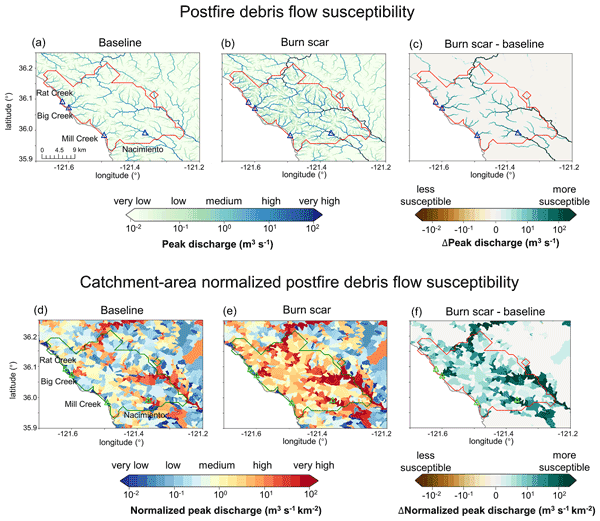
In January 2021 a storm triggered numerous debris flows in a wildfire burn scar in California. We use a hydrologic model to assess debris flow susceptibility in pre-fire and postfire scenarios. Compared to pre-fire conditions, postfire conditions yield dramatic increases in peak water discharge, substantially increasing debris flow susceptibility. Our work highlights the hydrologic model's utility in investigating and potentially forecasting postfire debris flows at regional scales.
Caleb Phillips, Lindsay M. Sheridan, Patrick Conry, Dimitrios K. Fytanidis, Dmitry Duplyakin, Sagi Zisman, Nicolas Duboc, Matt Nelson, Rao Kotamarthi, Rod Linn, Marc Broersma, Timo Spijkerboer, and Heidi Tinnesand
Wind Energ. Sci., 7, 1153–1169, https://doi.org/10.5194/wes-7-1153-2022, https://doi.org/10.5194/wes-7-1153-2022, 2022
Short summary
Short summary
Adoption of distributed wind turbines for energy generation is hindered by challenges associated with siting and accurate estimation of the wind resource. This study evaluates classic and commonly used methods alongside new state-of-the-art models derived from simulations and machine learning approaches using a large dataset from the Netherlands. We find that data-driven methods are most effective at predicting production at real sites and new models reliably outperform classic methods.
Romit Maulik, Vishwas Rao, Jiali Wang, Gianmarco Mengaldo, Emil Constantinescu, Bethany Lusch, Prasanna Balaprakash, Ian Foster, and Rao Kotamarthi
Geosci. Model Dev., 15, 3433–3445, https://doi.org/10.5194/gmd-15-3433-2022, https://doi.org/10.5194/gmd-15-3433-2022, 2022
Short summary
Short summary
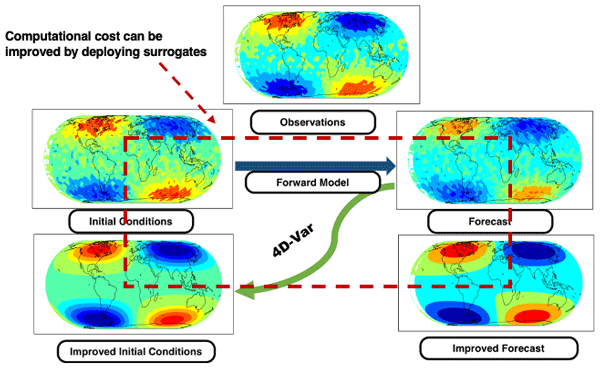
In numerical weather prediction, data assimilation is frequently utilized to enhance the accuracy of forecasts from equation-based models. In this work we use a machine learning framework that approximates a complex dynamical system given by the geopotential height. Instead of using an equation-based model, we utilize this machine-learned alternative to dramatically accelerate both the forecast and the assimilation of data, thereby reducing need for large computational resources.

Geng Xia, Caroline Draxl, Michael Optis, and Stephanie Redfern
Wind Energ. Sci., 7, 815–829, https://doi.org/10.5194/wes-7-815-2022, https://doi.org/10.5194/wes-7-815-2022, 2022
Short summary
Short summary
In this study, we propose a new method to detect sea breeze events from the Weather Research and Forecasting simulation. Our results suggest that the method can identify the three different types of sea breezes in the model simulation. In addition, the coastal impact, seasonal distribution and offshore wind potential associated with each type of sea breeze differ significantly, highlighting the importance of identifying the correct type of sea breeze in numerical weather/wind energy forecasting.
Lindsay M. Sheridan, Caleb Phillips, Alice C. Orrell, Larry K. Berg, Heidi Tinnesand, Raj K. Rai, Sagi Zisman, Dmitry Duplyakin, and Julia E. Flaherty
Wind Energ. Sci., 7, 659–676, https://doi.org/10.5194/wes-7-659-2022, https://doi.org/10.5194/wes-7-659-2022, 2022
Short summary
Short summary
The small wind community relies on simplified wind models and energy production simulation tools to obtain energy generation expectations. We gathered actual wind speed and turbine production data across the US to test the accuracy of models and tools for small wind turbines. This study provides small wind installers and owners with the error metrics and sources of error associated with using models and tools to make performance estimates, empowering them to adjust expectations accordingly.
Vincent Pronk, Nicola Bodini, Mike Optis, Julie K. Lundquist, Patrick Moriarty, Caroline Draxl, Avi Purkayastha, and Ethan Young
Wind Energ. Sci., 7, 487–504, https://doi.org/10.5194/wes-7-487-2022, https://doi.org/10.5194/wes-7-487-2022, 2022
Short summary
Short summary
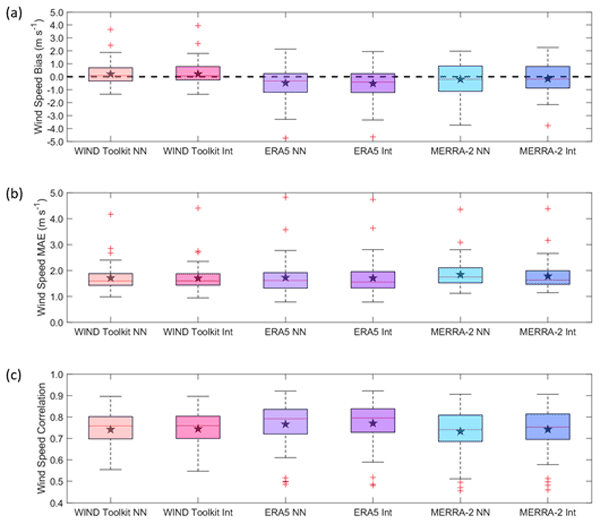
In this paper, we have assessed to which extent mesoscale numerical weather prediction models are more accurate than state-of-the-art reanalysis products in characterizing the wind resource at heights of interest for wind energy. The conclusions of our work will be of primary importance to the wind industry for recommending the best data sources for wind resource modeling.
Ethan Young, Jeffery Allen, John Jasa, Garrett Barter, and Ryan King
Wind Energ. Sci. Discuss., https://doi.org/10.5194/wes-2022-7, https://doi.org/10.5194/wes-2022-7, 2022
Preprint withdrawn
Short summary
Short summary
In this study, we present ways to measure the phenomenon of wind plant blockage, or the the velocity slowdown upstream from a farm, and carry out turbine layout optimizations to reduce this effect. We find that farm-wide measurements provide a better characterization of blockage compared to more localized measurements and that, in the absence of any constraint on total power output, layouts which minimize the effect of blockage are frequently characterized by streamwise alignment of turbines.
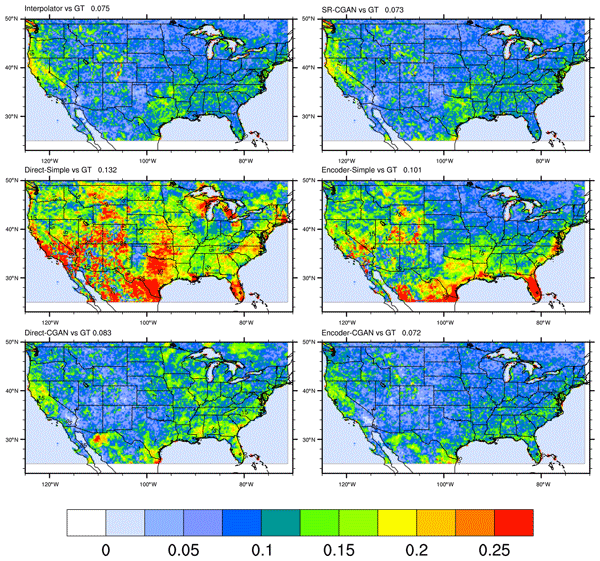
Jiali Wang, Zhengchun Liu, Ian Foster, Won Chang, Rajkumar Kettimuthu, and V. Rao Kotamarthi
Geosci. Model Dev., 14, 6355–6372, https://doi.org/10.5194/gmd-14-6355-2021, https://doi.org/10.5194/gmd-14-6355-2021, 2021
Short summary
Short summary
Downscaling, the process of generating a higher spatial or time dataset from a coarser observational or model dataset, is a widely used technique. Two common methodologies for performing downscaling are to use either dynamic (physics-based) or statistical (empirical). Here we develop a novel methodology, using a conditional generative adversarial network (CGAN), to perform the downscaling of a model's precipitation forecasts and describe the advantages of this method compared to the others.
Cited articles
Akinsanola, A. A., Jung, C., Wang, J., and Kotamarthi, V. R.: Evaluation of precipitation across the contiguous United States, Alaska, and Puerto Rico in multi-decadal convection-permitting simulations, Scientific Reports, 14, 1, https://doi.org/10.1038/s41598-024-51714-3, 2024.
Carlson, T. N. and Boland, F. E.: Analysis of urban-rural canopy using a surface heat flux/temperature model, Journal of Applied Meteorology, 17, 998–1014, https://doi.org/10.1175/1520-0450(1978)017<0998:AOURCU>2.0.CO;2, 1978.
Chen, T. C., Collet, F., and Di Luca, A.: Evaluation of ERA5 precipitation and 10-m wind speed associated with extratropical cyclones using station data over North America, International Journal of Climatology, 44, 1610–1625, https://doi.org/10.1002/joc.8339, 2024.
Couto, A. and Estanqueiro, A.: Enhancing wind power forecast accuracy using the weather research and forecasting numerical model-based features and artificial neural networks, Renewable Energy, 201, https://doi.org/10.1016/j.renene.2022.11.022, 2022.
Di Santo, D., He, C., Chen, F., and Giovannini, L.: ML-AMPSIT: Machine Learning-based Automated Multi-method Parameter Sensitivity and Importance analysis Tool, Geosci. Model Dev., 18, 433–459, https://doi.org/10.5194/gmd-18-433-2025, 2025.
Draxl, C., Hahmann, A. N., Peña, A., and Giebel, G.: Evaluating winds and vertical wind shear from Weather Research and Forecasting model forecasts using seven planetary boundary layer schemes, Wind Energy, 17, 197–216, https://doi.org/10.1002/we.1555, 2014.
Draxl, C., Hodge, B. M., Clifton, A., and McCaa, J.: Overview and meteorological validation of the Wind Integration National 65 Dataset Toolkit, Technical Report NREL/TP-5000-61740, National Renewable Energy Laboratory, Golden, CO, USA, https://doi.org/10.2172/1214985, 2015a.
Draxl, C., Hodge, B. M., Clifton, A., and McCaa, J.: The Wind Integration National Dataset (WIND) Toolkit, Applied Energy, 151, 355–366, https://doi.org/10.1016/j.apenergy.2015.03.121, 2015b.
Draxl, C., Wang, J., Sheridan, L., Jung, C., Bodini, N., Buckhold, S., Aghili, C. T., Peco, K., Kotamarthi, R., Kumler, A., Phillips, C., Purkayastha, A., Young, E., Rosenlieb, E., and Tinnesand, H.: WTK-LED: The WIND Toolkit Long-Term Ensemble Dataset, Technical Report NREL/TP-5000-8845, National Renewable Energy Laboratory, Golden, CO, USA, https://docs.nrel.gov/docs/fy25osti/88457.pdf (last access: 19 November 2025), 2024.
Duplyakin, D., Zisman, S., Phillips, C., and Tinnesand, H.: Bias characterization, vertical interpolation, and horizontal interpolation for distributed wind siting using mesoscale wind resource estimates, Technical Report NREL/TP-2C00-78412, National Renewable Energy Laboratory, Golden, CO, USA, https://doi.org/10.2172/1760659, 2021.
Durran, D. R.: Numerical Methods for Fluid Dynamics: With Applications to Geophysics, 2nd edn., Springer, https://doi.org/10.1007/978-1-4419-6412-0, 2010.
Elliott, D., Schwartz, M., and Scott, G.: Wind Resource Base, in: Encyclopedia of Energy, edited by: Cleveland, C. J., Elsevier, Oxford, UK, https://doi.org/10.1016/B0-12-176480-X/00335-1, 2004.
Gelaro, R., McCarty, W., Suárez, M. J., Suarez M. J., Todling, R., Molod, A., Takacs, L., Randles, C. A., Darmenov, A., Bosilovich, M. G., Reichle, R., Wargan, K., Coy, L., Cullather, R., Draper, C., Akella, S., Cuchard, V., Conaty, A., da Silva, A. M., Gu, W., Kim, G., Koster, R., Lucchesi, R., Merkova, D., Nielson, J. E., Partyka, G., Pawson, S., Putman, W., Rienecker, M., Schubert, S. D., Sienkiewicz, M., and Zhao, B.: The Modern-Era Retrospective Analysis for Research and Applications, Version 2 (MERRA-2), Journal of Climate, https://doi.org/10.1175/JCLI-D-16-0758.1, 2017.
Gensini, V., Haberlie, A., and Ashley, W.: Convection-permitting simulations of historical and possible future climate over the contiguous United States, Climate Dynamics, 60, https://doi.org/10.1007/s00382-022-06306-0, 2022.
Hawkins, E. and Sutton, R.: The potential to narrow uncertainty in regional climate predictions, Bulletin of the American Meteorological Society, 90, 1095–1108, https://doi.org/10.1175/2009BAMS2607.1, 2009.
Helbig, N., Mott, R., van Herwijnen, A., Winstral, A., and Jonas, T.: Parameterizing surface wind speed over complex topography, Journal of Geophysical Research: Atmospheres, 122, 2360–2374, https://doi.org/10.1002/2016JD025593, 2017.
Hersbach, H., Bell, B., Berrisford, P., Hirahara, S., Horányi, A., Muñoz-Sabater, J., Nicolas, J., Peubey, C., Radu, R., Schepers, D., Simmons, A., Soci, C., Abdalla, S., Abellan, X., Balsamo, G., Bechtold, P., Biavati, G., Bidlot, J., Bonavita, M., De Chiara, G., Dahlgren, P., Dee, D., Diamantakis, M., Dragani, R., Flemming, J., Forbes, R., Fuentes, M., Geer, A., Haimberger, L., Healy, S., Hogan, R. J., Hólm, E., Janisková, M., Keeley, S., Laloyaux, P., Lopez, P., Lupu, C., Radnoti, G., de Rosnay, P., Rozum, I., Vamborg, F., Villaume, S., and Thépaut, J.: The ERA5 global reanalysis, Quarterly Journal of the Royal Meteorological Society, 146, 1999–2049, https://doi.org/10.1002/qj.3803, 2020.
Hong, S. Y., Noh, Y., and Dudhia, J.: A new vertical diffusion package with an explicit treatment of entrainment processes, Monthly Weather Review, 134, 2318–2341, https://doi.org/10.1175/MWR3199.1, 2006.
Iacono, M. J., Delamere, J. S., Mlawer, E. J., Shephard, M. W., Clough, S. A., and Collins, W. D.: Radiative forcing by long-lived greenhouse gases: Calculations with the AER radiative transfer models, Journal of Geophysical Research: Atmospheres, 113, D13103, https://doi.org/10.1029/2008JD009944, 2008.
Jiménez, P. A. and Dudhia, J.: Improving the representation of resolved and unresolved topographic effects on surface wind in the WRF Model. J. Appl. Meteor. Climatol., 51, 300–316, https://doi.org/10.1175/JAMC-D-11-084.1, 2012.
Jones, E., Wing, A. A., and Parfitt, R.: A global perspective of tropical cyclone precipitation in reanalyses, Journal of Climate, https://doi.org/10.1175/JCLI-D-20-0892.1, 2021.
Kayastha, M. B., Huang, C., Wang, J., Pringle W. J., Chakraborty, T. C., Yang Z., Hetland, R., Qian Y., and Xue, P.: Insights on Simulating Summer Warming of the Great Lakes: Understanding the Behavior of a Newly Developed Coupled Lake-Atmospheric Modeling System, Journal of Advances in Modeling Earth Systems, 15, e2023MS003620, https://doi.org/10.1029/2023MS003620, 2023.
Kolmogorov, A. N.: The local structure of turbulence in incompressible viscous fluid for very large Reynolds numbers, Proceedings of the Royal Society of London. Series A: Mathematical and Physical Sciences, 434, 9–13, https://doi.org/10.1098/rspa.1991.0075, 1941.
Lackmann, G.: Midlatitude Synoptic Meteorology, in: Midlatitude Synoptic Meteorology, edited by: Lackmann, G., American Meteorological Society, Boston, MA, USA, https://doi.org/10.1007/978-1-878220-56-1, 2011.
Larsén, X. G., Ott, S., Badger, J., Hahmann, A. N., and Mann, J.: Recipes for correcting the impact of effective mesoscale resolution on the estimation of extreme winds, J. Appl. Meteorol. Clim., 51, 521–533, https://doi.org/10.1175/JAMC-D-11-090.1, 2012.
Lee, J. A., Doubrawa, P., Xue, L., Newman, A. J., Draxl, C., and Scott, G.: Wind resource assessment for Alaska's offshore regions: Validation of a 14-year high-resolution WRF data set, Energies, 12, https://doi.org/10.3390/en12142780, 2014.
Li, J., Geiss, A., Feng, Z., Leung, L. R., Qian, Y., and Cui, W.: A derecho climatology (2004–2021) in the United States based on machine learning identification of bow echoes, Earth Syst. Sci. Data, 17, 3721–3740, https://doi.org/10.5194/essd-17-3721-2025, 2025.
Liu, C., Ikeda, K., Rasmussen, R., Barlage, M., Newman, A. J., Prein, A. F., Chen, F., Chen, L., Clark, M., Dai, A., Dudhia, J., Eidhammer, T., Gochis, D., Gutmann, E., Kurkute, S., Li, Y., Thompson, G., and Yates, D.: Continental-scale convection-permitting modeling of the current and future climate of North America, Climate Dynamics, 49, 71–101, https://doi.org/10.1007/s00382-016-3327-9, 2017.
Markowski, P. and Richardson, Y.: Mesoscale Meteorology in Midlatitudes, in: Mesoscale Meteorology in Midlatitudes, edited by: Markowski, P. and Richardson, Y., John Wiley & Sons, Inc., Hoboken, NJ, USA, https://doi.org/10.1002/9780470682104, 2010.
Mesinger, F., DiMego, G., Kalnay, E., Mitchell, K., Shafran, P. C., Ebisuzaki, W., Jović, D., Woollen, J., Rogers, E., Berbery, E. H., Ek, M. B., Fan, Y., Grumbine, R., Higgins, W., Li, H., Lin, Y., Manikin, G., Parrish, D., and Shi, W.: North American Regional Reanalysis, Bulletin of the American Meteorological Society, https://doi.org/10.1175/BAMS-87-3-343, 2006.
Millstein, D., Solomon-Culp, J., Wang, M., Ullrich, P., and Collier, C.: Wind energy variability and links to regional and synoptic scale weather, Climate Dynamics, 52, 7–8, https://doi.org/10.1007/s00382-018-4421-y, 2019.
Monin, A. S. and Obukhov, A. M.: Basic laws of turbulent mixing in the surface layer of the atmosphere, Contributions of the Geophysical Institute of the Academy of Sciences of the USSR, 24, 151–157, 1954.
Morrison, H., Curry, J. A., and Khvorostyanov, V. I.: A new double-moment microphysics parameterization for application in cloud and climate models. Part I: Description, Journal of the Atmospheric Sciences, 62, 1665–1677, https://doi.org/10.1175/JAS3446.1, 2005.
Müller, S., Larsén, X. G., and Verelst, D. R.: Tropical cyclone low-level wind speed, shear, and veer: sensitivity to the boundary layer parametrization in the Weather Research and Forecasting model, Wind Energ. Sci., 9, 1153–1171, https://doi.org/10.5194/wes-9-1153-2024, 2024.
Murakami, H.: Tropical cyclones in reanalysis data sets, Geophysical Research Letters, https://doi.org/10.1002/2014GL059519, 2014.
Nakanishi, M. and Niino, H.: Development of an improved turbulence closure model for the atmospheric boundary layer, Journal of the Meteorological Society of Japan, 87, 895–912, https://doi.org/10.2151/jmsj.87.895, 2009.
Niu, G. Y., Yang, Z. L., Mitchell, K. E., Chen, F., Ek, M. B., Barlage, M., Kumar, A., Manning, K., Niyogi, D., Rosero, E., Tewari, M., and Xia, Y.: The community Noah land surface model with multiparameterization options (Noah-MP): 1. Model description and evaluation with local-scale measurements, Journal of Geophysical Research: Atmospheres, 116, D12109, https://doi.org/10.1029/2010JD015139, 2011.
Powers, J. G., Klemp, J. B., Skamarock, W. C., Davis, C. A., Dudhia, J., Gill, D. O., Coen, J. L., Gochis, D. J., Ahmadov, R., Peckham, S. E., Grell, G. A., Michalakes, J., Trahan, S., Benjamin, S. G., Alexander, C. R., Dimego, G. J., Wang, W., Schwartz, C. S., Romine, G. S., Liu, Z., Snyder, C., Chen, F., Barlage, M. J., Yu, W., and Duda, M. G.: The weather research and forecasting model: Overview, system efforts, and future directions, Bulletin of the American Meteorological Society, 98, 1717–1737, https://doi.org/10.1175/BAMS-D-15-00308.1, 2017.
Prein, A. F., Langhans, W., Fosser, G., Ferrone, A., Ban, N., Goergen, K., Keller, M., Tölle, M., Gutjahr, O., Feser, F., Brisson, E., Kollet, S., Schmidli, J., van Lipzig, N. P. M., and Leung, R.: A review on regional convection-permitting climate modeling: Demonstrations, prospects, and challenges, Reviews of Geophysics, 53, 323–374, https://doi.org/10.1002/2014RG000475, 2015.
Pringle, W. J., Huang, C., Xue, P., Wang, J., Sargsyan, K., Kayastha, M. B., Chakraborty, T. C., Yang, Z., Qian, Y., and Hetland, R. D.: Coupled Lake-Atmosphere-Land Physics Uncertainties in a Great Lakes Regional Climate Model, Journal of Advances in Modelling Earth Systems, https://doi.org/10.1029/2024MS004337, 2025.
Rasmussen, R. M., Chen, F., Liu, C. H., Ikeda, K., Prein, A., Kim, J., Schneider, T., Dai, A., Gochis, D., Dugger, A., Zhang, Y., Jaye, A., Dudhia, J., He, C., Harrold, M., Xue, L., Chen, S., Newman, A., Dougherty, E., Abolafia-Rosenzweig, R., Lybarger, N. D., Viger, R., Lesmes, D., Skalak, K., Brakebill, J., Cline, D., Dunne, K., Rasmussen, K., and Miguez-Macho, G.: CONUS404 The NCAR–USGS 4 km long-term regional hydroclimate reanalysis over the CONUS, Bulletin of the American Meteorological Society, 104, 105182, https://doi.org/10.1175/BAMS-D-21-0326.1, 2023.
Scott, D. W.: Multivariate density estimation: Theory, practice, and visualization, 2nd edn., John Wiley & Sons, Inc., Hoboken, NJ, USA, https://doi.org/10.1002/9781118575574, 2015.
Sheridan, L. M., Krishnamurthy, R., Gorton, A. M., Shaw, W. J., and Newsom, R. K.: Validation of reanalysis-based offshore wind resource characterization using lidar buoy observations, Marine Technology Society Journal, https://doi.org/10.4031/MTSJ.54.6.13, 2020.
Sheridan, L. M., Krishnamurthy, R., García Medina, G., Gaudet, B. J., Gustafson Jr., W. I., Mahon, A. M., Shaw, W. J., Newsom, R. K., Pekour, M., and Yang, Z.: Offshore reanalysis wind speed assessment across the wind turbine rotor layer off the United States Pacific coast, Wind Energ. Sci., 7, 2059–2084, https://doi.org/10.5194/wes-7-2059-2022, 2022a.
Sheridan, L. M., Phillips, C., Orrell, A. C., Berg, L. K., Tinnesand, H., Rai, R. K., Zisman, S., Duplyakin, D., and Flaherty, J. E.: Validation of wind resource and energy production simulations for small wind turbines in the United States, Wind Energ. Sci., 7, 659–676, https://doi.org/10.5194/wes-7-659-2022, 2022b.
Sheridan, L. M., Wang, J., Draxl, C., Bodini, N., Phillips, C., Duplyakin, D., Tinnesand, H., Rai, R. K., Flaherty, J. E., Berg, L. K., Jung, C., Young, E., and Kotamarthi, R.: Performance of wind assessment datasets in United States coastal areas, Wind Energ. Sci., 10, 1551–1574, https://doi.org/10.5194/wes-10-1551-2025, 2025.
Skamarock, W. C.: Evaluating mesoscale NWP models using kinetic energy spectra, Mon. Weather Rev., 132, 3019–3032, https://doi.org/10.1175/MWR2830.1, 2004.
Skamarock, W. C., Klemp, J. B., Dudhia, J., Gill, D. O., Barker, D. M., Duda, M. G., Huang, X.-Y., Wang, W., and Powers, J. G.: A description of the Advanced Research WRF Version 3 (NCAR Technical Note NCAR/TN-475+STR), National Center for Atmospheric Research, Boulder, CO, https://doi.org/10.5065/D68S4MVH, 2008.
Skamarock, W. C., Klemp, J. B., Dudhia, J., Gill, D. O., Liu, Z., Berner, J., Wang, W., Powers, J. G., Dude, M. G., Barker, D. M., and Huang, X.: A description of the Advanced Research WRF version 4, NCAR Tech. Note NCAR/TN-5561STR, 145 pp., https://doi.org/10.5065/1dfh-6p97, 2019.
Skamarock, W. C., Klemp, J. B., Dudhia, J. B., Gill, D. O., Barker, D. M., Duda, M. G., Huang, X.-Y., Wang, W., and Powers, J. G.: A Description of the Advanced Research WRF Model Version 4.3, NCAR Technical Note, TN-556+STR, National Center for Atmospheric Research, Boulder, CO, USA, https://doi.org/10.5065/1DFH-6P97, 2021.
Tewari, M., Chen, F., Wang, W., Dudhia, J., LeMone, M. A., Mitchell, K., Ek, M., Gayno, G., Wegiel, J., and Cuenca, R. H.: Implementation and verification of the unified Noah land surface model in the WRF model, Bulletin of the American Meteorological Society, 85, 1361–1363, https://www.researchgate.net/publication/286272692_Implementation_and_verification_of_the_united_NOAH_land_surface_model_in_the_WRF_model (last access: 19 November 2025), 2004.
Tobias-Tarsh, L., Jung, C., Wang, J., Bobde, V., Akinsanola, A. A., and Kotamarthi, V. R.: Evaluation of North Atlantic Tropical Cyclones in a Convection-Permitting Regional Climate Simulation, EGUsphere [preprint], https://doi.org/10.5194/egusphere-2025-1805, 2025.
Tunnell, M., Bowman, N., and Carrier, E.: Fast Gaussian process emulation of Mars Global Climate Model, Earth and Space Science, 10, e2022EA002743, https://doi.org/10.1029/2022EA002743, 2023.
Wang, C. and Jin, S.: Error features and their possible causes in simulated low-level winds by WRF at a wind farm, Wind Energy, 17, 1415–1427, https://doi.org/10.1002/we.1635, 2014.
Wang, J. and Kotamarthi, V. R.: Downscaling with a nested regional climate model in near-surface fields over the contiguous United States, Journal of Geophysical Research, 119, https://doi.org/10.1002/2014JD021696, 2014.
Wang, J., Bessac, J., Kotamarthi, R., Constantinescu, E., and Drewniak, B.: Internal variability of a dynamically downscaled climate over North America, Climate Dynamics, 50, 4341–4364, https://doi.org/10.1007/s00382-017-3889-1, 2018.
Wang, J., Bodini, N., Purkayastha, A., Young, E., and Draxl, C.: WIND Toolkit Long-Term Ensemble Dataset, Open Energy Data Initiative (OEDI), National Renewable Energy Laboratory (NREL) [data set], https://doi.org/10.25984/2504176, 2024.
Wilczak, J. M., Akish, E., Capotondi, A., and Compo, G. P.: Evaluation and bias correction of the ERA5 reanalysis over the United States for wind and solar energy applications, Energies, 17, 1667, https://doi.org/10.3390/en17071667, 2024.
Wu, C., Luo, K., Wang, Q., and Fan, J.: Simulated potential wind power sensitivity to the planetary boundary layer parameterizations combined with various topography datasets in the weather research and forecasting model, Energy, 239, 122047, https://doi.org/10.1016/j.energy.2021.122047, 2022a.
Wu, Q., Bessac, J., Huang, W., Wang, J., and Kotamarthi, R.: A conditional approach for joint estimation of wind speed and direction under future climates, Adv. Stat. Clim. Meteorol. Oceanogr., 8, 205–224, https://doi.org/10.5194/ascmo-8-205-2022, 2022b.
Yang, B., Qian, Y., Berg, L. K., Ma, P. L., Wharton, S., Bulaevskaya, V., Yan, H., Hou, Z., and Shaw, W. J.: Sensitivity of turbine-height wind speeds to parameters in planetary boundary-layer and surface-layer schemes in the Weather Research and Forecasting Model, Boundary-Layer Meteorology, 162, 117–139, https://doi.org/10.1007/s10546-016-0185-2, 2017.
Short summary
This study presents a new wind dataset, generated by a convection-permitting regional climate model across North America. By validating the dataset against wind observations, we have demonstrated that this dataset captures the wind patterns over complex terrains more realistically than the European Centre for
Medium-Range Weather Forecasts (ECMWF) reanalysis version 5 (ERA5). Additionally, this study quantifies model uncertainty in wind speed, comparing it against interannual variability, to better inform wind farm siting.
Medium-Range Weather Forecasts (ECMWF) reanalysis version 5 (ERA5). Additionally, this study quantifies model uncertainty in wind speed, comparing it against interannual variability, to better inform wind farm siting.
This study presents a new wind dataset, generated by a convection-permitting regional climate...


Altmetrics
Final-revised paper
Preprint