
Articles | Volume 11, issue 8
https://doi.org/10.5194/wes-11-2961-2026
© Author(s) 2026. This work is distributed under
the Creative Commons Attribution 4.0 License.
the Creative Commons Attribution 4.0 License.
https://doi.org/10.5194/wes-11-2961-2026
© Author(s) 2026. This work is distributed under
the Creative Commons Attribution 4.0 License.
the Creative Commons Attribution 4.0 License.
Research article
| 
14 Aug 2026
Research article |
| 14 Aug 2026
| 14 Aug 2026
Assessing inter-model agreement in convection-permitting simulations of extreme winds for wind energy applications
Nathalia Correa-Sánchez
CORRESPONDING AUTHOR

Department of Land Environment, Agriculture and Forestry, University of Padova, Padova, Italy
Xiaoli Guo Larsén
Department of Wind Energy, Technical University of Denmark, Roskilde, Denmark
Eleonora Dallan
Department of Land Environment, Agriculture and Forestry, University of Padova, Padova, Italy
Marco Borga
Department of Land Environment, Agriculture and Forestry, University of Padova, Padova, Italy
Francesco Marra
Department of Geosciences, University of Padova, Padova, Italy
Related authors
Nathalia Correa-Sánchez, Xiaoli Guo Larsén, Giorgia Fosser, Eleonora Dallan, Marco Borga, and Francesco Marra
Wind Energ. Sci., 10, 2551–2561, https://doi.org/10.5194/wes-10-2551-2025, https://doi.org/10.5194/wes-10-2551-2025, 2025
Short summary
Short summary
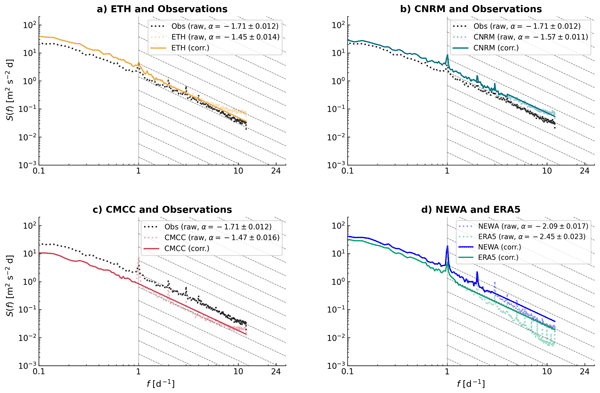
We examined the power spectra of wind speed in three convection-permitting models in central Europe and found that these models have a better representation of wind variability characteristics than standard wind datasets like the New European Wind Atlas, due to different simulation approaches, providing more reliable extreme wind predictions.
Jana Fischereit, Bjarke T. E. Olsen, Marc Imberger, Henrik Vedel, Kristian H. Møller, Andrea N. Hahmann, and Xiaoli Guo Larsén
Geosci. Model Dev., 19, 8115–8147, https://doi.org/10.5194/gmd-19-8115-2026, https://doi.org/10.5194/gmd-19-8115-2026, 2026
Short summary
Short summary
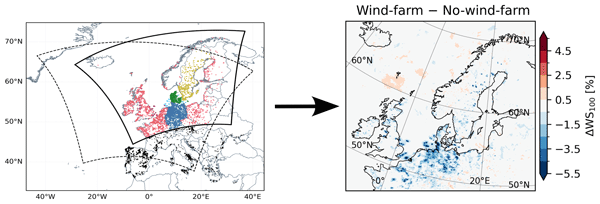
We evaluated how operating wind farms influence the atmosphere in numerical weather prediction using two wind farm parameterizations in the HARMONIE-AROME model, applied by over 10 European weather services. Accurate yield forecasts require including both onshore and offshore turbines. Wind turbines slightly alter near-surface temperature (<1 K on average). We also present an open-access European wind turbine dataset combining multiple data sources.

Ella Thomas, Petr Vohnicky, Marco Borga, Nadav Peleg, and Francesco Marra
Hydrol. Earth Syst. Sci., 30, 4957–4967, https://doi.org/10.5194/hess-30-4957-2026, https://doi.org/10.5194/hess-30-4957-2026, 2026
Short summary
Short summary
Extreme rainfall is expected to grow in magnitude with increasing temperature. We assess whether very rare extremes increase with temperature faster than moderate extremes, and we test methods to include this effect into a model to predict future extremes called TENAX. We find that this dependence on temperature is typically observed but including it in the model without prior information on its magnitude may lead to disproportionately large uncertainty.
Georgios Deskos, Jiali Wang, Sanjay Arwade, Murray Fisher, Brian Hirth, Xiaoli Guo Larsén, Julie K. Lundquist, Andrew Myers, Weichiang Pang, William J. Pringle, Robert Rogers, Miguel Sanchez-Gomez, Chao Sun, Atsushi Yamaguchi, and Paul Veers
Wind Energ. Sci., 11, 2749–2782, https://doi.org/10.5194/wes-11-2749-2026, https://doi.org/10.5194/wes-11-2749-2026, 2026
Short summary
Short summary
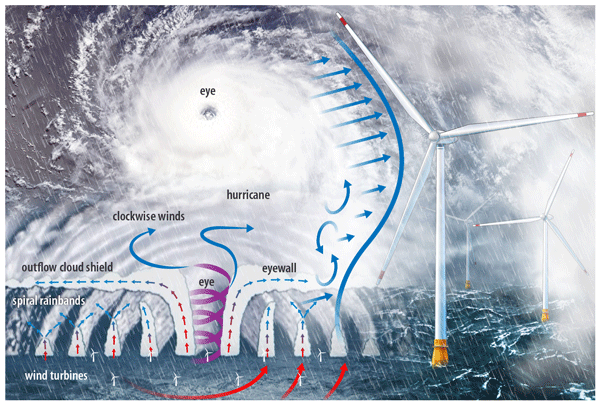
Wind energy is expanding into regions exposed to tropical cyclones, where extreme winds and waves can damage turbines and disrupt energy production. We reviewed observations, simulations, engineering standards, and risk quantification frameworks to identify the most important gaps. Today's design rules, originally built for milder storms, do not capture cyclone hazards. Closing these gaps requires better offshore measurements, improved models, and risk-informed design standards.
Rashid Akbary, Eleonora Dallan, Paul C. Astagneau, Raul R. Wood, Francesco Marra, Manuela I. Brunner, and Marco Borga
Hydrol. Earth Syst. Sci., 30, 4117–4139, https://doi.org/10.5194/hess-30-4117-2026, https://doi.org/10.5194/hess-30-4117-2026, 2026
Short summary
Short summary
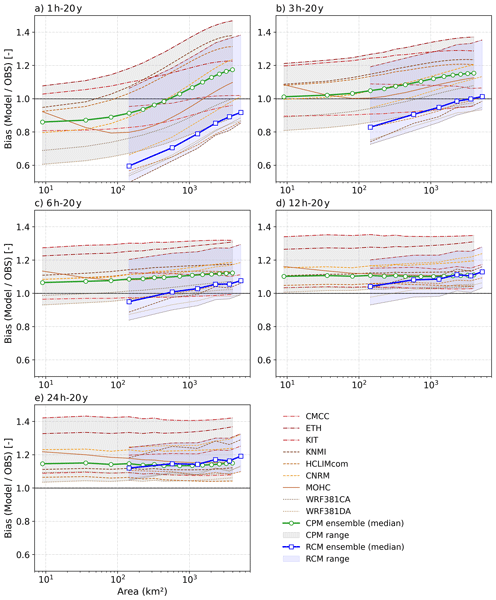
Heavy short rain can trigger flash floods and debris flows. In this study we evaluated how well climate models reproduce these events in Switzerland. We compared finer and coarser resolution models with high-quality hourly precipitation observations across small to large areas. The finer models better captured where short, intense precipitation occurs, but their errors changed with area size. Flood risk studies should therefore account for these scale-related errors.
Keeta Chapman-Smith, Xiaoli Guo Larsén, and Mark Laier Brodersen
Wind Energ. Sci., 11, 1889–1912, https://doi.org/10.5194/wes-11-1889-2026, https://doi.org/10.5194/wes-11-1889-2026, 2026
Short summary
Short summary
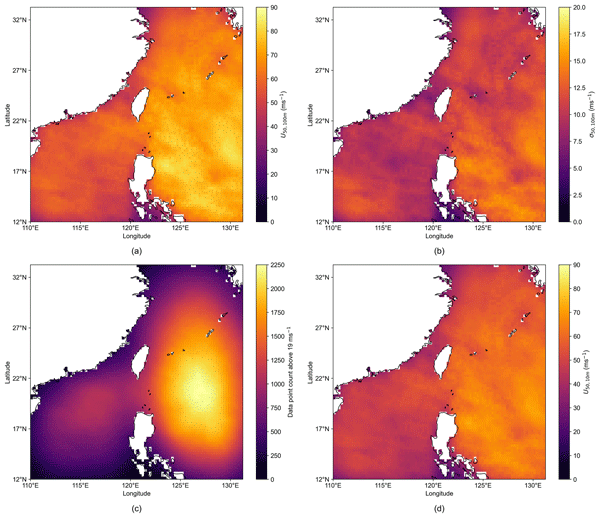
This study presents a method to estimate wind speeds that could occur in a 50-year period. The 50-year wind speed is calculated for three regions: Taiwan, Japan, and the east coast of the US. The method performs well in Taiwan and Japan, which can be attributed to the large dataset size located in a limited spatial area. The east coast of the US performs less well due to the smaller dataset size and wider spatial region that they cover.
Xiaoli Guo Larsén, Marc Imberger, and Rogier Floors
Wind Energ. Sci., 11, 1853–1869, https://doi.org/10.5194/wes-11-1853-2026, https://doi.org/10.5194/wes-11-1853-2026, 2026
Short summary
Short summary
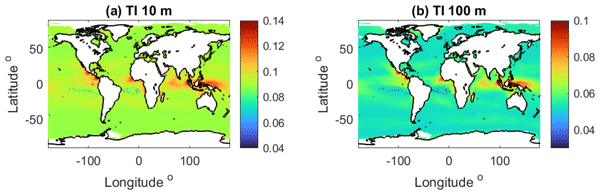
This study delivers a method and datasets for a global offshore atlas for turbulence intensity from a height of 10 m to 200 m. The method innovatively includes both two-dimensional and three-dimensional turbulence, along with stability, wave age and height. Results show satisfactory agreement with measurements and data from the literature.
Talia Rosin, Francesco Marra, Marco Gabella, Urs Germann, Daniel Wolfensberger, and Efrat Morin
EGUsphere, https://doi.org/10.5194/egusphere-2026-1800, https://doi.org/10.5194/egusphere-2026-1800, 2026
Short summary
Short summary
Extreme rainfall in mountainous regions is difficult to assess as it varies strongly across space and time, and rain gauges are often too sparse to capture it. Using 9 years of radar data, we analyse summer rainfall extremes across Switzerland for different durations and areas. We show that rainfall intensity depends strongly on scale and topography, and that radar better captures local extremes, improving flood hazard assessment, as demonstrated for three recent major flood-producing storms.
Sara Müller, Xiaoli Guo Larsén, and Fei Hu
Wind Energ. Sci., 11, 961–981, https://doi.org/10.5194/wes-11-961-2026, https://doi.org/10.5194/wes-11-961-2026, 2026
Short summary
Short summary
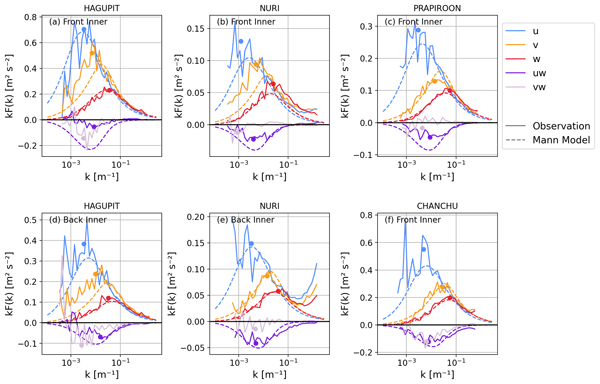
Wind farms are being developed in areas prone to tropical cyclones. However, it remains unclear whether turbulence models in current design standards, such as the Mann uniform shear model, are suitable for these conditions. For the first time, the Mann model is assessed in depth using high-frequency measurements from four typhoons. Larger-than-predicted spectral energy is found at small wavenumbers in the outer cyclone and, in some cases, in the crosswind component in the inner cyclone.

Branko Kosović, Sukanta Basu, Jacob Berg, Larry K. Berg, Sue E. Haupt, Xiaoli G. Larsén, Joachim Peinke, Richard J. A. M. Stevens, Paul Veers, and Simon Watson
Wind Energ. Sci., 11, 509–555, https://doi.org/10.5194/wes-11-509-2026, https://doi.org/10.5194/wes-11-509-2026, 2026
Short summary
Short summary
Most human activity happens in the layer of the atmosphere which extends a few hundred meters to a couple of kilometers above the surface of the Earth. The flow in this layer is turbulent. Turbulence impacts wind power production and turbine lifespan. Optimizing wind turbine performance requires understanding how turbulence affects both wind turbine efficiency and reliability. This paper points to gaps in our knowledge that need to be addressed to effectively utilize wind resources.
Sima Hamzeloo, Xiaoli Guo Larsén, Alfredo Peña, Jana Fischereit, and Oscar García-Santiago
Wind Energ. Sci. Discuss., https://doi.org/10.5194/wes-2025-267, https://doi.org/10.5194/wes-2025-267, 2026
Revised manuscript accepted for WES
Short summary
Short summary
We studied how winds and ocean waves affect each other during a North Sea storm. Using a multiscale approach that captures processes from kilometers down to meters, we linked wind and wave models and compared the results with real measurements. Our aim was to improve current simulation methods, and the findings show that this detailed approach provides more accurate storm predictions up to 100 m height.
Susen Shrestha, Stefano Terzi, Davide Zoccatelli, Mattia Zaramella, Marco Borga, Andrea Galletti, Mattia Callegari, Roberto Dinale, Massimiliano Pittore, and Giacomo Bertoldi
EGUsphere, https://doi.org/10.5194/egusphere-2025-6387, https://doi.org/10.5194/egusphere-2025-6387, 2026
Short summary
Short summary
Glaciers and snow contribute to buffer river streamflow during droughts. Due to climate change, their role is shrinking with severe implications for water management. Here we investigated the role of glaciers to buffer the 2003, 2005 and 2022 droughts that occurred in the upper Adige River Basin (Italy). Glaciers provided 4 to 12 % of summer water during droughts and their buffering is weakening due to their retreat with lower contribution in 2022 compared to the similar drought of 2003.
Francesco Marra, Eleonora Dallan, Marco Borga, Roberto Greco, and Thom Bogaard
Nat. Hazards Earth Syst. Sci., 25, 5055–5061, https://doi.org/10.5194/nhess-25-5055-2025, https://doi.org/10.5194/nhess-25-5055-2025, 2025
Short summary
Short summary
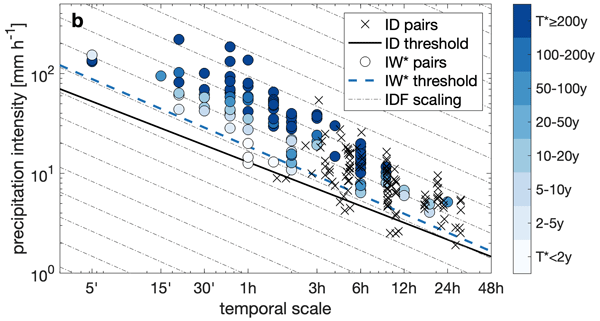
We highlight an important conceptual difference between the duration used in intensity-duration thresholds and the duration used in the intensity-duration-frequency curves that has been overlooked by the landslide literature so far.
Nathalia Correa-Sánchez, Xiaoli Guo Larsén, Giorgia Fosser, Eleonora Dallan, Marco Borga, and Francesco Marra
Wind Energ. Sci., 10, 2551–2561, https://doi.org/10.5194/wes-10-2551-2025, https://doi.org/10.5194/wes-10-2551-2025, 2025
Short summary
Short summary
We examined the power spectra of wind speed in three convection-permitting models in central Europe and found that these models have a better representation of wind variability characteristics than standard wind datasets like the New European Wind Atlas, due to different simulation approaches, providing more reliable extreme wind predictions.
Rajani Kumar Pradhan, Yannis Markonis, Francesco Marra, Efthymios I. Nikolopoulos, Simon Michael Papalexiou, and Vincenzo Levizzani
Hydrol. Earth Syst. Sci., 29, 4929–4949, https://doi.org/10.5194/hess-29-4929-2025, https://doi.org/10.5194/hess-29-4929-2025, 2025
Short summary
Short summary
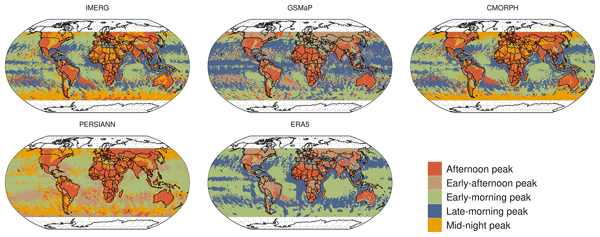
This study compared global satellite and reanalysis precipitation datasets to assess diurnal variability. We found that all datasets capture key diurnal precipitation patterns, with maximum precipitation in the afternoon over land and early morning over the ocean. However, there are differences in the exact timing and amount of precipitation. This suggests that it is better to use a combination of datasets for potential applications rather than relying on a single dataset.
Francesco Marra, Nadav Peleg, Elena Cristiano, Efthymios I. Nikolopoulos, Federica Remondi, and Paolo Tarolli
Nat. Hazards Earth Syst. Sci., 25, 2565–2570, https://doi.org/10.5194/nhess-25-2565-2025, https://doi.org/10.5194/nhess-25-2565-2025, 2025
Short summary
Short summary
Climate change is escalating the risks related to hydro-meteorological extremes. This preface introduces a special issue originating from a European Geosciences Union (EGU) session. It highlights the challenges posed by these extremes, ranging from hazard assessment to mitigation strategies, and covers both water excess events like floods, landslides, and coastal hazards and water deficit events such as droughts and fire weather. The collection aims to advance understanding, improve resilience, and inform policy-making.
Kevin Kenfack, Francesco Marra, Zéphirin Yepdo Djomou, Lucie Angennes Djiotang Tchotchou, Alain Tchio Tamoffo, and Derbetini Appolinaire Vondou
Weather Clim. Dynam., 5, 1457–1472, https://doi.org/10.5194/wcd-5-1457-2024, https://doi.org/10.5194/wcd-5-1457-2024, 2024
Short summary
Short summary
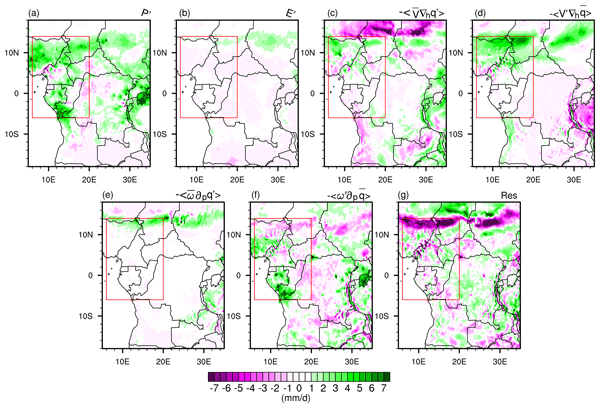
The results of this study show that moisture advection induced by horizontal wind anomalies and vertical moisture advection induced by vertical velocity anomalies were crucial mechanisms behind the anomalous October 2019 exceptional rainfall increase over western central Africa. The information we derive can be used to support risk assessment and management in the region and to improve our resilience to ongoing climate change.
Talia Rosin, Francesco Marra, and Efrat Morin
Hydrol. Earth Syst. Sci., 28, 3549–3566, https://doi.org/10.5194/hess-28-3549-2024, https://doi.org/10.5194/hess-28-3549-2024, 2024
Short summary
Short summary
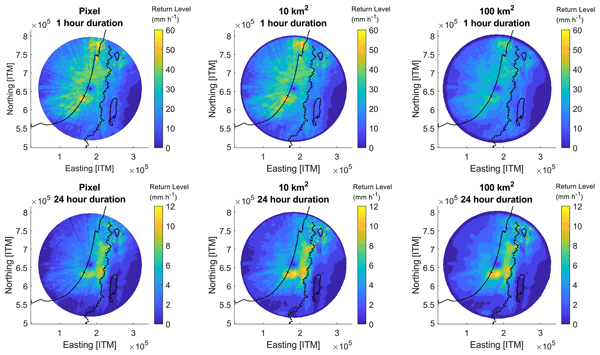
Knowledge of extreme precipitation probability at various spatial–temporal scales is crucial. We estimate extreme precipitation return levels at multiple scales (10 min–24 h, 0.25–500 km2) in the eastern Mediterranean using radar data. We show our estimates are comparable to those derived from averaged daily rain gauges. We then explore multi-scale extreme precipitation across coastal, mountainous, and desert regions.
Sara Müller, Xiaoli Guo Larsén, and David Robert Verelst
Wind Energ. Sci., 9, 1153–1171, https://doi.org/10.5194/wes-9-1153-2024, https://doi.org/10.5194/wes-9-1153-2024, 2024
Short summary
Short summary
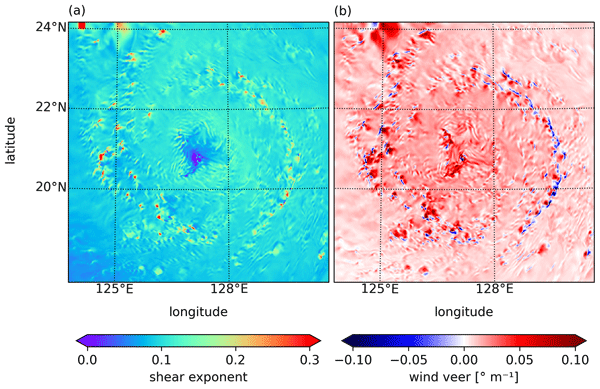
Tropical cyclone winds are challenging for wind turbines. We analyze a tropical cyclone before landfall in a mesoscale model. The simulated wind speeds and storm structure are sensitive to the boundary parametrization. However, independent of the boundary layer parametrization, the median change in wind speed and wind direction with height is small relative to wind turbine design standards. Strong spatial organization of wind shear and veer along the rainbands may increase wind turbine loads.
Jana Fischereit, Henrik Vedel, Xiaoli Guo Larsén, Natalie E. Theeuwes, Gregor Giebel, and Eigil Kaas
Geosci. Model Dev., 17, 2855–2875, https://doi.org/10.5194/gmd-17-2855-2024, https://doi.org/10.5194/gmd-17-2855-2024, 2024
Short summary
Short summary
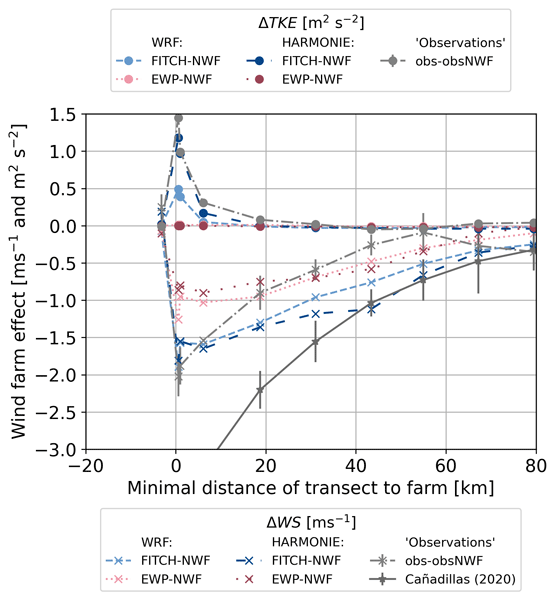
Wind farms impact local wind and turbulence. To incorporate these effects in weather forecasting, the explicit wake parameterization (EWP) is added to the forecasting model HARMONIE–AROME. We evaluate EWP using flight data above and downstream of wind farms, comparing it with an alternative wind farm parameterization and another weather model. Results affirm the correct implementation of EWP, emphasizing the necessity of accounting for wind farm effects in accurate weather forecasting.
Francesco Marra, Marika Koukoula, Antonio Canale, and Nadav Peleg
Hydrol. Earth Syst. Sci., 28, 375–389, https://doi.org/10.5194/hess-28-375-2024, https://doi.org/10.5194/hess-28-375-2024, 2024
Short summary
Short summary
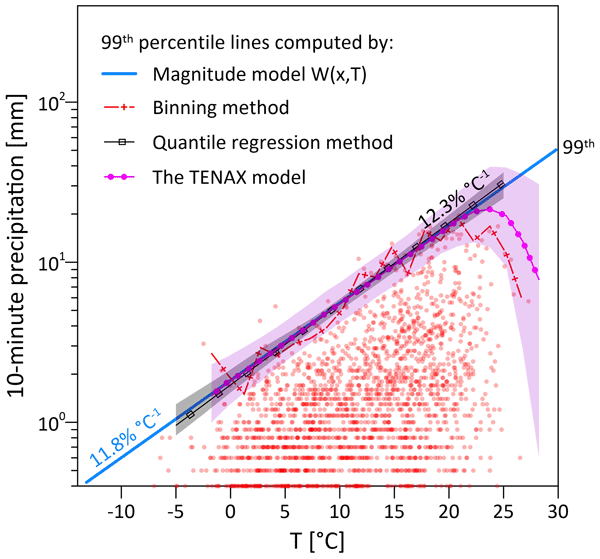
We present a new physical-based method for estimating extreme sub-hourly precipitation return levels (i.e., intensity–duration–frequency, IDF, curves), which are critical for the estimation of future floods. The proposed model, named TENAX, incorporates temperature as a covariate in a physically consistent manner. It has only a few parameters and can be easily set for any climate station given sub-hourly precipitation and temperature data are available.
Stefan Steger, Mateo Moreno, Alice Crespi, Peter James Zellner, Stefano Luigi Gariano, Maria Teresa Brunetti, Massimo Melillo, Silvia Peruccacci, Francesco Marra, Robin Kohrs, Jason Goetz, Volkmar Mair, and Massimiliano Pittore
Nat. Hazards Earth Syst. Sci., 23, 1483–1506, https://doi.org/10.5194/nhess-23-1483-2023, https://doi.org/10.5194/nhess-23-1483-2023, 2023
Short summary
Short summary
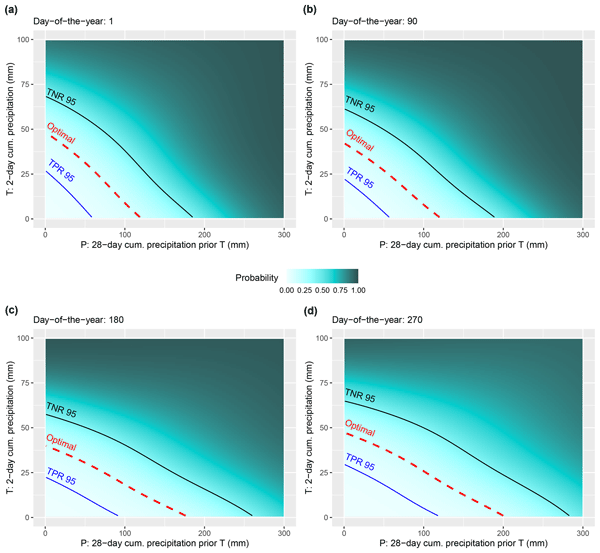
We present a novel data-driven modelling approach to determine season-specific critical precipitation conditions for landslide occurrence. It is shown that the amount of precipitation required to trigger a landslide in South Tyrol varies from season to season. In summer, a higher amount of preparatory precipitation is required to trigger a landslide, probably due to denser vegetation and higher temperatures. We derive dynamic thresholds that directly relate to hit rates and false-alarm rates.

Nadav Peleg, Herminia Torelló-Sentelles, Grégoire Mariéthoz, Lionel Benoit, João P. Leitão, and Francesco Marra
Nat. Hazards Earth Syst. Sci., 23, 1233–1240, https://doi.org/10.5194/nhess-23-1233-2023, https://doi.org/10.5194/nhess-23-1233-2023, 2023
Short summary
Short summary
Floods in urban areas are one of the most common natural hazards. Due to climate change enhancing extreme rainfall and cities becoming larger and denser, the impacts of these events are expected to increase. A fast and reliable flood warning system should thus be implemented in flood-prone cities to warn the public of upcoming floods. The purpose of this brief communication is to discuss the potential implementation of low-cost acoustic rainfall sensors in short-term flood warning systems.
Eleonora Dallan, Francesco Marra, Giorgia Fosser, Marco Marani, Giuseppe Formetta, Christoph Schär, and Marco Borga
Hydrol. Earth Syst. Sci., 27, 1133–1149, https://doi.org/10.5194/hess-27-1133-2023, https://doi.org/10.5194/hess-27-1133-2023, 2023
Short summary
Short summary
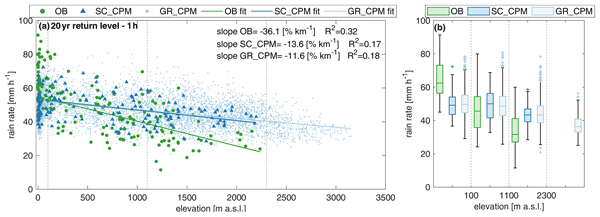
Convection-permitting climate models could represent future changes in extreme short-duration precipitation, which is critical for risk management. We use a non-asymptotic statistical method to estimate extremes from 10 years of simulations in an orographically complex area. Despite overall good agreement with rain gauges, the observed decrease of hourly extremes with elevation is not fully represented by the model. Climate model adjustment methods should consider the role of orography.
Shalev Siman-Tov and Francesco Marra
Nat. Hazards Earth Syst. Sci., 23, 1079–1093, https://doi.org/10.5194/nhess-23-1079-2023, https://doi.org/10.5194/nhess-23-1079-2023, 2023
Short summary
Short summary
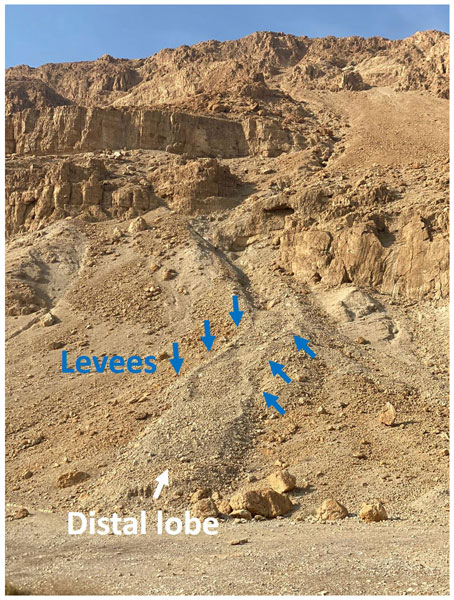
Debris flows represent a threat to infrastructure and the population. In arid areas, they are observed when heavy rainfall hits steep slopes with sediments. Here, we use digital surface models and radar rainfall data to detect and characterize the triggering and non-triggering rainfall conditions. We find that rainfall intensity alone is insufficient to explain the triggering. We suggest that antecedent rainfall could represent a critical factor for debris flow triggering in arid regions.
Xiaoli Guo Larsén, Marc Imberger, Ásta Hannesdóttir, and Andrea N. Hahmann
Wind Energ. Sci. Discuss., https://doi.org/10.5194/wes-2022-102, https://doi.org/10.5194/wes-2022-102, 2023
Revised manuscript not accepted
Short summary
Short summary
We study how climate change will impact extreme winds and choice of turbine class. We use data from 18 CMIP6 members from a historic and a future period to access the change in the extreme winds. The analysis shows an overall increase in the extreme winds in the North Sea and the southern Baltic Sea, but a decrease over the Scandinavian Peninsula and most of the Baltic Sea. The analysis is inconclusive to whether higher or lower classes of turbines will be installed in the future.
Xiaoli Guo Larsén and Søren Ott
Wind Energ. Sci., 7, 2457–2468, https://doi.org/10.5194/wes-7-2457-2022, https://doi.org/10.5194/wes-7-2457-2022, 2022
Short summary
Short summary
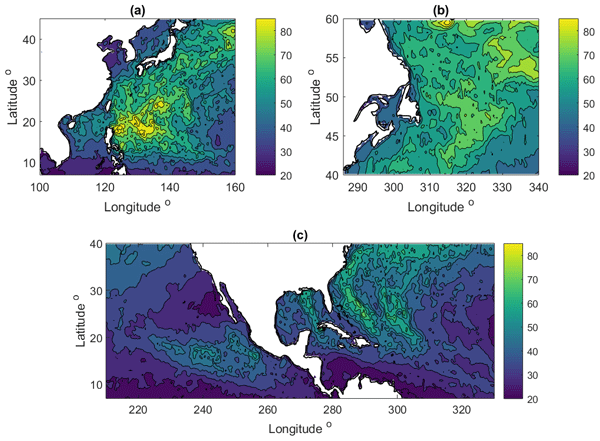
A method is developed for calculating the extreme wind in tropical-cyclone-affected water areas. The method is based on the spectral correction method that fills in the missing wind variability to the modeled time series, guided by best track data. The paper provides a detailed recipe for applying the method and the 50-year winds of equivalent 10 min temporal resolution from 10 to 150 m in several tropical-cyclone-affected regions.
Giulia Zuecco, Anam Amin, Jay Frentress, Michael Engel, Chiara Marchina, Tommaso Anfodillo, Marco Borga, Vinicio Carraro, Francesca Scandellari, Massimo Tagliavini, Damiano Zanotelli, Francesco Comiti, and Daniele Penna
Hydrol. Earth Syst. Sci., 26, 3673–3689, https://doi.org/10.5194/hess-26-3673-2022, https://doi.org/10.5194/hess-26-3673-2022, 2022
Short summary
Short summary
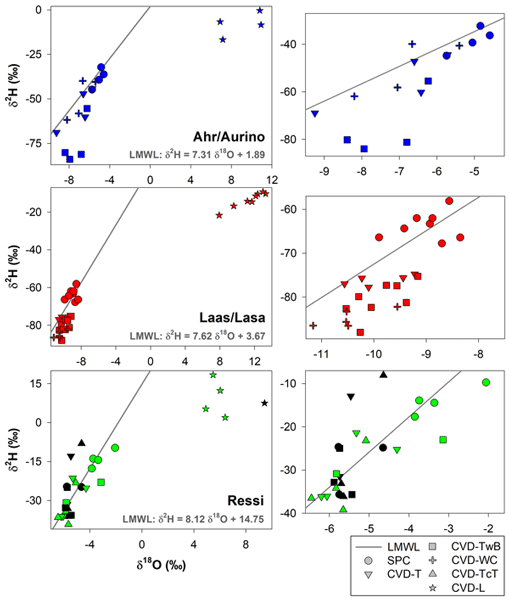
We analyzed the variability in the isotopic composition of plant water extracted by two different methods, i.e., cryogenic vacuum distillation (CVD) and Scholander-type pressure chamber (SPC). Our results indicated that the isotopic composition of plant water extracted by CVD and SPC was significantly different. We concluded that plant water extraction by SPC is not an alternative for CVD as SPC mostly extracts the mobile plant water whereas CVD retrieves all water stored in the sampled tissue.
Jana Fischereit, Kurt Schaldemose Hansen, Xiaoli Guo Larsén, Maarten Paul van der Laan, Pierre-Elouan Réthoré, and Juan Pablo Murcia Leon
Wind Energ. Sci., 7, 1069–1091, https://doi.org/10.5194/wes-7-1069-2022, https://doi.org/10.5194/wes-7-1069-2022, 2022
Short summary
Short summary
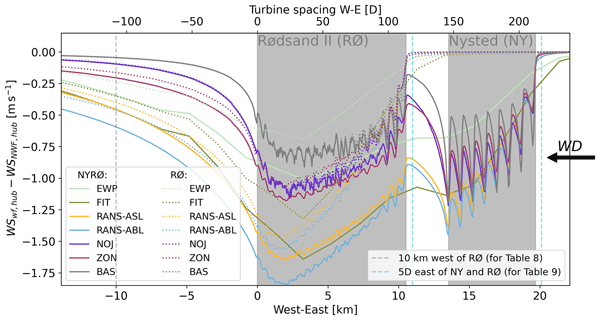
Wind turbines extract kinetic energy from the flow to create electricity. This induces a wake of reduced wind speed downstream of a turbine and consequently downstream of a wind farm. Different types of numerical models have been developed to calculate this effect. In this study, we compared models of different complexity, together with measurements over two wind farms. We found that higher-fidelity models perform better and the considered rapid models cannot fully capture the wake effect.
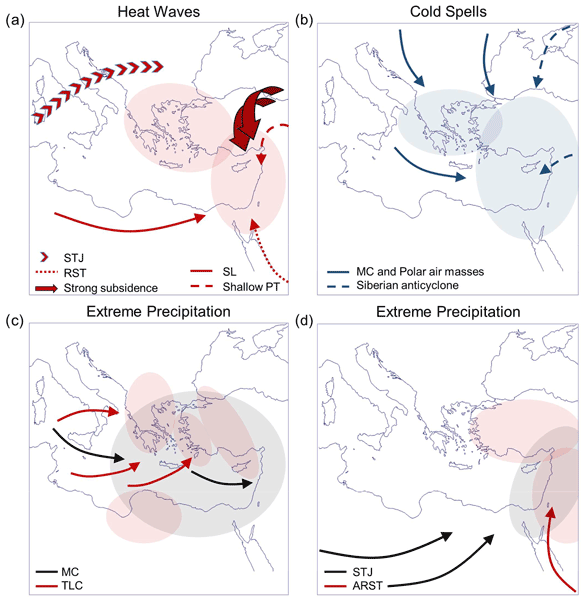
Assaf Hochman, Francesco Marra, Gabriele Messori, Joaquim G. Pinto, Shira Raveh-Rubin, Yizhak Yosef, and Georgios Zittis
Earth Syst. Dynam., 13, 749–777, https://doi.org/10.5194/esd-13-749-2022, https://doi.org/10.5194/esd-13-749-2022, 2022
Short summary
Short summary
Gaining a complete understanding of extreme weather, from its physical drivers to its impacts on society, is important in supporting future risk reduction and adaptation measures. Here, we provide a review of the available scientific literature, knowledge gaps and key open questions in the study of extreme weather events over the vulnerable eastern Mediterranean region.
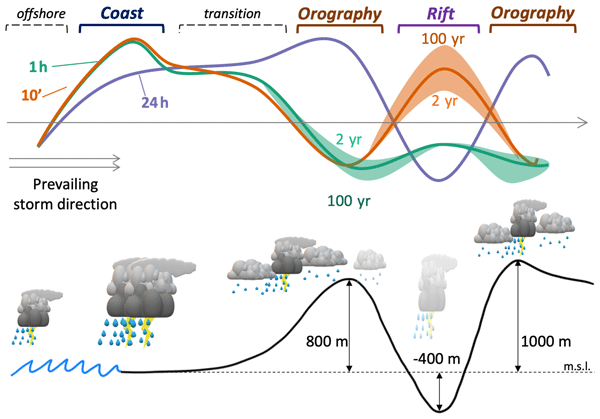
Francesco Marra, Moshe Armon, and Efrat Morin
Hydrol. Earth Syst. Sci., 26, 1439–1458, https://doi.org/10.5194/hess-26-1439-2022, https://doi.org/10.5194/hess-26-1439-2022, 2022
Short summary
Short summary
We present a new method for quantifying the probability of occurrence of extreme rainfall using radar data, and we use it to examine coastal and orographic effects on extremes. We identify three regimes, directly related to precipitation physical processes, which respond differently to these forcings. The methods and results are of interest for researchers and practitioners using radar for the analysis of extremes, risk managers, water resources managers, and climate change impact studies.
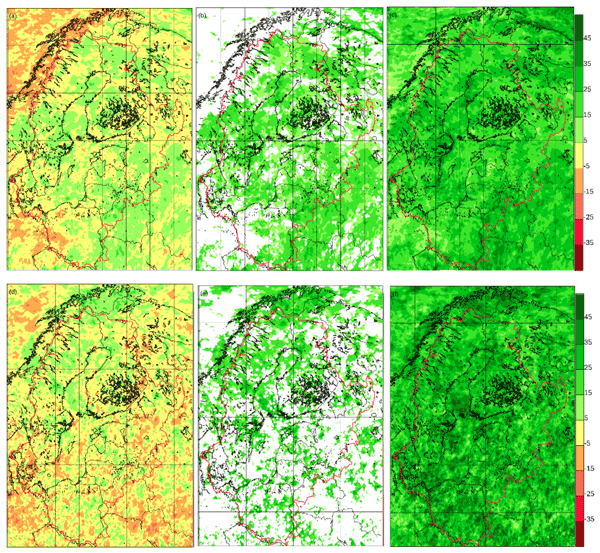
Anna Rutgersson, Erik Kjellström, Jari Haapala, Martin Stendel, Irina Danilovich, Martin Drews, Kirsti Jylhä, Pentti Kujala, Xiaoli Guo Larsén, Kirsten Halsnæs, Ilari Lehtonen, Anna Luomaranta, Erik Nilsson, Taru Olsson, Jani Särkkä, Laura Tuomi, and Norbert Wasmund
Earth Syst. Dynam., 13, 251–301, https://doi.org/10.5194/esd-13-251-2022, https://doi.org/10.5194/esd-13-251-2022, 2022
Short summary
Short summary
A natural hazard is a naturally occurring extreme event with a negative effect on people, society, or the environment; major events in the study area include wind storms, extreme waves, high and low sea level, ice ridging, heavy precipitation, sea-effect snowfall, river floods, heat waves, ice seasons, and drought. In the future, an increase in sea level, extreme precipitation, heat waves, and phytoplankton blooms is expected, and a decrease in cold spells and severe ice winters is anticipated.
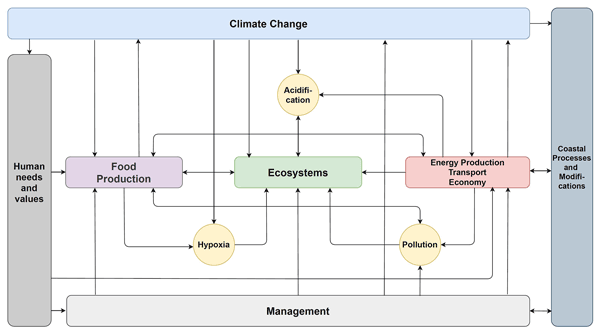
Marcus Reckermann, Anders Omstedt, Tarmo Soomere, Juris Aigars, Naveed Akhtar, Magdalena Bełdowska, Jacek Bełdowski, Tom Cronin, Michał Czub, Margit Eero, Kari Petri Hyytiäinen, Jukka-Pekka Jalkanen, Anders Kiessling, Erik Kjellström, Karol Kuliński, Xiaoli Guo Larsén, Michelle McCrackin, H. E. Markus Meier, Sonja Oberbeckmann, Kevin Parnell, Cristian Pons-Seres de Brauwer, Anneli Poska, Jarkko Saarinen, Beata Szymczycha, Emma Undeman, Anders Wörman, and Eduardo Zorita
Earth Syst. Dynam., 13, 1–80, https://doi.org/10.5194/esd-13-1-2022, https://doi.org/10.5194/esd-13-1-2022, 2022
Short summary
Short summary
As part of the Baltic Earth Assessment Reports (BEAR), we present an inventory and discussion of different human-induced factors and processes affecting the environment of the Baltic Sea region and their interrelations. Some are naturally occurring and modified by human activities, others are completely human-induced, and they are all interrelated to different degrees. The findings from this study can largely be transferred to other comparable marginal and coastal seas in the world.
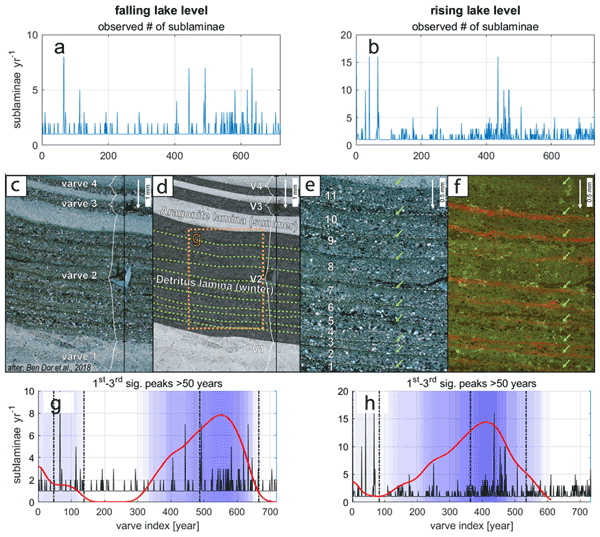
Yoav Ben Dor, Francesco Marra, Moshe Armon, Yehouda Enzel, Achim Brauer, Markus Julius Schwab, and Efrat Morin
Clim. Past, 17, 2653–2677, https://doi.org/10.5194/cp-17-2653-2021, https://doi.org/10.5194/cp-17-2653-2021, 2021
Short summary
Short summary
Laminated sediments from the deepest part of the Dead Sea unravel the hydrological response of the eastern Mediterranean to past climate changes. This study demonstrates the importance of geological archives in complementing modern hydrological measurements that do not fully capture natural hydroclimatic variability, which is crucial to configure for understanding the impact of climate change on the hydrological cycle in subtropical regions.
Marc Imberger, Xiaoli Guo Larsén, and Neil Davis
Adv. Geosci., 56, 77–87, https://doi.org/10.5194/adgeo-56-77-2021, https://doi.org/10.5194/adgeo-56-77-2021, 2021
Short summary
Short summary
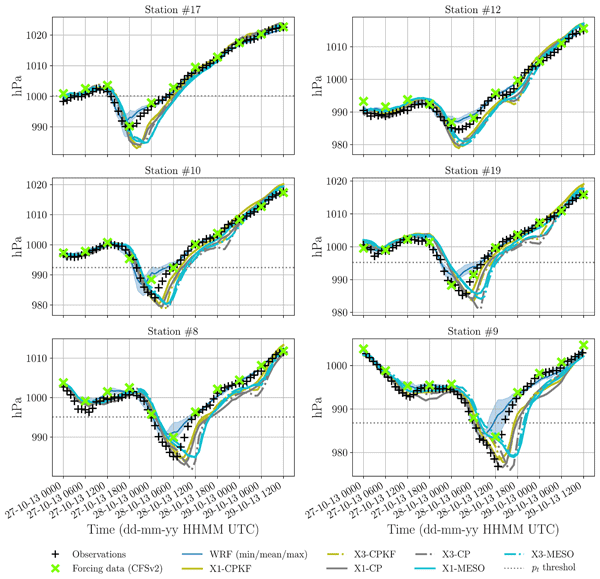
Events like mid-latitude storms with their high winds have an impact on wind energy production and forecasting of such events is crucial. This study investigates the capabilities of a global weather prediction model MPAS and looks at how key parameters like storm intensity, arrival time and duration are represented compared to measurements and traditional methods. It is found that storm intensity is represented well while model drifts negatively influence estimation of arrival time and duration.
Cited articles
Abramowitz, G., Herger, N., Gutmann, E., Hammerling, D., Knutti, R., Leduc, M., Lorenz, R., Pincus, R., and Schmidt, G. A.: ESD Reviews: Model dependence in multi-model climate ensembles: weighting, sub-selection and out-of-sample testing, Earth Syst. Dynam., 10, 91–105, https://doi.org/10.5194/esd-10-91-2019, 2019. a
Adinolfi, M., Raffa, M., Reder, A., and Mercogliano, P.: Evaluation and Expected Changes of Summer Precipitation at Convection Permitting Scale with COSMO-CLM over Alpine Space, Atmosphere, 12, 54, https://doi.org/10.3390/ATMOS12010054, 2020. a, b, c, d
Archer, C. L. and Jacobson, M. Z.: Evaluation of global wind power, J. Geophys. Res.-Atmos., 110, https://doi.org/10.1029/2004JD005462, 2005. a
Avissar, R. and Schmidt, T.: An Evaluation of the Scale at which Ground-Surface Heat Flux Patchiness Affects the Convective Boundary Layer Using Large-Eddy Simulations, J. Atmos. Sci., 55, 2666–2689, https://doi.org/10.1175/1520-0469(1998)055<2666:AEOTSA>2.0.CO;2, 1998. a, b
Beck, H. E., McVicar, T. R., Vergopolan, N., Berg, A., Lutsko, N. J., Dufour, A., Zeng, Z., Jiang, X., van Dijk, A. I. J. M., and Miralles, D. G.: High-resolution (1 km) Köppen-Geiger maps for 1901–2099 based on constrained CMIP6 projections, Scientific Data, 10, 724, https://doi.org/10.1038/s41597-023-02549-6, 2023. a, b
Bellucci, A., Haarsma, R., Gualdi, S., Athanasiadis, P. J., Caian, M., Cassou, C., Fernandez, E., Germe, A., Jungclaus, J., Kröger, J., Matei, D., Müller, W., Pohlmann, H., Salas y Melia, D., Sanchez, E., Smith, D., Terray, L., Wyser, K., and Yang, S.: An assessment of a multi-model ensemble of decadal climate predictions, Clim. Dynam., 44, 2787–2806, https://doi.org/10.1007/s00382-014-2164-y, 2015. a, b
Bodini, N., Optis, M., Redfern, S., Rosencrans, D., Rybchuk, A., Lundquist, J. K., Pronk, V., Castagneri, S., Purkayastha, A., Draxl, C., Krishnamurthy, R., Young, E., Roberts, B., Rosenlieb, E., and Musial, W.: The 2023 National Offshore Wind data set (NOW-23), Earth Syst. Sci. Data, 16, 1965–2006, https://doi.org/10.5194/essd-16-1965-2024, 2024. a
Caillaud, C., Somot, S., Alias, A., Bernard-Bouissières, I., Fumière, Q., Laurantin, O., Seity, Y., and Ducrocq, V.: Modelling Mediterranean heavy precipitation events at climate scale: An object-oriented evaluation of the CNRM-AROME convection-permitting regional climate model, Clim. Dynam., 56, 1717–1752, https://doi.org/10.1007/S00382-020-05558-Y, 2021. a, b, c
Chen, J., Yang, S., Li, H., Zhang, B., and Lv, J.: Research on geographical environment unit division based on the method of natural breaks (Jenks), The International Archives of the Photogrammetry, Remote Sensing and Spatial Information Sciences, 40, 47–50, 2013. a
Chen, S., Poll, S., Hendricks Franssen, H.-J., Heinrichs, H., Vereecken, H., and Goergen, K.: Convection-permitting ICON-LAM simulations for renewable energy potential estimates over Southern Africa, J. Geophys. Res.-Atmos., 129, e2023JD039569, https://doi.org/10.1029/2023JD039569, 2024. a
Cochran, W. G.: Sampling techniques, Johan Wiley & Sons Inc, ISBN 8126515244, 9788126515240, 1977. a
Coles, S., Bawa, J., Trenner, L., and Dorazio, P.: An introduction to statistical modeling of extreme values, vol. 208, Springer, https://doi.org/10.1007/978-1-4471-3675-0, 2001. a
Cook, N. J.: Consolidation of analysis methods for sub-annual extreme wind speeds, Meteorol. Appl., 21, 403–414, 2014. a
Coppola, E., Sobolowski, S., Pichelli, E., Raffaele, F., Ahrens, B., Anders, I., Ban, N., Bastin, S., Belda, M., Belusic, D., Caldas-Alvarez, A., Cardoso, R. M., Davolio, S., Dobler, A., Fernandez, J., Fita, L., Fumiere, Q., Giorgi, F., Goergen, K., Güttler, I., Halenka, T., Heinzeller, D., Hodnebrog, Ø., Jacob, D., Kartsios, S., Katragkou, E., Kendon, E., Khodayar, S., Kunstmann, H., Knist, S., Lavín-Gullón, A., Lind, P., Lorenz, T., Maraun, D., Marelle, L., van Meijgaard, E., Milovac, J., Myhre, G., Panitz, H.-J., Piazza, M., Raffa, M., Raub, T., Rockel, B., Schär, C., Sieck, K., Soares, P. M. M., Somot, S., Srnec, L., Stocchi, P., Tölle, M. H., Truhetz, H., Vautard, R., de Vries, H., and Warrach-Sagi, K.: A first-of-its-kind multi-model convection permitting ensemble for investigating convective phenomena over Europe and the Mediterranean, Clim. Dynam., 55, 3–34, https://doi.org/10.1007/s00382-018-4521-8, 2020. a, b, c, d, e
Correa-Sánchez, N.: Extreme wind analysis scripts (Version 1.0.0) [Scripts], Zenodo [code], https://doi.org/10.5281/zenodo.17459959, 2025. a
Correa-Sánchez, N., Dallan, E., Marra, F., Fosser, G., and Borga, M.: Orographic control on bias and uncertainty in extreme sub-daily precipitation simulations from a convection-permitting ensemble, J. Hydrol., 659, 133324, https://doi.org/10.1016/j.jhydrol.2025.133324, 2025a. a, b
Correa-Sánchez, N., Larsén, X. G., Fosser, G., Dallan, E., Borga, M., and Marra, F.: Brief communication: Enhanced representation of the power spectra of wind speed in convection-permitting models, Wind Energ. Sci., 10, 2551–2561, https://doi.org/10.5194/wes-10-2551-2025, 2025b. a, b, c
Courault, D., Drobinski, P., Brunet, Y., Lacarrere, P., and Talbot, C.: Impact of surface heterogeneity on a buoyancy-driven convective boundary layer in light winds, Bound.-Lay. Meteorol., 124, 383–403, 2007. a
Cuxart, J., Bougeault, P., and Redelsperger, J.-L.: A turbulence scheme allowing for mesoscale and large-eddy simulations, Q. J. Roy. Meteor. Soc., 126, 1–30, https://doi.org/10.1002/qj.49712656202, 2000. a, b
Dallan, E., Marra, F., Fosser, G., Marani, M., Formetta, G., Schär, C., and Borga, M.: How well does a convection-permitting regional climate model represent the reverse orographic effect of extreme hourly precipitation?, Hydrol. Earth Syst. Sci., 27, 1133–1149, https://doi.org/10.5194/hess-27-1133-2023, 2023. a
Dallan, E., Borga, M., Fosser, G., Canale, A., Roghani, B., Marani, M., and Marra, F.: A method to assess and explain changes in sub-daily precipitation return levels from convection-permitting simulations, Water Resour. Res., 60, e2023WR035969, https://doi.org/10.1029/2023WR035969, 2024. a
Davis, N. N., Badger, J., Hahmann, A. N., Hansen, B. O., Mortensen, N. G., Kelly, M., Larsén, X. G., Olsen, B. T., Floors, R., Lizcano, G., Casso, P., Lacave, O., Bosch, A., Bauwens, I., Knight, O. J., van Loon, A. P., Fox, R., Parvanyan, T., Hansen, S. B. K., Heathfield, D., Onninen, M., and Drummond, R.: The Global Wind Atlas: A High-Resolution Dataset of Climatologies and Associated Web-Based Application, B. Am. Meteorol. Soc., 104, E1507–E1525, https://doi.org/10.1175/BAMS-D-21-0075.1, 2023. a, b
Dee, D. P., Uppala, S. M., Simmons, A. J., Berrisford, P., Poli, P., Kobayashi, S., Andrae, U., Balmaseda, M. A., Balsamo, G., Bauer, P., Bechtold, P., Beljaars, A. C. M., van de Berg, L., Bidlot, J., Bormann, N., Delsol, C., Dragani, R., Fuentes, M., Geer, A. J., Haimberger, L., Healy, S. B., Hersbach, H., Hólm, E. V., Isaksen, L., Kållberg, P., Köhler, M., Matricardi, M., McNally, A. P., Monge-Sanz, B. M., Morcrette, J.-J., Park, B.-K., Peubey, C., de Rosnay, P., Tavolato, C., Thépaut, J.-N., and Vitart, F.: The ERA-Interim reanalysis: Configuration and performance of the data assimilation system, Q. J. Roy. Meteor. Soc., 137, 553–597, https://doi.org/10.1002/qj.828, 2011. a
Demuzere, M., De Ridder, K., and van Lipzig, N. P. M.: Modeling the energy balance in Marseille: Sensitivity to roughness length parameterizations and thermal admittance, J. Geophys. Res.-Atmos., 113, D16120, https://doi.org/10.1029/2007JD009113, 2008. a
Donat, M. G., Leckebusch, G. C., Pinto, J. G., and Ulbrich, U.: Examination of wind storms over Central Europe with respect to circulation weather types and NAO phases, Int. J. Climatol., 30, 1289–1300, https://doi.org/10.1002/joc.1982, 2010. a, b
Dörenkämper, M., Olsen, B. T., Witha, B., Hahmann, A. N., Davis, N. N., Barcons, J., Ezber, Y., García-Bustamante, E., González-Rouco, J. F., Navarro, J., Sastre-Marugán, M., Sīle, T., Trei, W., Žagar, M., Badger, J., Gottschall, J., Sanz Rodrigo, J., and Mann, J.: The Making of the New European Wind Atlas – Part 2: Production and evaluation, Geosci. Model Dev., 13, 5079–5102, https://doi.org/10.5194/gmd-13-5079-2020, 2020. a
Draxl, C., Clifton, A., Hodge, B.-M., and McCaa, J.: The Wind Integration National Dataset (WIND) Toolkit, Appl. Energ., 151, 355–366, https://doi.org/10.1016/j.apenergy.2015.03.121, 2015. a
European Commission: In focus: Wind energy powering the clean transition, Tech. rep., European Commission, https://energy.ec.europa.eu/news/focus-wind-energy-powering-clean-transition-2025-03-17_en, last access: 20 May 2025. a
European Environment Agency: CORINE Land Cover 2018, version 2020_20u1, https://land.copernicus.eu/en/products/corine-land-cover (last access: 20 December 2024), 2020. a
Fosser, G., Gaetani, M., Kendon, E. J., Adinolfi, M., Ban, N., Belušić, D., Caillaud, C., Careto, J. A., Coppola, E., Demory, M.-E., de Vries, H., Dobler, A., Feldmann, H., Goergen, K., Lenderink, G., Pichelli, E., Schär, C., Soares, P. M. M., Somot, S., and Tölle, M. H.: Convection-permitting climate models offer more certain extreme rainfall projections, NPJ Climate and Atmospheric Science, 7, 51, https://doi.org/10.1038/s41612-024-00600-w, 2024. a, b
Frisius, T., Cetin, I. I., Keup-Thiel, E., and Rechid, D.: Analysis of high-resolution convection-permitting regional climate simulations with respect to the impact of spatial resolution on simulated wind climate, in: Journal of Physics: Conference Series, vol. 2767, p. 092023, IOP Publishing, https://doi.org/10.1088/1742-6596/2767/9/092023, 2024. a
Hennessey Jr., J. P.: Some aspects of wind power statistics, J. Appl. Meteorol., 16, 119–128, https://doi.org/10.1175/1520-0450(1977)016<0119:SAOWPS>2.0.CO;2, 1977. a
Jackson, P. S. and Hunt, J. C. R.: Turbulent wind flow over a low hill, Q. J. Roy. Meteor. Soc., 101, 929–955, https://doi.org/10.1002/qj.49710143015, 1975. a
Jolliffe, I. T.: Principal component analysis, Springer, New York, 2nd edn., ISBN 978-0-387-95442-4, https://doi.org/10.1007/b98835, 2002. a, b, c
Kaimal, J. C. and Finnigan, J. J.: Atmospheric boundary layer flows: their structure and measurement, Oxford University Press, ISBN: 0-19-506239-6, 1994. a
Kang, S.-L. and Bryan, G. H.: A Large-Eddy Simulation Study of Moist Convection Initiation over Heterogeneous Surface Fluxes, Mon. Weather Rev., 139, 2901–2917, https://doi.org/10.1175/MWR-D-10-05037.1, 2011. a
Kristensen, L., Kirkegaard, P., and Mann, J.: Sampling Statistics of Atmospheric Observations, Wind Energy, 5, 301–313, https://doi.org/10.1002/we.75, 2002. a
Larsén, X. G. and Mann, J.: The effects of disjunct sampling and averaging time on maximum mean wind speeds, J. Wind Eng. Ind. Aerod., 94, 581–602, https://doi.org/10.1016/j.jweia.2006.01.020, 2006. a
Larsén, X. G., Mann, J., Rathmann, O., and Jørgensen, H. E.: Uncertainties of the 50-year wind from short time series using generalized extreme value distribution and generalized Pareto distribution, Wind Energy, 18, 59–74, 2015. a
Leutwyler, D., Fuhrer, O., Lapillonne, X., Lüthi, D., and Schär, C.: Towards European-scale convection-resolving climate simulations with GPUs: a study with COSMO 4.19, Geosci. Model Dev., 9, 3393–3412, https://doi.org/10.5194/gmd-9-3393-2016, 2016. a, b, c
Leutwyler, D., Lüthi, D., Ban, N., Fuhrer, O., and Schär, C.: Evaluation of the convection-resolving climate modeling approach on continental scales, J. Geophys. Res.-Atmos., 122, 5237–5258, https://doi.org/10.1002/2016JD026013, 2017. a
Ma, X., Li, Y., Huo, F., and Li, Z.: Convection-permitting WRF simulation of extreme winds in Canada: Present and Future scenarios, Weather and Climate Extremes, 49, 100777, https://doi.org/10.1016/j.wace.2025.100777, 2025. a, b, c
MacFerrin, M., Amante, C., Carignan, K., Love, M., and Lim, E.: The Earth Topography 2022 (ETOPO 2022) global DEM dataset, Earth Syst. Sci. Data, 17, 1835–1849, https://doi.org/10.5194/essd-17-1835-2025, 2025. a
Manning, C., Kendon, E. J., Fowler, H. J., Roberts, N. M., Berthou, S., Suri, D., and Roberts, M. J.: Extreme windstorms and sting jets in convection-permitting climate simulations over Europe, Clim. Dynam., 58, 2387–2404, 2022. a
Marani, M. and Ignaccolo, M.: A metastatistical approach to rainfall extremes, Adv. Water Resour., 79, 121–126, 2015. a
Marra, F.: A Unified Framework for Extreme Sub-daily Precipitation Frequency Analyses based on Ordinary Events – data & codes, Zenodo [code and data set], https://doi.org/10.5281/zenodo.3971557, 2020. a
Marra, F.: A test for the hypothesis: block maxima are samples from a parent distribution with Weibull tail, Zenodo [code], https://doi.org/10.5281/zenodo.7234707, 2022. a, b
Marra, F., Armon, M., and Morin, E.: Coastal and orographic effects on extreme precipitation revealed by weather radar observations, Hydrol. Earth Syst. Sci., 26, 1439–1458, https://doi.org/10.5194/hess-26-1439-2022, 2022. a
Marra, F., Amponsah, W., and Papalexiou, S. M.: Non-asymptotic Weibull tails explain the statistics of extreme daily precipitation, Adv. Water Resour., 173, 104388, https://doi.org/10.1016/j.advwatres.2023.104388, 2023. a, b
Miniussi, A. and Marra, F.: Estimation of extreme daily precipitation return levels at-site and in ungauged locations using the simplified MEV approach, J. Hydrol., 603, 126946, https://doi.org/10.1016/j.jhydrol.2021.126946, 2021. a
Nabat, P., Somot, S., Cassou, C., Mallet, M., Michou, M., Bouniol, D., Decharme, B., Drugé, T., Roehrig, R., and Saint-Martin, D.: Modulation of radiative aerosols effects by atmospheric circulation over the Euro-Mediterranean region, Atmos. Chem. Phys., 20, 8315–8349, https://doi.org/10.5194/acp-20-8315-2020, 2020. a
National Renewable Energy Laboratory: Wind Energy Grows Up, https://www.energy.gov/eere/wind/articles/wind-energy-grows (last access: 20 May 2025), 2023. a
Outten, S. and Sobolowski, S.: Extreme wind projections over Europe from the Euro-CORDEX regional climate models, Weather and Climate Extremes, 33, 100363, https://doi.org/10.1016/j.wace.2021.100363, 2021. a
Palutikof, J. P., Brabson, B. B., Lister, D. H., and Adcock, S. T.: A review of methods to calculate extreme wind speeds, Meteorol. Appl., 6, 119–132, 1999. a
Petersen, R. L.: A wind tunnel evaluation of methods for estimating surface roughness length at industrial facilities, Atmos. Environ., 31, 45–57, https://doi.org/10.1016/S1352-2310(96)00154-9, 1997. a, b, c
Pfahl, S.: Characterising the relationship between weather extremes in Europe and synoptic circulation features, Nat. Hazards Earth Syst. Sci., 14, 1461–1475, https://doi.org/10.5194/nhess-14-1461-2014, 2014. a, b, c
Prein, A. F., Langhans, W., Fosser, G., Ferrone, A., Ban, N., Goergen, K., Keller, M., Tölle, M., Gutjahr, O., Feser, F., Brisson, E., Kollet, S., Schmidli, J., van Lipzig, N. P. M., and Leung, R.: A review on regional convection-permitting climate modeling: Demonstrations, prospects, and challenges, Rev. Geophys., 53, 323–361, https://doi.org/10.1002/2014RG000475, 2015. a, b, c, d, e
Pryor, S. C., Barthelmie, R. J., Bukovsky, M. S., Leung, L. R., and Sakaguchi, K.: Climate change impacts on wind power generation, Nature Reviews Earth & Environment, 1, 627–643, 2020. a
Riley, S. J., DeGloria, S. D., and Elliot, R.: Index that quantifies topographic heterogeneity, Intermountain Journal of Sciences, 5, 23–27, 1999. a
Rockel, B., Will, A., and Hense, A.: The Regional Climate Model COSMO-CLM (CCLM), Meteorol. Z., 17, 347–348, https://doi.org/10.1127/0941-2948/2008/0309, 2008. a, b, c, d
Ruiz, S. A. G., Barriga, J. E. C., and Martínez, J. A.: Assessment and validation of wind power potential at convection-permitting resolution for the Caribbean region of Colombia, Energy, 244, 123127, https://doi.org/10.1016/j.energy.2022.123127, 2022. a
Schär, C., Ban, N., Lenderink, G., Buonomo, E., Lüthi, D., and Coppola, E.: Kilometer-Scale Climate Models: Prospects and Challenges, Surv. Geophys., 42, 759–794, 2020. a
Schmidt, O. T., Mengaldo, G., Balsamo, G., and Wedi, N. P.: Spectral Empirical Orthogonal Function Analysis of Weather and Climate Data, Mon. Weather Rev., 147, 2979–2995, https://doi.org/10.1175/MWR-D-18-0337.1, 2019. a
Siena, M., Levizzani, V., and Marra, F.: A method to derive satellite-based extreme precipitation return levels in poorly gauged areas, J. Hydrol., 626, 130295, https://doi.org/10.1016/j.jhydrol.2023.130295, 2023. a
Smith, G. L., Mlynczak, P. E., and Potter, G. L.: A technique using principal component analysis to compare seasonal cycles of Earth radiation from CERES and model computations, J. Geophys. Res.-Atmos., 117, https://doi.org/10.1029/2011JD017343, 2012. a, b
Smith, R. B.: The influence of mountains on the atmosphere, Adv. Geophys., 21, 87–230, 1979. a
Soares, P. M. M., Cardoso, R. M., Miranda, P. M. A., de Medeiros, J., Belo-Pereira, M., and Espirito-Santo, F.: WRF high resolution dynamical downscaling of ERA-Interim for Portugal, Clim. Dynam., 39, 2497–2522, https://doi.org/10.1007/s00382-012-1315-2, 2012. a
Stull, R. B.: An Introduction to Boundary Layer Meteorology, in: Atmospheric and Oceanographic Sciences Library, vol. 13, Springer, Dordrecht, ISBN 978-90-277-2769-5, https://doi.org/10.1007/978-94-009-3027-8, 1988. a
Thompson, S. K.: Sampling, John Wiley & Sons, Hoboken, NJ, 3 edn., ISBN 1118162943, 9781118162941, 2012. a
Tibshirani, R. J. and Efron, B.: An introduction to the bootstrap, Mg. Stat. Pro., 57, 1–436, ISBN 0-412-04231-2, 1993. a
Tuller, S. E. and Brett, A. C.: The characteristics of wind velocity that favor the fitting of a Weibull distribution in wind speed analysis, J. Clim. Appl. Meteorol., 23, 124–134, https://doi.org/10.1175/1520-0450(1984)023<0124:TCOWVT>2.0.CO;2, 1984. a
Tye, M. R., Stephenson, D. B., Holland, G. J., and Katz, R. W.: A Weibull approach for improving climate model projections of tropical cyclone wind-speed distributions, J. Climate, 27, 6119–6133, 2014. a
Webster, R. and Oliver, M. A.: Geostatistics for Environmental Scientists, John Wiley & Sons, ISBN 9780470028582, 9780470517277, https://doi.org/10.1002/9780470517277, 2007. a
Short summary
This research presents the first use of the simplified metastatistical extreme value approach for wind extremes, extending it to wind energy applications. We use a categorical framework that combines climate, roughness, and topography to evaluate convection-permitted models. We find that model formulation drives inter-model uncertainties, rather than surface conditions. Convection-permitted models' uncertainty analysis improves the reliability of extreme wind estimates for design parameters.
This research presents the first use of the simplified metastatistical extreme value approach...


Altmetrics
Final-revised paper
Preprint