Articles | Volume 11, issue 9
https://doi.org/10.5194/wes-11-3531-2026
© Author(s) 2026. This work is distributed under
the Creative Commons Attribution 4.0 License.
https://doi.org/10.5194/wes-11-3531-2026
© Author(s) 2026. This work is distributed under
the Creative Commons Attribution 4.0 License.
Investigating wake reproduction of a model-scale wind turbine: experimental measurements versus large eddy simulation with actuator line
Emmanuel Gillyns
CORRESPONDING AUTHOR
Environmental and Applied Fluid Dynamics Department, von Karman Institute for Fluid Dynamics, 1640 Sint-Genesius-Rode, Belgium
Renewables, Storage & Decentralised flexibility, ENGIE Laborelec, 1630 Linkebeek, Belgium
Institute of Mechanics, Materials and Civil Engineering (IMMC), Université catholique de Louvain (UCLouvain), 1348 Louvain-la-Neuve, Belgium
Sophia Buckingham
Renewables, Storage & Decentralised flexibility, ENGIE Laborelec, 1630 Linkebeek, Belgium
Jeroen van Beeck
Environmental and Applied Fluid Dynamics Department, von Karman Institute for Fluid Dynamics, 1640 Sint-Genesius-Rode, Belgium
Grégoire Winckelmans
Institute of Mechanics, Materials and Civil Engineering (IMMC), Université catholique de Louvain (UCLouvain), 1348 Louvain-la-Neuve, Belgium
Related authors
No articles found.
Sara Porchetta, Wim Munters, Maxime Lejeune, Ruben Borgers, Sophia Buckingham, and Michael F. Howland
Wind Energ. Sci., 11, 3273–3294, https://doi.org/10.5194/wes-11-3273-2026, https://doi.org/10.5194/wes-11-3273-2026, 2026
Short summary
Short summary
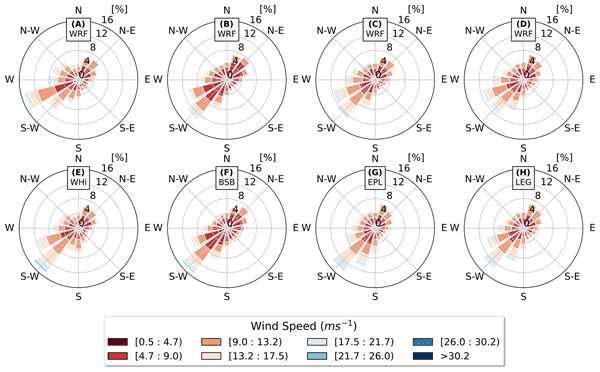
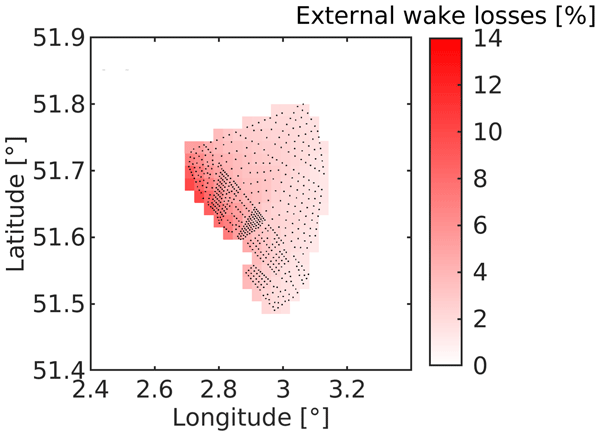
This study examines how a newly built offshore wind farm affects the power production of nearby existing wind farms. Using a full year of simulations, we compare detailed weather-based models with faster simplified models. The results show clear differences in predicted power losses, especially during calm summer conditions, highlighting the importance of model choice for future offshore wind farm planning and design.
Sara Porchetta, Michael F. Howland, Maxime Lejeune, Ruben Borgers, Sophia Buckingham, and Wim Munters
Wind Energ. Sci., 11, 3295–3319, https://doi.org/10.5194/wes-11-3295-2026, https://doi.org/10.5194/wes-11-3295-2026, 2026
Short summary
Short summary
This study examines how a newly built offshore wind farm affects the power production of nearby existing wind farms. Using a full year of simulations, we compare detailed weather-based models with faster simplified models. The results show clear differences in predicted power losses, especially during calm summer conditions, highlighting the importance of model choice for future offshore wind farm planning and design.
Jean-Baptiste Crismer, Thomas Haas, Matthieu Duponcheel, and Grégoire Winckelmans
Wind Energ. Sci., 11, 2669–2694, https://doi.org/10.5194/wes-11-2669-2026, https://doi.org/10.5194/wes-11-2669-2026, 2026
Short summary
Short summary
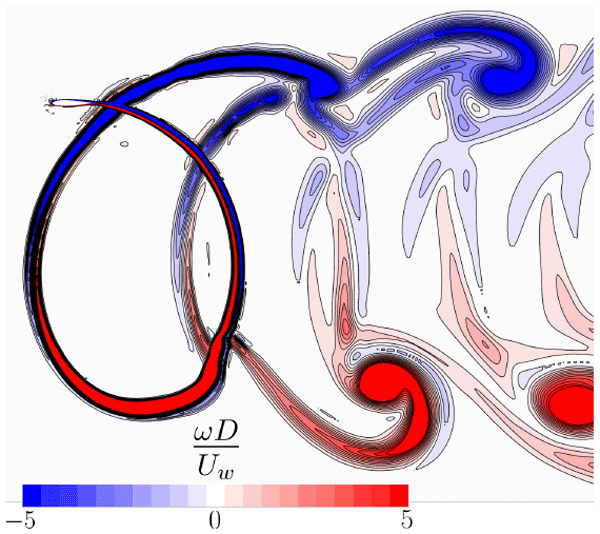
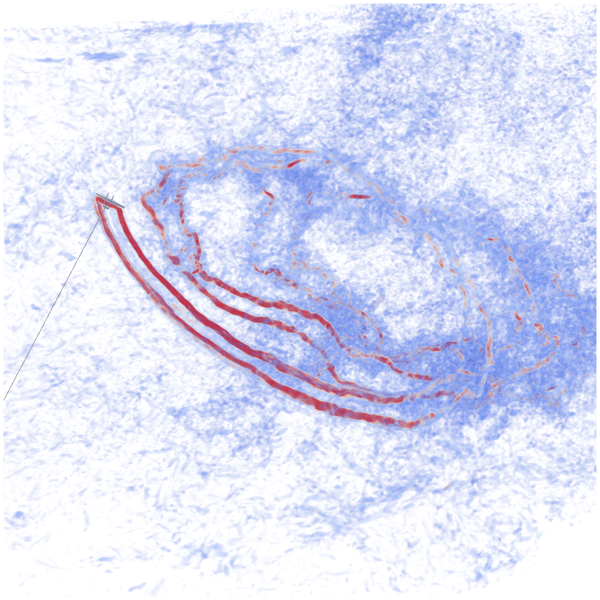
Wind energy is key to the energy transition. Airborne wind energy (AWE) is a technology based on kites. It has many advantages. However, their operation in gusts or in farm configurations remains unexplored. This work proposes a tool for studying AWE systems in such conditions. It is used to investigate a two-kite array. It is found that the second kite can avoid the wake of the first kite and stay unperturbed, while in other situations it produces 6 % less energy.
Konstantinos Vratsinis, Rebeca Marini, Pieter-Jan Daems, Lukas Pauscher, Jeroen van Beeck, and Jan Helsen
Wind Energ. Sci., 11, 1803–1820, https://doi.org/10.5194/wes-11-1803-2026, https://doi.org/10.5194/wes-11-1803-2026, 2026
Short summary
Short summary
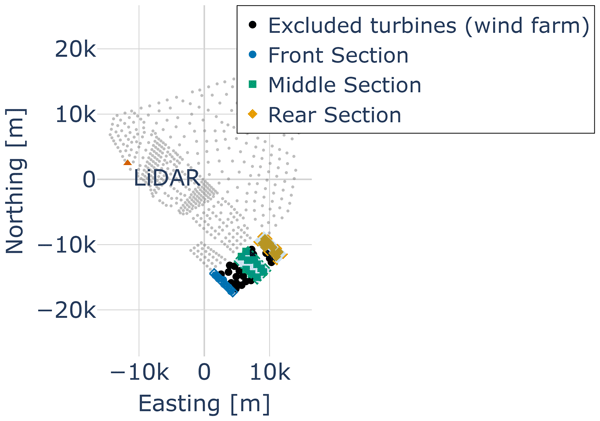
Using data collected over 13 months at an offshore wind farm, our study shows that a wind turbine’s position within the farm influences its energy output at a given nacelle-measured wind speed. Front-row turbines respond differently to similar wind speeds and turbulence than those further back. This finding suggests that current methods for characterizing inflow conditions may not fully capture actual wind behavior, underscoring the need for improved performance analysis techniques.
Grégoire Winckelmans, Philippe Rochefort, Thierry Villeneuve, François Trigaux, Matthieu Duponcheel, and Guy Dumas
Wind Energ. Sci. Discuss., https://doi.org/10.5194/wes-2025-283, https://doi.org/10.5194/wes-2025-283, 2025
Revised manuscript accepted for WES
Short summary
Short summary
This paper provides improved models for flow curvature effects associated to airfoils that rotate around an axis as in the case for the blades of vertical-axis turbines. The models are furthermore implemented into an efficient simulation framework that uses an advanced actuator line method for enforcing both the aerodynamic forces and moment, and they are validated against reference results. This research is led to improve the efficient and accurate study of curved unsteady flows in wind energy.
Alexandros Palatos-Plexidas, Simone Gremmo, Jeroen van Beeck, Lesley De Cruz, and Wim Munters
Wind Energ. Sci. Discuss., https://doi.org/10.5194/wes-2025-202, https://doi.org/10.5194/wes-2025-202, 2025
Revised manuscript accepted for WES
Short summary
Short summary
In this study, we use advanced weather simulations, real-world measurements, and satellite images, showing that modeling wind farm effects improves accuracy, especially in areas influenced by turbine wakes. Focusing on a large wind farm cluster in the North Sea, we also investigate different atmospheric conditions. These findings help quantify the influence of large wind farm clusters, improve predictions, and support planning for future wind energy development.
Tsvetelina Ivanova, Sara Porchetta, Sophia Buckingham, Gertjan Glabeke, Jeroen van Beeck, and Wim Munters
Wind Energ. Sci., 10, 245–268, https://doi.org/10.5194/wes-10-245-2025, https://doi.org/10.5194/wes-10-245-2025, 2025
Short summary
Short summary
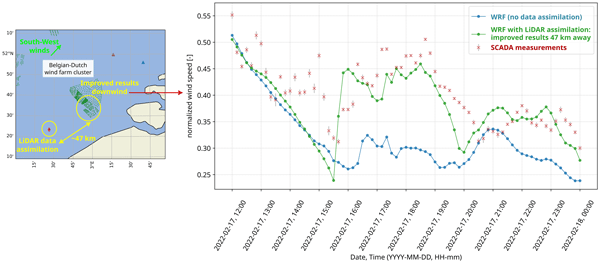
This study explores how wind and power predictions can be improved by introducing local forcing of measurement data in a numerical weather model while taking into account the presence of neighboring wind farms. Practical implications for the wind energy industry include insights for informed offshore wind farm planning and decision-making strategies using open-source models, even under adverse weather conditions.
Francois Trigaux, Philippe Chatelain, and Grégoire Winckelmans
Wind Energ. Sci., 9, 1765–1789, https://doi.org/10.5194/wes-9-1765-2024, https://doi.org/10.5194/wes-9-1765-2024, 2024
Short summary
Short summary
In this research, the impact of blade flexibility is investigated for a very large wind turbine using numerical simulations. It is shown that bending and torsion decrease the power production and affect aerodynamic loads. Blade deformation also affects the flow of wind behind the turbine, resulting in a higher mean velocity. Our study highlights the importance of including blade flexibility in the simulation of large wind turbines to obtain accurate power and load predictions.
Cited articles
Barlas, E., Buckingham, S., and van Beeck, J.: Roughness Effects on Wind-Turbine Wake Dynamics in a Boundary-Layer Wind Tunnel, Bound.-Lay. Meteorol., 158, 27–42, https://doi.org/10.1007/s10546-015-0083-z, 2015. a
Bastankhah, M. and Porté-Agel, F.: A New Miniature Wind Turbine for Wind Tunnel Experiments, Part II: Wake Structure and Flow Dynamics, Energies, 10, 923, https://doi.org/10.3390/en10070923, 2017. a, b
Boorsma, K. and Schepers, J.: Rotor experiments in controlled conditions continued: New Mexico, J. Phys. Conf. Ser., 753, 022004, https://doi.org/10.1088/1742-6596/753/2/022004, 2016. a
Chamorro, L., Arndt, R., and Sotiropoulos, F.: Reynolds number dependence of turbulence statistics in the wake of wind turbines, Wind Energy, 15, 733–742, https://doi.org/10.1002/we.501, 2011. a
Conan, B.: Wind resource accessment in complex terrain by wind tunnel modelling, Ph.D. thesis, Orléans University, http://www.theses.fr/2012ORLE2067 (last access: 15 September 2026), 2012. a
Coudou, N., Buckingham, S., Bricteux, L., and van Beeck, J.: Experimental Study on the Wake Meandering Within a Scale Model Wind Farm Subject to a Wind-Tunnel Flow Simulating an Atmospheric Boundary Layer, Bound.-Lay. Meteorol., 167, 77–98, https://doi.org/10.1007/s10546-017-0320-8, 2017. a
Deville, M. O., Fischer, P. F., and Mund, E. H.: High-Order Methods for Incompressible Fluid Flow, Cambridge Monographs on Applied and Computational Mathematics, Cambridge University Press, https://doi.org/10.1017/CBO9780511546792, 2002. a
Doubrawa, P., Quon, E. W., Martinez-Tossas, L. A., Shaler, K., Debnath, M., Hamilton, N., Herges, T. G., Maniaci, D., Kelley, C. L., Hsieh, A. S., Blaylock, M. L., Laan, P., Andersen, S. J., Krueger, S., Cathelain, M., Schlez, W., Jonkman, J., Branlard, E., Steinfeld, G., Schmidt, S., Blondel, F., Lukassen, L. J., and Moriarty, P.: Multimodel validation of single wakes in neutral and stratified atmospheric conditions, Wind Energy, 23, 2027–2055, https://doi.org/10.1002/we.2543, 2020. a
Ferreira, R. T. L., Amatte, I. C., Dutra, T. A., and Bürger, D.: Experimental characterization and micrography of 3D printed PLA and PLA reinforced with short carbon fibers, Compos. Part B-Eng., 124, 88–100, https://doi.org/10.1016/j.compositesb.2017.05.013, 2017. a
Fischer, P. F.: Nek5000 users guide, https://www.mcs.anl.gov/~fischer/Nek5000/examples.pdf (last access: 18 June 2021), 2013. a
Geuzaine, C. and Remacle, J.-F.: Gmsh: a three-dimensional finite element mesh generator with built-in pre- and post-processing facilities, Int. J. Numer. Meth. Eng., 79, 1309–1331, 2009. a
Giguère, P. and Selig, M. S.: Low Reynolds Number Airfoils for Small Horizontal Axis Wind Turbines, Wind Eng., 21, 367–380, 1997. a
Gillyns, E., Buckingham, S., Van Beeck, J., and Winckelmans, G.: Wind tunnel inflow data assimilation in an LES digital twin for improving validation against an experimental wind turbine wake, J. Phys. Conf. Ser., 2767, 092040, https://doi.org/10.1088/1742-6596/2767/9/092040, 2024. a, b, c
Han, Y., Wang, J., Li, X., Jin, K., Yang, B., Dong, X., and Wen, C.: Experimental study of turbulence intensity on the wake characteristics of a horizontal-axis wind turbine, Energ. Sources Part A, 44, 9545–9563, https://doi.org/10.1080/15567036.2022.2128939, 2022. a
Hodgson, E. L., Madsen, M. H. A., and Andersen, S. J.: Effects of turbulent inflow time scales on wind turbine wake behavior and recovery, Phys. Fluids, 35, https://doi.org/10.1063/5.0162311, 2023. a
Huang, X., Yang, J., Gao, Z., Sha, C., and Yang, H.: Output Power and Wake Flow Characteristics of a Wind Turbine with Swept Blades, Machines, 10, 876, https://doi.org/10.3390/machines10100876, 2022. a
Iron Boar Labs Ltd.: Polylactic Acid (PLA, Polylactide), https://www.makeitfrom.com/material-properties/Polylactic-Acid-PLA-Polylactide/ (last access: 13 August 2024), 2021. a
Jha, P. K. and Schmitz, S.: Actuator curve embedding – an advanced actuator line model, J. Fluid Mech., 834, https://doi.org/10.1017/jfm.2017.793, 2017. a
Jha, P. K., Churchfield, M. J., Moriarty, P. J., and Schmitz, S.: Guidelines for Volume Force Distributions Within Actuator Line Modeling of Wind Turbines on Large-Eddy Simulation-Type Grids, J. Sol. Energ. Eng., 136, https://doi.org/10.1115/1.4026252, 2014. a
Jin, W.: Numerical Simulation of Wind Turbine Wakes based on Actuator Line Method in NEK5000, Master's thesis, KTH Mechanics, https://api.semanticscholar.org/CorpusID:106564302 (last access: 16 September 2026), 2013. a
Kleusberg, E.: Wind turbine simulations using spectral elements, Master's thesis, KTH Mechanics, ISBN 978-91-7729-448-1, 2017. a
Martínez-Tossas, L. A. and Meneveau, C.: Filtered lifting line theory and application to the actuator line model, J. Fluid Mech., 863, 269–292, https://doi.org/10.1017/jfm.2018.994, 2019. a
Martínez-Tossas, L. A., Churchfield, M. J., and Meneveau, C.: Optimal smoothing length scale for actuator line models of wind turbine blades based on Gaussian body force distribution, Wind Energy, 20, 1083–1096, https://doi.org/10.1002/we.2081, 2017. a, b
McTavish, S., Feszty, D., and Nitzsche, F.: An experimental and computational assessment of blockage effects on wind turbine wake development, Wind Energy, 17, 1515–1529, https://doi.org/10.1002/we.1648, 2013. a
Patera, A. T.: A spectral element method for fluid dynamics: Laminar flow in a channel expansion, J. Comput. Phys., 54, 468–488, https://doi.org/10.1016/0021-9991(84)90128-1, 1984. a
Schepers, J., Boorsma, K., Cho, T., Gomez-Iradi, S., Schaffarczyk,A., Jeromin, A., Shen, W. Z., Lutz, T., Meister, K., Stoevesandt,B., Schreck, S., Micallef, D., Pereira, R., Sant, T., Madsen, H.,and Sørensen, N.: Final report of IEA Task 29, Mexnext (phase 100 1): analysis of MEXICO wind tunnel measurements, in: Report,p. 1, Wind Energy, https://doi.org/10.1088/1742-6596/75/1/012014, 2014. a
Schlatter, P., Stolz, S., and Kleiser, L.: LES of transitional flows using the approximate deconvolution model, Int. J. Heat Fluid Fl., 25, 549–558, https://doi.org/10.1016/j.ijheatfluidflow.2004.02.020, 2004. a
Schmitz, S.: Aerodynamics of wind turbines: a physical basis for analysis and design, Wiley, Hoboken, ISBN 9781119405610, ISBN-13: 978-1119405610, 2019. a
Selig, M. S., Guglielmo, J. J., Broeren, A. P., and Giguère, P.: Summary of Low-Speed Airfoil Data, Vol. 1, SoarTech Publications, https://m-selig.ae.illinois.edu/uiuc_lsat/Low-Speed-Airfoil-Data-V1.pdf (last access: 15 September 2026), 1995. a
Spyropoulos, N., Papadakis, G., Prospathopoulos, J. M., and Riziotis, V. A.: Investigating the Level of Fidelity of an Actuator Line Model in Predicting Loads and Deflections of Rotating Blades under Uniform Free-Stream Flow, Appl. Sci., 11, 12097, https://doi.org/10.3390/app112412097, 2021. a
Stanly, R., Martínez-Tossas, L. A., Frankel, S. H., and Delorme, Y.: Large-eddy simulation of a wind turbine using a filtered actuator line model, J. Wind Eng. Ind. Aerod., 222, 104868, https://doi.org/10.1016/j.jweia.2021.104868, 2022. a
Trigaux, F., Chatelain, P., and Winckelmans, G.: Scale-resolved aero-servo-elastic simulation of large wind turbines using the actuator line, Ph.D. thesis, UCLouvain, http://hdl.handle.net/2078.1/289594 (last access: ISBN 978-87-89502-80-9), 2024a. a
Trigaux, F., Chatelain, P., and Winckelmans, G.: Impact of rotor size on the aeroelastic behavior of large turbines: a LES study using flexible actuator lines, J. Phys. Conf. Ser., 2767, 022062, https://doi.org/10.1088/1742-6596/2767/2/022062, 2024b. a, b
Trigaux, F., Villeneuve, T., Dumas, G., and Winckelmans, G.: Near-tip correction functions for the actuator line method to improve the predicted lift and drag distributions, J. Fluid Mech., 989, https://doi.org/10.1017/jfm.2024.461, 2024c. a, b
Troldborg, N.: Actuator line modelling of wind turbine wakes, Ph.D. thesis, Technical University of Denmark, ISBN 978-87-89502-80-9, 2008. a
Vugrin, K. W., Swiler, L. P., Roberts, R. M., Stucky‐Mack, N. J., and Sullivan, S. P.: Confidence region estimation techniques for nonlinear regression in groundwater flow: Three case studies, Water Resour. Res., 43, https://doi.org/10.1029/2005wr004804, 2007. a
Wang, Z., Fidkowski, K., Abgrall, R., Bassi, F., Caraeni, D., Cary, A., Deconinck, H., Hartmann, R., Hillewaert, K., Huynh, H., Kroll, N., May, G., Persson, P.-O., van Leer, B., and Visbal, M.: High-order CFD methods: current status and perspective, Int. J. Numer. Meth. Fl., 72, 811–845, https://doi.org/10.1002/fld.3767, 2013. a
Xiao, F., Dianat, M., and McGuirk, J. J.: An LES Turbulent Inflow Generator using A Recycling and Rescaling Method, Flow, Turbulence and Combustion, 98, 663–695, https://doi.org/10.1007/s10494-016-9778-6, 2016. a

Short summary
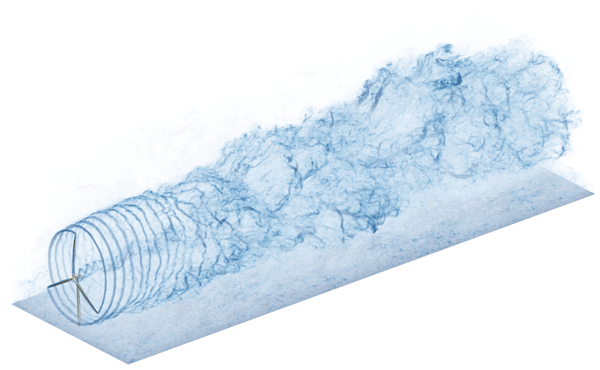
We built a small wind turbine model and tested it in a wind tunnel while improving computer simulations. Results show simulations accurately predict wind turbine wake behavior behind spinning blades, matching measurements. Some differences remain near blade roots. Combining experiments with refined models helps engineers predict wind turbine performance with greater confidence, supporting more efficient renewable energy design.
We built a small wind turbine model and tested it in a wind tunnel while improving computer...
Altmetrics
Final-revised paper
Preprint