
Articles | Volume 11, issue 4
https://doi.org/10.5194/wes-11-1205-2026
© Author(s) 2026. This work is distributed under
the Creative Commons Attribution 4.0 License.
the Creative Commons Attribution 4.0 License.
https://doi.org/10.5194/wes-11-1205-2026
© Author(s) 2026. This work is distributed under
the Creative Commons Attribution 4.0 License.
the Creative Commons Attribution 4.0 License.
Research article
| 
14 Apr 2026
Research article |
| 14 Apr 2026
| 14 Apr 2026
Bayesian uncertainty quantification of engineering models for wind farm–atmosphere interaction
Frederik Aerts
CORRESPONDING AUTHOR

Department of Mechanical Engineering, KU Leuven, Celestijnenlaan 300, 3001 Leuven, Belgium
Koen Devesse
Department of Mechanical Engineering, KU Leuven, Celestijnenlaan 300, 3001 Leuven, Belgium
Johan Meyers
Department of Mechanical Engineering, KU Leuven, Celestijnenlaan 300, 3001 Leuven, Belgium
Related authors
No articles found.
Olivier Ndindayino and Johan Meyers
Wind Energ. Sci. Discuss., https://doi.org/10.5194/wes-2026-49, https://doi.org/10.5194/wes-2026-49, 2026
Preprint under review for WES
Short summary
Short summary
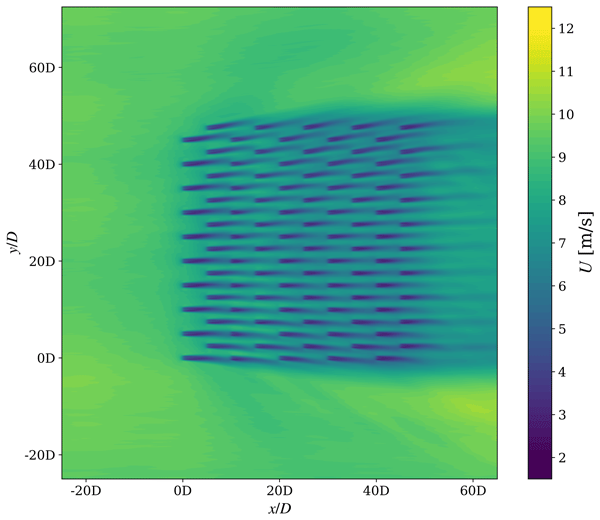
Numerical simulations were used to reveal how convective boundary layers impacts large offshore wind farms. The research shows that the enhanced turbulence helps wind speeds recover faster between turbines, increasing power production. However, even in deep boundary layers, flow blockage remains a significant impact on farm efficiency.
Stefan Ivanell, Warit Chanprasert, Luca Lanzilao, James Bleeg, Johan Meyers, Antoine Mathieu, Søren Juhl Andersen, Rem-Sophia Mouradi, Eric Dupont, Hugo Olivares-Espinosa, and Niels Troldborg
Wind Energ. Sci., 11, 937–960, https://doi.org/10.5194/wes-11-937-2026, https://doi.org/10.5194/wes-11-937-2026, 2026
Short summary
Short summary
This study explores how the height of the atmosphere's boundary layer impacts wind farm performance, focusing on how this factor influences energy output. By simulating different boundary layer heights and conditions, this research reveals that deeper layers promote better energy recovery. The findings highlight the importance of considering atmospheric conditions when simulating wind farms to maximize energy efficiency, offering valuable insights for the wind energy industry.
Koen Devesse and Johan Meyers
Wind Energ. Sci. Discuss., https://doi.org/10.5194/wes-2026-14, https://doi.org/10.5194/wes-2026-14, 2026
Revised manuscript under review for WES
Short summary
Short summary
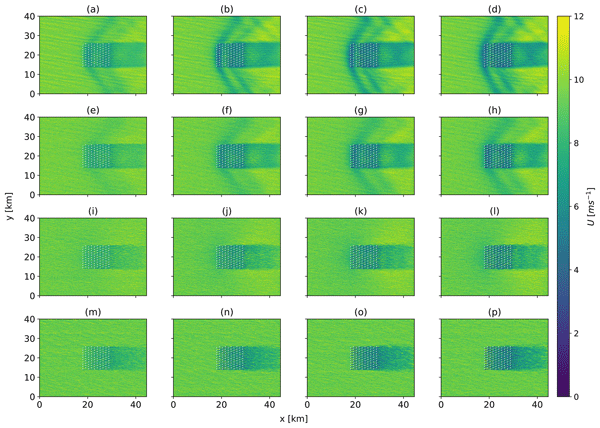
Large offshore wind farms can perturb the atmosphere as a whole, causing the wind upstream of the farm to slow down before reaching the first turbines. However, the models that can simulate this blockage effect are much more costly than the wake models used in the industry. This paper combines two different modeling approaches, scale separation and atmospheric perturbation models, to produce fast models that can predict blockage effects on farm power output at a low cost.
Olivier Ndindayino, Augustin Puel, and Johan Meyers
Wind Energ. Sci., 10, 2079–2098, https://doi.org/10.5194/wes-10-2079-2025, https://doi.org/10.5194/wes-10-2079-2025, 2025
Short summary
Short summary
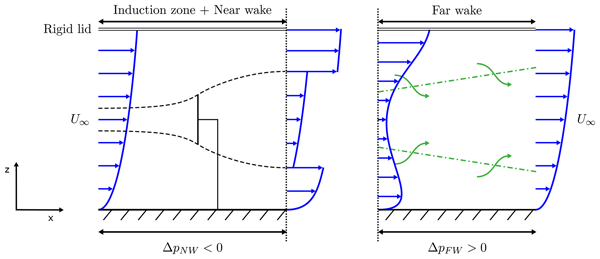
We study how flow blockage improves wind-farm efficiency using large-eddy simulations and develop an analytical model to better predict turbine power under blockage. We find that blockage enhances turbine power and thrust by creating a favourable pressure drop across the row, reducing near-wake deficit while inducing an unfavourable pressure increase downstream, which has minimal direct impact on far-wake development.
Jens Peter Karolus Wenceslaus Frankemölle, Johan Camps, Pieter De Meutter, and Johan Meyers
Geosci. Model Dev., 18, 1989–2003, https://doi.org/10.5194/gmd-18-1989-2025, https://doi.org/10.5194/gmd-18-1989-2025, 2025
Short summary
Short summary
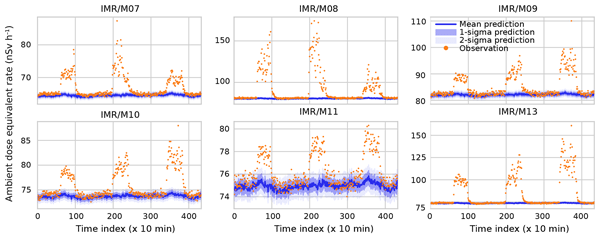
To detect anomalous radioactivity in the environment, it is paramount that we understand the natural background level. In this work, we propose a statistical model to describe the most likely background level and the associated uncertainty in a network of dose rate detectors. We train, verify, and validate the model using real environmental data. Using the model, we show that we can correctly predict the background level in a subset of the detector network during a known
anomalous event.
Théo Delvaux and Johan Meyers
Wind Energ. Sci., 10, 613–630, https://doi.org/10.5194/wes-10-613-2025, https://doi.org/10.5194/wes-10-613-2025, 2025
Short summary
Short summary
The work explores the potential for wind farm load reduction and power maximization. We carried out a series of high-fidelity large-eddy simulations for a wide range of atmospheric conditions and operating regimes. Because of turbine-scale interactions and large-scale effects, we observed that maximum power extraction is achieved at regimes lower than the Betz operating point. Thus, we proposed three simple approaches with which thrust significantly decreases with only a limited impact on power.
Andrew Kirby, Takafumi Nishino, Luca Lanzilao, Thomas D. Dunstan, and Johan Meyers
Wind Energ. Sci., 10, 435–450, https://doi.org/10.5194/wes-10-435-2025, https://doi.org/10.5194/wes-10-435-2025, 2025
Short summary
Short summary
Traditionally, the aerodynamic loss of wind farm efficiency is classified into wake loss and farm blockage loss. This study, using high-fidelity simulations, shows that neither of these two losses is well correlated with the overall farm efficiency. We propose new measures called turbine-scale efficiency and farm-scale efficiency to better describe turbine–wake effects and farm–atmosphere interactions. This study suggests the importance of better modelling farm-scale loss in future studies.

Majid Bastankhah, Marcus Becker, Matthew Churchfield, Caroline Draxl, Jay Prakash Goit, Mehtab Khan, Luis A. Martinez Tossas, Johan Meyers, Patrick Moriarty, Wim Munters, Asim Önder, Sara Porchetta, Eliot Quon, Ishaan Sood, Nicole van Lipzig, Jan-Willem van Wingerden, Paul Veers, and Simon Watson
Wind Energ. Sci., 9, 2171–2174, https://doi.org/10.5194/wes-9-2171-2024, https://doi.org/10.5194/wes-9-2171-2024, 2024
Short summary
Short summary
Dries Allaerts was born on 19 May 1989 and passed away at his home in Wezemaal, Belgium, on 10 October 2024 after battling cancer. Dries started his wind energy career in 2012 and had a profound impact afterward on the community, in terms of both his scientific realizations and his many friendships and collaborations in the field. His scientific acumen, open spirit of collaboration, positive attitude towards life, and playful and often cheeky sense of humor will be deeply missed by many.
Jérôme Neirynck, Jonas Van de Walle, Ruben Borgers, Sebastiaan Jamaer, Johan Meyers, Ad Stoffelen, and Nicole P. M. van Lipzig
Wind Energ. Sci., 9, 1695–1711, https://doi.org/10.5194/wes-9-1695-2024, https://doi.org/10.5194/wes-9-1695-2024, 2024
Short summary
Short summary
In our study, we assess how mesoscale weather systems influence wind speed variations and their impact on offshore wind energy production fluctuations. We have observed, for instance, that weather systems originating over land lead to sea wind speed variations. Additionally, we noted that power fluctuations are typically more significant in summer, despite potentially larger winter wind speed variations. These findings are valuable for grid management and optimizing renewable energy deployment.
Ruben Borgers, Marieke Dirksen, Ine L. Wijnant, Andrew Stepek, Ad Stoffelen, Naveed Akhtar, Jérôme Neirynck, Jonas Van de Walle, Johan Meyers, and Nicole P. M. van Lipzig
Wind Energ. Sci., 9, 697–719, https://doi.org/10.5194/wes-9-697-2024, https://doi.org/10.5194/wes-9-697-2024, 2024
Short summary
Short summary
Wind farms at sea are becoming more densely clustered, which means that next to individual wind turbines interfering with each other in a single wind farm also interference between wind farms becomes important. Using a climate model, this study shows that the efficiency of wind farm clusters and the interference between the wind farms in the cluster depend strongly on the properties of the individual wind farms and are also highly sensitive to the spacing between the wind farms.
Nick Janssens and Johan Meyers
Wind Energ. Sci., 9, 65–95, https://doi.org/10.5194/wes-9-65-2024, https://doi.org/10.5194/wes-9-65-2024, 2024
Short summary
Short summary
Proper wind farm control may vastly contribute to Europe's plan to go carbon neutral. However, current strategies don't account for turbine–wake interactions affecting power extraction. High-fidelity models (e.g., LES) are needed to accurately model this but are considered too slow in practice. By coarsening the resolution, we were able to design an efficient LES-based controller with real-time potential. This may allow us to bridge the gap towards practical wind farm control in the near future.
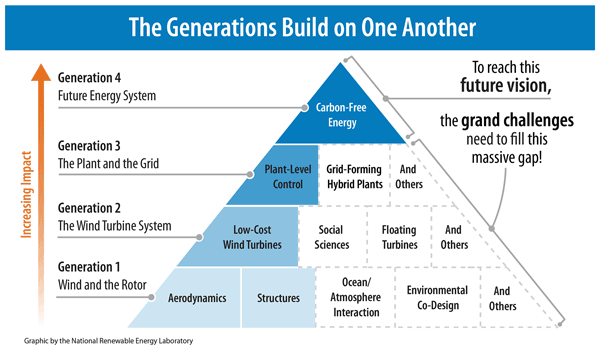
Paul Veers, Katherine Dykes, Sukanta Basu, Alessandro Bianchini, Andrew Clifton, Peter Green, Hannele Holttinen, Lena Kitzing, Branko Kosovic, Julie K. Lundquist, Johan Meyers, Mark O'Malley, William J. Shaw, and Bethany Straw
Wind Energ. Sci., 7, 2491–2496, https://doi.org/10.5194/wes-7-2491-2022, https://doi.org/10.5194/wes-7-2491-2022, 2022
Short summary
Short summary
Wind energy will play a central role in the transition of our energy system to a carbon-free future. However, many underlying scientific issues remain to be resolved before wind can be deployed in the locations and applications needed for such large-scale ambitions. The Grand Challenges are the gaps in the science left behind during the rapid growth of wind energy. This article explains the breadth of the unfinished business and introduces 10 articles that detail the research needs.
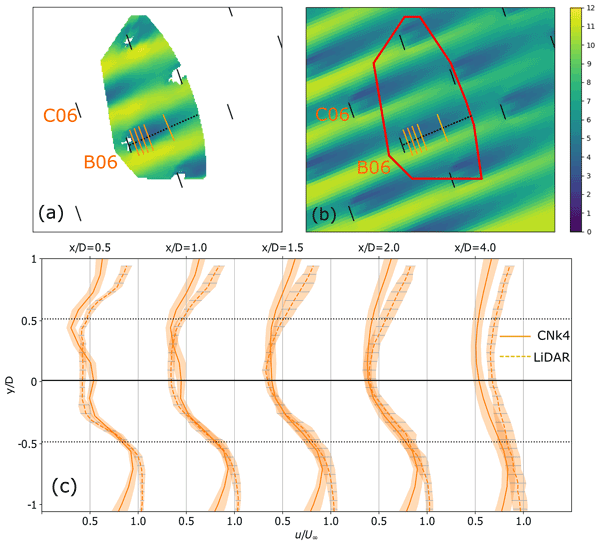
Ishaan Sood, Elliot Simon, Athanasios Vitsas, Bart Blockmans, Gunner C. Larsen, and Johan Meyers
Wind Energ. Sci., 7, 2469–2489, https://doi.org/10.5194/wes-7-2469-2022, https://doi.org/10.5194/wes-7-2469-2022, 2022
Short summary
Short summary
In this work, we conduct a validation study to compare a numerical solver against measurements obtained from the offshore Lillgrund wind farm. By reusing a previously developed inflow turbulent dataset, the atmospheric conditions at the wind farm were recreated, and the general performance trends of the turbines were captured well. The work increases the reliability of numerical wind farm solvers while highlighting the challenges of accurately representing large wind farms using such solvers.
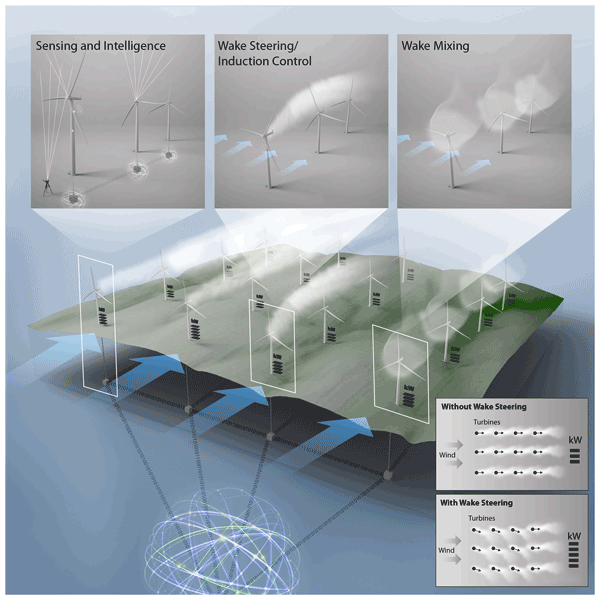
Johan Meyers, Carlo Bottasso, Katherine Dykes, Paul Fleming, Pieter Gebraad, Gregor Giebel, Tuhfe Göçmen, and Jan-Willem van Wingerden
Wind Energ. Sci., 7, 2271–2306, https://doi.org/10.5194/wes-7-2271-2022, https://doi.org/10.5194/wes-7-2271-2022, 2022
Short summary
Short summary
We provide a comprehensive overview of the state of the art and the outstanding challenges in wind farm flow control, thus identifying the key research areas that could further enable commercial uptake and success. To this end, we have structured the discussion on challenges and opportunities into four main areas: (1) insight into control flow physics, (2) algorithms and AI, (3) validation and industry implementation, and (4) integrating control with system design
(co-design).
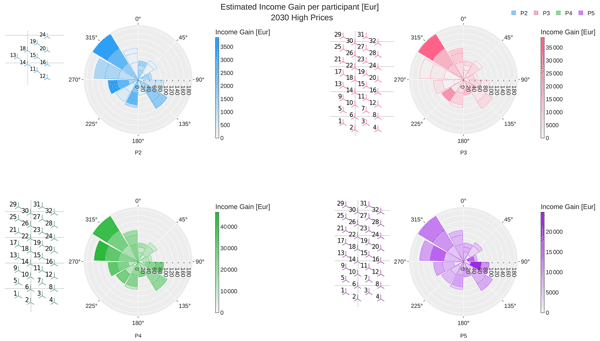
Konstanze Kölle, Tuhfe Göçmen, Irene Eguinoa, Leonardo Andrés Alcayaga Román, Maria Aparicio-Sanchez, Ju Feng, Johan Meyers, Vasilis Pettas, and Ishaan Sood
Wind Energ. Sci., 7, 2181–2200, https://doi.org/10.5194/wes-7-2181-2022, https://doi.org/10.5194/wes-7-2181-2022, 2022
Short summary
Short summary
The paper studies wind farm flow control (WFFC) in simulations with variable electricity prices. The results indicate that considering the electricity price in the operational strategy can be beneficial with respect to the gained income compared to focusing on the power gain only. Moreover, revenue maximization by balancing power production and structural load reduction is demonstrated at the example of a single wind turbine.
Tuhfe Göçmen, Filippo Campagnolo, Thomas Duc, Irene Eguinoa, Søren Juhl Andersen, Vlaho Petrović, Lejla Imširović, Robert Braunbehrens, Jaime Liew, Mads Baungaard, Maarten Paul van der Laan, Guowei Qian, Maria Aparicio-Sanchez, Rubén González-Lope, Vinit V. Dighe, Marcus Becker, Maarten J. van den Broek, Jan-Willem van Wingerden, Adam Stock, Matthew Cole, Renzo Ruisi, Ervin Bossanyi, Niklas Requate, Simon Strnad, Jonas Schmidt, Lukas Vollmer, Ishaan Sood, and Johan Meyers
Wind Energ. Sci., 7, 1791–1825, https://doi.org/10.5194/wes-7-1791-2022, https://doi.org/10.5194/wes-7-1791-2022, 2022
Short summary
Short summary
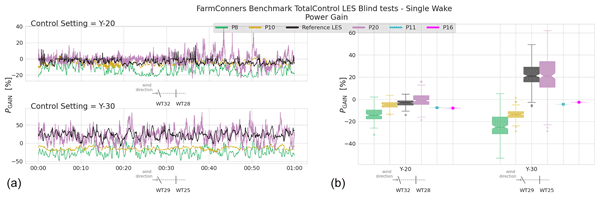
The FarmConners benchmark is the first of its kind to bring a wide variety of data sets, control settings, and model complexities for the (initial) assessment of wind farm flow control benefits. Here we present the first part of the benchmark results for three blind tests with large-scale rotors and 11 participating models in total, via direct power comparisons at the turbines as well as the observed or estimated power gain at the wind farm level under wake steering control strategy.

Koen Devesse, Luca Lanzilao, Sebastiaan Jamaer, Nicole van Lipzig, and Johan Meyers
Wind Energ. Sci., 7, 1367–1382, https://doi.org/10.5194/wes-7-1367-2022, https://doi.org/10.5194/wes-7-1367-2022, 2022
Short summary
Short summary
Recent research suggests that offshore wind farms might form such a large obstacle to the wind that it already decelerates before reaching the first turbines. Part of this phenomenon could be explained by gravity waves. Research on these gravity waves triggered by mountains and hills has found that variations in the atmospheric state with altitude can have a large effect on how they behave. This paper is the first to take the impact of those vertical variations into account for wind farms.
Thomas Haas, Jochem De Schutter, Moritz Diehl, and Johan Meyers
Wind Energ. Sci., 7, 1093–1135, https://doi.org/10.5194/wes-7-1093-2022, https://doi.org/10.5194/wes-7-1093-2022, 2022
Short summary
Short summary
In this work, we study parks of large-scale airborne wind energy systems using a virtual flight simulator. The virtual flight simulator combines numerical techniques from flow simulation and kite control. Using advanced control algorithms, the systems can operate efficiently in the park despite turbulent flow conditions. For the three configurations considered in the study, we observe significant wake effects, reducing the power yield of the parks.
Cited articles
Abkar, M. and Porté-Agel, F.: Influence of atmospheric stability on wind-turbine wakes: a large-eddy simulation study, Phys. Fluids, 27, https://doi.org/10.1063/1.4913695, 2015. a
Aerts, F. and Meyers, J.: UMBRA: an Uncertainty Modeling toolbox for Bayesian data Re-Analysis, Gitlab [code], https://gitlab.kuleuven.be/TFSO-software/umbra, last access: 16 March 2026. a
Barthelmie, R. J., Hansen, K., Frandsen, S. T., Rathmann, O., Schepers, J. G., Schlez, W., Phillips, J., Rados, K., Zervos, A., Politis, E. S., and Chaviaropoulos, P. K.: Modelling and measuring flow and wind turbine wakes in large wind farms offshore, Wind Energy, 12, 431–444, https://doi.org/10.1002/we.348, 2009. a
Bastankhah, M. and Porté-Agel, F.: A new analytical model for wind-turbine wakes, Renew. Energ., 70, 116–123, https://doi.org/10.1016/j.renene.2014.01.002, 2014. a, b
Bastankhah, M., Mohammadi, M. M., Lees, C., Diaz, G. P. N., Buxton, O. R., and Ivanell, S.: A fast-running physics-based wake model for a semi-infinite wind farm, J. Fluid Mech., 985, https://doi.org/10.1017/jfm.2024.282, 2024. a
Beck, J. L. and Zuev, K. M.: Asymptotically independent Markov sampling: a new MCMC scheme for Bayesian inference, Int. J. Uncertain. Quan., 3, 445–474, https://doi.org/10.1615/int.j.uncertaintyquantification. 2012004713, 2013. a
Bortolotti, P., Dykes, K., Merz, K., and Zahle, F.: IEA Wind Task 37 on systems engineering in wind energy, WP2-Reference Wind Turbines: IEA Wind Task, 37, 565, https://doi.org/10.2172/1529216, 2019. a
Branlard, E., Quon, E., Forsting, A. R. M., King, J., and Moriarty, P.: Wind farm blockage effects: comparison of different engineering models, J. Phys. Conf. Ser., 1618, 062036, https://doi.org/10.1088/1742-6596/1618/6/062036, 2020. a
Brynjarsdóttir, J. and O'Hagan, A.: Learning about physical parameters: the importance of model discrepancy, Inverse Probl., 30, 114007, https://doi.org/10.1088/0266-5611/30/11/114007, 2014. a, b, c, d
Ching, J. and Chen, Y.-C.: Transitional Markov chain Monte Carlo method for Bayesian model updating, model class selection, and model averaging, J. Eng. Mech., 133, https://doi.org/10.1061/(ASCE)0733-9399(2007)133:7(816), 2007. a
Clerc, A., Anderson, M., Stuart, P., and Habenicht, G.: A systematic method for quantifying wind flow modelling uncertainty in wind resource assessment, J. Wind Eng. Ind. Aerod., 111, 85–94, https://doi.org/10.1016/j.jweia.2012.08.006, 2012. a
Clifton, A., Smith, A., and Fields, M.: Wind plant preconstruction energy estimates, current practice and opportunities, Tech. rep., National Renewable Energy Lab. (NREL), Golden, CO (US), https://doi.org/10.2172/1248798, 2016. a
Crespo, A. and Hernández, J.: Turbulence characteristics in wind-turbine wakes, J. Wind Eng. Ind. Aerod., 61, 71–85, https://doi.org/10.1016/0167-6105(95)00033-X, 1996. a
Devesse, K., Lanzilao, L., Allaerts, D., Jamaer, S., and Meyers, J.: Wind-fArm gravitY-waVe and blockagE code, KU Leuven RDR, V2 [code], https://doi.org/10.48804/XMNVVY, 2023. a, b
Devesse, K., Stipa, S., Brinkerhoff, J., Allaerts, D., and Meyers, J.: Comparing methods for coupling wake models to an atmospheric perturbation model in WAYVE, J. Phys. Conf. Ser., 2767, 092079, https://doi.org/10.1088/1742-6596/2767/9/092079, 2024b. a, b, c, d
Doekemeijer, B. M., Simley, E., and Fleming, P.: Comparison of the Gaussian wind farm model with historical data of three offshore wind farms, Energies, 15, 1964, https://doi.org/10.3390/en15061964, 2022. a, b
Doucet, A. and Johansen, A. M.: A tutorial on particle filtering and smoothing: fifteen years later, in: The Oxford Handbook of Nonlinear Filtering, edited by: Crisan, D. and Rozovskii, B., Oxford University Press, New York, 656–704, ISBN 9780199532902, 2009. a
Doucet, A., Freitas, N., and Gordon, N.: Sequential Monte Carlo Methods in Practice, Vol. 1, Springer, https://doi.org/10.1007/978-1-4757-3437-9, 2001. a
Foreman-Mackey, D.: corner.py: scatterplot matrices in Python, The Journal of Open Source Software, 1, 24, https://doi.org/10.21105/joss.00024, 2016. a
Frandsen, S., Barthelmie, R., Pryor, S., Rathmann, O., Larsen, S., Højstrup, J., and Thøgersen, M.: Analytical modelling of wind speed deficit in large offshore wind farms, Wind Energy, 9, 39–53, https://doi.org/10.1002/we.189, 2006. a
Garcia, C. M., Jackson, P. R., and Garcia, M. H.: Confidence intervals in the determination of turbulence parameters, Exp. Fluids, 40, 514–522, https://doi.org/10.1007/s00348-005-0091-8, 2005. a, b
Gaumond, M., Réthoré, P. E., Ott, S., Peña, A., Bechmann, A., and Hansen, K. S.: Evaluation of the wind direction uncertainty and its impact on wake modeling at the Horns Rev offshore wind farm, Wind Energy, 17, 1169–1178, https://doi.org/10.1002/we.1625, 2014. a, b
Gelman, A., Simpson, D., and Betancourt, M.: The prior can often only be understood in the context of the likelihood, Entropy, 19, https://doi.org/10.3390/e19100555, 2017. a
Geyer, C. J.: Introduction to Markov chain Monte Carlo, in: Handbook of Markov Chain Monte Carlo, 20116022, 22, https://doi.org/10.1201/b10905, 2011. a
Gilks, W. R. and Berzuini, C.: Following a moving target-Monte Carlo inference for dynamic Bayesian models, J. Roy. Stat. Soc. B Met., 63, 127–146, 2001. a
Göçmen, T., Laan, P. v. d., Réthoré, P.-E., Diaz, A. P., Larsen, G. C., and Ott, S.: Wind turbine wake models developed at the Technical University of Denmark: a review, Renew. Sust. Energ. Rev., 60, 752–769, https://doi.org/10.1016/j.rser.2016.01.113, 2016. a, b
Göçmen, T., Campagnolo, F., Duc, T., Eguinoa, I., Andersen, S. J., Petrović, V., Imširović, L., Braunbehrens, R., Liew, J., Baungaard, M., van der Laan, M. P., Qian, G., Aparicio-Sanchez, M., González-Lope, R., Dighe, V. V., Becker, M., van den Broek, M. J., van Wingerden, J.-W., Stock, A., Cole, M., Ruisi, R., Bossanyi, E., Requate, N., Strnad, S., Schmidt, J., Vollmer, L., Sood, I., and Meyers, J.: FarmConners wind farm flow control benchmark – Part 1: Blind test results, Wind Energ. Sci., 7, 1791–1825, https://doi.org/10.5194/wes-7-1791-2022, 2022. a
Haario, H., Saksman, E., and Tamminen, J.: An adaptive Metropolis algorithm, Bernoulli, 7, 223–242, https://doi.org/10.2307/3318737, 2001. a
Hoffman, M. D. and Gelman, A.: The No-U-Turn sampler: adaptively setting path lengths in Hamiltonian Monte Carlo, J. Mach. Learn. Res., 15, 1593–1623, 2014. a
Howland, M. F.: Wind farm yaw control set-point optimization under model parameter uncertainty, J. Renew. Sustain. Ener., 13, https://doi.org/10.1063/5.0051071, 2021. a
Jensen, N. O.: A Note on Wind Generator Interaction, Risø National Laboratory, ISBN 87-550-0971-9, 1983. a
Kantas, N., Beskos, A., and Jasra, A.: Sequential Monte Carlo methods for high-dimensional inverse problems: a case study for the Navier–Stokes equations, SIAM/ASA Journal on Uncertainty Quantification, 2, 464–489, https://doi.org/10.1137/130930364, 2014. a
Kennedy, M. C. and O'Hagan, A.: Bayesian calibration of computer models, J. Roy. Stat. Soc. B Met., 63, 425–464, https://doi.org/10.1111/1467-9868.00294, 2001. a, b
Klemmer, K. S. and Howland, M. F.: Wake turbulence modeling in stratified atmospheric flows using a novel k−l model, J. Renew. Sustain. Ener., 17, https://doi.org/10.1063/5.0249278, 2025. a
Kwon, S. D.: Uncertainty analysis of wind energy potential assessment, Appl. Energ., 87, 856–865, https://doi.org/10.1016/j.apenergy.2009.08.038, 2010. a
Lackner, M., Rogers, A., and Manwell, J.: Uncertainty Analysis in Wind Resource Assessment and Wind Energy Production Estimation, American Institute of Aeronautics and Astronautics, ISBN 978-1-62410-012-3, https://doi.org/10.2514/6.2007-1222, 2007. a
Lanzilao, L. and Meyers, J.: A new wake merging method for wind farm power prediction in the presence of heterogeneous background velocity fields, Wind Energy, 25, 237–259, https://doi.org/10.1002/we.2669, 2022. a, b
Lanzilao, L. and Meyers, J.: A reference database of wind-farm large-eddy simulations for parametrizing effects of blockage and gravity waves, KU Leuven RDR, V2 [data set], https://doi.org/10.48804/L45LTT, 2023. a
Lanzilao, L. and Meyers, J.: A parametric large-eddy simulation study of wind-farm blockage and gravity waves in conventionally neutral boundary layers, J. Fluid Mech., 979, https://doi.org/10.1017/jfm.2023.1088, 2024. a, b, c, d
Lee, J. C. Y. and Fields, M. J.: An overview of wind-energy-production prediction bias, losses, and uncertainties, Wind Energ. Sci., 6, 311–365, https://doi.org/10.5194/wes-6-311-2021, 2021. a, b, c
Lissaman, P. B.: Energy effectiveness of arbitrary arrays of wind turbines, J. Energy, 3, 323–328, 1979. a
LoCascio, M. J., Gorlé, C., and Howland, M. F.: Data-driven wake model parameter estimation to analyze effects of wake superposition, J. Renew. Sustain. Ener., 15, https://doi.org/10.1063/5.0163896, 2023. a, b, c
McElreath, R.: Statistical Rethinking, Chapman and Hall/CRC, https://doi.org/10.1201/9781315372495, 2018. a, b
Meyers, J., Bottasso, C., Dykes, K., Fleming, P., Gebraad, P., Giebel, G., Göçmen, T., and van Wingerden, J.-W.: Wind farm flow control: prospects and challenges, Wind Energ. Sci., 7, 2271–2306, https://doi.org/10.5194/wes-7-2271-2022, 2022. a
Minson, S. E., Simons, M., and Beck, J. L.: Bayesian inversion for finite fault earthquake source models I-theory and algorithm, Geophys. J. Int., 194, 1701–1726, https://doi.org/10.1093/gji/ggt180, 2013. a, b, c, d
Moriarty, P., Rodrigo, J. S., Gancarski, P., Chuchfield, M., Naughton, J. W., Hansen, K. S., MacHefaux, E., Maguire, E., Castellani, F., Terzi, L., Breton, S. P., and Ueda, Y.: IEA-task 31 WAKEBENCH: towards a protocol for wind farm flow model evaluation. Part 2: Wind farm wake models, J. Phys. Conf. Ser., 524, https://doi.org/10.1088/1742-6596/524/1/012185, 2014. a
Murphy, K. P.: Probabilistic Machine Learning: Advanced Topics, MIT Press, ISBN 978-0-262-04843-9, 2023. a
Ndindayino, O., Puel, A., and Meyers, J.: Effect of blockage on wind turbine power and wake development, Wind Energ. Sci., 10, 2079–2098, https://doi.org/10.5194/wes-10-2079-2025, 2025. a, b
Nygaard, N. G., Poulsen, L., Svensson, E., and Pedersen, J. G.: Large-scale benchmarking of wake models for offshore wind farms, J. Phys. Conf. Ser., 2265, 022008, https://doi.org/10.1088/1742-6596/2265/2/022008, 2022. a
Ørsted: Ørsted presents update on its long-term financial targets, https://orsted.com/en/company-announcement-list/2019/10/1937002 (last access: 18 February 2026), 2019. a
Plumlee, M.: Bayesian calibration of inexact computer models, J. Am. Stat. Assoc., 112, 1274–1285, https://doi.org/10.1080/01621459.2016.1211016, 2017. a, b
Quick, J., Mouradi, R.-S., Devesse, K., Mathieu, A., Paul Van Der Laan, M., Murcia Leon, J. P., and Schulte, J.: Verification and validation of wind farm flow models, J. Phys. Conf. Ser., 2767, 092074, https://doi.org/10.1088/1742-6596/2767/9/092074, 2024. a
Rodrigo, J. S., Arroyo, R. A. C., Moriarty, P., Churchfield, M., Kosović, B., Réthoré, P. E., Hansen, K. S., Hahmann, A., Mirocha, J. D., and Rife, D.: Mesoscale to microscale wind farm flow modeling and evaluation, WIREs Energy Environ., 6, https://doi.org/10.1002/wene.214, 2017. a, b
Sargsyan, K., Najm, H. N., and Ghanem, R.: On the statistical calibration of physical models, Int. J. Chem. Kinet., 47, 246–276, https://doi.org/10.1002/kin.20906, 2015. a
Smith, R. B.: Gravity wave effects on wind farm efficiency, Wind Energy, 13, 449–458, https://doi.org/10.1002/we.366, 2010. a
Stipa, S., Ajay, A., Allaerts, D., and Brinkerhoff, J.: The multi-scale coupled model: a new framework capturing wind farm–atmosphere interaction and global blockage effects, Wind Energ. Sci., 9, 1123–1152, https://doi.org/10.5194/wes-9-1123-2024, 2024a. a, b, c, d
Stipa, S., Allaerts, D., and Brinkerhoff, J.: A shear stress parametrization for arbitrary wind farms in conventionally neutral boundary layers, J. Fluid Mech., 981, A14, https://doi.org/10.1017/jfm.2024.22, 2024b. a
Toussaint, U. V.: Bayesian inference in physics, Rev. Mod. Phys., 83, 943–999, https://doi.org/10.1103/RevModPhys.83.943, 2011. a
Trotta, R.: Bayes in the sky: Bayesian inference and model selection in cosmology, Contemp. Phys., 49, 71–104, https://doi.org/10.1080/00107510802066753, 2008. a
van Binsbergen, D., Daems, P.-J., Verstraeten, T., Nejad, A. R., and Helsen, J.: Hyperparameter tuning framework for calibrating analytical wake models using SCADA data of an offshore wind farm, Wind Energ. Sci., 9, 1507–1526, https://doi.org/10.5194/wes-9-1507-2024, 2024. a
Walker, K., Adams, N., Gribben, B., Gellatly, B., Nygaard, N. G., Henderson, A., Marchante Jimémez, M., Schmidt, S. R., Rodriguez Ruiz, J., Paredes, D., Harrington, G., Connell, N., Peronne, O., Cordoba, M., Housley, P., Cussons, R., Håkansson, M., Knauer, A., and Maguire, E.: An evaluation of the predictive accuracy of wake effects models for offshore wind farms, Wind Energy, 19, 979–996, https://doi.org/10.1002/we.1871, 2015. a
Wasserman, L.: All of Statistics: a Concise Course in Statistical Inference, Springer Science and Business Media, https://doi.org/10.1007/978-0-387-21736-9, 2004. a
Wu, S., Angelikopoulos, P., Beck, J. L., and Koumoutsakos, P.: Hierarchical stochastic model in Bayesian inference for engineering applications: theoretical implications and efficient approximation, ASCE-ASME Journal of Risk and Uncertainty in Engineering Systems, Part B: Mechanical Engineering, 5, https://doi.org/10.1115/1.4040571, 2018a. a
Wu, S., Angelikopoulos, P., Papadimitriou, C., and Koumoutsakos, P.: Bayesian annealed sequential importance sampling: an unbiased version of transitional Markov chain Monte Carlo, ASCE-ASME Journal of Risk and Uncertainty in Engineering Systems, Part B: Mechanical Engineering, 4, https://doi.org/10.1115/1.4037450, 2018b. a
Xiao, H. and Cinnella, P.: Quantification of model uncertainty in RANS simulations: a review, Prog. Aerosp. Sci., 108, 1–31, https://doi.org/10.1016/j.paerosci.2018.10.001, 2019. a
Zehtabiyan-Rezaie, N. and Abkar, M.: A short note on turbulence characteristics in wind-turbine wakes, J. Wind Eng. Ind. Aerod., 240, https://doi.org/10.1016/j.jweia.2023.105504, 2023. a
Zhang, J. and Zhao, X.: Quantification of parameter uncertainty in wind farm wake modeling, Energy, 196, 117065, https://doi.org/10.1016/j.energy.2020.117065, 2020. a, b, c, d
Short summary
This paper presents an improved Bayesian uncertainty quantification framework for calibrating and comparing wind farm flow models. It quantifies the parameter uncertainty in a joint posterior distribution as well as the model uncertainty. Applied to a large-eddy simulation dataset for wind farm blockage, it compares a standard wake model and an atmospheric perturbation model, showing the latter yields lower model uncertainty. The framework is available in the open-source Python package UMBRA (Uncertainty Modeling toolbox for Bayesian data Re-Analysis).
This paper presents an improved Bayesian uncertainty quantification framework for calibrating...


Altmetrics
Final-revised paper
Preprint