
Articles | Volume 11, issue 4
https://doi.org/10.5194/wes-11-1531-2026
© Author(s) 2026. This work is distributed under
the Creative Commons Attribution 4.0 License.
the Creative Commons Attribution 4.0 License.
https://doi.org/10.5194/wes-11-1531-2026
© Author(s) 2026. This work is distributed under
the Creative Commons Attribution 4.0 License.
the Creative Commons Attribution 4.0 License.
Research article
| 
30 Apr 2026
Research article |
| 30 Apr 2026
| 30 Apr 2026
Aeroelastic instabilities of the IEA 15 MW rotor during extreme yaw maneuvers
Leo Höning
CORRESPONDING AUTHOR

Institute of Physics, University of Oldenburg, Carl von Ossietzky University Oldenburg, Küpkersweg 70, 26129 Oldenburg, Germany
Fraunhofer Institute for Wind Energy Systems – Fraunhofer IWES, Küpkersweg 70, 26129 Oldenburg, Germany
Iván Herráez
University of Applied Sciences Emden/Leer, Constantiapl. 4, 26723 Emden, Germany
Bernhard Stoevesandt
Fraunhofer Institute for Wind Energy Systems – Fraunhofer IWES, Küpkersweg 70, 26129 Oldenburg, Germany
Joachim Peinke
Institute of Physics, University of Oldenburg, Carl von Ossietzky University Oldenburg, Küpkersweg 70, 26129 Oldenburg, Germany
Related authors
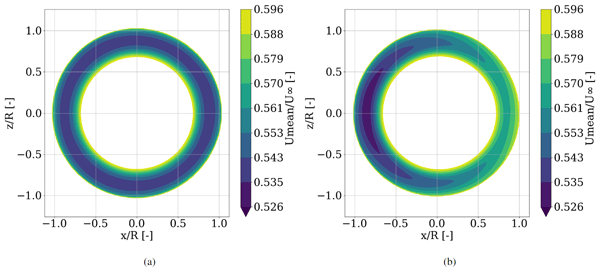
Leo Höning, Laura J. Lukassen, Bernhard Stoevesandt, and Iván Herráez
Wind Energ. Sci., 9, 203–218, https://doi.org/10.5194/wes-9-203-2024, https://doi.org/10.5194/wes-9-203-2024, 2024
Short summary
Short summary
This study analyzes the impact of wind turbine rotor blade flexibility on the aerodynamic loading of the blades and the consequential wind characteristics in the near wake of the turbine. It is shown that gravitation leads to rotational periodic fluctuations of blade loading, which directly impacts the trajectory of the blade tip vortex at different rotor blade positions while also resulting in a non-uniform wind velocity deficit in the wake of the wind turbine.
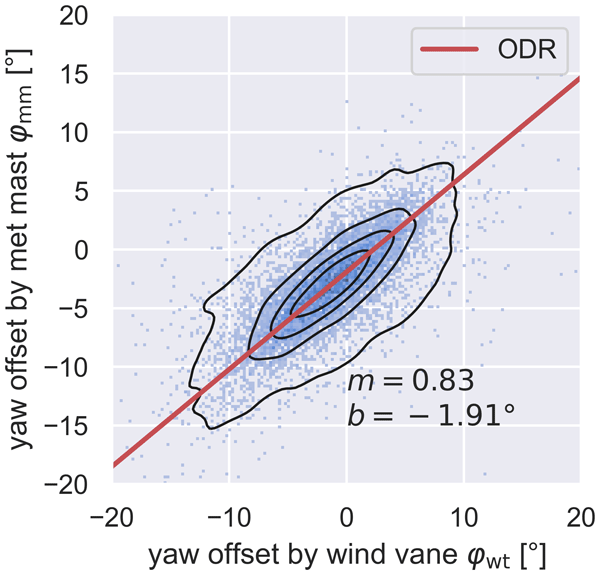
Andreas Rott, Leo Höning, Paul Hulsman, Laura J. Lukassen, Christof Moldenhauer, and Martin Kühn
Wind Energ. Sci., 8, 1755–1770, https://doi.org/10.5194/wes-8-1755-2023, https://doi.org/10.5194/wes-8-1755-2023, 2023
Short summary
Short summary
This study examines wind vane measurements of commercial wind turbines and their impact on yaw control. The authors discovered that rotor interference can cause an overestimation of wind vane measurements, leading to overcorrection of the yaw controller. A correction function that improves the yaw behaviour is presented and validated in free-field experiments on a commercial wind turbine. This work provides new insights into wind direction measurements and suggests ways to optimize yaw control.
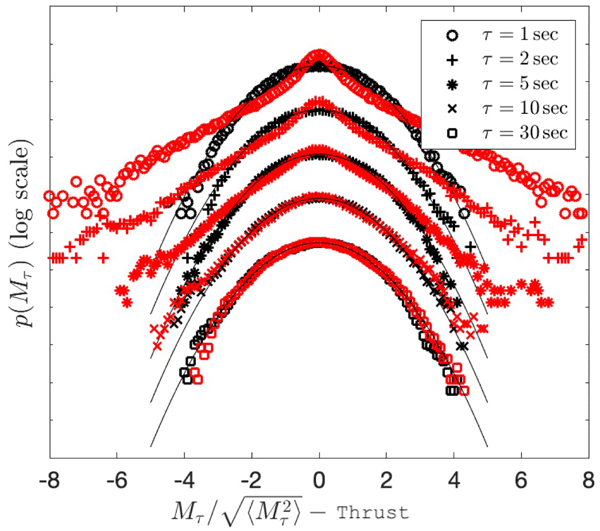
Khaled Yassin, Arne Helms, Daniela Moreno, Hassan Kassem, Leo Höning, and Laura J. Lukassen
Wind Energ. Sci., 8, 1133–1152, https://doi.org/10.5194/wes-8-1133-2023, https://doi.org/10.5194/wes-8-1133-2023, 2023
Short summary
Short summary
The current turbulent wind field models stated in the IEC 61400-1 standard underestimate the probability of extreme changes in wind velocity. This underestimation can lead to the false calculation of extreme and fatigue loads on the turbine. In this work, we are trying to apply a random time-mapping technique to one of the standard turbulence models to adapt to such extreme changes. The turbulent fields generated are compared with a standard wind field to show the effects of this new mapping.
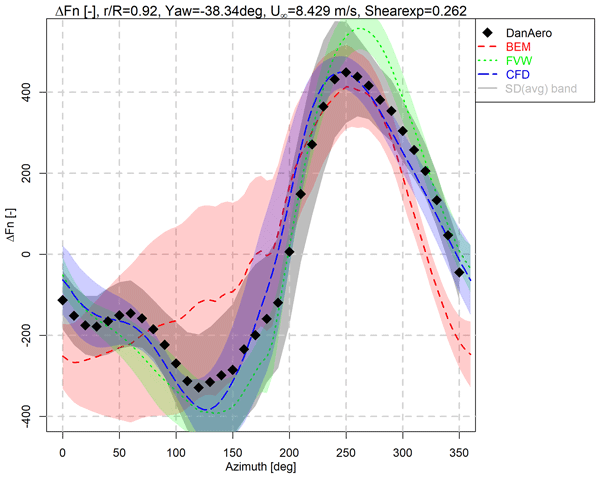
Koen Boorsma, Gerard Schepers, Helge Aagard Madsen, Georg Pirrung, Niels Sørensen, Galih Bangga, Manfred Imiela, Christian Grinderslev, Alexander Meyer Forsting, Wen Zhong Shen, Alessandro Croce, Stefano Cacciola, Alois Peter Schaffarczyk, Brandon Lobo, Frederic Blondel, Philippe Gilbert, Ronan Boisard, Leo Höning, Luca Greco, Claudio Testa, Emmanuel Branlard, Jason Jonkman, and Ganesh Vijayakumar
Wind Energ. Sci., 8, 211–230, https://doi.org/10.5194/wes-8-211-2023, https://doi.org/10.5194/wes-8-211-2023, 2023
Short summary
Short summary
Within the framework of the fourth phase of the International Energy Agency's (IEA) Wind Task 29, a large comparison exercise between measurements and aeroelastic simulations has been carried out. Results were obtained from more than 19 simulation tools of various fidelity, originating from 12 institutes and compared to state-of-the-art field measurements. The result is a unique insight into the current status and accuracy of rotor aerodynamic modeling.
Christian W. Schulz, Michael Hölling, Joachim Peinke, and Thomas Messmer
Wind Energ. Sci., 11, 3775–3783, https://doi.org/10.5194/wes-11-3775-2026, https://doi.org/10.5194/wes-11-3775-2026, 2026
Short summary
Short summary
Floating wind turbines move with waves and wind, surging back and forth. Using wind tunnel experiments, we show that this motion can help the wake (the disturbed air trailing the turbine) recover faster, so downwind turbines receive more wind. This effect is strong when the turbine pulls hard on the wind, known as high thrust. We also discovered a new effect: recovery improves when the surging is just slightly slower than the blades' spin. This could make floating wind farms more efficient.
Astrid Lampert, Beatriz Cañadillas, Thomas Rausch, Lea Schmitt, Bughsin' Djath, Johannes Schulz-Stellenfleth, Andreas Platis, Kjell zum Berge, Ines Schäfer, Jens Bange, Lukas Gruchot, Thomas Neumann, Martin Dörenkämper, Bernhard Stoevesandt, Julia Gottschall, Lukas Vollmer, Stefan Emeis, Mares Barekzai, Simon Siedersleben, Martin Kühn, Gerald Steinfeld, Detlev Heinemann, Joachim Peinke, Hendrik Heißelmann, Jörge Schneemann, Gabriele Centurelli, Philipp Waldmann, and Konrad Bärfuss
Wind Energ. Sci., 11, 3057–3075, https://doi.org/10.5194/wes-11-3057-2026, https://doi.org/10.5194/wes-11-3057-2026, 2026
Short summary
Short summary
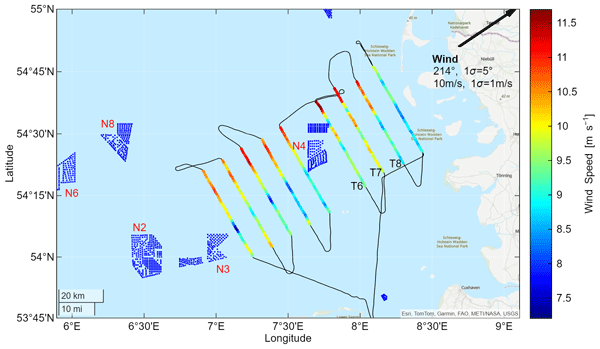
Two major aircraft measurement campaigns above the North Sea provide insights into modifications of the wind field and sea surface induced by wind farms. The aircraft performed transects at hub height upstream and downstream of wind farm clusters and identified different effects, e.g. how long it takes for the wind speed to recover after the wind farm, how changes across the coastline interact with wind energy, and if wind farms are well represented in numerical simulations.
Marcel Bock and Joachim Peinke
Wind Energ. Sci. Discuss., https://doi.org/10.5194/wes-2026-71, https://doi.org/10.5194/wes-2026-71, 2026
Revised manuscript under review for WES
Short summary
Short summary
This work describes the wake using higher-order statistics derived from numerical simulations (by using one- and two-point statistics, including velocity increments). This demonstrates the existence of the intermittent ring outside the averaged velocity deficit. Furthermore, a novel method is presented that enables the efficient simulation of turbulent wakes.
Carsten Schubert, Daniela Moreno, Jörg Schwarte, Jan Friedrich, Matthias Wächter, Gritt Pokriefke, Günter Radons, and Joachim Peinke
Wind Energ. Sci., 11, 1267–1285, https://doi.org/10.5194/wes-11-1267-2026, https://doi.org/10.5194/wes-11-1267-2026, 2026
Short summary
Short summary
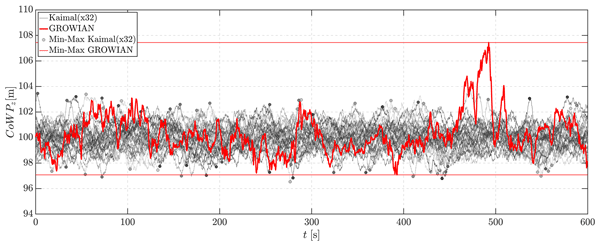
For modern wind turbines, the effects of inflow wind fluctuations on loads are becoming increasingly critical. Based on field measurements and simulations, we identify “bump” events responsible for high damage equivalent loads. In this article, we introduce a new characteristic of a wind field: the virtual center of wind pressure, which highly correlates to the identified load events observed in the operational measured data.
Jannis Maus, Joachim Peinke, and Michael Hölling
Wind Energ. Sci. Discuss., https://doi.org/10.5194/wes-2026-48, https://doi.org/10.5194/wes-2026-48, 2026
Preprint under review for WES
Short summary
Short summary
Among wind energy research, wind turbines with more than one rotor have recently gained a lot of attraction. Apart from promised lower maintenance- or construction costs, an increase in power generation per area, a better control over their wake (wind shadow/turbulence from turbines) makes these turbines highly attractive for large scale usage. This study shows experimentally, how the wake in a dual rotor can be steered and why this is highly promising for increasing windfarm efficiencies.

Branko Kosović, Sukanta Basu, Jacob Berg, Larry K. Berg, Sue E. Haupt, Xiaoli G. Larsén, Joachim Peinke, Richard J. A. M. Stevens, Paul Veers, and Simon Watson
Wind Energ. Sci., 11, 509–555, https://doi.org/10.5194/wes-11-509-2026, https://doi.org/10.5194/wes-11-509-2026, 2026
Short summary
Short summary
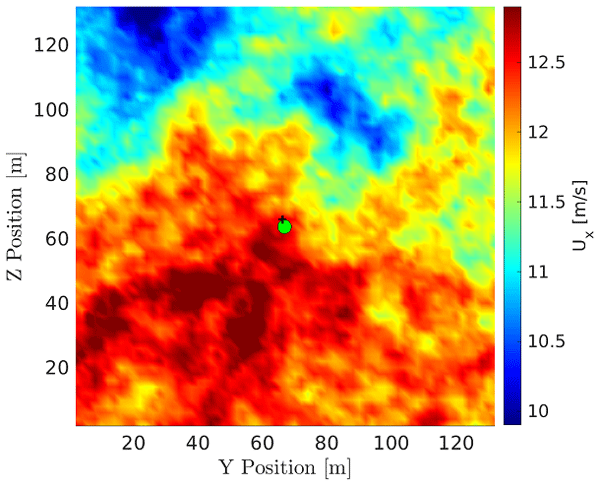
Most human activity happens in the layer of the atmosphere which extends a few hundred meters to a couple of kilometers above the surface of the Earth. The flow in this layer is turbulent. Turbulence impacts wind power production and turbine lifespan. Optimizing wind turbine performance requires understanding how turbulence affects both wind turbine efficiency and reliability. This paper points to gaps in our knowledge that need to be addressed to effectively utilize wind resources.
Marcel Bock, Daniela Moreno, and Joachim Peinke
Wind Energ. Sci., 11, 103–126, https://doi.org/10.5194/wes-11-103-2026, https://doi.org/10.5194/wes-11-103-2026, 2026
Short summary
Short summary
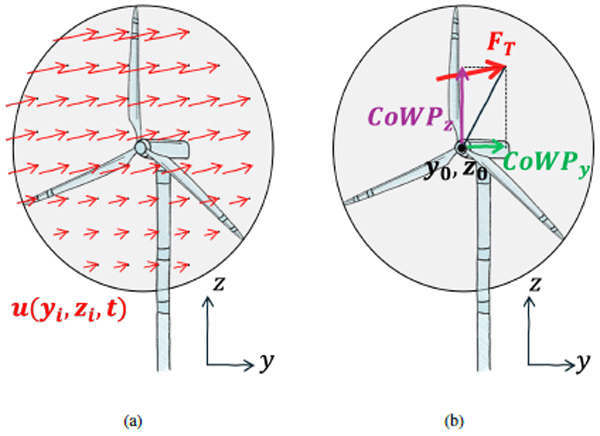
Various simulation tools exist to provide load forecasts in the wind energy field (engineering models and numerical simulations). A newly introduced concept is the center of wind pressure, a quantity extracted from a wind field. In previous works, similar behaviour, then the main shaft bending moments, was shown. However, a clear relationship is missing. In this work, this gap is filled through the introduction of a calibration parameter.
Daniela Moreno, Jan Friedrich, Carsten Schubert, Matthias Wächter, Jörg Schwarte, Gritt Pokriefke, Günter Radons, and Joachim Peinke
Wind Energ. Sci., 10, 2729–2754, https://doi.org/10.5194/wes-10-2729-2025, https://doi.org/10.5194/wes-10-2729-2025, 2025
Short summary
Short summary
Increased sizes of modern turbines require extended descriptions of the atmospheric wind and its correlation to loads. Here, a surrogate stochastic method for estimating the bending moments at the main shaft is proposed. Based on the center of wind pressure dynamics, an advantage is the possibility of stochastically reconstructing large amounts of load data. Atmospheric measurements and modeled data demonstrate the validity of this method.
Christian Wiedemann, Henrik Bette, Matthias Wächter, Jan A. Freund, Thomas Guhr, and Joachim Peinke
Wind Energ. Sci., 10, 2489–2497, https://doi.org/10.5194/wes-10-2489-2025, https://doi.org/10.5194/wes-10-2489-2025, 2025
Short summary
Short summary
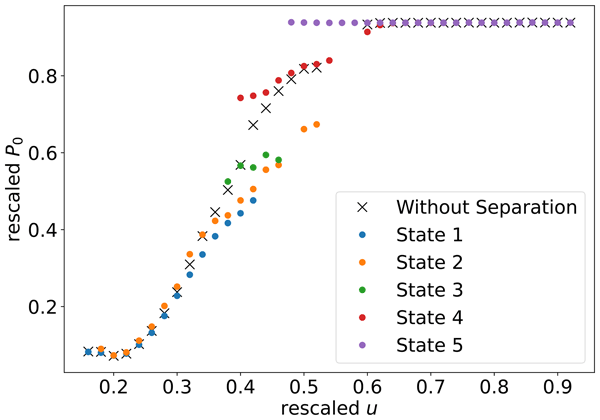
This study utilizes a method to analyze power conversion dynamics across different operational states, addressing non-stationarity with a correlation matrix algorithm. Findings reveal distinct dynamics for each state, emphasizing their impact on system behavior and offering a solution for hysteresis effects in power conversion dynamics.
Daniela Moreno, Jan Friedrich, Matthias Wächter, Jörg Schwarte, and Joachim Peinke
Wind Energ. Sci., 10, 347–360, https://doi.org/10.5194/wes-10-347-2025, https://doi.org/10.5194/wes-10-347-2025, 2025
Short summary
Short summary
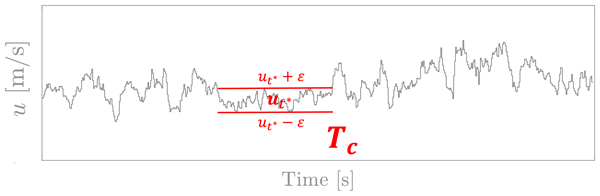
Unexpected load events measured on operating wind turbines are not accurately predicted by numerical simulations. We introduce the periods of constant wind speed as a possible cause of such events. We measure and characterize their statistics from atmospheric data. Further comparisons to standard modelled data and experimental turbulence data suggest that such events are not intrinsic to small-scale turbulence and are not accurately described by current standard wind models.
Leo Höning, Laura J. Lukassen, Bernhard Stoevesandt, and Iván Herráez
Wind Energ. Sci., 9, 203–218, https://doi.org/10.5194/wes-9-203-2024, https://doi.org/10.5194/wes-9-203-2024, 2024
Short summary
Short summary
This study analyzes the impact of wind turbine rotor blade flexibility on the aerodynamic loading of the blades and the consequential wind characteristics in the near wake of the turbine. It is shown that gravitation leads to rotational periodic fluctuations of blade loading, which directly impacts the trajectory of the blade tip vortex at different rotor blade positions while also resulting in a non-uniform wind velocity deficit in the wake of the wind turbine.
Andreas Rott, Leo Höning, Paul Hulsman, Laura J. Lukassen, Christof Moldenhauer, and Martin Kühn
Wind Energ. Sci., 8, 1755–1770, https://doi.org/10.5194/wes-8-1755-2023, https://doi.org/10.5194/wes-8-1755-2023, 2023
Short summary
Short summary
This study examines wind vane measurements of commercial wind turbines and their impact on yaw control. The authors discovered that rotor interference can cause an overestimation of wind vane measurements, leading to overcorrection of the yaw controller. A correction function that improves the yaw behaviour is presented and validated in free-field experiments on a commercial wind turbine. This work provides new insights into wind direction measurements and suggests ways to optimize yaw control.
Khaled Yassin, Arne Helms, Daniela Moreno, Hassan Kassem, Leo Höning, and Laura J. Lukassen
Wind Energ. Sci., 8, 1133–1152, https://doi.org/10.5194/wes-8-1133-2023, https://doi.org/10.5194/wes-8-1133-2023, 2023
Short summary
Short summary
The current turbulent wind field models stated in the IEC 61400-1 standard underestimate the probability of extreme changes in wind velocity. This underestimation can lead to the false calculation of extreme and fatigue loads on the turbine. In this work, we are trying to apply a random time-mapping technique to one of the standard turbulence models to adapt to such extreme changes. The turbulent fields generated are compared with a standard wind field to show the effects of this new mapping.
Koen Boorsma, Gerard Schepers, Helge Aagard Madsen, Georg Pirrung, Niels Sørensen, Galih Bangga, Manfred Imiela, Christian Grinderslev, Alexander Meyer Forsting, Wen Zhong Shen, Alessandro Croce, Stefano Cacciola, Alois Peter Schaffarczyk, Brandon Lobo, Frederic Blondel, Philippe Gilbert, Ronan Boisard, Leo Höning, Luca Greco, Claudio Testa, Emmanuel Branlard, Jason Jonkman, and Ganesh Vijayakumar
Wind Energ. Sci., 8, 211–230, https://doi.org/10.5194/wes-8-211-2023, https://doi.org/10.5194/wes-8-211-2023, 2023
Short summary
Short summary
Within the framework of the fourth phase of the International Energy Agency's (IEA) Wind Task 29, a large comparison exercise between measurements and aeroelastic simulations has been carried out. Results were obtained from more than 19 simulation tools of various fidelity, originating from 12 institutes and compared to state-of-the-art field measurements. The result is a unique insight into the current status and accuracy of rotor aerodynamic modeling.

Ingrid Neunaber, Joachim Peinke, and Martin Obligado
Wind Energ. Sci., 7, 201–219, https://doi.org/10.5194/wes-7-201-2022, https://doi.org/10.5194/wes-7-201-2022, 2022
Short summary
Short summary
Wind turbines are often clustered within wind farms. A consequence is that some wind turbines may be exposed to the wakes of other turbines, which reduces their lifetime due to the wake turbulence. Knowledge of the wake is thus important, and we carried out wind tunnel experiments to investigate the wakes. We show how models that describe wakes of bluff bodies can help to improve the understanding of wind turbine wakes and wind turbine wake models, particularly by including a virtual origin.
Cited articles
Abdeljawad, T., Mahariq, I., Kavyanpoor, M., Ghalandari, M., and Nabipour, N.: Identification of nonlinear normal modes for a highly flexible beam, Alexandria Engineering Journal, 59, 2419–2427, https://doi.org/10.1016/j.aej.2020.03.004, 2020. a
Arnold, M. and Brüls, O.: Convergence of the generalized-α scheme for constrained mechanical systems, Multibody Syst. Dyn., 18, 185–202, https://doi.org/10.1007/s11044-007-9084-0, 2007. a
Barter, G., Bortolotti, P., Gaertner, E., Rinker, J., Abbas, N. J., dzalkind, Zahle, F., T-Wainwright, Branlard, E., Wang, L., Padrón, L. A., Hall, M., and lssraman: IEAWindTask37/IEA-15-240-RWT: v1.1.10: Correct errors in OpenFAST monopile SubDyn module (v1.1.10), Zenodo [data set], https://doi.org/10.5281/zenodo.10664562, 2024. a
Bolinger, M., Lantz, E., Wiser, R., Hoen, B., Rand, J., and Hammond, R.: Opportunities for and challenges to further reductions in the “specific power” rating of wind turbines installed in the United States, Wind Engineering, 45, 351–368, https://doi.org/10.1177/0309524X19901012, 2021. a
Dose, B.: Fluid-structure coupled computations of wind turbine rotors by means of CFD, PhD thesis, University of Oldenburg, https://plus.orbis-oldenburg.de/permalink/f/jd1i1v/49GBVUOB_ALMA21255067610003501 (last access: 18 May 2025), 2018. a
Dose, B., Rahimi, H., Herráez, I., Stoevesandt, B., and Peinke, J.: Fluid-structure coupled computations of the NREL 5MW wind turbine by means of CFD, Renew. Energ., 129, 591–605, https://doi.org/10.1016/j.renene.2018.05.064, 2018. a
Dowell, E. H.: A Modern Course in Aeroelasticity, 6th edn., Solid Mechanics and Its Applications, Springer Cham, https://doi.org/10.1007/978-3-030-74236-2, 2022. a, b
Gaertner, E., Rinker J., Sethuraman, L., Zahle, F., Anderson, B., Barter, G., Abbas, N., Meng, F., Bortolotti, P., Skrzypinski, W., Scott, G., Feil, R., Bredmose, H., Dykes, K., Shields, M., Allen, C., and Viselli, A.: Definition of the IEA 15-Megawatt Offshore Reference Wind, National Renewable Energy Laboratory, https://docs.nrel.gov/docs/fy20osti/75698.pdf (last access: 28 April 2026), 2020. a, b
Grinderslev, C., Nørmark Sørensen, N., Raimund Pirrung, G., and González Horcas, S.: Multiple limit cycle amplitudes in high-fidelity predictions of standstill wind turbine blade vibrations, Wind Energ. Sci., 7, 2201–2213, https://doi.org/10.5194/wes-7-2201-2022, 2022. a, b
Grinderslev, C., Houtin-Mongrolle, F., Nørmark Sørensen, N., Raimund Pirrung, G., Jacobs, P., Ahmed, A., and Duboc, B.: Forced-motion simulations of vortex-induced vibrations of wind turbine blades – a study of sensitivities, Wind Energ. Sci., 8, 1625–1638, https://doi.org/10.5194/wes-8-1625-2023, 2023. a
GWEC: GWEC's Global Wind Report 2025, https://www.gwec.net/reports/globalwindreport#Download, last access: 15 May 2025. a
Hansen, M. H.: Aeroelastic Instability Problems for Wind Turbines, Wind Energy, 10, 551–577, https://doi.org/10.1002/we.242, 2007. a, b
Höning, L., Lukassen, L. J., Stoevesandt, B., and Herráez, I.: Influence of rotor blade flexibility on the near-wake behavior of the NREL 5 MW wind turbine, Wind Energ. Sci., 9, 203–218, https://doi.org/10.5194/wes-9-203-2024, 2024. a
Horcas, S. G., Barlas, T., Zahle, F., and Sørensen, N. N.: Vortex induced vibrations of wind turbine blades: Influence of the tip geometry, Phys. Fluids, 32, 065104, https://doi.org/10.1063/5.0004005, 2020. a
Horcas, S. G., Sørensen, N. N., Zahle, F., Pirrung, G. R., and Barlas, T.: Vibrations of wind turbine blades in standstill: Mapping the influence of the inflow angles, Phys. of Fluids, 34, 054105, https://doi.org/10.1063/5.0088036, 2022. a, b, c, d
Huang, N. E., Shen, Z., Long, S. R., Wu, M. C., Shih, H. H., Zheng, Q., Yen, N. C., Tung, C. C., and Liu, H. H.: The empirical mode decomposition and the Hilbert spectrum for nonlinear and non-stationary time series analysis, P. Roy. Soc. A, 454, 903–995, https://doi.org/10.1098/rspa.1998.0193, 1998. a, b, c, d, e
IEA Wind Task 37: 15MW reference wind turbine repository developed in conjunction with IEA Wind, GitHub, https://github.com/IEAWindSystems/IEA-15-240-RWT/blob/master/HAWC2/IEA-15-240-RWT/IEA_15MW_RWT_Blade_st_FPM.st (last access: 13 May 2025), 2020b. a
IEA (International Energy Agency): Renewable Energy Market Update – June 2023, Paris, https://www.iea.org/reports/renewable-energy-market-update-june-2023 (last access: 14 April 2025), 2023. a
IEC (International Electrotechnical Commission): Wind energy generation systems, Part 1: Design requirements, IEC 61400-1:2019, International Standard, https://webstore.iec.ch/en/publication/26423 (last access: 28 April 2026), 2019. a
Pirrung, G. R., Grinderslev, C., Sørensen, N. N., and Riva, R.: Vortex-induced vibrations of wind turbines: From single blade to full rotor simulations, Renew. Energ., 226, 120381, https://doi.org/10.1016/j.renene.2024.120381, 2024. a, b, c
Quinn, A. J., Lopes-dos-Santos, V., Dupret, D., Nobre, A. C., and Woolrich, M. W.: EMD: Empirical Mode Decomposition and Hilbert-Huang Spectral Analyses in Python, Journal of Open Source Software, 59, 2977, https://doi.org/10.21105/joss.02977, 2021. a
Rahimi, H., Daniele, E., Stoevesandt, B., and Peinke, J.: Development and application of a grid generation tool for aerodynamic simulations of wind turbines, Wind Engineering, 40, 148–172, https://doi.org/10.1177/0309524X16636318, 2016. a
Rahimi, H., Schepers, J. G., Shen, W. Z., García, N. R., Schneider, M. S., Micallef, D., Ferreira, C. J. S., Jost, E., Klein, L., and Herráez, I.: Evaluation of different methods for determining the angle of attack on wind turbine blades with CFD results under axial inflow conditions, Renew. Energ., 125, 866–876, https://doi.org/10.1016/j.renene.2018.03.018, 2018. a, b, c
Reissner, E.: On one-dimensional finite-strain beam theory: the plane problem, Z. Angew. Math. Phys., 23, 795–804, https://doi.org/10.1007/BF01602645, 1972. a
Schepers, J. G., Boorsma, K., Boisard, R., Bangga, G., Jonkman, J., Kelley, C., Branlard, E., Gonçalves Pinto, W., Imiela, M., Hach, O., Greco, L., Testa, C., Aryan, N., Madsen, H. A., Croce, A., Cacciola, S., Pirrung, G.R., Sørensen, N. N., Grinderslev, C., Bernardi, C., Cherubini, S., Bianchini, A., Papi, F., Pagamonci, L., Braud, C., Höning, L., Theron, J. N., and Mohan, K.: Task 47, TURBINIA, Turbulent Inflow Innovative Aerodynamics Final Technical Report Phase I, International Energy Agency, Zenodo, https://doi.org/10.5281/zenodo.17897185, 2025. a, b
Simo, J. C.: A finite strain beam formulation. The three-dimensional dynamic problem, Part I, Comput. Meth. Appl. Mech. Eng., 49, 55–70, https://doi.org/10.1016/0045-7825(85)90050-7, 1985. a
Skrzypiński, W., Gaunaa, M., Sørensen, N., Zahle, F., and Heinz, J.: Vortex-induced vibrations of a DU96-W-180 airfoil at 90° angle of attack, Wind Energy, 17, 1495–1514, https://doi.org/10.1002/we.1647, 2013. a, b
Spalart, P. R., Deck, S., Shur, M. L., Squires, K. D., Strelets, M. K., and Travin, A.: A New Version of Detached-eddy Simulation, Resistant to Ambiguous Grid Densities, Theor. Comp. Fluid Dyn., 20, 181–195, https://doi.org/10.1007/s00162-006-0015-0, 2006. a
Veers, P., Dykes, K., Lantz, E., Barth, S., Bottasso, C. L., Carlson, O., Clifton, A., Green, J., Green, P., Holttinen, H., Laird, D., Lehtomäki V., Lundquist, J. K., Manwell, J., Marquis, M., Meneveau, C., Moriarty, P., Munduate, X., Muskulus, M., Naughton, J., Pao, L., Paquette, J., Peinke, J., Robertson, A., Sanz Rodrigo, J., Sempreviva, A. M., Smith, J. C. Tuohy, A., and Wiser, R.: Grand challenges in the science of wind energy, Science, 366, 6464, https://doi.org/10.1126/science.aau2027, 2019. a
Veers, P., Bottasso, C. L., Manuel, L., Naughton, J., Pao, L., Paquette, J., Robertson, A., Robinson, M., Ananthan, S., Barlas, T., Bianchini, A., Bredmose, H., Horcas, S. G., Keller, J., Madsen, H. A., Manwell, J., Moriarty, P., Nolet, S., and Rinker, J.: Grand challenges in the design, manufacture, and operation of future wind turbine systems, Wind Energ. Sci., 8, 1071–1131, https://doi.org/10.5194/wes-8-1071-2023, 2023. a, b
Zou, F., Riziotis, V. A., Voutsinas, S. G., and Wang, J.: Analysis of vortex-induced and stall-induced vibrations at standstill conditions using a free wake aerodynamic code, Wind Energy, 18, 2145–2169, https://doi.org/10.1002/we.1811, 2015. a, b
Short summary
High-fidelity fluid–structure-coupled simulations of the IEA 15 MW rotor under storm and yaw misalignment shows that certain misalignments trigger strong edgewise vibrations. Growth surges when effective power turns positive near −35° and fades near −43° yaw. Single-blade analysis finds lock-in at −37° with large tip motion and stability at −60° due to off-resonant Strouhal shedding. It is concluded that aeroelastic response is inflow specific, and operational mitigation strategies are needed.
High-fidelity fluid–structure-coupled simulations of the IEA 15 MW rotor under storm and yaw...


Altmetrics
Final-revised paper
Preprint