
Articles | Volume 11, issue 2
https://doi.org/10.5194/wes-11-373-2026
© Author(s) 2026. This work is distributed under
the Creative Commons Attribution 4.0 License.
the Creative Commons Attribution 4.0 License.
https://doi.org/10.5194/wes-11-373-2026
© Author(s) 2026. This work is distributed under
the Creative Commons Attribution 4.0 License.
the Creative Commons Attribution 4.0 License.
Research article
| 
06 Feb 2026
Research article |
| 06 Feb 2026
| 06 Feb 2026
A wind turbine digital shadow for complex inflow conditions
Hadi Hoghooghi
Wind Energy Institute, Technical University of Munich, 85748 Garching bei München, Germany

Wind Energy Institute, Technical University of Munich, 85748 Garching bei München, Germany
Related authors
Hadi Hoghooghi and Carlo L. Bottasso
Wind Energ. Sci. Discuss., https://doi.org/10.5194/wes-2026-156, https://doi.org/10.5194/wes-2026-156, 2026
Preprint under review for WES
Short summary
Short summary
Wind turbines operate under changing weather conditions, making it difficult to accurately estimate structural stress. This study improves a digital model by combining engineering knowledge with learning from real turbine measurements. The new approach significantly reduced prediction errors and remained reliable across different conditions. More accurate load estimates can support better turbine monitoring and maintenance planning.
Hadi Hoghooghi and Carlo L. Bottasso
Wind Energ. Sci. Discuss., https://doi.org/10.5194/wes-2026-102, https://doi.org/10.5194/wes-2026-102, 2026
Manuscript not accepted for further review
Short summary
Short summary
Reliable wind turbine fatigue load estimates are key to assessing structural integrity and service life. This study integrates a simplified simulation model with machine learning to enhance predictions while protecting industrial design confidentiality. It achieves DEL errors under 5 % across varied conditions and performs well on simulated and field data, supporting improved monitoring, maintenance, and lifetime assessment.
Hadi Hoghooghi and Carlo L. Bottasso
Wind Energ. Sci. Discuss., https://doi.org/10.5194/wes-2026-156, https://doi.org/10.5194/wes-2026-156, 2026
Preprint under review for WES
Short summary
Short summary
Wind turbines operate under changing weather conditions, making it difficult to accurately estimate structural stress. This study improves a digital model by combining engineering knowledge with learning from real turbine measurements. The new approach significantly reduced prediction errors and remained reliable across different conditions. More accurate load estimates can support better turbine monitoring and maintenance planning.
Nicola Bodini, Patrick Moriarty, Regis Thedin, Paula Doubrawa, Cristina Archer, Myra Blaylock, Carlo Bottasso, Bruno Carmo, Lawrence Cheung, Camille Dubreuil, Rogier Floors, Thomas Herges, Daniel Houck, Ali Kanjari, Colleen M. Kaul, Christopher Kelley, Ru Li, Julie K. Lundquist, Desirae Major, Anh Kiet Nguyen, Mike Optis, Luan R. C. Parada, Alfredo Peña, Julian Quick, David Ricarte, William C. Radünz, Raj K. Rai, Oscar García-Santiago, Jonas Schulte, Knut S. Seim, M. Paul van der Laan, Kisorthman Vimalakanthan, and Adam Wise
Wind Energ. Sci., 11, 3107–3135, https://doi.org/10.5194/wes-11-3107-2026, https://doi.org/10.5194/wes-11-3107-2026, 2026
Short summary
Short summary
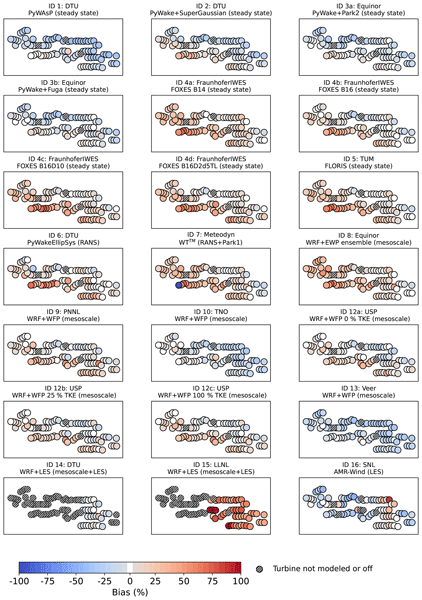
Predicting wind farm energy production is challenging because wind patterns are complex. We tested 16 different models against real data from a major field experiment to see which worked best. Surprisingly, the most expensive and detailed models were not always more accurate than simpler ones. We found that feeding models better weather data was the most effective way to improve accuracy. These results help the industry choose the right tools for designing more-efficient wind farms.
Hadi Hoghooghi and Carlo L. Bottasso
Wind Energ. Sci. Discuss., https://doi.org/10.5194/wes-2026-102, https://doi.org/10.5194/wes-2026-102, 2026
Manuscript not accepted for further review
Short summary
Short summary
Reliable wind turbine fatigue load estimates are key to assessing structural integrity and service life. This study integrates a simplified simulation model with machine learning to enhance predictions while protecting industrial design confidentiality. It achieves DEL errors under 5 % across varied conditions and performs well on simulated and field data, supporting improved monitoring, maintenance, and lifetime assessment.
Carlo Rosario Sucameli, Marta Bertelè, Robert Braunbehrens, Filippo Campagnolo, Simone Tamaro, Paul Hulsman, and Carlo Luigi Bottasso
Wind Energ. Sci. Discuss., https://doi.org/10.5194/wes-2026-93, https://doi.org/10.5194/wes-2026-93, 2026
Preprint under review for WES
Short summary
Short summary
Wind turbines extract energy by slowing the air, so downstream turbines receive less wind and produce less power, a phenomenon called wake. Wind is not uniform: it varies in both speed and direction with height, also affecting downstream turbines. Using a year of measurements and simulations, we found that both effects influence the power production of downstream turbines by pushing the air sideways. We built improved models to capture these effects, enabling better wind farm control strategies.
Abhinav Anand and Carlo L. Bottasso
Wind Energ. Sci., 11, 1989–2008, https://doi.org/10.5194/wes-11-1989-2026, https://doi.org/10.5194/wes-11-1989-2026, 2026
Short summary
Short summary
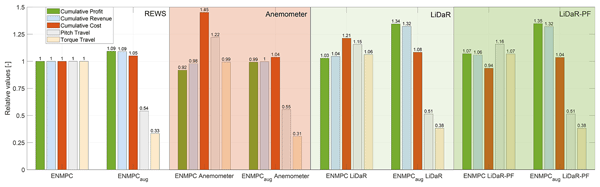
We formulate a controller for wind turbines that has three main characteristics. First, it optimizes profit by balancing revenue from power generation with cost. Second, cost includes the effects of cyclic fatigue that, departing from most of the existing literature on control, is rigorously accounted for by an exact cycle counting on receding horizons. Third, it uses a model capable of learning and improving its performance based on measured or synthetic data.
Filippo Campagnolo, Doruk Aktan, Davide Bortolin, Simone Tamaro, Franz V. Mühle, and Carlo L. Bottasso
Wind Energ. Sci. Discuss., https://doi.org/10.5194/wes-2026-86, https://doi.org/10.5194/wes-2026-86, 2026
Revised manuscript accepted for WES
Short summary
Short summary
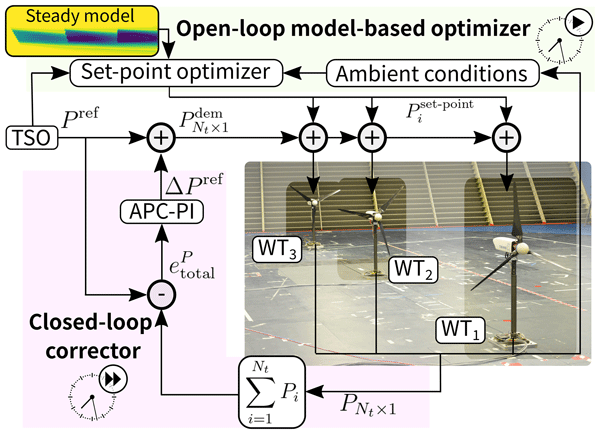
This paper presents an open-access wind-tunnel dataset of actuated, scaled wind turbines with time-resolved measurements of loads, actuator commands, inflow conditions and wakes. It covers multiple wake-control strategies (yaw steering, derating, Helix, dynamic yaw, Pulse, pitch control). Combined with numerical models, the dataset enables benchmarking, controller analysis, and validation of aeroelastic and wake models for wind-farm control research.
Simone Tamaro, Davide Bortolin, Filippo Campagnolo, Franz V. Mühle, and Carlo L. Bottasso
Wind Energ. Sci., 11, 1607–1630, https://doi.org/10.5194/wes-11-1607-2026, https://doi.org/10.5194/wes-11-1607-2026, 2026
Short summary
Short summary
This work presents the scaled experimental validation of an active power control (APC) algorithm that improves wind farm power-tracking accuracy during turbulent wind lulls. Tests in a large low-blockage wind tunnel, including dynamic wind-direction changes, show that the method outperforms three reference APC strategies, especially under high power demand, while keeping structural fatigue low.
Andre Thommessen, Abhinav Anand, Carlo L. Bottasso, and Christoph M. Hackl
Wind Energ. Sci., 11, 1399–1428, https://doi.org/10.5194/wes-11-1399-2026, https://doi.org/10.5194/wes-11-1399-2026, 2026
Short summary
Short summary
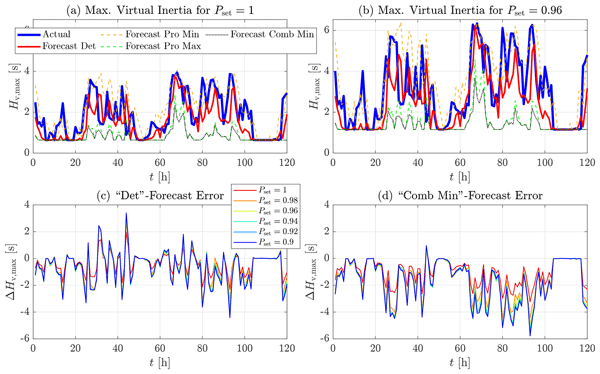
We present a method to forecast inertia that accounts for wake effects in a wind farm. The approach is based on mapping forecasted site conditions to each single wind turbine in the farm through a wake model. The resulting inflow conditions are used to predict the inertia that the wind farm can provide to the grid, taking the wind turbine control strategies and operational limits into account.
Marinos Manolesos, Sandrine Aubrun, Christian Bak, Paolo Bettini, Filippo Campagnolo, Alessandro Croce, Arslan Salim Dar, Michael Hölling, Stefan Ivanell, Konstantinos Kellaris, Miguel Alfonso Mendez, Pierluigi Montinari, Franz Mühle, George Papadakis, Fernardo Porté-Agel, Daniele Ragni, Sebastiano Randino, Andrea Sciacchitano, Lorenzo Schena, Gerard Schepers, Antonio Segalini, Wei Yu, and Carlo Luigi Bottasso
Wind Energ. Sci. Discuss., https://doi.org/10.5194/wes-2026-51, https://doi.org/10.5194/wes-2026-51, 2026
Manuscript not accepted for further review
Short summary
Short summary
As wind turbines grow to unprecedented sizes, ensuring their reliability requires advanced testing. We reviewed the current state of wind tunnel experiments, examining how scaled physical models are evaluated for wind flow, flexibility, and noise. We conclude that while laboratory testing remains essential, it is most powerful when integrated with computer simulations and real-world data. This combined approach will ultimately drive the design of more efficient and sustainable wind energy.
Andreas Vad, Adrien Guilloré, Abhinav Anand, Vasilis Pettas, Anik H. Shah, Ion Lizarraga-Saenz, Maria Aparicio-Sanchez, Irene Eguinoa, Nicolau Conti Gost, Iasonas Tsaklis, Ariane Frère, Koen W. Hermans, Joseph K. Kamau, Nikolay Dimitrov, Tuhfe Göçmen, and Carlo L. Bottasso
Wind Energ. Sci. Discuss., https://doi.org/10.5194/wes-2026-45, https://doi.org/10.5194/wes-2026-45, 2026
Revised manuscript under review for WES
Short summary
Short summary
A modular, computationally efficient framework for wind‑farm response modeling is presented. It combines an engineering wake model with surrogate models trained on extensive aeroelastic simulations generated using a novel method for synthetic waked and clean inflows. The wind‑farm‑agnostic framework supports multiple turbine types and layouts, enabling accurate, low‑cost predictions for design, operation, and control.
Carlo L. Bottasso, Sandrine Aubrun, Nicolaos A. Cutululis, Julia Gottschall, Athanasios Kolios, Jakob Mann, and Paul Veers
Wind Energ. Sci., 11, 347–348, https://doi.org/10.5194/wes-11-347-2026, https://doi.org/10.5194/wes-11-347-2026, 2026
Short summary
Short summary
This editorial celebrates the 10th anniversary of Wind Energy Science, reflecting on a decade of rapid scientific progress and the journal’s role in advancing fundamental, interdisciplinary research. It highlights key developments in wind energy, the importance of open science and academia–industry collaboration, and emerging challenges such as data sharing and artificial intelligence. Above all, it honors the research community that has shaped the journal and looks ahead to the next decade.
Simone Tamaro, Filippo Campagnolo, and Carlo L. Bottasso
Wind Energ. Sci., 10, 2705–2728, https://doi.org/10.5194/wes-10-2705-2025, https://doi.org/10.5194/wes-10-2705-2025, 2025
Short summary
Short summary
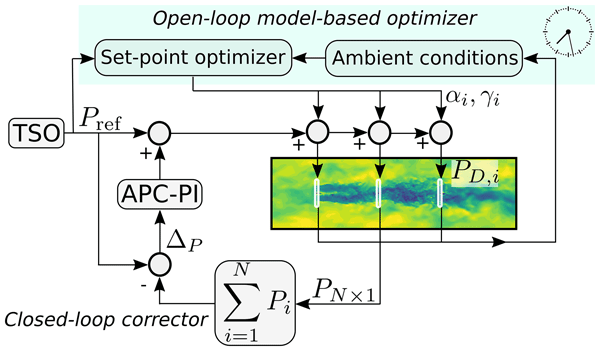
We proposed a new method for active power control that uniquely combines induction control with wake steering to maximize power tracking margins. Our methodology results in significantly improved robustness against wind fluctuations and fatigue loading when compared to the state of the art.
Abhinav Anand, Robert Braunbehrens, Adrien Guilloré, and Carlo L. Bottasso
Wind Energ. Sci. Discuss., https://doi.org/10.5194/wes-2025-67, https://doi.org/10.5194/wes-2025-67, 2025
Revised manuscript accepted for WES
Short summary
Short summary
We present a new method for wind farm control, based on the optimization of an economic cost function that accounts for revenue from power production and cost due to operation and maintenance. The new formulation also includes constraints to ensure a desired lifetime duration. The application to relevant scenarios shows consistently improved profit when compared to alternative formulations from the recent literature.
Simone Tamaro, Filippo Campagnolo, and Carlo L. Bottasso
Wind Energ. Sci., 9, 1547–1575, https://doi.org/10.5194/wes-9-1547-2024, https://doi.org/10.5194/wes-9-1547-2024, 2024
Short summary
Short summary
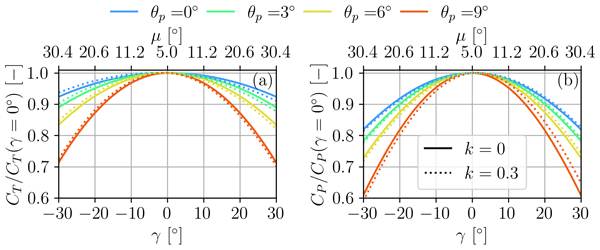
We develop a new simple model to predict power losses incurred by a wind turbine when it yaws out of the wind. The model reveals the effects of a number of rotor design parameters and how the turbine is governed when it yaws. The model exhibits an excellent agreement with large eddy simulations and wind tunnel measurements. We showcase the capabilities of the model by deriving the power-optimal yaw strategy for a single turbine and for a cluster of wake-interacting turbines.
Marta Bertelè, Paul J. Meyer, Carlo R. Sucameli, Johannes Fricke, Anna Wegner, Julia Gottschall, and Carlo L. Bottasso
Wind Energ. Sci., 9, 1419–1429, https://doi.org/10.5194/wes-9-1419-2024, https://doi.org/10.5194/wes-9-1419-2024, 2024
Short summary
Short summary
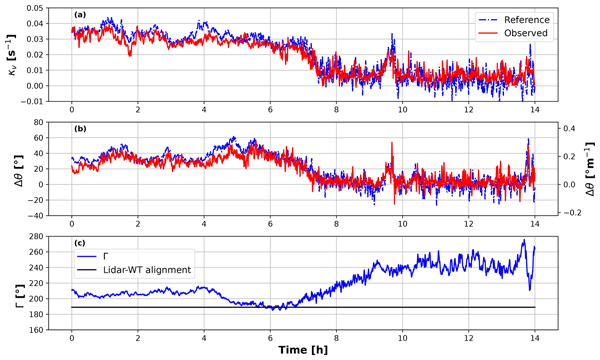
A neural observer is used to estimate shear and veer from the operational data of a large wind turbine equipped with blade load sensors. Comparison with independent measurements from a nearby met mast and profiling lidar demonstrate the ability of the
rotor as a sensorconcept to provide high-quality estimates of these inflow quantities based simply on already available standard operational data.
Jenna Iori, Carlo Luigi Bottasso, and Michael Kenneth McWilliam
Wind Energ. Sci., 9, 1289–1304, https://doi.org/10.5194/wes-9-1289-2024, https://doi.org/10.5194/wes-9-1289-2024, 2024
Short summary
Short summary
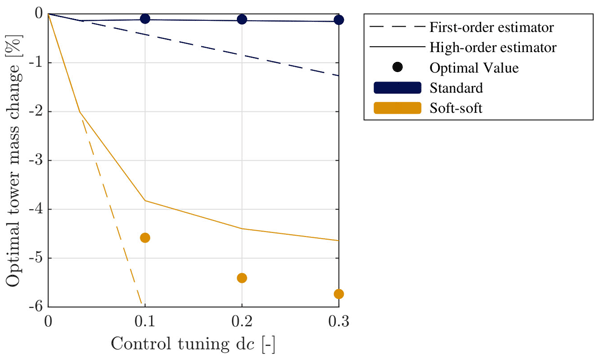
The controller of a wind turbine has an important role in regulating power production and avoiding structural failure. However, it is often designed after the rest of the turbine, and thus its potential is not fully exploited. An alternative is to design the structure and the controller simultaneously. This work develops a method to identify if a given turbine design can benefit from this new simultaneous design process. For example, a higher and cheaper turbine tower can be built this way.
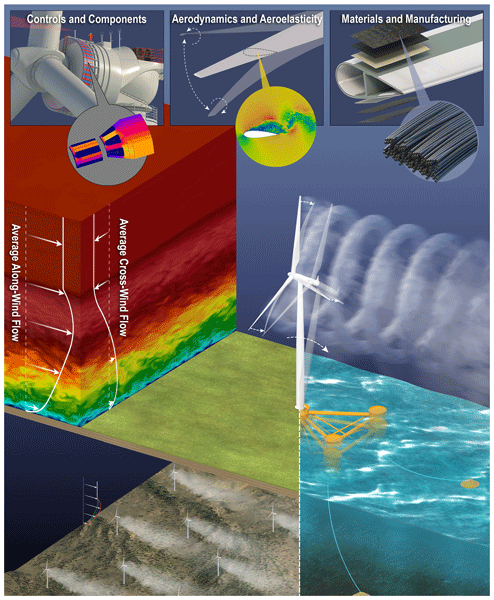
Paul Veers, Carlo L. Bottasso, Lance Manuel, Jonathan Naughton, Lucy Pao, Joshua Paquette, Amy Robertson, Michael Robinson, Shreyas Ananthan, Thanasis Barlas, Alessandro Bianchini, Henrik Bredmose, Sergio González Horcas, Jonathan Keller, Helge Aagaard Madsen, James Manwell, Patrick Moriarty, Stephen Nolet, and Jennifer Rinker
Wind Energ. Sci., 8, 1071–1131, https://doi.org/10.5194/wes-8-1071-2023, https://doi.org/10.5194/wes-8-1071-2023, 2023
Short summary
Short summary
Critical unknowns in the design, manufacturing, and operation of future wind turbine and wind plant systems are articulated, and key research activities are recommended.
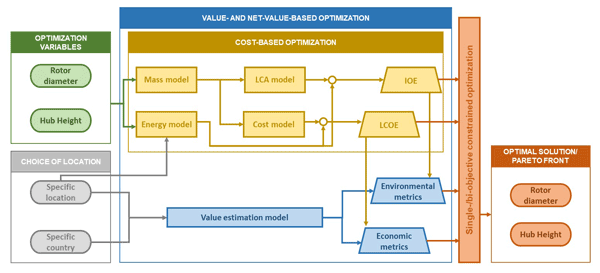
Helena Canet, Adrien Guilloré, and Carlo L. Bottasso
Wind Energ. Sci., 8, 1029–1047, https://doi.org/10.5194/wes-8-1029-2023, https://doi.org/10.5194/wes-8-1029-2023, 2023
Short summary
Short summary
We propose a new approach to design that aims at optimal trade-offs between economic and environmental goals. New environmental metrics are defined, which quantify impacts in terms of CO2-equivalent emissions produced by the turbine over its entire life cycle. For some typical onshore installations in Germany, results indicate that a 1 % increase in the cost of energy can buy about a 5 % decrease in environmental impacts: a small loss for the individual can lead to larger gains for society.

Robert Braunbehrens, Andreas Vad, and Carlo L. Bottasso
Wind Energ. Sci., 8, 691–723, https://doi.org/10.5194/wes-8-691-2023, https://doi.org/10.5194/wes-8-691-2023, 2023
Short summary
Short summary
The paper presents a new method in which wind turbines in a wind farm act as local sensors, in this way detecting the flow that develops within the power plant. Through this technique, we are able to identify effects on the flow generated by the plant itself and by the orography of the terrain. The new method not only delivers a flow model of much improved quality but can also help in understanding phenomena that drive the farm performance.
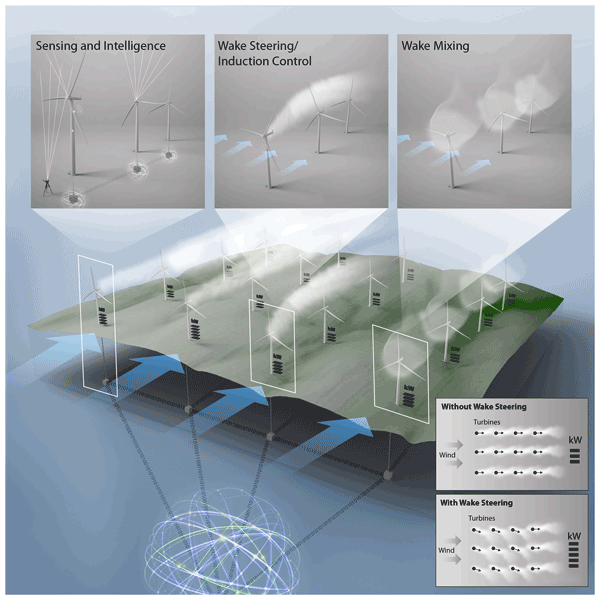
Johan Meyers, Carlo Bottasso, Katherine Dykes, Paul Fleming, Pieter Gebraad, Gregor Giebel, Tuhfe Göçmen, and Jan-Willem van Wingerden
Wind Energ. Sci., 7, 2271–2306, https://doi.org/10.5194/wes-7-2271-2022, https://doi.org/10.5194/wes-7-2271-2022, 2022
Short summary
Short summary
We provide a comprehensive overview of the state of the art and the outstanding challenges in wind farm flow control, thus identifying the key research areas that could further enable commercial uptake and success. To this end, we have structured the discussion on challenges and opportunities into four main areas: (1) insight into control flow physics, (2) algorithms and AI, (3) validation and industry implementation, and (4) integrating control with system design
(co-design).
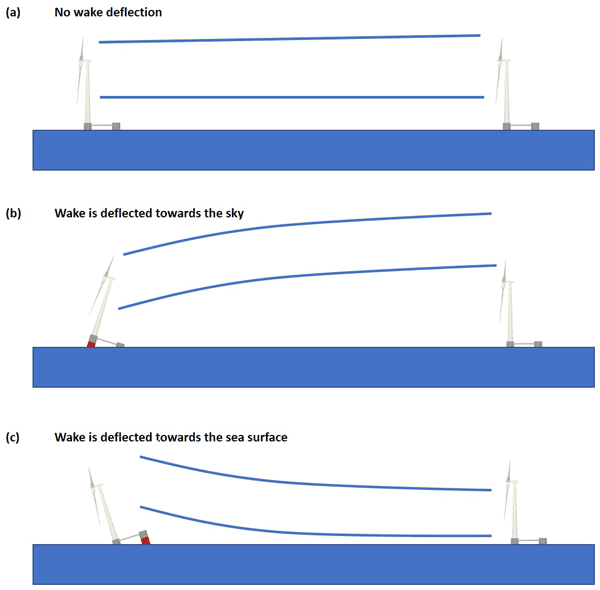
Emmanouil M. Nanos, Carlo L. Bottasso, Simone Tamaro, Dimitris I. Manolas, and Vasilis A. Riziotis
Wind Energ. Sci., 7, 1641–1660, https://doi.org/10.5194/wes-7-1641-2022, https://doi.org/10.5194/wes-7-1641-2022, 2022
Short summary
Short summary
A novel way of wind farm control is presented where the wake is deflected vertically to reduce interactions with downstream turbines. This is achieved by moving ballast in a floating offshore platform in order to pitch the support structure and thereby tilt the wind turbine rotor disk. The study considers the effects of this new form of wake control on the aerodynamics of the steering and wake-affected turbines, on the structure, and on the ballast motion system.

Stefan Loew and Carlo L. Bottasso
Wind Energ. Sci., 7, 1605–1625, https://doi.org/10.5194/wes-7-1605-2022, https://doi.org/10.5194/wes-7-1605-2022, 2022
Short summary
Short summary
This publication presents methods to improve the awareness and control of material fatigue for wind turbines. This is achieved by enhancing a sophisticated control algorithm which utilizes wind prediction information from a laser measurement device. The simulation results indicate that the novel algorithm significantly improves the economic performance of a wind turbine. This benefit is particularly high for situations when the prediction quality is low or the prediction time frame is short.
Emmanouil M. Nanos, Carlo L. Bottasso, Filippo Campagnolo, Franz Mühle, Stefano Letizia, G. Valerio Iungo, and Mario A. Rotea
Wind Energ. Sci., 7, 1263–1287, https://doi.org/10.5194/wes-7-1263-2022, https://doi.org/10.5194/wes-7-1263-2022, 2022
Short summary
Short summary
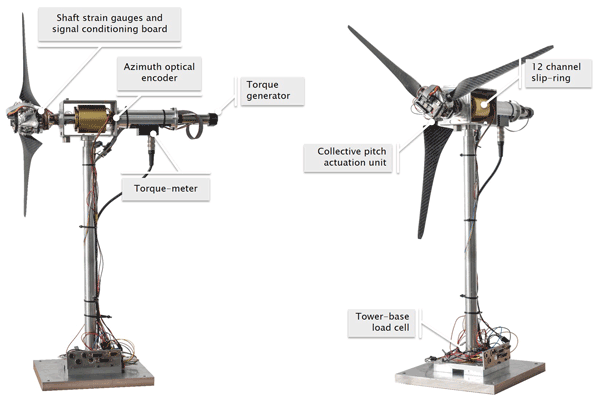
The paper describes the design of a scaled wind turbine in detail, for studying wakes and wake control applications in the known, controllable and repeatable conditions of a wind tunnel. The scaled model is characterized by conducting experiments in two wind tunnels, in different conditions, using different measurement equipment. Results are also compared to predictions obtained with models of various fidelity. The analysis indicates that the model fully satisfies the initial requirements.
Helena Canet, Stefan Loew, and Carlo L. Bottasso
Wind Energ. Sci., 6, 1325–1340, https://doi.org/10.5194/wes-6-1325-2021, https://doi.org/10.5194/wes-6-1325-2021, 2021
Short summary
Short summary
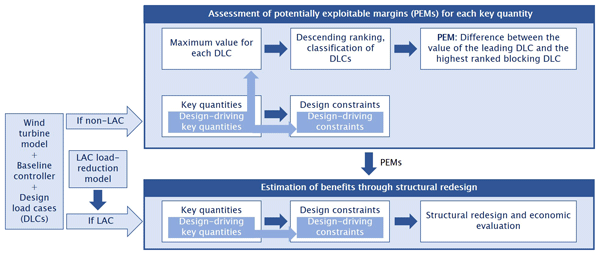
Lidar-assisted control (LAC) is used to redesign the rotor and tower of three turbines, differing in terms of wind class, size, and power rating. The load reductions enabled by LAC are used to save
mass, increase hub height, or extend lifetime. The first two strategies yield reductions in the cost of energy only for the tower of the largest machine, while more interesting benefits are obtained for lifetime extension.
Cited articles
Abdallah, I., Tatsis, K., and Chatzi, E.: Fatigue assessment of a wind turbine blade when output from multiple aero-elastic simulators are available, Procedia Engineering, 199, 3170–3175, https://doi.org/10.1016/j.proeng.2017.09.509, x International Conference on Structural Dynamics, EURODYN 2017, 2017. a, b, c
Anand, A. and Bottasso, C. L.: Reducing Plant-Model Mismatch for Economic Model Predictive Control of Wind Turbine Fatigue by a Data-Driven Approach, in: 2023 American Control Conference (ACC), 14731479, https://doi.org/10.23919/ACC55779.2023.10156501, 2023. a, b, c
Bangalore, P., Letzgus, S., Karlsson, D., and Patriksson, M.: An artificial neural network-based condition monitoring method for wind turbines, with application to the monitoring of the gearbox, Wind Energy, 20, 1421–1438, https://doi.org/10.1002/we.2102, 2017. a, b
Bernhammer, L. O., van Kuik, G. A., and De Breuker, R.: Fatigue and extreme load reduction of wind turbine components using smart rotors, Journal of Wind Engineering and Industrial Aerodynamics, 154, 84–95, https://doi.org/10.1016/j.jweia.2016.04.001, 2016. a
Bertelè, M., Bottasso, C. L., and Schreiber, J.: Wind inflow observation from load harmonics: initial steps towards a field validation, Wind Energy Science, 6, 759–775, https://doi.org/10.5194/wes-6-759-2021, 2021. a, b
Bertelè, M., Meyer, P. J., Sucameli, C. R., Fricke, J., Wegner, A., Gottschall, J., and Bottasso, C. L.: The rotor as a sensor – Observing shear and veer from the operational data of a large wind turbine, Wind Energy Science, 9, 1419–1429, https://doi.org/10.5194/wes-9-1419-2024, 2024. a, b, c, d, e
Boorsma, K., Greco, L., and Bedon, G.: Rotor wake engineering models for aeroelastic applications, Journal of Physics: Conference Series, 1037, 062 013, https://doi.org/10.1088/1742-6596/1037/6/062013, 2018. a
Bottasso, C., Campagnolo, F., Croce, A., and Tibaldi, C.: Optimization-based study of bend–twist coupled rotor blades for passive and integrated passive/active load alleviation, Wind Energy, 16, 1149–1166, https://doi.org/10.1002/we.1543, 2013. a
Bottasso, C. L., Chang, C.-S., Croce, A., Leonello, D., and Riviello, L.: Adaptive planning and tracking of trajectories for the simulation of maneuvers with multibody models, Computer Methods in Applied Mechanics and Engineering, 195, 7052–7072, https://doi.org/10.1016/j.cma.2005.03.011, 2006. a, b
Branlard, E., Jonkman, J., Brown, C., and Zhang, J.: A digital twin solution for floating offshore wind turbines validated using a full-scale prototype, Wind Energy Science, 9, 1–24, https://doi.org/10.5194/wes-9-1-2024, 2024a. a, b, c, d
Branlard, E., Jonkman, J., Lee, B., Jonkman, B., Singh, M., Mayda, E., and Dixon, K.: Improvements to the Blade Element Momentum Formulation of OpenFAST for Skewed Inflows, Journal of Physics: Conference Series, 2767, 022 003, https://doi.org/10.1088/1742-6596/2767/2/022003, 2024b. a, b
Branlard, E. S. P.: Flexible multibody dynamics using joint coordinates and the Rayleigh-Ritz approximation: The general framework behind and beyond Flex, Wind Energy, 22, 877–893, https://doi.org/10.1002/we.2327, 2019. a, b
Burden, F. and Winkler, D.: Bayesian Regularization of Neural Networks, Humana Press, Totowa, NJ, 23–42, ISBN 978-1-60327-101-1, https://doi.org/10.1007/978-1-60327-101-1_3, 2009. a
Chen, J., Pan, J., Li, Z., Zi, Y., and Chen, X.: Generator bearing fault diagnosis for wind turbine via empirical wavelet transform using measured vibration signals, Renewable Energy, 89, 80–92, https://doi.org/10.1016/j.renene.2015.12.010, 2016. a
Dimitrov, N., Kelly, M. C., Vignaroli, A., and Berg, J.: From wind to loads: wind turbine site-specific load estimation with surrogate models trained on high-fidelity load databases, Wind Energy Science, 3, 767–790, https://doi.org/10.5194/wes-3-767-2018, 2018. a, b
Drécourt, J.-P., Madsen, H., and Rosbjerg, D.: Bias aware Kalman filters: Comparison and improvements, Advances in Water Resources, 29, 707–718, https://doi.org/10.1016/j.advwatres.2005.07.006, 2006. a, b
Evans, M., Han, T., and Shuchun, Z.: Development and validation of real time load estimator on Goldwind 6 MW wind turbine, Journal of Physics: Conference Series, 1037, 032021, https://doi.org/10.1088/1742-6596/1037/3/032021, 2018. a
Grewal, M. S. and Andrews, A. P.: Kalman Filtering: Theory and Practice Using Matlab, John Wiley & Sons, Inc., https://doi.org/10.1002/9781118984987, 2014. a, b
Guilloré, A., Campagnolo, F., and Bottasso, C. L.: A control-oriented load surrogate model based on sector-averaged inflow quantities: capturing damage for unwaked, waked, wake-steering and curtailed wind turbines, Journal of Physics: Conference Series, 2767, 032019, https://doi.org/10.1088/1742-6596/2767/3/032019, 2024. a
Hoghooghi, H.: Load Alleviation on Multi-Megawatt Wind Turbines Based on Measured Dynamic Response of Wind Turbine, Doctoral thesis, ETH Zurich, Zurich, https://doi.org/10.3929/ethz-b-000492802, 2021. a
Hoghooghi, H.: A wind turbine digital shadow for complex inflow conditions (Version V1), Zenodo [data set], https://doi.org/10.5281/zenodo.11519470, 2024. a
Hoghooghi, H., Chokani, N., and Abhari, R.: Effectiveness of individual pitch control on a 5MW downwind turbine, Renewable Energy, 139, 435–446, https://doi.org/10.1016/j.renene.2019.02.088, 2019a. a
Hoghooghi, H., Chokani, N., and Abhari, R. S.: Enhanced Yaw Stability of Downwind Turbines, Journal of Physics: Conference Series, 1356, 012020, https://doi.org/10.1088/1742-6596/1356/1/012020, 2019b. a
Hoghooghi, H., Chokani, N., and Abhari, R.: Optical measurements of multi-megawatt wind turbine dynamic response, Journal of Wind Engineering and Industrial Aerodynamics, 206, 104214, https://doi.org/10.1016/j.jweia.2020.104214, 2020a. a
Hoghooghi, H., Chokani, N., and Abhari, R. S.: Individual Blade Pitch Control for Extended Fatigue Lifetime of Multi-Megawatt Wind Turbines, Journal of Physics: Conference Series, 1618, 022 008, https://doi.org/10.1088/1742-6596/1618/2/022008, 2020b. a
Hoghooghi, H., Chokani, N., and Abhari, R. S.: A novel optimised nacelle to alleviate wind turbine unsteady loads, Journal of Wind Engineering and Industrial Aerodynamics, 219, 104817, https://doi.org/10.1016/j.jweia.2021.104817, 2021. a
Hoghooghi, H., Bertelè, M., Anand, A., and Bottasso, C. L.: A wind turbine digital shadow with tower and blade degrees of freedom – Preliminary results and comparison with a simple tower fore-aft model, Journal of Physics: Conference Series, 2767, 032026, https://doi.org/10.1088/1742-6596/2767/3/032026, 2024. a, b, c
IEC: IEC 61400-1 Wind turbines: Design requirements, International Electrotechnical Commision, Ed. 4.0, ISBN 9782832279724, 2019. a
Iliopoulos, A., Shirzadeh, R., Weijtjens, W., Guillaume, P., Hemelrijck, D. V., and Devriendt, C.: A modal decomposition and expansion approach for prediction of dynamic responses on a monopile offshore wind turbine using a limited number of vibration sensors, Mechanical Systems and Signal Processing, 68–69, 84–104, https://doi.org/10.1016/j.ymssp.2015.07.016, 2016. a
Jacquelin, E., Bennani, A., and Hamelin, P.: Force reconstruction: analysis and regularization of a deconvolution problem, Journal of Sound and Vibration, 265, 81–107, https://doi.org/10.1016/S0022-460X(02)01441-4, 2003. a
Jonkman, J. M., Wright, A. D., Hayman, G. J., and Robertson, A. N.: Full-System Linearization for Floating Offshore Wind Turbines in OpenFAST, ASME 2018 1st International Offshore Wind Technical Conference, V001T01A028, https://doi.org/10.1115/IOWTC2018-1025, 2018. a
Kim, K.-H., Bertelè, M., and Bottasso, C. L.: Wind inflow observation from load harmonics via neural networks: A simulation and field study, Renewable Energy, 204, 300–312, https://doi.org/10.1016/j.renene.2022.12.051, 2023. a, b, c, d
Liu, J., Wang, X., Xie, F., Wu, S., and Li, D.: Condition monitoring of wind turbines with the implementation of spatio-temporal graph neural network, Engineering Applications of Artificial Intelligence, 121, 106000, https://doi.org/10.1016/j.engappai.2023.106000, 2023. a, b
Loew, S. and Bottasso, C. L.: Lidar-assisted model predictive control of wind turbine fatigue via online rainflow counting considering stress history, Wind Energ. Sci., 7, 1605–1625, https://doi.org/10.5194/wes-7-1605-2022, 2022. a
Mendez Reyes, H., Kanev, S., Doekemeijer, B., and van Wingerden, J.-W.: Validation of a lookup-table approach to modeling turbine fatigue loads in wind farms under active wake control, Wind Energ. Sci., 4, 549–561, https://doi.org/10.5194/wes-4-549-2019, 2019. a
Natarajan, A.: Damage equivalent load synthesis and stochastic extrapolation for fatigue life validation, Wind Energ. Sci., 7, 1171–1181, https://doi.org/10.5194/wes-7-1171-2022, 2022. a
Nocedal, J. and Wright, S. J.: Numerical Optimization, Springer, New York, NY, 2nd edn., ISBN 978-0387303031, 2006. a
Noppe, N., Iliopoulos, A., Weijtjens, W., and Devriendt, C.: Full load estimation of an offshore wind turbine based on SCADA and accelerometer data, Journal of Physics: Conference Series, 753, 072025, https://doi.org/10.1088/1742-6596/753/7/072025, 2016. a
Olatunji, O. O., Adedeji, P. A., Madushele, N., and Jen, T.-C.: Overview of Digital Twin Technology in Wind Turbine Fault Diagnosis and Condition Monitoring, in: 2021 IEEE 12th International Conference on Mechanical and Intelligent Manufacturing Technologies (ICMIMT), 201–207, https://doi.org/10.1109/ICMIMT52186.2021.9476186, 2021. a
Pacheco, J., Pimenta, F., Guimarães, S., Castro, G., Álvaro Cunha, Matos, J. C., and Magalhães, F.: Experimental evaluation of fatigue in wind turbine blades with wake effects, Engineering Structures, 300, 117140, https://doi.org/10.1016/j.engstruct.2023.117140, 2024. a
Schreiber, J., Bottasso, C. L., and Bertelè, M.: Field testing of a local wind inflow estimator and wake detector, Wind Energ. Sci., 5, 867–884, https://doi.org/10.5194/wes-5-867-2020, 2020a. a
Schreiber, J., Bottasso, C. L., and Bertelè, M.: Field testing of a local wind inflow estimator and wake detector, Wind Energ. Sci., 5, 867–884, https://doi.org/10.5194/wes-5-867-2020, 2020b. a
Schröder, L., Dimitrov, N. K., Verelst, D. R., and Sørensen, J. A.: Wind turbine site-specific load estimation using artificial neural networks calibrated by means of high-fidelity load simulations, Journal of Physics: Conference Series, 1037, 062027, https://doi.org/10.1088/1742-6596/1037/6/062027, 2018. a
Sepasgozar, S. M. E.: Differentiating Digital Twin from Digital Shadow: Elucidating a Paradigm Shift to Expedite a Smart, Sustainable Built Environment, Buildings, 11, https://doi.org/10.3390/buildings11040151, 2021. a
Song, Z., Hackl, C. M., Anand, A., Thommessen, A., Petzschmann, J., Kamel, O., Braunbehrens, R., Kaifel, A., Roos, C., and Hauptmann, S.: Digital Twins for the Future Power System: An Overview and a Future Perspective, Sustainability, 15, 5259, https://doi.org/10.3390/su15065259, 2023. a
Surucu, O., Gadsden, S. A., and Yawney, J.: Condition Monitoring using Machine Learning: A Review of Theory, Applications, and Recent Advances, Expert Systems with Applications, 221, 119738, https://doi.org/10.1016/j.eswa.2023.119738, 2023. a, b
Vettori, S., Di Lorenzo, E., Peeters, B., and Chatzi, E.: A virtual sensing approach to operational modal analysis for wind turbine blades, in: Model Validation and Uncertainty Quantification, Volume 3: Proceedings of the 39th IMAC, A Conference and Exposition on Structural Dynamics 2021, edited by Mao, Z., 1st edn., River Publishers, New York, 187203, ISBN 978-87-438-0381-2, https://doi.org/10.1007/978-3-030-77348-9, 2022. a
Wan, E. and Van Der Merwe, R.: The unscented Kalman filter for nonlinear estimation, in: Proceedings of the IEEE 2000 Adaptive Systems for Signal Processing, Communications, and Control Symposium (ASSPCC), IEEE, 153158, https://doi.org/10.1109/ASSPCC.2000.882463, 2000. a
Wu, P., Liu, Y., Ferrari, R. M., and van Wingerden, J.-W.: Floating offshore wind turbine fault diagnosis via regularized dynamic canonical correlation and fisher discriminant analysis, IET Renewable Power Generation, 15, 4006–4018, https://doi.org/10.1049/rpg2.12319, 2021. a
Ziegler, L., Smolka, U., Cosack, N., and Muskulus, M.: Brief communication: Structural monitoring for lifetime extension of offshore wind monopiles: can strain measurements at one level tell us everything?, Wind Energ. Sci., 2, 469–476, https://doi.org/10.5194/wes-2-469-2017, 2017. a
Short summary
We formulate and demonstrate a new digital shadow (i.e., a virtual copy) for wind turbines. The digital shadow is designed in order to be capable of mirroring the response of the machine even in complex inflow conditions. Results from field measurements illustrate the ability of the shadow to estimate loads with good accuracy, even with minimal tuning.
We formulate and demonstrate a new digital shadow (i.e., a virtual copy) for wind turbines. The...


Altmetrics
Final-revised paper
Preprint