
Articles | Volume 11, issue 3
https://doi.org/10.5194/wes-11-795-2026
© Author(s) 2026. This work is distributed under
the Creative Commons Attribution 4.0 License.
the Creative Commons Attribution 4.0 License.
https://doi.org/10.5194/wes-11-795-2026
© Author(s) 2026. This work is distributed under
the Creative Commons Attribution 4.0 License.
the Creative Commons Attribution 4.0 License.
Research article
| 
10 Mar 2026
Research article |
| 10 Mar 2026
| 10 Mar 2026
How accurately do engineering methods capture floating wind turbine performance and wake? A critical perspective using multi-fidelity simulations
Stefano Cioni
Department of Industrial Engineering, Università degli Studi di Firenze, Firenze, Italy
Francesco Papi
Department of Industrial Engineering, Università degli Studi di Firenze, Firenze, Italy
Pier Francesco Melani
Department of Industrial Engineering, Università degli Studi di Firenze, Firenze, Italy
Alessandro Fontanella
Department of Mechanical Engineering, Politecnico di Milano, Milano, Italy
Agnese Firpo
Department of Energy, Politecnico di Milano, Milano, Italy
Andrea Giuseppe Sanvito
Department of Energy, Politecnico di Milano, Milano, Italy
Giacomo Persico
Department of Energy, Politecnico di Milano, Milano, Italy
Vincenzo Dossena
Department of Energy, Politecnico di Milano, Milano, Italy
Sara Muggiasca
Department of Mechanical Engineering, Politecnico di Milano, Milano, Italy
Marco Belloli
Department of Mechanical Engineering, Politecnico di Milano, Milano, Italy
Alessandro Bianchini
CORRESPONDING AUTHOR

Department of Industrial Engineering, Università degli Studi di Firenze, Firenze, Italy
Related authors
Alessandro Fontanella, Stefano Cioni, Francesco Papi, Sara Muggiasca, Alessandro Bianchini, and Marco Belloli
Wind Energ. Sci., 11, 1821–1851, https://doi.org/10.5194/wes-11-1821-2026, https://doi.org/10.5194/wes-11-1821-2026, 2026
Short summary
Short summary
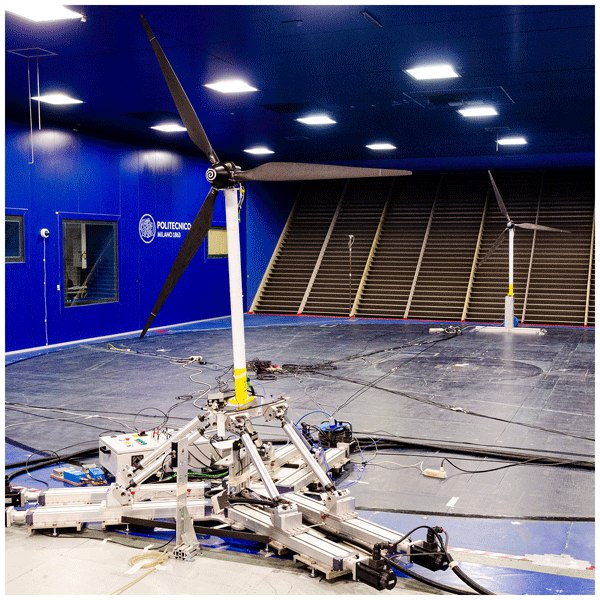
This study explores how the movement of floating wind turbines affects nearby turbines through wakes. Using wind tunnel experiments, we found that certain motions of an upstream turbine can improve the energy produced by a downstream one and change the forces it experiences. These effects depend on how the turbines are spaced and aligned. Our results show that the motion of floating turbines plays a key role in how future offshore wind farms should be designed and operated.
Alessandro Fontanella, Alberto Fusetti, Stefano Cioni, Francesco Papi, Sara Muggiasca, Giacomo Persico, Vincenzo Dossena, Alessandro Bianchini, and Marco Belloli
Wind Energ. Sci., 10, 1369–1387, https://doi.org/10.5194/wes-10-1369-2025, https://doi.org/10.5194/wes-10-1369-2025, 2025
Short summary
Short summary
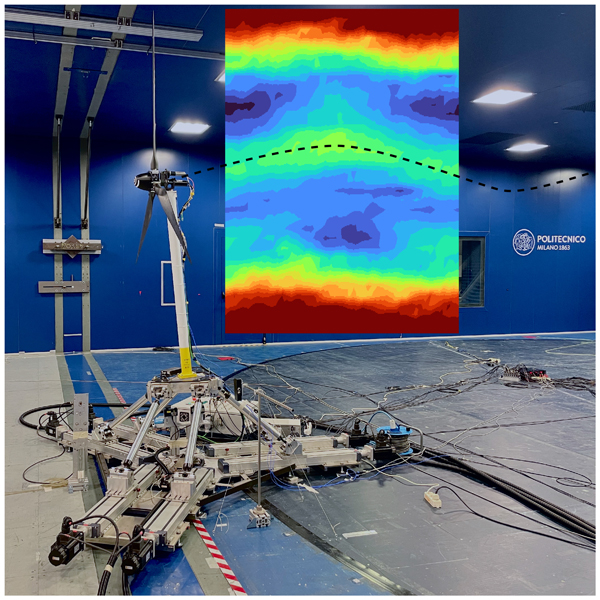
This paper investigates the impact of large movements allowed by floating wind turbine foundations on their aerodynamics and wake behavior. Wind tunnel tests with a model turbine reveal that platform motions affect wake patterns and turbulence levels. Insights from these experiments are crucial for optimizing large-scale floating wind farms. The dataset obtained from the experiment is published and can aid in developing simulation tools for floating wind turbines.
Pier Francesco Melani, Omar Sherif Mohamed, Stefano Cioni, Francesco Balduzzi, and Alessandro Bianchini
Wind Energ. Sci., 9, 601–622, https://doi.org/10.5194/wes-9-601-2024, https://doi.org/10.5194/wes-9-601-2024, 2024
Short summary
Short summary
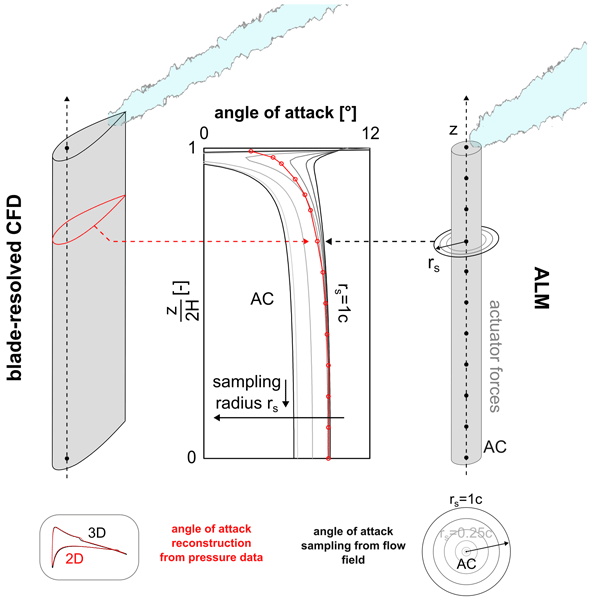
The actuator line method (ALM) is a powerful tool for wind turbine simulation but struggles to resolve tip effects. The reason is still unclear. To investigate this, we use advanced angle of attack sampling and vortex tracking techniques to analyze the flow around a NACA0018 finite wing, simulated with ALM and blade-resolved computational fluid dynamics. Results show that the ALM can account for tip effects if the correct angle of attack sampling and force projection strategies are adopted.
Stefano Cioni, Francesco Papi, Leonardo Pagamonci, Alessandro Bianchini, Néstor Ramos-García, Georg Pirrung, Rémi Corniglion, Anaïs Lovera, Josean Galván, Ronan Boisard, Alessandro Fontanella, Paolo Schito, Alberto Zasso, Marco Belloli, Andrea Sanvito, Giacomo Persico, Lijun Zhang, Ye Li, Yarong Zhou, Simone Mancini, Koen Boorsma, Ricardo Amaral, Axelle Viré, Christian W. Schulz, Stefan Netzband, Rodrigo Soto-Valle, David Marten, Raquel Martín-San-Román, Pau Trubat, Climent Molins, Roger Bergua, Emmanuel Branlard, Jason Jonkman, and Amy Robertson
Wind Energ. Sci., 8, 1659–1691, https://doi.org/10.5194/wes-8-1659-2023, https://doi.org/10.5194/wes-8-1659-2023, 2023
Short summary
Short summary
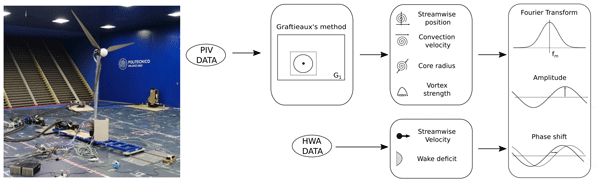
Simulations of different fidelities made by the participants of the OC6 project Phase III are compared to wind tunnel wake measurements on a floating wind turbine. Results in the near wake confirm that simulations and experiments tend to diverge from the expected linearized quasi-steady behavior when the reduced frequency exceeds 0.5. In the far wake, the impact of platform motion is overestimated by simulations and even seems to be oriented to the generation of a wake less prone to dissipation.

Roger Bergua, Amy Robertson, Jason Jonkman, Emmanuel Branlard, Alessandro Fontanella, Marco Belloli, Paolo Schito, Alberto Zasso, Giacomo Persico, Andrea Sanvito, Ervin Amet, Cédric Brun, Guillén Campaña-Alonso, Raquel Martín-San-Román, Ruolin Cai, Jifeng Cai, Quan Qian, Wen Maoshi, Alec Beardsell, Georg Pirrung, Néstor Ramos-García, Wei Shi, Jie Fu, Rémi Corniglion, Anaïs Lovera, Josean Galván, Tor Anders Nygaard, Carlos Renan dos Santos, Philippe Gilbert, Pierre-Antoine Joulin, Frédéric Blondel, Eelco Frickel, Peng Chen, Zhiqiang Hu, Ronan Boisard, Kutay Yilmazlar, Alessandro Croce, Violette Harnois, Lijun Zhang, Ye Li, Ander Aristondo, Iñigo Mendikoa Alonso, Simone Mancini, Koen Boorsma, Feike Savenije, David Marten, Rodrigo Soto-Valle, Christian W. Schulz, Stefan Netzband, Alessandro Bianchini, Francesco Papi, Stefano Cioni, Pau Trubat, Daniel Alarcon, Climent Molins, Marion Cormier, Konstantin Brüker, Thorsten Lutz, Qing Xiao, Zhongsheng Deng, Florence Haudin, and Akhilesh Goveas
Wind Energ. Sci., 8, 465–485, https://doi.org/10.5194/wes-8-465-2023, https://doi.org/10.5194/wes-8-465-2023, 2023
Short summary
Short summary
This work examines if the motion experienced by an offshore floating wind turbine can significantly affect the rotor performance. It was observed that the system motion results in variations in the load, but these variations are not critical, and the current simulation tools capture the physics properly. Interestingly, variations in the rotor speed or the blade pitch angle can have a larger impact than the system motion itself.
Alessandro Fontanella, Alberto Fusetti, Sara Muggiasca, Vincenzo Dossena, and Marco Belloli
Wind Energ. Sci. Discuss., https://doi.org/10.5194/wes-2026-151, https://doi.org/10.5194/wes-2026-151, 2026
Revised manuscript under review for WES
Short summary
Short summary
Wind turbines on floating platforms move with waves, creating unsteady wakes that affect turbines downstream. A new coupling mechanism is demonstrated in this wind-tunnel experiment with two moving turbines: the relative motion strongly changes the aerodynamic response of the downstream turbine, while also affecting wake recovery and farm power production.
Federico Bellini, Majid Ebrahimi, Alessandro Fontanella, Sara Muggiasca, and Marco Belloli
Wind Energ. Sci. Discuss., https://doi.org/10.5194/wes-2026-142, https://doi.org/10.5194/wes-2026-142, 2026
Manuscript not accepted for further review
Short summary
Short summary
Floating wind farms can produce more electricity when turbines are coordinated rather than controlled independently. We tested three control approaches in detailed computer simulations of a four-turbine floating wind farm. The best approach increased average power by up to 19 %, but some structural and mooring loads still rose in certain conditions. The results show that future control systems should balance energy gains with turbine and platform loads.
Agnese Firpo, Søren Juhl Andersen, and Giacomo Persico
Wind Energ. Sci. Discuss., https://doi.org/10.5194/wes-2026-141, https://doi.org/10.5194/wes-2026-141, 2026
Preprint under review for WES
Short summary
Short summary
Floating offshore wind turbines move with the waves, affecting wake dynamics and influencing the performance of downstream turbines. This study proposes a numerical framework to investigate the wake dynamics of a full-scale floating wind turbine. Results show that the frequency of platform motion affects wake dynamics, while the time mean wake remains largely unchanged. This work contributes to understanding floating wind turbine wakes and supports the development of efficient numerical models.
Alessandro Fontanella, Stefano Cioni, Francesco Papi, Sara Muggiasca, Alessandro Bianchini, and Marco Belloli
Wind Energ. Sci., 11, 1821–1851, https://doi.org/10.5194/wes-11-1821-2026, https://doi.org/10.5194/wes-11-1821-2026, 2026
Short summary
Short summary
This study explores how the movement of floating wind turbines affects nearby turbines through wakes. Using wind tunnel experiments, we found that certain motions of an upstream turbine can improve the energy produced by a downstream one and change the forces it experiences. These effects depend on how the turbines are spaced and aligned. Our results show that the motion of floating turbines plays a key role in how future offshore wind farms should be designed and operated.
Francesco Papi, Pier Francesco Melani, and Alessandro Bianchini
Wind Energ. Sci., 11, 1123–1145, https://doi.org/10.5194/wes-11-1123-2026, https://doi.org/10.5194/wes-11-1123-2026, 2026
Short summary
Short summary
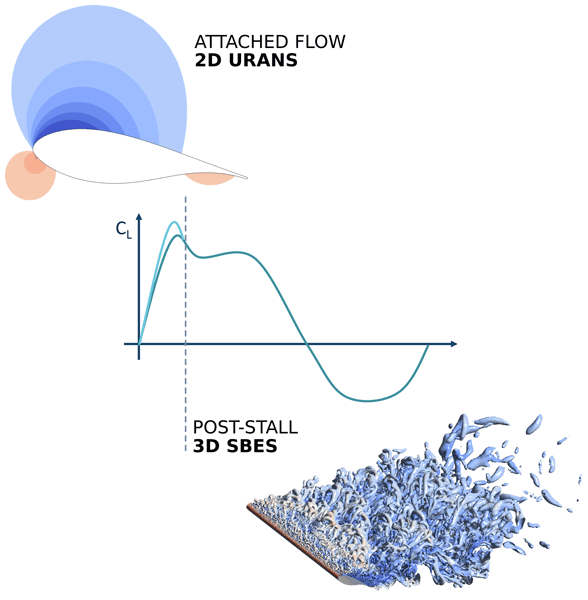
This paper presents an open-access database of aerodynamic polars for a wide range of airfoils, relevant for wind turbine design and simulation. It includes lift, drag, and moment coefficients for multiple Reynolds and Mach numbers. Coefficients are computed with computational fluid dynamics for fully turbulent and free transition boundary layers, as well as a blend of the two. Beyond-stall extrapolation models are calibrated via a number of high-fidelity calculations at various angles of attack in separated flow.

Agnese Firpo, Andrea Giuseppe Sanvito, Giacomo Persico, and Vincenzo Dossena
Wind Energ. Sci., 11, 557–584, https://doi.org/10.5194/wes-11-557-2026, https://doi.org/10.5194/wes-11-557-2026, 2026
Short summary
Short summary
This paper investigates wake dynamics of floating wind turbines and their effects on downstream turbine loads. Numerical simulations using different flow models, supported by experimental validation, show that large-eddy simulations with realistic turbulent inflow are required to capture platform-induced wake oscillations, wake meandering, and wake recovery. These effects are essential for accurate dynamic load estimation and reliable structural assessment of turbines within wind farms.
Robert Behrens de Luna, Francesco Papi, David Marten, and Christian Oliver Paschereit
Wind Energ. Sci., 10, 3045–3068, https://doi.org/10.5194/wes-10-3045-2025, https://doi.org/10.5194/wes-10-3045-2025, 2025
Short summary
Short summary
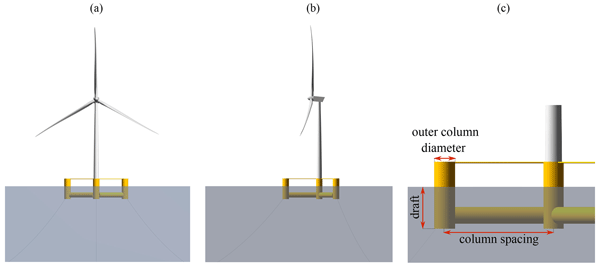
Floating offshore wind turbines make wind resources in deeper waters accessible. However, these systems are more complex and costly than fixed-bottom wind turbines and require further optimization to reduce cost. This study analyzed the effect of aeroelastic modeling fidelity on the design of the floater and the wind turbine controller. The results showed that an increase in fidelity resulted in lighter platforms, influenced controller parameters and led to lower costs overall.
Leonardo Pagamonci, Francesco Papi, Gabriel Cojocaru, Marco Belloli, and Alessandro Bianchini
Wind Energ. Sci., 10, 1707–1736, https://doi.org/10.5194/wes-10-1707-2025, https://doi.org/10.5194/wes-10-1707-2025, 2025
Short summary
Short summary
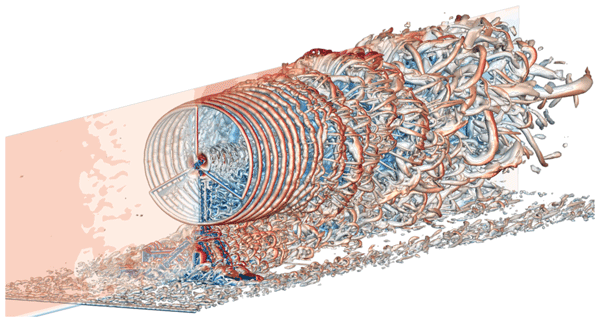
The study presents a critical analysis using wind tunnel experiments and large-eddy simulations aimed at quantifying to what extent turbulence affects the wake structures of a floating turbine undergoing large motions. Analyses show that, whenever realistic turbulence comes into play, only small gains in terms of wake recovery are noticed in comparison to bottom-fixed turbines, suggesting the absence of hypothesized superposition effects between inflow and platform motion.
Alessandro Fontanella, Alberto Fusetti, Stefano Cioni, Francesco Papi, Sara Muggiasca, Giacomo Persico, Vincenzo Dossena, Alessandro Bianchini, and Marco Belloli
Wind Energ. Sci., 10, 1369–1387, https://doi.org/10.5194/wes-10-1369-2025, https://doi.org/10.5194/wes-10-1369-2025, 2025
Short summary
Short summary
This paper investigates the impact of large movements allowed by floating wind turbine foundations on their aerodynamics and wake behavior. Wind tunnel tests with a model turbine reveal that platform motions affect wake patterns and turbulence levels. Insights from these experiments are crucial for optimizing large-scale floating wind farms. The dataset obtained from the experiment is published and can aid in developing simulation tools for floating wind turbines.
Shyam VimalKumar, Delphine De Tavernier, Dominic von Terzi, Marco Belloli, and Axelle Viré
Wind Energ. Sci., 9, 1967–1983, https://doi.org/10.5194/wes-9-1967-2024, https://doi.org/10.5194/wes-9-1967-2024, 2024
Short summary
Short summary
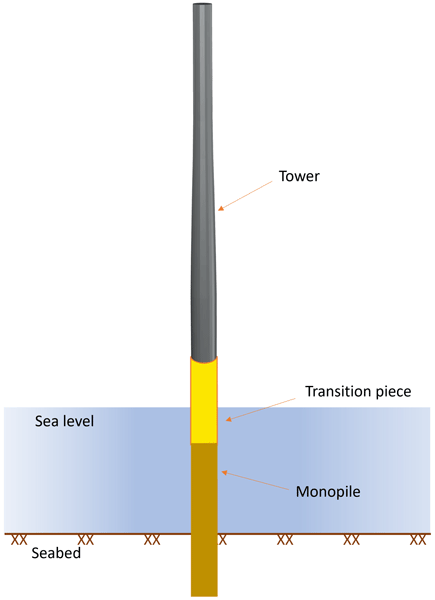
When standing still without a nacelle or blades, the vibrations on a wind turbine tower are of concern to its structural health. This study finds that the air which flows around the tower recirculates behind the tower, forming so-called wakes. These wakes initiate the vibration, and the movement itself causes the vibration to increase or decrease depending on the wind speed. The current study uses a methodology called force partitioning to analyse this in depth.
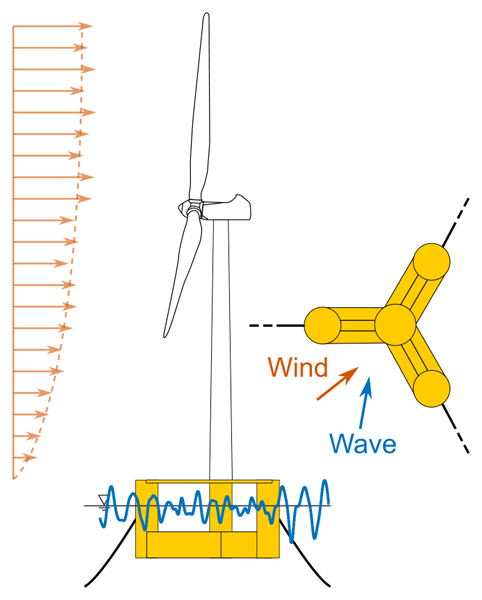
Alessandro Fontanella, Giorgio Colpani, Marco De Pascali, Sara Muggiasca, and Marco Belloli
Wind Energ. Sci., 9, 1393–1417, https://doi.org/10.5194/wes-9-1393-2024, https://doi.org/10.5194/wes-9-1393-2024, 2024
Short summary
Short summary
Waves can boost a floating wind turbine's power output by moving its rotor against the wind. Studying this, we used four models to explore the impact of waves and platform dynamics on turbines in the Mediterranean. We found that wind turbulence, not waves, primarily affects power fluctuations. In real conditions, floating wind turbines produce less energy compared to fixed-bottom ones, mainly due to platform tilt.
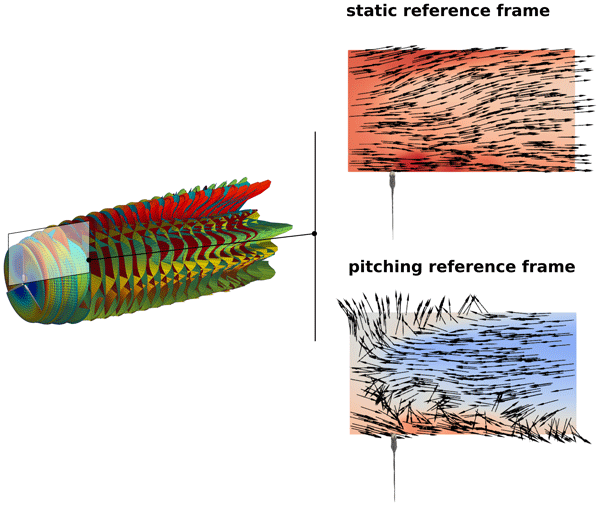
Francesco Papi, Jason Jonkman, Amy Robertson, and Alessandro Bianchini
Wind Energ. Sci., 9, 1069–1088, https://doi.org/10.5194/wes-9-1069-2024, https://doi.org/10.5194/wes-9-1069-2024, 2024
Short summary
Short summary
Blade element momentum (BEM) theory is the backbone of many industry-standard aerodynamic models. However, the analysis of floating offshore wind turbines (FOWTs) introduces new challenges, which could put BEM models to the test. This study systematically compares four aerodynamic models, ranging from BEM to computational fluid dynamics, in an attempt to shed light on the unsteady aerodynamic phenomena that are at stake in FOWTs and whether BEM is able to model them appropriately.
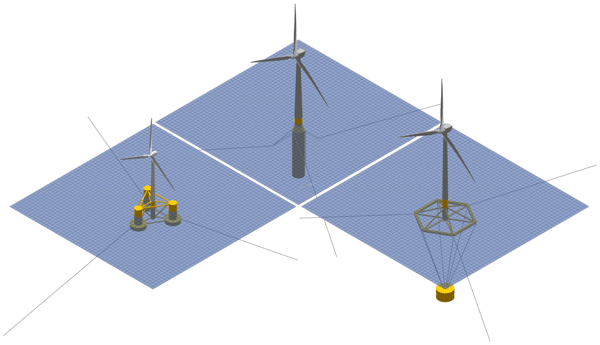
Francesco Papi, Giancarlo Troise, Robert Behrens de Luna, Joseph Saverin, Sebastian Perez-Becker, David Marten, Marie-Laure Ducasse, and Alessandro Bianchini
Wind Energ. Sci., 9, 981–1004, https://doi.org/10.5194/wes-9-981-2024, https://doi.org/10.5194/wes-9-981-2024, 2024
Short summary
Short summary
Wind turbines need to be simulated for thousands of hours to estimate design loads. Mid-fidelity numerical models are typically used for this task to strike a balance between computational cost and accuracy. The considerable displacements of floating wind turbines may be a challenge for some of these models. This paper enhances comprehension of how modeling theories affect floating wind turbine loads by comparing three codes across three turbines, simulated in a real environment.
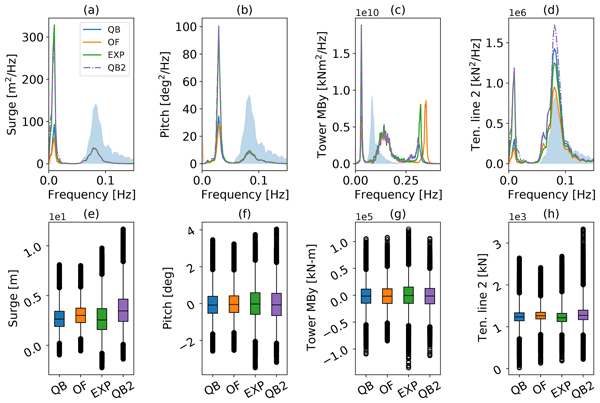
Robert Behrens de Luna, Sebastian Perez-Becker, Joseph Saverin, David Marten, Francesco Papi, Marie-Laure Ducasse, Félicien Bonnefoy, Alessandro Bianchini, and Christian-Oliver Paschereit
Wind Energ. Sci., 9, 623–649, https://doi.org/10.5194/wes-9-623-2024, https://doi.org/10.5194/wes-9-623-2024, 2024
Short summary
Short summary
A novel hydrodynamic module of QBlade is validated on three floating offshore wind turbine concepts with experiments and two widely used simulation tools. Further, a recently proposed method to enhance the prediction of slowly varying drift forces is adopted and tested in varying met-ocean conditions. The hydrodynamic capability of QBlade matches the current state of the art and demonstrates significant improvement regarding the prediction of slowly varying drift forces with the enhanced model.
Pier Francesco Melani, Omar Sherif Mohamed, Stefano Cioni, Francesco Balduzzi, and Alessandro Bianchini
Wind Energ. Sci., 9, 601–622, https://doi.org/10.5194/wes-9-601-2024, https://doi.org/10.5194/wes-9-601-2024, 2024
Short summary
Short summary
The actuator line method (ALM) is a powerful tool for wind turbine simulation but struggles to resolve tip effects. The reason is still unclear. To investigate this, we use advanced angle of attack sampling and vortex tracking techniques to analyze the flow around a NACA0018 finite wing, simulated with ALM and blade-resolved computational fluid dynamics. Results show that the ALM can account for tip effects if the correct angle of attack sampling and force projection strategies are adopted.
Stefano Cioni, Francesco Papi, Leonardo Pagamonci, Alessandro Bianchini, Néstor Ramos-García, Georg Pirrung, Rémi Corniglion, Anaïs Lovera, Josean Galván, Ronan Boisard, Alessandro Fontanella, Paolo Schito, Alberto Zasso, Marco Belloli, Andrea Sanvito, Giacomo Persico, Lijun Zhang, Ye Li, Yarong Zhou, Simone Mancini, Koen Boorsma, Ricardo Amaral, Axelle Viré, Christian W. Schulz, Stefan Netzband, Rodrigo Soto-Valle, David Marten, Raquel Martín-San-Román, Pau Trubat, Climent Molins, Roger Bergua, Emmanuel Branlard, Jason Jonkman, and Amy Robertson
Wind Energ. Sci., 8, 1659–1691, https://doi.org/10.5194/wes-8-1659-2023, https://doi.org/10.5194/wes-8-1659-2023, 2023
Short summary
Short summary
Simulations of different fidelities made by the participants of the OC6 project Phase III are compared to wind tunnel wake measurements on a floating wind turbine. Results in the near wake confirm that simulations and experiments tend to diverge from the expected linearized quasi-steady behavior when the reduced frequency exceeds 0.5. In the far wake, the impact of platform motion is overestimated by simulations and even seems to be oriented to the generation of a wake less prone to dissipation.
Alessandro Fontanella, Elio Daka, Felipe Novais, and Marco Belloli
Wind Energ. Sci., 8, 1351–1368, https://doi.org/10.5194/wes-8-1351-2023, https://doi.org/10.5194/wes-8-1351-2023, 2023
Short summary
Short summary
This study aims to enhance wind turbine modeling by incorporating industry-standard control functionalities. A control design framework was developed and applied to a 1 : 100 scale model of a large floating wind turbine. Wind tunnel tests confirmed the scaled turbine accurately reproduced the steady-state rotor speed, blade pitch, and thrust torque characteristics of the full-size turbine. However, challenges arose in simulating the turbine's aerodynamic response during above-rated operation.
Paul Veers, Carlo L. Bottasso, Lance Manuel, Jonathan Naughton, Lucy Pao, Joshua Paquette, Amy Robertson, Michael Robinson, Shreyas Ananthan, Thanasis Barlas, Alessandro Bianchini, Henrik Bredmose, Sergio González Horcas, Jonathan Keller, Helge Aagaard Madsen, James Manwell, Patrick Moriarty, Stephen Nolet, and Jennifer Rinker
Wind Energ. Sci., 8, 1071–1131, https://doi.org/10.5194/wes-8-1071-2023, https://doi.org/10.5194/wes-8-1071-2023, 2023
Short summary
Short summary
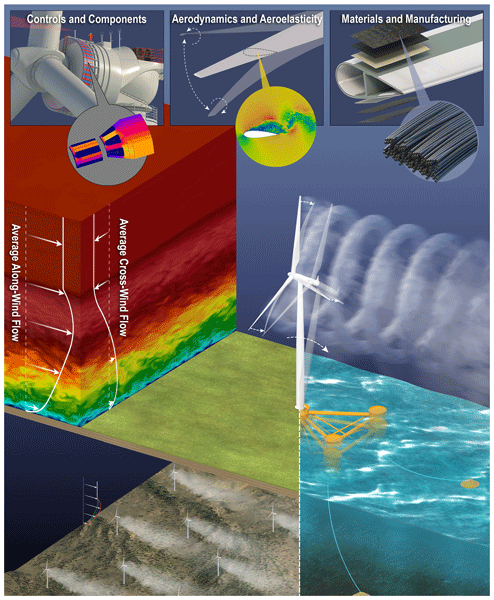
Critical unknowns in the design, manufacturing, and operation of future wind turbine and wind plant systems are articulated, and key research activities are recommended.
Roger Bergua, Amy Robertson, Jason Jonkman, Emmanuel Branlard, Alessandro Fontanella, Marco Belloli, Paolo Schito, Alberto Zasso, Giacomo Persico, Andrea Sanvito, Ervin Amet, Cédric Brun, Guillén Campaña-Alonso, Raquel Martín-San-Román, Ruolin Cai, Jifeng Cai, Quan Qian, Wen Maoshi, Alec Beardsell, Georg Pirrung, Néstor Ramos-García, Wei Shi, Jie Fu, Rémi Corniglion, Anaïs Lovera, Josean Galván, Tor Anders Nygaard, Carlos Renan dos Santos, Philippe Gilbert, Pierre-Antoine Joulin, Frédéric Blondel, Eelco Frickel, Peng Chen, Zhiqiang Hu, Ronan Boisard, Kutay Yilmazlar, Alessandro Croce, Violette Harnois, Lijun Zhang, Ye Li, Ander Aristondo, Iñigo Mendikoa Alonso, Simone Mancini, Koen Boorsma, Feike Savenije, David Marten, Rodrigo Soto-Valle, Christian W. Schulz, Stefan Netzband, Alessandro Bianchini, Francesco Papi, Stefano Cioni, Pau Trubat, Daniel Alarcon, Climent Molins, Marion Cormier, Konstantin Brüker, Thorsten Lutz, Qing Xiao, Zhongsheng Deng, Florence Haudin, and Akhilesh Goveas
Wind Energ. Sci., 8, 465–485, https://doi.org/10.5194/wes-8-465-2023, https://doi.org/10.5194/wes-8-465-2023, 2023
Short summary
Short summary
This work examines if the motion experienced by an offshore floating wind turbine can significantly affect the rotor performance. It was observed that the system motion results in variations in the load, but these variations are not critical, and the current simulation tools capture the physics properly. Interestingly, variations in the rotor speed or the blade pitch angle can have a larger impact than the system motion itself.
Federico Taruffi, Simone Di Carlo, Sara Muggiasca, and Marco Belloli
Wind Energ. Sci., 8, 71–84, https://doi.org/10.5194/wes-8-71-2023, https://doi.org/10.5194/wes-8-71-2023, 2023
Short summary
Short summary
The work focuses on the experimental validation of the design of a large-scale wind turbine model, based on the DTU 10 MW reference wind turbine, installed on a scaled multipurpose platform deployed in an outdoor natural laboratory. The aim of the validation is to assess whether the behaviour of the model respects the targets established during the design phase in terms of structure, rotor aerodynamics and control. The outcome of the investigation ensures the validity of the design process.
Paul Veers, Katherine Dykes, Sukanta Basu, Alessandro Bianchini, Andrew Clifton, Peter Green, Hannele Holttinen, Lena Kitzing, Branko Kosovic, Julie K. Lundquist, Johan Meyers, Mark O'Malley, William J. Shaw, and Bethany Straw
Wind Energ. Sci., 7, 2491–2496, https://doi.org/10.5194/wes-7-2491-2022, https://doi.org/10.5194/wes-7-2491-2022, 2022
Short summary
Short summary
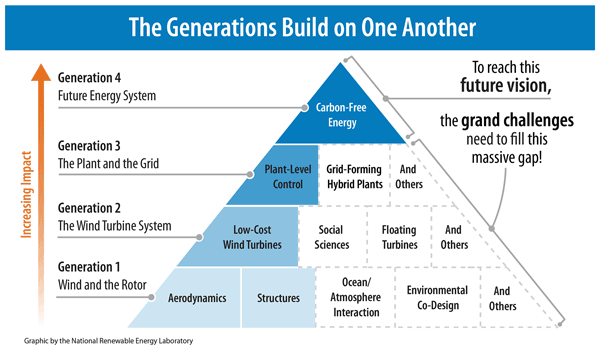
Wind energy will play a central role in the transition of our energy system to a carbon-free future. However, many underlying scientific issues remain to be resolved before wind can be deployed in the locations and applications needed for such large-scale ambitions. The Grand Challenges are the gaps in the science left behind during the rapid growth of wind energy. This article explains the breadth of the unfinished business and introduces 10 articles that detail the research needs.
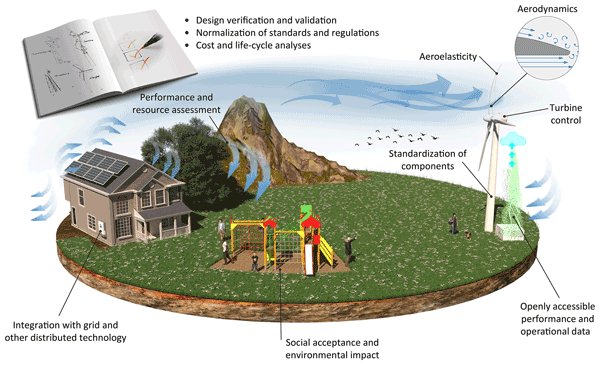
Alessandro Bianchini, Galih Bangga, Ian Baring-Gould, Alessandro Croce, José Ignacio Cruz, Rick Damiani, Gareth Erfort, Carlos Simao Ferreira, David Infield, Christian Navid Nayeri, George Pechlivanoglou, Mark Runacres, Gerard Schepers, Brent Summerville, David Wood, and Alice Orrell
Wind Energ. Sci., 7, 2003–2037, https://doi.org/10.5194/wes-7-2003-2022, https://doi.org/10.5194/wes-7-2003-2022, 2022
Short summary
Short summary
The paper is part of the Grand Challenges Papers for Wind Energy. It provides a status of small wind turbine technology in terms of technical maturity, diffusion, and cost. Then, five grand challenges that are thought to be key to fostering the development of the technology are proposed. To tackle these challenges, a series of unknowns and gaps are first identified and discussed. Improvement areas are highlighted, within which 10 key enabling actions are finally proposed to the wind community.
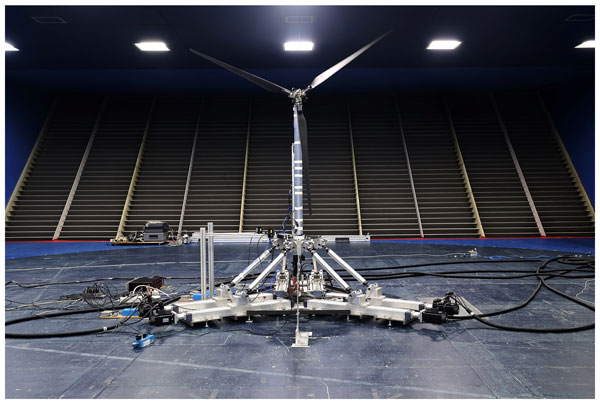
Alessandro Fontanella, Alan Facchinetti, Simone Di Carlo, and Marco Belloli
Wind Energ. Sci., 7, 1711–1729, https://doi.org/10.5194/wes-7-1711-2022, https://doi.org/10.5194/wes-7-1711-2022, 2022
Short summary
Short summary
The aerodynamics of floating wind turbines is complicated by large motions permitted by the foundation. The interaction between turbine, wind, and wake is not yet fully understood. The wind tunnel experiments of this paper shed light on the aerodynamic force and wake response of the floating IEA 15 MW turbine subjected to platform motion as would occur during normal operation. This will help future research on turbine and wind farm control.
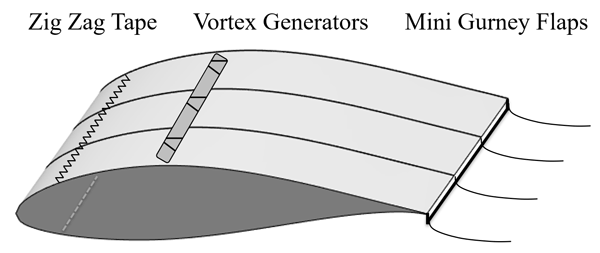
Jörg Alber, Marinos Manolesos, Guido Weinzierl-Dlugosch, Johannes Fischer, Alexander Schönmeier, Christian Navid Nayeri, Christian Oliver Paschereit, Joachim Twele, Jens Fortmann, Pier Francesco Melani, and Alessandro Bianchini
Wind Energ. Sci., 7, 943–965, https://doi.org/10.5194/wes-7-943-2022, https://doi.org/10.5194/wes-7-943-2022, 2022
Short summary
Short summary
This paper investigates the potentials and the limitations of mini Gurney flaps and their combination with vortex generators for improved rotor blade performance of wind turbines. These small passive add-ons are installed in order to increase the annual energy production by mitigating the effects of both early separation toward the root region and surface erosion toward the tip region of the blade. As such, this study contributes to the reliable and long-term generation of renewable energy.
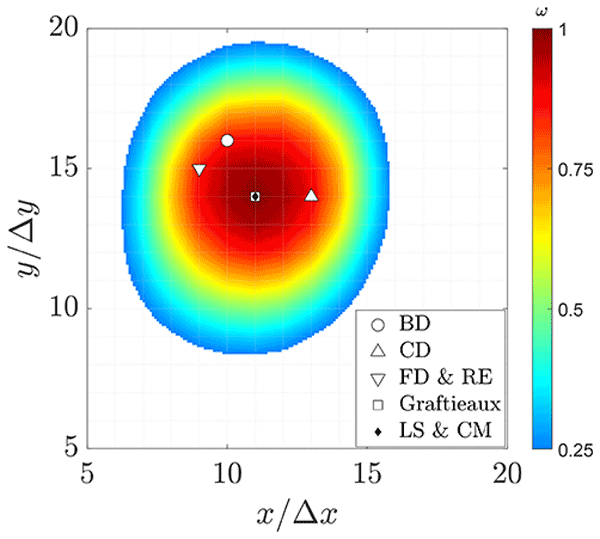
Rodrigo Soto-Valle, Stefano Cioni, Sirko Bartholomay, Marinos Manolesos, Christian Navid Nayeri, Alessandro Bianchini, and Christian Oliver Paschereit
Wind Energ. Sci., 7, 585–602, https://doi.org/10.5194/wes-7-585-2022, https://doi.org/10.5194/wes-7-585-2022, 2022
Short summary
Short summary
This paper compares different vortex identification methods to evaluate their suitability to study the tip vortices of a wind turbine. The assessment is done through experimental data from the wake of a wind turbine model. Results show comparability in some aspects as well as significant differences, providing evidence to justify further comparisons. Therefore, this study proves that the selection of the most suitable postprocessing methods of tip vortex data is pivotal to ensure robust results.
Cited articles
Angelou, N., Mann, J., and Dubreuil-Boisclair, C.: Revealing inflow and wake conditions of a 6 MW floating turbine, Wind Energ. Sci., 8, 1511–1531, https://doi.org/10.5194/wes-8-1511-2023, 2023.
Arabgolarcheh, A., Jannesarahmadi, S., and Benini, E.: Modeling of near wake characteristics in floating offshore wind turbines using an actuator line method, Renewable Energy, 185, 871–887, https://doi.org/10.1016/j.renene.2021.12.099, 2022.
Bak, C., Zahle, F., Bitsche, R., Kim, T., Yde, A., Henriksen, L. C., Hansen, M. H., Blasques, J. P. A. A., Gaunaa, M., and Natarajan, A.: The DTU 10- MW Reference Wind Turbine, DTU Wind Energy Report-I-0092, 2013.
Bergua, R., Robertson, A., Jonkman, J., Branlard, E., Fontanella, A., Belloli, M., Schito, P., Zasso, A., Persico, G., Sanvito, A., Amet, E., Brun, C., Campaña-Alonso, G., Martín-San-Román, R., Cai, R., Cai, J., Qian, Q., Maoshi, W., Beardsell, A., Pirrung, G., Ramos-García, N., Shi, W., Fu, J., Corniglion, R., Lovera, A., Galván, J., Nygaard, T. A., dos Santos, C. R., Gilbert, P., Joulin, P.-A., Blondel, F., Frickel, E., Chen, P., Hu, Z., Boisard, R., Yilmazlar, K., Croce, A., Harnois, V., Zhang, L., Li, Y., Aristondo, A., Mendikoa Alonso, I., Mancini, S., Boorsma, K., Savenije, F., Marten, D., Soto-Valle, R., Schulz, C. W., Netzband, S., Bianchini, A., Papi, F., Cioni, S., Trubat, P., Alarcon, D., Molins, C., Cormier, M., Brüker, K., Lutz, T., Xiao, Q., Deng, Z., Haudin, F., and Goveas, A.: OC6 project Phase III: validation of the aerodynamic loading on a wind turbine rotor undergoing large motion caused by a floating support structure, Wind Energ. Sci., 8, 465–485, https://doi.org/10.5194/wes-8-465-2023, 2023.
Cabezon, D., Migoya, E., and Crespo, A.: Comparison of turbulence models for the computational fluid dynamics simulation of wind turbine wakes in the atmospheric boundary layer, Wind Energy, 14, 909–921, 2011.
Chen, P., Chen, J., and Hu, Z.: Review of Experimental-Numerical Methodologies and Challenges for Floating Offshore Wind Turbines, J. Marine. Sci. Appl., 19, 339–361, https://doi.org/10.1007/s11804-020-00165-z, 2020.
Cioni, S., Papi, F., Pagamonci, L., Bianchini, A., Ramos-García, N., Pirrung, G., Corniglion, R., Lovera, A., Galván, J., Boisard, R., Fontanella, A., Schito, P., Zasso, A., Belloli, M., Sanvito, A., Persico, G., Zhang, L., Li, Y., Zhou, Y., Mancini, S., Boorsma, K., Amaral, R., Viré, A., Schulz, C. W., Netzband, S., Soto-Valle, R., Marten, D., Martín-San-Román, R., Trubat, P., Molins, C., Bergua, R., Branlard, E., Jonkman, J., and Robertson, A.: On the characteristics of the wake of a wind turbine undergoing large motions caused by a floating structure: an insight based on experiments and multi-fidelity simulations from the OC6 project Phase III, Wind Energ. Sci., 8, 1659–1691, https://doi.org/10.5194/wes-8-1659-2023, 2023.
Cioni, S., Papi, F., Balduzzi, F., Fontanella, A., and Bianchini, A.: Blade-resolved CFD analysis of a floating wind turbine: new insights on unsteady aerodynamics, loads, and wake, Ocean Engineering, 341, 122746, https://doi.org/10.1016/j.oceaneng.2025.122746, 2025.
Dağ, K. O. and Sørensen, J. N.: A new tip correction for actuator line computations, Wind Energy, 23, 148–160, 2020.
Dong, J. and Viré, A.: The aerodynamics of floating offshore wind turbines in different working states during surge motion, Renewable Energy, 195, 1125–1136, https://doi.org/10.1016/j.renene.2022.06.016, 2022.
Du, Z. and Selig, M.: A 3-D stall-delay model for horizontal axis wind turbine performance prediction, in: 1998 ASME Wind Energy Symposium, 21, https://doi.org/10.2514/6.1998-21, 1998.
Duan, G., Gattari, D., and Porté-Agel, F.: Theoretical and experimental study on power performance and wake characteristics of a floating wind turbine under pitch motion, Applied Energy, 378, 124767, https://doi.org/10.1016/j.apenergy.2024.124767, 2025.
Fontanella, A., Bayati, I., Mikkelsen, R., Belloli, M., and Zasso, A.: UNAFLOW: a holistic wind tunnel experiment about the aerodynamic response of floating wind turbines under imposed surge motion, Wind Energ. Sci., 6, 1169–1190, https://doi.org/10.5194/wes-6-1169-2021, 2021.
Fontanella, A., Zasso, A., and Belloli, M.: Wind tunnel investigation of the wake-flow response for a floating turbine subjected to surge motion, J. Phys.: Conf. Ser., 2265, 042023, https://doi.org/10.1088/1742-6596/2265/4/042023, 2022.
Fontanella, A., Fusetti, A., Menconi, F., Cioni, S., Papi, F., Muggiasca, S., Persico, G., Dossena, V., Bianchini, A., and Belloli, M.: NETTUNO Experiment 1 – Wake Development in Floating Wind Turbines, Zenodo [data set], https://doi.org/10.5281/zenodo.13994980, 2024.
Fontanella, A., Fusetti, A., Cioni, S., Papi, F., Muggiasca, S., Persico, G., Dossena, V., Bianchini, A., and Belloli, M.: Wake development in floating wind turbines: new insights and an open dataset from wind tunnel experiments, Wind Energy Science, 10, 1369–1387, 2025.
Jonkman, B. J.: TurbSim user's guide: Version 1.50, National Renewable Energy Lab.(NREL), Golden, CO (United States), https://doi.org/10.2172/965520, 2009.
Jost, E., Klein, L., Leipprand, H., Lutz, T., and Krämer, E.: Extracting the angle of attack on rotor blades from CFD simulations, Wind Energy, 21, 807–822, 2018.
Kleine, V. G., Franceschini, L., Carmo, B. S., Hanifi, A., and Henningson, D. S.: Stability of Floating Wind Turbine Wakes, J. Phys.: Conf. Ser., 1934, 012009, https://doi.org/10.1088/1742-6596/1934/1/012009, 2021.
Kleine, V. G., Franceschini, L., Carmo, B. S., Hanifi, A., and Henningson, D. S.: The stability of wakes of floating wind turbines, Physics of Fluids, 34, 074106, https://doi.org/10.1063/5.0092267, 2022.
Li, Z., Dong, G., and Yang, X.: Onset of wake meandering for a floating offshore wind turbine under side-to-side motion, Journal of Fluid Mechanics, 934, https://doi.org/10.1017/jfm.2021.1147, 2022.
Lin, M. and Porté-Agel, F.: Wake meandering of wind turbines under dynamic yaw control and impacts on power and fatigue, Renewable Energy, 223, 120003, 2024.
Marten, D.: QBlade: a Modern Tool for the Aeroelastic Simulation of Wind Turbines, Technische Universität Berlin, https://doi.org/10.14279/depositonce-10646, 2020.
Menter, F. R., Smirnov, P. E., Liu, T., and Avancha, R.: A One-Equation Local Correlation-Based Transition Model, Flow Turbulence Combust, 95, 583–619, https://doi.org/10.1007/s10494-015-9622-4, 2015.
Messmer, T., Hölling, M., and Peinke, J.: Enhanced recovery caused by nonlinear dynamics in the wake of a floating offshore wind turbine, Journal of Fluid Mechanics, 984, A66, https://doi.org/10.1017/jfm.2024.175, 2024a.
Messmer, T., Peinke, J., and Hölling, M.: Wind tunnel investigation on the recovery and dynamics of the wake of a floating offshore wind turbine subjected to low inflow turbulence, J. Phys.: Conf. Ser., 2767, 092083, https://doi.org/10.1088/1742-6596/2767/9/092083, 2024b.
Munters, W. and Meyers, J.: Towards practical dynamic induction control of wind farms: analysis of optimally controlled wind-farm boundary layers and sinusoidal induction control of first-row turbines, Wind Energ. Sci., 3, 409–425, https://doi.org/10.5194/wes-3-409-2018, 2018.
Navarro Diaz, G. P., Otero, A. D., Asmuth, H., Sørensen, J. N., and Ivanell, S.: Actuator line model using simplified force calculation methods, Wind Energ. Sci., 8, 363–382, https://doi.org/10.5194/wes-8-363-2023, 2023.
Øye, S.: Dynamic stall simulated as time lag of separation, in: Proceedings of the 4th IEA Symposium on the Aerodynamics of Wind Turbines, 28, https://docs.qblade.org/src/theory/index_th.html (last access: 23 February 2026), 1991.
Pagamonci, L., Papi, F., Cojocaru, G., Belloli, M., and Bianchini, A.: How does turbulence affect wake development in floating wind turbines? Some insights from comparative large-eddy simulations and wind tunnel experiments, Wind Energ. Sci., 10, 1707–1736, https://doi.org/10.5194/wes-10-1707-2025, 2025.
Panthi, K. and Iungo, G. V.: Wind tunnel experiments and model predictions of the performance of a floating offshore wind turbine undergoing pitch motion, Journal of Renewable and Sustainable Energy, 17, https://doi.org/10.1063/5.0301237, 2025.
Papi, F., Jonkman, J., Robertson, A., and Bianchini, A.: Going beyond BEM with BEM: an insight into dynamic inflow effects on floating wind turbines, Wind Energ. Sci., 9, 1069–1088, https://doi.org/10.5194/wes-9-1069-2024, 2024.
Porté-Agel, F., Bastankhah, M., and Shamsoddin, S.: Wind-Turbine and Wind-Farm Flows: A Review, Boundary-Layer Meteorol., 174, 1–59, https://doi.org/10.1007/s10546-019-00473-0, 2020.
Rahimi, H., Schepers, J. G., Shen, W. Z., García, N. R., Schneider, M., Micallef, D., Ferreira, C. S., Jost, E., Klein, L., and Herráez, I.: Evaluation of different methods for determining the angle of attack on wind turbine blades with CFD results under axial inflow conditions, Renewable Energy, 125, 866–876, 2018.
Ramos-García, N., Kontos, S., Pegalajar-Jurado, A., González Horcas, S., and Bredmose, H.: Investigation of the floating IEA Wind 15 MW RWT using vortex methods Part I: Flow regimes and wake recovery, Wind Energy, 25, 468–504, https://doi.org/10.1002/we.2682, 2022.
Richards, K. J., Senecal, P. K., and Pomraning, E.: CONVERGE v4.1, https://convergecfd.com/ (last access: 23 February 2026), 2026.
Robertson, A., Bergua, R., Fontanella, A., and Jonkman, J.: OC6 Phase III Definition Document: Validation of Nonlinear Hydrodynamic Loading on the DeepCwind Semisubmersible, https://doi.org/10.2172/1846746, 2023.
Sanvito, A. G., Firpo, A., Schito, P., Dossena, V., Zasso, A., and Persico, G.: A novel vortex-based velocity sampling method for the actuator-line modeling of floating offshore wind turbines in windmill state, Renewable Energy, 231, 120927, https://doi.org/10.1016/j.renene.2024.120927, 2024.
Schliffke, B., Aubrun, S., and Conan, B.: Wind Tunnel Study of a “Floating” Wind Turbine's Wake in an Atmospheric Boundary Layer with Imposed Characteristic Surge Motion, J. Phys.: Conf. Ser., 1618, 062015, https://doi.org/10.1088/1742-6596/1618/6/062015, 2020.
Schliffke, B., Conan, B., and Aubrun, S.: Floating wind turbine motion signature in the far-wake spectral content – a wind tunnel experiment, Wind Energ. Sci., 9, 519–532, https://doi.org/10.5194/wes-9-519-2024, 2024.
Schulz, C. W., Netzband, S., Özinan, U., Cheng, P. W., and Abdel-Maksoud, M.: Wind turbine rotors in surge motion: new insights into unsteady aerodynamics of floating offshore wind turbines (FOWTs) from experiments and simulations, Wind Energ. Sci., 9, 665–695, https://doi.org/10.5194/wes-9-665-2024, 2024.
Sebastian, T. and Lackner, M. A.: Characterization of the unsteady aerodynamics of offshore floating wind turbines, Wind Energy, 16, 339–352, https://doi.org/10.1002/we.545, 2013.
Taruffi, F., Novais, F., and Viré, A.: An experimental study on the aerodynamic loads of a floating offshore wind turbine under imposed motions, Wind Energ. Sci., 9, 343–358, https://doi.org/10.5194/wes-9-343-2024, 2024.
Tran, T.-T. and Kim, D.-H.: The platform pitching motion of floating offshore wind turbine: A preliminary unsteady aerodynamic analysis, Journal of Wind Engineering and Industrial Aerodynamics, 142, 65–81, https://doi.org/10.1016/j.jweia.2015.03.009, 2015.
Veers, P., Bottasso, C. L., Manuel, L., Naughton, J., Pao, L., Paquette, J., Robertson, A., Robinson, M., Ananthan, S., Barlas, T., Bianchini, A., Bredmose, H., Horcas, S. G., Keller, J., Madsen, H. A., Manwell, J., Moriarty, P., Nolet, S., and Rinker, J.: Grand challenges in the design, manufacture, and operation of future wind turbine systems, Wind Energ. Sci., 8, 1071–1131, https://doi.org/10.5194/wes-8-1071-2023, 2023.
Viterna, L. A. and Janetzke, D. C.: Theoretical and experimental power from large horizontal-axis wind turbines, NASA Lewis Research Center, Cleveland, OH (United States), https://doi.org/10.2172/6763041, 1982.
Xie, S.: An actuator-line model with Lagrangian-averaged velocity sampling and piecewise projection for wind turbine simulations, Wind Energy, 24, 1095–1106, https://doi.org/10.1002/we.2619, 2021.
Short summary
A multi-fidelity approach is leveraged to investigate the capabilities of engineering models to capture the wake dynamics of a wind turbine model under imposed motion. In contrast to previous studies, many more different operating conditions have been investigated, including surge, pitch, yaw, and wind–wave misalignment cases; moreover, numerical methods are here consistently applied to the same test cases, which are part of the first experimental round of the NETTUNO project.
A multi-fidelity approach is leveraged to investigate the capabilities of engineering models to...


Altmetrics
Final-revised paper
Preprint