
Articles | Volume 11, issue 5
https://doi.org/10.5194/wes-11-1631-2026
© Author(s) 2026. This work is distributed under
the Creative Commons Attribution 4.0 License.
the Creative Commons Attribution 4.0 License.
https://doi.org/10.5194/wes-11-1631-2026
© Author(s) 2026. This work is distributed under
the Creative Commons Attribution 4.0 License.
the Creative Commons Attribution 4.0 License.
Research article
| 
08 May 2026
Research article |
| 08 May 2026
| 08 May 2026
Dependence of wind-farm-induced gravity waves and wind farm performance on non-dimensional atmospheric parameters and simulation configuration

Delft University of Technology, Delft, the Netherlands
Matthew J. Churchfield
National Laboratory of the Rockies, Golden, Colorado, USA
Simon J. Watson
Delft University of Technology, Delft, the Netherlands
Related authors
Mehtab Ahmed Khan, Dries Allaerts, Simon J. Watson, and Matthew J. Churchfield
Wind Energ. Sci., 10, 1167–1185, https://doi.org/10.5194/wes-10-1167-2025, https://doi.org/10.5194/wes-10-1167-2025, 2025
Short summary
Short summary
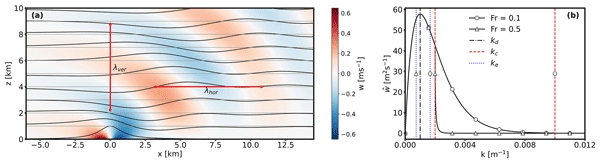
To guide realistic atmospheric gravity wave simulations, we study flow over a two-dimensional hill and through a wind farm canopy, examining optimal domain size and damping layer setup. Wave properties based on non-dimensional numbers determine the optimal domain and damping parameters. Accurate solutions require the domain length to exceed the effective horizontal wavelength, height, and damping thickness to equal the vertical wavelength and non-dimensional damping strength between 1 and 10.

Majid Bastankhah, Marcus Becker, Matthew Churchfield, Caroline Draxl, Jay Prakash Goit, Mehtab Khan, Luis A. Martinez Tossas, Johan Meyers, Patrick Moriarty, Wim Munters, Asim Önder, Sara Porchetta, Eliot Quon, Ishaan Sood, Nicole van Lipzig, Jan-Willem van Wingerden, Paul Veers, and Simon Watson
Wind Energ. Sci., 9, 2171–2174, https://doi.org/10.5194/wes-9-2171-2024, https://doi.org/10.5194/wes-9-2171-2024, 2024
Short summary
Short summary
Dries Allaerts was born on 19 May 1989 and passed away at his home in Wezemaal, Belgium, on 10 October 2024 after battling cancer. Dries started his wind energy career in 2012 and had a profound impact afterward on the community, in terms of both his scientific realizations and his many friendships and collaborations in the field. His scientific acumen, open spirit of collaboration, positive attitude towards life, and playful and often cheeky sense of humor will be deeply missed by many.
Sebastiano Stipa, Mehtab Ahmed Khan, Dries Allaerts, and Joshua Brinkerhoff
Wind Energ. Sci., 9, 1647–1668, https://doi.org/10.5194/wes-9-1647-2024, https://doi.org/10.5194/wes-9-1647-2024, 2024
Short summary
Short summary
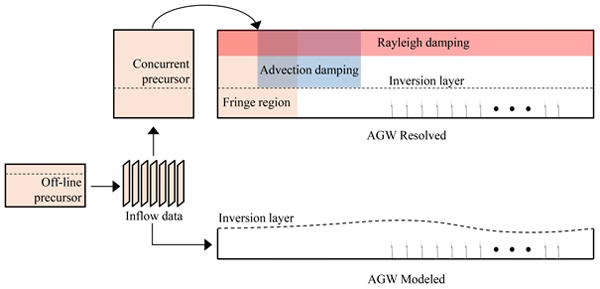
We introduce a novel way to model the impact of atmospheric gravity waves (AGWs) on wind farms using high-fidelity simulations while significantly reducing computational costs. The proposed approach is validated across different atmospheric stability conditions, and implications of neglecting AGWs when predicting wind farm power are assessed. This work advances our understanding of the interaction of wind farms with the free atmosphere, ultimately facilitating cost-effective research.
Dachuan Feng, Wen Zhang, Minping Wan, and Simon J. Watson
Wind Energ. Sci. Discuss., https://doi.org/10.5194/wes-2026-184, https://doi.org/10.5194/wes-2026-184, 2026
Preprint under review for WES
Short summary
Short summary
Wind turbines operate in air whose behaviour changes through the day: calm, layered air at night gives way to vigorous mixing after sunrise. Using computer simulations driven by measurements from a wind farm in Oklahoma, we tracked how the turbulent wake behind a turbine evolves during this morning transition. The wake changes character within hours, from one regular swaying motion to many irregular ones, altering power output. Power forecasts and controls should reflect these shifts.
Maarten Paul van der Laan and Simon Watson
Wind Energ. Sci., 11, 3763–3774, https://doi.org/10.5194/wes-11-3763-2026, https://doi.org/10.5194/wes-11-3763-2026, 2026
Short summary
Short summary
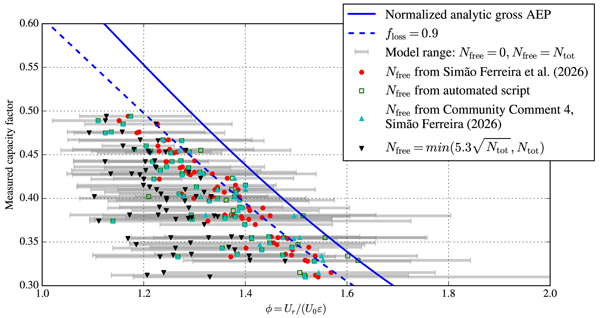
A theoretical limit for the energy extraction of offshore wind farms has been suggested by Simão Ferreira et al. (2026) based on a simple model of an infinite wind farm and an ad hoc method to correct the model for application to finite wind farms. In this work, we discuss a number of concerns and we conclude that the limit proposed in Simão Ferreira et al. (2026) is not a theoretical limit but rather a limit supported by the non-reproducible finite wind farm correction.
Kayacan Kestel, Xavier Chesterman, Donatella Zappalá, Simon Watson, Mingxin Li, Edward Hart, James Carroll, Yolanda Vidal, Amir R. Nejad, Shawn Sheng, Yi Guo, Matthias Stammler, Florian Wirsing, Ahmed Saleh, Nico Gregarek, Thao Baszenski, Thomas Decker, Martin Knops, Georg Jacobs, Benjamin Lehmann, Florian König, Ines Pereira, Pieter-Jan Daems, Cédric Peeters, and Jan Helsen
Wind Energ. Sci., 11, 2103–2155, https://doi.org/10.5194/wes-11-2103-2026, https://doi.org/10.5194/wes-11-2103-2026, 2026
Short summary
Short summary
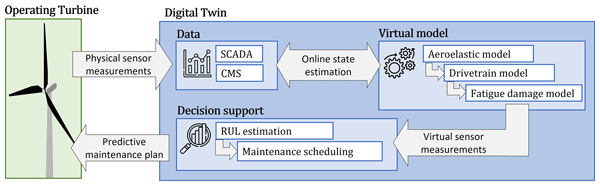
Wind energy use has been rapidly expanding worldwide in recent years. Driven by global decarbonization goals and energy security concerns, this growth is expected to continue. To achieve these targets, production costs must decrease, with operation and maintenance being major contributors. This paper reviews current and emerging technologies for monitoring wind turbine drivetrains, and highlights key academic and industrial challenges that may hinder progress.
Ali Eftekhari Milani, Donatella Zappalá, Shawn Sheng, and Simon Watson
Wind Energ. Sci. Discuss., https://doi.org/10.5194/wes-2026-36, https://doi.org/10.5194/wes-2026-36, 2026
Preprint under review for WES
Short summary
Short summary
This paper proposes a probabilistic method for predicting the Remaining Useful Life of wind turbine components. The method effectively addresses the high noise and volatile operating conditions in field SCADA datasets, accurately quantifies forecast uncertainty without distributional assumptions, and guarantees the validity and robustness of the predicted intervals. This method decisively outperforms existing approaches when applied to a real SCADA dataset containing gearbox bearing failures.

Branko Kosović, Sukanta Basu, Jacob Berg, Larry K. Berg, Sue E. Haupt, Xiaoli G. Larsén, Joachim Peinke, Richard J. A. M. Stevens, Paul Veers, and Simon Watson
Wind Energ. Sci., 11, 509–555, https://doi.org/10.5194/wes-11-509-2026, https://doi.org/10.5194/wes-11-509-2026, 2026
Short summary
Short summary
Most human activity happens in the layer of the atmosphere which extends a few hundred meters to a couple of kilometers above the surface of the Earth. The flow in this layer is turbulent. Turbulence impacts wind power production and turbine lifespan. Optimizing wind turbine performance requires understanding how turbulence affects both wind turbine efficiency and reliability. This paper points to gaps in our knowledge that need to be addressed to effectively utilize wind resources.
Dachuan Feng, Nirav Dangi, and Simon Watson
Wind Energ. Sci., 11, 395–404, https://doi.org/10.5194/wes-11-395-2026, https://doi.org/10.5194/wes-11-395-2026, 2026
Short summary
Short summary
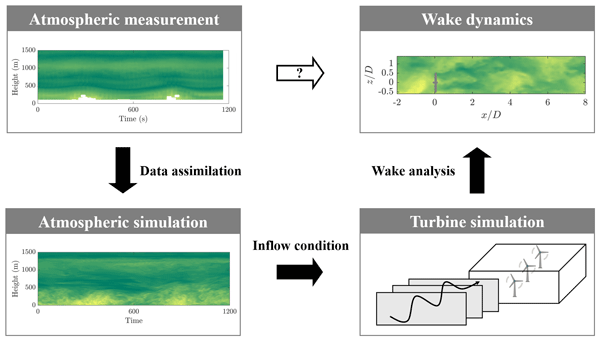
Weather effects drive wind turbine loads and performance to be different from those under mean atmospheric conditions. However, the influence of unsteady atmospheric phenomena on wake behavior remains unclear. This paper explores how atmospheric gravity waves – large-scale wave-like patterns caused by topographical features – affect meandering motions and turbulence generation in the wake region. The outputs of this paper can be used to guide wake modeling in realistic atmospheric flows.
Ali Eftekhari Milani, Donatella Zappalá, Francesco Castellani, and Simon Watson
Wind Energ. Sci., 10, 2563–2576, https://doi.org/10.5194/wes-10-2563-2025, https://doi.org/10.5194/wes-10-2563-2025, 2025
Short summary
Short summary
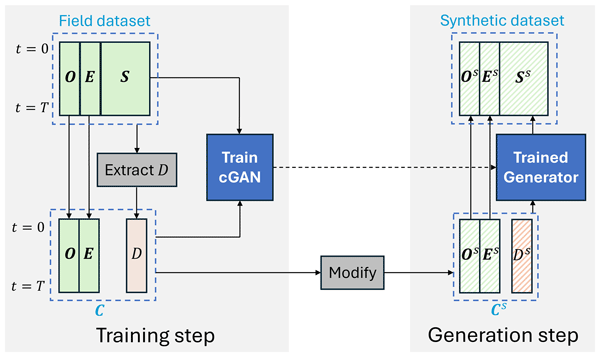
This paper proposes a data-driven approach to simulate wind turbine sensor time series, such as temperature and pressure signals, describing the behaviour of a wind turbine component as it degrades through time up to the failure point. It allows for the simulation of new failure events or the replication of a given failure under different conditions. The results show that the synthetic signals generated using this approach improve the performance of fault detection and prognosis methods.
Oriol Cayon, Simon Watson, and Roland Schmehl
Wind Energ. Sci., 10, 2161–2188, https://doi.org/10.5194/wes-10-2161-2025, https://doi.org/10.5194/wes-10-2161-2025, 2025
Short summary
Short summary
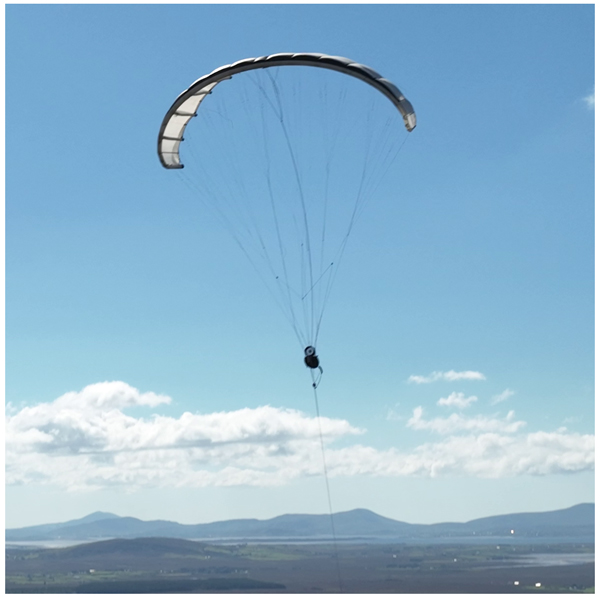
This study demonstrates how kites used to generate wind energy can act as sensors to measure wind conditions and system behaviour. By combining data from existing sensors, such as those measuring position, speed, and forces on the tether, a sensor fusion technique accurately estimates wind conditions and kite performance. This approach can be integrated into control systems to help optimize energy generation and enhance the reliability of these systems under changing wind conditions.
Mehtab Ahmed Khan, Dries Allaerts, Simon J. Watson, and Matthew J. Churchfield
Wind Energ. Sci., 10, 1167–1185, https://doi.org/10.5194/wes-10-1167-2025, https://doi.org/10.5194/wes-10-1167-2025, 2025
Short summary
Short summary
To guide realistic atmospheric gravity wave simulations, we study flow over a two-dimensional hill and through a wind farm canopy, examining optimal domain size and damping layer setup. Wave properties based on non-dimensional numbers determine the optimal domain and damping parameters. Accurate solutions require the domain length to exceed the effective horizontal wavelength, height, and damping thickness to equal the vertical wavelength and non-dimensional damping strength between 1 and 10.
Andreas Knauer, Lutz Mütschard, Matt Churchfield, and Senu Sirnivas
Wind Energ. Sci. Discuss., https://doi.org/10.5194/wes-2025-86, https://doi.org/10.5194/wes-2025-86, 2025
Manuscript not accepted for further review
Short summary
Short summary
Wake losses can reach up to 20 % of the power production in an offshore wind park. In simulations with the DTU 10-MW turbine the rotor is operated at slight off-design rotor speeds to manipulate wake turbulence development. An increased rotor speed establishes earlier high turbulence levels and increases turbulent mixing resulting in an increased power production. For a two-turbine array, the overall power production may increase up to 13 %.
Majid Bastankhah, Marcus Becker, Matthew Churchfield, Caroline Draxl, Jay Prakash Goit, Mehtab Khan, Luis A. Martinez Tossas, Johan Meyers, Patrick Moriarty, Wim Munters, Asim Önder, Sara Porchetta, Eliot Quon, Ishaan Sood, Nicole van Lipzig, Jan-Willem van Wingerden, Paul Veers, and Simon Watson
Wind Energ. Sci., 9, 2171–2174, https://doi.org/10.5194/wes-9-2171-2024, https://doi.org/10.5194/wes-9-2171-2024, 2024
Short summary
Short summary
Dries Allaerts was born on 19 May 1989 and passed away at his home in Wezemaal, Belgium, on 10 October 2024 after battling cancer. Dries started his wind energy career in 2012 and had a profound impact afterward on the community, in terms of both his scientific realizations and his many friendships and collaborations in the field. His scientific acumen, open spirit of collaboration, positive attitude towards life, and playful and often cheeky sense of humor will be deeply missed by many.
Sebastiano Stipa, Mehtab Ahmed Khan, Dries Allaerts, and Joshua Brinkerhoff
Wind Energ. Sci., 9, 1647–1668, https://doi.org/10.5194/wes-9-1647-2024, https://doi.org/10.5194/wes-9-1647-2024, 2024
Short summary
Short summary
We introduce a novel way to model the impact of atmospheric gravity waves (AGWs) on wind farms using high-fidelity simulations while significantly reducing computational costs. The proposed approach is validated across different atmospheric stability conditions, and implications of neglecting AGWs when predicting wind farm power are assessed. This work advances our understanding of the interaction of wind farms with the free atmosphere, ultimately facilitating cost-effective research.
Livia Brandetti, Sebastiaan Paul Mulders, Roberto Merino-Martinez, Simon Watson, and Jan-Willem van Wingerden
Wind Energ. Sci., 9, 471–493, https://doi.org/10.5194/wes-9-471-2024, https://doi.org/10.5194/wes-9-471-2024, 2024
Short summary
Short summary
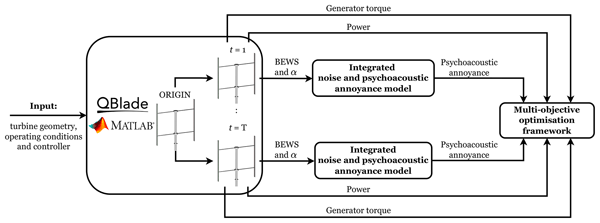
This research presents a multi-objective optimisation approach to balance vertical-axis wind turbine (VAWT) performance and noise, comparing the combined wind speed estimator and tip-speed ratio (WSE–TSR) tracking controller with a baseline. Psychoacoustic annoyance is used as a novel metric for human perception of wind turbine noise. Results showcase the WSE–TSR tracking controller’s potential in trading off the considered objectives, thereby fostering the deployment of VAWTs in urban areas.
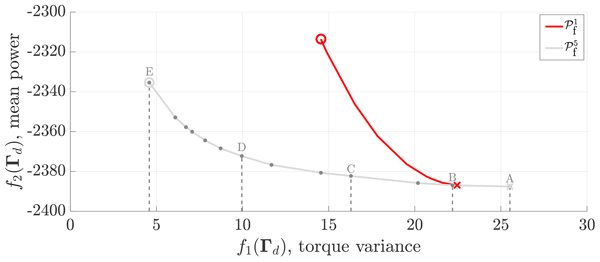
Livia Brandetti, Sebastiaan Paul Mulders, Yichao Liu, Simon Watson, and Jan-Willem van Wingerden
Wind Energ. Sci., 8, 1553–1573, https://doi.org/10.5194/wes-8-1553-2023, https://doi.org/10.5194/wes-8-1553-2023, 2023
Short summary
Short summary
This research presents the additional benefits of applying an advanced combined wind speed estimator and tip-speed ratio tracking (WSE–TSR) controller compared to the baseline Kω2. Using a frequency-domain framework and an optimal calibration procedure, the WSE–TSR tracking control scheme shows a more flexible trade-off between conflicting objectives: power maximisation and load minimisation. Therefore, implementing this controller on large-scale wind turbines will facilitate their operation.
Serkan Kartal, Sukanta Basu, and Simon J. Watson
Wind Energ. Sci., 8, 1533–1551, https://doi.org/10.5194/wes-8-1533-2023, https://doi.org/10.5194/wes-8-1533-2023, 2023
Short summary
Short summary
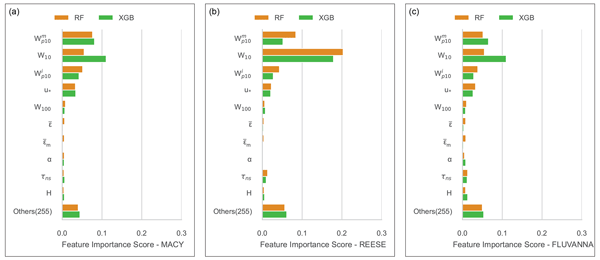
Peak wind gust is a crucial meteorological variable for wind farm planning and operations. Unfortunately, many wind farms do not have on-site measurements of it. In this paper, we propose a machine-learning approach (called INTRIGUE, decIsioN-TRee-based wInd GUst Estimation) that utilizes numerous inputs from a public-domain reanalysis dataset, generating long-term, site-specific peak wind gust series.
Sue Ellen Haupt, Branko Kosović, Larry K. Berg, Colleen M. Kaul, Matthew Churchfield, Jeffrey Mirocha, Dries Allaerts, Thomas Brummet, Shannon Davis, Amy DeCastro, Susan Dettling, Caroline Draxl, David John Gagne, Patrick Hawbecker, Pankaj Jha, Timothy Juliano, William Lassman, Eliot Quon, Raj K. Rai, Michael Robinson, William Shaw, and Regis Thedin
Wind Energ. Sci., 8, 1251–1275, https://doi.org/10.5194/wes-8-1251-2023, https://doi.org/10.5194/wes-8-1251-2023, 2023
Short summary
Short summary
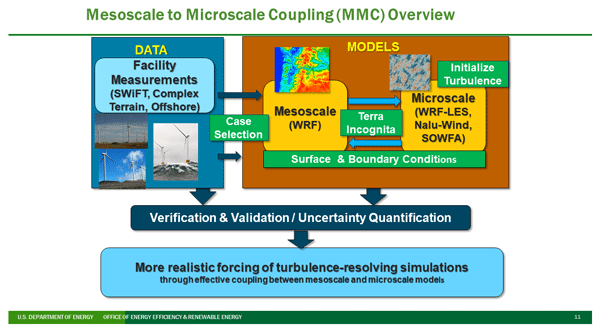
The Mesoscale to Microscale Coupling team, part of the U.S. Department of Energy Atmosphere to Electrons (A2e) initiative, has studied various important challenges related to coupling mesoscale models to microscale models. Lessons learned and discerned best practices are described in the context of the cases studied for the purpose of enabling further deployment of wind energy. It also points to code, assessment tools, and data for testing the methods.
Sarah J. Ollier and Simon J. Watson
Wind Energ. Sci., 8, 1179–1200, https://doi.org/10.5194/wes-8-1179-2023, https://doi.org/10.5194/wes-8-1179-2023, 2023
Short summary
Short summary
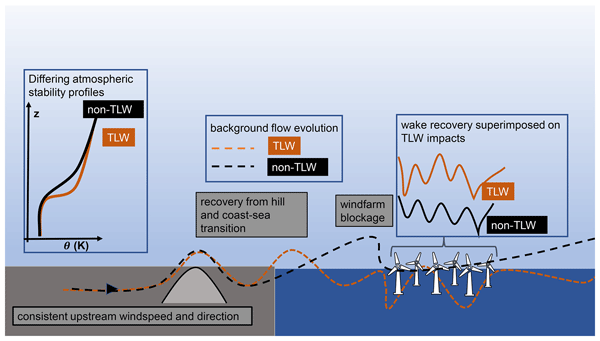
This modelling study shows that topographic trapped lee waves (TLWs) modify flow behaviour and power output in offshore wind farms. We demonstrate that TLWs can substantially alter the wind speeds at individual wind turbines and effect the power output of the turbine and whole wind farm. The impact on wind speeds and power is dependent on which part of the TLW wave cycle interacts with the wind turbines and wind farm. Positive and negative impacts of TLWs on power output are observed.
Regis Thedin, Eliot Quon, Matthew Churchfield, and Paul Veers
Wind Energ. Sci., 8, 487–502, https://doi.org/10.5194/wes-8-487-2023, https://doi.org/10.5194/wes-8-487-2023, 2023
Short summary
Short summary
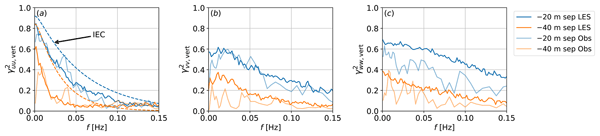
We investigate coherence and correlation and highlight their importance for disciplines like wind energy structural dynamic analysis, in which blade loading and fatigue depend on turbulence structure. We compare coherence estimates to those computed using a model suggested by international standards. We show the differences and highlight additional information that can be gained using large-eddy simulation, further improving analytical coherence models used in synthetic turbulence generators.

Christopher J. Bay, Paul Fleming, Bart Doekemeijer, Jennifer King, Matt Churchfield, and Rafael Mudafort
Wind Energ. Sci., 8, 401–419, https://doi.org/10.5194/wes-8-401-2023, https://doi.org/10.5194/wes-8-401-2023, 2023
Short summary
Short summary
This paper introduces the cumulative-curl wake model that allows for the fast and accurate prediction of wind farm energy production wake interactions. The cumulative-curl model expands several existing wake models to make the simulation of farms more accurate and is implemented in a computationally efficient manner such that it can be used for wind farm layout design and controller development. The model is validated against high-fidelity simulations and data from physical wind farms.
Amir R. Nejad, Jonathan Keller, Yi Guo, Shawn Sheng, Henk Polinder, Simon Watson, Jianning Dong, Zian Qin, Amir Ebrahimi, Ralf Schelenz, Francisco Gutiérrez Guzmán, Daniel Cornel, Reza Golafshan, Georg Jacobs, Bart Blockmans, Jelle Bosmans, Bert Pluymers, James Carroll, Sofia Koukoura, Edward Hart, Alasdair McDonald, Anand Natarajan, Jone Torsvik, Farid K. Moghadam, Pieter-Jan Daems, Timothy Verstraeten, Cédric Peeters, and Jan Helsen
Wind Energ. Sci., 7, 387–411, https://doi.org/10.5194/wes-7-387-2022, https://doi.org/10.5194/wes-7-387-2022, 2022
Short summary
Short summary
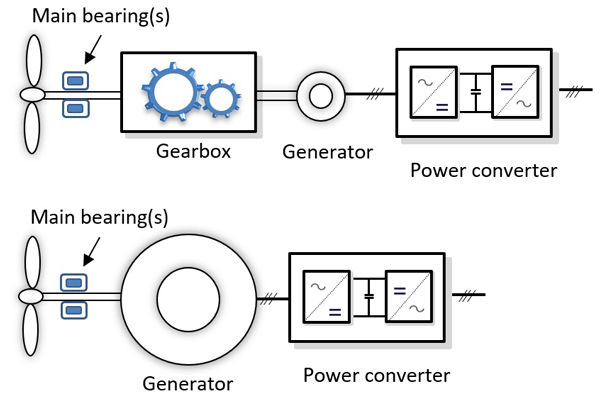
This paper presents the state-of-the-art technologies and development trends of wind turbine drivetrains – the energy conversion systems transferring the kinetic energy of the wind to electrical energy – in different stages of their life cycle: design, manufacturing, installation, operation, lifetime extension, decommissioning and recycling. The main aim of this article is to review the drivetrain technology development as well as to identify future challenges and research gaps.
Cited articles
Allaerts, D. and Meyers, J.: Large eddy simulation of a large wind-turbine array in a conventionally neutral atmospheric boundary layer, Phys. Fluids, 27, 065108, https://doi.org/10.1063/1.4922339, 2015. a, b
Allaerts, D. and Meyers, J.: Gravity Waves and Wind-Farm Efficiency in Neutral and Stable Conditions, Bound.-Lay. Meteorol., 166, 269–299, https://doi.org/10.1007/s10546-017-0307-5, 2018. a
Allaerts, D. and Meyers, J.: Sensitivity and feedback of wind-farm-induced gravity waves, J. Fluid Mech., 862, 990–1028, https://doi.org/10.1017/jfm.2018.969, 2019. a
Allaerts, D., Broucke, S. V., Van Lipzig, N., and Meyers, J.: Annual impact of wind-farm gravity waves on the Belgian-Dutch offshore wind-farm cluster, J. Phys. Conf. Ser., 1037, https://doi.org/10.1088/1742-6596/1037/7/072006, 2018. a, b, c
Archer, C. L., Mirzaeisefat, S., and Lee, S.: Quantifying the sensitivity of wind farm performance to array layout options using large-eddy simulation, Geophys. Res. Lett., 40, 4963–4970, https://doi.org/10.1002/grl.50911, 2013. a
Brooke, J. S., Thedin, R., Sharma, A., Branlard, E., Vijayakumar, G., and Michael, A. S.: Effect of the integral length scales of turbulent inflows on wind turbine loads, Renew. Energ., 217, 119-218, https://doi.org/10.1016/j.renene.2023.119218, 2023. a
Churchfield, M. J., Lee, S., Michalakes, J., and Moriarty, P. J.: A numerical study of the effects of atmospheric and wake turbulence on wind turbine dynamics, J. Turbul., 13, 1–32, https://doi.org/10.1080/14685248.2012.668191, 2012. a
Khan, M. A., Watson, S. J., Allaerts, D. J. N., and Churchfield, M.: Recommendations on setup in simulating atmospheric gravity waves under conventionally neutral boundary layer conditions, J. Phys. Conf. Ser., 2767, 092042, https://doi.org/10.1088/1742-6596/2767/9/092042, 2024. a, b, c, d, e, f, g, h, i, j, k, l
Khan, M. A., Allaerts, D., Watson, S. J., and Churchfield, M. J.: Investigating the relationship between simulation parameters and flow variables in simulating atmospheric gravity waves for wind energy applications, Wind Energ. Sci., 10, 1167–1185, https://doi.org/10.5194/wes-10-1167-2025, 2025. a, b, c, d, e, f, g, h, i, j, k, l, m, n
Khan, M., Churchfield, M., and Watson, S.: Supplementary data to publication: Dependence of wind-farm-induced gravity waves and wind farm performance on non-dimensional atmospheric parameters and simulation configuration (Data & Code), Version 1, 4TU.ResearchData [data set] and [code], https://doi.org/10.4121/d10f3eec-4363-4017-ad00-69136a801657.v1, 2026. a
Lanzilao, L. and Meyers, J.: An improved fringe-region technique for the representation of gravity waves in large-eddy simulation with application to wind farms, Bound.-Lay. Meteorol., 186, 567–593, https://doi.org/10.1007/s10546-022-00772-z, 2023. a, b
Meneveau, C., Lund, T. S., and Cabot, W. H.: A Lagrangian dynamic subgrid-scale model of turbulence, J. Fluid Mech., 319, 353–385, https://doi.org/10.1017/S0022112096007379, 1996. a
Ollier, S. J. and Watson, S. J.: Modelling the impact of trapped lee waves on offshore wind farm power output, Wind Energ. Sci., 8, 1179–1200, https://doi.org/10.5194/wes-8-1179-2023, 2023. a
Queney, P.: The Problem of Air Flow Over Mountains: A Summary of Theoretical Studies, B. Am. Meteorol. Soc., 29, 16–26, https://doi.org/10.1175/1520-0477-29.1.16, 1948. a, b
Sachsperger, J., Serafin, S., and Grubišić, V.: Lee Waves on the Boundary-Layer Inversion and Their Dependence on Free-Atmospheric Stability, Front. Earth Sci., 3, https://doi.org/10.3389/feart.2015.00070, 2015. a, b
Smith, R. B.: The wind farm pressure field, Wind Energ. Sci., 9, 253–261, https://doi.org/10.5194/wes-9-253-2024, 2024. a
Stevens, R. J., Graham, J., and Meneveau, C.: A concurrent precursor inflow method for Large Eddy Simulations and applications to finite length wind farms, Renew. Energ., 68, 46–50, https://doi.org/10.1016/j.renene.2014.01.024, 2014. a
Stieren, A. and Stevens, R. J.: Impact of wind farm wakes on flow structures in and around downstream wind farms, Flow, 2, E21, https://doi.org/10.1017/flo.2022.15, 2022. a
Stipa, S., Ahmed Khan, M., Allaerts, D., and Brinkerhoff, J.: A large-eddy simulation (LES) model for wind-farm-induced atmospheric gravity wave effects inside conventionally neutral boundary layers, Wind Energ. Sci., 9, 1647–1668, https://doi.org/10.5194/wes-9-1647-2024, 2024a. a, b, c, d, e, f, g, h
Stipa, S., Ajay, A., Allaerts, D., and Brinkerhoff, J.: TOSCA – an open-source, finite-volume, large-eddy simulation (LES) environment for wind farm flows, Wind Energ. Sci., 9, 297–320, https://doi.org/10.5194/wes-9-297-2024, 2024b. a, b, c, d
Wu, Y.-T. and Porté-Agel, F.: Modeling turbine wakes and power losses within a wind farm using LES: An application to the Horns Rev offshore wind farm, Renew. Energ., 75, 945–955, https://doi.org/10.1016/j.renene.2014.06.019, 2015. a
Short summary
This large-eddy simulation study identifies a realistic set-up for modeling wind-farm–atmosphere interactions, validates a method that minimizes non-physical gravity waves, and examines how real gravity waves and wind farm performance depend on non-dimensional parameters defining atmospheric stability and farm geometry. The results show how realistic and accurate modeling are critical to performance prediction.
This large-eddy simulation study identifies a realistic set-up for modeling wind-farm–atmosphere...


Altmetrics
Final-revised paper
Preprint