
Articles | Volume 11, issue 10
https://doi.org/10.5194/wes-11-3763-2026
© Author(s) 2026. This work is distributed under
the Creative Commons Attribution 4.0 License.
the Creative Commons Attribution 4.0 License.
https://doi.org/10.5194/wes-11-3763-2026
© Author(s) 2026. This work is distributed under
the Creative Commons Attribution 4.0 License.
the Creative Commons Attribution 4.0 License.
Peer-reviewed comment
| 
01 Oct 2026
Peer-reviewed comment |
| 01 Oct 2026
| 01 Oct 2026
Comment on “A theoretical upper limit for offshore wind energy extraction” by Simão Ferreira et al. (2026)

Technical University of Denmark, DTU Wind and Energy Systems, Risø Campus, Frederiksborgvej 399, 4000 Roskilde, Denmark
Simon Watson
Faculty of Aerospace Engineering, Delft University of Technology, 2629 HS Delft, the Netherlands
Related authors
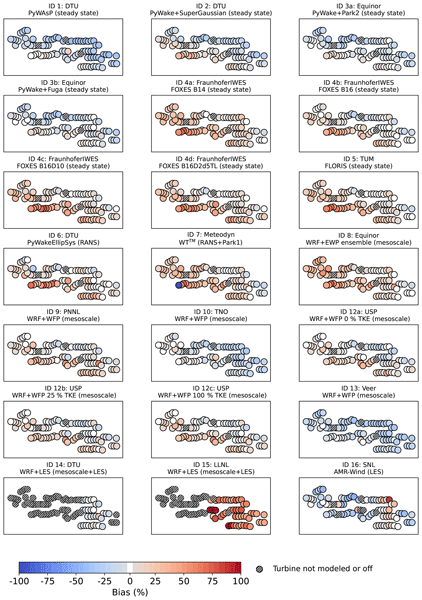
Nicola Bodini, Patrick Moriarty, Regis Thedin, Paula Doubrawa, Cristina Archer, Myra Blaylock, Carlo Bottasso, Bruno Carmo, Lawrence Cheung, Camille Dubreuil, Rogier Floors, Thomas Herges, Daniel Houck, Ali Kanjari, Colleen M. Kaul, Christopher Kelley, Ru Li, Julie K. Lundquist, Desirae Major, Anh Kiet Nguyen, Mike Optis, Luan R. C. Parada, Alfredo Peña, Julian Quick, David Ricarte, William C. Radünz, Raj K. Rai, Oscar García-Santiago, Jonas Schulte, Knut S. Seim, M. Paul van der Laan, Kisorthman Vimalakanthan, and Adam Wise
Wind Energ. Sci., 11, 3107–3135, https://doi.org/10.5194/wes-11-3107-2026, https://doi.org/10.5194/wes-11-3107-2026, 2026
Short summary
Short summary
Predicting wind farm energy production is challenging because wind patterns are complex. We tested 16 different models against real data from a major field experiment to see which worked best. Surprisingly, the most expensive and detailed models were not always more accurate than simpler ones. We found that feeding models better weather data was the most effective way to improve accuracy. These results help the industry choose the right tools for designing more-efficient wind farms.
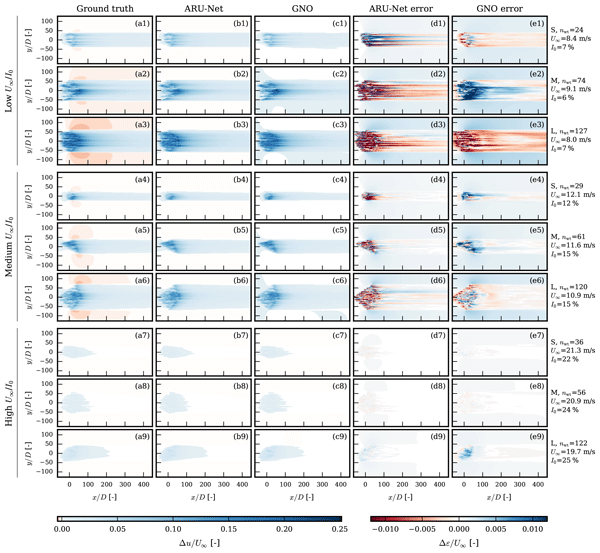
Jens Peter Schøler, Frederik Peder Weilmann Rasmussen, M. Paul van der Laan, Alfredo Peña, and Pierre-Elouan Réthoré
Wind Energ. Sci., 11, 2869–2893, https://doi.org/10.5194/wes-11-2869-2026, https://doi.org/10.5194/wes-11-2869-2026, 2026
Short summary
Short summary
As offshore wind farms are built closer together, predicting how they affect each other becomes critical. We compared two AI approaches for this task, training both on cheap approximate data before refining them with expensive high-accuracy simulations. One predicts wake boundaries better, while the other estimates wind speeds more accurately, offering complementary tools for future wind farm design.
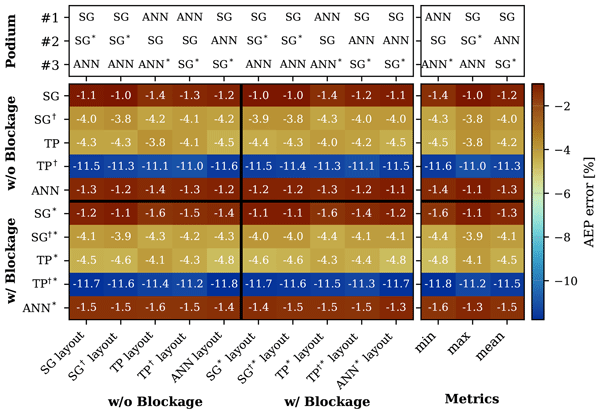
Jens Peter Schøler, Ernestas Simutis, M. Paul van der Laan, Julian Quick, and Pierre-Elouan Réthoré
Wind Energ. Sci., 11, 2845–2868, https://doi.org/10.5194/wes-11-2845-2026, https://doi.org/10.5194/wes-11-2845-2026, 2026
Short summary
Short summary
Wind turbines create wakes, which reduce downstream power. Optimizing turbine placement requires accounting for these reductions. We compared a neural network trained on numerical simulations against engineering wake models across various farm sizes. The neural network predicted flow most accurately but was slower. Surprisingly, a simple TurbOPark model produced layouts with higher validated energy output, suggesting that accuracy is not the only important metric for such models.

Maarten Paul van der Laan, Alexander Meyer Forsting, and Pierre-Elouan Réthoré
Wind Energ. Sci., 11, 2647–2668, https://doi.org/10.5194/wes-11-2647-2026, https://doi.org/10.5194/wes-11-2647-2026, 2026
Short summary
Short summary
Wind turbine interaction can lead to energy losses. This article introduces a fast open-source wind turbine interaction model that can be used to design energy-efficient wind farms, including effects of atmospheric turbulence and temperature. The model can inherit the accuracy of a higher-fidelity model while being about 5 orders of magnitude faster. However, the model is an order of magnitude slower than analytic wind turbine interaction models, and more research is needed to reduce it.
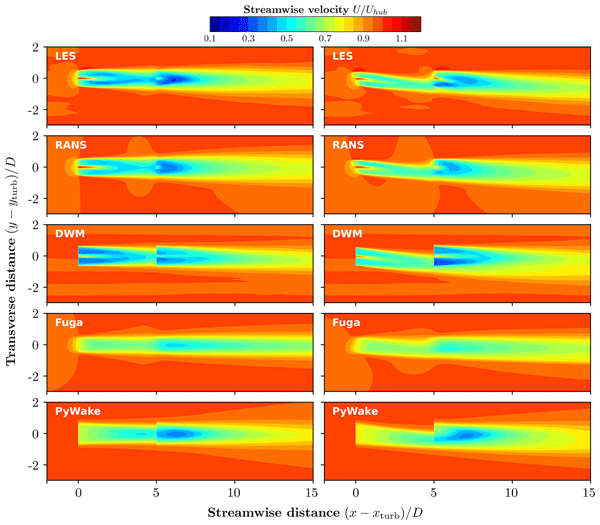
Julia Steiner, Emily Louise Hodgson, Maarten Paul van der Laan, Leonardo Alcayaga, Mads Pedersen, Søren Juhl Andersen, Gunner Larsen, and Pierre-Elouan Réthoré
Wind Energ. Sci., 11, 1679–1703, https://doi.org/10.5194/wes-11-1679-2026, https://doi.org/10.5194/wes-11-1679-2026, 2026
Short summary
Short summary
Wake steering is a promising strategy for wind farm optimization, but its success hinges on accurate wake models. We assess models of varying fidelity for a 22 MW reference turbine, comparing single- and two-turbine cases against large-eddy simulations. All models reproduced qualitative trends for power and loads (if applicable), but quantitative agreement varied, and in general the error increased with increasing yaw angle.
Oscar García-Santiago, Jake Badger, Andrea N. Hahmann, Patrick J. H. Volker, Søren Ott, M. Paul van der Laan, and Mark Kelly
EGUsphere, https://doi.org/10.5194/egusphere-2026-2144, https://doi.org/10.5194/egusphere-2026-2144, 2026
Short summary
Short summary
We improve how weather models represent the turbulence generated by wind turbines within and behind wind farms. Rather than adding this turbulence only at grid squares with turbine locations, the new method transports it through the wake as it moves downwind. Tests against high-resolution simulations of an idealised wind farm showed better agreement in wake turbulence and more accurate reductions in wind speed, providing a more realistic picture of wake effects across the wind farm.
Mads Baungaard, Takafumi Nishino, and Maarten Paul van der Laan
Wind Energ. Sci. Discuss., https://doi.org/10.5194/wes-2025-50, https://doi.org/10.5194/wes-2025-50, 2025
Manuscript not accepted for further review
Short summary
Short summary
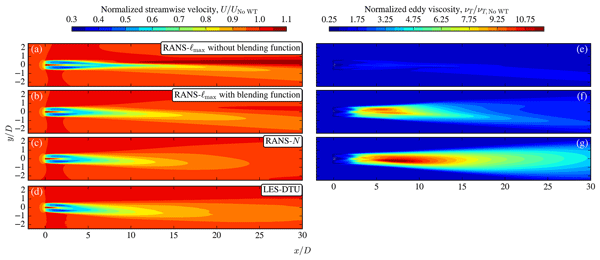
A systematic comparison between 2D and 3D Reynolds-averaged Navier-Stokes simulations of wind farm flows have been conducted. It is found that the 2D simulations are, at least, two orders of magnitude computationally cheaper than their corresponding 3D simulations, while the predicted farm power is within -30 % to 15 % for all cases considered. The large computational speed-ups and sensible results makes 2D simulations a promising option in the low- to mid-fidelity range.
Maarten Paul van der Laan, Mark Kelly, Mads Baungaard, Antariksh Dicholkar, and Emily Louise Hodgson
Wind Energ. Sci., 9, 1985–2000, https://doi.org/10.5194/wes-9-1985-2024, https://doi.org/10.5194/wes-9-1985-2024, 2024
Short summary
Short summary
Wind turbines are increasing in size and operate more frequently above the atmospheric surface layer, which requires improved inflow models for numerical simulations of turbine interaction. In this work, a novel steady-state model of the atmospheric boundary layer (ABL) is introduced. Numerical wind turbine flow simulations subjected to shallow and tall ABLs are conducted, and the proposed model shows improved performance compared to other state-of-the-art steady-state models.
Mark Kelly and Maarten Paul van der Laan
Wind Energ. Sci., 8, 975–998, https://doi.org/10.5194/wes-8-975-2023, https://doi.org/10.5194/wes-8-975-2023, 2023
Short summary
Short summary
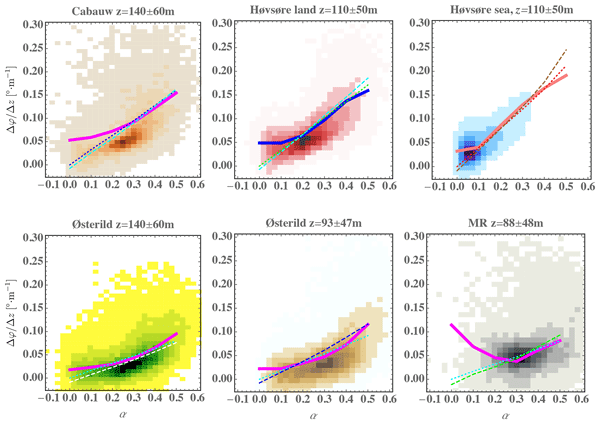
The turning of the wind with height, which is known as veer, can affect wind turbine performance. Thus far meteorology has only given idealized descriptions of veer, which has not yet been related in a way readily usable for wind energy. Here we derive equations for veer in terms of meteorological quantities and provide practically usable forms in terms of measurable shear (change in wind speed with height). Flow simulations and measurements at turbine heights support these developments.

Maarten Paul van der Laan, Oscar García-Santiago, Mark Kelly, Alexander Meyer Forsting, Camille Dubreuil-Boisclair, Knut Sponheim Seim, Marc Imberger, Alfredo Peña, Niels Nørmark Sørensen, and Pierre-Elouan Réthoré
Wind Energ. Sci., 8, 819–848, https://doi.org/10.5194/wes-8-819-2023, https://doi.org/10.5194/wes-8-819-2023, 2023
Short summary
Short summary
Offshore wind farms are more commonly installed in wind farm clusters, where wind farm interaction can lead to energy losses. In this work, an efficient numerical method is presented that can be used to estimate these energy losses. The novel method is verified with higher-fidelity numerical models and validated with measurements of an existing wind farm cluster.
Maarten Paul van der Laan, Mads Baungaard, and Mark Kelly
Wind Energ. Sci., 8, 247–254, https://doi.org/10.5194/wes-8-247-2023, https://doi.org/10.5194/wes-8-247-2023, 2023
Short summary
Short summary
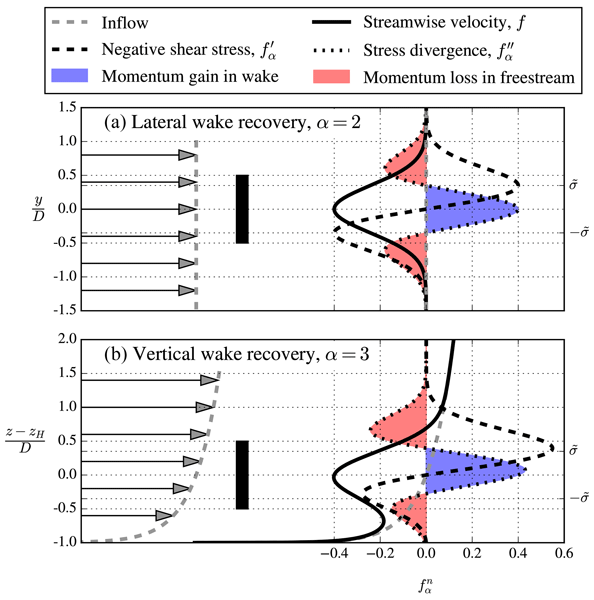
Understanding wind turbine wake recovery is important to mitigate energy losses in wind farms. Wake recovery is often assumed or explained to be dependent on the first-order derivative of velocity. In this work we show that wind turbine wakes recover mainly due to the second-order derivative of the velocity, which transport momentum from the freestream towards the wake center. The wake recovery mechanisms and results of a high-fidelity numerical simulation are illustrated using a simple model.
Mads Baungaard, Stefan Wallin, Maarten Paul van der Laan, and Mark Kelly
Wind Energ. Sci., 7, 1975–2002, https://doi.org/10.5194/wes-7-1975-2022, https://doi.org/10.5194/wes-7-1975-2022, 2022
Short summary
Short summary
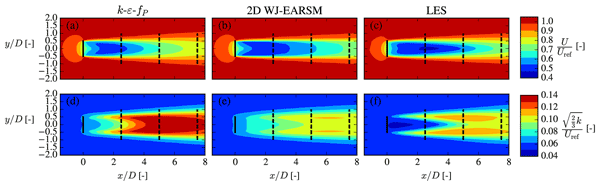
Wind turbine wakes in the neutral atmospheric surface layer are simulated with Reynolds-averaged Navier–Stokes (RANS) using an explicit algebraic Reynolds stress model. Contrary to standard two-equation turbulence models, it can predict turbulence anisotropy and complex physical phenomena like secondary motions. For the cases considered, it improves Reynolds stress, turbulence intensity, and velocity deficit predictions, although a more top-hat-shaped profile is observed for the latter.
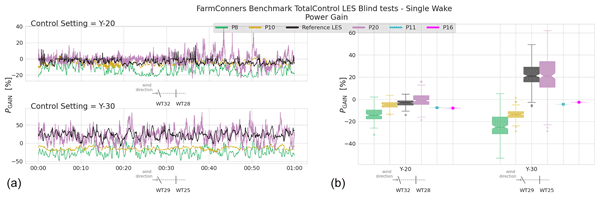
Tuhfe Göçmen, Filippo Campagnolo, Thomas Duc, Irene Eguinoa, Søren Juhl Andersen, Vlaho Petrović, Lejla Imširović, Robert Braunbehrens, Jaime Liew, Mads Baungaard, Maarten Paul van der Laan, Guowei Qian, Maria Aparicio-Sanchez, Rubén González-Lope, Vinit V. Dighe, Marcus Becker, Maarten J. van den Broek, Jan-Willem van Wingerden, Adam Stock, Matthew Cole, Renzo Ruisi, Ervin Bossanyi, Niklas Requate, Simon Strnad, Jonas Schmidt, Lukas Vollmer, Ishaan Sood, and Johan Meyers
Wind Energ. Sci., 7, 1791–1825, https://doi.org/10.5194/wes-7-1791-2022, https://doi.org/10.5194/wes-7-1791-2022, 2022
Short summary
Short summary
The FarmConners benchmark is the first of its kind to bring a wide variety of data sets, control settings, and model complexities for the (initial) assessment of wind farm flow control benefits. Here we present the first part of the benchmark results for three blind tests with large-scale rotors and 11 participating models in total, via direct power comparisons at the turbines as well as the observed or estimated power gain at the wind farm level under wake steering control strategy.
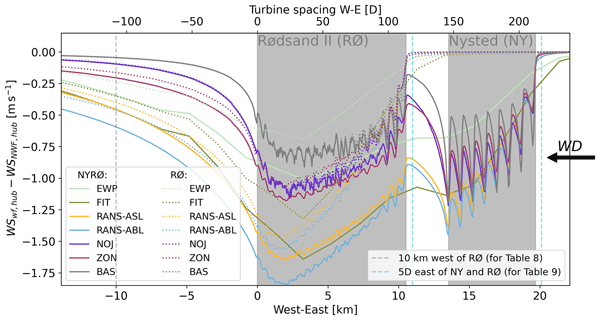
Jana Fischereit, Kurt Schaldemose Hansen, Xiaoli Guo Larsén, Maarten Paul van der Laan, Pierre-Elouan Réthoré, and Juan Pablo Murcia Leon
Wind Energ. Sci., 7, 1069–1091, https://doi.org/10.5194/wes-7-1069-2022, https://doi.org/10.5194/wes-7-1069-2022, 2022
Short summary
Short summary
Wind turbines extract kinetic energy from the flow to create electricity. This induces a wake of reduced wind speed downstream of a turbine and consequently downstream of a wind farm. Different types of numerical models have been developed to calculate this effect. In this study, we compared models of different complexity, together with measurements over two wind farms. We found that higher-fidelity models perform better and the considered rapid models cannot fully capture the wake effect.
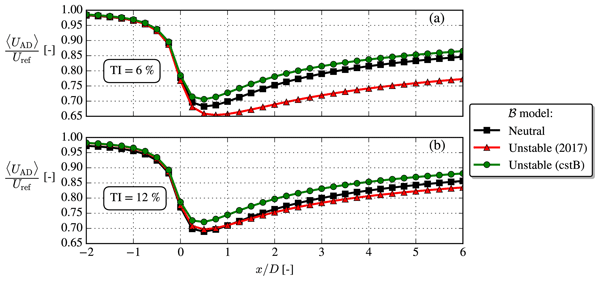
Mads Baungaard, Maarten Paul van der Laan, and Mark Kelly
Wind Energ. Sci., 7, 783–800, https://doi.org/10.5194/wes-7-783-2022, https://doi.org/10.5194/wes-7-783-2022, 2022
Short summary
Short summary
Wind turbine wakes are dependent on the atmospheric conditions, and it is therefore important to be able to simulate in various different atmospheric conditions. This paper concerns the specific case of an unstable atmospheric surface layer, which is the lower part of the typical daytime atmospheric boundary layer. A simple flow model is suggested and tested for a range of single-wake scenarios, and it shows promising results for velocity deficit predictions.
Dachuan Feng, Wen Zhang, Minping Wan, and Simon J. Watson
Wind Energ. Sci. Discuss., https://doi.org/10.5194/wes-2026-184, https://doi.org/10.5194/wes-2026-184, 2026
Preprint under review for WES
Short summary
Short summary
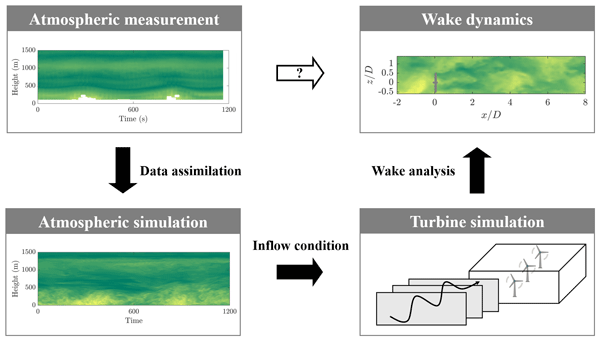
Wind turbines operate in air whose behaviour changes through the day: calm, layered air at night gives way to vigorous mixing after sunrise. Using computer simulations driven by measurements from a wind farm in Oklahoma, we tracked how the turbulent wake behind a turbine evolves during this morning transition. The wake changes character within hours, from one regular swaying motion to many irregular ones, altering power output. Power forecasts and controls should reflect these shifts.
Nicola Bodini, Patrick Moriarty, Regis Thedin, Paula Doubrawa, Cristina Archer, Myra Blaylock, Carlo Bottasso, Bruno Carmo, Lawrence Cheung, Camille Dubreuil, Rogier Floors, Thomas Herges, Daniel Houck, Ali Kanjari, Colleen M. Kaul, Christopher Kelley, Ru Li, Julie K. Lundquist, Desirae Major, Anh Kiet Nguyen, Mike Optis, Luan R. C. Parada, Alfredo Peña, Julian Quick, David Ricarte, William C. Radünz, Raj K. Rai, Oscar García-Santiago, Jonas Schulte, Knut S. Seim, M. Paul van der Laan, Kisorthman Vimalakanthan, and Adam Wise
Wind Energ. Sci., 11, 3107–3135, https://doi.org/10.5194/wes-11-3107-2026, https://doi.org/10.5194/wes-11-3107-2026, 2026
Short summary
Short summary
Predicting wind farm energy production is challenging because wind patterns are complex. We tested 16 different models against real data from a major field experiment to see which worked best. Surprisingly, the most expensive and detailed models were not always more accurate than simpler ones. We found that feeding models better weather data was the most effective way to improve accuracy. These results help the industry choose the right tools for designing more-efficient wind farms.
Jens Peter Schøler, Frederik Peder Weilmann Rasmussen, M. Paul van der Laan, Alfredo Peña, and Pierre-Elouan Réthoré
Wind Energ. Sci., 11, 2869–2893, https://doi.org/10.5194/wes-11-2869-2026, https://doi.org/10.5194/wes-11-2869-2026, 2026
Short summary
Short summary
As offshore wind farms are built closer together, predicting how they affect each other becomes critical. We compared two AI approaches for this task, training both on cheap approximate data before refining them with expensive high-accuracy simulations. One predicts wake boundaries better, while the other estimates wind speeds more accurately, offering complementary tools for future wind farm design.
Jens Peter Schøler, Ernestas Simutis, M. Paul van der Laan, Julian Quick, and Pierre-Elouan Réthoré
Wind Energ. Sci., 11, 2845–2868, https://doi.org/10.5194/wes-11-2845-2026, https://doi.org/10.5194/wes-11-2845-2026, 2026
Short summary
Short summary
Wind turbines create wakes, which reduce downstream power. Optimizing turbine placement requires accounting for these reductions. We compared a neural network trained on numerical simulations against engineering wake models across various farm sizes. The neural network predicted flow most accurately but was slower. Surprisingly, a simple TurbOPark model produced layouts with higher validated energy output, suggesting that accuracy is not the only important metric for such models.
Maarten Paul van der Laan, Alexander Meyer Forsting, and Pierre-Elouan Réthoré
Wind Energ. Sci., 11, 2647–2668, https://doi.org/10.5194/wes-11-2647-2026, https://doi.org/10.5194/wes-11-2647-2026, 2026
Short summary
Short summary
Wind turbine interaction can lead to energy losses. This article introduces a fast open-source wind turbine interaction model that can be used to design energy-efficient wind farms, including effects of atmospheric turbulence and temperature. The model can inherit the accuracy of a higher-fidelity model while being about 5 orders of magnitude faster. However, the model is an order of magnitude slower than analytic wind turbine interaction models, and more research is needed to reduce it.
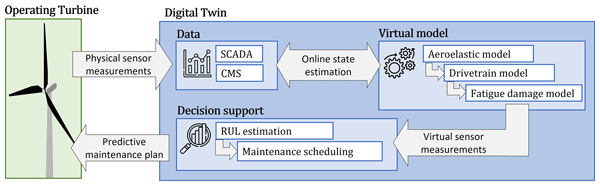
Kayacan Kestel, Xavier Chesterman, Donatella Zappalá, Simon Watson, Mingxin Li, Edward Hart, James Carroll, Yolanda Vidal, Amir R. Nejad, Shawn Sheng, Yi Guo, Matthias Stammler, Florian Wirsing, Ahmed Saleh, Nico Gregarek, Thao Baszenski, Thomas Decker, Martin Knops, Georg Jacobs, Benjamin Lehmann, Florian König, Ines Pereira, Pieter-Jan Daems, Cédric Peeters, and Jan Helsen
Wind Energ. Sci., 11, 2103–2155, https://doi.org/10.5194/wes-11-2103-2026, https://doi.org/10.5194/wes-11-2103-2026, 2026
Short summary
Short summary
Wind energy use has been rapidly expanding worldwide in recent years. Driven by global decarbonization goals and energy security concerns, this growth is expected to continue. To achieve these targets, production costs must decrease, with operation and maintenance being major contributors. This paper reviews current and emerging technologies for monitoring wind turbine drivetrains, and highlights key academic and industrial challenges that may hinder progress.
Julia Steiner, Emily Louise Hodgson, Maarten Paul van der Laan, Leonardo Alcayaga, Mads Pedersen, Søren Juhl Andersen, Gunner Larsen, and Pierre-Elouan Réthoré
Wind Energ. Sci., 11, 1679–1703, https://doi.org/10.5194/wes-11-1679-2026, https://doi.org/10.5194/wes-11-1679-2026, 2026
Short summary
Short summary
Wake steering is a promising strategy for wind farm optimization, but its success hinges on accurate wake models. We assess models of varying fidelity for a 22 MW reference turbine, comparing single- and two-turbine cases against large-eddy simulations. All models reproduced qualitative trends for power and loads (if applicable), but quantitative agreement varied, and in general the error increased with increasing yaw angle.
Mehtab Ahmed Khan, Matthew J. Churchfield, and Simon J. Watson
Wind Energ. Sci., 11, 1631–1652, https://doi.org/10.5194/wes-11-1631-2026, https://doi.org/10.5194/wes-11-1631-2026, 2026
Short summary
Short summary
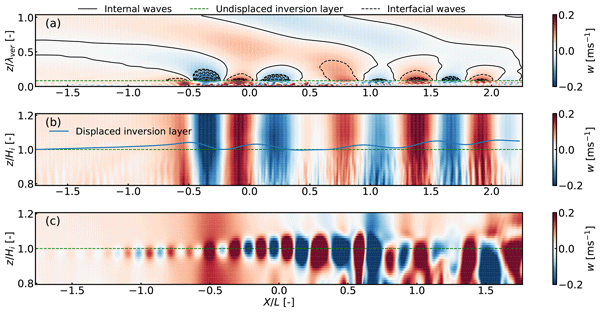
This large-eddy simulation study identifies a realistic set-up for modeling wind-farm–atmosphere interactions, validates a method that minimizes non-physical gravity waves, and examines how real gravity waves and wind farm performance depend on non-dimensional parameters defining atmospheric stability and farm geometry. The results show how realistic and accurate modeling are critical to performance prediction.
Ali Eftekhari Milani, Donatella Zappalá, Shawn Sheng, and Simon Watson
Wind Energ. Sci. Discuss., https://doi.org/10.5194/wes-2026-36, https://doi.org/10.5194/wes-2026-36, 2026
Preprint under review for WES
Short summary
Short summary
This paper proposes a probabilistic method for predicting the Remaining Useful Life of wind turbine components. The method effectively addresses the high noise and volatile operating conditions in field SCADA datasets, accurately quantifies forecast uncertainty without distributional assumptions, and guarantees the validity and robustness of the predicted intervals. This method decisively outperforms existing approaches when applied to a real SCADA dataset containing gearbox bearing failures.
Oscar García-Santiago, Jake Badger, Andrea N. Hahmann, Patrick J. H. Volker, Søren Ott, M. Paul van der Laan, and Mark Kelly
EGUsphere, https://doi.org/10.5194/egusphere-2026-2144, https://doi.org/10.5194/egusphere-2026-2144, 2026
Short summary
Short summary
We improve how weather models represent the turbulence generated by wind turbines within and behind wind farms. Rather than adding this turbulence only at grid squares with turbine locations, the new method transports it through the wake as it moves downwind. Tests against high-resolution simulations of an idealised wind farm showed better agreement in wake turbulence and more accurate reductions in wind speed, providing a more realistic picture of wake effects across the wind farm.

Branko Kosović, Sukanta Basu, Jacob Berg, Larry K. Berg, Sue E. Haupt, Xiaoli G. Larsén, Joachim Peinke, Richard J. A. M. Stevens, Paul Veers, and Simon Watson
Wind Energ. Sci., 11, 509–555, https://doi.org/10.5194/wes-11-509-2026, https://doi.org/10.5194/wes-11-509-2026, 2026
Short summary
Short summary
Most human activity happens in the layer of the atmosphere which extends a few hundred meters to a couple of kilometers above the surface of the Earth. The flow in this layer is turbulent. Turbulence impacts wind power production and turbine lifespan. Optimizing wind turbine performance requires understanding how turbulence affects both wind turbine efficiency and reliability. This paper points to gaps in our knowledge that need to be addressed to effectively utilize wind resources.
Dachuan Feng, Nirav Dangi, and Simon Watson
Wind Energ. Sci., 11, 395–404, https://doi.org/10.5194/wes-11-395-2026, https://doi.org/10.5194/wes-11-395-2026, 2026
Short summary
Short summary
Weather effects drive wind turbine loads and performance to be different from those under mean atmospheric conditions. However, the influence of unsteady atmospheric phenomena on wake behavior remains unclear. This paper explores how atmospheric gravity waves – large-scale wave-like patterns caused by topographical features – affect meandering motions and turbulence generation in the wake region. The outputs of this paper can be used to guide wake modeling in realistic atmospheric flows.
Ali Eftekhari Milani, Donatella Zappalá, Francesco Castellani, and Simon Watson
Wind Energ. Sci., 10, 2563–2576, https://doi.org/10.5194/wes-10-2563-2025, https://doi.org/10.5194/wes-10-2563-2025, 2025
Short summary
Short summary
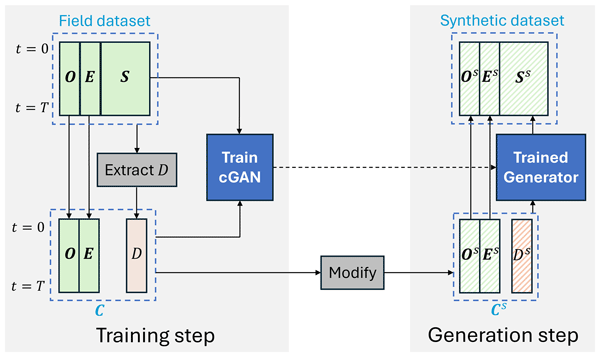
This paper proposes a data-driven approach to simulate wind turbine sensor time series, such as temperature and pressure signals, describing the behaviour of a wind turbine component as it degrades through time up to the failure point. It allows for the simulation of new failure events or the replication of a given failure under different conditions. The results show that the synthetic signals generated using this approach improve the performance of fault detection and prognosis methods.
Oriol Cayon, Simon Watson, and Roland Schmehl
Wind Energ. Sci., 10, 2161–2188, https://doi.org/10.5194/wes-10-2161-2025, https://doi.org/10.5194/wes-10-2161-2025, 2025
Short summary
Short summary
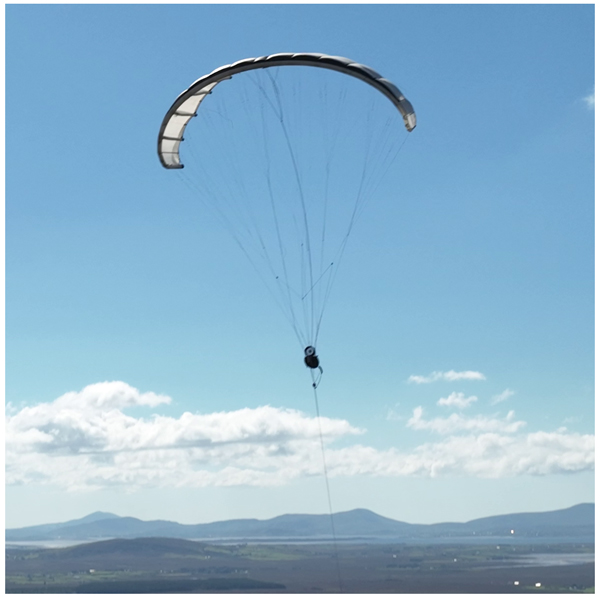
This study demonstrates how kites used to generate wind energy can act as sensors to measure wind conditions and system behaviour. By combining data from existing sensors, such as those measuring position, speed, and forces on the tether, a sensor fusion technique accurately estimates wind conditions and kite performance. This approach can be integrated into control systems to help optimize energy generation and enhance the reliability of these systems under changing wind conditions.
Mehtab Ahmed Khan, Dries Allaerts, Simon J. Watson, and Matthew J. Churchfield
Wind Energ. Sci., 10, 1167–1185, https://doi.org/10.5194/wes-10-1167-2025, https://doi.org/10.5194/wes-10-1167-2025, 2025
Short summary
Short summary
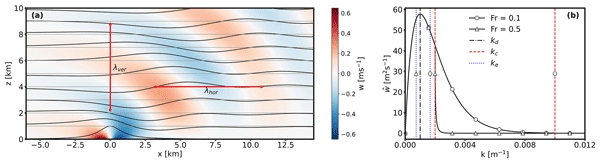
To guide realistic atmospheric gravity wave simulations, we study flow over a two-dimensional hill and through a wind farm canopy, examining optimal domain size and damping layer setup. Wave properties based on non-dimensional numbers determine the optimal domain and damping parameters. Accurate solutions require the domain length to exceed the effective horizontal wavelength, height, and damping thickness to equal the vertical wavelength and non-dimensional damping strength between 1 and 10.
Mads Baungaard, Takafumi Nishino, and Maarten Paul van der Laan
Wind Energ. Sci. Discuss., https://doi.org/10.5194/wes-2025-50, https://doi.org/10.5194/wes-2025-50, 2025
Manuscript not accepted for further review
Short summary
Short summary
A systematic comparison between 2D and 3D Reynolds-averaged Navier-Stokes simulations of wind farm flows have been conducted. It is found that the 2D simulations are, at least, two orders of magnitude computationally cheaper than their corresponding 3D simulations, while the predicted farm power is within -30 % to 15 % for all cases considered. The large computational speed-ups and sensible results makes 2D simulations a promising option in the low- to mid-fidelity range.

Majid Bastankhah, Marcus Becker, Matthew Churchfield, Caroline Draxl, Jay Prakash Goit, Mehtab Khan, Luis A. Martinez Tossas, Johan Meyers, Patrick Moriarty, Wim Munters, Asim Önder, Sara Porchetta, Eliot Quon, Ishaan Sood, Nicole van Lipzig, Jan-Willem van Wingerden, Paul Veers, and Simon Watson
Wind Energ. Sci., 9, 2171–2174, https://doi.org/10.5194/wes-9-2171-2024, https://doi.org/10.5194/wes-9-2171-2024, 2024
Short summary
Short summary
Dries Allaerts was born on 19 May 1989 and passed away at his home in Wezemaal, Belgium, on 10 October 2024 after battling cancer. Dries started his wind energy career in 2012 and had a profound impact afterward on the community, in terms of both his scientific realizations and his many friendships and collaborations in the field. His scientific acumen, open spirit of collaboration, positive attitude towards life, and playful and often cheeky sense of humor will be deeply missed by many.
Maarten Paul van der Laan, Mark Kelly, Mads Baungaard, Antariksh Dicholkar, and Emily Louise Hodgson
Wind Energ. Sci., 9, 1985–2000, https://doi.org/10.5194/wes-9-1985-2024, https://doi.org/10.5194/wes-9-1985-2024, 2024
Short summary
Short summary
Wind turbines are increasing in size and operate more frequently above the atmospheric surface layer, which requires improved inflow models for numerical simulations of turbine interaction. In this work, a novel steady-state model of the atmospheric boundary layer (ABL) is introduced. Numerical wind turbine flow simulations subjected to shallow and tall ABLs are conducted, and the proposed model shows improved performance compared to other state-of-the-art steady-state models.
Livia Brandetti, Sebastiaan Paul Mulders, Roberto Merino-Martinez, Simon Watson, and Jan-Willem van Wingerden
Wind Energ. Sci., 9, 471–493, https://doi.org/10.5194/wes-9-471-2024, https://doi.org/10.5194/wes-9-471-2024, 2024
Short summary
Short summary
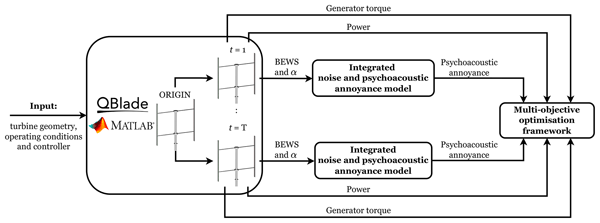
This research presents a multi-objective optimisation approach to balance vertical-axis wind turbine (VAWT) performance and noise, comparing the combined wind speed estimator and tip-speed ratio (WSE–TSR) tracking controller with a baseline. Psychoacoustic annoyance is used as a novel metric for human perception of wind turbine noise. Results showcase the WSE–TSR tracking controller’s potential in trading off the considered objectives, thereby fostering the deployment of VAWTs in urban areas.
Livia Brandetti, Sebastiaan Paul Mulders, Yichao Liu, Simon Watson, and Jan-Willem van Wingerden
Wind Energ. Sci., 8, 1553–1573, https://doi.org/10.5194/wes-8-1553-2023, https://doi.org/10.5194/wes-8-1553-2023, 2023
Short summary
Short summary
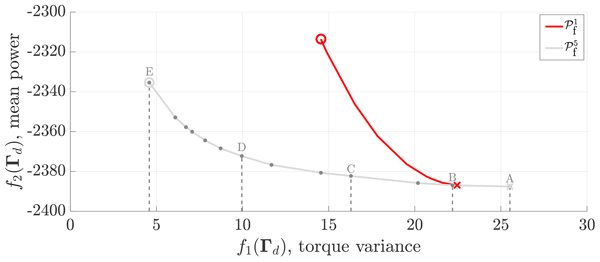
This research presents the additional benefits of applying an advanced combined wind speed estimator and tip-speed ratio tracking (WSE–TSR) controller compared to the baseline Kω2. Using a frequency-domain framework and an optimal calibration procedure, the WSE–TSR tracking control scheme shows a more flexible trade-off between conflicting objectives: power maximisation and load minimisation. Therefore, implementing this controller on large-scale wind turbines will facilitate their operation.
Serkan Kartal, Sukanta Basu, and Simon J. Watson
Wind Energ. Sci., 8, 1533–1551, https://doi.org/10.5194/wes-8-1533-2023, https://doi.org/10.5194/wes-8-1533-2023, 2023
Short summary
Short summary
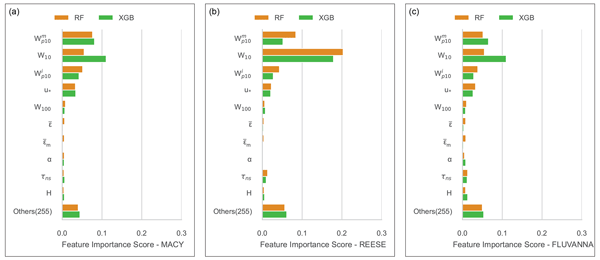
Peak wind gust is a crucial meteorological variable for wind farm planning and operations. Unfortunately, many wind farms do not have on-site measurements of it. In this paper, we propose a machine-learning approach (called INTRIGUE, decIsioN-TRee-based wInd GUst Estimation) that utilizes numerous inputs from a public-domain reanalysis dataset, generating long-term, site-specific peak wind gust series.
Sarah J. Ollier and Simon J. Watson
Wind Energ. Sci., 8, 1179–1200, https://doi.org/10.5194/wes-8-1179-2023, https://doi.org/10.5194/wes-8-1179-2023, 2023
Short summary
Short summary
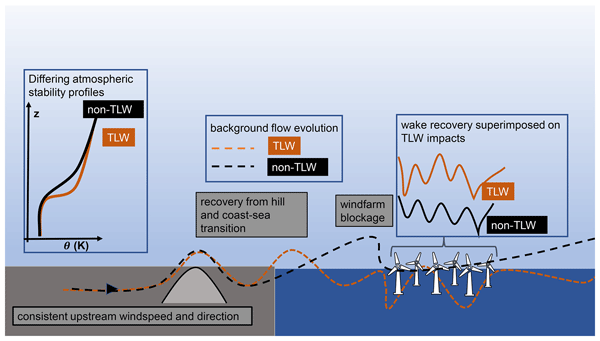
This modelling study shows that topographic trapped lee waves (TLWs) modify flow behaviour and power output in offshore wind farms. We demonstrate that TLWs can substantially alter the wind speeds at individual wind turbines and effect the power output of the turbine and whole wind farm. The impact on wind speeds and power is dependent on which part of the TLW wave cycle interacts with the wind turbines and wind farm. Positive and negative impacts of TLWs on power output are observed.
Mark Kelly and Maarten Paul van der Laan
Wind Energ. Sci., 8, 975–998, https://doi.org/10.5194/wes-8-975-2023, https://doi.org/10.5194/wes-8-975-2023, 2023
Short summary
Short summary
The turning of the wind with height, which is known as veer, can affect wind turbine performance. Thus far meteorology has only given idealized descriptions of veer, which has not yet been related in a way readily usable for wind energy. Here we derive equations for veer in terms of meteorological quantities and provide practically usable forms in terms of measurable shear (change in wind speed with height). Flow simulations and measurements at turbine heights support these developments.
Maarten Paul van der Laan, Oscar García-Santiago, Mark Kelly, Alexander Meyer Forsting, Camille Dubreuil-Boisclair, Knut Sponheim Seim, Marc Imberger, Alfredo Peña, Niels Nørmark Sørensen, and Pierre-Elouan Réthoré
Wind Energ. Sci., 8, 819–848, https://doi.org/10.5194/wes-8-819-2023, https://doi.org/10.5194/wes-8-819-2023, 2023
Short summary
Short summary
Offshore wind farms are more commonly installed in wind farm clusters, where wind farm interaction can lead to energy losses. In this work, an efficient numerical method is presented that can be used to estimate these energy losses. The novel method is verified with higher-fidelity numerical models and validated with measurements of an existing wind farm cluster.
Maarten Paul van der Laan, Mads Baungaard, and Mark Kelly
Wind Energ. Sci., 8, 247–254, https://doi.org/10.5194/wes-8-247-2023, https://doi.org/10.5194/wes-8-247-2023, 2023
Short summary
Short summary
Understanding wind turbine wake recovery is important to mitigate energy losses in wind farms. Wake recovery is often assumed or explained to be dependent on the first-order derivative of velocity. In this work we show that wind turbine wakes recover mainly due to the second-order derivative of the velocity, which transport momentum from the freestream towards the wake center. The wake recovery mechanisms and results of a high-fidelity numerical simulation are illustrated using a simple model.
Mads Baungaard, Stefan Wallin, Maarten Paul van der Laan, and Mark Kelly
Wind Energ. Sci., 7, 1975–2002, https://doi.org/10.5194/wes-7-1975-2022, https://doi.org/10.5194/wes-7-1975-2022, 2022
Short summary
Short summary
Wind turbine wakes in the neutral atmospheric surface layer are simulated with Reynolds-averaged Navier–Stokes (RANS) using an explicit algebraic Reynolds stress model. Contrary to standard two-equation turbulence models, it can predict turbulence anisotropy and complex physical phenomena like secondary motions. For the cases considered, it improves Reynolds stress, turbulence intensity, and velocity deficit predictions, although a more top-hat-shaped profile is observed for the latter.
Tuhfe Göçmen, Filippo Campagnolo, Thomas Duc, Irene Eguinoa, Søren Juhl Andersen, Vlaho Petrović, Lejla Imširović, Robert Braunbehrens, Jaime Liew, Mads Baungaard, Maarten Paul van der Laan, Guowei Qian, Maria Aparicio-Sanchez, Rubén González-Lope, Vinit V. Dighe, Marcus Becker, Maarten J. van den Broek, Jan-Willem van Wingerden, Adam Stock, Matthew Cole, Renzo Ruisi, Ervin Bossanyi, Niklas Requate, Simon Strnad, Jonas Schmidt, Lukas Vollmer, Ishaan Sood, and Johan Meyers
Wind Energ. Sci., 7, 1791–1825, https://doi.org/10.5194/wes-7-1791-2022, https://doi.org/10.5194/wes-7-1791-2022, 2022
Short summary
Short summary
The FarmConners benchmark is the first of its kind to bring a wide variety of data sets, control settings, and model complexities for the (initial) assessment of wind farm flow control benefits. Here we present the first part of the benchmark results for three blind tests with large-scale rotors and 11 participating models in total, via direct power comparisons at the turbines as well as the observed or estimated power gain at the wind farm level under wake steering control strategy.
Jana Fischereit, Kurt Schaldemose Hansen, Xiaoli Guo Larsén, Maarten Paul van der Laan, Pierre-Elouan Réthoré, and Juan Pablo Murcia Leon
Wind Energ. Sci., 7, 1069–1091, https://doi.org/10.5194/wes-7-1069-2022, https://doi.org/10.5194/wes-7-1069-2022, 2022
Short summary
Short summary
Wind turbines extract kinetic energy from the flow to create electricity. This induces a wake of reduced wind speed downstream of a turbine and consequently downstream of a wind farm. Different types of numerical models have been developed to calculate this effect. In this study, we compared models of different complexity, together with measurements over two wind farms. We found that higher-fidelity models perform better and the considered rapid models cannot fully capture the wake effect.
Mads Baungaard, Maarten Paul van der Laan, and Mark Kelly
Wind Energ. Sci., 7, 783–800, https://doi.org/10.5194/wes-7-783-2022, https://doi.org/10.5194/wes-7-783-2022, 2022
Short summary
Short summary
Wind turbine wakes are dependent on the atmospheric conditions, and it is therefore important to be able to simulate in various different atmospheric conditions. This paper concerns the specific case of an unstable atmospheric surface layer, which is the lower part of the typical daytime atmospheric boundary layer. A simple flow model is suggested and tested for a range of single-wake scenarios, and it shows promising results for velocity deficit predictions.
Amir R. Nejad, Jonathan Keller, Yi Guo, Shawn Sheng, Henk Polinder, Simon Watson, Jianning Dong, Zian Qin, Amir Ebrahimi, Ralf Schelenz, Francisco Gutiérrez Guzmán, Daniel Cornel, Reza Golafshan, Georg Jacobs, Bart Blockmans, Jelle Bosmans, Bert Pluymers, James Carroll, Sofia Koukoura, Edward Hart, Alasdair McDonald, Anand Natarajan, Jone Torsvik, Farid K. Moghadam, Pieter-Jan Daems, Timothy Verstraeten, Cédric Peeters, and Jan Helsen
Wind Energ. Sci., 7, 387–411, https://doi.org/10.5194/wes-7-387-2022, https://doi.org/10.5194/wes-7-387-2022, 2022
Short summary
Short summary
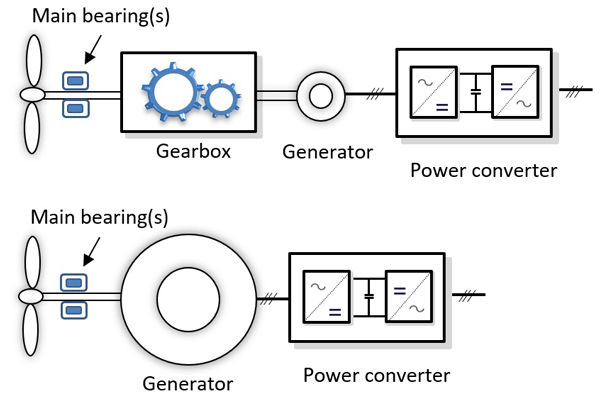
This paper presents the state-of-the-art technologies and development trends of wind turbine drivetrains – the energy conversion systems transferring the kinetic energy of the wind to electrical energy – in different stages of their life cycle: design, manufacturing, installation, operation, lifetime extension, decommissioning and recycling. The main aim of this article is to review the drivetrain technology development as well as to identify future challenges and research gaps.
Cited articles
Calaf, M., Meneveau, C., and Meyers, J.: Large eddy simulation study of fully developed wind-turbine array boundary layers, Phys. Fluids, 22, 015110, https://doi.org/10.1063/1.3291077, 2010. a
Davis, N. N., Badger, J., Hahmann, A. N., Hansen, B. O., Mortensen, N. G., Kelly, M., Larsén, X. G., Olsen, B. T., Floors, R., Lizcano, G., Casso, P., Lacave, O., Bosch, A., Bauwens, I., Knight, O. J., Potter van Loon, A., Fox, R., Parvanyan, T., Krohn Hansen, S. B., Heathfield, D., Onninen, M., and Drummond, R.: The Global Wind Atlas: A High-Resolution Dataset of Climatologies and Associated Web-Based Application, Bull. Am. Meteorol. Soc., 104, E1507–E1525, https://doi.org/10.1175/BAMS-D-21-0075.1, 2023. a, b
Fischereit, J., Schaldemose Hansen, K., Larsén, X. G., van der Laan, M. P., Réthoré, P.-E., and Murcia Leon, J. P.: Comparing and validating intra-farm and farm-to-farm wakes across different mesoscale and high-resolution wake models, Wind Energ. Sci., 7, 1069–1091, https://doi.org/10.5194/wes-7-1069-2022, 2022. a
Fischereit, J., Vollmer, L., and Hansen, A.: Open European offshore wind turbine database, Zenodo, https://doi.org/10.5281/zenodo.17311571, 2025. a
Fitch, A. C., Olson, J. B., Lundquist, J. K., Dudhia, J., Gupta, A. K., Michalakes, J., and Barstad, I.: Local and Mesoscale Impacts of Wind Farms as Parameterized in a Mesoscale NWP Model, Mon. Weather Rev., 140, 3017–3038, https://doi.org/10.1175/MWR-D-11-00352.1, 2012. a
Floors, R., Troen, I., and Peña, A.: Using Observed and Modelled Heat Fluxes for Improved Extrapolation of Wind Distributions, Bound.-Lay. Meteorol., 188, 75–101, https://doi.org/10.1007/s10546-023-00803-3, 2023. a
Frandsen, S.: On the wind speed reduction in the center of large clusters of wind turbines, J. Wind Eng. Ind. Aerod., 39, 251–265, https://doi.org/10.1016/0167-6105(92)90551-K, 1992. a, b, c, d
Liu, L., Gadde, S. N., and Stevens, R. J.: Geostrophic drag law for conventionally neutral atmospheric boundary layers revisited, Quarterly J. Roy. Meteorol. Soc., 147, 847–857, https://doi.org/10.1002/qj.3949, 2021. a
OpenStreetMap contributors: Distributed under the Open Database License (ODbL), https://planet.openstreetmap.org/ (last access: 29 September 2026), 2026. a
Pedersen, M. M., Meyer Forsting, A., van der Laan, P., Riva, R., Alcayaga Romàn, L. A., Criado Risco, J., Friis-Møller, M., Quick, J., Schøler Christiansen, J. P., Valotta Rodrigues, R., Olsen, B. T., and Réthoré, P.-E.: PyWake 2.5.0: An open-source wind farm simulation tool, DTU Wind and Energy Systems, https://gitlab.windenergy.dtu.dk/TOPFARM/PyWake (last access: 16 September 2026), 2023. a
Porté-Agel, F., Bastankhah, M., and Shamsoddin, S.: Wind-Turbine and Wind-Farm Flows: A Review, Bound.-Lay. Meteorol., 174, 1–59, https://doi.org/10.1007/s10546-019-00473-0, 2020. a
Simão Ferreira, C., Larsen, G. C., and Sørensen, J. N.: A theoretical upper limit for offshore wind energy extraction, Cell Rep. Sustain., 3, 1–19, https://doi.org/10.1016/j.crsus.2025.100573, 2026. a, b, c, d, e, f, g, h, i, j, k, l, m, n, o, p, q, r, s, t, u, v, w, x, y, z, aa, ab, ac, ad, ae, af, ag, ah, ai, aj, ak, al, am, an, ao, ap, aq, ar, as, at, au, av, aw, ax, ay, az, ba, bb, bc, bd, be, bf, bg, bh, bi, bj
Sørensen, J. N., Simão Ferreira, C., and Larsen, G. C.: Community Comment 1, CC4: Comment on wes-2026-59 – Executable Reproducibility Notebook for the Rebuttal, https://doi.org/10.5194/wes-2026-59-CC1, 2026. a, b, c
Sørensen, J. N., Garcia, A. M. I., Larsen, G. C., Pedersen, M. M., and Fournely, D.: Extension and Validation of Minimalistic Prediction Model to Determine the Energy Production of Offshore Wind Farms, J. Phys. Conf. Ser., 2767, 092022, https://doi.org/10.1088/1742-6596/2767/9/092022, 2024. a, b, c, d, e, f, g
van der Laan, M. P.: Python script and input data for Wind Energy Science article: Comment on “A theoretical upper limit for offshore wind energy extraction” by Simão Ferreira et al. (2026), Zenodo [code], https://doi.org/10.5281/zenodo.21370569, 2026. a
van der Laan, M. P., Kelly, M., Floors, R., and Peña, A.: Rossby number similarity of an atmospheric RANS model using limited-length-scale turbulence closures extended to unstable stratification, Wind Energ. Sci., 5, 355–374, https://doi.org/10.5194/wes-5-355-2020, 2020. a
van der Laan, M. P., Andersen, S. J., Réthoré, P.-E., Baungaard, M., Sørensen, J. N., and Troldborg, N.: Faster wind farm AEP calculations with CFD using a generalized wind turbine model, J. Phys.: Conf. Ser., 2265, 022030, https://doi.org/10.1088/1742-6596/2265/2/022030, 2022. a
Volker, P. J. H., Hahmann, A. N., Badger, J., and Jørgensen, H. E.: Prospects for generating electricity by large onshore and offshore wind farms, Environ. Res. Lett., 12, 034022, https://doi.org/10.1088/1748-9326/aa5d86, 2017. a, b
Short summary
A theoretical limit for the energy extraction of offshore wind farms has been suggested by Simão Ferreira et al. (2026) based on a simple model of an infinite wind farm and an ad hoc method to correct the model for application to finite wind farms. In this work, we discuss a number of concerns and we conclude that the limit proposed in Simão Ferreira et al. (2026) is not a theoretical limit but rather a limit supported by the non-reproducible finite wind farm correction.
A theoretical limit for the energy extraction of offshore wind farms has been suggested by Simão...


Altmetrics
Final-revised paper
Preprint