
Articles | Volume 11, issue 7
https://doi.org/10.5194/wes-11-2427-2026
© Author(s) 2026. This work is distributed under
the Creative Commons Attribution 4.0 License.
the Creative Commons Attribution 4.0 License.
https://doi.org/10.5194/wes-11-2427-2026
© Author(s) 2026. This work is distributed under
the Creative Commons Attribution 4.0 License.
the Creative Commons Attribution 4.0 License.
Research article
| 
10 Jul 2026
Research article |
| 10 Jul 2026
| 10 Jul 2026
OC7 project Phase II: comparison of global-to-local load transfer approaches in floating structures
Michael Karch
CORRESPONDING AUTHOR

Ramboll, Hamburg, Germany
Friedemann Borisade
Ramboll, Hamburg, Germany
Fabian Wendt
Ramboll, Hamburg, Germany
Romain Pinguet
Akselos S.A., Lausanne, Switzerland
Thang Do
Akselos S.A., Lausanne, Switzerland
Jérôme de Lauzon
Bureau Veritas Marine & Offshore, Paris, France
Lucas Tessier
Bureau Veritas Marine & Offshore, Paris, France
Jon Cerrada-Garcés
Centro Nacional de Energías Renovables, Sarriguren (Navarra), Spain
Alvaro Olcoz-Alonso
Centro Nacional de Energías Renovables, Sarriguren (Navarra), Spain
Jesús Artal
Centro Nacional de Energías Renovables, Sarriguren (Navarra), Spain
Borja Servan-Camas
Centre Internacional de Mètodes Numèrics en Enginyeria, Barcelona, Spain
Julio García-Espinosa
Universidad Politécnica de Madrid, Madrid, Spain
Cai Wei Sun
DNV, Shanghai, China
Haruki Yoshimoto
Japan Marine United Corporation, Yokohama, Japan
Takaya Nagumo
Japan Marine United Corporation, Yokohama, Japan
Go Tsuneto
NIHON SHIPYARD CO., LTD., Yokohama, Japan
Roger Bergua
National Wind Technology Center, National Laboratory of the Rockies, Golden, USA
National Wind Technology Center, National Laboratory of the Rockies, Golden, USA
Jason Jonkman
National Wind Technology Center, National Laboratory of the Rockies, Golden, USA
Amy Robertson
National Wind Technology Center, National Laboratory of the Rockies, Golden, USA
Constance Clement
Floating Offshore Group, PRINCIPIA, La Ciotat, France
Guillaume Potier
Floating Offshore Group, PRINCIPIA, La Ciotat, France
Related authors
No articles found.
Will Wiley, Jason Jonkman, and Amy Robertson
Wind Energ. Sci., 11, 2447–2477, https://doi.org/10.5194/wes-11-2447-2026, https://doi.org/10.5194/wes-11-2447-2026, 2026
Short summary
Short summary
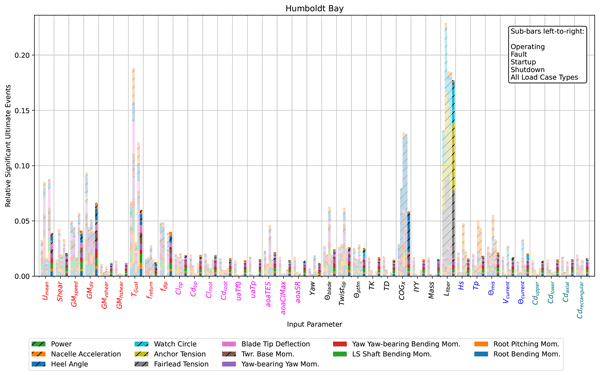
Numerical models used to analyze wind turbines are based on thousands of input parameters. Each of these parameters has uncertainty, which can impact the predicted loads. This work demonstrates a screening technique to identify which parameters ultimate loads are most sensitive to so that more focus can be given to quantifying the possible range of those parameters, with a focus on a floating offshore wind turbine in design load cases with transient events both in the inflow and operations.
Øyvind Waage Hanssen-Bauer, Paula Doubrawa, Helge A. Madsen, Henrik Asmuth, Jason Jonkman, Gunner C. Larsen, Stefan Ivanell, and Roy Stenbro
Wind Energ. Sci., 11, 1913–1948, https://doi.org/10.5194/wes-11-1913-2026, https://doi.org/10.5194/wes-11-1913-2026, 2026
Short summary
Short summary
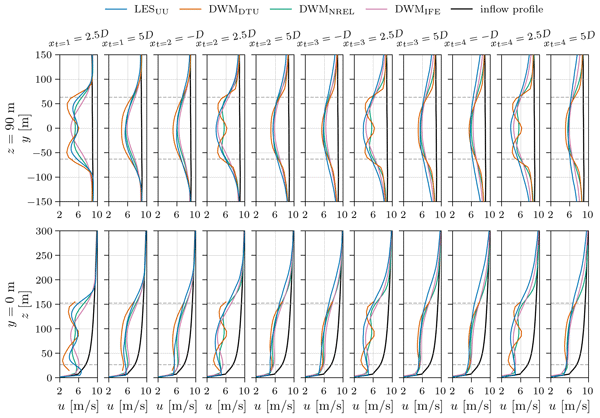
We studied how different industry-oriented computer models predict the behavior of winds behind turbines in a wind farm. These
wakesreduce energy output and can affect turbines further down the row. By comparing these three models with more detailed simulations, we found they agree well on overall power but differ in how they capture turbulence and wear on machines. Our results show where the models need improvement to make wind farm computer models more accurate and reliable in the future.
Cesar Aguilera, Romain Ribault, Jerome De-Lauzon, and Adrien Hirvoas
Wind Energ. Sci., 11, 1569–1581, https://doi.org/10.5194/wes-11-1569-2026, https://doi.org/10.5194/wes-11-1569-2026, 2026
Short summary
Short summary
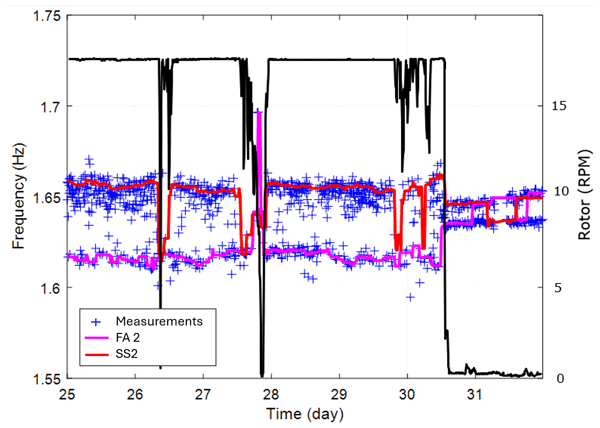
Our analysis has revealed that the natural frequencies of the tower vary depending on the operational state of the turbine and are significantly influenced by the flexibility of the support structure. For a spar-type floater, a mismatch of 40 % was found. This work highlights the importance of continuous structural monitoring of offshore assets, the need to raise awareness within the design community and the current lack of explicit guidance on this issue in recommended industry practices.
Maria Aparicio-Sanchez, Irene Eguinoa, Elena Cantero-Nouqueret, and Alvaro Olcoz-Alonso
Wind Energ. Sci. Discuss., https://doi.org/10.5194/wes-2026-30, https://doi.org/10.5194/wes-2026-30, 2026
Revised manuscript under review for WES
Short summary
Short summary
This study proposes a methodology to assess the impact of rainfall on wind turbine and wind farm performance using operational data. Unlike prior work focused on long-term leading-edge erosion, it analyzes how precipitation directly affects turbine behavior, wakes, and energy production. Applied to a commercial wind farm, the method identifies differences between dry and rainy conditions and explores simulation adaptations to improve performance estimates.
Veronica Liverud Krathe, Jason Jonkman, and Erin E. Bachynski-Polić
Wind Energ. Sci., 10, 2903–2923, https://doi.org/10.5194/wes-10-2903-2025, https://doi.org/10.5194/wes-10-2903-2025, 2025
Short summary
Short summary
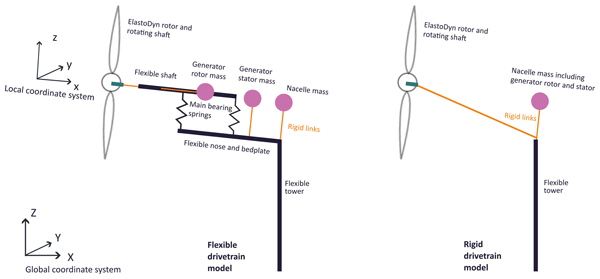
This study looks into how changes in wind direction with height (veer) and drivetrain flexibility influence the behavior of large floating wind turbines. Using numerical simulations, it was found that these factors can significantly impact the fatigue damage of the turbines. These results suggest that standardized design methods for modeling wind may underestimate fatigue and that improved modeling could enhance turbine reliability as turbines continue to grow in size.
Katarzyna Patryniak, Maurizio Collu, Jason Jonkman, Matthew Hall, Garrett Barter, Daniel Zalkind, and Andrea Coraddu
Wind Energ. Sci., 10, 2051–2077, https://doi.org/10.5194/wes-10-2051-2025, https://doi.org/10.5194/wes-10-2051-2025, 2025
Short summary
Short summary
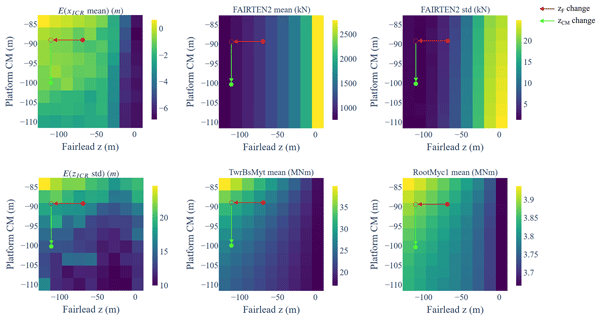
This paper studies the instantaneous centre of rotation (ICR) of floating offshore wind turbines (FOWTs). We present a method for computing the ICR and examine the correlations between the external loading, design features, ICR statistics, motions, and loads. We demonstrate how to apply the new insights to successfully modify the designs of the spar and semisubmersible FOWTs to reduce the loads in the moorings, the tower, and the blades, improving the ultimate strength and fatigue properties.

Regis Thedin, Garrett Barter, Jason Jonkman, Rafael Mudafort, Christopher J. Bay, Kelsey Shaler, and Jasper Kreeft
Wind Energ. Sci., 10, 1033–1053, https://doi.org/10.5194/wes-10-1033-2025, https://doi.org/10.5194/wes-10-1033-2025, 2025
Short summary
Short summary
We investigate asymmetries in terms of power performance and fatigue loading on a five-turbine wind farm subject to wake steering strategies. Both the yaw misalignment angle and the wind direction were varied from negative to positive. We highlight conditions in which fatigue loading is lower while still maintaining good power gains and show that a partial wake is the source of the asymmetries observed. We provide recommendations in terms of yaw misalignment angles for a given wind direction.
Will Wiley, Jason Jonkman, and Amy Robertson
Wind Energ. Sci., 10, 941–970, https://doi.org/10.5194/wes-10-941-2025, https://doi.org/10.5194/wes-10-941-2025, 2025
Short summary
Short summary
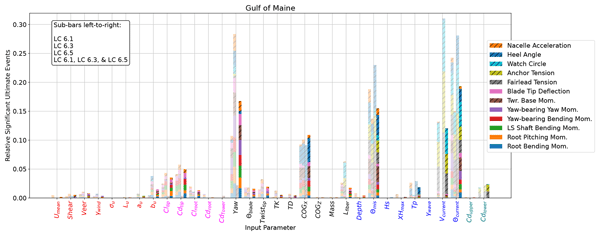
Numerical models, used to assess loads on floating offshore wind turbines, require many input parameters to describe air and water conditions, system properties, and load calculations. All parameters have some possible range, due to uncertainty and/or variations with time. The selected values can have important effects on the uncertainty in the resulting loads. This work identifies the input parameters that have the most impact on ultimate and fatigue loads for extreme storm load cases.
Lucas Carmo, Jason Jonkman, and Regis Thedin
Wind Energ. Sci., 9, 1827–1847, https://doi.org/10.5194/wes-9-1827-2024, https://doi.org/10.5194/wes-9-1827-2024, 2024
Short summary
Short summary
As floating wind turbines progress to arrays with multiple units, it becomes important to understand how the wake of a floating turbine affects the performance of other units in the array. Due to the compliance of the floating substructure, the wake of a floating wind turbine may behave differently from that of a fixed turbine. In this work, we present an investigation of the mutual interaction between the motions of floating wind turbines and wakes.
Kenneth Brown, Pietro Bortolotti, Emmanuel Branlard, Mayank Chetan, Scott Dana, Nathaniel deVelder, Paula Doubrawa, Nicholas Hamilton, Hristo Ivanov, Jason Jonkman, Christopher Kelley, and Daniel Zalkind
Wind Energ. Sci., 9, 1791–1810, https://doi.org/10.5194/wes-9-1791-2024, https://doi.org/10.5194/wes-9-1791-2024, 2024
Short summary
Short summary
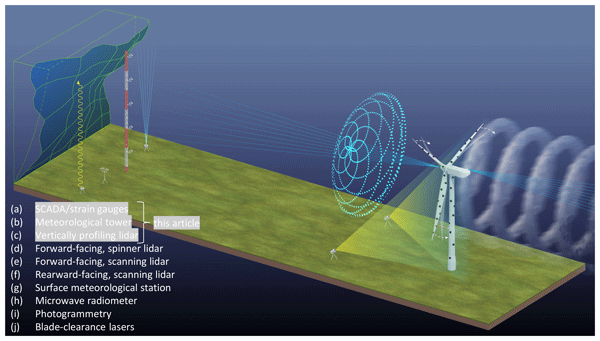
This paper presents a study of the popular wind turbine design tool OpenFAST. We compare simulation results to measurements obtained from a 2.8 MW land-based wind turbine. Measured wind conditions were used to generate turbulent flow fields through several techniques. We show that successful validation of the tool is not strongly dependent on the inflow generation technique used for mean quantities of interest. The type of inflow assimilation method has a larger effect on fatigue quantities.
Kelsey Shaler, Eliot Quon, Hristo Ivanov, and Jason Jonkman
Wind Energ. Sci., 9, 1451–1463, https://doi.org/10.5194/wes-9-1451-2024, https://doi.org/10.5194/wes-9-1451-2024, 2024
Short summary
Short summary
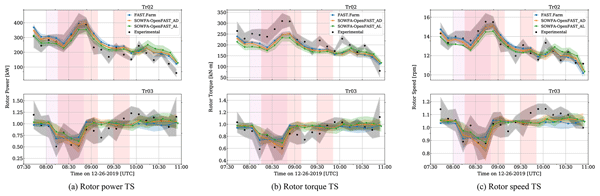
This paper presents a three-way verification and validation between an engineering-fidelity model, a high-fidelity model, and measured data for the wind farm structural response and wake dynamics during an evolving stable boundary layer of a small wind farm, generally with good agreement.
Francesco Papi, Jason Jonkman, Amy Robertson, and Alessandro Bianchini
Wind Energ. Sci., 9, 1069–1088, https://doi.org/10.5194/wes-9-1069-2024, https://doi.org/10.5194/wes-9-1069-2024, 2024
Short summary
Short summary
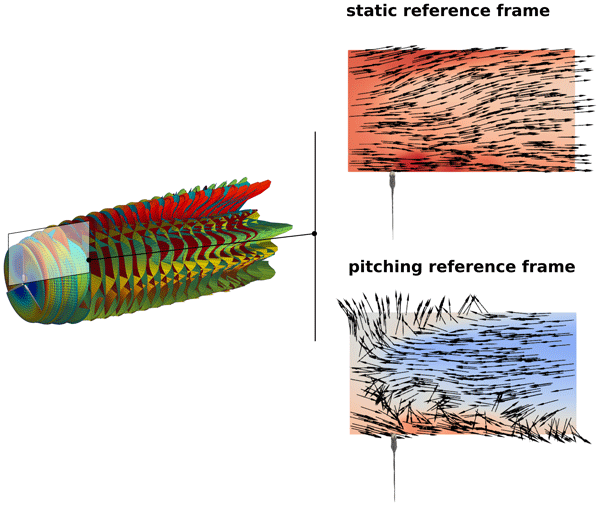
Blade element momentum (BEM) theory is the backbone of many industry-standard aerodynamic models. However, the analysis of floating offshore wind turbines (FOWTs) introduces new challenges, which could put BEM models to the test. This study systematically compares four aerodynamic models, ranging from BEM to computational fluid dynamics, in an attempt to shed light on the unsteady aerodynamic phenomena that are at stake in FOWTs and whether BEM is able to model them appropriately.
Roger Bergua, Will Wiley, Amy Robertson, Jason Jonkman, Cédric Brun, Jean-Philippe Pineau, Quan Qian, Wen Maoshi, Alec Beardsell, Joshua Cutler, Fabio Pierella, Christian Anker Hansen, Wei Shi, Jie Fu, Lehan Hu, Prokopios Vlachogiannis, Christophe Peyrard, Christopher Simon Wright, Dallán Friel, Øyvind Waage Hanssen-Bauer, Carlos Renan dos Santos, Eelco Frickel, Hafizul Islam, Arjen Koop, Zhiqiang Hu, Jihuai Yang, Tristan Quideau, Violette Harnois, Kelsey Shaler, Stefan Netzband, Daniel Alarcón, Pau Trubat, Aengus Connolly, Seán B. Leen, and Oisín Conway
Wind Energ. Sci., 9, 1025–1051, https://doi.org/10.5194/wes-9-1025-2024, https://doi.org/10.5194/wes-9-1025-2024, 2024
Short summary
Short summary
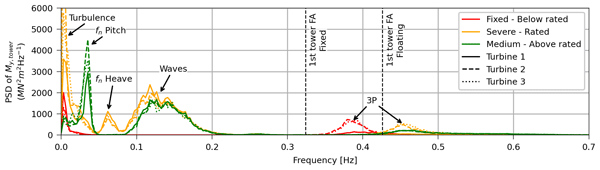
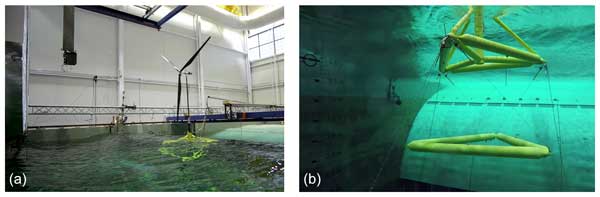
This paper provides a comparison for a floating offshore wind turbine between the motion and loading estimated by numerical models and measurements. The floating support structure is a novel design that includes a counterweight to provide floating stability to the system. The comparison between numerical models and the measurements includes system motion, tower loads, mooring line loads, and loading within the floating support structure.
Emmanuel Branlard, Jason Jonkman, Cameron Brown, and Jiatian Zhang
Wind Energ. Sci., 9, 1–24, https://doi.org/10.5194/wes-9-1-2024, https://doi.org/10.5194/wes-9-1-2024, 2024
Short summary
Short summary
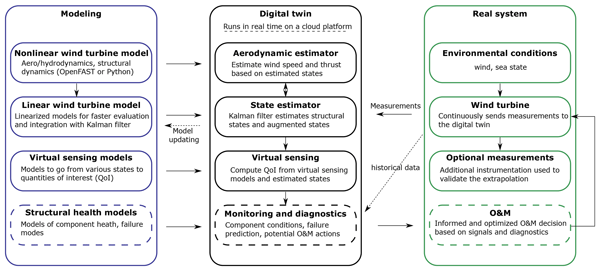
In this work, we implement, verify, and validate a physics-based digital twin solution applied to a floating offshore wind turbine. The article present methods to obtain reduced-order models of floating wind turbines. The models are used to form a digital twin which combines measurements from the TetraSpar prototype (a full-scale floating offshore wind turbine) to estimate signals that are not typically measured.
Stefano Cioni, Francesco Papi, Leonardo Pagamonci, Alessandro Bianchini, Néstor Ramos-García, Georg Pirrung, Rémi Corniglion, Anaïs Lovera, Josean Galván, Ronan Boisard, Alessandro Fontanella, Paolo Schito, Alberto Zasso, Marco Belloli, Andrea Sanvito, Giacomo Persico, Lijun Zhang, Ye Li, Yarong Zhou, Simone Mancini, Koen Boorsma, Ricardo Amaral, Axelle Viré, Christian W. Schulz, Stefan Netzband, Rodrigo Soto-Valle, David Marten, Raquel Martín-San-Román, Pau Trubat, Climent Molins, Roger Bergua, Emmanuel Branlard, Jason Jonkman, and Amy Robertson
Wind Energ. Sci., 8, 1659–1691, https://doi.org/10.5194/wes-8-1659-2023, https://doi.org/10.5194/wes-8-1659-2023, 2023
Short summary
Short summary
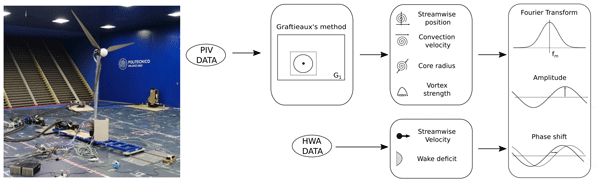
Simulations of different fidelities made by the participants of the OC6 project Phase III are compared to wind tunnel wake measurements on a floating wind turbine. Results in the near wake confirm that simulations and experiments tend to diverge from the expected linearized quasi-steady behavior when the reduced frequency exceeds 0.5. In the far wake, the impact of platform motion is overestimated by simulations and even seems to be oriented to the generation of a wake less prone to dissipation.
Will Wiley, Jason Jonkman, Amy Robertson, and Kelsey Shaler
Wind Energ. Sci., 8, 1575–1595, https://doi.org/10.5194/wes-8-1575-2023, https://doi.org/10.5194/wes-8-1575-2023, 2023
Short summary
Short summary
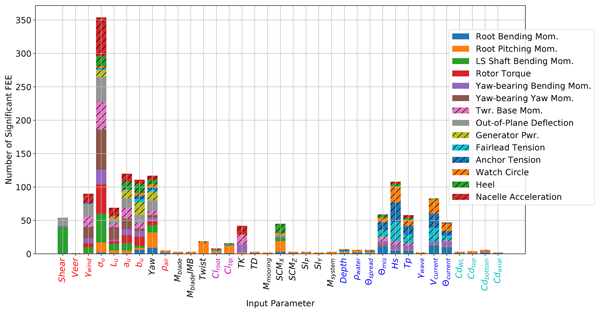
A sensitivity analysis determined the modeling parameters for an operating floating offshore wind turbine with the biggest impact on the ultimate and fatigue loads. The loads were the most sensitive to the standard deviation of the wind speed. Ultimate and fatigue mooring loads were highly sensitive to the current speed; only the fatigue mooring loads were sensitive to wave parameters. The largest platform rotation was the most sensitive to the platform horizontal center of gravity.
Paula Doubrawa, Kelsey Shaler, and Jason Jonkman
Wind Energ. Sci., 8, 1475–1493, https://doi.org/10.5194/wes-8-1475-2023, https://doi.org/10.5194/wes-8-1475-2023, 2023
Short summary
Short summary
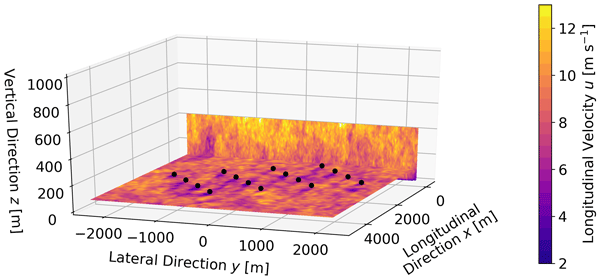
Wind turbines are designed to withstand any wind conditions they might encounter. This includes high-turbulence flow fields found within wind farms due to the presence of the wind turbines themselves. The international standard allows for two ways to account for wind farm turbulence in the design process. We compared both ways and found large differences between them. To avoid overdesign and enable a site-specific design, we suggest moving towards validated, higher-fidelity simulation tools.
Paul Veers, Carlo L. Bottasso, Lance Manuel, Jonathan Naughton, Lucy Pao, Joshua Paquette, Amy Robertson, Michael Robinson, Shreyas Ananthan, Thanasis Barlas, Alessandro Bianchini, Henrik Bredmose, Sergio González Horcas, Jonathan Keller, Helge Aagaard Madsen, James Manwell, Patrick Moriarty, Stephen Nolet, and Jennifer Rinker
Wind Energ. Sci., 8, 1071–1131, https://doi.org/10.5194/wes-8-1071-2023, https://doi.org/10.5194/wes-8-1071-2023, 2023
Short summary
Short summary
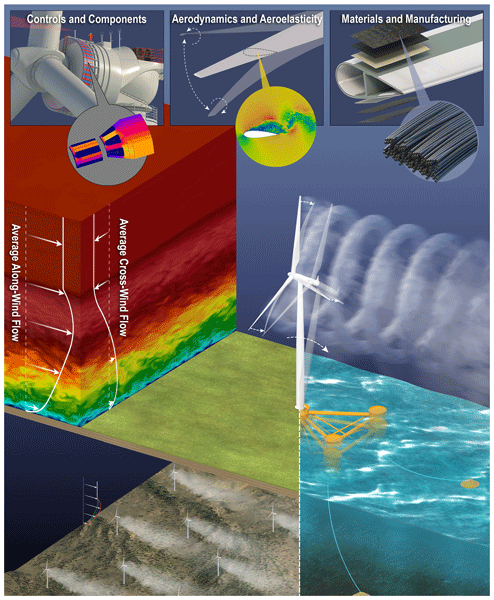
Critical unknowns in the design, manufacturing, and operation of future wind turbine and wind plant systems are articulated, and key research activities are recommended.

Roger Bergua, Amy Robertson, Jason Jonkman, Emmanuel Branlard, Alessandro Fontanella, Marco Belloli, Paolo Schito, Alberto Zasso, Giacomo Persico, Andrea Sanvito, Ervin Amet, Cédric Brun, Guillén Campaña-Alonso, Raquel Martín-San-Román, Ruolin Cai, Jifeng Cai, Quan Qian, Wen Maoshi, Alec Beardsell, Georg Pirrung, Néstor Ramos-García, Wei Shi, Jie Fu, Rémi Corniglion, Anaïs Lovera, Josean Galván, Tor Anders Nygaard, Carlos Renan dos Santos, Philippe Gilbert, Pierre-Antoine Joulin, Frédéric Blondel, Eelco Frickel, Peng Chen, Zhiqiang Hu, Ronan Boisard, Kutay Yilmazlar, Alessandro Croce, Violette Harnois, Lijun Zhang, Ye Li, Ander Aristondo, Iñigo Mendikoa Alonso, Simone Mancini, Koen Boorsma, Feike Savenije, David Marten, Rodrigo Soto-Valle, Christian W. Schulz, Stefan Netzband, Alessandro Bianchini, Francesco Papi, Stefano Cioni, Pau Trubat, Daniel Alarcon, Climent Molins, Marion Cormier, Konstantin Brüker, Thorsten Lutz, Qing Xiao, Zhongsheng Deng, Florence Haudin, and Akhilesh Goveas
Wind Energ. Sci., 8, 465–485, https://doi.org/10.5194/wes-8-465-2023, https://doi.org/10.5194/wes-8-465-2023, 2023
Short summary
Short summary
This work examines if the motion experienced by an offshore floating wind turbine can significantly affect the rotor performance. It was observed that the system motion results in variations in the load, but these variations are not critical, and the current simulation tools capture the physics properly. Interestingly, variations in the rotor speed or the blade pitch angle can have a larger impact than the system motion itself.
Koen Boorsma, Gerard Schepers, Helge Aagard Madsen, Georg Pirrung, Niels Sørensen, Galih Bangga, Manfred Imiela, Christian Grinderslev, Alexander Meyer Forsting, Wen Zhong Shen, Alessandro Croce, Stefano Cacciola, Alois Peter Schaffarczyk, Brandon Lobo, Frederic Blondel, Philippe Gilbert, Ronan Boisard, Leo Höning, Luca Greco, Claudio Testa, Emmanuel Branlard, Jason Jonkman, and Ganesh Vijayakumar
Wind Energ. Sci., 8, 211–230, https://doi.org/10.5194/wes-8-211-2023, https://doi.org/10.5194/wes-8-211-2023, 2023
Short summary
Short summary
Within the framework of the fourth phase of the International Energy Agency's (IEA) Wind Task 29, a large comparison exercise between measurements and aeroelastic simulations has been carried out. Results were obtained from more than 19 simulation tools of various fidelity, originating from 12 institutes and compared to state-of-the-art field measurements. The result is a unique insight into the current status and accuracy of rotor aerodynamic modeling.
Kelsey Shaler, Amy N. Robertson, and Jason Jonkman
Wind Energ. Sci., 8, 25–40, https://doi.org/10.5194/wes-8-25-2023, https://doi.org/10.5194/wes-8-25-2023, 2023
Short summary
Short summary
This work evaluates which wind-inflow- and wake-related parameters have the greatest influence on fatigue and ultimate loads for turbines in a small wind farm. Twenty-eight parameters were screened using an elementary effects approach to identify the parameters that lead to the largest variation in these loads of each turbine. The findings show the increased importance of non-streamwise wind components and wake parameters in fatigue and ultimate load sensitivity of downstream turbines.
Jason M. Jonkman, Emmanuel S. P. Branlard, and John P. Jasa
Wind Energ. Sci., 7, 559–571, https://doi.org/10.5194/wes-7-559-2022, https://doi.org/10.5194/wes-7-559-2022, 2022
Short summary
Short summary
This paper summarizes efforts done to understand the impact of design parameter variations in the physical system (e.g., mass, stiffness, geometry, aerodynamic, and hydrodynamic coefficients) on the linearized system using OpenFAST in support of the development of the WEIS toolset to enable controls co-design of floating offshore wind turbines.
Emmanuel Branlard, Ian Brownstein, Benjamin Strom, Jason Jonkman, Scott Dana, and Edward Ian Baring-Gould
Wind Energ. Sci., 7, 455–467, https://doi.org/10.5194/wes-7-455-2022, https://doi.org/10.5194/wes-7-455-2022, 2022
Short summary
Short summary
In this work, we present an aerodynamic tool that can model an arbitrary collections of wings, blades, rotors, and towers. With these functionalities, the tool can be used to study and design advanced wind energy concepts, such as horizontal-axis wind turbines, vertical-axis wind turbines, kites, or multi-rotors. This article describes the key features of the tool and presents multiple applications. Field measurements of horizontal- and vertical-axis wind turbines are used for comparison.
Cited articles
Aguilera, C., Ribault, R., De-Lauzon, J., and Hirvoas, A.: Impact of floater flexibility on tower eigenfrequencies of a spar-type floating offshore wind turbine: measurement-based assessment and model calibration, Wind Energ. Sci., 11, 1569–1581, https://doi.org/10.5194/wes-11-1569-2026, 2026.
Allen, C., Viscelli, A., Dagher, H., Goupee, A., Gaertner, E., Abbas, N., Hall, M., and Barter, G.: Definition of the UMaine VolturnUS-S Reference Platform Developed for the IEA Wind 15-Megawatt Offshore Reference Wind Turbine, NREL report NREL/TP-5000-76773, https://doi.org/10.2172/1660012, 2020.
Berdugo-Parada, I., Serván-Camas, B., and García-Espinosa, J.: Numerical framework for the coupled analysis of floating offshore multi-wind turbines, J. Mar. Sci. Eng., 12, 85, https://doi.org/10.3390/jmse12010085, 2024.
Bergua, R., Carmo, L., Jonkman, J., Robertson, A., Tessier, L., De Lauzon, J., Berdugo-Parada, I., Garcia-Espinosa, J., Servan-Camas, B., Yu, J., Rajasree, V. R. N., Abdelmoteleb, S.-E., Bachynski-Polić, E., Niosi, F., Dell’Edera, O., Bracco, G., Nicolini, T., Heurtier, J. M., Le Cunff, C., Cheng, Z., Shao, W., Zhou, W., Albers, M., Lemmer, F., Marten, D., Rahman, S., Sarker, D., and Ngo, T.: OC7 Project Phase II: Code Comparison and Experimental Validation of Hydroelastic Effects and Member-Level Loads in Floating Structures, J. Phys. Conf. Ser., 3224, 082024, https://doi.org/10.1088/1742-6596/3224/8/082024, 2026.
Borisade, F., Karch, M., and Wendt, F.: OC7 Project Phase II: Definition Document and Modelling Files for WP2.2 on Global-to-Local Load Transfer Approaches in Floating Structures (V1.0), Zenodo [data set], https://doi.org/10.5281/zenodo.21220820, 2026a.
Borisade, F., Karch, M., and Wendt, F.: OC7 Project Phase II: Results (Statics, Modal, Timeseries) for WP2.2 on Globalto- Local Load Transfer Approaches in Floating Structures (V1.0), Zenodo [data set], https://doi.org/10.5281/zenodo.21222818, 2026b.
Bredmose, H., Hansen, A. M., Fiskvik, S., Merino, D., Li, H., and Gao, Z.: Efficient calculation of deformation and FEM stress for substructures of floating wind turbines, J. Phys. Conf. Ser., 2875, 012027, https://doi.org/10.1088/1742-6596/2875/1/012027, 2024.
Defoy, A.-L., Heurtier, J.-M., Le Cunff, C., Antonutti, R., and Weyne, P.: Comparison of three hydro-structure coupling approaches for the design of floating platforms, 16ème Journées de l'hydrodynamique, Marseille, France, 2018.
Gaertner, E., Rinker, J., Sethuraman, L., Zahle, F., Anderson, B., Barter, G. E., Abbas, N. J., Meng, F., Bortolotti, P., Skrzypinski, W., Scott, G. N., Feil, R., Bredmose, H., Dykes, K., Shields, M., Allen, C., and Viselli, A.: IEA Wind TCP Task 37: Definition of the IEA 15-Megawatt Offshore Reference Wind Turbine, NREL report NREL/TP–5000-75698, https://doi.org/10.2172/1603478, 2020.
De Lauzon, J., Sireta, F.-X., and Malenica, S.: Non linear wave loading of the 3D FE structural model of floating bodies, in: Proceedings of the ASME 2013 32nd International Conference on Ocean, Offshore and Arctic Engineering (OMAE2013), Nantes, France, 9–14 June 2013, OMAE2013-10842, ISBN 978-0-7918-5531-7, 2013.
Gao, Z., Merino, D., Han, K.-J., Li, H., and Fiskvik, S.: Time-domain floater stress analysis for a floating wind turbine, J. Ocean Eng. Sci., 8, 435–445, https://doi.org/10.1016/j.joes.2023.08.001, 2023.
García-Espinosa, J., Serván-Camas, B., and Calpe-Linares, M.: High fidelity hydroelastic analysis using modal matrix reduction, J. Mar. Sci. Eng., 11, 1168, https://doi.org/10.3390/jmse11061168, 2023.
García-Espinosa, J., Lorente-López, A. J., Serván-Camas, B., and Gutierrez-Romero, J. E.: Accelerated fully coupled hydro-elastic analysis of ships using a combined full and modal-reduced FEM approach, Mar. Struct., 108, 104011, https://doi.org/10.1016/j.marstruc.2026.104011, 2026.
IEA Wind TCP: Task 56 – OC7 Project (Offshore Code Comparison Collaboration 7), https://iea-wind.org/task-56-oc7-project-offshore-code-comparison-collaboration-7/ (last access: 16 February 2025), 2025.
Karch, M., Voßbeck, M., Wendt, F., Guindo, L. M., Borisade, F., Wilms, L., Aardal, A. B., Psichogios, N., and Grimsrud, G.: Approaches and challenges in FEED and detailed design process of floating substructures, J. Phys. Conf. Ser., 2875, 012028, https://doi.org/10.1088/1742-6596/2875/1/012028, 2024.
Knezevic, D., Pinguet, R., Martin, B., Peterson, J., Podskarbi, M., Price, S., and Vallaghe, S.: Validation of a Fully Integrated Numerical Simulation Method to Assess Structural Integrity on a Flexible Model of FOWT Using RB-FEA, in: Proceedings of the ASME 2022 4th International Offshore Wind Technical Conference (IOWTC2022), Boston, USA, 7–8 December 2022, IOWTC2022-94295, https://doi.org/10.1115/IOWTC2022-94295, 2022.
Quideau, T., Desenclos, K., Grillot, P., and Le Cunff, C.: Advanced Modelling of Floaters for Renewable Energies, Wind Energy Science Conference (WESC 2025), Nantes, France, 24–27 June 2025, https://wesc2025.eu/ (last access: 8 July 2026), 2025.
Serván-Camas, B., Berdugo-Parada, I., García-Espinosa, J., and Pastor-Sanchez, A.: Modal matrix reduction for fully coupled integrated load analysis of floating structures, Mar. Struct., 103, 103845, https://doi.org/10.1016/j.marstruc.2025.103845, 2025.
Touzon, I., Lee, W. H., Grabowsky Nunes, R. M., and Eftang, J.: Efficient Structural Assessment Approaches for the Design of Floating Offshore Wind Turbine Substructures, IOWTC2025-164818, V001T01A015, https://doi.org/10.1115/IOWTC2025-164818, 2025.
Yim, Y., Lee, H., Kyoung, J., Mutricy, L., Antonutti, R., and Martin, A.: Consistency assurance between integrated load analysis and a structural model in time-domain analysis for a floating offshore wind turbine, J. Mar. Sci. Appl., https://doi.org/10.1007/s11804-026-00845-2, 2026.
Short summary
As part of the Offshore Code Comparison Collaboration 7 (OC7) project, load transfer from global analysis models to local structural designs was examined. Different load-mapping workflows from project participants were compared using a shared reference design and consistent checks. Results show that load-mapping choices, pressure application, and treatment of structural flexibility can influence predicted stresses and fatigue, highlighting key sources of uncertainty and providing guidance for more consistent global‑to‑local assessments.
As part of the Offshore Code Comparison Collaboration 7 (OC7) project, load transfer from global...


Altmetrics
Final-revised paper
Preprint