
Articles | Volume 11, issue 3
https://doi.org/10.5194/wes-11-937-2026
© Author(s) 2026. This work is distributed under
the Creative Commons Attribution 4.0 License.
the Creative Commons Attribution 4.0 License.
https://doi.org/10.5194/wes-11-937-2026
© Author(s) 2026. This work is distributed under
the Creative Commons Attribution 4.0 License.
the Creative Commons Attribution 4.0 License.
Research article
| 
24 Mar 2026
Research article |
| 24 Mar 2026
| 24 Mar 2026
An inter-comparison study on the impact of atmospheric boundary layer height on gigawatt-scale wind plant performance

Uppsala University, Department of Earth Sciences, Wind Energy Division, 621 67 Visby, Sweden
Warit Chanprasert
Uppsala University, Department of Earth Sciences, Wind Energy Division, 621 67 Visby, Sweden
Luca Lanzilao
KU Leuven, Department of Mechanical Engineering, Celestijnenlaan 300 – box 2421, 3001 Leuven, Belgium
James Bleeg
DNV, One Linear Park, Avon St. Temple Quay, Bristol BS2 0PS, UK
Johan Meyers
KU Leuven, Department of Mechanical Engineering, Celestijnenlaan 300 – box 2421, 3001 Leuven, Belgium
Antoine Mathieu
EDF R&D, 6 Quai Watier, 78400 Chatou, France
CEREA, École des Ponts, Paris, France
Søren Juhl Andersen
DTU, Department of Wind and Energy Systems, Koppels Allé 403, 2800 Kgs Lyngby, Denmark
Rem-Sophia Mouradi
EDF R&D, 6 Quai Watier, 78400 Chatou, France
CEREA, École des Ponts, Paris, France
Eric Dupont
EDF R&D, 6 Quai Watier, 78400 Chatou, France
CEREA, École des Ponts, Paris, France
Hugo Olivares-Espinosa
Uppsala University, Department of Earth Sciences, Wind Energy Division, 621 67 Visby, Sweden
Niels Troldborg
DTU, Department of Wind and Energy Systems, Frederiksborgvej 399, 4000 Roskilde, Denmark
Related authors
Henry Korb, Henrik Asmuth, Martin Schönherr, Martin Geier, and Stefan Ivanell
Wind Energ. Sci., 11, 2567–2583, https://doi.org/10.5194/wes-11-2567-2026, https://doi.org/10.5194/wes-11-2567-2026, 2026
Short summary
Short summary
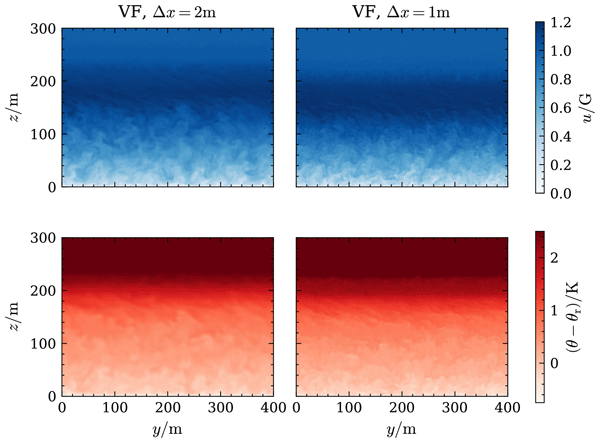
This study presents a new way to simulate the wind in the lower atmosphere while taking into account the changes in temperature. The model is much faster than previous models while having the same level of accuracy. This study is a step toward making highly accurate software to predict the output of wind farms fast enough for use in the wind industry, ultimately making electricity from wind energy cheaper and more reliable.
Øyvind Waage Hanssen-Bauer, Paula Doubrawa, Helge A. Madsen, Henrik Asmuth, Jason Jonkman, Gunner C. Larsen, Stefan Ivanell, and Roy Stenbro
Wind Energ. Sci., 11, 1913–1948, https://doi.org/10.5194/wes-11-1913-2026, https://doi.org/10.5194/wes-11-1913-2026, 2026
Short summary
Short summary
We studied how different industry-oriented computer models predict the behavior of winds behind turbines in a wind farm. These
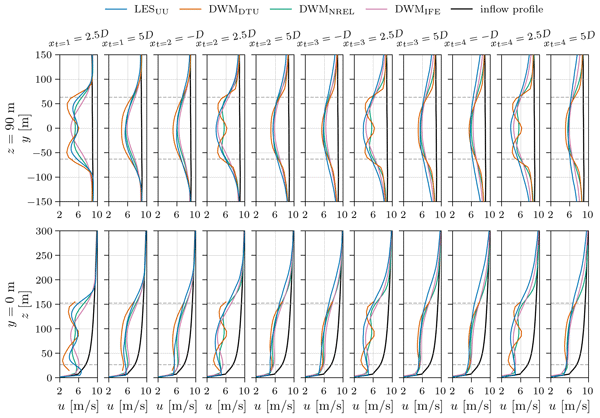
wakesreduce energy output and can affect turbines further down the row. By comparing these three models with more detailed simulations, we found they agree well on overall power but differ in how they capture turbulence and wear on machines. Our results show where the models need improvement to make wind farm computer models more accurate and reliable in the future.
Marinos Manolesos, Sandrine Aubrun, Christian Bak, Paolo Bettini, Filippo Campagnolo, Alessandro Croce, Arslan Salim Dar, Michael Hölling, Stefan Ivanell, Konstantinos Kellaris, Miguel Alfonso Mendez, Pierluigi Montinari, Franz Mühle, George Papadakis, Fernardo Porté-Agel, Daniele Ragni, Sebastiano Randino, Andrea Sciacchitano, Lorenzo Schena, Gerard Schepers, Antonio Segalini, Wei Yu, and Carlo Luigi Bottasso
Wind Energ. Sci. Discuss., https://doi.org/10.5194/wes-2026-51, https://doi.org/10.5194/wes-2026-51, 2026
Manuscript not accepted for further review
Short summary
Short summary
As wind turbines grow to unprecedented sizes, ensuring their reliability requires advanced testing. We reviewed the current state of wind tunnel experiments, examining how scaled physical models are evaluated for wind flow, flexibility, and noise. We conclude that while laboratory testing remains essential, it is most powerful when integrated with computer simulations and real-world data. This combined approach will ultimately drive the design of more efficient and sustainable wind energy.
Henry Korb, Jean Bastin, Henrik Asmuth, and Stefan Ivanell
Wind Energ. Sci., 11, 983–1012, https://doi.org/10.5194/wes-11-983-2026, https://doi.org/10.5194/wes-11-983-2026, 2026
Short summary
Short summary
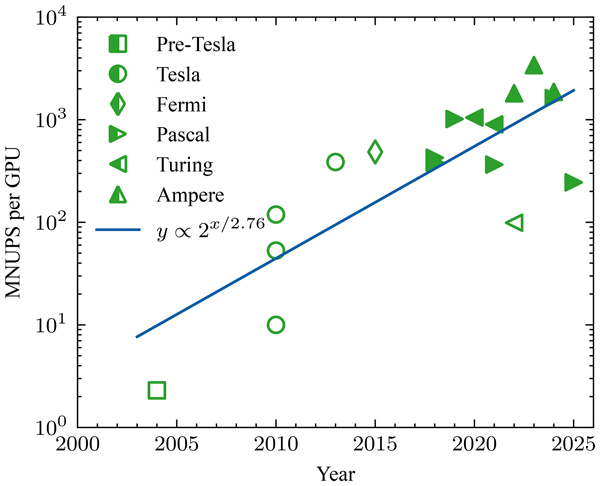
The lattice Boltzmann method (LBM) is a new method for very fast and accurate wind farm flow simulations. However, information on this method is scattered, and recent developments are unknown among the wind energy community. This review structures the different aspects of the method and answers common questions about it for wind energy researchers. We find that many of the building blocks for a wind farm simulation tool are present and that the LBM is accurate and efficient.
Stefan Ivanell, Bjarke T. Olsen, Antoine Mathieu, Cristina Mulet-Benzo, Abdul Haseeb Syed, Warit Chanprasert, Mikael Sjöholm, Jakob Mann, and Julia Gottschall
Wind Energ. Sci. Discuss., https://doi.org/10.5194/wes-2025-286, https://doi.org/10.5194/wes-2025-286, 2026
Preprint under review for WES
Short summary
Short summary
Modern GW-scale offshore wind farms face challenges from atmospheric dynamics. This study examines how boundary layer height (BLH) and large-scale turbulence affect efficiency and loads. Using WRF simulations, lidar data, and CFD modeling for a 100-turbine, 15 MW wind farm at three representative sites, we show that low BLH reduces performance. Turbulence-induced low-frequency fluctuations increase fatigue loads, underscoring the need to include BLH and turbulence in design models.
Mohammad Mehdi Mohammadi, Hugo Olivares-Espinosa, Gonzalo Pablo Navarro Diaz, and Stefan Ivanell
Wind Energ. Sci., 9, 1305–1321, https://doi.org/10.5194/wes-9-1305-2024, https://doi.org/10.5194/wes-9-1305-2024, 2024
Short summary
Short summary
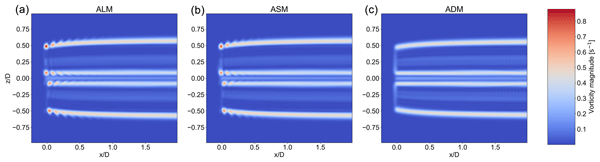
This paper has put forward a set of recommendations regarding the actuator sector model implementation details to improve the capability of the model to reproduce similar results compared to those obtained by an actuator line model, which is one of the most common ways used for numerical simulations of wind farms, while providing significant computational savings. This includes among others the velocity sampling method and a correction of the sampled velocities to calculate the blade forces.
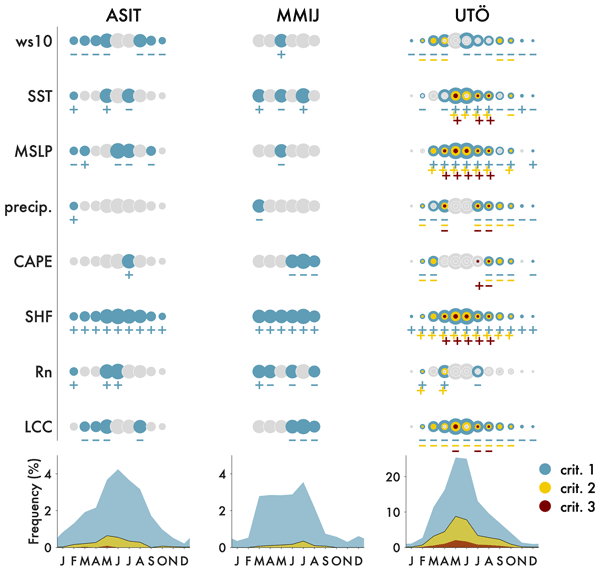
Christoffer Hallgren, Jeanie A. Aird, Stefan Ivanell, Heiner Körnich, Ville Vakkari, Rebecca J. Barthelmie, Sara C. Pryor, and Erik Sahlée
Wind Energ. Sci., 9, 821–840, https://doi.org/10.5194/wes-9-821-2024, https://doi.org/10.5194/wes-9-821-2024, 2024
Short summary
Short summary
Knowing the wind speed across the rotor of a wind turbine is key in making good predictions of the power production. However, models struggle to capture both the speed and the shape of the wind profile. Using machine learning methods based on the model data, we show that the predictions can be improved drastically. The work focuses on three coastal sites, spread over the Northern Hemisphere (the Baltic Sea, the North Sea, and the US Atlantic coast) with similar results for all sites.
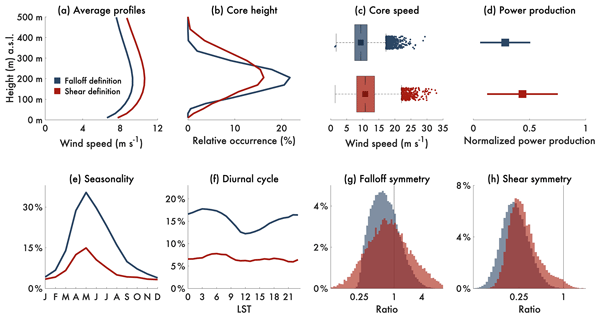
Christoffer Hallgren, Jeanie A. Aird, Stefan Ivanell, Heiner Körnich, Rebecca J. Barthelmie, Sara C. Pryor, and Erik Sahlée
Wind Energ. Sci., 8, 1651–1658, https://doi.org/10.5194/wes-8-1651-2023, https://doi.org/10.5194/wes-8-1651-2023, 2023
Short summary
Short summary
Low-level jets (LLJs) are special types of non-ideal wind profiles affecting both wind energy production and loads on a wind turbine. However, among LLJ researchers, there is no consensus regarding which definition to use to identify these profiles. In this work, we compare two different ways of identifying the LLJ – the falloff definition and the shear definition – and argue why the shear definition is better suited to wind energy applications.
Christoffer Hallgren, Heiner Körnich, Stefan Ivanell, Ville Vakkari, and Erik Sahlée
Wind Energ. Sci. Discuss., https://doi.org/10.5194/wes-2023-129, https://doi.org/10.5194/wes-2023-129, 2023
Preprint withdrawn
Short summary
Short summary
Sometimes, the wind changes direction between the bottom and top part of a wind turbine. This affects both the power production and the loads on the turbine. In this study, a climatology of pronounced changes in wind direction across the rotor is created, focusing on Scandinavia. The weather conditions responsible for these changes in wind direction are investigated and the climatology is compared to measurements from two coastal sites, indicating an underestimation by the climatology.
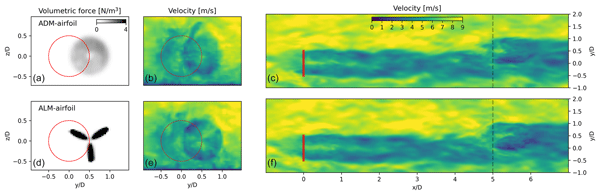
Gonzalo Pablo Navarro Diaz, Alejandro Daniel Otero, Henrik Asmuth, Jens Nørkær Sørensen, and Stefan Ivanell
Wind Energ. Sci., 8, 363–382, https://doi.org/10.5194/wes-8-363-2023, https://doi.org/10.5194/wes-8-363-2023, 2023
Short summary
Short summary
In this paper, the capacity to simulate transient wind turbine wake interaction problems using limited wind turbine data has been extended. The key novelty is the creation of two new variants of the actuator line technique in which the rotor blade forces are computed locally using generic load data. The analysis covers a partial wake interaction case between two wind turbines for a uniform laminar inflow and for a turbulent neutral atmospheric boundary layer inflow.
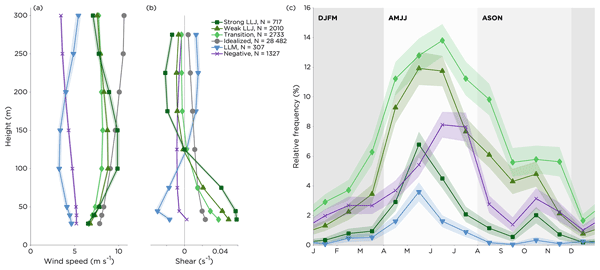
Christoffer Hallgren, Johan Arnqvist, Erik Nilsson, Stefan Ivanell, Metodija Shapkalijevski, August Thomasson, Heidi Pettersson, and Erik Sahlée
Wind Energ. Sci., 7, 1183–1207, https://doi.org/10.5194/wes-7-1183-2022, https://doi.org/10.5194/wes-7-1183-2022, 2022
Short summary
Short summary
Non-idealized wind profiles with negative shear in part of the profile (e.g., low-level jets) frequently occur in coastal environments and are important to take into consideration for offshore wind power. Using observations from a coastal site in the Baltic Sea, we analyze in which meteorological and sea state conditions these profiles occur and study how they alter the turbulence structure of the boundary layer compared to idealized profiles.
Hugo Olivares-Espinosa and Johan Arnqvist
Wind Energ. Sci., 11, 3213–3247, https://doi.org/10.5194/wes-11-3213-2026, https://doi.org/10.5194/wes-11-3213-2026, 2026
Short summary
Short summary
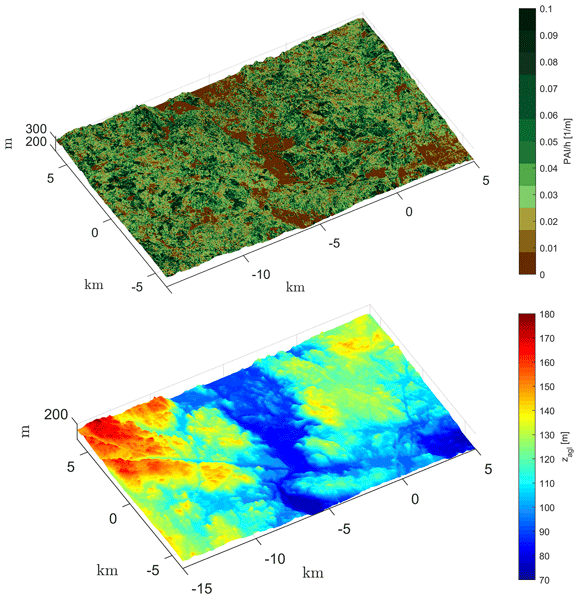
This work presents an investigation into varying modelling choices for large-eddy simulation over realistic forests. The focus is on how to represent the impact of upstream forest cover on wind statistics. The work clearly demonstrates the advantage of using an explicit drag formulation together with forest density maps from airborne laser scans over using roughness length and displacement height, mainly because it leverages observable quantities and minimizes the impact uncertain choices.
Agnese Firpo, Søren Juhl Andersen, and Giacomo Persico
Wind Energ. Sci. Discuss., https://doi.org/10.5194/wes-2026-141, https://doi.org/10.5194/wes-2026-141, 2026
Preprint under review for WES
Short summary
Short summary
Floating offshore wind turbines move with the waves, affecting wake dynamics and influencing the performance of downstream turbines. This study proposes a numerical framework to investigate the wake dynamics of a full-scale floating wind turbine. Results show that the frequency of platform motion affects wake dynamics, while the time mean wake remains largely unchanged. This work contributes to understanding floating wind turbine wakes and supports the development of efficient numerical models.
James Bleeg and Christiane Montavon
Wind Energ. Sci., 11, 2695–2721, https://doi.org/10.5194/wes-11-2695-2026, https://doi.org/10.5194/wes-11-2695-2026, 2026
Short summary
Short summary
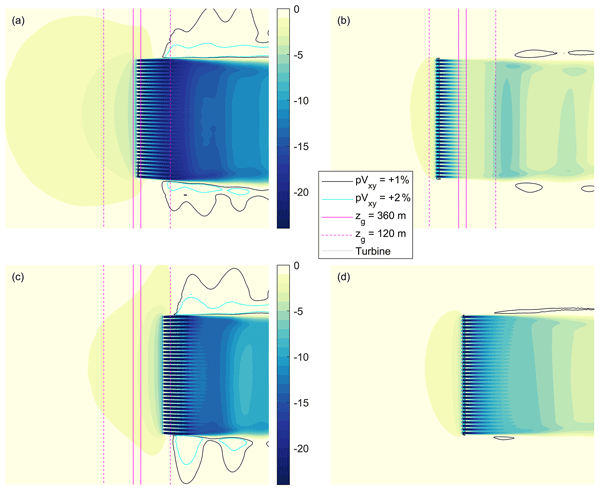
Numerical simulations of 35 different combinations of terrain, wind farm layout, and atmospheric conditions indicate that terrain (i.e., ground elevation variation) can significantly influence wind farm flows and in turn energy extraction efficiency. An analysis of the simulation results identifies the main drivers behind these terrain effects. These influences should be accounted for when estimating the energy yield of a planned wind farm – at least for wind farms similar to those in this study.
Clemens Paul Zengler, Mac Gaunaa, and Niels Troldborg
Wind Energ. Sci., 11, 2601–2619, https://doi.org/10.5194/wes-11-2601-2026, https://doi.org/10.5194/wes-11-2601-2026, 2026
Short summary
Short summary
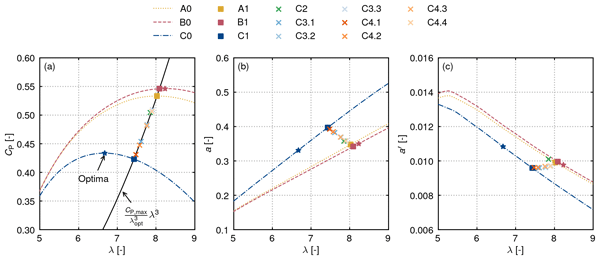
When wind turbines operate in conditions which they were not designed for, e.g., complex terrain, they might show unexpected performance variations. Complex-terrain flow physics, such as streamwise flow acceleration, alter maximum performance. It is asked whether this also affects steady-state turbine control. We show that rotor-torque-based control strategies can lead to suboptimal control in these conditions, but the effect of the background flow on performance is larger.
Henry Korb, Henrik Asmuth, Martin Schönherr, Martin Geier, and Stefan Ivanell
Wind Energ. Sci., 11, 2567–2583, https://doi.org/10.5194/wes-11-2567-2026, https://doi.org/10.5194/wes-11-2567-2026, 2026
Short summary
Short summary
This study presents a new way to simulate the wind in the lower atmosphere while taking into account the changes in temperature. The model is much faster than previous models while having the same level of accuracy. This study is a step toward making highly accurate software to predict the output of wind farms fast enough for use in the wind industry, ultimately making electricity from wind energy cheaper and more reliable.
Emily Louise Hodgson and Søren Juhl Andersen
Wind Energ. Sci., 11, 2173–2190, https://doi.org/10.5194/wes-11-2173-2026, https://doi.org/10.5194/wes-11-2173-2026, 2026
Short summary
Short summary
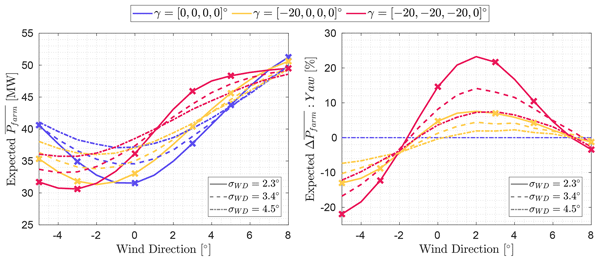
This work investigates the impact of wind direction uncertainty on wake steering, a promising flow-control strategy that aims to increase the efficiency of wind farms, using high-fidelity computational fluid dynamics. It concludes that wake steering is sensitive to both bias and uncertainty in inflow wind direction due to having a relatively small range over which gains are predicted and showing significant decreases in peak power output with increasing wind direction uncertainty.
Øyvind Waage Hanssen-Bauer, Paula Doubrawa, Helge A. Madsen, Henrik Asmuth, Jason Jonkman, Gunner C. Larsen, Stefan Ivanell, and Roy Stenbro
Wind Energ. Sci., 11, 1913–1948, https://doi.org/10.5194/wes-11-1913-2026, https://doi.org/10.5194/wes-11-1913-2026, 2026
Short summary
Short summary
We studied how different industry-oriented computer models predict the behavior of winds behind turbines in a wind farm. These
wakesreduce energy output and can affect turbines further down the row. By comparing these three models with more detailed simulations, we found they agree well on overall power but differ in how they capture turbulence and wear on machines. Our results show where the models need improvement to make wind farm computer models more accurate and reliable in the future.
Julia Steiner, Emily Louise Hodgson, Maarten Paul van der Laan, Leonardo Alcayaga, Mads Pedersen, Søren Juhl Andersen, Gunner Larsen, and Pierre-Elouan Réthoré
Wind Energ. Sci., 11, 1679–1703, https://doi.org/10.5194/wes-11-1679-2026, https://doi.org/10.5194/wes-11-1679-2026, 2026
Short summary
Short summary
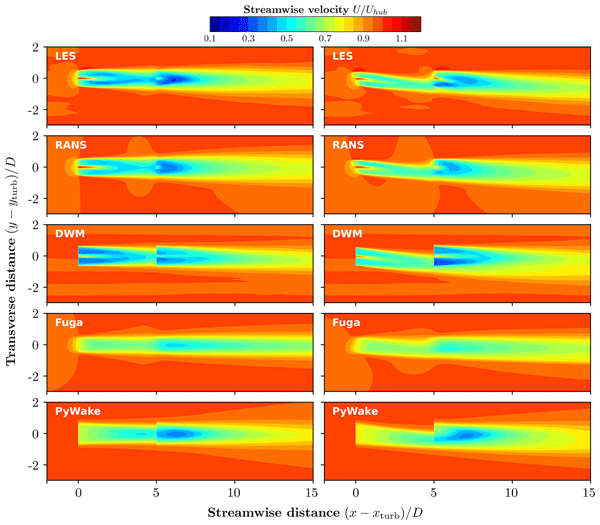
Wake steering is a promising strategy for wind farm optimization, but its success hinges on accurate wake models. We assess models of varying fidelity for a 22 MW reference turbine, comparing single- and two-turbine cases against large-eddy simulations. All models reproduced qualitative trends for power and loads (if applicable), but quantitative agreement varied, and in general the error increased with increasing yaw angle.
Esperanza Soto Sagredo, Søren Juhl Andersen, Ásta Hannesdóttir, and Jennifer Marie Rinker
Wind Energ. Sci., 11, 1705–1731, https://doi.org/10.5194/wes-11-1705-2026, https://doi.org/10.5194/wes-11-1705-2026, 2026
Short summary
Short summary
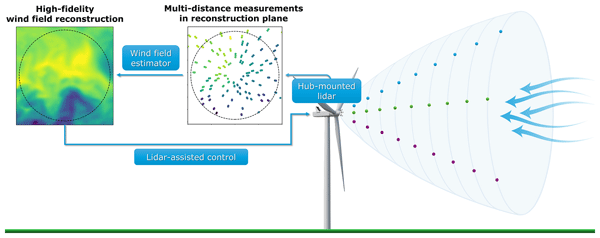
Large wind turbines are highly sensitive to changing winds, yet current measurements miss important details. This study compares three methods to reconstruct the full wind field ahead of a turbine in real time using lidar data and simulations. The results show these approaches can capture detailed inflow structures, which could help turbines anticipate wind changes, improve control strategies, and reduce structural loads.
Frederik Aerts, Koen Devesse, and Johan Meyers
Wind Energ. Sci., 11, 1205–1225, https://doi.org/10.5194/wes-11-1205-2026, https://doi.org/10.5194/wes-11-1205-2026, 2026
Short summary
Short summary
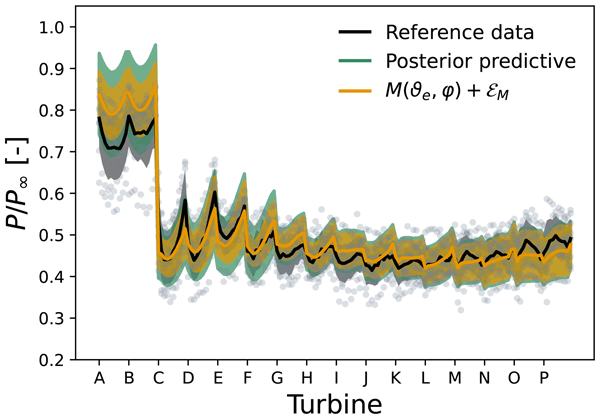
This paper presents an improved Bayesian uncertainty quantification framework for calibrating and comparing wind farm flow models. It quantifies the parameter uncertainty in a joint posterior distribution as well as the model uncertainty. Applied to a large-eddy simulation dataset for wind farm blockage, it compares a standard wake model and an atmospheric perturbation model, showing the latter yields lower model uncertainty. The framework is available in the open-source Python package UMBRA (Uncertainty Modeling toolbox for Bayesian data Re-Analysis).
Marinos Manolesos, Sandrine Aubrun, Christian Bak, Paolo Bettini, Filippo Campagnolo, Alessandro Croce, Arslan Salim Dar, Michael Hölling, Stefan Ivanell, Konstantinos Kellaris, Miguel Alfonso Mendez, Pierluigi Montinari, Franz Mühle, George Papadakis, Fernardo Porté-Agel, Daniele Ragni, Sebastiano Randino, Andrea Sciacchitano, Lorenzo Schena, Gerard Schepers, Antonio Segalini, Wei Yu, and Carlo Luigi Bottasso
Wind Energ. Sci. Discuss., https://doi.org/10.5194/wes-2026-51, https://doi.org/10.5194/wes-2026-51, 2026
Manuscript not accepted for further review
Short summary
Short summary
As wind turbines grow to unprecedented sizes, ensuring their reliability requires advanced testing. We reviewed the current state of wind tunnel experiments, examining how scaled physical models are evaluated for wind flow, flexibility, and noise. We conclude that while laboratory testing remains essential, it is most powerful when integrated with computer simulations and real-world data. This combined approach will ultimately drive the design of more efficient and sustainable wind energy.
Olivier Ndindayino and Johan Meyers
Wind Energ. Sci. Discuss., https://doi.org/10.5194/wes-2026-49, https://doi.org/10.5194/wes-2026-49, 2026
Preprint under review for WES
Short summary
Short summary
Numerical simulations were used to reveal how convective boundary layers impacts large offshore wind farms. The research shows that the enhanced turbulence helps wind speeds recover faster between turbines, increasing power production. However, even in deep boundary layers, flow blockage remains a significant impact on farm efficiency.
Henry Korb, Jean Bastin, Henrik Asmuth, and Stefan Ivanell
Wind Energ. Sci., 11, 983–1012, https://doi.org/10.5194/wes-11-983-2026, https://doi.org/10.5194/wes-11-983-2026, 2026
Short summary
Short summary
The lattice Boltzmann method (LBM) is a new method for very fast and accurate wind farm flow simulations. However, information on this method is scattered, and recent developments are unknown among the wind energy community. This review structures the different aspects of the method and answers common questions about it for wind energy researchers. We find that many of the building blocks for a wind farm simulation tool are present and that the LBM is accurate and efficient.
Koen Devesse and Johan Meyers
Wind Energ. Sci. Discuss., https://doi.org/10.5194/wes-2026-14, https://doi.org/10.5194/wes-2026-14, 2026
Revised manuscript under review for WES
Short summary
Short summary
Large offshore wind farms can perturb the atmosphere as a whole, causing the wind upstream of the farm to slow down before reaching the first turbines. However, the models that can simulate this blockage effect are much more costly than the wake models used in the industry. This paper combines two different modeling approaches, scale separation and atmospheric perturbation models, to produce fast models that can predict blockage effects on farm power output at a low cost.
Nanako Sasanuma, Akihiro Honda, Christian Bak, Niels Troldborg, Mac Gaunaa, Morten Nielsen, and Teruhisa Shimada
Wind Energ. Sci., 11, 265–284, https://doi.org/10.5194/wes-11-265-2026, https://doi.org/10.5194/wes-11-265-2026, 2026
Short summary
Short summary
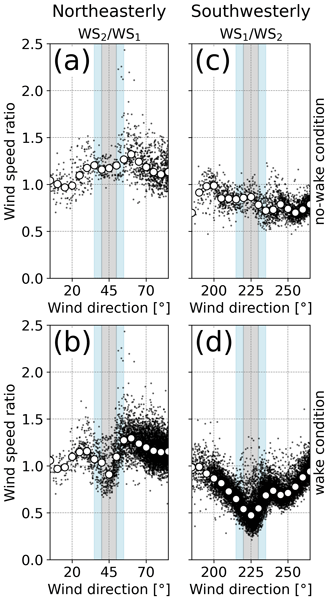
We verify wake effects between two wind turbines in complex terrain using supervisory control and data acquisition data. By identifying “wake conditions” and “no-wake conditions” detected by the blade pitch angle of upstream wind turbines, we evaluate wake effects on wind speed ratio, turbulent intensity, and power output. Results show that flow downhill has a significant impact on wake effects compared to flow uphill. The method shows the potential of SCADA data during the downtime of wind turbines.
Stefan Ivanell, Bjarke T. Olsen, Antoine Mathieu, Cristina Mulet-Benzo, Abdul Haseeb Syed, Warit Chanprasert, Mikael Sjöholm, Jakob Mann, and Julia Gottschall
Wind Energ. Sci. Discuss., https://doi.org/10.5194/wes-2025-286, https://doi.org/10.5194/wes-2025-286, 2026
Preprint under review for WES
Short summary
Short summary
Modern GW-scale offshore wind farms face challenges from atmospheric dynamics. This study examines how boundary layer height (BLH) and large-scale turbulence affect efficiency and loads. Using WRF simulations, lidar data, and CFD modeling for a 100-turbine, 15 MW wind farm at three representative sites, we show that low BLH reduces performance. Turbulence-induced low-frequency fluctuations increase fatigue loads, underscoring the need to include BLH and turbulence in design models.
Olivier Ndindayino, Augustin Puel, and Johan Meyers
Wind Energ. Sci., 10, 2079–2098, https://doi.org/10.5194/wes-10-2079-2025, https://doi.org/10.5194/wes-10-2079-2025, 2025
Short summary
Short summary
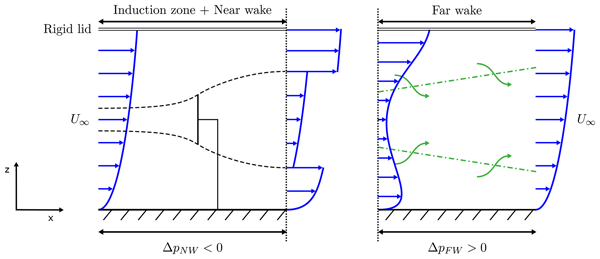
We study how flow blockage improves wind-farm efficiency using large-eddy simulations and develop an analytical model to better predict turbine power under blockage. We find that blockage enhances turbine power and thrust by creating a favourable pressure drop across the row, reducing near-wake deficit while inducing an unfavourable pressure increase downstream, which has minimal direct impact on far-wake development.
Clemens Paul Zengler, Niels Troldborg, and Mac Gaunaa
Wind Energ. Sci., 10, 1485–1497, https://doi.org/10.5194/wes-10-1485-2025, https://doi.org/10.5194/wes-10-1485-2025, 2025
Short summary
Short summary
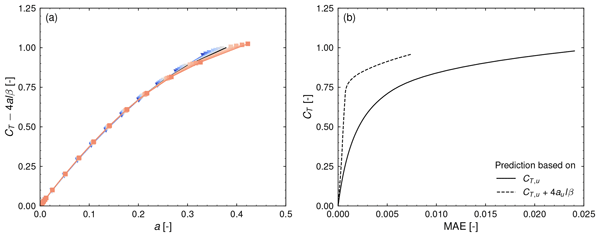
Wind turbine power performance is mostly calculated based on the wind speed measured at the turbine position. The presented results imply that it is necessary to also assess how the undisturbed wind speed changes in the flow direction to accurately predict the power performance. In other words, the acceleration of the flow is relevant for the energy production. An outcome of this work is a simple model that can be used to include flow acceleration in power performance predictions.
Jens Peter Karolus Wenceslaus Frankemölle, Johan Camps, Pieter De Meutter, and Johan Meyers
Geosci. Model Dev., 18, 1989–2003, https://doi.org/10.5194/gmd-18-1989-2025, https://doi.org/10.5194/gmd-18-1989-2025, 2025
Short summary
Short summary
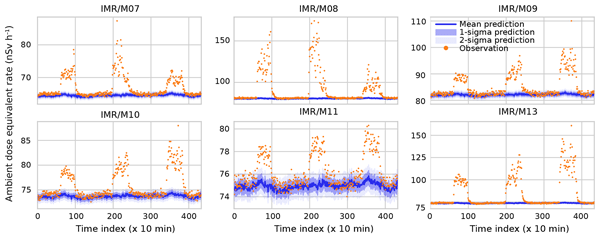
To detect anomalous radioactivity in the environment, it is paramount that we understand the natural background level. In this work, we propose a statistical model to describe the most likely background level and the associated uncertainty in a network of dose rate detectors. We train, verify, and validate the model using real environmental data. Using the model, we show that we can correctly predict the background level in a subset of the detector network during a known
anomalous event.
Théo Delvaux and Johan Meyers
Wind Energ. Sci., 10, 613–630, https://doi.org/10.5194/wes-10-613-2025, https://doi.org/10.5194/wes-10-613-2025, 2025
Short summary
Short summary
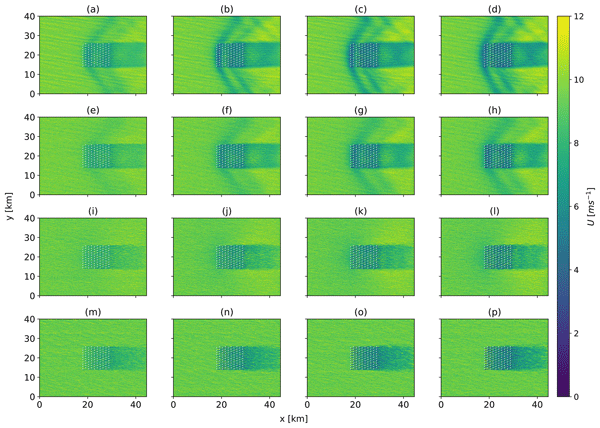
The work explores the potential for wind farm load reduction and power maximization. We carried out a series of high-fidelity large-eddy simulations for a wide range of atmospheric conditions and operating regimes. Because of turbine-scale interactions and large-scale effects, we observed that maximum power extraction is achieved at regimes lower than the Betz operating point. Thus, we proposed three simple approaches with which thrust significantly decreases with only a limited impact on power.
Juan Felipe Céspedes Moreno, Juan Pablo Murcia León, and Søren Juhl Andersen
Wind Energ. Sci., 10, 597–611, https://doi.org/10.5194/wes-10-597-2025, https://doi.org/10.5194/wes-10-597-2025, 2025
Short summary
Short summary
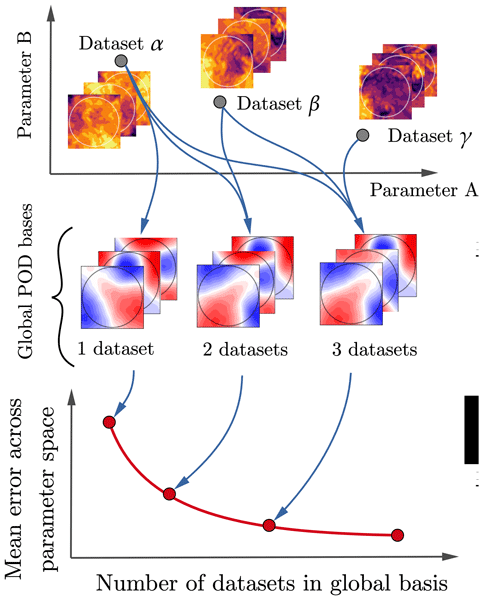
Using a global base in a proper orthogonal decomposition provides a common base for analyzing flows, such as wind turbine wakes, across an entire parameter space. This can be used to compare flows with different conditions using the same physical interpretation. This work shows the convergence of the global base, its small error compared to the truncation error in the flow reconstruction, and the insensitivity to which datasets are included for generating the global base.
Antoine Mathieu, Yeulwoo Kim, Tian-Jian Hsu, Cyrille Bonamy, and Julien Chauchat
Geosci. Model Dev., 18, 1561–1573, https://doi.org/10.5194/gmd-18-1561-2025, https://doi.org/10.5194/gmd-18-1561-2025, 2025
Short summary
Short summary
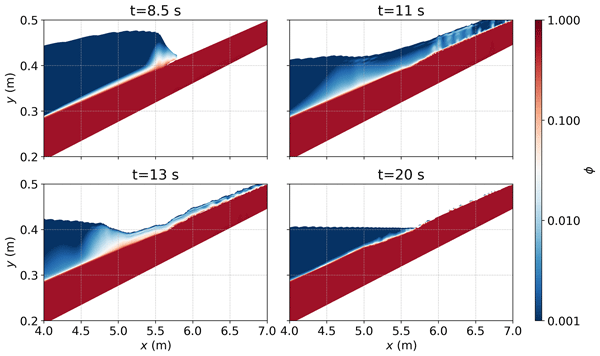
Most of the tools available to model sediment transport do not account for complex physical mechanisms such as surface-wave-driven processes. In this study, a new model, sedInterFoam, allows us to reproduce numerically complex configurations in order to investigate coastal sediment transport applications dominated by surface waves and to gain insight into the complex physical processes associated with breaking waves and morphodynamics.
Andrew Kirby, Takafumi Nishino, Luca Lanzilao, Thomas D. Dunstan, and Johan Meyers
Wind Energ. Sci., 10, 435–450, https://doi.org/10.5194/wes-10-435-2025, https://doi.org/10.5194/wes-10-435-2025, 2025
Short summary
Short summary
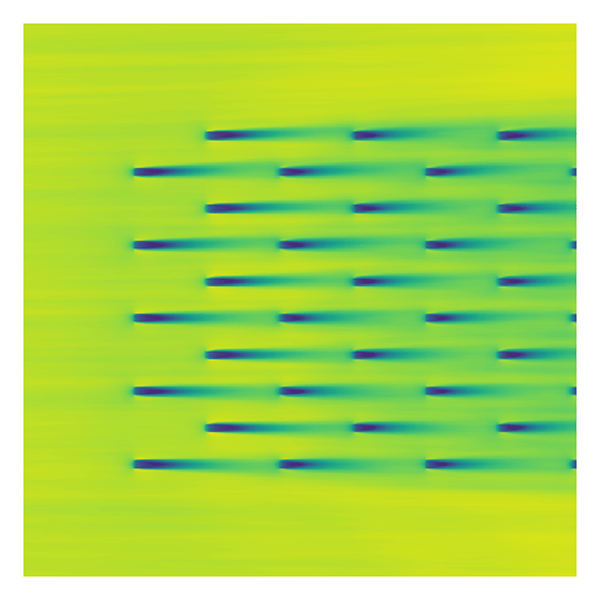
Traditionally, the aerodynamic loss of wind farm efficiency is classified into wake loss and farm blockage loss. This study, using high-fidelity simulations, shows that neither of these two losses is well correlated with the overall farm efficiency. We propose new measures called turbine-scale efficiency and farm-scale efficiency to better describe turbine–wake effects and farm–atmosphere interactions. This study suggests the importance of better modelling farm-scale loss in future studies.

Majid Bastankhah, Marcus Becker, Matthew Churchfield, Caroline Draxl, Jay Prakash Goit, Mehtab Khan, Luis A. Martinez Tossas, Johan Meyers, Patrick Moriarty, Wim Munters, Asim Önder, Sara Porchetta, Eliot Quon, Ishaan Sood, Nicole van Lipzig, Jan-Willem van Wingerden, Paul Veers, and Simon Watson
Wind Energ. Sci., 9, 2171–2174, https://doi.org/10.5194/wes-9-2171-2024, https://doi.org/10.5194/wes-9-2171-2024, 2024
Short summary
Short summary
Dries Allaerts was born on 19 May 1989 and passed away at his home in Wezemaal, Belgium, on 10 October 2024 after battling cancer. Dries started his wind energy career in 2012 and had a profound impact afterward on the community, in terms of both his scientific realizations and his many friendships and collaborations in the field. His scientific acumen, open spirit of collaboration, positive attitude towards life, and playful and often cheeky sense of humor will be deeply missed by many.
Jérôme Neirynck, Jonas Van de Walle, Ruben Borgers, Sebastiaan Jamaer, Johan Meyers, Ad Stoffelen, and Nicole P. M. van Lipzig
Wind Energ. Sci., 9, 1695–1711, https://doi.org/10.5194/wes-9-1695-2024, https://doi.org/10.5194/wes-9-1695-2024, 2024
Short summary
Short summary
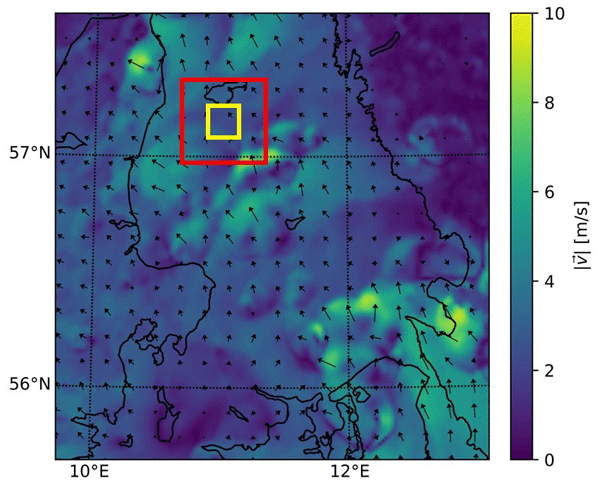
In our study, we assess how mesoscale weather systems influence wind speed variations and their impact on offshore wind energy production fluctuations. We have observed, for instance, that weather systems originating over land lead to sea wind speed variations. Additionally, we noted that power fluctuations are typically more significant in summer, despite potentially larger winter wind speed variations. These findings are valuable for grid management and optimizing renewable energy deployment.
Mohammad Mehdi Mohammadi, Hugo Olivares-Espinosa, Gonzalo Pablo Navarro Diaz, and Stefan Ivanell
Wind Energ. Sci., 9, 1305–1321, https://doi.org/10.5194/wes-9-1305-2024, https://doi.org/10.5194/wes-9-1305-2024, 2024
Short summary
Short summary
This paper has put forward a set of recommendations regarding the actuator sector model implementation details to improve the capability of the model to reproduce similar results compared to those obtained by an actuator line model, which is one of the most common ways used for numerical simulations of wind farms, while providing significant computational savings. This includes among others the velocity sampling method and a correction of the sampled velocities to calculate the blade forces.
Christoffer Hallgren, Jeanie A. Aird, Stefan Ivanell, Heiner Körnich, Ville Vakkari, Rebecca J. Barthelmie, Sara C. Pryor, and Erik Sahlée
Wind Energ. Sci., 9, 821–840, https://doi.org/10.5194/wes-9-821-2024, https://doi.org/10.5194/wes-9-821-2024, 2024
Short summary
Short summary
Knowing the wind speed across the rotor of a wind turbine is key in making good predictions of the power production. However, models struggle to capture both the speed and the shape of the wind profile. Using machine learning methods based on the model data, we show that the predictions can be improved drastically. The work focuses on three coastal sites, spread over the Northern Hemisphere (the Baltic Sea, the North Sea, and the US Atlantic coast) with similar results for all sites.
Ruben Borgers, Marieke Dirksen, Ine L. Wijnant, Andrew Stepek, Ad Stoffelen, Naveed Akhtar, Jérôme Neirynck, Jonas Van de Walle, Johan Meyers, and Nicole P. M. van Lipzig
Wind Energ. Sci., 9, 697–719, https://doi.org/10.5194/wes-9-697-2024, https://doi.org/10.5194/wes-9-697-2024, 2024
Short summary
Short summary
Wind farms at sea are becoming more densely clustered, which means that next to individual wind turbines interfering with each other in a single wind farm also interference between wind farms becomes important. Using a climate model, this study shows that the efficiency of wind farm clusters and the interference between the wind farms in the cluster depend strongly on the properties of the individual wind farms and are also highly sensitive to the spacing between the wind farms.
Nick Janssens and Johan Meyers
Wind Energ. Sci., 9, 65–95, https://doi.org/10.5194/wes-9-65-2024, https://doi.org/10.5194/wes-9-65-2024, 2024
Short summary
Short summary
Proper wind farm control may vastly contribute to Europe's plan to go carbon neutral. However, current strategies don't account for turbine–wake interactions affecting power extraction. High-fidelity models (e.g., LES) are needed to accurately model this but are considered too slow in practice. By coarsening the resolution, we were able to design an efficient LES-based controller with real-time potential. This may allow us to bridge the gap towards practical wind farm control in the near future.
Alessandro Sebastiani, James Bleeg, and Alfredo Peña
Wind Energ. Sci., 8, 1795–1808, https://doi.org/10.5194/wes-8-1795-2023, https://doi.org/10.5194/wes-8-1795-2023, 2023
Short summary
Short summary
The power curve of a wind turbine indicates the turbine power output in relation to the wind speed. Therefore, power curves are critically important to estimate the production of future wind farms as well as to assess whether operating wind farms are functioning correctly. Since power curves are often measured in wind farms, they might be affected by the interactions between the turbines. We show that these effects are not negligible and present a method to correct for them.
Christoffer Hallgren, Jeanie A. Aird, Stefan Ivanell, Heiner Körnich, Rebecca J. Barthelmie, Sara C. Pryor, and Erik Sahlée
Wind Energ. Sci., 8, 1651–1658, https://doi.org/10.5194/wes-8-1651-2023, https://doi.org/10.5194/wes-8-1651-2023, 2023
Short summary
Short summary
Low-level jets (LLJs) are special types of non-ideal wind profiles affecting both wind energy production and loads on a wind turbine. However, among LLJ researchers, there is no consensus regarding which definition to use to identify these profiles. In this work, we compare two different ways of identifying the LLJ – the falloff definition and the shear definition – and argue why the shear definition is better suited to wind energy applications.
Christoffer Hallgren, Heiner Körnich, Stefan Ivanell, Ville Vakkari, and Erik Sahlée
Wind Energ. Sci. Discuss., https://doi.org/10.5194/wes-2023-129, https://doi.org/10.5194/wes-2023-129, 2023
Preprint withdrawn
Short summary
Short summary
Sometimes, the wind changes direction between the bottom and top part of a wind turbine. This affects both the power production and the loads on the turbine. In this study, a climatology of pronounced changes in wind direction across the rotor is created, focusing on Scandinavia. The weather conditions responsible for these changes in wind direction are investigated and the climatology is compared to measurements from two coastal sites, indicating an underestimation by the climatology.
Fabien Souillé, Cédric Goeury, and Rem-Sophia Mouradi
The Cryosphere, 17, 1645–1674, https://doi.org/10.5194/tc-17-1645-2023, https://doi.org/10.5194/tc-17-1645-2023, 2023
Short summary
Short summary
Models that can predict temperature and ice crystal formation (frazil) in water are important for river and coastal engineering. Indeed, frazil has direct impact on submerged structures and often precedes the formation of ice cover. In this paper, an uncertainty analysis of two mathematical models that simulate supercooling and frazil is carried out within a probabilistic framework. The presented methodology offers new insight into the models and their parameterization.

Mac Gaunaa, Niels Troldborg, and Emmanuel Branlard
Wind Energ. Sci., 8, 503–513, https://doi.org/10.5194/wes-8-503-2023, https://doi.org/10.5194/wes-8-503-2023, 2023
Short summary
Short summary
We present an analytical vortex model. Despite its simplicity, the model is fully consistent with 1D momentum theory. It shows that the flow through a non-uniformly loaded rotor operating in non-uniform inflow behaves locally as predicted by 1D momentum theory. As a consequence, the local power coefficient (based on local inflow) of an ideal rotor is unaltered by the presence of shear. Finally, the model shows that there is no cross-shear deflection of the wake of a rotor in sheared inflow.
Gonzalo Pablo Navarro Diaz, Alejandro Daniel Otero, Henrik Asmuth, Jens Nørkær Sørensen, and Stefan Ivanell
Wind Energ. Sci., 8, 363–382, https://doi.org/10.5194/wes-8-363-2023, https://doi.org/10.5194/wes-8-363-2023, 2023
Short summary
Short summary
In this paper, the capacity to simulate transient wind turbine wake interaction problems using limited wind turbine data has been extended. The key novelty is the creation of two new variants of the actuator line technique in which the rotor blade forces are computed locally using generic load data. The analysis covers a partial wake interaction case between two wind turbines for a uniform laminar inflow and for a turbulent neutral atmospheric boundary layer inflow.
Paul Veers, Katherine Dykes, Sukanta Basu, Alessandro Bianchini, Andrew Clifton, Peter Green, Hannele Holttinen, Lena Kitzing, Branko Kosovic, Julie K. Lundquist, Johan Meyers, Mark O'Malley, William J. Shaw, and Bethany Straw
Wind Energ. Sci., 7, 2491–2496, https://doi.org/10.5194/wes-7-2491-2022, https://doi.org/10.5194/wes-7-2491-2022, 2022
Short summary
Short summary
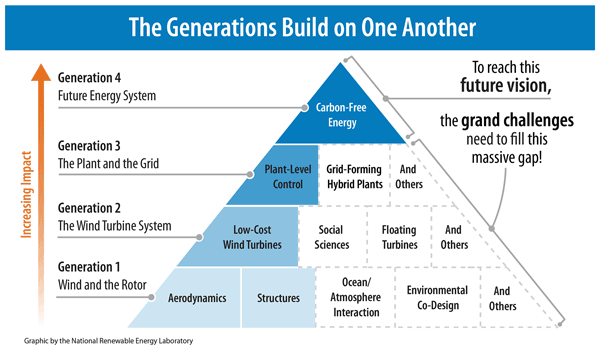
Wind energy will play a central role in the transition of our energy system to a carbon-free future. However, many underlying scientific issues remain to be resolved before wind can be deployed in the locations and applications needed for such large-scale ambitions. The Grand Challenges are the gaps in the science left behind during the rapid growth of wind energy. This article explains the breadth of the unfinished business and introduces 10 articles that detail the research needs.
Ishaan Sood, Elliot Simon, Athanasios Vitsas, Bart Blockmans, Gunner C. Larsen, and Johan Meyers
Wind Energ. Sci., 7, 2469–2489, https://doi.org/10.5194/wes-7-2469-2022, https://doi.org/10.5194/wes-7-2469-2022, 2022
Short summary
Short summary
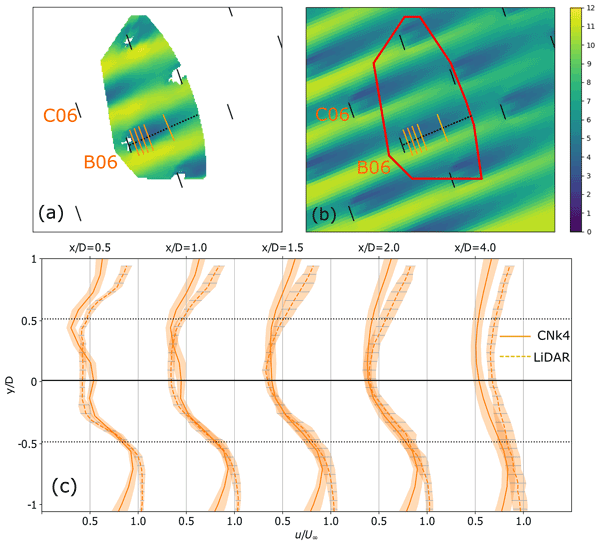
In this work, we conduct a validation study to compare a numerical solver against measurements obtained from the offshore Lillgrund wind farm. By reusing a previously developed inflow turbulent dataset, the atmospheric conditions at the wind farm were recreated, and the general performance trends of the turbines were captured well. The work increases the reliability of numerical wind farm solvers while highlighting the challenges of accurately representing large wind farms using such solvers.
Johan Meyers, Carlo Bottasso, Katherine Dykes, Paul Fleming, Pieter Gebraad, Gregor Giebel, Tuhfe Göçmen, and Jan-Willem van Wingerden
Wind Energ. Sci., 7, 2271–2306, https://doi.org/10.5194/wes-7-2271-2022, https://doi.org/10.5194/wes-7-2271-2022, 2022
Short summary
Short summary
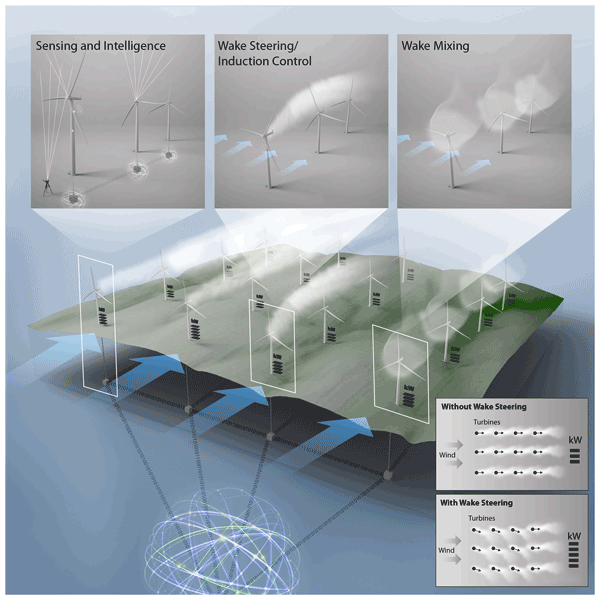
We provide a comprehensive overview of the state of the art and the outstanding challenges in wind farm flow control, thus identifying the key research areas that could further enable commercial uptake and success. To this end, we have structured the discussion on challenges and opportunities into four main areas: (1) insight into control flow physics, (2) algorithms and AI, (3) validation and industry implementation, and (4) integrating control with system design
(co-design).
Konstanze Kölle, Tuhfe Göçmen, Irene Eguinoa, Leonardo Andrés Alcayaga Román, Maria Aparicio-Sanchez, Ju Feng, Johan Meyers, Vasilis Pettas, and Ishaan Sood
Wind Energ. Sci., 7, 2181–2200, https://doi.org/10.5194/wes-7-2181-2022, https://doi.org/10.5194/wes-7-2181-2022, 2022
Short summary
Short summary
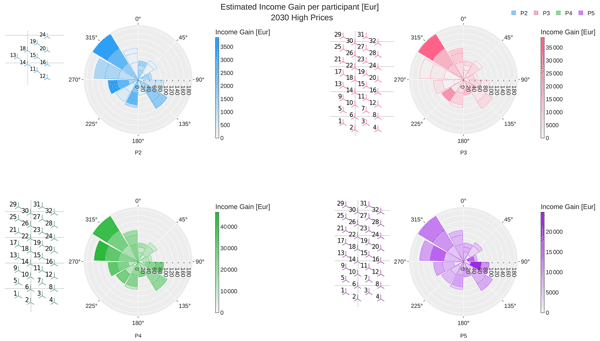
The paper studies wind farm flow control (WFFC) in simulations with variable electricity prices. The results indicate that considering the electricity price in the operational strategy can be beneficial with respect to the gained income compared to focusing on the power gain only. Moreover, revenue maximization by balancing power production and structural load reduction is demonstrated at the example of a single wind turbine.
Søren Juhl Andersen and Juan Pablo Murcia Leon
Wind Energ. Sci., 7, 2117–2133, https://doi.org/10.5194/wes-7-2117-2022, https://doi.org/10.5194/wes-7-2117-2022, 2022
Short summary
Short summary
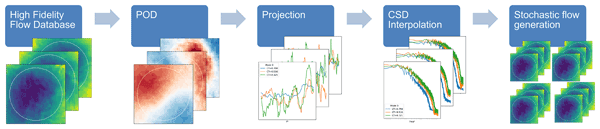
Simulating the turbulent flow inside large wind farms is inherently complex and computationally expensive. A new and fast model is developed based on data from high-fidelity simulations. The model captures the flow dynamics with correct statistics for a wide range of flow conditions. The model framework provides physical insights and presents a generalization of high-fidelity simulation results beyond the case-specific scenarios, which has significant potential for future turbulence modeling.
Tuhfe Göçmen, Filippo Campagnolo, Thomas Duc, Irene Eguinoa, Søren Juhl Andersen, Vlaho Petrović, Lejla Imširović, Robert Braunbehrens, Jaime Liew, Mads Baungaard, Maarten Paul van der Laan, Guowei Qian, Maria Aparicio-Sanchez, Rubén González-Lope, Vinit V. Dighe, Marcus Becker, Maarten J. van den Broek, Jan-Willem van Wingerden, Adam Stock, Matthew Cole, Renzo Ruisi, Ervin Bossanyi, Niklas Requate, Simon Strnad, Jonas Schmidt, Lukas Vollmer, Ishaan Sood, and Johan Meyers
Wind Energ. Sci., 7, 1791–1825, https://doi.org/10.5194/wes-7-1791-2022, https://doi.org/10.5194/wes-7-1791-2022, 2022
Short summary
Short summary
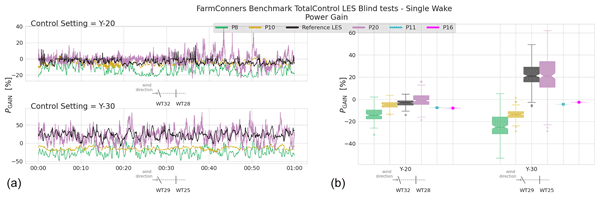
The FarmConners benchmark is the first of its kind to bring a wide variety of data sets, control settings, and model complexities for the (initial) assessment of wind farm flow control benefits. Here we present the first part of the benchmark results for three blind tests with large-scale rotors and 11 participating models in total, via direct power comparisons at the turbines as well as the observed or estimated power gain at the wind farm level under wake steering control strategy.
Niels Troldborg, Søren J. Andersen, Emily L. Hodgson, and Alexander Meyer Forsting
Wind Energ. Sci., 7, 1527–1532, https://doi.org/10.5194/wes-7-1527-2022, https://doi.org/10.5194/wes-7-1527-2022, 2022
Short summary
Short summary
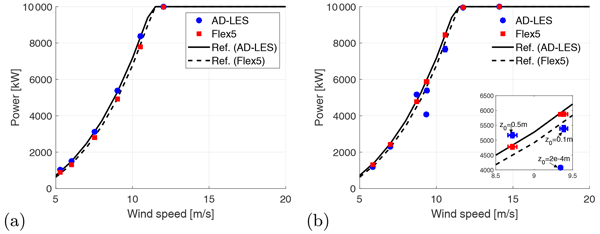
This article shows that the power performance of a wind turbine may be very different in flat and complex terrain. This is an important finding because it shows that the power output of a given wind turbine is governed by not only the available wind at the position of the turbine but also how the ambient flow develops in the region behind the turbine.

Koen Devesse, Luca Lanzilao, Sebastiaan Jamaer, Nicole van Lipzig, and Johan Meyers
Wind Energ. Sci., 7, 1367–1382, https://doi.org/10.5194/wes-7-1367-2022, https://doi.org/10.5194/wes-7-1367-2022, 2022
Short summary
Short summary
Recent research suggests that offshore wind farms might form such a large obstacle to the wind that it already decelerates before reaching the first turbines. Part of this phenomenon could be explained by gravity waves. Research on these gravity waves triggered by mountains and hills has found that variations in the atmospheric state with altitude can have a large effect on how they behave. This paper is the first to take the impact of those vertical variations into account for wind farms.
Christoffer Hallgren, Johan Arnqvist, Erik Nilsson, Stefan Ivanell, Metodija Shapkalijevski, August Thomasson, Heidi Pettersson, and Erik Sahlée
Wind Energ. Sci., 7, 1183–1207, https://doi.org/10.5194/wes-7-1183-2022, https://doi.org/10.5194/wes-7-1183-2022, 2022
Short summary
Short summary
Non-idealized wind profiles with negative shear in part of the profile (e.g., low-level jets) frequently occur in coastal environments and are important to take into consideration for offshore wind power. Using observations from a coastal site in the Baltic Sea, we analyze in which meteorological and sea state conditions these profiles occur and study how they alter the turbulence structure of the boundary layer compared to idealized profiles.
Thomas Haas, Jochem De Schutter, Moritz Diehl, and Johan Meyers
Wind Energ. Sci., 7, 1093–1135, https://doi.org/10.5194/wes-7-1093-2022, https://doi.org/10.5194/wes-7-1093-2022, 2022
Short summary
Short summary
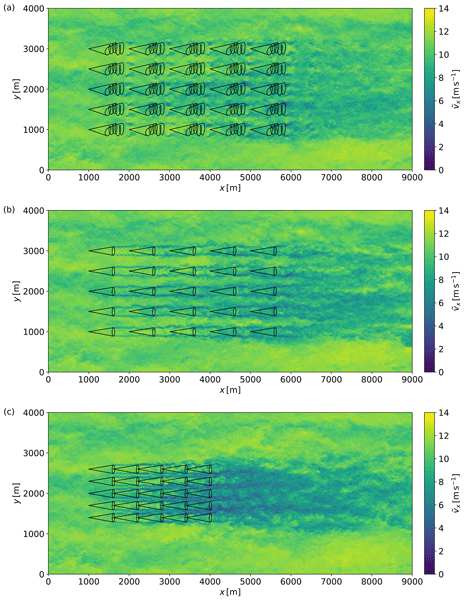
In this work, we study parks of large-scale airborne wind energy systems using a virtual flight simulator. The virtual flight simulator combines numerical techniques from flow simulation and kite control. Using advanced control algorithms, the systems can operate efficiently in the park despite turbulent flow conditions. For the three configurations considered in the study, we observe significant wake effects, reducing the power yield of the parks.
Alessandro Sebastiani, Alfredo Peña, Niels Troldborg, and Alexander Meyer Forsting
Wind Energ. Sci., 7, 875–886, https://doi.org/10.5194/wes-7-875-2022, https://doi.org/10.5194/wes-7-875-2022, 2022
Short summary
Short summary
The power performance of a wind turbine is often tested with the turbine standing in a row of several wind turbines, as it is assumed that the performance is not affected by the neighbouring turbines. We test this assumption with both simulations and measurements, and we show that the power performance can be either enhanced or lowered by the neighbouring wind turbines. Consequently, we also show how power performance testing might be biased when performed on a row of several wind turbines.
Cited articles
Abkar, M., Bae, H. J., and Moin, P.: Minimum-dissipation scalar transport model for large-eddy simulation of turbulent flows, Phys. Rev. Fluids, 1, 041701, https://doi.org/10.1103/PhysRevFluids.1.041701, 2016. a
Allaerts, D.: Large-eddy simulation of wind farms in conventionally neutral and stable atmospheric boundary layers, PhD thesis, KULeuven, Leuven, Belgium, 2016. a
Allaerts, D. and Meyers, J.: Large eddy simulation of a large wind-turbine array in a conventionally neutral atmospheric boundary layer, Physics of Fluids, 27, 065108, https://doi.org/10.1063/1.4922339, 2015. a
Allaerts, D. and Meyers, J.: Gravity waves and wind-farm efficiency in neutral and stable conditions, Boundary-Layer Meteorology, 166, 269–299, 2018b. a
Asmuth, H., Navarro Diaz, G. P., Madsen, H. A., Branlard, E., Meyer Forsting, A. R., Nilsson, K., Jonkman, J., and Ivanell, S.: Wind turbine response in waked inflow: A modelling benchmark against full-scale measurements, Renewable Energy, 191, 868–887, https://doi.org/10.1016/j.renene.2022.04.047, 2022. a
Bleeg, J. and Montavon, C.: Blockage effects in a single row of wind turbines, Journal of Physics: Conference Series, 2265, 022001, https://doi.org/10.1088/1742-6596/2265/2/022001, 2022. a
Bleeg, J., Purcell, M., Ruisi, R., and Traiger, E.: Wind Farm Blockage and the Consequences of Neglecting Its Impact on Energy Production, Energies, 11, https://doi.org/10.3390/en11061609, 2018. a, b
Calaf, M., Meneveau, C., and Meyers, J.: Large eddy simulation study of fully developed wind-turbine array boundary layers, Phys. Fluids, 22, 015110, https://doi.org/10.1063/1.3291077, 2010. a, b
Canuto, C., Hussaini, M. Y., Quarteroni, A., and Zang, T. A.: Spectral Methods in Fluid Dynamics, Springer-Verlag, Berlin, Germany, https://doi.org/10.1007/978-3-642-84108-8, 1988. a
Churchfield, M. J., Lee, S., Michalakes, J., and Moriarty, P. J.: A numerical study of the effects of atmospheric and wake turbulence on wind turbine dynamics, Journal of Turbulence, 13, N14, https://doi.org/10.1080/14685248.2012.668191, 2012. a, b
Deardorff, J. W.: Stratocumulus-capped mixed layers derived from a three-dimensional model, Boundary-Layer Meteorology, 18, 495–527, 1980. a
Delport, S.: Optimal control of a turbulent mixing layer, PhD thesis, KULeuven, Leuven, Belgium, 2010. a
Doubrawa, P., Quon, E. W., Martinez-Tossas, L. A., Shaler, K., Debnath, M., Hamilton, N., Herges, T. G., Maniaci, D., Kelley, C. L., Hsieh, A. S., Blaylock, M. L., van der Laan, P., Andersen, S. J., Krueger, S., Cathelain, M., Schlez, W., Jonkman, J., Branlard, E., Steinfeld, G., Schmidt, S., Blondel, F., Lukassen, L. J., and Moriarty, P.: Multimodel validation of single wakes in neutral and stratified atmospheric conditions, Wind Energy, 23, 2027–2055, https://doi.org/10.1002/we.2543, 2020. a
Fornberg, B.: A Practical Guide to Pseudospectral Methods, Cambridge Monographs on Applied and Computational Mathematics, Cambridge University Press, https://doi.org/10.1017/CBO9780511626357, 1996. a
Gaertner, E., Rinker, J., Sethuraman, L., Zahle, F., Anderson, B., Barter, G., Abbas, N., Meng, F., Bortolotti, P., Skrzypinski, W., Scott, G., Feil, R., Bredmose, H., Dykes, K., Sheilds, M., Allen, C., and Viselli, A.: Definition of the IEA 15-Megawatt Offshore Reference Wind Turbine, Tech. rep., International Energy Agency, https://www.nrel.gov/docs/fy20osti/75698.pdf (last access: 10 February 2026), 2020. a
Guimet, V. and Laurence, D.: A linearised turbulent production in the k-ε model for engineering applications, Proceedings of the 5th International Symposium on Engineering Turbulence Modelling and Measurements, 157–166, https://doi.org/10.1016/B978-008044114-6/50014-4, 2002. a
Hodgson, E. L., Grinderslev, C., Meyer Forsting, A. R., Troldborg, N., Sørensen, N. N., Sørensen, J. N., and Andersen, S. J.: Validation of Aeroelastic Actuator Line for Wind Turbine Modelling in Complex Flows, Frontiers in Energy Research, 10, 1–20, 2022. a
Hodgson, E. L., Souaiby, M., Troldborg, N., Porté-Agel, F., and Andersen, S. J.: Cross-code verification of non-neutral ABL and single wind turbine wake modelling in LES, J. Phys. Conf. Ser., 2505, 012009, https://doi.org/10.1088/1742-6596/2505/1/012009, 2023. a
Khan, M. A., Watson, S. J., Allaerts, D. J. N., and Churchfield, M.: Recommendations on setup in simulating atmospheric gravity waves under conventionally neutral boundary layer conditions, Journal of Physics: Conference Series, 2767, 092042, https://doi.org/10.1088/1742-6596/2767/9/092042, 2024. a
Klemp, J. B. and Lilly, D. K.: Numerical simulations of hydrostatic mountain waves, Journal of the atmospheric sciences, 35, 78–107, https://doi.org/10.1175/1520-0469(1978)035<0078:NSOHMW>2.0.CO;2, 1977. a
Lanzilao, L. and Meyers, J.: Effects of self-induced gravity waves on finite wind-farm operations using a large-eddy simulation framework, Journal of Physics: Conference Series, 2265, 022043, https://doi.org/10.1088/1742-6596/2265/2/022043, 2022. a, b, c, d
Larsen, T. J. and Hansen, A. M.: How 2 HAWC2, the user's manual, Risø-R-1597, 2007. a
Mason, P. J. and Thomson, D. J.: Stochastic backscatter in large-eddy simulations of boundary layers, Journal of Fluid Mechanics, 242, 51–78, https://doi.org/10.1017/S0022112092002271, 1992. a
Meyer Forsting, A. R., Navarro Diaz, G. P., Segalini, A., Andersen, S. J., and Ivanell, S.: On the accuracy of predicting wind-farm blockage, Renewable Energy, 214, 114–129, https://doi.org/10.1016/j.renene.2023.05.129, 2023. a
Meyers, J. and Meneveau, C.: Large eddy simulations of large wind-turbine arrays in the atmospheric boundary layer, in: 48th AIAA aerospace sciences meeting including the new horizons forum and aerospace exposition, p. 827, https://doi.org/10.2514/6.2010-827, 2010. a
Meyers, J. and Sagaut, P.: Is plane-channel flow a friendly case for the testing of large-eddy simulation subgrid-scale models?, Physics of Fluids, 19, https://doi.org/10.1063/1.2722422, 048105, 2007. a
Michelsen, J. A.: Basis 3D – A Platform for Development of Multiblock PDE Solvers, Tech. rep., Danmarks Tekniske Universitet, DTU report: AFM 94-05, 1992. a
Michelsen, J. A.: Block structured Multigrid solution of 2D and 3D elliptic PDE's, Tech. Rep. Technical University of Denmark AFM 94-06, 1994. a
Mikkelsen, R.: Actuator Disc Methods Applied to Wind Turbines, PhD thesis, DTU report, 2004. a
Porté-Agel, F., Bastankhah, M., and Shamsoddin, S.: Wind-turbine and wind-farm flows: a review, Boundary-Layer Meteorology, 174, 1–59, 2020. a
Rampanelli, G. and Zardi, D.: A Method to Determine the Capping Inversion of the Convective Boundary Layer, Journal of Applied Meteorology, 43, 925–933, https://doi.org/10.1175/1520-0450(2004)043<0925:AMTDTC>2.0.CO;2, 2004. a
Sanchez Gomez, M., Lundquist, J. K., Mirocha, J. D., and Arthur, R. S.: Investigating the physical mechanisms that modify wind plant blockage in stable boundary layers, Wind Energ. Sci., 8, 1049–1069, https://doi.org/10.5194/wes-8-1049-2023, 2023. a
Sescu, A. and Meneveau, C.: A control algorithm for statistically stationary large-eddy simulations of thermally stratified boundary layers: A Control Algorithm for LES of Thermally Stratified Boundary Layers, Quarterly Journal of the Royal Meteorological Society, 140, 2017–2022, https://doi.org/10.1002/qj.2266, 2014. a
Shen, W. Z., Michelsen, J. A., Sørensen, N. N., and Nørkær Sørensen, J.: An improved SIMPLEC method on collocated grids for steady and unsteady flow computations, Numerical Heat Transfer: Part B: Fundamentals, 43, 221–239, 2003. a
Smith, R. B.: Gravity wave effects on wind farm efficiency, Wind Energy, 13, 449–458, https://doi.org/10.1002/we.366, 2010. a, b
Sørensen, J. N., Mikkelsen, R. F., Henningson, D. S., Ivanell, S., Sarmast, S., and Andersen, S. J.: Simulation of wind turbine wakes using the actuator line technique, Phil. Trans. R. Soc. A, 373, 20140071, https://doi.org/10.1098/rsta.2014.0071, 2015. a
Sørensen, N. N.: General Purpose Flow Solver Applied to Flow over Hills, PhD thesis, Technical University of Denmark, 1995. a
Stevens, B., Moeng, C. H., and Sullivan, P. P.: Entrainment and subgrid length scales in large-eddy simulations of atmospheric boundary-layer flows, Symposium on Developments in Geophysical Turbulence, 58, 253–269, 2000. a
Stipa, S., Ahmed Khan, M., Allaerts, D., and Brinkerhoff, J.: A large-eddy simulation (LES) model for wind-farm-induced atmospheric gravity wave effects inside conventionally neutral boundary layers, Wind Energ. Sci., 9, 1647–1668, https://doi.org/10.5194/wes-9-1647-2024, 2024. a
Stull, R. B.: An Introduction to Boundary Layer Meteorology, vol. 13 of Atmospheric and Oceanographic Sciences Library, Kluwer Academic Publishers, ISBN 90-277-2768-6, 1988. a
Sørensen, J. N. and Shen, W. Z.: Numerical modeling of wind turbine wakes, Journal of Fluids Engineering, Transactions of the Asme, 124, 393–399, https://doi.org/10.1115/1.1471361, 2002. a
Troldborg, N. and Andersen, S. J.: Sensitivity of Lillgrund Wind Farm Power Performance to Turbine Controller, Journal of Physics: Conference Series, 2505, 012025, https://doi.org/10.1088/1742-6596/2505/1/012025, 2023. a, b, c
van der Laan, M. P., Sørensen, N. N., Réthoré, P.-E., Mann, J., Kelly, M. C., Troldborg, N., Hansen, K. S., and Murcia, J. P.: The k-ε-fP model applied to wind farms, Wind Energy, 18, 2065–2084, https://doi.org/10.1002/we.1804, 2015. a
Veers, P., Dykes, K., Lantz, E., Barth, S., Bottasso, C. L., Carlson, O., Clifton, A., Green, J., Green, P., Holttinen, H., Laird, D., Lehtomäki, V., Lundquist, J. K., Manwell, J., Marquis, M., Meneveau, C., Moriarty, P., Munduate, X., Muskulus, M., Naughton, J., Pao, L., Paquette, J., Peinke, J., Robertson, A., Rodrigo, J. S., Sempreviva, A. M., Smith, J. C., Tuohy, A., and Wiser, R.: Grand challenges in the science of wind energy, Science, 366, eaau2027, https://doi.org/10.1126/science.aau2027, 2019. a
Verstappen, R. W. C. P. and Veldman, A. E. P.: Symmetry-preserving discretization of turbulent flow, Journal of Computational Physics, 187, 343–368, https://doi.org/10.1016/S0021-9991(03)00126-8, 2003. a
Wit, L. and van Rhee, C.: Testing an Improved Artificial Viscosity Advection Scheme to Minimise Wiggles in Large Eddy Simulation of Buoyant Jet in Crossflow, Flow, Turbulence and Combustion, 92, https://doi.org/10.1007/s10494-013-9517-1, 2013. a
Wu, Y.-T. and Porté-Agel, F.: Large-eddy simulation of wind-turbine wakes: evaluation of turbine parametrisations, Boundary-Layer Meteorology, 138, 345–366, 2011. a
Zilitinkevich, S.: Velocity profiles, the resistance law and the dissipation rate of mean flow kinetic energy in a neutrally and stably stratified planetary boundary layer, Boundary-Layer Meteorology, 46, 367–387, 1989. a
Short summary
This study explores how the height of the atmosphere's boundary layer impacts wind farm performance, focusing on how this factor influences energy output. By simulating different boundary layer heights and conditions, this research reveals that deeper layers promote better energy recovery. The findings highlight the importance of considering atmospheric conditions when simulating wind farms to maximize energy efficiency, offering valuable insights for the wind energy industry.
This study explores how the height of the atmosphere's boundary layer impacts wind farm...


Altmetrics
Final-revised paper
Preprint