
Articles | Volume 11, issue 6
https://doi.org/10.5194/wes-11-2103-2026
© Author(s) 2026. This work is distributed under
the Creative Commons Attribution 4.0 License.
the Creative Commons Attribution 4.0 License.
https://doi.org/10.5194/wes-11-2103-2026
© Author(s) 2026. This work is distributed under
the Creative Commons Attribution 4.0 License.
the Creative Commons Attribution 4.0 License.
Review article
| 
18 Jun 2026
Review article |
| 18 Jun 2026
| 18 Jun 2026
Condition monitoring of wind turbine drivetrains: state-of-the-art technologies, recent trends, and future outlook

Department of Applied Mechanics, Vrije Universiteit Brussel, Pleinlaan 2, 1050 Brussels, Belgium
Offshore Wind Infrastructure Lab, Vrije Universiteit Brussel, Pleinlaan 2, 1050 Brussels, Belgium
Xavier Chesterman
Department of Applied Mechanics, Vrije Universiteit Brussel, Pleinlaan 2, 1050 Brussels, Belgium
Offshore Wind Infrastructure Lab, Vrije Universiteit Brussel, Pleinlaan 2, 1050 Brussels, Belgium
FlandersMake@VUB, Pleinlaan 2, 1050 Brussels, Belgium
Artificial Intelligence Lab, Vrije Universiteit Brussel, Pleinlaan 2, 1050 Brussels, Belgium
Donatella Zappalá
Faculty of Aerospace Engineering, Delft University of Technology, Kluyverweg 1, 2629 HS Delft, the Netherlands
Simon Watson
Faculty of Aerospace Engineering, Delft University of Technology, Kluyverweg 1, 2629 HS Delft, the Netherlands
Mingxin Li
Department of Electronic and Electrical Engineering, University of Strathclyde, Glasgow, United Kingdom
Edward Hart
Department of Electronic and Electrical Engineering, University of Strathclyde, Glasgow, United Kingdom
James Carroll
Department of Electronic and Electrical Engineering, University of Strathclyde, Glasgow, United Kingdom
Yolanda Vidal
Control, Data, and Artificial Intelligence, Department of Mathematics, Escola d'Enginyeria de Barcelona Est, Universitat Politècnica de Catalunya (UPC), Campus Diagonal-Besós, Eduard Maristany, 16, 08019 Barcelona, Spain
Institute of Mathematics (IMTech) Universitat Politècnica de Catalunya (UPC), Barcelona 08028, Spain
Amir R. Nejad
Department of Marine Technology, Norwegian University of Science and Technology, 7491, Trondheim, Norway
Shawn Sheng
National Wind Technology Center, National Laboratory of the Rockies, Golden, Colorado, USA
DTU Wind and Energy Systems, Wind Energy Materials and Components Division, Frederiksborgvej 399, 4000 Roskilde, Denmark
Matthias Stammler
DTU Wind and Energy Systems, Wind Energy Materials and Components Division, Frederiksborgvej 399, 4000 Roskilde, Denmark
Fraunhofer IWES, Large Bearing Laboratory, Am Schleusengraben 22, 21029 Hamburg, Germany
Florian Wirsing
Senlytics GmbH, Jülicher Straße 209 q/s, 52070 Aachen, Germany
Ahmed Saleh
Institute for Machine Elements and Systems Engineering, RWTH Aachen University, Schinkelstraße 10, 52062 Aachen, Germany
Nico Gregarek
Institute for Machine Elements and Systems Engineering, RWTH Aachen University, Schinkelstraße 10, 52062 Aachen, Germany
Thao Baszenski
Institute for Machine Elements and Systems Engineering, RWTH Aachen University, Schinkelstraße 10, 52062 Aachen, Germany
Thomas Decker
Center for Wind Power Drives, RWTH Aachen University, Campus-Boulevard 61, 52074 Aachen, Germany
Martin Knops
Center for Wind Power Drives, RWTH Aachen University, Campus-Boulevard 61, 52074 Aachen, Germany
Georg Jacobs
Institute for Machine Elements and Systems Engineering, RWTH Aachen University, Schinkelstraße 10, 52062 Aachen, Germany
Center for Wind Power Drives, RWTH Aachen University, Campus-Boulevard 61, 52074 Aachen, Germany
Benjamin Lehmann
Institute for Machine Elements and Systems Engineering, RWTH Aachen University, Schinkelstraße 10, 52062 Aachen, Germany
Florian König
Soete Laboratory, Ghent University, Technologiepark 46, 9052 Ghent, Belgium
Ines Pereira
Department of Applied Mechanics, Vrije Universiteit Brussel, Pleinlaan 2, 1050 Brussels, Belgium
Offshore Wind Infrastructure Lab, Vrije Universiteit Brussel, Pleinlaan 2, 1050 Brussels, Belgium
Pieter-Jan Daems
Department of Applied Mechanics, Vrije Universiteit Brussel, Pleinlaan 2, 1050 Brussels, Belgium
Offshore Wind Infrastructure Lab, Vrije Universiteit Brussel, Pleinlaan 2, 1050 Brussels, Belgium
Cédric Peeters
Department of Applied Mechanics, Vrije Universiteit Brussel, Pleinlaan 2, 1050 Brussels, Belgium
Offshore Wind Infrastructure Lab, Vrije Universiteit Brussel, Pleinlaan 2, 1050 Brussels, Belgium
FlandersMake@VUB, Pleinlaan 2, 1050 Brussels, Belgium
Jan Helsen
Department of Applied Mechanics, Vrije Universiteit Brussel, Pleinlaan 2, 1050 Brussels, Belgium
Offshore Wind Infrastructure Lab, Vrije Universiteit Brussel, Pleinlaan 2, 1050 Brussels, Belgium
FlandersMake@VUB, Pleinlaan 2, 1050 Brussels, Belgium
Related authors
Jakob Gebel, Ashkan Rezaei, Adithya Vemuri, Veronica Liverud Krathe, Pieter-Jan Daems, Jens Jo Matthys, Jonathan Sterckx, Konstantinos Vratsinis, Kayacan Kestel, Amir R. Nejad, and Jan Helsen
Wind Energ. Sci. Discuss., https://doi.org/10.5194/wes-2024-173, https://doi.org/10.5194/wes-2024-173, 2025
Preprint under review for WES
Short summary
Short summary
A simulation model of a deployed offshore wind turbine was developed using real-world measurement data. The method shows how to obtain, update and validate a simulation model and allows to improve the efficiency and longevity of offshore wind turbines and support operation and maintenance decisions. Simulations were conducted to analyze the effects of turbulence and wind patterns on turbine lifespan, providing insights to improve maintenance planning and reduce operational costs.
Rebeca Marini, Konstantinos Vratsinis, Kayacan Kestel, Jonathan Sterckx, Jens Matthys, Pieter-Jan Daems, Timothy Verstraeten, and Jan Helsen
Wind Energ. Sci. Discuss., https://doi.org/10.5194/wes-2025-9, https://doi.org/10.5194/wes-2025-9, 2025
Revised manuscript not accepted
Short summary
Short summary
This work evaluated the wind profile in a Belgian offshore zone. The estimated wind profile was made using measurements that allow for reconstruction at heights along the rotor area. The IEC standard defines these profiles as a 1/7th power law, which is proven not to occur 100 % of the time. It is also possible to infer that there will be differences when using different wind profiles for load assessment, as more realistic profiles can lead to a better assessment of the wind turbine's lifetime.
Dachuan Feng, Wen Zhang, Minping Wan, and Simon J. Watson
Wind Energ. Sci. Discuss., https://doi.org/10.5194/wes-2026-184, https://doi.org/10.5194/wes-2026-184, 2026
Preprint under review for WES
Short summary
Short summary
Wind turbines operate in air whose behaviour changes through the day: calm, layered air at night gives way to vigorous mixing after sunrise. Using computer simulations driven by measurements from a wind farm in Oklahoma, we tracked how the turbulent wake behind a turbine evolves during this morning transition. The wake changes character within hours, from one regular swaying motion to many irregular ones, altering power output. Power forecasts and controls should reflect these shifts.
Maarten Paul van der Laan and Simon Watson
Wind Energ. Sci., 11, 3763–3774, https://doi.org/10.5194/wes-11-3763-2026, https://doi.org/10.5194/wes-11-3763-2026, 2026
Short summary
Short summary
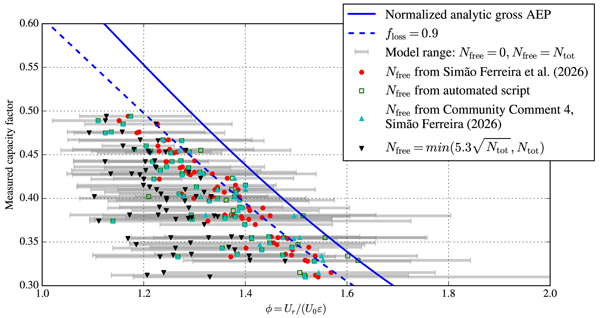
A theoretical limit for the energy extraction of offshore wind farms has been suggested by Simão Ferreira et al. (2026) based on a simple model of an infinite wind farm and an ad hoc method to correct the model for application to finite wind farms. In this work, we discuss a number of concerns and we conclude that the limit proposed in Simão Ferreira et al. (2026) is not a theoretical limit but rather a limit supported by the non-reproducible finite wind farm correction.
Dustin Frings, Georg Jacobs, Thorsten Reichartz, Thora Potthoff, Lucas Blickwedel, and Martin Knops
Wind Energ. Sci., 11, 3509–3529, https://doi.org/10.5194/wes-11-3509-2026, https://doi.org/10.5194/wes-11-3509-2026, 2026
Short summary
Short summary
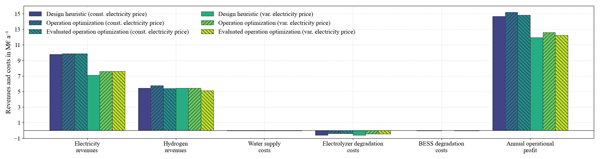
This research developed an optimal design model for hydrogen and battery equipment for a wind farm in northwest Germany. By accounting for equipment aging and part-load efficiency of a polymer electrolyte membrane electrolyzer, the tool provides a realistic economic assessment. Results show that neglecting these effects leads to a significant overestimation of profits. This method offers developers a reliable way to plan renewable hydrogen systems and ensures secure investment decisions.
Patrick Erik Marcel De Smet, Georg Jacobs, Dustin Frings, Leon Schenke, Stefan Witter, Thorsten Reichartz, and Martin Knops
Wind Energ. Sci. Discuss., https://doi.org/10.5194/wes-2026-130, https://doi.org/10.5194/wes-2026-130, 2026
Preprint under review for WES
Short summary
Short summary
To accurately assess and optimize a wind farm's cost to produce energy over its entire lifetime in the planning phase, we integrate the effects from blade fatigue using a new design approach that considers both energy production and turbine lifetime. The method identifies wind farm layouts that reduce hidden costs caused by uneven loading on blades. Results show that lifetime-aware optimization can lower long-term costs without reducing energy output.

Sarah Barber, Shun Wang, Francesc Pozo, Yolanda Vidal, Marcela Rodrigues Machado, Amanda Aryda Silva Rodrigues de Sousa, Jefferson da Silva Coelho, Xukai Zhang, Yao-Teng Hu, Arash Noshadravan, Theodoros Varouxis, Mahmoud Abdelhak, Ramin Ghiasi, and Abdollah Malekjafarian
Wind Energ. Sci., 11, 2801–2816, https://doi.org/10.5194/wes-11-2801-2026, https://doi.org/10.5194/wes-11-2801-2026, 2026
Short summary
Short summary
WeDoWind is an open innovation ecosystem for enabling data sharing and alignment in the wind energy sector. In this work, a feasibility study of WeDoWind is presented, considering different technical, economic, legal, operational and scheduling aspects. The results showed strong governance, clear regulation, and promising scalability potential, but further progress is required to make it financially sustainable and to ensure adoption of the results in the sector.
Diederik van Binsbergen, Pieter-Jan Daems, Timothy Verstraeten, Konstantinos Vratsinis, Amir Nejad, and Jan Helsen
Wind Energ. Sci. Discuss., https://doi.org/10.5194/wes-2026-120, https://doi.org/10.5194/wes-2026-120, 2026
Revised manuscript has not been submitted
Short summary
Short summary
A key challenge for offshore wind farms is to quantify wakes reliably from turbine measurements. This study develops a statistical approach that learns from measured turbine data how these wakes vary between wind farms and transfers that knowledge to new sites with quantified uncertainty. It also assesses how atmospheric conditions affect wake recovery. The results show that stable conditions lead to slower recovery and larger predicted losses, while unstable conditions support faster recovery.
Rebeca Marini, Konstantinos Vratsinis, Pieter-Jan Daems, Timothy Verstraeten, Etienne Cheynet, and Jan Helsen
Wind Energ. Sci. Discuss., https://doi.org/10.5194/wes-2026-117, https://doi.org/10.5194/wes-2026-117, 2026
Preprint under review for WES
Short summary
Short summary
We studied which environmental conditions affect the power produced by a single wind turbine without interference from nearby turbines. Using measured turbine and weather data together with machine learning, we found that the difference between air and sea temperature has a meaningful influence but is not included in commonly used power corrections. This could improve power predictions and wind resource assessments, and the method can be extended to larger groups of turbines.
Faras Jamil, Cedric Peeters, and Jan Helsen
Wind Energ. Sci. Discuss., https://doi.org/10.5194/wes-2026-83, https://doi.org/10.5194/wes-2026-83, 2026
Revised manuscript under review for WES
Short summary
Short summary
Maintenance costs are a major challenge for the wind energy industry. This research introduces an automated artificial intelligence method to monitor drivetrain health. A model trained on healthy data analyses vibration patterns to identify deviations signalling potential faults. It is validated on offshore farms and has detected all 19 confirmed fault cases. It provides a single health indicator to help operators plan efficient maintenance strategies, reducing the Levelised Cost of Energy.
Vasudev Gupta and Amir R. Nejad
Wind Energ. Sci. Discuss., https://doi.org/10.5194/wes-2026-105, https://doi.org/10.5194/wes-2026-105, 2026
Preprint under review for WES
Short summary
Short summary
This study improves how wind turbine drivetrains are designed by linking structural behavior with long-term critical fatigue effects. By optimizing the main bearing-shaft assembly, for minimum mass, it is shown that design choices strongly affect efficiency and durability. Results reveal that some configurations are limited by ultimate, while others are limited by fatigue, highlighting the need to consider both in novel designs to build lighter and more reliable wind turbines.
Felix C. Mehlan and Amir R. Nejad
Wind Energ. Sci. Discuss., https://doi.org/10.5194/wes-2026-90, https://doi.org/10.5194/wes-2026-90, 2026
Revised manuscript accepted for WES
Short summary
Short summary
This study presents a new open-access framework for designing offshore wind turbine drivetrains. The method automatically explores different gearbox layouts and component sizes to find lighter and more efficient designs while satisfying engineering safety requirements. Applied to a 15 megawatt offshore wind turbine, the optimized drivetrain achieved a 31.5 % lower mass than a direct-drive reference design while maintaining similar efficiency.
Konstantinos Vratsinis, Rebeca Marini, Pieter-Jan Daems, Lukas Pauscher, Jeroen van Beeck, and Jan Helsen
Wind Energ. Sci., 11, 1803–1820, https://doi.org/10.5194/wes-11-1803-2026, https://doi.org/10.5194/wes-11-1803-2026, 2026
Short summary
Short summary
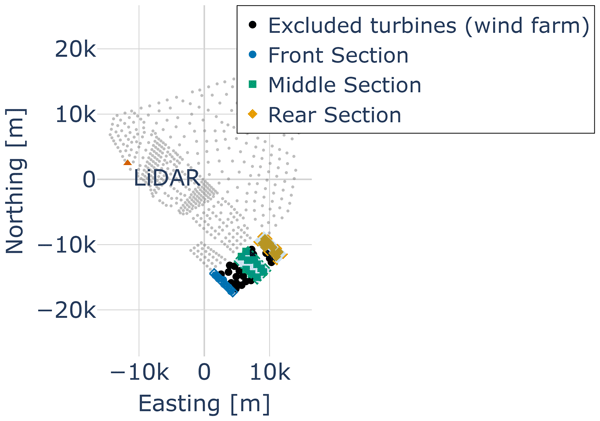
Using data collected over 13 months at an offshore wind farm, our study shows that a wind turbine’s position within the farm influences its energy output at a given nacelle-measured wind speed. Front-row turbines respond differently to similar wind speeds and turbulence than those further back. This finding suggests that current methods for characterizing inflow conditions may not fully capture actual wind behavior, underscoring the need for improved performance analysis techniques.
Matthias Stammler, Faras Jamil, Xinrun Liu, Jens Jo Matthys, Nikhil Sudhakaran, Cédric Peeters, Asger Bech Abrahamsen, and Jan Helsen
Wind Energ. Sci. Discuss., https://doi.org/10.5194/wes-2026-81, https://doi.org/10.5194/wes-2026-81, 2026
Revised manuscript under review for WES
Short summary
Short summary
This study compares traditional and artificial intelligence supported methods for detecting damage in rotating machine parts. Bearings were tested under controlled conditions to see how well each method identified developing problems. The artificial intelligence supported method detected damage as early as, or earlier than, established techniques while needing far less expert attention. This supports automated monitoring of wind turbines, enabling earlier maintenance and lower operating costs.
Mehtab Ahmed Khan, Matthew J. Churchfield, and Simon J. Watson
Wind Energ. Sci., 11, 1631–1652, https://doi.org/10.5194/wes-11-1631-2026, https://doi.org/10.5194/wes-11-1631-2026, 2026
Short summary
Short summary
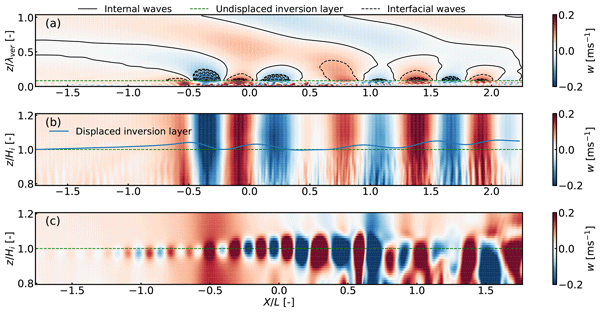
This large-eddy simulation study identifies a realistic set-up for modeling wind-farm–atmosphere interactions, validates a method that minimizes non-physical gravity waves, and examines how real gravity waves and wind farm performance depend on non-dimensional parameters defining atmospheric stability and farm geometry. The results show how realistic and accurate modeling are critical to performance prediction.
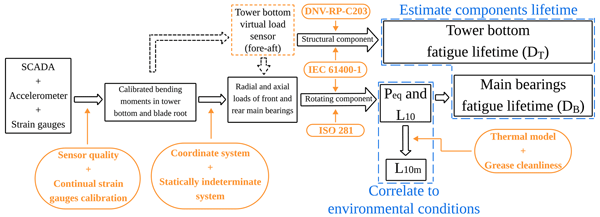
Bruno Rodrigues Faria, Nikolay Dimitrov, Nikhil Sudhakaran, Matthias Stammler, Athanasios Kolios, W. Dheelibun Remigius, Xiaodong Zhang, and Asger Bech Abrahamsen
Wind Energ. Sci., 11, 1583–1606, https://doi.org/10.5194/wes-11-1583-2026, https://doi.org/10.5194/wes-11-1583-2026, 2026
Short summary
Short summary
This study presents continuous lifetime assessments of wind turbine structural (tower) and rotating components (main bearings) over nearly a decade, combining controller data, calibrated load measurements, and a virtual load sensor at the tower bottom. The components' estimated lifetimes exceeded the design lifetime. Contrary to expectations, lower turbulence intensity at rated wind speed increased fatigue loads of the locating main bearing due to turbulence averaging.
Ali Eftekhari Milani, Donatella Zappalá, Shawn Sheng, and Simon Watson
Wind Energ. Sci. Discuss., https://doi.org/10.5194/wes-2026-36, https://doi.org/10.5194/wes-2026-36, 2026
Preprint under review for WES
Short summary
Short summary
This paper proposes a probabilistic method for predicting the Remaining Useful Life of wind turbine components. The method effectively addresses the high noise and volatile operating conditions in field SCADA datasets, accurately quantifies forecast uncertainty without distributional assumptions, and guarantees the validity and robustness of the predicted intervals. This method decisively outperforms existing approaches when applied to a real SCADA dataset containing gearbox bearing failures.
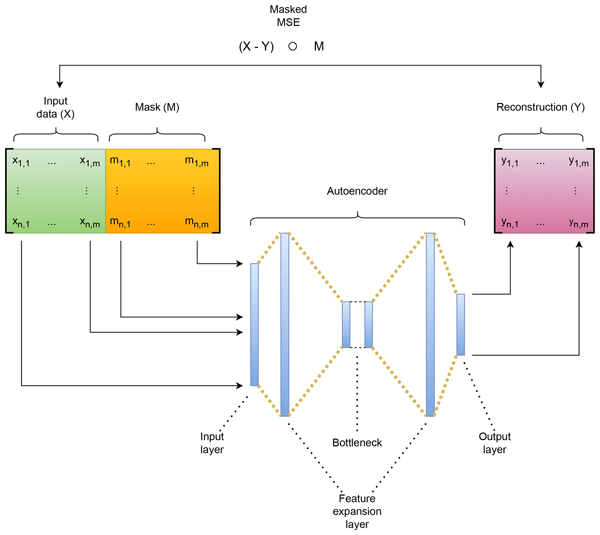
Xavier Chesterman, Ann Nowé, and Jan Helsen
Wind Energ. Sci., 11, 1163–1183, https://doi.org/10.5194/wes-11-1163-2026, https://doi.org/10.5194/wes-11-1163-2026, 2026
Short summary
Short summary
This paper presents a sensor-error-robust methodology for failure prediction in wind turbines. Sensor malfunctions pose a significant challenge for data-driven prognostic approaches. The proposed method employs a masked autoencoder that enables selective deactivation of signals. Evaluation is done using data from several operational offshore wind farms. Results demonstrate that the model effectively mitigates the impact of sensor errors while maintaining high accuracy in failure prediction.
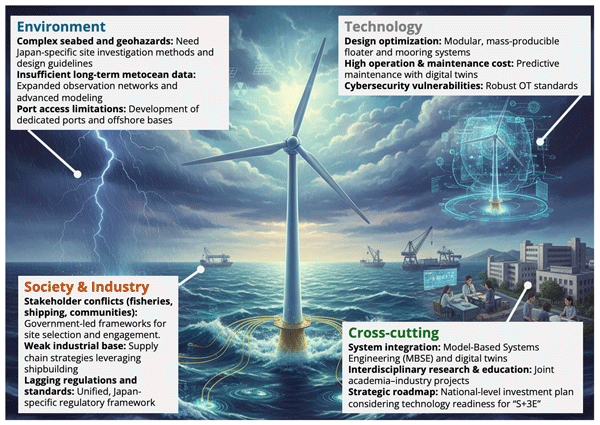
Ryota Wada, Amir R. Nejad, Kazuhiro Iijima, Junji Shimazaki, Mihaela Ibrion, Shinnosuke Wanaka, Hideo Nomura, Yoshitaka Mizushima, Takuya Nakashima, and Ken Takagi
Wind Energ. Sci., 11, 1013–1056, https://doi.org/10.5194/wes-11-1013-2026, https://doi.org/10.5194/wes-11-1013-2026, 2026
Short summary
Short summary
This paper identifies technology gaps on the path to achieving sustainable development of floating offshore wind in Japan. The key challenges, with an emphasis on unique conditions such as earthquakes and tropical cyclones, are addressed. In Japan, the absence of oil and gas has led to social challenges, like a lack of supply chain, infrastructure, and human resources at offshore wind sites. Site selection, design and operation, industry development, and contribution to the national energy policy (S + 3E) are studied.
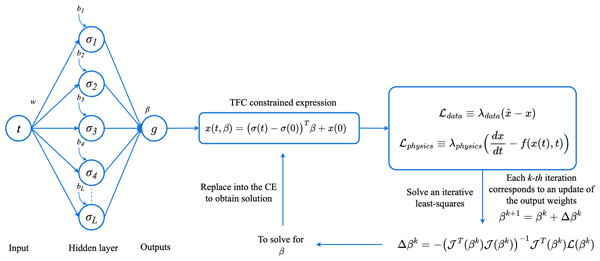
Mario De Florio, Gabriel Appleby, Jonathan Keller, Ali Eftekhari Milani, Donatella Zappalá, and Shawn Sheng
Wind Energ. Sci., 11, 737–752, https://doi.org/10.5194/wes-11-737-2026, https://doi.org/10.5194/wes-11-737-2026, 2026
Short summary
Short summary
We developed a new method to predict when wind turbine parts are likely to fail, allowing maintenance to be planned before costly breakdowns occur. By combining real measurements from turbines with knowledge of how cracks grow in metal, our approach gives more reliable forecasts even when only limited data are available. We also measure how confident the predictions are, helping operators make better decisions. This can reduce downtime and lower the cost of wind energy.

Branko Kosović, Sukanta Basu, Jacob Berg, Larry K. Berg, Sue E. Haupt, Xiaoli G. Larsén, Joachim Peinke, Richard J. A. M. Stevens, Paul Veers, and Simon Watson
Wind Energ. Sci., 11, 509–555, https://doi.org/10.5194/wes-11-509-2026, https://doi.org/10.5194/wes-11-509-2026, 2026
Short summary
Short summary
Most human activity happens in the layer of the atmosphere which extends a few hundred meters to a couple of kilometers above the surface of the Earth. The flow in this layer is turbulent. Turbulence impacts wind power production and turbine lifespan. Optimizing wind turbine performance requires understanding how turbulence affects both wind turbine efficiency and reliability. This paper points to gaps in our knowledge that need to be addressed to effectively utilize wind resources.
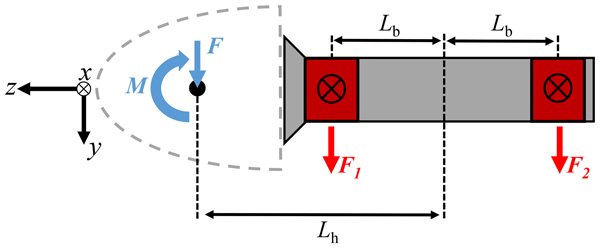
Julian Quick, Edward Hart, Marcus Binder Nilsen, Rasmus Sode Lund, Jaime Liew, Piinshin Huang, Pierre-Elouan Rethore, Jonathan Keller, Wooyong Song, and Yi Guo
Wind Energ. Sci., 11, 493–507, https://doi.org/10.5194/wes-11-493-2026, https://doi.org/10.5194/wes-11-493-2026, 2026
Short summary
Short summary
Wind turbine main bearings often fail prematurely, creating costly maintenance challenges. This study examined how wake effects – where upstream turbines create disturbed airflow that impacts downstream turbines – affect bearing lifespans. Using computer simulations, we found that wake effects reduce bearing life by 16 % on average. The direction of wake impact matters significantly due to interactions between wind forces and gravity, informing better wind turbine and farm design strategies.
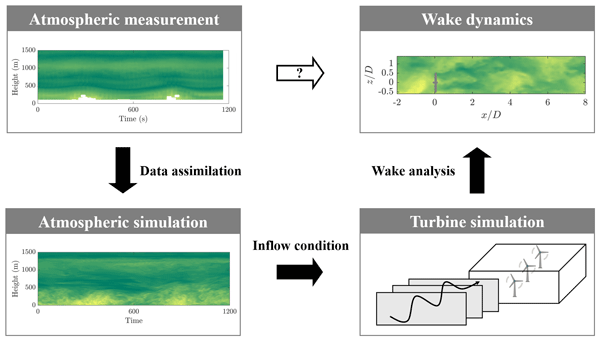
Dachuan Feng, Nirav Dangi, and Simon Watson
Wind Energ. Sci., 11, 395–404, https://doi.org/10.5194/wes-11-395-2026, https://doi.org/10.5194/wes-11-395-2026, 2026
Short summary
Short summary
Weather effects drive wind turbine loads and performance to be different from those under mean atmospheric conditions. However, the influence of unsteady atmospheric phenomena on wake behavior remains unclear. This paper explores how atmospheric gravity waves – large-scale wave-like patterns caused by topographical features – affect meandering motions and turbulence generation in the wake region. The outputs of this paper can be used to guide wake modeling in realistic atmospheric flows.
Jakob Gebel, Pieter-Jan Daems, Diederik van Binsbergen, Veronica Liverud Krathe, Amir R. Nejad, and Jan Helsen
Wind Energ. Sci. Discuss., https://doi.org/10.5194/wes-2026-13, https://doi.org/10.5194/wes-2026-13, 2026
Revised manuscript under review for WES
Short summary
Short summary
The study examines two critical turbine components: the blades and the main bearings. Computer simulations are used to model how turbines respond to disturbed wind from nearby turbines. The analysis is carried out in two stages: first, different turbine spacings and alignments are tested, and second, the method is applied to a real offshore wind farm in the Belgian North Sea.

Christian Hollas, Georg Jacobs, Vitali Züch, Julian Röder, Moritz Gouverneur, Niklas Reinisch, David Bailly, and Alexander Gramlich
Wind Energ. Sci., 11, 89–102, https://doi.org/10.5194/wes-11-89-2026, https://doi.org/10.5194/wes-11-89-2026, 2026
Short summary
Short summary
Hollow forging and air-hardening ductile steel enable higher power densities for wind turbine main bearing units. For a 2.3 MW base-load-optimised wind turbine, a 37 % increase in rotor shaft power density was achieved compared to a casted shaft. By using green, air-hardening steel, hollow forging achieves a comparable global warming potential to casting. The economic viability of hollow forging is not given for the current surcharges found in small-series production.
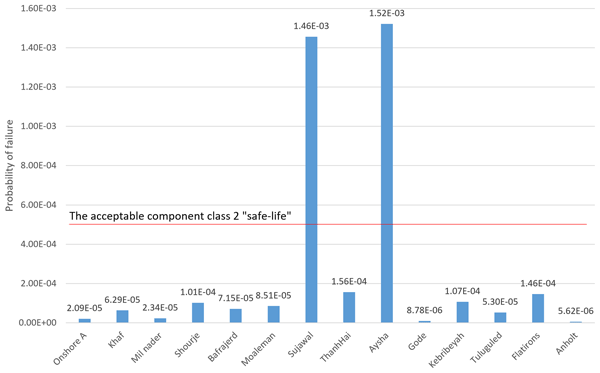
Ashkan Rezaei and Amir Rasekhi Nejad
Wind Energ. Sci., 10, 2947–2963, https://doi.org/10.5194/wes-10-2947-2025, https://doi.org/10.5194/wes-10-2947-2025, 2025
Short summary
Short summary
We analyzed the reliability of wind turbine blade bearings under extreme turbulence wind conditions to improve their safety and performance. Using simulations, we studied how factors like turbulence and design variations affect failure probability. Our findings show that current standards may underestimate these risks and highlight the need for stricter controls on critical design parameters.
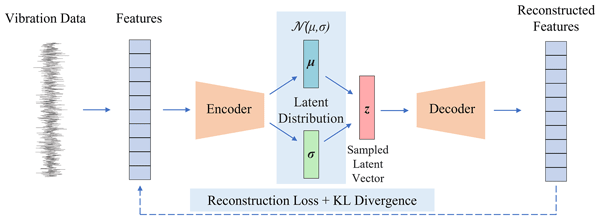
Shun Wang, Yolanda Vidal, and Francesc Pozo
Wind Energ. Sci., 10, 2841–2863, https://doi.org/10.5194/wes-10-2841-2025, https://doi.org/10.5194/wes-10-2841-2025, 2025
Short summary
Short summary
This research aims to improve wind turbine maintenance by detecting faults early using only data from normal operation. The method analyzes vibration signals in both time and frequency domains and uses a variational autoencoder, a type of deep learning model, to learn normal behavior. It then detects anomalies by measuring how much new data deviate from this learned model. Tests on real turbine data show early and accurate detection of faults such as pitch issues and icing.

Oliver Menck, Florian Schleich, and Matthias Stammler
Wind Energ. Sci., 10, 2771–2789, https://doi.org/10.5194/wes-10-2771-2025, https://doi.org/10.5194/wes-10-2771-2025, 2025
Short summary
Short summary
The paper discusses how to calculate the life of a blade bearing that is a roller bearing, as opposed to ball bearings, which most papers on the subject discuss. The raceway fatigue life of the bearing is calculated in a very detailed manner. This includes a validated finite-element simulation model and an approach to determine loads for all operating conditions that the wind turbine experiences.
Ivo Vervlimmeren, Xavier Chesterman, Timothy Verstraeten, Ann Nowé, and Jan Helsen
Wind Energ. Sci., 10, 2615–2637, https://doi.org/10.5194/wes-10-2615-2025, https://doi.org/10.5194/wes-10-2615-2025, 2025
Short summary
Short summary
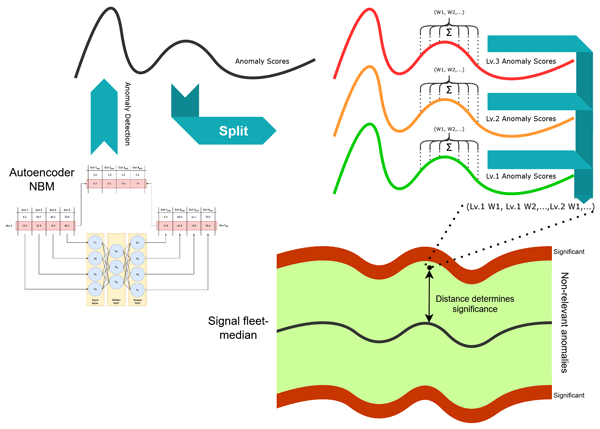
We introduce a new method to refine failure prediction for wind turbines, leading to better and more efficient alarming. We do this by filtering detected anomalies based on the anomalies from the whole fleet. We compare submethods and find one that removes up to 65 % of detected anomalies while leaving the failure-predicting ones. We also detail how we trained the model that generated these anomalies and discuss the construction of the scalable pipeline that was used to deploy such models.
Ali Eftekhari Milani, Donatella Zappalá, Francesco Castellani, and Simon Watson
Wind Energ. Sci., 10, 2563–2576, https://doi.org/10.5194/wes-10-2563-2025, https://doi.org/10.5194/wes-10-2563-2025, 2025
Short summary
Short summary
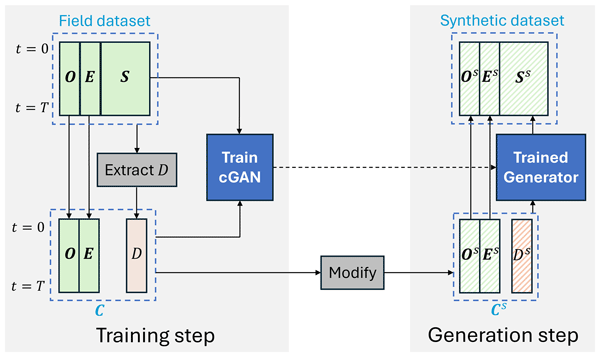
This paper proposes a data-driven approach to simulate wind turbine sensor time series, such as temperature and pressure signals, describing the behaviour of a wind turbine component as it degrades through time up to the failure point. It allows for the simulation of new failure events or the replication of a given failure under different conditions. The results show that the synthetic signals generated using this approach improve the performance of fault detection and prognosis methods.
Yuksel R. Alkarem, Ian Ammerman, Kimberly Huguenard, Richard W. Kimball, Babak Hejrati, Amrit Verma, Amir R. Nejad, Reza Hashemi, and Stephan Grilli
Wind Energ. Sci., 10, 2475–2488, https://doi.org/10.5194/wes-10-2475-2025, https://doi.org/10.5194/wes-10-2475-2025, 2025
Short summary
Short summary
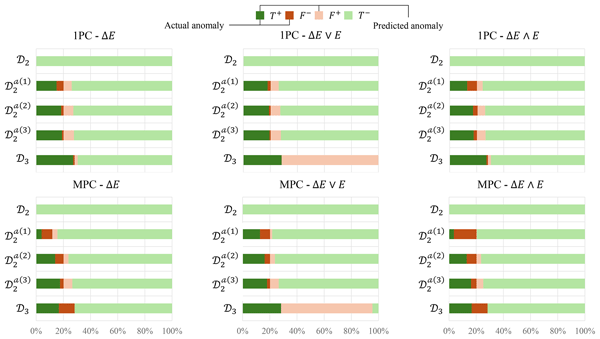
Laboratory testing campaigns for the wind energy industry play an essential role in testing innovative control strategies and digital twin applications. But incidents during testing can be detrimental and might cause project delays and damage to expensive equipment. We propose an anomaly detection scheme for laboratory experiments that are developed and tested to enhance reaction time and prediction quality, reducing the likelihood of damage to equipment due to human error or software malfunction.
Oriol Cayon, Simon Watson, and Roland Schmehl
Wind Energ. Sci., 10, 2161–2188, https://doi.org/10.5194/wes-10-2161-2025, https://doi.org/10.5194/wes-10-2161-2025, 2025
Short summary
Short summary
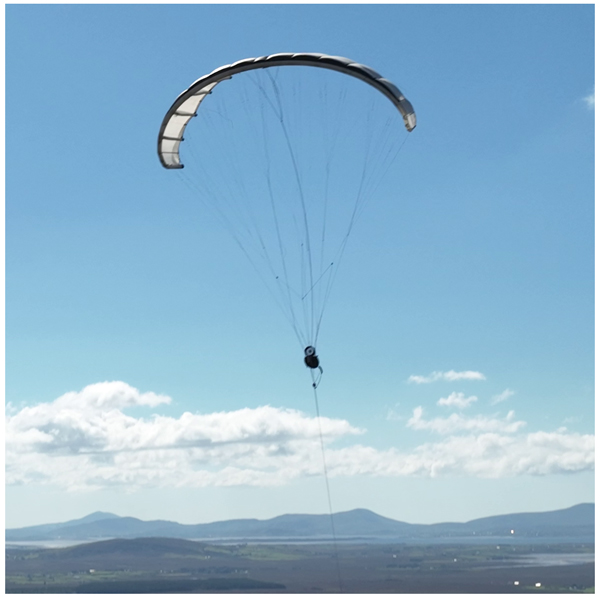
This study demonstrates how kites used to generate wind energy can act as sensors to measure wind conditions and system behaviour. By combining data from existing sensors, such as those measuring position, speed, and forces on the tether, a sensor fusion technique accurately estimates wind conditions and kite performance. This approach can be integrated into control systems to help optimize energy generation and enhance the reliability of these systems under changing wind conditions.
Faras Jamil, Cédric Peeters, Timothy Verstraeten, and Jan Helsen
Wind Energ. Sci., 10, 1963–1978, https://doi.org/10.5194/wes-10-1963-2025, https://doi.org/10.5194/wes-10-1963-2025, 2025
Short summary
Short summary
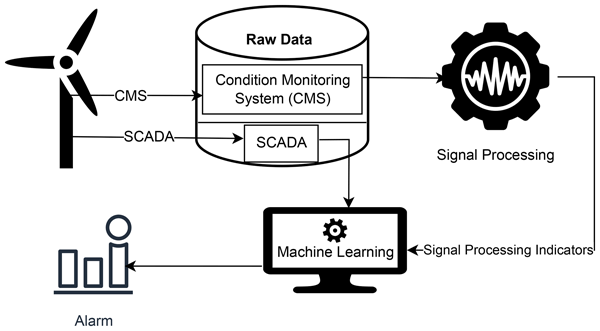
A hybrid fault detection method is proposed, which combines physical domain knowledge with machine learning models to automatically detect mechanical faults in wind turbine drivetrain components. It offers detailed insights for experts while giving operators a high-level overview of the machine's health to assist in planning effective maintenance strategies. It was validated on multiple years of wind farm data and the potential faults were accurately predicted, which was confirmed by experts.
Piotr Fojcik, Edward Hart, and Emil Hedevang
Wind Energ. Sci., 10, 1943–1962, https://doi.org/10.5194/wes-10-1943-2025, https://doi.org/10.5194/wes-10-1943-2025, 2025
Short summary
Short summary
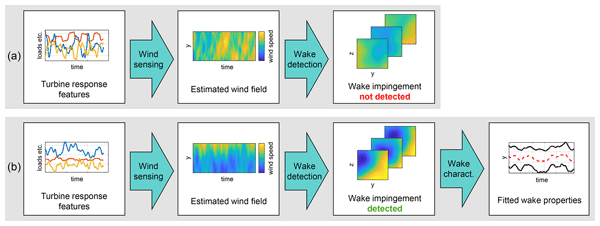
Increasing the efficiency of wind farms can be achieved via reducing the impact of wakes – flow regions with lower wind speed occurring downwind from turbines. This work describes training and validation of a novel method for the estimation of the wake effects impacting a turbine. The results show that for most tested wind conditions, the developed model is capable of robust detection of wake presence and accurate characterisation of its properties. Further validation and improvements are planned.
Edward Hart
Wind Energ. Sci., 10, 1821–1827, https://doi.org/10.5194/wes-10-1821-2025, https://doi.org/10.5194/wes-10-1821-2025, 2025
Short summary
Short summary
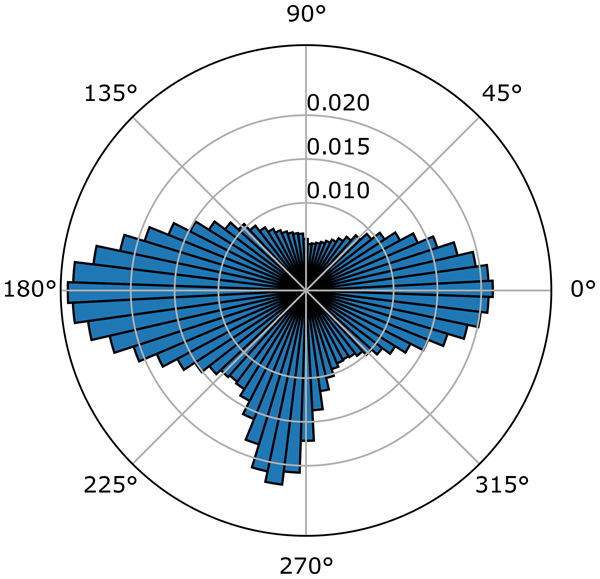
A parametric model for the wind direction rose is presented, with testing on real offshore wind farm data indicating that the model performs well. The presented model provides opportunities for standardisation and enables more systematic analyses of wind direction distribution impacts and sensitivities.
Mehtab Ahmed Khan, Dries Allaerts, Simon J. Watson, and Matthew J. Churchfield
Wind Energ. Sci., 10, 1167–1185, https://doi.org/10.5194/wes-10-1167-2025, https://doi.org/10.5194/wes-10-1167-2025, 2025
Short summary
Short summary
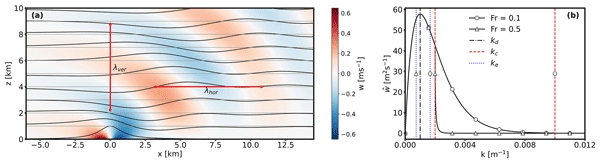
To guide realistic atmospheric gravity wave simulations, we study flow over a two-dimensional hill and through a wind farm canopy, examining optimal domain size and damping layer setup. Wave properties based on non-dimensional numbers determine the optimal domain and damping parameters. Accurate solutions require the domain length to exceed the effective horizontal wavelength, height, and damping thickness to equal the vertical wavelength and non-dimensional damping strength between 1 and 10.
Simon Daenens, Timothy Verstraeten, Pieter-Jan Daems, Ann Nowé, and Jan Helsen
Wind Energ. Sci., 10, 1137–1152, https://doi.org/10.5194/wes-10-1137-2025, https://doi.org/10.5194/wes-10-1137-2025, 2025
Short summary
Short summary
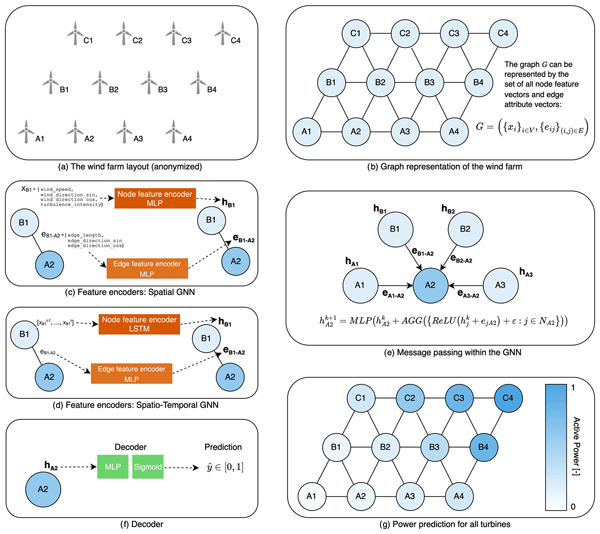
This study presents a novel model for predicting wind turbine power output at a high temporal resolution in wind farms using a hybrid graph neural network (GNN) and long short-term memory (LSTM) architecture. By modeling the wind farm as a graph, the model captures both spatial and temporal dynamics, outperforming traditional power curve methods. Integrated with a normal behavior model (NBM) framework, the model effectively identifies and analyzes power loss events.
Matthias Stammler and Florian Schleich
Wind Energ. Sci., 10, 813–826, https://doi.org/10.5194/wes-10-813-2025, https://doi.org/10.5194/wes-10-813-2025, 2025
Short summary
Short summary
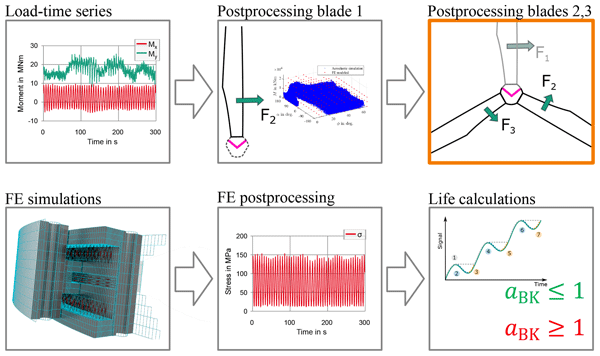
The structures at the center of wind turbine rotors are loaded by three rotor blades. The rotor blades have different loads, which depend on their positions and the incoming wind. The number of possible different loads is too high to simulate each of them for later design of the structures. This work attempts to reduce the number of necessary simulations by exploring inherent relations between the loads of the three rotor blades.
Stijn Ally, Timothy Verstraeten, Pieter-Jan Daems, Ann Nowé, and Jan Helsen
Wind Energ. Sci., 10, 779–812, https://doi.org/10.5194/wes-10-779-2025, https://doi.org/10.5194/wes-10-779-2025, 2025
Short summary
Short summary
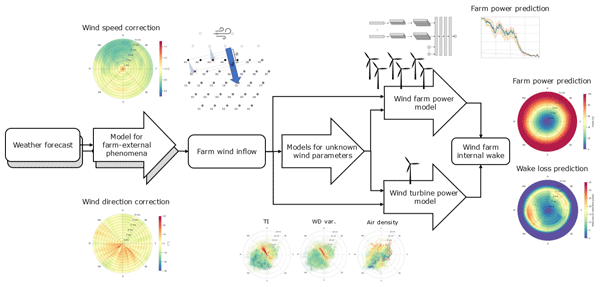
Wind farms are crucial for a sustainable energy future. However, their power can fluctuate significantly due to changing weather conditions, which complexly affect their power generation. This paper presents a novel machine-learning-based method to enhance wind farm power predictions, enabling improved power scheduling, trading and grid balancing. This makes wind power more valuable and easier to integrate into the energy system.
Jakob Gebel, Ashkan Rezaei, Adithya Vemuri, Veronica Liverud Krathe, Pieter-Jan Daems, Jens Jo Matthys, Jonathan Sterckx, Konstantinos Vratsinis, Kayacan Kestel, Amir R. Nejad, and Jan Helsen
Wind Energ. Sci. Discuss., https://doi.org/10.5194/wes-2024-173, https://doi.org/10.5194/wes-2024-173, 2025
Preprint under review for WES
Short summary
Short summary
A simulation model of a deployed offshore wind turbine was developed using real-world measurement data. The method shows how to obtain, update and validate a simulation model and allows to improve the efficiency and longevity of offshore wind turbines and support operation and maintenance decisions. Simulations were conducted to analyze the effects of turbulence and wind patterns on turbine lifespan, providing insights to improve maintenance planning and reduce operational costs.
Rebeca Marini, Konstantinos Vratsinis, Kayacan Kestel, Jonathan Sterckx, Jens Matthys, Pieter-Jan Daems, Timothy Verstraeten, and Jan Helsen
Wind Energ. Sci. Discuss., https://doi.org/10.5194/wes-2025-9, https://doi.org/10.5194/wes-2025-9, 2025
Revised manuscript not accepted
Short summary
Short summary
This work evaluated the wind profile in a Belgian offshore zone. The estimated wind profile was made using measurements that allow for reconstruction at heights along the rotor area. The IEC standard defines these profiles as a 1/7th power law, which is proven not to occur 100 % of the time. It is also possible to infer that there will be differences when using different wind profiles for load assessment, as more realistic profiles can lead to a better assessment of the wind turbine's lifetime.
Felix C. Mehlan and Amir R. Nejad
Wind Energ. Sci., 10, 417–433, https://doi.org/10.5194/wes-10-417-2025, https://doi.org/10.5194/wes-10-417-2025, 2025
Short summary
Short summary
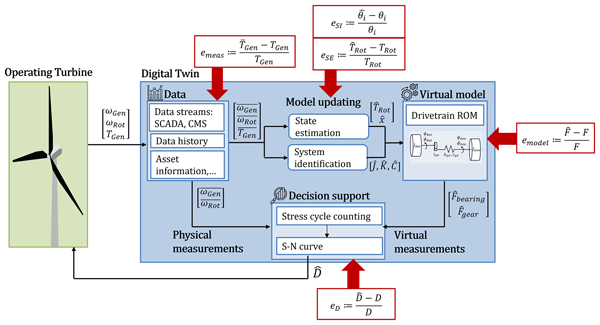
A digital twin is a virtual representation that mirrors the wind turbine's real behavior through simulation models and sensor measurements and can assist in making key decisions such as planning the replacement of parts. These models and measurements are, of course, not perfect and only give an incomplete picture of the real behavior. This study investigates how large the uncertainty of such models and measurements is and to what extent it affects the decision-making process.
Laurence Morgan, Abbas Kazemi Amiri, William Leithead, and James Carroll
Wind Energ. Sci., 10, 381–399, https://doi.org/10.5194/wes-10-381-2025, https://doi.org/10.5194/wes-10-381-2025, 2025
Short summary
Short summary
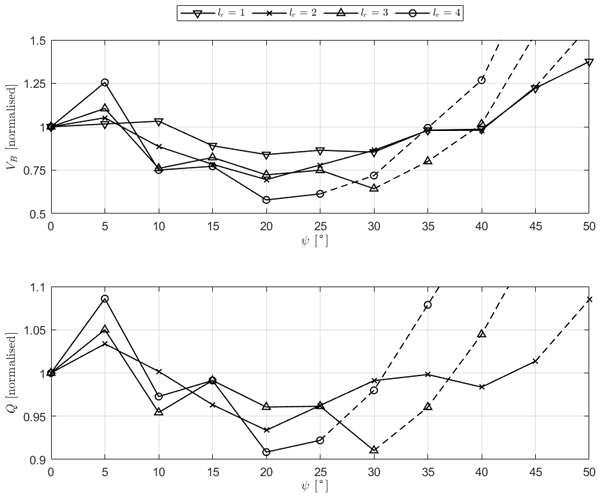
This paper presents a systematic study of the effect of blade inclination angle, chord distribution, and blade length on vertical-axis wind turbine performance. It shows that, for rotors of identical power production, both blade volume and rotor torque can be significantly reduced through the use of aerodynamically optimised inclined rotor blades. This demonstrates the potential of vertical rotors to reduce the cost of energy for offshore wind when compared to horizontal rotors.

Majid Bastankhah, Marcus Becker, Matthew Churchfield, Caroline Draxl, Jay Prakash Goit, Mehtab Khan, Luis A. Martinez Tossas, Johan Meyers, Patrick Moriarty, Wim Munters, Asim Önder, Sara Porchetta, Eliot Quon, Ishaan Sood, Nicole van Lipzig, Jan-Willem van Wingerden, Paul Veers, and Simon Watson
Wind Energ. Sci., 9, 2171–2174, https://doi.org/10.5194/wes-9-2171-2024, https://doi.org/10.5194/wes-9-2171-2024, 2024
Short summary
Short summary
Dries Allaerts was born on 19 May 1989 and passed away at his home in Wezemaal, Belgium, on 10 October 2024 after battling cancer. Dries started his wind energy career in 2012 and had a profound impact afterward on the community, in terms of both his scientific realizations and his many friendships and collaborations in the field. His scientific acumen, open spirit of collaboration, positive attitude towards life, and playful and often cheeky sense of humor will be deeply missed by many.
Ali Dibaj, Mostafa Valavi, and Amir R. Nejad
Wind Energ. Sci., 9, 2063–2086, https://doi.org/10.5194/wes-9-2063-2024, https://doi.org/10.5194/wes-9-2063-2024, 2024
Short summary
Short summary
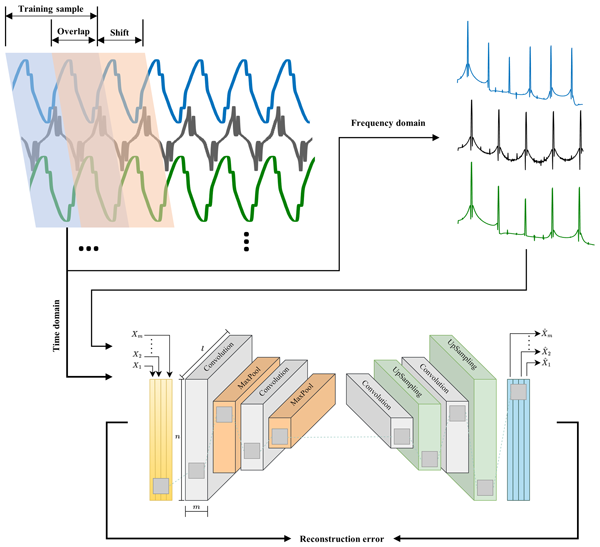
This study emphasizes the need for effective condition monitoring in permanent magnet offshore wind generators to tackle issues like demagnetization and eccentricity. Utilizing a machine learning model and high-resolution measurements, we explore methods of early fault detection. Our findings indicate that flux monitoring with affordable, easy-to-install stray flux sensors with frequency information offers a promising fault detection strategy for large megawatt-scale offshore wind generators.
Diederik van Binsbergen, Pieter-Jan Daems, Timothy Verstraeten, Amir R. Nejad, and Jan Helsen
Wind Energ. Sci., 9, 1507–1526, https://doi.org/10.5194/wes-9-1507-2024, https://doi.org/10.5194/wes-9-1507-2024, 2024
Short summary
Short summary
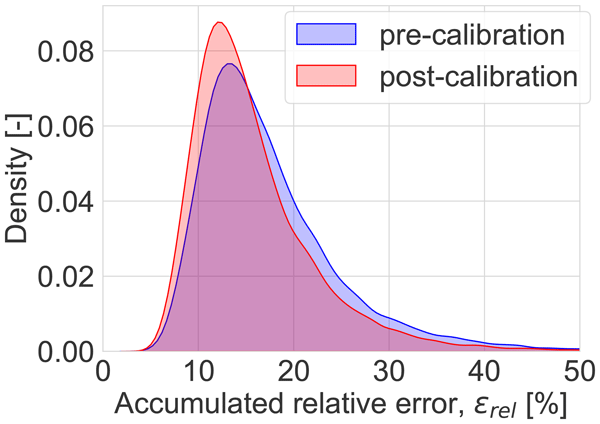
Wind farm yield assessment often relies on analytical wake models. Calibrating these models can be challenging due to the stochastic nature of wind. We developed a calibration framework that performs a multi-phase optimization on the tuning parameters using time series SCADA data. This yields a parameter distribution that more accurately reflects reality than a single value. Results revealed notable variation in resultant parameter values, influenced by nearby wind farms and coastal effects.
Orla Donnelly, Fraser Anderson, and James Carroll
Wind Energ. Sci., 9, 1345–1362, https://doi.org/10.5194/wes-9-1345-2024, https://doi.org/10.5194/wes-9-1345-2024, 2024
Short summary
Short summary
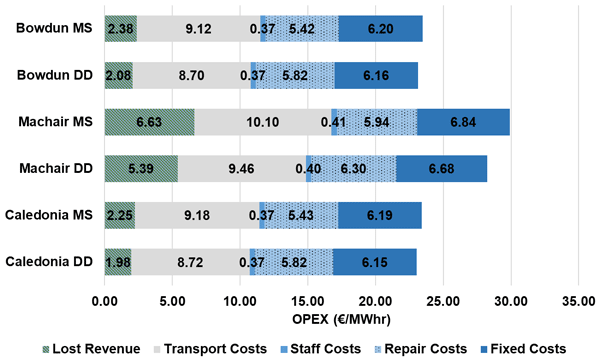
We collate the latest reliability data in operations and maintenance (O&M) for offshore wind turbines, specifically large turbines of 15 MW. We use these data to model O&M of an offshore wind farm at three different sites. We compare two industry-dominant drivetrain configurations in terms of O&M cost for 15 MW turbines and determine if previous results for smaller turbines still hold true. Comparisons between drivetrains are topical within industry, and we produce cost comparisons for them.
Yuksel Rudy Alkarem, Kimberly Huguenard, Richard Kimball, Spencer Hallowell, Amrit Verma, Erin Bachynski-Polić, and Amir Nejad
Wind Energ. Sci. Discuss., https://doi.org/10.5194/wes-2024-67, https://doi.org/10.5194/wes-2024-67, 2024
Preprint withdrawn
Short summary
Short summary
This research is a "less-is-more" demonstration of a novel concept that boost the efficiency of floating wind farms while maintaining fewer number of mooring line/anchors, reducing cost and the large footprint wind farms can have over the ocean bed and the water column. The novelty of this work lies in the passive wake steering method to enhance annual energy production and in integrating that with configurations that allow shared/multiline anchoring potential.
Scott Dallas, Adam Stock, and Edward Hart
Wind Energ. Sci., 9, 841–867, https://doi.org/10.5194/wes-9-841-2024, https://doi.org/10.5194/wes-9-841-2024, 2024
Short summary
Short summary
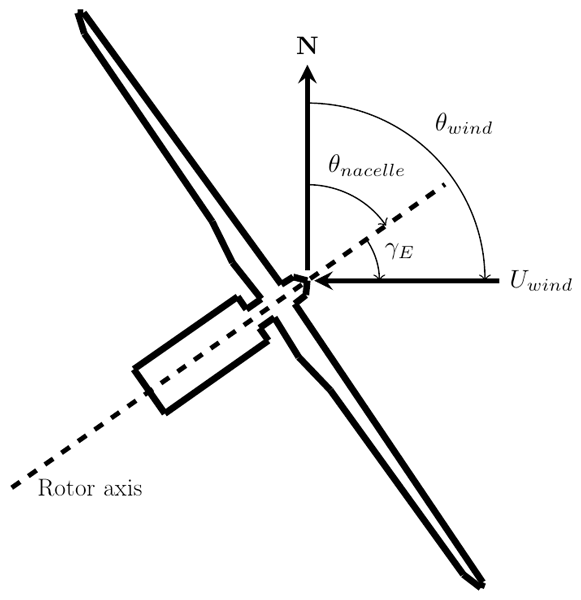
This review presents the current understanding of wind direction variability in the context of control-oriented modelling of wind turbines and wind farms in a manner suitable to a wide audience. Motivation comes from the significant and commonly seen yaw error of horizontal axis wind turbines, which carries substantial negative impacts on annual energy production and the levellised cost of wind energy. Gaps in the literature are identified, and the critical challenges in this area are discussed.
Oliver Menck and Matthias Stammler
Wind Energ. Sci., 9, 777–798, https://doi.org/10.5194/wes-9-777-2024, https://doi.org/10.5194/wes-9-777-2024, 2024
Short summary
Short summary
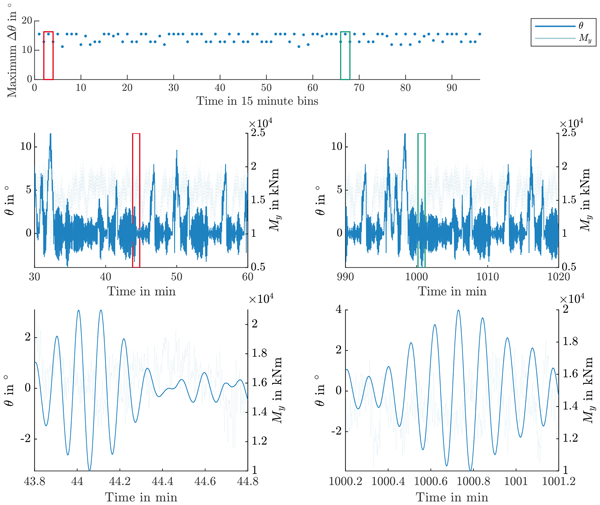
Oscillating bearings, like rotating bearings, can fail due to rolling contact fatigue. But the publications in the literature on this topic are difficult to understand. In order to help people decide which method to use, we have summarized the available literature. We also point out some errors and things to look out for to help engineers that want to calculate the rolling contact fatigue life of an oscillating bearing.
Livia Brandetti, Sebastiaan Paul Mulders, Roberto Merino-Martinez, Simon Watson, and Jan-Willem van Wingerden
Wind Energ. Sci., 9, 471–493, https://doi.org/10.5194/wes-9-471-2024, https://doi.org/10.5194/wes-9-471-2024, 2024
Short summary
Short summary
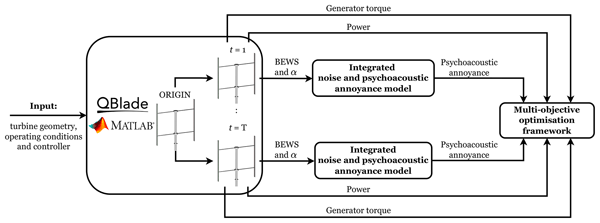
This research presents a multi-objective optimisation approach to balance vertical-axis wind turbine (VAWT) performance and noise, comparing the combined wind speed estimator and tip-speed ratio (WSE–TSR) tracking controller with a baseline. Psychoacoustic annoyance is used as a novel metric for human perception of wind turbine noise. Results showcase the WSE–TSR tracking controller’s potential in trading off the considered objectives, thereby fostering the deployment of VAWTs in urban areas.
Matthias Stammler
Wind Energ. Sci., 8, 1821–1837, https://doi.org/10.5194/wes-8-1821-2023, https://doi.org/10.5194/wes-8-1821-2023, 2023
Short summary
Short summary
Wind turbines subject their components to highly variable loads over very long lifetimes. Tests of components like the pitch bearings that connect rotor blades and the rotor hub serve to validate their ability to withstand these loads. Due to the complexity of the operational loads, the definition of test programs is challenging. This work outlines a method that defines wear test programs for specific pitch bearings and gives a case study for an example turbine.
Livia Brandetti, Sebastiaan Paul Mulders, Yichao Liu, Simon Watson, and Jan-Willem van Wingerden
Wind Energ. Sci., 8, 1553–1573, https://doi.org/10.5194/wes-8-1553-2023, https://doi.org/10.5194/wes-8-1553-2023, 2023
Short summary
Short summary
This research presents the additional benefits of applying an advanced combined wind speed estimator and tip-speed ratio tracking (WSE–TSR) controller compared to the baseline Kω2. Using a frequency-domain framework and an optimal calibration procedure, the WSE–TSR tracking control scheme shows a more flexible trade-off between conflicting objectives: power maximisation and load minimisation. Therefore, implementing this controller on large-scale wind turbines will facilitate their operation.
Serkan Kartal, Sukanta Basu, and Simon J. Watson
Wind Energ. Sci., 8, 1533–1551, https://doi.org/10.5194/wes-8-1533-2023, https://doi.org/10.5194/wes-8-1533-2023, 2023
Short summary
Short summary
Peak wind gust is a crucial meteorological variable for wind farm planning and operations. Unfortunately, many wind farms do not have on-site measurements of it. In this paper, we propose a machine-learning approach (called INTRIGUE, decIsioN-TRee-based wInd GUst Estimation) that utilizes numerous inputs from a public-domain reanalysis dataset, generating long-term, site-specific peak wind gust series.
Arne Bartschat, Karsten Behnke, and Matthias Stammler
Wind Energ. Sci., 8, 1495–1510, https://doi.org/10.5194/wes-8-1495-2023, https://doi.org/10.5194/wes-8-1495-2023, 2023
Short summary
Short summary
Blade bearings are among the most stressed and challenging components of a wind turbine. Experimental investigations using different test rigs and real-size blade bearings have been able to show that rather short time intervals of only several hours of turbine operation can cause wear damage on the raceways of blade bearings. The proposed methods can be used to assess wear-critical operation conditions and to validate control strategies as well as lubricants for the application.
Sarah J. Ollier and Simon J. Watson
Wind Energ. Sci., 8, 1179–1200, https://doi.org/10.5194/wes-8-1179-2023, https://doi.org/10.5194/wes-8-1179-2023, 2023
Short summary
Short summary
This modelling study shows that topographic trapped lee waves (TLWs) modify flow behaviour and power output in offshore wind farms. We demonstrate that TLWs can substantially alter the wind speeds at individual wind turbines and effect the power output of the turbine and whole wind farm. The impact on wind speeds and power is dependent on which part of the TLW wave cycle interacts with the wind turbines and wind farm. Positive and negative impacts of TLWs on power output are observed.

Xavier Chesterman, Timothy Verstraeten, Pieter-Jan Daems, Ann Nowé, and Jan Helsen
Wind Energ. Sci., 8, 893–924, https://doi.org/10.5194/wes-8-893-2023, https://doi.org/10.5194/wes-8-893-2023, 2023
Short summary
Short summary
This paper reviews and implements several techniques that can be used for condition monitoring and failure prediction for wind turbines using SCADA data. The focus lies on techniques that respond to requirements of the industry, e.g., robustness, transparency, computational efficiency, and maintainability. The end result of this research is a pipeline that can accurately detect three types of failures, i.e., generator bearing failures, generator fan failures, and generator stator failures.
Lorena Campoverde-Vilela, María del Cisne Feijóo, Yolanda Vidal, José Sampietro, and Christian Tutivén
Wind Energ. Sci., 8, 557–574, https://doi.org/10.5194/wes-8-557-2023, https://doi.org/10.5194/wes-8-557-2023, 2023
Short summary
Short summary
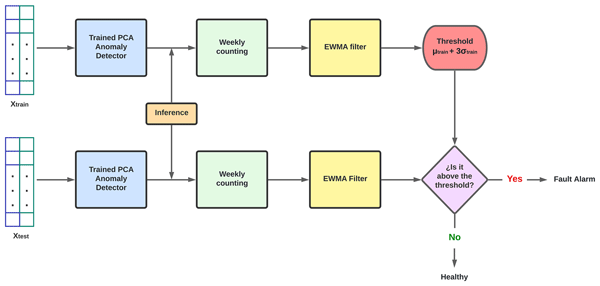
In order to provide early warnings of faults in the main bearing, a fault detection system is developed by applying an anomaly detector based on principal component analysis. Without the need to obtain the fault history or install additional equipment or sensors that would require a larger investment, this model is constructed using only healthy supervisory control and data acquisition (SCADA) data. The results obtained enable failure detection even months before the fatal breakdown takes place.
Amin Loriemi, Georg Jacobs, Vitali Züch, Timm Jakobs, and Dennis Bosse
Wind Energ. Sci. Discuss., https://doi.org/10.5194/wes-2022-75, https://doi.org/10.5194/wes-2022-75, 2023
Preprint withdrawn
Short summary
Short summary
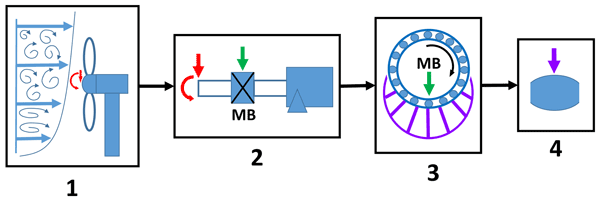
In the last decades, the size of wind turbines has continuously increased. The increasing rotor diameter results in higher loads acting on the main bearings of wind turbines. In this study, it is discussed how these loads can be estimated using accessible sensor signals and regression models. Therefore, measurement data has been acquired on a full-scale wind turbine test bench. It is shown that linear regression using displacement signals provides good accuracy in estimating main bearing loads.
Adithya Vemuri, Sophia Buckingham, Wim Munters, Jan Helsen, and Jeroen van Beeck
Wind Energ. Sci., 7, 1869–1888, https://doi.org/10.5194/wes-7-1869-2022, https://doi.org/10.5194/wes-7-1869-2022, 2022
Short summary
Short summary
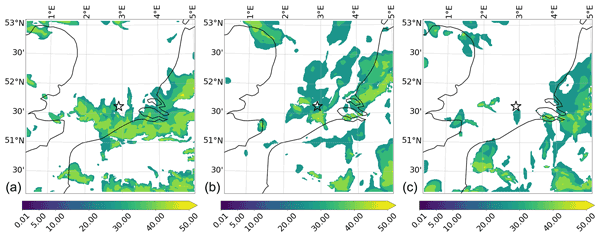
The sensitivity of the WRF mesoscale modeling framework in accurately representing and predicting wind-farm-level environmental variables for three extreme weather events over the Belgian North Sea is investigated in this study. The overall results indicate highly sensitive simulation results to the type and combination of physics parameterizations and the type of the weather phenomena, with indications that scale-aware physics parameterizations better reproduce wind-related variables.
Edward Hart, Elisha de Mello, and Rob Dwyer-Joyce
Wind Energ. Sci., 7, 1533–1550, https://doi.org/10.5194/wes-7-1533-2022, https://doi.org/10.5194/wes-7-1533-2022, 2022
Short summary
Short summary
This paper is the second in a two-part study on lubrication in wind turbine main bearings. Investigations are conducted concerning lubrication in the double-row spherical roller main bearing of a 1.5 MW wind turbine. This includes effects relating to temperature, starvation, grease-thickener interactions and possible non-steady EHL effects. Results predict that the modelled main bearing would be expected to operate under mixed lubrication conditions for a non-negligible proportion of its life.
Edward Hart, Adam Stock, George Elderfield, Robin Elliott, James Brasseur, Jonathan Keller, Yi Guo, and Wooyong Song
Wind Energ. Sci., 7, 1209–1226, https://doi.org/10.5194/wes-7-1209-2022, https://doi.org/10.5194/wes-7-1209-2022, 2022
Short summary
Short summary
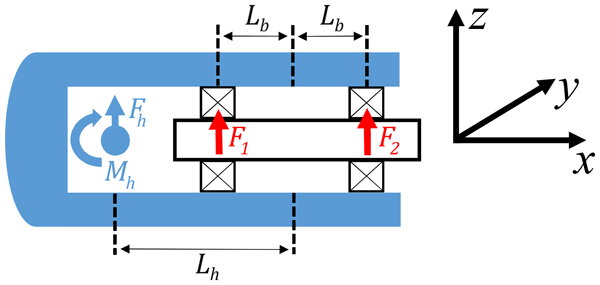
We consider characteristics and drivers of loads experienced by wind turbine main bearings using simplified models of hub and main-bearing configurations. Influences of deterministic wind characteristics are investigated for 5, 7.5, and 10 MW turbine models. Load response to gusts and wind direction changes are also considered. Cubic load scaling is observed, veer is identified as an important driver of load fluctuations, and strong links between control and main-bearing load response are shown.
Edward Hart, Elisha de Mello, and Rob Dwyer-Joyce
Wind Energ. Sci., 7, 1021–1042, https://doi.org/10.5194/wes-7-1021-2022, https://doi.org/10.5194/wes-7-1021-2022, 2022
Short summary
Short summary
This work provides an accessible introduction to elastohydrodynamic lubrication theory as a precursor to analysis of lubrication in a wind turbine main bearing. Fundamental concepts, derivations and formulas are presented, followed by the more advanced topics of starvation, non-steady effects, surface roughness interactions and grease lubrication.
Amir R. Nejad, Jonathan Keller, Yi Guo, Shawn Sheng, Henk Polinder, Simon Watson, Jianning Dong, Zian Qin, Amir Ebrahimi, Ralf Schelenz, Francisco Gutiérrez Guzmán, Daniel Cornel, Reza Golafshan, Georg Jacobs, Bart Blockmans, Jelle Bosmans, Bert Pluymers, James Carroll, Sofia Koukoura, Edward Hart, Alasdair McDonald, Anand Natarajan, Jone Torsvik, Farid K. Moghadam, Pieter-Jan Daems, Timothy Verstraeten, Cédric Peeters, and Jan Helsen
Wind Energ. Sci., 7, 387–411, https://doi.org/10.5194/wes-7-387-2022, https://doi.org/10.5194/wes-7-387-2022, 2022
Short summary
Short summary
This paper presents the state-of-the-art technologies and development trends of wind turbine drivetrains – the energy conversion systems transferring the kinetic energy of the wind to electrical energy – in different stages of their life cycle: design, manufacturing, installation, operation, lifetime extension, decommissioning and recycling. The main aim of this article is to review the drivetrain technology development as well as to identify future challenges and research gaps.
Cited articles
Abhimanyu, G.: Colossal 20-MW wind turbine is the largest on the planet (for now), https://newatlas.com/energy/world-largest-offshore-wind-turbine-20-mw-mingyang/ (last access: 4 September 2024), 2024. a
Aizawa, K., Poozesh, P., Niezrecki, C., Baqersad, J., Inalpolat, M., and Heilmann, G.: An acoustic-array based structural health monitoring technique for wind turbine blades, Society of Photo-Optical Instrumentation Engineers (SPIE), 94371P, 450–466, https://doi.org/10.1117/12.2084276, 2015. a
Alewine, K. and Chen, W.: A review of electrical winding failures in wind turbine generators, in: 2011 Electrical Insulation Conference (EIC), 392–397, IEEE, https://doi.org/10.1109/EIC.2011.5996185, 2011. a
Al-Hussain, K. and Redmond, I.: Dynamic response of two rotors connected by rigid mechanical coupling with parallel misalignment, J. Sound Vib., 249, 483–498, 2002. a
Ali Qadri, B., Ulriksen, M., Damkilde, L., and Tcherniak, D.: Cointegration for Detecting Structural Blade Damage in an Operating Wind Turbine: An Experimental Study, 173–180, ISBN 978-3-030-12114-3, https://doi.org/10.1007/978-3-030-12115-0_23, 2020. a
Allal, Z., Noura, H. N., Vernier, F., Salman, O., and Chahine, K.: Wind turbine fault detection and identification using a two-tier machine learning framework, Intelligent Systems with Applications, 22, 200372, https://doi.org/10.1016/j.iswa.2024.200372, 2024. a, b
André, H., Leclère, Q., Anastasio, D., Benaïcha, Y., Billon, K., Birem, M., Bonnardot, F., Chin, Z., Combet, F., Daems, P.-J., Daems, P.J. and Daga, A.P. and De Geest, R. and Elyousfi, B. and Griffaton, J. and Gryllias, K. and Hawwari, Y. and Helsen, J. and Lacaze, F. and Laroche, L. and Li, X., and Thomas, X.: Using a smartphone camera to analyse rotating and vibrating systems: Feedback on the SURVISHNO 2019 contest, Mech. Syst. Signal Pr., 154, 107553, https://doi.org/10.1016/j.ymssp.2020.107553, 2021. a
Antoni, J.: Cyclic spectral analysis in practice, Mech. Syst. Signal Pr., 21, 597–630, 2007a. a
Antoni, J.: Fast computation of the kurtogram for the detection of transient faults, Mech. Syst. Signal Pr., 21, 108–124, 2007b. a
Antoni, J. and Randall, R. B.: The spectral kurtosis: application to the vibratory surveillance and diagnostics of rotating machines, Mech. Syst. Signal Pr., 20, 308–331, https://doi.org/10.1016/j.ymssp.2004.09.002, 2006. a
Antoni, J., Xin, G., and Hamzaoui, N.: Fast computation of the spectral correlation, Mech. Syst. Signal Pr., 92, 248–277, 2017. a
Antoni, J., Kestel, K., Peeters, C., Leclère, Q., Girardin, F., Ooijevaar, T., and Helsen, J.: On the design of Optimal Health Indicators for early fault detection and their statistical thresholds, Mech. Syst. Signal Pr., 218, 111518, https://doi.org/10.1016/j.ymssp.2024.111518, 2024. a, b
Archard, J. F.: Contact and Rubbing of Flat Surfaces, J. Appl. Phys., 24, 981–988, https://doi.org/10.1063/1.1721448, 1953. a
Arcos Jiménez, A., Gómez Muñoz, C. Q., and García Márquez, F. P.: Dirt and mud detection and diagnosis on a wind turbine blade employing guided waves and supervised learning classifiers, Reliability Engineering & System Safety, 184, 2–12, https://doi.org/10.1016/j.ress.2018.02.013, 2019. a
Artigao, E., Honrubia-Escribano, A., and Gomez-Lazaro, E.: Current signature analysis to monitor DFIG wind turbine generators: A case study, Renew. Energ., 116, 5–14, 2018a. a
Artigao, E., Honrubia-Escribano, A., and Gómez-Lázaro, E.: In-Service Wind Turbine DFIG Diagnosis Using Current Signature Analysis, IEEE T. Ind. Electr., 67, 2262–2271, 2020. a
Arumugam, V., Sajith, S., and Stanley, A. J.: Acoustic Emission Characterization of Failure Modes in GFRP Laminates Under Mode I Delamination, J. Nondestruct. Eval., 30, 213–219, https://doi.org/10.1007/s10921-011-0109-5, 2011. a
Astolfi, D., Castellani, F., and Natili, F.: Wind turbine generator slip ring damage detection through temperature data analysis, Diagnostyka, 20, 3–9, 2019. a
Aydemir, G. and Acar, B.: Anomaly monitoring improves remaining useful life estimation of industrial machinery, J. Manuf. Syst., 56, 463–469, https://doi.org/10.1016/j.jmsy.2020.06.014, 2020. a
Bajric, R., Zuber, N., Skrimpas, G. A., and Mijatovic, N.: Feature extraction using discrete wavelet transform for gear fault diagnosis of wind turbine gearbox, Shock Vib., 2016, 6748469, https://doi.org/10.1155/2016/6748469, 2016. a
Bangalore, P. and Tjernberg, L. B.: Self evolving neural network based algorithm for fault prognosis in wind turbines: A case study, in: 2014 International Conference on Probabilistic Methods Applied to Power Systems (PMAPS), Durham, United Kingdom, 7–10 July 2014, 1–6, https://doi.org/10.1109/PMAPS.2014.6960603, 2014. a
Bangalore, P. and Tjernberg, L. B.: An Artificial Neural Network Approach for Early Fault Detection of Gearbox Bearings, IEEE T. Smart Grid, 6, 980–987, https://doi.org/10.1109/TSG.2014.2386305, 2015. a
Bangalore, P., Letzgus, S., Karlsson, D., and Patriksson, M.: An artificial neural network-based condition monitoring method for wind turbines, with application to the monitoring of the gearbox, Wind Energy, 20, 1421–1438, 2017. a
Bao, C., Zhang, T., Hu, Z., Feng, W., and Liu, R.: Wind turbine condition monitoring based on improved active learning strategy and KNN algorithm, IEEE Access, 11, 13545–13553, 2023. a
Barber, S., Lima, L. A. M., Sakagami, Y., Quick, J., Latiffianti, E., Liu, Y., Ferrari, R., Letzgus, S., Zhang, X., and Hammer, F.: Enabling Co-Innovation for a Successful Digital Transformation in Wind Energy Using a New Digital Ecosystem and a Fault Detection Case Study, Energies, 15, https://doi.org/10.3390/en15155638, 2022. a
Barnabei, V. F., De Girolamo, F., Ancora, T. C. M., Tieghi, L., Delibra, G., and Corsini, A.: Normal behaviour modeling of hawt fleets using scada-based feature engineering, in: Proceedings of Global Power & Propulsion Society, Global Power and Propulsion Society, https://doi.org/10.33737/gpps24-tc-101, 2024. a
Baszenski, T., Kauth, K., Kratz, K.-H., Gutiérrez Guzmán, F., Jacobs, G., and Gemmeke, T.: Sensor integrating plain bearings: design of an energy-autonomous, temperature-based condition monitoring system, Forsch. Ingenieurwes., 87, 441–452, https://doi.org/10.1007/s10010-023-00642-1, 2023. a
Beale, C., Inalpolat, M., and Niezrecki, C.: Active acoustic damage detection of structural cavities using internal acoustic excitations, Struct. Health Monit., 19, 48–65, https://doi.org/10.1177/1475921719835761, 2020. a
Bechhoefer, E. and Kingsley, M.: A review of time synchronous average algorithms, in: Annual Conference of the PHM society, vol. 1, Prognostics and Health Management (PHM) Society, 2009. a
Bechhoefer, E., Qu, Y., Zhu, J., and He, D.: Signal processing techniques to improve an acoustic emissions sensor, in: Annual Conference of the PHM Society, vol. 5, Prognostics and Health Management (PHM) Society, https://doi.org/10.36001/phmconf.2013.v5i1.2174, 2013. a
Bejger, A., Frank, E., and Bartoszko, P.: Failure analysis of wind turbine planetary gear, Energies, 14, 6768, https://doi.org/10.3390/en14206768, 2021. a
Beretta M., Cárdenas J., K. C., Cosmin Koch, C., and Cusidó, J.: Wind Fleet Generator Fault Detection via SCADA Alarms and Autoencoders, Appl. Sci., 10, 8649 https://doi.org/10.3390/app10238649, 2020. a
Beretta, M., Vidal, Y., Sepulveda, J., Porro, O., and Cusidó, J.: Improved ensemble learning for wind turbine main bearing fault diagnosis, Appl. Sci., 11, 7523, https://doi.org/10.3390/app11167523, 2021b. a, b, c, d
Bermúdez, K., Ortiz-Holguin, E., Tutivén, C., Vidal, Y., and Benalcázar-Parra, C.: Wind Turbine Main Bearing Failure Prediction using a Hybrid Neural Network, J. Phys. Conf. Ser., 2265, 032090, https://doi.org/10.1088/1742-6596/2265/3/032090, 2022. a, b
Black, I. M., Cevasco, D., and Kolios, A.: Deep Neural Network Hard Parameter Multi-Task Learning for Condition Monitoring of an Offshore Wind Turbine, J. Phys. Conf. Ser., 2265, 032091, https://doi.org/10.1088/1742-6596/2265/3/032091, 2022. a
Bodla, M. K., Malik, S. M., Rasheed, M. T., Numan, M., Ali, M. Z., and Brima, J. B.: Logistic regression and feature extraction based fault diagnosis of main bearing of wind turbines, in: Proceedings of the 2016 IEEE 11th Conference on Industrial Electronics and Applications, 1628–1633, Hefei, China, 2016. a
Borghesani, P. and Antoni, J.: A faster algorithm for the calculation of the fast spectral correlation, Mech. Syst. Signal Pr., 111, 113–118, 2018. a
Borghesani, P., Pennacchi, P., Randall, R., and Ricci, R.: Order tracking for discrete-random separation in variable speed conditions, Mech. Syst. Signal Pr., 30, 1–22, 2012. a
Boudraa, A.-O., Cexus, J.-C., Salzenstein, F., and Guillon, L.: IF estimation using empirical mode decomposition and nonlinear Teager energy operator, in: First International Symposium on Control, Communications and Signal Processing, 2004, 45–48, IEEE, 2004. a
Bray, A., Clifton, A., Sempreviva, A. M., Enevoldsen, P., Fields, J., Purdue, M., Williams, L., and Barber, S.: IEA Wind Task 43: Grand Challenges in the Digitalisation of Wind Energy, windEurope Technology Workshop 2022: Resource Assessment & Analysis of Operating Wind Farms, 23–24 June 2022, https://windeurope.org/tech2022/ (last access: 1 March 2025), 2021. a
Brigham, K., Zappalá, D., Crabtree, C., and Donaghy-Spargo, C.: Electrical & mechanical diagnostic indicators of wind turbine induction generator rotor faults, Wind Energy, 23, 1135–1144, 2020. a
Buzzoni, M., Antoni, J., and D'Elia, G.: Blind deconvolution based on cyclostationarity maximization and its application to fault identification, J. Sound Vib., 432, 569–601, https://doi.org/10.1016/j.jsv.2018.06.055, 2018. a, b
Cambron, P., Masson, C., Tahan, A., and Pelletier, F.: Control chart monitoring of wind turbine generators using the statistical inertia of a wind farm average, Renew. Energ., 116, 88–98, https://doi.org/10.1016/j.renene.2016.09.029, 2018. a, b
Campoverde, L., Tutivén, C., Vidal, Y., and Benaláazar-Parra, C.: SCADA Data-Driven Wind Turbine Main Bearing Fault Prognosis Based on Principal Component Analysis, J. Phys. Conf. Ser., 2265, 032107, https://doi.org/10.1088/1742-6596/2265/3/032107, 2022. a
Cannarile, F., Baraldi, P., and Zio, E.: An evidential similarity-based regression method for the prediction of equipment remaining useful life in presence of incomplete degradation trajectories, Fuzzy Set. Syst., 367, 36–50, https://doi.org/10.1016/j.fss.2018.10.008, 2019. a
Carbajal-Hernández, J. J., Sánchez-Fernández, L. P., Hernández-Bautista, I., Medel-Juárez, J. d. J., and Sánchez-Pérez, L. A.: Classification of unbalance and misalignment in induction motors using orbital analysis and associative memories, Neurocomputing, 175, 838–850, 2016. a
Catapult, O.: SYstem Perforamnce, Availability and Reliability Trend Analysis, https://www.sparta-offshore.com/SpartaHome (last access: 1 March 2025), 2020. a
Cevasco, D., Koukoura, S., and Kolios, A.: Reliability, availability, maintainability data review for the identification of trends in offshore wind energy applications, Renewable and Sustainable Energy Reviews, 136, 110414, https://doi.org/10.1016/j.rser.2020.110414, 2021. a
Chatterjee, J. and Dethlefs, N.: Scientometric review of artificial intelligence for operations & maintenance of wind turbines: The past, present and future, Renewable and Sustainable Energy Reviews, 144, 111051, https://doi.org/10.1016/j.rser.2021.111051, 2021. a
Chaudhuri, S., Stamm, M., Lapšanská, I., Lançon, T., Osterbrink, L., Driebe, T., Hein, D., and Harendt, R.: Infrared Thermography of Turbulence Patterns of Operational Wind Turbine Rotor Blades Supported With High-Resolution Photography: KI-VISIR Dataset, Wind Energy, 28, e2958, https://doi.org/10.1002/we.2958, 2025. a
Chen, H., Liu, H., Chu, X., Liu, Q., and Xue, D.: Anomaly detection and critical SCADA parameters identification for wind turbines based on LSTM-AE neural network, Renew. Energ., 172, 829–840, 2021. a
Chesterman, X., Verstraeten, T., Daems, P.-J., Nowé, A., and Helsen, J.: Condition monitoring of wind turbines using machine learning based anomaly detection and statistical techniques for the extraction of `healthy data', in: Proceedings of the Annual Conference of the PHM Society, edited by: Kulkarni, C., Saxena, A., and Viana, F., Prognostics and Health Management (PHM) Society, https://doi.org/10.36001/phmconf.2021.v13i1.2980, 2021. a
Chesterman, X., Verstraeten, T., Daems, P.-J., Sanjines, F. P., Nowé, A., and Helsen, J.: The detection of generator bearing failures on wind turbines using machine learning based anomaly detection, J. Phys. Conf. Ser., 2265, 032066, https://doi.org/10.1088/1742-6596/2265/3/032066, 2022. a, b, c, d
Chesterman, X., Verstraeten, T., Daems, P.-J., Nowé, A., and Helsen, J.: Overview of normal behavior modeling approaches for SCADA-based wind turbine condition monitoring demonstrated on data from operational wind farms, Wind Energ. Sci., 8, 893–924, https://doi.org/10.5194/wes-8-893-2023, 2023. a
Cho, S., Choi, M., Gao, Z., and Moan, T.: Fault detection and diagnosis of a blade pitch system in a floating wind turbine based on Kalman filters and artificial neural networks, Renew. Energ., 169, 1–13, 2021. a
Colone, L., Dimitrov, N., and Straub, D.: Predictive repair scheduling of wind turbine drive-train components based on machine learning, Wind Energy, 22, 1230–1242, 2019. a
Combet, F. and Gelman, L.: An automated methodology for performing time synchronous averaging of a gearbox signal without speed sensor, Mech. Syst. Signal Pr., 21, 2590–2606, 2007. a
Combet, F. and Gelman, L.: Novel adaptation of the demodulation technology for gear damage detection to variable amplitudes of mesh harmonics, Mech. Syst. Signal Pr., 25, 839–845, 2011. a
Compare, M., Baraldi, P., and Zio, E.: Challenges to IoT-Enabled Predictive Maintenance for Industry 4.0, IEEE Internet Things, 7, 4585–4597, https://doi.org/10.1109/JIOT.2019.2957029, 2020. a
Cui, L., Wang, X., Xu, Y., Jiang, H., and Zhou, J.: A novel Switching Unscented Kalman Filter method for remaining useful life prediction of rolling bearing, Measurement, 135, 678–684, https://doi.org/10.1016/j.measurement.2018.12.028, 2019. a
Daems, P.-J., Peeters, C., Guillaume, P., and Helsen, J.: Removal of non-stationary harmonics for operational modal analysis in time and frequency domain, Mech. Syst. Signal Pr., 165, 108329, https://doi.org/10.1016/j.ymssp.2021.108329, 2022. a
Dao, P. B.: On Cointegration Analysis for Condition Monitoring and Fault Detection of Wind Turbines Using SCADA Data, Energies, 16, https://doi.org/10.3390/en16052352, 2023. a
Dao, P. B., Staszewski, W. J., Barszcz, T., and Uhl, T.: Condition monitoring and fault detection in wind turbines based on cointegration analysis of SCADA data, Renew. Energ., 116, 107–122, https://doi.org/10.1016/j.renene.2017.06.089, 2018. a
Decker, T., Jacobs, G., Arneth, P., Raddatz, M., Röder, J., and Schröder, T.: Approach towards the condition monitoring of journal bearings using surface acoustic wave technology, Bearing World Journal Vol. 8, https://vdma-verlag.com/publikation/bearing_world_journal_.html (last access: 1 March 2025), 2025a. a
Decker, T., Jacobs, G., Raddatz, M., Röder, J., Betscher, J., and Arneth, P.: Detection of particle contamination and lubrication outage in journal bearings in wind turbine gearboxes using surface acoustic wave measurements and machine learning, Forsch. Ingenieurwes., 89, 17, https://doi.org/10.1007/s10010-025-00784-4, 2025b. a
Decker, T., Jacobs, G., Röder, J., Scholz, T., Paridon, C., and Schröder, T.: Experimental study on the condition monitoring of planetary journal bearings in wind turbine gearboxes using the surface acoustic wave method, Forsch. Ingenieurwes., 89, 112, https://doi.org/10.1007/s10010-025-00887-y, 2025c. a
De Kooning, J. D., Stockman, K., De Maeyer, J., Jarquin-Laguna, A., and Vandevelde, L.: Digital twins for wind energy conversion systems: a literature review of potential modelling techniques focused on model fidelity and computational load, Processes, 9, 2224, https://doi.org/10.3390/pr9122224, 2021. a
D'Elia, G., Mucchi, E., and Cocconcelli, M.: On the identification of the angular position of gears for the diagnostics of planetary gearboxes, Mech. Syst. Signal Pr., 83, 305–320, 2017. a
de Lima Munguba, C. F., Ochoa, A. A. V., Leite, G. d. N. P., da Costa, A. C. A., da Costa, J. Â. P., de Menezes, F. D., de Mendonça, E. P. A., de Petribú Brennand, L. J., de Castro Vilela, O., and de Souza, M. G. G.: Fault detection framework in wind turbine pitch systems using machine learning: Development, validation, and results, Eng. Appl. Artif. Intel., 138, 109307, https://doi.org/10.1016/j.engappai.2024.109307, 2024. a
De Oliveira-Filho, A. M., Cambron, P., and Tahan, A.: Condition monitoring of wind turbine main bearing using SCADA data and informed by the principle of energy conservation, in: 2022 Prognostics and Health Management Conference (PHM-2022 London), 276–282, IEEE, 2022. a
Deutsch, J. and He, D.: Using Deep Learning-Based Approach to Predict Remaining Useful Life of Rotating Components, IEEE Transactions on Systems, Man, and Cybernetics: Systems, 48, 11–20, https://doi.org/10.1109/TSMC.2017.2697842, 2018. a
Deutsches Institut für Normung e.V.: Plain bearings – Hydrodynamic plain journal bearings under steady-state conditions – Part 2: Functions for calculation of circular cylindrical bearings, DIN 31652-2:2017-01, 2017. a
Dienst, S. and Beseler, J.: Automatic anomaly detection in offshore wind SCADA data, Wind Europe summit 2016, 1–7, 2016. a
Ding, S., Yang, C., and Zhang, S.: Acoustic-Signal-Based Damage Detection of Wind Turbine Blades – A Review, Sensors, 23, https://doi.org/10.3390/s23114987, 2023. a
DNV: Qualification and assurance of digital twins, Recommended Practice DNV-RPA204, 2020. a
Doliński, Ł., Krawczuk, M., and Zak, A.: Detection of Delamination in Laminate Wind Turbine Blades Using One-Dimensional Wavelet Analysis of Modal Responses, Shock Vib., 2018, 4507879, https://doi.org/10.1155/2018/4507879, 2018. a
Doroshtnasir, M., Worzewski, T., Krankenhagen, R., and Röllig, M.: On-site inspection of potential defects in wind turbine rotor blades with thermography, Wind Energy, 19, 1407–1422, https://doi.org/10.1002/we.1927, 2016. a
Du, Y., Zhou, S., Jing, X., Peng, Y., Wu, H., and Kwok, N.: Damage detection techniques for wind turbine blades: A review, Mech. Syst. Signal Pr., 141, 106445, https://doi.org/10.1016/J.YMSSP.2019.106445, 2020. a
El Badaoui, M., Antoni, J., Guillet, F., Daniere, J., and Velex, P.: Use of the moving cepstrum integral to detect and localise tooth spalls in gears, Mech. Syst. Signal Pr., 15, 873–885, 2001. a
El Badaoui, M., Guillet, F., and Daniere, J.: New applications of the real cepstrum to gear signals, including definition of a robust fault indicator, Mech. Syst. Signal Pr., 18, 1031–1046, 2004. a
El Hachemi Benbouzid, M.: A review of induction motors signature analysis as a medium for faults detection, IEEE T. Ind. Electron., 47, 984–993, 2000. a
Elasha, F., Greaves, M., Mba, D., and Fang, D.: A comparative study of the effectiveness of vibration and acoustic emission in diagnosing a defective bearing in a planetry gearbox, Appl. Acoust., 115, 181–195, 2017. a
Elforjani, M.: Diagnosis and prognosis of real world wind turbine gears, Renew. Energ., 147, 1676–1693, 2020. a
Encalada-Dávila, Á., Puruncajas, B., Tutivén, C., and Vidal, Y.: Wind turbine main bearing fault prognosis based solely on scada data, Sensors, 21, 2228, https://doi.org/10.3390/s21062228, 2021. a, b, c, d
EPRI: Wind Turbine Gearbox Physics-Based Machine Learning Model for Effective Health Monitoring: Early Damage Detection to Reduce O&M Costs, Tech. Rep. 3002020145, Electric Power Research Institute, 2020. a
EPRI: Wind Network for Enhanced Reliability (WinNER) Web-based Tool, https://www.epri.com/research/products/000000003002020805 (last access: 15 May 2025), 2021. a
European Commission: Communication on The European Green Deal, eUR-Lex: 52019DC0640, 2019. a
European Commission: REPowerEU Plan, eUR-Lex: 52022DC0230, 2022. a
Feng, K., Borghesani, P., Smith, W. A., Randall, R. B., Chin, Z. Y., Ren, J., and Peng, Z.: Vibration-based updating of wear prediction for spur gears, Wear, 426–427, 1410–1415, https://doi.org/10.1016/j.wear.2019.01.017, 2019. a
Feng, K., Smith, W. A., and Peng, Z.: Use of an improved vibration-based updating methodology for gear wear prediction, Eng. Fail. Anal., 120, 105066, https://doi.org/10.1016/j.engfailanal.2020.105066, 2021. a
Feng, K., Smith, W. A., Randall, R. B., Wu, H., and Peng, Z.: Vibration-based monitoring and prediction of surface profile change and pitting density in a spur gear wear process, Mech. Syst. Signal Pr., 165, 108319, https://doi.org/10.1016/j.ymssp.2021.108319, 2022. a
Feng, K., Ji, J., Ni, Q., and Beer, M.: A review of vibration-based gear wear monitoring and prediction techniques, Mech. Syst. Signal Pr., 182, 109605, https://doi.org/10.1016/j.ymssp.2022.109605, 2023. a, b, c
Feng, Y., Tavner, P. J., and Long, H.: Early experiences with UK round 1 offshore wind farms, Proceedings of the Institution of Civil Engineers-energy, 163, 167–181, 2010. a
Feng, Y., Qiu, Y., Crabtree, C. J., Long, H., and Tavner, P. J.: Monitoring wind turbine gearboxes, Wind Energy, 16, 728–740, 2013. a
Feng, Z. and Liang, M.: Complex signal analysis for planetary gearbox fault diagnosis via shift invariant dictionary learning, Measurement, 90, 382–395, 2016. a
Feng, Z., Lin, X., and Zuo, M. J.: Joint amplitude and frequency demodulation analysis based on intrinsic time-scale decomposition for planetary gearbox fault diagnosis, Mech. Syst. Signal Pr., 72, 223–240, 2016. a
Fischer, K., Stalin, T., Ramberg, H., Wenske, J., Wetter, G., Karlsson, R., and Thiringer, T.: Field-experience based root-cause analysis of power-converter failure in wind turbines, IEEE T. Power Electr., 30, 2481–2492, 2014. a
Fischer, K., Pelka, K., Puls, S., Poech, M.-H., Mertens, A., Bartschat, A., Tegtmeier, B., Broer, C., and Wenske, J.: Exploring the causes of power-converter failure in wind turbines based on comprehensive field-data and damage analysis, Energies, 12, 593, https://doi.org/10.3390/en12040593, 2019. a
Fleischer G., Gröger H., and Thum H.: Verschleiß und Zuverlässigkeit, VEB Verlag Technik, Berlin, 1980. a
Freire, N. M. A. and Cardoso, A. J. M.: Fault Detection and Condition Monitoring of PMSGs in Offshore Wind Turbines, Machines, 9, 260, https://doi.org/10.3390/machines9110260, 2021. a
Fu, X., Tao, J., Jiao, K., and Liu, C.: A novel semi-supervised prototype network with two-stream wavelet scattering convolutional encoder for TBM main bearing few-shot fault diagnosis, Knowledge-Based Systems, 286, 111408, https://doi.org/10.1016/j.knosys.2024.111408, 2024. a
Fuentes, R., Dwyer-Joyce, R., Marshall, M., Wheals, J., and Cross, E.: Detection of sub-surface damage in wind turbine bearings using acoustic emissions and probabilistic modelling, Renew. Energ., 147, 776–797, 2020. a
Fyfe, K. and Munck, E.: Analysis of computed order tracking, Mech. Syst. Signal Pr., 11, 187–205, 1997. a
Garcia, M. C., Sanz-Bobi, M. A., and del Pico, J.: SIMAP: Intelligent System for Predictive Maintenance: Application to the health condition monitoring of a windturbine gearbox, Comput. Ind., 57, 552–568, https://doi.org/10.1016/j.compind.2006.02.011, 2006. a
Garlick, W., Dixon, R., and Watson, S.: A model-based approach to wind turbine condition monitoring using SCADA data, in: 20th International Conference on Systems Engineering, edited by: Burnham, K. J. and Haas, O. C. L., Control Theory and Applications Centre (CTAC), Coventry University, ISBN: 9781846000294, 1–8, 2009. a, b
Gebel, J., Rezaei, A., Vemuri, A., Liverud Krathe, V., Daems, P.-J., Matthys, J. J., Sterckx, J., Vratsinis, K., Kestel, K., Nejad, A. R., and Helsen, J.: System identification of offshore wind turbines for model updating and validation using field measurements, Wind Energ. Sci. Discuss. [preprint], https://doi.org/10.5194/wes-2024-173, in review, 2025. a, b
Gebraeel, N., Elwany, A., and Pan, J.: Residual life predictions in the absence of prior degradation knowledge, IEEE T. Reliab., 58, 106–117, https://doi.org/10.1109/TR.2008.2011659, 2009. a, b
Ghosh, A. K., Ullah, A. S., and Kubo, A.: Hidden Markov model-based digital twin construction for futuristic manufacturing systems, Artificial Intelligence for Engineering Design, Analysis and Manufacturing, 33, 317–331, https://doi.org/10.1017/S089006041900012X, 2019. a
Gioia, N., Daems, P.-J., Peeters, C., El-Kafafy, M., Guillaume, P., and Helsen, J.: Influence of the harmonics on the modal behavior of wind turbine drivetrains, in: Rotating Machinery, Vibro-Acoustics & Laser Vibrometry, 7, 231–238, Springer, 2019a. a
Gioia, N., Peeters, C., Guillaume, P., and Helsen, J.: Identification of noise, vibration and harshness behavior of wind turbine drivetrain under different operating conditions, Energies, 12, 3401, https://doi.org/10.3390/en12173401, 2019b. a
Gong, Y., Fei, J.-L., Tang, J., Yang, Z.-G., Han, Y.-M., and Li, X.: Failure analysis on abnormal wear of roller bearings in gearbox for wind turbine, Eng. Fail. Anal., 82, 26–38, 2017. a
Grataloup, A., Jonas, S., and Meyer, A.: Wind turbine condition monitoring based on intra- and inter-farm federated learning, arxiv [preprint], https://arxiv.org/abs/2409.03672, 2024. a
Greco, A., Sheng, S., Keller, J., and Erdemir, A.: Material wear and fatigue in wind turbine systems, Wear, 302, 1583–1591, 2013. a
Gritli, Y., Stefani, A., Rossi, C., Filippetti, F., and Chatti, A.: Experimental validation of doubly fed induction machine electrical faults diagnosis under time-varying conditions, Electr. Pow. Syst. Res., 81, 751–766, 2011. a
Gritli, Y., Zarri, L., Rossi, C., Filippetti, F., Capolino, G.-A., and Casadei, D.: Advanced Diagnosis of Electrical Faults in Wound-Rotor Induction Machines, IEEE T. Ind. Electron., 60, 4012–4024, 2013. a
Gu, Y.-K., Xu, B., Huang, H., and Qiu, G.: A Fuzzy Performance Evaluation Model for a Gearbox System Using Hidden Markov Model, IEEE Access, 8, 30 400–30 409, https://doi.org/10.1109/ACCESS.2020.2972810, 2020. a
GWEC: Global Wind Report 2024, https://gwec.net/global-wind-report-2024/ (last access: 15 June 2025), 2024. a
Ha, J. M., Youn, B. D., Oh, H., Han, B., Jung, Y., and Park, J.: Autocorrelation-based time synchronous averaging for condition monitoring of planetary gearboxes in wind turbines, Mech. Syst. Signal Pr., 70, 161–175, 2016. a
Ha, J. M., Park, J., Na, K., Kim, Y., and Youn, B. D.: Toothwise fault identification for a planetary gearbox based on a health data map, IEEE T. Ind. Electron., 65, 5903–5912, 2017. a
Hammond, R. and Cooperman, A.: Windfarm operations and maintenance cost-benefit analysis tool (wombat), Tech. rep., National Renewable Energy Lab.(NREL), Golden, CO (United States), https://doi.org/10.2172/1894867, 2022. a, b
Hart, E., Clarke, B., Nicholas, G., Kazemi Amiri, A., Stirling, J., Carroll, J., Dwyer-Joyce, R., McDonald, A., and Long, H.: A review of wind turbine main bearings: design, operation, modelling, damage mechanisms and fault detection, Wind Energ. Sci., 5, 105–124, https://doi.org/10.5194/wes-5-105-2020, 2020. a, b, c, d
Hart, E., Stock, A., Elderfield, G., Elliott, R., Brasseur, J., Keller, J., Guo, Y., and Song, W.: Impacts of wind field characteristics and non-steady deterministic wind events on time-varying main-bearing loads, Wind Energ. Sci., 7, 1209–1226, https://doi.org/10.5194/wes-7-1209-2022, 2022. a
Hase, A.: Early Detection and Identification of Fatigue Damage in Thrust Ball Bearings by an Acoustic Emission Technique, Lubricants, 8, 37, https://doi.org/10.3390/lubricants8030037, 2020. a, b, c
He, G., Ding, K., Li, W., and Jiao, X.: A novel order tracking method for wind turbine planetary gearbox vibration analysis based on discrete spectrum correction technique, Renew. Energ., 87, 364–375, 2016. a
He, Y., Liu, J., Wu, S., and Wang, X.: Condition monitoring and fault detection of wind turbine driveline with the implementation of deep residual long short-term memory network, IEEE Sens. J., 23, 13360–13376, 2023. a
Helsen, J.: Review of research on condition monitoring for improved O&M of offshore wind turbine drivetrains, Acoust. Aust., 49, 251–258, 2021. a
Helsen, J., Gioia, N., Peeters, C., and Jordaens, P.-J.: Integrated condition monitoring of a fleet of offshore wind turbines with focus on acceleration streaming processing, in: J. Phys. Conf. Ser., 842, 012052, https://doi.org/10.1088/1742-6596/842/1/012052, 2017a. a, b
Helsen, J., Peeters, C., Doro, P., Ververs, E., and Jordaens, P. J.: Wind farm operation and maintenance optimization using big data, in: 2017 IEEE Third International Conference on big data computing service and applications (BigDataService), 179–184, IEEE, 2017b. a
Heng, A., Zhang, S., Tan, A. C., and Mathew, J.: Rotating machinery prognostics: State of the art, challenges and opportunities, Mech. Syst. Signal Pr., 23, 724–739, https://doi.org/10.1016/j.ymssp.2008.06.009, 2009. a
Hoffmann, R. and Wolff, M.: Signalanalyse, vol. 1 of Intelligente Signalverarbeitung/Rüdiger Hoffmann Matthias Wolff, Springer Vieweg, Berlin, 2nd edn., ISBN 978-3-662-45322-3, 2014. a
Hong, L., Qu, Y., Dhupia, J. S., Sheng, S., Tan, Y., and Zhou, Z.: A novel vibration-based fault diagnostic algorithm for gearboxes under speed fluctuations without rotational speed measurement, Mech. Syst. Signal Pr., 94, 14–32, 2017. a
Howard, I.: A review of rolling element bearing vibration “detection, diagnosis and prognosis”, Defence Science and Technology Organisation (DSTO), Australia, 1994. a
Hu, W., Jiao, Q., Liu, H., Wang, K., Jiang, Z., Wu, J., Cong, F., and Hao, G.: A transferable diagnosis method with incipient fault detection for a digital twin of wind turbine, Digital Engineering, 1, 100001, https://doi.org/10.2139/ssrn.4447354, 2024. a
Hussain, M., Mirjat, N. H., Shaikh, F., Dhirani, L. L., Kumar, L., and Sleiti, A. K.: Condition Monitoring and Fault Diagnosis of Wind Turbine: A Systematic Literature Review, IEEE Access, 12, 190220–190239, https://doi.org/10.1109/ACCESS.2024.3514747, 2024. a
Ibrahim, M., Rassõlkin, A., Vaimann, T., Kallaste, A., Zakis, J., Hyunh, V. K., and Pomarnacki, R.: Digital Twin as a Virtual Sensor for Wind Turbine Applications, Energies, 16, 6246, https://doi.org/10.3390/en16176246, 2023. a
Ibrion, M., Paltrinieri, N., and Nejad, A. R.: On risk of digital twin implementation in marine industry: Learning from aviation industry, in: J. Phys. Conf. Ser., 1357, 012009, https://doi.org/10.1088/1742-6596/1357/1/012009, 2019. a, b
Im, K.-H., Kim, S.-K., Jung, J.-A., Cho, Y.-T., Wood, Y.-D., and Chiou, C.-P.: NDE characterization and inspection techniques of trailing edges in wind turbine blades using terahertz waves, J. Mech. Sci. Technol., 33, 4745–4753, https://doi.org/10.1007/s12206-019-0915-8, 2019. a
Jamil, F., Peeters, C., Verstraeten, T., and Helsen, J.: Leveraging signal processing and machine learning for automated fault detection in wind turbine drivetrains, Wind Energ. Sci., 10, 1963–1978, https://doi.org/10.5194/wes-10-1963-2025, 2025. a
Jardine, A. K., Lin, D., and Banjevic, D.: A review on machinery diagnostics and prognostics implementing condition-based maintenance, Mech. Syst. Signal Pr., 20, 1483–1510, https://doi.org/10.1016/j.ymssp.2005.09.012, 2006. a, b, c, d
Javed, K., Gouriveau, R., and Zerhouni, N.: State of the art and taxonomy of prognostics approaches, trends of prognostics applications and open issues towards maturity at different technology readiness levels, Mech. Syst. Signal Pr., 94, 214–236, https://doi.org/10.1016/j.ymssp.2017.01.050, 2017. a
Jena, D., Sahoo, S., and Panigrahi, S.: Gear fault diagnosis using active noise cancellation and adaptive wavelet transform, Measurement, 47, 356–372, 2014. a
Jia, F., Lei, Y., Lin, J., Zhou, X., and Lu, N.: Deep neural networks: A promising tool for fault characteristic mining and intelligent diagnosis of rotating machinery with massive data, Mech. Syst. Signal Pr., 72–73, 303–315, https://doi.org/10.1016/j.ymssp.2015.10.025, 2016. a
Jiang, X., Li, S., and Wang, Q.: A study on defect identification of planetary gearbox under large speed oscillation, Math. Probl. Eng., 2016, 5289698, https://doi.org/10.1155/2016/5289698, 2016. a
Jiang, X., Cheng, X., Shi, J., Huang, W., Shen, C., and Zhu, Z.: A new l0-norm embedded MED method for roller element bearing fault diagnosis at early stage of damage, Measurement, 127, 414–424, https://doi.org/10.1016/j.measurement.2018.06.016, 2018. a
Jin, C., Ran, Y., Wang, Z., Huang, G., Xiao, L., and Zhang, G.: Reliability analysis of gear rotation meta-action unit based on Weibull and inverse Gaussian competing failure process, Eng. Fail. Anal., 117, 104953, https://doi.org/10.1016/j.engfailanal.2020.104953, 2020. a
Jin, X., Xu, Z., and Qiao, W.: Condition Monitoring of Wind Turbine Generators Using SCADA Data Analysis, IEEE T. Sustain. Energ., 12, 202–210, 2021. a
Johansen, S. S. and Nejad, A. R.: On digital twin condition monitoring approach for drivetrains in marine applications, in: International Conference on Offshore Mechanics and Arctic Engineering, American Society of Mechanical Engineers, 58899, V010T09A013, https://doi.org/10.1115/OMAE2019-95152, 2019. a
Joosse, P. A., Blanch, M. J., Dutton, A. G., Kouroussis, D. A., Philippidis, T. P., and Vionis, P. S.: Acoustic Emission Monitoring of Small Wind Turbine Blades, Journal of Solar Energy Engineering, 124, 446–454, https://doi.org/10.1115/1.1509769, 2002. a
Joshuva, A. and Sugumaran, V.: A data driven approach for condition monitoring of wind turbine blade using vibration signals through best-first tree algorithm and functional trees algorithm: A comparative study, ISA Transactions, 67, 160–172, 2017. a
Kang, J., Sun, L., Sun, H., and Wu, C.: Risk assessment of floating offshore wind turbine based on correlation-FMEA, Ocean Eng., 129, 382–388, 2017. a
Kenworthy, J., Hart, E., Stirling, J., Stock, A., Keller, J., Guo, Y., Brasseur, J., and Evans, R.: Wind turbine main bearing rating lives as determined by IEC 61400-1 and ISO 281: A critical review and exploratory case study, Wind Energy, 27, 179–197, 2024. a
Kestel, K., Peeters, C., Antoni, J., Leclère, Q., Girardin, F., and Helsen, J.: Informed sparsity-based blind filtering in the presence of second-order cyclostationary noise, Mech. Syst. Signal Pr., 199, 110438, https://doi.org/10.1016/j.ymssp.2023.110438, 2023. a, b
Kestel, K., Chesterman, X., Jamil, F., Matthys, J. J., Vratsinis, K., Sterckx, J., Peeters, C., and Helsen, J.: Farm-wide dynamic drivetrain event and diagnosis tracking using multi-modal data, Forsch. Ingenieurwes., 89, 1–16, 2025. a
Khan, P. W., Yeun, C. Y., and Byun, Y. C.: Fault detection of wind turbines using SCADA data and genetic algorithm-based ensemble learning, Eng. Fail. Anal., 148, 107209, https://doi.org/10.1016/j.engfailanal.2023.107209, 2023. a
Khoshmanesh, S., Watson, S., and Zarouchas, D.: New indicator for damage localization in a thick adhesive joint of a composite material used in a wind turbine blade, Eng. Struct., 283, 115870, https://doi.org/10.1016/j.engstruct.2023.115870, 2023. a
Khoshmanesh, S., Watson, S., and Zarouchas, D.: Early detection of impact fatigue damage in an adhesively-bonded connection using acoustic emission, Eng. Struct., 308, 117973, https://doi.org/10.1016/j.engstruct.2024.117973, 2024. a
Kim, K., Parthasarathy, G., Uluyol, O., and Patel, Y.: Use of SCADA Data for Failure Detection in Wind Turbines, ASME 5th Int. Conf. Energy Sustain., 2071–2079, https://doi.org/10.1115/ES2011-54243, 2011. a
Kirchner, E., Wallmersperger, T., Gwosch, T., Menning, J. D. M., Peters, J., Breimann, R., Kraus, B., Welzbacher, P., Küchenhof, J., Krause, D., Knoll, E., Otto, M., Muhammedi, B., Seltmann, S., Hasse, A., Schäfer, G., Lohrengel, A., Thielen, S., Stiemcke, Y., Koch, O., Ewert, A., Rosenlöcher, T., Schlecht, B., Prokopchuk, A., Henke, E.-F. M., Herbst, F., Matthiesen, S., Riehl, D., Keil, F., Hofmann, K., Pape, F., Konopka, D., Poll, G., Steppeler, T., Ottermann, R., Dencker, F., Wurz, M. C., Puchtler, S., Baszenski, T., Winnertz, M., Jacobs, G., Lehmann, B., and Stahl, K.: A Review on Sensor–Integrating Machine Elements, Adv. Sensor Res., 3, 2300113, https://doi.org/10.1002/adsr.202300113, 2024. a
Klein, U.: Schwingungsdiagnostische Beurteilung von Maschinen und Anlagen, Verl. Stahleisen, Düsseldorf, 3., überarb. aufl., unveränd. nachdr edn., ISBN 3514006873, 2008. a
Kolerus, J. and Becker, E.: Condition Monitoring und Instandhaltungsmanagement, expert verlag, ISBN 9783816984894, https://doi.org/10.24053/9783816984894, 2022. a, b
König, F., Jacobs, G., Stratmann, A., and Cornel, D.: Fault detection for sliding bearings using acoustic emission signals and machine learning methods, in: IOP Conference Series: Materials Science and Engineering, IOP Publishing, 1097, 012013, https://doi.org/10.1088/1757-899X/1097/1/012013, 2021a. a, b, c, d
König, F., Sous, C., Chaib, A. O., and Jacobs, G.: Machine learning based anomaly detection and classification of acoustic emission events for wear monitoring in sliding bearing systems, Tribology International, 155, 106811, https://doi.org/10.1016/j.triboint.2020.106811, 2021b. a, b, c, d
König, F., Wirsing, F., Jacobs, G., He, R., Tian, Z., and Zuo, M. J.: Bayesian inference-based wear prediction method for plain bearings under stationary mixed-friction conditions, Friction, 12, 1272–1282, https://doi.org/10.1007/s40544-023-0814-y, 2024. a
Koukoura, S., Peeters, C., Helsen, J., and Carroll, J.: Investigating parallel multi-step vibration processing pipelines for planetary stage fault detection in wind turbine drivetrains, J. Phys. Conf. Ser., 1618, 022054, https://doi.org/10.1088/1742-6596/1618/2/022054, 2020. a
Kristensen, O., McGugan, M., Sendrup, P., Rheinländer, J., Rusborg, J., Hansen, A., Debel, C., and Sørensen, B.: Fundamentals for remote structural health monitoring of wind turbine blades - a preproject. Annex E. Full-scale test of wind turbine blade, using sensors and NDT, no. 1333(EN) in Denmark, Forskningscenter Risoe. Risoe-R, Risø National Laboratory, ISBN 87-550-3034-3, 2002. a
Kumar, A., Gandhi, C., Zhou, Y., Kumar, R., and Xiang, J.: Latest developments in gear defect diagnosis and prognosis: A review, Measurement, 158, 107735, https://doi.org/10.1016/j.measurement.2020.107735, 2020. a, b, c
Lapira, E. R., Al-Atat, H., and Lee, J.: Turbine-to-turbine prognostics technique for wind farms, uS Patent 8,924,162, 2014. a
Leclère, Q., André, H., and Antoni, J.: A multi-order probabilistic approach for Instantaneous Angular Speed tracking debriefing of the CMMNO' 14 diagnosis contest, Mech. Syst. Signal Pr., 81, 375–386, 2016. a
Leclère, Q., André, H., Antoni, J., Burel, A., Capdessus, C., Cocconcelli, M., D’elia, G., Daga, A. P., Dion, J.-L., El Badaoui, M., El Hidali, A., Garibaldi, L., Girardin, F., Griffaton, J., Gryllias, K., Han, Y., Helsen, J., Karkafi, F., Kestel, K., Kordylas, L., Kunte, D., Lo Feudo, S., Marsick, A., Marx, D., Mauricio, A. R., Miranda-Fuentes, J., Peeters, C., Poupon, T., Rémond, D., Renaud, F., Roussel, J., Touzet, J., Verwimp, T., Viale, L., Yazdanianasr, M., and Zhu, R.: Video-based diagnosis of a rolling element bearing using a high-speed camera: Feedback on the Survishno 2023 conference contest, Mech. Syst. Signal Pr., 230, 112601, https://doi.org/10.1016/j.ymssp.2025.112601, 2025. a
Lee, H., Hwang, Y. M., Lee, J., Kim, N.-W., and Ko, S.-K.: A Drone-Driven X-Ray Image-Based Diagnosis of Wind Turbine Blades for Reliable Operation of Wind Turbine, IEEE Access, 12, 56141–56158, https://doi.org/10.1109/ACCESS.2024.3388494, 2024a. a
Lee, J., Wu, F., Zhao, W., Ghaffari, M., Liao, L., and Siegel, D.: Prognostics and health management design for rotary machinery systems—Reviews, methodology and applications, Mech. Syst. Signal Pr., 42, 314–334, https://doi.org/10.1016/j.ymssp.2013.06.004, 2014. a
Lee, Y., Park, C., Kim, N., Ahn, J., and Jeong, J.: LSTM-Autoencoder Based Anomaly Detection Using Vibration Data of Wind Turbines, Sensors, 24, 2833, https://doi.org/10.3390/s24092833, 2024b. a
Lei, Y., Yang, B., Jiang, X., Jia, F., Li, N., and Nandi, A. K.: Applications of machine learning to machine fault diagnosis: A review and roadmap, Mech. Syst. Signal Pr., 138, 106587, https://doi.org/10.1016/j.ymssp.2019.106587, 2020. a
Leser, P. E., Warner, J. E., Leser, W. P., Bomarito, G. F., Newman, J. A., and Hochhalter, J. D.: A digital twin feasibility study (Part II): Non-deterministic predictions of fatigue life using in-situ diagnostics and prognostics, Eng. Fract. Mech., 229, 106903, https://doi.org/10.1016/j.engfracmech.2020.106903, 2020. a, b
Li, H., Teixeira, A. P., and Soares, C. G.: A two-stage Failure Mode and Effect Analysis of offshore wind turbines, Renew. Energ., 162, 1438–1461, 2020a. a
Li, H., Zhao, W., Zhang, Y., and Zio, E.: Remaining useful life prediction using multi-scale deep convolutional neural network, Appl. Soft Comput., 89, 106113, https://doi.org/10.1016/j.asoc.2020.106113, 2020b. a
Li, J., Lei, X., Li, H., and Ran, L.: Normal Behavior Models for the Condition Assessment of Wind Turbine Generator Systems, Electr. Pow. Compo. Syst., 42, 1201–1212, 2014. a
Li, L. and Jian, Q.: Remaining useful life prediction of Wind Turbine Main-Bearing Based on LSTM Optimized Network, IEEE Sens. J., 24, 21143–21156, https://doi.org/10.1109/JSEN.2024.3402660, 2024. a, b
Li, M., Kang, J., Sun, L., and Wang, M.: Development of optimal maintenance policies for offshore wind turbine gearboxes based on the non-homogeneous continuous-time Markov process, Journal of Marine Science and Application, 18, 93–98, 2019a. a
Li, M., Wang, M., Kang, J., Sun, L., and Jin, P.: An opportunistic maintenance strategy for offshore wind turbine system considering optimal maintenance intervals of subsystems, Ocean Eng., 216, 108067, https://doi.org/10.1016/j.oceaneng.2020.108067, 2020c. a
Li, N., Lei, Y., Yan, T., Li, N., and Han, T.: A Wiener-Process-Model-Based Method for Remaining Useful Life Prediction Considering Unit-to-Unit Variability, IEEE T. Ind. Electron., 66, 2092–2101, https://doi.org/10.1109/TIE.2018.2838078, 2019b. a
Li, T., Pei, H., Pang, Z., Si, X., and Zheng, J.: A Sequential Bayesian Updated Wiener Process Model for Remaining Useful Life Prediction, IEEE Access, 8, 5471–5480, https://doi.org/10.1109/ACCESS.2019.2962502, 2020d. a
Li, X., Li, X., Liang, W., and Chen, L.: regularized minimum entropy deconvolution for ultrasonic NDT & E, NDT & E International, 47, 80–87, https://doi.org/10.1016/j.ndteint.2011.12.005, 2012. a
Liang, X., Zuo, M. J., and Feng, Z.: Dynamic modeling of gearbox faults: A review, Mech. Syst. Signal Pr., 98, 852–876, 2018. a
Ling, M., Ng, H., and Tsui, K.: Bayesian and likelihood inferences on remaining useful life in two-phase degradation models under gamma process, Reliab. Eng. Syst. Safe., 184, 77–85, https://doi.org/10.1016/j.ress.2017.11.017, 2019. a
Liu, J., Yang, G., Li, X., Wang, Q., He, Y., and Yang, X.: Wind turbine anomaly detection based on SCADA: A deep autoencoder enhanced by fault instances, ISA T., 139, 586–605, https://doi.org/10.1016/j.isatra.2023.03.045, 2023. a
Liu, X., Chen, G., Cheng, Z., Wei, X., and Wang, H.: Convolution neural network based particle filtering for remaining useful life prediction of rolling bearing, Adv. Mech. Eng., 14, 16878132221100631, https://doi.org/10.1177/16878132221100631, 2022. a
Liu, Y., Liu, C., and Hermans, K.: Enabling self calibration for the wind turbine digital twin: a blending-function learning algorithm, J. Phys. Conf. Ser., 2767, 032035, https://doi.org/10.1088/1742-6596/2767/3/032035, 2024b. a
Liu, Z. and Zhang, L.: A review of failure modes, condition monitoring and fault diagnosis methods for large-scale wind turbine bearings, Measurement, 149, 107002, https://doi.org/10.1016/j.measurement.2019.107002, 2020. a, b, c
Lizaranzu, M., Lario, A., Chiminelli, A., and Amenabar, I.: Non-destructive testing of composite materials by means of active thermography-based tools, Infrared Physics and Technology, 71, 113–120, https://doi.org/10.1016/j.infrared.2015.02.006, 2015. a
Lu, L., He, Y., Ruan, Y., and Yuan, W.: Wind turbine planetary gearbox condition monitoring method based on wireless sensor and deep learning approach, IEEE T. Instrum. Meas., 70, 1–16, 2020. a
Lu, W. and Chu, F.: Shaft crack identification based on vibration and AE signals, Shock Vib., 18, 115–126, 2011. a
Lucassen, M., Decker, T., Guzmán, F. G., Lehmann, B., Bosse, D., and Jacobs, G.: Simulation methodology for the identification of critical operating conditions of planetary journal bearings in wind turbines, Forsch. Ingenieurwes., 87, 147–157, https://doi.org/10.1007/s10010-023-00626-1, 2023. a
Lucassen, M., Jacobs, G., and Lehmann, B.: Efficient dynamic simulations of planetary journal bearings in wind turbine gearboxes, Forsch. Ingenieurwes., 89, https://doi.org/10.1007/s10010-025-00787-1, 2025. a
Lyu, J., Ying, R., Lu, N., and Zhang, B.: Remaining useful life estimation with multiple local similarities, Engineering Applications of Artificial Intelligence, 95, 103849, https://doi.org/10.1016/j.engappai.2020.103849, 2020. a
Ma, Z., Zhao, M., Luo, M., Gou, C., and Xu, G.: An integrated monitoring scheme for wind turbine main bearing using acoustic emission, Signal Process., 205, 108867, https://doi.org/10.1016/j.sigpro.2022.108867, 2023. a
Malik, T. H. and Bak, C.: Full-scale wind turbine performance assessment using the turbine performance integral (TPI) method: a study of aerodynamic degradation and operational influences, Wind Energ. Sci., 9, 2017–2037, https://doi.org/10.5194/wes-9-2017-2024, 2024. a
Mansouri, M., Fezai, R., Trabelsi, M., Mansour, H., Nounou, H., and Nounou, M.: Fault diagnosis of wind energy conversion systems using Gaussian process regression-based multi-class random forest, IFAC-PapersOnLine, 55, 127–132, 2022. a
Maron, J., Anagnostos, D., Brodbeck, B., and Meyer, A.: Artificial intelligence-based condition monitoring and predictive maintenance framework for wind turbines, J. Phys. Conf. Ser., 2151, 1–9, 2022. a
Marti-Puig, P. and Núñez-Vilaplana, C.: Dynamic Clustering of Wind Turbines Using SCADA Signal Analysis, Energies, 17, 2514, https://doi.org/10.3390/en17112514, 2024. a
Marti-Puig, P., Blanco-M., A., Serra-Serra, M., and Solé-Casals, J.: Wind Turbine Prognosis Models Based on SCADA Data and Extreme Learning Machines, Applied Sciences, 11, 590, https://doi.org/ 10.3390/app11020590, 2021. a
Marti-Puig, P., Cusidó, J., Lozano, F. J., Serra-Serra, M., Caiafa, C. F., and Solé-Casals, J.: Detection of wind turbine failures through cross-information between neighbouring turbines, Appl. Sci., 12, 9491, https://doi.org/10.3390/app12199491, 2022. a
Mazidi, P., Bertling, L., and Sanz-Bobi, M. A.: Performance Analysis and Anomaly Detection in Wind Turbines based on Neural Networks and Principal Component Analysis, Universidad Pontificia Comillas (Comillas Pontifical University), Madrid, 1–9, 2017. a
McDonald, G. L. and Zhao, Q.: Multipoint optimal minimum entropy deconvolution and convolution fix: Application to vibration fault detection, Mech. Syst. Signal Pr., 82, 461–477, 2017. a
McDonald, G. L., Zhao, Q., and Zuo, M. J.: Maximum correlated Kurtosis deconvolution and application on gear tooth chip fault detection, Mech. Syst. Signal Pr., 33, 237–255, https://doi.org/10.1016/j.ymssp.2012.06.010, 2012. a, b
McKinnon, C., Carroll, J., McDonald, A., Koukoura, S., Infield, D., and Soraghan, C.: Comparison of New Anomaly Detection Technique for Wind Turbine Condition Monitoring Using Gearbox SCADA Data, Energies, 13, 1–19, 2020. a
McMorland, J., Collu, M., McMillan, D., and Carroll, J.: Operation and maintenance for floating wind turbines: A review, Renewable and Sustainable Energy Reviews, 163, 112499, https://doi.org/10.1016/j.rser.2022.112499, 2022. a
Mehlan, F. C. and Nejad, A. R.: On the modeling errors of digital twins for load monitoring and fatigue assessment in wind turbine drivetrains, Wind Energ. Sci., 10, 417–433, https://doi.org/10.5194/wes-10-417-2025, 2025. a, b
Mehlan, F. C., Nejad, A. R., and Gao, Z.: Digital twin based virtual sensor for online fatigue damage monitoring in offshore wind turbine drivetrains, J. Offshore Mech. Arct., 144, 060901, https://doi.org/10.1115/1.4055551, 2022. a
Mehlan, F. C., Keller, J., and Nejad, A. R.: Virtual sensing of wind turbine hub loads and drivetrain fatigue damage, Forsch. Ingenieurwes., 87, 207–218, 2023. a
Merainani, B., Benazzouz, D., and Rahmoune, C.: Early detection of tooth crack damage in gearbox using empirical wavelet transform combined by Hilbert transform, J. Vib. Control, 23, 1623–1634, 2017. a
Meyer, A.: Early fault detection with multi-target neural networks, CoRR, abs/2106.08957, https://arxiv.org/abs/2106.08957 (last access: 15 June 2025), 2021. a
Miele, E. S., Bonacina, F., and Corsini, A.: Deep anomaly detection in horizontal axis wind turbines using Graph Convolutional Autoencoders for Multivariate Time series, Energy and AI, 8, 100145, https://doi.org/10.1016/j.egyai.2022.100145, 2022. a
Mishnaevsky, L.: Root Causes and Mechanisms of Failure of Wind Turbine Blades: Overview, Materials, 15, https://doi.org/10.3390/MA15092959, 2022. a
Mitchell, L.: Detection of a misaligned disk coupling using spectrum analysis, J. Vib. Acoust., 106, 9, https://doi.org/10.1115/1.3269161, 1984. a
Mokhtari, N., Pelham, J. G., Nowoisky, S., Bote-Garcia, J.-L., and Gühmann, C.: Friction and Wear Monitoring Methods for Journal Bearings of Geared Turbofans Based on Acoustic Emission Signals and Machine Learning, Lubricants, 8, 29, https://doi.org/10.3390/lubricants8030029, 2020. a
Momber, A. W., Möller, T., Langenkämper, D., Nattkemper, T. W., and Brün, D.: A Digital Twin concept for the prescriptive maintenance of protective coating systems on wind turbine structures, Wind Engineering, 46, 949–971, 2022. a
Muñoz, C. Q. G., Marquez, F. P. G., Crespo, B. H., and Makaya, K.: Structural health monitoring for delamination detection and location in wind turbine blades employing guided waves, Wind Energy, 22, 698–711, https://doi.org/10.1002/we.2316, 2019. a
Natili, F., Castellani, F., Astolfi, D., and Becchetti, M.: Video-tachometer methodology for wind turbine rotor speed measurement, Sensors, 20, 7314, https://doi.org/10.3390/s20247314, 2020. a
Nejad, A. R., Keller, J., Guo, Y., Sheng, S., Polinder, H., Watson, S., Dong, J., Qin, Z., Ebrahimi, A., Schelenz, R., Gutiérrez Guzmán, F., Cornel, D., Golafshan, R., Jacobs, G., Blockmans, B., Bosmans, J., Pluymers, B., Carroll, J., Koukoura, S., Hart, E., McDonald, A., Natarajan, A., Torsvik, J., Moghadam, F. K., Daems, P. J., Verstraeten, T., Peeters, C., and Helsen, J.: Wind turbine drivetrains: state-of-the-art technologies and future development trends, Wind Energy Science, 7, 387–411, 2022. a, b, c, d, e
NRE: Statistics Show Bearing Problems Cause the Majority of Wind Turbine Gearbox Failures, https://grd.nrel.gov/stats (last access: 18 May 2025), 2016. a
NREL: Gearbox Reliability Database, NREL [data set], https://grd.nrel.gov/ (last access: 18 May 2025), 2018. a
Oliveira-Filho, A., Comeau, M., Cave, J., Nasr, C., Côté, P., and Tahan, A.: Wind Turbine SCADA Data Imbalance: A Review of Its Impact on Health Condition Analyses and Mitigation Strategies, Energies, 18, https://doi.org/10.3390/en18010059, 2025. a
Pacheco-Blazquez, R., Garcia-Espinosa, J., Di Capua, D., and Pastor Sanchez, A.: A Digital Twin for Assessing the Remaining Useful Life of Offshore Wind Turbine Structures, J. Marine Sci. Eng., 12, 573, https://doi.org/10.3390/jmse12040573, 2024. a
Paeßens, J., Kratz, K.-H., Gemmeke, T., Kauth, K., Baszenski, T., Lehmann, B., and Jacobs, G.: Design of a fully integrated sensor system of a plain bearing, Forsch. Ingenieurwes., 88, https://doi.org/10.1007/s10010-024-00740-8, 2024. a
Pan, H., Zheng, J., Yang, Y., and Cheng, J.: Nonlinear sparse mode decomposition and its application in planetary gearbox fault diagnosis, Mech. Mach. Theory, 155, 104082, https://doi.org/10.1016/j.mechmachtheory.2020.104082, 2021. a
Pandit, R., Astolfi, D., Hong, J., Infield, D., and Santos, M.: SCADA data for wind turbine data-driven condition/performance monitoring: A review on state-of-art, challenges and future trends, Wind Engineering, 47, 422–441, https://doi.org/10.1177/0309524X221124031, 2023. a
Paquette, J., Williams, M., Clarke, R., Devin, M., Sheng, S., Constant, C., Clark, C., Fields, J., Gevorgian, V., Hall, M., Jonkman, J., Keller, J., Robertson, A., Sethuraman, L., and van Dam, J.: An Operations and Maintenance Roadmap for U.S. Offshore Wind: Enabling a Cost-Effective and Sustainable U.S. Offshore Wind Energy Industry Through Innovative Operations and Maintenance, U.S. Department of Energy Office of Scientific and Technical Information (OSTI), https://doi.org/10.2172/2361054, 2024. a
Patel, T. H. and Darpe, A. K.: Vibration response of a cracked rotor in presence of rotor–stator rub, J. Sound Vib., 317, 841–865, 2008. a
Patel, T. H. and Darpe, A. K.: Experimental investigations on vibration response of misaligned rotors, Mech. Syst. Signal Pr., 23, 2236–2252, 2009a. a
Patel, T. H. and Darpe, A. K.: Vibration response of misaligned rotors, J. Sound Vib., 325, 609–628, 2009b. a
Patrick-Aldaco, R.: A model based framework for fault diagnosis and prognosis of dynamical systems with an application to helicopter transmissions, Semantic Scholar, https://api.semanticscholar.org/CorpusID:114937037 (last access: 15 June 2025), 2007. a
Peeters, C., Guillaume, P., and Helsen, J.: Vibration data pre-processing techniques for rolling element bearing fault detection, in: Proceedings of the 23rd international conference on sound & vibration, edited by: Vogiatzis, K., Kouroussis, G., Crocker, M., and Pawelczyk, M., International Institute of Acoustics and Vibration (IIAV), ISBN (978-960-99226-2-3), 2016. a
Peeters, C., Guillaume, P., and Helsen, J.: A comparison of cepstral editing methods as signal pre-processing techniques for vibration-based bearing fault detection, Mech. Syst. Signal Pr., 91, 354–381, 2017a. a
Peeters, C., Leclere, Q., Antoni, J., Guillaume, P., and Helsen, J.: Vibration-based angular speed estimation for multi-stage wind turbine gearboxes, in: J. Phys. Conf. Ser., 842, 012053, https://doi.org/10.1088/1742-6596/842/1/012053, 2017b. a, b
Peeters, C., Antoni, J., Gioia, N., Guillaume, P., and Helsen, J.: A novel multiharmonic demodulation technique for instantaneous speed estimation, in: Conference on Noise and Vibration Engineering, ISBN (978-90-73802-99-5), 2018a. a
Peeters, C., Guillaume, P., and Helsen, J.: Vibration-based bearing fault detection for operations and maintenance cost reduction in wind energy, Renew. Energ., 116, 74–87, 2018b. a
Peeters, C., Leclere, Q., Antoni, J., Lindahl, P., Donnal, J., Leeb, S., and Helsen, J.: Review and comparison of tacholess instantaneous speed estimation methods on experimental vibration data, Mech. Syst. Signal Pr., 129, 407–436, 2019. a
Peeters, C., Antoni, J., Daems, P.-J., and Helsen, J.: Separation of vibration signal content using an improved discrete-random separation method, in: Proceedings of the ISMA, edited by: Desmet, W., Pluymers, B., Moens, D., and Vandemaele, S., KU Leuven - Departement Werktuigkunde, 22–24, ISBN (978-90-828931-1-3), 2020a. a
Peeters, C., Antoni, J., and Helsen, J.: Blind filters based on envelope spectrum sparsity indicators for bearing and gear vibration-based condition monitoring, Mech. Syst. Signal Pr., 138, 106556, https://doi.org/10.1016/j.ymssp.2019.106556, 2020b. a, b
Peeters, C., Antoni, J., Leclère, Q., Verstraeten, T., and Helsen, J.: Multi-harmonic phase demodulation method for instantaneous angular speed estimation using harmonic weighting, Mech. Syst. Signal Pr., 167, 108533, https://doi.org/10.1016/j.ymssp.2021.108533, 2022. a
Peeters, C., Wang, W., Blunt, D., Verstraeten, T., and Helsen, J.: Fatigue crack detection in planetary gears: Insights from the HUMS2023 data challenge, Mech. Syst. Signal Pr., 212, 111292, https://doi.org/10.1016/j.ymssp.2024.111292, 2024. a
Peeters, C., Antoni, J., and Helsen, J.: A multi-delay extension of the Discrete/Random Separation method, Mech. Syst. Signal Pr., 235, 112322, https://doi.org/10.1016/j.ymssp.2025.112959, 2025. a
Peng, D., Liu, C., Desmet, W., and Gryllias, K.: Deep Unsupervised Transfer Learning for Health Status Prediction of a Fleet of Wind Turbines with Unbalanced Data, Annual Conference of the PHM Society, 13, 1–11, https://doi.org/10.36001/phmconf.2021.v13i1.3069, 2021. a
Perez-Sanjines, F., Peeters, C., Verstraeten, T., Antoni, J., Nowé, A., and Helsen, J.: Fleet-based early fault detection of wind turbine gearboxes using physics-informed deep learning based on cyclic spectral coherence, Mech. Syst. Signal Pr., 185, 109760, https://doi.org/10.1016/j.ymssp.2022.109760, 2023. a
Pichika, S. N., Meganaa, G., Rajasekharan, S. G., and Malapati, A.: Multi-component fault classification of a wind turbine gearbox using integrated condition monitoring and hybrid ensemble method approach, Appl. Acoust., 195, 108814, https://doi.org/10.1016/j.apacoust.2022.108814, 2022. a
Poozesh, P., Aizawa, K., Niezrecki, C., Baqersad, J., Inalpolat, M., and Heilmann, G.: Structural health monitoring of wind turbine blades using acoustic microphone array, Struct. Health Monit., 16, 471–485, https://doi.org/10.1177/1475921716676871, 2017. a
Protopapadakis, G., Peeters, C., Leclère, Q., Antoni, J., and Helsen, J.: Enhancing instantaneous angular speed estimation with an adaptive Multi-Order Probabilistic Approach, Mech. Syst. Signal Pr., 226, 112322, https://doi.org/10.1016/j.ymssp.2025.112322, 2025. a
Puente León, F.: Ereignisdiskrete Systeme: Modellierung und Steuerung Verteilter Systeme, Walter de Gruyter GmbH, Berlin/München/Boston, 3rd edn., ISBN 9783486769715, https://ebookcentral.proquest.com/lib/kxp/detail.action?docID=1346409 (last access: 5 May 2025), 2013. a
Purcell, E., Nejad, A. R., Böhm, A., Sapp, L., Lund, J., von Bock und Polach, F., Nickerson, B. M., Bekker, A., Gilges, M., Saleh, A., Lehmann, B., Jacobs, G., Valavi, M., and Kranz, T.: On Methodology for a Digital Twin of Ship Propulsion Under Harsh Environmental Conditions, in: International Conference on Offshore Mechanics and Arctic Engineering, vol. 87844, V006T07A024, American Society of Mechanical Engineers, 2024. a
Raad, A., Antoni, J., and Sidahmed, M.: Indicators of cyclostationarity: Theory and application to gear fault monitoring, Mech. Syst. Signal Pr., 22, 574–587, 2008. a
Randall, R., Smith, W., Borghesani, P., and Peng, Z.: A new angle-domain cepstral method for generalised gear diagnostics under constant and variable speed operation, Mech. Syst. Signal Pr., 178, 109313, https://doi.org/10.1016/j.ymssp.2022.109313, 2022. a
Randall, R. B., Sawalhi, N., and Coats, M.: A comparison of methods for separation of deterministic and random signals, International Journal of Condition Monitoring, 1, 11–19, 2011. a
Renström, N., Bangalore, P., and Highcock, E.: System-wide anomaly detection in wind turbines using deep autoencoders, Renew. Energ., 157, 647–659, 2020. a
Ritschel, U. and Beyer, M.: Designing Wind Turbines, Synthesis Lectures, Springer, https://doi.org/10.1007/978-3-031-08549-9, 2022. a
Rodriguez, P. C., Marti-Puig, P., Caiafa, C. F., Serra-Serra, M., Cusidó, J., and Solé-Casals, J.: Exploratory Analysis of SCADA Data from Wind Turbines Using the K-Means Clustering Algorithm for Predictive Maintenance Purposes, Machines, 11, 270, https://doi.org/10.3390/machines11020270, 2023. a
Sawalhi, N., Randall, R. B., and Forrester, D.: Separation and enhancement of gear and bearing signals for the diagnosis of wind turbine transmission systems, Wind Energy, 17, 729–743, 2014. a
Schlechtingen, M. and Santos, I. F.: Condition Monitoring With Wind Turbine SCADA Data Using Neuro-Fuzzy Normal Behavior Models, Turbo Expo: Power for Land, Sea, and Air, 6, 717–726, 2012. a
Schlechtingen, M. and Santos, I. F.: Wind turbine condition monitoring based on SCADA data using normal behavior models. Part 2: Application examples, Appl. Soft Comput., 14, 447–460, 2014. a
Schlechtingen, M., Santos, I. F., and Achiche, S.: Wind turbine condition monitoring based on SCADA data using normal behavior models. Part 1: System description, Appl. Soft Comput., 13, 259–270, 2013. a
Schröder, L., Dimitrov, N. K., Verelst, D. R., and Sørensen, J. A.: Wind turbine site-specific load estimation using artificial neural networks calibrated by means of high-fidelity load simulations, J. Phys. Conf. Ser., 1037, 062027, https://doi.org/10.1088/1742-6596/1037/6/062027, 2018. a
Schroeder, K., Ecke, W., Apitz, J., Lembke, E., and Lenschow, G.: A fibre Bragg grating sensor system monitors operational load in a wind turbine rotor blade, Meas. Scie. Technol., 17, 1167, https://doi.org/10.1088/0957-0233/17/5/S39, 2006. a
Sheiati, S., Jia, X., McGugan, M., Branner, K., and Chen, X.: Artificial intelligence-based blade identification in operational wind turbines through similarity analysis aided drone inspection, Eng. Appl. Artif. Intel., 137, 109234, https://doi.org/10.1016/j.engappai.2024.109234, 2024. a
Sheng, S.: Monitoring of Wind Turbine Gearbox Condition through Oil and Wear Debris Analysis: A Full-Scale Testing Perspective, Tribology Transactions, 59, 149–162, https://doi.org/10.1080/10402004.2015.1055621, 2016. a
Sheng, S. and Guo, Y.: A Prognostics and Health Management Framework for Wind, vol. 9: Oil and Gas Applications; Supercritical CO2 Power Cycles, Wind Energy of Turbo Expo: Power for Land, Sea, and Air, Phoenix, Arizona, USA, 17–21 June 2019, V009T48A013, ASME, https://doi.org/10.1115/GT2019-91533, 2019. a
Sheng, S. and O'Connor, R.: Chapter 14 - Reliability of wind turbines, in: Wind Energy Engineering (Second Edition), edited by: Letcher, T. M., 195–211, Academic Press, 2nd edn., ISBN 978-0-323-99353-1, https://doi.org/10.1016/B978-0-323-99353-1.00016-5, 2023. a
Shi, Y., Liu, Y., and Gao, X.: Study of Wind Turbine Fault Diagnosis and Early Warning Based on SCADA Data, IEEE Access, 9, 124600–124615, https://doi.org/10.1109/ACCESS.2021.3110909, 2021. a, b
Shutin, D., Bondarenko, M., Polyakov, R., Stebakov, I., and Savin, L.: Method for On-Line Remaining Useful Life and Wear Prediction for Adjustable Journal Bearings Utilizing a Combination of Physics-Based and Data-Driven Models: A Numerical Investigation, Lubricants, 11, 33, https://doi.org/10.3390/lubricants11010033, 2023. a
Si, X.-S., Wang, W., Hu, C.-H., and Zhou, D.-H.: Remaining useful life estimation – A review on the statistical data driven approaches, Eur. J. Oper. Res., 213, 1–14, https://doi.org/10.1016/j.ejor.2010.11.018, 2011. a
Siegel, D., Zhao, W., Lapira, E., AbuAli, M., and Lee, J.: A comparative study on vibration-based condition monitoring algorithms for wind turbine drive trains, Wind energy, 17, 695–714, 2014. a
Sierra-Pérez, J., Torres-Arredondo, M. A., and Güemes, A.: Damage and nonlinearities detection in wind turbine blades based on strain field pattern recognition. FBGs, OBR and strain gauges comparison, Composite Structures, 135, 156–166, https://doi.org/10.1016/J.COMPSTRUCT.2015.08.137, 2016. a
Singleton, R. K., Strangas, E. G., and Aviyente, S.: Extended Kalman Filtering for Remaining-Useful-Life Estimation of Bearings, IEEE T. Ind. Electron., 62, 1781–1790, https://doi.org/10.1109/TIE.2014.2336616, 2015. a
Sivalingam, K., Sepulveda, M., Spring, M., and Davies, P.: A review and methodology development for remaining useful life prediction of offshore fixed and floating wind turbine power converter with digital twin technology perspective, in: 2018 2nd international conference on green energy and applications (ICGEA), 197–204, IEEE, 2018. a
Soares, M. N., Gyselinck, J., Mollet, Y., Peeters, C., Gioia, N., and Helsen, J.: Vibration-Based Rotor-Side-Converter Open-Switch-Fault Detection in DFIGs for Wind Turbines, in: 2018 IEEE International Conference on Prognostics and Health Management (ICPHM), 1–6, IEEE, 2018. a
Solimine, J., Niezrecki, C., and Inalpolat, M.: An experimental investigation into passive acoustic damage detection for structural health monitoring of wind turbine blades, Struct. Health Monit., 19, 1711–1725, https://doi.org/10.1177/1475921719895588, 2020. a
Solman, H., Kirkegaard, J. K., Smits, M., Van Vliet, B., and Bush, S.: Digital twinning as an act of governance in the wind energy sector, Environ. Sci. Policy, 127, 272–279, 2022. a
SpectX: Autonomous Industrial Inspections | SpectX, https://www.spectx.nl/, last access: 1 March 2025. a
Stammler, M., Menck, O., Guo, Y., and Keller, J. (Eds.): Wind turbine design guideline dg03: Yaw and pitch bearings, National Renewable Energy Laboratory (NREL), https://doi.org/10.2172/2406870, 2024. a
Stefani, A., Yazidi, A., Rossi, C., Filippetti, F., Casadei, D., and Capolino, G.-A.: Doubly Fed Induction Machines Diagnosis Based on Signature Analysis of Rotor Modulating Signals, IEEE T. Ind. Appl., 44, 1711–1721, 2008. a
Stone, E., Giani, S., Zappalá, D., and Crabtree, C.: Convolutional neural network framework for wind turbine electromechanical fault detection, Wind Energy, 26, 1082–1097, 2023. a
Su, Y., Meng, L., Kong, X., Xu, T., Lan, X., and Li, Y.: Generative adversarial networks for gearbox of wind turbine with unbalanced data sets in fault diagnosis, IEEE Sens. J., 22, 13285–13298, 2022a. a
Su, Y., Meng, L., Kong, X., Xu, T., Lan, X., and Li, Y.: Small sample fault diagnosis method for wind turbine gearbox based on optimized generative adversarial networks, Eng. Fail. Anal., 140, 106573, 2022b. a
Sun, P., Li, J., Wang, C., and Lei, X.: A generalized model for wind turbine anomaly identification based on SCADA data, Appl. Energ., 168, 550–567, 2016. a
Sun, X., Xue, D., Li, R., Li, X., Cui, L., Zhang, X., and Wu, W.: Research on Condition Monitoring of Key Components in wind Turbine based on Cointegration Analysis, IOP Conference Series: Materials Science and Engineering, 575, 012015, https://doi.org/10.1088/1757-899X/575/1/012015, 2019. a
Surucu, O., Gadsden, S. A., and Yawney, J.: Condition monitoring using machine learning: A review of theory, applications, and recent advances, Expert Systems with Applications, 221, 119738, https://doi.org/10.1016/j.eswa.2023.119738, 2023. a
Swansson, N.: Application of vibration signal analysis techniques to condition monitoring, in: Conference on Lubrication, Friction and Wear in Engineering 1980, Melbourne, Preprints of Papers, 262–267, Institution of Engineers, Australia Barton, ACT, 1980. a
Tang, J., Soua, S., Mares, C., and Gan, T.-H.: An experimental study of acoustic emission methodology for in service condition monitoring of wind turbine blades, Renew. Energ., 99, 170–179, https://doi.org/10.1016/j.renene.2016.06.048, 2016. a
Tang, Y., Chang, Y., and Li, K.: Applications of K-nearest neighbor algorithm in intelligent diagnosis of wind turbine blades damage, Renew. Energ., 212, 855–864, 2023. a
Tao, T., Liu, Y., Qiao, Y., Gao, L., Lu, J., Zhang, C., and Wang, Y.: Wind turbine blade icing diagnosis using hybrid features and Stacked-XGBoost algorithm, Renew. Energ., 180, 1004–1013, 2021. a
Tartt, K., Kazemi-Amiri, A., Nejad, A., McDonald, A., and Carroll, J.: Development of a vulnerability map of wind turbine power converters, J. Phys. Conf. Ser., 2265, 032052, https://doi.org/10.1088/1742-6596/2265/3/032052, 2022. a, b
Tavner, P., Ran, L., Penman, J., and Sedding, H.: Condition Monitoring of Rotating Electrical Machines, The Institution of Engineering and Technology (IET), https://doi.org/10.1049/PBPO056E, 2020. a
Thirumurugan, R. and Gnanasekar, N.: Influence of finite element model, load-sharing and load distribution on crack propagation path in spur gear drive, Eng. Fail. Anal., 110, 104383, https://doi.org/10.1016/j.engfailanal.2020.104383, 2020. a
Traylor, C., DiPaola, M., Willis, D. J., and Inalpolat, M.: A computational investigation of airfoil aeroacoustics for structural health monitoring of wind turbine blades, Wind Energy, 23, 795–809, https://doi.org/10.1002/we.2459, 2020. a
Trizoglou, P., Liu, X., and Lin, Z.: Fault detection by an ensemble framework of Extreme Gradient Boosting (XGBoost) in the operation of offshore wind turbines, Renew. Energ., 179, 945–962, https://doi.org/10.1016/j.renene.2021.07.085, 2021. a, b
Tuerxun, W., Chang, X., Hongyu, G., Zhijie, J., and Huajian, Z.: Fault diagnosis of wind turbines based on a support vector machine optimized by the sparrow search algorithm, IEEE Access, 9, 69307–69315, 2021. a
Verma, A., Zappalá, D., Sheng, S., and Watson, S. J.: Wind turbine gearbox fault prognosis using high-frequency SCADA data, J. Phys. Conf. Ser., 2265, 032067, https://doi.org/10.1088/1742-6596/2265/3/032067, 2022. a
Verstraeten, T., Marulanda, F. G., Peeters, C., Daems, P.-J., Nowé, A., and Helsen, J.: Edge computing for advanced vibration signal processing, in: Surveillance, Vishno and AVE conferences, INSA-Lyon, Université de Lyon, HAL Archive ID: hal-02188766, 2019. a
Vieira, J. L. D. M., Farias, F. C., Ochoa, A. A. V., de Menezes, F. D., Costa, A. C. A. D., da Costa, J. Â. P., de Novaes Pires Leite, G., Vilela, O. D. C., de Souza, M. G. G., and Michima, P. S. A.: Remaining Useful Life Estimation Framework for the Main Bearing of Wind Turbines Operating in Real Time, Energies, 17, 1430, https://doi.org/10.3390/en17061430, 2024. a, b, c
Vraetz, T.: Entwicklung und Anwendung eines innovativen Konzepts zur Inline-Charakterisierung von Stoffgemischen in kontinuierlichen Massenströmen mittels der Acoustic Emission Technologie, Dissertation, RWTH Aachen University, Ralf Zillekens, Aachen, Germany, 2018. a
Wada, R., Nejad, A. R., Iijima, K., Shimazaki, J., Ibrion, M., Wanaka, S., Nomura, H., Mizushima, Y., Nakashima, T., and Takagi, K.: Floating offshore wind in Japan: addressing the challenges, efforts, and research gaps for large-scale commercialization, Wind Energ. Sci., 11, 1013–1056, https://doi.org/10.5194/wes-11-1013-2026, 2026. a
Wadhwani, M., Deshmukh, S., and Dhiman, H. S.: Digital Twin Framework For Time To Failure Forecasting Of Wind Turbine Gearbox: A Concept, arXiv [preprint] arXiv:2205.03513, https://doi.org/10.36227/techrxiv.19681473.v1, 2022. a
Wagg, D., Worden, K., Barthorpe, R., and Gardner, P.: Digital twins: state-of-the-art and future directions for modeling and simulation in engineering dynamics applications, ASCE-ASME Journal of Risk and Uncertainty in Engineering Systems, Part B: Mechanical Engineering, 6, 030901, https://doi.org/10.1115/1.4046739, 2020. a
Walgern, J., Fischer, K., Hentschel, P., and Kolios, A.: Reliability of electrical and hydraulic pitch systems in wind turbines based on field-data analysis, Energy Reports, 9, 3273–3281, 2023. a
Wang, D., Zhong, J., Li, C., and Peng, Z.: Box-Cox sparse measures: A new family of sparse measures constructed from kurtosis and negative entropy, Mech. Syst. Signal Pr., 160, 107930, https://doi.org/10.1016/j.ymssp.2021.107930, 2021a. a
Wang, H., Xu, J., Sun, C., Yan, R., and Chen, X.: Intelligent fault diagnosis for planetary gearbox using time-frequency representation and deep reinforcement learning, IEEE-ASME T. Mech., 27, 985–998, 2021b. a
Wang, S., Vidal, Y., and Pozo, F.: Recent advances in wind turbine condition monitoring using SCADA data: A state-of-the-art review, Rel. Eng. Syst. Safe., 267, 111838, https://doi.org/10.1016/j.ress.2025.111838, 2026. a
Wang, T., Han, Q., Chu, F., and Feng, Z.: Vibration based condition monitoring and fault diagnosis of wind turbine planetary gearbox: A review, Mech. Syst. Signal Pr., 126, 662–685, 2019. a
Wang, W., Xue, Y., He, C., and Zhao, Y.: Review of the Typical Damage and Damage-Detection Methods of Large Wind Turbine Blades, Energies, 15, https://doi.org/10.3390/en15155672, 2022b. a, b
Wang, X., Liu, Z., Zhang, L., and Heath, W. P.: Wavelet package energy transmissibility function and its application to wind turbine blade fault detection, IEEE T. Ind. Electron., 69, 13597–13606, 2022c. a
Wang, Y., Egner, F. S., Willems, T., Kirchner, M., and Desmet, W.: Camera-based experimental modal analysis with impact excitation: Reaching high frequencies thanks to one accelerometer and random sampling in time, Mech. Syst. Signal Pr., 170, 108879, https://doi.org/10.1016/j.ymssp.2022.108879, 2022d. a
Wang, Z.-Q., Hu, C.-H., Si, X.-S., and Zio, E.: Remaining useful life prediction of degrading systems subjected to imperfect maintenance: Application to draught fans, Mech. Syst. Signal Pr., 100, 802–813, https://doi.org/10.1016/j.ymssp.2017.08.016, 2018. a
Wei, S., Wang, D., Peng, Z., and Feng, Z.: Variational nonlinear component decomposition for fault diagnosis of planetary gearboxes under variable speed conditions, Mech. Syst. Signal Pr., 162, 108016, https://doi.org/10.1016/j.ymssp.2021.108016, 2022. a
WindEurope: Wind energy in Europe: 2024 Statistics and the outlook for 2025-2030, Tech. rep., WindEurope, https://windeurope.org/intelligence-platform/product/wind-energy-in-europe-2024-statistics-and-the-outlook-for-2025-2030/ (last access: 10 August 2025), 2025. a, b, c
Wu, Y., Tang, B., Deng, L., and Shen, Y.: Hardware-Resource-Constrained Neural Architecture Search for Edge-Side Fault Diagnosis of Wind-Turbine Gearboxes, IEEE T. Ind. Electron., 71, 9812–9822, https://doi.org/10.1109/TIE.2023.3322002, 2023. a
Xiang, L., Yang, X., Hu, A., Su, H., and Wang, P.: Condition monitoring and anomaly detection of wind turbine based on cascaded and bidirectional deep learning networks, Appl. Energ., 305, 117925, https://doi.org/10.1016/j.apenergy.2021.117925, 2022. a
Xiao, X., Liu, J., Liu, D., Tang, Y., Qin, S., and Zhang, F.: A normal behavior-based condition monitoring method for wind turbine main bearing using dual attention mechanism and Bi-LSTM, Energies, 15, 8462, https://doi.org/10.3390/en15228462, 2022a. a
Xiao, X., Liu, J., Liu, D., Tang, Y., and Zhang, F.: Condition monitoring of wind turbine main bearing based on multivariate time series forecasting, Energies, 15, 1951, https://doi.org/10.3390/en15051951, 2022b. a, b, c
Xu, D., Wen, C., and Liu, J.: Wind turbine blade surface inspection based on deep learning and UAV-taken images, Journal of Renewable and Sustainable Energy, 11, 053305, https://doi.org/10.1063/1.5113532, 2019. a
Xu, M., Li, J., Wang, S., Yang, N., and Hao, H.: Damage detection of wind turbine blades by Bayesian multivariate cointegration, Ocean Eng., 258, 111603, https://doi.org/10.1016/j.oceaneng.2022.111603, 2022. a
Yang, L. and Zhang, Z.: Wind turbine gearbox failure detection based on SCADA data: A deep learning-based approach, IEEE T. Instrum. Meas., 70, 1–11, 2020. a
Yang, W. and Jiang, D.: Wind Turbine Fault Diagnosis System Based on A Fuzzy Expert System, in: Proceedings of the 2015 International Power, Electronics and Materials Engineering Conference, 524–529, Atlantis Press, ISBN 978-94-62520-73-8, https://doi.org/10.2991/ipemec-15.2015.98, 2015/05. a
Yang, W., Court, R., and Jiang, J.: Wind turbine condition monitoring by the approach of SCADA data analysis, Renew. Energ., 53, 365–376, 2013. a
Yang, Y., Bai, Y., Li, C., and Yang, Y.-N.: Application Research of ARIMA Model in Wind Turbine Gearbox Fault Trend Prediction, in: 2018 International Conference on Sensing,Diagnostics, Prognostics, and Control (SDPC), 520–526, https://doi.org/10.1109/SDPC.2018.8664793, 2018. a
Yazidi, A., Henao, H., Capolino, G.-A., and Betin, F.: Rotor inter-turn short circuit fault detection in wound rotor induction machines, in: The XIX International Conference on Electrical Machines – ICEM 2010, 1–6, IEEE, https://doi.org/10.1109/ICELMACH.2010.5607929, 2010. a
Yoon, J., He, D., Van Hecke, B., Nostrand, T. J., Zhu, J., and Bechhoefer, E.: Vibration-based wind turbine planetary gearbox fault diagnosis using spectral averaging, Wind Energy, 19, 1733–1747, 2016. a
Yu, J., He, Y., Liu, H., Zhang, F., Li, J., Sun, G., Zhang, X., Yang, R., Wang, P., and Wang, H.: An Improved U-Net Model for Infrared Image Segmentation of Wind Turbine Blade, IEEE Sens. J., 23, 1318–1327, https://doi.org/10.1109/JSEN.2022.3224837, 2023. a
Zaher, A., McArthur, S., Infield, D., and Patel, Y.: Online wind turbine fault detection through automated SCADA data analysis, Wind Energy, 12, 574–593, 2009. a
Zappalá, Sarma, N., Djurović, S., Crabtree, C., Mohammad, A., and Tavner, P.: Electrical & mechanical diagnostic indicators of wind turbine induction generator rotor faults, Renew. Energ., 131, 14–24, 2019. a
Zhang, C., Wen, C., and Liu, J.: Mask-MRNet: A deep neural network for wind turbine blade fault detection, Journal of Renewable and Sustainable Energy, 12, 053302, https://doi.org/10.1063/5.0014223, 2020. a
Zhang, L., Fan, Q., Lin, J., Zhang, Z., Yan, X., and Li, C.: A nearly end-to-end deep learning approach to fault diagnosis of wind turbine gearboxes under nonstationary conditions, Eng. Appl. Artif. Intel., 119, 105735, https://doi.org/10.1016/j.engappai.2022.105735, 2023a. a
Zhang, X., Sun, L., Sun, H., Guo, Q., and Bai, X.: Floating offshore wind turbine reliability analysis based on system grading and dynamic FTA, J. Wind Eng. Ind. Aerod., 154, 21–33, 2016. a
Zhang, Y., Avallone, F., and Watson, S.: Wind turbine blade trailing edge crack detection based on airfoil aerodynamic noise: An experimental study, Appl. Acoust., 191, 108668, https://doi.org/10.1016/j.apacoust.2022.108668, 2022. a
Zhao, H., Liu, H., Hu, W., and Yan, X.: Anomaly detection and fault analysis of wind turbine components based on deep learning network, Renew. Energ., 127, 825–834, 2018. a
Zhao, W., Zhang, C., Wang, J., Peyrano, O. G., Gu, F., Wang, S., and Lv, D.: Research on main bearing life prediction of direct-drive wind turbine based on digital twin technology, Meas. Scie. Technol., 34, 025013, https://doi.org/10.1088/1361-6501/ac99f4, 2022. a
Zhao, Y., Li, D., Dong, A., Kang, D., Lv, Q., and Shang, L.: Fault Prediction and Diagnosis of Wind Turbine Generators Using SCADA Data, Energies, 10, 3–9, 2017. a
Zhao, Z.-h., Wang, Q., Shao, C.-s., Chen, N., Liu, X.-y., and Wang, G.-b.: A state detection method of offshore wind turbines’ gearbox bearing based on the transformer and GRU, Meas. Scie. Technol., 35, 025903, https://doi.org/10.1088/1361-6501/ad0956, 2023. a
Zhi-Ling, Y., Bin, W., Xing-Hui, D., and Hao, L.: Expert System of Fault Diagnosis for Gear Box in Wind Turbine, Syst. Eng. Proc., 4, 189–195, https://doi.org/10.1016/j.sepro.2011.11.065, 2012. a
Zhongshan, H., Ling, T., Dong, X., Sichao, L., and Yaozhong, W.: Condition monitoring of wind turbine based on copula function and autoregressive neural network, MATEC Web of Conferences, 198, 1–5, 2018. a
Zhu, Y., Zhu, C., Tan, J., Song, C., Chen, D., and Zheng, J.: Fault detection of offshore wind turbine gearboxes based on deep adaptive networks via considering Spatio-temporal fusion, Renew. Energ., 200, 1023–1036, 2022a. a
Zhu, Y., Zhu, C., Tan, J., Tan, Y., and Rao, L.: Anomaly detection and condition monitoring of wind turbine gearbox based on LSTM-FS and transfer learning, Renew. Energ., 189, 90–103, 2022b. a
Zhu, Y., Xie, B., Wang, A., and Qian, Z.: Fault diagnosis of wind turbine gearbox under limited labeled data through temporal predictive and similarity contrast learning embedded with self-attention mechanism, Expert Systems with Applications, 245, 123080, https://doi.org/10.1016/j.eswa.2023.123080, 2024. a
Ziaran, S. and Darula, R.: Determination of the state of wear of high contact ratio gear sets by means of spectrum and cepstrum analysis, J. Vib. Acoust., 135, 021008, https://doi.org/10.1115/1.4023208, 2013. a, b
Zimroz, R., Urbanek, J., Barszcz, T., Bartelmus, W., Millioz, F., and Martin, N.: Measurement of instantaneous shaft speed by advanced vibration signal processing-application to wind turbine gearbox, MTA Review/Military Technical Academy Review, 18, 701–712, 2011. a
Zio, E.: Prognostics and Health Management (PHM): Where are we and where do we (need to) go in theory and practice, Rel. Eng. Syst. Safe., 218, 108119, https://doi.org/10.1016/j.ress.2021.108119, 2022. a
Short summary
Wind energy use has been rapidly expanding worldwide in recent years. Driven by global decarbonization goals and energy security concerns, this growth is expected to continue. To achieve these targets, production costs must decrease, with operation and maintenance being major contributors. This paper reviews current and emerging technologies for monitoring wind turbine drivetrains, and highlights key academic and industrial challenges that may hinder progress.
Wind energy use has been rapidly expanding worldwide in recent years. Driven by global...


Altmetrics
Final-revised paper
Preprint