
Articles | Volume 11, issue 7
https://doi.org/10.5194/wes-11-2647-2026
© Author(s) 2026. This work is distributed under
the Creative Commons Attribution 4.0 License.
the Creative Commons Attribution 4.0 License.
https://doi.org/10.5194/wes-11-2647-2026
© Author(s) 2026. This work is distributed under
the Creative Commons Attribution 4.0 License.
the Creative Commons Attribution 4.0 License.
Research article
| 
24 Jul 2026
Research article |
| 24 Jul 2026
| 24 Jul 2026
A consistent computational fluid dynamics surrogate model for wind turbine interaction including atmospheric stability

Technical University of Denmark, DTU Wind and Energy Systems, Risø Campus, Frederiksborgvej 399, 4000 Roskilde, Denmark
Alexander Meyer Forsting
Technical University of Denmark, DTU Wind and Energy Systems, Risø Campus, Frederiksborgvej 399, 4000 Roskilde, Denmark
Pierre-Elouan Réthoré
Technical University of Denmark, DTU Wind and Energy Systems, Risø Campus, Frederiksborgvej 399, 4000 Roskilde, Denmark
Related authors
Maarten Paul van der Laan and Simon Watson
Wind Energ. Sci., 11, 3763–3774, https://doi.org/10.5194/wes-11-3763-2026, https://doi.org/10.5194/wes-11-3763-2026, 2026
Short summary
Short summary
A theoretical limit for the energy extraction of offshore wind farms has been suggested by Simão Ferreira et al. (2026) based on a simple model of an infinite wind farm and an ad hoc method to correct the model for application to finite wind farms. In this work, we discuss a number of concerns and we conclude that the limit proposed in Simão Ferreira et al. (2026) is not a theoretical limit but rather a limit supported by the non-reproducible finite wind farm correction.
Nicola Bodini, Patrick Moriarty, Regis Thedin, Paula Doubrawa, Cristina Archer, Myra Blaylock, Carlo Bottasso, Bruno Carmo, Lawrence Cheung, Camille Dubreuil, Rogier Floors, Thomas Herges, Daniel Houck, Ali Kanjari, Colleen M. Kaul, Christopher Kelley, Ru Li, Julie K. Lundquist, Desirae Major, Anh Kiet Nguyen, Mike Optis, Luan R. C. Parada, Alfredo Peña, Julian Quick, David Ricarte, William C. Radünz, Raj K. Rai, Oscar García-Santiago, Jonas Schulte, Knut S. Seim, M. Paul van der Laan, Kisorthman Vimalakanthan, and Adam Wise
Wind Energ. Sci., 11, 3107–3135, https://doi.org/10.5194/wes-11-3107-2026, https://doi.org/10.5194/wes-11-3107-2026, 2026
Short summary
Short summary
Predicting wind farm energy production is challenging because wind patterns are complex. We tested 16 different models against real data from a major field experiment to see which worked best. Surprisingly, the most expensive and detailed models were not always more accurate than simpler ones. We found that feeding models better weather data was the most effective way to improve accuracy. These results help the industry choose the right tools for designing more-efficient wind farms.
Jens Peter Schøler, Frederik Peder Weilmann Rasmussen, M. Paul van der Laan, Alfredo Peña, and Pierre-Elouan Réthoré
Wind Energ. Sci., 11, 2869–2893, https://doi.org/10.5194/wes-11-2869-2026, https://doi.org/10.5194/wes-11-2869-2026, 2026
Short summary
Short summary
As offshore wind farms are built closer together, predicting how they affect each other becomes critical. We compared two AI approaches for this task, training both on cheap approximate data before refining them with expensive high-accuracy simulations. One predicts wake boundaries better, while the other estimates wind speeds more accurately, offering complementary tools for future wind farm design.
Jens Peter Schøler, Ernestas Simutis, M. Paul van der Laan, Julian Quick, and Pierre-Elouan Réthoré
Wind Energ. Sci., 11, 2845–2868, https://doi.org/10.5194/wes-11-2845-2026, https://doi.org/10.5194/wes-11-2845-2026, 2026
Short summary
Short summary
Wind turbines create wakes, which reduce downstream power. Optimizing turbine placement requires accounting for these reductions. We compared a neural network trained on numerical simulations against engineering wake models across various farm sizes. The neural network predicted flow most accurately but was slower. Surprisingly, a simple TurbOPark model produced layouts with higher validated energy output, suggesting that accuracy is not the only important metric for such models.
Julia Steiner, Emily Louise Hodgson, Maarten Paul van der Laan, Leonardo Alcayaga, Mads Pedersen, Søren Juhl Andersen, Gunner Larsen, and Pierre-Elouan Réthoré
Wind Energ. Sci., 11, 1679–1703, https://doi.org/10.5194/wes-11-1679-2026, https://doi.org/10.5194/wes-11-1679-2026, 2026
Short summary
Short summary
Wake steering is a promising strategy for wind farm optimization, but its success hinges on accurate wake models. We assess models of varying fidelity for a 22 MW reference turbine, comparing single- and two-turbine cases against large-eddy simulations. All models reproduced qualitative trends for power and loads (if applicable), but quantitative agreement varied, and in general the error increased with increasing yaw angle.
Oscar García-Santiago, Jake Badger, Andrea N. Hahmann, Patrick J. H. Volker, Søren Ott, M. Paul van der Laan, and Mark Kelly
EGUsphere, https://doi.org/10.5194/egusphere-2026-2144, https://doi.org/10.5194/egusphere-2026-2144, 2026
Short summary
Short summary
We improve how weather models represent the turbulence generated by wind turbines within and behind wind farms. Rather than adding this turbulence only at grid squares with turbine locations, the new method transports it through the wake as it moves downwind. Tests against high-resolution simulations of an idealised wind farm showed better agreement in wake turbulence and more accurate reductions in wind speed, providing a more realistic picture of wake effects across the wind farm.
Mads Baungaard, Takafumi Nishino, and Maarten Paul van der Laan
Wind Energ. Sci. Discuss., https://doi.org/10.5194/wes-2025-50, https://doi.org/10.5194/wes-2025-50, 2025
Manuscript not accepted for further review
Short summary
Short summary
A systematic comparison between 2D and 3D Reynolds-averaged Navier-Stokes simulations of wind farm flows have been conducted. It is found that the 2D simulations are, at least, two orders of magnitude computationally cheaper than their corresponding 3D simulations, while the predicted farm power is within -30 % to 15 % for all cases considered. The large computational speed-ups and sensible results makes 2D simulations a promising option in the low- to mid-fidelity range.
Maarten Paul van der Laan, Mark Kelly, Mads Baungaard, Antariksh Dicholkar, and Emily Louise Hodgson
Wind Energ. Sci., 9, 1985–2000, https://doi.org/10.5194/wes-9-1985-2024, https://doi.org/10.5194/wes-9-1985-2024, 2024
Short summary
Short summary
Wind turbines are increasing in size and operate more frequently above the atmospheric surface layer, which requires improved inflow models for numerical simulations of turbine interaction. In this work, a novel steady-state model of the atmospheric boundary layer (ABL) is introduced. Numerical wind turbine flow simulations subjected to shallow and tall ABLs are conducted, and the proposed model shows improved performance compared to other state-of-the-art steady-state models.
Mark Kelly and Maarten Paul van der Laan
Wind Energ. Sci., 8, 975–998, https://doi.org/10.5194/wes-8-975-2023, https://doi.org/10.5194/wes-8-975-2023, 2023
Short summary
Short summary
The turning of the wind with height, which is known as veer, can affect wind turbine performance. Thus far meteorology has only given idealized descriptions of veer, which has not yet been related in a way readily usable for wind energy. Here we derive equations for veer in terms of meteorological quantities and provide practically usable forms in terms of measurable shear (change in wind speed with height). Flow simulations and measurements at turbine heights support these developments.

Maarten Paul van der Laan, Oscar García-Santiago, Mark Kelly, Alexander Meyer Forsting, Camille Dubreuil-Boisclair, Knut Sponheim Seim, Marc Imberger, Alfredo Peña, Niels Nørmark Sørensen, and Pierre-Elouan Réthoré
Wind Energ. Sci., 8, 819–848, https://doi.org/10.5194/wes-8-819-2023, https://doi.org/10.5194/wes-8-819-2023, 2023
Short summary
Short summary
Offshore wind farms are more commonly installed in wind farm clusters, where wind farm interaction can lead to energy losses. In this work, an efficient numerical method is presented that can be used to estimate these energy losses. The novel method is verified with higher-fidelity numerical models and validated with measurements of an existing wind farm cluster.
Maarten Paul van der Laan, Mads Baungaard, and Mark Kelly
Wind Energ. Sci., 8, 247–254, https://doi.org/10.5194/wes-8-247-2023, https://doi.org/10.5194/wes-8-247-2023, 2023
Short summary
Short summary
Understanding wind turbine wake recovery is important to mitigate energy losses in wind farms. Wake recovery is often assumed or explained to be dependent on the first-order derivative of velocity. In this work we show that wind turbine wakes recover mainly due to the second-order derivative of the velocity, which transport momentum from the freestream towards the wake center. The wake recovery mechanisms and results of a high-fidelity numerical simulation are illustrated using a simple model.
Mads Baungaard, Stefan Wallin, Maarten Paul van der Laan, and Mark Kelly
Wind Energ. Sci., 7, 1975–2002, https://doi.org/10.5194/wes-7-1975-2022, https://doi.org/10.5194/wes-7-1975-2022, 2022
Short summary
Short summary
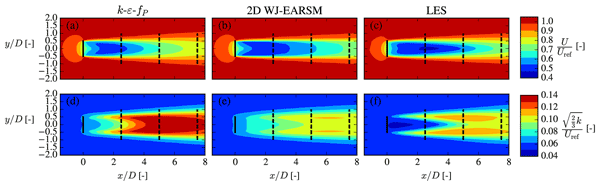
Wind turbine wakes in the neutral atmospheric surface layer are simulated with Reynolds-averaged Navier–Stokes (RANS) using an explicit algebraic Reynolds stress model. Contrary to standard two-equation turbulence models, it can predict turbulence anisotropy and complex physical phenomena like secondary motions. For the cases considered, it improves Reynolds stress, turbulence intensity, and velocity deficit predictions, although a more top-hat-shaped profile is observed for the latter.
Tuhfe Göçmen, Filippo Campagnolo, Thomas Duc, Irene Eguinoa, Søren Juhl Andersen, Vlaho Petrović, Lejla Imširović, Robert Braunbehrens, Jaime Liew, Mads Baungaard, Maarten Paul van der Laan, Guowei Qian, Maria Aparicio-Sanchez, Rubén González-Lope, Vinit V. Dighe, Marcus Becker, Maarten J. van den Broek, Jan-Willem van Wingerden, Adam Stock, Matthew Cole, Renzo Ruisi, Ervin Bossanyi, Niklas Requate, Simon Strnad, Jonas Schmidt, Lukas Vollmer, Ishaan Sood, and Johan Meyers
Wind Energ. Sci., 7, 1791–1825, https://doi.org/10.5194/wes-7-1791-2022, https://doi.org/10.5194/wes-7-1791-2022, 2022
Short summary
Short summary
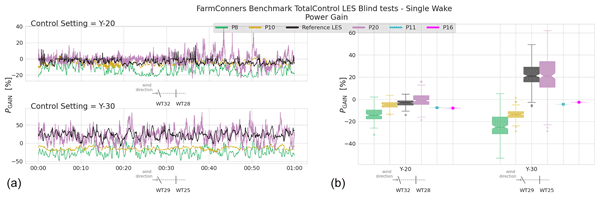
The FarmConners benchmark is the first of its kind to bring a wide variety of data sets, control settings, and model complexities for the (initial) assessment of wind farm flow control benefits. Here we present the first part of the benchmark results for three blind tests with large-scale rotors and 11 participating models in total, via direct power comparisons at the turbines as well as the observed or estimated power gain at the wind farm level under wake steering control strategy.
Jana Fischereit, Kurt Schaldemose Hansen, Xiaoli Guo Larsén, Maarten Paul van der Laan, Pierre-Elouan Réthoré, and Juan Pablo Murcia Leon
Wind Energ. Sci., 7, 1069–1091, https://doi.org/10.5194/wes-7-1069-2022, https://doi.org/10.5194/wes-7-1069-2022, 2022
Short summary
Short summary
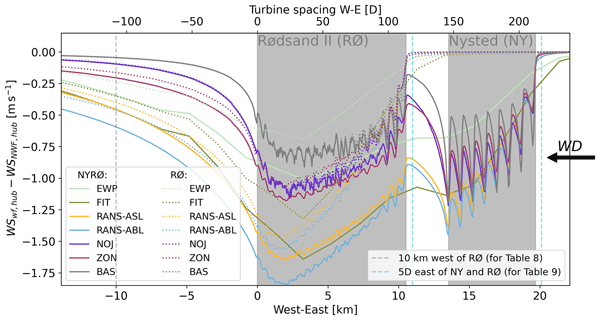
Wind turbines extract kinetic energy from the flow to create electricity. This induces a wake of reduced wind speed downstream of a turbine and consequently downstream of a wind farm. Different types of numerical models have been developed to calculate this effect. In this study, we compared models of different complexity, together with measurements over two wind farms. We found that higher-fidelity models perform better and the considered rapid models cannot fully capture the wake effect.
Mads Baungaard, Maarten Paul van der Laan, and Mark Kelly
Wind Energ. Sci., 7, 783–800, https://doi.org/10.5194/wes-7-783-2022, https://doi.org/10.5194/wes-7-783-2022, 2022
Short summary
Short summary
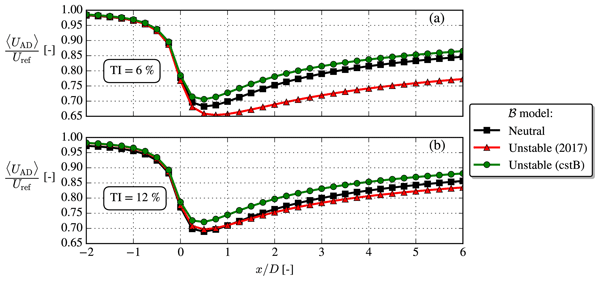
Wind turbine wakes are dependent on the atmospheric conditions, and it is therefore important to be able to simulate in various different atmospheric conditions. This paper concerns the specific case of an unstable atmospheric surface layer, which is the lower part of the typical daytime atmospheric boundary layer. A simple flow model is suggested and tested for a range of single-wake scenarios, and it shows promising results for velocity deficit predictions.
Javier Andueza-Bueno, Leonardo Alcayaga, Mikkel Friis-Møller, and Pierre-Elouan Réthoré
Wind Energ. Sci. Discuss., https://doi.org/10.5194/wes-2026-182, https://doi.org/10.5194/wes-2026-182, 2026
Preprint under review for WES
Short summary
Short summary
In a wind farm, each turbine slows down the wind behind it, so turbines downstream produce less energy. Therefore, their positions affect the farm's output, and algorithms are used to find the best layout. These algorithms estimate yearly energy output many times, which can make the process slow. This study compares faster ways of making this estimate and shows that the most useful methods are not necessarily the most accurate ones, but those that best capture how turbines affect each other.
Maarten Paul van der Laan and Simon Watson
Wind Energ. Sci., 11, 3763–3774, https://doi.org/10.5194/wes-11-3763-2026, https://doi.org/10.5194/wes-11-3763-2026, 2026
Short summary
Short summary
A theoretical limit for the energy extraction of offshore wind farms has been suggested by Simão Ferreira et al. (2026) based on a simple model of an infinite wind farm and an ad hoc method to correct the model for application to finite wind farms. In this work, we discuss a number of concerns and we conclude that the limit proposed in Simão Ferreira et al. (2026) is not a theoretical limit but rather a limit supported by the non-reproducible finite wind farm correction.
Nicola Bodini, Patrick Moriarty, Regis Thedin, Paula Doubrawa, Cristina Archer, Myra Blaylock, Carlo Bottasso, Bruno Carmo, Lawrence Cheung, Camille Dubreuil, Rogier Floors, Thomas Herges, Daniel Houck, Ali Kanjari, Colleen M. Kaul, Christopher Kelley, Ru Li, Julie K. Lundquist, Desirae Major, Anh Kiet Nguyen, Mike Optis, Luan R. C. Parada, Alfredo Peña, Julian Quick, David Ricarte, William C. Radünz, Raj K. Rai, Oscar García-Santiago, Jonas Schulte, Knut S. Seim, M. Paul van der Laan, Kisorthman Vimalakanthan, and Adam Wise
Wind Energ. Sci., 11, 3107–3135, https://doi.org/10.5194/wes-11-3107-2026, https://doi.org/10.5194/wes-11-3107-2026, 2026
Short summary
Short summary
Predicting wind farm energy production is challenging because wind patterns are complex. We tested 16 different models against real data from a major field experiment to see which worked best. Surprisingly, the most expensive and detailed models were not always more accurate than simpler ones. We found that feeding models better weather data was the most effective way to improve accuracy. These results help the industry choose the right tools for designing more-efficient wind farms.
Jens Peter Schøler, Frederik Peder Weilmann Rasmussen, M. Paul van der Laan, Alfredo Peña, and Pierre-Elouan Réthoré
Wind Energ. Sci., 11, 2869–2893, https://doi.org/10.5194/wes-11-2869-2026, https://doi.org/10.5194/wes-11-2869-2026, 2026
Short summary
Short summary
As offshore wind farms are built closer together, predicting how they affect each other becomes critical. We compared two AI approaches for this task, training both on cheap approximate data before refining them with expensive high-accuracy simulations. One predicts wake boundaries better, while the other estimates wind speeds more accurately, offering complementary tools for future wind farm design.
Jens Peter Schøler, Ernestas Simutis, M. Paul van der Laan, Julian Quick, and Pierre-Elouan Réthoré
Wind Energ. Sci., 11, 2845–2868, https://doi.org/10.5194/wes-11-2845-2026, https://doi.org/10.5194/wes-11-2845-2026, 2026
Short summary
Short summary
Wind turbines create wakes, which reduce downstream power. Optimizing turbine placement requires accounting for these reductions. We compared a neural network trained on numerical simulations against engineering wake models across various farm sizes. The neural network predicted flow most accurately but was slower. Surprisingly, a simple TurbOPark model produced layouts with higher validated energy output, suggesting that accuracy is not the only important metric for such models.
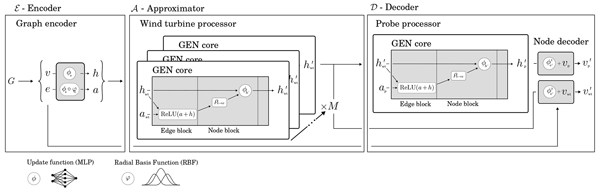
Jens Peter Schøler, Frederik Peder Weilmann Rasmussen, Julian Quick, and Pierre-Elouan Réthoré
Wind Energ. Sci., 11, 2229–2256, https://doi.org/10.5194/wes-11-2229-2026, https://doi.org/10.5194/wes-11-2229-2026, 2026
Short summary
Short summary
We propose a machine learning model that represents wind turbines as nodes in a graph, learning how they interact to predict the wind speed at any location on a farm. Trained on thousands of simulated farms, it captures complex wake interactions across varying layouts and sizes at low computational cost, supporting faster neighboring farm wake assessment.
Michele Sergio Campobasso, Alessio Castorrini, David Bretos, Beatriz Mendez, David C. Maniaci, Johannes N. Theron, Alexander Meyer Forsting, Niels Nørmark Sørensen, Kisorthman Vimalakanthan, Marco Caboni, Ruben Gutierrez, Yana Gorbachova, Aya Aihara, and Francesco Grasso
Wind Energ. Sci. Discuss., https://doi.org/10.5194/wes-2026-89, https://doi.org/10.5194/wes-2026-89, 2026
Revised manuscript under review for WES
Short summary
Short summary
We assess against wind tunnel data the predictions of aerodynamics codes used in industry and research of wind turbine airfoil performance loss due to leading edge degradation. Predictions are close to measurements for moderate surface degradation. At severe degradation, differences among predictions increase due to user model and subjectivity in detailed set-up. Also quantified is the impact of airfoil performance variability on wind turbine energy losses, providing detailed sensitivity data.
Julia Steiner, Emily Louise Hodgson, Maarten Paul van der Laan, Leonardo Alcayaga, Mads Pedersen, Søren Juhl Andersen, Gunner Larsen, and Pierre-Elouan Réthoré
Wind Energ. Sci., 11, 1679–1703, https://doi.org/10.5194/wes-11-1679-2026, https://doi.org/10.5194/wes-11-1679-2026, 2026
Short summary
Short summary
Wake steering is a promising strategy for wind farm optimization, but its success hinges on accurate wake models. We assess models of varying fidelity for a 22 MW reference turbine, comparing single- and two-turbine cases against large-eddy simulations. All models reproduced qualitative trends for power and loads (if applicable), but quantitative agreement varied, and in general the error increased with increasing yaw angle.
Oscar García-Santiago, Jake Badger, Andrea N. Hahmann, Patrick J. H. Volker, Søren Ott, M. Paul van der Laan, and Mark Kelly
EGUsphere, https://doi.org/10.5194/egusphere-2026-2144, https://doi.org/10.5194/egusphere-2026-2144, 2026
Short summary
Short summary
We improve how weather models represent the turbulence generated by wind turbines within and behind wind farms. Rather than adding this turbulence only at grid squares with turbine locations, the new method transports it through the wake as it moves downwind. Tests against high-resolution simulations of an idealised wind farm showed better agreement in wake turbulence and more accurate reductions in wind speed, providing a more realistic picture of wake effects across the wind farm.
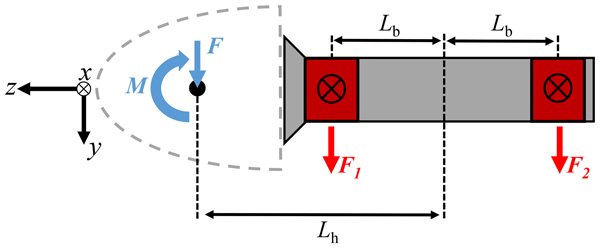
Julian Quick, Edward Hart, Marcus Binder Nilsen, Rasmus Sode Lund, Jaime Liew, Piinshin Huang, Pierre-Elouan Rethore, Jonathan Keller, Wooyong Song, and Yi Guo
Wind Energ. Sci., 11, 493–507, https://doi.org/10.5194/wes-11-493-2026, https://doi.org/10.5194/wes-11-493-2026, 2026
Short summary
Short summary
Wind turbine main bearings often fail prematurely, creating costly maintenance challenges. This study examined how wake effects – where upstream turbines create disturbed airflow that impacts downstream turbines – affect bearing lifespans. Using computer simulations, we found that wake effects reduce bearing life by 16 % on average. The direction of wake impact matters significantly due to interactions between wind forces and gravity, informing better wind turbine and farm design strategies.
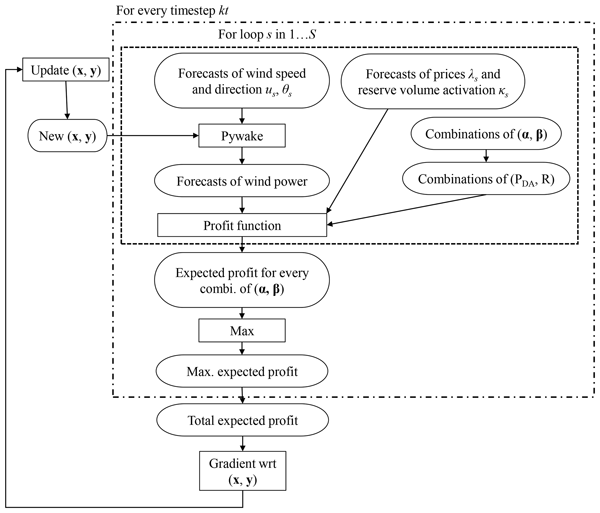
Thuy-Hai Nguyen, Julian Quick, Pierre-Elouan Réthoré, Jean-François Toubeau, Emmanuel De Jaeger, and François Vallée
Wind Energ. Sci., 10, 1661–1680, https://doi.org/10.5194/wes-10-1661-2025, https://doi.org/10.5194/wes-10-1661-2025, 2025
Short summary
Short summary
Current offshore wind farms have been designed to maximize their production of electricity at all times and not to keep a reserve of power in case of unexpected events on the grid. We present a new formulation for designing wind farms to maximize revenues from both energy and reserve markets. We apply it to a real-life wind farm and show that profits are expected to increase in a significant way for wind farms designed and operated for reserve, with less energy supplied.
Mads Baungaard, Takafumi Nishino, and Maarten Paul van der Laan
Wind Energ. Sci. Discuss., https://doi.org/10.5194/wes-2025-50, https://doi.org/10.5194/wes-2025-50, 2025
Manuscript not accepted for further review
Short summary
Short summary
A systematic comparison between 2D and 3D Reynolds-averaged Navier-Stokes simulations of wind farm flows have been conducted. It is found that the 2D simulations are, at least, two orders of magnitude computationally cheaper than their corresponding 3D simulations, while the predicted farm power is within -30 % to 15 % for all cases considered. The large computational speed-ups and sensible results makes 2D simulations a promising option in the low- to mid-fidelity range.
Maarten Paul van der Laan, Mark Kelly, Mads Baungaard, Antariksh Dicholkar, and Emily Louise Hodgson
Wind Energ. Sci., 9, 1985–2000, https://doi.org/10.5194/wes-9-1985-2024, https://doi.org/10.5194/wes-9-1985-2024, 2024
Short summary
Short summary
Wind turbines are increasing in size and operate more frequently above the atmospheric surface layer, which requires improved inflow models for numerical simulations of turbine interaction. In this work, a novel steady-state model of the atmospheric boundary layer (ABL) is introduced. Numerical wind turbine flow simulations subjected to shallow and tall ABLs are conducted, and the proposed model shows improved performance compared to other state-of-the-art steady-state models.
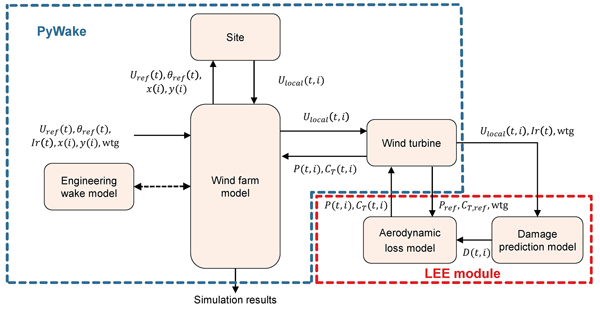
Jens Visbech, Tuhfe Göçmen, Özge Sinem Özçakmak, Alexander Meyer Forsting, Ásta Hannesdóttir, and Pierre-Elouan Réthoré
Wind Energ. Sci., 9, 1811–1826, https://doi.org/10.5194/wes-9-1811-2024, https://doi.org/10.5194/wes-9-1811-2024, 2024
Short summary
Short summary
Leading-edge erosion (LEE) can impact wind turbine aerodynamics and wind farm efficiency. This study couples LEE prediction, aerodynamic loss modeling, and wind farm flow modeling to show that LEE's effects on wake dynamics can affect overall energy production. Without preventive initiatives, the effects of LEE increase over time, resulting in significant annual energy production (AEP) loss.
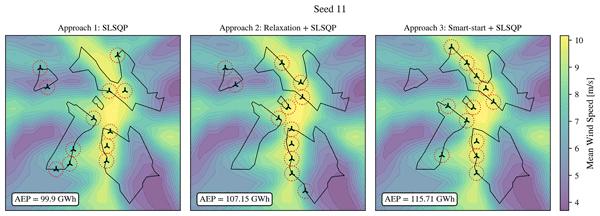
Javier Criado Risco, Rafael Valotta Rodrigues, Mikkel Friis-Møller, Julian Quick, Mads Mølgaard Pedersen, and Pierre-Elouan Réthoré
Wind Energ. Sci., 9, 585–600, https://doi.org/10.5194/wes-9-585-2024, https://doi.org/10.5194/wes-9-585-2024, 2024
Short summary
Short summary
Wind energy developers frequently have to face some spatial restrictions at the time of designing a new wind farm due to different reasons, such as the existence of protected natural areas around the wind farm location, fishing routes, and the presence of buildings. Wind farm design has to account for these restricted areas, but sometimes this is not straightforward to achieve. We have developed a methodology that allows for different inclusion and exclusion areas in the optimization framework.
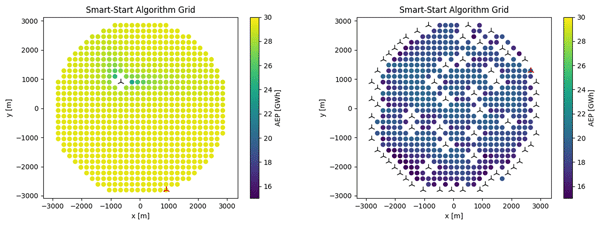
Rafael Valotta Rodrigues, Mads Mølgaard Pedersen, Jens Peter Schøler, Julian Quick, and Pierre-Elouan Réthoré
Wind Energ. Sci., 9, 321–341, https://doi.org/10.5194/wes-9-321-2024, https://doi.org/10.5194/wes-9-321-2024, 2024
Short summary
Short summary
The use of wind energy has been growing over the last few decades, and further increase is predicted. As the wind energy industry is starting to consider larger wind farms, the existing numerical methods for analysis of small and medium wind farms need to be improved. In this article, we have explored different strategies to tackle the problem in a feasible and timely way. The final product is a set of recommendations when carrying out trade-off analysis on large wind farms.
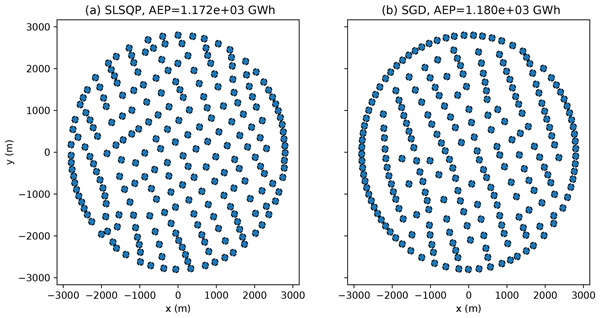
Julian Quick, Pierre-Elouan Rethore, Mads Mølgaard Pedersen, Rafael Valotta Rodrigues, and Mikkel Friis-Møller
Wind Energ. Sci., 8, 1235–1250, https://doi.org/10.5194/wes-8-1235-2023, https://doi.org/10.5194/wes-8-1235-2023, 2023
Short summary
Short summary
Wind turbine positions are often optimized to avoid wake losses. These losses depend on atmospheric conditions, such as the wind speed and direction. The typical optimization scheme involves discretizing the atmospheric inputs, then considering every possible set of these discretized inputs in every optimization iteration. This work presents stochastic gradient descent (SGD) as an alternative, which randomly samples the atmospheric conditions during every optimization iteration.
Mark Kelly and Maarten Paul van der Laan
Wind Energ. Sci., 8, 975–998, https://doi.org/10.5194/wes-8-975-2023, https://doi.org/10.5194/wes-8-975-2023, 2023
Short summary
Short summary
The turning of the wind with height, which is known as veer, can affect wind turbine performance. Thus far meteorology has only given idealized descriptions of veer, which has not yet been related in a way readily usable for wind energy. Here we derive equations for veer in terms of meteorological quantities and provide practically usable forms in terms of measurable shear (change in wind speed with height). Flow simulations and measurements at turbine heights support these developments.
Maarten Paul van der Laan, Oscar García-Santiago, Mark Kelly, Alexander Meyer Forsting, Camille Dubreuil-Boisclair, Knut Sponheim Seim, Marc Imberger, Alfredo Peña, Niels Nørmark Sørensen, and Pierre-Elouan Réthoré
Wind Energ. Sci., 8, 819–848, https://doi.org/10.5194/wes-8-819-2023, https://doi.org/10.5194/wes-8-819-2023, 2023
Short summary
Short summary
Offshore wind farms are more commonly installed in wind farm clusters, where wind farm interaction can lead to energy losses. In this work, an efficient numerical method is presented that can be used to estimate these energy losses. The novel method is verified with higher-fidelity numerical models and validated with measurements of an existing wind farm cluster.
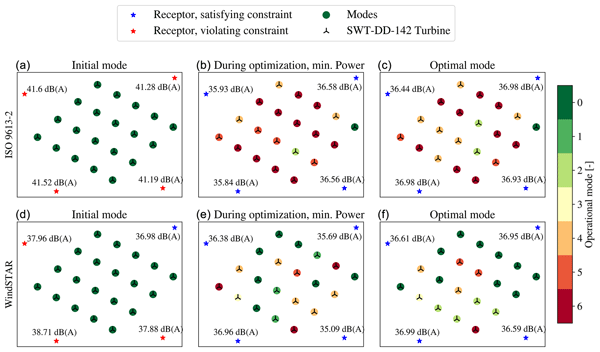
Camilla Marie Nyborg, Andreas Fischer, Pierre-Elouan Réthoré, and Ju Feng
Wind Energ. Sci., 8, 255–276, https://doi.org/10.5194/wes-8-255-2023, https://doi.org/10.5194/wes-8-255-2023, 2023
Short summary
Short summary
Our article presents a way of optimizing the wind farm operation by keeping the emitted noise level below a defined limit while maximizing the power output. This is done by switching between noise reducing operational modes. The method has been developed by using two different noise models, one more advanced than the other, to study the advantages of each model. Furthermore, the optimization method is applied to different wind farm cases.
Maarten Paul van der Laan, Mads Baungaard, and Mark Kelly
Wind Energ. Sci., 8, 247–254, https://doi.org/10.5194/wes-8-247-2023, https://doi.org/10.5194/wes-8-247-2023, 2023
Short summary
Short summary
Understanding wind turbine wake recovery is important to mitigate energy losses in wind farms. Wake recovery is often assumed or explained to be dependent on the first-order derivative of velocity. In this work we show that wind turbine wakes recover mainly due to the second-order derivative of the velocity, which transport momentum from the freestream towards the wake center. The wake recovery mechanisms and results of a high-fidelity numerical simulation are illustrated using a simple model.
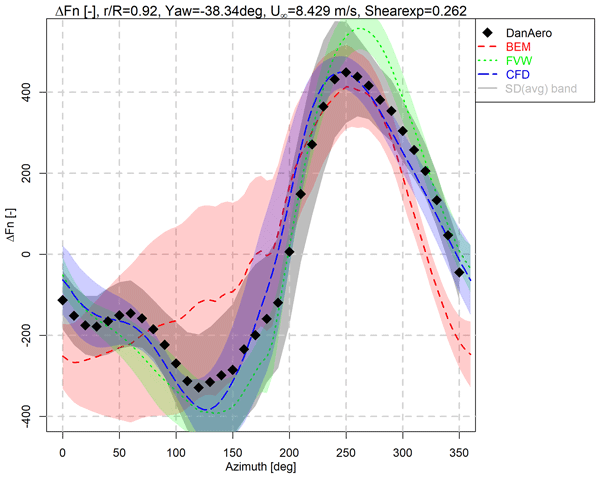
Koen Boorsma, Gerard Schepers, Helge Aagard Madsen, Georg Pirrung, Niels Sørensen, Galih Bangga, Manfred Imiela, Christian Grinderslev, Alexander Meyer Forsting, Wen Zhong Shen, Alessandro Croce, Stefano Cacciola, Alois Peter Schaffarczyk, Brandon Lobo, Frederic Blondel, Philippe Gilbert, Ronan Boisard, Leo Höning, Luca Greco, Claudio Testa, Emmanuel Branlard, Jason Jonkman, and Ganesh Vijayakumar
Wind Energ. Sci., 8, 211–230, https://doi.org/10.5194/wes-8-211-2023, https://doi.org/10.5194/wes-8-211-2023, 2023
Short summary
Short summary
Within the framework of the fourth phase of the International Energy Agency's (IEA) Wind Task 29, a large comparison exercise between measurements and aeroelastic simulations has been carried out. Results were obtained from more than 19 simulation tools of various fidelity, originating from 12 institutes and compared to state-of-the-art field measurements. The result is a unique insight into the current status and accuracy of rotor aerodynamic modeling.
Mads Baungaard, Stefan Wallin, Maarten Paul van der Laan, and Mark Kelly
Wind Energ. Sci., 7, 1975–2002, https://doi.org/10.5194/wes-7-1975-2022, https://doi.org/10.5194/wes-7-1975-2022, 2022
Short summary
Short summary
Wind turbine wakes in the neutral atmospheric surface layer are simulated with Reynolds-averaged Navier–Stokes (RANS) using an explicit algebraic Reynolds stress model. Contrary to standard two-equation turbulence models, it can predict turbulence anisotropy and complex physical phenomena like secondary motions. For the cases considered, it improves Reynolds stress, turbulence intensity, and velocity deficit predictions, although a more top-hat-shaped profile is observed for the latter.
Tuhfe Göçmen, Filippo Campagnolo, Thomas Duc, Irene Eguinoa, Søren Juhl Andersen, Vlaho Petrović, Lejla Imširović, Robert Braunbehrens, Jaime Liew, Mads Baungaard, Maarten Paul van der Laan, Guowei Qian, Maria Aparicio-Sanchez, Rubén González-Lope, Vinit V. Dighe, Marcus Becker, Maarten J. van den Broek, Jan-Willem van Wingerden, Adam Stock, Matthew Cole, Renzo Ruisi, Ervin Bossanyi, Niklas Requate, Simon Strnad, Jonas Schmidt, Lukas Vollmer, Ishaan Sood, and Johan Meyers
Wind Energ. Sci., 7, 1791–1825, https://doi.org/10.5194/wes-7-1791-2022, https://doi.org/10.5194/wes-7-1791-2022, 2022
Short summary
Short summary
The FarmConners benchmark is the first of its kind to bring a wide variety of data sets, control settings, and model complexities for the (initial) assessment of wind farm flow control benefits. Here we present the first part of the benchmark results for three blind tests with large-scale rotors and 11 participating models in total, via direct power comparisons at the turbines as well as the observed or estimated power gain at the wind farm level under wake steering control strategy.
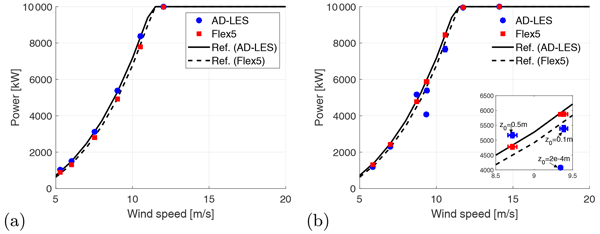
Niels Troldborg, Søren J. Andersen, Emily L. Hodgson, and Alexander Meyer Forsting
Wind Energ. Sci., 7, 1527–1532, https://doi.org/10.5194/wes-7-1527-2022, https://doi.org/10.5194/wes-7-1527-2022, 2022
Short summary
Short summary
This article shows that the power performance of a wind turbine may be very different in flat and complex terrain. This is an important finding because it shows that the power output of a given wind turbine is governed by not only the available wind at the position of the turbine but also how the ambient flow develops in the region behind the turbine.
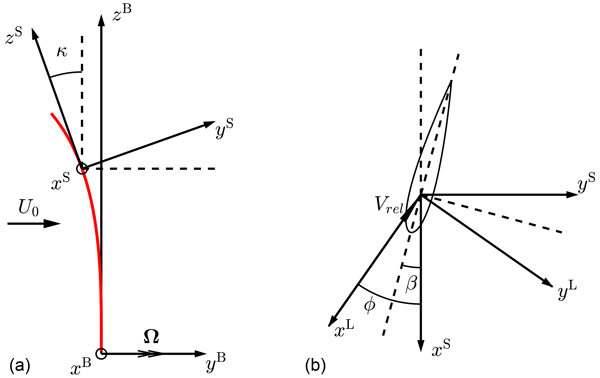
Ang Li, Mac Gaunaa, Georg Raimund Pirrung, Alexander Meyer Forsting, and Sergio González Horcas
Wind Energ. Sci., 7, 1341–1365, https://doi.org/10.5194/wes-7-1341-2022, https://doi.org/10.5194/wes-7-1341-2022, 2022
Short summary
Short summary
A consistent method of using two-dimensional airfoil data when using generalized lifting-line methods for the aerodynamic load calculation of non-planar horizontal-axis wind turbines is described. The important conclusions from the unsteady two-dimensional airfoil aerodynamics are highlighted. The impact of using a simplified approach instead of using the full model on the prediction of the aerodynamic performance of non-planar rotors is shown numerically for different aerodynamic models.
Jana Fischereit, Kurt Schaldemose Hansen, Xiaoli Guo Larsén, Maarten Paul van der Laan, Pierre-Elouan Réthoré, and Juan Pablo Murcia Leon
Wind Energ. Sci., 7, 1069–1091, https://doi.org/10.5194/wes-7-1069-2022, https://doi.org/10.5194/wes-7-1069-2022, 2022
Short summary
Short summary
Wind turbines extract kinetic energy from the flow to create electricity. This induces a wake of reduced wind speed downstream of a turbine and consequently downstream of a wind farm. Different types of numerical models have been developed to calculate this effect. In this study, we compared models of different complexity, together with measurements over two wind farms. We found that higher-fidelity models perform better and the considered rapid models cannot fully capture the wake effect.
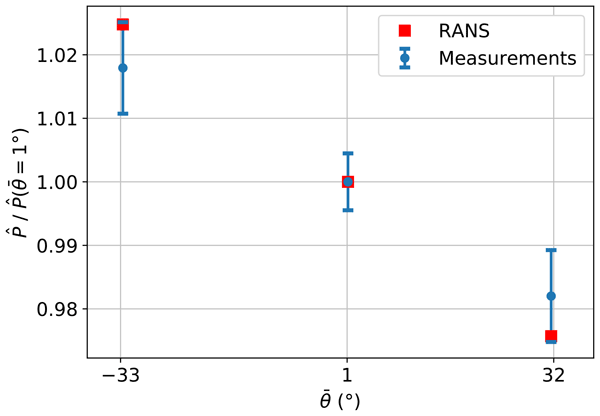
Alessandro Sebastiani, Alfredo Peña, Niels Troldborg, and Alexander Meyer Forsting
Wind Energ. Sci., 7, 875–886, https://doi.org/10.5194/wes-7-875-2022, https://doi.org/10.5194/wes-7-875-2022, 2022
Short summary
Short summary
The power performance of a wind turbine is often tested with the turbine standing in a row of several wind turbines, as it is assumed that the performance is not affected by the neighbouring turbines. We test this assumption with both simulations and measurements, and we show that the power performance can be either enhanced or lowered by the neighbouring wind turbines. Consequently, we also show how power performance testing might be biased when performed on a row of several wind turbines.
Mads Baungaard, Maarten Paul van der Laan, and Mark Kelly
Wind Energ. Sci., 7, 783–800, https://doi.org/10.5194/wes-7-783-2022, https://doi.org/10.5194/wes-7-783-2022, 2022
Short summary
Short summary
Wind turbine wakes are dependent on the atmospheric conditions, and it is therefore important to be able to simulate in various different atmospheric conditions. This paper concerns the specific case of an unstable atmospheric surface layer, which is the lower part of the typical daytime atmospheric boundary layer. A simple flow model is suggested and tested for a range of single-wake scenarios, and it shows promising results for velocity deficit predictions.
Cited articles
Andersen, S. J. and Murcia Leon, J. P.: Predictive and stochastic reduced-order modeling of wind turbine wake dynamics, Wind Energ. Sci., 7, 2117–2133, https://doi.org/10.5194/wes-7-2117-2022, 2022. a
Bak, C., Zahle, F., Bitsche, R., Kim, T., Yde, A., Henriksen, L., Natarajan, A., and Hansen, M.: Description of the DTU 10 MW Reference Wind Turbine, Tech. Rep., DTU Wind Energy Report-I-0092, Technical University of Denmark, 2013. a
Barthelmie, R. J., Frandsen, S. T., Nielsen, M. N., Pryor, S. C., Rethore, P. E., and Jørgensen, H. E.: Modelling and measurements of power losses and turbulence intensity in wind turbine wakes at middelgrunden offshore wind farm, Wind Energy, 10, 517–528, https://doi.org/10.1002/we.238, 2007. a
Bastankhah, M. and Porté-Agel, F.: A new analytical model for wind-turbine wakes (special issue on aerodynamics of offshore wind energy systems and wakes), Renew. Energ., 70, 116–123, https://doi.org/10.1016/j.renene.2014.01.002, 2014. a
Bastankhah, M., Welch, B. L., Martínez-Tossas, L. A., King, J., and Fleming, P.: Analytical solution for the cumulative wake of wind turbines in wind farms, J. Fluid Mech., 911, A53, https://doi.org/10.1017/jfm.2020.1037, 2021. a
Baungaard, M., van der Laan, M. P., and Kelly, M.: RANS modeling of a single wind turbine wake in the unstable surface layer, Wind Energ. Sci., 7, 783–800, https://doi.org/10.5194/wes-7-783-2022, 2022a. a, b, c, d
Baungaard, M., Wallin, S., van der Laan, M. P., and Kelly, M.: Wind turbine wake simulation with explicit algebraic Reynolds stress modeling, Wind Energ. Sci., 7, 1975–2002, https://doi.org/10.5194/wes-7-1975-2022, 2022b. a
Bleeg, J., Purcell, M., Ruisi, R., and Traiger, E.: Wind Farm Blockage and the Consequences of Neglecting Its Impact on Energy Production, Energies, 11, https://doi.org/10.3390/en11061609, 2018. a
Boussinesq, M. J.: Théorie de l'écoulement tourbillonnant et tumultueux des liquides, Gauthier-Villars et fils, Paris, France, 1897. a
Calaf, M., Meneveau, C., and Meyers, J.: Large eddy simulation study of fully developed wind-turbine array boundary layers, Phys. Fluids, 22, 015110, https://doi.org/10.1063/1.3291077, 2010. a
Delvaux, T., Van Der Laan, M. P., and Terrapon, V. E.: A new RANS-based added turbulence intensity model for wind-farm flow modelling, J. Phys. Conf. Ser., 2767, 092089, https://doi.org/10.1088/1742-6596/2767/9/092089, 2024. a, b
Doubrawa, P., Quon, E. W., Martinez-Tossas, L. A., Shaler, K., Debnath, M., Hamilton, N., Herges, T. G., Maniaci, D., Kelley, C. L., Hsieh, A. S., Blaylock, M. L., van der Laan, P., Andersen, S. J., Krueger, S., Cathelain, M., Schlez, W., Jonkman, J., Branlard, E., Steinfeld, G., Schmidt, S., Blondel, F., Lukassen, L. J., and Moriarty, P.: Multimodel validation of single wakes in neutral and stratified atmospheric conditions, Wind Energy, 23, 2027–2055, https://doi.org/10.1002/we.2543, 2020. a, b
DTU Wind and Energy Systems: PyWakeEllipSys v5.4, https://topfarm.pages.windenergy.dtu.dk/cuttingedge/pywake/pywake_ellipsys/ (last access: 13 July 2026), 2025. a
Ebenhoch, R., Muro, B., Dahlberg, J.-Å., Berkesten Hägglund, P., and Segalini, A.: A linearized numerical model of wind-farm flows, Wind Energy, 20, 859–875, https://doi.org/10.1002/we.2067, 2017. a, b
Göçmen, T., van der Laan, M. P., Réthoré, P. E., Peña Diaz, A., Larsen, G. C., and Ott, S.: Wind turbine wake models developed at the technical university of Denmark: A review, Renew. Sust. Energ. Rev., 60, 752–769, 2016. a
Hoyer, S. and Hamman, J.: xarray: N–D labeled arrays and datasets in Python, Journal of Open Research Software, 5, https://doi.org/10.5334/jors.148, 2017. a
Jacquet, C., Apgar, D., Chauchan, V., Storey, R., Kern, S., and Davoust, S.: Farm blockage model validation using pre and post construction LiDAR measurements, J. Phys. Conf. Ser., 2265, 022009, https://doi.org/10.1088/1742-6596/2265/2/022009, 2022. a, b, c, d
Jensen, N.: A note on wind generator interaction, no. 2411 in Risø-M, Risø National Laboratory, 1983. a
Jigjid, K., Eidi, A., Doan, N. A. K., and Dwight, R. P.: Discovery of a Physically Interpretable Data-Driven Wind-Turbine Wake Model, Flow Turbul. Combust., https://doi.org/10.1007/s10494-025-00679-y, 2025. a
Jonkman, J., Butterfield, S., Musial, W., and Scott, G.: Definition of a 5-MW Reference Wind Turbine for Offshore System Development, Tech. rep., National Renewable Energy Laboratory, https://docs.nlr.gov/docs/fy09osti/38060.pdf (last access: 13 July 2026), 2009. a
Katic, I., Højstrup, J., and Jensen, N.: A Simple Model for Cluster Efficiency, in: EWEC'86. Proceedings, Vol. 1, edited by: Palz, W. and Sesto, E., 407–410, European Wind Energy Association Conference and Exhibition, EWEC '86; Conference date: 6–8 October 1986, Rome, Italy, 1987. a
Meyer Forsting, A. R., Navarro Diaz, G. P., Segalini, A., Andersen, S. J., and Ivanell, S.: On the accuracy of predicting wind-farm blockage, Renew. Energ., 214, 114–129, https://doi.org/10.1016/j.renene.2023.05.129, 2023. a
Michelsen, J. A.: Basis3D – a platform for development of multiblock PDE solvers., Tech. Rep. AFM 92-05, Technical University of Denmark, Lyngby, Denmark, 1992. a
Mikkelsen, R.: Actuator Disc Methods Applied to Wind Turbines, PhD thesis, Technical University of Denmark, Mek dept, Lyngby, Denmark, 2003. a
Niayifar, A. and Porté-Agel, F.: Analytical Modeling of Wind Farms: A New Approach for Power Prediction, Energies, 9, https://doi.org/10.3390/en9090741, 2016. a
Nygaard, N. G., Steen, S. T., Poulsen, L., and Pedersen, J. G.: Modelling cluster wakes and wind farm blockage, J. Phys. Conf. Ser., 1618, 062072, https://doi.org/10.1088/1742-6596/1618/6/062072, 2020. a
Pedersen, M. M., van der Laan, P., Friis-Møller, M., Rinker, J., and Réthoré, P.-E.: DTUWindEnergy/PyWake: PyWake, Zenodo [code], https://doi.org/10.5281/zenodo.2562661, 2019. a
Pedersen, J. G., Svensson, E., Poulsen, L., and Nygaard, N. G.: Turbulence Optimized Park model with Gaussian wake profile, J. Phys. Conf. Ser., 2265, 022063, https://doi.org/10.1088/1742-6596/2265/2/022063, 2022. a
Pedersen, M. M., Meyer Forsting, A., van der Laan, P., Riva, R., Alcayaga Romàn, L. A., Criado Risco, J., Friis-Møller, M., Quick, J., Schøler Christiansen, J. P., Valotta Rodrigues, R., Olsen, B. T., and Réthoré, P.-E.: PyWake 2.5.0: An open-source wind farm simulation tool, Zenodo [code], https://doi.org/10.5281/zenodo.6806136, 2023. a, b, c
Peña, A., Réthoré, P.-E., and van der Laan, M. P.: On the application of the Jensen wake model using a turbulence-dependent wake decay coefficient: the Sexbierum case, Wind Energy, 19, 763–776, https://doi.org/10.1002/we.1863, 2016. a
Porté-Agel, F., Bastankhah, M., and Shamsoddin, S.: Wind-Turbine and Wind-Farm Flows: A Review, Bound.-Lay. Meteorol., 174, 1–59, https://doi.org/10.1007/s10546-019-00473-0, 2020. a, b
Prospathopoulos, J. M., Politis, E. S., Rados, K. G., and Chaviaropoulos, P. K.: Evaluation of the effects of turbulence model enhancements on wind turbine wake predictions, Wind Energy, 14, 285–300, https://doi.org/10.1002/we.419, 2011. a
Réthoré, P.: Wind Turbine Wake in Atmospheric Turbulence, PhD thesis, Risø National Laboratory for Sustainable Energy, ISBN: 978-87-550-3785-4, 2009. a
Réthoré, P.-E., van der Laan, M. P., Troldborg, N., Zahle, F., and Sørensen, N. N.: Verification and validation of an actuator disc model, Wind Energy, 17, 919–937, https://doi.org/10.1002/we.1607, 2014. a
Roy, C. J.: Grid Convergence Error Analysis for Mixed-Order Numerical Schemes, AIAA J., 41, 595–604, https://doi.org/10.2514/2.2013, 2003. a
Schøler, J. P., Riva, R., Andersen, S. J., Murcia Leon, J. P., van der Laan, M. P., Criado Risco, J., and Réthoré, P.-E.: RANS-AD based ANN surrogate model for wind turbine wake deficits, J. Phys. Conf. Ser., 2505, 012022, https://doi.org/10.1088/1742-6596/2505/1/012022, 2023. a
Sørensen, N. N.: General purpose flow solver applied to flow over hills, PhD thesis, Risø National Laboratory, Roskilde, Denmark, 1994. a
Sørensen, J. N., Mikkelsen, R., Henningson, D. S., Ivanell, S., Sarmast, S., and Andersen, S. J.: Simulation of wind turbine wakes using the actuator line technique, Philos. T. R. Soc. A, 373, 20140071, https://doi.org/10.1098/rsta.2014.0071, 2015. a, b
Sørensen, J. N., Nilsson, K., Ivanell, S., Asmuth, H., and Mikkelsen, R. F.: Analytical body forces in numerical actuator disc model of wind turbines, Renew. Energ., 147, 2259, https://doi.org/10.1016/j.renene.2019.09.134, 2020. a
Technical University of Denmark: Sophia HPC Cluster, Research Computing at DTU, https://doi.org/10.57940/FAFC-6M81, 2019. a, b
Troldborg, N., Sørensen, N., Réthoré, P.-E., and van der Laan, P.: A consistent method for finite volume discretization of body forces on collocated grids applied to flow through an actuator disk, Comput. Fluids, 119, 197–203, https://doi.org/10.1016/j.compfluid.2015.06.028, 2015. a
van der Laan, M. P. and Andersen, S. J.: The turbulence scales of a wind turbine wake: A revisit of extended k-epsilon models, J. Phys. Conf. Ser., 1037, 072001, https://doi.org/10.1088/1742-6596/1037/7/072001, 2018. a
van der Laan, M. P. and Sørensen, N. N.: A 1D version of EllipSys, Tech. Rep. DTU Wind Energy E-0141, Technical University of Denmark, ISBN: 978-87-93549-08-1, 2017. a
van der Laan, M. P., Sørensen, N. N., Réthoré, P.-E., Mann, J., Kelly, M. C., and Troldborg, N.: The k–ε–fP model applied to double wind turbine wakes using different actuator disk force methods, Wind Energy, 18, 2223–2240, https://doi.org/10.1002/we.1816, 2015a. a
van der Laan, M. P., Sørensen, N. N., Réthoré, P.-E., Mann, J., Kelly, M. C., Troldborg, N., Hansen, K. S., and Murcia, J. P.: The k–ε–fP model applied to wind farms, Wind Energy, 18, 2065–2084, https://doi.org/10.1002/we.1804, 2015b. a, b
van der Laan, M., Andersen, S., Kelly, M., and Baungaard, M.: Fluid scaling laws of idealized wind farm simulations, J. Phys. Conf. Ser., 1618, 062018, https://doi.org/10.1088/1742-6596/1618/6/062018, 2020. a, b, c
van der Laan, M. P., Andersen, S. J., Réthoré, P.-E., Baungaard, M., Sørensen, J. N., and Troldborg, N.: Faster wind farm AEP calculations with CFD using a generalized wind turbine model, J. Phys. Conf. Ser., 2265, 022030, https://doi.org/10.1088/1742-6596/2265/2/022030, 2022. a, b, c, d
van der Laan, M. P., García-Santiago, O., Kelly, M., Meyer Forsting, A., Dubreuil-Boisclair, C., Sponheim Seim, K., Imberger, M., Peña, A., Sørensen, N. N., and Réthoré, P.-E.: A new RANS-based wind farm parameterization and inflow model for wind farm cluster modeling, Wind Energ. Sci., 8, 819–848, https://doi.org/10.5194/wes-8-819-2023, 2023. a
van der Laan, M. P., Kelly, M., Baungaard, M., Dicholkar, A., and Hodgson, E. L.: A simple steady-state inflow model of the neutral and stable atmospheric boundary layer applied to wind turbine wake simulations, Wind Energ. Sci., 9, 1985–2000, https://doi.org/10.5194/wes-9-1985-2024, 2024. a, b
van der Laan, M. P., Meyer Forsting, A., and Réthoré, P.-E.: Python script for RANS surrogate model, accepted in Wind Energy Science: A consistent computational fluid dynamics surrogate model for wind turbine interaction including atmospheric stability, Zenodo [code], https://doi.org/10.5281/zenodo.21338574, 2026. a
Short summary
Wind turbine interaction can lead to energy losses. This article introduces a fast open-source wind turbine interaction model that can be used to design energy-efficient wind farms, including effects of atmospheric turbulence and temperature. The model can inherit the accuracy of a higher-fidelity model while being about 5 orders of magnitude faster. However, the model is an order of magnitude slower than analytic wind turbine interaction models, and more research is needed to reduce it.
Wind turbine interaction can lead to energy losses. This article introduces a fast open-source...


Altmetrics
Final-revised paper
Preprint