
Articles | Volume 11, issue 2
https://doi.org/10.5194/wes-11-347-2026
© Author(s) 2026. This work is distributed under
the Creative Commons Attribution 4.0 License.
the Creative Commons Attribution 4.0 License.
https://doi.org/10.5194/wes-11-347-2026
© Author(s) 2026. This work is distributed under
the Creative Commons Attribution 4.0 License.
the Creative Commons Attribution 4.0 License.
Editorial
| 
08 Feb 2026
Editorial |
| 08 Feb 2026
| 08 Feb 2026
Editorial: Celebrating the first decade of Wind Energy Science

Wind Energy Institute, Technical University of Munich, Boltzmannstr. 15, Garching bei München, 85748, Germany
WES editor-in-chief
Sandrine Aubrun
Nantes Université, École Centrale Nantes, CNRS, LHEEA, UMR 6598, Nantes, 44000, France
WES chief editor
Nicolaos A. Cutululis
DTU Wind & Energy Systems, Technical University of Denmark, Risø Campus, Roskilde, 4000, Denmark
WES chief editor
Julia Gottschall
Fraunhofer Institute for Wind Energy Systems (IWES), Am Seedeich 45, Bremerhaven, 27572, Germany
Faculty of Geosciences, University of Bremen, Klagenfurter Str. 4, Bremen, 28359, Germany
WES chief editor
Athanasios Kolios
DTU Wind & Energy Systems, Technical University of Denmark, Risø Campus, Roskilde, 4000, Denmark
WES chief editor
Jakob Mann
DTU Wind & Energy Systems, Technical University of Denmark, Risø Campus, Roskilde, 4000, Denmark
WES chief editor
Paul Veers
North American Wind Energy Academy, 4750 Table Mesa Drive, Boulder, CO, 80305, USA
WES chief editor
Related authors
Hadi Hoghooghi and Carlo L. Bottasso
Wind Energ. Sci. Discuss., https://doi.org/10.5194/wes-2026-156, https://doi.org/10.5194/wes-2026-156, 2026
Preprint under review for WES
Short summary
Short summary
Wind turbines operate under changing weather conditions, making it difficult to accurately estimate structural stress. This study improves a digital model by combining engineering knowledge with learning from real turbine measurements. The new approach significantly reduced prediction errors and remained reliable across different conditions. More accurate load estimates can support better turbine monitoring and maintenance planning.
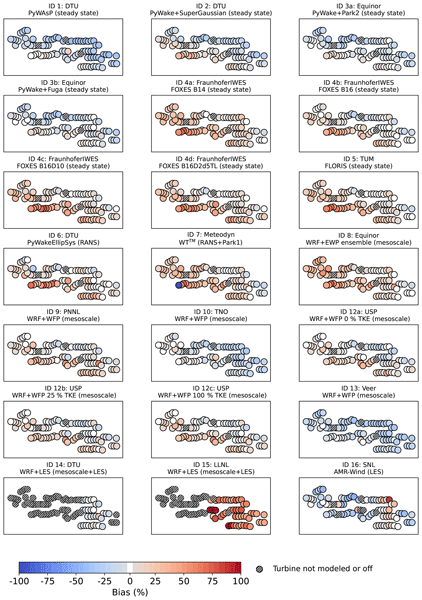
Nicola Bodini, Patrick Moriarty, Regis Thedin, Paula Doubrawa, Cristina Archer, Myra Blaylock, Carlo Bottasso, Bruno Carmo, Lawrence Cheung, Camille Dubreuil, Rogier Floors, Thomas Herges, Daniel Houck, Ali Kanjari, Colleen M. Kaul, Christopher Kelley, Ru Li, Julie K. Lundquist, Desirae Major, Anh Kiet Nguyen, Mike Optis, Luan R. C. Parada, Alfredo Peña, Julian Quick, David Ricarte, William C. Radünz, Raj K. Rai, Oscar García-Santiago, Jonas Schulte, Knut S. Seim, M. Paul van der Laan, Kisorthman Vimalakanthan, and Adam Wise
Wind Energ. Sci., 11, 3107–3135, https://doi.org/10.5194/wes-11-3107-2026, https://doi.org/10.5194/wes-11-3107-2026, 2026
Short summary
Short summary
Predicting wind farm energy production is challenging because wind patterns are complex. We tested 16 different models against real data from a major field experiment to see which worked best. Surprisingly, the most expensive and detailed models were not always more accurate than simpler ones. We found that feeding models better weather data was the most effective way to improve accuracy. These results help the industry choose the right tools for designing more-efficient wind farms.
Hadi Hoghooghi and Carlo L. Bottasso
Wind Energ. Sci. Discuss., https://doi.org/10.5194/wes-2026-102, https://doi.org/10.5194/wes-2026-102, 2026
Manuscript not accepted for further review
Short summary
Short summary
Reliable wind turbine fatigue load estimates are key to assessing structural integrity and service life. This study integrates a simplified simulation model with machine learning to enhance predictions while protecting industrial design confidentiality. It achieves DEL errors under 5 % across varied conditions and performs well on simulated and field data, supporting improved monitoring, maintenance, and lifetime assessment.
Carlo Rosario Sucameli, Marta Bertelè, Robert Braunbehrens, Filippo Campagnolo, Simone Tamaro, Paul Hulsman, and Carlo Luigi Bottasso
Wind Energ. Sci. Discuss., https://doi.org/10.5194/wes-2026-93, https://doi.org/10.5194/wes-2026-93, 2026
Preprint under review for WES
Short summary
Short summary
Wind turbines extract energy by slowing the air, so downstream turbines receive less wind and produce less power, a phenomenon called wake. Wind is not uniform: it varies in both speed and direction with height, also affecting downstream turbines. Using a year of measurements and simulations, we found that both effects influence the power production of downstream turbines by pushing the air sideways. We built improved models to capture these effects, enabling better wind farm control strategies.
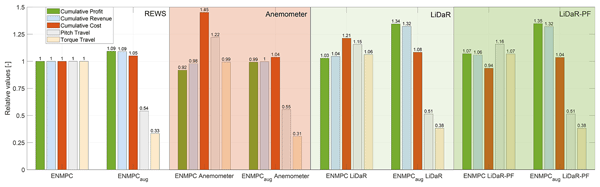
Abhinav Anand and Carlo L. Bottasso
Wind Energ. Sci., 11, 1989–2008, https://doi.org/10.5194/wes-11-1989-2026, https://doi.org/10.5194/wes-11-1989-2026, 2026
Short summary
Short summary
We formulate a controller for wind turbines that has three main characteristics. First, it optimizes profit by balancing revenue from power generation with cost. Second, cost includes the effects of cyclic fatigue that, departing from most of the existing literature on control, is rigorously accounted for by an exact cycle counting on receding horizons. Third, it uses a model capable of learning and improving its performance based on measured or synthetic data.
Filippo Campagnolo, Doruk Aktan, Davide Bortolin, Simone Tamaro, Franz V. Mühle, and Carlo L. Bottasso
Wind Energ. Sci. Discuss., https://doi.org/10.5194/wes-2026-86, https://doi.org/10.5194/wes-2026-86, 2026
Revised manuscript accepted for WES
Short summary
Short summary
This paper presents an open-access wind-tunnel dataset of actuated, scaled wind turbines with time-resolved measurements of loads, actuator commands, inflow conditions and wakes. It covers multiple wake-control strategies (yaw steering, derating, Helix, dynamic yaw, Pulse, pitch control). Combined with numerical models, the dataset enables benchmarking, controller analysis, and validation of aeroelastic and wake models for wind-farm control research.
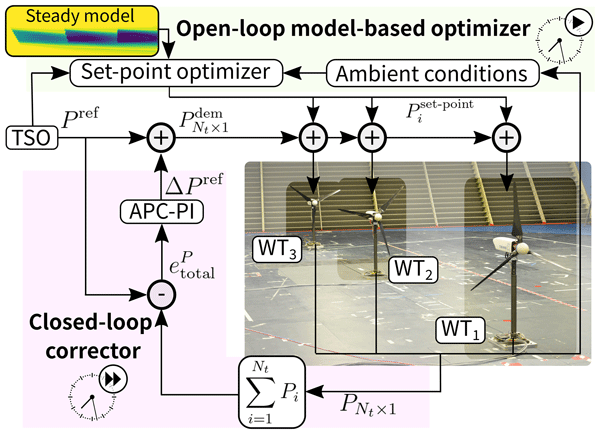
Simone Tamaro, Davide Bortolin, Filippo Campagnolo, Franz V. Mühle, and Carlo L. Bottasso
Wind Energ. Sci., 11, 1607–1630, https://doi.org/10.5194/wes-11-1607-2026, https://doi.org/10.5194/wes-11-1607-2026, 2026
Short summary
Short summary
This work presents the scaled experimental validation of an active power control (APC) algorithm that improves wind farm power-tracking accuracy during turbulent wind lulls. Tests in a large low-blockage wind tunnel, including dynamic wind-direction changes, show that the method outperforms three reference APC strategies, especially under high power demand, while keeping structural fatigue low.
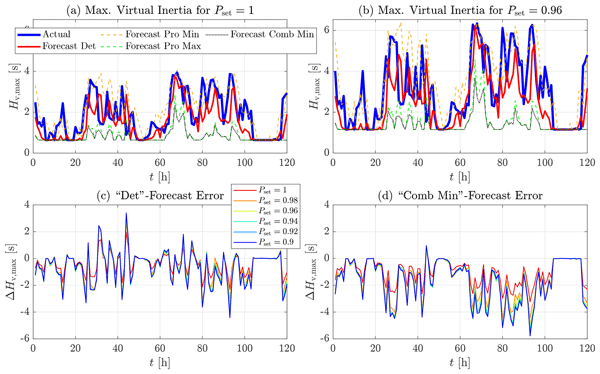
Andre Thommessen, Abhinav Anand, Carlo L. Bottasso, and Christoph M. Hackl
Wind Energ. Sci., 11, 1399–1428, https://doi.org/10.5194/wes-11-1399-2026, https://doi.org/10.5194/wes-11-1399-2026, 2026
Short summary
Short summary
We present a method to forecast inertia that accounts for wake effects in a wind farm. The approach is based on mapping forecasted site conditions to each single wind turbine in the farm through a wake model. The resulting inflow conditions are used to predict the inertia that the wind farm can provide to the grid, taking the wind turbine control strategies and operational limits into account.
Marinos Manolesos, Sandrine Aubrun, Christian Bak, Paolo Bettini, Filippo Campagnolo, Alessandro Croce, Arslan Salim Dar, Michael Hölling, Stefan Ivanell, Konstantinos Kellaris, Miguel Alfonso Mendez, Pierluigi Montinari, Franz Mühle, George Papadakis, Fernardo Porté-Agel, Daniele Ragni, Sebastiano Randino, Andrea Sciacchitano, Lorenzo Schena, Gerard Schepers, Antonio Segalini, Wei Yu, and Carlo Luigi Bottasso
Wind Energ. Sci. Discuss., https://doi.org/10.5194/wes-2026-51, https://doi.org/10.5194/wes-2026-51, 2026
Manuscript not accepted for further review
Short summary
Short summary
As wind turbines grow to unprecedented sizes, ensuring their reliability requires advanced testing. We reviewed the current state of wind tunnel experiments, examining how scaled physical models are evaluated for wind flow, flexibility, and noise. We conclude that while laboratory testing remains essential, it is most powerful when integrated with computer simulations and real-world data. This combined approach will ultimately drive the design of more efficient and sustainable wind energy.
Andreas Vad, Adrien Guilloré, Abhinav Anand, Vasilis Pettas, Anik H. Shah, Ion Lizarraga-Saenz, Maria Aparicio-Sanchez, Irene Eguinoa, Nicolau Conti Gost, Iasonas Tsaklis, Ariane Frère, Koen W. Hermans, Joseph K. Kamau, Nikolay Dimitrov, Tuhfe Göçmen, and Carlo L. Bottasso
Wind Energ. Sci. Discuss., https://doi.org/10.5194/wes-2026-45, https://doi.org/10.5194/wes-2026-45, 2026
Revised manuscript under review for WES
Short summary
Short summary
A modular, computationally efficient framework for wind‑farm response modeling is presented. It combines an engineering wake model with surrogate models trained on extensive aeroelastic simulations generated using a novel method for synthetic waked and clean inflows. The wind‑farm‑agnostic framework supports multiple turbine types and layouts, enabling accurate, low‑cost predictions for design, operation, and control.
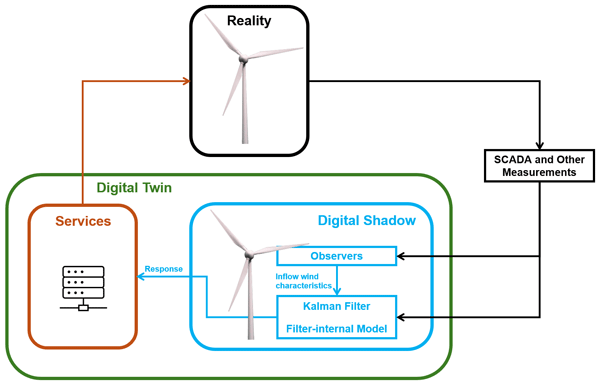
Hadi Hoghooghi and Carlo L. Bottasso
Wind Energ. Sci., 11, 373–393, https://doi.org/10.5194/wes-11-373-2026, https://doi.org/10.5194/wes-11-373-2026, 2026
Short summary
Short summary
We formulate and demonstrate a new digital shadow (i.e., a virtual copy) for wind turbines. The digital shadow is designed in order to be capable of mirroring the response of the machine even in complex inflow conditions. Results from field measurements illustrate the ability of the shadow to estimate loads with good accuracy, even with minimal tuning.
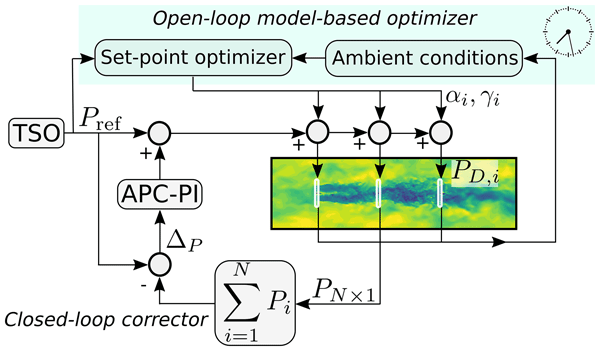
Simone Tamaro, Filippo Campagnolo, and Carlo L. Bottasso
Wind Energ. Sci., 10, 2705–2728, https://doi.org/10.5194/wes-10-2705-2025, https://doi.org/10.5194/wes-10-2705-2025, 2025
Short summary
Short summary
We proposed a new method for active power control that uniquely combines induction control with wake steering to maximize power tracking margins. Our methodology results in significantly improved robustness against wind fluctuations and fatigue loading when compared to the state of the art.
Abhinav Anand, Robert Braunbehrens, Adrien Guilloré, and Carlo L. Bottasso
Wind Energ. Sci. Discuss., https://doi.org/10.5194/wes-2025-67, https://doi.org/10.5194/wes-2025-67, 2025
Revised manuscript accepted for WES
Short summary
Short summary
We present a new method for wind farm control, based on the optimization of an economic cost function that accounts for revenue from power production and cost due to operation and maintenance. The new formulation also includes constraints to ensure a desired lifetime duration. The application to relevant scenarios shows consistently improved profit when compared to alternative formulations from the recent literature.
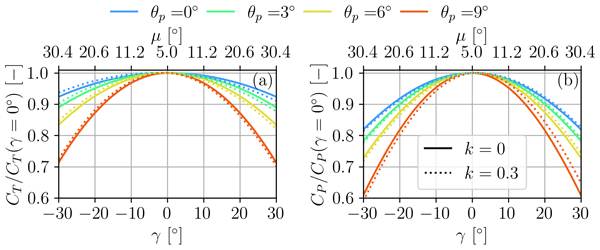
Simone Tamaro, Filippo Campagnolo, and Carlo L. Bottasso
Wind Energ. Sci., 9, 1547–1575, https://doi.org/10.5194/wes-9-1547-2024, https://doi.org/10.5194/wes-9-1547-2024, 2024
Short summary
Short summary
We develop a new simple model to predict power losses incurred by a wind turbine when it yaws out of the wind. The model reveals the effects of a number of rotor design parameters and how the turbine is governed when it yaws. The model exhibits an excellent agreement with large eddy simulations and wind tunnel measurements. We showcase the capabilities of the model by deriving the power-optimal yaw strategy for a single turbine and for a cluster of wake-interacting turbines.
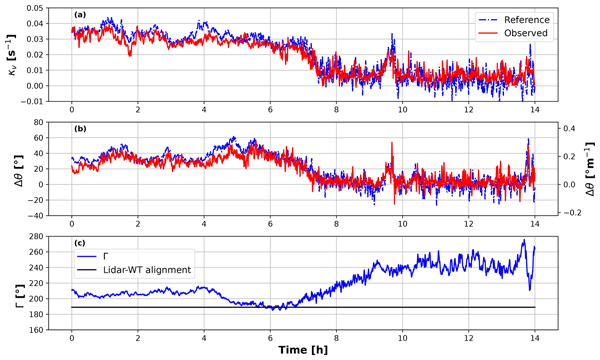
Marta Bertelè, Paul J. Meyer, Carlo R. Sucameli, Johannes Fricke, Anna Wegner, Julia Gottschall, and Carlo L. Bottasso
Wind Energ. Sci., 9, 1419–1429, https://doi.org/10.5194/wes-9-1419-2024, https://doi.org/10.5194/wes-9-1419-2024, 2024
Short summary
Short summary
A neural observer is used to estimate shear and veer from the operational data of a large wind turbine equipped with blade load sensors. Comparison with independent measurements from a nearby met mast and profiling lidar demonstrate the ability of the
rotor as a sensorconcept to provide high-quality estimates of these inflow quantities based simply on already available standard operational data.
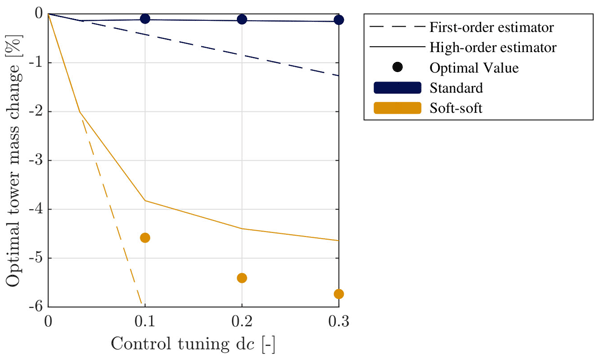
Jenna Iori, Carlo Luigi Bottasso, and Michael Kenneth McWilliam
Wind Energ. Sci., 9, 1289–1304, https://doi.org/10.5194/wes-9-1289-2024, https://doi.org/10.5194/wes-9-1289-2024, 2024
Short summary
Short summary
The controller of a wind turbine has an important role in regulating power production and avoiding structural failure. However, it is often designed after the rest of the turbine, and thus its potential is not fully exploited. An alternative is to design the structure and the controller simultaneously. This work develops a method to identify if a given turbine design can benefit from this new simultaneous design process. For example, a higher and cheaper turbine tower can be built this way.
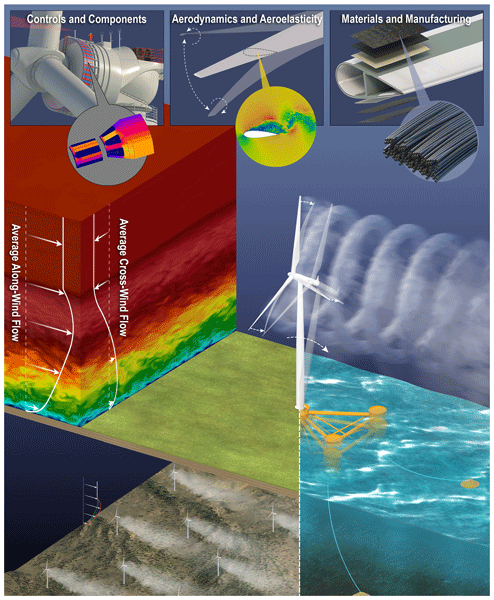
Paul Veers, Carlo L. Bottasso, Lance Manuel, Jonathan Naughton, Lucy Pao, Joshua Paquette, Amy Robertson, Michael Robinson, Shreyas Ananthan, Thanasis Barlas, Alessandro Bianchini, Henrik Bredmose, Sergio González Horcas, Jonathan Keller, Helge Aagaard Madsen, James Manwell, Patrick Moriarty, Stephen Nolet, and Jennifer Rinker
Wind Energ. Sci., 8, 1071–1131, https://doi.org/10.5194/wes-8-1071-2023, https://doi.org/10.5194/wes-8-1071-2023, 2023
Short summary
Short summary
Critical unknowns in the design, manufacturing, and operation of future wind turbine and wind plant systems are articulated, and key research activities are recommended.
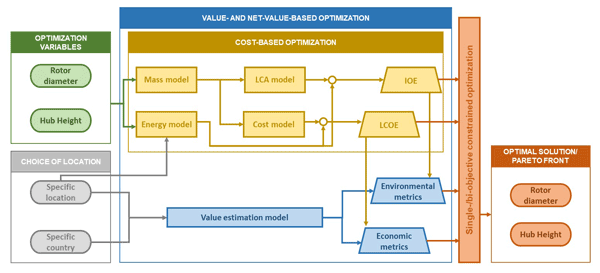
Helena Canet, Adrien Guilloré, and Carlo L. Bottasso
Wind Energ. Sci., 8, 1029–1047, https://doi.org/10.5194/wes-8-1029-2023, https://doi.org/10.5194/wes-8-1029-2023, 2023
Short summary
Short summary
We propose a new approach to design that aims at optimal trade-offs between economic and environmental goals. New environmental metrics are defined, which quantify impacts in terms of CO2-equivalent emissions produced by the turbine over its entire life cycle. For some typical onshore installations in Germany, results indicate that a 1 % increase in the cost of energy can buy about a 5 % decrease in environmental impacts: a small loss for the individual can lead to larger gains for society.

Robert Braunbehrens, Andreas Vad, and Carlo L. Bottasso
Wind Energ. Sci., 8, 691–723, https://doi.org/10.5194/wes-8-691-2023, https://doi.org/10.5194/wes-8-691-2023, 2023
Short summary
Short summary
The paper presents a new method in which wind turbines in a wind farm act as local sensors, in this way detecting the flow that develops within the power plant. Through this technique, we are able to identify effects on the flow generated by the plant itself and by the orography of the terrain. The new method not only delivers a flow model of much improved quality but can also help in understanding phenomena that drive the farm performance.
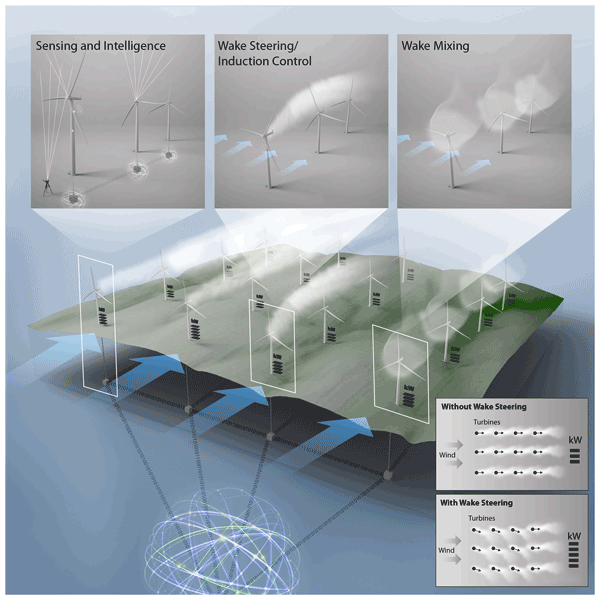
Johan Meyers, Carlo Bottasso, Katherine Dykes, Paul Fleming, Pieter Gebraad, Gregor Giebel, Tuhfe Göçmen, and Jan-Willem van Wingerden
Wind Energ. Sci., 7, 2271–2306, https://doi.org/10.5194/wes-7-2271-2022, https://doi.org/10.5194/wes-7-2271-2022, 2022
Short summary
Short summary
We provide a comprehensive overview of the state of the art and the outstanding challenges in wind farm flow control, thus identifying the key research areas that could further enable commercial uptake and success. To this end, we have structured the discussion on challenges and opportunities into four main areas: (1) insight into control flow physics, (2) algorithms and AI, (3) validation and industry implementation, and (4) integrating control with system design
(co-design).
Emmanouil M. Nanos, Carlo L. Bottasso, Simone Tamaro, Dimitris I. Manolas, and Vasilis A. Riziotis
Wind Energ. Sci., 7, 1641–1660, https://doi.org/10.5194/wes-7-1641-2022, https://doi.org/10.5194/wes-7-1641-2022, 2022
Short summary
Short summary
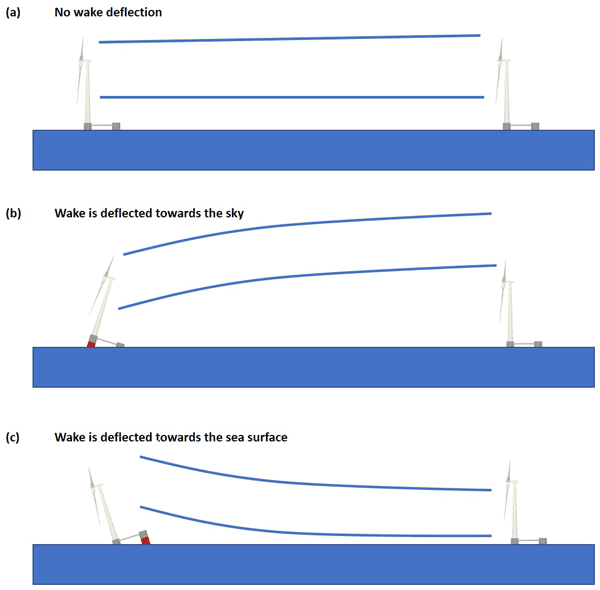
A novel way of wind farm control is presented where the wake is deflected vertically to reduce interactions with downstream turbines. This is achieved by moving ballast in a floating offshore platform in order to pitch the support structure and thereby tilt the wind turbine rotor disk. The study considers the effects of this new form of wake control on the aerodynamics of the steering and wake-affected turbines, on the structure, and on the ballast motion system.

Stefan Loew and Carlo L. Bottasso
Wind Energ. Sci., 7, 1605–1625, https://doi.org/10.5194/wes-7-1605-2022, https://doi.org/10.5194/wes-7-1605-2022, 2022
Short summary
Short summary
This publication presents methods to improve the awareness and control of material fatigue for wind turbines. This is achieved by enhancing a sophisticated control algorithm which utilizes wind prediction information from a laser measurement device. The simulation results indicate that the novel algorithm significantly improves the economic performance of a wind turbine. This benefit is particularly high for situations when the prediction quality is low or the prediction time frame is short.
Emmanouil M. Nanos, Carlo L. Bottasso, Filippo Campagnolo, Franz Mühle, Stefano Letizia, G. Valerio Iungo, and Mario A. Rotea
Wind Energ. Sci., 7, 1263–1287, https://doi.org/10.5194/wes-7-1263-2022, https://doi.org/10.5194/wes-7-1263-2022, 2022
Short summary
Short summary
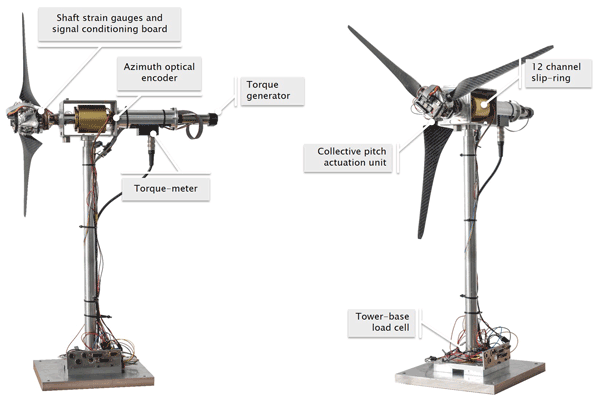
The paper describes the design of a scaled wind turbine in detail, for studying wakes and wake control applications in the known, controllable and repeatable conditions of a wind tunnel. The scaled model is characterized by conducting experiments in two wind tunnels, in different conditions, using different measurement equipment. Results are also compared to predictions obtained with models of various fidelity. The analysis indicates that the model fully satisfies the initial requirements.
Andebo Waza, Konrad Kandler, Franz Kanngießer, Julia Gottschall, Arne Leuzinger, Simon Speith, Natalia Sudarchikova, Sebastian Wahl, Wirginia Hepert, and Stephanie Fiedler
Earth Syst. Sci. Data Discuss., https://doi.org/10.5194/essd-2026-733, https://doi.org/10.5194/essd-2026-733, 2026
Preprint under review for ESSD
Short summary
Short summary
Originating from North Africa, mineral dust, which is one of the most abundant aerosol types in the Earth’s atmosphere, is frequently transported across the Atlantic Ocean. To observe these dust transport different instruments, which provide information on both near-surface dust and lofted dust plumes, were deployed during two research cruises between January and March 2025 in the Atlantic Ocean. The presented data allows us to address existing knowledge gaps in trans-Atlantic dust transport.
Ansh Patel, Jakob Mann, Kasper Zinck, Mikael Sjöholm, Ásta Hannesdóttir, and Karunya Raj
Wind Energ. Sci. Discuss., https://doi.org/10.5194/wes-2026-175, https://doi.org/10.5194/wes-2026-175, 2026
Preprint under review for WES
Short summary
Short summary
Turbines are designed for extreme conditions, such as a "50-year" storm expected once in 50 years. One such standard event, the extreme coherent gust with direction change (ECD), drives the design of turbine towers. Using data from over 300 turbines and a statistical model, we show that the ECD is very unlikely to occur even once in 50 years. It is therefore too conservative, and the standards should be refined to avoid designing for conditions turbines may never face.
Shokoufeh Malekmohammadi, Etienne Cheynet, Joachim Reuder, Claus Linnemann, Mikael Sjöholm, Jakob Mann, and Gregor Giebel
Atmos. Meas. Tech., 19, 6267–6292, https://doi.org/10.5194/amt-19-6267-2026, https://doi.org/10.5194/amt-19-6267-2026, 2026
Short summary
Short summary
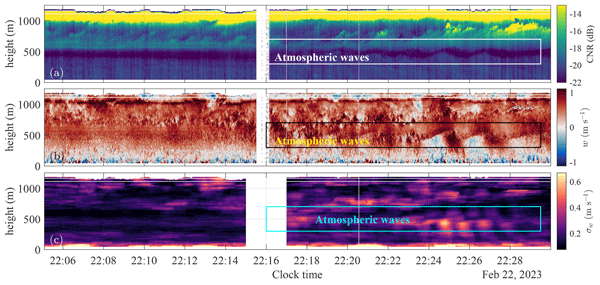
This study presents a lidar measurement strategy developed during a one-year offshore campaign. A ship-based scanning lidar provided high-resolution vertical wind measurements used to study turbulent mixing and atmospheric waves, complemented by wind speed profiles from a co-located wind profiler. A scanning lidar on a fixed platform observed turbine wakes, supported by the ship-based profiler. The results demonstrate the value of the strategy and dataset for wind energy and atmospheric science.
Hadi Hoghooghi and Carlo L. Bottasso
Wind Energ. Sci. Discuss., https://doi.org/10.5194/wes-2026-156, https://doi.org/10.5194/wes-2026-156, 2026
Preprint under review for WES
Short summary
Short summary
Wind turbines operate under changing weather conditions, making it difficult to accurately estimate structural stress. This study improves a digital model by combining engineering knowledge with learning from real turbine measurements. The new approach significantly reduced prediction errors and remained reliable across different conditions. More accurate load estimates can support better turbine monitoring and maintenance planning.
Lennart Vogt, Julia Gottschall, and Jasna Bogunović Jakobsen
Wind Energ. Sci., 11, 3587–3614, https://doi.org/10.5194/wes-11-3587-2026, https://doi.org/10.5194/wes-11-3587-2026, 2026
Short summary
Short summary
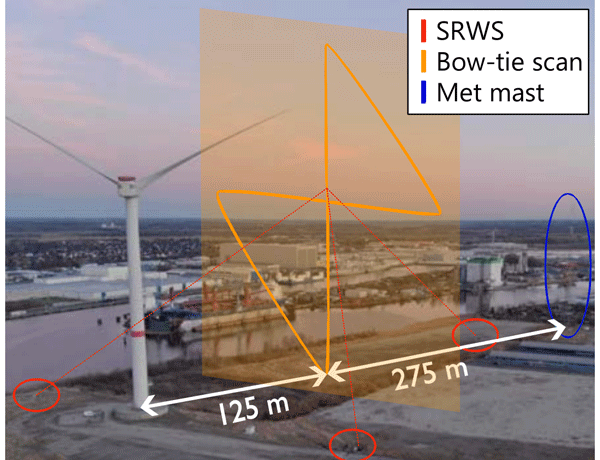
A combined dataset of sonic and cup anemometer measurements, together with synchronized short-range lidar observations, is used to derive turbulence characteristics, including integral length scales, auto-spectra, and spatial coherence. The instruments exhibit strong agreement and consistent trends across atmospheric stability. Deviations at high frequencies are attributed to spatial averaging effects. Empirical models fitted to the data closely reproduce the spectral estimates.
Abdul Haseeb Syed, Jakob Mann, and Mohammadreza Manami
Atmos. Meas. Tech., 19, 5889–5903, https://doi.org/10.5194/amt-19-5889-2026, https://doi.org/10.5194/amt-19-5889-2026, 2026
Short summary
Short summary
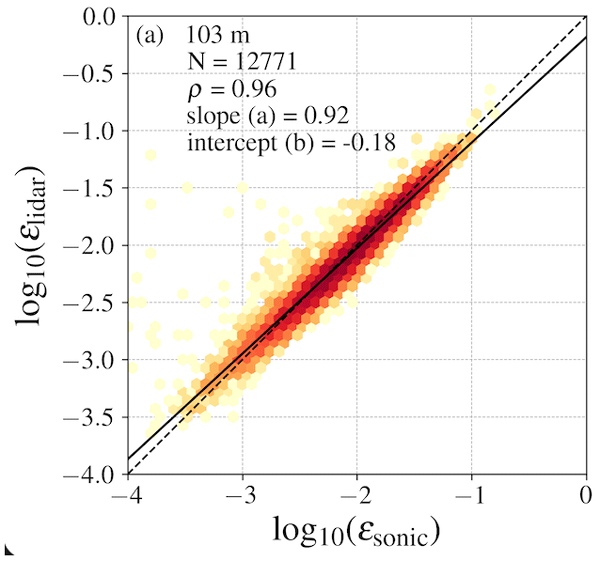
We present a new structure function model to estimate the turbulence energy dissipation rate using lidar velocities. The model corrects for turbulence filtering due to the lidar probe volume by applying a Gaussian weighting function. By utilizing the high 3 m range-gate resolution of the BEAM 6x pulsed lidar, we achieve excellent agreement between turbulence energy dissipation rate values derived from lidar and sonic anemometer at three heights, with correlation coefficients exceeding 0.9.
Moritz Gräfe, Azélice Ludot, Matt Shields, Athanasios Kolios, Rajasekhar Pulikollu, and Nikolay Dimitrov
Wind Energ. Sci., 11, 3475–3507, https://doi.org/10.5194/wes-11-3475-2026, https://doi.org/10.5194/wes-11-3475-2026, 2026
Short summary
Short summary
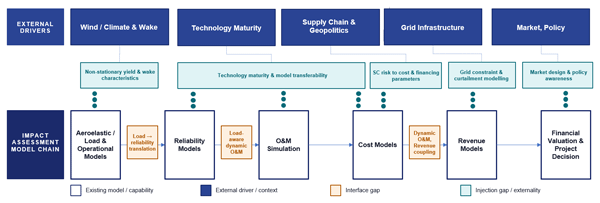
This study examines the risk drivers of the economic success of wind energy projects and how interacting risks threaten that success. We combined expert opinions, survey results, and literature findings to identify key challenges in planning and operation. The results show that risks interact and can cause uneven financial losses, highlighting the need for integrated decision support tools.
Abdul Haseeb Syed, Ásta Hannesdóttir, and Jakob Mann
Wind Energ. Sci., 11, 3321–3336, https://doi.org/10.5194/wes-11-3321-2026, https://doi.org/10.5194/wes-11-3321-2026, 2026
Short summary
Short summary
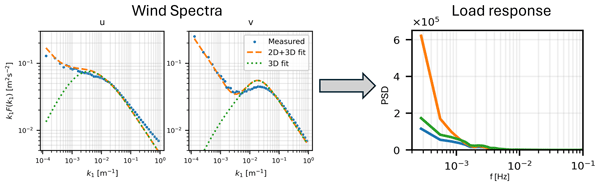
Large offshore wind turbines are exposed to slow changes in wind speed, which are often overlooked in design studies. We investigate how these slow wind variations impact the forces and motions of both fixed and floating wind turbines through computer simulations. Slow wind changes can lead to increased long-term structural wear and significantly impact platform motion in floating turbines. Accounting for these variations is crucial for the design and lifetime assessment of future turbines.
Jakob Mann, Ansh Patel, Mikael Sjöholm, Gunhild Rolighed Thorsen, Elliot Irving Simon, Lin-Ya Hung, and Julia Gottschall
Wind Energ. Sci., 11, 3153–3170, https://doi.org/10.5194/wes-11-3153-2026, https://doi.org/10.5194/wes-11-3153-2026, 2026
Short summary
Short summary
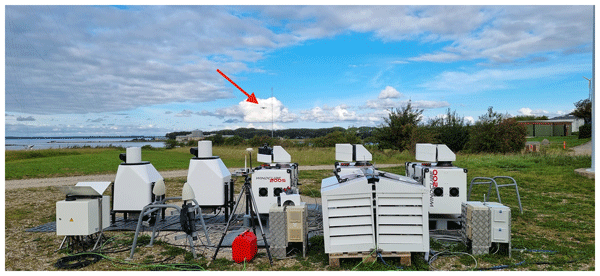
Turbulence over the ocean at heights relevant to modern offshore wind turbines, i.e., up to 300 m or more, is not well studied. It is important to know the properties of this turbulence because it is responsible for most of the dynamic loads on these structures, and consequently it is relevant to how the latter should be designed. This data description paper explains the efforts made to provide measurements of this offshore turbulence using five Doppler lidars.
Nicola Bodini, Patrick Moriarty, Regis Thedin, Paula Doubrawa, Cristina Archer, Myra Blaylock, Carlo Bottasso, Bruno Carmo, Lawrence Cheung, Camille Dubreuil, Rogier Floors, Thomas Herges, Daniel Houck, Ali Kanjari, Colleen M. Kaul, Christopher Kelley, Ru Li, Julie K. Lundquist, Desirae Major, Anh Kiet Nguyen, Mike Optis, Luan R. C. Parada, Alfredo Peña, Julian Quick, David Ricarte, William C. Radünz, Raj K. Rai, Oscar García-Santiago, Jonas Schulte, Knut S. Seim, M. Paul van der Laan, Kisorthman Vimalakanthan, and Adam Wise
Wind Energ. Sci., 11, 3107–3135, https://doi.org/10.5194/wes-11-3107-2026, https://doi.org/10.5194/wes-11-3107-2026, 2026
Short summary
Short summary
Predicting wind farm energy production is challenging because wind patterns are complex. We tested 16 different models against real data from a major field experiment to see which worked best. Surprisingly, the most expensive and detailed models were not always more accurate than simpler ones. We found that feeding models better weather data was the most effective way to improve accuracy. These results help the industry choose the right tools for designing more-efficient wind farms.
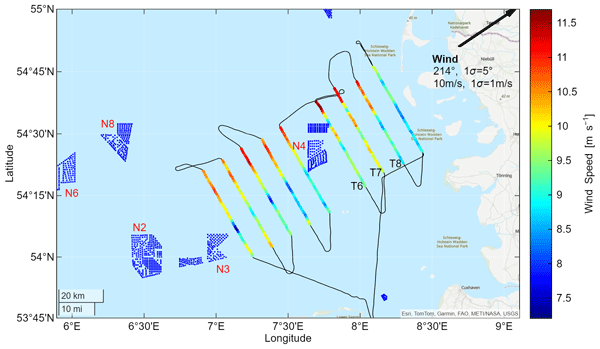
Astrid Lampert, Beatriz Cañadillas, Thomas Rausch, Lea Schmitt, Bughsin' Djath, Johannes Schulz-Stellenfleth, Andreas Platis, Kjell zum Berge, Ines Schäfer, Jens Bange, Lukas Gruchot, Thomas Neumann, Martin Dörenkämper, Bernhard Stoevesandt, Julia Gottschall, Lukas Vollmer, Stefan Emeis, Mares Barekzai, Simon Siedersleben, Martin Kühn, Gerald Steinfeld, Detlev Heinemann, Joachim Peinke, Hendrik Heißelmann, Jörge Schneemann, Gabriele Centurelli, Philipp Waldmann, and Konrad Bärfuss
Wind Energ. Sci., 11, 3057–3075, https://doi.org/10.5194/wes-11-3057-2026, https://doi.org/10.5194/wes-11-3057-2026, 2026
Short summary
Short summary
Two major aircraft measurement campaigns above the North Sea provide insights into modifications of the wind field and sea surface induced by wind farms. The aircraft performed transects at hub height upstream and downstream of wind farm clusters and identified different effects, e.g. how long it takes for the wind speed to recover after the wind farm, how changes across the coastline interact with wind energy, and if wind farms are well represented in numerical simulations.
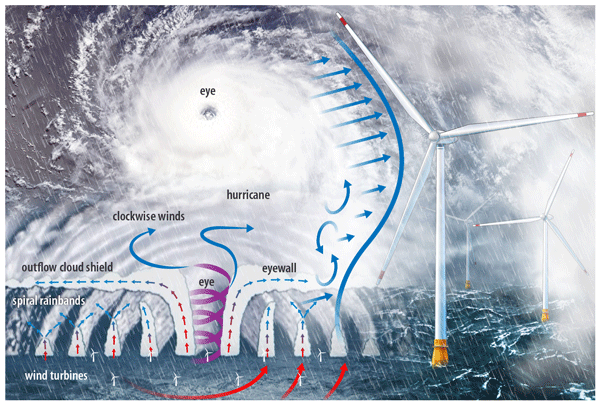
Georgios Deskos, Jiali Wang, Sanjay Arwade, Murray Fisher, Brian Hirth, Xiaoli Guo Larsén, Julie K. Lundquist, Andrew Myers, Weichiang Pang, William J. Pringle, Robert Rogers, Miguel Sanchez-Gomez, Chao Sun, Atsushi Yamaguchi, and Paul Veers
Wind Energ. Sci., 11, 2749–2782, https://doi.org/10.5194/wes-11-2749-2026, https://doi.org/10.5194/wes-11-2749-2026, 2026
Short summary
Short summary
Wind energy is expanding into regions exposed to tropical cyclones, where extreme winds and waves can damage turbines and disrupt energy production. We reviewed observations, simulations, engineering standards, and risk quantification frameworks to identify the most important gaps. Today's design rules, originally built for milder storms, do not capture cyclone hazards. Closing these gaps requires better offshore measurements, improved models, and risk-informed design standards.
Mauricio Souza de Alencar, Tuhfe Göçmen, and Nicolaos A. Cutululis
Wind Energ. Sci. Discuss., https://doi.org/10.5194/wes-2026-124, https://doi.org/10.5194/wes-2026-124, 2026
Preprint under review for WES
Short summary
Short summary
This study created a large public collection of optimized cable layouts for real, built offshore wind farms, planned projects, and computer-generated sites. By comparing several design choices and solving approaches across thousands of cases, it shows how architectural constraints affect cable use and problem difficulty. The results reveal when branching can reduce cable needs and provide a reliable basis for improving future wind farm design, testing new methods, and training data-driven tools.
Arianna Marie Jordan, Lin-Ya Hung, Gerrit Wolken-Möhlmann, and Julia Gottschall
Wind Energ. Sci. Discuss., https://doi.org/10.5194/wes-2026-114, https://doi.org/10.5194/wes-2026-114, 2026
Preprint under review for WES
Short summary
Short summary
Wind energy needs accurate airflow tools around turbines. We tested dual-Doppler radar at a research wind farm in Germany alongside lidar (a point-based wind sensor). The method matched lidar well at most heights and mapped wind shadows behind turbines, including wake meandering. Data quality depended on rainfall, with rainy periods giving the best coverage and fog the worst. This information is useful for implementation of dual-Doppler radar as a wind measurement tool for the industry.

Dimas Alejandro Barile, Roberto Sosa, Sandrine Aubrun, and Alejandro Daniel Otero
Wind Energ. Sci., 11, 2495–2519, https://doi.org/10.5194/wes-11-2495-2026, https://doi.org/10.5194/wes-11-2495-2026, 2026
Short summary
Short summary
Floating offshore wind turbines experience platform surge motion that alters wake dynamics and generates vortex structures. This study uses large eddy simulations with an actuator disk to analyse these structures under laminar, turbulent and atmospheric boundary layer inflows. Proper orthogonal decomposition reveals peak vortex energy at specific Strouhal numbers, with lower energy and faster decay under atmospheric conditions. Meandering and wake modulation are dependent on inflow conditions.
Farkhondeh Rouholahnejad, Tanguy Lunel, and Julia Gottschall
Wind Energ. Sci. Discuss., https://doi.org/10.5194/wes-2026-99, https://doi.org/10.5194/wes-2026-99, 2026
Preprint under review for WES
Short summary
Short summary
Offshore wind farms rely on accurate measurements of wind and turbulence. Using three scanning lidars and an offshore meteorological mast, we investigated whether dual-Doppler lidar systems must measure exactly the same air volume to provide reliable turbulence estimates. We show that moderate beam separations can be tolerated under homogeneous offshore conditions and that the resulting differences provide useful information about spatial variability in the wind field.
Liqin Jin and Jakob Mann
Wind Energ. Sci. Discuss., https://doi.org/10.5194/wes-2026-104, https://doi.org/10.5194/wes-2026-104, 2026
Revised manuscript under review for WES
Short summary
Short summary
Wind turbine blades bend and twist during operation, making reliable monitoring important for performance and safety. This study presents a novel non-contact measurement system using three low-cost automotive lidar sensors to track blade motion on a full-scale wind turbine. The results agree well with existing monitoring systems and reveal how blade movement changes with operating conditions. The findings demonstrate a practical and affordable method for monitoring large wind turbines.
Carlo Rosario Sucameli, Marta Bertelè, Robert Braunbehrens, Filippo Campagnolo, Simone Tamaro, Paul Hulsman, and Carlo Luigi Bottasso
Wind Energ. Sci. Discuss., https://doi.org/10.5194/wes-2026-93, https://doi.org/10.5194/wes-2026-93, 2026
Preprint under review for WES
Short summary
Short summary
Wind turbines extract energy by slowing the air, so downstream turbines receive less wind and produce less power, a phenomenon called wake. Wind is not uniform: it varies in both speed and direction with height, also affecting downstream turbines. Using a year of measurements and simulations, we found that both effects influence the power production of downstream turbines by pushing the air sideways. We built improved models to capture these effects, enabling better wind farm control strategies.
Hadi Hoghooghi and Carlo L. Bottasso
Wind Energ. Sci. Discuss., https://doi.org/10.5194/wes-2026-102, https://doi.org/10.5194/wes-2026-102, 2026
Manuscript not accepted for further review
Short summary
Short summary
Reliable wind turbine fatigue load estimates are key to assessing structural integrity and service life. This study integrates a simplified simulation model with machine learning to enhance predictions while protecting industrial design confidentiality. It achieves DEL errors under 5 % across varied conditions and performs well on simulated and field data, supporting improved monitoring, maintenance, and lifetime assessment.
Matthew Young, Matthew Docherty, Lin-Ya Hung, Andrew Oldroyd, and Julia Gottschall
Wind Energ. Sci. Discuss., https://doi.org/10.5194/wes-2026-94, https://doi.org/10.5194/wes-2026-94, 2026
Revised manuscript under review for WES
Short summary
Short summary
This study compares different ways of checking and correcting the pointing accuracy of scanning wind measurement systems used for offshore wind energy projects. Accurate positioning is essential for reliable wind measurements and reducing project risk. The results show that drone-based testing provides the most accurate results, while sea-surface methods offer a practical alternative when other reference points are unavailable.
Abhinav Anand and Carlo L. Bottasso
Wind Energ. Sci., 11, 1989–2008, https://doi.org/10.5194/wes-11-1989-2026, https://doi.org/10.5194/wes-11-1989-2026, 2026
Short summary
Short summary
We formulate a controller for wind turbines that has three main characteristics. First, it optimizes profit by balancing revenue from power generation with cost. Second, cost includes the effects of cyclic fatigue that, departing from most of the existing literature on control, is rigorously accounted for by an exact cycle counting on receding horizons. Third, it uses a model capable of learning and improving its performance based on measured or synthetic data.
Filippo Campagnolo, Doruk Aktan, Davide Bortolin, Simone Tamaro, Franz V. Mühle, and Carlo L. Bottasso
Wind Energ. Sci. Discuss., https://doi.org/10.5194/wes-2026-86, https://doi.org/10.5194/wes-2026-86, 2026
Revised manuscript accepted for WES
Short summary
Short summary
This paper presents an open-access wind-tunnel dataset of actuated, scaled wind turbines with time-resolved measurements of loads, actuator commands, inflow conditions and wakes. It covers multiple wake-control strategies (yaw steering, derating, Helix, dynamic yaw, Pulse, pitch control). Combined with numerical models, the dataset enables benchmarking, controller analysis, and validation of aeroelastic and wake models for wind-farm control research.
Simone Tamaro, Davide Bortolin, Filippo Campagnolo, Franz V. Mühle, and Carlo L. Bottasso
Wind Energ. Sci., 11, 1607–1630, https://doi.org/10.5194/wes-11-1607-2026, https://doi.org/10.5194/wes-11-1607-2026, 2026
Short summary
Short summary
This work presents the scaled experimental validation of an active power control (APC) algorithm that improves wind farm power-tracking accuracy during turbulent wind lulls. Tests in a large low-blockage wind tunnel, including dynamic wind-direction changes, show that the method outperforms three reference APC strategies, especially under high power demand, while keeping structural fatigue low.
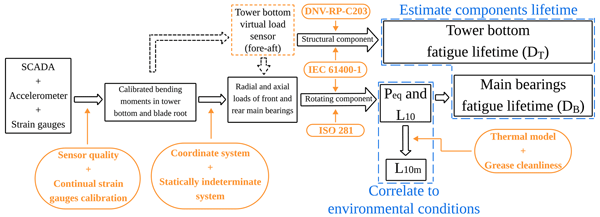
Bruno Rodrigues Faria, Nikolay Dimitrov, Nikhil Sudhakaran, Matthias Stammler, Athanasios Kolios, W. Dheelibun Remigius, Xiaodong Zhang, and Asger Bech Abrahamsen
Wind Energ. Sci., 11, 1583–1606, https://doi.org/10.5194/wes-11-1583-2026, https://doi.org/10.5194/wes-11-1583-2026, 2026
Short summary
Short summary
This study presents continuous lifetime assessments of wind turbine structural (tower) and rotating components (main bearings) over nearly a decade, combining controller data, calibrated load measurements, and a virtual load sensor at the tower bottom. The components' estimated lifetimes exceeded the design lifetime. Contrary to expectations, lower turbulence intensity at rated wind speed increased fatigue loads of the locating main bearing due to turbulence averaging.
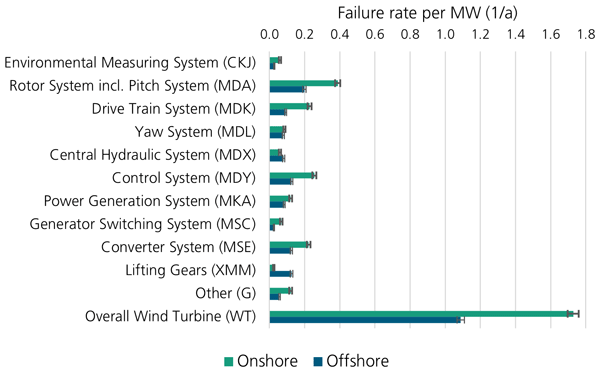
Julia Walgern, Nils Stratmann, Martin Horn, Nathalene W. Y. Then, Moritz Menzel, Fraser Anderson, Athanasios Kolios, and Katharina Fischer
Wind Energ. Sci., 11, 1553–1568, https://doi.org/10.5194/wes-11-1553-2026, https://doi.org/10.5194/wes-11-1553-2026, 2026
Short summary
Short summary
This study analyses maintenance data from over 1000 onshore and offshore wind turbines, covering 4200 operating years, to assess failure rates, repair times, and maintenance needs. It compares failure rates per turbine and per megawatt, examines time-dependent failure behaviour, and evaluates maintenance interventions. Results show higher onshore failure rates and identify the pitch, control, and converter systems as most critical.
Andre Thommessen, Abhinav Anand, Carlo L. Bottasso, and Christoph M. Hackl
Wind Energ. Sci., 11, 1399–1428, https://doi.org/10.5194/wes-11-1399-2026, https://doi.org/10.5194/wes-11-1399-2026, 2026
Short summary
Short summary
We present a method to forecast inertia that accounts for wake effects in a wind farm. The approach is based on mapping forecasted site conditions to each single wind turbine in the farm through a wake model. The resulting inflow conditions are used to predict the inertia that the wind farm can provide to the grid, taking the wind turbine control strategies and operational limits into account.
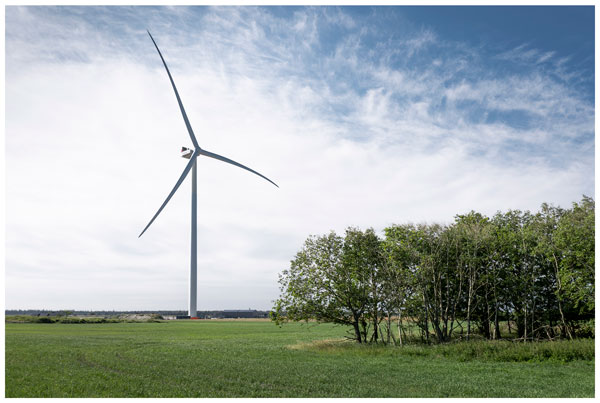
Ansh Patel, Jakob Mann, Mikael Sjöholm, Kasper Zinck, and Karunya Raj
Wind Energ. Sci., 11, 1147–1162, https://doi.org/10.5194/wes-11-1147-2026, https://doi.org/10.5194/wes-11-1147-2026, 2026
Short summary
Short summary
This study shows that
buoyancyof the atmosphere has a large impact on the lifetime of a wind turbine. We use measurements from one of the largest wind turbines in the world to show that this feature of the atmosphere must be considered while in the design process. Our work is also motivated by the need to update the current models of the atmosphere. Indeed, as turbines increase in size, there is a concern that the deficiencies of our models might become exposed.
Marinos Manolesos, Sandrine Aubrun, Christian Bak, Paolo Bettini, Filippo Campagnolo, Alessandro Croce, Arslan Salim Dar, Michael Hölling, Stefan Ivanell, Konstantinos Kellaris, Miguel Alfonso Mendez, Pierluigi Montinari, Franz Mühle, George Papadakis, Fernardo Porté-Agel, Daniele Ragni, Sebastiano Randino, Andrea Sciacchitano, Lorenzo Schena, Gerard Schepers, Antonio Segalini, Wei Yu, and Carlo Luigi Bottasso
Wind Energ. Sci. Discuss., https://doi.org/10.5194/wes-2026-51, https://doi.org/10.5194/wes-2026-51, 2026
Manuscript not accepted for further review
Short summary
Short summary
As wind turbines grow to unprecedented sizes, ensuring their reliability requires advanced testing. We reviewed the current state of wind tunnel experiments, examining how scaled physical models are evaluated for wind flow, flexibility, and noise. We conclude that while laboratory testing remains essential, it is most powerful when integrated with computer simulations and real-world data. This combined approach will ultimately drive the design of more efficient and sustainable wind energy.
Hugo Rubio, Ville Vakkari, Martin Kühn, and Julia Gottschall
Wind Energ. Sci. Discuss., https://doi.org/10.5194/wes-2026-50, https://doi.org/10.5194/wes-2026-50, 2026
Preprint withdrawn
Short summary
Short summary
Offshore wind farms need accurate wind data, but collecting measurements at sea is often difficult and expensive. In this study, we investigate how wind measurements from a lidar mounted on a moving ship can improve the accuracy of commonly used reanalysis datasets. Using a statistical correction method, we are able to reduce errors in wind speed estimates. This efficient approach can make offshore wind planning and resource assessment more reliable in areas where measurements are limited.
Andreas Vad, Adrien Guilloré, Abhinav Anand, Vasilis Pettas, Anik H. Shah, Ion Lizarraga-Saenz, Maria Aparicio-Sanchez, Irene Eguinoa, Nicolau Conti Gost, Iasonas Tsaklis, Ariane Frère, Koen W. Hermans, Joseph K. Kamau, Nikolay Dimitrov, Tuhfe Göçmen, and Carlo L. Bottasso
Wind Energ. Sci. Discuss., https://doi.org/10.5194/wes-2026-45, https://doi.org/10.5194/wes-2026-45, 2026
Revised manuscript under review for WES
Short summary
Short summary
A modular, computationally efficient framework for wind‑farm response modeling is presented. It combines an engineering wake model with surrogate models trained on extensive aeroelastic simulations generated using a novel method for synthetic waked and clean inflows. The wind‑farm‑agnostic framework supports multiple turbine types and layouts, enabling accurate, low‑cost predictions for design, operation, and control.
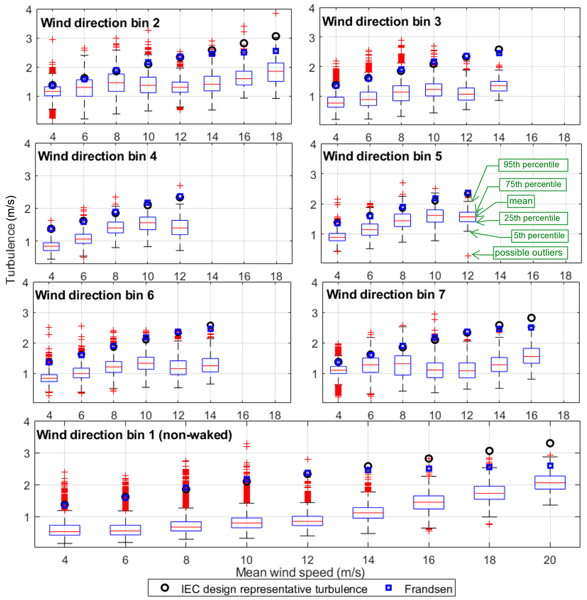
Shadan Mozafari, Jennifer Marie Rinker, Paul Veers, and Katherine Dykes
Wind Energ. Sci., 11, 621–641, https://doi.org/10.5194/wes-11-621-2026, https://doi.org/10.5194/wes-11-621-2026, 2026
Short summary
Short summary
The study showcases the added value of using structural response measurements in lifetime extension assessments within wind farms. In addition, it answers two of the common questions in different methods of assessment. First, it assesses the applicability of the Frandsen model for estimating conservative waked turbulence in the compact layout of wind farms. Second, it showcases probabilistic extrapolation of short- to mid-term data for long-term site-specific fatigue assessments.

Mohammadreza Manami, Guillaume Léa, Jakob Mann, Mikael Sjöholm, and Guillaume Gorju
Wind Energ. Sci., 11, 585–596, https://doi.org/10.5194/wes-11-585-2026, https://doi.org/10.5194/wes-11-585-2026, 2026
Short summary
Short summary
A simple adaptive variant of the Doppler Beam Swinging (DBS) method is presented to improve the availability of wind velocity measurements in profiling lidars, particularly at higher altitudes. Following validation at the Østerild test site in Denmark, using three profiling lidars compared with cup anemometers and wind vanes, excellent agreement was observed. Availability assessments indicated a maximum increase of 16.9 percentage points over the standard approach.
Antonin Hubert, Boris Conan, and Sandrine Aubrun
Wind Energ. Sci. Discuss., https://doi.org/10.5194/wes-2026-41, https://doi.org/10.5194/wes-2026-41, 2026
Preprint under review for WES
Short summary
Short summary
This article aims at refining the description of the wake of a floating wind turbine subjected to surge motion, and at extracting the related wake dynamics. A critical frequency at which the impact of the motion seems to be the greatest is found, and the spatiotemporal response of the wake is analyzed using phase-averaging processes. Additionally to previous results, shear effects seem to incline the surge-generated coherent structures, and an extra far wake meandering appears.

Branko Kosović, Sukanta Basu, Jacob Berg, Larry K. Berg, Sue E. Haupt, Xiaoli G. Larsén, Joachim Peinke, Richard J. A. M. Stevens, Paul Veers, and Simon Watson
Wind Energ. Sci., 11, 509–555, https://doi.org/10.5194/wes-11-509-2026, https://doi.org/10.5194/wes-11-509-2026, 2026
Short summary
Short summary
Most human activity happens in the layer of the atmosphere which extends a few hundred meters to a couple of kilometers above the surface of the Earth. The flow in this layer is turbulent. Turbulence impacts wind power production and turbine lifespan. Optimizing wind turbine performance requires understanding how turbulence affects both wind turbine efficiency and reliability. This paper points to gaps in our knowledge that need to be addressed to effectively utilize wind resources.
Hadi Hoghooghi and Carlo L. Bottasso
Wind Energ. Sci., 11, 373–393, https://doi.org/10.5194/wes-11-373-2026, https://doi.org/10.5194/wes-11-373-2026, 2026
Short summary
Short summary
We formulate and demonstrate a new digital shadow (i.e., a virtual copy) for wind turbines. The digital shadow is designed in order to be capable of mirroring the response of the machine even in complex inflow conditions. Results from field measurements illustrate the ability of the shadow to estimate loads with good accuracy, even with minimal tuning.
Stefan Ivanell, Bjarke T. Olsen, Antoine Mathieu, Cristina Mulet-Benzo, Abdul Haseeb Syed, Warit Chanprasert, Mikael Sjöholm, Jakob Mann, and Julia Gottschall
Wind Energ. Sci. Discuss., https://doi.org/10.5194/wes-2025-286, https://doi.org/10.5194/wes-2025-286, 2026
Preprint under review for WES
Short summary
Short summary
Modern GW-scale offshore wind farms face challenges from atmospheric dynamics. This study examines how boundary layer height (BLH) and large-scale turbulence affect efficiency and loads. Using WRF simulations, lidar data, and CFD modeling for a 100-turbine, 15 MW wind farm at three representative sites, we show that low BLH reduces performance. Turbulence-induced low-frequency fluctuations increase fatigue loads, underscoring the need to include BLH and turbulence in design models.
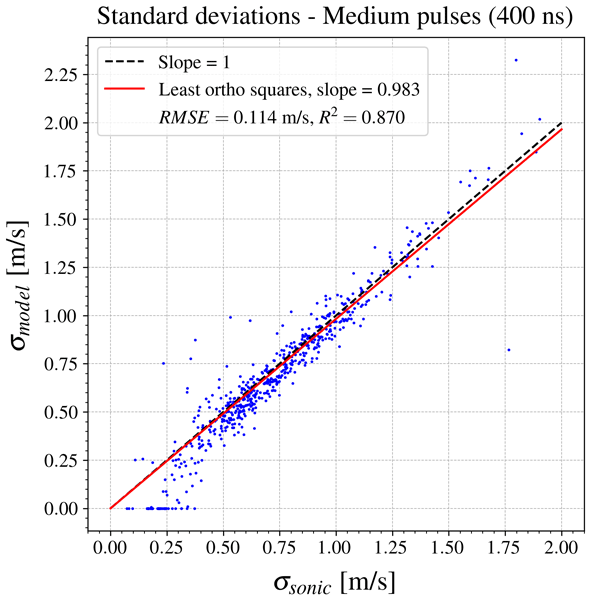
Mohammadreza Manami, Jakob Mann, Mikael Sjöholm, Guillaume Léa, and Guillaume Gorju
Atmos. Meas. Tech., 18, 7513–7523, https://doi.org/10.5194/amt-18-7513-2025, https://doi.org/10.5194/amt-18-7513-2025, 2025
Short summary
Short summary
This research investigates a novel method for directly estimating wind velocity variances from averaged Doppler spectra in the frequency domain. Compared to the conventional time-domain approach, the proposed method offers a substantial improvement. Despite some limitations, this study marks a significant advancement in turbulence estimation using pulsed Doppler lidars, which presents promising potential for wind turbine load assessments.
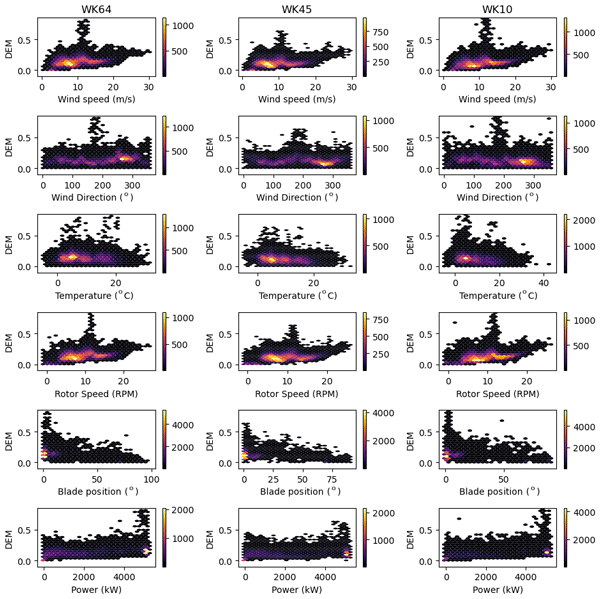
Innes Murdo Black, Moritz Werther Häckell, and Athanasios Kolios
Wind Energ. Sci., 10, 2889–2901, https://doi.org/10.5194/wes-10-2889-2025, https://doi.org/10.5194/wes-10-2889-2025, 2025
Short summary
Short summary
Population-based structural health monitoring minimises costs by efficiently sharing information within a wind farm, reducing the need for many sensors and model updates.
Warren Watson, Gerrit Wolken-Möhlmann, and Julia Gottschall
Wind Energ. Sci., 10, 2791–2820, https://doi.org/10.5194/wes-10-2791-2025, https://doi.org/10.5194/wes-10-2791-2025, 2025
Short summary
Short summary
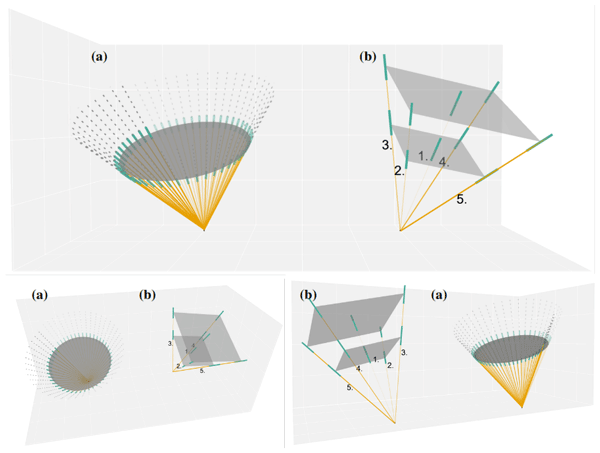
In this study, we compare turbulence intensity measurements from two buoy-mounted wind lidars with data from a fixed lidar and a meteorological mast. Turbulence intensity is essential for understanding wind conditions but is often overestimated by floating systems due to wave motion. We applied a physics-based compensation to reduce these effects. Our findings show that motion compensation significantly improves accuracy, making floating lidar systems suitable for offshore wind site assessments.
Simone Tamaro, Filippo Campagnolo, and Carlo L. Bottasso
Wind Energ. Sci., 10, 2705–2728, https://doi.org/10.5194/wes-10-2705-2025, https://doi.org/10.5194/wes-10-2705-2025, 2025
Short summary
Short summary
We proposed a new method for active power control that uniquely combines induction control with wake steering to maximize power tracking margins. Our methodology results in significantly improved robustness against wind fluctuations and fatigue loading when compared to the state of the art.
Cristina Mulet-Benzo, Andrew Black, and Julia Gottschall
Wind Energ. Sci. Discuss., https://doi.org/10.5194/wes-2025-155, https://doi.org/10.5194/wes-2025-155, 2025
Revised manuscript not accepted
Short summary
Short summary
Wind turbine wake modeling requires accurate representation of atmospheric conditions, especially the atmospheric boundary layer height (ABLH). Scanning lidars provide a viable solution for ABLH determination. This study assesses ABLH data from coastal and offshore scanning lidars, comparing it to ABLH derived from models typically used for wake modelling. The results demonstrate a general overestimation of the models compared to the lidar, and a bias sensitivity to the diurnal cycle.
Hugo Rubio, Daniel Hatfield, Charlotte Bay Hasager, Martin Kühn, and Julia Gottschall
Atmos. Meas. Tech., 18, 4949–4968, https://doi.org/10.5194/amt-18-4949-2025, https://doi.org/10.5194/amt-18-4949-2025, 2025
Short summary
Short summary
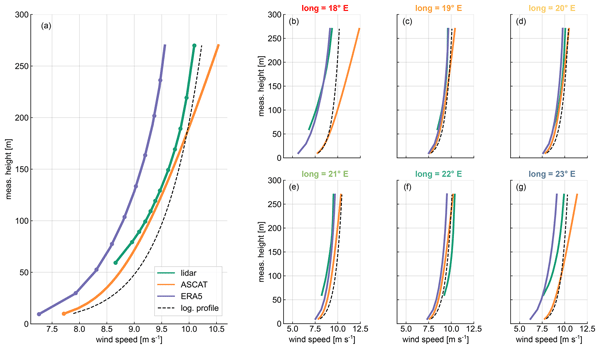
Due to the scarcity of offshore in situ observations, alternative data sources are essential for a reliable understanding of offshore winds. Therefore, this study delves into the world of satellite remote sensing (ASCAT) and numerical models (ERA5), exploring their capabilities and limitations in characterising offshore winds. This investigation evaluates these two datasets against measurements from a floating ship-based lidar, collected during a novel measurement campaign in the Baltic Sea.
Caroline Braud, Pascal Keravec, Ingrid Neunaber, Sandrine Aubrun, Jean-Luc Attié, Pierre Durand, Philippe Ricaud, Jean-François Georgis, Emmanuel Leclerc, Lise Mourre, and Claire Taymans
Wind Energ. Sci., 10, 1929–1942, https://doi.org/10.5194/wes-10-1929-2025, https://doi.org/10.5194/wes-10-1929-2025, 2025
Short summary
Short summary
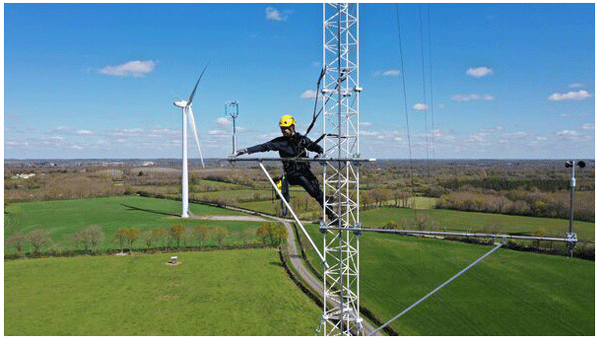
A 3-year meteorological dataset from an operational wind farm of six 2 MW (megawatt) turbines has been made available. This includes a meteorological mast equipped with sonic anemometers at four different heights and radiometer measurements for atmospheric stability analysis. Simultaneously, supervisory control and data acquisition (SCADA) and the scanned geometry of the turbine blades are provided. This database has been made accessible to the research community (https://awit.aeris-data.fr).
Büsra Yildirim, Nikolay Dimitrov, Athanasios Kolios, and Asger Bech Abrahamsen
Wind Energ. Sci. Discuss., https://doi.org/10.5194/wes-2025-115, https://doi.org/10.5194/wes-2025-115, 2025
Revised manuscript not accepted
Short summary
Short summary
A surrogate-based design optimization framework has been implemented for a floating wind turbine. By integrating surrogate modeling and analytical design constraints, computationally efficient exploration of design spaces is ensured. This integration provides a connection between conceptual and detailed design. The proposed methodology achieved a reduction of 3.7 % in the Levelized Cost of Energy, considering ultimate, fatigue, and serviceability limit states.
Antonin Hubert, Boris Conan, and Sandrine Aubrun
Wind Energ. Sci., 10, 1351–1368, https://doi.org/10.5194/wes-10-1351-2025, https://doi.org/10.5194/wes-10-1351-2025, 2025
Short summary
Short summary
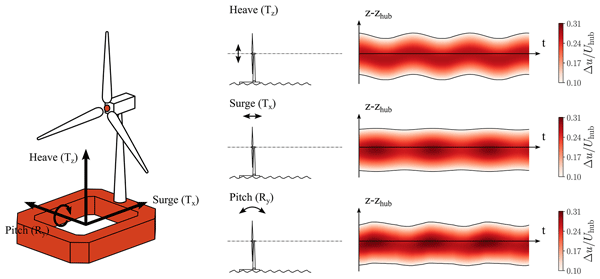
The paper aims to study the far wake of a wind turbine under realistic inflow conditions subjected to harmonic floating motions. The present work shows that phase averaging enables the observation of the coherent spatiotemporal wake behaviour in response to the harmonic motions, contrary to previous studies with time averaging, and that the resulting variations in the chosen metrics exhibit an intensity higher than those expected when using basic quasi-steady-state approaches.
Abhinav Anand, Robert Braunbehrens, Adrien Guilloré, and Carlo L. Bottasso
Wind Energ. Sci. Discuss., https://doi.org/10.5194/wes-2025-67, https://doi.org/10.5194/wes-2025-67, 2025
Revised manuscript accepted for WES
Short summary
Short summary
We present a new method for wind farm control, based on the optimization of an economic cost function that accounts for revenue from power production and cost due to operation and maintenance. The new formulation also includes constraints to ensure a desired lifetime duration. The application to relevant scenarios shows consistently improved profit when compared to alternative formulations from the recent literature.
Dimas Alejandro Barile, Roberto Sosa, Sandrine Aubrun, and Alejandro Daniel Otero
Wind Energ. Sci. Discuss., https://doi.org/10.5194/wes-2025-2, https://doi.org/10.5194/wes-2025-2, 2025
Manuscript not accepted for further review
Short summary
Short summary
This work sets out a novel methodology for the CFD simulation of an ABL wind tunnel flow. Initially, the scheme is well validated against experimental measurements, and then it is applied to the study of a floating offshore wind turbine model under surge motion with varying turbulence intensities and motion frequencies. New insights are gained related to wake recovery of a wind turbine under surge motion, as certain frequency cases exhibit a distinctive behaviour regarding coherence structures.
Azélice Ludot, Thor Heine Snedker, Athanasios Kolios, and Ilmas Bayati
Wind Energ. Sci. Discuss., https://doi.org/10.5194/wes-2024-162, https://doi.org/10.5194/wes-2024-162, 2025
Preprint withdrawn
Short summary
Short summary
This paper presents a methodology to develop machine learning models designed to predict, in real-time, hourly fatigue damage accumulation in the mooring lines of floating wind turbines, from measurements of five environmental variables: wind speed, wind direction, wave height, wave period, and wind-wave misalignment. The proposed tool is intended for predictive maintenance applications, which has been identified as a key area for cost reduction in floating wind.
Isadora L. Coimbra, Jakob Mann, José M. L. M. Palma, and Vasco T. P. Batista
Atmos. Meas. Tech., 18, 287–303, https://doi.org/10.5194/amt-18-287-2025, https://doi.org/10.5194/amt-18-287-2025, 2025
Short summary
Short summary
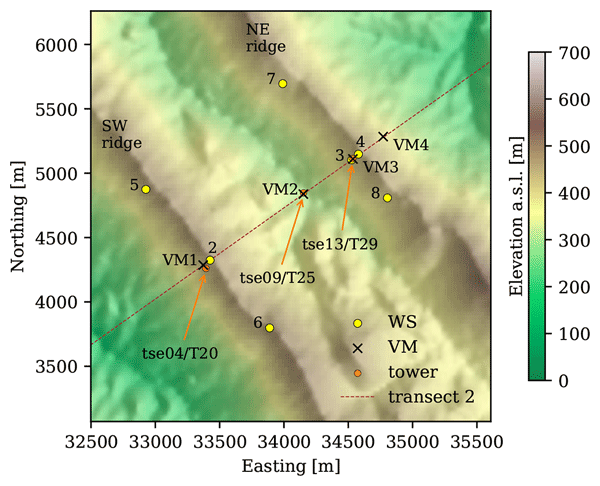
Dual-lidar measurements are explored here as a cost-effective alternative for measuring the wind at great heights. From measurements at a mountainous site, we showed that this methodology can accurately capture mean wind speeds and turbulence under different flow conditions, and we recommended optimal lidar placement and sampling rates. This methodology allows the construction of vertical wind profiles up to 430 m, surpassing traditional meteorological mast heights and single-lidar capabilities.
Farkhondeh (Hanie) Rouholahnejad and Julia Gottschall
Wind Energ. Sci., 10, 143–159, https://doi.org/10.5194/wes-10-143-2025, https://doi.org/10.5194/wes-10-143-2025, 2025
Short summary
Short summary
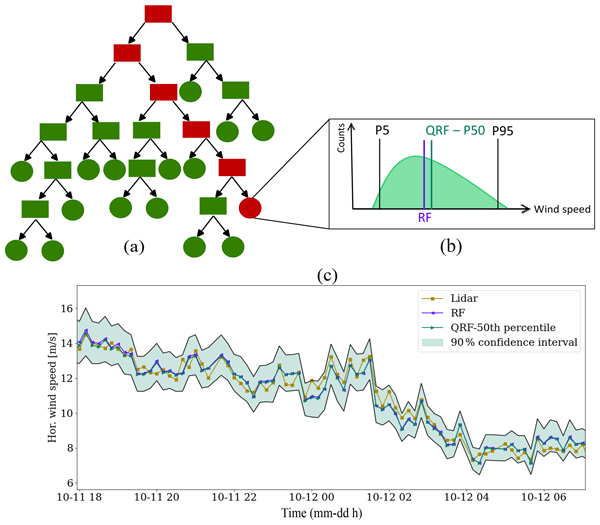
In wind energy, precise wind speed prediction at hub height is vital. Our study in the Dutch North Sea reveals that the on-site-trained random forest model outperforms the global reanalysis data, ERA5, in accuracy and precision. Trained within a 200 km range, the model effectively extends the wind speed vertically but experiences bias. It also outperforms ERA5 corrected with measurements in capturing wind speed variations and fine wind patterns, highlighting its potential for site assessment.
Martin Georg Jonietz Alvarez, Warren Watson, and Julia Gottschall
Wind Energ. Sci., 9, 2217–2233, https://doi.org/10.5194/wes-9-2217-2024, https://doi.org/10.5194/wes-9-2217-2024, 2024
Short summary
Short summary
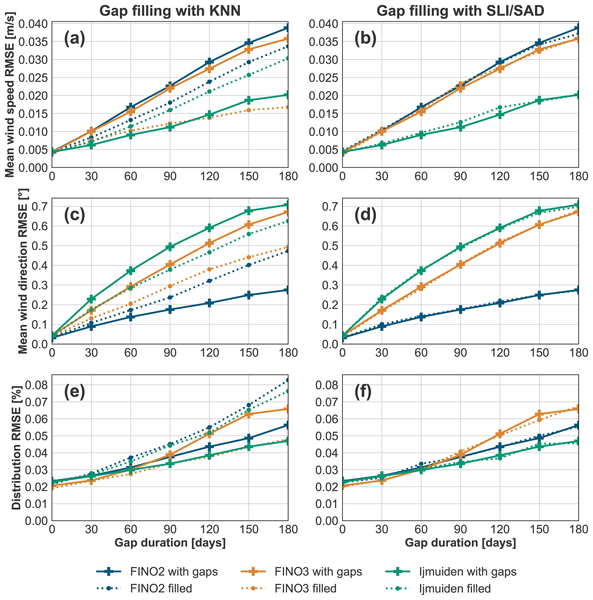
Offshore wind measurements are often affected by gaps. We investigated how these gaps affect wind resource assessments and whether filling them reduces their effect. We find that the effect of gaps on the estimated long-term wind resource is lower than expected and that data gap filling does not significantly change the outcome. These results indicate a need to reduce current wind data availability requirements for offshore measurement campaigns.

Majid Bastankhah, Marcus Becker, Matthew Churchfield, Caroline Draxl, Jay Prakash Goit, Mehtab Khan, Luis A. Martinez Tossas, Johan Meyers, Patrick Moriarty, Wim Munters, Asim Önder, Sara Porchetta, Eliot Quon, Ishaan Sood, Nicole van Lipzig, Jan-Willem van Wingerden, Paul Veers, and Simon Watson
Wind Energ. Sci., 9, 2171–2174, https://doi.org/10.5194/wes-9-2171-2024, https://doi.org/10.5194/wes-9-2171-2024, 2024
Short summary
Short summary
Dries Allaerts was born on 19 May 1989 and passed away at his home in Wezemaal, Belgium, on 10 October 2024 after battling cancer. Dries started his wind energy career in 2012 and had a profound impact afterward on the community, in terms of both his scientific realizations and his many friendships and collaborations in the field. His scientific acumen, open spirit of collaboration, positive attitude towards life, and playful and often cheeky sense of humor will be deeply missed by many.
Mark O'Malley, Hannele Holttinen, Nicolaos Cutululis, Til Kristian Vrana, Jennifer King, Vahan Gevorgian, Xiongfei Wang, Fatemeh Rajaei-Najafabadi, and Andreas Hadjileonidas
Wind Energ. Sci., 9, 2087–2112, https://doi.org/10.5194/wes-9-2087-2024, https://doi.org/10.5194/wes-9-2087-2024, 2024
Short summary
Short summary
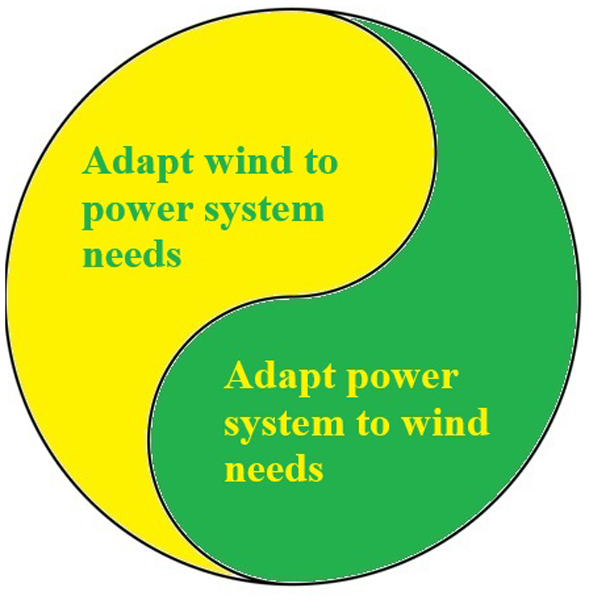
The rising share of wind power poses challenges to cost-effective integration while ensuring reliability. Balancing the needs of the power system and contributions of wind power is crucial for long-term value. Research should prioritize wind power advantages over competitors, focussing on internal challenges. Collaboration with other technologies is essential for addressing the fundamental objectives of power systems – maintaining reliable supply–demand balance at the lowest cost.
Simone Tamaro, Filippo Campagnolo, and Carlo L. Bottasso
Wind Energ. Sci., 9, 1547–1575, https://doi.org/10.5194/wes-9-1547-2024, https://doi.org/10.5194/wes-9-1547-2024, 2024
Short summary
Short summary
We develop a new simple model to predict power losses incurred by a wind turbine when it yaws out of the wind. The model reveals the effects of a number of rotor design parameters and how the turbine is governed when it yaws. The model exhibits an excellent agreement with large eddy simulations and wind tunnel measurements. We showcase the capabilities of the model by deriving the power-optimal yaw strategy for a single turbine and for a cluster of wake-interacting turbines.
Marta Bertelè, Paul J. Meyer, Carlo R. Sucameli, Johannes Fricke, Anna Wegner, Julia Gottschall, and Carlo L. Bottasso
Wind Energ. Sci., 9, 1419–1429, https://doi.org/10.5194/wes-9-1419-2024, https://doi.org/10.5194/wes-9-1419-2024, 2024
Short summary
Short summary
A neural observer is used to estimate shear and veer from the operational data of a large wind turbine equipped with blade load sensors. Comparison with independent measurements from a nearby met mast and profiling lidar demonstrate the ability of the
rotor as a sensorconcept to provide high-quality estimates of these inflow quantities based simply on already available standard operational data.
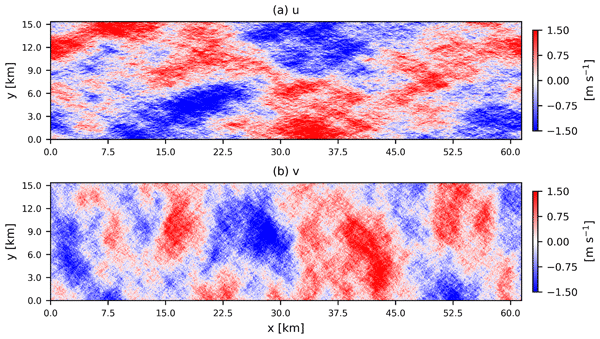
Abdul Haseeb Syed and Jakob Mann
Wind Energ. Sci., 9, 1381–1391, https://doi.org/10.5194/wes-9-1381-2024, https://doi.org/10.5194/wes-9-1381-2024, 2024
Short summary
Short summary
Wind flow consists of swirling patterns of air called eddies, some as big as many kilometers across, while others are as small as just a few meters. This paper introduces a method to simulate these large swirling patterns on a flat grid. Using these simulations we can better figure out how these large eddies affect big wind turbines in terms of loads and forces.
Jenna Iori, Carlo Luigi Bottasso, and Michael Kenneth McWilliam
Wind Energ. Sci., 9, 1289–1304, https://doi.org/10.5194/wes-9-1289-2024, https://doi.org/10.5194/wes-9-1289-2024, 2024
Short summary
Short summary
The controller of a wind turbine has an important role in regulating power production and avoiding structural failure. However, it is often designed after the rest of the turbine, and thus its potential is not fully exploited. An alternative is to design the structure and the controller simultaneously. This work develops a method to identify if a given turbine design can benefit from this new simultaneous design process. For example, a higher and cheaper turbine tower can be built this way.
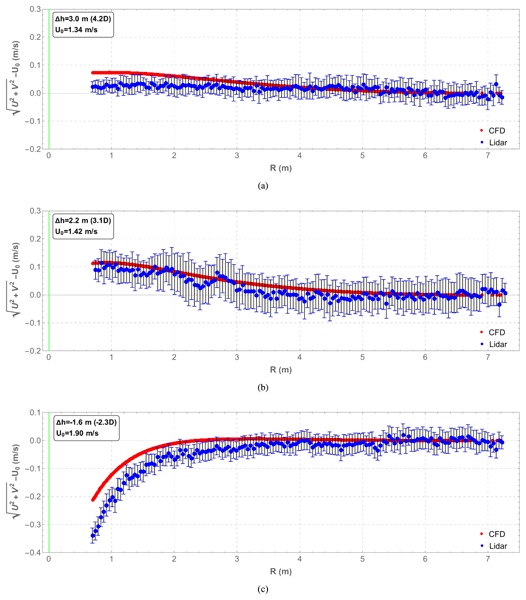
Liqin Jin, Mauro Ghirardelli, Jakob Mann, Mikael Sjöholm, Stephan Thomas Kral, and Joachim Reuder
Atmos. Meas. Tech., 17, 2721–2737, https://doi.org/10.5194/amt-17-2721-2024, https://doi.org/10.5194/amt-17-2721-2024, 2024
Short summary
Short summary
Three-dimensional wind fields can be accurately measured by sonic anemometers. However, the traditional mast-mounted sonic anemometers are not flexible in various applications, which can be potentially overcome by drones. Therefore, we conducted a proof-of-concept study by applying three continuous-wave Doppler lidars to characterize the complex flow around a drone to validate the results obtained by CFD simulations. Both methods show good agreement, with a velocity difference of 0.1 m s-1.
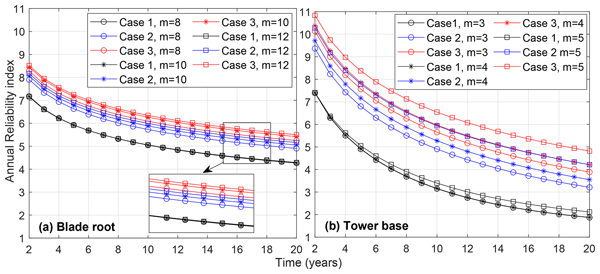
Shadan Mozafari, Paul Veers, Jennifer Rinker, and Katherine Dykes
Wind Energ. Sci., 9, 799–820, https://doi.org/10.5194/wes-9-799-2024, https://doi.org/10.5194/wes-9-799-2024, 2024
Short summary
Short summary
Turbulence is one of the main drivers of fatigue in wind turbines. There is some debate on how to model the turbulence in normal wind conditions in the design phase. To address such debates, we study the fatigue load distribution and reliability following different models of the International Electrotechnical Commission 61400-1 standard. The results show the lesser importance of load uncertainty due to turbulence distribution compared to the uncertainty of material resistance and Miner’s rule.
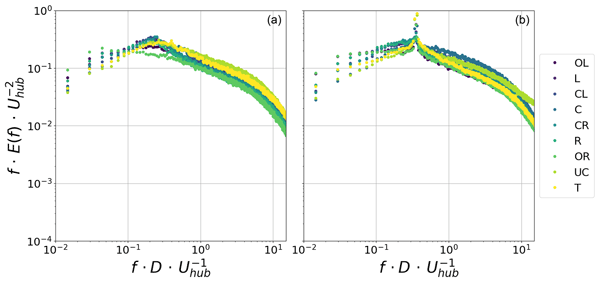
Benyamin Schliffke, Boris Conan, and Sandrine Aubrun
Wind Energ. Sci., 9, 519–532, https://doi.org/10.5194/wes-9-519-2024, https://doi.org/10.5194/wes-9-519-2024, 2024
Short summary
Short summary
This paper studies the consequences of floater motions for the wake properties of a floating wind turbine. Since wake interactions are responsible for power production loss in wind farms, it is important that we know whether the tools that are used to predict this production loss need to be upgraded to take into account these aspects. Our wind tunnel study shows that the signature of harmonic floating motions can be observed in the far wake of a wind turbine, when motions have strong amplitudes.
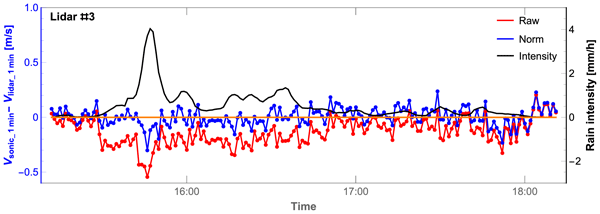
Liqin Jin, Jakob Mann, Nikolas Angelou, and Mikael Sjöholm
Atmos. Meas. Tech., 16, 6007–6023, https://doi.org/10.5194/amt-16-6007-2023, https://doi.org/10.5194/amt-16-6007-2023, 2023
Short summary
Short summary
By sampling the spectra from continuous-wave Doppler lidars very fast, the rain-induced Doppler signal can be suppressed and the bias in the wind velocity estimation can be reduced. The method normalizes 3 kHz spectra by their peak values before averaging them down to 50 Hz. Over 3 h, we observe a significant reduction in the bias of the lidar data relative to the reference sonic data when the largest lidar focus distance is used. The more it rains, the more the bias is reduced.
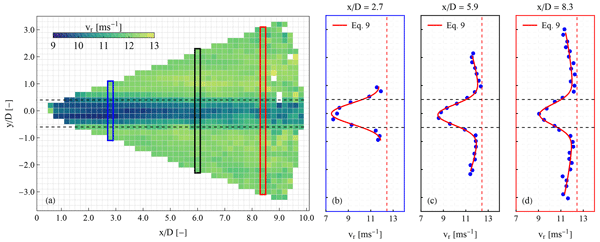
Nikolas Angelou, Jakob Mann, and Camille Dubreuil-Boisclair
Wind Energ. Sci., 8, 1511–1531, https://doi.org/10.5194/wes-8-1511-2023, https://doi.org/10.5194/wes-8-1511-2023, 2023
Short summary
Short summary
This study presents the first experimental investigation using two nacelle-mounted wind lidars that reveal the upwind and downwind conditions relative to a full-scale floating wind turbine. We find that in the case of floating wind turbines with small pitch and roll oscillating motions (< 1°), the ambient turbulence is the main driving factor that determines the propagation of the wake characteristics.
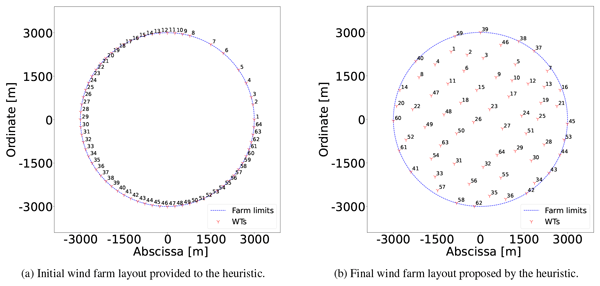
Juan-Andrés Pérez-Rúa, Mathias Stolpe, and Nicolaos Antonio Cutululis
Wind Energ. Sci., 8, 1453–1473, https://doi.org/10.5194/wes-8-1453-2023, https://doi.org/10.5194/wes-8-1453-2023, 2023
Short summary
Short summary
With the challenges of ensuring secure energy supplies and meeting climate targets, wind energy is on course to become the cornerstone of decarbonized energy systems. This work proposes a new method to optimize wind farms by means of smartly placing wind turbines within a given project area, leading to more green-energy generation. This method performs satisfactorily compared to state-of-the-art approaches in terms of the resultant annual energy production and other high-level metrics.
Paul Veers, Carlo L. Bottasso, Lance Manuel, Jonathan Naughton, Lucy Pao, Joshua Paquette, Amy Robertson, Michael Robinson, Shreyas Ananthan, Thanasis Barlas, Alessandro Bianchini, Henrik Bredmose, Sergio González Horcas, Jonathan Keller, Helge Aagaard Madsen, James Manwell, Patrick Moriarty, Stephen Nolet, and Jennifer Rinker
Wind Energ. Sci., 8, 1071–1131, https://doi.org/10.5194/wes-8-1071-2023, https://doi.org/10.5194/wes-8-1071-2023, 2023
Short summary
Short summary
Critical unknowns in the design, manufacturing, and operation of future wind turbine and wind plant systems are articulated, and key research activities are recommended.
Helena Canet, Adrien Guilloré, and Carlo L. Bottasso
Wind Energ. Sci., 8, 1029–1047, https://doi.org/10.5194/wes-8-1029-2023, https://doi.org/10.5194/wes-8-1029-2023, 2023
Short summary
Short summary
We propose a new approach to design that aims at optimal trade-offs between economic and environmental goals. New environmental metrics are defined, which quantify impacts in terms of CO2-equivalent emissions produced by the turbine over its entire life cycle. For some typical onshore installations in Germany, results indicate that a 1 % increase in the cost of energy can buy about a 5 % decrease in environmental impacts: a small loss for the individual can lead to larger gains for society.
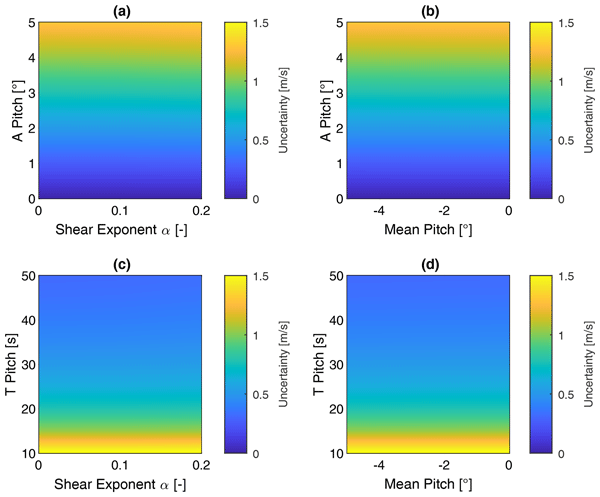
Moritz Gräfe, Vasilis Pettas, Julia Gottschall, and Po Wen Cheng
Wind Energ. Sci., 8, 925–946, https://doi.org/10.5194/wes-8-925-2023, https://doi.org/10.5194/wes-8-925-2023, 2023
Short summary
Short summary
Inflow wind field measurements from nacelle-based lidar systems offer great potential for different applications including turbine control, load validation and power performance measurements. On floating wind turbines nacelle-based lidar measurements are affected by the dynamic behavior of the floating foundations. Therefore, the effects on lidar wind speed measurements induced by floater dynamics must be well understood. A new model for quantification of these effects is introduced in our work.
Robert Braunbehrens, Andreas Vad, and Carlo L. Bottasso
Wind Energ. Sci., 8, 691–723, https://doi.org/10.5194/wes-8-691-2023, https://doi.org/10.5194/wes-8-691-2023, 2023
Short summary
Short summary
The paper presents a new method in which wind turbines in a wind farm act as local sensors, in this way detecting the flow that develops within the power plant. Through this technique, we are able to identify effects on the flow generated by the plant itself and by the orography of the terrain. The new method not only delivers a flow model of much improved quality but can also help in understanding phenomena that drive the farm performance.
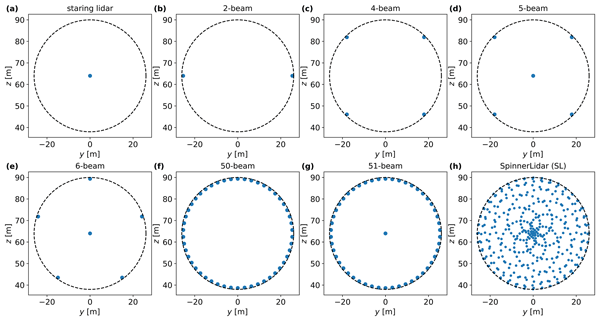
Wei Fu, Alessandro Sebastiani, Alfredo Peña, and Jakob Mann
Wind Energ. Sci., 8, 677–690, https://doi.org/10.5194/wes-8-677-2023, https://doi.org/10.5194/wes-8-677-2023, 2023
Short summary
Short summary
Nacelle lidars with different beam scanning locations and two types of systems are considered for inflow turbulence estimations using both numerical simulations and field measurements. The turbulence estimates from a sonic anemometer at the hub height of a Vestas V52 turbine are used as references. The turbulence parameters are retrieved using the radial variances and a least-squares procedure. The findings from numerical simulations have been verified by the analysis of the field measurements.
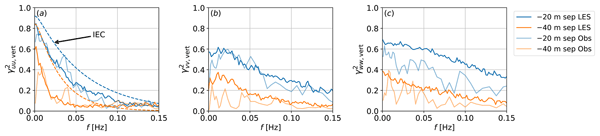
Regis Thedin, Eliot Quon, Matthew Churchfield, and Paul Veers
Wind Energ. Sci., 8, 487–502, https://doi.org/10.5194/wes-8-487-2023, https://doi.org/10.5194/wes-8-487-2023, 2023
Short summary
Short summary
We investigate coherence and correlation and highlight their importance for disciplines like wind energy structural dynamic analysis, in which blade loading and fatigue depend on turbulence structure. We compare coherence estimates to those computed using a model suggested by international standards. We show the differences and highlight additional information that can be gained using large-eddy simulation, further improving analytical coherence models used in synthetic turbulence generators.
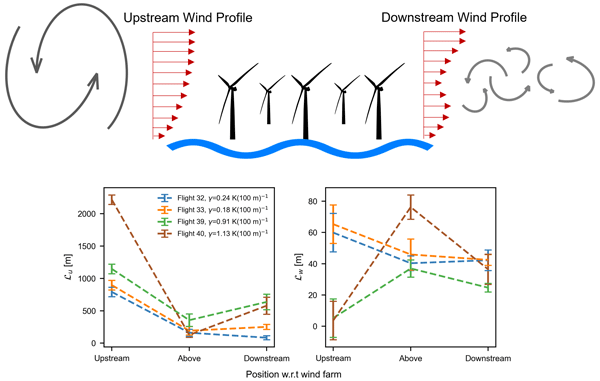
Abdul Haseeb Syed, Jakob Mann, Andreas Platis, and Jens Bange
Wind Energ. Sci., 8, 125–139, https://doi.org/10.5194/wes-8-125-2023, https://doi.org/10.5194/wes-8-125-2023, 2023
Short summary
Short summary
Wind turbines extract energy from the incoming wind flow, which needs to be recovered. In very large offshore wind farms, the energy is recovered mostly from above the wind farm in a process called entrainment. In this study, we analyzed the effect of atmospheric stability on the entrainment process in large offshore wind farms using measurements recorded by a research aircraft. This is the first time that in situ measurements are used to study the energy recovery process above wind farms.
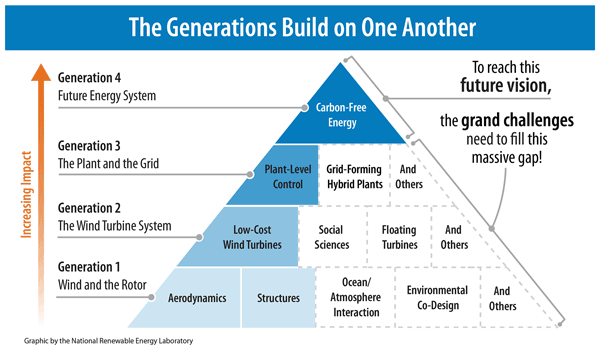
Paul Veers, Katherine Dykes, Sukanta Basu, Alessandro Bianchini, Andrew Clifton, Peter Green, Hannele Holttinen, Lena Kitzing, Branko Kosovic, Julie K. Lundquist, Johan Meyers, Mark O'Malley, William J. Shaw, and Bethany Straw
Wind Energ. Sci., 7, 2491–2496, https://doi.org/10.5194/wes-7-2491-2022, https://doi.org/10.5194/wes-7-2491-2022, 2022
Short summary
Short summary
Wind energy will play a central role in the transition of our energy system to a carbon-free future. However, many underlying scientific issues remain to be resolved before wind can be deployed in the locations and applications needed for such large-scale ambitions. The Grand Challenges are the gaps in the science left behind during the rapid growth of wind energy. This article explains the breadth of the unfinished business and introduces 10 articles that detail the research needs.
Hugo Rubio, Martin Kühn, and Julia Gottschall
Wind Energ. Sci., 7, 2433–2455, https://doi.org/10.5194/wes-7-2433-2022, https://doi.org/10.5194/wes-7-2433-2022, 2022
Short summary
Short summary
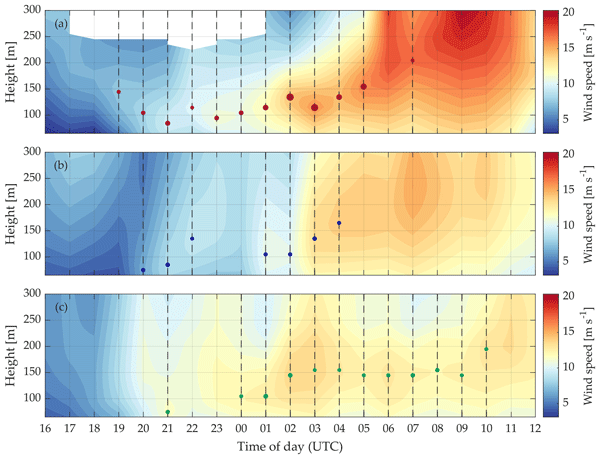
A proper development of offshore wind farms requires the accurate description of atmospheric phenomena like low-level jets. In this study, we evaluate the capabilities and limitations of numerical models to characterize the main jets' properties in the southern Baltic Sea. For this, a comparison against ship-mounted lidar measurements from the NEWA Ferry Lidar Experiment has been implemented, allowing the investigation of the model's capabilities under different temporal and spatial constraints.
Johan Meyers, Carlo Bottasso, Katherine Dykes, Paul Fleming, Pieter Gebraad, Gregor Giebel, Tuhfe Göçmen, and Jan-Willem van Wingerden
Wind Energ. Sci., 7, 2271–2306, https://doi.org/10.5194/wes-7-2271-2022, https://doi.org/10.5194/wes-7-2271-2022, 2022
Short summary
Short summary
We provide a comprehensive overview of the state of the art and the outstanding challenges in wind farm flow control, thus identifying the key research areas that could further enable commercial uptake and success. To this end, we have structured the discussion on challenges and opportunities into four main areas: (1) insight into control flow physics, (2) algorithms and AI, (3) validation and industry implementation, and (4) integrating control with system design
(co-design).
Felix Kelberlau and Jakob Mann
Atmos. Meas. Tech., 15, 5323–5341, https://doi.org/10.5194/amt-15-5323-2022, https://doi.org/10.5194/amt-15-5323-2022, 2022
Short summary
Short summary
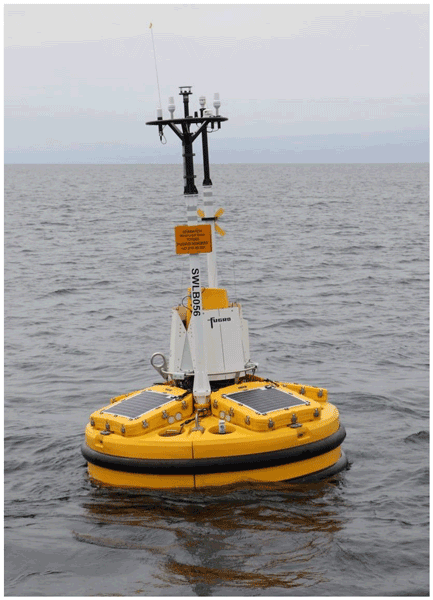
Floating lidar systems are used for measuring wind speeds offshore, and their motion influences the measurements. This study describes the motion-induced bias on mean wind speed estimates by simulating the lidar sampling pattern of a moving lidar. An analytic model is used to validate the simulations. The bias is low and depends on amplitude and frequency of motion as well as on wind shear. It has been estimated for the example of the Fugro SEAWATCH wind lidar buoy carrying a ZX 300M lidar.
Emmanouil M. Nanos, Carlo L. Bottasso, Simone Tamaro, Dimitris I. Manolas, and Vasilis A. Riziotis
Wind Energ. Sci., 7, 1641–1660, https://doi.org/10.5194/wes-7-1641-2022, https://doi.org/10.5194/wes-7-1641-2022, 2022
Short summary
Short summary
A novel way of wind farm control is presented where the wake is deflected vertically to reduce interactions with downstream turbines. This is achieved by moving ballast in a floating offshore platform in order to pitch the support structure and thereby tilt the wind turbine rotor disk. The study considers the effects of this new form of wake control on the aerodynamics of the steering and wake-affected turbines, on the structure, and on the ballast motion system.
Stefan Loew and Carlo L. Bottasso
Wind Energ. Sci., 7, 1605–1625, https://doi.org/10.5194/wes-7-1605-2022, https://doi.org/10.5194/wes-7-1605-2022, 2022
Short summary
Short summary
This publication presents methods to improve the awareness and control of material fatigue for wind turbines. This is achieved by enhancing a sophisticated control algorithm which utilizes wind prediction information from a laser measurement device. The simulation results indicate that the novel algorithm significantly improves the economic performance of a wind turbine. This benefit is particularly high for situations when the prediction quality is low or the prediction time frame is short.
Emmanouil M. Nanos, Carlo L. Bottasso, Filippo Campagnolo, Franz Mühle, Stefano Letizia, G. Valerio Iungo, and Mario A. Rotea
Wind Energ. Sci., 7, 1263–1287, https://doi.org/10.5194/wes-7-1263-2022, https://doi.org/10.5194/wes-7-1263-2022, 2022
Short summary
Short summary
The paper describes the design of a scaled wind turbine in detail, for studying wakes and wake control applications in the known, controllable and repeatable conditions of a wind tunnel. The scaled model is characterized by conducting experiments in two wind tunnels, in different conditions, using different measurement equipment. Results are also compared to predictions obtained with models of various fidelity. The analysis indicates that the model fully satisfies the initial requirements.
Juan-Andrés Pérez-Rúa and Nicolaos Antonio Cutululis
Wind Energ. Sci., 7, 925–942, https://doi.org/10.5194/wes-7-925-2022, https://doi.org/10.5194/wes-7-925-2022, 2022
Short summary
Short summary
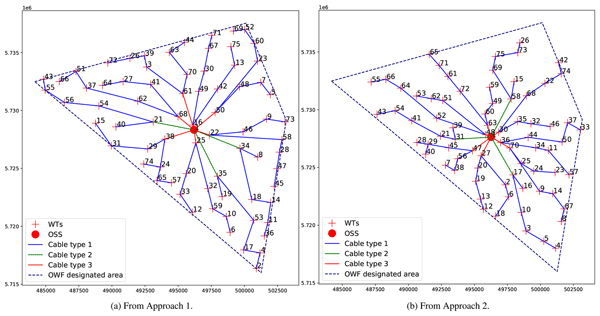
Wind farms are becoming larger, and they are shaping up as one of the main drivers towards full green energy transition. Because of their massive proliferation, more and more attention is nowadays focused on optimal design of these power plants. We propose an optimization framework in order to contribute to further cost reductions, by simultaneously designing the wind turbines and cable layout. We show the capability of the framework to improve designs compared to the classic approach.
Wei Fu, Alfredo Peña, and Jakob Mann
Wind Energ. Sci., 7, 831–848, https://doi.org/10.5194/wes-7-831-2022, https://doi.org/10.5194/wes-7-831-2022, 2022
Short summary
Short summary
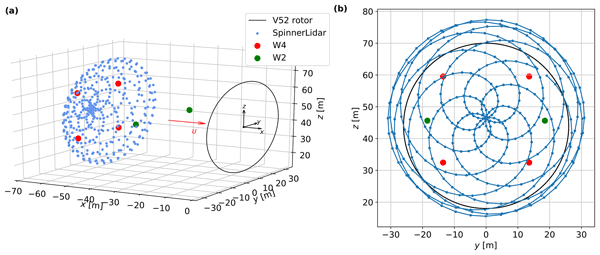
Measuring the variability of the wind is essential to operate the wind turbines safely. Lidars of different configurations have been placed on the turbines’ nacelle to measure the inflow remotely. This work found that the multiple-beam lidar is the only one out of the three employed nacelle lidars that can give detailed information about the inflow variability. The other two commercial lidars, which have two and four beams, respectively, measure only the fluctuation in the along-wind direction.

Nikolas Angelou, Jakob Mann, and Ebba Dellwik
Atmos. Chem. Phys., 22, 2255–2268, https://doi.org/10.5194/acp-22-2255-2022, https://doi.org/10.5194/acp-22-2255-2022, 2022
Short summary
Short summary
In this study we use state-of-the-art scanning wind lidars to investigate the wind field in the near-wake region of a mature, open-grown tree. Our measurements provide for the first time a picture of the mean and the turbulent spatial fluctuations in the flow in the wake of a tree in its natural environment. Our observations support the hypothesis that even simple models can realistically simulate the turbulent fluctuations in the wake and thus predict the effect of trees in flow models.
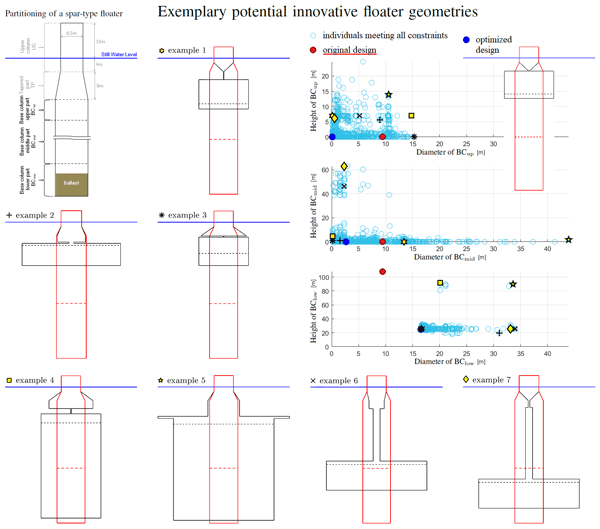
Mareike Leimeister, Maurizio Collu, and Athanasios Kolios
Wind Energ. Sci., 7, 259–281, https://doi.org/10.5194/wes-7-259-2022, https://doi.org/10.5194/wes-7-259-2022, 2022
Short summary
Short summary
Floating offshore wind technology has high potential but still faces challenges for gaining economic competitiveness to allow commercial market uptake. Hence, design optimization plays a key role; however, the final optimum floater obtained highly depends on the specified optimization problem. Thus, by considering alternative structural realization approaches, not very stringent limitations on the structure and dimensions are required. This way, more innovative floater designs can be captured.
Short summary
This editorial celebrates the 10th anniversary of Wind Energy Science, reflecting on a decade of rapid scientific progress and the journal’s role in advancing fundamental, interdisciplinary research. It highlights key developments in wind energy, the importance of open science and academia–industry collaboration, and emerging challenges such as data sharing and artificial intelligence. Above all, it honors the research community that has shaped the journal and looks ahead to the next decade.
This editorial celebrates the 10th anniversary of Wind Energy Science, reflecting on a decade of...


Altmetrics