Articles | Volume 6, issue 6
https://doi.org/10.5194/wes-6-1379-2021
© Author(s) 2021. This work is distributed under
the Creative Commons Attribution 4.0 License.
https://doi.org/10.5194/wes-6-1379-2021
© Author(s) 2021. This work is distributed under
the Creative Commons Attribution 4.0 License.
Satellite-based estimation of roughness lengths and displacement heights for wind resource modelling
DTU Wind Energy, Risø Campus, Technical University of Denmark, Frederiksborgvej 399, 4000 Roskilde, Denmark
Merete Badger
DTU Wind Energy, Risø Campus, Technical University of Denmark, Frederiksborgvej 399, 4000 Roskilde, Denmark
Ib Troen
DTU Wind Energy, Risø Campus, Technical University of Denmark, Frederiksborgvej 399, 4000 Roskilde, Denmark
Kenneth Grogan
DHI GRAS A/S, Agern Alle 5, 2970 Hørsholm, Denmark
Finn-Hendrik Permien
Siemens Gamesa Renewable Energy A/S, Borupvej 16, 7330 Brande, Denmark
Related authors
Nicola Bodini, Patrick Moriarty, Regis Thedin, Paula Doubrawa, Cristina Archer, Myra Blaylock, Carlo Bottasso, Bruno Carmo, Lawrence Cheung, Camille Dubreuil, Rogier Floors, Thomas Herges, Daniel Houck, Ali Kanjari, Colleen M. Kaul, Christopher Kelley, Ru LI, Julie K. Lundquist, Desirae Major, Anh Kiet Nguyen, Mike Optis, Luan R. C. Parada, Alfredo Peña, Julian Quick, David Ricarte, William C. Radünz, Raj K. Rai, Oscar Garcia Santiago, Jonas Schulte, Knut S. Seim, M. Paul van der Laan, Kisorthman Vimalakanthan, and Adam Wise
Wind Energ. Sci. Discuss., https://doi.org/10.5194/wes-2026-34, https://doi.org/10.5194/wes-2026-34, 2026
Preprint under review for WES
Short summary
Short summary
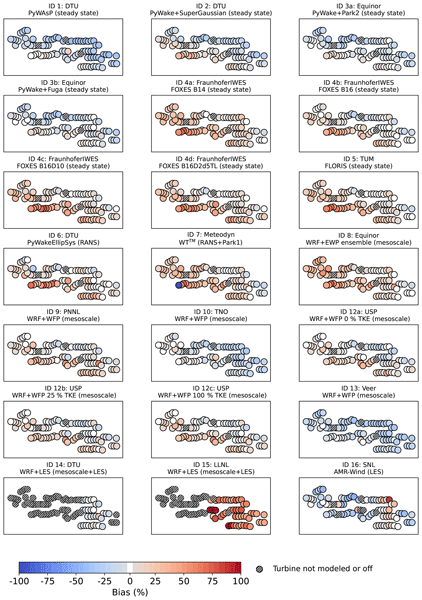
Predicting wind farm energy production is challenging because wind patterns are complex. We tested 16 different models against real data from a major field experiment to see which worked best. Surprisingly, the most expensive and detailed models were not always more accurate than simpler ones. We found that feeding models better weather data was the most effective way to improve accuracy. These results help the industry choose the right tools for designing more efficient wind farms.
Xiaoli Guo Larsén, Marc Imberger, and Rogier Floors
Wind Energ. Sci. Discuss., https://doi.org/10.5194/wes-2025-245, https://doi.org/10.5194/wes-2025-245, 2025
Revised manuscript under review for WES
Short summary
Short summary
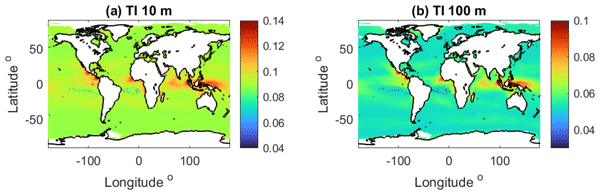
This study delivers a method and datasets for a global offshore atlas for turbulence intensity from height 10 m to 200 m. The method innovatively includes both two-dimensional and three-dimensional turbulence, stability, wave age and height. Results show satisfactory agreement with measurements and data from the literature.
Nicola Bodini, Patrick Moriarty, Regis Thedin, Paula Doubrawa, Cristina Archer, Myra Blaylock, Carlo Bottasso, Bruno Carmo, Lawrence Cheung, Camille Dubreuil, Rogier Floors, Thomas Herges, Daniel Houck, Ali Kanjari, Colleen M. Kaul, Christopher Kelley, Ru LI, Julie K. Lundquist, Desirae Major, Anh Kiet Nguyen, Mike Optis, Luan R. C. Parada, Alfredo Peña, Julian Quick, David Ricarte, William C. Radünz, Raj K. Rai, Oscar Garcia Santiago, Jonas Schulte, Knut S. Seim, M. Paul van der Laan, Kisorthman Vimalakanthan, and Adam Wise
Wind Energ. Sci. Discuss., https://doi.org/10.5194/wes-2026-34, https://doi.org/10.5194/wes-2026-34, 2026
Preprint under review for WES
Short summary
Short summary
Predicting wind farm energy production is challenging because wind patterns are complex. We tested 16 different models against real data from a major field experiment to see which worked best. Surprisingly, the most expensive and detailed models were not always more accurate than simpler ones. We found that feeding models better weather data was the most effective way to improve accuracy. These results help the industry choose the right tools for designing more efficient wind farms.
Xiaoli Guo Larsén, Marc Imberger, and Rogier Floors
Wind Energ. Sci. Discuss., https://doi.org/10.5194/wes-2025-245, https://doi.org/10.5194/wes-2025-245, 2025
Revised manuscript under review for WES
Short summary
Short summary
This study delivers a method and datasets for a global offshore atlas for turbulence intensity from height 10 m to 200 m. The method innovatively includes both two-dimensional and three-dimensional turbulence, stability, wave age and height. Results show satisfactory agreement with measurements and data from the literature.
Merete Badger, Haichen Zuo, Ásta Hannesdóttir, Abdalmenem Owda, and Charlotte Hasager
Wind Energ. Sci., 7, 2497–2512, https://doi.org/10.5194/wes-7-2497-2022, https://doi.org/10.5194/wes-7-2497-2022, 2022
Short summary
Short summary
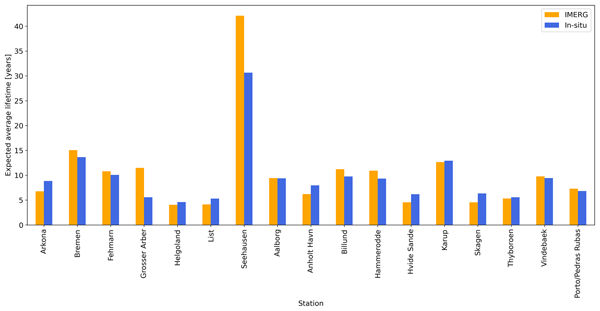
When wind turbine blades are exposed to strong winds and heavy rainfall, they may be damaged and their efficiency reduced. The problem is most pronounced offshore where turbines are tall and the climate is harsh. Satellites provide global half-hourly rain observations. We use these rain data as input to a model for blade lifetime prediction and find that the satellite-based predictions agree well with predictions based on observations from weather stations on the ground.
Cited articles
Badger, J., Hahmann, A., Larsen, X. G., Badger, M., Kelly, M., Davis, N., Olsen, B. T., and Mortensen, N. G.: The Global Wind Atlas, Tech. rep., DTU Wind Energy, Roskilde, Denmark, available at: https://energiforskning.dk/sites/energiforskning.dk/files/slutrapporter/gwa_64011-0347_finalreport.pdf (last access: 26 October 2021),
2015. a, b
Bergström, H., Alfredsson, H., Arnqvist, J., Carlén, I.,
Dellwik, E., Fransson, J., Ganander, H., Mohr, M., Segalini, A.,
Söderberg, S., Bergström, H., Alfredsson, H., Carlén, J.,
Dellwik, I., Ganander, J., and Mohr, H.: Wind power in forests: Winds and
effects on loads, Tech. rep., Uppsala University, Stockholm, Sweden, available at: https://orbit.dtu.dk/en/publications/wind-power-in-forests-winds-and-effects-on-loads (last access: 26 October 2021),
2013. a
Blackadar, A. K. and Tennekes, H.: Asymptotic Similarity in Neutral Barotropic Planetary Boundary Layers, J. Atmos. Sci., 25, 1015–1020, https://doi.org/10.1175/1520-0469(1968)025<1015:ASINBP>2.0.CO;2, 1968. a
Boser, B. E., Guyon, I. M., and Vapnik, V. N.: A Training Algorithm for Optimal Margin Classifiers, in: Proceedings of the 5th Annual ACM Workshop on
Computational Learning Theory, 27–29 July 1992, Pittsburg, USA, ACM Press, 144–152, 1992. a
Bottema, M., Klaasen, W., and Hopwood, W.: Landscape Roughness Parameters for Sherwood Forest – Validation of Aggregation Models, Bound.-Lay.
Meteorol., 89, 317–347, https://doi.org/10.1023/A:1001795509379, 1998. a
Breiman, L.: Bagging predictors, Mach. Learn., 24, 123–140, 1996. a
Businger, J. A., Wyngaard, J. C., Izumi, Y., and Bradley, E. F.: Flux-Profile Relationships in the Atmospheric Surface Layer, J. Atmos. Sci., 28, 181–189, https://doi.org/10.1175/1520-0469(1971)028<0181:FPRITA>2.0.CO;2, 1971. a
Chen, J. and Black, T.: Defining Leaf-Area Index for non-flat leaves, Plant
Cell Environ., 15, 421–429, https://doi.org/10.1111/j.1365-3040.1992.tb00992.x, 1992. a
Csillik, O., Kumar, P., and Asner, G. P.: Challenges in estimating tropical
forest canopy height from planet dove imagery, Remote Sens., 12, 1160,
https://doi.org/10.3390/rs12071160, 2020. a
De Bruin, H. A. and Moore, C. J.: Zero-plane displacement and roughness
length for tall vegetation, derived from a simple mass conservation
hypothesis, Bound.-Lay. Meteorol., 31, 39–49,
https://doi.org/10.1007/BF00120033, 1985. a
Dörenkämper, M., Olsen, B. T., Witha, B., Hahmann, A. N., Davis, N. N., Barcons, J., Ezber, Y., García-Bustamante, E., González-Rouco, J. F., Navarro, J., Sastre-Marugán, M., Sīle, T., Trei, W., Žagar, M., Badger, J., Gottschall, J., Sanz Rodrigo, J., and Mann, J.: The Making of the New European Wind Atlas – Part 2: Production and evaluation, Geosci. Model Dev., 13, 5079–5102, https://doi.org/10.5194/gmd-13-5079-2020, 2020. a, b
EMD international: INNOWIND data layers, available at: https://help.emd.dk/mediawiki/index.php?title=Innowind_Premium_Data_Layers,
last access: 26 October 2021. a
Enevoldsen, P.: Onshore wind energy in Northern European forests: Reviewing
the risks, Renewable and Sustainable Energy Reviews, 60, 1251–1262, https://doi.org/10.1016/j.rser.2016.02.027, 2016. a
ESA: ESA-CCI Land Cover, ESA [data set], available at:
http://maps.elie.ucl.ac.be/CCI/viewer/, last access: last access: 26 October 2021. a
European Space Agency (ESA) Climate Change Initiative (CCI): Land cover
classification gridded maps from 1992 to present derived from satellite
observations, v2.0.7, available at: https://cds.climate.copernicus.eu/cdsapp#!/dataset/satellite-land-cover?tab=overview (last access: 26 October 2021),
2015. a
Fagua, J. C., Jantz, P., Rodriguez-Buritica, S., Duncanson, L., and Goetz,
S. J.: Integrating LiDAR, multispectral and SAR data to estimate and map
canopy height in tropical forests, Remote Sens., 11, 2697,
https://doi.org/10.3390/rs11222697, 2019. a
Floors, R. and Nielsen, M.: Estimating Air Density Using Observations and
Re-Analysis Outputs for Wind Energy Purposes, Energies, 12, 2038,
https://doi.org/10.3390/en12112038, 2019. a
Friedl, M. and Sulla-Menashe, D.: MCD12Q1 MODIS/Terra+Aqua Land Cover Type
Yearly L3 Global 500m SIN Grid V006, distributed by NASA EOSDIS Land Processes DAAC, NASA [data set], https://doi.org/10.5067/MODIS/MCD12Q1.006, 2019. a, b
Giebel, G. and Gryning, S.-E.: Shear and stability in high met masts, and how WAsP treats it, available at: https://www.semanticscholar.org/paper/Shear- and-stability-in-high-met-masts-,-and-how-it-Giebel-Gryning/4624ab387a8135a4437aae4dd1df1276b3b4f302#citing-papers (last access: 26 October 2021),
2004. a
Global Wind Energy Council: Global Wind Energy Report: Annual Market Update 2019, available at: http://www.gwec.net (last access: 26 October 2021), 2019. a
Guzinski, R. and Nieto, H.: Evaluating the feasibility of using Sentinel-2 and Sentinel-3 satellites for high-resolution evapotranspiration estimations, Remote Sens. Environ., 221, 157–172, https://doi.org/10.1016/j.rse.2018.11.019, 2019. a, b
Hasager, C. B. and Jensen, N. O.: Surface-flux aggregation in heterogeneous
terrain, Q. J. Roy. Meteor. Soc., 125, 2075–2102,
https://doi.org/10.1002/qj.49712555808, 1999. a
Huang, H., Liu, C., and Wang, X.: Constructing a finer-resolution Forest Height in China Using ICESat/GLAS, Landsat and ALOS PALSAR data and height patterns of natural forests and plantations, Remote Sens., 11, 1740,
https://doi.org/10.3390/rs11151740, 2019. a
Jancewicz, K. and Szymanowski, M.: The Relevance of Surface Roughness Data
Qualities in Diagnostic Modeling of Wind Velocity in Complex Terrain: A Case
Study from the Śnieżnik Massif (SW Poland), Pure Appl. Geophys.,
174, 569–594, https://doi.org/10.1007/s00024-016-1297-9, 2017. a
Kelly, M. and Jørgensen, H. E.: Statistical characterization of roughness uncertainty and impact on wind resource estimation, Wind Energ. Sci., 2, 189–209, https://doi.org/10.5194/wes-2-189-2017, 2017. a, b
Lantmäteriet: https://www.lantmateriet.se/en/maps-and-geographic-information/open-geodata/#faq=feef, last access: 18 March 2021. a
Li, W., Niu, Z., Shang, R., Qin, Y., Wang, L., and Chen, H.: High-resolution
mapping of forest canopy height using machine learning by coupling ICESat-2
LiDAR with Sentinel-1, Sentinel-2 and Landsat-8 data, Int. J. Appl. Earth Obs., 92, 102163, https://doi.org/10.1016/j.jag.2020.102163, 2020. a, b
Meyers, T. and Tha Paw U, K.: Testing of a higher-order closure model for
modeling airflow within and above plant canopies, Bound.-Lay. Meteorol.,
37, 297–311, https://doi.org/10.1007/BF00122991, 1986. a
NASA JPL: NASA Shuttle Radar Topography Mission Global 3 arc second number, distributed by NASA EOSDIS Land Processes DAAC, NASA [data set], https://doi.org/10.5067/MEaSUREs/SRTM/SRTMGL3N.003, 2013. a
Neuenschwander, A. and Pitts, K.: The ATL08 land and vegetation product for the ICESat-2 Mission, Remote Sens. Environ., 221, 247–259,
https://doi.org/10.1016/j.rse.2018.11.005, 2019. a
Peña, A.: Østerild: A natural laboratory for atmospheric turbulence, J. Renew. Sustain. Energy, 11, 063302, https://doi.org/10.1063/1.5121486, 2019. a
Popescu, S. C., Wynne, R. H., and Nelson, R. F.: Estimating plot-level tree
heights with lidar: Local filtering with a canopy-height based variable
window size, Comput. Electron. Agr., 37, 71–95,
https://doi.org/10.1016/S0168-1699(02)00121-7, 2003. a
Raupach, M. R.: Drag and drag partition on rough surfaces, Bound.-Lay.
Meteorol., 60, 375–395, https://doi.org/10.1007/BF00155203, 1992. a
Raupach, M. R.: Simplified expressions for vegetation roughness length and
zero-plane displacement as functions of canopy height and area index,
Bound.-Lay. Meteorol., 71, 211–216, https://doi.org/10.1007/BF00709229, 1994. a, b, c, d
Shaw, R. H. and Pereira, A. R.: Aerodynamic roughness of a plant canopy: A
numerical experiment, Agric. Meteorol., 26, 51–65,
https://doi.org/10.1016/0002-1571(82)90057-7, 1982. a
Sogachev, A. and Panferov, O.: Modification of two-equation models to account for plant drag, Bound.-Lay. Meteorol., 121, 229–266,
https://doi.org/10.1007/s10546-006-9073-5, 2006. a
Sogachev, A., Menzhulin, G. V., Heimann, M., and Lloyd, J.: A simple
three-dimensional canopy – planetary boundary layer simulation model for
scalar concentrations and fluxes, Tellus B, 54,
784–819, https://doi.org/10.3402/tellusb.v54i5.16729, 2002.
a
Styrelsen for Dataforsyning og Effektivisering: Danmarks Højdemodel, DHM/Terræn, Tech. Rep. August, Styrelsen for Dataforsyning og Effektivisering, available at: https://download.kortforsyningen.dk/content/dhmh%C3%B8jdekurver (last access: 26 October 2021),
2016. a
Taylor, P. A.: Comments and further analysis on effective roughness lengths
for use in numerical three-dimensional models, Bound.-Lay. Meteorol., 39,
403–418, https://doi.org/10.1007/BF00125144, 1987. a
Thom, A. S.: Momentum absorption by vegetation, Q. J. Roy. Meteorol. Soc., 97, 414–428, https://doi.org/10.1002/qj.49709741404, 1971. a, b
USGS EROS Archive: Land Cover Products – Global Land Cover Characterization (GLCC), USGS [data set], https://doi.org/10.5066/F7GB230D, 1993. a, b
Vihma, T. and Savijärvi, H.: On the effective roughness length for
heterogeneous terrain, Q. J. Roy. Meteor. Soc., 117, 399–407,
https://doi.org/10.1002/qj.49711749808, 1991. a
Short summary
Wind turbines are frequently placed in forests. We investigate the potential of using satellites to characterize the land surface for wind flow modelling. Maps of forest properties are generated from satellite data and converted to flow modelling maps. Validation is carried out at 10 sites. Using the novel satellite-based maps leads to lower errors of the power density than land cover databases, which demonstrates the value of using satellite-based land cover maps for flow modelling.
Wind turbines are frequently placed in forests. We investigate the potential of using satellites...
Altmetrics
Final-revised paper
Preprint