
Articles | Volume 11, issue 8
https://doi.org/10.5194/wes-11-2749-2026
© Author(s) 2026. This work is distributed under
the Creative Commons Attribution 4.0 License.
the Creative Commons Attribution 4.0 License.
https://doi.org/10.5194/wes-11-2749-2026
© Author(s) 2026. This work is distributed under
the Creative Commons Attribution 4.0 License.
the Creative Commons Attribution 4.0 License.
Review article
| 
03 Aug 2026
Review article |
| 03 Aug 2026
| 03 Aug 2026
Grand challenges in designing resilient wind energy systems in areas prone to tropical cyclones
Parametrica Research & Analytics, Nea Peramos, Attica, 19006, Greece
Jiali Wang
Environmental Science Division, Argonne National Laboratory, Lemont, IL 60439, USA
Sanjay Arwade
Dept. of Civil & Environmental Engineering, University of Massachusetts, Amherst, MA 01003, USA
Murray Fisher
Gulf Wind Technology, Avondale, LA, USA
Brian Hirth
Texas Tech University, Lubbock, TX, USA
Xiaoli Guo Larsén
Department of Wind and Energy Systems, DTU, Roskilde 4000, Denmark
Julie K. Lundquist
Johns Hopkins University, Baltimore, MD, USA
Andrew Myers
Northeastern University, Boston, MA, USA
Weichiang Pang
Clemson University, Clemson 29634, SC, USA
William J. Pringle
Environmental Science Division, Argonne National Laboratory, Lemont, IL 60439, USA
Robert Rogers
Asia-Pacific Typhoon Collaborative Research Center, Shanghai, China
Miguel Sanchez-Gomez
University of Colorado Boulder, Boulder, CO, USA
Department of Civil and Environmental Engineering, Louisiana State University, Baton Rouge, LA 70803, USA
Atsushi Yamaguchi
School of Engineering, Ashikaga University, Ashikaga, Japan
Paul Veers
North American Wind Energy Academy, Boulder, CO, USA
Related authors
Miguel Sanchez-Gomez, Georgios Deskos, Mike Optis, Julie K. Lundquist, Michael Sinner, Geng Xia, and Walter Musial
Wind Energ. Sci., 11, 2009–2036, https://doi.org/10.5194/wes-11-2009-2026, https://doi.org/10.5194/wes-11-2009-2026, 2026
Short summary
Short summary
Mesoscale simulations with the Fitch wind farm parameterization were compared to large-domain large-eddy simulations for three planned offshore wind farms under varied atmospheric conditions. Mesoscale runs captured key wake deficit patterns and stability effects in the wind farm wake evolution but underestimated power losses from internal wakes, especially in aligned winds or stable conditions. Results highlight mesoscale strengths for large-scale wakes and limits for turbine-level losses.
Geng Xia, Mike Optis, Georgios Deskos, Michael Sinner, Daniel Mulas Hernando, Julie Kay Lundquist, Andrew Kumler, Miguel Sanchez Gomez, Paul Fleming, and Walter Musial
Wind Energ. Sci. Discuss., https://doi.org/10.5194/wes-2025-154, https://doi.org/10.5194/wes-2025-154, 2025
Revised manuscript not accepted
Short summary
Short summary
This study examines energy losses from cluster wakes in offshore wind farms along the U.S. East Coast. Simulations based on real lease projects show that large wind speed deficits do not always cause equally large energy losses. The energy loss method revealed wake areas up to 30 % larger than traditional estimates, underscoring the need to consider both wind speed deficit and energy loss in planning offshore wind development.
William J. Shaw, Larry K. Berg, Mithu Debnath, Georgios Deskos, Caroline Draxl, Virendra P. Ghate, Charlotte B. Hasager, Rao Kotamarthi, Jeffrey D. Mirocha, Paytsar Muradyan, William J. Pringle, David D. Turner, and James M. Wilczak
Wind Energ. Sci., 7, 2307–2334, https://doi.org/10.5194/wes-7-2307-2022, https://doi.org/10.5194/wes-7-2307-2022, 2022
Short summary
Short summary
This paper provides a review of prominent scientific challenges to characterizing the offshore wind resource using as examples phenomena that occur in the rapidly developing wind energy areas off the United States. The paper also describes the current state of modeling and observations in the marine atmospheric boundary layer and provides specific recommendations for filling key current knowledge gaps.
Serena Lipari, Raghavendra Krishnamurthy, Bianca Adler, Laura Bianco, Nicola Bodini, Matthis Chabert d'Hières, Harindra J. S. Fernando, Robert Jackson, Michael Kieburtz, Anthony Kirincich, Stefano Letizia, Julie K. Lundquist, Paytsar Muradyan, Rob K. Newsom, Joseph O'Brien, Sujan Pal, Mikhail Pekour, David D. Turner, Sonia Wharton, and Seth Zippel
EGUsphere, https://doi.org/10.5194/egusphere-2026-5984, https://doi.org/10.5194/egusphere-2026-5984, 2026
This preprint is open for discussion and under review for Atmospheric Measurement Techniques (AMT).
Short summary
Short summary
Wind energy and weather forecasts depend on knowing how winds change with height. We combined laser, radar, and tower measurements to map winds and their fluctuations every ten minutes, using 19 months of observations at four coastal sites in the northeastern United States. In fog, which limits laser measurements, median data availability at 100–300 meters was 94.5% at a site with radar, compared with 39.3% at a site using only lasers. The method and dataset are freely available.
Fariborz Daneshvar, Soroosh Mani, William Pringle, Panagiotis Velissariou, Zizang Yang, Gregory Seroka, Edward Myers, and Saeed Moghimi
EGUsphere, https://doi.org/10.5194/egusphere-2026-4586, https://doi.org/10.5194/egusphere-2026-4586, 2026
This preprint is open for discussion and under review for Geoscientific Model Development (GMD).
Short summary
Short summary
Tropical cyclones threaten coastal communities, creating an urgent need for accurate flood forecasts. We developed a new software tool to predict storm-driven water levels. Previous methods required hundreds of computer simulations, which is slow. Our tool uses machine learning to provide high-resolution results using only 40 simulations. It effectively tracks water movement from local creeks to the open ocean, helping emergency responders provide faster, more reliable alerts.
Jana Fischereit, Bjarke T. E. Olsen, Marc Imberger, Henrik Vedel, Kristian H. Møller, Andrea N. Hahmann, and Xiaoli Guo Larsén
Geosci. Model Dev., 19, 8115–8147, https://doi.org/10.5194/gmd-19-8115-2026, https://doi.org/10.5194/gmd-19-8115-2026, 2026
Short summary
Short summary
We evaluated how operating wind farms influence the atmosphere in numerical weather prediction using two wind farm parameterizations in the HARMONIE-AROME model, applied by over 10 European weather services. Accurate yield forecasts require including both onshore and offshore turbines. Wind turbines slightly alter near-surface temperature (<1 K on average). We also present an open-access European wind turbine dataset combining multiple data sources.
Nicola Bodini, Patrick Moriarty, Regis Thedin, Paula Doubrawa, Cristina Archer, Myra Blaylock, Carlo Bottasso, Bruno Carmo, Lawrence Cheung, Camille Dubreuil, Rogier Floors, Thomas Herges, Daniel Houck, Ali Kanjari, Colleen M. Kaul, Christopher Kelley, Ru Li, Julie K. Lundquist, Desirae Major, Anh Kiet Nguyen, Mike Optis, Luan R. C. Parada, Alfredo Peña, Julian Quick, David Ricarte, William C. Radünz, Raj K. Rai, Oscar García-Santiago, Jonas Schulte, Knut S. Seim, M. Paul van der Laan, Kisorthman Vimalakanthan, and Adam Wise
Wind Energ. Sci., 11, 3107–3135, https://doi.org/10.5194/wes-11-3107-2026, https://doi.org/10.5194/wes-11-3107-2026, 2026
Short summary
Short summary
Predicting wind farm energy production is challenging because wind patterns are complex. We tested 16 different models against real data from a major field experiment to see which worked best. Surprisingly, the most expensive and detailed models were not always more accurate than simpler ones. We found that feeding models better weather data was the most effective way to improve accuracy. These results help the industry choose the right tools for designing more-efficient wind farms.
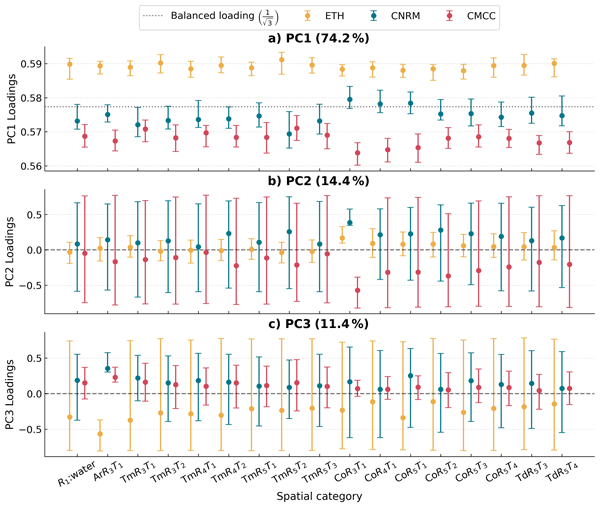
Nathalia Correa-Sánchez, Xiaoli Guo Larsén, Eleonora Dallan, Marco Borga, and Francesco Marra
Wind Energ. Sci., 11, 2961–2985, https://doi.org/10.5194/wes-11-2961-2026, https://doi.org/10.5194/wes-11-2961-2026, 2026
Short summary
Short summary
This research presents the first use of the simplified metastatistical extreme value approach for wind extremes, extending it to wind energy applications. We use a categorical framework that combines climate, roughness, and topography to evaluate convection-permitted models. We find that model formulation drives inter-model uncertainties, rather than surface conditions. Convection-permitted models' uncertainty analysis improves the reliability of extreme wind estimates for design parameters.
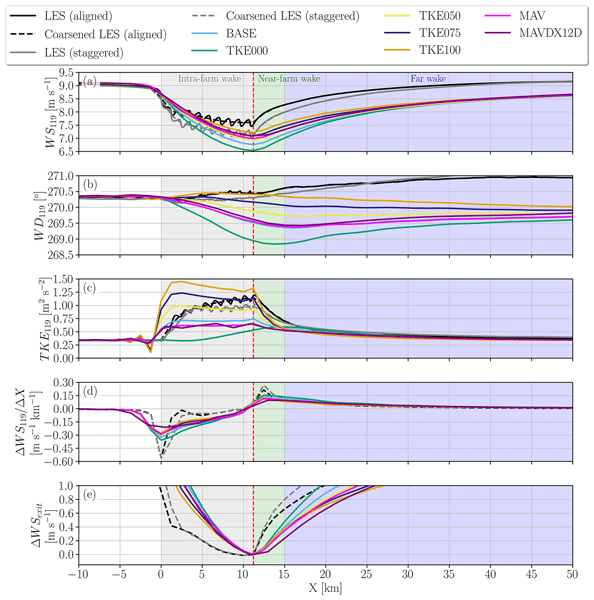
William C. Radünz, Jens H. Kasper, Richard J. A. M. Stevens, and Julie K. Lundquist
Wind Energ. Sci., 11, 2723–2747, https://doi.org/10.5194/wes-11-2723-2026, https://doi.org/10.5194/wes-11-2723-2026, 2026
Short summary
Short summary
Wind farms extract energy from the wind, creating slower, more turbulent flows that can affect other farms downstream. Using high-fidelity simulations for comparison, we find that mesoscale simulations that parameterize wind farms at coarser resolution may underestimate how quickly the wind recovers downstream. This slow recovery results from missing sharp wind gradients and low turbulence. Improving these aspects can help better predict wind energy production over long distances.
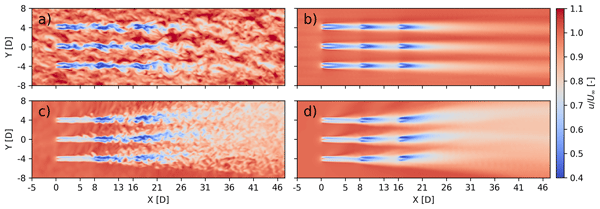
Adam S. Wise, Robert S. Arthur, Jeffrey D. Mirocha, Julie K. Lundquist, and Fotini K. Chow
Wind Energ. Sci., 11, 2543–2565, https://doi.org/10.5194/wes-11-2543-2026, https://doi.org/10.5194/wes-11-2543-2026, 2026
Short summary
Short summary
At night, wind farms can experience a wide range of intermittent wind events that can affect how much power is produced. We modeled a specific type of intermittent wind event that happens as the atmosphere gets colder and colder throughout a night. We identified a threshold to determine when these events impact wind farms and ultimately found that mainly the front of a wind farm tends to be most impacted by these sorts of events.
Valeria Vasquez-Barros, Nicola Bodini, Seth Zippel, Anthony Kirincich, and Julie K. Lundquist
Wind Energ. Sci. Discuss., https://doi.org/10.5194/wes-2026-115, https://doi.org/10.5194/wes-2026-115, 2026
Preprint under review for WES
Short summary
Short summary
Offshore wind turbines operate more than 100 meters above the ocean, but atmospheric conditions are often measured only near the sea surface. Using observations from an offshore research platform, we found that surface measurements frequently do not represent the conditions experienced by turbines because the lower atmosphere can become decoupled. These results highlight the need for measurements throughout the turbine height to improve wind energy forecasting and operations.
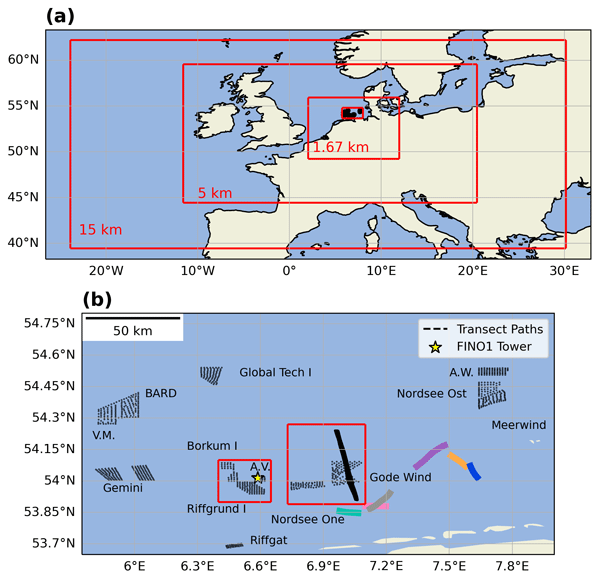
Nathan J. Agarwal, Julie K. Lundquist, Timothy W. Juliano, and Alex Rybchuk
Wind Energ. Sci., 11, 2369–2403, https://doi.org/10.5194/wes-11-2369-2026, https://doi.org/10.5194/wes-11-2369-2026, 2026
Short summary
Short summary
Models of wind behavior inform offshore wind farm site investment decisions. Here we compare a newly developed model to another, historically used model based on how these models represent winds and turbulence at two North Sea sites. The best model depends on the site. While the older model performs best at the site above a wind farm, the newer model performs best at the site that is at the same altitude as the wind farm. We support using the new model to represent winds at the turbine level.
Miguel Sanchez-Gomez, Georgios Deskos, Mike Optis, Julie K. Lundquist, Michael Sinner, Geng Xia, and Walter Musial
Wind Energ. Sci., 11, 2009–2036, https://doi.org/10.5194/wes-11-2009-2026, https://doi.org/10.5194/wes-11-2009-2026, 2026
Short summary
Short summary
Mesoscale simulations with the Fitch wind farm parameterization were compared to large-domain large-eddy simulations for three planned offshore wind farms under varied atmospheric conditions. Mesoscale runs captured key wake deficit patterns and stability effects in the wind farm wake evolution but underestimated power losses from internal wakes, especially in aligned winds or stable conditions. Results highlight mesoscale strengths for large-scale wakes and limits for turbine-level losses.
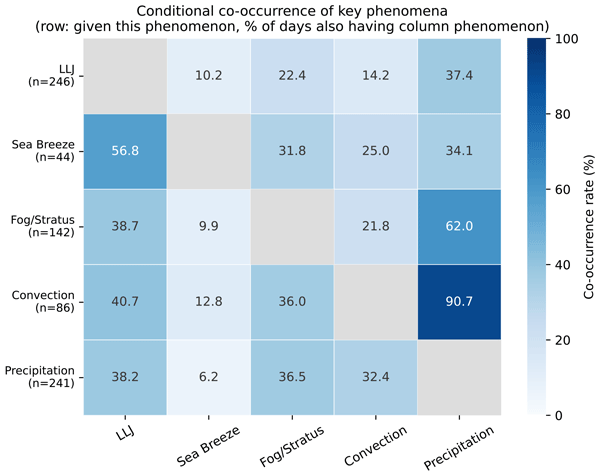
Nicola Bodini, Joseph Olson, Brian Gaudet, Giacomo Valerio Iungo, Mojtaba Shams Solari, Sayahnya Roy, Julie K. Lundquist, Nathan Agarwal, Timothy A. Myers, Bianca Adler, Jeffrey D. Mirocha, Eric James, Laura Bianco, James M. Wilczak, and David D. Turner
Wind Energ. Sci., 11, 1949–1961, https://doi.org/10.5194/wes-11-1949-2026, https://doi.org/10.5194/wes-11-1949-2026, 2026
Short summary
Short summary
To improve offshore wind forecasts, the Third Wind Forecast Improvement Project monitored the United States east coast for 18 months. We compiled a daily log of weather events using advanced scanners and expert notes. This public dataset identifies important wind patterns, helping scientists test computer models and choose specific cases to study.
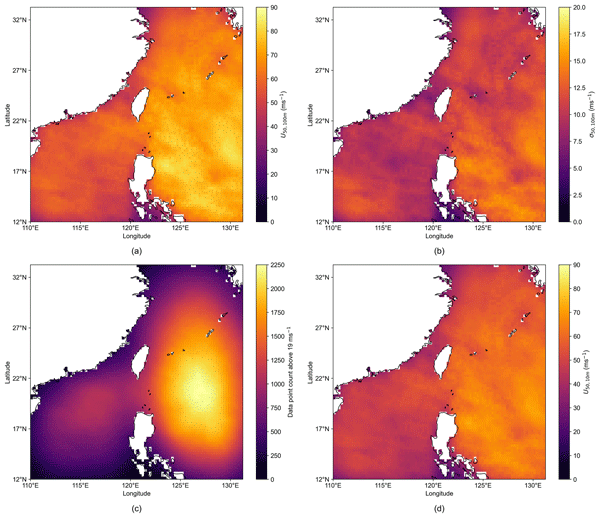
Keeta Chapman-Smith, Xiaoli Guo Larsén, and Mark Laier Brodersen
Wind Energ. Sci., 11, 1889–1912, https://doi.org/10.5194/wes-11-1889-2026, https://doi.org/10.5194/wes-11-1889-2026, 2026
Short summary
Short summary
This study presents a method to estimate wind speeds that could occur in a 50-year period. The 50-year wind speed is calculated for three regions: Taiwan, Japan, and the east coast of the US. The method performs well in Taiwan and Japan, which can be attributed to the large dataset size located in a limited spatial area. The east coast of the US performs less well due to the smaller dataset size and wider spatial region that they cover.
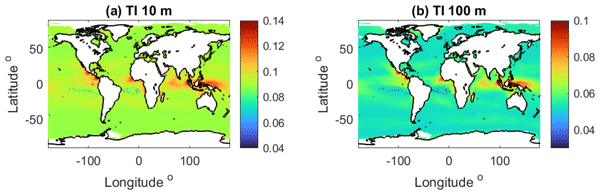
Xiaoli Guo Larsén, Marc Imberger, and Rogier Floors
Wind Energ. Sci., 11, 1853–1869, https://doi.org/10.5194/wes-11-1853-2026, https://doi.org/10.5194/wes-11-1853-2026, 2026
Short summary
Short summary
This study delivers a method and datasets for a global offshore atlas for turbulence intensity from a height of 10 m to 200 m. The method innovatively includes both two-dimensional and three-dimensional turbulence, along with stability, wave age and height. Results show satisfactory agreement with measurements and data from the literature.
Aliza Abraham, Nicola Bodini, Nicholas Hamilton, Brian Hirth, John Schroeder, and Patrick Moriarty
Wind Energ. Sci. Discuss., https://doi.org/10.5194/wes-2026-82, https://doi.org/10.5194/wes-2026-82, 2026
Revised manuscript under review for WES
Short summary
Short summary
Thunderstorms can cause sudden changes in wind speed and direction called "wind ramps". While wind turbines are designed to withstand simplified versions of such wind ramps, this paper shows that real wind ramps are much more variable and complex than those prescribed in the design standard. This variability makes it difficult for wind farm operators to predict the conditions that each wind turbine will experience, adding uncertainty to the prediction of wind farm power.
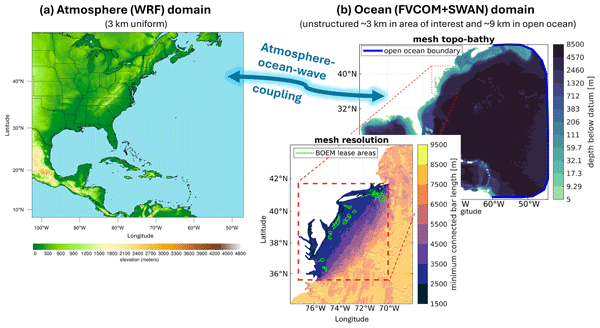
Chunyong Jung, Pengfei Xue, Chenfu Huang, William Pringle, Mrinal Biswas, Geeta Nain, and Jiali Wang
Wind Energ. Sci., 11, 1321–1341, https://doi.org/10.5194/wes-11-1321-2026, https://doi.org/10.5194/wes-11-1321-2026, 2026
Short summary
Short summary
We developed a new modeling system that combines air, ocean, and wave processes to better understand hurricanes. Using Hurricane Henri as a test case, we found that including ocean and wave interactions improves the accuracy of storm intensity and wind patterns. These results show that accounting for these interactions is important for assessing risks to offshore energy systems and coastal regions.
Sara Müller, Xiaoli Guo Larsén, and Fei Hu
Wind Energ. Sci., 11, 961–981, https://doi.org/10.5194/wes-11-961-2026, https://doi.org/10.5194/wes-11-961-2026, 2026
Short summary
Short summary
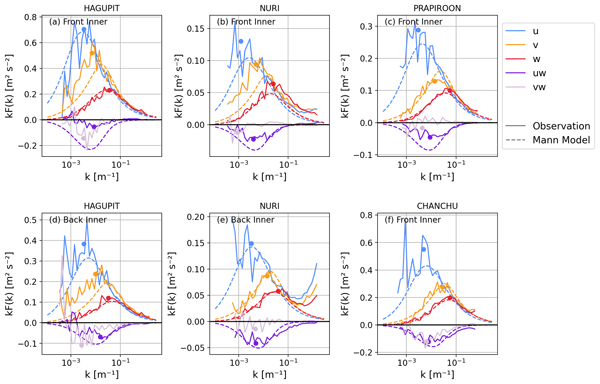
Wind farms are being developed in areas prone to tropical cyclones. However, it remains unclear whether turbulence models in current design standards, such as the Mann uniform shear model, are suitable for these conditions. For the first time, the Mann model is assessed in depth using high-frequency measurements from four typhoons. Larger-than-predicted spectral energy is found at small wavenumbers in the outer cyclone and, in some cases, in the crosswind component in the inner cyclone.
Nathan J. Agarwal and Julie K. Lundquist
Wind Energ. Sci., 11, 883–910, https://doi.org/10.5194/wes-11-883-2026, https://doi.org/10.5194/wes-11-883-2026, 2026
Short summary
Short summary
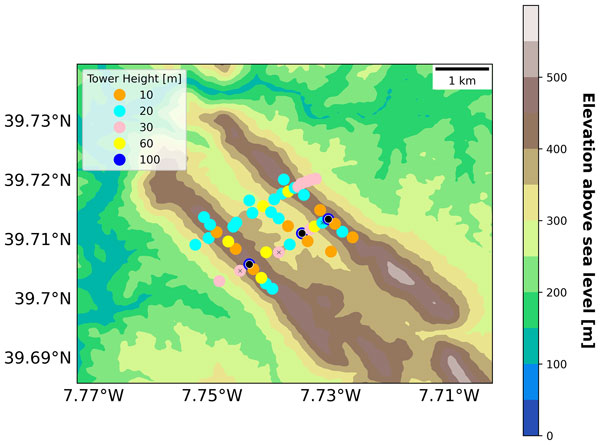
Areas with hills and valleys can be either beneficial or challenging for wind energy applications, depending on the wind patterns. Unfortunately, predicting wind patterns in these areas is also challenging, and investing in measurement towers to improve wind forecasts can be expensive. We evaluate ways in which wind farm developers and other stakeholders interested in improving atmospheric forecasts in these areas can do so in a more cost-effective way.
Kira Gramitzky, Florian Jäger, Doron Callies, Tabea Hildebrand, Julie K. Lundquist, and Lukas Pauscher
Wind Energ. Sci., 11, 861–882, https://doi.org/10.5194/wes-11-861-2026, https://doi.org/10.5194/wes-11-861-2026, 2026
Short summary
Short summary
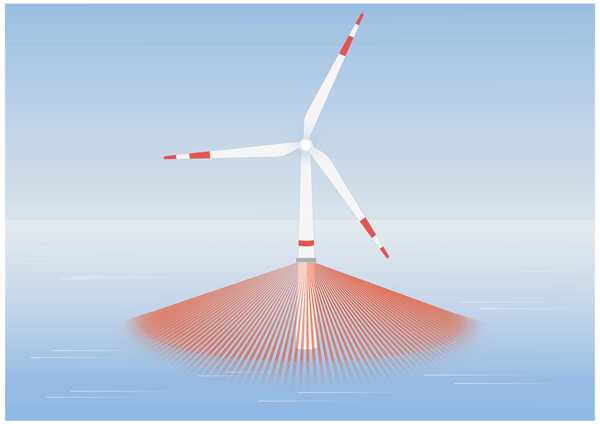
This study introduces an extended sea surface levelling method for the accurate offshore calibration of scanning lidars. This method can determine the alignment of the laser beam, including any vertical shift, and is independent of the scan pattern. Tests using real measurement data and a detailed uncertainty study confirm its reliability. The study offers a versatile calibration approach and improves confidence in offshore wind measurements with scanning lidars.
Nicola Bodini, Aliza Abraham, Paula Doubrawa, Stefano Letizia, Julie K. Lundquist, Patrick Moriarty, and Ryan Scott
Wind Energ. Sci. Discuss., https://doi.org/10.5194/wes-2026-33, https://doi.org/10.5194/wes-2026-33, 2026
Revised manuscript accepted for WES
Short summary
Short summary
Wind turbines create "wakes" of slowed air that reduce power for nearby turbines. To help improve wind energy models, we analyzed data from a large field experiment. We focused on a single day with changing weather patterns. We found that even simple terrain features interacted with the wind to create large variations in power output – up to 80 percent – across a wind farm. This detailed dataset provides a real-world case needed to validate and improve wind energy design tools.
Shadan Mozafari, Jennifer Marie Rinker, Paul Veers, and Katherine Dykes
Wind Energ. Sci., 11, 621–641, https://doi.org/10.5194/wes-11-621-2026, https://doi.org/10.5194/wes-11-621-2026, 2026
Short summary
Short summary
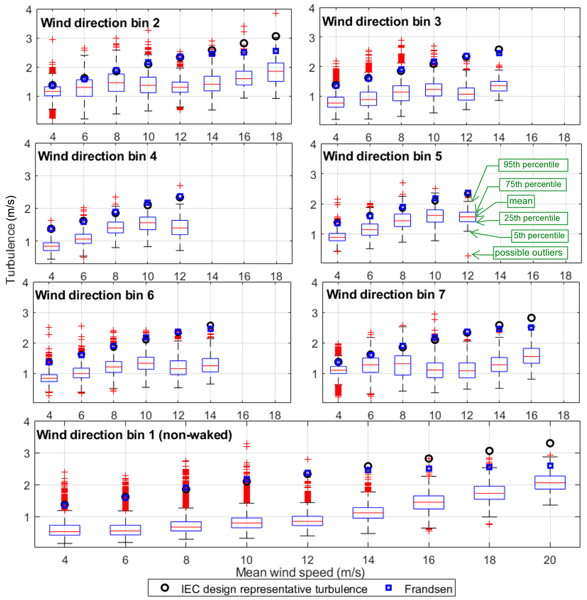
The study showcases the added value of using structural response measurements in lifetime extension assessments within wind farms. In addition, it answers two of the common questions in different methods of assessment. First, it assesses the applicability of the Frandsen model for estimating conservative waked turbulence in the compact layout of wind farms. Second, it showcases probabilistic extrapolation of short- to mid-term data for long-term site-specific fatigue assessments.

Branko Kosović, Sukanta Basu, Jacob Berg, Larry K. Berg, Sue E. Haupt, Xiaoli G. Larsén, Joachim Peinke, Richard J. A. M. Stevens, Paul Veers, and Simon Watson
Wind Energ. Sci., 11, 509–555, https://doi.org/10.5194/wes-11-509-2026, https://doi.org/10.5194/wes-11-509-2026, 2026
Short summary
Short summary
Most human activity happens in the layer of the atmosphere which extends a few hundred meters to a couple of kilometers above the surface of the Earth. The flow in this layer is turbulent. Turbulence impacts wind power production and turbine lifespan. Optimizing wind turbine performance requires understanding how turbulence affects both wind turbine efficiency and reliability. This paper points to gaps in our knowledge that need to be addressed to effectively utilize wind resources.
Carlo L. Bottasso, Sandrine Aubrun, Nicolaos A. Cutululis, Julia Gottschall, Athanasios Kolios, Jakob Mann, and Paul Veers
Wind Energ. Sci., 11, 347–348, https://doi.org/10.5194/wes-11-347-2026, https://doi.org/10.5194/wes-11-347-2026, 2026
Short summary
Short summary
This editorial celebrates the 10th anniversary of Wind Energy Science, reflecting on a decade of rapid scientific progress and the journal’s role in advancing fundamental, interdisciplinary research. It highlights key developments in wind energy, the importance of open science and academia–industry collaboration, and emerging challenges such as data sharing and artificial intelligence. Above all, it honors the research community that has shaped the journal and looks ahead to the next decade.
Sima Hamzeloo, Xiaoli Guo Larsén, Alfredo Peña, Jana Fischereit, and Oscar García-Santiago
Wind Energ. Sci. Discuss., https://doi.org/10.5194/wes-2025-267, https://doi.org/10.5194/wes-2025-267, 2026
Revised manuscript accepted for WES
Short summary
Short summary
We studied how winds and ocean waves affect each other during a North Sea storm. Using a multiscale approach that captures processes from kilometers down to meters, we linked wind and wave models and compared the results with real measurements. Our aim was to improve current simulation methods, and the findings show that this detailed approach provides more accurate storm predictions up to 100 m height.

Anna Voss, Konrad B. Bärfuss, Beatriz Cañadillas, Maik Angermann, Mark Bitter, Matthias Cremer, Thomas Feuerle, Jonas Spoor, Julie K. Lundquist, Patrick Moriarty, and Astrid Lampert
Wind Energ. Sci., 11, 71–88, https://doi.org/10.5194/wes-11-71-2026, https://doi.org/10.5194/wes-11-71-2026, 2026
Short summary
Short summary
This study analyzes onshore wind farm wakes in a semi-complex terrain with data conducted with the research aircraft of TU Braunschweig during the American WAKE experimeNt (AWAKEN). Vertical profiles of temperature, humidity, and wind give insights into the stratification of the atmospheric boundary layer, while horizontal profiles downwind of wind farms reveal an amplification of the reduction in wind speed in a semi-complex terrain, in particular at a distance of 10 km.
Kyle Peco, Jiali Wang, Chunyong Jung, Gökhan Sever, Lindsay Sheridan, Jeremy Feinstein, Rao Kotamarthi, Caroline Draxl, Ethan Young, Avi Purkayastha, and Andrew Kumler
Wind Energ. Sci., 11, 13–35, https://doi.org/10.5194/wes-11-13-2026, https://doi.org/10.5194/wes-11-13-2026, 2026
Short summary
Short summary
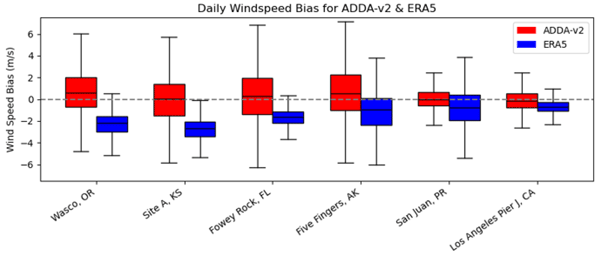
This study presents a new wind dataset, generated by a convection-permitting regional climate model across North America. By validating the dataset against wind observations, we have demonstrated that this dataset captures the wind patterns over complex terrains more realistically than the European Centre for
Medium-Range Weather Forecasts (ECMWF) reanalysis version 5 (ERA5). Additionally, this study quantifies model uncertainty in wind speed, comparing it against interannual variability, to better inform wind farm siting.
Medium-Range Weather Forecasts (ECMWF) reanalysis version 5 (ERA5). Additionally, this study quantifies model uncertainty in wind speed, comparing it against interannual variability, to better inform wind farm siting.
Nathalia Correa-Sánchez, Xiaoli Guo Larsén, Giorgia Fosser, Eleonora Dallan, Marco Borga, and Francesco Marra
Wind Energ. Sci., 10, 2551–2561, https://doi.org/10.5194/wes-10-2551-2025, https://doi.org/10.5194/wes-10-2551-2025, 2025
Short summary
Short summary
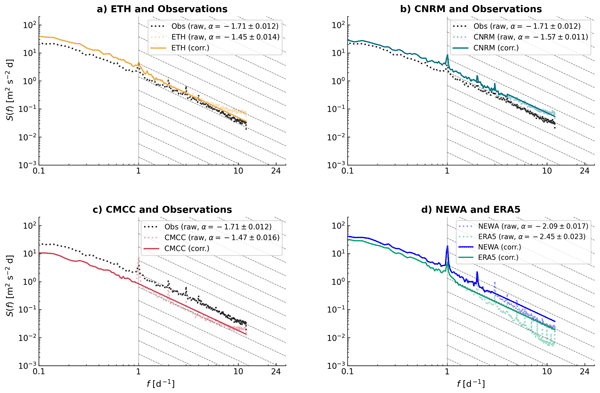
We examined the power spectra of wind speed in three convection-permitting models in central Europe and found that these models have a better representation of wind variability characteristics than standard wind datasets like the New European Wind Atlas, due to different simulation approaches, providing more reliable extreme wind predictions.
William C. Radünz, Bruno Carmo, Julie K. Lundquist, Stefano Letizia, Aliza Abraham, Adam S. Wise, Miguel Sanchez Gomez, Nicholas Hamilton, Raj K. Rai, and Pedro S. Peixoto
Wind Energ. Sci., 10, 2365–2393, https://doi.org/10.5194/wes-10-2365-2025, https://doi.org/10.5194/wes-10-2365-2025, 2025
Short summary
Short summary
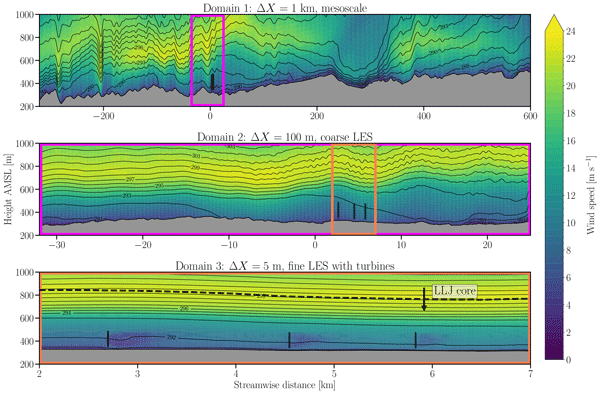
We explore how simple terrain influences spatial variations in wind speed and wind farm performance during a low-level jet. Using simulations, field observations, and turbine production data, we find that downstream turbines produce more power than upstream ones, despite being subjected to wake effects. This counterintuitive result arises because the low-level jet and winds near turbine rotors are highly sensitive to topographic features, leading to stronger winds at the downstream turbines.
Geng Xia, Mike Optis, Georgios Deskos, Michael Sinner, Daniel Mulas Hernando, Julie Kay Lundquist, Andrew Kumler, Miguel Sanchez Gomez, Paul Fleming, and Walter Musial
Wind Energ. Sci. Discuss., https://doi.org/10.5194/wes-2025-154, https://doi.org/10.5194/wes-2025-154, 2025
Revised manuscript not accepted
Short summary
Short summary
This study examines energy losses from cluster wakes in offshore wind farms along the U.S. East Coast. Simulations based on real lease projects show that large wind speed deficits do not always cause equally large energy losses. The energy loss method revealed wake areas up to 30 % larger than traditional estimates, underscoring the need to consider both wind speed deficit and energy loss in planning offshore wind development.
Lindsay M. Sheridan, Jiali Wang, Caroline Draxl, Nicola Bodini, Caleb Phillips, Dmitry Duplyakin, Heidi Tinnesand, Raj K. Rai, Julia E. Flaherty, Larry K. Berg, Chunyong Jung, Ethan Young, and Rao Kotamarthi
Wind Energ. Sci., 10, 1551–1574, https://doi.org/10.5194/wes-10-1551-2025, https://doi.org/10.5194/wes-10-1551-2025, 2025
Short summary
Short summary
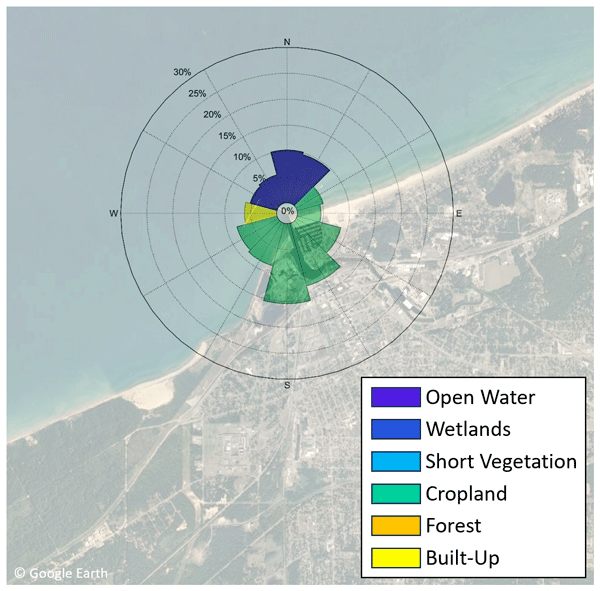
Three recent wind resource datasets are assessed for their skills in representing annual average wind speeds and seasonal, diurnal, and interannual trends in the wind resource in coastal locations to support customers interested in small and midsize wind energy.
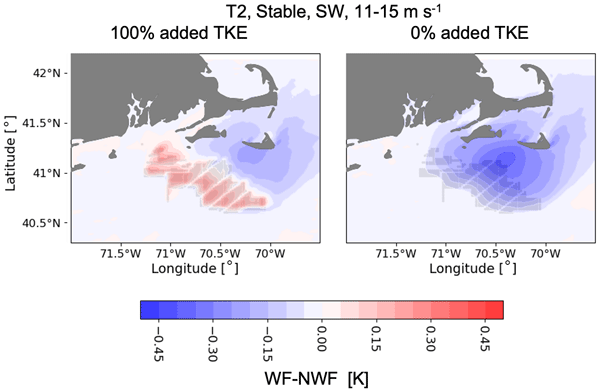
Daphne Quint, Julie K. Lundquist, Nicola Bodini, and David Rosencrans
Wind Energ. Sci., 10, 1269–1301, https://doi.org/10.5194/wes-10-1269-2025, https://doi.org/10.5194/wes-10-1269-2025, 2025
Short summary
Short summary
Offshore wind farms along the US East Coast can have limited effects on local weather. To study these effects, we include wind farms near Massachusetts and Rhode Island, and we test different amounts of turbulence in our model. We analyze changes in wind, temperature, and turbulence. Simulated effects on surface temperature and turbulence change depending on how much turbulence is added to the model. The extent of the wind farm wake depends on how deep the atmospheric boundary layer is.
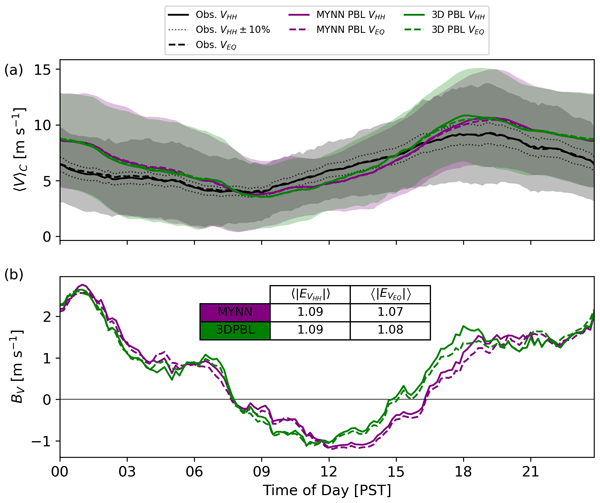
Robert S. Arthur, Alex Rybchuk, Timothy W. Juliano, Gabriel Rios, Sonia Wharton, Julie K. Lundquist, and Jerome D. Fast
Wind Energ. Sci., 10, 1187–1209, https://doi.org/10.5194/wes-10-1187-2025, https://doi.org/10.5194/wes-10-1187-2025, 2025
Short summary
Short summary
This paper evaluates a new model configuration for wind energy forecasting in complex terrain. We compare model results to observations in the Altamont Pass (California, USA), where wind channeling through a mountain gap leads to increased energy production. We demonstrate that the new model configuration performs similarly to a more established approach, with some evidence of improved wind speed predictions, and provide guidance for future model testing.
Lara Tobias-Tarsh, Chunyong Jung, Jiali Wang, Vishal Bobde, Akintomide A. Akinsanola, and V. Rao Kotamarthi
EGUsphere, https://doi.org/10.5194/egusphere-2025-1805, https://doi.org/10.5194/egusphere-2025-1805, 2025
Preprint archived
Short summary
Short summary
We use a high-resolution regional climate model to better understand hurricanes in the North Atlantic over the past 20 years. The model closely matches observed storm frequency and captures stronger storms more accurately than traditional datasets. It also shows better performance in areas with limited data, like the Caribbean. These results can help improve local storm preparedness and planning for critical infrastructure.
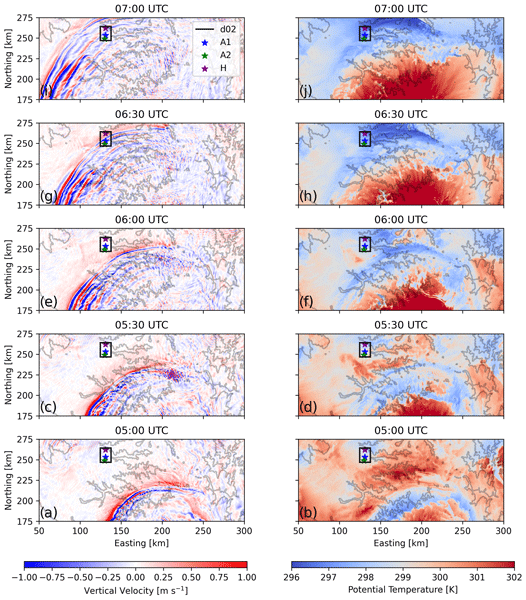
Adam S. Wise, Robert S. Arthur, Aliza Abraham, Sonia Wharton, Raghavendra Krishnamurthy, Rob Newsom, Brian Hirth, John Schroeder, Patrick Moriarty, and Fotini K. Chow
Wind Energ. Sci., 10, 1007–1032, https://doi.org/10.5194/wes-10-1007-2025, https://doi.org/10.5194/wes-10-1007-2025, 2025
Short summary
Short summary
Wind farms can be subject to rapidly changing weather events. In the United States Great Plains, some of these weather events can result in waves in the atmosphere that ultimately affect how much power a wind farm can produce. We modeled a specific event of waves observed in Oklahoma. We determined how to accurately model the event and analyzed how it affected a wind farm’s power production, finding that the waves both decreased power and made it more variable.
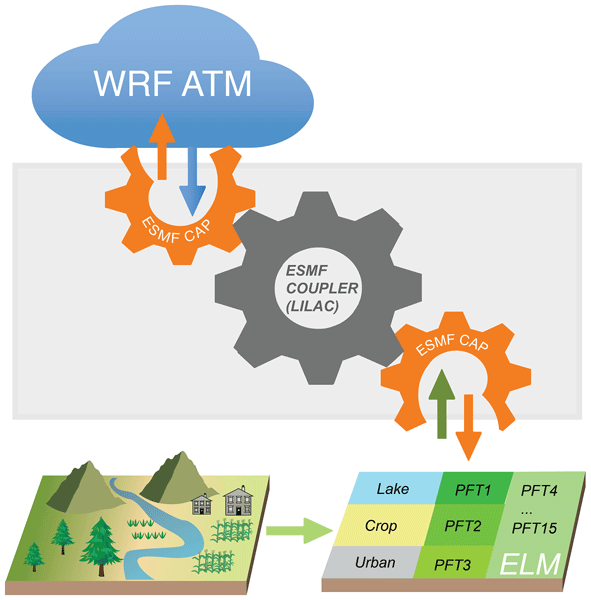
Huilin Huang, Yun Qian, Gautam Bisht, Jiali Wang, Tirthankar Chakraborty, Dalei Hao, Jianfeng Li, Travis Thurber, Balwinder Singh, Zhao Yang, Ye Liu, Pengfei Xue, William J. Sacks, Ethan Coon, and Robert Hetland
Geosci. Model Dev., 18, 1427–1443, https://doi.org/10.5194/gmd-18-1427-2025, https://doi.org/10.5194/gmd-18-1427-2025, 2025
Short summary
Short summary
We integrate the E3SM Land Model (ELM) with the WRF model through the Lightweight Infrastructure for Land Atmosphere Coupling (LILAC) Earth System Modeling Framework (ESMF). This framework includes a top-level driver, LILAC, for variable communication between WRF and ELM and ESMF caps for ELM initialization, execution, and finalization. The LILAC–ESMF framework maintains the integrity of the ELM's source code structure and facilitates the transfer of future ELM model developments to WRF-ELM.
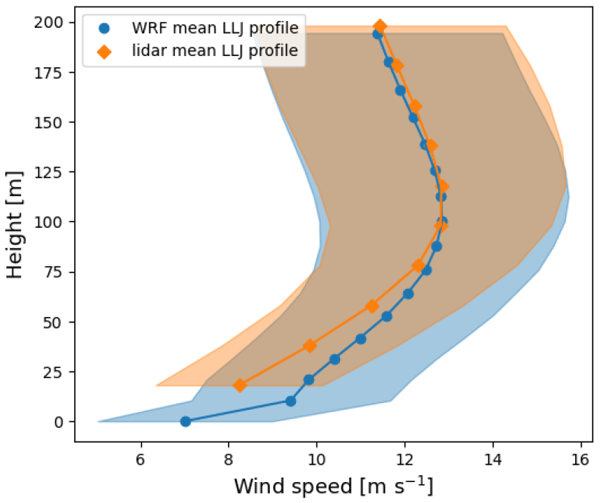
Daphne Quint, Julie K. Lundquist, and David Rosencrans
Wind Energ. Sci., 10, 117–142, https://doi.org/10.5194/wes-10-117-2025, https://doi.org/10.5194/wes-10-117-2025, 2025
Short summary
Short summary
Offshore wind farms will be built along the East Coast of the United States. Low-level jets (LLJs) – layers of fast winds at low altitudes – also occur here. LLJs provide wind resources and also influence moisture and pollution transport, so it is important to understand how they might change. We develop and validate an automated tool to detect LLJs and compare 1 year of simulations with and without wind farms. Here, we describe LLJ characteristics and how they change with wind farms.
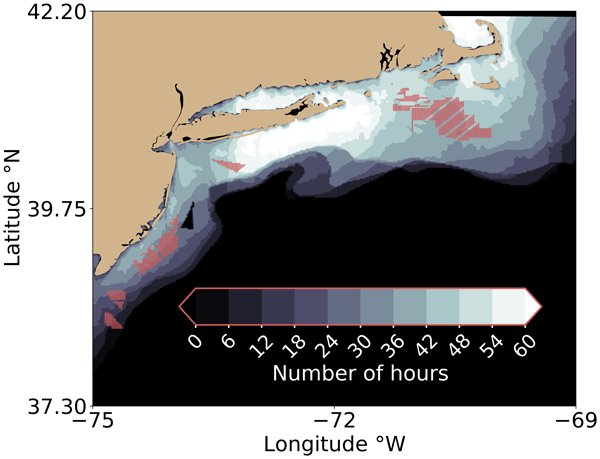
David Rosencrans, Julie K. Lundquist, Mike Optis, and Nicola Bodini
Wind Energ. Sci., 10, 59–81, https://doi.org/10.5194/wes-10-59-2025, https://doi.org/10.5194/wes-10-59-2025, 2025
Short summary
Short summary
The US offshore wind industry is growing rapidly. Expansion into cold climates will subject turbines and personnel to hazardous icing. We analyze the 21-year icing risk for US east coast wind areas based on numerical weather prediction simulations and further assess impacts from wind farm wakes over one winter season. Sea spray icing at 10 m can occur up to 67 h per month. However, turbine–atmosphere interactions reduce icing hours within wind plant areas.

Majid Bastankhah, Marcus Becker, Matthew Churchfield, Caroline Draxl, Jay Prakash Goit, Mehtab Khan, Luis A. Martinez Tossas, Johan Meyers, Patrick Moriarty, Wim Munters, Asim Önder, Sara Porchetta, Eliot Quon, Ishaan Sood, Nicole van Lipzig, Jan-Willem van Wingerden, Paul Veers, and Simon Watson
Wind Energ. Sci., 9, 2171–2174, https://doi.org/10.5194/wes-9-2171-2024, https://doi.org/10.5194/wes-9-2171-2024, 2024
Short summary
Short summary
Dries Allaerts was born on 19 May 1989 and passed away at his home in Wezemaal, Belgium, on 10 October 2024 after battling cancer. Dries started his wind energy career in 2012 and had a profound impact afterward on the community, in terms of both his scientific realizations and his many friendships and collaborations in the field. His scientific acumen, open spirit of collaboration, positive attitude towards life, and playful and often cheeky sense of humor will be deeply missed by many.
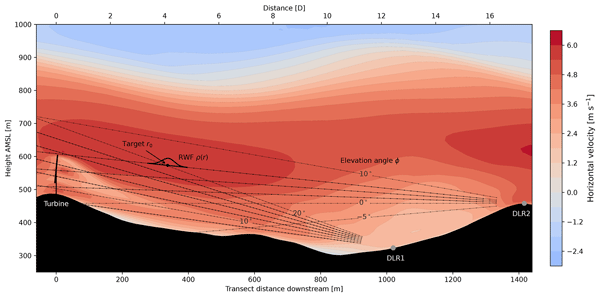
Rachel Robey and Julie K. Lundquist
Wind Energ. Sci., 9, 1905–1922, https://doi.org/10.5194/wes-9-1905-2024, https://doi.org/10.5194/wes-9-1905-2024, 2024
Short summary
Short summary
Measurements of wind turbine wakes with scanning lidar instruments contain complex errors. We model lidars in a simulated environment to understand how and why the measured wake may differ from the true wake and validate the results with observational data. The lidar smooths out the wake, making it seem more spread out and the slowdown of the winds less pronounced. Our findings provide insights into best practices for accurately measuring wakes with lidar and interpreting observational data.
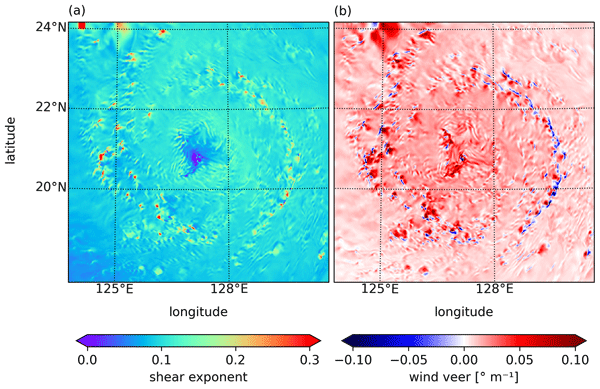
Sara Müller, Xiaoli Guo Larsén, and David Robert Verelst
Wind Energ. Sci., 9, 1153–1171, https://doi.org/10.5194/wes-9-1153-2024, https://doi.org/10.5194/wes-9-1153-2024, 2024
Short summary
Short summary
Tropical cyclone winds are challenging for wind turbines. We analyze a tropical cyclone before landfall in a mesoscale model. The simulated wind speeds and storm structure are sensitive to the boundary parametrization. However, independent of the boundary layer parametrization, the median change in wind speed and wind direction with height is small relative to wind turbine design standards. Strong spatial organization of wind shear and veer along the rainbands may increase wind turbine loads.
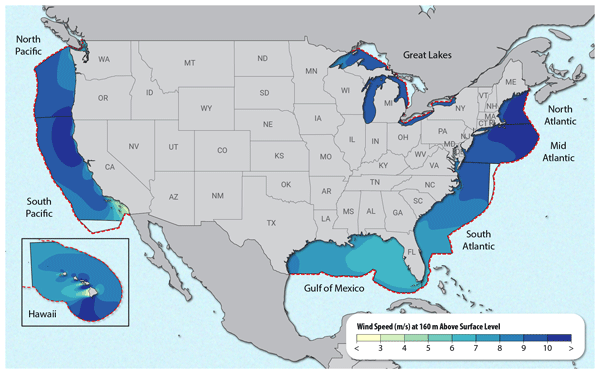
Nicola Bodini, Mike Optis, Stephanie Redfern, David Rosencrans, Alex Rybchuk, Julie K. Lundquist, Vincent Pronk, Simon Castagneri, Avi Purkayastha, Caroline Draxl, Raghavendra Krishnamurthy, Ethan Young, Billy Roberts, Evan Rosenlieb, and Walter Musial
Earth Syst. Sci. Data, 16, 1965–2006, https://doi.org/10.5194/essd-16-1965-2024, https://doi.org/10.5194/essd-16-1965-2024, 2024
Short summary
Short summary
This article presents the 2023 National Offshore Wind data set (NOW-23), an updated resource for offshore wind information in the US. It replaces the Wind Integration National Dataset (WIND) Toolkit, offering improved accuracy through advanced weather prediction models. The data underwent regional tuning and validation and can be accessed at no cost.
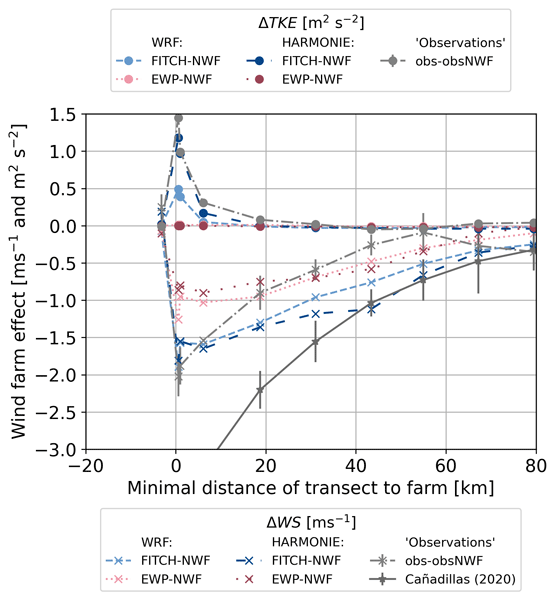
Jana Fischereit, Henrik Vedel, Xiaoli Guo Larsén, Natalie E. Theeuwes, Gregor Giebel, and Eigil Kaas
Geosci. Model Dev., 17, 2855–2875, https://doi.org/10.5194/gmd-17-2855-2024, https://doi.org/10.5194/gmd-17-2855-2024, 2024
Short summary
Short summary
Wind farms impact local wind and turbulence. To incorporate these effects in weather forecasting, the explicit wake parameterization (EWP) is added to the forecasting model HARMONIE–AROME. We evaluate EWP using flight data above and downstream of wind farms, comparing it with an alternative wind farm parameterization and another weather model. Results affirm the correct implementation of EWP, emphasizing the necessity of accounting for wind farm effects in accurate weather forecasting.
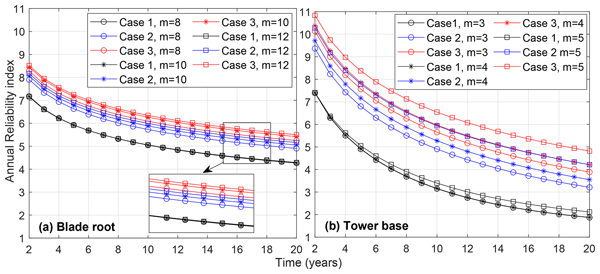
Shadan Mozafari, Paul Veers, Jennifer Rinker, and Katherine Dykes
Wind Energ. Sci., 9, 799–820, https://doi.org/10.5194/wes-9-799-2024, https://doi.org/10.5194/wes-9-799-2024, 2024
Short summary
Short summary
Turbulence is one of the main drivers of fatigue in wind turbines. There is some debate on how to model the turbulence in normal wind conditions in the design phase. To address such debates, we study the fatigue load distribution and reliability following different models of the International Electrotechnical Commission 61400-1 standard. The results show the lesser importance of load uncertainty due to turbulence distribution compared to the uncertainty of material resistance and Miner’s rule.
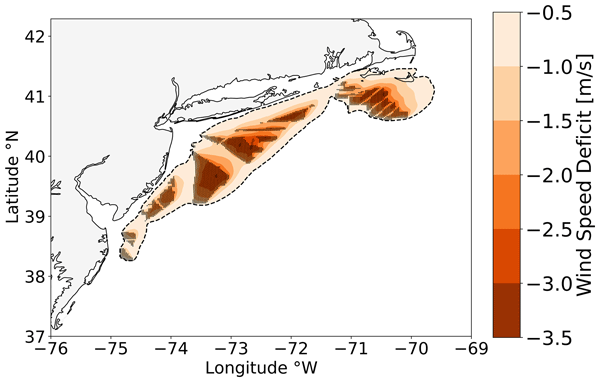
David Rosencrans, Julie K. Lundquist, Mike Optis, Alex Rybchuk, Nicola Bodini, and Michael Rossol
Wind Energ. Sci., 9, 555–583, https://doi.org/10.5194/wes-9-555-2024, https://doi.org/10.5194/wes-9-555-2024, 2024
Short summary
Short summary
The US offshore wind industry is developing rapidly. Using yearlong simulations of wind plants in the US mid-Atlantic, we assess the impacts of wind turbine wakes. While wakes are the strongest and longest during summertime stably stratified conditions, when New England grid demand peaks, they are predictable and thus manageable. Over a year, wakes reduce power output by over 35 %. Wakes in a wind plant contribute the most to that reduction, while wakes between wind plants play a secondary role.
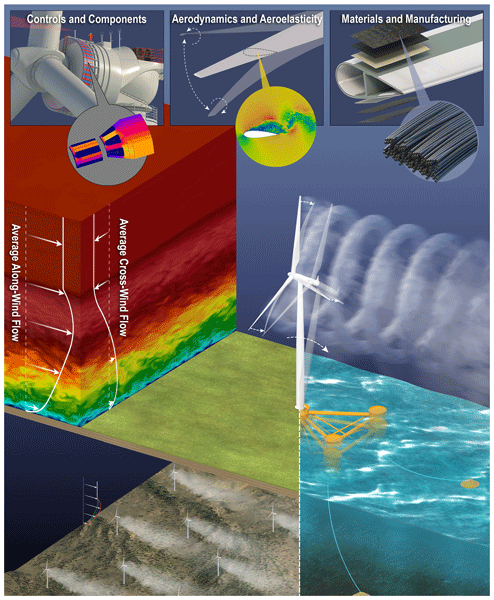
Paul Veers, Carlo L. Bottasso, Lance Manuel, Jonathan Naughton, Lucy Pao, Joshua Paquette, Amy Robertson, Michael Robinson, Shreyas Ananthan, Thanasis Barlas, Alessandro Bianchini, Henrik Bredmose, Sergio González Horcas, Jonathan Keller, Helge Aagaard Madsen, James Manwell, Patrick Moriarty, Stephen Nolet, and Jennifer Rinker
Wind Energ. Sci., 8, 1071–1131, https://doi.org/10.5194/wes-8-1071-2023, https://doi.org/10.5194/wes-8-1071-2023, 2023
Short summary
Short summary
Critical unknowns in the design, manufacturing, and operation of future wind turbine and wind plant systems are articulated, and key research activities are recommended.
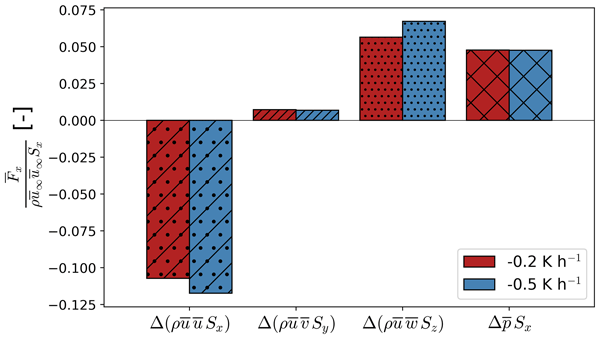
Miguel Sanchez Gomez, Julie K. Lundquist, Jeffrey D. Mirocha, and Robert S. Arthur
Wind Energ. Sci., 8, 1049–1069, https://doi.org/10.5194/wes-8-1049-2023, https://doi.org/10.5194/wes-8-1049-2023, 2023
Short summary
Short summary
The wind slows down as it approaches a wind plant; this phenomenon is called blockage. As a result, the turbines in the wind plant produce less power than initially anticipated. We investigate wind plant blockage for two atmospheric conditions. Blockage is larger for a wind plant compared to a stand-alone turbine. Also, blockage increases with atmospheric stability. Blockage is amplified by the vertical transport of horizontal momentum as the wind approaches the front-row turbines in the array.
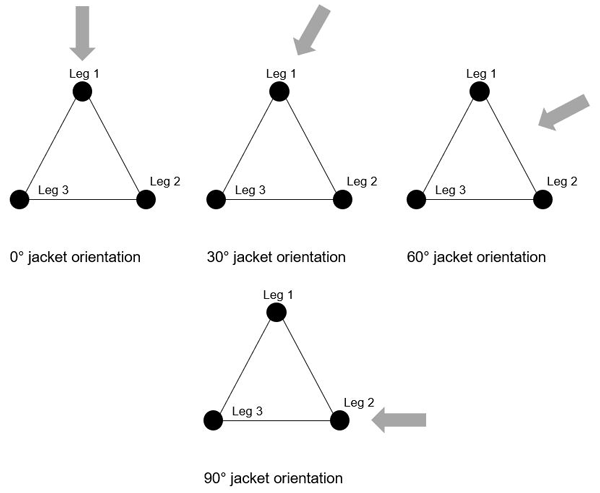
Maciej M. Mroczek, Sanjay Raja Arwade, and Matthew A. Lackner
Wind Energ. Sci., 8, 807–817, https://doi.org/10.5194/wes-8-807-2023, https://doi.org/10.5194/wes-8-807-2023, 2023
Short summary
Short summary
Benefits of orientating a three-legged offshore wind jacket relative to the metocean conditions for pile design are assessed considering the International Energy Agency 15 MW reference turbine and a reference site off the coast of Massachusetts. Results, based on the considered conditions, show that the pile design can be optimized by orientating the jacket relative to the dominant wave direction. This design optimization can be used on offshore wind projects to provide cost and risk reductions.
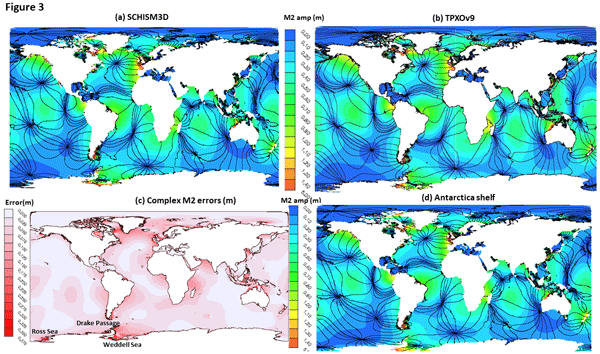
Y. Joseph Zhang, Tomas Fernandez-Montblanc, William Pringle, Hao-Cheng Yu, Linlin Cui, and Saeed Moghimi
Geosci. Model Dev., 16, 2565–2581, https://doi.org/10.5194/gmd-16-2565-2023, https://doi.org/10.5194/gmd-16-2565-2023, 2023
Short summary
Short summary
Simulating global ocean from deep basins to coastal areas is a daunting task but is important for disaster mitigation efforts. We present a new 3D global ocean model on flexible mesh to study both tidal and nontidal processes and total water prediction. We demonstrate the potential for
seamlesssimulation, on a single mesh, from the global ocean to a few estuaries along the US West Coast. The model can serve as the backbone of a global tide surge and compound flooding forecasting framework.
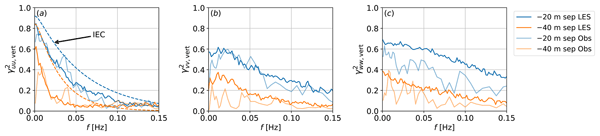
Regis Thedin, Eliot Quon, Matthew Churchfield, and Paul Veers
Wind Energ. Sci., 8, 487–502, https://doi.org/10.5194/wes-8-487-2023, https://doi.org/10.5194/wes-8-487-2023, 2023
Short summary
Short summary
We investigate coherence and correlation and highlight their importance for disciplines like wind energy structural dynamic analysis, in which blade loading and fatigue depend on turbulence structure. We compare coherence estimates to those computed using a model suggested by international standards. We show the differences and highlight additional information that can be gained using large-eddy simulation, further improving analytical coherence models used in synthetic turbulence generators.
Xiaoli Guo Larsén, Marc Imberger, Ásta Hannesdóttir, and Andrea N. Hahmann
Wind Energ. Sci. Discuss., https://doi.org/10.5194/wes-2022-102, https://doi.org/10.5194/wes-2022-102, 2023
Revised manuscript not accepted
Short summary
Short summary
We study how climate change will impact extreme winds and choice of turbine class. We use data from 18 CMIP6 members from a historic and a future period to access the change in the extreme winds. The analysis shows an overall increase in the extreme winds in the North Sea and the southern Baltic Sea, but a decrease over the Scandinavian Peninsula and most of the Baltic Sea. The analysis is inconclusive to whether higher or lower classes of turbines will be installed in the future.
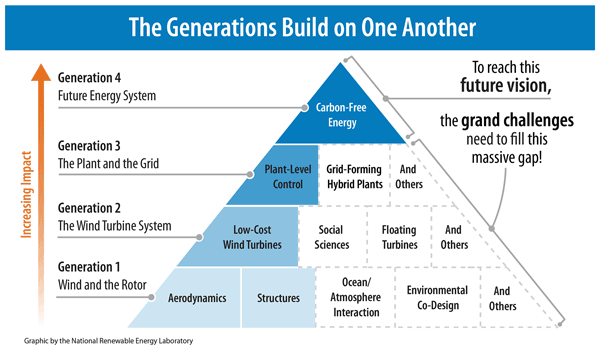
Paul Veers, Katherine Dykes, Sukanta Basu, Alessandro Bianchini, Andrew Clifton, Peter Green, Hannele Holttinen, Lena Kitzing, Branko Kosovic, Julie K. Lundquist, Johan Meyers, Mark O'Malley, William J. Shaw, and Bethany Straw
Wind Energ. Sci., 7, 2491–2496, https://doi.org/10.5194/wes-7-2491-2022, https://doi.org/10.5194/wes-7-2491-2022, 2022
Short summary
Short summary
Wind energy will play a central role in the transition of our energy system to a carbon-free future. However, many underlying scientific issues remain to be resolved before wind can be deployed in the locations and applications needed for such large-scale ambitions. The Grand Challenges are the gaps in the science left behind during the rapid growth of wind energy. This article explains the breadth of the unfinished business and introduces 10 articles that detail the research needs.
Xiaoli Guo Larsén and Søren Ott
Wind Energ. Sci., 7, 2457–2468, https://doi.org/10.5194/wes-7-2457-2022, https://doi.org/10.5194/wes-7-2457-2022, 2022
Short summary
Short summary
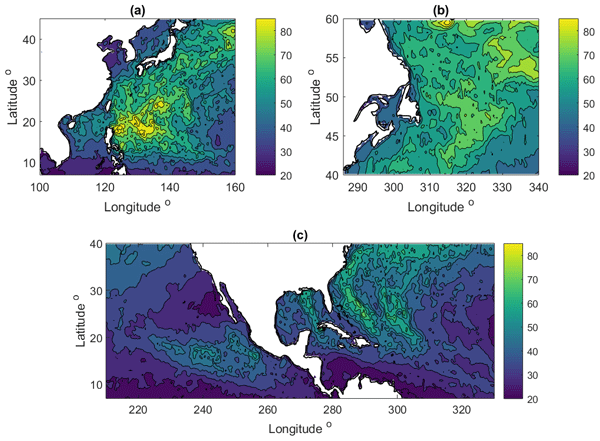
A method is developed for calculating the extreme wind in tropical-cyclone-affected water areas. The method is based on the spectral correction method that fills in the missing wind variability to the modeled time series, guided by best track data. The paper provides a detailed recipe for applying the method and the 50-year winds of equivalent 10 min temporal resolution from 10 to 150 m in several tropical-cyclone-affected regions.
Qiuyi Wu, Julie Bessac, Whitney Huang, Jiali Wang, and Rao Kotamarthi
Adv. Stat. Clim. Meteorol. Oceanogr., 8, 205–224, https://doi.org/10.5194/ascmo-8-205-2022, https://doi.org/10.5194/ascmo-8-205-2022, 2022
Short summary
Short summary
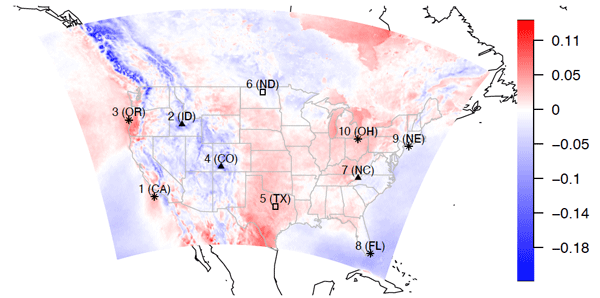
We study wind conditions and their potential future changes across the U.S. via a statistical conditional framework. We conclude that changes between historical and future wind directions are small, but wind speeds are generally weakened in the projected period, with some locations being intensified. Moreover, winter wind speeds are projected to decrease in the northwest, Colorado, and the northern Great Plains (GP), while summer wind speeds over the southern GP slightly increase in the future.
William J. Shaw, Larry K. Berg, Mithu Debnath, Georgios Deskos, Caroline Draxl, Virendra P. Ghate, Charlotte B. Hasager, Rao Kotamarthi, Jeffrey D. Mirocha, Paytsar Muradyan, William J. Pringle, David D. Turner, and James M. Wilczak
Wind Energ. Sci., 7, 2307–2334, https://doi.org/10.5194/wes-7-2307-2022, https://doi.org/10.5194/wes-7-2307-2022, 2022
Short summary
Short summary
This paper provides a review of prominent scientific challenges to characterizing the offshore wind resource using as examples phenomena that occur in the rapidly developing wind energy areas off the United States. The paper also describes the current state of modeling and observations in the marine atmospheric boundary layer and provides specific recommendations for filling key current knowledge gaps.
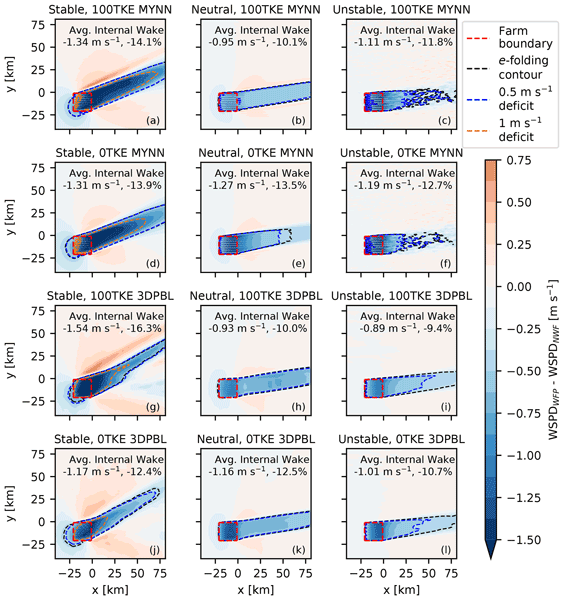
Alex Rybchuk, Timothy W. Juliano, Julie K. Lundquist, David Rosencrans, Nicola Bodini, and Mike Optis
Wind Energ. Sci., 7, 2085–2098, https://doi.org/10.5194/wes-7-2085-2022, https://doi.org/10.5194/wes-7-2085-2022, 2022
Short summary
Short summary
Numerical weather prediction models are used to predict how wind turbines will interact with the atmosphere. Here, we characterize the uncertainty associated with the choice of turbulence parameterization on modeled wakes. We find that simulated wind speed deficits in turbine wakes can be significantly sensitive to the choice of turbulence parameterization. As such, predictions of future generated power are also sensitive to turbulence parameterization choice.
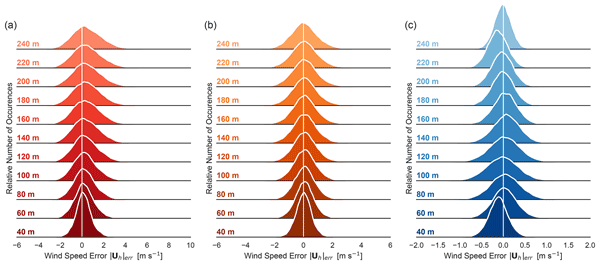
Rachel Robey and Julie K. Lundquist
Atmos. Meas. Tech., 15, 4585–4622, https://doi.org/10.5194/amt-15-4585-2022, https://doi.org/10.5194/amt-15-4585-2022, 2022
Short summary
Short summary
Our work investigates the behavior of errors in remote-sensing wind lidar measurements due to turbulence. Using a virtual instrument, we measured winds in simulated atmospheric flows and decomposed the resulting error. Dominant error mechanisms, particularly vertical velocity variations and interactions with shear, were identified in ensemble data over three test cases. By analyzing the underlying mechanisms, the response of the error behavior to further varying flow conditions may be projected.
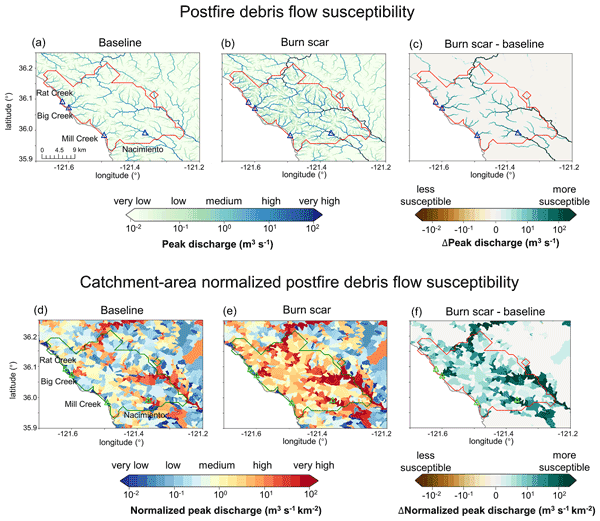
Chuxuan Li, Alexander L. Handwerger, Jiali Wang, Wei Yu, Xiang Li, Noah J. Finnegan, Yingying Xie, Giuseppe Buscarnera, and Daniel E. Horton
Nat. Hazards Earth Syst. Sci., 22, 2317–2345, https://doi.org/10.5194/nhess-22-2317-2022, https://doi.org/10.5194/nhess-22-2317-2022, 2022
Short summary
Short summary
In January 2021 a storm triggered numerous debris flows in a wildfire burn scar in California. We use a hydrologic model to assess debris flow susceptibility in pre-fire and postfire scenarios. Compared to pre-fire conditions, postfire conditions yield dramatic increases in peak water discharge, substantially increasing debris flow susceptibility. Our work highlights the hydrologic model's utility in investigating and potentially forecasting postfire debris flows at regional scales.
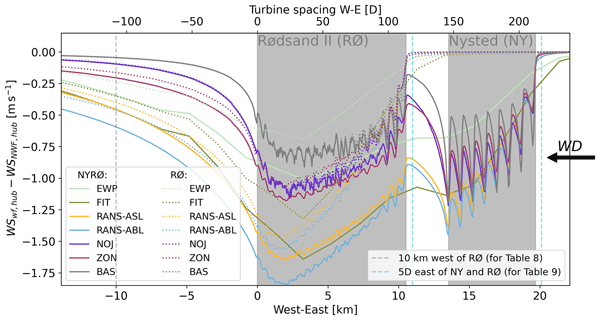
Jana Fischereit, Kurt Schaldemose Hansen, Xiaoli Guo Larsén, Maarten Paul van der Laan, Pierre-Elouan Réthoré, and Juan Pablo Murcia Leon
Wind Energ. Sci., 7, 1069–1091, https://doi.org/10.5194/wes-7-1069-2022, https://doi.org/10.5194/wes-7-1069-2022, 2022
Short summary
Short summary
Wind turbines extract kinetic energy from the flow to create electricity. This induces a wake of reduced wind speed downstream of a turbine and consequently downstream of a wind farm. Different types of numerical models have been developed to calculate this effect. In this study, we compared models of different complexity, together with measurements over two wind farms. We found that higher-fidelity models perform better and the considered rapid models cannot fully capture the wake effect.
Romit Maulik, Vishwas Rao, Jiali Wang, Gianmarco Mengaldo, Emil Constantinescu, Bethany Lusch, Prasanna Balaprakash, Ian Foster, and Rao Kotamarthi
Geosci. Model Dev., 15, 3433–3445, https://doi.org/10.5194/gmd-15-3433-2022, https://doi.org/10.5194/gmd-15-3433-2022, 2022
Short summary
Short summary
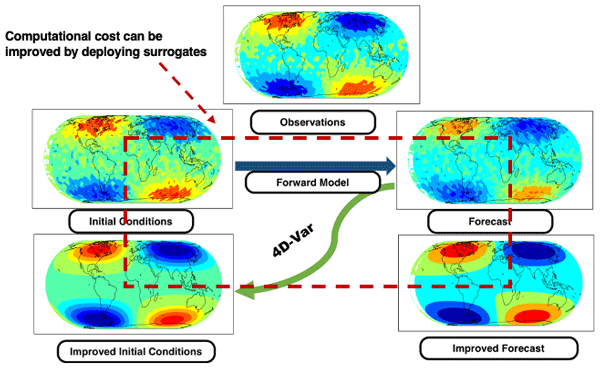
In numerical weather prediction, data assimilation is frequently utilized to enhance the accuracy of forecasts from equation-based models. In this work we use a machine learning framework that approximates a complex dynamical system given by the geopotential height. Instead of using an equation-based model, we utilize this machine-learned alternative to dramatically accelerate both the forecast and the assimilation of data, thereby reducing need for large computational resources.
Vincent Pronk, Nicola Bodini, Mike Optis, Julie K. Lundquist, Patrick Moriarty, Caroline Draxl, Avi Purkayastha, and Ethan Young
Wind Energ. Sci., 7, 487–504, https://doi.org/10.5194/wes-7-487-2022, https://doi.org/10.5194/wes-7-487-2022, 2022
Short summary
Short summary
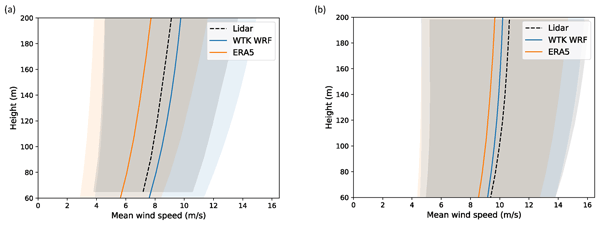
In this paper, we have assessed to which extent mesoscale numerical weather prediction models are more accurate than state-of-the-art reanalysis products in characterizing the wind resource at heights of interest for wind energy. The conclusions of our work will be of primary importance to the wind industry for recommending the best data sources for wind resource modeling.
Adam S. Wise, James M. T. Neher, Robert S. Arthur, Jeffrey D. Mirocha, Julie K. Lundquist, and Fotini K. Chow
Wind Energ. Sci., 7, 367–386, https://doi.org/10.5194/wes-7-367-2022, https://doi.org/10.5194/wes-7-367-2022, 2022
Short summary
Short summary
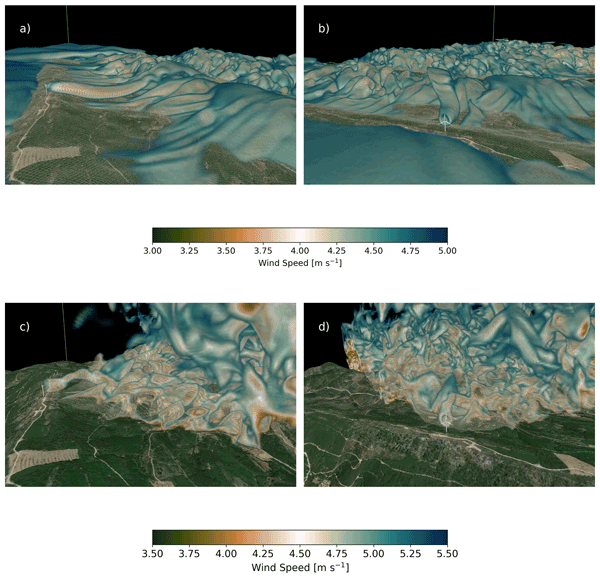
Wind turbine wake behavior in hilly terrain depends on various atmospheric conditions. We modeled a wind turbine located on top of a ridge in Portugal during typical nighttime and daytime atmospheric conditions and validated these model results with observational data. During nighttime conditions, the wake deflected downwards following the terrain. During daytime conditions, the wake deflected upwards. These results can provide insight into wind turbine siting and operation in hilly regions.
Anna Rutgersson, Erik Kjellström, Jari Haapala, Martin Stendel, Irina Danilovich, Martin Drews, Kirsti Jylhä, Pentti Kujala, Xiaoli Guo Larsén, Kirsten Halsnæs, Ilari Lehtonen, Anna Luomaranta, Erik Nilsson, Taru Olsson, Jani Särkkä, Laura Tuomi, and Norbert Wasmund
Earth Syst. Dynam., 13, 251–301, https://doi.org/10.5194/esd-13-251-2022, https://doi.org/10.5194/esd-13-251-2022, 2022
Short summary
Short summary
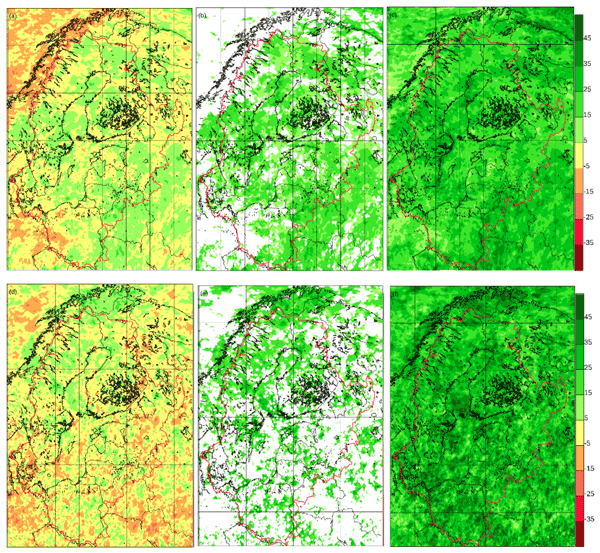
A natural hazard is a naturally occurring extreme event with a negative effect on people, society, or the environment; major events in the study area include wind storms, extreme waves, high and low sea level, ice ridging, heavy precipitation, sea-effect snowfall, river floods, heat waves, ice seasons, and drought. In the future, an increase in sea level, extreme precipitation, heat waves, and phytoplankton blooms is expected, and a decrease in cold spells and severe ice winters is anticipated.
Marcus Reckermann, Anders Omstedt, Tarmo Soomere, Juris Aigars, Naveed Akhtar, Magdalena Bełdowska, Jacek Bełdowski, Tom Cronin, Michał Czub, Margit Eero, Kari Petri Hyytiäinen, Jukka-Pekka Jalkanen, Anders Kiessling, Erik Kjellström, Karol Kuliński, Xiaoli Guo Larsén, Michelle McCrackin, H. E. Markus Meier, Sonja Oberbeckmann, Kevin Parnell, Cristian Pons-Seres de Brauwer, Anneli Poska, Jarkko Saarinen, Beata Szymczycha, Emma Undeman, Anders Wörman, and Eduardo Zorita
Earth Syst. Dynam., 13, 1–80, https://doi.org/10.5194/esd-13-1-2022, https://doi.org/10.5194/esd-13-1-2022, 2022
Short summary
Short summary
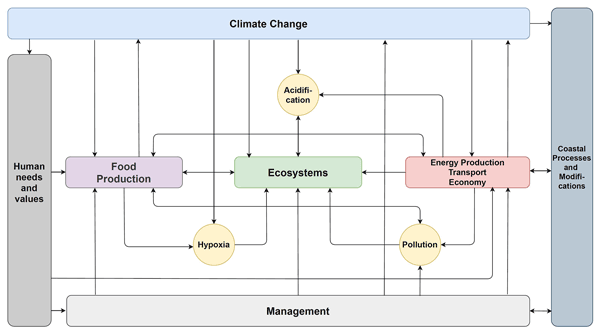
As part of the Baltic Earth Assessment Reports (BEAR), we present an inventory and discussion of different human-induced factors and processes affecting the environment of the Baltic Sea region and their interrelations. Some are naturally occurring and modified by human activities, others are completely human-induced, and they are all interrelated to different degrees. The findings from this study can largely be transferred to other comparable marginal and coastal seas in the world.
Marc Imberger, Xiaoli Guo Larsén, and Neil Davis
Adv. Geosci., 56, 77–87, https://doi.org/10.5194/adgeo-56-77-2021, https://doi.org/10.5194/adgeo-56-77-2021, 2021
Short summary
Short summary
Events like mid-latitude storms with their high winds have an impact on wind energy production and forecasting of such events is crucial. This study investigates the capabilities of a global weather prediction model MPAS and looks at how key parameters like storm intensity, arrival time and duration are represented compared to measurements and traditional methods. It is found that storm intensity is represented well while model drifts negatively influence estimation of arrival time and duration.
Cited articles
Alaka, G. J., Zhang, X., and Gopalakrishnan, S. G.: High-Definition Hurricanes: Improving Forecasts with Storm-Following Nests, B. Am. Meteorol. Soc., 103, E680–E703, https://doi.org/10.1175/BAMS-D-20-0134.1, 2022. a
API: Derivation of Metocean Design and Operating Conditions, American Petroleum Institute, Washington, D.C., 1st edn., 2014. a
Architectural Institute of Japan: AIJ Recommendations for Loads on Buildings, Architectural Institute of Japan, Tokyo, Japan, https://www.aij.or.jp/eng/publish/wwwpub.htm (last access: 30 July 2026), 2004. a
Arrigan, J., Pakrashi, V., Basu, B., and Nagarajaiah, S.: Control of flapwise vibrations in wind turbine blades using semi-active tuned mass dampers, Struct. Control Hlth., 18, 840–851, 2011. a
ASCE/SEI 7-22: Minimum Design Loads and Associated Criteria for Buildings and Other Structures, https://doi.org/10.1061/9780784415788, 2022. a
Balaguru, K., Chang, C.-C., Leung, L. R., Foltz, G. R., Hagos, S. M., Wehner, M. F., Kossin, J. P., Ting, M., and Xu, W.: A global increase in nearshore tropical cyclone intensification, Earth's Future, 12, e2023EF004230, https://doi.org/10.1029/2023EF004230, 2024. a
Bangga, G., Carrion, M., Collier, W., and Parkinson, S.: Technical modeling challenges for large idling wind turbines, J. Phys. Conf. Ser., 2626, 012026, https://doi.org/10.1088/1742-6596/2626/1/012026, 2023. a
Batts, M. E., Simiu, E., and Russell, L. R.: Hurricane Wind Speeds in the United States, Journal of the Structural Division, 106, 2001–2016, https://doi.org/10.1061/JSDEAG.0005541, 1980. a
Bhatia, K. T., Vecchi, G. A., Knutson, T. R., Murakami, H., Kossin, J., Dixon, K. W., and Whitlock, C. E.: Recent increases in tropical cyclone intensification rates, Nat. Commun., 10, 635, https://doi.org/10.1038/s41467-019-08471-z, 2019. a
Bhattacharya, S.: Design of Foundations for Offshore Wind Turbines, John Wiley & Sons Ltd, ISBN 9781119128120, https://doi.org/10.1002/9781119128137, 2019. a
Bhowmik, S., Pang, W., and Stoner, M.: Probabilistic modeling of North Atlantic ocean hurricane spawn considering climate change, in: Proceedings of the 14th International Conference on Applications of Statistics and Probability in Civil Engineering (ICASP14), Dublin, Ireland, https://open.clemson.edu/civileng_pubs/41/ (last access: 30 July 2026), 2023. a
Bianchini, A., Bangga, G., Baring-Gould, I., Croce, A., Cruz, J. I., Damiani, R., Erfort, G., Simao Ferreira, C., Infield, D., Nayeri, C. N., Pechlivanoglou, G., Runacres, M., Schepers, G., Summerville, B., Wood, D., and Orrell, A.: Current status and grand challenges for small wind turbine technology, Wind Energ. Sci., 7, 2003–2037, https://doi.org/10.5194/wes-7-2003-2022, 2022. a
Bose, R., Pintar, A. L., and Simiu, E.: Simulation of Atlantic Hurricane Tracks and Features: A Coupled Machine Learning Approach, Artificial Intelligence for the Earth Systems, 2, 220060, https://doi.org/10.1175/AIES-D-22-0060.1, 2023. a
Bredmose, H. and Jacobsen, N.: Breaking wave impacts on offshore wind turbine foundations: Focused wave groups and CFD, in: OMAE2010, p. 20368, The American Society of Mechanical Engineers (ASME), United States, 29th International Conference on Ocean, Offshore and Arctic Engineering: Offshore Measurement and Data Interpretation, OMAE 2010; 6–11 June 2010, https://doi.org/10.1115/OMAE2010-20368, 2010. a
Bryan, G. H. and Fritsch, J. M.: A Benchmark Simulation for Moist Nonhydrostatic Numerical Models, Mon. Weather Rev., 130, 2917–2928, https://doi.org/10.1175/1520-0493(2002)130<2917:ABSFMN>2.0.CO;2, 2002. a
Bryan, G. H. and Rotunno, R.: The Maximum Intensity of Tropical Cyclones in Axisymmetric Numerical Model Simulations, Mon. Weather Rev., 137, 1770–1789, https://doi.org/10.1175/2008MWR2709.1, 2009. a
Bryan, G. H., Worsnop, R. P., Lundquist, J. K., and Zhang, J. A.: A Simple Method for Simulating Wind Profiles in the Boundary Layer of Tropical Cyclones, Bound.-Lay. Meteorol., 162, 475–502, https://doi.org/10.1007/s10546-016-0207-0, 2017. a, b, c, d
Chan, P., Hon, K., and Foster, S.: Wind data collected by a fixed-wing aircraft in the vicinity of a tropical cyclone over the south China coastal waters, Meteorol. Z., 20, 313–321, https://doi.org/10.1127/0941-2948/2011/0505, 2011. a
Chang, E. K. M. and Guo, Y.: Is the number of North Atlantic tropical cyclones significantly underestimated prior to the availability of satellite observations?, Geophys. Res. Lett., 34, https://doi.org/10.1029/2007GL030169, 2007. a
Chaplin, J. R.: Developments of stream-function wave theory, Coastal Engineering, 3, 179–205, https://doi.org/10.1016/0378-3839(79)90020-6, 1979. a
Chavas, D. R., Lin, N., and Emanuel, K.: A model for the complete radial structure of the tropical cyclone wind field. Part I: Comparison with observed structure, J. Atmos. Sci., 72, 3647–3662, https://doi.org/10.1175/JAS-D-15-0014.1, 2015. a
Chen, S. S. and Curcic, M.: Ocean surface waves in Hurricane Ike (2008) and Superstorm Sandy (2012): Coupled model predictions and observations, Ocean Modell., 103, 161–176, https://doi.org/10.1016/j.ocemod.2015.08.005, 2016. a
Chen, S. S., Price, J. F., Zhao, W., Donelan, M. A., and Walsh, E. J.: The CBLAST-Hurricane Program and the Next-Generation Fully Coupled Atmosphere–Wave–Ocean Models for Hurricane Research and Prediction, B. Am. Meteorol. Soc., 88, 311–317, https://doi.org/10.1175/BAMS-88-3-311, 2007. a
Chen, X.: How Do Planetary Boundary Layer Schemes Perform in Hurricane Conditions: A Comparison With Large-Eddy Simulations, J. Adv. Model. Earth Sy., 14, e2022MS003088, https://doi.org/10.1029/2022MS003088, 2022. a
Chen, X., Li, C., and Xu, J.: Failure investigation on a coastal wind farm damaged by super typhoon: A forensic engineering study, J. Wind Eng. Ind. Aerod., 147, 132–142, https://doi.org/10.1016/j.jweia.2015.10.007, 2015. a, b, c, d
Chen, X., Li, C., and Tang, J.: Structural integrity of wind turbines impacted by tropical cyclones: A case study from China, J. Phys. Conf. Ser., 753, 042003, https://doi.org/10.1088/1742-6596/753/4/042003, 2016. a, b
Chen, Y., Wu, D., Li, H., and Gao, W.: Quantifying the fatigue life of wind turbines in cyclone-prone regions, Appl. Math. Model., 110, 455–474, https://doi.org/10.1016/j.apm.2022.06.001, 2022. a, b
Chi, S.-Y., Liu, C.-J., Tan, C.-H., and Chen, Y.-H.: Study of typhoon impacts on the foundation design of offshore wind turbines in Taiwan, Proceedings of the Institution of Civil Engineers – Forensic Engineering, 173, 35–47, https://doi.org/10.1680/jfoen.19.00011, 2020. a
Chou, J.-S., Chiu, C.-K., Huang, I.-K., and Chi, K.-N.: Failure analysis of wind turbine blade under critical wind loads, Eng. Fail. Anal., 27, 99–118, https://doi.org/10.1016/j.engfailanal.2012.08.002, 2013. a, b
Churchfield, M. J., Lee, S., Michalakes, J., and Moriarty, P. J.: A numerical study of the effects of atmospheric and wake turbulence on wind turbine dynamics, J. Turbul., 13, N14, https://doi.org/10.1080/14685248.2012.668191, 2012. a
lare, M. A., Yeo, I. A., Bricheno, L., Aksenov, Y., Brown, J., Haigh, I. D., Wahl, T., Hunt, J., Sams, C., Chaytor, J., Bett, B. J., and Carter, L.: Climate change hotspots and implications for the global subsea telecommunications network, Earth-Sci. Rev., 237, 104296, https://doi.org/10.1016/j.earscirev.2022.104296, 2023. a
Clifton, A., Barber, S., Bray, A., Enevoldsen, P., Fields, J., Sempreviva, A. M., Williams, L., Quick, J., Purdue, M., Totaro, P., and Ding, Y.: Grand challenges in the digitalisation of wind energy, Wind Energ. Sci., 8, 947–974, https://doi.org/10.5194/wes-8-947-2023, 2023. a
Colwell, S. and Basu, B.: Tuned liquid column dampers in offshore wind turbines for structural control, Eng. Struct., 31, 358–368, https://doi.org/10.1016/j.engstruct.2008.09.001, 2009. a
Conway, E.: What's in a name? Global warming vs climate change, NASA, https://www.jpl.nasa.gov/news/whats-in-a-name/ (last access: 30 July 2026), 2008. a
Cornett, A.: A Global Wave and Wind Climatology for Hurricane Conditions, in: Offshore Technology Conference, https://doi.org/10.4043/19310-MS, 2008. a
Das, S.: Wind profile and structure during severe storms in the Gulf of Mexico, in: Proceedings of the ASME 2022 41st International Conference on Ocean, Offshore and Arctic Engineering (OMAE2022), oMAE2022-86835, https://doi.org/10.1115/OMAE2022-86835, 2022. a
Deng, S., Chen, S., Sui, Y., and Hu, Z.-Z.: Intensification of an Autumn Tropical Cyclone by Offshore Wind Farms in the Northern South China Sea, J. Geophys. Res.-Atmos., 129, e2024JD041489, https://doi.org/10.1029/2024JD041489, 2024. a
Désert, T., Knapp, G., and Aubrun, S.: Quantification and correction of wave-induced turbulence intensity bias for a floating LIDAR system, Remote Sensing, 13, 2973, https://doi.org/10.3390/rs13152973, 2021. a
Dinh, V.-N., Basu, B., and Nagarajaiah, S.: Semi-active control of vibrations of spar type floating offshore wind turbines, Smart Structures and Systems, 18, 683–705, https://doi.org/10.12989/sss.2016.18.4.683, 2016. a
DNV: Metocean Characterization Recommended Practices for US Offshore Wind Energy, https://tethys.pnnl.gov/publications/metocean-characterization-recommended-practices (last access: 30 July 2026), 2018. a
DNV: Bladed 4.16.4 Release Notes, DNV, release notes for Bladed version 4.16.4, https://mysoftware.dnv.com/download/public/renewables/bladed/docs/Bladed%204.16.4%20Release%20Notes.pdf (last access: 30 July 2026), 2025. a
Doubrawa, P., Churchfield, M. J., Godvik, M., and Sirnivas, S.: Load response of a floating wind turbine to turbulent atmospheric flow, Appl. Energ., 242, 1588–1599, https://doi.org/10.1016/j.apenergy.2019.01.165, 2019. a
Du, J., Larsén, X. G., Chen, S., Bolaños, R., Badger, M. B., and Yang, Y.: The impact of wind-wave coupling with WBLM on coastal storm simulations, Ocean Model., 180, 102135, https://doi.org/10.1016/j.ocemod.2022.102135, 2022. a
Eggers, A. J., Digumarthi, R., and Chaney, K.: Wind Shear and Turbulence Effects on Rotor Fatigue and Loads Control, Journal of Solar Energy Engineering, 125, 402–409, https://doi.org/10.1115/1.1629752, 2003. a
Elsner, J. B.: Continued Increases in the Intensity of Strong Tropical Cyclones, B. Am. Meteorol. Soc., 101, E1301–E1303, https://doi.org/10.1175/BAMS-D-19-0338.1, 2020. a
Emanuel, K.: Tropical Cyclone Energetics and Structure, in: Atmospheric Turbulence and Mesoscale Meteorology, edited by: Fedorovich, E., Rotunno, R., and Stevens, B., Cambridge University Press, 165–192, https://doi.org/10.1017/CBO9780511735035.010, 2004. a
Emanuel, K.: Evidence that hurricanes are getting stronger, P. Natl. Acad. Sci. USA, 117, 13194–13195, https://doi.org/10.1073/pnas.2007742117, 2020. a
Emanuel, K.: Atlantic tropical cyclones downscaled from climate reanalyses show increasing activity over past 150 years, Nat. Commun., 12, 7027, https://doi.org/10.1038/s41467-021-27364-8, 2021. a
Emanuel, K. and Rotunno, R.: Self-stratification of tropical cyclone outflow. Part I: Implications for storm structure, J. Atmos. Sci., 68, 2236–2249, https://doi.org/10.1175/JAS-D-10-05024.1, 2011. a
Emanuel, K., Ravela, S., Vivant, E., and Risi, C.: A Statistical Deterministic Approach to Hurricane Risk Assessment, B. Am. Meteorol. Soc., 87, 299–314, https://doi.org/10.1175/bams-87-3-299, 2006. a, b
Fang, G., Pang, W., and Liu, Z.: Probabilistic gust factor model of typhoon winds, J. Struct. Eng., 150, 04023205, https://doi.org/10.1061/JSENDH.STENG-11997, 2024. a
Fang, Y., Sun, Y., Zhang, L., Chen, G., Du, M., and Guo, Y.: Stochastic Simulation of Typhoon in Northwest Pacific Basin Based on Machine Learning, Comput. Intell. Neurosci., 2022, 6760944, https://doi.org/10.1155/2022/6760944, 2022. a
Fenton, J. D.: A Fifth-Order Stokes Theory for Steady Waves, J. Waterw. Port C., 111, 216–234, https://doi.org/10.1061/(ASCE)0733-950X(1985)111:2(216), 1985. a
Fernandez, D., Kerr, E., Castells, A., Carswell, J., Frasier, S., Chang, P., Black, P., and Marks, F.: IWRAP: the Imaging Wind and Rain Airborne Profiler for remote sensing of the ocean and the atmospheric boundary layer within tropical cyclones, IEEE T. Geosci. Remote, 43, 1775–1787, https://doi.org/10.1109/TGRS.2005.851640, 2005. a
Fischereit, J., Müller, S., Imberger, M., and Larsén, X.: Influence of wind farm wakes and wind-wave interactions on a typhoon over the Taiwan Strait, in: Wind Energy Science Conference, Glasgow, UK, 23–26 May, 2023. a
Fitzgerald B., B. B.: Cable connected active tuned mass dampers for control of in-plane, J. Sound Vib., 333, 5980–6004, 2014. a
Forristall, G. Z.: Wave Crest Distributions: Observations and Second-Order Theory, J. Phys. Oceanogr., 30, 1931–1943, https://doi.org/10.1175/1520-0485(2000)030<1931:WCDOAS>2.0.CO;2, 2000. a
Fujii, T. and Mitsuta, Y.: Simulation of winds in typhoons by a stochastic model, J. Wind Eng., 1986, 1–12, https://doi.org/10.5359/jawe.1986.28_1, 1986. a
Gao, L., Yang, S., Abraham, A., and Hong, J.: Effects of inflow turbulence on structural response of wind turbine blades, J. Wind Eng. Ind. Aerod., 199, 104137, https://doi.org/10.1016/j.jweia.2020.104137, 2020. a
Global Energy Monitor: Global Wind Power Tracker, February 2025 release, https://globalenergymonitor.org/projects/global-wind-power-tracker/ (last access: 17 January 2026), 2025. a
Gopalakrishnan, S., Liu, Q., Marchok, T., Sheini, D., Surgi, N., Tuleya, R., Yablonsky, R., and Zhang, X.: Hurricane Weather Research and Forecasting (HWRF) model scientific documentation, Tech. rep., https://dtcenter.org/sites/default/files/community-code/hwrf/docs/scientific_documents/HWRF_final_2-2_cm.pdf (last access: 30 July 2026), 2010. a
Gopalakrishnan, S., Hazelton, A., and Zhang, J. A.: Improving Hurricane Boundary Layer Parameterization Scheme Based on Observations, Earth and Space Science, 8, e2020EA001422, https://doi.org/10.1029/2020EA001422, 2021. a
Goteman, M., Panteli, M., Rutgersson, A., Hayez, L., Virtanen, M. J., Anvari, M., and Johansson, J.: Resilience of offshore renewable energy systems to extreme metocean conditions: A review, Renewable and Sustainable Energy Reviews, 216, 115649, https://doi.org/10.1016/j.rser.2025.115649, 2025. a
Gottschall, J., Wolken-Möhlmann, G., Viergutz, T., and Lange, B.: Results and conclusions of a floating-lidar offshore test, Enrgy Proced., 53, 156–161, https://doi.org/10.1016/j.egypro.2014.07.224, 2014. a
Griffiths, J., Hastie, M., Franklin, R., and Johanning, L.: The offshore renewables industry may be better served by bespoke subsea cable design guidance, Frontiers in Marine Science, 10, 1030665, https://doi.org/10.3389/fmars.2023.1030665, 2023. a
Grossmann-Matheson, G., Young, I. R., Alves, J.-H., and Meucci, A.: Development and validation of a parametric tropical cyclone wave height prediction model, Ocean Eng., 283, 115353, https://doi.org/10.1016/j.oceaneng.2023.115353, 2023. a, b
Grossmann-Matheson, G., Young, I. R., Meucci, A., Alves, J.-H., and Tamizi, A.: A model for the spatial distribution of ocean wave parameters in tropical cyclones, Ocean Eng., 317, 120091, https://doi.org/10.1016/j.oceaneng.2024.120091, 2025. a, b
Guimond, S. R., Zhang, J. A., Sapp, J. W., and Frasier, S. J.: Coherent Turbulence in the Boundary Layer of Hurricane Rita (2005) during an Eyewall Replacement Cycle, J. Atmos. Sci., 75, 3071–3093, https://doi.org/10.1175/JAS-D-17-0347.1, 2018. a, b
Guy Carpenter & Company: Post-Event Report: 2025 Western North Pacific Typhoon Ragasa, Technical Report GC CAT Resource Center, Guy Carpenter & Company, https://www.guycarp.com/content/dam/guycarp-rebrand/insights-images/2025/10/10_16_2025_post_event_typoon_ragasa_clean.pdf (last access: 30 July 2026), 2025. a
Hall, T. M. and Jewson, S.: Statistical modelling of North Atlantic tropical cyclone tracks, Tellus A, 59, 486, https://doi.org/10.1111/j.1600-0870.2007.00240.x, 2007. a, b
Hallowell, S. T., Myers, A. T., Arwade, S. R., Pang, W., Rawal, P., Hines, E. M., Hajjar, J. F., Qiao, C., Valamanesh, V., Wei, K., Carswell, W., and Fontana, C. M.: Hurricane risk assessment of offshore wind turbines, Renewable Energy, 125, 234–249, https://doi.org/10.1016/j.renene.2018.02.090, 2018. a, b
Hansen, M. H.: Improved Modal Dynamics of Wind Turbines to Avoid Stall-induced Vibrations, Wind Energy, 6, 179–195, https://doi.org/10.1002/we.79, 2003. a
Hatanpää, V., Ku, E., Stock, J., Emani, M., Foreman, S., Jung, C., Madireddy, S., Nguyen, T., Sastry, V., Sinurat, R. A. O., Wheeler, S., Zheng, H., Arcomano, T., Vishwanath, V., and Kotamarthi, R.: AERIS: Argonne Earth Systems Model for Reliable and Skillful Predictions, arXiv [preprint], https://doi.org/10.48550/arXiv.2509.13523, 2025. a
Hazelton, A., Chen, X., Alaka, G. J., Alvey, G. R., Gopalakrishnan, S., and Marks, F.: Sensitivity of HAFS-B Tropical Cyclone Forecasts to Planetary Boundary Layer and Microphysics Parameterizations, Weather Forecast., 39, 655–678, https://doi.org/10.1175/WAF-D-23-0124.1, 2024. a
Hirth, B. D., Schroeder, J. L., and Guynes, J. G.: An Onshore Deployment of Advanced Dual-Doppler Radar for Wind Energy Applications, J. Phys. Conf. Ser., 2745, 012013, https://doi.org/10.1088/1742-6596/2745/1/012013, 2024. a
Holbach, H. M., Bousquet, O., Bucci, L., Chang, P., Cione, J., Ditchek, S., Doyle, J., Duvel, J.-P., Elston, J., Goni, G., Hon, K. K., Ito, K., Jelenak, Z., Lei, X., Lumpkin, R., McMahon, C. R., Reason, C., Sanabia, E., Shay, L. K., Sippel, J. A., Sushko, A., Tang, J., Tsuboki, K., Yamada, H., Zawislak, J., and Zhang, J. A.: Recent advancements in aircraft and in situ observations of tropical cyclones, Tropical Cyclone Research and Review, 12, 81–99, https://doi.org/10.1016/j.tcrr.2023.06.001, 2023. a
Holland, G. J.: An Analytic Model of the Wind and Pressure Profiles in Hurricanes, Mon. Weather Rev., 108, 1212–1218, https://doi.org/10.1175/1520-0493(1980)108<1212:AAMOTW>2.0.CO;2, 1980. a
Holland, G. J., Belanger, J. I., and Fritz, A.: A Revised Model for Radial Profiles of Hurricane Winds, Mon. Weather Rev., 138, 4393–4401, https://doi.org/10.1175/2010MWR3317.1, 2010. a
Holmes, J. D.: A turbulence model for tropical cyclones, Wind Struct., 39, 305–313, https://doi.org/10.12989/was.2024.39.4.305, 2024. a
Holthuijsen, L. H., Powell, M. D., and Pietrzak, J. D.: Wind and waves in extreme hurricanes, J. Geophys. Res.-Oceans, 117, C09003, https://doi.org/10.1029/2012JC007983, 2012. a, b
Horcas, S. G., Sørensen, N. N., Zahle, F., Pirrung, G. R., and Barlas, T.: Vibrations of wind turbine blades in standstill: Mapping the influence of the inflow angles, Phys. Fluids, 34, 054105, https://doi.org/10.1063/5.0088036, 2022. a
Huang, M., Wang, Q., and Li, Q.: Typhoon wind hazard estimation by full-track simulation with various wind intensity models, J. Wind Eng. Ind. Aerod., 218, 104792, https://doi.org/10.1016/j.jweia.2021.104792, 2021. a
Huang, W., Liu, D., and Shao, M.-K.: Stochastic simulation of tropical cyclone tracks in the Northwest Pacific with a classification model, J. Trop. Meteorol., 26, 641–653, 2020. a
Ichter, B., Steele, A., Loth, E., Moriarty, P., and Selig, M.: A morphing downwind-aligned rotor concept based on a 13-MW wind turbine, Wind Energy, 19, 625–637, 2016. a
IEC 61400-15-1: Wind energy generation systems – Part 15-1: Site suitability input conditions for wind power plants, Final Draft International Standard (FDIS) IEC 61400-15-1 Ed.1, IEC TC 88: Wind Energy Generation Systems, Geneva, Switzerland, https://webstore.iec.ch/en/publication/29169 (last access: 30 July 2026), 2024. a
IPCC: Sixth Assessment Report (AR6): Climate Change 2021 – The Physical Science Basis, Cambridge University Press, https://doi.org/10.1017/9781009157896, 2021. a, b
Ito, J., Oizumi, T., and Niino, H.: Near-surface coherent structures explored by large eddy simulation of entire tropical cyclones, Scientific Reports, 7, 3798, https://doi.org/10.1038/s41598-017-03848-w, 2017. a, b
Ito, J., Sakurai, Y., Tonga, L. P. S., Niino, H., and Miyamoto, Y.: Large Eddy Simulation of an Entire Tropical Cyclone From Initial Vortex to Maturity, Geophys. Res. Lett., 53, e2025GL119560, https://doi.org/10.1029/2025GL119560, 2026. a
Ito, K., Yamada, H., Yamaguchi, M., Nakazawa, T., Nagahama, N., Shimizu, K., Ohigashi, T., Shinoda, T., and Tsuboki, K.: Analysis and Forecast Using Dropsonde Data from the Inner-Core Region of Tropical Cyclone Lan (2017) Obtained during the First Aircraft Missions of T-PARCII, SOLA, 14, 105–110, https://doi.org/10.2151/sola.2018-018, 2018. a
Iwamoto, T., Takagawa, T., Shibayama, T., Esteban, M., and Mäll, M.: A proposal of a semi-empirical method for modifying the atmospheric pressure and wind fields of tropical cyclones, Coast. Eng. J., 65, 418–432, https://doi.org/10.1080/21664250.2023.2228005, 2023. a
Izmailov, A., Meeker, M., Deskos, G., and Keith, B.: DRDMannTurb: A Python package for scalable, data-drivensynthetic turbulence, Journal of Open Source Software, 9, 6838, https://doi.org/10.21105/joss.06838, 2024. a
Jahangiri, V. and Sun, C.: Three Dimensional Vibration Control of Spar-type Offshore Wind Turbines Using Multiple Tuned Mass Dampers, Ocean Eng., 206, 107196, https://doi.org/10.1016/j.oceaneng.2020.107196, 2020. a
Jahangiri, V. and Sun, C.: A novel three-dimensional nonlinear tuned mass damper and its application for reducing vibrations of offshore floating wind turbines, Ocean Eng., 250, 117371, https://doi.org/10.1016/j.oceaneng.2022.110703, 2022. a
Jahangiri, V., Sun, C., and Kong, F.: Study on a 3D pounding pendulum tuned mass damper for mitigating bi-directional vibration of offshore wind turbines, Eng. Struct., 241, 112383, https://doi.org/10.1016/j.engstruct.2021.112383, 2019. a
Jahangiri, V., Sun, C., and Babaei, H.: Application of a new two-dimensional nonlinear tuned mass damper in bi-directional vibration mitigation of wind turbine blades, Eng. Struct., 302, 117371, https://doi.org/10.1016/j.engstruct.2023.117371, 2024. a
James, M. K. and Mason, L. B.: Synthetic Tropical Cyclone Database, J. Waterw. Port C., 131, 181–192, https://doi.org/10.1061/(ASCE)0733-950X(2005)131:4(181), 2005. a
Jha, A., Dolan, D. K., Musial, W., and Smith, C.: SS: Offshore Wind Energy Special Session: On Hurricane Risk to Offshore Wind Turbines in US Waters, in: Proceedings of the Offshore Technology Conference, OTC-20811, https://doi.org/10.4043/20811-MS, OTC, 2010. a
Jong, B., Murakami, H., Delworth, T. L., and Cooke, W. F.: Contributions of Tropical Cyclones and Atmospheric Rivers to Extreme Precipitation Trends Over the Northeast US, Earth's Future, 12, e2023EF004370, https://doi.org/10.1029/2023EF004370, 2024. a
Jonkman, J., Deskos, G., and Chetan, M.: Engineering Design and Modeling of Offshore Wind Turbine Structures Under Tropical Cyclone Conditions, in: IEA Wind Task Expert Meeting (TEM #112), IEA Wind, New Brunswick, NJ, USA, conference presentation at TEM #112, Zimmerli Art Museum, 29 October, 2024. a
Ju, S.-H., Su, F.-C., Jiang, Y.-T., and Chiu, Y.-C.: Ultimate load design of jacket-type offshore wind turbines under tropical cyclones, Wind Energy, 22, 685–697, https://doi.org/10.1002/we.2315, 2019. a
Jung, C., Xue, P., Huang, C., Pringle, W., Biswas, M., Nain, G., and Wang, J.: Fully coupled, high-resolution atmosphere–ocean–wave simulations of the offshore wind energy environment during Hurricane Henri (2021), Wind Energ. Sci., 11, 1321–1341, https://doi.org/10.5194/wes-11-1321-2026, 2026. a, b
Kaimal, J. C., Wyngaard, J. C., Izumi, Y., and Coté, O. R.: Spectral characteristics of surface-layer turbulence, Q. J. Roy. Meteor. Soc., 98, 563–589, https://doi.org/10.1002/qj.49709841707, 1972. a
Kapoor, A., Ouakka, S., Arwade, S. R., Lundquist, J. K., Lackner, M. A., Myers, A. T., Worsnop, R. P., and Bryan, G. H.: Hurricane eyewall winds and structural response of wind turbines, Wind Energ. Sci., 5, 89–104, https://doi.org/10.5194/wes-5-89-2020, 2020. a
Keith, B., Khristenko, U., and Wohlmuth, B.: Learning the structure of wind: A data-driven nonlocal turbulence model for the atmospheric boundary layer, Phys. Fluids, 33, 095110, https://doi.org/10.1063/5.0064394, 2021. a
Kim, E. and Manuel, L.: A Framework for Hurricane Risk Assessment of Offshore Wind Farms, in: Proceedings of the ASME International Conference on Offshore Mechanics and Arctic Engineering (OMAE), vol. 44946, 617–622, American Society of Mechanical Engineers, Rio de Janeiro, Brazil, https://doi.org/10.1115/OMAE2012-84147, 2012. a
Kim, E. and Manuel, L.: Hurricane-Induced Loads on Offshore Wind Turbines with Considerations for Nacelle Yaw and Blade Pitch Control, Wind Engineering, 38, 413–423, https://doi.org/10.1260/0309-524X.38.4.413, 2014. a
Knapp, K. R., Kruk, M. C., Levinson, D. H., Diamond, H. J., and Neumann, C. J.: The International Best Track Archive for Climate Stewardship (IBTrACS): Unifying Tropical Cyclone Data, B. Am. Meteorol. Soc., 91, 363–376, https://doi.org/10.1175/2009BAMS2755.1, 2010. a, b, c, d
Kosović, B., Basu, S., Berg, J., Berg, L. K., Haupt, S. E., Larsén, X. G., Peinke, J., Stevens, R. J. A. M., Veers, P., and Watson, S.: Impact of atmospheric turbulence on performance and loads of wind turbines: knowledge gaps and research challenges, Wind Energ. Sci., 11, 509–555, https://doi.org/10.5194/wes-11-509-2026, 2026. a, b
Kossin, J. P.: A global slowdown of tropical-cyclone translation speed, Nature, 558, 104–107, https://doi.org/10.1038/s41586-018-0158-3, 2018. a
Kossin, J. P., Knapp, K. R., Olander, T. L., and Velden, C. S.: Global increase in major tropical cyclone exceedance probability over the past four decades, P. Natl. Acad. Sci. USA, 117, 11975–11980, https://doi.org/10.1073/pnas.1920849117, 2020. a
Krawinkler, H. and Miranda, E.: A Perspective of Performance-Based Earthquake Engineering, in: Earthquake Engineering: From Engineering Seismology to Performance-Based Engineering, edited by: Bozorgnia, Y. and Bertero, V. V., chap. 9.1, 87–104, CRC Press, Boca Raton, FL, USA, https://doi.org/10.1201/9780203486245.ch9, 2004. a
Kresning, B., Hashemi, M. R., Shirvani, A., and Hashemi, J.: Uncertainty of extreme wind and wave loads for marine renewable energy farms in hurricane-prone regions, Renewable Energy, 220, 119570, https://doi.org/10.1016/j.renene.2023.119570, 2024. a
Kudryavtsev, V., Golubkin, P., and Chapron, B.: Self-similarity of surface wave developments under tropical cyclones, J. Geophys. Res.-Oceans, 126, e2020JC016916, https://doi.org/10.1029/2020JC016916, 2021. a
Kwasinski, A.: Effects of Hurricane Maria on Renewable Energy Systems in Puerto Rico, in: 2018 7th International Conference on Renewable Energy Research and Applications (ICRERA), IEEE, Paris, 383–390, ISBN 978-1-5386-5982-3, https://doi.org/10.1109/ICRERA.2018.8566922, 2018. a, b
Lackner, M. and Rotea, M.: Passive structural control of offshore wind turbines, Wind Energy, 14, 373–388, https://doi.org/10.1002/we.426, 2011. a
Landsea, C. W. and Franklin, J. L.: Atlantic hurricane database uncertainty and presentation of a new database format, Mon. Weather Rev., 141, 3576–3592, 2013. a
Larsen, T. J. and Hansen, A. M.: How 2 HAWC2: The User's Manual, Technical Report Risø-R-1597, DTU Wind Energy, Risø National Laboratory, Roskilde, Denmark, https://orbit.dtu.dk/en/publications/how-2-hawc2-the-users-manual (last access: 30 July 2026), 2007. a
Larsén, X. G. and Ott, S.: Adjusted spectral correction method for calculating extreme winds in tropical-cyclone-affected water areas, Wind Energ. Sci., 7, 2457–2468, https://doi.org/10.5194/wes-7-2457-2022, 2022. a
Larsén, X., Bolaños, R., Du, J., Kelly, M., Kofoed-Hansen, H., Larsen, S., Karagali, I., Badger, M., Hahmann, A., Imberger, M., Tornfeldt Sørensen, J., Jackson, S., Volker, P., Svenstrup Petersen, O., Jenkins, A., and Graham, A.: Extreme winds and waves for offshore turbines: Coupling atmosphere and wave modeling for design and operation in coastal zones, DTU Wind Energy, 154, https://orbit.dtu.dk/en/publications/ (last access: 30 July 2026), 2017a. a
Larsén, X. G., Du, J., Bolaños, R., and Larsen, S.: On the impact of wind on the development of wave field during storm Britta, Ocean Dynamics, 67, 1407–1427, https://doi.org/10.1007/s10236-017-1100-1, 2017b. a, b
Larsén, X. G., Du, J., Bolaños, R., Imberger, M., Kelly, M. C., Badger, M., and Larsen, S.: Estimation of offshore extreme wind from wind-wave coupled modeling, Wind Energy, 22, 1043–1057, https://doi.org/10.1002/we.2339, 2019. a, b, c
Larsén, X., Davis, N., Hannesdóttir, Á., Kelly, M., Svenningsen, L., Slot, L., Imberger, M., Olsen, B., and Floors, R.: The Global Atlas for Siting Parameters project: Extreme wind, turbulence, and turbine classes, Wind Energy, 25, https://doi.org/10.1002/we.2771, 2022. a
Lattanzi, A., Almgren, A., Quon, E., Natarajan, M., Kosovic, B., Mirocha, J., Perry, B., Wiersema, D., Willcox, D., Yuan, X., and Zhang, W.: ERF: Energy research and forecasting model, J. Adv. Model. Earth Sy., 17, e2024MS004884, https://doi.org/10.1029/2024MS004884, 2025. a
Lee, C. Y., Tippett, M. K., Sobel, A. H., and Camargo, S. J.: An environmentally forced tropical cyclone hazard model, J. Adv. Model. Earth Sy., 10, 223–241, https://doi.org/10.1002/2017MS001186, 2018. a
Lei, Z., Liu, G., and Wen, M.: Vibration attenuation for offshore wind turbine by a 3D prestressed tuned mass damper considering the variable pitch and yaw behaviors, Ocean Eng., 281, 114741, https://doi.org/10.1016/j.oceaneng.2023.114741, 2023. a
Leng, D., Wang, R., Yang, Y., Li, Y., and Liu, G.: Study on a three-dimensional variable-stiffness TMD for mitigating bi-directional vibration of monopile offshore wind turbines, Ocean Eng., 281, 114791, https://doi.org/10.1016/j.oceaneng.2023.114791, 2023. a
Li, J., Bian, J., Ma, Y., and Jiang, Y.: Impact of Typhoons on Floating Offshore Wind Turbines: A Case Study of Typhoon Mangkhut, Journal of Marine Science and Engineering, 9, https://doi.org/10.3390/jmse9050543, 2021a. a
Li, J., Zhu, S., Zhang, J., Ma, R., and Zuo, H.: Vibration control of offshore wind turbines with a novel energy-adaptive self-powered active mass damper, Eng. Struct., 302, 117450, https://doi.org/10.1016/j.engstruct.2024.117450, 2024. a
Li, L. and Chakraborty, P.: Slower decay of landfalling hurricanes in a warming world, Nature, 587, 230–234, https://doi.org/10.1038/s41586-020-2867-7, 2020. a
Li, X. and Pu, Z.: Sensitivity of Numerical Simulation of Early Rapid Intensification of Hurricane Emily (2005) to Cloud Microphysical and Planetary Boundary Layer Parameterizations, Mon. Weather Rev., 136, 4819–4838, https://doi.org/10.1175/2008MWR2366.1, 2008. a
Li, X., Pu, Z., and Gao, Z.: Effects of Roll Vortices on the Evolution of Hurricane Harvey during Landfall, J. Atmos. Sci., 78, 1847–1867, https://doi.org/10.1175/JAS-D-20-0270.1, 2021b. a, b
Li, Z.-Q., Chen, S.-J., Ma, H., and Feng, T.: Design defect of wind turbine operating in typhoon activity zone, Eng. Fail. Anal., 27, 165–172, https://doi.org/10.1016/j.engfailanal.2012.08.013, 2013. a
Lin, N. and Chavas, D.: On hurricane parametric wind and applications in storm surge modeling, J. Geophys. Res., 117, D09120, https://doi.org/10.1029/2011JD017126, 2012. a
Lin, N. and Emanuel, K.: Grey swan tropical cyclones, Nat. Clim. Change, 6, 106–111, https://doi.org/10.1038/nclimate2777, 2016. a
Loridan, T., Crompton, R. P., and Dubossarsky, E.: A machine learning approach to modeling tropical cyclone wind field uncertainty, Mon. Weather Rev., 145, 3203–3221, https://doi.org/10.1175/MWR-D-16-0429.1, 2017. a
Ma, T. and Sun, C.: Large eddy simulation of hurricane boundary layer turbulence and its application for power transmission system, J. Wind Eng. Ind. Aerod., 210, 104520, https://doi.org/10.1016/j.jweia.2021.104520, 2021. a, b, c
Ma, T., Sun, C., and Miller, P.: Large eddy simulation of non-stationary highly turbulent hurricane boundary layer winds, Phys. Fluids, 36, 075158, https://doi.org/10.1063/5.0214627, 2024. a, b
Mann, J.: Wind field simulation, Probabilist. Eng. Mech., 13, 269–282, https://doi.org/10.1016/S0266-8920(97)00036-2, 1998. a
Mardfekri, M. and Gardoni, P.: Probabilistic Demand Models and Fragility Estimates for Offshore Wind Turbine Support Structures, Eng. Struct., 52, 478–487, 2013. a
Mardfekri, M. and Gardoni, P.: Multi-Hazard Reliability Assessment of Offshore Wind Turbines, Wind Energy, 18, 1433–1450, 2015. a
McCloskey, T. and Keller, G.: 5000 year sedimentary record of hurricane strikes on the central coast of Belize, Quatern. Int., 195, 53–68, https://doi.org/10.1016/j.quaint.2008.03.003, 2009. a
McElman, S., Verma, A. S., and Goupee, A.: Quantifying tropical-cyclone-generated waves in extreme-value-derived design for offshore wind, Wind Energ. Sci., 10, 1529–1550, https://doi.org/10.5194/wes-10-1529-2025, 2025. a, b, c
Meiler, S., Ciullo, A., Kropf, C. M., Emanuel, K., and Bresch, D. N.: Uncertainties and sensitivities in the quantification of future tropical cyclone risk, Communications Earth & Environment, 4, 371, https://doi.org/10.1038/s43247-023-00998-w, 2023. a, b, c
Meng, Q., Chen, C., Hua, X., and Yu, W.: Wind Turbine Stall-Induced Aeroelastic Instability Mitigation Using Vortex Generators, Wind Energy, 28, e70004, https://doi.org/10.1002/we.70004, 2025. a
Moehle, J. and Deierlein, G. G.: A Framework Methodology for Performance-Based Earthquake Engineering, in: Proceedings of the 13th World Conference on Earthquake Engineering, vol. 679, p. 12, WCEE, Vancouver, Canada, https://www.iitk.ac.in/nicee/wcee/article/13_679.pdf (last access: 30 July 2026), 2004. a
Mogensen, K. S., Magnusson, L., and Bidlot, J.: Tropical cyclone sensitivity to ocean coupling in the ECMWF coupled model, J. Geophys. Res.-Oceans, 122, 4392–4412, https://doi.org/10.1002/2017JC012753, 2017. a
Morison, J., Johnson, J., and Schaaf, S.: The Force Exerted by Surface Waves on Piles, J. Petrol. Technol., 2, 149–154, https://doi.org/10.2118/950149-G, 1950. a
Mouche, A., Chapron, B., Knaff, J., Zhao, Y., Zhang, B., and Combot, C.: Copolarized and Cross-Polarized SAR Measurements for High-Resolution Description of Major Hurricane Wind Structures: Application to Irma Category 5 Hurricane, J. Geophys. Res.-Oceans, 124, 3905–3922, https://doi.org/10.1029/2019JC015056, 2019. a
Mouche, A. A., Chapron, B., Zhang, B., and Husson, R.: Combined Co- and Cross-Polarized SAR Measurements Under Extreme Wind Conditions, IEEE T. Geosci. Remote, 55, 6746–6755, https://doi.org/10.1109/TGRS.2017.2732508, 2017. a
Mroczek, M. M., Arwade, S. R., Davis, M., Hallowell, S., Myers, A., Riyanto, R. D., and Pang, W.: Reference monopile designs for US East Coast sites supporting the IEA 15 MW reference turbine using a novel conceptual design methodology, Ocean Eng., 304, 117814, https://doi.org/10.1016/j.oceaneng.2024.117814, 2024. a
Mudd, L. A. and Vickery, P. J.: Gulf of Mexico hurricane hazard assessment for offshore wind energy sites, Wind Energ. Sci., 10, 2685–2703, https://doi.org/10.5194/wes-10-2685-2025, 2025. a, b
Mulia, I. E., Ueda, N., Miyoshi, T., Iwamoto, T., and Heidarzadeh, M.: A novel deep learning approach for typhoon-induced storm surge modeling through efficient emulation of wind and pressure fields, Scientific Reports, 13, 7918, https://doi.org/10.1038/s41598-023-35093-9, 2023. a
Müller, S., Larsén, X. G., and Verelst, D.: Enhanced shear and veer in the Taiwan Strait during typhoon passage, in: The Science of Making Torque from Wind (TORQUE 2024): Wind resource, wakes, and wind farms, J. Phys. Conf. Ser., 2767, 092030, https://doi.org/10.1088/1742-6596/2767/9/092030, 2024. a
Müller, S., Larsén, X. G., and Hu, F.: How well can the Mann model describe typhoon turbulence?, Wind Energ. Sci., 11, 961–981, https://doi.org/10.5194/wes-11-961-2026, 2026. a
Muñoz-Esparza, D., Sauer, J. A., Shin, H. H., Sharman, R., Kosović, B., Meech, S., Meech, S., Garcia-Sanchez, C., Steiner, M., Knievel, J., Pinto, J., and Swerdlin, S.: Inclusion of building-resolving capabilities into the FastEddy® GPU-LES model using an immersed body force method, J. Adv. Model. Earth Sy., 12, e2020MS002141, https://doi.org/10.1029/2020MS002141, 2020. a
Muñoz-Esparza, D., Becker, C., Sauer, J. A., Gagne, D. J., Schreck, J., and Kosović, B.: On the application of an observations-based machine learning parameterization of surface layer fluxes within an atmospheric large-eddy simulation model, J. Geophys. Res.-Atmos., 127, e2021JD036214, https://doi.org/10.1029/2021JD036214, 2022. a
Murakami, H., Delworth, T. L., Cooke, W. F., Kapnick, S. B., and Hsu, P.: Increasing Frequency of Anomalous Precipitation Events in Japan Detected by a Deep Learning Autoencoder, Earth's Future, 10, e2021EF002481, https://doi.org/10.1029/2021EF002481, 2022. a
Murtagh, P., Ghosh, A., Basu, B., and Broderick, B.: Passive control of wind turbine vibrations including blade/tower interaction and rotationally sampled turbulence, Wind Energy, 11, 305–317, https://doi.org/10.1002/we.249, 2007. a
Myers, A., Zhang, W., Almgren, A., Antoun, T., Bell, J., Huebl, A., and Sinn, A.: AMReX and pyAMReX: Looking beyond the exascale computing project, Int. J. High Perform. C., 38, 599–611, 2024. a
National Climatic Data Center (NCDC): Global Surface Temperature Anomalies Dataset, NOAA, https://www.ncei.noaa.gov/products/land-based-station/noaa-global-temp (last access: 30 July 2026), 2014. a
National Research Council: Advancing the Science of Climate Change, The National Academies Press, Washington, D.C., https://doi.org/10.17226/12782, 2010. a
Nayak, S. and Takemi, T.: Typhoon-induced precipitation characterization over northern Japan: a case study for typhoons in 2016, Progress in Earth and Planetary Science, 7, https://doi.org/10.1186/s40645-020-00347-x, 2020. a
Nazokkar, A. and Dezvareh, R.: Vibration control of floating offshore wind turbine using semi-active liquid column gas damper, Ocean Eng., 265, 112574, https://doi.org/10.1016/j.oceaneng.2022.112574, 2022. a
NREL: OpenFAST Documentation, https://openfast.readthedocs.io (last access: 30 July 2026), 2023. a
Nybø, A., Nielsen, F. G., Reuder, J., Churchfield, M. J., and Godvik, M.: Evaluation of different wind fields for the investigation of the dynamic response of offshore wind turbines, Wind Energy, 23, 1810–1830, https://doi.org/10.1002/we.2518, 2020. a
Otter, A., Murphy, J., Pakrashi, V., Robertson, A., and Desmond, C.: A review of modelling techniques for floating offshore wind turbines, Wind Energy, 25, 831–857, https://doi.org/10.1002/we.2701, 2022. a
Pfahl, S. and Wernli, H.: Quantifying the relevance of cyclones for precipitation extremes, J. Climate, 25, 6770–6780, 2012. a
Politis, E., Chaviaropoulos, P., Riziotis, V., Voutsinas, S., and Romero-Sanz, I.: Stability analysis of parked wind turbine blades, Proc. European Wind Energy Conference (EWEC 2009), Marseille, France, 16–19 March, 2009. a
Porter, K. A.: An Overview of PEER's Performance-Based Earthquake Engineering Methodology, in: Proc. 9th International Conference on Applications of Statistics and Probability in Civil Engineering (ICASP9), San Francisco, CA, 6–9 July, 973–980, Millpress, Rotterdam, 2003. a
Pouplin, A., Mouche, A., and Chapron, B.: Sea state under tropical cyclones, Geophys. Res. Lett., https://doi.org/10.1029/2024GL109712, 2024. a
Powell, M. D. and Cocke, S.: Hurricane Wind Fields Needed to Assess Risk to Offshore Wind Farms, P. Natl. Acad. Sci. USA, 109, E2192–E2192, 2012. a
Powell, M. D., Houston, S. H., and Reinhold, T. A.: Hurricane Andrew's landfall in South Florida. Part I: Standardizing measurements for documentation of surface wind fields, Weather Forecast., 11, 304–328, https://doi.org/10.1175/1520-0434(1996)011<0304:HALISF>2.0.CO;2, 1996. a
Powell, M. D., Murillo, S., Dodge, P., Uhlhorn, E., Gamache, J., Cardone, V., Cox, A., Otero, S., Carrasco, N., Annane, B., and St. Fleur, R.: Reconstruction of hurricane Katrina's wind fields for storm surge and wave hindcasting, Ocean Eng., 37, 26–36, https://doi.org/10.1016/j.oceaneng.2009.08.014, 2010. a
Protzko, D. E., Guimond, S. R., Jackson, C. R., Sapp, J. W., Jelenak, Z., and Chang, P. S.: Documenting Coherent Turbulent Structures in the Boundary Layer of Intense Hurricanes through Wavelet Analysis on IWRAP and SAR Data, IEEE T. Geosci. Remote, 61, 4105316, https://doi.org/10.1109/TGRS.2023.3305998, 2023. a, b
Qiao, C. and Myers, A. T.: Surrogate modeling of time-dependent metocean conditions during hurricanes, Nat. Hazards, 110, 1545–1563, https://doi.org/10.1007/s11069-021-05002-2, 2022. a
Qiao, C., Myers, A. T., and Arwade, S. R.: Validation and uncertainty quantification of metocean models for assessing hurricane risk, Wind Energy, 23, 220–234, https://doi.org/10.1002/we.2424, 2020. a
Qin, C., Loth, E., Lee, S., and Moriarty, P.: Blade Load Reduction for a 13 MW Downwind Pre-Aligned Rotor, 34th Wind Energy Symposium, AIAA SciTech Forum, https://doi.org/10.2514/6.2016-1264, 2016. a
Foster, R. C.: Why rolls are prevalent in the hurricane boundary layer, J. Atmos. Sci, 62, 2647–2661, 2005. a
Ren, H., Dudhia, J., and Li, H.: Large-Eddy Simulation of Idealized Hurricanes at Different Sea Surface Temperatures, J. Adv. Model. Earth Sy., 12, e2020MS002057, https://doi.org/10.1029/2020MS002057, 2020. a, b
Ricciardulli, L., Howell, B., Jackson, C. R., Hawkins, J., Courtney, J., Stoffelen, A., Langlade, S., Fogarty, C., Mouche, A., Blackwell, W., Meissner, T., Heming, J., Candy, B., McNally, T., Kazumori, M., Khadke, C., and Glaiza Escullar, M. A.: Remote sensing and analysis of tropical cyclones: Current and emerging satellite sensors, Tropical Cyclone Research and Review, 12, 267–293, https://doi.org/10.1016/j.tcrr.2023.12.003, 2023. a, b
Riziotis, V. A., Voutsinas, S. G., Politis, E. S., and Chaviaropoulos, P. K.: Aeroelastic stability of wind turbines: the problem, the methods and the issues, Wind Energy, 7, 373–392, https://doi.org/10.1002/we.133, 2004. a
Robertson, A. N., Shaler, K., Sethuraman, L., and Jonkman, J.: Sensitivity analysis of the effect of wind characteristics and turbine properties on wind turbine loads, Wind Energ. Sci., 4, 479–513, https://doi.org/10.5194/wes-4-479-2019, 2019. a
Rogers, R. F., Aberson, S. D., Black, M. L., Black, P., Cione, J., Dodge, P., Dunion, J., Gamache, J., Kaplan, J., Powell, M., Shay, N., Surgi, N., and Uhlhorn, E.: The Intensity Forecasting Experiment (IFEX): A NOAA Multi-year Field Program for Improving Tropical Cyclone Intensity Forecasts, B. Am. Meteorol. Soc., 87, 1523–1537, https://doi.org/10.1175/BAMS-87-11-1523, 2006. a
Rogers, R. F., Aberson, S., Aksoy, A., Annane, B., Black, M., Cione, J., Dorst, N., Dunion, J., Gamache, J., Goldenberg, S., Gopalakrishnan, S., Kaplan, J., Klotz, B., Lorsolo, S., Marks, F., Murillo, S., Powell, M., Reasor, P., Sellwood, K., Uhlhorn, E., Vukicevic, T., Zhang, J., and Zhang, X.: NOAA'S Hurricane Intensity Forecasting Experiment: A Progress Report, B. Am. Meteorol. Soc., 94, 859–882, https://doi.org/10.1175/BAMS-D-12-00089.1, 2013. a
Rogers, R. F., Chan, P. W., Cheung, P., Lei, X., and Tang, J.: Typhoon Airborne Observational Field Campaigns in the Western North Pacific: Successes and Future Prospects, Tropical Cyclone Research and Review, https://doi.org/10.1016/j.tcrr.2025.11.009, 2025. a
Rogers, R. F., Chan, P. W., Cheung, P., Chong, M. L., Dai, Y., Niu, Z., Tang, J., and Wang, S.: Opportunities for Advancing the Understanding and Prediction of Typhoons in the South China Sea with Multi-aircraft Missions: Supertyphoon Ragasa (2025), Tropical Cyclone Research and Review, in press, 2026. a
Rose, S., Jaramillo, P., Small, M. J., Grossmann, I., and Apt, J.: Quantifying the hurricane risk to offshore wind turbines, P. Natl. Acad. Sci. USA, 109, 3247–3252, https://doi.org/10.1073/pnas.1111769109, 2012a. a
Rose, S., Jaramillo, P., Small, M. J., Grossmann, I., and Apt, J.: Reply to Powell and Cocke: On the Probability of Catastrophic Damage to Offshore Wind Farms from Hurricanes in the US Gulf Coast, P. Natl. Acad. Sci. USA, 109, E2193–E2194, 2012b. a
Russell, L. R.: Probability Distributions for Hurricane Effects, Journal of the Waterways, Harbors and Coastal Engineering Division, 97, 139–154, https://doi.org/10.1061/AWHCAR.0000056, 1971. a
Sanchez Gomez, M., Lundquist, J. K., Deskos, G., Arwade, S. R., Myers, A. T., and Hajjar, J. F.: Wind Fields in Category 1–3 Tropical Cyclones Are Not Fully Represented in Wind Turbine Design Standards, J. Geophys. Res.-Atmos., 128, e2023JD039233, https://doi.org/10.1029/2023JD039233, 2023. a, b, c, d, e, f
Sanchez Gomez, M., Deskos, G., and Lundquist, J. K.: Toward Understanding the Differences between Mesoscale and Large-Eddy Simulations of Tropical Cyclones, J. Atmos. Sci., 82, 1293–1315, https://doi.org/10.1175/JAS-D-24-0131.1, 2025a. a
Sanchez-Gomez, M., Carmo, L., Churchfield, M., Jonkman, J., and Lundquist, J. K.: Long-duration large-eddy simulations of historical hurricanes for structural design load assessments, J. Phys. Conf. Ser., 3224, 022051, https://doi.org/10.1088/1742-6596/3224/2/022051, 2026. a
Sarpkaya, T.: Wave Forces on Offshore Structures, Cambridge University Press, ISBN 9780521896252, 2010. a
Schroeder, J.L., S. D.: Hurricane bonnie wind flow characteristics as determined from WEMITE, J. Wind Eng. Ind. Aerod, 91, 767–789, 2003. a
Schwerdt, R. W., Ho, F. P., and Watkins, R. R.: Meteorological Criteria for Standard Project Hurricane and Probable Maximum Hurricane Windfields, Gulf and East Coasts of the United States, https://repository.library.noaa.gov/view/noaa/6948/noaa_6948_DS1.pdf (last access: 30 July 2026), 1979. a
Sharples, M.: Offshore Electrical Cable Burial for Wind Farms: State of the Art, Standards and Guidance, BSEE TAP-671, US Department of the Interior, https://www.bsee.gov/research-record/ (last access: 30 July 2026), 2011. a
Shaw, W. J., Berg, L. K., Debnath, M., Deskos, G., Draxl, C., Ghate, V. P., Hasager, C. B., Kotamarthi, R., Mirocha, J. D., Muradyan, P., Pringle, W. J., Turner, D. D., and Wilczak, J. M.: Scientific challenges to characterizing the wind resource in the marine atmospheric boundary layer, Wind Energ. Sci., 7, 2307–2334, https://doi.org/10.5194/wes-7-2307-2022, 2022. a, b
Shi, J., Feng, X., Toumi, R., Zhang, C., Hodges, K. I., Tao, A., Zhang, W., and Zheng, J.: Global increase in tropical cyclone ocean surface waves, Nat. Commun., 15, 174, https://doi.org/10.1038/s41467-023-43532-4, 2024. a
Shimura, T., Mori, N., and Miyashita, T.: Footprint of the air-sea momentum transfer saturation observed by ocean wave buoy network in extreme tropical cyclones, Coast. Eng., 191, 104537, https://doi.org/10.1016/j.coastaleng.2024.104537, 2024. a
Skamarock, W. C.: Evaluating mesoscale NWP models using kinetic energy spectra, Mon. Weather Rev., 132, 3019–3032, https://doi.org/10.1175/MWR2830.1, 2004. a
Skamarock, W. C., Klemp, J. B., Dudhia, J., Gill, D. O., Liu, Z., Berner, J., Wang, W., Powers, J. G., Duda, M. G., Barker, D. M., and Huang, X.-Y.: A Description of the Advanced Research WRF Version 4, Tech. Rep. NCAR/TN-556+STR, National Center for Atmospheric Research, https://doi.org/10.5065/1dfh-6p97, 2019. a
Skrzypiński, W. and Gaunaa, M.: Wind turbine blade vibration at standstill conditions – the effect of imposing lag on the aerodynamic response of an elastically mounted airfoil, Wind Energy, 18, 515–527, https://doi.org/10.1002/we.1712, 2015. a
Song, Y., Hong, X., Zhang, Z., Sun, T., and Cai, Y.: Reliability analysis of floating offshore wind turbine considering multiple failure modes under extreme typhoon-wave condition, Ocean Eng., 323, 120564, https://doi.org/10.1016/j.oceaneng.2025.120564, 2025. a
Sørensen, J. D. and Toft, H. S.: Reliability-based calibration of load and resistance factors for offshore wind turbines, Eng. Struct., 150, 956–967, https://doi.org/10.1016/j.engstruct.2016.08.041, 2017. a
Staino, A. and Basu, B., N. S.: Actuator control of edgewise vibrations in wind turbine blades, J. Sound Vib., 331, 1233–1256, 2012. a
Stanislawski, B. J., Thedin, R., Sharma, A., Branlard, E., Vijayakumar, G., and Sprague, M. A.: Effect of the integral length scales of turbulent inflows on wind turbine loads, Renewable Energy, 217, 119218, https://doi.org/10.1016/j.renene.2023.119218, 2023. a
Sun, C.: Mitigation of offshore wind turbine responses under wind and wave loading: considering soil effects and damage, Struct. Control Hlth., 25, e2117, https://doi.org/10.1002/stc.2117, 2017. a
Sun, C.: Semi-active control of monopile offshore wind turbines under multi-hazards, Mech. Syst. Signal Pr., 99, 285–305, https://doi.org/10.1016/j.ymssp.2017.06.016, 2018. a
Sun, C. and Jahangiri, V.: Bi-directional vibration control of offshore wind turbines using a 3D pendulum tuned mass damper, Mech. Syst. Signal Pr., 105, 373–388, https://doi.org/10.1016/j.ymssp.2017.12.011, 2018. a
Sun, C. and Jahangiri, V.: Fatigue damage mitigation of offshore wind turbines under real wind and wave conditions, Eng. Struct., 178, 472–483, https://doi.org/10.1016/j.engstruct.2018.10.053, 2019. a
Tamizi, A., Young, I. R., Ribal, A., and Alves, J.-H.: Global Scatterometer Observations of the Structure of Tropical Cyclone Wind Fields, Mon. Weather Rev., 148, 4673–4692, https://doi.org/10.1175/MWR-D-20-0196.1, 2020. a
Tao, W.-K., Shi, J. J., Chen, S. S., Lang, S., Lin, P.-L., Hong, S.-Y., Peters-Lidard, C., and Hou, A.: The impact of microphysical schemes on hurricane intensity and track, Asia-Pac. J. Atmos. Sci., 47, 1–16, https://doi.org/10.1007/s13143-011-1001-z, 2011. a
Thompson, K. B., Barthelmie, R. J., and Pryor, S. C.: Hurricane impacts in the United States East Coast offshore wind energy lease areas, Wind Energ. Sci., 10, 2639–2661, https://doi.org/10.5194/wes-10-2639-2025, 2025. a
Thomsen, K. and Sørensen, P.: Fatigue loads for wind turbines operating in wakes, J. Wind Eng. Ind. Aerod., 80, 121–136, https://doi.org/10.1016/S0167-6105(98)00194-9, 1999. a
Touma, D., Stevenson, S., Camargo, S. J., Horton, D. E., and Diffenbaugh, N. S.: Variations in the Intensity and Spatial Extent of Tropical Cyclone Precipitation, Geophys. Res. Lett., 46, 13992–14002, https://doi.org/10.1029/2019GL083452, 2019. a
Vanem, E.: A review of environmental contour methods for estimating extreme environmental conditions for marine design, Ocean Eng., 158, 80–92, https://doi.org/10.1016/j.oceaneng.2018.03.035, 2018. a
Vecchi, G. A., Landsea, C., Zhang, W., Villarini, G., and Knutson, T.: Changes in Atlantic major hurricane frequency since the late-19th century, Nat. Commun., 12, 4054, https://doi.org/10.1038/s41467-021-24268-5, 2021. a
Veers, P., Dykes, K., Lantz, E., Barth, S., Bottasso, C. L., Carlson, O., Clifton, A., Green, J., Green, P., Holttinen, H., Laird, D., Lehtomäki, V., Lundquist, J. K., Manwell, J., Marquis, M., Meneveau, C., Moriarty, P., Munduate, X., Muskulus, M., Naughton, J., Pao, L., Paquette, J., Peinke, J., Robertson, A., Sanz Rodrigo, J., Sempreviva, A. M., Smith, J. C., Tuohy, A., and Wiser, R.: Grand challenges in the science of wind energy, Science, https://doi.org/10.1126/science.aau2027, 2019. a
Veers, P., Dykes, K., Basu, S., Bianchini, A., Clifton, A., Green, P., Holttinen, H., Kitzing, L., Kosovic, B., Lundquist, J. K., Meyers, J., O'Malley, M., Shaw, W. J., and Straw, B.: Grand Challenges: wind energy research needs for a global energy transition, Wind Energ. Sci., 7, 2491–2496, https://doi.org/10.5194/wes-7-2491-2022, 2022. a
Veers, P., Bottasso, C. L., Manuel, L., Naughton, J., Pao, L., Paquette, J., Robertson, A., Robinson, M., Ananthan, S., Barlas, T., Bianchini, A., Bredmose, H., Horcas, S. G., Keller, J., Madsen, H. A., Manwell, J., Moriarty, P., Nolet, S., and Rinker, J.: Grand challenges in the design, manufacture, and operation of future wind turbine systems, Wind Energ. Sci., 8, 1071–1131, https://doi.org/10.5194/wes-8-1071-2023, 2023. a
Vickery, P. J., Skerlj, P. F., and Twisdale, L. A.: Simulation of Hurricane Risk in the U.S. Using Empirical Track Model, J. Struct. Eng., 126, https://doi.org/10.1061/(ASCE)0733-9445(2000)126:10(1222), 2000. a, b
Vickery, P. J., Wadhera, D., Powell, M. D., and Chen, Y.: A hurricane boundary layer and wind field model for use in engineering applications, J. Appl. Meteorol. Clim., 48, 381–405, https://doi.org/10.1175/2008JAMC1841.1, 2009. a, b, c
Wada, A., Kanada, S., and Yamada, H.: Effect of Air-Sea Environmental Conditions and Interfacial Processes on Extremely Intense Typhoon Haiyan (2013), J. Geophys. Res.-Atmos., 123, https://doi.org/10.1029/2017JD028139, 2018. a
Wada, R., Rohmer, J., Krien, Y., and Jonathan, P.: Statistical estimation of spatial wave extremes for tropical cyclones from small data samples: validation of the STM-E approach using long-term synthetic cyclone data for the Caribbean Sea, Nat. Hazards Earth Syst. Sci., 22, 431–444, https://doi.org/10.5194/nhess-22-431-2022, 2022. a
Wang, J., Deskos, G., Pringle, W. J., Haupt, S. E., Feng, S., Berg, L. K., Churchfield, M., Biswas, M., Musial, W., Muradyan, P., Hendricks, E., Kotamarthi, R., Xue, P., Rozoff, C. M., and Bryan, G.: Impact of Tropical and Extratropical Cyclones on Future U.S. Offshore Wind Energy, B. Am. Meteorol. Soc., 105, E1506–E1513, https://doi.org/10.1175/BAMS-D-24-0080.1, 2024a. a, b
Wang, J., Hendricks, E., Rozoff, C. M., Churchfield, M., Zhu, L., Feng, S., Pringle, W. J., Biswas, M., Haupt, S. E., Deskos, G., Jung, C., Xue, P., Berg, L. K., Bryan, G., Kosovic, B., and Kotamarthi, R.: Modeling and observations of North Atlantic cyclones: Implications for U.S. Offshore wind energy, J. Renew. Sustain. Ener., 16, https://doi.org/10.1063/5.0214806, 2024b. a, b
Wang, J. J., Young, K., Hock, T., Lauritsen, D., Behringer, D., Black, M., Black, P. G., Franklin, J., Halverson, J., Molinari, J., Nguyen, L., Reale, T., Smith, J., Sun, B., Wang, Q., and Zhang, J. A.: A Long-Term, High-Quality, High-Vertical-Resolution GPS Dropsonde Dataset for Hurricane and Other Studies, B. Am. Meteorol. Soc., 96, 961–973, https://doi.org/10.1175/BAMS-D-13-00203.1, 2015. a, b
Warner, J. C., Armstrong, B., He, R., and Zambon, J. B.: Development of a Coupled Ocean–Atmosphere–Wave–Sediment Transport (COAWST) Modeling System, Ocean Modell., 35, 230–244, https://doi.org/10.1016/j.ocemod.2010.07.010, 2010. a
Wen, Z., Wang, F., Wan, J., Wang, Y., Yang F., and Guo, C.: Assessment of the tropical cyclone-induced risk on offshore wind turbines under climate change, Nat. Hazards, 120, 5811–5839, https://doi.org/10.1007/s11069-023-06390-3, 2024. a
Wienke, J. and Oumeraci, H.: Breaking wave impact force on a vertical and inclined slender pile – theoretical and large-scale model investigations, Coast. Eng., 52, 435–462, https://doi.org/10.1016/j.coastaleng.2004.12.008, 2005. a
Wilkie, D. and Galasso, C.: A probabilistic framework for offshore wind turbine loss assessment, Renewable Energy, 147, 1772–1783, https://doi.org/10.1016/j.renene.2019.09.043, 2020. a
Willoughby, H. E., Darling, R. W. R., and Rahn, M. E.: Parametric representation of the primary hurricane vortex. Part II: A new family of sectionally continuous profiles, Mon. Weather Rev., 134, 1102–1120, https://doi.org/10.1175/MWR3106.1, 2006. a
Wind Power Monthly: Typhoon Malakas damages projects in southern Japan, https://www.windpowermonthly.com/article/1409615?website&utm_medium=social (last access: 30 July 2026), 2016. a
Winterstein, S., Ude, T., Cornell, C., Bjerager, P., and Haver, S.: Environmental parameters for extreme response: inverse FORM with omission factors, Proc. of Intl. Conf. on Structural Safety and Reliability (ICOSSAR93), Innsbruck, Austria, 9–13 August, Balkema, Rotterdam, 1993. a
Worsnop, R. P., Lundquist, J. K., Bryan, G. H., Damiani, R., and Musial, W.: Gusts and shear within hurricane eyewalls can exceed offshore wind turbine design standards, Geophys. Res. Lett., 44, 6413–6420, https://doi.org/10.1002/2017GL073537, 2017. a
Wu, D., Zhang, F., Chen, X., Ryzhkov, A., Zhao, K., Kumjian, M. R., Chen, X., and Chan, P.-W.: Evaluation of Microphysics Schemes in Tropical Cyclones Using Polarimetric Radar Observations: Convective Precipitation in an Outer Rainband, Mon. Weather Rev., 149, 1055–1068, https://doi.org/10.1175/MWR-D-19-0378.1, 2021. a
Wu, K., Wang, C., Wu, L., Zhao, H., and Cao, J.: Slowdown in Landfalling Tropical Cyclone Motion in South China, Geophys. Res. Lett., 49, e2022GL100428, https://doi.org/10.1029/2022GL100428, 2022. a
Wu, L., Breivik, Ã., and Rutgersson, A.: Ocean-Wave-Atmosphere Interaction Processes in a Fully Coupled Modeling System, J. Adv. Model. Earth Sy., 11, 3852–3874, https://doi.org/10.1029/2019MS001761, 2019. a
Wyngaard, J. C.: Toward Numerical Modeling in the “Terra Incognita”, J. Atmos. Sci., 61, 1816–1826, https://doi.org/10.1175/1520-0469(2004)061<1816:TNMITT>2.0.CO;2, 2004. a
Xie, J., Wang, H., Cai, X., Xin, Z., Ren, L., and Cai, M.: Comprehensive analysis of the typhoon-induced impact on large offshore wind turbines using different floating platforms, Ocean Eng., 342, 122880, https://doi.org/10.1016/j.oceaneng.2025.122880, 2025. a
Xu, W., Balaguru, K., Judi, D. R., Rice, J., Leung, L. R., and Lipari, S.: A North Atlantic synthetic tropical cyclone track, intensity, and rainfall dataset, Sci. Data, 11, 130, https://doi.org/10.1038/s41597-024-02952-7, 2024. a
Yang, C.-Y., Tzeng, Y.-A., Jhan, Y.-T., Cheng, C.-W., and Yang, S.-H.: Typhoon Eye-Induced Misalignment Effects on the Serviceability of Floating Offshore Wind Turbines: Insights Typhoon SOULIK, Energies, 18, 490, https://doi.org/10.3390/en18030490, 2025. a
Young, I. R.: Parametric Hurricane Wave Prediction Model, J. Waterw. Port C., 114, 637–652, https://doi.org/10.1061/(ASCE)0733-950X(1988)114:5(637), 1988. a, b
Young, I. R.: Observations of the spectra of hurricane generated waves, Ocean Eng., 25, 261–276, https://doi.org/10.1016/S0029-8018(97)00011-5, 1998. a
Young, I. R.: Directional spectra of hurricane wind waves, J. Geophys. Res.-Oceans, 111, 2006JC003540, https://doi.org/10.1029/2006JC003540, 2006. a, b
Young, I. R.: A review of parametric descriptions of tropical cyclone wind-wave generation, Atmosphere, 8, 194, https://doi.org/10.3390/atmos8100194, 2017. a, b, c
Young, I. R. and Burchell, G. P.: Hurricane generated waves as observed by satellite, Ocean Eng., 23, 761–776, https://doi.org/10.1016/0029-8018(96)00001-7, 1996. a
Young, I. R. and Vinoth, J.: An “extended fetch” model for the spatial distribution of tropical cyclone wind–waves as observed by altimeter, Ocean Eng., 70, 14–24, https://doi.org/10.1016/j.oceaneng.2013.05.015, 2013. a
Zawislak, J. A., Rogers, R. F., Bucci, L., Dunion, J. P., Reasor, P. D., Aberson, S. D., Alaka, G., Alvey, G., Aksoy, A., Cione, J., Dorst, N., Fischer, M., Gamache, J., Gopalakrishnan, S., Hazelton, A., Holbach, H., Kaplan, J., Leighton, H., Marks, F. D., Murillo, S. T., Ryan, K., Sellwood, K., Sippel, J., and Zhang, J. A.: Accomplishments of NOAA's Airborne Hurricane Field Program and a Broader Future Approach to Forecast Improvement, B. Am. Meteorol. Soc., 103, E311–E338, https://doi.org/10.1175/BAMS-D-20-0174.1, 2022. a
Zhang, J. A., Rogers, R. F., Nolan, D. S., and Marks, F. D.: On the Characteristic Height Scales of the Hurricane Boundary Layer, Mon. Weather Rev., 139, 2523–2535, https://doi.org/10.1175/MWR-D-10-05017.1, 2011. a, b
Zhang, R. and Shen, X.: On the development of the GRAPES – A new generation of the national operational NWP system in China, Sci. Bull., 53, 3429–3432, https://doi.org/10.1007/s11434-008-0462-7, 2008. a
Zhao, Y., Tao, Y., Chen, Y., Yan, J., and Zeng, Z.: Increasing extreme winds challenge offshore wind energy resilience, Nat. Commun., 16, 9529, https://doi.org/10.1038/s41467-025-65105-3, 2025. a
Zhu, B., Wu, Y., Sun, C., and Sun, D.: An improved inerter-pendulum tuned mass damper and its application in monopile offshore wind turbines, Ocean Eng., 298, 117172, https://doi.org/10.1016/j.oceaneng.2024.117172, 2024. a
Zhu, B., Wu, Y., Sun, C., and Sun, J.: Dynamic response mitigation of offshore wind turbines under ice and wind using an inerter-pendulum mass damper, Ocean Eng., 327, 120932, https://doi.org/10.1016/j.oceaneng.2025.120932, 2025. a
Short summary
Wind energy is expanding into regions exposed to tropical cyclones, where extreme winds and waves can damage turbines and disrupt energy production. We reviewed observations, simulations, engineering standards, and risk quantification frameworks to identify the most important gaps. Today's design rules, originally built for milder storms, do not capture cyclone hazards. Closing these gaps requires better offshore measurements, improved models, and risk-informed design standards.
Wind energy is expanding into regions exposed to tropical cyclones, where extreme winds and...


Altmetrics
Final-revised paper
Preprint