
Articles | Volume 5, issue 4
https://doi.org/10.5194/wes-5-1755-2020
© Author(s) 2020. This work is distributed under
the Creative Commons Attribution 4.0 License.
the Creative Commons Attribution 4.0 License.
https://doi.org/10.5194/wes-5-1755-2020
© Author(s) 2020. This work is distributed under
the Creative Commons Attribution 4.0 License.
the Creative Commons Attribution 4.0 License.
Research article
| 
21 Dec 2020
Research article |
| 21 Dec 2020
| 21 Dec 2020
Experimental and numerical simulation of extreme operational conditions for horizontal axis wind turbines based on the IEC standard
Kamran Shirzadeh
CORRESPONDING AUTHOR
WindEEE Research Institute, University of Western Ontario, London,
Ontario, N6M 0E2, Canada
Mechanical and Material Engineering, Western University, London,
N6A 3K7, Canada
Horia Hangan
WindEEE Research Institute, University of Western Ontario, London,
Ontario, N6M 0E2, Canada
Civil and Environment Engineering, Western University, London, N6A
3K7, Canada
Curran Crawford
WindEEE Research Institute, University of Western Ontario, London,
Ontario, N6M 0E2, Canada
Mechanical Engineering, Victoria University, Victoria, V8W 2Y2,
Canada
Related authors
Kamran Shirzadeh, Horia Hangan, Curran Crawford, and Pooyan Hashemi Tari
Wind Energ. Sci., 6, 477–489, https://doi.org/10.5194/wes-6-477-2021, https://doi.org/10.5194/wes-6-477-2021, 2021
Short summary
Short summary
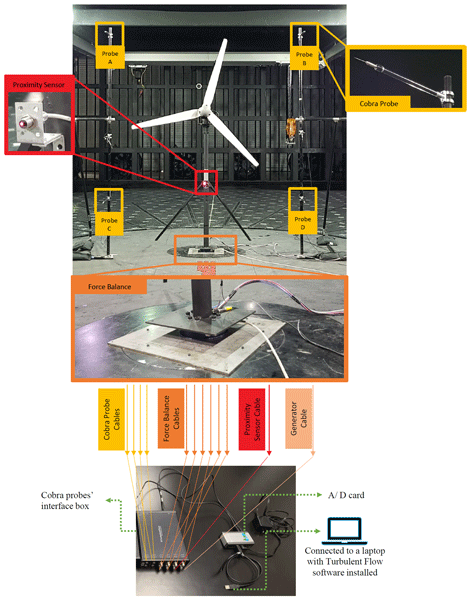
Wind energy systems work coherently in atmospheric flows which are gusty. This causes highly variable power productions and high fatigue loads on the system, which together hold back further growth of the wind energy market. This study demonstrates an alternative experimental procedure to investigate some extreme wind condition effects on wind turbines based on the IEC standard. This experiment can be improved upon and used to develop new control concepts, mitigating the effect of gusts.
Rad Haghi and Curran Crawford
Wind Energ. Sci., 9, 2039–2062, https://doi.org/10.5194/wes-9-2039-2024, https://doi.org/10.5194/wes-9-2039-2024, 2024
Short summary
Short summary
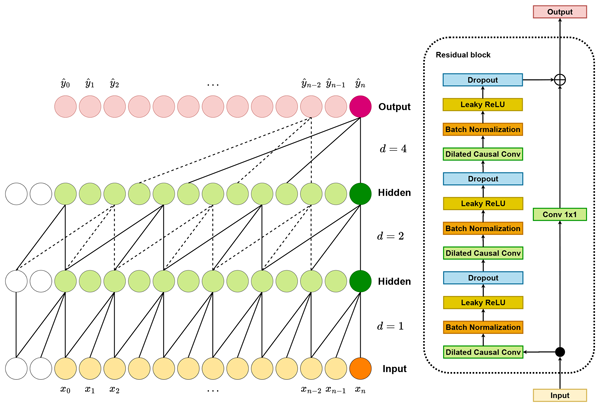
This journal paper focuses on developing surrogate models for predicting the damage equivalent load (DEL) on wind turbines without needing extensive aeroelastic simulations. The study emphasizes the development of a sequential machine learning architecture for this purpose. The study also explores implementing simplified wake models and transfer learning to enhance the models' prediction capabilities in various wind conditions.
Markus Sommerfeld, Martin Dörenkämper, Jochem De Schutter, and Curran Crawford
Wind Energ. Sci., 8, 1153–1178, https://doi.org/10.5194/wes-8-1153-2023, https://doi.org/10.5194/wes-8-1153-2023, 2023
Short summary
Short summary
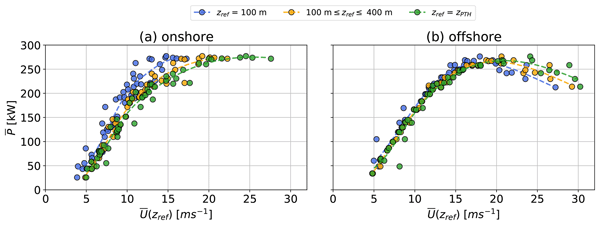
This study investigates the performance of pumping-mode ground-generation airborne wind energy systems by determining power-optimal flight trajectories based on realistic, k-means clustered, vertical wind velocity profiles. These profiles, derived from mesoscale weather simulations at an offshore and an onshore site in Europe, are incorporated into an optimal control model that maximizes average cycle power by optimizing the kite's trajectory.
Patrick Connolly and Curran Crawford
Wind Energ. Sci., 8, 725–746, https://doi.org/10.5194/wes-8-725-2023, https://doi.org/10.5194/wes-8-725-2023, 2023
Short summary
Short summary
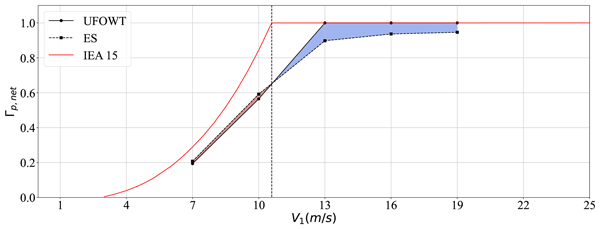
Mobile offshore wind energy systems are a potential way of producing green fuels from the untapped wind resource that lies far offshore. Herein, computational models of two such systems were developed and verified. The models are able to predict the power output of each system based on wind condition inputs. Results show that both systems have merits and that, contrary to existing results, unmoored floating wind turbines may produce as much power as fixed ones, given the right conditions.
Markus Sommerfeld, Martin Dörenkämper, Jochem De Schutter, and Curran Crawford
Wind Energ. Sci., 7, 1847–1868, https://doi.org/10.5194/wes-7-1847-2022, https://doi.org/10.5194/wes-7-1847-2022, 2022
Short summary
Short summary
This research explores the ground-generation airborne wind energy system (AWES) design space and investigates scaling effects by varying design parameters such as aircraft wing size, aerodynamic efficiency and mass. Therefore, representative simulated onshore and offshore wind data are implemented into an AWES trajectory optimization model. We estimate optimal annual energy production and capacity factors as well as a minimal operational lift-to-weight ratio.
Rad Haghi and Curran Crawford
Wind Energ. Sci., 7, 1289–1304, https://doi.org/10.5194/wes-7-1289-2022, https://doi.org/10.5194/wes-7-1289-2022, 2022
Short summary
Short summary
Based on the IEC standards, a limited number of simulations is sufficient to calculate the extreme and fatigue loads on a wind turbine. However, this means inaccuracy in the output statistics. This paper aims to build a surrogate model on blade element momentum aerodynamic model simulation output employing non-intrusive polynomial chaos expansion. The surrogate model is then used in a large number of Monte Carlo simulations to provide an accurate statistical estimate of the loads.
Kamran Shirzadeh, Horia Hangan, Curran Crawford, and Pooyan Hashemi Tari
Wind Energ. Sci., 6, 477–489, https://doi.org/10.5194/wes-6-477-2021, https://doi.org/10.5194/wes-6-477-2021, 2021
Short summary
Short summary
Wind energy systems work coherently in atmospheric flows which are gusty. This causes highly variable power productions and high fatigue loads on the system, which together hold back further growth of the wind energy market. This study demonstrates an alternative experimental procedure to investigate some extreme wind condition effects on wind turbines based on the IEC standard. This experiment can be improved upon and used to develop new control concepts, mitigating the effect of gusts.
Cited articles
Anvari, M., Lohmann, G., Wächter, M., Milan, P., Lorenz, E., Heinemann,
D., Tabar, M. R. R., and Peinke, J.: Short term fluctuations of wind and
solar power systems, New J. Phys., 18, 063027,
https://doi.org/10.1088/1367-2630/18/6/063027, 2016.
Bossanyi, E. A., Kumar, A., and Hugues-Salas, O.: Wind turbine control
applications of turbine-mounted LIDAR, J. Phys. Conf. Ser., 555, 012011,
https://doi.org/10.1088/1742-6596/555/1/012011, 2014.
Burton, T., Jenkins, N., Sharpe, D., and Bossanyi, E.: Wind Energy Handbook,
2nd ed., John Wiley and Sons Ltd, Chichester, UK, 2011.
Cheng, P. W. and Bierbooms, W. A. A. : Distribution of extreme gust loads of
wind turbines, J. Wind Eng. Ind. Aerod., 89, 309–324,
https://doi.org/10.1016/S0167-6105(00)00084-2, 2001.
Chowdhury, J., Chowdhury, J., Parvu, D., Karami, M., and Hangan, H.: Wind
flow characteristics of a model downburst, in: American Society of Mechanical
Engineers, Fluids Engineering Division (Publication) FEDSM, vol. 1, American
Society of Mechanical Engineers (ASME), 2018.
Estanqueiro, A. I.: A dynamic wind generation model for power systems
studies, IEEE T. Power Syst., 22, 920–928,
https://doi.org/10.1109/TPWRS.2007.901654, 2007.
Gharali, K. and Johnson, D. A.: Effects of nonuniform incident velocity on a
dynamic wind turbine airfoil, Wind Energy, 18, 237–251,
https://doi.org/10.1002/we.1694, 2015.
González-Longatt, F., Wall, P. P., and Terzija, V.: Wake effect in wind
farm performance: Steady-state and dynamic behavior, Renew. Energ., 39,
329–338, https://doi.org/10.1016/j.renene.2011.08.053, 2012.
Hangan, H., Refan, M., Jubayer, C., Parvu, D., and Kilpatrick, R.: Big data
from big experiments. The WindEEE Dome, in: Whither Turbulence and Big Data
in the 21st Century, Springer International Publishing, Switzerland, 215–230 2016.
Hangan, H., Refan, M., Jubayer, C., Romanic, D., Parvu, D., LoTufo, J., and
Costache, A.: Novel techniques in wind engineering, J. Wind Eng. Ind. Aerod., 171, 12–33, https://doi.org/10.1016/j.jweia.2017.09.010, 2017.
Hansen, K. S. and Larsen, G. C.: Full scale experimental analysis of extreme
coherent gust with wind direction changes (EOD), J. Phys. Conf. Ser., 75,
012055, https://doi.org/10.1088/1742-6596/75/1/012055, 2007.
Hansen, M. O.: Aerodynamics of wind turbines, 3rd Edn., Routledge,
Abingdon, UK, 2015.
Hu, W., Letson, F., Barthelmie, R. J., and Pryor, S. C.: Wind gust
characterization at wind turbine relevant heights in moderately complex
terrain, J. Appl. Meteorol. Climatol., 57, 1459–1476,
https://doi.org/10.1175/JAMC-D-18-0040.1, 2018.
IEC: IEC 61400-1 Wind turbines - Part 1: Design requirements, 3rd edn., Standard, International Electrotechnical Commission, Geneva, Switserland, 2005.
IEC: IEC 61400-1: Wind energy generation systems – Part 1: Design requirements, 4th edition,International Electrotechnical Commission Geneva,
Switzerland, 2019.
Jeong, M. S., Kim, S. W., Lee, I., and Yoo, S. J.: Wake impacts on
aerodynamic and aeroelastic behaviors of a horizontal axis wind turbine
blade for sheared and turbulent flow conditions, J. Fluids Struct., 50,
66–78, https://doi.org/10.1016/j.jfluidstructs.2014.06.016, 2014.
Lackner, M. A. and Van Kuik, G. A. M.: The performance of wind turbine smart
rotor control approaches during extreme loads, J. Sol. Energy Eng.-ASME, 132, 0110081–0110088, https://doi.org/10.1115/1.4000352, 2010.
Lancelot, P. M. G. J., Sodja, J., Werter, N. P. M., and De Breuker, R.:
Design and testing of a low subsonic wind tunnel gust generator, Adv. Aircr.
Spacecr. Sci., 4, 125–144, https://doi.org/10.12989/aas.2017.4.2.125, 2017.
Micallef, D. and Sant, T.: Rotor aerodynamics in sheared inflow: An analysis
of out-of-plane bending moments, J. Phys. Conf. Ser., 1037, 022027,
https://doi.org/10.1088/1742-6596/1037/2/022027, 2018.
Neunaber, I. and Braud, C.: First characterization of a new perturbation system for gust generation: the chopper, Wind Energ. Sci., 5, 759–773, https://doi.org/10.5194/wes-5-759-2020, 2020.
Pace, A., Johnson, K., and Wright, A.: Preventing wind turbine overspeed in
highly turbulent wind events using disturbance accommodating control and
light detection and ranging, Wind Energy, 18, 351–368,
https://doi.org/10.1002/we.1705, 2015.
Petrović, V., Berger, F., Neuhaus, L., Hölling, M., and Kühn, M.:
Wind tunnel setup for experimental validation of wind turbine control
concepts under tailor-made reproducible wind conditions, J. Phys. Conf.
Ser., 1222, 012013, https://doi.org/10.1088/1742-6596/1222/1/012013, 2019.
Refan, M. and Hangan, H.: Aerodynamic performance of a small horizontal axis
wind turbine, J. Sol. Energy Eng.-ASME, 134,
https://doi.org/10.1115/1.4005751, 2012.
Refan, M. and Hangan, H.: Near surface experimental exploration of tornado
vortices, J. Wind Eng. Ind. Aerod., 175, 120–135, https://doi.org/10.1016/j.jweia.2018.01.042,
2018.
Ricci, S., De Gaspari, A., Riccobene, L., and Fonte, F.: Design and Wind Tunnel Test Validation of Gust Load Alleviation Systems, in 58th AIAA/ASCE/AHS/ASC Structures, Structural Dynamics, and Materials Conference, American Institute of Aeronautics and Astronautics, January 2017. https://doi.org/10.2514/6.2017-1818, 2017.
Romanic, D., LoTufo, J., and Hangan, H.: Transient behavior in impinging jets
in crossflow with application to downburst flows, J. Wind Eng. Ind. Aerod., 184, 209–227, https://doi.org/10.1016/j.jweia.2018.11.020, 2019.
Schlipf, D., Schlipf, D. J., and Kühn, M.: Nonlinear model predictive
control of wind turbines using LIDAR, Wind Energy, 16, 1107–1129,
https://doi.org/10.1002/we.1533, 2013.
Sezer-Uzol, N. and Uzol, O.: Effect of steady and transient wind shear on
the wake structure and performance of a horizontal axis wind turbine rotor,
Wind Energy, 16, 1–17, https://doi.org/10.1002/we.514, 2013.
Shen, X., Zhu, X., and Du, Z.: Wind turbine aerodynamics and loads control in
wind shear flow, Energy, 36, 1424–1434,
https://doi.org/10.1016/j.energy.2011.01.028, 2011.
Snel, H., Schepers, J. G., and Montgomerie, B.: The MEXICO project (Model
Experiments in Controlled Conditions): The database and first results of
data processing and interpretation, in: Journal of Physics: Conference
Series, 75, 012014, https://doi.org/10.1088/1742-6596/75/1/012014, 2007.
Sørensen, N. N., Michelsen, J. A., and Schreck, S.: Navier-Stokes
predictions of the NREL phase VI rotor in the NASA Ames 80 ft × 120 ft wind tunnel, Wind Energy, 5, 151–169, https://doi.org/10.1002/we.64, 2002.
Suomi, I., Vihma, T., Gryning, S.-E., and Fortelius, C.: Wind-gust
parametrizations at heights relevant for wind energy: a study based on mast
observations, Q. J. Roy. Meteor. Soc., 139, 1298–1310,
https://doi.org/10.1002/qj.2039, 2013.
TFI Ltd.: Cobra Probe, Turbul. Flow Instrum. Pty Ltd., available at: https://www.turbulentflow.com.au/Products/CobraProbe/CobraProbe.php (last access: 12 June 2020), 2011.
Thomsen, K. and Sørensen, P.: Fatigue loads for wind turbines operating
in wakes, J. Wind Eng. Ind. Aerod., 80, 121–136,
https://doi.org/10.1016/S0167-6105(98)00194-9, 1999.
Ueckerdt, F., Hirth, L., Luderer, G., and Edenhofer, O.: System LCOE: What
are the costs of variable renewables?, Energy, 63, 61–75,
https://doi.org/10.1016/j.energy.2013.10.072, 2013.
Wächter, M., Heißelmann, H., Hölling, M., Morales, A., Milan,
P., Mücke, T., Peinke, J., Reinke, N., and Rinn, P.: The turbulent nature
of the atmospheric boundary layer and its impact on the wind energy
conversion process, J. Turbul., 13, 1–21, https://doi.org/10.1080/14685248.2012.696118,
2012.
Wester, T. T. B., Kampers, G., Gülker, G., Peinke, J., Cordes, U.,
Tropea, C., and Hölling, M.: High speed PIV measurements of an adaptive
camber airfoil under highly gusty inflow conditions, J. Phys. Conf. Ser.,
1037, 072007, https://doi.org/10.1088/1742-6596/1037/7/072007, 2018.
Short summary
The main goal of this study is to develop a physical simulation of some extreme wind conditions that are defined by the IEC standard. This has been performed by a hybrid numerical–experimental approach with a relevant scaling. Being able to simulate these dynamic flow fields can generate decisive results for future scholars working in the wind energy sector to make these wind energy systems more reliable and finally helps to accelerate the reduction of the cost of electricity.
The main goal of this study is to develop a physical simulation of some extreme wind conditions...


Altmetrics
Final-revised paper
Preprint