
Articles | Volume 11, issue 8
https://doi.org/10.5194/wes-11-3057-2026
© Author(s) 2026. This work is distributed under
the Creative Commons Attribution 4.0 License.
the Creative Commons Attribution 4.0 License.
https://doi.org/10.5194/wes-11-3057-2026
© Author(s) 2026. This work is distributed under
the Creative Commons Attribution 4.0 License.
the Creative Commons Attribution 4.0 License.
Research article
| 
26 Aug 2026
Research article |
| 26 Aug 2026
| 26 Aug 2026
Airborne measurements for investigating offshore wind farm wakes and modifications of sea state – benefits and limitations
Astrid Lampert
CORRESPONDING AUTHOR

TU Braunschweig, Institute of Flight Guidance, Hermann-Blenk-Str. 27, 38108 Braunschweig, Germany
Beatriz Cañadillas
TU Braunschweig, Institute of Flight Guidance, Hermann-Blenk-Str. 27, 38108 Braunschweig, Germany
Thomas Rausch
TU Braunschweig, Institute of Flight Guidance, Hermann-Blenk-Str. 27, 38108 Braunschweig, Germany
Lea Schmitt
TU Braunschweig, Institute of Flight Guidance, Hermann-Blenk-Str. 27, 38108 Braunschweig, Germany
Bughsin' Djath
Helmholtz-Zentrum Hereon, Institute of Coastal Systems – Analysis and Modeling, Max-Planck-Str. 1, 21502 Geesthacht, Germany
Johannes Schulz-Stellenfleth
Helmholtz-Zentrum Hereon, Institute of Coastal Systems – Analysis and Modeling, Max-Planck-Str. 1, 21502 Geesthacht, Germany
Andreas Platis
Environmental Physics, Eberhard Karls University of Tübingen, Schnarrenbergstr. 94-96, 72076 Tübingen, Germany
Kjell zum Berge
Environmental Physics, Eberhard Karls University of Tübingen, Schnarrenbergstr. 94-96, 72076 Tübingen, Germany
Ines Schäfer
Environmental Physics, Eberhard Karls University of Tübingen, Schnarrenbergstr. 94-96, 72076 Tübingen, Germany
Jens Bange
Environmental Physics, Eberhard Karls University of Tübingen, Schnarrenbergstr. 94-96, 72076 Tübingen, Germany
Lukas Gruchot
Environmental Physics, Eberhard Karls University of Tübingen, Schnarrenbergstr. 94-96, 72076 Tübingen, Germany
Thomas Neumann
FGW e.V. – Fördergesellschaft Windenergie und andere Dezentrale Energien, Oranienburger Str. 45, 10117 Berlin, Germany
Martin Dörenkämper
Fraunhofer IWES, Küpkersweg 70, 26129 Oldenburg, Germany
Bernhard Stoevesandt
Fraunhofer IWES, Küpkersweg 70, 26129 Oldenburg, Germany
Julia Gottschall
Fraunhofer IWES, Küpkersweg 70, 26129 Oldenburg, Germany
Faculty of Geosciences, University of Bremen, 28359 Bremen, Germany
Lukas Vollmer
Fraunhofer IWES, Küpkersweg 70, 26129 Oldenburg, Germany
Stefan Emeis
Karlsruhe Insitute of Technology (KIT), Institute of Meteorology and Climate Research, Kreuzeckbahnstr. 19, 82467 Garmisch-Partenkirchen, Germany
Mares Barekzai
Karlsruhe Insitute of Technology (KIT), Institute of Meteorology and Climate Research, Kreuzeckbahnstr. 19, 82467 Garmisch-Partenkirchen, Germany
Simon Siedersleben
Karlsruhe Insitute of Technology (KIT), Institute of Meteorology and Climate Research, Kreuzeckbahnstr. 19, 82467 Garmisch-Partenkirchen, Germany
Martin Kühn
Carl von Ossietzky Universität Oldenburg, School of Mathematics and Science, Institute of Physics, Germany
ForWind – Center for Wind Energy Research, Küpkersweg 70, 26129 Oldenburg, Germany
Gerald Steinfeld
Carl von Ossietzky Universität Oldenburg, School of Mathematics and Science, Institute of Physics, Germany
ForWind – Center for Wind Energy Research, Küpkersweg 70, 26129 Oldenburg, Germany
Detlev Heinemann
Carl von Ossietzky Universität Oldenburg, School of Mathematics and Science, Institute of Physics, Germany
ForWind – Center for Wind Energy Research, Küpkersweg 70, 26129 Oldenburg, Germany
Joachim Peinke
Carl von Ossietzky Universität Oldenburg, School of Mathematics and Science, Institute of Physics, Germany
ForWind – Center for Wind Energy Research, Küpkersweg 70, 26129 Oldenburg, Germany
Hendrik Heißelmann
Carl von Ossietzky Universität Oldenburg, School of Mathematics and Science, Institute of Physics, Germany
ForWind – Center for Wind Energy Research, Küpkersweg 70, 26129 Oldenburg, Germany
Jörge Schneemann
Carl von Ossietzky Universität Oldenburg, School of Mathematics and Science, Institute of Physics, Germany
ForWind – Center for Wind Energy Research, Küpkersweg 70, 26129 Oldenburg, Germany
Gabriele Centurelli
Carl von Ossietzky Universität Oldenburg, School of Mathematics and Science, Institute of Physics, Germany
ForWind – Center for Wind Energy Research, Küpkersweg 70, 26129 Oldenburg, Germany
Philipp Waldmann
TU Braunschweig, Institute of Flight Guidance, Hermann-Blenk-Str. 27, 38108 Braunschweig, Germany
Konrad Bärfuss
TU Braunschweig, Institute of Flight Guidance, Hermann-Blenk-Str. 27, 38108 Braunschweig, Germany
Related authors
Malte Schuchard, Konrad Bärfuss, Lutz Bretschneider, Thomas Conrath, Andreas Held, Ralf Käthner, Mona Kellermann, Astrid Lampert, Theresa Mathes, Joshua Müller, Christian Pilz, Andreas Schlerf, Holger Siebert, Birgit Wehner, and Barbara Harm-Altstädter
Earth Syst. Sci. Data Discuss., https://doi.org/10.5194/essd-2026-411, https://doi.org/10.5194/essd-2026-411, 2026
Preprint under review for ESSD
Short summary
Short summary
This article combines measurements from an uncrewed aerial system, a tethered balloon system and a surface flux gradient system to study aerosol particles and meteorological parameters at the Arctic site Ny-Ålesund, Svalbard, in spring 2024. The vertical and horizontal observations from the ground to 1.3 kilometres above sea level show strong aerosol variability in correlation with specific meteorological conditions, providing a valuable basis for understanding Arctic aerosol processes.

Anna Voss, Konrad B. Bärfuss, Beatriz Cañadillas, Maik Angermann, Mark Bitter, Matthias Cremer, Thomas Feuerle, Jonas Spoor, Julie K. Lundquist, Patrick Moriarty, and Astrid Lampert
Wind Energ. Sci., 11, 71–88, https://doi.org/10.5194/wes-11-71-2026, https://doi.org/10.5194/wes-11-71-2026, 2026
Short summary
Short summary
This study analyzes onshore wind farm wakes in a semi-complex terrain with data conducted with the research aircraft of TU Braunschweig during the American WAKE experimeNt (AWAKEN). Vertical profiles of temperature, humidity, and wind give insights into the stratification of the atmospheric boundary layer, while horizontal profiles downwind of wind farms reveal an amplification of the reduction in wind speed in a semi-complex terrain, in particular at a distance of 10 km.
Amanda Sellmaier, Ellen Damm, Torsten Sachs, Benjamin Kirbus, Inge Wiekenkamp, Annette Rinke, Falk Pätzold, Daiki Nomura, Astrid Lampert, and Markus Rex
Atmos. Chem. Phys., 25, 17685–17700, https://doi.org/10.5194/acp-25-17685-2025, https://doi.org/10.5194/acp-25-17685-2025, 2025
Short summary
Short summary
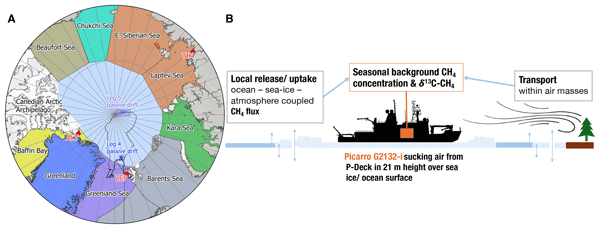
This study presents continuous ship-borne measurements of methane (CH4) concentration and isotopic composition monitored during an ice drift expedition in 2020. Using trajectory analysis, we linked atmospheric CH4 variabilities to air mass pathways transported over open water or sea-ice. The study highlights the potential of ship-borne observations to fill significant data gaps in the high Arctic.
Eric Förster, Heidi Huntrieser, Michael Lichtenstern, Falk Pätzold, Lutz Bretschneider, Andreas Schlerf, Sven Bollmann, Astrid Lampert, Jarosław Nęcki, Paweł Jagoda, Justyna Swolkień, Dominika Pasternak, Robert A. Field, and Anke Roiger
Atmos. Meas. Tech., 18, 7153–7176, https://doi.org/10.5194/amt-18-7153-2025, https://doi.org/10.5194/amt-18-7153-2025, 2025
Short summary
Short summary
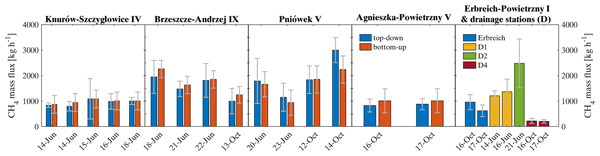
We introduce a helicopter-borne mass balance approach, utilizing the HELiPOD platform, to accurately quantify methane (CH4) emissions from coal mining activities. The comparison of our top-down mass flux estimates (up to 3000 kg h−1) against those from bottom-up in-mine CH4 safety sensors revealed very good agreement. This approach also has a great potential in quantifying emission source strengths (down to 20 kg h−1) from a wide range of other CH4 emitters (e.g. landfills, oil & gas industry).
Alexander Mönnig, Ansgar Hahn, Astrid Lampert, and Ulrich Römer
Wind Energ. Sci. Discuss., https://doi.org/10.5194/wes-2025-112, https://doi.org/10.5194/wes-2025-112, 2025
Revised manuscript not accepted
Short summary
Short summary
To enable efficient load estimation in wind farms, e.g. to assess Remaining Useful Life, we investigated the feasibility of using surrogate models based on open-source turbine models. In a case study, we adapted such a model to match turbines from a real German onshore wind farm, ran aeroelastic simulations, and trained surrogate models to reconstruct loads observed in 5 years of SCADA data. Comparing predicted and measured values showed promising accuracy, especially for blade bending moments.
Hassnae Erraji, Philipp Franke, Astrid Lampert, Tobias Schuldt, Ralf Tillmann, Andreas Wahner, and Anne Caroline Lange
Atmos. Chem. Phys., 24, 13913–13934, https://doi.org/10.5194/acp-24-13913-2024, https://doi.org/10.5194/acp-24-13913-2024, 2024
Short summary
Short summary
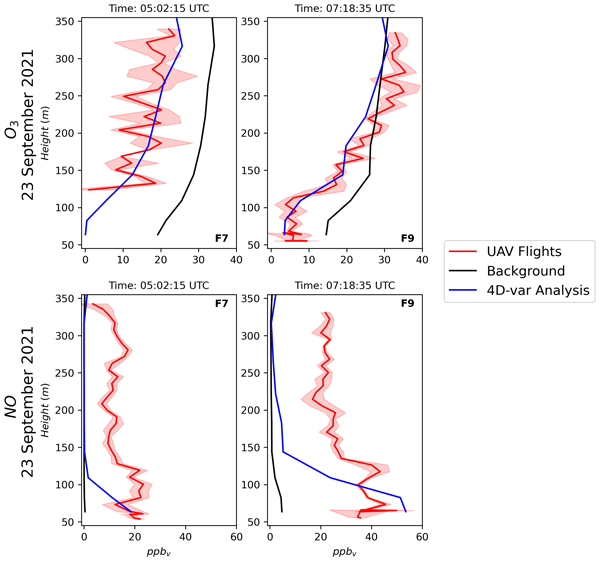
Four-dimensional variational data assimilation allows for the simultaneous optimisation of initial values and emission rates by using trace-gas profiles from drone observations in a regional air quality model. Assimilated profiles positively impact the representation of air pollutants in the model by improving their vertical distribution and ground-level concentrations. This case study highlights the potential of drone data to enhance air quality analyses including local emission evaluation.
Astrid Lampert, Rudolf Hankers, Thomas Feuerle, Thomas Rausch, Matthias Cremer, Maik Angermann, Mark Bitter, Jonas Füllgraf, Helmut Schulz, Ulf Bestmann, and Konrad B. Bärfuss
Earth Syst. Sci. Data, 16, 4777–4792, https://doi.org/10.5194/essd-16-4777-2024, https://doi.org/10.5194/essd-16-4777-2024, 2024
Short summary
Short summary
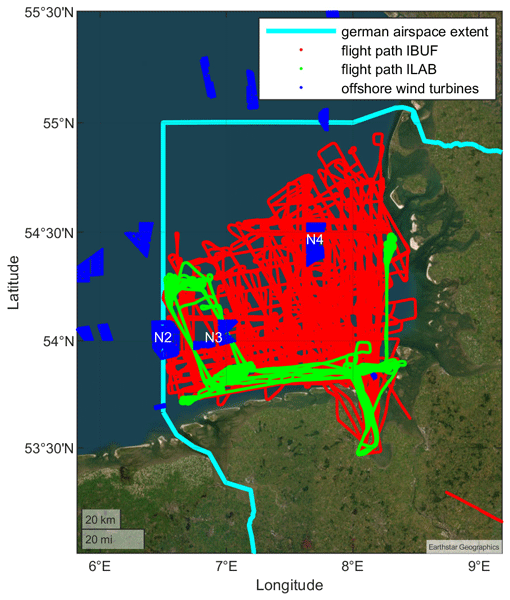
We conducted flights above the North Sea and investigated changes in the wind field. The research aircraft measured wind speed, wind direction, temperature, humidity and sea surface at high resolution. Wind parks reduce the wind speed, and the data help to determine how long it takes for the wind speed to recover. The coast also plays an important role, and the wind speed varies with distance from the coast. The results help in wind park planning and better estimating the energy yield.
Barbara Harm-Altstädter, Konrad Bärfuss, Lutz Bretschneider, Martin Schön, Jens Bange, Ralf Käthner, Radovan Krejci, Mauro Mazzola, Kihong Park, Falk Pätzold, Alexander Peuker, Rita Traversi, Birgit Wehner, and Astrid Lampert
Aerosol Research, 1, 39–64, https://doi.org/10.5194/ar-1-39-2023, https://doi.org/10.5194/ar-1-39-2023, 2023
Short summary
Short summary
We present observations of aerosol particles and meteorological parameters in the horizontal and vertical distribution measured with uncrewed aerial systems in the Arctic. The field campaign was carried out during the snow melting season, when ultrafine aerosol particles (UFPs) with a size between 3 and 12 nm occurred frequently. A high variability of the measured UFPs was identified in the spatial scale, which was strongly associated with different atmospheric boundary layer properties.
Konrad B. Bärfuss, Holger Schmithüsen, and Astrid Lampert
Atmos. Meas. Tech., 16, 3739–3765, https://doi.org/10.5194/amt-16-3739-2023, https://doi.org/10.5194/amt-16-3739-2023, 2023
Short summary
Short summary
The first atmospheric soundings with an electrically powered small uncrewed aircraft system (UAS) up to an altitude of 10 km are presented and assessed for quality, revealing the potential to augment atmospheric observations and fill observation gaps for numerical weather prediction. This is significant because of the need for high-resolution meteorological data, in particular in remote areas with limited in situ measurements, and for reference data for satellite measurement calibration.
Beatriz Cañadillas, Maximilian Beckenbauer, Juan J. Trujillo, Martin Dörenkämper, Richard Foreman, Thomas Neumann, and Astrid Lampert
Wind Energ. Sci., 7, 1241–1262, https://doi.org/10.5194/wes-7-1241-2022, https://doi.org/10.5194/wes-7-1241-2022, 2022
Short summary
Short summary
Scanning lidar measurements combined with meteorological sensors and mesoscale simulations reveal the strong directional and stability dependence of the wake strength in the direct vicinity of wind farm clusters.
Marcel Ricker, Arno Behrens, Johannes Schulz-Stellenfleth, Carolina Barnez Gramcianinov, and Joanna Staneva
State Planet Discuss., https://doi.org/10.5194/sp-2026-28, https://doi.org/10.5194/sp-2026-28, 2026
Preprint under review for SP
Short summary
Short summary
The study examines the reliability of extreme wave height forecasts in Bulgarian Black Sea waters in 2025. Five notable events are identified, including four medium-size events and an exceptionally large event in December. Wave model errors and their dependence on wind properties are analysed. The results provide recommendations for assessing forecast errors and support decision-making for coastal and offshore applications requiring reliable wave height predictions.
Annika Gaiser, Gerald Steinfeld, Gabriele Centurelli, and Martin Kühn
Wind Energ. Sci. Discuss., https://doi.org/10.5194/wes-2026-140, https://doi.org/10.5194/wes-2026-140, 2026
Preprint under review for WES
Short summary
Short summary
Wind farm wakes can reach far downstream, influencing the power production of other wind farms. In pursuit of improved wake recovery, we investigate how vertically staggered wind farms influence the flow field and wake recovery budget by using large-eddy simulations. Flow circulation forms inside the wind farm for certain setups and at one wake boundary, which influences wake recovery through advection and causes local speed-ups. The wake and power of a second, downstream wind farm is affected.
Jakob Mann, Ansh Patel, Mikael Sjöholm, Gunhild Rolighed Thorsen, Elliot Irving Simon, Lin-Ya Hung, and Julia Gottschall
Wind Energ. Sci., 11, 3153–3170, https://doi.org/10.5194/wes-11-3153-2026, https://doi.org/10.5194/wes-11-3153-2026, 2026
Short summary
Short summary
Turbulence over the ocean at heights relevant to modern offshore wind turbines, i.e., up to 300 m or more, is not well studied. It is important to know the properties of this turbulence because it is responsible for most of the dynamic loads on these structures, and consequently it is relevant to how the latter should be designed. This data description paper explains the efforts made to provide measurements of this offshore turbulence using five Doppler lidars.
Johanna Borowski, Kerstin Avila, and Martin Dörenkämper
Wind Energ. Sci. Discuss., https://doi.org/10.5194/wes-2026-129, https://doi.org/10.5194/wes-2026-129, 2026
Preprint under review for WES
Short summary
Short summary
This study introduces a methodology that integrates climate model ensembles into the measure-correlate-predict framework for site-specific wind resource assessments. Using ERA5 reanalysis data and tall tower measurements from European sites, the approach bias-corrects climate model data to local conditions and reproduces historical wind climates. Results indicate decreases in summer wind speeds (typically 0.1–0.4 m s−¹) and slight winter increases but with greater ensemble spread in this season.
Malte Schuchard, Konrad Bärfuss, Lutz Bretschneider, Thomas Conrath, Andreas Held, Ralf Käthner, Mona Kellermann, Astrid Lampert, Theresa Mathes, Joshua Müller, Christian Pilz, Andreas Schlerf, Holger Siebert, Birgit Wehner, and Barbara Harm-Altstädter
Earth Syst. Sci. Data Discuss., https://doi.org/10.5194/essd-2026-411, https://doi.org/10.5194/essd-2026-411, 2026
Preprint under review for ESSD
Short summary
Short summary
This article combines measurements from an uncrewed aerial system, a tethered balloon system and a surface flux gradient system to study aerosol particles and meteorological parameters at the Arctic site Ny-Ålesund, Svalbard, in spring 2024. The vertical and horizontal observations from the ground to 1.3 kilometres above sea level show strong aerosol variability in correlation with specific meteorological conditions, providing a valuable basis for understanding Arctic aerosol processes.
Arianna Marie Jordan, Lin-Ya Hung, Gerrit Wolken-Möhlmann, and Julia Gottschall
Wind Energ. Sci. Discuss., https://doi.org/10.5194/wes-2026-114, https://doi.org/10.5194/wes-2026-114, 2026
Preprint under review for WES
Short summary
Short summary
Wind energy needs accurate airflow tools around turbines. We tested dual-Doppler radar at a research wind farm in Germany alongside lidar (a point-based wind sensor). The method matched lidar well at most heights and mapped wind shadows behind turbines, including wake meandering. Data quality depended on rainfall, with rainy periods giving the best coverage and fog the worst. This information is useful for implementation of dual-Doppler radar as a wind measurement tool for the industry.
Farkhondeh Rouholahnejad, Tanguy Lunel, and Julia Gottschall
Wind Energ. Sci. Discuss., https://doi.org/10.5194/wes-2026-99, https://doi.org/10.5194/wes-2026-99, 2026
Preprint under review for WES
Short summary
Short summary
Offshore wind farms rely on accurate measurements of wind and turbulence. Using three scanning lidars and an offshore meteorological mast, we investigated whether dual-Doppler lidar systems must measure exactly the same air volume to provide reliable turbulence estimates. We show that moderate beam separations can be tolerated under homogeneous offshore conditions and that the resulting differences provide useful information about spatial variability in the wind field.
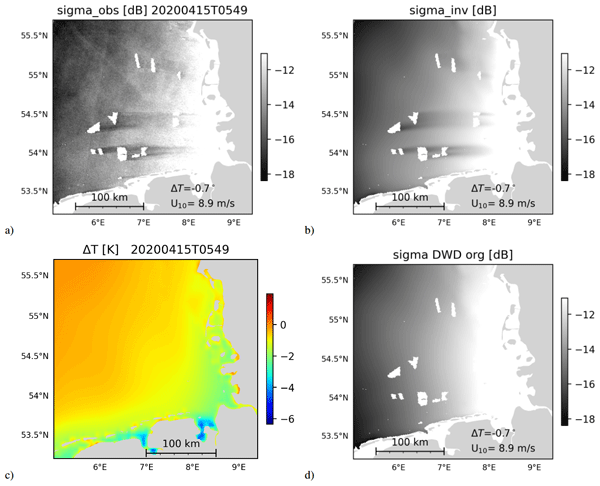
Johannes Schulz-Stellenfleth and Bughsin Djath
Wind Energ. Sci., 11, 2323–2344, https://doi.org/10.5194/wes-11-2323-2026, https://doi.org/10.5194/wes-11-2323-2026, 2026
Short summary
Short summary
Data acquired by the European Sentinel-1A/Sentinel-B satellites are combined with a semi-empirical model to enable the easy inclusion of atmospheric offshore wind farm wakes in existing atmospheric model datasets. The model improves the agreement of data from an operational forecast centre with in situ measurements in the German Bight significantly.
Lennart Vogt, Julia Gottschall, and Jasna Bogunovic Jakobsen
Wind Energ. Sci. Discuss., https://doi.org/10.5194/wes-2026-100, https://doi.org/10.5194/wes-2026-100, 2026
Revised manuscript accepted for WES
Short summary
Short summary
A combined dataset of sonic and cup anemometer measurements, together with synchronized short-range lidar observations, is used to derive turbulence characteristics, including integral length scales, auto-spectra, and spatial coherence. The instruments exhibit strong agreement and consistent trends across atmospheric stability. Deviations at high frequencies are attributed to spatial averaging effects. Empirical models fitted to the data closely reproduce the spectral estimates.
Matthew Young, Matthew Docherty, Lin-Ya Hung, Andrew Oldroyd, and Julia Gottschall
Wind Energ. Sci. Discuss., https://doi.org/10.5194/wes-2026-94, https://doi.org/10.5194/wes-2026-94, 2026
Preprint under review for WES
Short summary
Short summary
This study compares different ways of checking and correcting the pointing accuracy of scanning wind measurement systems used for offshore wind energy projects. Accurate positioning is essential for reliable wind measurements and reducing project risk. The results show that drone-based testing provides the most accurate results, while sea-surface methods offer a practical alternative when other reference points are unavailable.
Sinem Uluocak, Andreas Rott, Alfredo Peña, and Martin Kühn
EGUsphere, https://doi.org/10.5194/egusphere-2026-825, https://doi.org/10.5194/egusphere-2026-825, 2026
This preprint is open for discussion and under review for Atmospheric Measurement Techniques (AMT).
Short summary
Short summary
Wind lidar turbulence measurements are limited by large probe volume of lidar, which attenuates turbulence scales smaller than the probe volume. This process is known as probe volume averaging. This wind tunnel study enabled an experimental investigation of probe volume averaging for the first time, using 32 distinct probe volumes over integral length scale ratios. The study demonstrated the capability of lidar to measure along-wind turbulence statistics.
Marcel Bock and Joachim Peinke
Wind Energ. Sci. Discuss., https://doi.org/10.5194/wes-2026-71, https://doi.org/10.5194/wes-2026-71, 2026
Revised manuscript under review for WES
Short summary
Short summary
This work describes the wake using higher-order statistics derived from numerical simulations (by using one- and two-point statistics, including velocity increments). This demonstrates the existence of the intermittent ring outside the averaged velocity deficit. Furthermore, a novel method is presented that enables the efficient simulation of turbulent wakes.
Balthazar Arnoldus Maria Sengers, Lukas Vollmer, and Martin Dörenkämper
Wind Energ. Sci. Discuss., https://doi.org/10.5194/wes-2026-80, https://doi.org/10.5194/wes-2026-80, 2026
Revised manuscript under review for WES
Short summary
Short summary
This work compared parameterizations used in mesoscale models to estimate wind energy production against operational data from several offshore sites. Results showed differences of about five percent, with higher resolution reducing generated power due to stronger wakes. One approach best reproduced key aspects of wind farm performance. Overall, results underline known limitations, but confirm these models are useful for estimating wind farm performance.
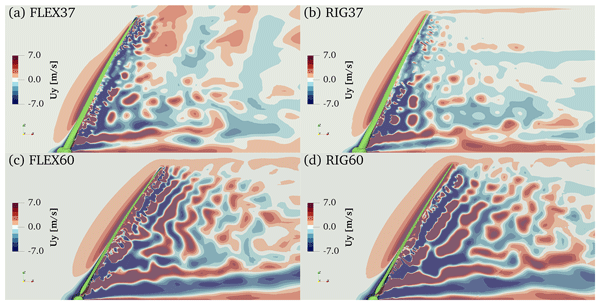
Leo Höning, Iván Herráez, Bernhard Stoevesandt, and Joachim Peinke
Wind Energ. Sci., 11, 1531–1552, https://doi.org/10.5194/wes-11-1531-2026, https://doi.org/10.5194/wes-11-1531-2026, 2026
Short summary
Short summary
High-fidelity fluid–structure-coupled simulations of the IEA 15 MW rotor under storm and yaw misalignment shows that certain misalignments trigger strong edgewise vibrations. Growth surges when effective power turns positive near −35° and fades near −43° yaw. Single-blade analysis finds lock-in at −37° with large tip motion and stability at −60° due to off-resonant Strouhal shedding. It is concluded that aeroelastic response is inflow specific, and operational mitigation strategies are needed.
Christian W. Schulz, Michael Hölling, Joachim Peinke, and Thomas Messmer
Wind Energ. Sci. Discuss., https://doi.org/10.5194/wes-2026-60, https://doi.org/10.5194/wes-2026-60, 2026
Revised manuscript accepted for WES
Short summary
Short summary
This letter clarifies the key parameters governing the wake recovery of a floating wind turbine undergoing surge motions. An increased wake recovery is extremely beneficial since it can significantly increase the power output of wind farms. A dedicated wind-tunnel campaign covering fast platform motions well beyond current literature is presented. This enabled a full characterisation of the wake recovery and the discovery of a previously unreported wake mixing phenomenon.
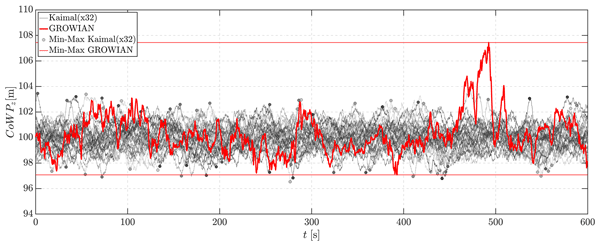
Carsten Schubert, Daniela Moreno, Jörg Schwarte, Jan Friedrich, Matthias Wächter, Gritt Pokriefke, Günter Radons, and Joachim Peinke
Wind Energ. Sci., 11, 1267–1285, https://doi.org/10.5194/wes-11-1267-2026, https://doi.org/10.5194/wes-11-1267-2026, 2026
Short summary
Short summary
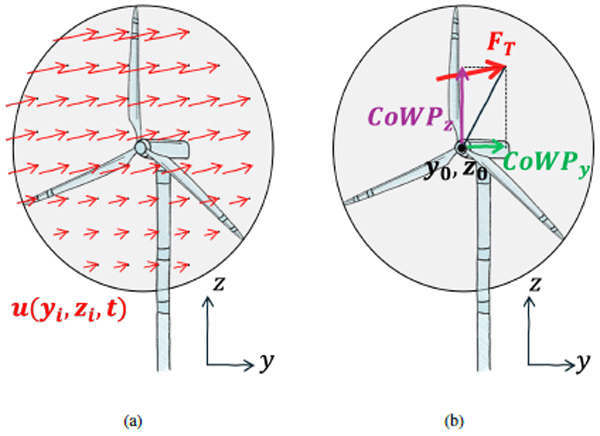
For modern wind turbines, the effects of inflow wind fluctuations on loads are becoming increasingly critical. Based on field measurements and simulations, we identify “bump” events responsible for high damage equivalent loads. In this article, we introduce a new characteristic of a wind field: the virtual center of wind pressure, which highly correlates to the identified load events observed in the operational measured data.
Hugo Rubio, Ville Vakkari, Martin Kühn, and Julia Gottschall
Wind Energ. Sci. Discuss., https://doi.org/10.5194/wes-2026-50, https://doi.org/10.5194/wes-2026-50, 2026
Preprint withdrawn
Short summary
Short summary
Offshore wind farms need accurate wind data, but collecting measurements at sea is often difficult and expensive. In this study, we investigate how wind measurements from a lidar mounted on a moving ship can improve the accuracy of commonly used reanalysis datasets. Using a statistical correction method, we are able to reduce errors in wind speed estimates. This efficient approach can make offshore wind planning and resource assessment more reliable in areas where measurements are limited.
Jannis Maus, Joachim Peinke, and Michael Hölling
Wind Energ. Sci. Discuss., https://doi.org/10.5194/wes-2026-48, https://doi.org/10.5194/wes-2026-48, 2026
Revised manuscript under review for WES
Short summary
Short summary
Among wind energy research, wind turbines with more than one rotor have recently gained a lot of attraction. Apart from promised lower maintenance- or construction costs, an increase in power generation per area, a better control over their wake (wind shadow/turbulence from turbines) makes these turbines highly attractive for large scale usage. This study shows experimentally, how the wake in a dual rotor can be steered and why this is highly promising for increasing windfarm efficiencies.
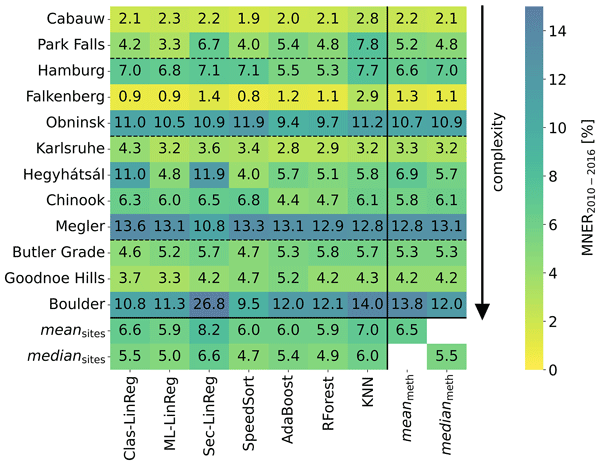
Johanna Borowski, Sandra Schwegmann, Kerstin Avila, and Martin Dörenkämper
Wind Energ. Sci., 11, 661–677, https://doi.org/10.5194/wes-11-661-2026, https://doi.org/10.5194/wes-11-661-2026, 2026
Short summary
Short summary
Assessing wind resources and mitigating the associated uncertainties are crucial to wind farm profitability. The study quantifies the uncertainty due to inter-annual variability, averaging 6.5 % and ranging from 1 % to 14 %, using long-term, quality-controlled wind measurements from tall met masts in terrain of varying complexity. Further, the results indicate that machine learning models are beneficial in mitigating the impact of inter-annual variability in heterogeneous and complex terrain.
Johannes Paulsen, Gerald Steinfeld, Martin Kühn, and Martin Dörenkämper
Wind Energ. Sci. Discuss., https://doi.org/10.5194/wes-2026-23, https://doi.org/10.5194/wes-2026-23, 2026
Revised manuscript under review for WES
Short summary
Short summary
We investigated the potential benefits in wake development and power production of a new turbine concept with a low specific rating and low induction and compared it to a reference design with same rated power. Our results show that the design can strongly increase the AEP and shows especially strong benefits during doldrum events and in strongly cluster wake affected areas. While the inner farm wake wakes are strongly decreased by the new concept, the outer farm wakes are slightly stronger.

Branko Kosović, Sukanta Basu, Jacob Berg, Larry K. Berg, Sue E. Haupt, Xiaoli G. Larsén, Joachim Peinke, Richard J. A. M. Stevens, Paul Veers, and Simon Watson
Wind Energ. Sci., 11, 509–555, https://doi.org/10.5194/wes-11-509-2026, https://doi.org/10.5194/wes-11-509-2026, 2026
Short summary
Short summary
Most human activity happens in the layer of the atmosphere which extends a few hundred meters to a couple of kilometers above the surface of the Earth. The flow in this layer is turbulent. Turbulence impacts wind power production and turbine lifespan. Optimizing wind turbine performance requires understanding how turbulence affects both wind turbine efficiency and reliability. This paper points to gaps in our knowledge that need to be addressed to effectively utilize wind resources.
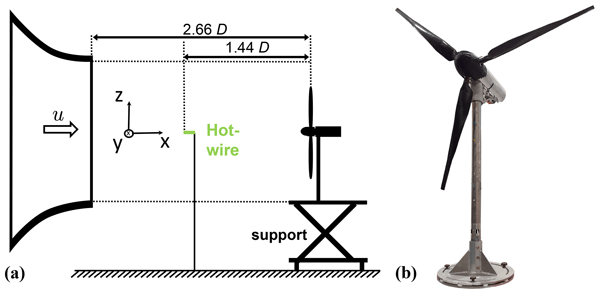
Daniel Ribnitzky, Vlaho Petrović, and Martin Kühn
Wind Energ. Sci., 11, 469–491, https://doi.org/10.5194/wes-11-469-2026, https://doi.org/10.5194/wes-11-469-2026, 2026
Short summary
Short summary
We developed controllers for the Hybrid-Lambda Rotor, which enables two operating modes below rated power via different tip speed ratios, balancing load reduction and power output. A baseline controller with a model-based wind speed estimator, a load feedback controller and an inflow feed-forward controller were implemented on the MoWiTO 1.8 model turbine and tested in wind tunnel experiments. In depth scaling, considerations ensure the transferability of the results to the full-scale model.
Carlo L. Bottasso, Sandrine Aubrun, Nicolaos A. Cutululis, Julia Gottschall, Athanasios Kolios, Jakob Mann, and Paul Veers
Wind Energ. Sci., 11, 347–348, https://doi.org/10.5194/wes-11-347-2026, https://doi.org/10.5194/wes-11-347-2026, 2026
Short summary
Short summary
This editorial celebrates the 10th anniversary of Wind Energy Science, reflecting on a decade of rapid scientific progress and the journal’s role in advancing fundamental, interdisciplinary research. It highlights key developments in wind energy, the importance of open science and academia–industry collaboration, and emerging challenges such as data sharing and artificial intelligence. Above all, it honors the research community that has shaped the journal and looks ahead to the next decade.
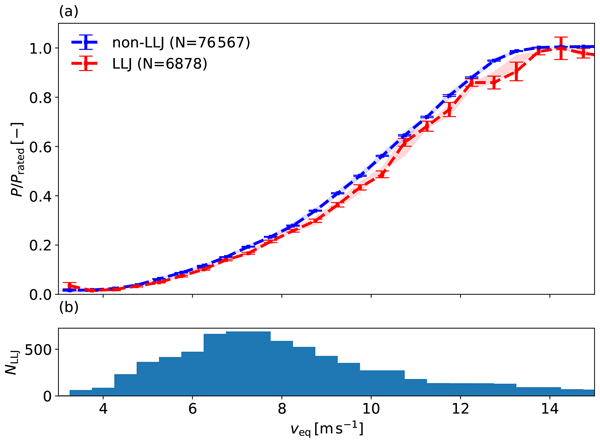
Johannes Paulsen, Jörge Schneemann, Gerald Steinfeld, Frauke Theuer, and Martin Kühn
Wind Energ. Sci., 11, 321–346, https://doi.org/10.5194/wes-11-321-2026, https://doi.org/10.5194/wes-11-321-2026, 2026
Short summary
Short summary
While low-level jets (LLJs) have been well characterised, their impact on offshore wind farms is not well understood. This study uses multi-elevation lidar scans to derive vertical wind profiles up to 350 m, detecting LLJs in up to 22.6 % of available measurements. Further, we analyse their effect on power conversion efficiency using operational wind farm data, observing a slightly negative influence and increased power fluctuations during LLJ events.
Stefan Ivanell, Bjarke T. Olsen, Antoine Mathieu, Cristina Mulet-Benzo, Abdul Haseeb Syed, Warit Chanprasert, Mikael Sjöholm, Jakob Mann, and Julia Gottschall
Wind Energ. Sci. Discuss., https://doi.org/10.5194/wes-2025-286, https://doi.org/10.5194/wes-2025-286, 2026
Preprint under review for WES
Short summary
Short summary
Modern GW-scale offshore wind farms face challenges from atmospheric dynamics. This study examines how boundary layer height (BLH) and large-scale turbulence affect efficiency and loads. Using WRF simulations, lidar data, and CFD modeling for a 100-turbine, 15 MW wind farm at three representative sites, we show that low BLH reduces performance. Turbulence-induced low-frequency fluctuations increase fatigue loads, underscoring the need to include BLH and turbulence in design models.
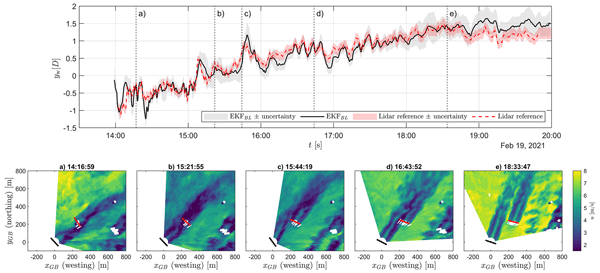
David Onnen, Gunner Christian Larsen, Alan Wai Hou Lio, Paul Hulsman, Martin Kühn, and Vlaho Petrović
Wind Energ. Sci., 11, 175–193, https://doi.org/10.5194/wes-11-175-2026, https://doi.org/10.5194/wes-11-175-2026, 2026
Short summary
Short summary
Neighbouring wind turbines influence each other, as they leave a complex footprint of reduced wind speed and changed turbulence in the flow, called wake. Modern wind farm control sees the turbines as team players and aims to mitigate the negative effects of such interaction. To do so, the exact flow situation in the wind farm must be known. We show how to use wind turbines as sensors for waked inflow, test this in the field and compare it with independent laser measurements of the flow field.
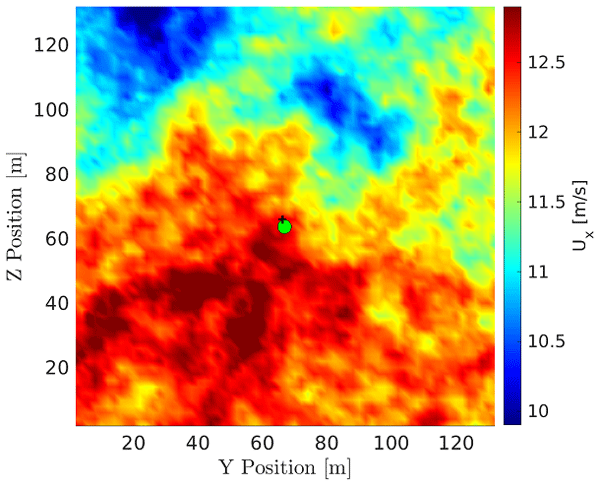
Marcel Bock, Daniela Moreno, and Joachim Peinke
Wind Energ. Sci., 11, 103–126, https://doi.org/10.5194/wes-11-103-2026, https://doi.org/10.5194/wes-11-103-2026, 2026
Short summary
Short summary
Various simulation tools exist to provide load forecasts in the wind energy field (engineering models and numerical simulations). A newly introduced concept is the center of wind pressure, a quantity extracted from a wind field. In previous works, similar behaviour, then the main shaft bending moments, was shown. However, a clear relationship is missing. In this work, this gap is filled through the introduction of a calibration parameter.
Anna Voss, Konrad B. Bärfuss, Beatriz Cañadillas, Maik Angermann, Mark Bitter, Matthias Cremer, Thomas Feuerle, Jonas Spoor, Julie K. Lundquist, Patrick Moriarty, and Astrid Lampert
Wind Energ. Sci., 11, 71–88, https://doi.org/10.5194/wes-11-71-2026, https://doi.org/10.5194/wes-11-71-2026, 2026
Short summary
Short summary
This study analyzes onshore wind farm wakes in a semi-complex terrain with data conducted with the research aircraft of TU Braunschweig during the American WAKE experimeNt (AWAKEN). Vertical profiles of temperature, humidity, and wind give insights into the stratification of the atmospheric boundary layer, while horizontal profiles downwind of wind farms reveal an amplification of the reduction in wind speed in a semi-complex terrain, in particular at a distance of 10 km.
Niklas Requate, Lukas Vollmer, and René Hofmann
Wind Energ. Sci. Discuss., https://doi.org/10.5194/wes-2025-284, https://doi.org/10.5194/wes-2025-284, 2025
Revised manuscript accepted for WES
Short summary
Short summary
Wind turbines age unevenly within a farm because of site conditions and the influence of surrounding turbines. We present an approach to set lower power on under certain winds to reduce fatigue loads while keeping energy high. On a nine‑turbine example farm, this added two to five years of life with small energy losses of less than 1 % and increased net present value. The method is scalable to any wind farm and delivers simple lookup tables for usage in operational planning and control.
Amanda Sellmaier, Ellen Damm, Torsten Sachs, Benjamin Kirbus, Inge Wiekenkamp, Annette Rinke, Falk Pätzold, Daiki Nomura, Astrid Lampert, and Markus Rex
Atmos. Chem. Phys., 25, 17685–17700, https://doi.org/10.5194/acp-25-17685-2025, https://doi.org/10.5194/acp-25-17685-2025, 2025
Short summary
Short summary
This study presents continuous ship-borne measurements of methane (CH4) concentration and isotopic composition monitored during an ice drift expedition in 2020. Using trajectory analysis, we linked atmospheric CH4 variabilities to air mass pathways transported over open water or sea-ice. The study highlights the potential of ship-borne observations to fill significant data gaps in the high Arctic.
Eric Förster, Heidi Huntrieser, Michael Lichtenstern, Falk Pätzold, Lutz Bretschneider, Andreas Schlerf, Sven Bollmann, Astrid Lampert, Jarosław Nęcki, Paweł Jagoda, Justyna Swolkień, Dominika Pasternak, Robert A. Field, and Anke Roiger
Atmos. Meas. Tech., 18, 7153–7176, https://doi.org/10.5194/amt-18-7153-2025, https://doi.org/10.5194/amt-18-7153-2025, 2025
Short summary
Short summary
We introduce a helicopter-borne mass balance approach, utilizing the HELiPOD platform, to accurately quantify methane (CH4) emissions from coal mining activities. The comparison of our top-down mass flux estimates (up to 3000 kg h−1) against those from bottom-up in-mine CH4 safety sensors revealed very good agreement. This approach also has a great potential in quantifying emission source strengths (down to 20 kg h−1) from a wide range of other CH4 emitters (e.g. landfills, oil & gas industry).
Warren Watson, Gerrit Wolken-Möhlmann, and Julia Gottschall
Wind Energ. Sci., 10, 2791–2820, https://doi.org/10.5194/wes-10-2791-2025, https://doi.org/10.5194/wes-10-2791-2025, 2025
Short summary
Short summary
In this study, we compare turbulence intensity measurements from two buoy-mounted wind lidars with data from a fixed lidar and a meteorological mast. Turbulence intensity is essential for understanding wind conditions but is often overestimated by floating systems due to wave motion. We applied a physics-based compensation to reduce these effects. Our findings show that motion compensation significantly improves accuracy, making floating lidar systems suitable for offshore wind site assessments.
Daniela Moreno, Jan Friedrich, Carsten Schubert, Matthias Wächter, Jörg Schwarte, Gritt Pokriefke, Günter Radons, and Joachim Peinke
Wind Energ. Sci., 10, 2729–2754, https://doi.org/10.5194/wes-10-2729-2025, https://doi.org/10.5194/wes-10-2729-2025, 2025
Short summary
Short summary
Increased sizes of modern turbines require extended descriptions of the atmospheric wind and its correlation to loads. Here, a surrogate stochastic method for estimating the bending moments at the main shaft is proposed. Based on the center of wind pressure dynamics, an advantage is the possibility of stochastically reconstructing large amounts of load data. Atmospheric measurements and modeled data demonstrate the validity of this method.
Christian Wiedemann, Henrik Bette, Matthias Wächter, Jan A. Freund, Thomas Guhr, and Joachim Peinke
Wind Energ. Sci., 10, 2489–2497, https://doi.org/10.5194/wes-10-2489-2025, https://doi.org/10.5194/wes-10-2489-2025, 2025
Short summary
Short summary
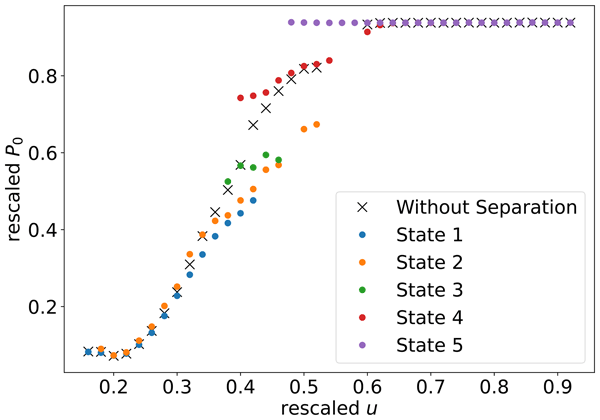
This study utilizes a method to analyze power conversion dynamics across different operational states, addressing non-stationarity with a correlation matrix algorithm. Findings reveal distinct dynamics for each state, emphasizing their impact on system behavior and offering a solution for hysteresis effects in power conversion dynamics.
Manuel Alejandro Zúñiga Inestroza, Paul Hulsman, Vlaho Petrović, and Martin Kühn
Wind Energ. Sci., 10, 2257–2278, https://doi.org/10.5194/wes-10-2257-2025, https://doi.org/10.5194/wes-10-2257-2025, 2025
Short summary
Short summary
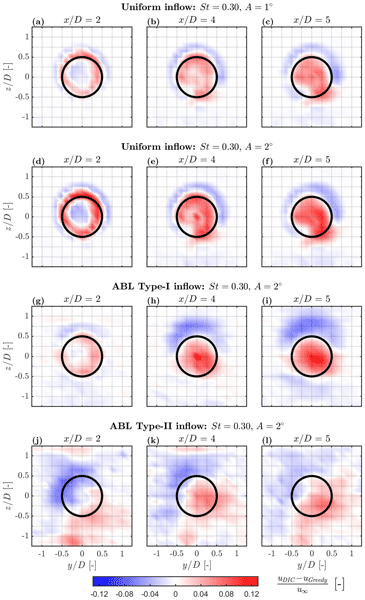
Wake effects cause power losses that degrade wind farm efficiency. This paper presents a wind tunnel investigation of dynamic induction control (DIC), a strategy to mitigate wake losses by improving turbine–flow interactions. WindScanner lidar measurements are used to explore the wake development of model turbines in response to DIC. Our results demonstrate consistent benefits and adaptability under realistic inflow conditions, highlighting DIC’s potential to increase wind farm power production.
Cristina Mulet-Benzo, Andrew Black, and Julia Gottschall
Wind Energ. Sci. Discuss., https://doi.org/10.5194/wes-2025-155, https://doi.org/10.5194/wes-2025-155, 2025
Revised manuscript not accepted
Short summary
Short summary
Wind turbine wake modeling requires accurate representation of atmospheric conditions, especially the atmospheric boundary layer height (ABLH). Scanning lidars provide a viable solution for ABLH determination. This study assesses ABLH data from coastal and offshore scanning lidars, comparing it to ABLH derived from models typically used for wake modelling. The results demonstrate a general overestimation of the models compared to the lidar, and a bias sensitivity to the diurnal cycle.
Hugo Rubio, Daniel Hatfield, Charlotte Bay Hasager, Martin Kühn, and Julia Gottschall
Atmos. Meas. Tech., 18, 4949–4968, https://doi.org/10.5194/amt-18-4949-2025, https://doi.org/10.5194/amt-18-4949-2025, 2025
Short summary
Short summary
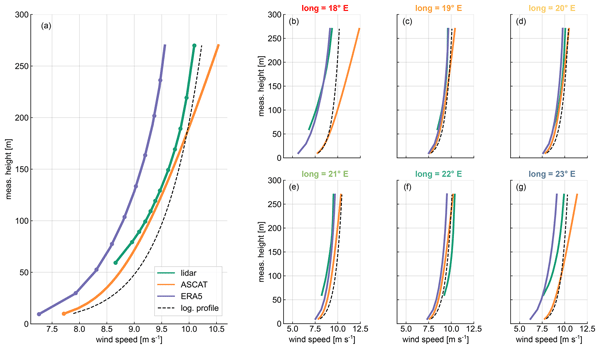
Due to the scarcity of offshore in situ observations, alternative data sources are essential for a reliable understanding of offshore winds. Therefore, this study delves into the world of satellite remote sensing (ASCAT) and numerical models (ERA5), exploring their capabilities and limitations in characterising offshore winds. This investigation evaluates these two datasets against measurements from a floating ship-based lidar, collected during a novel measurement campaign in the Baltic Sea.
Arjun Anantharaman, Jörge Schneemann, Frauke Theuer, Laurent Beaudet, Valentin Bernard, Paul Deglaire, and Martin Kühn
Wind Energ. Sci., 10, 1849–1867, https://doi.org/10.5194/wes-10-1849-2025, https://doi.org/10.5194/wes-10-1849-2025, 2025
Short summary
Short summary
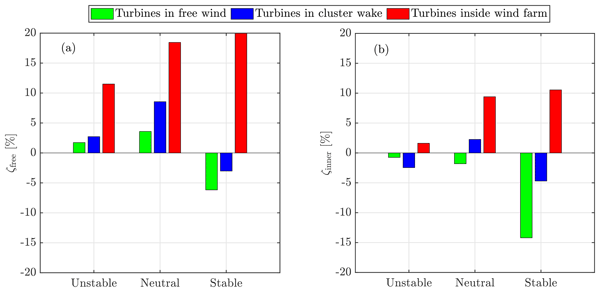
The offshore wind farm sector is expanding rapidly, and the interactions between wind farms are important to analyse for both existing and planned wind farms. We developed a new methodology to quantify how much the reductions in wind speed behind a farm can affect the loads on turbines which are tens of kilometres downstream. We find a 2.5 % increase in the turbine loads and discuss how further measurements could add to the design standards of future wind farms.
Bjarke T. E. Olsen, Andrea N. Hahmann, Nicolas G. Alonso-de-Linaje, Mark Žagar, and Martin Dörenkämper
Geosci. Model Dev., 18, 4499–4533, https://doi.org/10.5194/gmd-18-4499-2025, https://doi.org/10.5194/gmd-18-4499-2025, 2025
Short summary
Short summary
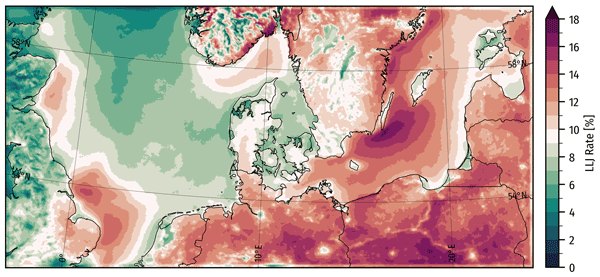
Low-level jets (LLJs) are strong winds in the lower atmosphere that are important for wind energy as turbines get taller. This study compares a weather model (WRF) with real data across five North and Baltic Sea sites. Adjusting the model improved accuracy over the widely used ERA5. In key offshore regions, LLJs occur 10–15 % of the time and significantly boost wind power, especially in spring and summer, contributing up to 30 % of total capacity in some areas.
Daniel Ribnitzky, Vlaho Petrović, and Martin Kühn
Wind Energ. Sci., 10, 1329–1349, https://doi.org/10.5194/wes-10-1329-2025, https://doi.org/10.5194/wes-10-1329-2025, 2025
Short summary
Short summary
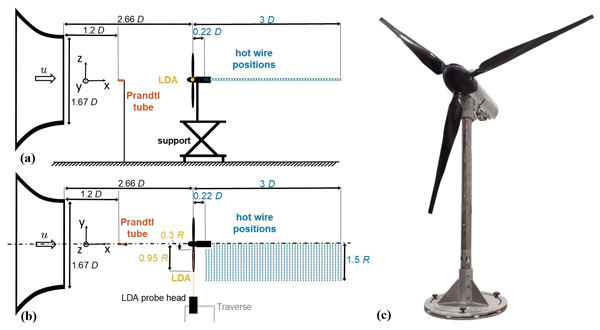
In this paper, the Hybrid-Lambda Rotor is scaled to wind tunnel size and validated in wind tunnel experiments. The objectives are to derive a scaling methodology, to investigate the influence of the steep gradients of axial induction along the blade span, and to characterize the near wake. The study reveals complex three-dimensional flow patterns for blade designs with non-uniform loading, and it can offer new inspirations when solving other scaling problems for complex wind turbine systems.
Alexander Mönnig, Ansgar Hahn, Astrid Lampert, and Ulrich Römer
Wind Energ. Sci. Discuss., https://doi.org/10.5194/wes-2025-112, https://doi.org/10.5194/wes-2025-112, 2025
Revised manuscript not accepted
Short summary
Short summary
To enable efficient load estimation in wind farms, e.g. to assess Remaining Useful Life, we investigated the feasibility of using surrogate models based on open-source turbine models. In a case study, we adapted such a model to match turbines from a real German onshore wind farm, ran aeroelastic simulations, and trained surrogate models to reconstruct loads observed in 5 years of SCADA data. Comparing predicted and measured values showed promising accuracy, especially for blade bending moments.
Daniela Moreno, Jan Friedrich, Matthias Wächter, Jörg Schwarte, and Joachim Peinke
Wind Energ. Sci., 10, 347–360, https://doi.org/10.5194/wes-10-347-2025, https://doi.org/10.5194/wes-10-347-2025, 2025
Short summary
Short summary
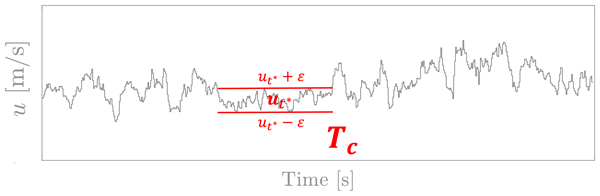
Unexpected load events measured on operating wind turbines are not accurately predicted by numerical simulations. We introduce the periods of constant wind speed as a possible cause of such events. We measure and characterize their statistics from atmospheric data. Further comparisons to standard modelled data and experimental turbulence data suggest that such events are not intrinsic to small-scale turbulence and are not accurately described by current standard wind models.
Farkhondeh (Hanie) Rouholahnejad and Julia Gottschall
Wind Energ. Sci., 10, 143–159, https://doi.org/10.5194/wes-10-143-2025, https://doi.org/10.5194/wes-10-143-2025, 2025
Short summary
Short summary
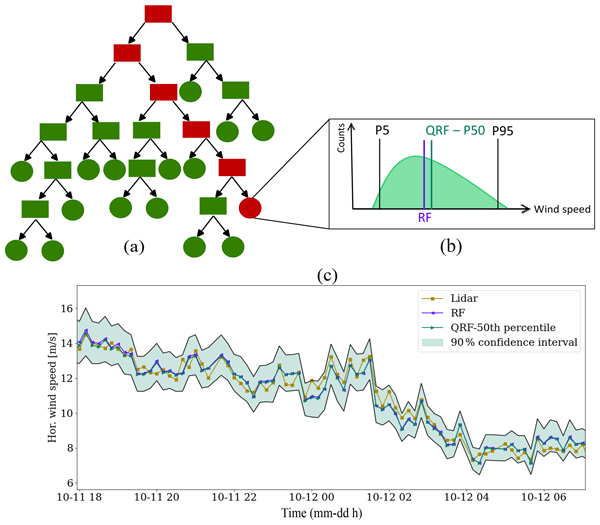
In wind energy, precise wind speed prediction at hub height is vital. Our study in the Dutch North Sea reveals that the on-site-trained random forest model outperforms the global reanalysis data, ERA5, in accuracy and precision. Trained within a 200 km range, the model effectively extends the wind speed vertically but experiences bias. It also outperforms ERA5 corrected with measurements in capturing wind speed variations and fine wind patterns, highlighting its potential for site assessment.
Hassnae Erraji, Philipp Franke, Astrid Lampert, Tobias Schuldt, Ralf Tillmann, Andreas Wahner, and Anne Caroline Lange
Atmos. Chem. Phys., 24, 13913–13934, https://doi.org/10.5194/acp-24-13913-2024, https://doi.org/10.5194/acp-24-13913-2024, 2024
Short summary
Short summary
Four-dimensional variational data assimilation allows for the simultaneous optimisation of initial values and emission rates by using trace-gas profiles from drone observations in a regional air quality model. Assimilated profiles positively impact the representation of air pollutants in the model by improving their vertical distribution and ground-level concentrations. This case study highlights the potential of drone data to enhance air quality analyses including local emission evaluation.
Frauke Theuer, Janna Kristina Seifert, Jörge Schneemann, and Martin Kühn
Wind Energ. Sci. Discuss., https://doi.org/10.5194/wes-2024-141, https://doi.org/10.5194/wes-2024-141, 2024
Preprint under review for WES
Short summary
Short summary
To be useful for end-users the forecast horizon of lidar-based minute-scale forecasts needs to be extended to at least 15 minutes. In this work, we adapt a lidar-based forecasting methodology to predict wind speed and power with horizons of up to 30 minutes. We found that the skill of the lidar-based approach highly depends on atmospheric conditions and the forecast characteristics. It was able to outperform persistence up to a 16 minute forecast horizon during unstable conditions.
Sonja Steinbrück, Thorben Eilers, Lukas Vollmer, Kerstin Avila, and Gerald Steinfeld
Wind Energ. Sci. Discuss., https://doi.org/10.5194/wes-2024-146, https://doi.org/10.5194/wes-2024-146, 2024
Preprint withdrawn
Short summary
Short summary
This paper introduces an enhanced coupling between the LES code PALM and the aeroelastic code FAST, enabling detailed turbine output in temporally and spatially heterogeneous atmospheric flows while maintaining computational efficiency. A wind speed correction is added to reduce errors from force smearing on the numerical grid. Results were evaluated through comparisons between different model setups and turbine measurements, including assessments in a two-turbine wake situation.
Martin Georg Jonietz Alvarez, Warren Watson, and Julia Gottschall
Wind Energ. Sci., 9, 2217–2233, https://doi.org/10.5194/wes-9-2217-2024, https://doi.org/10.5194/wes-9-2217-2024, 2024
Short summary
Short summary
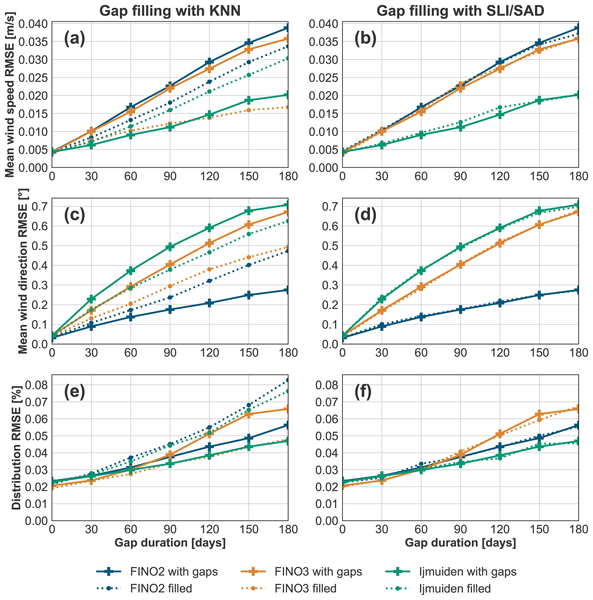
Offshore wind measurements are often affected by gaps. We investigated how these gaps affect wind resource assessments and whether filling them reduces their effect. We find that the effect of gaps on the estimated long-term wind resource is lower than expected and that data gap filling does not significantly change the outcome. These results indicate a need to reduce current wind data availability requirements for offshore measurement campaigns.
Astrid Lampert, Rudolf Hankers, Thomas Feuerle, Thomas Rausch, Matthias Cremer, Maik Angermann, Mark Bitter, Jonas Füllgraf, Helmut Schulz, Ulf Bestmann, and Konrad B. Bärfuss
Earth Syst. Sci. Data, 16, 4777–4792, https://doi.org/10.5194/essd-16-4777-2024, https://doi.org/10.5194/essd-16-4777-2024, 2024
Short summary
Short summary
We conducted flights above the North Sea and investigated changes in the wind field. The research aircraft measured wind speed, wind direction, temperature, humidity and sea surface at high resolution. Wind parks reduce the wind speed, and the data help to determine how long it takes for the wind speed to recover. The coast also plays an important role, and the wind speed varies with distance from the coast. The results help in wind park planning and better estimating the energy yield.
Lukas Vollmer, Balthazar Arnoldus Maria Sengers, and Martin Dörenkämper
Wind Energ. Sci., 9, 1689–1693, https://doi.org/10.5194/wes-9-1689-2024, https://doi.org/10.5194/wes-9-1689-2024, 2024
Short summary
Short summary
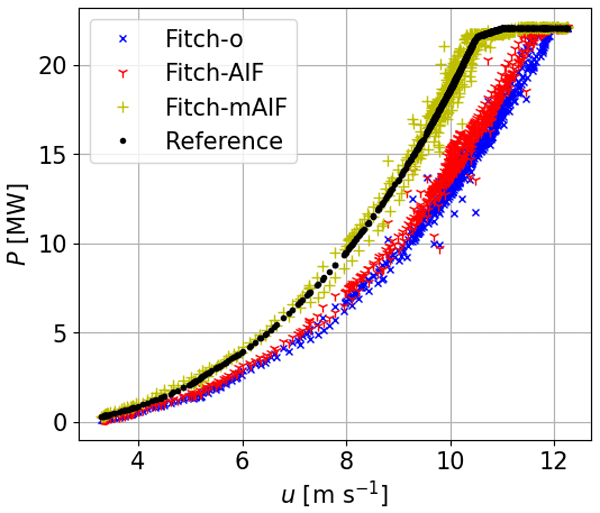
This study proposes a modification to a well-established wind farm parameterization used in mesoscale models. The wind speed at the location of the turbine, which is used to calculate power and thrust, is corrected to approximate the free wind speed. Results show that the modified parameterization produces more accurate estimates of the turbine’s power curve.
Anantha Padmanabhan Kidambi Sekar, Paul Hulsman, Marijn Floris van Dooren, and Martin Kühn
Wind Energ. Sci., 9, 1483–1505, https://doi.org/10.5194/wes-9-1483-2024, https://doi.org/10.5194/wes-9-1483-2024, 2024
Short summary
Short summary
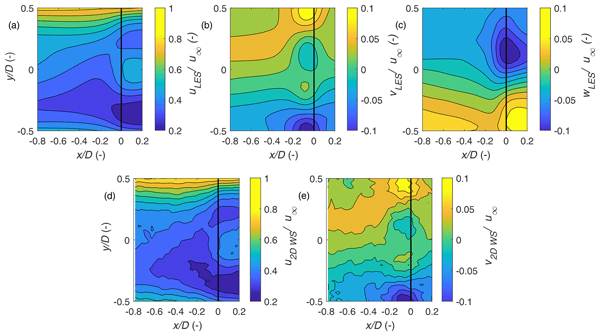
We present induction zone measurements conducted with two synchronised lidars at a two-turbine wind farm. The induction zone flow was characterised for free, fully waked and partially waked flows. Due to the short turbine spacing, the lidars captured the interaction of the atmospheric boundary layer, induction zone and wake, evidenced by induction asymmetry and induction zone–wake interactions. The measurements will aid the process of further improving existing inflow and wake models.
Marta Bertelè, Paul J. Meyer, Carlo R. Sucameli, Johannes Fricke, Anna Wegner, Julia Gottschall, and Carlo L. Bottasso
Wind Energ. Sci., 9, 1419–1429, https://doi.org/10.5194/wes-9-1419-2024, https://doi.org/10.5194/wes-9-1419-2024, 2024
Short summary
Short summary
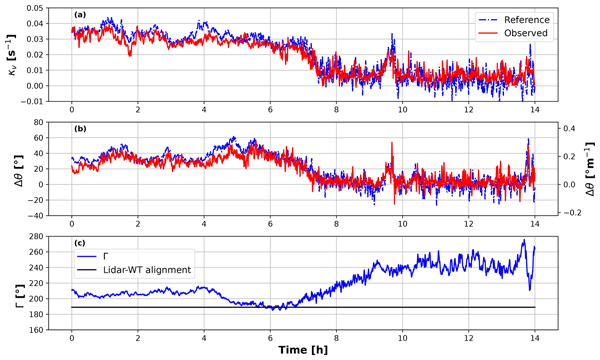
A neural observer is used to estimate shear and veer from the operational data of a large wind turbine equipped with blade load sensors. Comparison with independent measurements from a nearby met mast and profiling lidar demonstrate the ability of the
rotor as a sensorconcept to provide high-quality estimates of these inflow quantities based simply on already available standard operational data.
Daniel Ribnitzky, Frederik Berger, Vlaho Petrović, and Martin Kühn
Wind Energ. Sci., 9, 359–383, https://doi.org/10.5194/wes-9-359-2024, https://doi.org/10.5194/wes-9-359-2024, 2024
Short summary
Short summary
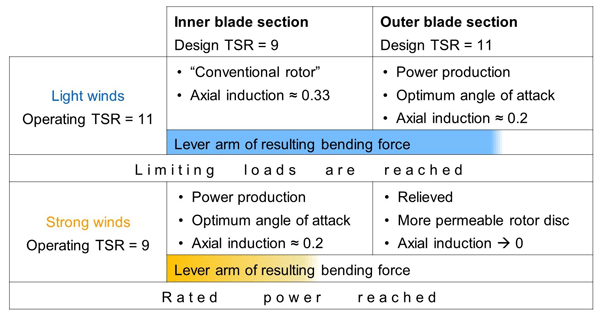
This paper provides an innovative blade design methodology for offshore wind turbines with very large rotors compared to their rated power, which are tailored for an increased power feed-in at low wind speeds. Rather than designing the blade for a single optimized operational point, we include the application of peak shaving in the design process and introduce a design for two tip speed ratios. We describe how enlargement of the rotor diameter can be realized to improve the value of wind power.
Leo Höning, Laura J. Lukassen, Bernhard Stoevesandt, and Iván Herráez
Wind Energ. Sci., 9, 203–218, https://doi.org/10.5194/wes-9-203-2024, https://doi.org/10.5194/wes-9-203-2024, 2024
Short summary
Short summary
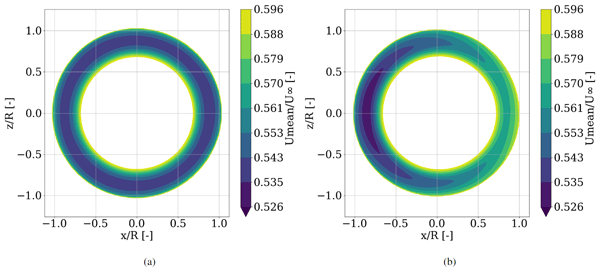
This study analyzes the impact of wind turbine rotor blade flexibility on the aerodynamic loading of the blades and the consequential wind characteristics in the near wake of the turbine. It is shown that gravitation leads to rotational periodic fluctuations of blade loading, which directly impacts the trajectory of the blade tip vortex at different rotor blade positions while also resulting in a non-uniform wind velocity deficit in the wake of the wind turbine.
Andreas Rott, Leo Höning, Paul Hulsman, Laura J. Lukassen, Christof Moldenhauer, and Martin Kühn
Wind Energ. Sci., 8, 1755–1770, https://doi.org/10.5194/wes-8-1755-2023, https://doi.org/10.5194/wes-8-1755-2023, 2023
Short summary
Short summary
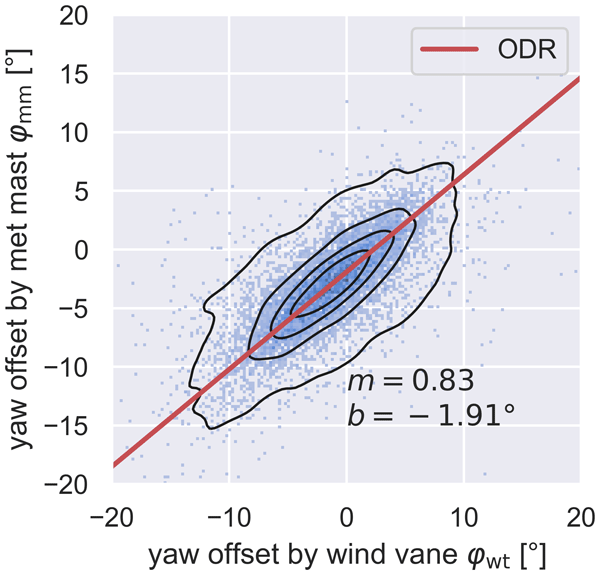
This study examines wind vane measurements of commercial wind turbines and their impact on yaw control. The authors discovered that rotor interference can cause an overestimation of wind vane measurements, leading to overcorrection of the yaw controller. A correction function that improves the yaw behaviour is presented and validated in free-field experiments on a commercial wind turbine. This work provides new insights into wind direction measurements and suggests ways to optimize yaw control.
Barbara Harm-Altstädter, Konrad Bärfuss, Lutz Bretschneider, Martin Schön, Jens Bange, Ralf Käthner, Radovan Krejci, Mauro Mazzola, Kihong Park, Falk Pätzold, Alexander Peuker, Rita Traversi, Birgit Wehner, and Astrid Lampert
Aerosol Research, 1, 39–64, https://doi.org/10.5194/ar-1-39-2023, https://doi.org/10.5194/ar-1-39-2023, 2023
Short summary
Short summary
We present observations of aerosol particles and meteorological parameters in the horizontal and vertical distribution measured with uncrewed aerial systems in the Arctic. The field campaign was carried out during the snow melting season, when ultrafine aerosol particles (UFPs) with a size between 3 and 12 nm occurred frequently. A high variability of the measured UFPs was identified in the spatial scale, which was strongly associated with different atmospheric boundary layer properties.
Balthazar Arnoldus Maria Sengers, Andreas Rott, Eric Simley, Michael Sinner, Gerald Steinfeld, and Martin Kühn
Wind Energ. Sci., 8, 1693–1710, https://doi.org/10.5194/wes-8-1693-2023, https://doi.org/10.5194/wes-8-1693-2023, 2023
Short summary
Short summary
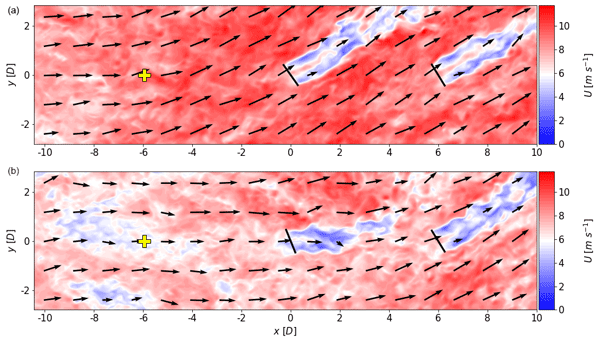
Unexpected wind direction changes are undesirable, especially when performing wake steering. This study explores whether the yaw controller can benefit from accessing wind direction information before a change reaches the turbine. Results from two models with different fidelities demonstrate that wake steering can indeed benefit from preview information.
Paul Hulsman, Luis A. Martínez-Tossas, Nicholas Hamilton, and Martin Kühn
Wind Energ. Sci. Discuss., https://doi.org/10.5194/wes-2023-112, https://doi.org/10.5194/wes-2023-112, 2023
Manuscript not accepted for further review
Short summary
Short summary
This paper presents an approach to analytically estimate the wake deficit within the near-wake region by modifying the curled wake model. This is done by incorporating a new initial condition at the rotor using an azimuth-dependent Gaussian profile, an adjusted turbulence model in the near-wake region and the far-wake region and an iterative process to determine the velocity field, while considering the relation of the pressure gradient and accounting the conservation of mass.
Konrad B. Bärfuss, Holger Schmithüsen, and Astrid Lampert
Atmos. Meas. Tech., 16, 3739–3765, https://doi.org/10.5194/amt-16-3739-2023, https://doi.org/10.5194/amt-16-3739-2023, 2023
Short summary
Short summary
The first atmospheric soundings with an electrically powered small uncrewed aircraft system (UAS) up to an altitude of 10 km are presented and assessed for quality, revealing the potential to augment atmospheric observations and fill observation gaps for numerical weather prediction. This is significant because of the need for high-resolution meteorological data, in particular in remote areas with limited in situ measurements, and for reference data for satellite measurement calibration.
Markus Sommerfeld, Martin Dörenkämper, Jochem De Schutter, and Curran Crawford
Wind Energ. Sci., 8, 1153–1178, https://doi.org/10.5194/wes-8-1153-2023, https://doi.org/10.5194/wes-8-1153-2023, 2023
Short summary
Short summary
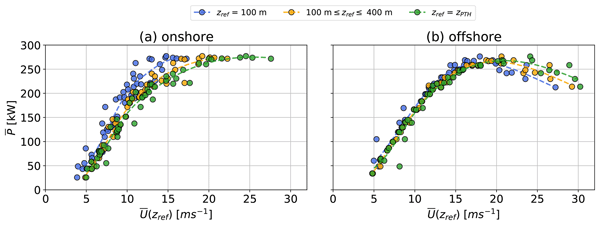
This study investigates the performance of pumping-mode ground-generation airborne wind energy systems by determining power-optimal flight trajectories based on realistic, k-means clustered, vertical wind velocity profiles. These profiles, derived from mesoscale weather simulations at an offshore and an onshore site in Europe, are incorporated into an optimal control model that maximizes average cycle power by optimizing the kite's trajectory.
Moritz Gräfe, Vasilis Pettas, Julia Gottschall, and Po Wen Cheng
Wind Energ. Sci., 8, 925–946, https://doi.org/10.5194/wes-8-925-2023, https://doi.org/10.5194/wes-8-925-2023, 2023
Short summary
Short summary
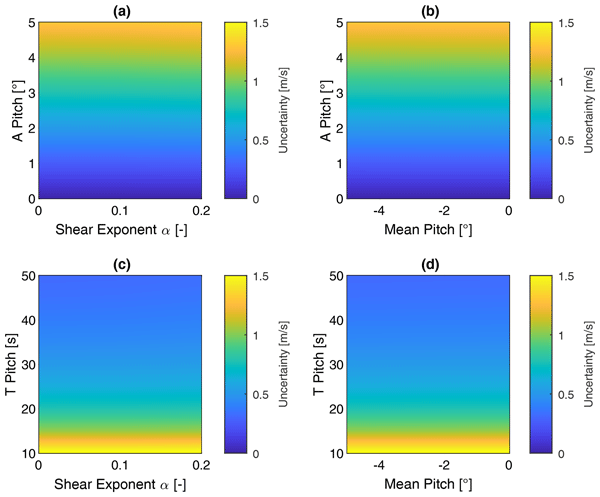
Inflow wind field measurements from nacelle-based lidar systems offer great potential for different applications including turbine control, load validation and power performance measurements. On floating wind turbines nacelle-based lidar measurements are affected by the dynamic behavior of the floating foundations. Therefore, the effects on lidar wind speed measurements induced by floater dynamics must be well understood. A new model for quantification of these effects is introduced in our work.
Balthazar Arnoldus Maria Sengers, Gerald Steinfeld, Paul Hulsman, and Martin Kühn
Wind Energ. Sci., 8, 747–770, https://doi.org/10.5194/wes-8-747-2023, https://doi.org/10.5194/wes-8-747-2023, 2023
Short summary
Short summary
The optimal misalignment angles for wake steering are determined using wake models. Although mostly analytical, data-driven models have recently shown promising results. This study validates a previously proposed data-driven model with results from a field experiment using lidar measurements. In a comparison with a state-of-the-art analytical model, it shows systematically more accurate estimates of the available power. Also when using only commonly available input data, it gives good results.
Anna von Brandis, Gabriele Centurelli, Jonas Schmidt, Lukas Vollmer, Bughsin' Djath, and Martin Dörenkämper
Wind Energ. Sci., 8, 589–606, https://doi.org/10.5194/wes-8-589-2023, https://doi.org/10.5194/wes-8-589-2023, 2023
Short summary
Short summary
We propose that considering large-scale wind direction changes in the computation of wind farm cluster wakes is of high relevance. Consequently, we present a new solution for engineering modeling tools that accounts for the effect of such changes in the propagation of wakes. The new model is evaluated with satellite data in the German Bight area. It has the potential to reduce uncertainty in applications such as site assessment and short-term power forecasting.
Abdul Haseeb Syed, Jakob Mann, Andreas Platis, and Jens Bange
Wind Energ. Sci., 8, 125–139, https://doi.org/10.5194/wes-8-125-2023, https://doi.org/10.5194/wes-8-125-2023, 2023
Short summary
Short summary
Wind turbines extract energy from the incoming wind flow, which needs to be recovered. In very large offshore wind farms, the energy is recovered mostly from above the wind farm in a process called entrainment. In this study, we analyzed the effect of atmospheric stability on the entrainment process in large offshore wind farms using measurements recorded by a research aircraft. This is the first time that in situ measurements are used to study the energy recovery process above wind farms.
Hugo Rubio, Martin Kühn, and Julia Gottschall
Wind Energ. Sci., 7, 2433–2455, https://doi.org/10.5194/wes-7-2433-2022, https://doi.org/10.5194/wes-7-2433-2022, 2022
Short summary
Short summary
A proper development of offshore wind farms requires the accurate description of atmospheric phenomena like low-level jets. In this study, we evaluate the capabilities and limitations of numerical models to characterize the main jets' properties in the southern Baltic Sea. For this, a comparison against ship-mounted lidar measurements from the NEWA Ferry Lidar Experiment has been implemented, allowing the investigation of the model's capabilities under different temporal and spatial constraints.
Frauke Theuer, Andreas Rott, Jörge Schneemann, Lueder von Bremen, and Martin Kühn
Wind Energ. Sci., 7, 2099–2116, https://doi.org/10.5194/wes-7-2099-2022, https://doi.org/10.5194/wes-7-2099-2022, 2022
Short summary
Short summary
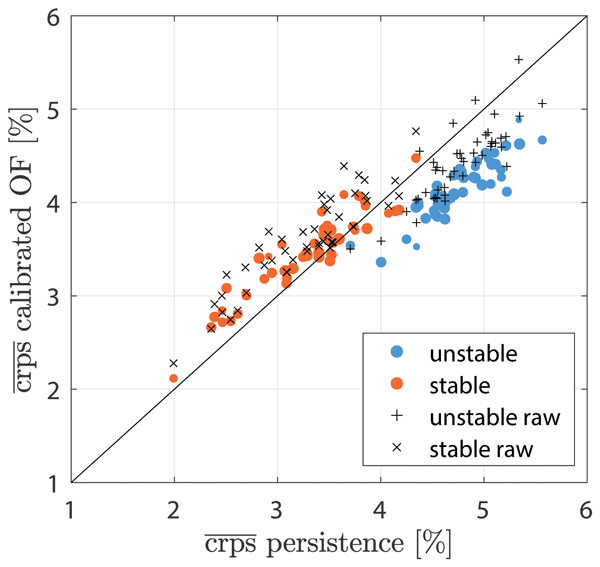
Remote-sensing-based approaches have shown potential for minute-scale forecasting and need to be further developed towards an operational use. In this work we extend a lidar-based forecast to an observer-based probabilistic power forecast by combining it with a SCADA-based method. We further aggregate individual turbine power using a copula approach. We found that the observer-based forecast benefits from combining lidar and SCADA data and can outperform persistence for unstable stratification.
Markus Sommerfeld, Martin Dörenkämper, Jochem De Schutter, and Curran Crawford
Wind Energ. Sci., 7, 1847–1868, https://doi.org/10.5194/wes-7-1847-2022, https://doi.org/10.5194/wes-7-1847-2022, 2022
Short summary
Short summary
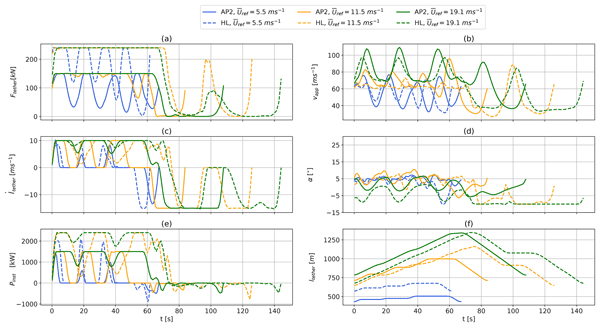
This research explores the ground-generation airborne wind energy system (AWES) design space and investigates scaling effects by varying design parameters such as aircraft wing size, aerodynamic efficiency and mass. Therefore, representative simulated onshore and offshore wind data are implemented into an AWES trajectory optimization model. We estimate optimal annual energy production and capacity factors as well as a minimal operational lift-to-weight ratio.
Tuhfe Göçmen, Filippo Campagnolo, Thomas Duc, Irene Eguinoa, Søren Juhl Andersen, Vlaho Petrović, Lejla Imširović, Robert Braunbehrens, Jaime Liew, Mads Baungaard, Maarten Paul van der Laan, Guowei Qian, Maria Aparicio-Sanchez, Rubén González-Lope, Vinit V. Dighe, Marcus Becker, Maarten J. van den Broek, Jan-Willem van Wingerden, Adam Stock, Matthew Cole, Renzo Ruisi, Ervin Bossanyi, Niklas Requate, Simon Strnad, Jonas Schmidt, Lukas Vollmer, Ishaan Sood, and Johan Meyers
Wind Energ. Sci., 7, 1791–1825, https://doi.org/10.5194/wes-7-1791-2022, https://doi.org/10.5194/wes-7-1791-2022, 2022
Short summary
Short summary
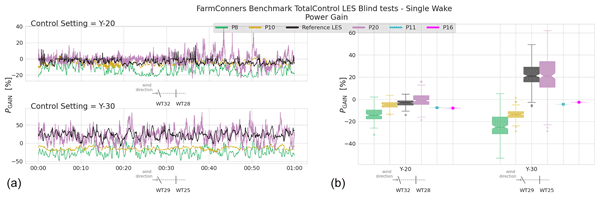
The FarmConners benchmark is the first of its kind to bring a wide variety of data sets, control settings, and model complexities for the (initial) assessment of wind farm flow control benefits. Here we present the first part of the benchmark results for three blind tests with large-scale rotors and 11 participating models in total, via direct power comparisons at the turbines as well as the observed or estimated power gain at the wind farm level under wake steering control strategy.
Frederik Berger, Lars Neuhaus, David Onnen, Michael Hölling, Gerard Schepers, and Martin Kühn
Wind Energ. Sci., 7, 1827–1846, https://doi.org/10.5194/wes-7-1827-2022, https://doi.org/10.5194/wes-7-1827-2022, 2022
Short summary
Short summary
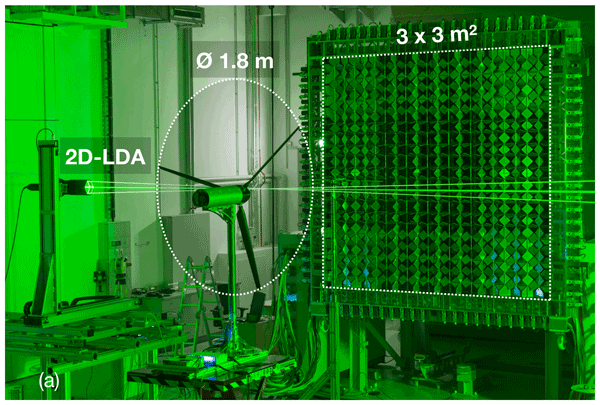
We proof the dynamic inflow effect due to gusts in wind tunnel experiments with MoWiTO 1.8 in the large wind tunnel of ForWind – University of Oldenburg, where we created coherent gusts with an active grid. The effect is isolated in loads and rotor flow by comparison of a quasi-steady and a dynamic case. The observed effect is not caught by common dynamic inflow engineering models. An improvement to the Øye dynamic inflow model is proposed, matching experiment and corresponding FVWM simulations.
Balthazar Arnoldus Maria Sengers, Matthias Zech, Pim Jacobs, Gerald Steinfeld, and Martin Kühn
Wind Energ. Sci., 7, 1455–1470, https://doi.org/10.5194/wes-7-1455-2022, https://doi.org/10.5194/wes-7-1455-2022, 2022
Short summary
Short summary
Wake steering aims to redirect the wake away from a downstream turbine. This study explores the potential of a data-driven surrogate model whose equations can be interpreted physically. It estimates wake characteristics from measurable input variables by utilizing a simple linear model. The model shows encouraging results in estimating available power in the far wake, with significant improvements over currently used analytical models in conditions where wake steering is deemed most effective.
Beatriz Cañadillas, Maximilian Beckenbauer, Juan J. Trujillo, Martin Dörenkämper, Richard Foreman, Thomas Neumann, and Astrid Lampert
Wind Energ. Sci., 7, 1241–1262, https://doi.org/10.5194/wes-7-1241-2022, https://doi.org/10.5194/wes-7-1241-2022, 2022
Short summary
Short summary
Scanning lidar measurements combined with meteorological sensors and mesoscale simulations reveal the strong directional and stability dependence of the wake strength in the direct vicinity of wind farm clusters.
Wei Chen, Joanna Staneva, Sebastian Grayek, Johannes Schulz-Stellenfleth, and Jens Greinert
Nat. Hazards Earth Syst. Sci., 22, 1683–1698, https://doi.org/10.5194/nhess-22-1683-2022, https://doi.org/10.5194/nhess-22-1683-2022, 2022
Short summary
Short summary
This study links the occurrence and persistence of density stratification in the southern North Sea to the increased number of extreme marine heat waves. The study further identified the role of the cold spells at the early stage of a year to the intensity of thermal stratification in summer. In a broader context, the research will have fundamental significance for further discussion of the secondary effects of heat wave events, such as in ecosystems, fisheries, and sediment dynamics.
Matteo Bramati, Martin Schön, Daniel Schulz, Vasileios Savvakis, Jens Bange, and Andreas Platis
Atmos. Meas. Tech. Discuss., https://doi.org/10.5194/amt-2022-113, https://doi.org/10.5194/amt-2022-113, 2022
Revised manuscript not accepted
Short summary
Short summary
A multi-copter system has been calibrated to obtain wind vector measurements from its attitude. The calibration was performed using only the data from the autopilot and a particular set of flights. This procedure is easily repeatable for other rotary-wing systems, regardless of the size and weight. The multi-copter can sample the wind vector at 0.1 Hz frequency with a standard deviation of 0.7 ms-1 and 8°. This system will be used in future measurement campaigns inside off-shore wind farms.
Marijn Floris van Dooren, Anantha Padmanabhan Kidambi Sekar, Lars Neuhaus, Torben Mikkelsen, Michael Hölling, and Martin Kühn
Atmos. Meas. Tech., 15, 1355–1372, https://doi.org/10.5194/amt-15-1355-2022, https://doi.org/10.5194/amt-15-1355-2022, 2022
Short summary
Short summary
The remote sensing technique lidar is widely used for wind speed measurements for both industrial and academic applications. Lidars can measure wind statistics accurately but cannot fully capture turbulent fluctuations in the high-frequency range, since they are partly filtered out. This paper therefore investigates the turbulence spectrum measured by a continuous-wave lidar and analytically models the lidar's measured spectrum with a Lorentzian filter function and a white noise term.
Tobias Klaas-Witt and Stefan Emeis
Wind Energ. Sci., 7, 413–431, https://doi.org/10.5194/wes-7-413-2022, https://doi.org/10.5194/wes-7-413-2022, 2022
Short summary
Short summary
Light detection and ranging (lidar) has become a valuable technology to assess the wind resource at hub height of modern wind turbines. However, because of their measurement principle, common lidars suffer from errors at orographically complex, i.e. hilly or mountainous, sites. This study analyses the impact of the five main influencing factors in a non-dimensional, model-based parameter study.
Sonja Krüger, Gerald Steinfeld, Martin Kraft, and Laura J. Lukassen
Wind Energ. Sci., 7, 323–344, https://doi.org/10.5194/wes-7-323-2022, https://doi.org/10.5194/wes-7-323-2022, 2022
Short summary
Short summary
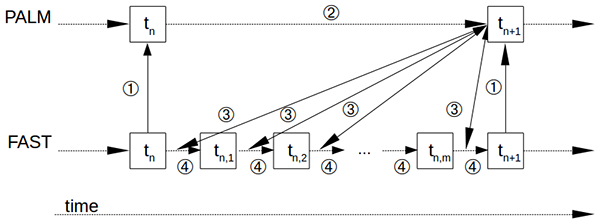
Detailed numerical simulations of turbines in atmospheric conditions are challenging with regard to their computational demand. We coupled an atmospheric flow model and a turbine model in order to deliver extensive details about the flow and the turbine response within reasonable computational time. A comparison to measurement data was performed and showed a very good agreement. The efficiency of the tool enables applications such as load calculation in wind farms or during low-level-jet events.
Andreas Rott, Jörge Schneemann, Frauke Theuer, Juan José Trujillo Quintero, and Martin Kühn
Wind Energ. Sci., 7, 283–297, https://doi.org/10.5194/wes-7-283-2022, https://doi.org/10.5194/wes-7-283-2022, 2022
Short summary
Short summary
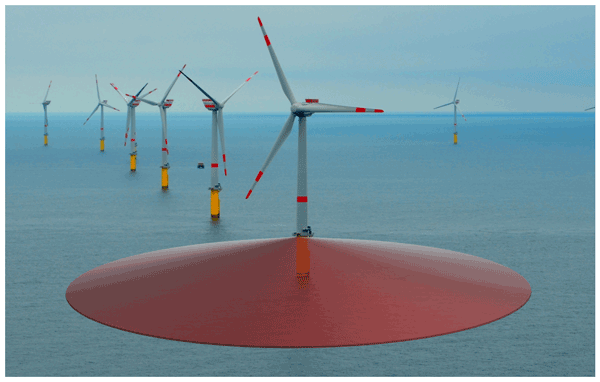
We present three methods that can determine the alignment of a lidar placed on the transition piece of an offshore wind turbine based on measurements with the instrument: a practical implementation of hard targeting for north alignment, a method called sea surface levelling to determine the levelling of the system from water surface measurements, and a model that can determine the dynamic levelling based on the operating status of the wind turbine.
Paul Hulsman, Martin Wosnik, Vlaho Petrović, Michael Hölling, and Martin Kühn
Wind Energ. Sci., 7, 237–257, https://doi.org/10.5194/wes-7-237-2022, https://doi.org/10.5194/wes-7-237-2022, 2022
Short summary
Short summary
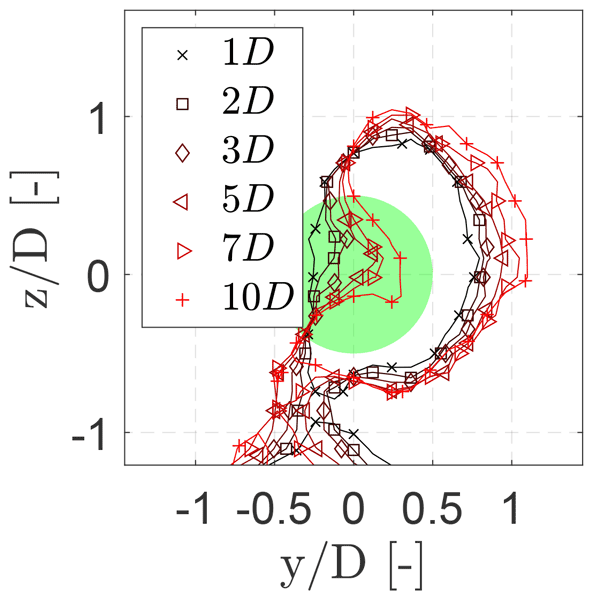
Due to the possibility of mapping the wake fast at multiple locations with the WindScanner, a thorough understanding of the development of the wake is acquired at different inflow conditions and operational conditions. The lidar velocity data and the energy dissipation rate compared favourably with hot-wire data from previous experiments, lending credibility to the measurement technique and methodology used here. This will aid the process to further improve existing wake models.

Ingrid Neunaber, Joachim Peinke, and Martin Obligado
Wind Energ. Sci., 7, 201–219, https://doi.org/10.5194/wes-7-201-2022, https://doi.org/10.5194/wes-7-201-2022, 2022
Short summary
Short summary
Wind turbines are often clustered within wind farms. A consequence is that some wind turbines may be exposed to the wakes of other turbines, which reduces their lifetime due to the wake turbulence. Knowledge of the wake is thus important, and we carried out wind tunnel experiments to investigate the wakes. We show how models that describe wakes of bluff bodies can help to improve the understanding of wind turbine wakes and wind turbine wake models, particularly by including a virtual origin.
Frederik Berger, David Onnen, Gerard Schepers, and Martin Kühn
Wind Energ. Sci., 6, 1341–1361, https://doi.org/10.5194/wes-6-1341-2021, https://doi.org/10.5194/wes-6-1341-2021, 2021
Short summary
Short summary
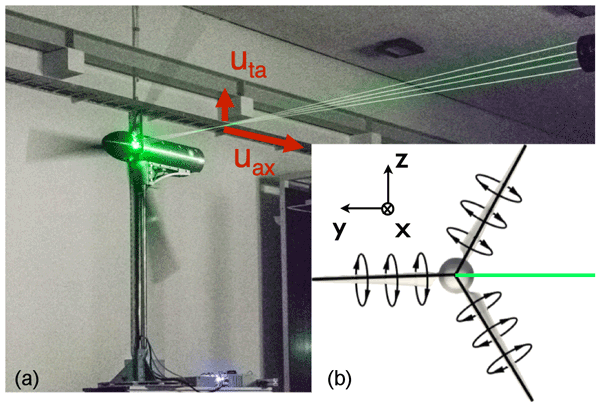
Dynamic inflow denotes the unsteady aerodynamic response to fast changes in rotor loading and leads to load overshoots. We performed a pitch step experiment with MoWiTO 1.8 in the large wind tunnel of ForWind – University of Oldenburg. We measured axial and tangential inductions with a recent method with a 2D-LDA system and performed load and wake measurements. These radius-resolved measurements allow for new insights into the dynamic inflow phenomenon.
Cited articles
Abkar, M., Sharifi, A., and Porté-Agel, F.: Wake flow in a wind farm during a diurnal cycle, J. Turbul., 17, 420–441, https://doi.org/10.1080/14685248.2015.1127379, 2016. a
Akhtar, N., Geyer, B., Rockel, B., Sommer, P. S., and Schrum, C.: Accelerating deployment of offshore wind energy alter wind climate and reduce future power generation potentials, Nature Sci. Rep., 11, 11826, https://doi.org/10.1038/s41598-021-91283-3, 2021. a
Akhtar, N., Geyer, B., and Schrum, C.: Impacts of accelerating deployment of offshore windfarms on near-surface climate, Nature Sci. Rep., 12, 18307, https://doi.org/10.1038/s41598-022-22868-9, 2022. a
Ali, K., Schultz, D. M., Revell, A., Stallard, T., and Ouro, P.: Assessment of five wind-farm parameterizations in the Weather Research and Forecasting Model: a case study of wind farms in the North Sea, Mon. Weather Rev., https://doi.org/10.1175/MWR-D-23-0006.1, 152, 9, 2333–2359, 2023. a
Anantharaman, A., Schneemann, J., Theuer, F., Beaudet, L., Bernard, V., Deglaire, P., and Kühn, M.: The impact of far-reaching offshore cluster wakes on wind turbine fatigue loads, Wind Energ. Sci., 10, 1849–1867, https://doi.org/10.5194/wes-10-1849-2025, 2025. a
Barekzai, M., Cañadillas, B., Emeis, S., Dörenkämper, M., and Lampert, A.: Mesoscale simulations of coastal boundary-layer transitions. Part 1: Low-level jets, Meteorol. Z., 33, 457–474, https://doi.org/10.1127/metz/2024/1195, 2025a. a, b
Barekzai, M., Cañadillas, B., Emeis, S., Dörenkämper, M., and Lampert, A.: Mesoscale simulations of coastal boundary-layer transitions. Part 2: Offshore wind speed development, Meteorol. Z., 33, 475–488, https://doi.org/10.1127/metz/2024/1196, 2025b. a
Bärfuss, K., Pätzold, F., Altstädter, B., Kathe, E., Nowak, S., Bretschneider, L., Bestmann, U., and Lampert, A.: New setup of the UAS ALADINA for measuring boundary layer properties, atmospheric particles and solar radiation, Atmosphere, 9, 28, https://doi.org/10.3390/atmos9010028, 2018. a
Bärfuss, K., Hankers, R., Bitter, M., Feuerle, T., Schulz, H., Rausch, T., Platis, A., Bange, J., and Lampert, A.: In-situ airborne measurements of atmospheric and sea surface parameters related to offshore wind parks in the German Bight, PANGAEA [data set], https://doi.org/10.1594/PANGAEA.902845, 2019. a, b, c
Bärfuss, K., Djath, B., Lampert, A., and Schulz-Stellenfleth, J.: Airborne LiDAR measurements of the sea surface properties in the German Bight, IEEE T. Geosci. Remote, https://doi.org/10.1109/TGRS.2020.3017861, 2020. a
Bärfuss, K., Schulz-Stellenfleth, J., and Lampert, A.: The impact of offshore wind farms on sea state demonstrated by airborne LiDAR measurements, J. Mar. Sci. Eng., 9, 644, https://doi.org/10.3390/jmse9060644, 2021. a
Bärfuss, K. B., Schmithüsen, H., and Lampert, A.: Drone-based meteorological observations up to the tropopause – a concept study, Atmos. Meas. Tech., 16, 3739–3765, https://doi.org/10.5194/amt-16-3739-2023, 2023. a
Bastankhah, M. and Porté-Agel, F.: A new analytical model for wind-turbine wakes, Renew. Energ., 70, 116–123, https://doi.org/10.1016/j.renene.2014.01.002, 2014. a
Bailey, H., Brookes, K. L., and Thompson, P. M.: Assessing environmental impacts of offshore wind farms: lessons learned and recommendations for the future, Aquatic Biosystems, 10, 1–13, 2014. a
Bleeg, J., Purcell, M., Ruisi, R., and Traiger, E.: Wind farm blockage and the consequences of neglecting its impact on energy production, Energies, 11, 1609, https://doi.org/10.3390/en11061609, 2018.
Bodini, N., Lunduist, J. K., and Moriarty, P.: Wind plants can impact long-term local atmospheric conditions, Sci. Rep.-UK, 11, 1–12, 2021. a
Broström, G.: On the influence of large wind farms on the upper ocean circulation, J. Marine Syst., 74, 585–591, https://doi.org/10.1016/j.jmarsys.2008.05.001, 2008. a
Cañadillas, B., Foreman, R., Barth, V., Siedersleben, S., Lampert, A., Platis, A., Djath, B., Schulz-Stellenfleth, J., Bange, J., Emeis, S., and Neumann, T.: Offshore wind farm wake recovery: airborne measurements and its representation in engineering models, Wind Energy, https://doi.org/10.1002/we.2484, 2020. a, b, c, d, e, f, g
Cañadillas, B., Beckenbauer, M., Trujillo, J. J., Dörenkämper, M., Foreman, R., Neumann, T., and Lampert, A.: Offshore wind farm cluster wakes as observed by long-range-scanning wind lidar measurements and mesoscale modeling, Wind Energ. Sci., 7, 1241–1262, https://doi.org/10.5194/wes-7-1241-2022, 2022. a, b, c
Cañadillas, B., Foreman, R., Steinfeld, G., and Robinson, N.: Cumulative interactions between the global blockage and wake effects as observed by an engineering model and large-eddy simulations, Energies, 16, 2949, https://doi.org/10.3390/en16072949, 2023b. a, b
Cayon, O., Watson, S., and Schmehl, R.: Kite as a sensor: wind and state estimation in tethered flying systems, Wind Energ. Sci., 10, 2161–2188, https://doi.org/10.5194/wes-10-2161-2025, 2025. a
Centurelli, G., Vollmer, L., Schmidt, J., Dörenkämper, M., Schröder, M., Lukassen, L. J., and Peinke, J.: Evaluating global blockage engineering parametrizations with LES, J. Phys. Conf. Ser., 1934, 012021, https://doi.org/10.1088/1742-6596/1934/1/012021, 2021. a
Christiansen, M. B. and Hasager, C. B.: Wake effects of large offshore wind farms identified from satellite SAR, Remote Sens. Environ., 98, 251–268, 2005. a
Christiansen, N., Daewel, U., and Schrum, C.: Tidal mitigation of offshore wind wake effects in coastal seas, Frontiers in Marine Science, 9, 1006647, https://doi.org/10.3389/fmars.2022.1006647, 2022. a, b
Corsmeier, U., Hankers, R., and Wieser, A.: Airborne turbulence measurements in the lower troposphere onboard the research aircraft Dornier 128-6, D-IBUF, Meteorol. Z., 10, 315–329, 2001. a
Daewel, U., Akhtar, N., Christiansen, N., and Schrum, C.: Offshore wind farms are projected to impact primary production and bottom water deoxygenation in the North Sea, Communications Earth and Environment, 3, 292, https://doi.org/10.1038/s43247-022-00625-0, 2022. a
Djath, B., Schulz-Stellenfleth, J., and Cañadillas, B.: Impact of atmospheric stability on X-band and C-band synthetic aperture radar imagery of offshore windpark wakes, J. Renew. Sustain. Ener., 10, 043301, https://doi.org/10.1063/1.5020437, 2018. a, b, c
Djath, B., Schulz-Stellenfleth, J., and Cañadillas, B.: Study of coastal effects relevant for offshore wind energy using spaceborne synthetic aperture radar (SAR), Remote Sens. 2022, 14, 1688. https://doi.org/10.3390/rs14071688, 2022. a, b, c
Dörenkämper, M., Witha, B., Steinfeld, G., Heinemann, D., and Kühn, M.: The impact of stable atmospheric boundary layers on wind-turbine wakes within offshore wind farms, J. Wind Eng. Ind. Aerod., 144, 146–153, https://doi.org/10.1016/j.jweia.2014.12.011, 2015. a, b
Drew, D. R., Cannon, D. J., Brayshaw, D. J., Barlow, J. F., and Coker, P. J.: The impact of future offshore wind farms on wind power generation in Great Britain, Resources, 4, 155–171, 2015. a
El-Asha, S., Zhan, L., and Lungo, G. V.: Quantification of power losses due to wind turbine wake interactions through SCADA meteorological and wind LiDAR data, Wind Energy, 20, 1823–1839, 2017.
Emeis, S.: A simple analytical wind park model considering atmospheric stability, Wind Energy, 13, 459–469, 2010. a
Emeis, S.: Analysis of some major limitations of analytical top-down wind farm models, Bound.-Lay. Meteorol., 187, 423–435, 2022. a
Emeis, S., Siedersleben, S., Lampert, A., Platis, A., Bange, J., Djath, B., Schulz-Stellenfleth, J., and Neumann, T.: Exploring the wakes of large offshore wind farms, J. Phys. Conf. Ser., 753, 092014, https://doi.org/10.1088/1742-6596/753/9/092014, 2016. a
FINO1: FINO1 – Research Platform in the North and Baltic Seas No. 1, https://www.fino1.de/en/ (last access: 14 February 2024), 2025. a
Finserås, E., Herrera Anchustegui, I., Cheynet, E., Gebhardt, C. G., and Reuder, J.: Gone with the wind? Wind farm-induced wakes and regulatory gaps, Mar. Policy, 159, 105897, https://doi.org/10.1016/j.marpol.2023.105897, 2024. a
Fitch, A. C., Olson, J. B., Lundquist, J. K., Dudhia, J., Gupta, A. K., Michalakes, J., and Barstad, I.: Local and mesoscale impacts of wind farms as parameterized in a mesoscale NWP model, Mon. Weather Rev., 140, 3017–3038, https://doi.org/10.1175/MWR-D-11-00352.1, 2012. a, b, c
Foreman, R. J., Cañadillas, B., and Robinson, N.: The atmospheric stability dependence of far wakes on the power output of downstream wind farms, Energies, 17, 488, https://doi.org/10.3390/en17020488, 2024. a
Foreman, R. J., Birzer, C., and Cañadillas, B.: Measuring and simulating wind farm wakes in the North Sea for use in assessing other regions, Energies, 18, 5538, https://doi.org/10.3390/en18205538, 2025. a
Garrat, J.: The Atmospheric Boundary Layer, Cambridge University Press, https://doi.org/10.1002/qj.49712051919, 1994. a
Gebraad, P. M. O., Churchfield, M. J., and Fleming, P. A.: Incorporating atmospheric stability effects into the FLORIS engineering model of wakes in wind farms, J. Phys. Conf. Ser., 753, 052004, https://doi.org/10.1088/1742-6596/753/5/052004, 2016. a
Hersbach, H., Stoffelen, A., and De Haan, S.: An improved C-band scatterometer ocean geophysical model function: CMOD5, J. Geophys. Res.-Oceans, 112, C3, https://doi.org/10.1029/2006JC003743, 2007. a
Ladenburg, J.: Visual impact assessment of offshore wind farms and prior experience, Appl. Energ., 86, 380–387, 2009. a
Lanzilao, L. and Meyers J.: A parametric large-eddy simulation study of wind-farm blockage and gravity waves in conventionally neutral boundary layers, J. Fluid Mech., 979, A54. https://doi.org/10.1017/jfm.2023.1088, 2024. a, b, c
Lampert, A., Bärfuss, K., Platis, A., Siedersleben, S., Djath, B., Cañadillas, B., Hunger, R., Hankers, R., Bitter, M., Feuerle, T., Schulz, H., Rausch, T., Angermann, M., Schwithal, A., Bange, J., Schulz-Stellenfleth, J., Neumann, T., and Emeis, S.: In situ airborne measurements of atmospheric and sea surface parameters related to offshore wind parks in the German Bight, Earth Syst. Sci. Data, 12, 935–946, https://doi.org/10.5194/essd-12-935-2020, 2020. a, b, c, d
Lampert, A., Hankers, R., Feuerle, T., Rausch, T., Cremer, M., Angermann, M., Bitter, M., Füllgraf, J., Schulz, H., Bestmann, U., and Bärfuss, K. B.: In situ airborne measurements of atmospheric parameters and airborne sea surface properties related to offshore wind parks in the German Bight during the project X-Wakes, Earth Syst. Sci. Data, 16, 4777–4792, https://doi.org/10.5194/essd-16-4777-2024, 2024. a, b, c, d
Lange, B., Larsen, S., Höjstrup, J., and Barthelmie, R.: Importance of thermal effects and sea surface roughness for offshore wind resource assessment, J. Wind Eng. Ind. Aerod., 92, 959–988, 2004. a
Larsén, X. G. and Fischereit, J.: A case study of wind farm effects using two wake parameterizations in the Weather Research and Forecasting (WRF) model (V3.7.1) in the presence of low-level jets, Geosci. Model Dev., 14, 3141–3158, https://doi.org/10.5194/gmd-14-3141-2021, 2021. a
Larsén, X. G., Fischereit, J., Hamzeloo, S., Bärfuss, K., and Lampert, A.: Investigation of wind farm impacts on surface waves using coupled numerical simulations, Renew. Energ., 237, 121671, https://doi.org/10.1016/j.renene.2024.121671, 2024. a
Lee, S., Churchfield, M. J., Moriarty, P. J., Jonkman, J., and Michalakes, J.: A numerical study of atmospheric and wake turbulence impacts on wind turbine fatigue loadings, J. Sol. Energy Eng., 135, 031001, https://doi.org/10.1115/1.4023319, 2013. a
Lenschow, D. H.: The Measurement of Air Velocity and Temperature Using the NCAR Buffalo Aircraft Measuring System; National Center for Atmospheric Research, Boulder, CO, NCARTN/EDD-74, 39 pp, https://doi.org/10.5065/D6C8277W, 1972.
Li, X. and Lehner, S.: Observation of TerraSAR-X for studies on offshore wind turbine wake in near and far fields, IEEE J. Sel. Top. Appl., 6, 3, 1757–1768, 2013.
Lian, Z., Liu, K., and Yang, T.: Potential influence of offshore wind farms on the marine stratification in the waters adjacent to China, J. Mar. .Sci. Eng., 10, 1872, https://doi.org/10.3390/jmse10121872, 2022. a
Lundquist, J., DuVivier, K. K., Kaffine, D., and Tomaszewski, J. M.: Costs and consequences of wind turbine wake effects arising from uncoordinated wind energy development, Nature Energy, 4, 26–34, 2019. a
Manzano-Agugliaro, F., Sanchez-Calero, M., Alcayde, A., San-Antonio-Gomez, C., Pereo-Moreno, A.-J., and Salmeron-Manzano, E.: Wind turbine offshore foundations and connections to grid, Inventions, 5, 8, https://doi.org/10.3390/inventions5010008, 2020.
Meijer, J., Steinfeld, G., Vollmer, L., and Dörenkämper, M.: The global blockage effect of a wind farm cluster – an LES study, J. Phys. Conf. Ser., 2767, 092093, https://doi.org/10.1088/1742-6596/2767/9/092093, 2024. a
Mora, E. B., Spelling, J., van der Weijde, A. H., Pavageau, E.-M.: The effects of mean wind speed uncertainty on project finance debt sizing for offshore wind farms, Appl. Energ., 252, 113419, https://doi.org/10.1016/j.apenergy.2019.113419, 2019. a
Nygaard, N. G. and Hansen, S. D.: Wake effects between two neighbouring wind farms, J. Phys. Conf. Ser., 753, 032020, https://doi.org/10.1088/1742-6596/753/3/032020, 2016.
Nygaard, N. G., Steen, S. T., Poulsen, L., and Pedersen, J. G.: Modelling cluster wakes and wind farm blockage, J. Phys. Conf. Ser., 1618, 062072, https://doi.org/10.1088/1742-6596/1618/6/062072, 2020. a
Olsen, A.-M., Øiestad, M., Berge, E., Køltzow, M.Ø, and Valkonen, T.: Evaluation of Marine Wind Profiles in the North Sea and Norwegian Sea based on measurements and satellite-derived wind products, Tellus A, 74, 1–16, https://doi.org/10.16993/tellusa.43, 2022. a
Ouro, P., Ghobrial, M., Ali, K., and Stallard, T.: Numerical modelling of offshore wind-farm cluster wakes, Renew. Sust. Energ. Rev., 115526, 215, https://doi.org/10.1016/j.rser.2025.115526, 2025. a
Pedersen, J. G., Svensson, E., Poulsen, L., and Nygaard, N. G.: Turbulence Optimized Park model with Gaussian wake profile, J. Phys. Conf. Ser., 2265, 022063, https://doi.org/10.1088/1742-6596/2265/2/022063, 2022. a
Pedersen, M. M., Meyer Forsting, A., van der Laan, P., Riva, R., Alcayaga Romàn, L. A., Criado Risco, J., Friis-Møller, M., Quick, J., Schøler Christiansen, J. P., Valotta Rodrigues, R., Olsen, B. T., and Réthoré, P.-E.: PyWake 2.5.0: An open-source wind farm simulation tool, DTU Wind, Technical University of Denmark, https://topfarm.pages.windenergy.dtu.dk/PyWake/notebooks/Publications.html (last access: 24 August 2026), 2023. a
Peña, A., Gryning, S.-E., and Floors, R.: Lidar observations of marine boundary-layer winds and heights: a preliminary study, Meteorol. Z., 24, 581–589, 2015. a
Pettas, V., Kretschmer, M., Clifton, A., and Cheng, P. W.: On the effects of inter-farm interactions at the offshore wind farm Alpha Ventus, Wind Energ. Sci., 6, 1455–1472, https://doi.org/10.5194/wes-6-1455-2021, 2021.
Paskyabi, M. B.: Offshore wind farm wake effect on stratification and coastal upwelling, Energy Proced., 80, 131–140, 2015.
Platis, A., Siedersleben, S., Bange, J., Lampert, A., Bärfuss, K., Hankers, R., Cañadillas, B., Foreman, R., Schulz-Stellenfleth, J., Djath, B., Neumann, T., and Emeis, S.: First in situ evidence of wakes in the far field behind offshore wind farms, Sci. Rep.-UK, https://doi.org/10.1038/s41598-018-20389-y, 2018. a, b, c, d
Platis, A., Bange, J., Bärfuss, K., Cañadillas, B., Hundhausen, M., Djath, B., Lampert, A., Schulz-Stellenfleth, J., Siedersleben, S., Neumann, T., and Emeis, S.: Long-range modifications of the wind field by offshore wind parks – results of the project WIPAFF, Meteorol. Z., https://doi.org/10.1127/metz/2020/1023, 2020. a, b, c, d, e, f
Platis, A., Hundhausen, M., Lampert, A., Emeis, S., and Bange, J.: The role of atmospheric stability and turbulence in offshore wind-farm wakes in the German Bight, Bound.-Lay. Meteorol., https://doi.org/10.1007/s10546-021-00668-4, 2021a. a, b, c, d
Platis, A., Hundhausen, M., Mauz, M., Siedersleben, S., Lampert, A., Bärfuss, K., Djath, B., Schulz-Stellenfleth, J., Cañadillas, B., Neumann, T., Emeis, S., and Bange, J.: Evaluation of a simple analytical model for offshore wind farm wake recovery by in situ data and weather research and forecasting simulations, Wind Energy, 24, 212–228, 2021b.
Ponce de León, S., Bettencourt, J. H., and Kjerstad, N.: Simulation of irregular waves in an offshore wind farm with a spectral wave model, Cont. Shelf Res., 31, 1541–1557, 2011.
Porchetta, S., Munoz-Esparza, D., Munters, W., van Beeck, J., and van Lipzig, N.: Impact of ocean waves on offshore wind farm power production, Renew. Energ., 180, 1179–1193, https://doi.org/10.1016/j.renene.2021.08.111, 2021. a
Porté-Agel, F., Bastankhah, M. and Shamsoddin, S.: Wind-turbine and wind-farm flows: a review, Bound.-Lay. Meteorol., 174, 1–59, https://doi.org/10.1007/s10546-019-00473-0, 2020. a, b
Pryor, S. C. and Barthelmie, R. J.: A global assessment of extreme wind speeds for wind energy applications, Nat. Energy, 6, 268–276, https://doi.org/10.1038/s41560-020-00773-7, 2021. a
Rausch, T., Bärfuss, K., Hankers, R., Bitter, M., Feuerle, T., Cremer, M., Angermann, M., Füllgraf, J., and Lampert, A.: In-situ airborne measurements of atmospheric and sea surface parameters related to offshore wind parks in the German Bight [dataset publication series], PANGAEA [data set], https://doi.org/10.1594/PANGAEA.955382, 2023a. a, b, c
Rausch, T., Cañadillas, B., and Lampert, A.: Coastal vertical wind lidar measurements of horizontal wind speed and wind direction from 40 to 500 m at Norderney island, German Bight, North Sea, Germany, PANGAEA [data set], https://doi.org/10.1594/PANGAEA.953770, 2023b. a
Rivier, S., Bennis, A.-C., Pinon, G., Magar, V., and Gross, M.: Parameterization of wind turbine impacts on hydrodynamics and sediment transport, Ocean Dynam., 66, 1285–1299, 2016.
Sanchez Gomez, M., Lundquist, J. K., Mirocha, J. D., and Arthur, R. S.: Investigating the physical mechanisms that modify wind plant blockage in stable boundary layers, Wind Energ. Sci., 8, 1049–1069, https://doi.org/10.5194/wes-8-1049-2023, 2023. a
Sathe, A., Mann, J., Barlas, T., Bierbooms, W. A. A. M., vaan Bussel, G. J. W.: Influence of atmospheric stability on wind turbine loads, Wind Energy, 16, 1013–1032, https://doi.org/10.1002/we.1528, 2013. a
Schmidt, J., Vollmer, L., Dörenkämper, M., and Stoevesandt, B.: FOXES: farm optimization and extended yield evaluation software, Journal of Open Source Software, 8, 5464, https://doi.org/10.21105/joss.05464, 2023. a, b
Schmitt, L., Bärfuss, K., Larsen, X. G., Fischereit, J., and Lampert, L.: Spatial variability of sea state in the German Bight and influence of offshore wind farms, Wind Energy, 29, e70101, https://doi.org/10.1002/we.70101, 2026. a, b, c, d
Schneemann, J., Rott, A., Dörenkämper, M., Steinfeld, G., and Kühn, M.: Cluster wakes impact on a far-distant offshore wind farm's power, Wind Energ. Sci., 5, 29–49, https://doi.org/10.5194/wes-5-29-2020, 2020. a, b
Schneemann, J., Theuer, F., Rott, A., Dörenkämper, M., and Kühn, M.: Offshore wind farm global blockage measured with scanning lidar, Wind Energ. Sci., 6, 521–538, https://doi.org/10.5194/wes-6-521-2021, 2021. a, b
Schneemann, J., Theuer, F., Rott, A., and Kühn, M.: Measurement of flow deflection effects around an offshore wind farm caused by global blockage, J. Phys. Conf. Ser., 3016, 012012, https://doi.org/10.1088/1742-6596/3016/1/012012, 2025. a
Schulz-Stellenfleth, J., Emeis, S., Dörenkämper, M., Bange, J., Cañadillas, B., Neumann, T., Schneemann, J., Weber, I., zum Berge, K., Platis, A., Djath, B., Gottschall, J., Vollmer, L., Rausch, T., Barekzai, M., Hammel, J., Steinfeld, G., and Lampert, A.: Coastal impact on offshore wind farms – a review focusing on the German Bight area, Meteorol. Z., 31, 289–315, 2022. a
Sengers, B. A. M., Vollmer, L., and Dörenkämper, M.: Multi-model approach for wind resource assessment, J. Phys. Conf. Ser., 2767, 092024, https://doi.org/10.1088/1742-6596/2767/9/092024, 2024. a
Shaw, W. J., Berg, L. K., Debnath, M., Deskos, G., Draxl, C., Ghate, V. P., Hasager, C. B., Kotamarthi, R., Mirocha, J. D., Muradyan, P., Pringle, W. J., Turner, D. D., and Wilczak, J. M.: Scientific challenges to characterizing the wind resource in the marine atmospheric boundary layer, Wind Energ. Sci., 7, 2307–2334, https://doi.org/10.5194/wes-7-2307-2022, 2022. a
Siedersleben, S. K., Platis, A., Lundquist, J. K., Lampert, A., Bärfuss, K., Cañadillas, B., Djath, B., Schulz-Stellenfleth, J., Neumann, T., Bange, J., and Emeis, S.: Evaluation of a wind farm parametrization for mesoscale atmospheric flow models with aircraft measurements, Meteorol. Z., https://doi.org/10.1127/metz/2018/0900, 2018a. a, b, c
Siedersleben, S. K., Lundquist, J. K., Platis, A., Bange, J., Bärfuss, K., Lampert, A., Cañadillas, B., Neumann, T., and Emeis, S.: Micrometeorological impacts of offshore wind farm as seen in observations and simulations, Environ. Res. Lett., 13, 124012, https://doi.org/10.1088/1748-9326/aaea0b, 2018b. a, b
Siedersleben, S. K., Platis, A., Lundquist, J. K., Djath, B., Lampert, A., Bärfuss, K., Cañadillas, B., Schulz-Stellenfleth, J., Bange, J., Neumann, T., and Emeis, S.: Turbulent kinetic energy over large offshore wind farms observed and simulated by the mesoscale model WRF (3.8.1), Geosci. Model Dev., 13, 249–268, https://doi.org/10.5194/gmd-13-249-2020, 2020. a, b
Skamarock, W. C., Klemp, J. B., Dudhia, J., Gill, D. O., Liu, Z., Berner, J., Wang, W., Powers, J. G., Duda, M. G., Barker, D., and Huang, X.-Y.: A Description of the Advanced Research WRF Version 3, NCAR Technical Note NCAR/TN-556+STR, National Center for Atmospheric Research, Boulder, Colorado, USA, 162 pp, https://doi.org/10.5065/1dfh-6p97, 2019. a
Spangehl, T., Borsche, M., Niermann, D., Kaspar, F., Schimanke, S., Brienen, S., Möller, T., and Brast, M.: Intercomparing the quality of recent reanalyses for offshore wind farm planning in Germany's exclusive economic zone of the North Sea, Adv. Sci. Res., 20, 109–128, https://doi.org/10.5194/asr-20-109-2023, 2023. a
Spyridonidou, S. and Vagiona, D. G.: Systematic review of site-selection processes in onshore and offshore wind energy research, Energies 13, 5906, https://doi.org/10.3390/en13225906, 2020.
Stickney, T. M., Shedlov, M. W., and Thompson, D. I.: Goodrich Total Temperature Sensors, Technical Report, 5755, 32 pp, https://www.flightdatacommunity.com/wp-content/uploads/downloads/2013/02/TAT-Report.pdf (last access: 18 April 2022), 1994.
Taylor, P. A.: A model of airflow above changes in surface heat flux, temperature and roughness for neutral and unstable conditions, Bound.-Lay. Meteorol., 1, 18–39, https://doi.org/10.1007/BF00193902, 1970. a
UL-International: Openwind User Manual, Version 1.9, AWS Truepower, LLC, Albany, NY, USA, 2020. a
van Stratum, B., Theeuwes, N., Barkmeijer, J., van Ulft, B., and Wijnant, I.: A one-year-long evaluation of a wind-farm parameterization in HARMONIE-AROME, J. Adv. Model. Earth Sy., 14, e2021MS002947. https://doi.org/10.1029/2021MS002947, 2022. a
Veers, P., Dykes, K., Lantz, E., Barth, S., Bottasso, S. B., Carlson, O., Clifton, A., Green, J., Holttinen, H., Laird, D., Lehtomäki, V., Lundquist, J. K., Manwell, J., Marquis, M., Meneveau, C., Moriarty, P., Munduate, X., Muskulus, M., Naughton, J., Pao, L., Paquette, J., Peinke, J., Robertson, A., Sanz Rodrigo, J., Sempreviva, A. M., Smith, J. C., Tuohy, A., and Wiser, R.: Grand challenges in the science of wind energy, Science, 366, 443, https://doi.org/10.1126/science.aau2027 2019. a, b
Vera-Tudela, L. and Kühn, M.: Analysing wind turbine fatigue load prediction: the impact of wind farm flow conditions, Renew. Energ., 107, 352–360, 2017. a
Verhoef, A., Portabella, M., Stoffelen, A., and Hersbach, H.: CMOD5. n-the CMOD5 GMF for neutral winds, Tech. Rep. SAF/OSI/CDOP/KNMI/TEC/TN/3, 165, KNMI, De Bilt, the Netherlands, https://digital.csic.es/bitstream/10261/156198/1/Verhoef_et_al_2008.pdf (last access: 24 August 2026), 2017. a
Vollmer, L., Sengers, B. A. M., and Dörenkämper, M.: Brief communication: A simple axial induction modification to the Weather Research and Forecasting Fitch wind farm parameterization, Wind Energ. Sci., 9, 1689–1693, https://doi.org/10.5194/wes-9-1689-2024, 2024. a
Wagner, D. Steinfeld, G., Witha, B., Wurps, H., and Reuder, J.: Low level jets over the southern North Sea, Meteorol. Z., 28, 389–415, https://doi.org/10.1127/metz/2019/0948, 2019. a
Williams, R., Zhao, F., Meikonyan, N., Hutchinson, M., and Cheong, J.: Global Offshore Wind Report, HY1, https://tethys.pnnl.gov/sites/default/files/publications/Williams-et-al-2025.pdf, last access: 7 November 2025. a
Windt, C., Goseberg, N., Schimmels, S., Kudella, M., Shanmugasundaram, R., Rusche, H., Vanjakula, V., Adam, F., Majewski, M., Kazimierowicz-Frankowska, K., Pietrzkiewicz, M., Kirca, V. S. O., Sumer, B. M.: Liquefaction around marine structures: development of a numerical modelling framework in OpenFOAM, Int. J. Offshore Polar, 34, 2, https://onepetro.org/IJOPE/article-abstract/34/02/182/545743/Liquefaction-Around-Marine-Structures-Development (last access: 24 August 2026), 2024. a
Wiser, R., Rand, J., Seel, J., Beiter, P., Baker, E., Lantz, E., and Gilman, P.: Expert elicitation survey predicts 37% to 49% declines in wind energy costs by 2050, Nature Energy, 6, 5555–565, 2021.
Wu, Y. T. and Porté-Agel, F.: Large-eddy simulation of wind-turbine wakes: evaluation of turbine parametrisations, Bound.-Lay. Meteorol., 138, 345–366, https://doi.org/10.1007/s10546-010-9569-x, 2011. a
Short summary
Two major aircraft measurement campaigns above the North Sea provide insights into modifications of the wind field and sea surface induced by wind farms. The aircraft performed transects at hub height upstream and downstream of wind farm clusters and identified different effects, e.g. how long it takes for the wind speed to recover after the wind farm, how changes across the coastline interact with wind energy, and if wind farms are well represented in numerical simulations.
Two major aircraft measurement campaigns above the North Sea provide insights into modifications...


Altmetrics
Final-revised paper
Preprint